Category Archives: Israel

An Inspiring Conversation With Congressman Brian Baird

Ta’anit Tzedek hosted an incredible conference call today with outgoing Congressman Brian Baird from Washington state. I’ve long admired Rep. Baird as one of the most fearless politicians on Capitol Hill on the issue of Israel/Palestine; indeed, his comments today were a powerful reminder that there are still politicians left in Washington who are doing this work for all the right reasons.

Rep. Baird spoke candidly and courageously on a host of issues: his four visits to Gaza, the Corrie family’s quest for justice for their daughter Rachel (the Corries are his constituents), the state of the current peace process, and the political reality of the Israel/Palestine issue in Congress.

We’ve just uploaded the audio of the entire conference call to the Ta’anit Tzedek website. Please, please listen to it and send it on to anyone who you think need to hear words such as these. Rep. Baird is a truth teller of the highest order. He will be sorely missed in Washington.

Latest Peace Process Reboot: “Borders First” All Over Again

In yesterday’s post I posed the question:

Does anyone really believe that anything substantive will be accomplished during a ninety day settlement (non) freeze?

According to many peace process policy wonks, the answer is as follows:

The logic behind a 90-day extension is that the two sides would aim for a swift agreement on the borders of a Palestinian state. That would make the long dispute over settlements irrelevant since it would be clear which housing blocks fell into Israel and which fell into a Palestinian state.

This approach is known by said wonks as “Borders First” – and it’s not the first time it’s been attempted by the US. It was, in fact, the method of choice more than a year ago, when the Obama administration first started engaging seriously with the peace process – and the potential pitfalls with this method were pointed out even then.

From Mideast analyst Mark Lynch (aka “Abu Aardvark”) writing in September 2009:

Indeed, “borders first” negotiations under current conditions — especially if Gaza is ignored and the Jersualem area either deferred or ratified — might well lead not to a two state solution but to what I’ve heard described as a “five statelet” outcome: Israel, Gaza, Ramallahstan, Nablusstan in the northern West Bank and Hebronstan in the southern West Bank.  Does anyone really think that this would be the foundation for an end of conflict agreement?

So if ‘borders first’ is going to be the approach to negotiations then I sure hope that early attention is paid to the questions of Gaza and Jerusalem.  If serious spoiler violence is to be avoided, then Hamas and its constituency are going to have to be engaged.  If acceptable borders are going to be drawn, they have to grapple with the realities of the Jerusalem area. And if it is meant to lead to a genuine and lasting end of conflict, then it can’t just be about borders — as Rob Malley has argued the Palestinian refugees need to be brought into the discussion.

I was full agreement with Mr. Aardvark then as now. But now it’s one year later and it seems to be deja vu all over again. While the US again pushes “Borders First,” other core issues are being completely ignored: Israel is still Judaizing East Jerusalem with abandon – and as for the crisis in Gaza, well, no one seems to consider the plight of that region issue even germane to the discussion any more.

I’ve been told Einstein didn’t actually say this, but it doesn’t make it any less true: “Insanity is doing the same thing over and over again and expecting different results.”

Parsing the Latest Peace Process “Breakthrough”

From today’s New York Times:

Prime Minister Benjamin Netanyahu of Israel has agreed to push his cabinet to freeze most construction on settlements in the West Bank for 90 days to break an impasse in peace negotiations with the Palestinians, an official briefed on talks between the United States and Israel said Saturday evening.

In return, the Obama administration has offered Israel a package of security incentives and fighter jets worth $3 billion that would be contingent on the signing of a peace agreement, the official said. The United States would also block any moves in the United Nations Security Council that would try to shape a final peace agreement.

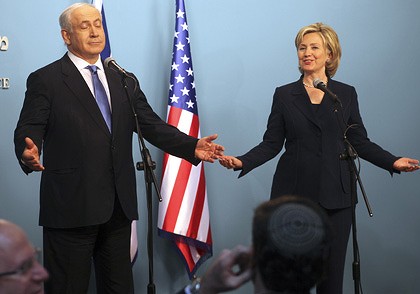
The quid pro quo was hashed out by Mr. Netanyahu and Secretary of State Hillary Rodham Clinton in seven and a half hours of talks in New York on Thursday.

Let’s parse this now:

According to Peace Now’s most recent research, in six short weeks, Israel has all but made up for the construction it lost during the ten month freeze. So that means we’re back to square one. And since this new ninety day freeze is “nonrenewable,” this latest breakthrough is essentially meaningless (except perhaps as a face-saving maneuver on for the Obama administration).

We’re also told that this new freeze would not include East Jerusalem, which was likewise never a part of the last freeze – when home demolitions, evictions of Palestinians, and plans for new Jewish construction continued apace.

(I personally find American Jewry’s deafening silence over what is going on in East Jerusalem to be beyond egregious. Can’t find it in your heart to address the humanitarian implications? Fine. But if you are at all a proponent of the two state solution, you should at least be concerned that Israel’s actions have now made the prospects for a shared capital in Jerusalem all but impossible).

By any other name, this latest diplomatic “breakthrough” is nothing but a fig leaf.  Does anyone really believe that anything substantive will be accomplished during a ninety day settlement (non) freeze? When will our community find the courage to name these dangerously empty gestures for what they really and truly are?

Ta’anit Tzedek Sponsors Conference Call with Congressman Brian Baird


The next Ta’anit Tzedek fast day will take place on Thursday, November 18. To mark the day, we will present a conference call, “After the Elections: US Policy, Israel and Gaza” – A Conversation with Congressman Brian Baird.

Congressman Baird is the outgoing Representative for Washington state’s 3rd District. Prior to being elected in 1998, Congressman Baird practiced as a licensed clinical psychologist in Washington state and Oregon. He also worked in state and Veterans Administration psychiatric hospitals, community mental health clinics, substance abuse treatment programs, and institutions for juvenile offenders.

Congressman Baird is also notable for being one of the few members of Congress who is willing to openly advocate for Palestinian human rights. He has visited Gaza on three separate occasions and had this to say after his visit in February 2009 (immediately following Israel’s Operation Cast Lead):

The amount of physical destruction and the depth of human suffering here is staggering… Entire neighborhoods have been destroyed, schools completely leveled, fundamental water, sewer, and electricity facilities hit and relief agencies heavily damaged. The personal stories of children being killed in their homes or schools, entire families wiped out, and relief workers prevented from evacuating the wounded are heart wrenching – what went on here, and what is continuing to go on, is shocking and troubling beyond words.

After his third visit to Gaza in February 2010, Baird called on the US to break Israel’s blockade of the strip to deliver humanitarian aid. He was also one of the few members of the House to vote against a bill that “unequivocally opposed any endorsement or further consideration” of the Goldstone Report. (Click the clip above to watch his passionate defense of report on the House floor.)

Our conference call will take place on Thursday, November 18 at 12:00pm (EST). During our conversation, we will ask Congressman Baird to discuss his experiences in Gaza, to comment on current efforts to lift the blockade and to share his views on the search for a just peace in Israel/Palestine in light of the recent midterm elections.

Congressman Baird will also address the wrongful death trial, brought by Craig and Cindy Corrie against the Israeli government, for the death of their daughter Rachel (who was crushed by an Israeli bulldozer in Gaza in 2003). As the Corrie’s congressman, Rep. Baird has long supported the Corrie family in their quest for justice and personally testified in the trial last May.

Here’s the call-in info:

Dial the Access Number: 1.800.920.7487
Participant Code: 92247763#

As always, we encourage you to join the call and spread the word.

Young, Jewish and Proud – Time to Make Room at the Table

Here is some video of yesterday’s incident at the Jewish Federation GA.

After watching this clip this morning, my wife Hallie and I had a long conversation about it. Though I was eager to talk about its political/Jewish communal implications, she responded to it more as a parent of teenagers.

As she put it, “As parents, what kinds of values do we want to impart to our kids? Don’t we always say we want them to educated, to be critical thinkers, and to stand up for what they believe in? And even if we don’t approve of the places their critical thinking take them, what, are we going to disown them because we don’t agree with them?”

Take a close look at this clip and pay particular attention to the reaction of the audience in the hall. It would be quite an understatement to say the crowd disapproved of what these young people were saying. Frankly, it was something of a miracle that any of them made it out of that room in one piece.

But as Hallie pointed out to me, these young Jews were doing precisely what they were raised to do: they took a good, educated look around them, they thought critically about what they saw, and they took a stand for what they believed in. And for this they are being disowned by their Jewish family.

I’m sure many will be tempted to say, “Well, I don’t disapprove of what they said, just how they said it.”

Yes, we parents often say things like that, don’t we?  I’m pretty sure that many white parents said similar things when their children joined the Freedom Riders to protest oppression and to show solidarity with oppressed African Americans. I imagine many of their parents disapproved of their actions. But at the end of the day weren’t these young people ultimately just acting upon the values that had long been instilled in them?

I certainly have no illusions that there were also many young people in that room cheering on Netanyahu – young adults who have been given a place at the Jewish communal table. But believe me when I tell you that there are many, many young Jews who have been kept away from the table  – but who refuse to walk away. And frankly, given the extent of their alienation we should be grateful that they even seek a place at all any more.

The Jewish community is reaching a serious reckoning point. Trust me, those five young people in that hall are only the tip of the iceberg. They are growing in number, they are rapidly finding their voice, and as their new moniker indicates, they are “young, Jewish and proud.” And regardless of whether we agree what they are saying, we should be proud of them. It’s time to act like grownups, stop marginalizing them, and make room for them at the table.

Click here and read the “Young, Jewish and Proud” manifesto. What beautiful, beautiful words. I couldn’t be prouder of these young people if they were my own children.

Young Jews Raise the Roof at the Jewish Federation GA!


At the 1969 General Assembly of Jewish Federations in Boston, a group of graduate students stormed the plenum with pickets and placards and demanded a  reorganization of Federation priorities, lest it risk alienating Jewish young people.

Might history be repeating itself?

Jewish Voice for Peace has just released the following press release:

[November 8, 2010, New Orleans]  A group of young Jews with the Young Leadership Institute of Jewish Voice for Peace has traveled to the largest gathering of Jewish leaders in the US, the Jewish Federation General Assembly, to confront leaders on an approach to saving Israel’s reputation and building young Jewish identity they say actually turns young Jews away.

Five of the young adults, including 3 Israelis and Israeli–Americans, disrupted a speech this morning by Israeli Prime Minister Bibi Netanyahu with banners that said:

YoungJewishProud.org and and one of the below:

The Settlements Delegitimize Israel
The Occupation Delegitimizes Israel
The Siege of Gaza Delegitimizes Israel
The Loyalty Oath Delegitimizes Israel
Silencing Dissent Delegitimizes Israel

The young Jews’ website, www.YoungJewishProud.org,  presents the group’s Young Jewish Declaration, a compelling vision of collective identity, purpose and values written as an invitation and call to action for  peers who care about Israel and Palestine. It is also a strong challenge to elders.

These actions are in part a protest of the Jewish Federations of North America (JFNA) and Jewish Public Affairs Council (JCPA) newly announced $6 million dollar program to target campus, church, peace and human rights groups that are working to end Israel’s human rights violations through nonviolent Boycott, Divestment and Sanctions pressure campaigns. The Federations and JCPA are calling this initiative the “Israel Action Network.”  Critics say it is a “Shoot the Messenger” approach.

“We’re here to call out the elephant in the middle of the room. Israel continues to expropriate Palestinian land for Jewish-only communities, passes increasingly racist laws in the Knesset, the foreign minister wants to strip Palestinian citizens of their citizenship — these are the reasons Israel is becoming a pariah in the world, NOT the human rights groups that are using nonviolent economic pressure to hold Israel accountable. We would be dismissing the values we were raised on if we did not speak up.” (Eitan Issacson, Israeli-American, Seattle)

“The Jewish establishment thinks that all we want are free trips to Israel and feel-good service projects. That is in insult to our intelligence and to the Jewish values we were brought up on. What we want is for the American Jewish community to stand up and say that Israel’s ongoing violations of Palestinian human rights are wrong and that we will not continue to support it with our dollars, our political strength and our moral abilities. We are the next generation of American Jews, proud of our heritage, strongly committed to Jewish life. We live our Jewish values in opposing Israel’s human rights violations and we invite – no, implore –all Jews to join in this urgent struggle.
(Hanna King, Swarthmore College, Philadelphia)

“We were surprised by how many other young Jews were enthusiastic about the perspective that we brought to the General Assembly. It was scary to ask questions of sometimes hostile panelists, but in fact many people our age were supportive and even asked their own critical questions. We realized this is a terrific opportunity to organize.” (Antonia House, graduate student, NYU)

“Right now, the choice for those of us who care about the future of Israel and Palestine is between the status quo— which includes continued settlement expansion, the siege of Gaza, and the racist Israeli foreign Minister Avigdor Lieberman– or Boycotts, Divestment and Sanctions. Given that choice, Boycotts, Divestment and Sanctions will win every time.”
(Matan Cohen, Israeli, Hampshire College)

The students also announced the creation of a spoof Birthright Trip called Taglit-Lekulanu, Birthright for All, open to Palestinian and Jewish-Americans which they followed up with a spoof denial. The goal of the spoof was to highlight the one-sided narrative that Birthright presents, the ways it renders Palestinians invisible. The rebuttal laid bare the problematic assumptions underlying Birthright such as the emphasis on marrying Jews and procreating.

Participants in the institute include students from schools as diverse as UCLA, NYU, UC Berkeley, Hampshire, and Swarthmore.

A new Jewish Voice for Peace campus chapter was recently started at Brandeis University.

The Yemen Bomb Plot: Thoughts From a Chicago-Area Rabbi

More than a few people have asked me for my reaction on last week’s failed al-Qaeda bomb plot out of Yemen that reportedly targeted Chicago synagogues.

So here are a few disconnected thoughts:

First and foremost, I’ll say it was incredibly heartening to receive so many calls of concern from friends and colleagues of all faiths. The very first such calls came from two friends from the Islamic community, who expressed their shock, outrage and solidarity in no uncertain terms.

An excerpt from the statement released by the The Council of Islamic Organizations of Greater Chicago:

The Council of Islamic Organizations of Greater Chicago stands with our faith partners and the Jewish community in condemning the recent terrorist act to send explosives through cargo airlines to Jewish organizations in Chicago…

“We are thankful to our law enforcement agencies to uncover this plot before it could cause any harm,” said Dr. Zaher Sahloul, chairperson of the Council. “Illinois Muslims stand united with our Jewish partners and organizations in condemning this terrorist and heinous act. There is no place in Islam for terrorizing innocent people or spreading mayhem.”

Those who chronically ask why Muslim leaders are loath to condemn terrorism would do well to read the numerous such statements that were released last week by Islamic communities and organizations around the world.

Another thought:

Like many, I was surprised to learn that authorities eventually came to believe that the bombs were not actually meant to target synagogues, but were rather intended to explode in planes midair. Though the synagogue addresses on the packages understandably alarmed the Jewish community, it’s now becoming clear that this incident occurred within a much larger political context.

Harvard political scientist Stephen Walt rightly noted this point in a blog post:

Whatever the target may have been, the more obvious point is that these groups are still hoping to make Americans pay a price for our policies in the Middle East and elsewhere. They are angry about our close ties with Saudi Arabia, by the drone attacks the United States is conducting in Yemen and Pakistan, and by our unstinting support for Israel. And even though AQAP’s main target appears to be the Saudi regime, America’s unpopularity throughout the region makes attacking the United States a useful recruiting tool.

Salon’s Glenn Greenwald made a similar point in his inimitable style:

I’m sure that escalated military activity in Yemen along with roving bands of CIA hit squads will go a long way toward solving the problem of anti-American hatred in that country and the Muslim world generally. If only we kill more of them and bring more violence to their country, they’ll stop wanting to mail bombs to ours.

The bottom line for me: though we are justifiably concerned about anti-Semitism, we’d might at least be equally concerned over US policies and actions in the Middle East – and the ways they create a fertile breeding ground for these kinds of extremist ideas.

Still another thought:

Ironically enough, immediately before the news of this event broke, my wife and I had just watched the recent documentary “Defamation,” a film which vividly explores the ways anti-Semitism is experienced – and too often exploited – by Israel and the American Jewish community.

So yes, I’ll confess that following the incident among the many thoughts racing through my mind was the somewhat jaundiced conclusion: “Boy, will our community will make political hay out of this one…”

Sure enough, not long after we learned of the bomb plot, it was reported that several Jewish communal leaders in NYC lobbied elected officials to dramatically increase Homeland Security funding for Jewish institutions – and urged their constituents to do likewise.

I can’t help but agree with Mondoweiss’ take on the affair:

While these people may have been sincerely reacting to an immediate dramatic threat, there seems to be a bit of opportunism at play here. Naomi Klein’s book, The Shock Doctrine, details instances like this where individuals, governments, and organizations take advantage of human-made or natural crisis to promote actions that will significantly advance their political, economic, and/or ideological plans.

A final semi-related thought:

The Jewish community would be foolish not to be vigilant about anti-Semitism – as well as the safety of our communal institutions. At the same time, however, I do believe our community must resist the temptation to view anti-Semitism as somehow unique or separate from other forms of prejudice.

When these kinds of troubling events occur, our community is too often tempted to circle the wagons and view the issue somehow as “us against the world.” Too often, we fail to see how anti-Jewish prejudice is inseparable from all forms of bigotry.

At the end of the day intolerance is intolerance. Whether we’re happy to admit it or not, we’re all in this together.
Jews and Arabs in Israel: What Would You Call It?

I’m fairly sure that if I used the word “apartheid,” to describe the socio-political reality in Israel/Palestine, I’d be tarred and feathered six ways to Sunday by the American Jewish establishment.

Meanwhile, some truth-tellers in the Israeli press are openly using the “a-word” because, well, because it’s just becoming impossible to ignore what’s really going on in their country.

From an October 29 article in Ha’aretz, “Segregation of Jews and Arabs in 2010 Israel is Almost Absolute:”

Under the guise of the deceptively mundane name “Amendment to the Cooperative Associations Bill,” the Knesset’s Constitution, Law and Justice Committee this week finalized a bill intended to bypass previous rulings of the High Court of Justice. If indeed this legislation is approved by the Knesset plenum, it will not be possible to describe it as anything other than an apartheid law.

And from today’s Ha’aretz, “South Africa is Already Here:”

Israel’s apartheid movement is coming out of the woodwork and is taking on a formal, legal shape. It is moving from voluntary apartheid, which hides its ugliness through justifications of “cultural differences” and “historic neglect” which only requires a little funding and a couple of more sewage pipes to make everything right – to a purposeful, open, obligatory apartheid, which no longer requires any justification.

OK, forget the a-word, forget the loyalty oath and the “Amendment to the Cooperative Associations Bill.” Just read this report by Adalah: Legal Center for Arab Minority Rights in Israel and come up with your own word for it.

Footnotes in Gaza: Sacco’s Profound Testimony

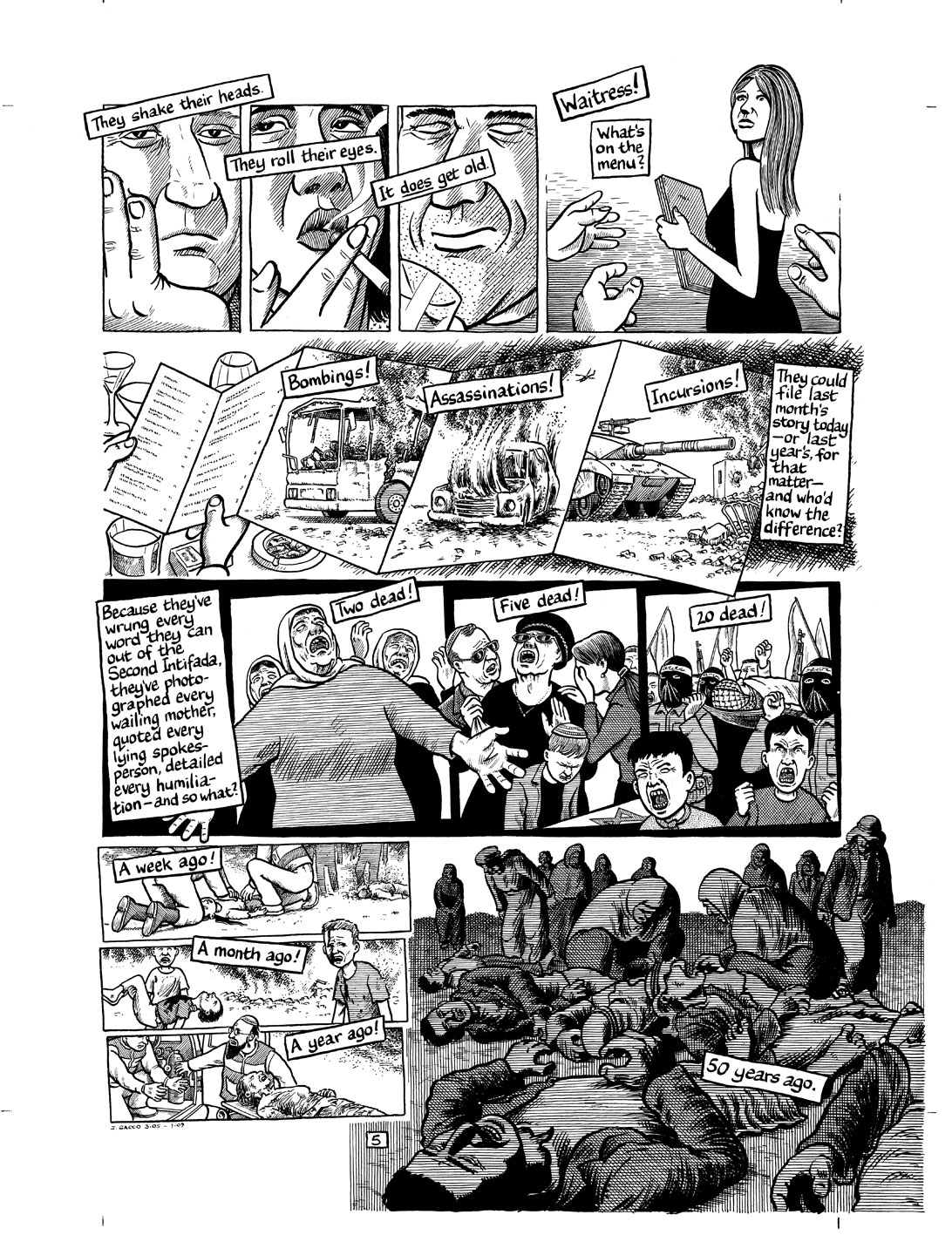
I just noticed that Joe Sacco’s brilliant graphic novel “Footnotes in Gaza” has just come out in paperback. I can safely say without hesitation that this is the best book I’ve ever read about Gaza (and trust me, I’ve read a lot).

Sacco composed “Footnotes” as a first person account of his own experiences in Gaza. He begins by portraying his efforts to document the 1956 massacre in Khan Younis, in which the IDF briefly occupied the Egyptian-ruled Gaza Strip and killed 275 Palestinians. During the course of his investigation, Sacco learns about another, lesser known incident that occurred around the same time in the neighboring town of Rafah, in which Israeli forces killed 110 Palestinians in what should have been a standard “screening operation.”

It’s hard for me to convey the effect this book had on me when I read it last year. It unfolds in a myriad of layers: it’s a mediation on history, on war, on memory, and on the way the past seems to continuously, inevitably inform the present. Especially in this day and age, in which the 24 hour news cycle chops events up into disconnected bits, Sacco’s testimony on the events of 1956 are a critical reminder that Gaza’s current agony is only the latest chapter in a much, much longer story that still continues to unfold. In short: those of us who want to understand the Gaza conflict today must learn this history.

It took me a very long time to read “Footnotes.” Its narrative is dense, its subject matter is profoundly painful, and its depiction of violence so unflinchingly raw. There were several times I had to just stop and put the book down for a few days or weeks just to absorb what I had just taken in. A year after reading it, many of its words and images still resonate powerfully for me.

It’s actually pretty remarkable to think that a comic book accounting of two little known historical “footnotes” that occurred in this tiny strip of land that could provide such a deep and profound testimony. But trust me, it does. I can’t recommend it highly enough.

The Sorrows of Jewish Ethnonationalism

Israel is going down a very dark road.

From a recent article in The Economist:

Not long ago, Lod, an Israeli city near the commercial hub of Tel Aviv, was a sleepy backwater. Its 20,000 Arabs among 45,000 Jews peppered their Arabic with Hebraisms, voted for Jewish parties, and described themselves as Israeli. The Arab population, drastically reduced in the 1948 war that marked Israel’s birth, has revived, exceeding its previous total.

But the calm has been disturbed. This month Israel’s leaders have taken their demand that the world—and the Palestinians—should recognise their state as specifically Jewish in exchange for a renewed freeze on building Jewish settlements in the West Bank, to Lod. Cabinet members have proposed “strengthening” the city’s population by bringing in more Jews and have approved a wider bill requiring new citizens to swear a loyalty oath accepting Israel as Jewish and democratic—in that order. Other measures are aimed at Israel’s Arabs, including a ban on teaching the Palestinian narrative that Israel expelled most of its Arabs in the war of independence.

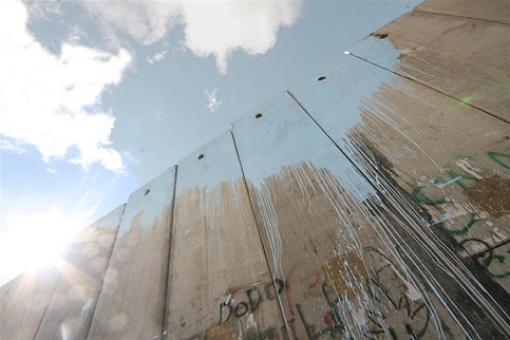
Liberal Israelis fear that these measures may import the Arab-Israeli conflict, which had been largely confined to the territories occupied by Israel beyond the 1948 partition line, into Israel proper. Adding to the psychological barriers, the Lod authorities have erected physical ones. This year they have finished building a wall three metres high to separate Lod’s Jewish districts from its Arab ones. And where the Arab suburbs are cordoned off to prevent their spread, Israel’s prime minister, Binyamin Netanyahu, encourages building for Jews to proceed with abandon.

His foreign minister, Avigdor Lieberman, on the coalition’s far right, champions building quarters for soldiers’ families in the town. The equally chauvinistic interior minister, Eli Yishai, who heads an ultra-Orthodox party, Shas, grants building permits for religious Jews. A series of gated estates are sprouting across the city reserved for religious Zionists. “These blocks will ensure Lod stays Jewish,” says Haim Haddad, the town’s chief rabbi, one of the first to move into a new estate.

By contrast, old Arab houses are under threat of demolition. Now and again, bulldozers demolish a couple, stressing Arab vulnerability. A study by a liberal Israeli group called Shatil (“Seedling”) estimates that 70% of Arab homes in Lod lack legal status. Many municipal services, such as street lighting and rubbish collection, stop at the boundaries of Arab suburbs. Sixteen kilometres (ten miles) from Tel Aviv, Israel’s richest city, sewage flows through some of Lod’s Arab streets.

And this from a recent article in Ha’aretz:

The Knesset’s Constitution, Law and Justice Committee on Wednesday unanimously approved a bill which gives the right to absorption committees of small communities in Israel to reject candidates if they do not meet specific criteria.

The bill has sparked wide condemnation and many believe it to be discriminatory and racist, since it allows communities to reject residents if they do no meet the criteria of “suitability to the community’s fundamental outlook”, which in effect enables them to reject candidates based on sex, religion, and socioeconomic status.

The bill is due to be presented before the Knesset plenum in the coming weeks.

Israeli Arab MKs were outraged by the proposal and walked out on the committee’s discussion of it.

MK Talab al-Sana (United Arab List – Ta’al) called the bill racist and said it was meant to prevent Arabs from joining Israeli towns. MK Ahmed Tibi (United Arab List – Ta’al) compared the bill to racist laws in Europe during World War Two, and the two told the committee members before leaving the hall: “We will not cooperate with this criminal law – you have crossed the line.”

The committee’s chairman, David Rotem (Yisrael Beiteinu), responded to claims the bill was meant to reject Arabs from joining Israeli towns. “In my opinion, every Jewish town needs at least one Arab. What would happen if my refrigerator stopped working on a Saturday?”