Category Archives: American Jewish Community

Rabbis Endorsing Candidiates: Advocacy for the Sake of Heaven?

Recently read an interesting blog post by Rabbi Rachel Gurevitz of Congregation B’nai Shalom (Reform), in Westborough, MA, in which she expresses her disapproval of clergy who endorse candidates for public office.

Exhibit A: “Rabbis for Obama:”

Over 600 rabbis, from across the Jewish denominations, have signed their names – as individuals – to ‘Rabbis for Obama’ … I will tell you now, my name is not on that list.  And, while I see that many of my colleagues who I deeply respect as rabbis, have chosen to add themselves to the list, I am not at all comfortable with it.  I see little difference between adding one’s name to a publicly available list of this kind, and endorsing a candidate from the pulpit.  And, while I am no constitutional scholar, and am willing to accept the possibility that individual religious leaders may have a constitutional right to something, that doesn’t mean that, as responsible religious leaders and teachers, we should necessarily exercise that right.

I’m not a constitutional scholar either, but I’m fairly certain clergy don’t endanger their 501 c3 status as long as they make it clear in their endorsements that they are speaking as individuals and not on behalf of their congregations. But be that as it may, Gurevitz’s real issue with such endorsements is less legal than philosophical:

 Each individual candidate and the parties they represent, hold diverse views on a very wide array of subjects.  It is simply not true – it cannot be – that one side is ‘right’ and the other side is ‘wrong’.  This is the case whether we are speaking in terms of ethics and morals, or whether we are speaking about issues of social equity and justice.  Our political arena has become polarized enough already.  We do absolutely no service to this country, to the well-being of our society, or to the legitimacy and value of the religious traditions we serve and represent when we add to that polarization by picking sides.

Rather exacerbate our national polarization, Gurevitz suggests, rabbis should take their cue from Jewish/Talmudic tradition, which values diversity of opinion and debates “for the sake of heaven” – and not, as she puts it, “debates for the sake of winning.”

While I appreciate Rabbi Gurevitz’s desire to mitigate the polarizing discourse in American political culture, I don’t think it’s quite fair of her to assert that rabbinical endorsements automatically translate into (as she puts it), “I’m right and you are wrong, therefore we are good and you are evil, therefore we speak in God’s name and you don’t.”

This is certainly not the message – in content or tone – set by the Rabbis for Obama website, which merely contains a list of rabbis, various links, along with this fairly mild statement:

This group of over 613 rabbis … from across the country and across all Jewish denominations recognize that the President has been and will continue to be an advocate and ally on issues important to the American Jewish community. That is why they are committed to re-electing President Obama and actively doing their part to move our country forward.

That’s a pretty far cry from “We speak in God’s name and you don’t.”

In truth, when I think of rabbis who have publicly endorsed candidates over the years, I’m hard pressed to find many who have done so in an overly polarizing or patronizing manner.  In this regard, I still remember well the words of the venerable Reform Rabbi Arnold Jacob Wolf, whose last major public statement was an article for the Jewish Week entitled “My Neighbor Barack”  – in which he voiced his support for Obama during the 2008 campaign. (His article was particularly meaningful because it was published during a period in which Obama was under withering attack from certain neo-conservative quarters of the Jewish community.)

On a deeper level, however, I think Gurevitz fundamentally misreads the legacy of rabbinic debate “for the sake of heaven.”  While the rabbinic discussions of Talmud do indeed provide a graphic representation of this legacy, I would suggest that our job as rabbis is not to emulate a page of Talmud, but to engage in the debate itself.

There is no question that the issues discussed during election cycles are of profound significance for our national community.  None of us can afford to stand aloof from these issues – least of all rabbis. Indeed, by advocating for candidates who support the policies we believe will best serve the common good, we advocate for the sacred values we purport to cherish as religious leaders.  If we preach about social issues from the pulpit, why should it be inappropriate for us to endorse the candidates who are directly responsible for enacting the policies related to these issues?

I certainly agree with Gurevitz when she exhorts clergy to must speak out against “the polarizing and vindictive narrative of political debate when we see and hear it.” But I’m not at all convinced we must stand on the sidelines during election season in order to do so.
Rabbinical Support for the End of Unconditional Military Aid to Israel

Cross-posted with The Palestinian Talmud:

The undersigned members of the Jewish Voice for Peace Rabbinical Council stand with our American Christian colleagues in their recent call to “make U.S. military aid to Israel contingent upon its government’s compliance with applicable US laws and policies.”

We are as troubled as our Christian colleagues by the human rights violations Israel commits against Palestinian civilians, many of which involve the misuse of US – supplied weapons. It is altogether appropriate – and in fact essential – for Congress to ensure that Israel is not in violation of any US laws or policies that regulate the use of US supplied weapons.

The US Foreign Assistance Act and the US Arms Export Control Act specifically prohibit assistance to any country which engages in a consistent pattern of human rights violations and limit the use of US weapons to “internal security” or “legitimate self-defense.”  The Christian leaders’ letter points out, in fact, that the most recent 2011 State Department Country Report on Human Rights Practices covering Israel and the Occupied Territories detailed widespread Israeli human rights violations committed against Palestinian civilians, many of which involve the misuse of US – supplied weapons such as tear gas.

It is certainly not unreasonable to insist that foreign assistance be contingent on compliance with US laws and policies. Mideast analyst MJ Rosenberg has rightly pointed out that during this current economic downturn, Congress has been scrutinizing all domestic assistance programs -– including Social Security and food stamps –- to ensure that they are being carried out legally in compliance with stated US policy.  Why should US military aid to Israel be exempt from the same kind of scrutiny?

While some might feel that requiring assistance to be contingent with compliance would compromise Israel’s security, we believe the exactly the opposite is true. As Israel’s primary ally, the US alone is in a place to create the kind of leverage that might challenge Israel to turn away from policies that impede the cause of a just peace for Israelis and Palestinians –- and true security for all who live in the region.

As Jews we acknowledge that the signers of the letter, and the churches they represent, have ancient and continuing ties to the land of Israel just as we do, and that their concerns for the safety and dignity of Christians in Israel and in the occupied Palestinian territories is as compelling as our concern for the safety and dignity of Jews there.

We are troubled that several Jewish organizations have cynically attacked this faithful and sensitive call – and we are deeply dismayed that the Anti-Defamation League has gone so far as to pull out of a scheduled Jewish-Christian dialogue in protest.  We believe that actions such as these run directly counter to the spirit and mission of interfaith dialogue. True dialogue occurs not simply on the areas where both parties find agreement, but in precisely those places where there is disagreement and divergence of opinion. We call on all of our Jewish colleagues to remain at the table and engage our Christian colleagues on this painful issue that is of such deep concern to both our communities.

We express our full support for the spirit and content of this statement and likewise call upon US citizens to urge their representatives to end unconditional military aid to Israel.

Signed (list in formation):

Rabbi Brant Rosen
Rabbi Margaret Holub
Rabbi Alissa Wise
Rabbi Elizabeth Bolton
Rabbi Lynn Gottleib
Rabbi Brian Walt
Rabbi Julie Greenberg
Rabbi David Mivasair
Rabbi Joseph Berman
Cantor Michael Davis
Rabbi Shai Gluskin
Rabbi Tirzah Firestone
Jessica Rosenberg, Rabbinical Student
Ari Lev Fornari, Rabbinical Student

My “Wrestling” Interview with Truthout

Check out my wide-ranging and freewheeling conversation with Truthout’s Mark Karlin, which focuses on my book, but also touches on subjects such as Zionism, BDS, the two-state solution and Palestinian solidarity, among others.

Here’s a taste, below. Click here for the full interview.

Mark Karlin: Stereotyping any group of people is dangerous. In polls during peaceful periods, most Palestinians and Israelis appear to support peace. A lot of what Netanyahu appears to do is stir up the pot so that there will never be a long enough period to negotiate a peace. That’s not to excuse those in Hamas and Hezbollah who have their own motives in heating up the conflict now and then, along with other parties who have vested interests in stalling peace. When you talk of your Palestinian solidarity, some critics accuse you of abandoning Jewish solidarity and not sufficiently condemning those Arab extremists who are in the “destroy Israel” industry as much as Netanyahu is in the suppression-of-Palestinian-rights industry. How do you respond?

Brant Rosen: At the end of my book I addressed this issue directly:

As a Jew, I will also say without hesitation that I reject the view that I must choose between standing with Jews or standing with Palestinians. This is a zero-sum outlook that only serves to promote division, enmity and fear.

For me, the bottom line is this: the cornerstone value of my religious tradition commands me to stand in solidarity with all who are oppressed. It would thus be a profound betrayal of my own Jewish heritage if I consciously choose not to stand with the Palestinian people.

In other words, I believe my Jewish liberation to be intrinsically bound up with Palestinian liberation. It’s really that simple.

I’ve come to believe that solidarity should ultimately be driven by values, not tribal allegiances. It should be motivated by the prophetic vision that demands that we stand with the powerless and call out the powerful. Of course, in the case of Israel, this form of solidarity presents a very painful challenge to many Jews. I understand that. But at the very least, shouldn’t we be talking about this challenge and what it represents for us?

Does my solidarity mean that I agree with everything that is done by Palestinians in furtherance of their liberation? Of course not. When you stand in solidarity with a people, it is inevitable that you will find yourself standing next to some people whose actions and beliefs you will find odious. That comes with the territory when you choose to take a stand. And I might add that this is the case for liberal Zionists who stand in solidarity with Israel as well.

Rabbi Rebecca Lillian on the Malmö JCC Attack

Photo: AFP (via Tablet)

Please read this blog post by my dear friend Rabbi Rebecca Lillian, who currently lives in Malmö, Sweden. You may know that Malmö has experienced its share of anti-Semitism of late and that some members of the Jewish community have left the city as a result.

Sadly, the Malmö Jewish Community Center was damaged last week by an explosive device and rocks that were thrown through the Center’s windows.  Rebecca, who happens to live in the JCC, wrote powerfully about her experience of the attack – as well as the subsequent show of solidarity by Malmö’s Network for Faith and Understanding (which includes local churches and mosques.)

In her post, she also has some choice words to say about how the Jewish press and the Simon Wiesenthal Center in particular has been egregiously misrepresenting the situation in Malmö for political purposes:

The real jolt came after Shabbat, as I read the Jewish press. That ubiquitous hyperbolic headline about the blast “rocking” our building irritated me, but the articles were essentially accurate. I was disappointed that nobody had followed up with a story about the multi-faceted vigil. Readers all over the world who have been following the story of anti-Semitic hate crimes in Malmö should also learn about our concerned neighbors who literally rushed to our side. What made me explode, though, was that the Jewish Journal of LA had the chutspa to publish a Reuters photo of the vigil next to an indefensible rant by the Simon Wiesenthal Center’s Rabbi Abraham Cooper.

Rabbi Cooper has already declared Malmö an unsafe travel destination for Jews. Now he suggests that those of us who live here might soon need to flee for Israel or elsewhere. “Ayn Soamchin Al Haness” — we cannot rely on miracles to secure the safety of Jewish children. “Clearly time is running out for Malmö,” he writes, along with other overstated claims.

Rabbi Cooper must know that it is dry season in the Jewish blogosphere. Pamela Geller, she of the Isalmophobic ads on New York City buses, borrowed from Cooper’s screed to come to the offensive conclusion that “Malmo has become as bad for Jews as Berlin at the height of the WWII. With its very large Muslim population, Islamic attacks against the Jews are part of the social fabric in Malmo. It’s pure hell.”  Such mendacity desecrates the memory of those Jews who died in Berlin and dishonors those who survived. She cynically uses their name to buttress her anti-Muslim fabrications, which have zero to do with the Jewish community of Malmö.

Time has not run out for us. On the contrary, while the bursts of hate are anonymous and cowardly, the eloquent expressions of support are said aloud by well-known community leaders and residents from all over the region. It is time for Cooper and Geller and the countless Jewish bloggers who quote them to stop crying wolf.

Why Be Jewish?: A Sermon for Yom Kippur 5773

From my Yom Kippur sermon yesterday:

Let me leave you with this vision: the vision of a people who have over the centuries learned to build a nation without borders, a multi-ethnic nation suffused with the beauty of a myriad of cultures, a nation inspired by a religious tradition it constructs and reconstructs in every age and in every generation. At its heart, a nation committed to the struggle for meaning in our lives and justice in our world. And in the end, a nation that has nothing to fear and every opportunity to gain from the remarkable changes underway in the 21st century.

Click below to read the entire sermon:

Continue reading

On the Smear Campaign Against Some “Rabbis for Obama”

Here is a post I co-wrote with Rabbi Alissa Wise for the Forward Thinking Blog of the Jewish Daily Forward:

The Republican Jewish Coalition and the Emergency Committee for Israel this week urged a group of rabbis supporting President Barack Obama’s reelection to purge members of the Jewish Voice for Peace Rabbinical Council from its ranks. The conservative groups claimed they were shocked by the inclusion in the “Rabbis for Obama” list of those whose “values are representative of a small and extreme group of anti-Israel activists.”

We are deeply dismayed by this cynical attempt at political gain through smears, half-truths and innuendos that only serve to create division in the Jewish community.

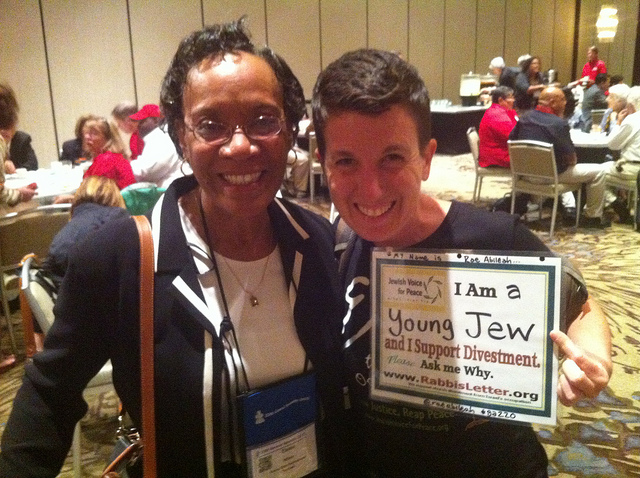
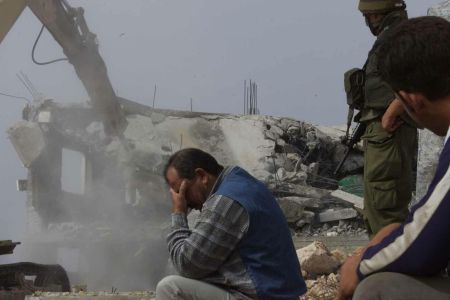
It is certainly true that many of on the JVP Rabbinical Council are deeply critical of Israeli policy (and the U.S. policy that too often enables it). It is not at all true, however, that such criticisms are “extreme” or marginal. Indeed, increasing numbers of Jews and Jewish leaders are finding the courage to speak out publicly against Israel’s practice of home demolition, forced eviction, settlement expansion and administrative detention, as well as its widespread restriction on Palestinians’ freedom of movement in the West Bank and Gaza.

Jewish Voice for Peace rabbis were not the only ones singled out by RJC and ECI’s smear. William Kristol included members of the J Street Rabbinical Cabinet and Rabbis for Human Rights as well. There are many perspectives within the American rabbinical community about how to create a just and lasting peace between Israelis and Palestinians. At the same time, we share a commitment to open and honest conversation about how a negotiated solution can ensure security and human rights for all.

By a margin of more than 2 to 1, according to the Public Religion Research Institute American Jews say that good diplomacy rather than military strength is the best way to ensure peace (63% vs. 24% respectively).

This reality stands in sharp contrast to the Jewish donors to the Republican party, such as Sheldon Adelson, who has reportedly asked Romney to state publicly that Israeli-Palestinian peace talks are a “waste of time.” Adelson is also pressing Romney for a firmer commitment to move the U.S. Embassy in Israel from Tel Aviv to Jerusalem, in what would be a de facto recognition of Israel’s annexation of East Jerusalem. These views lie far outside what most Americans would tolerate or expect from an American president.

We are saddened, but not surprised, by these smear tactics. They have long been the stock in trade of a Jewish establishment that demands lock-step agreement from Jewish rabbis and leaders – and Jewish neo-conservatives who do not hesitate to use divisive rhetoric and slanderous allegations against their own community members to achieve their political goals.

We are proud of the diversity of the American Jewish community and voice our hope that it will make room for all those who are dedicated to a future of peace, justice and dignity in Israel and Palestine. We are heartened that that by resisting calls to purge individual rabbis from their ranks, the leadership of “Rabbis for Obama” is remaining true to this inclusive vision.

Parsing the (Odious) New Term, “Jew-Washing”

photo: Jewish Voice for Peace

Cross-posted in the “Forward Thinking” blog of the Jewish Daily Forward:

In his latest column, Philologos correctly parses the linguistic problems with Yitzhak Santis and Gerald M. Steinberg’s invented term, “Jew-washing.” His political analysis, alas, fails miserably.

Philologos has it completely wrong when he speaks of the “anti-Semitism in boycotts of Israel.” To begin with, Santis and Steinberg did not use the term “Jew-washing” in reference to a boycott of Israel as a whole, but rather to a resolution recently brought to the Pittsburgh General Assembly of the Presbyterian Church (USA) that called for divestment of their pension funds from three specific companies that profit from Israel’s brutal and illegal occupation of the West Bank.

Regardless, it is highly disingenuous for Philologos to accuse the Presbyterian Church of anti-Semitism. Our Christian friends’ response to the Palestinian civil society call for Boycott, Divestment and Sanctions (BDS), reflects their deeply held commitment to justice in a land their tradition also considers holy.

Philologos asks, “Have the Presbyterians considered boycotting China because of Tibet? India because of Kashmir? Russia because of Chechnya?” This, of course, is classic misdirection. The issue at hand is not global human rights, but a very specific call from Palestinian civil society for international support in ending their oppression.

The real question before them (and us) is not “what about Tibet, Kashmir and Chechnya?”  The question, rather, is: “will we or won’t we respond to the Palestinian call?” To this question, many members of the Presbyterian Church are courageously responding “we will.” So too are increasing numbers of Jews who believe that our legacy of anti-Jewish oppression leads us to stand with Palestinians being denied basic human rights in our name.

No, we are not being used as pawns by Christian partners to further some nefarious “anti-Semitic plot”. Rather, we are standing in solidarity with the oppressed, as the most basic of our Jewish teachings demand that we do.  What irony that other Jews should stand in the way of the Jewish imperative to end injustice. How heartbreaking that some in the Jewish community pervert this imperative by labeling the best intentions of our Christian friends as “anti-Semitism.”

We do, however, fully share Philogos’ distaste for the term “Jew-washing,” the coining of which is a sign of abject desperation that itself crosses the line of anti-Semitism, as blogger Jeremiah Haber pointed out last week. We predict that odious terms such as this will soon be relegated to the history books as part of a last, flailing effort by a fearful generation of Jewish leaders unwilling to recognize the moral urgency of the moment. It also reflects the short-sightedness of an establishment that continues to support war and occupation while deliberately alienating itself from the next generation of courageous Jewish leaders.

Talking to Iran in Moscow – Pray for Success

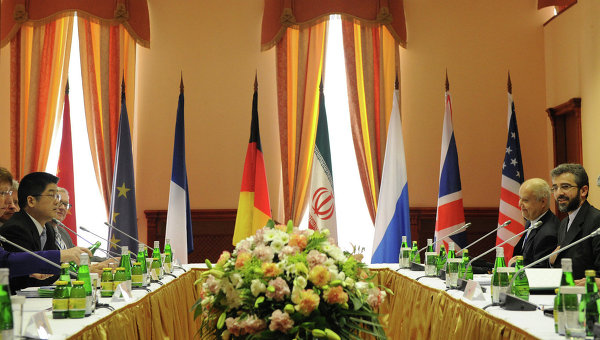
Talks began today in Moscow between Iran and the “P5 +1” (the five permanent member nations of the UN Security Council plus Germany). I’m hoping against hope for a breakthrough, but it’s certainly not looking good.

For a sane and balanced take on Iran, I’ve long turned to Trita Parsi, founder and president of the National Iranian American Council, and one of our foremost experts on US-Iranian relations. In a recent NY Times op-ed, Parsi identified precisely why Obama has precious little room to maneuver going into the Moscow talks. In a word: Congress.

Congress is actively seeking to make a deal on the nuclear issue impossible by imposing unfeasible red lines, setting unachievable objectives — and depriving the executive branch of the freedom to bargain.

Just before last month’s talks in Baghdad, Congress passed a resolution that endorsed the Israeli prime minister Benjamin Netanyahu’s red line on the nuclear issue (Iran can’t have a uranium-enrichment capability), as opposed to the red line adopted by the Pentagon and the president (Iran can’t have a nuclear weapon).  The problem is, Mr. Netanyahu’s red line isn’t feasible and doesn’t leave any room for negotiations…

If Iran agrees in Moscow to accept the American demand that it halt uranium enrichment at the 20 percent level — too low a level to quickly create a nuclear weapon — this would effectively obstruct any Iranian shortcut to a bomb. Congress must then give Mr. Obama the political space to be able to take yes for an answer.

Congress must make up its mind. Does it want to prevent an Iranian nuclear bomb or does it want to maintain its sanctions? Going forward, it can’t have both.

As if to put a period on Parsi’s analysis, last Friday 44 senators (23 of whom were Democrats) sent a letter to President Obama demanding that he insist upon three “absolute minimum steps” for continuation of talks: shutting down the Fordow nuclear enrichment facility, freezing all uranium enrichment above 5%, and shipping all uranium enriched above 5% out of the country.

The letter concludes:

If the sessions in Moscow produce no substantive agreement, we urge you to reevaluate the utility of further talks at this time and instead focus on significantly increasing the pressure on the Iranian government through sanctions and making clear that a credible military option exists. As you have rightly noted, ‘the window for diplomacy is closing. Iran’s leaders must realize that you mean precisely that.

If you needed any evidence of Parsi’s claim that Congress is “actively seeking to make a deal on the nuclear issue impossible by imposing unfeasible red lines, setting unachievable objectives — and depriving the executive branch of the freedom to bargain,” this letter provides it.  The writers and signers of this letter clearly know full well that these demands will be a non-starter for Iran.

Even more disturbing is the role of the Israel lobby in these cynical maneuvers. Mideast analyst MJ Rosenberg revealed, in a piece posted four days before the letter was released, that the letter was drafted by AIPAC staffers, pointing out that it was essentially

an AIPAC device for scoring senators in an election year. Those who sign will be rewarded or left alone. Those who don’t will hear from AIPAC and its friends. Not a pretty possibility.

OK, I’ll say it: the role of the Israel lobby in the Iran issue has been nothing short of shameful.  And at times openly, brazenly disingenuous.  Among the more odious examples: the Emergency Committee for Israel, (what you might call the more “zealous” wing of the lobby) recently released a 30 second scare-ad that proclaimed, among other things, that “Iran has enough fuel for five nuclear bombs” – a spurious claim which belies that fact that Iran currently has no weapons grade material at all.

Yes, this election year gives Obama precious little room to maneuver – and the lobby is clearly doing everything it can to exploit this.  But since Obama has repeatedly bent over backwards to prove his allegiance to Israel and AIPAC, I don’t see how bowing to these latest salvos will do much to significantly improve his electoral prospects. And since he’s going to be excoriated by his political rivals no matter what he does, why not stick to his own administration’s stated policy, behave like a statesman and push for a diplomatic success? After all, who should be determining Obama administration negotiating strategy – the Obama administration or Congress/AIPAC?

When you consider that the alternative is another ill-advised march to another disastrous Mideast war, the stakes could not possibly be higher.

Pray for a breakthrough in Moscow this week.

PS:  I’m honored to be discussing this issue further in a dialogue with Trita Parsi entitled “Can War with Iran be Averted?” on Thursday, June 28, 7:00 pm at Jewish Reconstructionist Congregation in Evanston, IL. Click here for more details.

Obama in 2012: Won’t Get Fooled Again

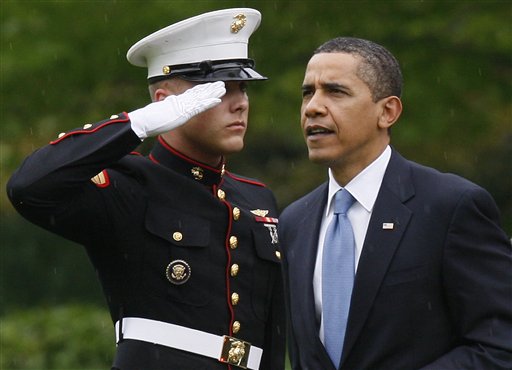
Just happened to glance at a blog post I wrote during the 2008 Presidential General Election campaign entitled “Go Rabbis for Obama!”

Man, what a difference four years makes. I think I can safely say it will be impossible for me to summon the kind of excitement I expressed in that giddy blog post just four short years ago.

Actually, if truth be told, it was just one year into his presidency when I concluded that Obama, from a foreign policy point of view at least, was essentially Bush 2.0.  Now as his first term comes to a close, I’m daring to consider the possibility that he might actually be worse.

I’ve already written a fair amount about my disillusionment on this score – most pointedly in my Yom Kippur serrmon from earlier this year:

For some Americans the most salient lesson of 9/11 was that the world is a dangerous place and we must use military power to mitigate the danger.  I include myself among those who learned a very different lesson: 9/11 taught us that when we intervene militarily abroad, we beget blowback here at home.

Many of us had hope that Obama truly believed this as well – that he would turn back the Bush doctrine and steer our nation’s foreign policy toward a saner course. But as it has turned out, the very opposite has happened. He has embroiled us in even more Mideast wars and has deployed even larger numbers of special operations forces to that region.  He has also transferred or brokered the sale of substantial quantities of weapons to these countries and has continued to build and expand US military bases at an ever-increasing rate.

He also promised to prosecute the so-called “War on Terror” with greater attention to civil liberties, but that hope has been fairly dashed as well.  During his campaign, note what he had to say about this subject:

“As president, I will close Guantanamo, reject the Military Commissions Act, and adhere to the Geneva Conventions. Our Constitution and our Uniform Code of Military Justice provide a framework for dealing with the terrorists. Our Constitution works. We will again set an example for the world that the law is not subject to the whims of stubborn rulers, and that justice is not arbitrary.”

Well, it’s over two years later and Guantanamo is still open. This past March, the Obama administration announced it would be resuming military tribunals there. And just last week, we learned that our President did something truly unprecedented – our President actually approved the extra-judicial assassination of an American citizen in Yemen.

And it’s gotten even worse since then. More recently, we’ve learned that Nobel Peace Prize Laureate Obama has been personally been maintaining a drone “kill list” which, according to the NY Times:

counts all military-age males in a strike zone as combatants … unless there is explicit intelligence posthumously proving them innocent. (Emphasis mine).

Even more recently, the NY Times has revealed that President Obama has been secretly overseeing a massive cyber-war initiative against Iran (known as “Olympic Games”) that, among other things, almost assuredly represents the official kickoff to a global cyber-weapons race. As the article correctly concludes, the blowback to our nation from Obama’s cyber-adventures could potentially be devastating:

(No) country’s infrastructure is more dependent on computer systems, and thus more vulnerable to attack, than that of the United States. It is only a matter of time, most experts believe, before it becomes the target of the same kind of weapon that the Americans have used, secretly, against Iran.

But my disillusionment in the Obama administration is most profound when it comes to its handling Israeli-Palestinian peace process.  I’ve written about this issue over and over as well – but if you still need more convincing that this administration has utterly caved to the Israel lobby and has abdicated any semblance of “honest broker” status in this process, it was recently reported that Obama unabashedly assured a group of Jewish orthodox leaders that his administration is “decidedly more attentive to Israel than it is to the Palestinians.”

All this to say that I’m in a very different frame of mind as Obama now runs for reelection. The giddiness has been replaced with a dose of hard, cold realism about the role of the President in the 21st century national security regime:

Again, from my Yom Kippur sermon:

I’m focusing these observations exclusively on our Commander-in-Chief, but of course I realize that this issue is much, much larger than just one man.  I know it’s natural to look to our primarily to our President, but in truth what we call “Washington” is really a massive bureaucracy that includes a myriad of interests. It’s a far reaching power elite that includes not only the federal government but the national security state, as well as the intelligence and federal law enforcement communities. It also includes big banks and other financial institutions, defense contractors, major corporations and any number of lawyers, lobbyists former officials, and retired military officers, all of whom hold enormous influence over our foreign policy.

So as we swing into summer and we listen to Obama and Romney trade salvos over foreign policy, don’t be fooled – at the end of the day there is less than an inch of daylight between the two.  Mideast analyst Aaron David Miller, in a Foreign Policy post entitled “Barack O’Romney” only half jokingly suggested that if reelected, Obama ought to consider making Mitt Romney his new Secretary of State.  Another respected analyst, MJ Rosenberg, has gone as far as to suggest that President Obama would actually be more likely to bomb Iran than a President Romney.

What should we do with all this hard political realism?  As for me, I’m taking my cue from the classical Jewish text, Pirke Avot:

Love work. Hate authority. Don’t get too friendly with the government. (1:10)

And for good measure:

Be careful with the government, for they befriend a person only for their own needs. They appear to be friends when it is beneficial to them, but they do not stand by a person at the time of his distress. (2:3)

The events of these last four years have provided a painful education for me.  I’ve learned more than ever that it is not politicians who create socio-political change – it is, rather, the people and the movements who make it impossible for them not to.

Yes, there are some important domestic issues at stake in this election (not least of which are potential Supreme Court appointments) but let’s not be fooled into thinking that the future of US foreign policy fundamentally depends on who we choose to be our Commander in Chief.

The real difference will depend on our readiness to hold him accountable once the election is over.

Rabbi Brian Walt Imagines a Judaism Without Zionism

My dear friend and colleague Rabbi Brian Walt just posted a transcript of his talk, “Affirming a Judaism and Jewish Identity Without Zionism” – a breathtaking piece that deserves the widest possible audience. I don’t know exactly how describe it except to say it’s at once an intensely personal confession, spiritual autobiography, political treatise and most of all, an anguished cri de coeur.

I finally had to admit to myself what I had known for a long time but was too scared to acknowledge: political Zionism, at its core, is a discriminatory ethno-nationalism that privileges the rights of Jews over non-Jews. As such political Zionism violates everything I believe about Judaism. While there was desperate need in the 1940s to provide a safe haven for Jews, and this need won over most of the Jewish world and the Western world to support the Zionist movement, the Holocaust can in in no way justify or excuse the systemic racism that was and remains an integral part of Zionism.

In the past I believed that the discrimination I saw – the demolished homes, the uprooted trees, the stolen land – were an aberration of the Zionist vision. I came to understand that all of these were not mistakes nor a blemishes on a dream – they were all the logical outcome of Zionism.

As a Jew, I believe in the inherent dignity of every human being. As a Jew, I believe that justice is the core commandment of our tradition. As a Jew, I believe that we are commanded to be advocates for the poor, the oppressed, the marginalized. Zionism and the daily reality in Israel violated each of these core values. And I could no longer be a Zionist. I will always be a person with deep and profound connection to Israel and my friends and family there, but I was no longer a Zionist.

I’m sure many readers will not agree with Brian’s conclusions. I’m even surer he will be attacked viciously by many for such “apostasy.”  As for me, I salute the courage it took for him to venture out onto such a precarious limb by sharing his thoughts.

Whatever your reactions, I hope you will be open to the challenge he lays before us.