Category Archives: Judaism

Chicago Teachers Union Prez Karen Lewis Teaches Torah in Evanston

karenlewisjrc

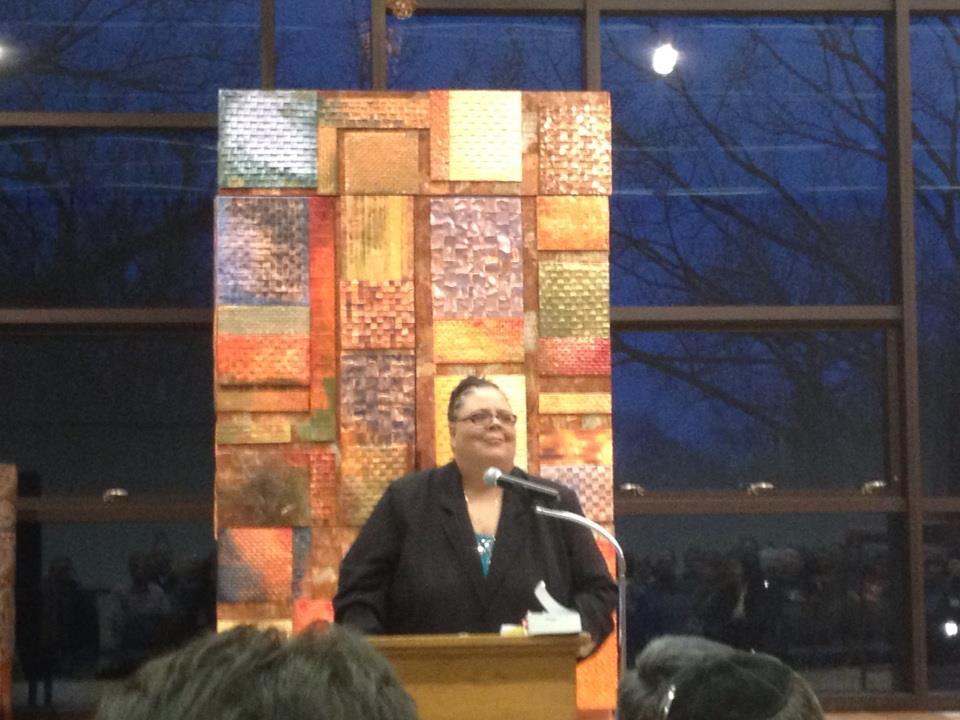
Last night, I had the very good pleasure and honor to welcome Chicago Teachers Union President Karen Lewis to my congregation. In recent years, Karen’s leadership has put her at the center of one of the most important labor struggles in the country – this past September the CTU teachers’ strike was a national news story, due in no small way to Lewis’ visionary and stalwart leadership. Now she’s leading the charge to resist plans by Chicago mayor Rahm Emanuel and the Chicago Public School board to close 54 Chicago schools – a decision which would affect 30,000 children, mostly in low-income, African-American neighborhoods on the city’s South and West sides.

When Karen first accepted our invitation to present at JRC, she told us she was particularly interested in talking about the Chicago schools crisis from a religious values point of view.  Many aren’t aware that Karen converted to Judaism twenty years ago – at a time in which she was on a personal spiritual search and was drawn to the Jewish tradition of questioning and debate.  As it turns out, she will be celebrating her Bat Mitzvah in June – so I encouraged her to use JRC appearance as a laboratory to explore some of the themes in her Torah portion.

Her portion, Shelach Lecha (Numbers 13:1-15:41) relates, among other things, the story of the twelve scouts send by by Moses to report on the Promised Land. Ten of them return with words of discouragement, reporting that they saw giants in the land. “We felt like grasshoppers to ourselves,” they said, “and so we must have looked to them!”

In her presentation, she pointed out that forces of domination in society can often have this effect on us.  In the case of Chicago schools, it is easy to feel cowed by the powerful political-corporate interests that are decimating public education in our city – and in fact, in cities around the nation. The key, Lewis said, is not to be daunted or to give in to a slave mentality that “idealizes Egypt.” The answer, as ever, is to organize and fight back.

Among the many important points Karen made in her presentation was her insight into the deeper issues around the school closings. While she did not disagree that there are problems in Chicago Public Schools (she likened it to a “mildly dysfunctional family”) she vociferously denied Mayor Emanuel’s claim that the system is “broken.” What’s truly broken, Lewis rightly pointed out, is our commitment to the most vulnerable communities in our city.

This was, for me, her most important point of the evening. “Rahm Emanuel says that closing these schools was ‘a difficult decision'” she said. “Make no mistake: closing schools in black and brown communities on the South Side is not a difficult decision. That was an easy decision. You know what a difficult decision would be? If Rahm Emanuel went to his good friends at the Chicago Board of Trade and the Chicago Mercantile Exchange and told them to pay their fair share. That would be a difficult decision!”

Amen. In a recent Chicago Sun-Times article, Chicago community organizer Amisha Patel pointed out, in fact, that claims by City Hall and CPS that schools must be closed to save money are simply not true. In fact, they are choosing to close schools while sending millions of dollars to Wall Street:

Every year, CPS pays approximately $36 million in toxically high interest rates, linked to so-called swap contracts, to banks like Bank of America and Goldman Sachs. These arrangements, in which CPS pays a fixed interest rate to the banks — typically between 3.5 and 5.25 percent — to protect itself against fluctuating interest rates in the bond market, were supposed to save CPS money.

But the arrangements backfired — and became morally reprehensible — when the banks crashed the economy and the Federal Reserve slashed interest rates to bail them out. Now the banks are profiting greatly from the federal bailout, but Chicago’s schools get nothing — no such relief for them from crippling high interest rates — even as the banks continue to extract millions of dollars from CPS.

Big banks were saved by public money, but many Chicago communities are besieged by record high unemployment and foreclosure rates. After jeopardizing our jobs and our homes, now these banks are coming for our children’s schools. We need a mayor who will stand up to Wall Street and fight for our communities.

But rather than demanding that these banks renegotiate the swap deals, as other cities successfully have done, Emanuel is choosing to close 54 schools. CPS claims the closures will save an average of $60 million a year for 10 years — numbers that many studies have shown are based on unrealistic assumptions, such as the district being able to sell 50 percent of shuttered schools. At the same time, CPS fails to account for the cost to the children who must cross new gang lines to get to school, the disruption of their stability and the creation of even more vacant buildings.

Renegotiating these swaps could save CPS tens of millions of dollars every year — money that could keep schools open. But that would mean putting the interests of poor, black children ahead of the banks, a difficult move for a mayor whose top campaign contributors come from the financial services industry.

Karen Lewis taught powerful Torah last night – and I’m happy to say that there is a Jewish organizing initiative growing in our city that is heeding her call to fight back against the corporate decimation of our public school system. Jewish Solidarity and Action for Schools (JSAS) has drafted a letter to Mayor Emanuel that states “these discriminatory school closings fly in the face of our Jewish and human values.” The letter will be delivered to the Mayor’s office by JSAS activists today.

Here’s Karen with the leadership of JSAS after her talk:
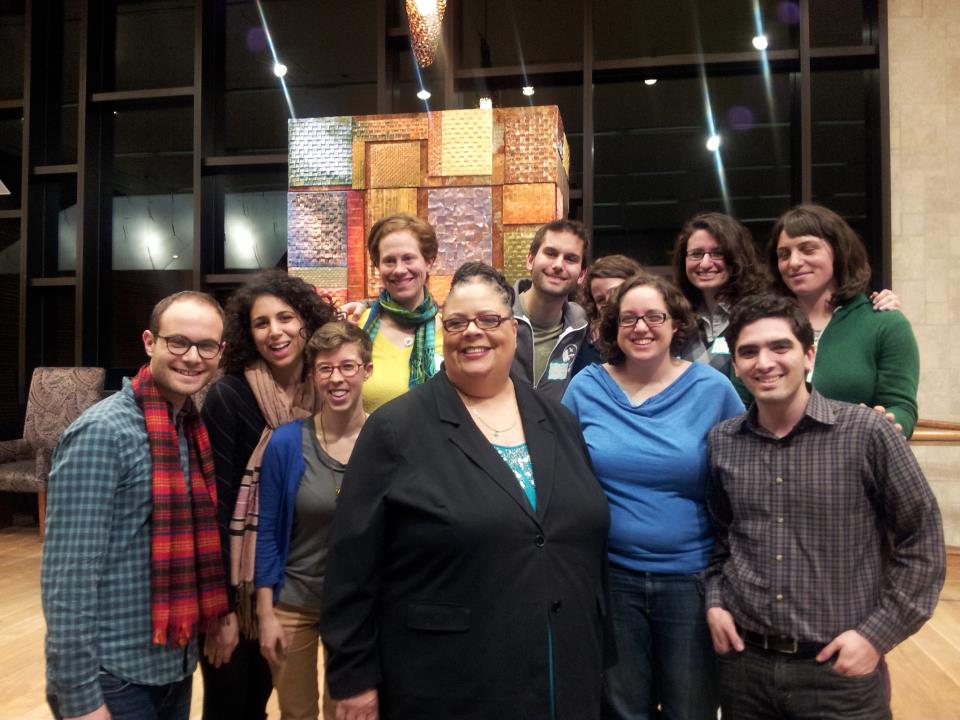
Karen Lewis with JSAS organizers at JRC, 4/17/13

Karen Lewis with JSAS organizers at JRC, 4/17/13

For Yom Hashoah: A Tribute to Pacifist Heroes André and Magda Trocmé

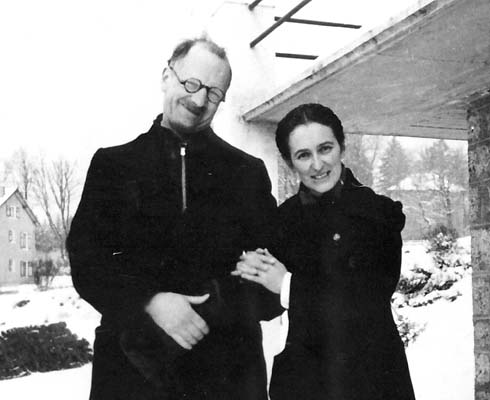
Andre Trocme

In honor of Yom Hashoah, please read about the sacred work of Pastor André and Magda Trocmé, the courageous pacifist Christians who saved 3,000-5,000 Jews from certain death in South Central France. May their memory be for a blessing.

The biography below is reposted from the Swarthmore College Peace Collection:

André and Magda Trocmé are perhaps best known for their work in the small French town of Le Chambon-sur-Lignon where, during World War II, they inspired the villagers to help protect and sometimes to assist in the escape of Jews and other poltiical refugees. This quiet and courageous assistance was given without resorting to violence. Historians estimate that about 3,500 Jews were harbored in the area in and around Le Chambon.

André Trocmé (1901-1971) was born in St. Quentin in the north of France to Huguenot parents. After seminary in Paris and graduate work at Union Theological Seminary in New York, he was ordained into the French Reformed Church and served for eight years among the coal miners and steel workers of Maubeuge and Sin-le-Noble, two small towns in the north of France. He preached nonviolence at a time when such views were unpopular in France. In 1934 André Trocmé accepted a call to be pastor in the remote Huguenot village of Le Chambon-sur-Lignon on the Plateau Vivarais-Lignon in South Central France. These parishioners were more sympathetic to his views on nonviolence.

Magda Trocmé (1901-1996) was born in Italy to an Italian father and a Russian mother. She graduated from the University of Florence with a degree in literature and earned further degrees in French. She and André Trocmé met in the United States while she was attending the New York School of Social Work, and they were married in 1926. The couple had four children, Nelly, Jean-Pierre, Jacques, and Daniel.

In 1938, André Trocmé, and his pacifist colleague Édouard Theis, founded L’Ecole Nouvelle Cévenol in Le Chambon, a Protestant, co-educational secondary school. In addition to the usual French secondary school curriculum, tolerance, honesty, and nonviolence were taught as well. L’Ecole Nouvelle Cévenole soon gained an international focus, and after World War II the name of the school was changed to Collège Cévenol. Magda Trocmé taught Italian at this school which is still in operation today.

During the first part of World War II Le Chambon was located in the “free”( unoccupied) zone of France. By 1942 the Germans had occupied the entire country. However, the population of the Plateau Vivarais-Lignon continued to aid an increasing number of refugees. In 1943, André Trocmé, Édouard Theis, and the head of the public school, Roger Darcissac were interned in a camp by the Vichy police. These men were arrested for their part in assisting the refugees of the area. Trocmé, Theis, and Darcissac were released from prison after one month, but Trocmé and Theis went into hiding for the next ten months.

In the late 1940s André and Magda Trocmé traveled as European Secretaries for the International Fellowship of Reconciliation (IFOR). After their move to Versailles (France) in 1950, the Trocmé’s founded La Maison de la Réconciliation. The Maison de la Reconciliation became an international peace center and the headquarters of the French and Continental Secretariat of the IFOR. During travels in the United States, under IFOR auspices, André Trocmé delivered the Robert Treat Paine lectures which became the basis for his book The Politics of Repentance, published in 1953. During the strife between France and Algeria, André Trocmé helped start Eirene (International Service for Peace), located in Morocco, which provided alternative service for conscientious objectors. He was also active in the movement against atomic weapons, becoming president of the French Federation Against Atomic Armaments in 1959. In 1960, André Trocmé accepted a call to become one of the ministers of the Saint-Gervais Church in Geneva, Switzerland. Many of the sermons he preached at Saint-Gervais were broadcast. His book, Jésus-Christ et la Revolution Non Violente was published in French in 1961 and subsequently in other languages (Orbis Books edition, 2004). In 1965, André Trocmé accompanied a peace mission to Vietnam.

After World War II André Trocmé was awarded the Rosette de la Résistance by the French government. The story of the Trocmé’s pacifist leadership inspired Philip P. Hallie, a professor at Wesleyan University, to write the book Lest Innocent Blood by Shed, published in 1979. Eleven years later Pierre Sauvage produced the documentary Weapons of the Spirit (1988), explaining how his family survived Word War II, through the efforts of the people of Le Chambon.

André Trocmé died in Geneva on June 5, 1971, just a few weeks after he had been scheduled to receive the Médaille des Justes from the government of Israel. As more and more people were recognized as “Righteous Gentiles,” the Yad Vashem honored all the residents of Le Chambon-sur-Lignon and the surrounding area. In their memory an engraved stele and rock garden were installed in the park of Yad Vashem (Israel).

After the death of her husband Magda Trocmé moved to Paris with Alice Reynier (“Jispa”), a close family friend who had lived with the Trocmé family since 1942. Alice Reynier shared their family life and their work. Magda Trocmé received an honorary degree from Haverford College in 1981 in the name of the people of Le Chambon and the surrounding area She died in Paris in 1996. André, Magda, their sons Jean-Pierre and Daniel, and Jispa, are all buried as a family in the cemetery of Le Chambon-sur-Lignon.

Reflections on the Four Cups – A Guest Post by Rabbi Lynn Gottlieb

4cupsHere is a guest post written by my friend and colleague, Rabbi Lynn Gottlieb, founder of Shomer Shalom Institute for Jewish Nonviolence. Read it around your seder table:

Talmud Yerushalmi (Pesachim 10a) associates the four verses that describe the liberation of the families of Israel from subjugation with the four cups of wine at the Passover table. As it is written, “Say, therefore to the Families of Yisrael, ‘I am Adonai and I will take you out from under the burdens of Mitzryim, and I will save you from their bondage, and I will redeem you with an outstretched arm and with great judgments and I will take you to Me as a people…and you shall know the Spirit that draws you forth from under the burdens of subjugation.”

The four words imply a process a process of transformation. This process has four parts: Mitzryim is the Hebrew word that refers to the condition of structural subjugation. Pesakh moves from limping under the burden of the oppression to leaping like a liberated lamb through the parting seas that lead to freedom. The process happens in stages.

V’hotzayti~I will take you out: Complete subjugation is resisted by resisting the occupation of the mind that oppression imposes. In this stage we must ask questions that release us from the narratives that justify subjugation. That is why the seder begins with a collective invitation to the poor and oppressed to speak their stories and share a meal. The four children are a way of exploring one’s own relationship to subjugation.

V’he’tzal’ti~I will save you: Mitzryim is not mentioned by name, implying a lessening of the power of subjugation. At this stage, the community engages in acts of resistance and noncooperation-direct action in order to embody the liberation and begin the long journey of stepping out of subjugation. The midwives boycotting Pharaoh’s order to harm children, and instead, made the healing of children their first priority. Some traditions say they were non-Jewish midwives, and other traditions equate them with Miriam and Yochevet. What is clear for all of us? Liberation depends on multicultural, intergenerational and multifaith solidarity. Freedom is a country without borders.

V’ga’al’ti~I will redeem you:  Redemption requires collective mass action and the building of pillars of support in sections of society that have not yet taken action. Systematic and structural violence can be overcome when the society as a whole no longer accepts the normative status quo. Oppression is moved out of the margins into the center as a social issue.  During this stage oppression can increase because people are moving closer to the goal of overcoming subjugation. Pharaoh sends his armies to attack those seeking liberation. At this moment we need to call upon the entire nation’s faith that the seas will part.

Lakach’ti~I will take you in beloved relationship: Liberation requires a communal effort to building alternative institutions, and to create alternatives to the violent narratives of oppression. Liberation is the creation of a new reality outside the subjugation framework where the dignity of every single human being is valued. Dignity is a country without borders, it is the promised land.

As the process of liberation proceeds, we come to V‘yadatem~and you shall know. This knowledge is the knowledge of the heart that comes from faith in nonviolence and compassion.  When liberation is internalized  it is a powerful turning point in the healing process.  It is awakening to the realization that we are all equal and precious in the eyes of the Creator.

For Passover: A Meditation on the Four Children

4sons1Here’s a new Passover seder supplement that I’ve just written for Jewish Voice for Peace. Click the link below if you’d like a pdf to print out and read at you seder table next week.

JVP Seder Supplement 2013

As Jews, how do we respond when we hear the tragic news regularly coming out of Israel/Palestine? How do we respond to reports of checkpoints and walls, of home demolitions and evictions, of blockades and military incursions?

It might well be said that there are four very different children deep inside each of us, each reacting in his or her own characteristic way.

The Fearful Child is marked by the trauma of the Shoah and believes that to be a Jew means to be forever vulnerable. While he may be willing to accept that we live in an age of relative Jewish privilege and power, in his heart he feels that all of these freedoms could easily be taken away in the blink of an eye. To the Fearful Child, Israel represents Jewish empowerment – the only place in the world that can ensure the collective safety of the Jewish people.

The Bitter Child channels her Jewish fears into demonization of the other. This child chooses to view anti-Semitism as the most eternal and pernicious of all forms of hatred and considers all those “outside the tribe” to be real or potential enemies. She believes that Palestinians fundamentally despise Jews and will never tolerate their presence in the land – and that brute force is the only language they will ever understand.

The Silent Child is overwhelmed with the myriad of claims, histories, narratives and analyses that emerge from Israel/Palestine. While he dreams of a day in which both peoples will live in peace, he is unable to sift through all that he hears and determine how he might help bring that day about. At his most despairing moments, he doesn’t believe a just peace between these two peoples will ever be possible. And so he directs his Jewish conscience toward other causes and concerns – paralyzed by the “complexities” of this particular conflict.

The Courageous Child is willing to admit the painful truth that this historically persecuted people has now become a persecutor. This child understands and empathizes with the emotions of the other children all too well – in truth, she still experiences them from time to time. In the end, however, the Courageous Child refuses to live a life defined by fear, bitterness or complacency. She understands it is her sacred duty to stand in solidarity with all who are oppressed, particularly when she herself is implicated in that oppression.

At one time or another we have heard within ourselves the voices of any or all of these children.

How will we respond to them?

For Passover: Exodus Without Eisodus

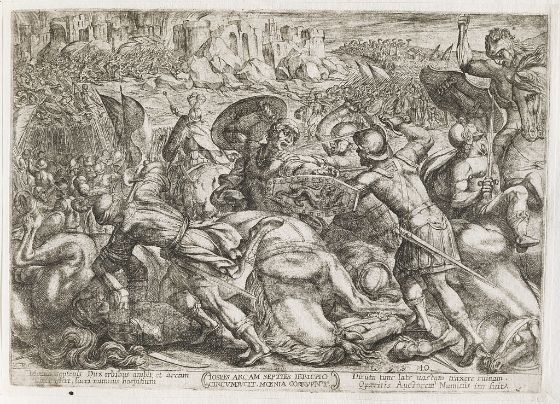
"The Fall of Jericho" (Antonio Tempesta)

“The Fall of Jericho” (Antonio Tempesta)

In honor of Passover, I’d like to share an excerpt from article I’ve recently finished that attempts to articulate a Jewish Theology of Liberation. The longer piece will hopefully be published soon – in the meantime, I offer this snippet to you as “food for thought” for your seder table. All the best for a liberating Pesach!

The Exodus is, of course, the sacred liberation story par excellence, in which God hearkens to the cry of the persecuted, rebukes the oppressor Pharaoh and frees the enslaved. While this narrative is clearly presented within a particularist context (God hearkens to the cry of God’s oppressed people), it has historically resonated with universal power. As the social and political scientist Michael Walzer has observed, a myriad of liberation movements have been indelibly marked with Exodus consciousness throughout the course of Western civilization.[1]

On the most basic level, then, a Jewish theology of liberation must necessarily view the Exodus as both a particular narrative of a certain people as well as a universal narrative that encompasses all humanity.  The oppression of the Jewish people must be understood as inseparable from the oppression of all peoples – likewise the liberation of the Jewish people must be inextricably linked to the liberation of all peoples. While the historical events may differ in the details, they are all bound by a common sacred truth: the voice of the God of Liberation calls out in every language and in every generation to demand the liberation of the oppressed.

However, if we read the Exodus story honestly and unflinchingly, we must be ready to admit the presence of another, darker voice present in this narrative. The Exodus does not only describe the liberation of an oppressed people from bondage – it also contains the story of a journey toward and entrance into a “Promised Land” inhabited by other peoples – indigenous inhabitants whom the Israelites are commanded to dislodge and exterminate without pity.[2]

As difficult as it may be to read morally repugnant passages such as these in one’s “sacred” text, it is even more unsettling when we consider that these imperatives are deeply embedded within our cherished liberation narrative. In a sense, the “Exodus” is only the first half of a much longer story – a saga that begins with the Israelites exit from Egypt (Exodus) and ends with their entrance in Canaan (Eisodus). As the narrative would have it, we cannot have the Exodus without God’s promise of the land – and this promise cannot be fulfilled without the Israelites obedience to a commandment that demands nothing less than ethnic cleansing and even extermination.

Continue reading

On Open Hillel, Open Debate and Open Minds

logo

Last November, Harvard’s Progressive Jewish Alliance prepared to sponsor “Jewish Voices Against the Occupation.” One week before it was set to take place at Harvard Hillel, Hillel decided to pull the plug on the program. Why? Because Harvard College Palestine Solidarity Committee was a co-sponsor.

In defense of its position, Harvard Hillel cited the guidelines of Hillel International that state Hillel organizations “will not partner with, house, or host organizations, groups, or speakers” that support the “boycott of, divestment from, or sanctions against the state of Israel.” And since the Harvard PSC promotes boycott, divestment and sanctions, this was enough for Hillel to kibosh a program sponsored by a Jewish student group.

If this sounds vaguely like deja vu to you, that’s because back in March 2011, Brandeis University Hillel refused to allow student chapter of Jewish Voice for Peace to affiliate under its umbrella, citing the very same guidelines. Then senior Lev Hirschorn commented at the time:

We feel like we deserve a seat at the Jewish communal table, but there is a sense that dissent on the question of Israel is not really acceptable.

As open debate and discussion have been indelible aspects of Jewish culture from time immemorial these attempts at muzzling students’ voices are particularly egregious. Hillel International’s guidelines (which are not obligatory for local Hillels) essentially ensure that there will be no honest and open Jewish conversations about Israel on campuses across the country. They will most certainly exclude growing Jewish student groups such as JVP – and they will also prevent Hillels from inviting co-sponsorship or dialogue with Palestinians, since almost all Palestinian campus groups support BDS.

Trust me on this: this has everything to do with the Jewish establishment’s fear of letting young Jews think for themselves on the subject of Israel. Not convinced? Just read this recent piece in the Washington Jewish Week, in which Rabbi Stuart Weinblatt (chairperson of the Jewish Federations of North America Rabbinical Council) offered up this choice observation:

I think it is important to begin to help prepare our children for what they are going to encounter on college campuses in regard to pro-Palestinian groups, the anti-Israel groups on Israel and radical fringe groups like Jewish Voices for Peace.

These are not J Street. Our kids are relatively sheltered, and they go to college and are confronted with hostility and misinformation. I want them to be equipped with the knowledge and understanding of the historical justification for the existence of the state of Israel.

Well that certainly says it all. We need to protect our poor, vulnerable, non-critically thinking young people from Jewish Voice for Peace and other groups that advocate for the rights of Palestinians.  Since we can’t trust college students to think for themselves, we must “equip” them with what we deem to be the acceptable historical Jewish opinions on Israel. This profoundly patronizing, pseudo mind-controlling approach to Jewish outreach explains why the Jewish establishment is fast making itself irrelevant to young people – and why it feels compelled to allocate hundreds of millions of dollars yearly to send college students on all expenses paid Birthright junkets and free trips to the National AIPAC Convention.

Please join me in advocating for a Jewish student community that respects a plurality of Jewish student voices on Israel/Palestine. Please sign this petition by Open Hillel, a coalition of students that seek to change the “standards of partnership” in Hillel International’s guidelines and encourages local campus Hillels to adopt policies that “allow for free discourse on all subjects within the Hillel community.”

From the Open Hillel website:

We believe deeply in the ideal, expressed in Hillel International’s mission statement, of a vibrant, pluralistic Jewish community on campus, in which all people, regardless of their religious observance, past Jewish experience, or personal beliefs, are welcome. In many ways, Hillel has been remarkably successful at fostering such a pluralistic and inclusive community, bringing together students from different backgrounds to learn from and support one another, as well as to openly debate and discuss their differing views. We believe that this pluralism should be extended to the subject of Israel, and that no Jewish group should be excluded from the community for its political views.

In addition, we believe that inter-community dialogue and free discourse, even on difficult subjects, is essential in the context of an educational institution and a democratic society. Open discussion and debate is a Jewish value, and we are proud of our culture’s long tradition of encouraging the expression of multiple, even contradictory, views and arguments. However, Hillel International’s current guidelines encourage Jewish students to avoid seriously engaging with Palestinian students or other students on campus with differing views on Israel-Palestine. This is detrimental to the goal of encouraging mutual understanding, cooperation, and peace. Thus, we believe it is essential that Hillel-affiliated groups be able to partner with other campus groups in order to share perspectives, cooperate in those areas where we agree, and respectfully debate in those areas where we disagree.

Sure doesn’t sound like the words of “sheltered,” “unequipped” young people to me…

Stanford Professor, Poet and Ex-Sixties Radical Hilton Obenzinger on What it Means to Be a Jew

obenzingerHighly recommended: this recent interview with Stanford professor Hilton Obenzinger, who among other things is a prolific writer and poet and was one of the student leaders of the 1968 Columbia University protests which led to the six day takeover of the President’s office.  Obenzinger definitely speaks my heart on all kinds of issues. (h/t: Susan Klonsky)

A few choice excerpts:

What makes you proud to be a Jew?

Jewish culture is rich and varied with a transnational sense of peoplehood. In Europe, my ancestors were everything from ultra-orthodox to Polish nationalists, to escape-to-America émigrés, to Zionist and Communist. The Nazis murdered almost all of them. In the face of that horror and other horrors of history, Jewish survival is astonishing.

I’m especially proud of the American Jewish experience that pushed me, and others, to join the civil rights and social justice movements. I’ve heard it said that support for equality and justice flows from Jewish ethics and from the history of Jewish persecution. I’d like to believe it.

What are you most ashamed about Jews as an ethnic group?

From my point of view, Zionism turned out to be a moral disaster for the Jews. American Jews have been suckered into supporting Israel in unthinking ways. This has been changing, but not enough American Jews are yelling and screaming to stop Israel’s expansion.

Forty years ago, did you believe there would be a resolution to the conflict between Israel and the Palestinians?

Yes. And I still do.

Do you see a resolution to the conflict in your own lifetime?

Assuming I live another decade or two, probably not. But you never know. Who would have thought the Soviet Union would collapse? Or a black man would be president? I may not live to see it but it’s likely to happen.

Do you think that there can be a one-state solution to the conflicts between Palestinians and Israelis?

Of course, there can be — which doesn’t mean it will happen, at least in the near future. The conflict is not at root religious and it hasn’t been going on for thousands of years, as many claim. It started about 130 years ago when Zionism, a Western political movement, called for the settlement of Palestine and the exclusion of the native people. It’s a conflict started by people, not by God; humans created it; humans can fix it.

What do you see happening now?

Israeli Jews are a nationality with their own language and culture, as are the Palestinians, so it would take a lot of good faith to fit all of them together, including the refugees. Good faith is not an abundant commodity nowadays. Meanwhile, the Israeli government has been doing all it can to prevent a two-state solution by expanding settlements and uprooting Palestinian communities.

One state may be inevitable, since the foundations for a viable Palestinian state have been greatly undermined. Israel might move further in its current colonialist direction, creating reservations for the natives and a large open-air prison in Gaza. I don’t care if there are one or four states, actually, just so long as equality and democratic rights are at the core of all of them.

What have you learned from studying the Holocaust?

When we protested the war in Vietnam many of us didn’t want to be “good Germans” — people passively accepting evil and genocide. My family’s murder always weighs on my mind, so for me it’s imperative to speak out about injustice.

I produced my aunt’s oral testimony called Running through Fire about her escape from the Warsaw Ghetto. I learned from her that everything is muddy — with some Germans acting morally and courageously and some Jews acting in a craven fashion. I also leaned that in a situation of utter horror, no matter how smart and skilled and, in her case, how beautiful you were, pure luck is a determining factor. I’ve also learned to keep my passport up-to-date.

What does it mean to you to be a Jew?

After my son’s birth I felt compelled to pass on to him a positive Jewish experience without the corruptions of anti-Arab racism, and the “Jewish Disneyland” kitsch that American Jews love. I wanted my son to laugh, to enjoy the bar mitzvah experience, to feel comfortable being Jewish and Filipino — which is his mother’s ethnic identity.

What do you think Jews and Arabs have in common?

I told my aunt who survived the Nazis that if she could meet Palestinians in refugee camps she would like them, and that they were a lot like her. Palestinians, like Jews, value education and culture, and they insist on persisting. They, too, have historical memories that they won’t allow to be erased and that they act upon. Both Israeli Jews and Palestinians have also managed to drive each other insane. It’s painful watching two peoples destroy each other.

Kindness Is Not Optional: Creating an Interfaith Covenental Community

vk dinner

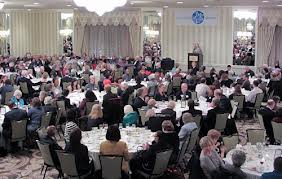
Here is a text of my keynote speech at last night’s annual Vision Keepers dinner of Interfaith Action – a faith-based direct service organization that serves the hungry and homeless population of my hometown of Evanston:

I’d like to begin my remarks tonight by sharing you with one of my chronic pet peeves – and I’d like to apologize at the outset to my congregants and loved ones, who are probably getting very tired of hearing me complain about this:  I really, really don’t like the saying “Practice Random Acts of Kindness and Senseless Acts of Beauty.”

Now I say this with all due apology to any of you who might have this bumper sticker on your car – I mean you no disrespect.  And believe me: I am a huge fan of encouraging kindness and beauty. It’s just that personally speaking, I would argue the exact opposite. I would argue for “non-Random acts of kindness and mindful acts of beauty.”  After all, if by kindness we mean simple human respect and dignity – qualities that are essential to the core of our basic humanity – I think we would all agree that there should be nothing random about it. Kindness shouldn’t be random – quite frankly, it should be mandatory.

In its way, I think this slogan reflects something very profound about contemporary American culture. As a society that values individual initiative, it is natural that we will view compassion as a random, voluntary enterprise.  We act compassionately whenever we feel compassionate. And yes, we might well feel a great deal of compassion: for our loved ones, we may even feel compassion for people we don’t actually know. But the problem with this approach, of course, is that feelings cannot be guaranteed. They come and go. Feelings are, by definition, elusive and transient.

Biblical tradition provides us with a different model.  Compassion is not random – it is an imperative. Even love itself is commanded: “Love your neighbor as yourself.” “You shall love Adonai your God.” “You shall love the stranger, for you were once strangers in the land of Egypt.” In other words, feelings are wonderful, but feelings are not enough. Kindness and compassion should not be relegated to random feeling – they should be cultivated as a mindful, ongoing conscious practice. We have to teach ourselves how to be compassionate even if we are not feeling particularly compassionate – even if we are too overwhelmed to feel compassionate. Compassion is, for lack of a better word, a discipline.

In the Bible, kindness and compassion are complex and profound concepts. In fact, there are many different Hebrew words for compassion. The most well known word, “rachamim,” comes from the root rechem, or “womb” and suggests the kind of unconditional compassion that comes with parental love. More broadly, we might understand rachamim as the kind of compassion that we show toward those with whom we have a unique personal connection. The word “chen” is usually translated as “grace.”  This form of compassion generally refers to gestures of favor or goodwill.

And then there is  “chesed,” a word that is usually rendered as “lovingkindness.”  As I learned back in my Rabbinical school Biblical Hebrew class, “lovingkindness” is probably not the best definition for chesed.  It’s a little too general, a little too mushy.  Most contemporary Hebrew scholars suggest that a better definition of chesed is “covenantal loyalty.”  Indeed, if we look at the way this word is used in the Bible, it has less to do with a feeling of lovingkindess than a deep sense of responsibility that comes out of sacred relationship. God shows chesed for the Israelites – and the Israelites for God – when they remain loyal to the mutual covenant they established together at Sinai. In another example, Ruth is praised in the Bible for the chesed she demonstrates to her mother-in-law Naomi when she remains loyal to her promise to stand by her side.

In Jewish tradition, this abstract notion of chesed was applied by the ancient rabbis to the everyday life of the community. Chesed societies, for instance, were the prototypical communal welfare institutions that were the cornerstone of Jewish communities for centuries. They too were guided by the central ethic of covenantal loyalty – “commanded compassion,” if you will.  At my congregation, as at yours, I’m sure, we have a committee of members helps members in need, usually due to illness or the loss of a loved one.  We call it, naturally, the Chesed Committee. And the members who participate in it will surely at attest that they don’t participate out of a desire to be randomly kind, but rather out of the sense of responsibility that comes through belonging to a community. Probably more often than not, the members of the Chesed Committee serve people they don’t even know personally – and that, of course, is precisely the point.

So in its way, chesed presents us with a compelling and important way of understanding collective compassion.  It is intimately connected to the concept of covenant and mutual obligation. Chesed is the kind of love and compassion that comes from a deeper sense of communal accountability. When a people live in a covenantal context –with chesed – it is with the fundamental understanding that the community is accountable to the individual just as much as the individual is accountable to the community.

By the same token, all of us in the room tonight – we are part of a covenantal community as well. All of us: the congregations that make up Interfaith Action understand on a deep, spiritually cellular level, that we have an abiding sense of covenant with the Evanston community. The Interfaith Action soup kitchens, the warming centers, the homeless hospitality centers, the Producemobile, are much, much more than mere direct service projects – they are expressions of our sacred sense of commitment to the city in which we live – and of the conviction that our compassion for every single member of this community must not be regarded as random or voluntary. On the contrary, we are compelled to feed the hungry, to shelter the homeless out of a collective sense of sacred, covenantal imperative.

In this regard, I want to honor the work of our honorees tonight – and all who participate in Interfaith Action – for the sacred work you do.  I know you don’t do it just because it makes you feel good. I’m willing to bet there have been plenty of times you went over to soup kitchen when you were tired or just plain didn’t feel like going. I’m willing to go out on a limb and say there may have been times that you went even while you were doubting that your actions even made a difference. But in the end, you did go – and you continue to go – and you are here tonight because you know that at the end of the day, kindness should not be optional.

I’d like to go a bit further now, however, and offer a few thoughts about what an even deeper covenantal obligation might look like for our community.  I’ve always believed that religion is at its best when it not only comforts the afflicted, but challenges the oppressive status quo that afflicts them. What does it mean when we literally feed the hungry, but fail to challenge a system that countenances hunger in its midst?  Is it enough to provide warming centers, or should we also see it as our religious obligation to ask whether or not our city is also doing everything in its power to provide something as essential to life as heating for all its citizens?  On an even deeper level, shouldn’t we be finding ways to challenge an infrastructural reality that makes “warming centers” even necessary in the first place?

I believe that religion is at its best when it manages to balance what I would call the “pastoral” with the “prophetic.”  In other words, when our Biblical tradition demands that we clothe the naked and feed the hungry, this is a pastoral imperative. And when we are commanded to speak truth to powerful Pharaohs, to create societies of fairness and equity, to proclaim liberty throughout the land unto all the inhabitants thereof – this is a prophetic imperative.

And so I’d like to take this opportunity to ask those of us in this room – those of us who act on a deep and profound sense of pastoral commitment to the Evanston community: what would it look like for us to create a similar kind of covenantal coalition out of a prophetic commitment?  More to the point: do we believe that our city of Evanston is doing what it must to ensure that its citizens are not going to bed hungry, that they have roofs over their heads and heat in their homes?   And if the answer is no, then I believe we must ask ourselves: do we believe that holding our own city accountable is just as much a religious obligation as running soup kitchens and warming centers?

Now I know that there are a myriad of complicated policy discussions to be had on these kinds of issues, and I obviously don’t intend to parse them all right now. But I do think that too often we hide behind a mantra of “it’s complicated” to avoid dealing with some fairly simple truths. And just as often, I think, we shy away from policy debates because we feel as though we shouldn’t be mixing religion and politics.

But at the end of the day, however, it’s really not all that complicated.  There’s nothing complicated about food, shelter and heat – these are among our most human basic needs. And when it comes to mixing religion and politics, I’ll repeat again: religion should not only about comforting the afflicted – it’s also about afflicting the comfortable. It’s about challenging the attitudes of those who view the world with a scarcity mentality that claims there is only so much to go around – and that it’s not our problem if there are those who will inevitably go without.

I hope that gatherings such as this will redouble our resolve to both the pastoral and the prophetic aspects of our faith traditions. I hope that as we go forward with this sacred work, we will find ways to open conversations about what a truly covenantal Evanston faith community might look like. And I hope that in doing so, we might provide a truly prophetic voice of conscience.

Thank you again for all you do. Congratulations to our honorees tonight. May all of our efforts continue to transform the lives of others – may they ultimately transform our world as well.

Amen.

American Rabbis to Obama: Hold Netanyahu Accountable!

Obama-and-Netanyahu-rangling-over-Iran

The following letter was just released by Jewish Voice for Peace and will soon be delivered to the White House:

Dear President Obama,

We are writing this letter to you as American rabbis, cantors and rabbinical students, serving a wide range of Jewish communities.   We were dismayed to learn that, immediately following the recognition by the United Nations of observer status for Palestine, the government of Israel issued permits to begin development of two large tracts of settlement housing in highly contested areas in  East Jerusalem (E-1) and the West Bank (Maaleh Adumim.)

As you well know, these expansion permits are damaging not only to prospects for Palestinian self-determination but also for peace in the region.  We urge you in the strongest terms to use your full authority to oppose these expansions, which are illegal under international law and which also make impossible any hope of creating a viable Palestinian state in the West Bank.

We represent a growing voice within American Jewry which seeks an end to Israel’s occupation of the West Bank and its stranglehold by blockade of the people of Gaza.  We believe that the aggressive expansion of settlements in the Occupied territories constitutes a deliberate strategy to obstruct a peaceful resolution to the conflict between Israel and Palestine.  We believe further that the United States, as the primary global source of financial and political support for the  Israeli government, has an obligation to hold the Netanyahu government accountable for these actions, which thwart the possibility of peaceful resolution of the conflict.

It is no longer the case — if it ever was — that the Jewish community in the United States  is unified in its support of the policies of successive Israeli governments, which have sought to create “facts on the ground” that obstruct the hopes of independence and sustainability for the Palestinian people.  Absent active intervention by the United States and other nations, Israel will surely continue to implement these destructive policies.

As leaders of the American Jewish community, we join you in hope for a just peace for all the peoples of the region.  Please know that you have our strong support for demanding that the government of Israel reverse for this latest action and for all that you can do to lead the way to a fair and sustainable resolution.

Yours sincerely,

Rabbi Margaret Holub

Rabbi Brant Rosen

Rabbi Brian Walt

Rabbi Lynn Gottleib

Rabbi Joseph Berman

Rabbi Laurie Zimmerman

Rabbi Elizabeth Bolton

Rabbi Julie Greenberg

Rabbi Borukh Goldberg

Rabbi Eyal Levinson

Rabbi David Mivasair

Rabbi Rebecca Lillian

Rabbi Rachel Barenblat

Alana Alpert

Cantor Michael Davis

Rabbi Michael E. Feinberg

Rain Zohav

Rabbi Zev-Hayyim Feyer

Jessica Rosenberg

Ken Rosenstein

Rabbi Shai Gluskin

Rabbi Rebecca Alpert

Ari Lev Fornari

Rabbi Art Donsky

Rabbi Jeremy Milgrom

Rabbi Linda Holtzman

Rabbi Leonard Beerman

Rabbi Alexis Pearce

Rabbi Sarra Lev

David Basior

Marching in Solidarity: A Guest Post by Hallie Rosen

Gaza March

Guest post by Hallie Rosen

Like almost every Jew, I too have a complicated relationship with Israel.

Israel has always been an important part of my Jewish identity. Brant and I met doing Israel activism on campus at UCLA and we spent almost two years in Israel before we were married. I’ve worked in the organized Jewish community for almost twenty years, first at the Anti-Defamation League and more recently at the Illinois Holocaust Museum.

And like Brant, my views on Israel/Palestine have evolved. While I admire Brant’s courage regarding the Israel/Palestine issue, I haven’t felt completely comfortable taking the same kinds of public stands that he does. I agree with many of Brant’s viewpoints, but I admit there have been times I have felt uncomfortable with his being so public with his views – my ingrained impulse against airing Israel’s “dirty laundry.”

While I have read his blog and his book, and we have had many conversations about his activism and the general political situation in Israel/Palestine, I have never personally taken such a public stand on the issue until November 19, when I marched with Brant at a Chicago rally protesting Israel’s military actions in Gaza.

It was not a major decision on my part. I was very upset by the news out of Gaza, so when Brant invited me to join him in the march/rally, I readily agreed.  Since I work near the rally site and it took place at the end of the day, it was a simple matter to walk over and join the group as people gathered at the Federal Plaza.

My first impression was surprise at how many young families were in attendance. I expected to see primarily college age students, but I was struck by the sight of many parents with school aged children and a fair amount of strollers.  Since Brant was wearing a kippah, people knew that he was Jewish and several people came up to him to thank him for attending the rally and showing his support.  They didn’t necessarily know who he was, but it clearly meant a lot for see a Jew walk with them.  For me, it underscored that this was an issue of conscience for all peoples – not just Palestinians.

I expected to see protest posters and I braced myself for anti-Israel and anti-Jewish sentiments.  From my ADL days, I knew that these kinds of protests can easily become an opportunity for fringe elements to chant anti-Semitic slogans.

But that didn’t happen.  All of the messages were strong, but on target. As the group of about 700 people walked peaceably through the Loop during rush hour, there was chanting  but also simple non-political conversations among the marches – about shopping, uncomfortable shoes, upcoming holidays, etc.  I only saw one incident of an onlooker, who provoked some of the crowd – the police quickly subdued him and we continued on our way. As a relative newcomer, I didn’t fully feel ready to join the chanting. Perhaps I’ve not fully come to grips with what it means to be a Jew in solidarity with Palestinians.

We gathered once again after the walk to listen to speakers. Everyone was on message, asking for sanctions from the US, end of violence and settlement building, requesting a just peace, etc. When Brant spoke, he received a strong enthusiastic reception from the crowd – particularly when he was introduced as a rabbi.

As the crowd dwindled, we walked to the train station and back home. Later that night, I watched the news coverage of the rally and was surprised, at how violent the images were.  The piece included edited snippets of protestors chanting and because there were kafiyyahs and head coverings, it seemed that the news media was only interested in showing us the familiar images of “angry Arabs.”

The news report failed to convey the racial and religious diversity of the crowd – and there were none of the mothers and young children with whom I had just spent a few hours marching.  Once again I became profoundly aware of the power of stereotypes – and to a greater extent, of racism and how the images that we see on a regular basis prejudice our views and shape our opinions.

I also became aware of how important it is to step outside of one’s own comfort zone and find common cause with those whom you’ve previously assumed to be your enemy. In the end, marching for justice was for me an affirmation of our common humanity.