Category Archives: Nakba

Speaking the Unspeakable on Israel/Palestine: Sermon for Yom Kippur 5784

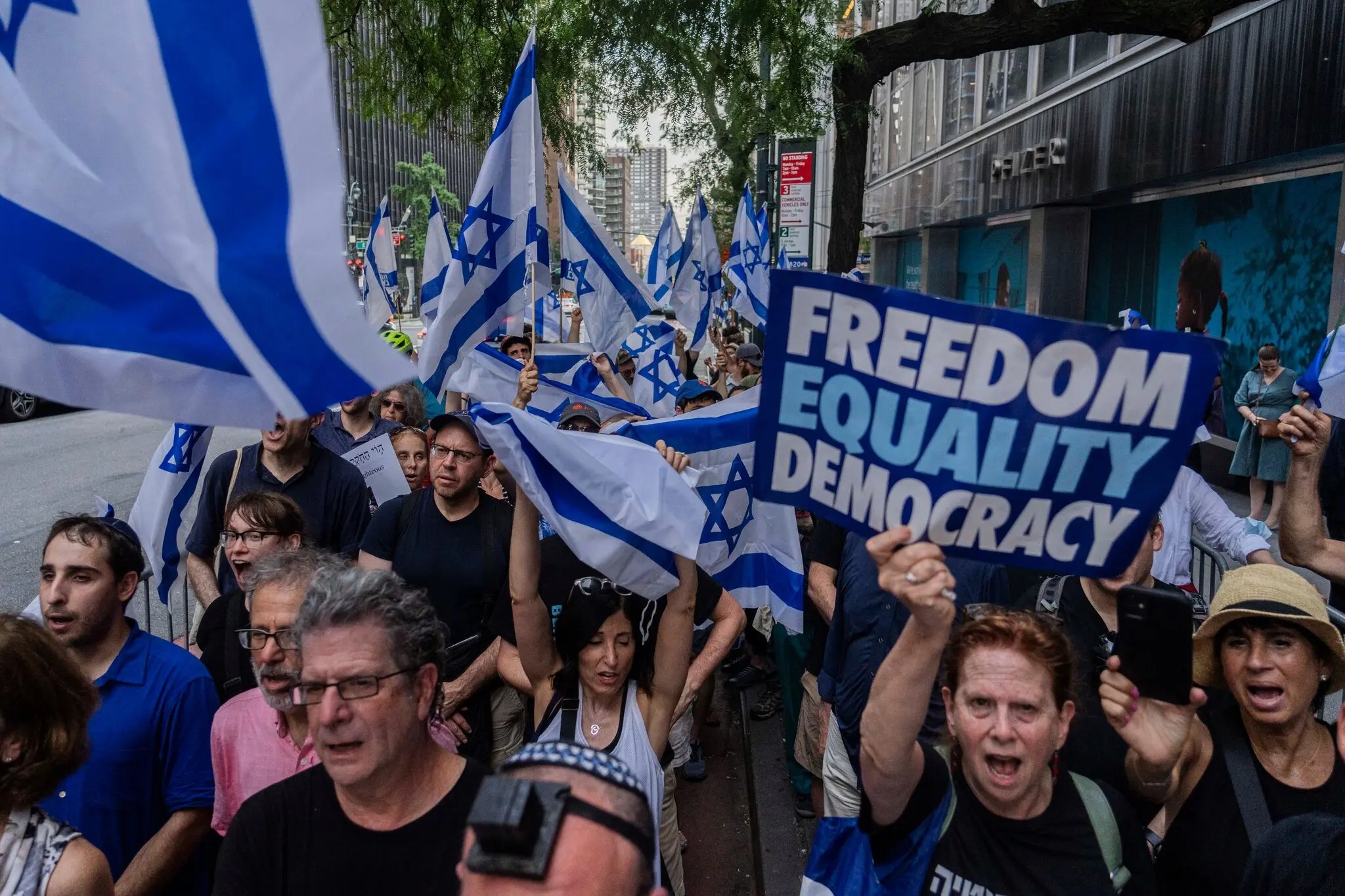
phot: Hiroko Masuike/The New York Times

An op-ed version of this sermon was published in Truthout

Jewish tradition teaches that words have a sacred power. In the very beginning of the Torah, God creates the world itself through the power of the word. In the book of Exodus, the Israelites speak as one people at Sinai, thereby entering into a covenant with God. It is said that on Yom Kippur, the High Priest would enter the Holy of Holies in the Jerusalem Temple and utter the otherwise unspeakable name of God – and at that moment the fate of the very world would hang in the balance. On Yom Kippur, we ourselves stand as a community and say the words of our collective confessions together. As our liturgy would have it, we may not be written into the book of Life for the new year unless we speak these words out loud.

In their way, the power of words is akin to energy. Once they are spoken, they are out in the world – and from that point on there are a myriad of ways their impact might be manifest. Sometimes their power will remain dormant. Other times, our words can be the conduit for deep and powerful transformation.

I think a great deal about the impact of our words when it comes to the issue of Israel/Palestine. We have witnessed their power for instance, over the course of this past year, as thousands of Israelis have been holding regular demonstrations against the current Israeli administration and its plans to limit the power of the Israeli judiciary. Week after week, protesters have chanted words in the streets and carried them on signs, expressing their collective outrage over the government’s “threat to Israeli democracy.” More recently, many in the American Jewish community – including many rabbis – have voiced their support for these protests and have even been staging public protests of their own.

On one level, it could be said that these massive rallies have had a powerful impact. They are the largest and most sustained protests in Israeli history and the most massive mobilization of the Israeli left in years. The rhetoric of the rally has also empowered Zionists in general. Many who advocate for Israel will often refer to it as “the only democracy in the Middle East.” I would suggest that the use of this word is powerful for all the wrong reasons. It covers up the reality that while Israel may be a democracy for Jews, it is decidedly not one for Palestinians. Indeed, for many centrist and right wing Israelis these demonstrations are important because they bolster the illusion of democracy. In so doing, they serve to entrench Zionism and strengthen the Jewish state.

It is true that at many of these demonstrations, there have been some chants and signs condemning Israel’s “occupation. However, this is an oft-invoked word that can mean different things to different people. For some it refers only to Israel’s military occupation of the West Bank and Gaza. For others it also includes annexed territories such as East Jerusalem and the Golan Heights. For still others, the entire land between the river and the sea is considered to be occupied territory. Thus, when the word “occupation” is invoked during the demonstrations, there is little clarity on what it actually means – or what is actually being demanded.

There is yet another powerful word that has recently emerged in relation to Israel/Palestine, and that word is “apartheid.” Last year, three respected human rights organizations: Amnesty International, Human Rights Watch and the Israeli group B’Tselem, all released well-researched reports concluding that Israel is an apartheid regime. Over the past year, many surprising figures have also been increasingly using this word in relation to Israel, including a retired Israeli general.

This past year, a letter was posted online by Israeli academics that openly criticized American Jews for “(paying) insufficient attention to the elephant in the room: Israel’s long-standing occupation.” The letter pointedly stated that “there cannot be democracy for Jews in Israel as long as Palestinians live under a regime of apartheid, as Israeli legal experts have described it.”  The so-called Elephant in the Room Letter was widely distributed and was eventually signed by Jewish leaders and figures – to date it has over 2,700 signatures.

With liberal Jewish leaders increasingly willing to use the “A” word in public, there is every indication that it is losing its stigmatized, transgressive status in the Jewish community. But even here, the meaning of the word “apartheid” depends on how it is used. The B’Tselem report, for instance, claims that Israeli apartheid extends “from the Jordan River to the Mediterranean Sea.” The Israeli general, on the other hand, limited it to the West Bank alone.

There are also those who would say that the term “apartheid” itself doesn’t go far enough – that it is a technical term from international humanitarian law that has limited legal applications. Many would argue that the word “settler colonialism” is much more powerful and meaningful because it is related to decolonization – a concrete process of action that includes the return of refugees and reparations to the Palestinian people.

Yes, all of these words do indeed have a complex kind of power when it comes to Israel/Palestine, and I’m often fascinated by the strategic ways we utilize this power. Years ago, I used to avoid controversial and potentially incendiary words in connection with Israel, feeling that they might well alienate and push away the very people I was trying to reach. I would typically use words I thought were less triggering: “dispossession” instead of “ethnic cleansing,” “non-Zionist” instead of “anti-Zionist,” “occupation” instead of “settler colonialism.”

I feel differently about this now. I actually think it’s important to use words such as these. I believe it’s important to name oppression explicitly and not to soften it with euphemisms. If some words make people uncomfortable, that’s OK. Once a word is said, it can’t be unsaid. It’s now part of the discourse. While some may well recoil from that word, they may well come around to accept it in time.

Words can indeed push the line of what is considered acceptable. But they can also represent one step too far, or the crossing of a line. There is still, for instance, a hard line drawn on the word Zionism. For most Jews, it is still considered beyond the pale to refer to oneself as an anti-Zionist: to break not just with the Israeli government, not just with the 1967 occupation, but with the very concept of an exclusively Jewish nation-state.

Apropos of Yom Kippur, it seems to me that when we say these words and cross this particular line openly, we’re really making a kind of confession. It’s not merely a political opinion – it’s an ethical admission that our Jewish identity has been inextricably connected to the oppression of another people.

When I was growing up, I was routinely taught that Zionism was the national liberation movement of the Jewish people. But I was never taught that this “liberation” came at the expense of another people. Like many American Jews, I was raised to view the establishment of the state of Israel as the exclusive Jewish homeland; a Jewish refuge after centuries of persecution; a redemptive homecoming following the collective trauma of the Holocaust.

Our trauma has been compounded by the sense that the world was complicit in it – that the Jewish people were abandoned by the international community. To be sure, the allied nations should rightly bear deep shame for their inaction during the Holocaust and their refusal to accept Jewish refugees following the war. But even as collective Jewish trauma is all too real, it was tragic and profoundly wrong to justify it by inflicting trauma on another people: by establishing a Jewish state on their backs and creating what has now become the largest refugee population in the world.

When Jewish Zionists publicly confess and act on the truth of this history it can often shake their Jewish identity to the core. This phenomenon often reminds me of something James Baldwin wrote in his classic 1962 essay, “A Letter to My Nephew:”

As you will discover, people find it very difficult to act on what they know. To act is to be committed and to be committed is to be in danger. In this case the danger in the minds and hearts of most white Americans is the loss of their identity. Try to imagine how you would feel if you woke up one morning to find the sun shivering and all the stars aflame. You would be frightened because it is out of the order of nature. Any upheaval in the universe is terrifying because it so profoundly attacks one’s sense of one’s own reality.

Though Baldwin was addressing white supremacy in the US, I think his words are equally applicable to Jewish supremacy in Israel. Zionism has become such an indelible part of Jewish identity that it has caused us to enable – or at the very least tolerate – the oppression of another people. The power of this mythic Zionist narrative manages to keep the truth of this ongoing oppression at bay, lest it causes everything we once held so dear to come crashing to the ground.

I experienced this upheaval personally in 2008, at my former congregation. During Israel’s military assault on Gaza, I experienced deep anguish – and I expressed those feelings in a blog post. While I had often been critical of Israel in the past, this was very different. Rather than using the usual words, calling for “balance” and a plea for “peace on both sides,” I used strong and angry language, explicitly naming Israel as the oppressor. I concluded my post with these words:

We good Jews are ready to protest oppression and human rights abuses anywhere in the world but are all too willing to give Israel a pass. It’s a fascinating double standard, and one I know all too well. I understand it, because I’ve been just as responsible as anyone else for perpetrating it.  

So no more rationalizations. What Israel has been doing to the people of Gaza is an outrage. It has brought neither safety nor security to the people of Israel and it has wrought nothing but misery and tragedy upon the Palestinian people.

There I said it. Now what do I do?

Now many years after later, I realize that post was a kind of confession. Though I didn’t know it at the time, when I wrote those words I was actually crossing a line that would eventually force me to leave my congregation. To use Baldwin’s words, it was upheaval so profound that it attacked my sense of my own reality. I was fairly sure I couldn’t continue as a congregational rabbi – and I wasn’t completely sure what kind of Jew I would be either.

But as I said earlier, once our words are out in the world, there are myriad ways their power might be manifested. I was eventually able to recover my Jewish identity along with my Jewish conscience. Speaking those words was unexpectedly liberating. I discovered there were other Jews like me – lots and lots of them. And together we became part of an emergent Jewish community that had the freedom to say out loud what must be said. I have no illusions that there is a distinct minority of Jews on this side of the line, but I also know that there are many who are now crossing over, breaking their silence on Israel/Palestine in unprecedented ways.

In its way, this new Jewish community is creating a new counter-narrative to the Zionist narrative that has been dominant for so long. One critical part of this counter-narrative is the understanding that standing in solidarity with Palestinians is a mitzvah – a sacred act. When it comes to solidarity in particular, words are enormously important. Those who engage in solidarity with disenfranchised people know that while words may have great power, words can quickly lose their power if they do not lead to action.

Indeed, history is littered with the betrayal of empty words, promises unkept and treaties broken. Staying true to one’s word can often be a challenge for those who are trying to practice solidarity in good faith. The growing popularity of land acknowledgements is a good example. Land acknowledgements are significant and important, but as many Native people have pointed out, they amount to empty words unless they contain accountability – unless they exist in a larger context of decolonization and reparation. As President Robert Larsen of the Lower Sioux Indian Community has put it, “An apology or an acknowledgment is one thing, but what are you going to do next?”

The same applies to those of us who express solidarity with the Palestinian people. Yes, the words we say matter, but unless they lead to genuine transformation, they will remain little more than empty words. To return to my metaphor of energy, words represent the initial spark, but once kindled, it takes real effort to sustain and increase its power. We must take active responsibility to maintain that initial spark by acting on our words, lest it eventually sputter out.

Putting our words of solidarity with Palestinians can take many forms, but a core priority requested by Palestinian civil society groups is support for BDS – the Palestinian-led Boycott, Divestment and Sanctions movement. In this regard, I encourage those who are able to attend our Yom Kippur afternoon program today. We will be hosting a conversation with Omar Barghouti, the co-founder of the BDS national committee, whose presentation is entitled, “Repentance, Reparation and Ethical Reconciliation: A Palestinian Vision for Common Liberation.” Omar was deeply honored to be asked to be our teacher for Yom Kippur – but as I told him, I could think of no more appropriate way for a congregation such as ours to observe this day.

I also want to remind our members that Tzedek Chicago was one of the first congregations to sign a pledge from the Apartheid-Free Communities initiative, a newly created interfaith coalition convened by the American Friends Service Committee. In that statement, signatories pledge “to join others in working to end all support to Israel’s apartheid regime, settler colonialism and military occupation.” Now that we have publicly made this pledge, it will be our challenge to live out these words as a community – and in the spirit of Yom Kippur, I want to encourage us to explore what this will mean for our congregation in the years ahead. By signing this public pledge, it is also our hope that it will give other Jewish congregations and organizations the courage to speak these previously unspeakable truths as well.

In the Shacharit service – the Jewish morning prayer – we say the words, “Baruch she’amar ve’haya ha’olam” – “Blessed is the one who spoke and the world became.” While this literally refers to God but it is also a statement about the potential within each and every one of us. Our words have the power to transform our lives and our world – indeed, to create whole new worlds anew.

So let this be our collective blessing this Yom Kippur: let us find the courage to speak the words that must be spoken. Let our words kindle sparks of possibility, and may they inspire us all to create the world we know is possible: a world of Tzedek/Justice, of Tikkun/Repair and of Shalom/Wholeness for all who dwell on earth. 

Widening the Crack: When Liberal Zionists Condemn Israeli Apartheid

In early August, a powerful letter with the title “The Elephant in the Room” was posted online. Signed by hundreds of academics, clergy, and other public figures from Israel/Palestine and abroad, the statement openly criticized American Jews for “(paying) insufficient attention to the elephant in the room: Israel’s long-standing occupation.” It went on to list a litany of Israeli crimes against Palestinians, including “constant violence,” “ethnic cleansing” and “Jewish supremacism. Then came the money quote:
 
Without equal rights for all, whether in one state, two states, or in some other political framework, there is always a danger of dictatorship. There cannot be democracy for Jews in Israel as long as Palestinians live under a regime of apartheid, as Israeli legal experts have described it.
 
Since its publication, the Elephant letter has garnered well over 2,000 signatures. It has also gained global media attention as something of a game changer, not least because of the large number of prominent public figures who have signed onto it. Indeed, when I scrolled through the list, I noticed the names of numerous liberal Zionists and rabbinic colleagues whom I never dreamed would ever publicly associate Israel with apartheid and Jewish supremacism.
 
The statement has, of course, been thoroughly excoriated by the usual suspects in the Israel advocacy world. There are also Palestinians and members of the Palestine solidarity community who believe the letter doesn’t go far enough. After all, it centers its concern on “democracy for Jews in Israel.” It emphasizes injustice in the Occupied Territories rather than Israel proper. It doesn’t mention the Nakba or the Palestinian Right of Return. And while it criticizes Israeli apartheid and Jewish Supremacy, none of its four goals explicitly call for the dismantling of these structural injustices.
 
While I share these criticisms, I chose to sign the letter nonetheless. In the end, beyond whatever issues I might have with the specific wording of the letter, I believed it was a watershed statement. When it comes to US support for Israel/Palestine, the voice of the American Jewish community is very important – and it was no small thing that such a large number of Jewish communal figures saw fit to sign a public statement condemning Israeli apartheid. For me, the calculus was simple: I could opt out, or I could add to their number.
 
I often like to say that when it comes to Jews working for justice in Israel/Palestine, there is both an “inside game” and an “outside game.” Naturally, as the rabbi of an anti-Zionist synagogue, I make no bones about the fact that I play the outside game. Among other things, that means that the concept of solidarity is central. As a Jewish ally in the struggle for Palestinian liberation, I know I must first and foremost be accountable to Palestinians.
 
But as someone who worked inside the organized Jewish community for many years, I respect the critical importance of the inside game as well. While I have thoroughly broken with the Zionist party line, I understand that it is extremely significant when more and more liberal Zionists take these kinds of public stands. By naming Israeli apartheid out loud, they put a deeper crack in the wall of Israeli impunity. They make the conventional Zionist narrative all the more untenable. And by so doing, I believe, it helps bring a future of real and genuine justice in Israel/Palestine that much closer to reality.
 
Movements are stronger and more successful when organizers and activists understand that everyone has a role to play. Even when we don’t ideologically agree on the specifics, our movements will only grow when more people see fit to participate in the struggle. We know from history that oppressive regimes cannot last long when broad based movements rise up to call out oppression for what it really and truly is.  
 
So may the movement continue to grow this coming new year. May the cracks in the wall continue to widen. And may we witness liberation and justice for all who live in the land, speedily in our day.

On the Battle of Jenin and “The Battle of Algiers”

For many, Gillo Pontecorvo’s “The Battle of Algiers” (1966) remains one of the truly great movies of modern times – and arguably the greatest anti-colonial film ever made. So much has been written about its audacious pseudo-documentary style and its radical ideological pedagogy – and well as the ways it has provided a kind of real life template for colonial powers and liberation movements throughout history. For me, this latter point has particular resonance and relevance in the wake of Israel’s latest military “counter-terrorism” operation in Jenin.

I use the word “latest,” because this recent assault was precisely that – the latest of a continuum of Israeli military incursions into the Jenin refugee camp on the pretense of rooting out Palestinian “terrorists” and “militants.” Jenin – a camp composed of refugees who were ethnically cleansed from their homes in 1948 – has long been a center of Palestinian resistance by groups such as the PLO, the Al Aqsa Martyrs Brigades, Hamas and Palestinian Islamic Jihad (PIJ), among others. Despite a long litany of Israeli operations to crush them, however, Palestinian resistance groups have inevitably continued to regroup and thrive throughout the years.

This dynamic was incisively described in a recent New York Times op-ed by Tareq Baconi, “The Tale of Two Invasions,” in which he compared Israel’s recent assault on Jenin to its 2002 Jenin assault led by then Prime Minister Ariel Sharon. Baconi powerfully concludes:

Residents of the Jenin camp, some of whom had fled from their homes in what is now Israel in 1948, are refugees once again. And some of the toddlers who were in the camp in 2002 are now the young men of the Palestinian resistance. As the history of other struggles against apartheid and colonial violence have taught us, today’s children will no doubt take up arms to resist such domination in the future, until these structures of control are dismantled.

After reading Baconi’s article, I immediately flashed on a memory from Israel’s 2002 invasion of Jenin (in which, according to Human Rights Watch, 52 Palestinians were killed, at least 22 of whom were civilians, including children, physically disabled, and elderly people). I well recall reading at the time that Israeli commander, Col. Moshe “Chico” Tamir, believed that “The Battle of Algiers” was “a valuable source of information” for his soldiers who were fighting against PIJ in the Jenin casbah. It was also noted that PIJ leader Iyad Sawalhe was hunted down and killed much in the same manner as in the conclusion of the film, when the Algerian rebel leader Ali La Pointe is killed by the French military.

Much of the power of “The Battle of Algiers” derives from its complex portrayal of the military mentality and tactics of the French in Algeria. In one of its most famous scenes, the French commander Col.  Mathieu offers a long monologue at at press conference in which he calmly and rationally presents the colonial case for what amounts to the torture and oppression of the Algerian people. When he concludes, he offers this final rhetorical argument: “Do you think France should stay in Algeria? If you do, you have to accept the necessary consequences.”

This colonial rationale, of course, is often made in a myriad of ways by the state of Israel and its defenders – and it goes a long way in explaining why Israel continues to stage brutal assaults upon Jenin, Gaza and other sites of Palestinian resistance. In essence: “Do you believe a Jewish state must continue to exist? If so, you have to accept the necessary consequences.”

Every time I watch “The Battle of Algiers,” I’m always moved by the dramatic finale, which portrays the killing of Ali La Pointe then abruptly jump cuts five years later to the liberation of the resistance and end of French colonial rule in Algeria. The message is all too clear: colonial powers may win the battles, but they will inevitably be defeated in the end.

So too in Jenin: Israel’s regular assaults may succeed in quashing the latest leaders of the Palestinian resistance, but it will never destroy the Palestinian people’s will to resist. As Baconi so aptly put it: “today’s children will no doubt take up arms to resist such domination in the future, until these structures of control are dismantled.”

The Nakba Continues in Jenin

People carry their belongings on the street after the Israeli army’s withdrawal from the Jenin camp in the Israeli-occupied West Bank on July 5, 2023 [Ammar Awad/Reuters]

Israel’s military assault on Jenin may have receded from the headlines for most of the world, but it remains all too tragically present for the people of Jenin. The count this time: twelve Palestinians killed – including five children – and more than 100 injured. The Israeli government has said the raid is now officially “over.” But of course, Israel’s immiseration of the Palestinian people is so far from being over.

In the wake of this most recent operation, most of the mainstream media has, as ever, analyzed events using tired “war on terror” tropes. The New York Times, offered this all-too-familiar analysis:

As Israeli forces hunted for wanted men, weapons and explosives in the Palestinian refugee camp in Jenin this week, after using aerial drones to blow up what they described as terrorist hubs there, the city was living up to its reputation as a center of militant defiance in the occupied West Bank.

The US State Department did its part to promote this age-old narrative as well, issuing boiler plate talking points: “We recognize the very real security challenges facing Israel and the Palestinian Authority, and condemn terrorist groups planning and carrying out attacks against civilians.”  

If you want to know the actual truth behind Israel’s actions in Jenin, however, it’s not too difficult to discern – just listen to the Israeli government itself. Israel’s National Security Minister Itamar Ben-Gvir, for instance, had this to say last month during a press conference at a West Bank settlement:

The Land of Israel must be settled and at the same time as the settlement of the Land a military operation must be launched. [We must] demolish buildings, eliminate terrorists, not one or two, but tens and hundreds, and if necessary even thousands, because at the end of the day, this is the only way we will hold on here, strengthen control and restore security to the residents, and above all we will fulfill our great mission. The Land of Israel is for the people of Israel, we are backing you, run to the hills, settle down. We love you.

Make no mistake: Israel’s assault on Jenin is about the ethnic cleansing of Palestinians in service of widespread Jewish settlement. We are witnessing nothing short of an ongoing Nakba – the continuation of a story that began seventy-five years ago and shows no sign of stopping.

In fact, news reports of events in Jenin evoked chillingly familiar parallels to 1948. The operation led to the mass displacements of residents – as many as 3,000 of the camp’s roughly 17,000 residents sought shelter in schools and other public buildings, or with families elsewhere. Numerous Palestinian officials reported that Israel had threatened and forced camp residents to evacuate their homes. Jenin’s mayor, Nidal al-Obaidi commented, “What’s happening is like an earthquake. It reminds us of the days of Nakba.”

There is, of course, one way Israel can be stopped. Peter Beinart spelled it out plainly in an MSNBC op-ed yesterday:

Ultimately, preventing another Nakba requires telling Israeli leaders that another effort at mass expulsion would bring a dramatic U.S. response: a halt to arms sales, condemnation at the United Nations, support for prosecutions at the International Criminal Court. It requires telling Israel that America’s support is not, as President Joe Biden continues to insist, “unbreakable.” Mass ethnic cleansing would break it.

To this, I would add: liberal Zionists in the American Jewish community needs to give up their illusions that the latest events in Jenin are a product of aberrant Israeli ministers who are “threatening the democracy” of an otherwise noble national project. We are not witnessing the death of a dream – we are witnessing the logical consequences of a colonial movement that seeks to establish a state on the backs of another people.

If there is anything new now, it is that Israel has government leaders who are willing to say as much out loud. When will we take them as their word? And when will we hold them accountable?

To that end, I’ll close with the words from a recently released statement by the Jewish Voice for Peace Rabbinical Council:

There is no hiding from the horror of what Jenin has endured. We must act. We must hold Jewish communities and government officials accountable for allowing the attacks to continue. Each day a Jewish person takes action to resist Israeli occupation, we affirm what the Torah requires: To protest within our households, our cities and our world until the occupation is ended, the right of return is restored and Palestinians can live peacefully in their land.

 Click here to write to your member of Congress and demand they “condemn the Israeli government’s invasion of Jenin and take steps to end US complicity in Israeli apartheid.” 

On Shavuot, the Book of Ruth and Palestinian Exile

On the surface, the Book of Ruth, the Biblical story traditionally read on the Jewish festival of Shavuot (which began last evening), appears to be a simple parable about two women struggling to survive in the wake of a devastating famine. If we dig deeper, however, we’ll find that Ruth is actually a profound and radical story that explores themes of isolation and connection, dispossession and return, emptiness and plenitude, exile and redemption.

As a Jew who views solidarity with the Palestinian struggle for liberation to be a sacred obligation, I find that these themes to be particularly resonant. As we celebrate Shavuot this year, for instance, we are receiving tragic reports that the Israeli military has forcibly transferred the Palestinian residents of the Ein Samiya village, including 78 children (whose school was targeted for demolition). This latest act of political dispossession is only the latest in a larger Israeli program of ethnic cleansing that dates back to the establishment of the state in 1948.

Amidst this ongoing reality of Palestinian exile, I’d like to suggest four themes from the Book of Ruth that call out to me with special urgency this Shavuot:

One: the story of Ruth tells the story of Naomi, a childless Israelite widow and her Moabite daughter in law Ruth, who return to Naomi’s home in Bethlehem, in the hopes of finding safety and security. As unmarried women, they are radically marginalized, forced to use the power they have at their disposal to survive in a world that has symstemically disempowered them. Those of us who stand in solidarity with Palestinians – indeed, all who are oppressed – would do well to heed the moral imperative at the heart of this story.

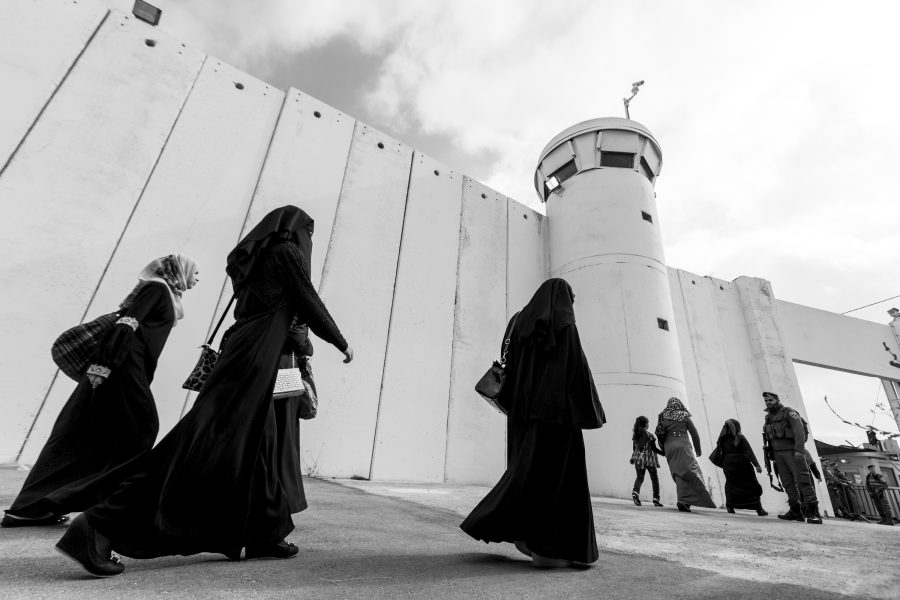
Two: as the story opens, Naomi migrates with her husband and two sons to the land of Moab. She later crosses back with her daughter-in-law when she receives word that the famine has lifted in her home country. In its way, the Book of Ruth portrays a world in which migration was a natural social phenomenon; when border-crossing was an accepted and necessary part of life. Today, this very land is strewn with militarized borders, checkpoints and refugee camps – and Palestinians are routinely denied the most basic right of human mobility. The Book of Ruth thus calls to us with a striking vision: a land and a world in which borders pose no barrier to those seeking a better future for themselves and their families.

Third: the driving center of the Book of Ruth is the deep and loyal relationship between an Israelite woman and her Moabite daughter-in-law. Those who are familiar with the Hebrew Bible will not help but note that the Moabite nation is typically portrayed as the arch enemy of the Israelite people. In this story, however, these national allegiances and historical enmities are nowhere to be found. Instead we are left with this simple, sacred message: the ultimate path to redemption is not to be found through power and violence – but rather through mutual love and solidarity.

And finally, the Book of Ruth opens in amidst a devastating famine in Bethlehem and ends with the reaping of a new harvest and the promise of an abundant future for Ruth, Naomi, their family and descendents. This vision of abundance: in which there is more than enough for all who dwell on the land, is indeed at the heart of the Palestinian struggle for liberation: one that envisions a future of equity, justice and peace for all who live between the river and the sea.

To Be a Jew on Nakba Day

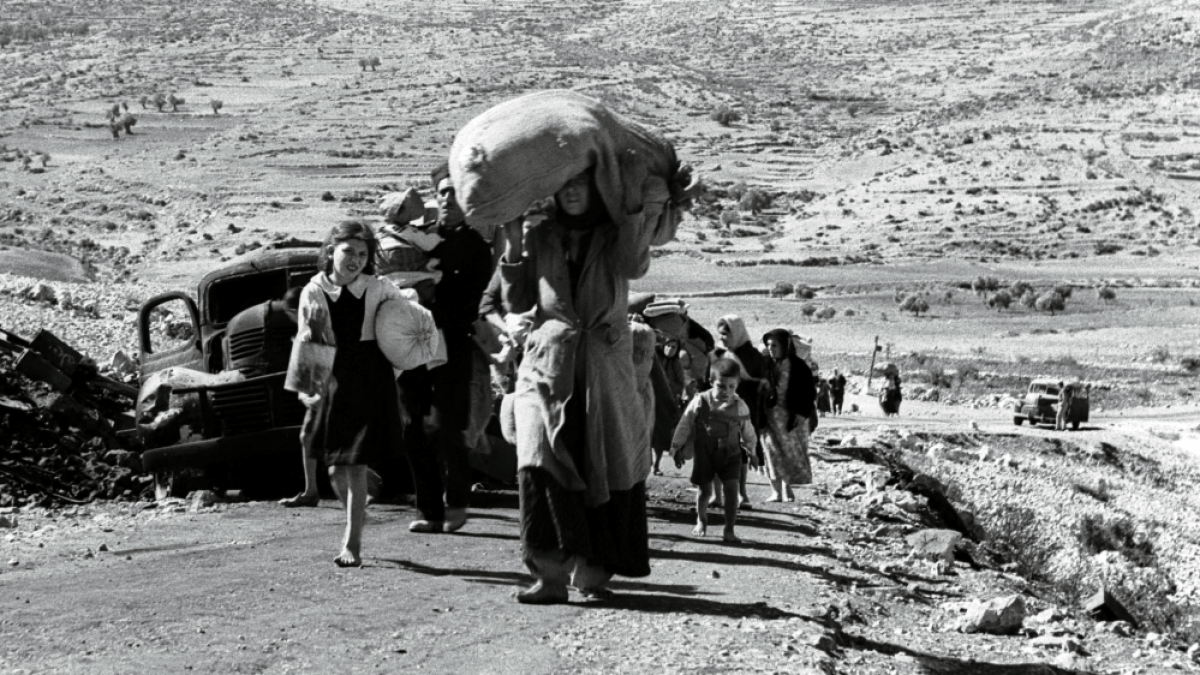
photo credit: Al Jazeera

Back in 2009, when I was beginning to struggle openly with my relationship to Israel and Zionism, I wrote a blog post entitled “Why I Didn’t Celebrate Yom Ha’atzmaut.” Here’s how it began:

I’ve decided not to celebrate Yom Ha’atzmaut today. I don’t think I can celebrate this holiday any more.

That doesn’t mean I’m not acknowledging the anniversary of Israel’s independence – only that I can no longer view this milestone as a day for unabashed celebration. I’ve come to believe that for me, Yom Ha’atzmaut is more appropriately observed as an occasion for reckoning and honest soul searching.

As a Jew, as someone who has identified with Israel for his entire life, it is profoundly painful to me to admit the honest truth of this day: that Israel’s founding is inextricably bound up with its dispossession of the indigenous inhabitants of the land. In the end, Yom Ha’atzmaut and what the Palestinian people refer to as the Nakba are two inseparable sides of the same coin. And I simply cannot separate these two realities any more.

In the fourteen years since writing these words, I haven’t wavered on this essential conviction. I still don’t consider the founding of a Jewish state on the backs of another people to be a day to celebrate.

A rabbi whose work I’ve often admired recently tweeted, “What if you knew your heart was big enough to hold the joy of Yom HaAtzmaut and the bitter anguish of the Nakba?” I must respectfully disagree. I reject the implication that those of us who refuse to celebrate Yom Ha’atzmaut with joy are somehow being “small hearted.” There are increasing numbers of Jews who refuse to celebrate Yom Ha’atzmaut out of genuine and deep seated moral conviction. We understand all too well that the the “national liberation” of Jewish statehood was accomplished through the ethnic cleansing of another people – a Nakba that is still very much ongoing. Intentionally or not, those who celebrate this selective form of liberation are, in a very real sense, normalizing dispossession. And it is not small hearted to affirm this.

As I see it, the question on whether or not to celebrate Yom Ha’atzmaut is not a question of holding complex, contrary emotions at the same time. Rather, it is a question of solidarity. As Marek Edelman, the anti-Zionist leader of the Warsaw ghetto uprising famously put it, “To be a Jew means always being with the oppressed and never the oppressors.“ Perhaps this is the real question: “What if you knew your heart was strong enough to stand down a celebration of dispossession – particularly when this dispossession is actually occurring in real time?”

As with the fourth of July in the US, these kinds of national holidays give us the opportunity to interrogate our histories and think honestly and seriously about their legacies. To this end, I’d like to suggest that the Jewish community find new ways to commemorate the occasion of Israel’s founding (see for instance, my 2018 prayer “A Jewish Prayer for Nakba Day.”) I am not suggesting for a moment that we should appropriate Nakba Day and “make it about ourselves.” It should go without saying that Nakba Day rightly belongs to the Palestinian people. But at the same time, I do think it provides the Jewish community with the opportunity to acknowledge the truth of the Nakba in a world where Nakba denial continues to run rampant.

My friend and colleague Rabbi Brian Walt wrote powerfully about this issue in a recent essay, “Nakba Denial and ‘Teshuvah’/Reparations:”

As a Jew, I believe that the Nakba…is the most important ethical and spiritual issue facing the Jewish people in our time. Our people will be judged, and we will judge ourselves, by whether we will treat others differently when we have power over them. Will we mistreat others in the same way we were mistreated, or will we follow the ethical imperative of our tradition to treat everyone as an individual created in the image of God deserving of equality, compassion and love? This is a moral question on which the future of Judaism and the Jewish people rests in our time.

…We must ask ourselves what is the cost that Palestinians should pay for our safety? We simply must create a different reality where both peoples thrive, not one at the cost of the other…The first step of teshuvah is hoda’a/acknowledgement. The very first step is to challenge the denial by acknowledging the truth of what was done, no matter how painful that acknowledgement may be.

As I wrote in 2009, just because I’m not celebrating on Yom Ha’atzmaut with joy, it doesn’t mean I’m not acknowledging the anniversary of Israel’s establishment. Rather, I’m taking this opportunity – as a Jew and a person of conscience – to stand in solidarity with the Palestinian people, to acknowledge the truth of their historic and ongoing dispossession, and to affirm a different reality: “where both peoples thrive – not one at the cost of another.”

May we all have the strength of heart to make it so.

Our Vision of Liberation This Passover Must Include Palestinians

NASSER ISHTAYEH / SOPA IMAGES / LIGHTROCKET VIA GETTY IMAGES

Crossposted with Truthout

On Passover, when we gather at the seder table to tell the story of the Exodus, we are reminded by the haggadah (the seder text) that merely telling the story is not enough. We are asked to not only relate but to interrogate this sacred narrative, to contemplate its meaning and to discuss the questions it raises for us. Most importantly, we must connect the lessons of the Exodus story to liberation struggles “in every generation.”

This year, many have inevitably been making connections between the Passover story and the recent anti-government protests that have unfolded in Israel since January. In a widely read sermon last February, for instance, Rabbi Sharon Brous compared the protests to the “great birth story” of the Exodus. In a recent New York Times op-ed, Bret Stephens wrote that the protests were “as close to a revolution as the modern state of Israel has ever seen.” One Jewish leader commented to the press that he plans to read from the Israeli Declaration of Independence at his seder, particularly the passage that promises the “complete equality of social and political rights to all its inhabitants.”

On the surface, this framing might seem to make sense: Since late last year, thousands of Israelis have regularly been filling the streets to protest draconian policies proposed by the newly elected far right government of six-term Prime Minister Benjamin Netanyahu. The protests have largely focused on the “threat to democracy” posed by the government’s plans to drastically curtail the power of the judiciary. The demonstrations seem to have succeeded: late last month Prime Minister Netanyahu announced that he would seek a compromise with his political opponents in order to “avoid civil war.”

While this certainly seems like a “power to the people moment,” it’s worth asking: who exactly are the “people” who have taken back the “power?” Though it was not widely noted by the mainstream media, the protests were largely organized and attended by centrist and liberal Israeli Jews — Palestinians were notably absent. Indeed, it was difficult to ignore the sea of Israeli flags at these demonstrations, along with the drumbeat messaging over “saving Israeli democracy.” By the end, it had become clear that these protests were less about equal rights for Jewish Israelis and Palestinians alike than a desire to reclaim the patriotic Zionist mantle from a newly elected far right government.

In other words, before we’re tempted to connect the Israeli demonstrations to the festival of Passover, it’s worth investigating how we tell the story of liberation, who tells it, who we include, and who we leave out.

These questions are not, in fact, unique to this year. It is common for Zionists to refer to Zionism — the movement to build a political Jewish nation-state — as “the national liberation movement of the Jewish people.” Many might find this to be a curious use of the term, as it is typically used in regard to movements that struggle for liberation against colonial oppression — not settler colonial movements themselves. Such rhetoric belies the origins of an ideology inspired by 19th-century European nationalism and a movement that actively sought to transplant European Jews in historic Palestine.

However, even Zionists who view Jewish nation-statehood in liberative terms must ultimately admit that from the beginning, Zionism focused exclusively on Jewish liberation — and that this liberation most certainly did not extend to Palestinians. Quite the contrary, of course. As a nation-state whose identity was predicated on a demographic majority of Jews in the land, Palestinians were, through their very existence, viewed as an obstacle to Jewish liberation.

Israel’s Declaration of Independence makes it clear that this nation was created first and foremost for Jews. The 10 paragraph-long preamble essentially reads as a Jewish history lesson, ending with the line, “This right is the natural right of the Jewish people to be masters of their own fate, like all other nations, in their own sovereign State.” There is only one paragraph that pertains to the rights of non-Jews:

THE STATE OF ISRAEL will be open for Jewish immigration and for the Ingathering of the Exiles; it will foster the development of the country for the benefit of all its inhabitants; it will be based on freedom, justice and peace as envisaged by the prophets of Israel; it will ensure complete equality of social and political rights to all its inhabitants irrespective of religion, race or sex; it will guarantee freedom of religion, conscience, language, education and culture; it will safeguard the Holy Places of all religions; and it will be faithful to the principles of the Charter of the United Nations.

Note that the Declaration “ensures” social, political and religious — but not national — rights to its Palestinian citizens. This language is quite intentional: Israel considered Jews throughout the diaspora to be part of the “Jewish nation,” granting any Jew who immigrated to the state from anywhere in the world instant citizenship through its Law of Return. Conversely, the over 700,000 Palestinians refugees who were forcibly displaced from their homes and forbidden to return were decidedly not included as part of the newly established nation.

To this day, Israel has maintained a careful distinction between “nationals” and “citizens.” As non-Jews, Palestinians in Israel can be citizens, but they are not nationals, thus depriving them of rights and privileges enjoyed by Israeli Jews. As a result, to this day, there are more than 60 laws that discriminate against Palestinian citizens of Israel directly or indirectly, impacting virtually every aspect of their lives, including housing, employment, education, health care, and who they can marry.

The status of Palestinian citizens was compromised yet further in 2018 with Israel’s passage of the so-called Nation-State Law, which determined that “the right to exercise national self-determination” in Israel is “unique to the Jewish people,” established Hebrew as Israel’s official language, and established “Jewish settlement as a national value,” mandating that the state “will labor to encourage and promote its establishment and development.” According to Adalah:

This law – which has distinct apartheid characteristics – guarantees the ethnic-religious character of Israel as exclusively Jewish and entrenches the privileges enjoyed by Jewish citizens, while simultaneously anchoring discrimination against Palestinian citizens and legitimizing exclusion, racism, and systemic inequality.

Of course, the injustices facing the almost 3,000,000 Palestinians who live under military occupation in the West Bank — and the over 2,000,000 who live under a crushing blockade in Gaza — are dramatically worse than those experienced by Palestinian citizens of Israel. But it would be a mistake to draw a fundamental distinction between these different Palestinian populations. As the Israeli human rights organization B’Tselem puts it in its 2021 report, Israel maintains “a regime of Jewish supremacy from the Jordan River to the Mediterranean Sea.” Put simply, as a Jewish nation-state, Israel systemically denies basic civil and human rights to all non-Jews who live under its control.

It’s interesting to note that the “selective liberation” story we tell about Israel is not dissimilar from the story we tell about the establishment and history of another notable settler colonial state — namely, the United States. Indeed, I’m often struck that we typically use the term “American Revolution” to refer to what was essentially a political-economic secession by colonists from the British empire, whose nation was built on the genocide of Native peoples, enabled by the stolen labor of Black slaves.

Here too, it’s critical to interrogate how we tell the story of this national liberation, who tells it, who we include, and who we leave out. It has often been observed that the opening words to the American Constitution, “We the People,” is a radical misnomer as the founders originally defined “we” to be limited to white, property-owning males. This inherent inequity was already being openly challenged not long after the founding of the state. As Frederick Douglass famously declared in his 1852 speech, “What to a Slave is the Fourth of July:”

The rich inheritance of justice, liberty, prosperity and independence bequeathed by your fathers, is shared by you, not me. The sunlight that brought light and healing to you, has brought stripes and death to me. This Fourth of July is yours, not mine. You may rejoice, I must mourn.

When it comes to this legacy of American structural injustice, one can draw a direct line from Douglass to the words of Malcolm X, from his 1964 speech “The Ballot or the Bullet”:

No, I’m not an American. I’m one of the 22 million Black people who are the victims of Americanism. One of the 22 million Black people who are the victims of democracy, nothing but disguised hypocrisy. So, I’m not standing here speaking to you as an American, or a patriot, or a flag-saluter, or a flag-waver — no, not I. I’m speaking as a victim of this American system. And I see America through the eyes of the victim. I don’t see any American dream; I see an American nightmare.

At the same time, however, there remains a uniquely American tension between the “American nightmare” of Malcolm X and the “American Dream” referred to by Dr. Martin Luther King Jr. in his “I Have a Dream” speech, where he famously challenged the United States to be true to its stated intention to form a more perfect union: “I have a dream that one day this nation will rise up and live out the true meaning of its creed: We hold these truths to be self-evident, that all men are created equal.”

More recently, Nikole Hannah-Jones, author of the “1619 Project” has observed that “the United States is a nation founded on both an ideal and a lie.” Still, she concluded:

Despite being violently denied the freedom and justice promised to all, Black Americans believed fervently in the American creed. Through centuries of Black resistance and protest, we have helped the country live up to its founding ideals. And not only for ourselves — Black rights struggles paved the way for every other rights struggle, including women’s and gay rights, immigrant and disability rights.

Of course, we are currently witnessing a white supremacist backlash against those who seek to challenge the legacy — and reality — of American structural racism. As ever, Americans are struggling openly over how inclusive, extensive and complete our liberation will be. It is a tension that has been ongoing since the very founding of this country — it is at its core, a quintessentially American struggle.

In Israel, however, the struggle for democracy is far more complicated. As a Jewish state, Israeli democracy can only truly extend to its Jewish citizens. Unlike the U.S., where those who advocate equal rights for all can still be described as “believing fervently in the American creed,” those who call for one state with full citizenship for all are routinely accused of antisemitism, seeking nothing less than “the destruction of the Jewish state.”

Another important difference: unlike the U.S., Israel does not have a Constitution that, theoretically at least, ensures equal rights for its citizens. Noting Israel’s early, aborted attempts at creating a Constitution, journalist Joshua Leifer has recently commented:

America’s Constitution begins, “We the People.” One of the things that’s very striking when you read the drafts of the Israeli constitution that were written in 1950 is that the proposed version of Israel’s constitution began with “the Jewish people.” The ethnos was imagined as the demos from the beginning.

Like many Americans, I believe it is my responsibility to challenge my country to, as MLK put it, “live out the true meaning of its creed.” Among other things, this means actively supporting anti-racist struggles in the U.S. that demand full and equal rights for all its citizens. As an American Jew living in the age of Zionism, I can demand nothing less for all who live between the river and the sea.

As Aurora Levins Morales concludes in her classic poem “Red Sea:”

This time that country
is what we promise each other,
our rage pressed cheek to cheek
until tears flood the space between,
until there are no enemies left,
because this time no one will be left to drown
and all of us must be chosen.
This time it’s all of us or none.

This Passover, it is clearer than ever before that we need a new Jewish liberation story: one that is inseparable with the vision of liberation for all.

Interrogating Liberal Zionist Myths: A Response to Rabbi Sharon Brous

Israelis protest against the new government’s proposed changes to the legal system, at Habima Square, Tel Aviv, January 28, 2023. (Avshalom Sassoni/Flash90)

For the past two months or so, thousands of Israelis have been holding weekly protests against the extremism of the newly elected Israeli administration, focusing in particular on the new government’s proposals to gut the power of the Israeli judiciary. While many American Jewish institutions have been predictably loath to publicly criticize the new Israeli government, liberal Zionist organizations in the US such as J St., the New Israel Fund (NIF) and T’ruah have been openly supportive of the protests. But as heartening as these statements may seem on the surface, there is a deeply problematic contradiction at the heart of this new movement to “save Israeli democracy.”

This contradiction was in full force during a widely shared sermon recently delivered by Rabbi Sharon Brous, spiritual leader of the Los Angeles synagogue, Ikar. In her stirring and passionately delivered remarks, Brous rightly criticized the American Jewish community for its silence over the policies proposed by the new Israeli administration. Calling for a “reckoning,” she went on to identify several “myths” about Israel/Palestine that the Jewish community “needs to smash.” With respect, however, I believe that Brous herself perpetuated numerous problematic myths herself during the course of her sermon.

These most prominent: the oft-invoked myth of the “endangered Israeli democracy.” This is, of course, a well-known Liberal Zionist trope and Brous drove it home early in her remarks when she stated “we believe not only in the legitimacy, but the necessity of a Jewish state….We believe in the vision of a state that is both Jewish and democratic, as envisioned by (Israel’s Declaration of Independence.)” She continued, warning that this “precious, beautiful dream” is currently under threat from extreme, undemocratic political forces in the current Israeli government.

Brous reinforced the “threat to Israeli democracy” myth when she curiously referred to the Israeli Supreme Court as the “great defender of the abuse of human rights” while there is ample evidence that demonstrates it is precisely the opposite. The Israeli human rights group B’Tselem has in fact, referred to the Israeli Supreme Court as “the Supreme Court of the Occupation” and has documented it’s systemic enabling of Israel’s ongoing human rights abuses in numerous reports:

When it comes to violation of Palestinians’ rights, Israel’s Supreme Court neither holds effective judicial review nor keeps the security forces in check. It is willing to sanction almost any injustice based on unreasonable legal interpretation, and systemically ignores the context: that the appellants come from an unrepresented population governed by a strict military regime for more than 50 years, denied political rights and excluded from basic decision-making. The court thereby sanctions not only violations – but the occupation itself.

Brous rightly went on to state that Israel’s “march toward illiberalism, ultra-nationalism and extremism has been building for decades.” However she undermined that very argument by claiming this march began when we “got comfortable with the language of ‘us and them.'” In truth, however, the rhetoric of “us and them” has been deeply rooted in the culture of the Zionist project since before the founding of the state. That is because the very idea of a Jewish state predicated on a demographic Jewish majority is itself inherently illiberal.

Similarly, Brous did well to raise the odious ideology of “Jewish Supremacy” inbred in Israeli culture. But this this ideology is not, as she put it, the product of a “marginal, fringe group” whose ideas have moved “into the mainstream.” Yes, Itamar Ben Gvir and Bezalel Smotrich are most certainly extremists who espouse patently undemocratic ideas. But they are also expressing an inconvenient truth: that the notion of a majority Jewish nation state is itself intrinsically undemocratic – and that to maintain a Jewish majority, Israel has been ethnically cleansing and expelling Palestinians from their homes since its origin.

I was heartened when Brous later addressed the “myth of moral equivalency,” correctly stating that we cannot condemn the recent killing of Jewish worshippers in Jerusalem without also condemning the Israeli military’s killing of 35 Palestinians during the month of January (including a 6 year old boy and a 61 year old woman). I likewise appreciated the way she connected the dots between the young Palestinian gunman’s personal story to his grandfather who was murdered by a Jewish settler who has never held accountable (by yes, an Israeli court).

But while Brous invited us to “interrogate why there is so much violence,” she herself sadly failed in this regard when she neglected to interrogate the crucial role played by Israeli state violence and militarism in the structural oppression of the Palestinian people. On the contrary, she notably romanticized Israeli militarism earlier in her sermon when she spoke about the father of an Israeli friend who was “born with the state” and had served as “an IDF commander in two wars.” As she put it, “these are the ones who dedicated themselves to building the state so precious, so beautiful, so fragile. And they see it being transformed before their very eyes into something utterly recognizable.”

But perhaps the most problematic myth perpetuated by Brous was the Liberal Zionist trope of a “shared future.” She raised this issue at the end of her remarks when she concluded, “If you’re feeling helpless about what’s unfolding over there, the way forward is to follow the lead of Israelis and Palestinians in the streets who are speaking a language of shared destiny.”

This is, in fact, a complete misrepresentation of the current demonstrations. As Israeli journalist Haggai Matar has pointed out:

Palestinians, for their part, have so far mostly been sitting this one out. While many Jewish Israelis are mourning, terrified, or enraged over the barrage of illiberal legislation that they see as signifying the “end of Israeli democracy,” most Palestinians on both sides of the Green Line never saw the regime as a democracy to begin with. In the words of MK Ahmad Tibi, “this is a Jewish Democracy: democratic for Jews, and Jewish for Arabs.”

Or as another Israeli journalist, Gideon Levy has powerfully put it:

The current protests are thus intended to defend only the rights of Israel’s already privileged Jewish citizens, while ignoring the rights of the oppressed who lack citizenship and civil rights. The thousands of Israeli flags waved by protesters symbolize what is bad about these demonstrations: They are intended for Jews only.

It is indeed difficult to ignore the overwhelming preponderance of Israeli flags of these demonstrations, underscoring the reality that these protests are less about justice for Palestinians than they are about saving the Zionist enterprise. As Brous quoted her friend’s parents at the beginning of her sermon, “we have no other home, no other loyalty but to Zion.”

Moreover, Brous is crucially silent over the precise nature of this “shared future.” Is she advocating a two-state solution that even J St. admits is now all but impossible? Or is she promoting equal rights for all who live in the land – a move that would inevitably spell the end of her “precious, beautiful, miraculous dream?” As long as she refuses to address this critical question, I can’t help but view her call for a “shared future” as an empty and disingenuous gesture.

Brous ended her sermon by invoking the Torah portion Beshallach, which recounts the Israelites crossing over the Sea following their Exodus from Egypt. She powerfully and poetically compared the Exodus story to a birth moment, calling upon us all to “amplify the voices” of our “Palestinian and Israeli friends and their calls for a just and equal society, to remind them to breathe and push, to breathe and push and then to be with them on the other side, to join hands and sing together a song of freedom, of liberation, of justice and a song of love.”

Like Rabbi Brous, I also find a profound resonance to the Exodus story in this current moment – but it isn’t in the myth of Palestinians and Israelis joining hands and singing a song of liberation. Rather, it is through the painful admission, at long last, that Zionism represents a present day Pharaoh – and that we will only make it to the other side when we dismantle and transform Israel’s systemic oppression of the Palestinians into a truly Promised Land for all who live between the river and the sea.

Living a Judaism Beyond Zionism: Sermon for Yom Kippur 5783

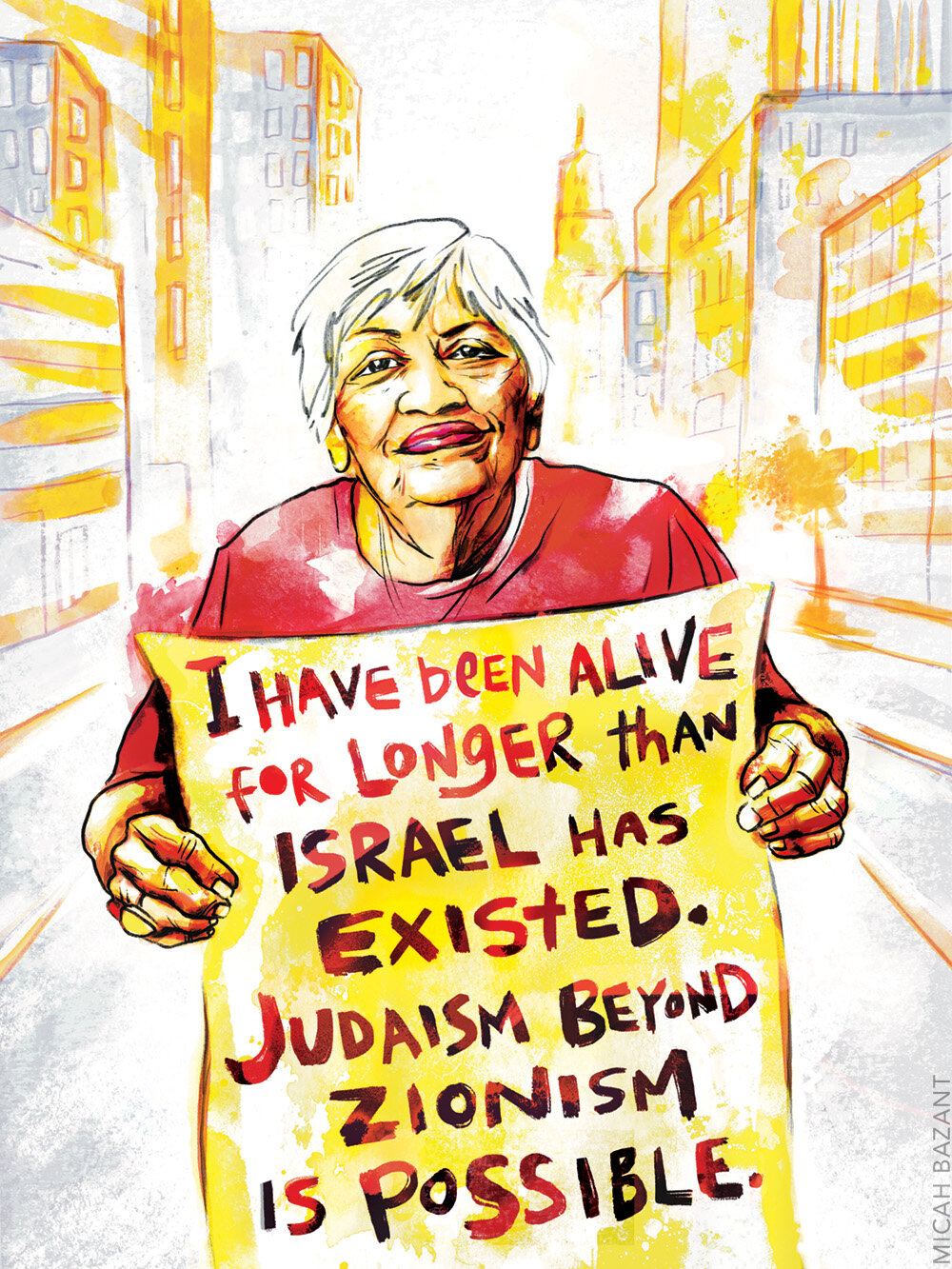
Art by Micah Bazant

Last month, Michigan Representative Rashida Tlaib spoke at an organizing seminar for Palestine solidarity activists. It was an in-house event, and it likely would not have garnered much attention except for one part of her speech:

It has become clear that you cannot claim to hold progressive values, yet back Israel’s apartheid government. And we will continue to push back on and not accept this idea that you are “progressive except for Palestine.” 

I’m opening with Rashida Tlaib’s words because I believe they’re deeply relevant to Yom Kippur. This is, after all, the day for facing up to hard truths, particularly the ones that affect our community. And I frankly cannot think of a more important, more critical moral challenge facing the Jewish community than the issue of Palestine-Israel. 

As you might expect, after Rep. Tlaib made her remarks, the wrath of the titans rained down upon her. Jonathan Greenblatt, the CEO of the Anti-Defamation League, berated her on Twitter and accused her of being an antisemite. So did Rep. Debbie Wasserman Schultz. Scores of her Democratic colleagues condemned her for slandering the “Jewish and Democratic state of Israel.” 

Tellingly, however, none of her critics actually responded to the essential claim of her comment – namely, that Israel is an apartheid state. None of them mentioned that Human Rights Watch, Amnesty International and B’tselem, the most prominent Israeli human rights organization, have all determined that Israel is an apartheid regime. B’tselem’s report concludes, in words that are powerfully appropriate for Yom Kippur:

As painful as it may be to look reality in the eye, it is more painful to live under a boot. The harsh reality described here may deteriorate further if new practices are introduced – with or without accompanying legislation. Nevertheless, people created this regime and people can make it worse – or work to replace it. That hope is the driving force behind this position paper. How can people fight injustice if it is unnamed? Apartheid is the organizing principle, yet recognizing this does not mean giving up. On the contrary: it is a call for change.

Fighting for a future based on human rights, liberty and justice is especially crucial now. There are various political paths to a just future here, between the Jordan River and the Mediterranean Sea, but all of us must first choose to say no to apartheid.

But you really don’t need to pore through human rights reports to grasp this reality. The bottom line is this: Zionism promotes a Jewish majority state in historic Palestine. In order to keep that majority, Israel must pursue policies that are patently undemocratic. It must create and enforce laws that fundamentally privilege Jews over non-Jews. It must dispossess and disenfranchise Palestinians. It must maintain what B’tselem calls “a regime of Jewish supremacy” from the river to the sea. 

So yes, as Rashida Tlaib put it, you can’t be progressive and support apartheid. Unless you define the term “progressive” in a way that is devoid of any meaning whatsoever, you cannot support a Jewish supremacist state and claim to be a progressive. It’s interesting to note that virtually every one of Rep. Tlaib’s critics slammed her for creating a “litmus test” for progressives. But in truth, I don’t believe she was interested in creating a test for her colleagues. She was simply arguing for moral consistency.

When I read about this dustup, I was reminded of Rev. Martin Luther King’s 1963 “Letter from a Birmingham Jail.” Whenever I hear so-called progressives defending injustice in the name of progressive values, I invariably think of King’s letter. It was written to liberal white clergy in Birmingham who had signed a public statement telling King to stay away and not make trouble in their city. At one point they wrote, “We feel that inflammatory and rebellious statements can lead only to violence, discord, confusion and disgrace for our beloved state.” 

Now fast forward to 2022. This was Debbie Wasserman Schultz’s angry response to Rep. Tlaib:

Proud progressives do support Israel’s right to exist as a Jewish and democratic state. Suggesting otherwise is shameful and dangerous. Divisive rhetoric does not lead to peace.

In the end, it’s really just a distraction to make this a debate about what is or isn’t “progressive.” It’s an issue of basic morality. For the Jewish community it’s a challenge that goes to the very core of our spiritual and ethical tradition. I don’t believe you can identify as a Jew in the age of Zionism and dither on this issue. Every single day, Israel’s actions present us with this basic question: will we support apartheid, dispossession and militarism in our name or will we not? 

I’m sure all of you know that the Tzedek Chicago membership voted last March to change our core values to articulate that we were an anti-Zionist congregation. Our decision followed a unanimous board vote and a month’s long series of congregational meetings. As those who attended will attest, these conversations were inspiring in their depth and thoughtfulness. No matter what their position, members who participated in this process shared their opinions openly, honestly, and with deep respect for one another. 

In the end, 72% of our membership quorum voted in favor of the change. Yes, there were those who voted against, but I’m heartened that as far as I know, no members have left our congregation as a result of our decision. In fact, we actually gained several new members, many of whom said that this was the first time they had joined a synagogue – that they had wanted to be part of a Jewish congregation, but the issue of Zionism had consistently kept them at bay.

I can’t understate what a powerful statement we’ve made. Yes, we are one small congregation, but the bottom line is that as a result of our decision there is now a new fact on the ground. There is now a progressive (yes, progressive) Jewish synagogue that is openly and unabashedly promoting a Judaism beyond Zionism. Tzedek Chicago has taken a public, principled stand on the most important, most critical moral challenge facing the Jewish community today. 

And by the way we don’t stand alone. At this very moment, the Mending Miyan, an anti-Zionist congregation in New Haven, is celebrating its first High Holidays with its new student rabbi, May Ye, who many of you will remember was Tzedek Chicago’s rabbinical intern in 2018. Just a few days ago, I was contacted by a friend who told me that a group of Jewish anti-Zionists, inspired by what we have done here in Chicago, had held their first Rosh Hashanah service together in Denver. And I have no doubt there are others – that this is only the beginning. 

Our decision is also important because we are currently witnessing a very real and very dangerous campaign that seeks to equate anti-Zionism with antisemitism. The Israeli government and the Jewish institutional establishment are clearly doubling down to stem the growing number of Jews in the US  — particularly young Jews — who are openly identifying as non or anti-Zionist. This backlash has been fierce, and at times perverse, actually calling into question our very status as Jews. In a widely read essay last year, Natan Sharansky labeled anti-Zionist Jews as “un-Jews.” Last May, immediately following Israel’s military onslaught on Gaza, a Reform rabbi in the Chicago area gave a sermon in which she called anti-Zionist Jews “Jews in name only” who must be “kept out of the Jewish tent.”

Given the tenor of the current moment, I believe the need for public stances by principled Jewish anti-Zionists is more critical now than ever. Most importantly, Jewish anti-Zionists create cover for Palestinians, the ones who are most directly impacted by these accusations of antisemitism. Right now, public figures such as Rashida Tlaib, as well as scores of Palestinian activists on college campuses and communities across North America, are being subjected to withering attack. We know how devastating the accusation of antisemitism can be. It destroys careers and ruin lives. And right now, this accusation is being weaponized by Israel and its institutional supporters in profoundly harmful ways. 

The most insidious thing about this accusation: when we equate anti-Zionism with anti-Semitism, we effectively brand just about every Palestinian in the world as an anti-Semite. How could it be otherwise? The direct product of Zionism was the Nakba – the forced expulsion of over 700,000 Palestinians from their homes in 1948, creating what is today the largest refugee population in the world. The creation of an exclusively Jewish nation state in historic Palestine has led to the ongoing dispossession and oppression of the Palestinian people that continues to this very day. How could we honestly expect Palestinians to be anything other than anti-Zionist? By this definition, Palestinians are guilty of being antisemites just for being Palestinian. 

We can’t underestimate the power of this current backlash against anti-Zionism. After Tzedek Chicago made our announcement, we garnered, as you might expect, some “responses” from the Jewish institutional community. While we did get some positive and thoughtful press, there was the inevitable nastiness, particularly and inevitably on Twitter. I don’t have much to say about that, except for this: amidst all the horribleness and toxicity, I noticed an interesting common denominator. Over and over, our attackers made the claim that Zionism was essential to Judaism – and that our being anti-Zionist was tantamount to being anti-Jewish. This, I would like to address:

Of course, the claim that Eretz Yisrael is intrinsic to Jewish tradition is absolutely correct. It would be ignorant to claim otherwise. However – and this is a big however – the notion of creating a sovereign Jewish nation state was never part of the Jewish land tradition until the rise of political Zionism in 19th century Europe. And herein lies the central fallacy of the Zionism equals Judaism argument: for most of Jewish history, the yearning for Zion has been rooted in an idealized messianic vision. The very idea of a mass migration to the land in order to establish a 3rd Jewish commonwealth was commonly considered to be an anathema – a “forcing of God’s hand” – by traditional rabbinic authorities.

Those who say Zionism is central to Judaism consistently and conveniently neglect this point: political Zionism did not arise until relatively recently in Jewish history. Yes, Zionism is undeniably a Jewish movement, and a successful one at that. But it is also a quintessential movement of Jewish modernity that represented a conscious and radical break with traditional Judaism as it was understood and practiced until that time. While it has clearly been embraced by a majority of Jews in Israel and throughout the diaspora, the claim that Zionism is somehow intrinsic to Judaism is false and in fact, deeply disingenuous.

In the end, however, this struggle isn’t over what is or isn’t Judaism. Rather, it is over what kind of Judaism we want to affirm in the world. I don’t believe in essentializing Judaism – or any religion, for that matter. The fact that Zionism was “a modern movement that broke with traditional Judaism” is not in itself a bad thing. After all, modernity gave rise to a host of Jewish movements that broke with traditional Judaism. My own denomination, Reconstructionist Judaism is most certainly such a movement. 

I often think of this when I hear liberal Christians respond to the hateful things said and done by white Christian nationalists by saying, “that is not Christianity.” No, in fact it is Christianity. The Christian church certainly has a great deal to live down from its history up until present day. But to the Christians who seek to promote humane Christianity, I would suggest that the answer is not to deny the more problematic or toxic manifestations of their tradition. The answer is to recognize that every religious tradition, every religious community has its good, its bad and yes, it’s ugly. And if we want the good to prevail, it seems to me, we must be ready to confront the all of our religious traditions. 

The same goes for the Jewish community. Even if Zionists deny us our Jewishness, It’s not intellectually honest, nor is it particularly productive, to deny Zionists theirs’. The question before us is not who is the most “authentic” Jew? The real question is: what kind of Judaism do we want to lift up in the world, to live out, to bequeath to future generations?

This is why I feel so blessed to be a part of Jewish congregation that is ready to stand up and say we seek a Judaism beyond Zionism, beyond apartheid and settler colonialism. A Judaism that views the diaspora as the fertile ground for Jewish creativity, a Judaism that seeks the Divine wherever we may happen to live, that affirms the whole earth is filled with God’s glory. A Judaism that values spiritual power over physical power. A Judaism that makes its home in the margins, because that’s where our sacred sparks of creativity have always resided. A Judaism of solidarity, that knows our place is alongside all who are marginalized, demonized and oppressed for who they are. 

So, this Yom Kippur and for every day forward, let this be our prayer:

May the dream of a world complete become reality soon, in our own day, that every land may be a Zion, every city a Jerusalem, every home a sanctuary offering welcome to all. May the world be rebuilt upon a foundation of compassion, equity and justice, as it is written, compassion and truth will meet; justice and peace will kiss. Baruch atah adonai, boneh ha’olam b’tzedek v’rachamim – Blessed are you, who rebuilds the world in justice and compassion. 

Amen.

On Avodah and Anna Rajagopal: Is there a place for anti-Zionist Jews in our community?

Photo Credit: Very Good Light

The Jewish communal war on its own continues.

Last week, I was saddened to read that Anna Rajagopal (they/her), a Jewish activist and senior at Rice University, had been fired by Avodah: Jewish Service Corps after having just been hired as a Social Media Assistant. Their action followed – and seemed to be a result of – a relentless online campaign by the astroturf organization, StopAntisemitism.org, who demonized Anna as a “rabid antisemite” and urged its followers to deluge Avodah with demands to fire them.

After firing Anna, Avodah understandably received strong criticism from progressive Jewish quarters. In response, the organization then released its own statement on Twitter, insisting that they “did not and do not make decisions in response to actions or demands of any external group and … did not and do not make personnel decisions based on an individual’s politics related to the Israeli-Palestinian conflict.” Their statement also purported to stand in solidarity with Anna in the face of the horrid online attacks against them:

We’re angry & disgusted to witness this individual be subjected to vile racism, misogyny & even questioning of their Judaism. We condemn the demonizing & disparaging of anyone-especially the targeting Jews of Color who experience this type of hate & questioning regularly. We take seriously our commitment to Jewish pluralism and continue to work to ensure a respectful community for all.

Avodah’s claim that they did not fire Anna because of their views was contradicted in a leaked email from Avodah CEO Cheryl Cook, who wrote to a supporter, “We don’t believe (Anna’s) publicly-shared values align with ours, and we are parting ways.” Factoring in the fact that Cook is currently running for political office in Brooklyn, it seems fairly clear that Avodah did indeed “make a decision based on an individual’s politics on Israel/Palestine” – and that they did indeed capitulate to “the demands of an outside group.”

The issue in question centered on Anna’s use of strong, often scathing rhetoric as they criticized Israel and Zionism on social media. In this regard, their firing was similar to an incident that occurred almost exactly a year ago, when a Hebrew school teacher was fired from a Reform synagogue in Westchester, NY for publicly criticizing Israel’s “settler colonial violence” and referring to themself as an anti-Zionist. This most recent instance was particularly troubling, however, because Avodah is an Jewish institution whose primary focus is social justice.

Even more egregiously, the organization has now handed a victory to a new, privately-funded movement that seeks to promote a distinctly Islamophobic, anti-Palestinian narrative on antisemitism. Indeed, while StopAntisemitism.com describes itself on its website as a “grassroots watchdog organization,” it does not have non-profit status or a board of directors – and the source of its funding is exceedingly opaque. We do know that StopAntisemitism.com is a front project for Liora Rez, a right-wing Jewish activist and former social media influencer. Though her website claims SA.com was born “in response to increasing antisemitic violence and sentiment across the United States” her “Antisemite of the Week” list actually contains very few neo-Nazis or white nationalists. It is filled almost exclusively with Muslims, Palestinians and Palestinian solidarity activists – as well as popular celebrities such as Dua Lipa and Trevor Noah and, naturally, Representatives Ilhan Omar and Alexandria Ocasio Cortez.

As with previous attacks on individuals, StopAntisemitism.com’s campaign against Anna was exceedingly vile, giving rise to a torrent of toxic Twitter attacks questioning their status as a Jew (they are a convert to Judaism) as well as racist comments targeting them as a Jew of color. (Many of these horrid slurs still remain on Avodah’s comment board and Twitter feed.) This entire ordeal has understandably taken a huge emotional toll on Anna, who tweeted last Friday, “This week has been the most unimaginable hell possible. Being 21 years old and the incessant target of both right-wing extremists as well as institutional, racist abuse at the hands of grown adults…”

Anna’s firing is particularly painful when you consider just a few days earlier, Avodah publicly celebrated them thus: “We’ve got a new member of #TeamAvodah… Join us in welcoming Anna as our social media assistant! They’re joining us from Houston & have a background in digital literacy and advocacy, perfect for their role’s focus on racial justice and our Jews of Color Bayit.” By subsequently capitulating to StopAntisemitism.com’s toxic campaign, however, Avodah has effectively validated the very worst prejudices in our community against Jews of color and Jews by choice.

In some ways this episode illuminates the razor thin tightrope that many liberal Jewish organizations are walking as they reach out to younger generations of Jews who don’t toe the Jewish communal party line on Israel/Palestine. It’s worth noting that even as Avodah seeks to position itself on the Jewish vanguard of social justice, it also receives funding from the Schusterman Family Philanthropies, which also funds die-hard Zionist projects such as Birthright Israel and the Israel on Campus Coalition. 

Avodah’s precarious position was dramatically underscored last year when 274 program participants and alumni sent a letter to Avodah leadership, calling on the organization to endorse the Boycott, Divestment, and Sanctions movement, commit to Nakba education, support bills that would block or restrict military aid to Israel and end “official and unofficial gag rules that prevent corps members and staff from speaking freely about their support for BDS and Palestinian liberation.” To date, however, the organization has chosen not to take a public stand on the issue of Israel/Palestine.

In the end, Avodah’s action just further reinforces the line that there is no simply place for Jewish anti-Zionists like Anna Rajagopal in the Jewish institutional world. I’ve personally talked with several young people who have lost their jobs in the Jewish community in similar ways to Anna – and a number of others who feel they must stifle their moral/political convictions for fear of being fired. I truly believe these are among our brightest, critically thinking, and devoted members of our community – and that by excluding them, the Jewish communal establishment is only further hastening its irrelevance to the next generation of Jews.

As Rabbi Amy Bardack wrote in a powerful article for eJewishPhilanthropy.com earlier this year:

Our institutions have to wrestle with the reality that increasing numbers of passionate Jews do not support the State of Israel. Is it in our best long-term interest to be welcoming to everyone but them? I propose that we spend less time labeling all anti-Zionist Jews as antisemitic, and more time figuring out how to be truly inclusive. 

I stand with Anna Rajgopal and all of the young anti-Zionist Jews who are, whether the Jewish establishment gatekeepers like it or not, the future of our community.