Category Archives: Palestine

New Report on Israel’s Abuse of Palestinian Children

I strongly encourage you to read Guardian reporter Harriet Sherwood’s devastating new piece, which investigates allegations of human rights abuse of Palestinian children inside Israel’s Al Jalame prison.

I’m already anticipating the angry comments I invariably get when I share this kind of information. But what else should I do?  As an American Jew, what else am I supposed to do with the news that that Israel – the Jewish state, the “only democracy in the Middle East” and America’s “special ally” – is abducting, abusing and torturing Palestinian children?

I don’t know anything else to do but to bring this information into the light of day, urge you to share it, and encourage you to voice your outrage to your elected leaders.

Here’s the start of the article:

The room is barely wider than the thin, dirty mattress that covers the floor. Behind a low concrete wall is a squat toilet, the stench from which has no escape in the windowless room. The rough concrete walls deter idle leaning; the constant overhead light inhibits sleep. The delivery of food through a low slit in the door is the only way of marking time, dividing day from night.

This is Cell 36, deep within Al Jalame prison in northern Israel. It is one of a handful of cells where Palestinian children are locked in solitary confinement for days or even weeks. One 16-year-old claimed that he had been kept in Cell 36 for 65 days.

The only escape is to the interrogation room where children are shackled, by hands and feet, to a chair while being questioned, sometimes for hours.

Most are accused of throwing stones at soldiers or settlers; some, of flinging molotov cocktails; a few, of more serious offences such as links to militant organisations or using weapons. They are also pumped for information about the activities and sympathies of their classmates, relatives and neighbours.

At the beginning, nearly all deny the accusations. Most say they are threatened; some report physical violence. Verbal abuse – “You’re a dog, a son of a whore” – is common. Many are exhausted from sleep deprivation. Day after day they are fettered to the chair, then returned to solitary confinement. In the end, many sign confessions that they later say were coerced.

These claims and descriptions come from affidavits given by minors to an international human rights organisation and from interviews conducted by the Guardian. Other cells in Al Jalame and Petah Tikva prisons are also used for solitary confinement, but Cell 36 is the one cited most often in these testimonies.

Between 500 and 700 Palestinian children are arrested by Israeli soldiers each year, mostly accused of throwing stones. Since 2008, Defence for Children International (DCI) has collected sworn testimonies from 426 minors detained in Israel’s military justice system…

Human rights organisations say these patterns of treatment – which are corroborated by a separate study, No Minor Matter, conducted by an Israeli group, B’Tselem – violate the international convention on the rights of the child, which Israel has ratified, and the fourth Geneva convention.

Jews/Christians and Israel/Palestine: Rediscovering the Prophetic

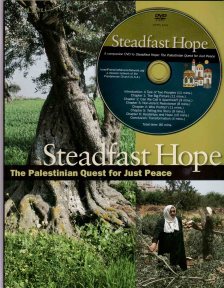
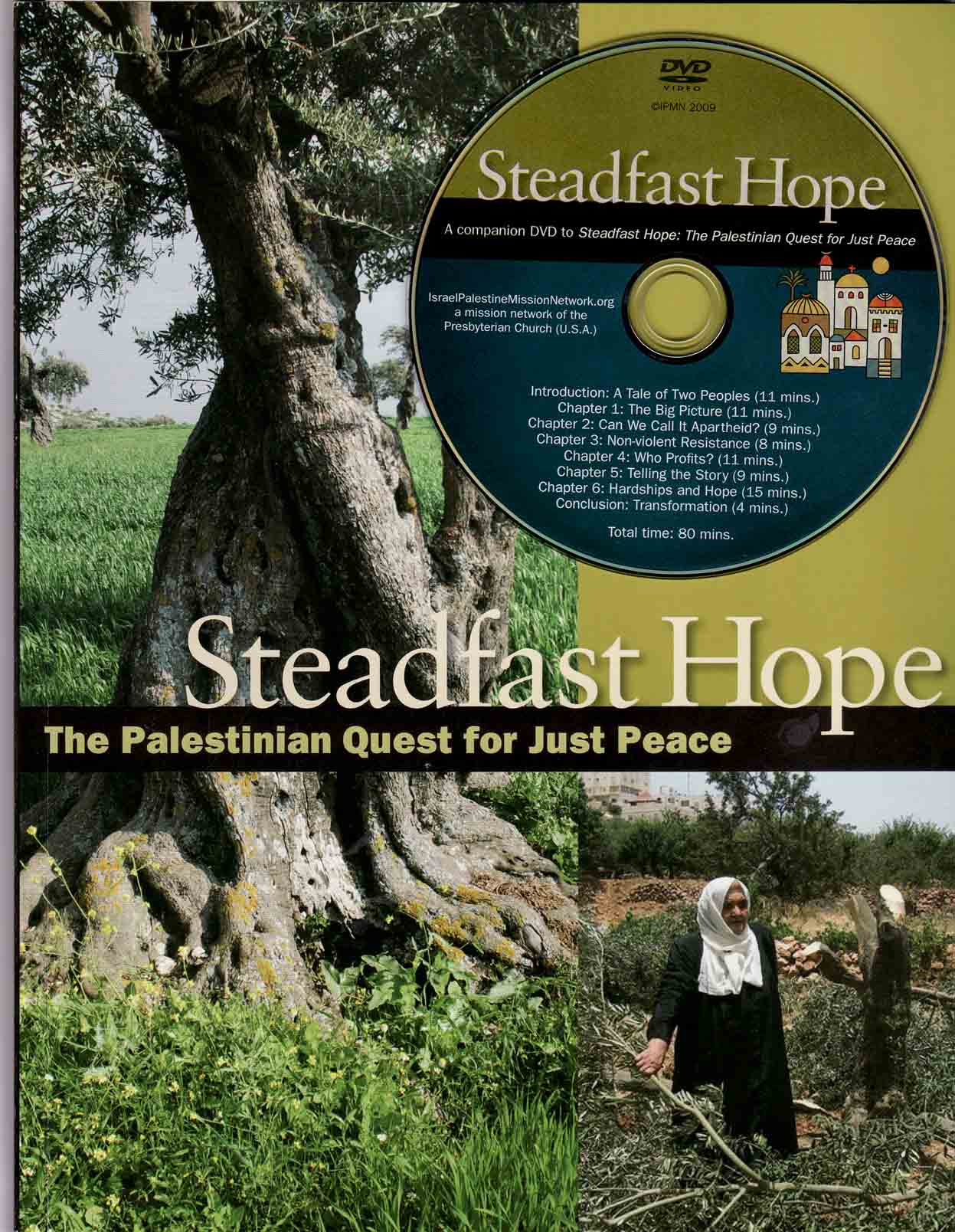
Here is the sermon that I delivered yesterday at St. James Episcopal Cathedral in Chicago. If you would like a copy of “Steadfast Hope,” the study guide to which I refer in my remarks, click here.

I am so pleased to be here with you this morning – and so very honored to have been invited to preach to you today. I want to especially thank Dean Joy Rogers for the invitation and to St. James for hosting me so graciously.

I’d also like to thank my very dear friend, Father Cotton Fite of St. Luke’s Episcopal Church in Evanston, who I believe had no small part in making my visit here a reality.  Many members of my congregation have come to know Father Cotton well – in addition to our friendship, he has become something of a mainstay at our Shabbat morning Torah study group.  I value my friendship with Cotton quite deeply – and I’d like to think that our the work might provide a model for a new kind of interfaith action.  Indeed, this very model is at the heart of my message to you this morning.

I’d like to start properly: with this Sunday’s Episcopal lectionary selection from the Hebrew Bible: 1 Samuel, chapter 3:

In an earlier chapter, we’ve already read that Samuel was born under somewhat remarkable circumstances. Before his birth, his mother Hannah had promised to dedicate him to divine service if only God would only bless her with a child.  In chapter 3, the young Samuel is now serving under Eli the priest at the temple in Shiloh.  We’re told that in those days, “the word of the Lord was rare; prophecy was not widespread” – clearly a literary clue that this all about to change.

Samuel is sleeping in the temple, next to the Ark of God. In the middle of the night, God calls out to Samuel, and Samuel, who thinks he hears Eli calling him, runs to the priest, and says “Hineini – Here I am.”  Eli replies, “I didn’t call you – go back to sleep!”  This happens again, and Eli, presumably with even greater exasperation in his voice now, sends Samuel back to bed.

When it happens a third time, Eli finally realizes what is going on. So he instructs Samuel, “If it happens again, say ‘Speak Lord, for Your servant in listening.”  When Samuel is called yet again, he follows Eli’s instructions. God then reveals to Samuel that Eli’s priestly house is about to be punished, due to the corruption of his sons and his unwillingness to rein them in.

The next morning, Eli asks Samuel what God said, adding “please do not hold anything back.”  And so the young Samuel tells Eli everything: “the good, the bad, and the ugly,” if you will.  Painful though it must have been, Eli accepts God’s word as delivered by Samuel.

At the close of the chapter, we learn that Samuel grew up and “the Lord was with him.” As the text puts it, “(God) did not leave any of Samuel’s predictions unfulfilled.” Thus, Samuel quickly gained a reputation through Israel as a trustworthy prophet. He would go on, of course, to be one of the greatest prophets in Israelite history.

Now on the surface of this story, there is sort of a endearing slapstick quality to the young Samuel’s discovery of his prophetic abilities.  Because of this, I think it’s too easy to misunderstand the real source of Samuel’s greatness.  What made Samuel a great prophet?  Was it because he was promised to God by his mother?  Was it because he had the ability to hear God talking to him when no one else could – not even Eli the priest himself?

No, I believe the key to his prophetic greatness lay in what came next. Samuel learned a harsh and painful truth about a very powerful man – a man who also happened to be his spiritual mentor – and he was willing to speak that unvarnished truth to him.  He did not shrink from his prophetic responsibility, although the chances were probably strong that Eli could cast him out for delivering such a message.

This is, after all the essence of being a prophet. A prophet isn’t someone who can tell the future – and a prophet is certainly not special for being chosen to deliver God’s divine message. No, the essence of being a prophet lies in one’s readiness to speak painful, difficult, often public truths to power.

We will soon learn a great deal about the wages of power in the book of Samuel. The Israelites will eventually come to Samuel and tell him they want a king of their own, telling him they want to be “governed like all the other nations.”

Samuel is grieved by this request – like all prophets, he takes it very personally. But God tells him, “Don’t fret. It’s not you they are rejecting, Samuel, it’s me.  They’ve just never understood where the real source of power in the world lies, despite my attempts to demonstrate this to them over and over again.  If they think that putting their faith in military and political power will save them, fine. But they will soon find out where that path will lead them.”

And of course as they come to discover, kingship in Ancient Israel doesn’t go so well for the new nation. It becomes focused on militarism, becomes incorrigibly corrupt, splits in two and eventually gets overrun from within and without. During this period, it is only the prophets who continue to speak the hard truth to power, who rail against the toxic ambitions of Israelite empire, who warn that this path will eventually be their downfall. And so it becomes.

When I asked Dean Joy for some advice on what I should say in my sermon to you today, she advised me to share my own spiritual vision with you, to speak a bit about the values that drive me as a spiritual leader. So I will say that, personally speaking, prophetic religion is my primary spiritual inspiration as a rabbi, as a Jew, and as a human being. I am driven by religion that speaks hard truth to power. By faith that holds unmitigated human power to account.

I fervently believe that when religion advocates the cause of the powerless, when it stands with those who are victimized by the powerful, when religion proclaims that God stands with the oppressed and seeks their liberation –  this is historically when religion has been at its very best.  And conversely, when religion is used to promote empire, when it is used as by the powerful to justify their rule, when it is wedded to militarism, nationalism and political power – this is, tragically, when we witness religion at its worst.

I cannot help but read Jewish tradition with prophetic eyes.  As a Jew, I’ve always been enormously proud of the classic rabbinical response to empire. I believe that the Jewish people have been able to survive even under such large and mighty powers because we’ve clung to a singular sacred vision.  That there is a power even greater. Greater than Pharaoh, greater than Babylon, even greater than the Roman empire that exiled us and dispersed our people throughout the diaspora. It is a quintessentially Jewish vision best summed up by the prophetic line from the book of Zechariah: “Lo b’chayil v’lo b’koach” – “Not by might and not by power, but by my spirit, says the Lord of Hosts.”

And as a 21st century American Jew, I cannot help but view the world through prophetic eyes as well. Painful though it is, if I am to be true to my understanding of my spiritual tradition, I cannot simply look away when I see my own country going down the road to empire, when I see our nation enmeshed in a state of permanent war around the world with economic disparity growing ever larger here at home.

To be sure, these are not issues of concern for the American Jewish community alone.  And in my own interfaith activism, I have been deeply inspired by my clergy colleagues and other people of faith who share this prophetic vision.  For me, this is the most critical aspect of the interfaith relations – the movements that are created when faith traditions come together to hold power to account in a time of unacceptably growing gaps between the wealthy and poor, the privileged and the exploited, the powerful and powerless.

However, in order for this coalition to truly thrive, more specifically, in order for Jews and Christians to truly work together, we are going to have to find new ways to talk to each other.  We must not park our prophetic values at the door whenever our conversations grow difficult.  And one of the most difficult conversations has to do with the issue of Israel and Palestine.

In my opinion, the issue of Israel – Palestine is the one area in which true interfaith cooperation tends to break down. However, if we are to use the prophetic model as a guide for Jewish-Christian relations, then our communities cannot shirk from sharing hard truths with one another.

Just as the Jewish community does not hesitate to hold the Christian church to task for its anti-Semitic oppression of Jews and Jewish communities throughout the centuries, I do not expect the Christian community to shrink from fully speaking its mind on the contemporary issue of Israel – Palestine. We cannot and should not dance around this issue. To my mind, there is simply too much at stake.

This is, needless to say a painful issue for Jews to talk about amongst themselves, let alone with others.  But I would like to emphasize that there is by no means a uniformity of opinion on this issue in our community.  While I have strong feelings about this subject, I do not pretend to speak for my congregation or the Jewish community at large – nor should any Jewish leader.

In this regard, I want to your church to know I am profoundly appreciative of the Episcopal publication of “Steadfast Hope: The Palestinian Quest for Just Peace,” the report that originated in the Presbyterian Church.  I’m glad to know that your church has been studying it together these past few weeks and I’m so happy to be able to join your study session here after our service this morning.

More than the content itself, I am truly inspired by this study guide because it represents an authentically prophetic statement. It is faithful, forthright, and unflinching. Rather than paper over the difficult issues, it shines a light on them. And in the end, these are the places where real dialogue must ultimately start.

I have no doubt that “Steadfast Hope” is being attacked angrily by some in the Jewish community and elsewhere. But that is, of course, the nature of prophetic witness. You don’t shy away from speaking your truth because you’re worried about hurting feelings, you can’t dwell on the prospect of being labeled any number of names, and you shouldn’t allow yourself to be bullied or cowed into silence.  On the contrary, acting prophetically means speaking your truth knowing full well that there will be strong opposition, but with the faith that there will also be those on the other side who are ready to hear your message and ready to work alongside you in your struggle.

So I’d like to suggest carving out a new place for interfaith relations between our respective communities.  Not one that seeks dialogue for dialogue’s sake, nor one that engages in political bartering, but one that finds common cause in prophetic witness.

Indeed, I hold on to this hope for my own community as well – and here I’d like to return to our lectionary chapter once more. If we read this story carefully, we may well discover that Samuel is not the only hero here. There is also Eli the priest – who is able to hear powerful rebuke, along with a prophecy of terrible consequences for his family.

What does he do? He has the wisdom, the humility and the strong sense of self to ask Samuel for the whole truth – and when he hears it he is able to accept it. He is able to hear this difficult, harsh, prophecy and not react with anger or defensiveness – for he knows it comes from a place of truth and righteousness.

I believe that Eli’s response to Samuel’s prophecy provides a powerful model for my own community. While I fervently hope that we find the strength to offer prophetic witness, I also pray that we find the courage to accept it as well. To overcome the fears that keep us from finding true partners in the struggle for liberation in our world.

So let us come together by facing down the glorification of corrupt power. Let us work together to affirm loudly that it is not by might and not by power but by God’s spirit alone that we will create God’s kingdom here on earth.  And let us find a common worship in the God that stands with the oppressed, the marginalized and the vulnerable.

I look forward to working together with you in this sacred work and, once again, I thank you so very much for inviting me to join you in worship this morning.
“Rabbi Outcast:” Important New Book on Rabbi Elmer Berger

Recently finished Jack Ross’ fine biography, “Rabbi Outcast: Elmer Berger and American Jewish Anti-Zionism.” Highly recommended, especially for those unaware of the American Jewish community’s complex historical relationship to Zionism and the Zionist movement.

Rabbi Elmer Berger is not a commonly known figure in American Jewish history, but as the Executive Director of the American Council for Judaism, he played an important role in promoting alternatives to political Jewish nationalism from before World War II through and after the 1967 Six Day War.  Today Zionism – and the Zionist narrative of Jewish history – occupies an indelible place in the American Jewish communal psyche. But not long ago it was a point of lively debate in our community.

Rabbi Berger himself came from a classical Reform mileau that thoroughly rejected Jewish political nationalism on religious grounds. This ethic was made official Reform movement policy when, under the leadership of Rabbi Isaac Mayer Wise, Reform rabbis passed the 1885 Pittsburgh Platform which declared, among other things:

We consider ourselves no longer a nation, but a religious community, and therefore, expect neither a return to Palestine, nor a sacrificial worship under the sons of Aaron, nor the restoration of any laws concerning the Jewish state.

Even for those familiar with classical Reform’s opposition to Zionism, it is startling to read that anti-Zionism was actually fairly widespread throughout American Jewish communal life at large. I had not realized, for example, that the American Jewish Committee – today among the Jewish community’s leading Israel-advocacy organizations – considered itself “non-Zionist” even after the establishment of the state of Israel in 1948.

I was also rather startled (actually troubled) to learn how deeply the Zionist movement has influenced the evolution of American Jewish communal life. Ross points out, for instance, that the Conference of Presidents of Major Jewish Organizations, considered by many to be the most powerful American Jewish organization today, was originally formed in 1943 as “The Committee on Unity for Palestine” – an effort mobilized specifically to quell dissent over Zionism in the American Jewish community.

Although Zionism would eventually become sine qua non for the Reform movement and the American Jewish community at large, Rabbi Berger’s leadership through the American Council for Judaism continued to provide an important dissenting voice in our community until his death in 1996.  As the the American Jewish community grows increasingly ambivalent to its relationship to Israel and Zionism – and as we witness more and more the sorrows wrought by a Judaism that puts its faith in nation-statism, militarism and land-acquisition, Berger’s vision and leadership feels more relevant than ever. (Jack Ross thoughtfully discusses these implications in depth in his Epilogue.)

Jack packs an enormous amount of material into a relatively short book – and those who are not somewhat versed in the history might find its density challenging. But his book is an important one and is well worth the effort. Click above to hear Jack speaking about his book during a recent appearance at the National Press Club. Pay attention carefully – like his writing style, he often strings his ideas together in something of a mad rush.  But they are critical and pertinent ideas indeed – and deeply deserving of our attention.

Light One More Candle for Gaza

It’s the last day of Hanukkah and the third anniversary of Israel’s devastating military assault on Gaza. Although we are technically finished lighting candles, I’d like to suggest lighting one more tonight in commemoration of this tragic anniversary.

To this end, please read the post below, slightly adapted from a piece co-written by myself and Rabbi Alissa Wise for the JVP Rabbinical Council’s new blog, Palestinian Talmud:

On the morning of December 27, 2008, the sixth day of Hanukkah, Israel initiated a massive military assault against Gaza it called “Operation Cast Lead.”  The name of the operation was a reference to a popular Hanukkah song written by the venerable Israeli poet Chaim Nachman Bialik:  “My teacher gave a dreidel to me/A dreidel of cast lead.”

When Israel’s military actions ended on January 18, some 1,400 Palestinians had been killed. Among the dead were hundreds of unarmed civilians, including some 300 children.

Tonight begins the last day of Hanukkah—and we pause today to remember the lives lost three years ago, and the devastating blockade that continues to this day. Tonight, we invite you to light a ninth candle for Gaza.

As you gather to light the Hanukkah candles with your community and/or family, consider adding some moment of reflection on Gaza. You might include:

Discussing how Hanukkah, the festival that enshrines the ongoing human struggle for freedom, the season that seeks to shed light on the dark places of our world, can be a time for us stand in solidarity with all who are oppressed.

Researching the restrictions that continue to rob the people of Gaza of a life of normalcy and dignity. After all, Israel’s military assault occurred in the midst of a crushing blockade that Israel has imposed upon Gaza since January 2006. Despite Israel’s claims to the contrary, its blockade remains very much in force. You can find the most recent reports issued by Gisha – Legal Center for Freedom of Movement for information on the restrictions of movement for Gazans.

Reflecting on the personal testimonies from Gazans who lived through Israel’s military assault indicate tragedy beyond human comprehension. Here is one such account – excerpted from Amnesty International’s 2009 Report, “Operation Cast Lead: 22 Days of Death and Destruction”:

After Sabah’s house was shelled I ran over there. She was on fire and was holding her baby girl Shahed, who was completely burned. Her husband and some of the children were dead and others were burning. Ambulances could not come because the area was surrounded by the Israeli army. We put some of the injured in a wagon tied to the tractor to take them to hospital. My nephew Muhammad (Sabah’s son) picked up his wife, Ghada, who was burning all over her body, and I took her little girl, Farah, who was also on fire. My nephew Muhammad-Hikmat drove the tractor and my son Matar and my nephews ‘Omar and ‘Ali also came with us and took the body of baby Shahed and two other bodies. Sabah and the other wounded were put into a car; other relatives were also leaving. We drove toward the nearest hospital, Kamal ‘Adwan hospital. As we got near the school, on the way to al-‘Atatrah Square we saw Israeli soldiers and stopped, and suddenly, the soldiers shot at us. My son Matar and Muhammad-Hikmat were killed. The soldiers made us get out of the wagon. I ran away with ‘Ali and ‘Omar, who had also been shot and were injured. Muhammad, Ghada and Farah were allowed to go on but only on foot and the soldiers did not allow them to take the dead.

This Hanukkah, please light an extra candle for Gaza.

“Home Front” – Just Vision Chronicles the Struggle in Sheikh Jarrah

Just Vision (the folks behind the documentary films “Encounter Point” and “Budrus“) has just released “Home Front” – a new series of four video portraits that profiles Palestinians fighting Israeli settler takeover of their homes in Sheikh Jarrah as well as Israeli solidarity activists who are standing with them in their struggle.

If you ‘re unfamiliar with the situation in Sheikh Jarrah (and similar circumstances in other parts of E. Jerusalem and the West Bank) this film will provide you with a powerful and expertly documented introduction.  Click above to see the first clip. Click here to see all four.

Highly recommended.

Ahmed Moor on the One-State Solution

Last Thursday, Ta’anit Tzedek hosted a fascinating, stimulating conference call with Palestinian-American journalist Ahmed Moor. Moor, who was born in Gaza, has reported from Lebanon and Egypt and is currently a graduate student in public policy at Harvard.  He has been an outspoken advocate of a one-state solution in Israel/Palestine – and during our conversation he elaborated extensively on a subject not commonly countenanced in the American Jewish community.

We recorded the call and will be posting it on our website soon. In the meantime, I’ve transcribed portions of our conversation and have posted them below. Personally speaking, I find Moor’s way of thinking to be fresh and important and I believe these kinds of ideas deserve a fair hearing in our community.

On the notion that Israel must exist in order to safeguard Jewish culture:

First I want to address this idea that a Jewish state has a right to exist because Jewish culture is valuable.  Jewish culture is valuable. Hebrew culture is valuable. It is intrinsic – that’s true whether or not Newt Gingrich thinks it’s invented. But the question of whether culture needs to be mapped on a geographical space in a state environment, I think, is one that is open to discussion.

And so when we think about Jewish life here in America, I don’t know that many people would disagree with me when I say that some of the most vibrant examples of Jewish life are here in America, in the diaspora, amongst non-Jewish people. So right-wing Israelis like to make the argument that where Hitler failed, assimilation is going to succeed. Intermarriage is the biggest threat to the Jewish people, not Iran.

Well, if you believe that Israel is the homeland of the Jewish people and that it’s the only state guarding Jewish culture, well then you are in a sense aligning yourself with those arguments.  It’s illiberal, fundamentally illiberal.  We know from American experience that a multiplicity of cultures can exist alongside one another and engage with one another and strengthen one another and maybe, even yes, impact one another in positive ways.

And when it comes to Palestine and Israel, American Jews say, “Well this is kind of the homeland of the Jewish people, it’s going to preserve Jewish culture for us,” but it’s almost a relationship apt to an amusement park. “I don’t want to live there – I want to experience it for two weeks. I want to take some of the symbols home with me, but I don’t really want to engage with it in the way that I do at home.”

Well, that’s unfair. No matter how much you value Jewish culture, and no matter how much you believe Israel needs to exist for the preservation of Jewish culture, if it’s a museum, which I don’t think it is, you’ve got to realize that your cultural progress is coming at the expense of somebody else’s freedom. And I think that there’s an asymmetry there in what matters.

On the notion that Israel should exist in case another Holocaust should occur – and Israelis’ fears that a one-state solution is just a pretext for “throwing them into the sea:”

I think that first we’ve got to look at the reality today. The status quo is about expelling Palestinians from Jerusalem, their land in the West Bank, and disenfranchising them in greater ways in Israel proper…So the reality is exactly the opposite. The status quo, the two-state solution process, is about pushing the Palestinians not into the sea, but in the other direction.

First I want to address Jewish American fear, and I hear this from a lot of Jewish Americans of a certain age, when they talk about the Holocaust, which is obviously an evil, genocidal but I want to emphasize, a historical act. I had the benefit of speaking with (New York Times columnist) Roger Cohen recently, and we talked about American Jewish life and I asked him whether he feels unsafe in America. And he was unequivocal: “Absolutely not, America is safe for the Jewish people, we’re welcome here, we’re part of the people, we’re part of the cultural fabric. We are America. America is us.”

Do you ever believe as American people that there’s ever going to be something like Kristallnacht or a pogrom targeting the Jewish people in America?  If the answer is yes, well then perhaps it’s time to move to Israel – and that’s what most right-wing Israelis say. If the answer is no, well then you’ve got to realize that you are opting for the preservation of an insurance policy, but the price of that insurance policy is being borne by another people. The Palestinians are paying the cost of a Jewish American insurance policy. There’s that asymmetry again. That doesn’t work. That’s not a moral position to take and it’s unsustainable.

As for Israelis’ fear about whether we seek to ethnically cleanse them, I think there’s again a gap in perceptions of realities. The Israelis are the ones with the guns. The Israelis are the ones with the American support. When the one-state solution is actualized, it’s going to be necessarily through Israeli consent. The idea that the Middle East or Palestine has to be in any way ethnically cleansed of Jewish people is a European action transplanted onto Palestine.

On Israeli historian Gershon Gorenberg’s recent claim that a one-state solution in Israel/Palestine would create civil war à la Lebanon:

Gershon’s fear is related directly to governmental structures – the way in which you structure multi-ethnic, multi-religious societies, or sectarian societies. In Lebanon I think it was structured exactly the wrong way. In Lebanon, whether you’re liberal or you’re somebody who’s more conservative, whether you believe in one policy versus another, the state almost compels you to vote along sectarian lines.

In Lebanon the Speaker of the Parliament has to be a Shia Muslim, the Prime Minister is a Sunni and the President has to be a Maronite Christian. That’s constitutionally true – that’s mandated. And so what that means is that you end up voting – where your vote is impactful and meaningful – is in your sectarian group. The Lebanese demography there is so sensitive – they haven’t had a national census since 1932 or 33, I think.

You have the American case, on the other hand – the structure of this country is along a federal basis. Federalism enabled this country to recover from the wounds of the Civil War and to persist for another 150 – 160 years since the Civil War ended.

It’s important that we think about questions like the ones Gershon is raising, but I don’t think that those questions necessarily stand in the way of a one-state solution. So there are good federal structures, confederal structures even, for dealing with ethnic or religious strife in democracy.

What I’m thinking of specifically is a state with four federal units: the Gaza Strip, Jerusalem is its own district, sort of like Washington DC, central Israel and the Negev and finally the West Bank and the Mediterranean corridor so now you’ve got four districts and Jerusalem. And each of those federal units would be defined geographically and every one of them, with the exception of the Strip, would be made up of minorities either of Jewish people or Palestinian people.

And so in the West Bank federal state you’d have an expression mostly of Palestinian culture. Why? Because 5 out of every 6 people on the West Bank are Palestinians. In the Gaza Strip you could have an expression of Palestinian culture. In the northwestern state there’s a big minority of Palestinian Israelis, but it’s primarily Jewish. I mean we’re talking about the Tel Aviv – Haifa corridor and that would be a majority Hebrew culture state. Same with the Negev.

So you have parity amongst the states because the states are defined geographically and you enable people over time to move for personal preference reasons. Over time your could get a drift across these federal lines, kind of like what happened in the States. You used to define yourself as an American 100 years ago as a South Carolinian or a New Yorker, but today your primary locus of identity is as an American when you deal with the rest of the world. This was the failure of Lebanon – instead of geographically defining the states, the individual community boundaries within Lebanon don’t allow for that drift, so what they’ve ended up with is kind of ossified sectarian structure.

So I don’t think it will be perfect, I don’t it will be easy, but the idea is that you grant people equal rights and give them the freedom to move back and forth across borders. They won’t initially, but they will eventually. That’s been the American experience.

On the political future of the one-state solution:

I heard an Israeli speak recently, an older guy, an activist, and he mentioned the one-state solution is about where he remembers the two-state solution was in the seventies. And so it’s really about changing discourse, changing people’s thought patterns. Lots of people will come into the one-state conversation because they’ve realized the two-state solution is unworkable and that apartheid is just not something they are capable of supporting.  We’ll achieve a critical mass. It’s impossible to predict how or when, but two states isn’t going to work and apartheid isn’t going to work. And so you can arrive at this position by default even if you don’t actually believe it’s the best thing anyway.

On cultural autonomy in one democratic state:

People talk about a unitarian model where it would be just one man/one vote and I think that’s a great model to think about. My biggest concern there would be preservation of cultural autonomy, which I think many people at this stage really, really value in that part of the world. Palestinians don’t want to give up what it means to be a Palestinian and I think Jewish Israelis have developed a Jewish kind of culture. I don’t know whether its an Ashkenazic culture or a Sephardic culture, I don’t know. It’s not for me to decide. But there is an Israeli culture and I think those people want to preserve it. And when American Jewish people talk about Jewish culture in Israel, that’s something they’d like to be capable of accessing. And so I’m concerned that the unitary system may not permit the kind of cultural autonomy that many people would like.

But we’re still in the early stages of imagining what it could look like and the question of how to get there really does hinge on people of good will standing up and saying no to apartheid.

On the Palestinian right of return:

The right of return today for the Palestinians is actually about the right to be able to go back and live in Palestine. Lots of people still remember native villages which no longer exist, so the practicalities of it are difficult to map out.

The right of return for the diaspora is more about, I think, official recognition of the ethnic cleansing of Palestine in 1948 and in the period leading up to May 15 1948. It’s an official apology, reparations where appropriate and possible and just recognition. And I think the Jewish people probably understand this better than anybody. Once a historical injustice has been done to you as a people, recognition matters. Apologies matter. Reparations matter. Even symbolic measures matter a great deal.

When it comes to the practical implementation of the right of return, (Palestinian researcher) Salman Abu-Sitta has done really great work on identifying where refugees could return to.  Eitan Bronstein of Zochrot, an Israeli organization, has also done a lot of great work on the right of return…

Who do I believe will return to Palestine? I think most of us will not. The Palestinians in the diaspora have done pretty well for themselves. Palestinians in Jordan have done pretty well, the ones in Western Europe, in Latin America, in Northern America are doing pretty well. I think you could draw a direct analogy to the Jewish American diaspora. You want to go you want to visit, you want to go and hang out on the beach and go home to where you’re from.

The only missing group of Palestinian refugees who will actually return to Palestine if they have the opportunity are the 300,000 or 400,000 Palestinian refugees who live in Lebanon. Their lot really is very, very poor and the Lebanese state is racist in many ways in the way they interact with Palestinians there – it’s inexcusable, but that’s also the reality. And given the opportunity I think many of them will leave their squalid and impoverished camps and return to Palestine. But everywhere else, I think you’ll get kind of a vibrant interaction with a diaspora community and the country itself, which I think mirrors, in many ways, the Jewish experience.

Sam Bahour: Where’s My Friend?

Walid Abu Rass, with daugthers Malak, and Mais, 13

Please read and share this recent post by Sam Bahour, a well-known Palestinian-American businessman who lives in Ramallah. For more information, check out his blog, ePalestine.

Where’s my friend?
By Sam Bahour

My friend is Walid Abu Rass. He is the Finance and Administration Manager for the Health Work Committees (HWC, at www.hwc-pal.org), one of the largest community health service providers in the occupied Palestinian territory. HWC serves over 500,000 patients/beneficiaries per year! More on HWC in a second.

I had not seen Walid for a while. We are both knee deep in Palestine’s daily rat race. About two months ago, Walid and his HWC colleagues called for a meeting of their circle of friends. They sought assistance. HWC was going through some financial hard times, especially with the financial crisis in Europe, where many of their donors are based.

Given it was close to the end of year, a season when I usually donate some time to assist a community based organization to fundraise, I offered to volunteer. Walid was my counterpart. During the past weeks, we were in daily phone and email contact, and every few days we met up to visit a potential local donor. Progress was being made. We then started to plan, with a few others, an end-of-year fundraising raffle. Plans were coming together, and there was excitement among the team and staff that we were taking our fundraising needs to our local community to compensate for the loss in European institutional funding. This is even more significant since HWC does not accept funding with strings attached (“conditional donor funds”), so they have to struggle just to keep the doors open in this tainted donor-driven market.

For nearly a week I was emailing Walid with no reply. This was not like him. He and I nearly live behind our keyboards. The deadline for the raffle details was rapidly approaching and if we did not get started, we would miss the end of year opportunity for fundraising. I started to think Walid was mad at me for some reason. I rethought our last few weeks of working together. There was absolutely nothing there to cause him to just ignore my calls; after all, I was his volunteer counterpart.

Then, last night I learned why Walid stopped replying to me. On November 22nd, Israeli occupation soldiers arrived at his home at 1:30 A.M. Walid lives in Ramallah with his wife, Bayan, and two daughters, Mais, 13 years old, and Malak, 4 years old, who were all frighteningly awakened during his arrest. Walid was taken into custody and transported in the bone chilling cold of the night to Israel’s Ofer Military Detention Center where hundreds of Palestinians are detained, the vast majority with absolutely no knowledge of why.

The Israelis have been arresting Palestinians nightly for years now. Israel releases a few hundred prisoners in a media frenzy and then, the same night, starts to refill its prisons, a few Palestinians at a time. Although, as per the Oslo Agreements, the Palestinian side is responsible for security inside the Palestinian cities, Israeli armed forces routinely—read nightly, every night—enter the cities in their armored vehicles in the middle of the night and arrest a dozen or so Palestinians from their homes. Walid was merely the latest victim of this kidnap-by-night strategy.

The routine then goes something like this. Within eight days he will be brought before an Israeli military “judge” for the sake of processing only, not deliberating. The entire kangaroo court then, without sharing the reason why the Palestinian detainee is being held, flashes the security card to justify not sharing information on why they have acted against a specific individual. Then the court slaps a six month Administrative Detention Order on the detainee. That means you sit in prison for six months for no reason at all. Walid has already been given just such an order.

Your wife, your children, your work, your end-of-year fundraising campaign, your 500,000 patients/beneficiaries, your life, all abruptly stop. Then, usually, that six month order gets extended a few times before you are released. Walid is not unacquainted with this Orwellian mess. He previously spent nearly five years in and out of detention, never once being charged with anything!

The Health Work Committees association is registered as a not-for profit organization with the Palestinian Ministry of the Interior and also has a Jerusalem registration since they work in Jerusalem as well. HWC employees over 300 persons and operates 14 clinics throughout the West Bank, providing primary health services via these health clinics, mostly in areas not fully covered by the Ministry of Health. HWC also has a community development aspect of their work and operate the following: Jadal Center for Culture and Social Development, Nidal Center (providing health education to East Jerusalem schools), Community Development Plan, Oasis Rehab Center, Community Based Rehabilitation, and the Elderly Care Nursery and Kindergarten. One of the success stories of HWC is its partnership with the Dunya Women’s Cancer Clinic.

All of these activities need health care administrators, of which Walid is one. At a time when the Israeli closure system is making life hell for Palestinians, especially those living in marginalized areas or areas directly affected by the Separation Wall, HWC is needed more than ever. Likewise, at a time when international organizations, like USAID, have dramatically cut funding and laid off staff from their heath care programs (such as Flagship) as punishment to the Palestinians for pursuing membership in UNESCO, HWC’s services are needed more than ever.

The era of silence is over. Also, over for me are the slogans that can’t be operationalized. Yes, we want all 5,000 or so Palestinian detainees released. Yes, the policy of administrative detention is inhumane and must end. However, these slogans, although needed at times, must be matched with action items. Each life being destroyed by the Israeli revolving door policy of detainment is a person with a name and a family and a job. And when the person is my friend or colleague, I refuse to swallow the fact that Israel has carte blanche to act above the law.

Help me get Walid back to his family and his desk so we can get back to the work of improving the Palestinian health care system. Consider contacting your local Israeli Embassy and any or all of the following and demanding his immediate release. Reference his name, Walid Abu Rass, and his ID # 9-9702819-6.

For more information on Administrative Detention see ADDAMEER (Arabic for conscience) Prisoner Support and Human Rights Association at www.addameer.org.

A Tragic Death in Nabi Saleh

Ola Tamimi after witnessing the shooting of her brother, Mustafa Tamimi. (Photo: Anne Paq/Activestills.org)

Tragic, horrible news. A Palestinian demonstrator, Mustafa Tamimi, has just died of his wounds after being shot point blank in the face with a tear gas canister by an IDF soldier during a demonstration in Nabi Saleh.  (I’ve written about Nabu Saleh before – for a quick tutorial on the village and the history behind their weekly demonstrations, read this Ha’aretz article by Gideon Levy.)

Immediately after the incident, an IDF spokeswoman claimed that Tamimi was throwing stones and tweeted a photo of as slingshot as proof. (On a more sickening note, another IDF officer, Major Peter Lerner, tweeted on the incident and mockingly added “#Fail.”)

It is not yet clear if Tamimi was throwing stones, but even if he was, do the math: young man with slingshot protesting the theft of his village’s land vs. massively armed soldiers in an armored personnel carrier. Who is going to lose that one?

On this issue, I highly recommend this very thoughtful post on the incident by Bethlehem Blogger who directly and powerfully addresses subject of Palestinian stone throwing.

Ta’anit Tzedek Conference Call: Journalist Ahmed Moor on the One State Solution

As the prospects for a viable two-state solution for Israel/Palestine grow more and more unlikely, we are witnessing a tentative but growing discussion of a one-state solution in the Jewish community.

Indeed, this concept has already been raised and advocated by respected Israelis. As far back as  2002 a one state solution was publicly supported by famed political scientist Meron Benenisti. And more recently, Israeli journalist Dimi Reider has pointed out:

In light of the ongoing deadlock in Israeli-Palestinian peace talks, leaders such as U.S. Secretary of State Hillary Clinton and Israeli opposition leader Tzipi Livni have raised the specter of a one-state solution. Their intention, of course, is to scare some sense into Israeli Prime Minister Benjamin Netanyahu and his intransigent coalition partners. But, as this once-taboo idea becomes a legitimate part of political discussion in the region, some Israeli intellectuals are making the case that this is not something to fear, but a path toward a viable resolution to the region’s long-running crisis.

Here in the American Jewish community, however, this sort of discussion is considered to be naive at best and heresy at worst. But as difficult and painful as it might be for us to contemplate, I believe that sooner or later (and probably sooner than later) it is a conversation we will inevitably have to have – regardless of where we might personally stand on the issue.

To this end, I am proud to announce the next conference call sponsored by Ta’anit Tzedek – Jewish Fast for Gaza: “Conceiving of a One-State Solution” with Palestinian-American journalist Ahmed Moor on Thursday, December 15 at 12 noon EST.

Ahmed Moor was born in Gaza and raised in the US, graduated from University of Pennsylvania in 2005 and spent several years as a freelance journalist based in Lebanon and Cairo. His work as been published in numerous publications, including Al Jazeera, Huffington Post, and the Los Angeles Times. He is currently a graduate student of Public Policy at Harvard University.

During our conversation, Moor will share his views on the need and the prospects for one secular democratic state in which Jews and Palestinians live together as equal citizens.  Can we conceive of such a solution and what would such a state look like practically speaking?  What are the political realities that mitigate against it and how could they ever be shifted? What are the prospects that these two peoples could live and govern a state together?

Call Info:

Thursday, December 15 at 12 noon EST
Access Number: 1.800.920.7487
Participant Code: 92247763#

As always, there will be opportunities for questions and answers during the call.

We are looking forward to an informative and respectful conversation. I encourage you to join us.

Support Prof. Marc Elllis – and tell Ken Starr to Stand Down!

I first read Professor Marc Ellis’ book “Toward a Jewish Theology of Liberation” as a rabbinical student back in the mid-1980s – and suffice to say it fairly rocked my world at the time. Here was a Jewish thinker thoughtfully and compellingly advocating a new kind of post-Holocaust theology: one that didn’t view Jewish suffering as “unique” and “untouchable” but as an experience that should sensitize us to the suffering and persecution of all peoples everywhere.

And yet further: Ellis had the courage to take these ideas to the place that few in the Jewish world were willing to go.  If we truly believe in the God of liberation, if our sacred tradition truly demands of us that we stand with the oppressed, then the Jewish people cannot only focus on our own oppression – we must also come to grips with our own penchant for oppression, particularly when it comes to the actions of the state of Israel. And yes, if we truly believe in the God of liberation this also means that we must ultimately be prepared to stand with the Palestinians in their struggle for liberation.

When I first read Ellis’ words, I didn’t know quite what to make of them. They flew so directly in the face of such post-Holocaust theologians as Elie Wiesel, Rabbi Irving Greenberg and Emil Fackenheim – all of whom viewed the state of Israel in quasi-redemptive terms. And they were certainly at odds with the views of those who tended the gates of the American Jewish community, for whom this sort of critique of Israel was strictly forbidden.

Over the years, however, I’ve found Ellis’ ideas to be increasingly prescient, relevant – and I daresay even liberating. As a rabbi, I’ve come to deeply appreciate his brave willingness to not only ask the hard questions, but to unflinchingly pose the answers as well. And it is not at all surprising to me that we are now witnessing a new generation of rabbis and young Jewish leaders starting down the road he has paved for us.

All this to say I am profoundly sorrowed to learn that Ellis is currently under threat of losing his job at Baylor University due to an investigation led by new university president Ken Starr.

By every appearance, Ellis has had a distinguished academic career, having taught at Maryknoll School of Theology, Harvard Center for the Study of World Religions and Florida State University.   Thirteen years ago, he was appointed Professor of American and Jewish Studies at Baylor, where he founded Baylor University’s Center for American and Jewish Studies and currently serves as its director.

There is ample reason to mistrust the academic validity of this investigation.  According to a new petition now being circulated by Cornel West and Rosemary Ruether:

Marc Ellis was brought to Baylor in 1998 and all previous presidents supported his dissident voice. After Ken Starr (nemesis of Clinton in the White House) became president in 2010 the attacks started. During the last year Baylor lawyers were instructed to communicate with many of Marc’s colleagues, past students and staff. The objective was to request all of them to report all “abuse of authority.” Most of us explained to the lawyers that was a lost cause because Marc has been an exemplar colleague, professor and mentor.

But starting this Fall he was separated from his classes, his center closed and a hearing scheduled to take place some time in this academic year. As far as we know the accusations are about abuse of authority but we are not aware of the details because they are part of the internal legal process. Obviously it is about something else: Marc’s dissident voice. We will inform all of you as soon as we know more information.

In a statement released yesterday, Ellis commented thus:

Given what I currently understand of the rules of the Baylor process I will, for now, honor the process by not discussing the specifics, except to say that I believe this is a pretext to silence an independent voice at the place for which I have had deep appreciation.

I write now to ask you to please join me in signing this petition in support of Ellis – an important Jewish dissident thinker and (as his many academic colleagues are now attesting) a truly distinguished scholar. I would add: even if you don’t personally agree with all of his ideas, I urge you to support his cause. It is high time for us to stand down those who would trample academic freedom, shun open discourse and debate, and muzzle those with whom they simply disagree.

I’ll end with Professor Ellis’ own words, all too sadly apt under the circumstances:

Prophetic Jewish theology, or a Jewish theology of liberation, seeks to bring to light the hidden and sometimes censored movements of Jewish life. It seeks to express the dissent of those afraid or unable to speak. Ultimately, a Jewish theology of liberation seeks, in concert with others, to weave disparate hopes and aspirations into the very heart of Jewish life.

(“Toward a Jewish Theology of Liberation,” p. 206)