Category Archives: Peace Process

Al-Jazeera Unleashes The Palestine Papers

From Al Jazeera:

Over the last several months, Al Jazeera has been given unhindered access to the largest-ever leak of confidential documents related to the Israeli-Palestinian conflict. There are nearly 1,700 files, thousands of pages of diplomatic correspondence detailing the inner workings of the Israeli-Palestinian peace process. These documents – memos, e-mails, maps, minutes from private meetings, accounts of high level exchanges, strategy papers and even power point presentations – date from 1999 to 2010.

The material is voluminous and detailed; it provides an unprecedented look inside the continuing negotiations involving high-level American, Israeli, and Palestinian Authority officials.

Continue reading

The Latest UN Resolution: Will Obama Do the Right Thing?

Will the Obama administration ever be ready to act as an honest broker in the Israeli-Palestinian peace process? Another test seems to be looming.

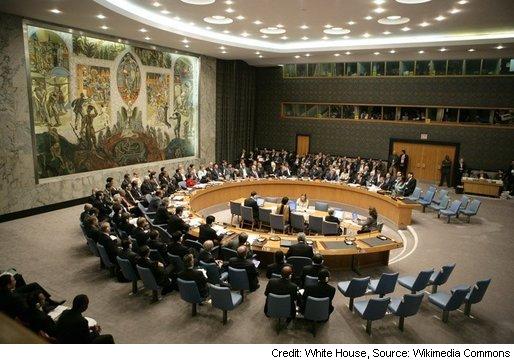
The following resolution, introduced by 120 co-sponsors, is currently pending the UN Security Council:

Israeli settlements established in the Palestinian Territory occupied since 1967, including East Jerusalem, are illegal and constitute a major obstacle to the achievement of a just, lasting and comprehensive peace.

On its face its not a particularly controversial claim. It more or less echoes long-held US policy on Israeli settlements. But of course when it comes to the UN, nothing is ever that simple.

What makes this situation a bit more interesting is that it is not only the usual suspects who are urging Obama to support the resolution. A letter signed by former US officials, prominent policy writers, academics and religious figures has just been released, calling upon the US to cast a yes vote.

An excerpt:

At this critical juncture, how the US chooses to cast its vote on a settlements resolution will have a defining effect on our standing as a broker in Middle East peace. But the impact of this vote will be felt well beyond the arena of Israeli-Palestinian deal-making – our seriousness as a guarantor of international law and international legitimacy is at stake.

America’s credibility in a crucial region of the world is on the line – a region in which hundreds of thousands of our troops are deployed and where we face the greatest threats and challenges to our security. This vote is an American national security interest vote par excellence. We urge you to do the right thing.

To be sure, the signators are not easily dismissible: they include former US Trade Representative and Council on Foreign Relations Chair Carla Hills, journalist and former New Republic editor Peter Beinart, former Under Secretary of State for Political Affairs Thomas Pickering, former Assistant Secretary of State James Dobbins, former Assistant Secretary of State Robert Pastor, former US Secretary of Defense Frank Carlucci and former US Ambassador to Israel Edward “Ned” Walker, among others.

It’s easy to be cynical about the UN, but it will still be interesting to see how this saga plays out. As Alex Spillius recently pointed out in The Telegraph, it may be Obama’s last chance to present himself as a fair dealer in this region.

If history is any indication, the final vote on this resolution will not be forthcoming any time soon. We can surely expect months of wordsmithing and back room dealing, and public posturing. Still, it certainly seems that there’s a bit more riding on this particular UN resolution than usual.

Stay tuned on this one.
Why the Peace Talks Failed

The New York Times tells us that Israeli-Palestinian peace talks have fallen through because the Palestinians are “refusing to resume direct negotiations absent a (settlement) moratorium.”

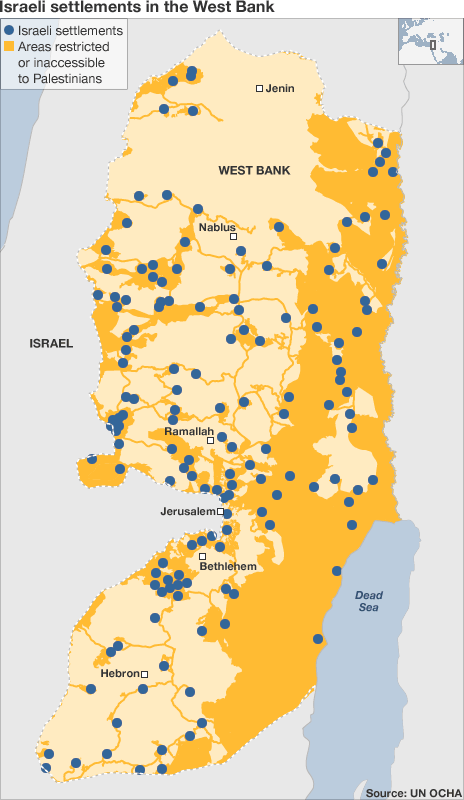
I’d say the map below (from a BBC article on the “settlement row”) explains everything you need to know about why the peace process has failed – and why a viable two state solution is well nigh impossible at this point.

An Inspiring Conversation With Congressman Brian Baird

Ta’anit Tzedek hosted an incredible conference call today with outgoing Congressman Brian Baird from Washington state. I’ve long admired Rep. Baird as one of the most fearless politicians on Capitol Hill on the issue of Israel/Palestine; indeed, his comments today were a powerful reminder that there are still politicians left in Washington who are doing this work for all the right reasons.

Rep. Baird spoke candidly and courageously on a host of issues: his four visits to Gaza, the Corrie family’s quest for justice for their daughter Rachel (the Corries are his constituents), the state of the current peace process, and the political reality of the Israel/Palestine issue in Congress.

We’ve just uploaded the audio of the entire conference call to the Ta’anit Tzedek website. Please, please listen to it and send it on to anyone who you think need to hear words such as these. Rep. Baird is a truth teller of the highest order. He will be sorely missed in Washington.

Latest Peace Process Reboot: “Borders First” All Over Again

In yesterday’s post I posed the question:

Does anyone really believe that anything substantive will be accomplished during a ninety day settlement (non) freeze?

According to many peace process policy wonks, the answer is as follows:

The logic behind a 90-day extension is that the two sides would aim for a swift agreement on the borders of a Palestinian state. That would make the long dispute over settlements irrelevant since it would be clear which housing blocks fell into Israel and which fell into a Palestinian state.

This approach is known by said wonks as “Borders First” – and it’s not the first time it’s been attempted by the US. It was, in fact, the method of choice more than a year ago, when the Obama administration first started engaging seriously with the peace process – and the potential pitfalls with this method were pointed out even then.

From Mideast analyst Mark Lynch (aka “Abu Aardvark”) writing in September 2009:

Indeed, “borders first” negotiations under current conditions — especially if Gaza is ignored and the Jersualem area either deferred or ratified — might well lead not to a two state solution but to what I’ve heard described as a “five statelet” outcome: Israel, Gaza, Ramallahstan, Nablusstan in the northern West Bank and Hebronstan in the southern West Bank.  Does anyone really think that this would be the foundation for an end of conflict agreement?

So if ‘borders first’ is going to be the approach to negotiations then I sure hope that early attention is paid to the questions of Gaza and Jerusalem.  If serious spoiler violence is to be avoided, then Hamas and its constituency are going to have to be engaged.  If acceptable borders are going to be drawn, they have to grapple with the realities of the Jerusalem area. And if it is meant to lead to a genuine and lasting end of conflict, then it can’t just be about borders — as Rob Malley has argued the Palestinian refugees need to be brought into the discussion.

I was full agreement with Mr. Aardvark then as now. But now it’s one year later and it seems to be deja vu all over again. While the US again pushes “Borders First,” other core issues are being completely ignored: Israel is still Judaizing East Jerusalem with abandon – and as for the crisis in Gaza, well, no one seems to consider the plight of that region issue even germane to the discussion any more.

I’ve been told Einstein didn’t actually say this, but it doesn’t make it any less true: “Insanity is doing the same thing over and over again and expecting different results.”