Category Archives: Prison Justice

Remembering the Forgotten on Shabbat Hanukkah

Mahmoud Al-Fasih holds the body of his three-week-old daughter, Sela, before laying her to rest. (Photo: CNN)

I’m sure there are many people who read what I write regularly (or scroll through my social media feeds) and think to themselves, “What a ‘one-note’ rabbi, just going on and on about Gaza. Why doesn’t he write or talk about other things for a change?”

If I could answer, these hypothetical folks, I’d say, yes there are surely many things in the world I could be writing or talking about. But when you live in a time of genocide – particularly one that is being funded by your government and carried out in your name as a Jew – it seems to me that being “one note” is a moral imperative. 

All the more so as Israel’s genocide on Gaza is now in its fourteenth month and the rest of the world seems have moved on – treating Israel’s genocide in Gaza as mere background noise. In such a context, it seems to me, bearing witness – i.e., to remember when others have forgotten – is a profoundly sacred act.  

Though it is not being widely reported, Israel’s mass killing of Gazans has been increasing dramatically in recent weeks. Earlier this week, it was reported that Israel’s genocide claimed 77 lives in one day. Two days ago, Israel attacked five journalists in a clearly marked news van outside Al-Awda Hospital in Nuseirat. (One of the journalists, Ayman Al-Jidi, was waiting for his wife to give birth inside the hospital.) It is also being reported that Gazan babies are freezing to death inside their increasingly frigid tent encampments. Truly, in the face of such shameful and shameless genocidal violence, how can we not bear witness?

Remembering Gaza is at the heart of Tzedek Chicago’s new Hanukkah supplement, “Rededicating our Solidarity with Gaza” which highlights a different group of Gazans who have been subjected to grave and deadly harm during the course of the genocide (including journalists and children). Each group is represented here by individuals whose lives and deaths testify to the dignity and humanity of the Palestinian people. We encourage you to read them aloud each night after reciting the Hanukkah blessings bear witness to their stories and sanctify their memories. 

Remembrance is also an important theme in this week’s Torah portion, Parashat Miketz. At the very end of last week’s Torah portion, while Joseph was languishing in Egyptian prison, he interpreted the dreams of his cell mates, the chief baker and the royal cupbearer. He told the cupbearer, “Think of me when all is well with you again, and do me the kindness of mentioning me to Pharaoh, so as to free me from this place.” But after the cupbearer is released from prison, we are told, “Yet the chief cupbearer did not think of Joseph; he forgot him.”

At the start of this week’s portion, the cupbearer learns of Pharaoh’s nightmares and tells him, “I must make mention today of my misdeeds.” He then tells Pharaoh about Joseph, the young man in prison who has the gift of dream divination. On the surface, this might be the self-effacing rhetoric of a royal courtier addressing his king. But on a deeper level, his statement could be understood as a kind of confession: admission that he has sinned by allowing the incarcerated to remain forgotten. 

Of course, systems of incarceration themselves are inherently sinful inasmuch as they treat humanity as disposable – and too easily forgotten. Whether it is the massive for-profit prison systems, the cages on our border, or the people of Gaza, who have been incarcerated in an open-air prison for over a decade and are now being subjected to genocidal violence at the hands of their captors. 

This Hanukkah, let us shine our lights to remind the world of what it would just as soon forget. Let us commit the kind of hope that is rooted in action: toward a world free of prison walls, a world where no one is disposable and the divine image in all is cherished and nurtured and liberated into its full and unfettered potential.

Shabbat Shalom and Chag Hanukkah Sameach.

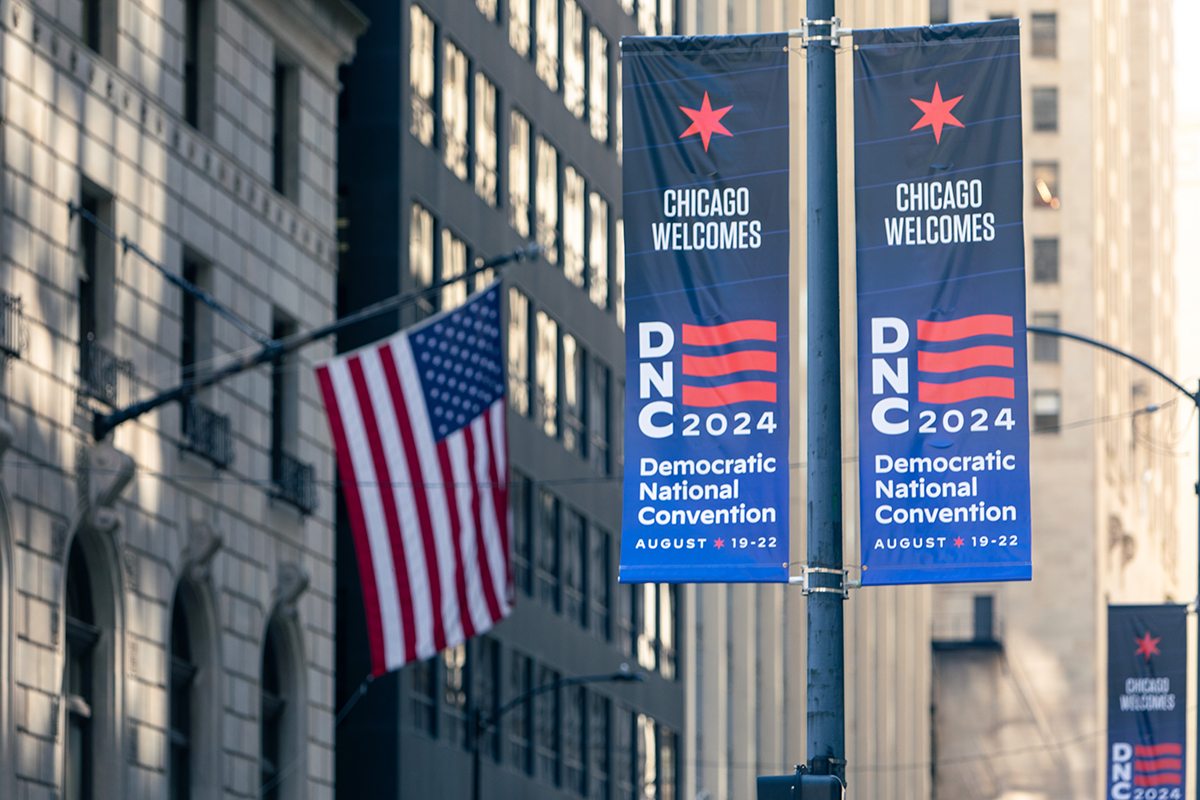
Protesting Genocide at the DNC in Chicago: Beyond “One Issue”

(photo by Keeton Holder)

As I’ve written previously, a large coalition of leftist groups has been preparing to take to the streets when the Democratic National Convention comes to Chicago next week. Although there will be a variety of different demands leveled at the DNC during the course of the convention, one key issue clearly stands out as a central common thread through them all – namely, an immediate US arms embargo and a permanent ceasefire to end Israel’s genocide in Gaza.

To name but one example: a rally and march for reproductive justice (of which my congregation, Tzedek Chicago, is a co-sponsor) will take place this Sunday, on the eve of the convention. As “Bodies Outside of Unjust Laws” organizers have made clear, however, the demands of this protest are not limited to issues of domestic reproductive justice alone:

Reproductive justice inherently includes ending the reproductive genocide in Palestine. As U.S. citizens, it is our duty to call on our own government to end the funding of weapons to Israel that enable this nightmare to continue and robs us of funds at home. As feminists and reproductive justice activists, we must also highlight a horrific aspect of the war on Palestinians: it is a war against women and children, who suffer in uniquely cruel ways. 

Likewise, the Coalition to March on the DNC, a group of over 200 national and local organizations is calling for an “End to US Aid to Israel” along with demands on immigrant justice, police crimes, healthcare, housing and the environment. Here again, justice for Palestinians is not viewed in isolation from other issues. As protest organizers correctly understand, these issues are irrevocably interlinked and intertwined.

During the course of this election cycle, those of us who have been demanding an arms embargo and ceasefire in Gaza have become all too familiar with one recurrent criticism in particular: that we are “one issue voters.” I find this to be a dangerous attitude for a number of reasons. More than anything, it’s an egregiously dismissive stand to take in an age of genocide, smacking of “it’s not my problem” American isolationism during the 1940s. For the Palestinian people, of course, Israel’s genocide in Gaza is not simply one issue – it’s the issue.

Witness, for instance, the news from this past weekend:

Officials in Gaza say more than 100 people were killed Saturday in an Israeli attack on a school and mosque where thousands of displaced Palestinians had sought shelter. The attack on the al-Tabin school in Gaza City was one of the deadliest individual attacks since Israel’s war on Gaza began over 10 months ago. Rescue workers said they did not find a “single full body” among the deceased — just body parts often destroyed beyond recognition. Survivors said Israel attacked the school during morning prayers…

CNN has confirmed a US-made GBU-39 small diameter bomb was used in the Israeli strike on the school. The attack came two days after the Biden administration notified Congress that it was preparing to provide Israel with an additional $3.5 billion to spend on US weapons and military equipment. Congress had approved the money as part of a $14 billion package for Israel in April. Zeteo reports part of the new US package includes a direct sale of 6,500 joint direct action munitions to Israel.

First and foremost, the genocide in Gaza is a crime against humanity that should concern us all. But as citizens of the nation that is funding and abetting this genocide, we Americans cannot look away from the blood that is surely on our collective hands. Nor can we ignore the shock waves that resonate far outside the borders of Palestine/Israel: the threat of an all-out regional war, the profits enjoyed by the arms and surveillance industry at taxpayer expense, the devastating environmental impact – the list goes on and on. Palestinian human rights lawyer and activist Noura Erakat put it perfectly on Twitter/X recently: “PSA: ending a genocide is not ‘a single issue’ it is an entire universe of issues.”

Another refrain I’ve been hearing repeatedly is the critique that protesting at the DNC “will only help Trump.” Harris herself leveled this argument at a campaign rally in Detroit when she sternly admonished pro-Palestinian protesters: “If you want Donald Trump to win, then say that. Otherwise, I’m speaking.” To be sure, it was an astonishingly tone-deaf and dismissive response to make in Michigan, the very birthplace of the Uncommitted Campaign. But on a more fundamental level, Harris’s response denied the very real impact of her own administration’s policies. As one of the protesters later put it, “When people are demanding a ceasefire and arms embargo and an end to the genocide and you say that we want Donald Trump to step in—it just shows a lack of accountability. It shows a lack of leadership, a lack of responsibility and a lack of ownership.”

In essence, Harris’s comment was just the latest version of the “shut up and vote” message that the Democratic party routinely sends progressives during every election cycle. In an age of US-supported genocide, however, the cynical emptiness of this message has become patently, painfully obvious. As journalist Masha Gessen has rightly pointed out. “These voters are not choosing between Harris and Trump. They are choosing between their sense of themselves as moral beings if they vote for Harris and their sense of themselves if they vote for a third-party candidate or for no one at all.”

Of course those who will be protesting at the DNC next week do not want to see Trump elected in November. But even from a purely strategic point of view, what has a better chance of helping the Democrats fortunes in November? We know that a strong majority of American voters across the political spectrum support a permanent ceasefire in Gaza. What would be the more winning strategy: telling those who want to end a genocide to shut up, or exert real leadership that will bring about a ceasefire and an end to the threat of a devastating regional war?

While party conventions function largely as candidate-coronations, they still function as places where parties express their collective vision and finalize their political platforms. On this score, I’m not at all optimistic that an arms embargo to Israel and a permanent ceasefire will find any purchase at the DNC. There are a mere 30 Uncommitted delegates out of 4,600 – and while they are pushing for a voice at the convention (they’ve asked that Dr. Tanya Haj-Hassan, a pediatric intensive care doctor who has volunteered in Gaza, speak from the convention floor), they have still not been offered a slot. Harris’s national security advisor has also made it clear that she opposes an arms embargo to Israel. By every indication, it certainly feels like “shut up and vote” will be the dominant Democratic party message coming out of the convention next week.

I have enormous respect for the Uncommitted delegates who will engage within the convention, particularly co-founder Layla Elabed, who has said even if they are not given a speaking slot, delegates will make their presence known with “news conferences, candle light vigils, tables to distribute literature and, they hope, guest testimonies about life in war-torn Gaza.” When it comes to political advocacy, however, there is always an inside game and an outside game. That’s why those of us who are not delegates will (quite appropriately) be making our presence known outside the walls of the convention hall as well.

Protest organizers have no illusions about the overwhelming militarized presence that will greet us when we gather next week. Federal authorities have divided the area surrounding the United Center, where the main speaking events of the convention will take place, into “soft” and “hard” zones – the latter being off limits to cars and non-credentialled delegates. But even in the soft zones, movement has been heavily restricted. The main protests have been given approved routes far from the convention site, and at one point goes through narrow residential side streets, that will be completely inadequate to handle thousands of protesters. While organizers have appealed the march route, as of this writing there has been no response from the city of Chicago.

When we talk about the potential for police violence next week, of course, the specter of the 1968 Democratic convention in Chicago looms very large. A great deal of ink has been spilled analyzing the differences and similarities between Chicago 1968 and Chicago 2024 – and while I’m loath to venture too far into this rabbit hole, there is one point of commonality I believe bears noting. In general, the mythos around the 1968 DNC protests tend to lay the blame for the Democrats’ defeat on the protest movement that “divided the party.” Often lost in this discussion is the fact that in 1968, those protests were directed toward a political party that had been prosecuting an increasingly unpopular war in Vietnam. Today, as then, I find it deeply misguided to blame protesters and not the immoral policies of the Democratic party itself.

While it’s not particularly helpful to use Chicago 1968 to heighten hysteria over the DNC, protestors are certainly justified in being vigilant over the very real possibility of police violence. I’m not the only one who finds it ominous that the city is doubling down on armed presence in the city. In advance of the convention, the Secret Service agent in charge of “security” has commented that “Chicago has a proven track record when it comes to putting on huge events” – citing the city’s response to Lollapalooza, the NASCAR Chicago Street Race and the Chicago Air & Water Show – as if the DNC is just another tourist event to showcase to the public.

No, we cannot deny of the very real moral and political reality that will be at stake in Chicago next week. We cannot deny that state violence directed against Palestinians is one and the same with so many other forms of state violence that are routinely normalized as “necessary.” And we must resist the call to dismiss any form of systemic violence as just “one issue.” As my friend and comrade, organizer Kelly Hayes has so wisely written:

We have to recognize victims of police brutality, Palestinians, our disabled and unhoused neighbors, and so many others who are subject to forgetting as worthy of grief, outrage and action. Everyday people who are fleeing violence, hunger, and militarism, everyday people whose cites are running out of water or are in danger of disappearing beneath rising flood waters, everyday people who are dying right now because they lack air conditioning amid heat waves – these are the people whose plights and fates should shape our politics. If we are going to fight for any semblance of human decency, we need to reclaim and reassert the value of our lives.

On Tu B’Shevat, Our Call for Ceasefire Affirms the Sacredness of All Life

Guest Post by Maya Schenwar

Remarks by Maya Schenwar, from last night’s Tu B’shvat gathering sponsored by Tzedek Chicago and the Jewish Fast for Gaza. (Maya is director of the Truthout Center for Grassroots Journalism. She is also a coordinator of the Jewish Fast for Gaza and a member of Tzedek Chicago.)

Many of those of us involved in Jewish Fast for Gaza are breaking our fast tonight. We’ve been fasting weekly on Sundays since mid-October, and we will keep fasting weekly until a ceasefire. We donate the money we would’ve spent on food to organizations supporting people in Gaza in this time of starvation and mass death. And each week, we are also reflecting on and renewing our commitment to solidarity with our Palestinian co-strugglers and people around the world who are calling for an end to this genocide, an end to US funding for Israel’s weapons, an end to colonization and apartheid.

When we call for a ceasefire, when we fast for a ceasefire, we are uplifting a call for life. In the months since October 7, I’ve heard many people quote Ruth Wilson’s Gilmore’s sacred words, “Where life is precious, life is precious.” And one of the things Ruthie is saying, with that message, is that in societies where life is actually treated as precious—where they don’t have the death penalty and life sentences and large-scale state violence and state-sanctioned environmental devastation—in those places, violence is less likely overall, the culture is less violent, because life is affirmed.

We should bear in mind that as the US fuels Israel’s genocide in Gaza, here in the US, Alabama is preparing to carry out the US’s first execution via nitrogen gas—which is torture—on the day of Tu B’Shvat.

People are more likely to treat life as precious when their own lives are treated as precious. So we have to create the conditions in which everyone’s life is treated as inherently sacred and irreplaceable. That work is on all of us.

Our Fast for Gaza draws inspiration from the Jewish tradition of fasting as an act of mourning, and it also draws inspiration from Palestinians incarcerated inside Israeli jails, who have launched many hunger strikes to protest their incarceration, and the incarceration of all Palestinians under occupation, to INSIST that their lives are precious.

When Ruth Wilson Gilmore first introduced this idea—where life is precious, life is
precious—she was at an environmental justice conference for youth, where, among other things, the youth denounced the effects of pesticides, including on humans– and of course, pesticides also have impacts on native plants and animals. I think this is significant, for Tu B’Shvat. Recognizing that all life is precious means recognizing our interconnection with all life around us. It means we need to, in the words of Thich Nhat Hahn, “awaken from the illusion of our separateness.” It means recognizing the ways that trees have been weaponized to push Palestinians off their land. It means recognizing Israel’s mass destruction of olive trees.

Trees themselves recognize that where life is precious, life is precious. Forests are social
systems in which trees support each other through their root systems, through chemical signals in their leaves, through the social climate they create. As we celebrate the trees’ birthday today, we can also celebrate their preciousness, the preciousness of all the life they nurture and that nurtures them. And we can express that through our urgent calls for a ceasefire, for Palestinian liberation, and for collective liberation.

When we say ceasefire now, we are also saying environmental justice now. When we say ceasefire now, it is a call for Indigenous liberation now, from Palestine to Turtle Island and beyond.

Ceasefire now can be a call to stop death penalties of all kinds, including this execution that is set to happen in our own country on the day of Tu B’Shvat. Let’s insist on the preciousness of people, and of trees, and of the interconnectedness of all beings.

Chag Sameach and peace to you all.

Shabbat as Revolution: Sermon for Erev Yom Kippur 5783

If asked to pick one aspect of Jewish spiritual tradition that was the most important, the most valuable, the most genuinely impactful, it would be no contest. I’d answer without hesitation: it’s Shabbat. 

Shabbat just looms so large and is so basic to the Jewish experience, I don’t think we stop enough to consider how revolutionary it truly is. Once a week, Shabbat arrives to overturn the status quo. While the High Holidays represents our annual spiritual shake-up, Shabbat provides us with this radical reboot opportunity every single week.  

Jewish tradition gives us multiple rationales for keeping Shabbat: it’s a day of rest and renewal, a day to refrain from the creative work of the week, a day for drawing a distinction between the sacred and mundane. It’s also been called a weekly taste of Olam Haba – or “the World to Come.”  The Talmud, for instance, teaches that Shabbat is one sixtieth of Olam Haba. A classic midrash relates that at the moment God gave the Torah to the Israelites, they asked, “Sovereign of the Universe, show us an example of the World to Come,” and God replied, “It is Shabbat.” 

So, what exactly is this World to Come that we get to taste every Shabbat? The rabbis don’t give us any definite answers to this question. In classical Jewish sources, it’s a general term for the hereafter, a place where the souls of the righteous go after they die. In other instances, the World to Come is synonymous with the messianic age: a future time in which the dead will be resurrected and the world will be united under the rule of God. 

But we do know this: whatever Olam Haba might look like, it will definitely be better than the world we’re living in now. In the Talmud, for instance, we read this classic description:

The World to Come is not like this world. In the World to Come there is no eating, no drinking, no procreation, no business negotiations, no jealousy, no hatred, and no competition. Rather, the righteous sit with their crowns upon their heads, enjoying the splendor of the Divine Presence.

(Berachot 17a)

In recent years there’s been an emergent new reframing of Olam Haba, particularly in leftist and radical corners of the Jewish community. According to this new approach, the World to Come is viewed in the context of social and political transformation: a vision of a world in which systems of oppression have been dismantled and replaced by systems that work for the well- being of all. 

I personally view this vision of Shabbat as being deeply informed by the contemporary abolitionist movement. Those who are active in this movement will immediately understand this. When abolitionist activists call for defunding the police and dismantling the prison industrial complex, we’re not merely advocating for specific political goals: we’re ultimately promoting a larger vision of the world as it should be. The great abolitionist organizer Mariame Kaba, describes it this way:

Abolition is a vision of a restructured society in a world where we have everything we need: food, shelter, education, health, art, beauty, clean water and more things that are foundational to our personal and community safety.

from “We Do This ‘Til They Free Us”, by Mariame Kaba,  p. 2.

Like the traditional Olam Haba, abolitionist Olam Haba isn’t just an ethereal, aspirational concept: it’s meant quite literally. It doesn’t mean “the world we dream might be possible” or “the world we know is not possible but in the meantime maybe we can reform the world to make it a little less horrible.” When contemporary abolitionists talk about transforming oppressive systems, we are advocating for a vision that is practical and real. It’s rooted in the belief that we have the wherewithal to build a world that will work for all, not just a privileged few.

For those who view Shabbat this way, every seventh day is nothing short of a weekly revolution – a regular opportunity to live in the world we know is possible. Ana Levy-Lyons, describes it this way in her essay, “Sabbath Practice as Political Resistance:”

The goal of a Sabbath practice is not to patch us up and send us back out to the violent secular world, but to represent in the now what redemption looks like, what justice looks like, what a compassionate social order looks like. It is to reconstruct the rest of time from the viewpoint of the Sabbath as unjust and untenable.

While this is a compelling new understanding of Shabbat, it’s worth asking: what would such a Shabbat practice actually look like? What would it mean to observe it? Can we observe Shabbat in a way that honors these values of political resistance? I think it’s altogether appropriate to explore these questions tonight, on Yom Kippur – the day when we vow together that a better world is possible; a world free of injustice, oppression and violence. What better time than Yom Kippur to think seriously about what we must do to make the World to Come a reality?

I’ll start here: Shabbat challenges us to rethink the way we commodify time itself.  As Rabbi Abraham Joshua Heschel, famously wrote in his classic book, “The Sabbath,” on Shabbat we become attuned to the holiness of time rather than space. During the six days of the week, we find meaning in the creative endeavors of the material world – but when Shabbat arrives, we affirm the sanctity inherent in the rhythms of time. 

But we can only do this if we are prepared to give up our futile attempts to dominate time. This is particularly challenging in a capitalist society, in which time itself has become monetized – in which our worth is literally determined by the amount of time we spend at work. Rabbi Zalman Schacter Shalomi refers to the six days of the week as “commodity time.” “Commodity time,” he writes, “is the price we pay for organic time. In order to earn a living, this is the bargain you strike: you give your employer work, in return for which he gives you money. While you are working, your time belongs to your employer, and it’s used to create commodities of one sort or another.” 

But on Shabbat, we’re commanded to resist the commodification of time. It’s a weekly reminder that when we attempt to control or profit from time, we will inevitably become enslaved by it. In the World to Come, time may not be sold, spent, measured or exploited. On the contrary, it must be valued and cherished and savored. On Shabbat we stop punching the time clock and live according to the organic rhythms of time, from sundown to sundown.

Is it even possible to imagine non-commodified work? Over the past two decades, there’s been increased social and economic theorizing about a world without jobs. As machines and robotics are able to do more jobs previously done by human beings, there’s been renewed advocacy of a future in which a universal basic income is guaranteed, a future in which people are free to spend their time doing what they find purposeful and meaningful. This vision has become even more relevant and critical in the age of COVID, as record numbers of Americans are working at low wage jobs and the cost of living continues to rise. The pandemic has given rise to a new and unprecedented discourse on the meaning of work – and we should welcome this conversation.

The Shabbat prohibition on commerce and transactions suggests another way to observe Shabbat as a form of revolution. When we engage in transactions with others, we do so with the expectation that we’re entitled to receive something in return. Shabbat, however, rejects the transactional in favor of the relational. These are the most sacred relationships: the ones that are based on the building of trust – that favor long-term fulfillment over immediate gain. This is why on Shabbat, the traditional focus is on the most basic forms of human interaction: on communal meals, prayer and study, on physical intimacy between lovers. In the World to Come, relationships will not be exploitative or negotiable – they will, rather, model devekut – sacred at one-ness and coming together. 

A third suggestion: It’s been suggested that there are profound connections between Shabbat and the values of the disability justice movement. One of the central Principles of Disability Justice, affirms that the labor of disabled people is too often invisible to a system that defines labor by able-bodied standards. The disability justice movement makes this point very clearly and unabashedly: “our worth is not dependent on what and how much we can produce.”

This principle is rooted in one of the most basic values in Jewish tradition: that every human being is created in the image of God – b’stelem elohim. As Rabbi Julia Watts Belser, a prominent Jewish disability justice activist has written,

Jewish tradition affirms that the measure of a person’s worth does not rest upon what they can do, how much they produce, or how quickly they think. For all that our tradition praises right action, our fundamental value as people does not depend on our accomplishments or achievements; it is rooted in our very being. We all of us mirror the image of God.

Another one of the Principles of Disability Justice has a direct connection to the values of Shabbat: the principle of sustainability:

We learn to pace ourselves, individually and collectively, to be sustained long-term. We value the teachings of our bodies and experiences, and use them as a critical guide and reference point to help us move away from urgency and into a deep, slow, transformative, unstoppable wave of justice and liberation.

This is Shabbat wisdom through and through. On Shabbat, we, all of us, learn to pace ourselves, to be sustained for the long term. And what better definition of the World to Come could there be than a “deep, slow, transformative, unstoppable wave of justice and liberation?” 

A fourth and final suggestion: the traditional laws of Shabbat require us to cease our exploitation of the earth’s natural resources. There are many categories of forbidden work on Shabbat, for instance, that involve changing, transforming and extracting. In the World to Come, of course, the resources of the natural world will be nurtured to enhance life, not exploited for profit. 

Jewish scholar Jonathan Schorsch, who has founded an initiative called the “Green Sabbath Project, has written extensively about this idea. As Schorsch puts it:

Shabbat can and must be a radical ritual within which we can digest anew the biblical prophets’ warnings against the corruption of the rich and powerful, the oppression of the poor and the self-centered pursuit of short-sighted pleasures, understanding how relevant such warnings are to the ecological devastation wrought by hypercapitalism. Sabbath properly practiced offers a weekly interruption of the suicidal econometric fantasy of infinite growth, a weekly divestment from fossil fuels, a weekly investment in local community. 

These are but a few suggestions of where we might start to explore a new form of Shabbat observance – and I’m excited by the prospect of discovering more. At the same time, I realize that these approaches have inherent challenges. When we talk about the World to Come in this manner, we’re essentially talking about structural change – and I have no illusions that personal disciplines alone will themselves effect the wholesale changes we seek. 

At the same time, however, I strongly believe that Shabbat has the genuine potential to motivate us to keep the struggle going – to inspire us to continue building the movement for the long haul. As I like to put it, when Shabbat arrives every Friday evening, these rituals invite us to cease the struggle and experience together the world we are ultimately struggling for. Shabbat can renew and replenish us so that ideally, when it ends on Saturday evening, we are that much more inspired to go out and make that world a reality.

I’m also aware that not everyone will have the ability to observe Shabbat in the ways that I have outlined here. I know full well that there are those who cannot afford to take every Saturday off to resist the commodification of their labor. There are those who do not have the luxury of weekends, who must work sometimes multiple jobs just to get by. And I also know how challenging it is in the digital age to leave work at work, in an era where our work mail follows us electronically 24 hours a day, 7 days a week. But to my mind, this reality drives home the sacred importance of Shabbat all the more. Shabbat reminds us that we must continue to struggle for jobs that pay livable wages, for saner working hours, for the ability to live lives of purpose, for the right to spend our time in more meaningful and fulfilling ways.

I like to think of Tzedek Chicago as a spiritual laboratory where we can explore new ways of celebrating Shabbat as a revolution, where we can, on a regular basis, live in the world we know is possible. Those of you who have come to our Friday evening online services and candle lightings will know what I’m talking about. I’m fairly sure that not a Shabbat goes by when we don’t mention the World to Come – and try to make it real for one another. And I’m sure we’re not the only ones. 

Those of you who join us for Shabbat services also know that I like to write contemporary Shabbat liturgy that evoke the spiritual reframing that I’ve described to you tonight. I’d like to end with one of them: a prayer for Havdalah – the service that ends Shabbat on Saturday evening. I offer it in honor of this Yom Kippur, the day in which we vision of the world that might yet be – and vow to do what we must to make it a reality:

Savor this eternal moment
and hold it close,
before you leave the world to come
and re-enter the world as it is,
before your sweet dream
reverts back to hard truth.

For this much we know:
long after the day is done
the melody of this song will
reverberate through our souls,
driving us forward until the day
that liberation is finally won.

One day very soon,
the song will lead us
to a dream fulfilled, to a place
where light and gladness,
joy and wonder, justice and salvation
flow without cease.

But for now we’ll prepare ourselves
for the work ahead –
let’s light the fire, raise the cup
and breathe in the sweetness
of this moment.
With strength renewed
and spirit re-inspired it’s time
to rejoin the struggle.

Blessed is the One who separates
between inspiration and fulfillment,
exile and return,
struggle and liberation,
hard work and sweet victory,
between the world we know
and the world we know is possible.

Amen.

“It’s Time for All-Out Freedom” A Passover Guest Post by Maya Schenwar

c2tzcfgxgaitcn3

Remarks delivered by Maya Schenwar (editor of Truthout and author of “Locked Down, Locked Out” and the upcoming “Prison by Any Other Name”) at the Tzedek Chicago Passover Seder, April 14, 2020. 

A few months ago, which feels like a few centuries ago, Brant and I discussed the idea of me saying something at this seder about the difference between reform and liberation. I’d been writing about how popular prison reforms such as electronic monitoring, drug courts, and psychiatric institutions are actually entrenching the prison-industrial complex. I thought, what better occasion than Passover to talk about how we shouldn’t be pursuing fake liberation, and how we don’t want nicer-looking reforms that are still forms of oppression? What better occasion to affirm that we have to demand all-out freedom and stick with it?

Now, in these terrifying new times, it feels even more imperative to make vast, sweeping demands—demands that rise higher than we might think we can dream. In the midst of a worldwide plague that, in one way or another, engulfs us all, it’s time for that all-out freedom call.

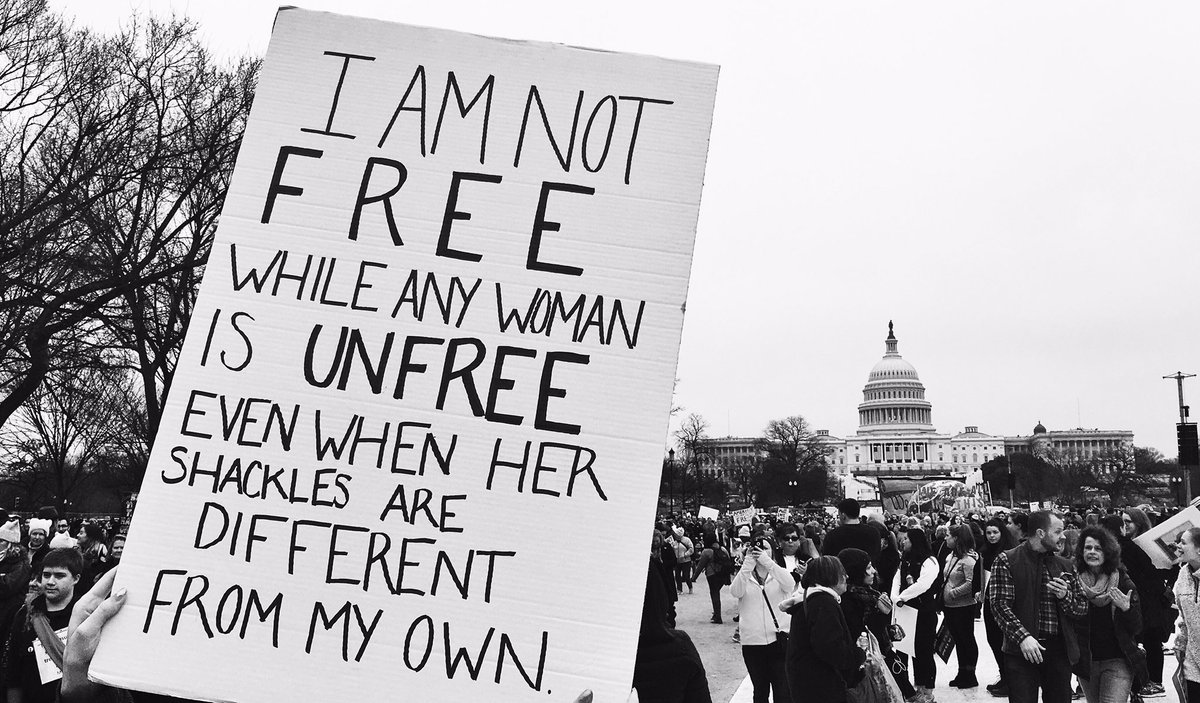
What do I mean by “all-out freedom”? I’m thinking about the refrain that “no one is free while others are oppressed.” I’m thinking about Audre Lorde saying, “I am not free while any woman is unfree, even when her shackles are very different from my own.” The COVID-19 crisis has deeply and horribly impacted our own communities — and communities everywhere. Marginalized people have, of course, been disproportionately impacted. (Consider that approximately 70% of people who’ve died from COVID-19 in Chicago are Black.)

Right now, we are coming to understand that none of us are healthy while others are sick. As long as anyone is in peril, more will be in peril. And liberation for only some is not liberation.

Yet, in a lot of different arenas, we’ve come to accept small offerings from our political representatives and leaders—a bailout mostly geared toward banks and corporations, a slight reduction in drug prices, a few people freed from prisons, some limits on carbon emissions. We say, “Well, something is better than nothing,” even when the something is far from enough, and when the something leaves many people to die.

Even in the face of coronavirus, the health care plan of the presumptive Democratic presidential nominee would leave many millions of Americans uninsured. At this moment in which all of our lives are threatened, it’s time to call for Medicare for All—and much more. We need comprehensive cost-free mental and physical health services, including treatments that go well beyond doctors and hospitals. We need to recognize that plentiful nutritious food, housing, sleep, free time, relaxation, and self-determination are also part of health and survival—and part of liberation. This is the moment to demand universal housing, universal food access, and drastically improved labor practices, which are key to building the kind of freedom that sacrifices no one.

And, at a time when unemployment is skyrocketing and the climate crisis is amplifying the effects of COVID, where is our Green New Deal? Where is our jobs guarantee, our income guarantee for those who don’t work—and our guarantee that our leaders will do everything in their power to confront the climate emergency, which is on track to kill billions? These aren’t far-off dreams or hypotheticals; they are steps that it makes sense to implement now to directly address the public health and economic crises enveloping our country.

At a time when we’re witnessing a shortage of life-saving equipment – ventilators and protective gear – we can issue a pragmatic call for the end of the war industry. In fact, we can challenge the existence of the military-industrial complex as a whole. Has there ever been a clearer moment to say no to the machinery of death, and to demand a mass shift of funds away from the Pentagon and toward public health?

It’s not a time for compromise—not a time to save some and not others.

Moses abided by this philosophy in his dealings with Pharaoh. He said to Pharaoh, “Let us go into the wilderness and worship our own God!” In response, Pharaoh proposed compromises—little reforms, fake liberations.

Pharaoh’s first compromise proposal was for the Jews to stay in Egypt, but worship their own God there. Some people might have said, “Take what you can get! Stop there, Moses! It’s better than nothing.”

But Moses declined the compromise, which was a little better than nothing—but it wasn’t freedom.

So then some plagues happened, as we know, and Moses asked again. Pharaoh scrounged up another compromise: He would let the men go off into the wilderness, but the women and children would have to stay in Egypt. Of course, women and children were groups that were more vulnerable—multiply oppressed, within the oppressed group. And in this compromise, they’d be thrown under the bus.

This compromise reminds me of the “moderate” reforms we see all over the political stage right now, reforms that modestly benefit some people, while throwing other people entirely under the bus:

For example – the proposal that a few more people can have health care, but there will still be millions and millions who are uninsured. Some would say, It’s better than nothing!

And there are the proposals to let some people with nonviolent first-time drug offenses out of prison, while millions of others will be left in cages. Some would say, It’s better than nothing!

And of course, there’s the compromise that younger people with no criminal record will temporarily not be deported, while older people and people with criminal records are condemned to deportation. Some would say, It’s better than nothing!

These are reforms that throw people away. Liberation refuses to throw anybody away.

Moses said no to the compromise, and we have to say no to the politics of disposability, too.

So then there were more plagues, and Pharaoh issued a final compromise: The Jews, including the women and children, could go into the wilderness – but they’d have to leave their animals behind. Basically, they’d have to be released from captivity with barely any resources.

There’s no freedom without some means to survive, and even thrive. A country where many millions are without health care in the middle of a pandemic is not a free country. A country in which people are starving because they’ve suddenly lost their jobs and have no safety net is not a free country. A country in which a few people are released from jails because of a pandemic, but are released into homelessness, is not a free country. In fact, a country in which people experience homelessness is not a free country.

My longtime pen pal and friend Lacino Hamilton, who is incarcerated in Michigan, wrote me a letter about the experience of the pandemic behind bars. He is hoping to be released soon: After 26 years in prison, his challenge to his conviction appears to be on the verge of being recognized. But, Lacino wrote, “I’m worried that I’ll leave here and materially my life will worsen.” He wrote, “Returning citizens are supposed to be happy with dead-end opportunities, the kind that offer only a ‘piece of a life.’ I want a whole life.”

Everyone should have a whole life. Without that, it’s not real liberation.

So, Moses said “no” to the no-animals compromise, because it was not freedom at all.

Eventually, after the most gruesome and horrifying plague of all, the one we hate to talk about, Pharaoh agreed to the whole package.

Of course, that wasn’t the end of the story. Pharaoh tried to prevent the actual implementation of the plan, necessitating some miracles from God to allow the Jews to truly leave.

Some miracles are probably necessary now, too, because the forces of power are never going to agree to full liberation. But I personally don’t think those miracles will be bestowed by a powerful God (who, to be honest, sometimes comes across in parts of the Torah as another angry dictator). I think we have to make those miracles ourselves.

What would it look like for us to create miracles, in the uniquely brutal time we’re currently living through? A couple of weeks ago, Arundhati Roy wrote a beautiful piece about the COVID-19 crisis, in which she talked about this time as one that forces us into a kind of magic. She wrote,

Historically, pandemics have forced humans to break with the past and imagine their world anew. This one is no different. It is a portal, a gateway between one world and the next. We can choose to walk through it, dragging the carcasses of our prejudice and hatred, our avarice, our data banks and dead ideas, our dead rivers and smoky skies behind us. Or we can walk through lightly, with little luggage, ready to imagine another world. And ready to fight for it.

I love that passage, and it speaks to something important. I don’t think the miracle of a full-scale societal transformation that allows for the possibility of liberation will come from above. As far as I know, God cannot unilaterally snap their fingers and provide a universal health care plan or a Green New Deal, or end white supremacy or incarceration, or provide a home for every human being. We will need to grow these things. And I believe that we can, if we remember that no one is safe and healthy until everyone is safe and healthy, and that liberation cannot mean throwing anyone away.

There are many ways to take action right now to pursue liberatory goals, from mutual aid efforts that address urgent needs and build organizing infrastructure for the world we want to live in, to critical housing and labor campaigns, to racial justice movements working to release people from jails and prisons, to environmental campaigns that are drawing connections between this moment and the looming climate emergency, to the ongoing battle for Medicare for All, and much more. Brant is going to share some links in the chat for this Zoom call that will point you toward ways to get involved. These are only a smattering of the many crucial efforts currently underway.

I don’t think we need to drop horrible plagues on our enemies in order to refuse harmful compromises. Instead, we need to unite against horrible plagues – including the plagues of injustice, inequity, and mass violence – and for mass liberation.

I believe that we can enter the portal and fight for that new world, if we are prepared to do it together.

____________________________________________________________________________________________

Action items (National and Chicago-Based):

* The People’s Bailout: a coalitional effort by environmental, economic, racial and health justice groups to advocate a transformative economic package in response to COVID-19. 

#FreeThePeoplea coalition of advocacy organizations who do work to support imprisoned community members across the state of Illinois.

Physicians for a National Health Plan’s COVID-19 and Medicare for All

•  National Nurses United’s broad-based Medicare for All effort. 

Chicago COVID-19 Help & Hardship Page:  a mutual aid effort for direct food and housing assistance.

Rogers Park Food Not Bombs: Saves food from the waste stream while highlighting the inequities of our society.

Brave Space Alliance’s Crisis Food Pantry and Trans Relief Fund.

Greater Chicago Food Depository.

Restore Justice Illinois: to help provide for someone being released from prison.

Help Love & Protect: to make masks for people in women’s prisons:

Autonomous Tenants Union​: an all-volunteer organization committed to organizing for housing justice from below and to the left.

Lift the Ban: to advocate for lifting the ban on rent control in Chicago.

Organized Communities Against Deportations: resistance movement against deportations and the criminalization of immigrants and people of color in Chicago and surrounding areas.

Seder Readings for Passover 5780

Screen Shot 2020-04-02 at 8.17.44 AM

I’ve just finished “Fight for the Health of Your Community” – a new collection of Passover seder readings I wrote for members of my congregation. I’m happy to share them with the wider world as well – and sincerely hope you’ll find them helpful if you are holding/attending a seder this year.

It goes without saying that this year is a Passover like no other. As I wrote in the opening reading:

Before we raise the cup to another Passover, we must acknowledge that this night is very different from all other nights. In this extraordinary moment of global pandemic, we are literally dwelling in the “narrow place” of social separation. Thus, we come to the very first question of the evening: how on earth do we fulfill the mitzvah to observe the Passover seder? Where do we even begin?

Since the dictates of social separation render the group seders impossible, many families and groups are already planning to hold theirs’ via Zoom or other web-based platforms. There are already many online guides with tips on web-based seders that you may find useful. While I personally believe that there is no one perfect approach, I do recommend that seder leaders familiarize themselves with their specific online platform and to keep things simple and doable.

I want to stress that this particular resource is not a haggadah – and is not designed to be used in its entirety. I strongly agree with one online guide when it points out: “the seder should not be dominated by making connections of the virus to the Exodus story but it does need to be addressed in some capacity.” In this collection I’ve written one reading for each section of the seder and recommend picking and choosing the one/s you find most meaningful. While the extent to which COVID-19 is addressed will vary, I believe the most successful seders will be the ones that view the Exodus narrative as a spiritual frame to contextualize this unprecedented moment.

I wish you and those you love a happy, healthy and liberating Pesach. May we all make our way through this fearful moment together. And as I write here, “May this time of brokenness lead to a deeper solidarity between all who are ready to fight for a better world.”

Click here for a copy of the pdf.

Reckoning with the Arc of the Moral Universe in the Age of Trump: A Sermon for Rosh Hashanah 5779

Arc of the Moral Universe

Writing topical High Holiday sermons is a process fraught with peril. It’s common knowledge among rabbis that if you sit down to write at the beginning of the summer, chances are pretty good that your chosen issue will be obsolete by the time the holidays roll around. In the current political moment however, where current events have accelerated to warp speed, it feels as if issues become obsolete every hour on the hour. Thus my challenge this year: how do I respond without contributing to the ever-increasing barrage that has become our current reality?

More to the point: how do I avoid contributing to the widespread despair that so many of us are feeling? I’m sure most of us are experiencing current events as an onslaught. They come at us faster and faster: every new policy strike-down, every new act of deregulation, every new appointment feels like yet another kick to the stomach.

To put it simply, the world that so many of us fought for seems to be unraveling before our eyes. So many of the socio-political gains we’ve struggled so hard for for so long are being rolled back on an almost daily basis.

So this Rosh Hashanah, I want to forgo the topical sermon in favor of some deeper questions. Namely, how can we maintain our equilibrium during the current political moment? How do we respond to the onslaught? How do we resist the despair that for so many of us, characterizes the nightmare age of Trump?

Since the election, we’ve been hearing from mental health experts that there’s been a dramatic spike in anxiety and depression since the election – a kind of “political stress disorder” – but that’s not what I’m talking about. Rather, I’d like to explore why so many of our previously held beliefs about our world seem to have come crashing down on top of us. In particular, I want to look closely at the assumptions that Americans – particularly liberal Americans – use to understand the history of progress in our country.

I’d like to ask, have they been harmful in ways we don’t often stop to realize? And if they are, might there be different frames we can use to understand the world around us? Ones that will help us stand down the despair and give us the strength to fight for the world we want to see? And finally, on this new year, I’d like to explore how Torah and Jewish tradition address this question in ways that might help us find a way forward together.

Let’s start with one very common assumption: the view that history is a march toward progress. This view is considered a central tenet of liberalism and it dates all the way back to the Enlightenment. In fact, this idea is so deeply embedded in the mindset of so many Americans that it is almost taken for granted.

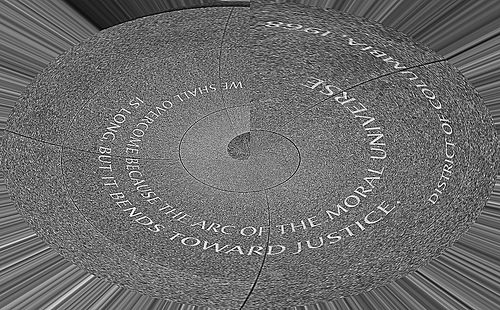
Now certainly, when we look at the unfolding of American history, we could make a very strong case for this view. It certainly seems that the arc of history bends toward justice. Our march toward progress is well known: the abolition of slavery, the creation of labor laws, the right of women to vote, civil rights legislation, environmental regulation.

The idea in a nutshell: “We struggled, we won, progress was achieved.” This linear view of socio-political progress is deeply ingrained in the mythos of liberal America. When these historical moments occur, they enter into our national consciousness and become part of a collective narrative of progress. We venerate them, we celebrate them – often on an annual basis – and then either consciously or unconsciously, we assume that history will continue to progress in a linear fashion from that point onward.

The only problem with this assumption is that it doesn’t. And it never has.

Let’s use the first example on the list I just mentioned: abolition. Most of us date the abolition of slavery back to 1865 with the adoption of the 13th amendment – but in truth, abolition resulted from over century of struggle on many different fronts. But it wasn’t a linear struggle. And the struggle is far from over.

During Reconstruction, former slaves did make meaningful political, social and economic gains. Black men voted and even held public office across the South. Biracial experiments in governance flowered. Black literacy surged, surpassing those of whites in some cities. Black schools, churches and social institutions thrived.

But as W.E.B. Du Bois famously wrote “the slave went free; stood a brief moment in the sun; then moved back again toward slavery.” After the formal fall of slavery in the South, there was sharecropping, in which black farmers became debt slaves to their white landlords; there was the convict lease system, in which black men were leased out to wealthy plantation owners and corporations; there were widespread lynchings in the South and yes, often in the North as well. There was Jim Crow – a legal caste system that literally divided black and white Americans.

And after the civil rights movement helped bring down segregation, we’ve seen the emergence of the “New Jim Crow” as a result of mass incarceration. As scholar Michelle Alexander and others have pointed out, more black men are currently behind bars or under the thumb of the criminal justice system than there were enslaved at the height of slavery.

Yes, the abolition of slavery was a significant victory and yes, we should celebrate our victories. But we cannot assume that injustice will simply end or evaporate with these victories. More often than not, it morphs into different forms in insidious ways.

It seems to me that liberal Americans – particularly white liberal Americans – chronically underestimate the tenacity and staying power of injustice. Why? Well for one thing, although we don’t often acknowledge it, this country was founded on injustice – on the original sins of indigenous genocide, slavery and the economic supremacy of white property-holding men. Injustice is part of our national DNA. As long as we fail admit this, it’s too easy to ignore the ways injustice is chronically manifest in the life of our country.

Our American political culture reinforces the notion that struggles for liberation invariably lead to the eradication of injustice. The way we memorialize the civil rights movement provides a good example. In her recent book, “A More Beautiful and Terrible History,” Professor Jeanne Theoharis writes powerfully about the ways political elites – who historically fought the passage of civil rights – regularly use this history as proof of how great our country is. President Ronald Reagan for instance, repeatedly resisted efforts to turn Dr. Martin Luther King’s birthday into a national holiday. He finally relented however, when he realized he could co-opt MLK and the civil rights movement.

When Reagan signed the bill into law, he said,

We’ve made historic strides since Rosa Parks refused to go to the back of the bus. As a democratic people, we can take pride in the knowledge that that we Americans recognized a grave injustice and took action to correct it. And we should remember that in many countries, people like Dr. King never have the opportunity to speak out at all.

But it’s not only conservative politicians who promote this new mythic history. Theoharis also quotes Barack Obama from a 2007 speech in Selma, Alabama. Referring to the civil rights generation, he said, “They took us 90 percent of the way there, but we still got that 10 percent in order to cross over to the other side.” The implication that we have eradicated 90% of the racial problems in our country is of course, serious political hyperbole. And it speaks to a very common trope in our national culture: that our great nation was founded on a struggle for freedom, that these struggles are what make this country great, and that these struggles somehow eradicate injustice from our midst.

In reality, however, these struggles don’t succeed because of our country – they succeed in spite of our country. And they certainly do not end racism and injustice once and for all. Whether they stem from hyperbole, ideology or unconscious assumptions, I believe that these false tropes breed complacency. After all, why worry too much if we believe history proves our struggle will eradicate injustice in end? And when injustice metastasizes into new and different forms, it upsets our neat, linear assumptions about American progress. As a result, we’re ill-equipped – emotionally and strategically – to respond properly to this new reality.

I’d like to turn now to Jewish tradition and explore whether or not the Torah has anything to offer us on this particular question. It’s often been observed by liberal scholars in fact, that this linear view of historical progress can be traced back to Biblical tradition. According to this school of thought, the polytheistic traditions of the Ancient Near East viewed history as circular, embodied in the never ending, constantly repeating cycles of nature. Israelite monotheism however, upended these traditions, sublimating the gods of nature to the one God of history, who alone could control nature and events according to his will.

Here’s a good representation of this view – I’m quoting from an essay by Rabbi Ismar Schorsch, the former Chancellor of the Jewish Theological Seminary:

The consequences of this shift from nature to history reinforce the idea of ethical monotheism. Judaism develops a linear concept of time as opposed to a cyclical one and sanctifies events rather than places. The mountain of Sinai is not holy, or even known, but the moment of revelation is. The Torah intentionally conceals from us the place where Moses is buried. Time is a medium less susceptible to idolatry or polytheism, in which God’s presence is made manifest audibly rather than visually. Time becomes for Judaism the realm in which humanity and God join to complete together the work of creation…The triumph of morality will eventually render nature perfect, bringing history to its messianic conclusion.

While this is a popular view of many Jewish scholars, I find it to be problematic on so many levels. Particularly this notion that “the triumph of morality will eventually render nature perfect, bringing history to its messianic conclusion.” This kind of linear messianic thinking leads to a concrete end game, a victory that will solve all our problems. Messianic movements of course, have historically arisen during periods of acute crisis – times in which the vision of the ideal world becomes profoundly exciting and intoxicating to the growing numbers of people. But as we know all too well, messianic movements almost always end in upheaval, disillusionment and too often, tragedy.

You don’t have to be fundamentalist or even particularly religious to engage in linear messianic thinking. We all have a tendency, particularly during difficult times, to focus our expectations on an idealized conclusion. While this is undeniably inspiring and motivating, we too often end up mistaking the victories we experience along the way as the end game itself. We fall into the trap of viewing progress as an entitlement rather than something that must be constantly, constantly struggled for in every generation. It sometimes feels to me that this fixation on the end game is itself a kind of idolatry. We might say that we create a false god whenever we objectify one idea or concept or movement as the ultimate panacea for the problems of the world.

This is not however, the only Jewish frame for understanding history. I’d like to suggest another – one that I personally find to be much more helpful and inspiring. It is embodied by the word,“Yisrael” which literally means “one who struggles with God.” In the book of Genesis, Jacob’s name is changed to Yisrael after he wrestles with a mysterious night visitor that turns out later to be God. Jacob is victorious – and this moment marks a critical turning point in his life. But at the same time, he is wounded by the encounter – he limps as he crosses the river the next morning.

It’s also notable that Jacob’s struggle does not end with this one episode. His life certainly does not follow a straight line from this point on. Nor does the journey of the people of Israel who bear his name. In fact, the Torah narrative always ends before the Israelites enter the Promised Land. Just when they arrive at the threshold, we literally rewind the Torah back to the beginning and we start the journey anew. The cycle begins once again.

In other words, redemption is not located in any particular place or point in time – it is experienced in the act of struggle itself. God cannot be found in a land or place, nor at some literal end time. God is in the struggle. We might even say, God is the struggle.

Now I know for some this might seem on the surface to be a bit on the bleak side. Some might of you might be thinking, “Is this all we have to look forward to? Life is just one long endless struggle? And we never even get to the Promised Land? How is this inspiring?

Please understand: I’m not saying we can ever give up on our vision of our the world we want to see. I am suggesting that at some point it is important to let go of the expectation that we must inevitably get there – because I really do believe that holding on too tightly to that expectation is a set up for despair and disillusionment.

Yes, this spiritual frame does involve an acknowledgement that we will not literally arrive in the Promised Land; that the Messiah will not actually come. But at the same time, its worth considering that we do indeed enter into messianic time in ways we never stop to consider: when we show up for our fellow strugglers, when we celebrate our victories along the way, when our efforts are infused with our highest values of justice and equity and sacrifice, at those moments we find ourselves dwelling in the world we’ve been fighting for all along. We experience the world we want to see because we create it for one another.

Struggle is hard work, but if we view it exclusively as a means to an end, it will be only that: hard work. However, if we view struggle as an inherently sacred act, we may yet see the face of God in our comrades and those who have gone before us. We may come to understand that the messianic age is not simply a far off dream. We may yet find we are dwelling in the Promised Land in ways we have never been able to realize before.

According to Jewish tradition, Rosh Hashanah is a kind of “spiritual reboot” for ourselves and our community. In the traditional liturgy we say “Hayom Harat Olam” – it is the birthday of the world! On one level I think this means we never forfeit the ability to view the world with different eyes, through new and different frames. And if we can do this, we may well be able to transform the world itself. Yes, we live in painful, difficult times, but this is nothing new. Yes, there have been significant setbacks to many hard won battles in our country, but the struggle is far from over. In fact, as our liturgy would have it, it may be just beginning.

To all of you in Am Yisrael – and by this I mean all who struggle side by side for the cause of justice in the world – I wish you a heartfelt chazak ve’ematz – strength and courage. May it be a sweet and victorious year for us all.


Prayer for the Poor People’s Campaign

homeless-flag_7020

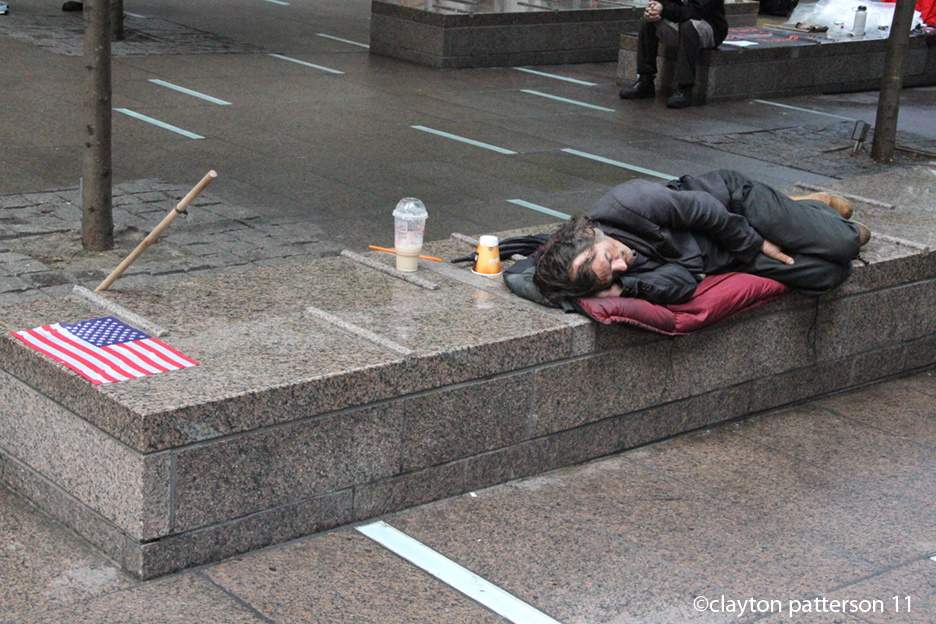
photo: Clayton Patterson

(Delivered at the Poor People’s Campaign Rally for Action, Grace Lutheran Church, Evanston, March 22, 2018.)

Friends, let us bless:

This is a blessing for the ones
who stand up police lines and say:
you may invade our communities,
you may profile and survielle us
you may shoot at our black and brown bodies,
but you will never break us.

This is a blessing for the ones
who lose their homes to predators,
who lose their pensions and healthcare,
while the wealthy grow wealthier
but will never accept that this
is simply the way things must be.

This is a blessing for the ones
who live under the terror
of our drones and our bombs,
whose blood fills the coffers
of our war economy,
whose only consolation is the truth
that while empires may rise,
they are destined to fall.

This is a blessing for the ones
who stand on street corners,
who live in tent encampments
next to luxury condos that soar to the sky
yet refuse to surrender their humanity
to the gears of an inhumane system.

This is a blessing for an earth
that grows more inhabitable by the day
yet is still inhabited by those who struggle
for a planet that will provide a sustainable home
for their children’s children.

This is a blessing for the immigrants
who fear every knock on the door
every cop that pulls them over,
every job application they are handed
yet never give up on the dream
of a better future for themselves
and their families.

So let the justice
that trickles down shallow creeks
roar through the valley and saturate
the dry parched earth,
let it flow relentlessly throughout the land
where life once grew and will grow again.

Let those who cry out in pain
feel strength growing within their broken souls
like green stems shooting through
cracked pavement.

Let us live to see new life spreading
through abandoned streets and
neighborhoods and cities and nations and
let the promise of transformation beckon still
that we might finally take the first
tentative step into this new day, yes
let it be so.

Amen.

Sermon for Yom Kippur 5778: Another World is Possible – A Jewish View on Police/Prison Abolition

Cages-Kill-Freedom-Rally-Abolish-prison-build-community-Santa-Cruz-012415-by-Scott-Nelson
In 1902, Clarence Darrow delivered a speech to a group of inmates at the Cook County Jail. Never known for mincing his words, he made the following point:

There should be no jails. They do not accomplish what they pretend to accomplish. If you would wipe them out, there would be no more criminals than now….They are a blot upon civilization, and a jail is an evidence of the lack of charity of the people on the outside who make the jails and fill them with the victims of their greed.

There’s no record of what the prison administration thought of his remarks, but I think it’s fair to assume they weren’t happy.

Another anecdote, this one more recent: Two years ago, after the killings of Alton Sterling, Philando Castile and several Dallas police officers, Fox News hosted a panel discussion on police violence. One of panelists was a young African American activist and rapper named Jessica Disu. The discussion inevitably started to get heated. Disu didn’t mix in for the most part, but when someone accused Black Lives Matter activists of calling for the death of cops, Disu finally spoke up.

Speaking over the din, she said, “This is the reason our young people are hopeless in America.” Then she added, “Here’s a solution, we need to abolish the police.” The panel quickly descended into pandemonium.

Disu later commented that she had never previously considered herself to be a police abolitionist. But since that evening, she said, abolition has come to be the only way forward that makes sense to her. “It’s more than a repair, she said. “We need something new.”

It’s safe to say that liberal White Americans are starting to struggle with the deep legacy of institutional racism in our country. There seems to be something of an awakening to the ways that racism so painfully intersects with policing and the prison industrial complex. Of course this is an awakening to a reality that marginalized peoples have long known: that the problems of racism and violence are systemic to American society and always have been.

But while increasing numbers of liberal Americans understand this larger system of oppression, we’re nowhere near consensus on what to do about it. However, I think it’s fairly safe to say that most would not call themselves abolitionists – to say that the prison industrial complex is so incorrigibly violent, it needs to be completely dismantled. Most would likely believe such thoughts to be the product of naive, utopian minds.

This Yom Kippur, I’d like to explore the contemporary movement for police and prison abolition more deeply. I don’t believe that the contemporary abolitionist movement is anywhere near as simplistic as its critics make it out to be. At the very least, I think there’s a need for real debate on this issue. Should we be seeking incremental or fundamental change? Which approach will ultimately be the most effective? What theories of change have historically yielded results? Whether we agree with them or not, abolitionist arguments have an important place in this debate.

I think it is altogether appropriate to explore these questions on Yom Kippur: the day in which we look out across the year to come and vow that a better world is possible; a world free of injustice, oppression and violence. This is the day that we stand together and swear that we are indeed better than this. This is the day we imagine collectively what it will take to set the world right.

I’m sure many people struggle with the very word “abolition.” When most hear the term they’re likely to think of the 18th-19th century movement to abolish the American slave trade. The end of slavery however, did not signal the end of racist institutions that oppress black and brown people in our country – on the contrary, they have morphed into different more “socially acceptable” systems of oppression. Michelle Alexander put it very well in her book The New Jim Crow:

Since the nation’s founding, African Americans repeatedly have been controlled through institutions such as slavery and Jim Crow, which appear to die, but then are reborn in new form, tailored to the needs and constraints of the time. (p. 21)

As William Faulkner famously said, “The past is never dead. It’s not even past.” It’s much too easy to assume that since we’ve abolished slavery and dismantled Jim Crow, institutional racism is now a thing of the past. Indeed, the statistics show otherwise: 1 out of every 4 African American males born this decade can expect to go to prison in his lifetime; black women are incarcerated at a rate nearly 3 times higher than white women; someone who is black and unarmed is 3.5 times more likely to be shot by police than someone who is white and unarmed; in the federal system black people receive sentences that are 10% longer than white people for the same crimes. The litany of course, goes on and on.

The contemporary abolitionist movement began in the early 1970s and gained steam in the late 1990s, when the activist/scholar Angela Davis co-founded Critical Resistance, an organization that coined the term “prison industrial complex.” According to its mission:

Abolition is a political vision with the goal of eliminating imprisonment, policing, and surveillance and creating lasting alternatives to punishment and imprisonment.

From where we are now, sometimes we can’t really imagine what abolition is going to look like. Abolition isn’t just about getting rid of buildings full of cages … An abolitionist vision means that we must build models today that can represent how we want to live in the future. It means developing practical strategies for taking small steps that move us toward making our dreams real and that lead us all to believe that things really could be different. It means living this vision in our daily lives. Abolition is both a practical organizing tool and a long-term goal.

Many may be surprised to learn that number of prominent national organizations are avowedly abolitionist. Two years ago, for instance, the National Lawyers Guild adopted a resolution calling for “the dismantling and abolition of all prisons and of all aspects of systems and institutions that support, condone, create, fill, or protect prisons.” Last year, the Movement for Black Lives released a platform that stated, among other things:

Until we achieve a world where cages are no longer used against our people we demand an immediate change in conditions and an end to all jails, detention centers, youth facilities and prisons as we know them.

Over the past decade, Chicago has become an important hub for abolitionist organizing. This is due in no small way to the efforts of organizer/activist Mariame Kaba, who lived and worked in Chicago for 20 years before recently moving back to New York. During her years here, Kaba influenced a generation of young organizers who now lead some of the most important local organizations that protest police brutality and have created new models for community safety and restorative justice.

In an interview two years ago, this is how Mariame Kaba defined abolition:

(W)hen I talk about abolition, it’s not mainly a project of dismantling, though that’s critically important. It’s actually a project of building. It’s a positive project that is intended to show what we believe justice really looks like…For me, abolition involves how we are going to organize ourselves to be safe. And right now we devolve the authority for keeping us safe to the state. If you were to begin a conversation around abolition, the question is, “How would we, as communities, as autonomous spaces, decide what we would do when harm occurs?” We would have to think those things through together. That’s a collective project.

One of the primary goals of the new abolitionist movement is to shine a light on the vast amounts of wealth we spend on policing, prisons and surveillance – and to advocate for a greater investment in our communities. Currently, the United States spends more than $80 billion annually on our criminal justice system. Here in Chicago, we spend $1.5 billion on police every year—that’s $4 million every single day. Nearly 40% of our city budget is allotted to the Chicago Police Department (compared to around 1% for Chicago Public Schools).

But it’s not just a numbers game. Examining how we use public funds goes to the heart of the question of what actually creates safety. Is it more police or more community investment? Benji Hart, a Chicago abolitionist activist/educator wrote about this powerfully in one of my favorite blog posts on the subject, “You are Already an Abolitionist:”

Last summer, while working as a camp counselor during the week that Alton Sterling and Philando Castle were both shot by law enforcement, I ended up sitting down with a group of almost entirely wealthy, white elementary-aged kids to talk about the police. One of the questions we asked ourselves was why there was so much violence in certain parts of our city, namely on the South and West sides, and not in others. One student suggested that maybe it was because there weren’t enough police to protect those neighborhoods.

We sat on the floor of an arts studio in Lincoln Square, a majority white and very wealthy neighborhood on the North side, in which many of the students lived. I asked them how often, when walking to camp, they had seen police cars patrolling the neighborhood, or stopping people on the street. Almost none of them had. I admitted that I hadn’t, either.

“If there are so few police in this neighborhood,” I asked, “why do we feel safe here?”

It took a moment for the young people to think it through, but they got there on their own: Resources. There was low crime in Lincoln Square because most people there had places to live and good food to eat. There were lots of stores and restaurants, and people could afford to shop and dine there. There were quality schools, libraries, parks and after-school programs, many of them within walking distance from one another. It was access to the basic things people needed, not the presence of police, that made its residents feel secure.

Last week, Tzedek Chicago held an action for the 2nd day of Rosh Hashanah outside of Rahm Emanuel’s office in City Hall in support of the #NoCopAcademy campaign. This new initiative is protesting the Mayor’s recently unveiled plan to spend $95 million to build a Police and Fire training center in West Garfield Park – a neighborhood that recently closed six schools. The campaign is demanding a redirecting of this $95 million into Chicago’s most marginalized communities. As the campaign’s statement puts it:

Real community safety comes from fully-funded schools and mental health centers, robust after-school and job training programs, and social and economic justice. We want investment in our communities, not expanded resources for police.

While it’s certainly a daunting prospect to organize against a project this massive, it’s important to note that abolitionist organizations have played key roles in some notable political victories over the past several years. We Charge Genocide and Project NIA were integral to the coalition that won a $5.5 million reparations settlement for victims of torture by the Chicago Police Department. Here’s another example: many states across the country use cash bail systems that force poor defendants to remain in jail while awaiting trial – sometimes for months – because they cannot afford to pay their bail. This past summer, Cook County Chief Judge Tim Evans signed an order which will strengthen the directive to judges to set bonds that defendants are actually able to pay. This victory was due in no small part to the organizing efforts of the Chicago Community Bond Fund – a local organization that raises money for people who cannot afford to pay their own bail. The CCBF and other advocates for the abolition of monetary bond continue to monitor courtrooms to ensure judges are complying with the new law.

Critics of abolition invariably say it’s unrealistic and naive to advocate for something so radical – something we know can never and will never happen. To my mind, however, this claim misses the essential point of this movement. Contemporary abolitionists begin by asking the questions: What is the world we wish to see? How would this world promote real collective safety – through armed policing or community investment? How would it handle transgressive behavior – through restorative or retributive justice? After these questions have been fully explored, local community initiatives are created to demonstrate such a world in action. I’m sure many of you are familiar with some of these organizations here in Chicago: the Chicago Childcare Collective, Curt’s Cafe, Circles and Ciphers, the People’s Response Team, the Let Us Breathe Collective and Mothers Against Senseless Killing are just a few examples.

In addition to local initiatives, abolitionist organizations also develop strategies for organizing toward policy change on a wider scale. If you visit the website of the Movement for Black Lives, you will see a plethora of extensive policy recommendations on community control, economic justice, ending the war on black people and more. In the words of the platform: “We recognize that not all of our collective needs and visions can be translated into policy, but we understand that policy change is one of many tactics necessary to move us towards the world we envision.”

Abolitionist thinking thus focuses on the world we are trying to create, not merely the individual problems we are trying to solve. For abolitionists, a vision of the world as it should be is always the starting point. And when you think about it, why not? Why not aim for the world that we want rather than the world that we are willing to settle for? If our starting point is “the ideal is not possible” aren’t we automatically rendering it impossible? At this current moment there are forces in our country who have no compunction about abolishing wholesale the institutions that actually protect the public good. If we ever hope to stand them down we’re going to have to be at least as visionary as they are.

Now I realize that there may be some here who aren’t able or ready to go to this place – who feel the concept is just too extreme. And I’m not standing here making a pitch for us to formally become an abolitionist congregation. But I do think these ideas are at the heart of an immensely important debate. And if there is a congregation anywhere in the country that can have this conversation, I believe it’s Tzedek Chicago.

After all, this isn’t only a political issue – it’s a religious one as well. Jewish tradition, like all religions has a great deal to say about “creating the world we all want to see.” Indeed, one of the most important functions of religion is to assert that another world, a better world is possible – and to help us live our lives in such a way that we may ultimately bring it about.

I would suggest that there is a significant tradition of abolitionist thinking in Judaism. The sabbatical and Jubilee years are perhaps the most prime examples, both of which are commandments that come directly from the Torah. The Sabbatical (or “Shemitah”) year is commanded to be observed every seven years, when all debts are to be forgiven, agricultural lands to lie fallow, private land holdings are open to the commons and basic staples such as food storage and perennial harvests are freely redistributed and made accessible to all. On the Jubilee (the “Yovel”) year, which comes every fiftieth year, all Israelites who had been enslaved during the previous forty nine years are granted their freedom and any properties purchased during that time are returned to their original owners.

There’s been a great deal of rabbinical commentary over the centuries that attempt to explain how something so economically and socially radical could possibly be have been observed. Whether or not this ever was the case, it’s important to note that these commandments are still read, studied and debated in our tradition’s most sacred text. Moreover, they continue to have political impact centuries after they were written. The Liberty Bell, which became the central symbol of the original American abolitionist movement contains the Biblical commandment for the Jubilee year: “Proclaim liberty throughout the land to all the inhabitants thereof.” The Jubilee also inspired the debt forgiveness initiative known as Jubilee 2000, which sought to cancel the crippling debts that plague the poorest nations in our world.

I would claim that Shabbat is at heart an abolitionist concept as well. When you think about it, the notion to cease from creative work every seventh day is an exceedingly radical concept. Shabbat essentially commands us to take one day every week to leave the world as we know it and experience the world as it should be. According to traditional liturgy, Shabbat is a day in which there is no “tzarah, ve’yagon, va’anacha” – “distress, pain or mourning.” On the seventh day, the sages teach us, we get to experience a taste of “Olam Ha’ba” – the “world to come.”

In other words, Shabbat is not merely a day of personal rest and replenishment. It’s a day in which we pause from our efforts to change the world so that we may dwell in the world we are praying and working and struggling for: the world as it should be. And when Shabbat ends hopefully we are that much more inspired to make that world a reality.

Just as Shabbat is much more than a long litany of prohibitions, abolitionism is so much more than dismantling of oppressive institutions. In the words of Mariame Kaba, “You can’t just focus on what you don’t want, you have to focus also on what you do want. The world you want to live in is also a positive project of creating new things.”

I’d like to end now with my new version of Psalm 92 – the Song for the Day of Shabbat – to give you a sense of how we might understand these values in spiritual context. We’ve already used this Psalm several times at Tzedek Chicago Shabbat services. I offer it to you now in honor of this Shabbat Yom Kippur 5778:

Tonight we raise the cup,
tomorrow we’ll breathe deeply
and dwell in a world
without borders, without limit
in space or in time,
a world beyond wealth or scarcity,
a world where there is nothing
for us to do but to be.
They said this day would never come,
yet here we are:
the surging waters have receded,
there is no oppressor, no oppressed,
no power but the one
coursing through every living
breathing satiated soul.
Memories of past battles fading
like dry grass in the warm sun,
no more talk of enemies and strategies,
no more illusions, no more dreams, only
this eternal moment of victory
to celebrate and savor the world
as we always knew it could be.
See how the justice we planted in the deep
dark soil now soars impossibly skyward,
rising up like a palm tree,
like a cedar, flourishing forever
ever swaying, ever bending
but never breaking.
So tonight we raise the cup;
tomorrow we’ll breathe deeply
to savor a world recreated,
and when sun sets once again
we continue the struggle.

May this be a new year in which we find the strength to affirm that another world is possible. May that vision keep us going – and may it inspire us to do what we must to make it so.

Amen.
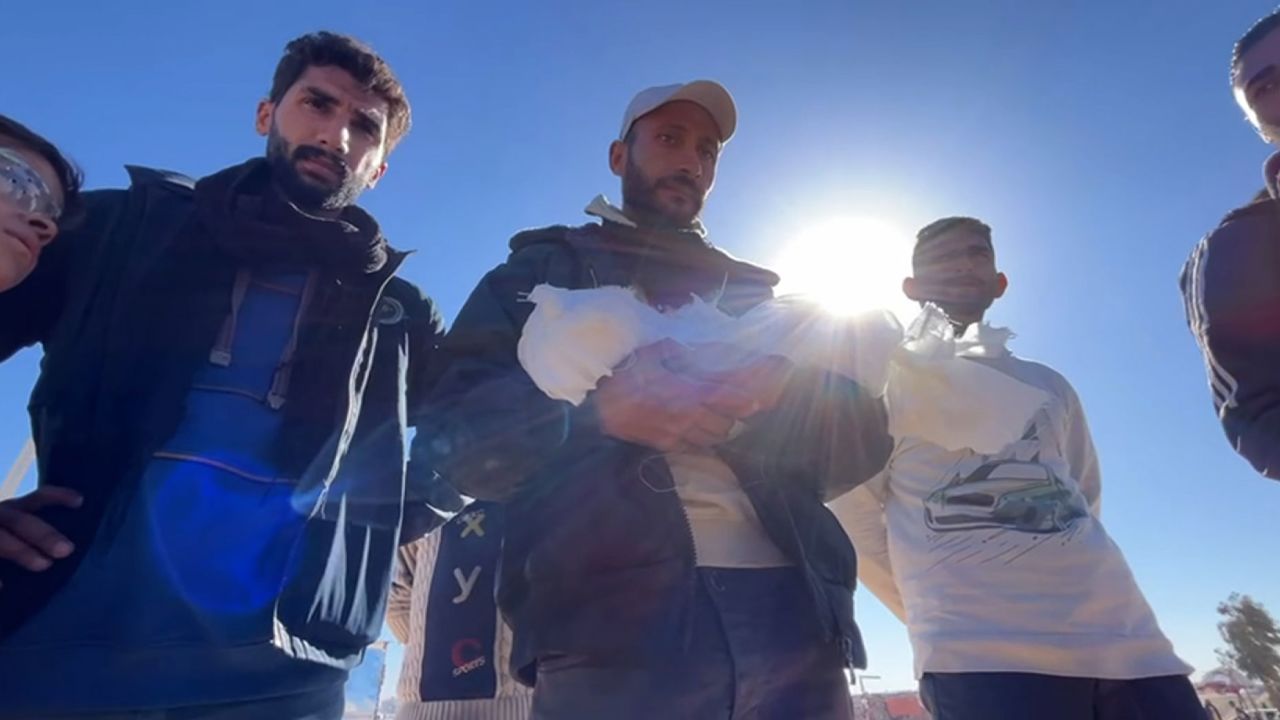
People You Should Know About: Sister Pat Murphy and Sister JoAnn Persch

Jo and Pat

This past Friday morning, members of my congregation and I participated in an interfaith vigil at the immigrant detention facility in Broadview, IL. We’ve come to this spot many times over the years and I’ve written about the vigil many times before. It was founded several years ago Sister JoAnn Persch (right) and Sister Pat Murphy (left) of the Sisters of Mercy – two of my spiritual heroes.

During the vigil, Sister Jo joyfully announced that the Marie Joseph House of Hospitality, a home that provides shelter, meals, transportation, and community support for people awaiting their immigration proceedings, was finally open. Sister Jo and Sister Pat have been indefatigably working to create this community-based alternative to detention of undocumented immigrants, who are typically treated as “inventory” during deportation hearings. Her announcement provided one small but profound ray of hope in an otherwise dark and dismal reality for those fighting for compassionate immigration reform.

In a recent article about the Marie Joseph House, Sister Pat and Sister Jo pointed out that this new facility will be able to provide these services for significantly less than the $122 to $164 per day ICE says it pays to hold someone in jail. The home will have 18 bedrooms and extra space for short-term residents. It’s a small capacity compared to the 33,400 people ICE typically detains each night, but as Sister Pat and Jo rightly note, it’s a start:

We are not alone in our efforts. A network of similar shelters is emerging across the country. The outpouring of financial, in-kind, and volunteer support we receive from communities of all backgrounds shows us the immense generosity Americans have when people are in need.

As Alabama Republican Congressman Spencer Bachus observed during a recent House Judiciary hearing, “It seems there is an overuse of detention.” John Morton said that “alternatives to detention” programs are promising. We agree. Outside detention, people have better access to lawyers, doctors, and other support. Congress should use new immigration legislation to allow ICE to invest in alternatives rather than prisons. To get it right, they need to consult with communities and groups like ours.

I’ve known and worked alongside Sister Pat and Sister Jo for many years now, and am consistently inspired by their example of deep faith, abiding compassion and dogged persistence. For the past 45 years they have worked together in Chicago to minister to immigrants, refugees, older persons, and homeless families – and to advocate for their basic rights. In 2008, they helped to spearhead an intense lobbying drive to pass historic legislation that allows all immigrant detainees held in Illinois jails the same access to clergy as those imprisoned for other crimes. As a result, many professional and lay ministers can now serve the pastoral needs of undocumented immigrants who would otherwise be locked away and forgotten by everyone but their families.

Sister Pat and Sister Jo’s work has not gone unnoticed in the wider world. They were profiled in the play Home/Land (produced by Chicago’s Albany Park Theater Project) and more recently in the documentary film, “Band of Sisters,” (below) which explores the social justice activism of American nuns throughout the country. Though this kind of attention is much deserved, Sister Pat and Sister Jo would be the first to say that they are simply living out their faith in the most basic of ways: to minister to the needs of the most vulnerable members of society and to demand that our system do the same.

Sister Pat and Sister Jo are truly my spiritual teachers and I am so grateful to know and work alongside them. I know of few others who model compassion and justice with such decency and grace.