Category Archives: Women’s Issues

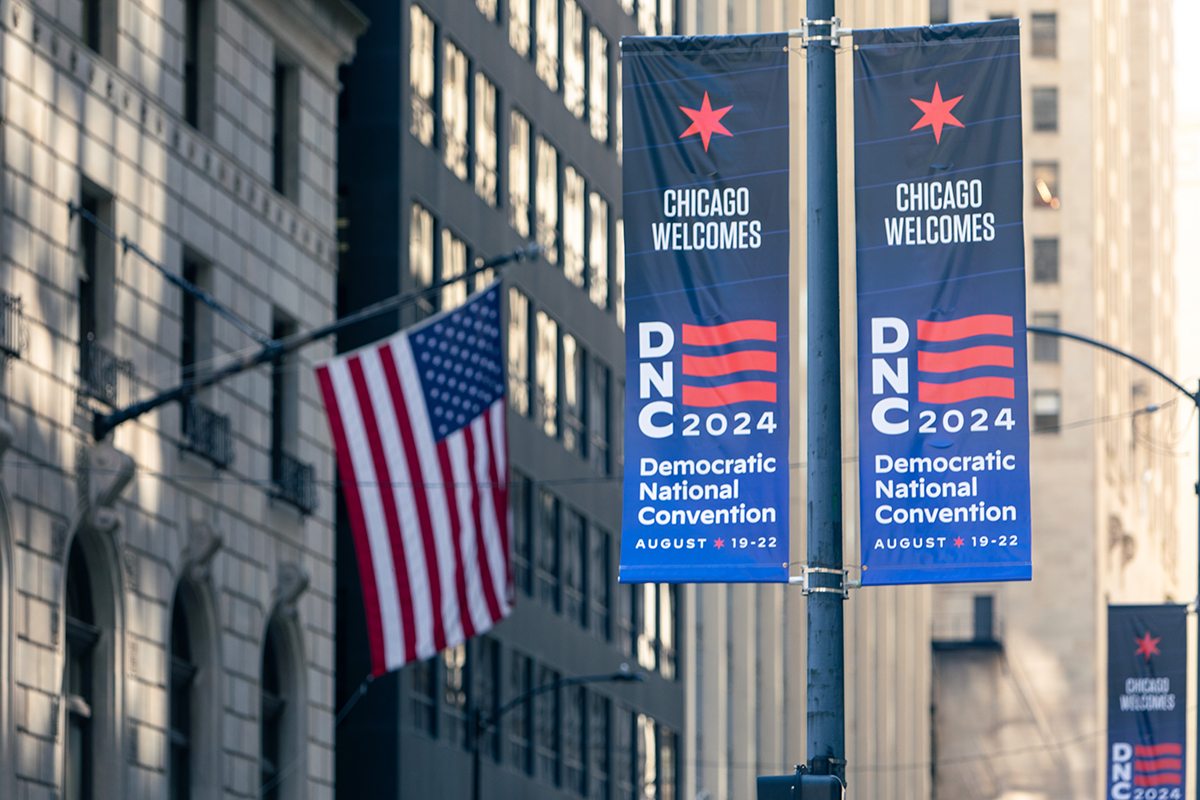
Protesting Genocide at the DNC in Chicago: Beyond “One Issue”

(photo by Keeton Holder)

As I’ve written previously, a large coalition of leftist groups has been preparing to take to the streets when the Democratic National Convention comes to Chicago next week. Although there will be a variety of different demands leveled at the DNC during the course of the convention, one key issue clearly stands out as a central common thread through them all – namely, an immediate US arms embargo and a permanent ceasefire to end Israel’s genocide in Gaza.

To name but one example: a rally and march for reproductive justice (of which my congregation, Tzedek Chicago, is a co-sponsor) will take place this Sunday, on the eve of the convention. As “Bodies Outside of Unjust Laws” organizers have made clear, however, the demands of this protest are not limited to issues of domestic reproductive justice alone:

Reproductive justice inherently includes ending the reproductive genocide in Palestine. As U.S. citizens, it is our duty to call on our own government to end the funding of weapons to Israel that enable this nightmare to continue and robs us of funds at home. As feminists and reproductive justice activists, we must also highlight a horrific aspect of the war on Palestinians: it is a war against women and children, who suffer in uniquely cruel ways. 

Likewise, the Coalition to March on the DNC, a group of over 200 national and local organizations is calling for an “End to US Aid to Israel” along with demands on immigrant justice, police crimes, healthcare, housing and the environment. Here again, justice for Palestinians is not viewed in isolation from other issues. As protest organizers correctly understand, these issues are irrevocably interlinked and intertwined.

During the course of this election cycle, those of us who have been demanding an arms embargo and ceasefire in Gaza have become all too familiar with one recurrent criticism in particular: that we are “one issue voters.” I find this to be a dangerous attitude for a number of reasons. More than anything, it’s an egregiously dismissive stand to take in an age of genocide, smacking of “it’s not my problem” American isolationism during the 1940s. For the Palestinian people, of course, Israel’s genocide in Gaza is not simply one issue – it’s the issue.

Witness, for instance, the news from this past weekend:

Officials in Gaza say more than 100 people were killed Saturday in an Israeli attack on a school and mosque where thousands of displaced Palestinians had sought shelter. The attack on the al-Tabin school in Gaza City was one of the deadliest individual attacks since Israel’s war on Gaza began over 10 months ago. Rescue workers said they did not find a “single full body” among the deceased — just body parts often destroyed beyond recognition. Survivors said Israel attacked the school during morning prayers…

CNN has confirmed a US-made GBU-39 small diameter bomb was used in the Israeli strike on the school. The attack came two days after the Biden administration notified Congress that it was preparing to provide Israel with an additional $3.5 billion to spend on US weapons and military equipment. Congress had approved the money as part of a $14 billion package for Israel in April. Zeteo reports part of the new US package includes a direct sale of 6,500 joint direct action munitions to Israel.

First and foremost, the genocide in Gaza is a crime against humanity that should concern us all. But as citizens of the nation that is funding and abetting this genocide, we Americans cannot look away from the blood that is surely on our collective hands. Nor can we ignore the shock waves that resonate far outside the borders of Palestine/Israel: the threat of an all-out regional war, the profits enjoyed by the arms and surveillance industry at taxpayer expense, the devastating environmental impact – the list goes on and on. Palestinian human rights lawyer and activist Noura Erakat put it perfectly on Twitter/X recently: “PSA: ending a genocide is not ‘a single issue’ it is an entire universe of issues.”

Another refrain I’ve been hearing repeatedly is the critique that protesting at the DNC “will only help Trump.” Harris herself leveled this argument at a campaign rally in Detroit when she sternly admonished pro-Palestinian protesters: “If you want Donald Trump to win, then say that. Otherwise, I’m speaking.” To be sure, it was an astonishingly tone-deaf and dismissive response to make in Michigan, the very birthplace of the Uncommitted Campaign. But on a more fundamental level, Harris’s response denied the very real impact of her own administration’s policies. As one of the protesters later put it, “When people are demanding a ceasefire and arms embargo and an end to the genocide and you say that we want Donald Trump to step in—it just shows a lack of accountability. It shows a lack of leadership, a lack of responsibility and a lack of ownership.”

In essence, Harris’s comment was just the latest version of the “shut up and vote” message that the Democratic party routinely sends progressives during every election cycle. In an age of US-supported genocide, however, the cynical emptiness of this message has become patently, painfully obvious. As journalist Masha Gessen has rightly pointed out. “These voters are not choosing between Harris and Trump. They are choosing between their sense of themselves as moral beings if they vote for Harris and their sense of themselves if they vote for a third-party candidate or for no one at all.”

Of course those who will be protesting at the DNC next week do not want to see Trump elected in November. But even from a purely strategic point of view, what has a better chance of helping the Democrats fortunes in November? We know that a strong majority of American voters across the political spectrum support a permanent ceasefire in Gaza. What would be the more winning strategy: telling those who want to end a genocide to shut up, or exert real leadership that will bring about a ceasefire and an end to the threat of a devastating regional war?

While party conventions function largely as candidate-coronations, they still function as places where parties express their collective vision and finalize their political platforms. On this score, I’m not at all optimistic that an arms embargo to Israel and a permanent ceasefire will find any purchase at the DNC. There are a mere 30 Uncommitted delegates out of 4,600 – and while they are pushing for a voice at the convention (they’ve asked that Dr. Tanya Haj-Hassan, a pediatric intensive care doctor who has volunteered in Gaza, speak from the convention floor), they have still not been offered a slot. Harris’s national security advisor has also made it clear that she opposes an arms embargo to Israel. By every indication, it certainly feels like “shut up and vote” will be the dominant Democratic party message coming out of the convention next week.

I have enormous respect for the Uncommitted delegates who will engage within the convention, particularly co-founder Layla Elabed, who has said even if they are not given a speaking slot, delegates will make their presence known with “news conferences, candle light vigils, tables to distribute literature and, they hope, guest testimonies about life in war-torn Gaza.” When it comes to political advocacy, however, there is always an inside game and an outside game. That’s why those of us who are not delegates will (quite appropriately) be making our presence known outside the walls of the convention hall as well.

Protest organizers have no illusions about the overwhelming militarized presence that will greet us when we gather next week. Federal authorities have divided the area surrounding the United Center, where the main speaking events of the convention will take place, into “soft” and “hard” zones – the latter being off limits to cars and non-credentialled delegates. But even in the soft zones, movement has been heavily restricted. The main protests have been given approved routes far from the convention site, and at one point goes through narrow residential side streets, that will be completely inadequate to handle thousands of protesters. While organizers have appealed the march route, as of this writing there has been no response from the city of Chicago.

When we talk about the potential for police violence next week, of course, the specter of the 1968 Democratic convention in Chicago looms very large. A great deal of ink has been spilled analyzing the differences and similarities between Chicago 1968 and Chicago 2024 – and while I’m loath to venture too far into this rabbit hole, there is one point of commonality I believe bears noting. In general, the mythos around the 1968 DNC protests tend to lay the blame for the Democrats’ defeat on the protest movement that “divided the party.” Often lost in this discussion is the fact that in 1968, those protests were directed toward a political party that had been prosecuting an increasingly unpopular war in Vietnam. Today, as then, I find it deeply misguided to blame protesters and not the immoral policies of the Democratic party itself.

While it’s not particularly helpful to use Chicago 1968 to heighten hysteria over the DNC, protestors are certainly justified in being vigilant over the very real possibility of police violence. I’m not the only one who finds it ominous that the city is doubling down on armed presence in the city. In advance of the convention, the Secret Service agent in charge of “security” has commented that “Chicago has a proven track record when it comes to putting on huge events” – citing the city’s response to Lollapalooza, the NASCAR Chicago Street Race and the Chicago Air & Water Show – as if the DNC is just another tourist event to showcase to the public.

No, we cannot deny of the very real moral and political reality that will be at stake in Chicago next week. We cannot deny that state violence directed against Palestinians is one and the same with so many other forms of state violence that are routinely normalized as “necessary.” And we must resist the call to dismiss any form of systemic violence as just “one issue.” As my friend and comrade, organizer Kelly Hayes has so wisely written:

We have to recognize victims of police brutality, Palestinians, our disabled and unhoused neighbors, and so many others who are subject to forgetting as worthy of grief, outrage and action. Everyday people who are fleeing violence, hunger, and militarism, everyday people whose cites are running out of water or are in danger of disappearing beneath rising flood waters, everyday people who are dying right now because they lack air conditioning amid heat waves – these are the people whose plights and fates should shape our politics. If we are going to fight for any semblance of human decency, we need to reclaim and reassert the value of our lives.

There’s More of Us Than There are of Them: Sermon for Yom Kippur 5782

An op-ed version of this sermon was published in Truthout.

I’d like to begin my remarks this Yom Kippur with a sacred refrain that has surely been uttered aloud by many of us over the past several weeks:

Texas, what the hell? 

That’s right Texas, what the hell? Just when we thought we’d heard it all from you, there was the news on September 1. In just one day the Texas state legislature all but banned abortions in their state, passed the most restrictive voting laws in the US, and allowed Texans to carry handguns openly without a license. And if that was not nearly enough, this past June, Texas’ governor signed a bill limiting the teaching of Critical Race Theory in public schools. 

Now, I mention all of this very advisedly because I know we have members who live in Texas – and I’m sure some of them are attending our service at this very moment. And I must also note that these trends are not at all unique to that state. If truth be told, Arkansas, Florida, South Carolina and South Dakota, are currently preparing abortion bills identical to the Texas legislation, there are twenty other states other than Texas that allow permitless handgun carry, and as of August 26, twenty seven states have introduced bills or have otherwise taken steps to restrict Critical Race Theory.

So while it might feel satisfying for progressives to pile on Texas, it’s probably more accurate to say that this particular state represents a larger phenomenon that has been part of our national culture for some time. For lack of a better term, let’s call it the rage of the white American man. 

White rage is, of course, nothing new, but it might be argued that it’s currently entering an era of renewed ferocity. Last month we learned from the Census Bureau that the percentage of white people in the US has actually decreased for the very first time. Since the last report ten years ago, the overall white population in the US has declined by almost 10%. In that same amount of time, the Latinx population grew by 23%, the Asian population increased by over 35% and the Black population grew by almost 6%.

When you consider that the United States was built on a foundation of white supremacy – that is, by white men, for white men – it’s not difficult to grasp the impact of news such as this. While the ranks of white supremacists may be shrinking, we can be sure that they won’t go away quietly. We know from history that a dying beast can still do a considerable amount of damage on the way down. Indeed, this is precisely what we’re seeing unfold in Texas and around the country: the anger of white supremacist, misogynist Americans increasingly galled by what their country is becoming. 

And they are galled. They’re galled by the fact that the US actually had a black president for eight years. They’re galled that there’s a new national reckoning going on over the legacy of slavery and structural racism in our country. They’re galled by the increased national attention being paid to police violence against black people and by a Black Lives Matter movement that mobilized the largest mass protests in US history last summer. They are galled every time another statue of a Confederate is toppled in a Southern state, as was the case at the Virginia statehouse last week. 

And it doesn’t stop there. They’re also galled when women, non-binary and trans people seek power over their own bodies – and really, when they just seek more power in general. They’re galled that there are now a record number of women serving in Congress, including a Palestinian-American and a hijab-wearing former refugee from Somalia. They’re galled by the #MeToo movement, which is literally removing sexually violent men from positions of power. Last November, they were particularly galled when a powerful voting rights organizing effort largely led by black women helped turn Georgia blue in both the Presidential and Congressional elections. 

Of course, white anger over voting rights in this country didn’t begin last year. It surged in 1870, when the 15th Amendment technically gave black men the right to vote. It surged again in 1920, when the 19th Amendment technically gave women the right to vote. And it surged again in 1965, when the Voting Rights Act went into effect. Even as we celebrate these landmark legislative events, we can’t look away from the immense resentment and rage they engendered – and continue to engender – throughout the US, which makes it all the more crucial that we keep fighting for real universal enfranchisement.

As we contemplate how to respond to the events transpiring in Texas and around the country, it’s immensely important for us to understand the historical power of white rage. This phenomenon has been part of US national culture since this country’s founding on stolen land, and its dependance upon the trans-Atlantic slave trade. The current brand of self-righteous white rage is reminiscent of the racist backlash that played out during Reconstruction. So we shouldn’t be surprised by the current devastating setbacks to public policy; on the contrary, should expect them. 

The staying power of white supremacist anger in this country sometimes reminds me of a certain Biblical trope. We’re all, of course, familiar with the story of creation in Genesis 1, in which an omnipotent God creates light out of darkness and separates the primordial waters of chaos. It’s a satisfying, deeply aspirational myth that expresses the vision of the world as it should be: a neat and tidy process by which the world moves from chaos to greater order and progress. 

However, scholars have pointed out that there is another creation story embedded in the Bible, influenced by the epic myths of the Ancient Near East that portray a battle between the gods and powerful sea monsters that represent the primordial forces of chaos. Biblical books such as the Psalms, Job and Isaiah describe God’s battle with a mighty sea monster named Leviathan, among others. Unlike the orderly movement toward progress that we read about in Genesis 1, this other myth portrays creation as an ongoing and even desperate struggle. And while God generally gets the upper hand, it’s not at all clear in the Bible that the primordial sea monster is ever completely vanquished. 

It sometimes occurs to me that our conventional, liberal view of history reflects a “Genesis 1 mindset,” i.e., an orderly movement toward greater progress, proceeding neatly from victory to victory. And while these landmark moments certainly represent political progress, they do not fundamentally change the foundational truth of this country. To put it differently, we too often forget that the sea monster is never fully vanquished. Yes, victories should be celebrated. But even more than that, they must also be protected

If we were ever sanguine about the threat of white supremacist resentment in this country, we should have no doubt about it after the past four years of Trump, which literally culminated in an armed insurrection on the US Capitol. This rage is real and it’s mobilizing in truly frightening ways. It’s no coincidence that among the bills passed in Texas earlier this month was legislation loosening restrictions on gun carry laws. Indeed, the dramatic spike in gun ownership and the erosion of gun control measures around the country should make it clear to us that the threat of white nationalism is deadly serious.

So where do we go from here? How do we possibly resist such fierce and unrelenting rage? Perhaps the first step is to remember that more than anything else, white resentment is fueled by fear – and in truth, white supremacists have genuine cause to be fearful. They’re afraid because they know full well that there are more of us than there are of them – and that our numbers are growing. We should never forget that while fear may be their primary motivation, it’s also a sign of their fundamental weakness. 

White nationalism is essentially a reactionary movement; that is to say, it has historically reacted to changes that genuinely threaten its power and hegemony in this country. But even though by definition, they’ve been playing defense, throughout American history, the liberal response to white supremacy has been to resist a strong offense as “too much,” “too radical,” or “too extreme.” White liberals often distance themselves from revolutionary people-of-color-led movements in this way. Those of us who are white must consciously resist this form of distancing, because this phenomenon is itself a form of white supremacy preservation. 

During the years of the civil rights movement, many white liberal leaders would publicly criticize movement tactics they felt were too radical or extreme. This is precisely what Martin Luther King was addressing when he so memorably wrote from a Birmingham jail, “the question is not whether we will be extremist, but what kind of extremists we will be. Will we be extremists for hate, or will we be extremists for love? Will we be extremists for the preservation of injustice, or will we be extremists for the cause of justice?” The black playwright Lorraine Hansberry put it even more succinctly; in a 1964 speech entitled “The Black Revolution and the White Backlash,” she said publicly, “we have to find some way to encourage the white liberal to stop being a liberal and become an American radical.” 

In other words, as long as white supremacy is baked into the very systems that govern our country, we can ill afford to play defense. If anyone has any doubts, consider this: two months before the census reported the decrease in the white population in this country, the Reflective Democracy Campaign released a report that demonstrated how radically white minority rule pervades politics across the US. Despite the recent electoral gains for women and people of color, white men represent 30% of the population but 62% of state and national officeholders. By contrast, women and people of color constitute 51% and 40% of the US population respectively, but represent just 31% and 13% of officeholders. 

When the Reflective Democracy Campaign released these findings, their director, Brenda Choresi Carter, said it very well: “We have a political system in general that is not built to include new voices and perspectives. It’s a system built to protect the people and the interests already represented in it. It’s like all systems. It’s built to protect the status quo.”

As I read those words, I can’t help but ask: isn’t this what Yom Kippur is ultimately all about? Every year at this season, we’re commanded to take a hard, unflinching look at the status quo, openly admit what needs changing, and commit to the hard work it will take to transform it. It’s an inherently radical idea: to proclaim every year that the status quo is unacceptable and that nothing short of genuine intervention will do. If our Yom Kippur prayers are to mean anything at all, we must be prepared to act upon this radical idea. 

I know that many of you are involved in organizing and activist work that intervenes in our racist, inequitable systems so that they may more accurately serve the interests of all who live in this country. Truly, your efforts are an inspiration to me. Because in the end, when we fight for voting rights, reproductive justice, racial justice, economic equity, or any other issue, we’re not only advocating for specific causes that have suffered setbacks – we’re fighting to transform systems that are fundamentally unjust. 

So when we sound the shofar with a long blast at the end of Yom Kippur, let’s not only regard it as the conclusion to this season. Let’s consider it a call to action for transformation in the year ahead. And when the inevitable setbacks occur, let us not respond with surprise or dismay; rather, let’s remind each other that setbacks and backlashes are a sign of their fear, not their strength. Let us never forget that there are more of us than there are of them – and if we see fit to summon our strength, we can indeed recreate the world we know is possible. 

Gmar Hatimah Tovah – May we all be sealed for a year of life, of justice, of transformation. 

The People’s Trial of Donald Trump: My Testimony

replace_trump_1

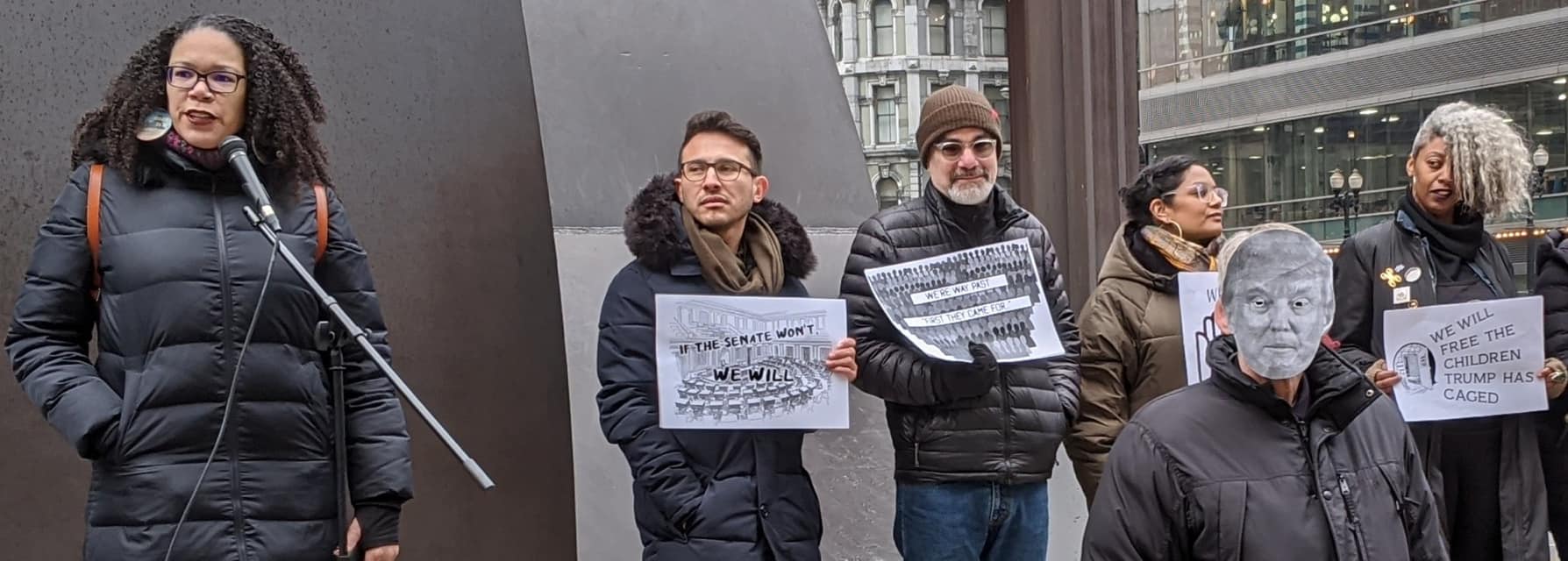
Here, below, is my testimony from “The People’s Removal Trial of Donald Trump” – a street theater-style event that took place yesterday at Daley Plaza in Chicago. It was organized as an alternative to the sham impeachment trial that will almost surely acquit Trump next week. At our trial, various community members testified about some of Trump’s worst crimes – his attacks on immigrants, Muslims, Jews, the disabled, the environment reproductive rights and his deadly neglect of Puerto Rico.

This was much more than an exercise in wish-fulfillment, however. It was a ultimately an opportunity to celebrate the world we we want to see, then redouble our pledge to fight for it – and for one another.  In the words of lead organizer Kelly Hayes, who spoke powerfully at the end of the event:

I want you to think for a moment about what it feels like — the difference between being held in place by your own strength, and how immovable we become when we are anchored to each other. Because to do the work ahead of us, we cannot simply be a crowd of concerned individuals. We will have to be a collective force.

Kelly’s words – and the other testimonies – can be found on the Facebook event page


If my grandmother were alive today, she’d probably say something like this:
Vi tsu derleb ikh Donald Trump shoyn tsu bagrobn.” (“I should outlive Donald Trump long enough to bury him.”)

Or maybe she’d say something like this:

“Gut zol oyf Donald Trump onshikn fin di tsen-makos di beste.” (“God should visit upon Donald Trump the best of the Ten Plagues.”)

I know for a fact that the overwhelming majority of American Jews would agree with my Bubbe. I’m honored to testify on their behalf today.

Why should Donald Trump be removed? We’ve already heard many compelling reasons – here’s one more: Donald Trump is an antisemitic pig whose words and deeds pose a clear and present danger to American Jews.

This became all too clear to us during the last election, when he publicly and openly spewed the most noxious antisemitic tropes. In a speech to the Republican Jewish Coalition, Trump said, “Is there anyone in this room who doesn’t renegotiate deals? Probably 99% of you. Probably more than any room I’ve ever spoken in” He also said: “Stupidly, you want to give money… But you’re not going to support me because I don’t want your money…You want to control your own politicians.”

Later in that campaign, he tweeted an image of Hillary Clinton’s face next to a pile of cash, a Star of David and the phrase, “Most Corrupt Candidate Ever!” He also released a TV ad suggesting prominent Jewish figures were part of a “global power structure” that has “robbed our working class” and “stripped our country of its wealth.” Folks shook their heads – did he really say what we thought he said? Yes, he did. Then we elected him president.

After his inauguration, Trump announced to the press that he was “the least antisemitic person you’ve ever seen in your life.” This while he surrounded himself in the White House with alt-right scum like Steve Bannon and Sebastian Gorka. This while he cynically trotted out his Jewish daughter and son in-law (aka “the ones who shall not be named”) and his advisor Stephen Miller (now officially tied with Henry Kissinger for the “Embarrassment to the Jewish People” Award.) “Just look at them,” says Trump, “How can I be an anti-Semite?” Well Donald, you’re an anti-Semite alright. And we see right through your Jewish human shields.

We accuse Donald Trump of incitement. On August 2017, the Nazis emboldened by Trump finally crawled out of the sewers and into the bright light of day. With their polo shirts and their tiki torches, they marched through the streets of Charlottesville chanting “Jews shall not replace us.” The next day, men in fatigues armed with semi-automatic weapons stood across from a synagogue during Shabbat morning services. Then a neo-Nazi pig drove his car into a crowd of counter-protesters, injuring several and killing Heather Heyer, of blessed memory. When the dust settled on Charlottesville, Trump uttered his immortal words of comfort: “You had a group on one side that was bad, and you had a group on the other side that was also very violent.”

We accuse Donald Trump of incitement. On October 2018, a neo-Nazi piece of shit entered the Tree of Life synagogue in Pittsburgh on Shabbat and gunned down Jewish worshippers. He killed eleven and wounded six. In his manifesto, he accused Jews of conspiring to flood the US with immigrants in order to cause a white genocide. His final words were “Screw your optics, I’m going in.” When asked for comment, Trump blamed the congregants for their own murder. “If they had some kind of protection inside the Temple,” he said, “maybe it could have been a very much different situation.”

We accuse Donald Trump of incitement. In the infamous August of 2019, another piece of Nazi scum entered a synagogue during the festival of Passover with an AR-15 and shot up the worshippers. One woman was killed and three were injured, including the synagogue’s rabbi, whose fingers were blown off. Trump later commented, “We will get to the bottom of it. We’re gonna get to the bottom of a lot of things going on in this country,”

We accuse Donald Trump of inciting antisemitism – and weaponizing it against Jews critical of Israel. That’s right: Trump inspires Jew-hatred, yet condemns the bad Jews who “don’t love Israel enough.” He encourages Nazis to kill us, yet scolds the bad Jews who condemn Israel’s ongoing human rights abuses. He embraces Christian Zionists who believe that Jews should be destroyed in Armageddon, yet criminalizes the bad Jews who stand in solidarity with Palestinians.

But we see through it all. Donald Trump is no friend of the Jewish people. And we will not stand for his cynical posturing. He must be removed.

I will end my testimony with the words from our comrade, Linda Sarsour, who offered these words to the American Jewish community following the Tree of Life massacre last year:

We stand in solidarity with our Jewish family, especially the community in Pittsburgh, after today’s horrific shooting at the Tree of Life Synagogue.

In the face of overwhelming hate, we choose unrelenting love and unity. We recommit ourselves to dismantling anti-Semitism and all forms of racism.

We call on everyone, especially elected officials and political leaders, to take a stand against anti-Semitism and make clear that it has no place in our society.

Donald Trump, you have proven to us that you are unwilling and unable to take a stand against racism and antisemitism in our society. On the contrary, you foment it for your own political gain. But we see you. We’re on to you. And we have now concluded: we will replace you.

On Alice Walker and Antisemitism

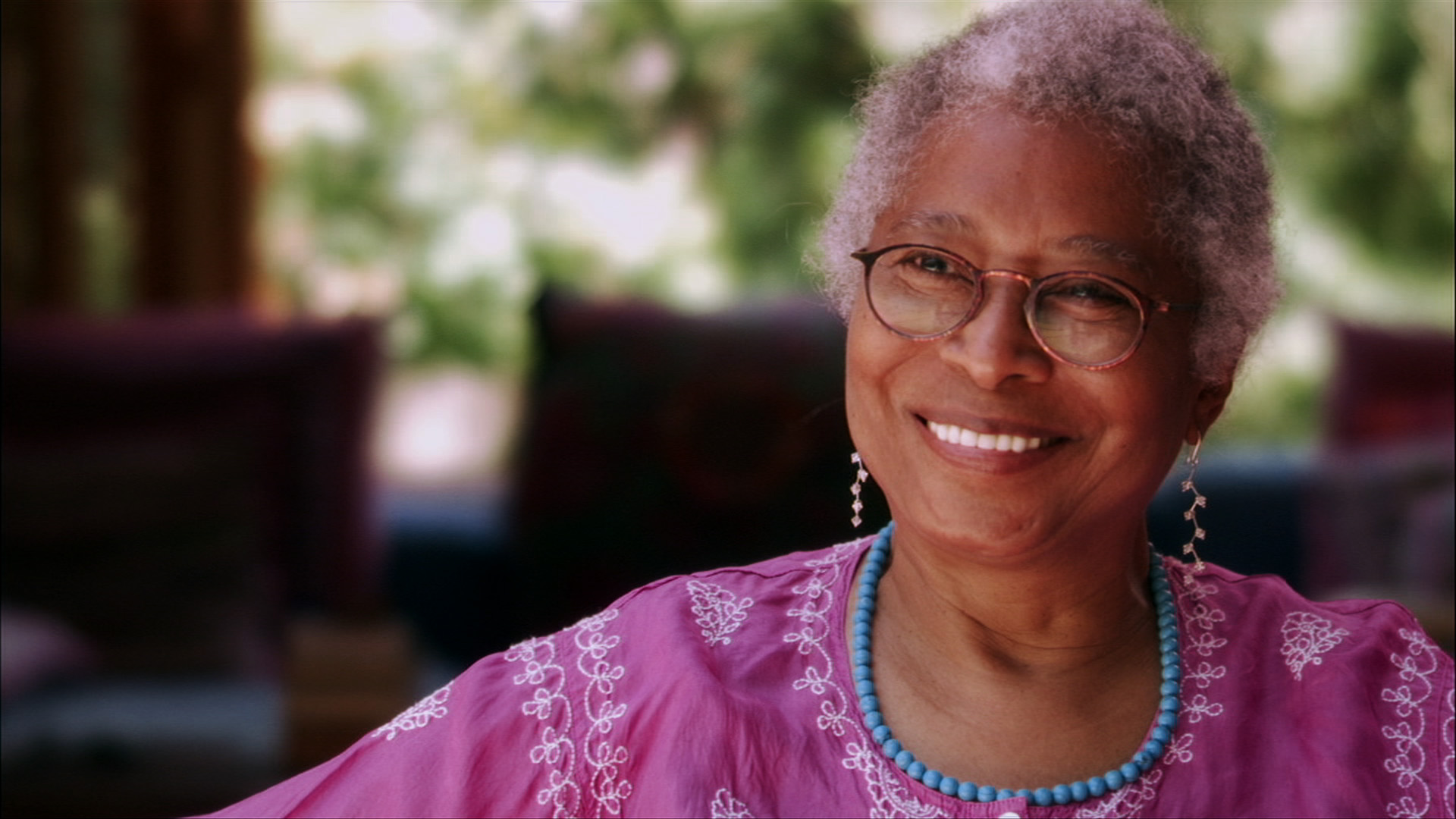
American Masters - Alice Walker: Beauty in Truth

The Jewish interwebs have been abuzz regarding Yair Rosenberg’s December 17 Tablet article in which he criticized the New York Times Book Review for its interview with Alice Walker. In last Sunday’s “By the Book” column, the Times asked Walker what books she had on her nightstand; among those she cited was a book by British antisemitic conspiracy theorist David Icke entitled, “And the Truth Shall Set You Free.” Walker commented, “In (his) books there is the whole of existence, on this planet and several others, to think about. A curious person’s dream come true.”

In his article, Rosenberg listed a litany of odious excerpts from Icke’s book, including his praise of “The Protocols of the Elders of Zion,” his claims that the B’nai B’rith was behind the slave trade and his belief that the Rothschilds bankrolled Adolf Hitler. He also offered a long list of the numerous times Walker has endorsed Ickes’ ideas, including her posting of his video interview (now blocked by YouTube) with Infowars’ Alex Jones, of which she wrote:

I like these two because they’re real, and sometimes Alex Jones is a bit crazy; many Aquarians are. Icke only appears crazy to people who don’t appreciate the stubbornness required when one is called to a duty it is impossible to evade.

Rosenberg also posted in full, a deeply disturbing poem written by Walker in 2017 entitled “It is Our (Frightful) Duty to Study the Talmud.” This excerpt should give you a good idea about the tone and substance of Walker’s piece:

For a more in depth study
I recommend starting with YouTube. Simply follow the trail of “The
Talmud” as its poison belatedly winds its way
Into our collective consciousness.

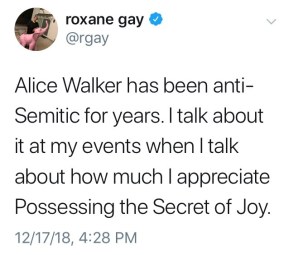
I will sadly confess that I was unaware of Alice Walker’s history of antisemitic attitudes, even though this was apparently common knowledge among many on the left. During the Twitter eruption that followed Rosenberg’s piece for instance, Roxane Gay commented:

IMG_5155

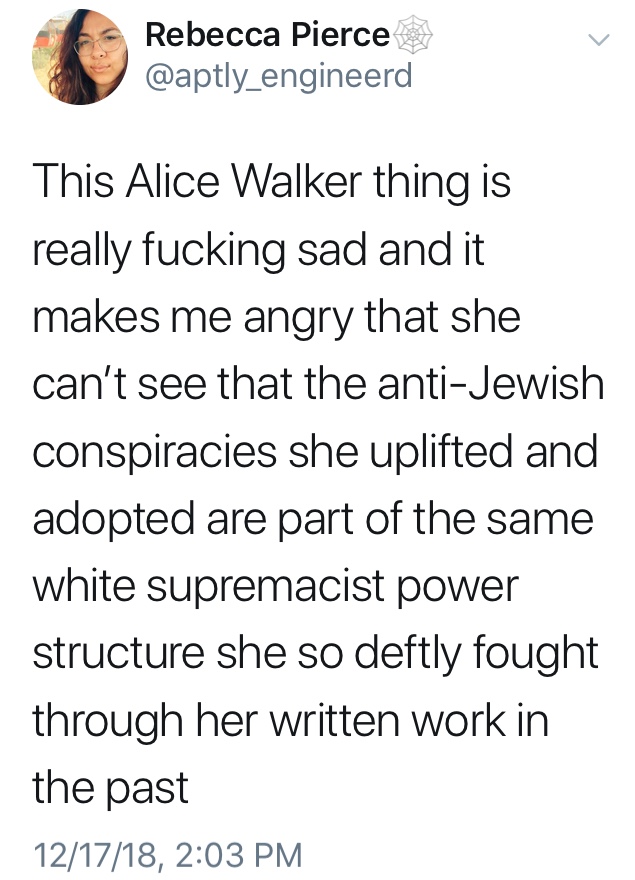
Those of us who were hearing of Walker’s antisemitic proclivities for the first time were particularly saddened to learn that this eloquent champion of anti-racism had been expressing such poisonous ideas toward Jews and Judaism. Journalist/filmmaker Rebecca Pierce spoke for many of us when she tweeted this response:

IMG_5152

In his article, Rosenberg made mention of Walker’s anti-Israel politics, challenging “the progressive left” to call out antisemitism that is “presented in the righteous guise of ‘anti-Zionism.’” Although I don’t share Rosenberg’s conservative Israel politics, I accept his challenge. And yes, it’s painfully true that Walker’s Talmud poem egregiously cites Jewish religious tradition as the root cause of Israel’s oppression of Palestinians (as well as American police brutality, mass incarceration and “war in general”):

For the study of Israel, of Gaza, of Palestine,
Of the bombed out cities of the Middle East,
Of the creeping Palestination
Of our police, streets, and prisons
In America,
Of war in general,
It is our duty, I believe, to study The Talmud.
It is within this book that,
I believe, we will find answers
To some of the questions
That most perplex us.

Walker’s claim that the Talmud is “evil” and “poisonous” – a common antisemitic trope – is worth unpacking here. First of all, what is referred to as “The Talmud” is actually a vast corpus of Jewish civil and ritual law mixed with freewheeling legend and Biblical commentary composed between 200 and 500 CE. Though it is one of Jewish tradition’s foundational texts, Talmudic literature is not, to put it mildly, immediately accessible to the untrained reader. It’s typically studied by traditional Jews in the rarified world of schools known as yeshivot, where students’ primary focus is on the unique pedagogy of Talmudic argumentation.

Like all forms of religious literature, Talmudic tradition expresses a wide spectrum of ideas and attitudes. The contemporary reader would likely find its content to be alternately inscrutable, inspiring, challenging, archaic – and yes, at times even repugnant. It contains passages for example, that are profoundly misogynistic. And as Walker pointed out in her poem, it also contains occasional material that is decidedly anti-Gentile, including a notorious passage that depicts Jesus condemned to suffer in hell in a vat of burning excrement. (Yep, it’s true.) There are also texts that unabashedly claim Jewish lives must take precedence over non-Jewish lives – an idea that was also advocated centuries later by Moses Maimonides.

These texts are undeniably, inexcusably offensive and they must be called out, full stop. At the same time however, it is exceedingly disingenuous to judge a religion on the basis of its most problematic pronouncements. This attitude simplistically accepts these texts at face value, devoid of any context or historical background. It also ignores the fact that almost all faith traditions address the offensive, archaic or inconsistent elements in their sacred literature through the use of hermeneutics – that is, principles and methods that help readers understand their meaning in ever-changing societal contexts.

How for instance, might a contemporary religious feminist read and understand a blatantly misogynist Talmudic text? In an article entitled “When Sages are Wrong: Misogyny in Talmud,” Dr, Ruhama Weiss, of Hebrew Union College offers one hermeneutical approach:

(These Talmudic traditions) caused me a powerful disturbance. They forced me to think and react; to think about mechanisms of power and control and about the ability to be free from them. To make an effort to find and highlight additional voices, earlier voices, buried and hidden in misogynist rabbinic discussions.

Most importantly, these difficult sources teach me a lesson in modesty; from them I learn that unequally talented and wise people with good intentions can bequeath to subsequent generations difficult and bad traditions. I see the moral blind spots of my ancestors, and I am obligated to examine my own moral blind spots. Bad and disturbing sources make me think.

Indeed, this same hermeneutic method can be applied to Talmud’s xenophobic, anti-Gentile content as well. That is to say, these texts can challenge us to see “the moral blind spots of our ancestors and thus to examine our own moral blind spots.” They can help us confront “mechanisms of power and control” and contemplate the ways we might be able to “free ourselves of them.” These bad and disturbing sources can “make us think.”

Of course there are those who will read the texts of their faith through a more literal, fundamentalist hermeneutic. In such cases, it is up to those who cherish their religious tradition and the value of human rights for all to challenge such interpretations, particularly when the lines between church and state power become increasingly blurred.

On the subject of state power, I must add that I find it exceedingly problematic when folks criticize Talmudic tradition for its xenophobic attitudes without acknowledging the fundamentally anti-Jewish attitudes that are embedded deep within Christian religious tradition. It’s also important to note that antisemitic church teachings were historically used to inspire centuries of anti-Jewish persecution throughout Christian Europe, while the Talmud was written and compiled in a context of Jewish political powerlessness.

Today, in this relatively new era of Jewish power, it is certainly important to remain vigilant over the ways Jewish tradition is used to justify the oppression of Palestinians. Indeed, since the establishment of the State of Israel, this subject has been intensely debated throughout Israel and the Jewish Diaspora. As I write these words in fact, I’m recalling a blog post I wrote back in 2009 about then Chief Rabbi of the Israeli Defense Forces Avichai Rontzki, who made a comment, based on Jewish religious texts, that soldiers who “show mercy” toward the enemy in wartime will be “damned”:

How will we, as Jews, respond to the potential growth of Jewish Holy War ideology within the ranks of the Israeli military?  How do we  feel about Israeli military generals holding forth on the religious laws of warfare? Most Americans would likely agree that in general, mixing religion and war is a profoundly perilous endeavor.  Should we really be so surprised that things are now coming to this?

I do not ask these questions out of a desire to be inflammatory. I ask them only because I believe we need to discuss them honestly and openly – and because these kinds of painful questions have for too long been dismissed and marginalized by the “mainstream” Jewish establishment.

In the end, every faith tradition has its good, bad and ugly. And in the end, I would submit that the proper way to confront these toxic texts is for people of faith to own the all of their religious heritage – and to grapple with it seriously, honestly and openly. And while we’re at it, it’s generally a good rule of thumb to avoid using the bad, ugly stuff in any religion’s textual tradition to make sweeping historical or political claims about that religion and/or the folks who adhere to it.

What is not at all helpful is for people such as Alice Walker to cherry-pick and decontextualize quotes from one particular religious tradition and warn that its “poison” is “winding its way into our collective consciousness.”

Like many of my friends who are just now learning about her adherence to antisemitic tropes, I fervently hope she will come to understand, as Rebecca Pierce put it, that the attitudes she endorses “are part of the same white supremacist power structure she so deftly fought through her written work in the past.”


The Real Wall Problem: When Will Diaspora Jews Fight For Palestinians?

RNS-WOMEN-WALL

Cross-posted with The Forward.

The North American Jewish establishment is furious with Israel – and has just let loose an astonishing fusillade of collective protest. The President of the Union for Reform Judaism, Rabbi Rick Jacobs, accused Prime Minister Benjamin Netanyahu of an “unconscionable insult” and vowed not to be “still or silent.” The Executive Director of the Conservative Rabbinical Assembly, Rabbi Julie Schonfeld, promised that they “will continue to protest.” The CEO of the Jewish Federations of North America, Jerry Silverman, was equally direct, saying, “We are going to be assertive in asking what’s next.

What on earth is going on? Has the Jewish institutional community finally broken their abject silence over Israel’s human rights abuses? Are Jewish communal leaders finally finding the courage of their convictions on the issue of Israel/Palestine?

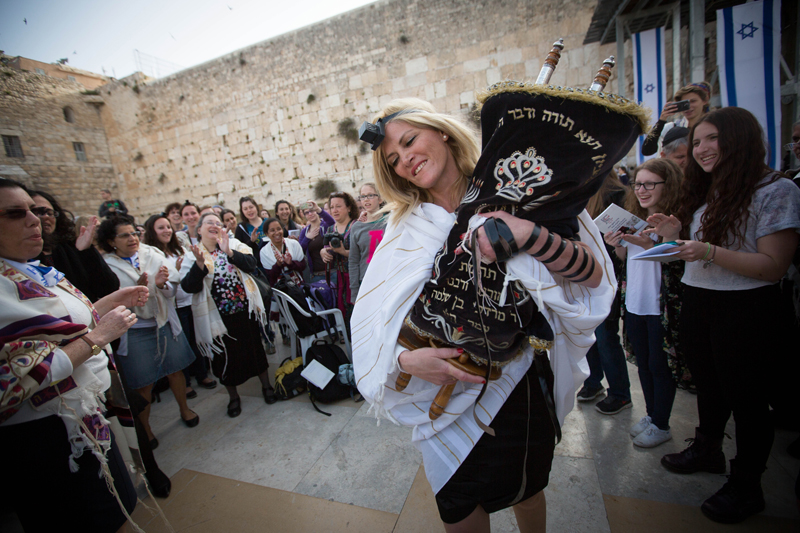
Not so fast. This impressive display of communal indignation was in fact mobilized in response to Netanyahu’s recent announcement that his government was suspending a 2016 agreement that expanded the southern section of the Western Wall for egalitarian prayer. This agreement followed years of protest, negotiation and maneuvering, led by the Women of the Wall and liberal Diaspora Jewish organizations seeking a joint prayer space at the Kotel.

Nothing, it seems, lights a fire in the belly of the Diaspora Jewish establishment more viscerally than the cause of liberal Jewish equality in the Jewish state. While Israel’s oppressive occupation now marks its 50th year and the cause of a just peace remains more remote than ever, our Jewish leaders are still more concerned about the rights of Jews than the rights of all who live in the land.

It’s a long-standing double standard –- and in her recent op-ed, “How Bibi Just Gave Liberal Jews the Finger – And What We Can Do About It,” Forward editor-in-chief Jane Eisner (perhaps unintentionally) cast a telling light on this phenomenon:

Recognize our more progressive, egalitarian form of Judaism, said the Diaspora, and we’ll have your back on military, defense and geopolitical concerns, even if that might violate our liberal values or put us in conflict with natural allies.

Could we ask for a better description of this patently immoral bargain that has long been struck between Israel and the Diaspora Jewish community? We will willingly violate our own values for you. Just give liberal Jews rights and we’ll remain silent on your unchecked militarism and oppression of the Palestinian people.

This silence is all the more egregious at the moment, given the humanitarian crisis Israel is currently inflicting on the people of Gaza. Now eleven years into its crushing blockade, the government announced this past month that it will start cutting electricity to the Gaza Strip, a move that could literally cause 21-hour blackouts just as the heat of the summer is gearing up.

Israel is making this latest maneuver in partnership with the Palestinian Authority, who, like Israel, seeks the ouster of Hamas from Gaza. It’s a cynical political ploy that will only harden the resolve of Gaza hardliners. As many have correctly observed, the rise of extremism can be directly tied to Israel’s cruel and draconian policies. In a recent article for the London Review of Books, Harvard scholar Sara Roy made this very point following her recent visit to Gaza:

Person after person told me that growing support for extremist factions in Gaza does not emanate from political or ideological belief – as these factions may claim – but from people’s need to feed their families. Many, perhaps most of the new recruits to Islamic State-affiliated groups are choosing to join because membership guarantees an income. At the same time, Hamas is desperate to secure enough funds to keep paying the salaries of its military wing, the al-Qassem Brigades, which is also reportedly seeing a swelling of its ranks. It seems that unemployed young men in Gaza increasingly face two options: join a military faction or give up.

While these these measures have the stated intention of toppling Hamas, it is much more likely that these measures will only “ignite an already combustible situation” and exacerbate “already-dire humanitarian situation on its doorstep,” as journalist Alex Kane wrote last week.  Indeed, it is difficult even imagine an even greater humanitarian tragedy than the one that currently exists. According to Aimee Shalan, CEO of Medical Aid for Palestinians:

Surgeries have already been cancelled, and hospitals forced to cut back on essential cleaning and sterilization services. Medical equipment is rapidly degrading due to constant fluctuations in electrical current. Any further cuts to electricity supply in Gaza will therefore have potentially disastrous effects. The lives of patients in intensive care, including approximately 100 babies, will be immediately endangered should supplies dwindle further.

The effect of the Israeli blockade upon children is a particularly tragic aspect of this crisis. Almost 50% of Gaza’s population is 14 or younger. According to UNICEF, the 2014 war took a heavy toll on Gaza’s children: “More than 500 were killed, 3,374 were injured – nearly a third of whom suffer permanent disability – and more than 1,500 were orphaned. Hundreds of thousands were left in trauma.”

I can’t help but ask: where is the moral outrage in liberal Jewish establishment over these cruel human rights abuses? While I certainly believe in the cause of religious freedom, I find it stunning that so many liberal-minded members of the Jewish community are more concerned with Jewish rights in a Jewish state than the basic human rights of non-Jewish children who live under its control. Such are the sorrows of Jewish political nationalism: even the more “liberal” among us seem only to be able to express that tolerance selectively.

Roy, the Harvard scholar, noted that during her visit, she was asked again and again by Gazans: “Why is Gaza being punished in so heartless a manner, and what does Israel truly hope to gain by it?

Will Diaspora Jewish leaders ever find the courage to ask this question out loud?

“Beautiful Resistance” in Aida Refugee Camp

Our trip is winding down, but I’m going to try and slip in a few more posts before I head stateside…

As I mentioned in an earlier post, Palestinian resistance takes many different forms. On Thursday, we received a profound tutorial in cultural resistance courtesy of the educational and theatre training center, Alrowwad.

Alrowwad (in Arabic: “Pioneers for Life”) is located in the Aida refugee camp adjacent to Bethlehem and refers to its mission as “Beautiful Resistance.” As their vision statement eloquently articulates:

(We seek to create) an empowered Palestinian Society on educational and artistic level, free of violence, respectful of human rights and values, (with special focus on children and women) based on the spirit of social entrepreneurship and innovation in self-expression and respect of human values.

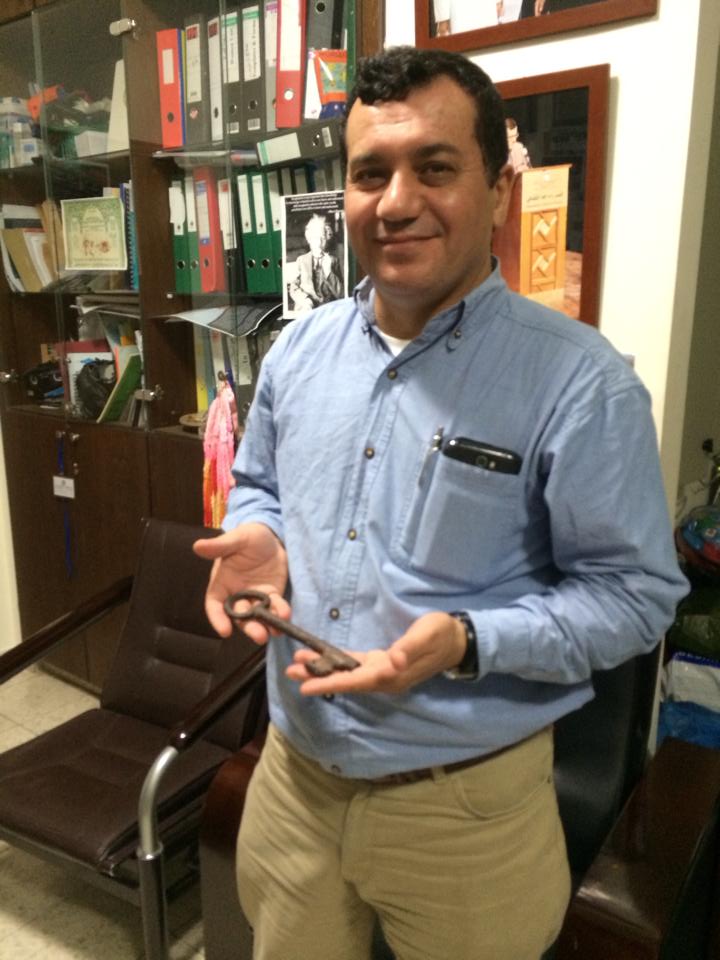
We spent the afternoon with Alrowwad’s founder and director, the inspiring and visionary Dr. Abdelfattah Abusrour (below), who gave us a tour of the center and the Aida refugee camp itself.  Abdelfattah was born and raised in Aida, but went to Paris to study Biological and Medical Engineering at Nord University. While in France, he also nurtured a passion for theater and painting and he quickly became involved in the educational/cultural life of Paris. He told us that he could easily have “married a French woman” and lived a comfortable life in France, but he eventually felt compelled to return to Aida and utilize his cultural training in his home community.

Dr. Abdelfattah Abusrour with the key to his family's home (it is a well-known custom for Palestinian families to keep the keys to the homes they lost during the Nakba as a sign of their hope for return.

Dr. Abdelfattah Abusrour with the key to his family’s ancestral home (it is a well-known custom for Palestinian families to keep the keys to the homes they lost during the Nakba as a sign of their hope for return.)

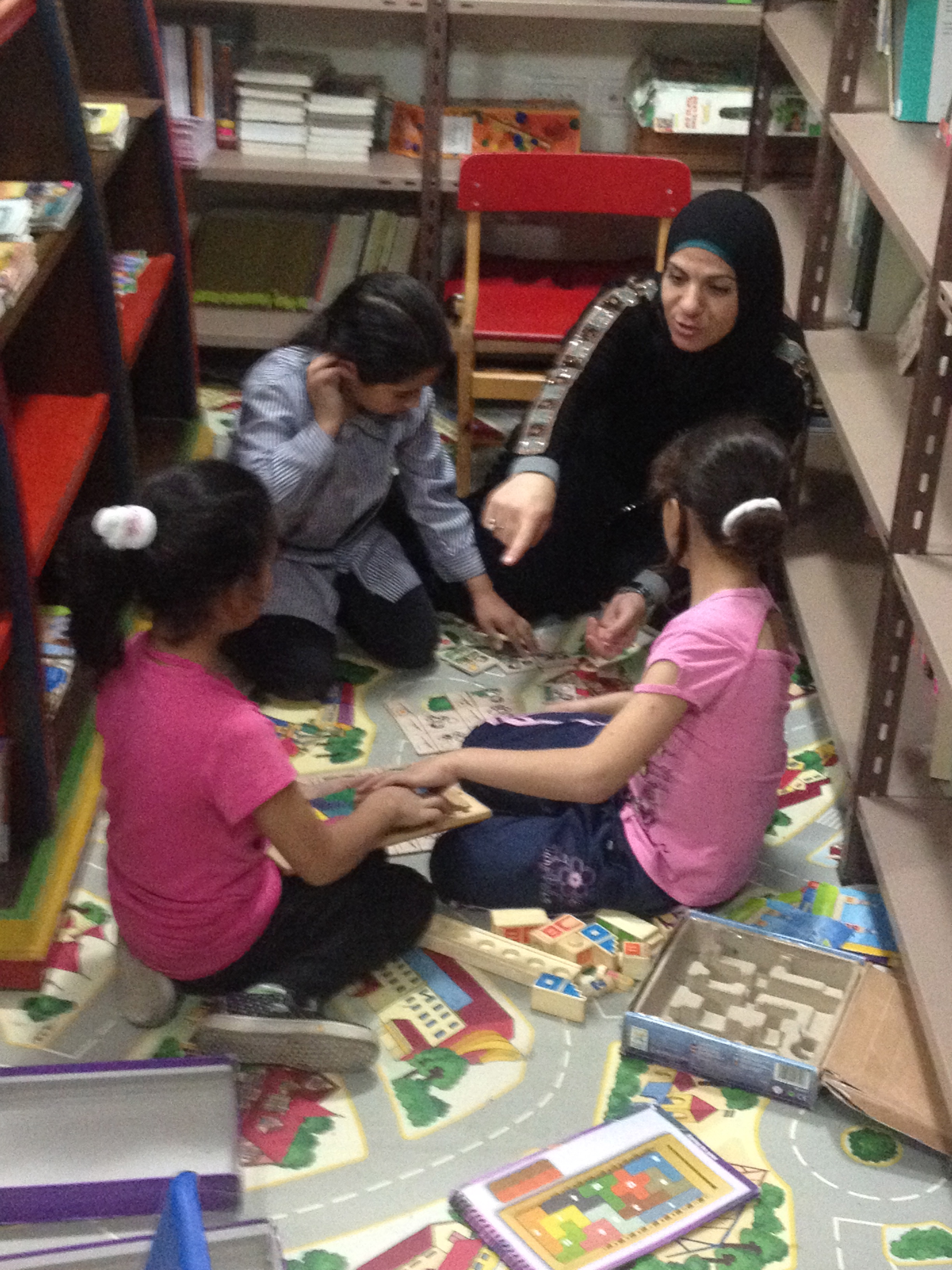
Abdelfattah established Alrowwad in 1998, and it very quickly became an anchor in the Aida community.  It has also become a model of cultural resistance for Palestinian society at large. Their concept of “Beautiful Resistance” uses culture as a therapeutic method to encourage and promote creativity and non-violence, and to teach peace and respect for others.

Abdelfattah and Alrowwad has now introduced a future generation of Palestinian youth to this a new method of self-expression and resistance. They believe their work increases the spirit of collaboration between children as well as their sense of belonging in the community. Their hope is that given the chance to be creative and to set their own priorities, children can provide a bridge for a democratic and independent Palestinian society — to build a better future even amidst a dire present.

IMG_0826

In many ways, touring Alrowwad reminded me the Jenin Freedom Theatre, which I visited with my congregational delegation in 2010. Adelfattah told me that his center does indeed collaborate with the Freedom Theatre, as well as other similar Palestinian cultural projects throughout the West Bank. Adelfattah also travels abroad to promote his work – and this spring will be directing a performance of “The Diary of Anne Frank” in North Carolina!  Just another reminder that there is an extensive and powerful grassroots movement of Palestinian cultural resistance that is relatively unknown to the West, but is eminently worthy of our support.

IMG_0831

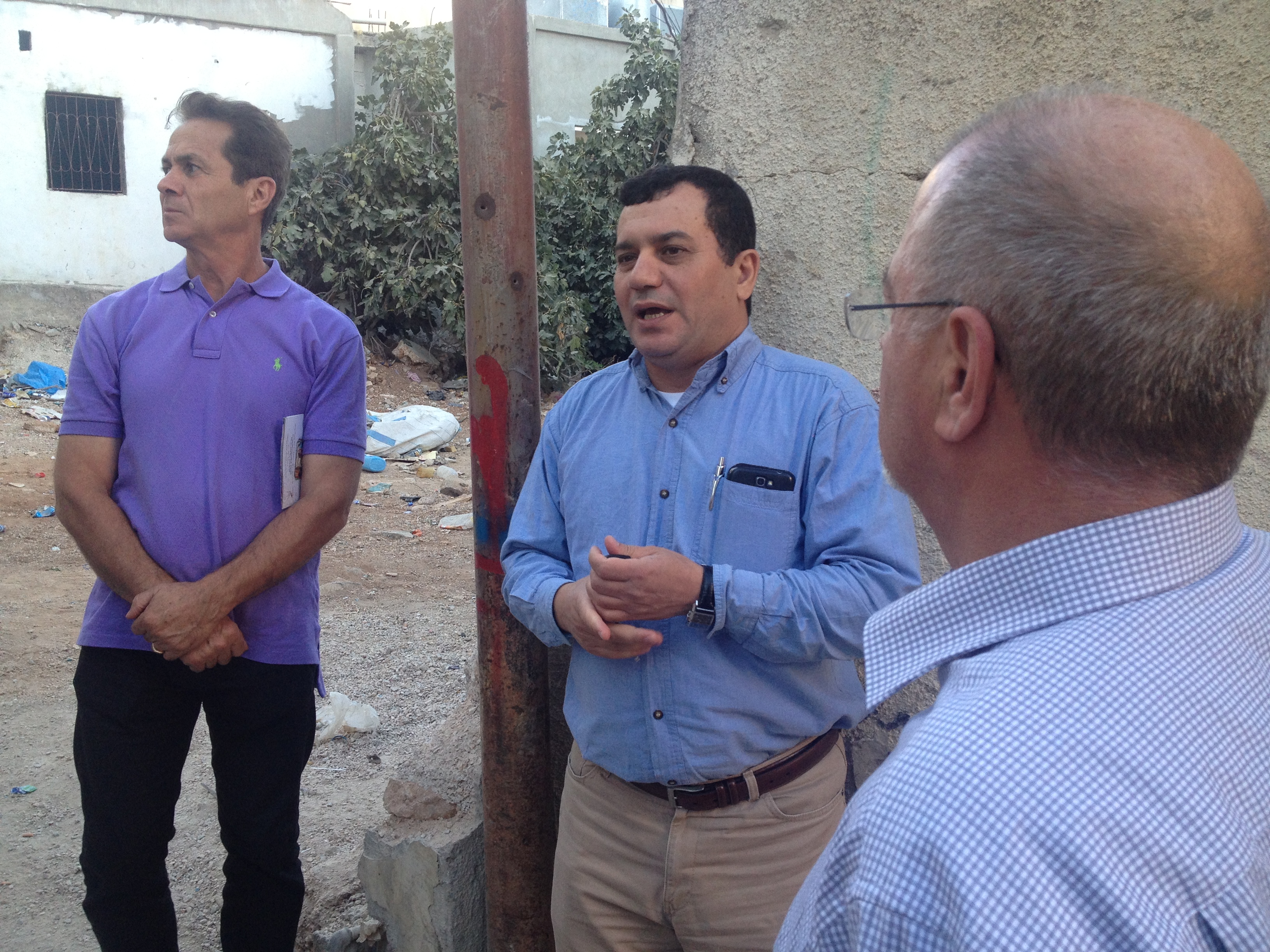
During our tour of Aida (above), Abdelfattah gave us a glimpse of the life of his community – explaining its history and illuminating life amidst the ever-present reality of military incursions, night raids, etc. At one point, our group actually witnessed this reality up close: near the gate to the camp, several IDF soldiers shot tear gas at some children who were a few meters in front of us. (We did not witness the incident that precipitated this violence.) Though we were not in the immediate vicinity of the tear gas clouds, it carried toward us downwind – and though it was only a vestige of the gas, several of us experienced its powerful, lingering sense of burning in our eyes and throats. (I can’t begin to imagine what it must feel like to sustain a direct hit.)

teargas

We continued our way down the streets of Aida, along the separation wall that butts up directly against Bethlehem. As we walked, a women called to Adelfattah from a third story window and invited us up for tea. We sat together on the roof of her home, sipping our tea and looking out over the wall toward the wide open spaces that led toward greater Jerusalem. Our hostess told us that she and Aida owes their very lives to Abdelfattah and it was an honor to have us in her home.

Please join us in supporting the work of Alrowwad through Friends of Alrowward USA. Our delegation can personally attest to the power of their “Beautiful Resistance.”

Mobilizing for Women at the Wall – Where is the Outrage for Simple Human Rights?

wow-liberating-wall

There is something sadly skewed with my community’s moral priorities.

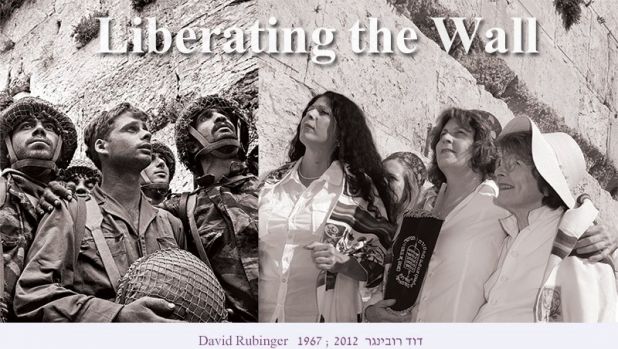
I’m sure many of you have been following the growing uproar – in Israel and America – over the curtailment of women’s prayer rights at the Western Wall.  In protest, an Israeli group called the “Women of the Wall” has been holding monthly services there for the past twenty years, advocating for their “social and legal recognition of (their) right, as women, to wear prayer shawls, pray and read from the Torah collectively and out loud at the Western Wall.” This right, of course, is denied by the Israeli foundation that essentially runs the site – widely considered holy by Jews the world over –  as the world’s most famous ultra-orthodox synagogue.

The cause of the Women at the Wall was recently re-galvanized when its chairwoman Anat Hoffman was arrested for wearing a prayer shawl and leading a service there. Since then protests have been spreading across the US – led by an organization called “Wake Up for Religious Tolerance” that has organized monthly solidarity services throughout the Jewish community.

At one such service yesterday, organizer Hallel Silverman commented:

This was hundreds of people with different beliefs coming together to fight for one thing they all have in common—Jewish equality.

Oh, would that the Jewish community might galvanize this level of moral outrage for the cause of simple human equality in the state of Israel.

Case in point: during the course of these recent protests, another news item passed far lower across the organized Jewish community’s ethical radar: UNICEF’s recently released report that concluded that the ill-treatment of Palestinian minors held within the Israeli military detention system is “widespread, systematic and institutionalized.” The 22 page report carefully examined the Israeli military court system for holding Palestinian children found evidence of practices it said were “cruel, inhuman and degrading treatment or punishment.”

From a recent HuffPo feature on the report:

In a step-by-step analysis of the procedure from arrest to trial, the report said the common experience of many children was being “aggressively awakened in the middle of the night by many armed soldiers and being forcibly brought to an interrogation center tied and blindfolded, sleep deprived and in a state of extreme fear.”

Many were subjected to ill-treatment during the journey, with some suffering physical or verbal abuse, being painfully restrained or forced to lie on the floor of a vehicle for a transfer process of between one hour and one day.

In some cases, they suffered prolonged exposure to the elements and a lack of water, food or access to a toilet.

UNICEF said it found no evidence of any detainees being “accompanied by a lawyer or family member during the interrogation” and they were “rarely informed of their rights.”

“The interrogation mixes intimidation, threats and physical violence, with the clear purpose of forcing the child to confess,” it said, noting they were restrained during interrogation, sometimes for extended periods of time causing pain to their hands, back and legs.

“Children have been threatened with death, physical violence, solitary confinement and sexual assault, against themselves or a family member,” it said.

Most children confess at the end of the interrogation, signing forms in Hebrew which they hardly understand.

It also found children had been held in solitary confinement for between two days and a month before being taken to court, or even after sentencing.

During court hearings, children were in leg chains and shackles, and in most cases, “the principal evidence against the child is the child’s own confession, in most cases extracted under duress during the interrogation,” it found.

“Ultimately, almost all children plead guilty in order to reduce the length of their pretrial detention. Pleading guilty is the quickest way to be released. In short, the system does not allow children to defend themselves,” UNICEF concluded.

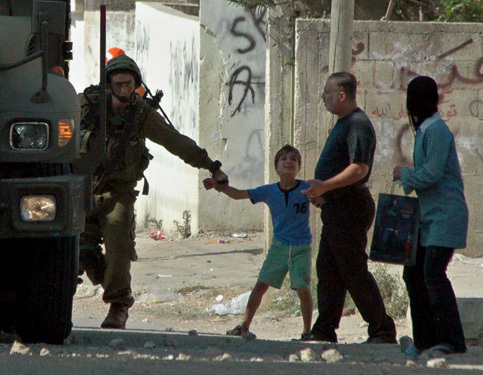
childfather1
I can’t help but ask: where is the moral outrage in my community over this report?  While I certainly believe in the cause of religious freedom, I find it stunning that so many liberal-minded members of the Jewish community are more concerned with “Jewish rights” in a Jewish state than the basic human rights of non-Jewish children who live in it.  Such are the sorrows of Jewish political nationalism: even the more “tolerant “among us seem only to be able to express that tolerance on behalf of those who are in our “tribe.”

A Ha’aretz article covering yesterday’s solidarity service in NYC reported:

People traveled to the event from as far away as Philadelphia. Similar gatherings took place around the U.S., including a demonstration outside Israel’s embassy in Washington, D.C. on Monday, and solidarity prayer services in Cleveland, Chicago and at Brandeis University and the University of Pennsylvania, said service organizer Rabbi Iris Richman. A “sing in” is slated outside Israel’s consulate in San Francisco for Sunday.

In fairness, I’m sure many of the individuals involved in these actions have also advocated for human rights in Israel/Palestine. But the sad truth is that our community would never see fit to mobilize this scale of collective protest in support of Palestinian children. It is well within our comfort zone to protest at Israeli consulates on behalf of Jewish rights. For reasons I understand all too well, universal human rights are still well outside that comfort zone.

Hotel Workers Speak Out Against “Un Troussage De Domestique”

Having been involved in the Hyatt boycott here in Chicago, I’m familiar with the hotel chain’s increasingly abysmal record on worker safety. Now I’m learning that the issue of sexual assault against hotel workers in general has long been a serious problem, long predating the current unpleasantness with Dominique Strauss-Kahn:

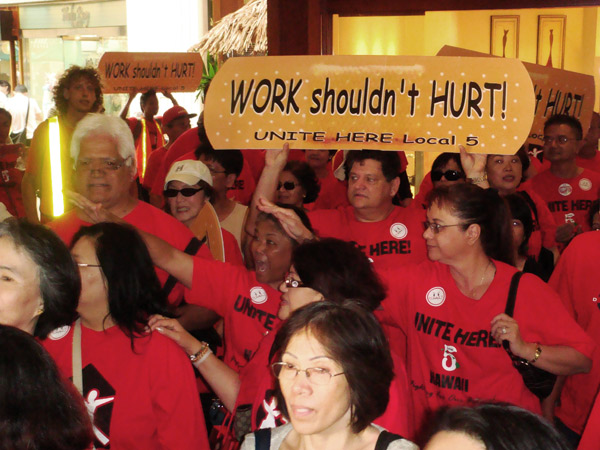
On June 2, hotel workers held speak-outs on sexual harassment and assault by customers in eight cities. The events were organized by UNITE HERE, the hotel union.

“These customers think they can use us for anything they want, because we don’t have the power that they have or the money that they have,” said Yazmin Vazquez, a Chicago room attendant.

Hotel workers face injuries from the physical stress of their work, including the awkward lifting of heavy mattresses hundreds of times a day. But the hidden hazard of hotel work, housekeepers say, is customers’ assaults on their dignity and physical integrity.

Workers report that male customers expose themselves, attempt to buy sexual services, grab and grope them and, in some cases, attempt to rape them…

The management response has been “deafening silence,” (said Annemarie Strassel of UNITE HERE), adding that she’s aware of only one hotel in which a staff meeting was called around the issue.

(h/t: Susan Klonsky)

Ta’anit Tzedek Sponsors “A Conversation About Women, Health, Children and Human Rights in Gaza”

The next fast day sponsored by Ta’anit Tzedek – Jewish Fast for Gaza will take place on Thursday, August 19. To mark the occasion, we will host “A Conversation About Women, Health, Children and Human Rights in Gaza,” a conference call with Dr. Mona El-Farra, Director of Gaza Projects for the Middle East Children’s Alliance.

Dr. El-Farra is a physician by training and a human rights and women’s rights activist by practice in the Gaza Strip. She was born in Khan Younis, Gaza, and has dedicated herself to developing community-based programs that seek to improve health quality and link health services with cultural and recreational services throughout the Gaza Strip.

Our conference call will take place on Thursday, August 19, at 12:00 pm (EST).

Call info:

Access Number: 1.800.920.7487

Participant Code: 92247763#

There will be a question and answer period during the call.

Rohina Malik Unveils Our Common Humanity

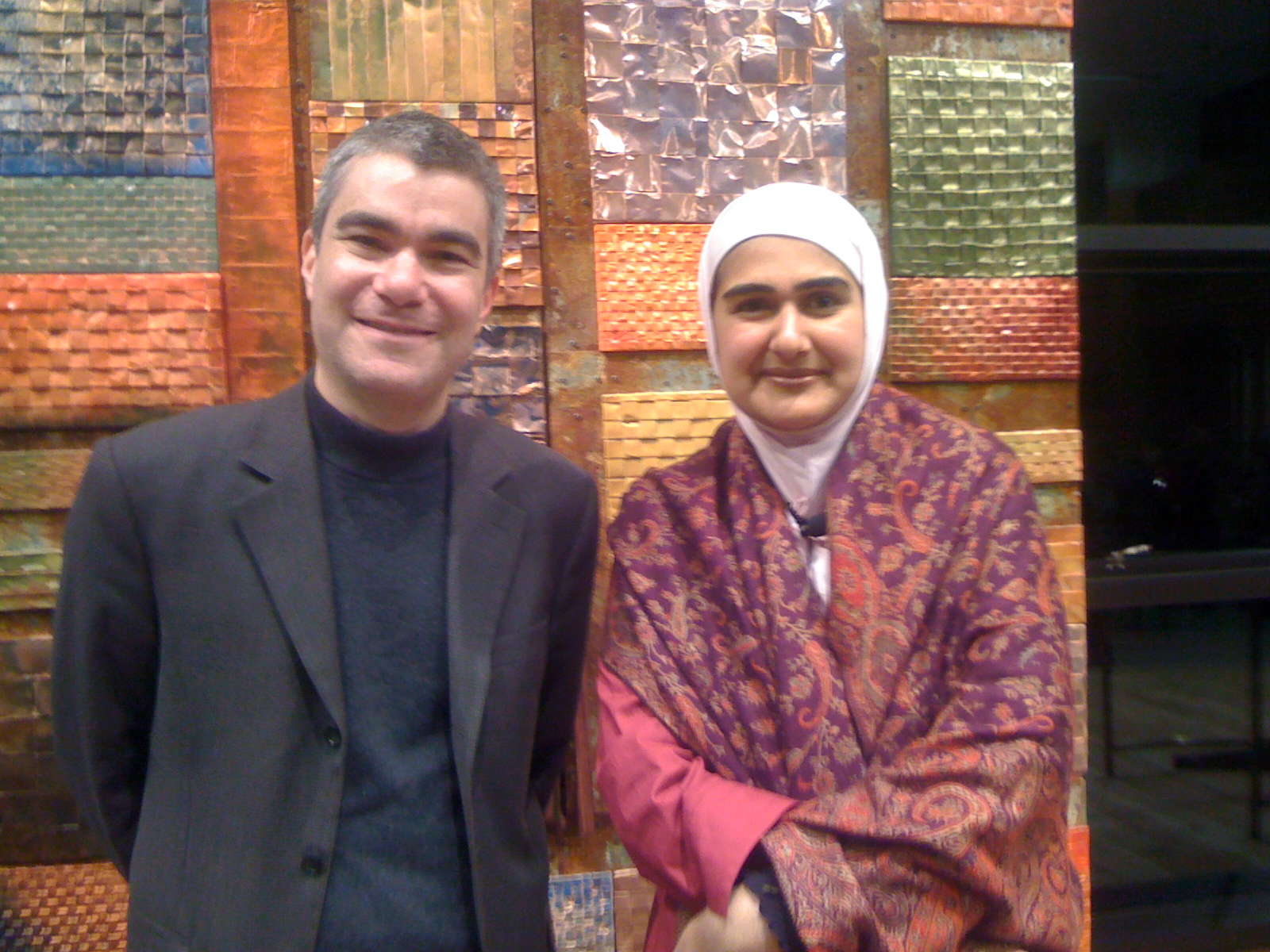
Last night JRC was honored to host a performance of the one-woman show “Unveiled,” by Rohina Malik. Breathtaking.

Rohina is a playwright, actress and solo artist of South Asian heritage who was born in London and emigrated to Chicago when she was 15.  She is an impressive and important contemporary artist – and her identity as an American Muslim woman clearly plays an important role in her art.

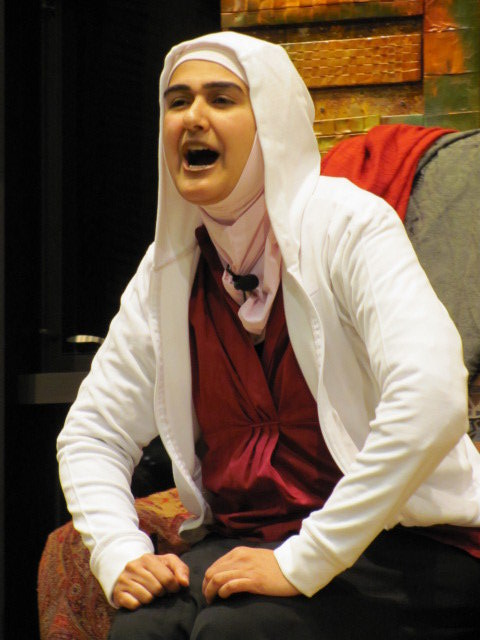
“Unveiled” is constructed around five monologues by five Muslim women. During the course of the play, each of them greets the audience in turn, “welcoming” us with tea.  Each woman tells the story of their lives, explains their Muslim culture and shares the experience of living as a Muslim woman in the post 9/11 world.

For her appearance at JRC last night, Rohina performed three monologues: “Maryam,” a Pakistani-American who has a dress making shop on Chicago’s Devon Avenue; “Shabana,” a young rapper of South Asian descent who was born and raised in London; and “Layla,” a Chicago restaurant owner from the Middle East who lost a brother to the fall of the twin towers.

It’s difficult to convey the cumulative effect these women had upon the audience. Rohina’s performances cut to the heart of painful and complicated political issues – but even more profound was the immediately empathy Rohina was able to conjure for us through these remarkable women. In a relatively short amount of time, she was able to bring us through an entire gamut of emotions – and in the end, the common humanity we shared with these women was palpable to everyone in the room.

Following the play we had an equally powerful post-performance discussion facilitated by the play’s director, Ann Filmer. Nearly 250 people were in attendance – including many members of the Chicagoland Muslim community – and it was truly a tribute to Rohina’s art that so many members of this large and diverse group were inspired to share deeply personal comments about their own lives and struggles.

If you live in the Chicago area, you should know that “Unveiled” will be starting a run at the Victory Gardens Theater on March 24. Highly, highly recommended.