Category Archives: Yom Hashoah

On Gaza, Genocide and International Holocaust Remembrance Day

 (Photo by Axel Koester/Los Angeles Daily News)

It’s safe to day that International Holocaust Remembrance Day will arrive tomorrow at a deeply fraught moment for the Jewish community. Just today, we’ve received the news that the International Court of Justice, ruling on a case brought by South Africa, has ordered Israel to take action to “prevent acts of genocide” in Gaza. And later today, a federal court in California will hear a case brought by the Center for Constitutional Rights on behalf of Palestinian human rights organizations, Palestinians in Gaza and Palestinian Americans accusing Biden and other senior US leaders of being complicit in genocide.

In short, International Holocaust Remembrance Day 2024 is arriving just as Israel and the US government are literally being judged on the world stage for an ongoing genocide against the Palestinian people.

As we contemplate the monumental nature of this moment, it’s instructive to consider the history of International Holocaust Remembrance Day itself. This annual commemoration was created by the UN in 2005, to take place annually on January 27: the day Auschwitz was liberated by allied forces. In its resolution establishing the day, the UN General Assembly made it clear that this observance would not merely be about commemorating the past; it pointedly urged member states “to develop educational programs that will inculcate future generations with the lessons of the Holocaust in order to help to prevent future acts of genocide.”

The GA also made it explicit that this remembrance would not be limited to the European Jewry alone, but should also extend to “countless members of other minorities” who were murdered en masse by the Nazi regime. As then Secretary General Ban-Ki Moon pointedly commented during the 2015 commemoration, “More than a million inmates, primarily Jews, were brutally and systematically killed in the place where the Nazis introduced the monstrous concept of ‘industrialized murder.’ Among the other victims were non-Jewish Poles, political prisoners, Soviet prisoners of war, Sinti and Roma, homosexuals, disabled persons and Jehovah’s witnesses.”

In other words, International Holocaust Remembrance Day was purposely established to universalize the memory and the lessons of the Holocaust.

There is of course, another Holocaust memorial day widely observed by the world Jewish community – namely, Yom Hashoah. In contrast, to International Holocaust Remembrance Day, Yom Hashoah is not universal in nature – it is a day set apart by the Jewish community to mourn their own in a Jewish context, as part of the Jewish festival calendar. While it is altogether appropriate for the Jewish people to honor the memories of our ancestors in such a way, it’s worth noting the history of this particular day as well.

Yom Hashoah was officially founded by an act of Israeli parliament in 1951, immediately following the founding of the state itself. It was purposefully established on Jewish date of the 27 Nisan (April/May) to begin a week of commemoration leading into Yom Hazikaron (Memorial Day), concluding with Yom Ha’atzmaut (Independence Day). In this way, Yom Hashoah served to promote the Zionist historical mythology that viewed the establishment of the state of Israel as a “rebirth,” arising out of the ashes of the Holocaust, through the brave sacrifice made by the soldiers who fought in the War of Independence.

Like many Jews growing up in America, I simply accepted Yom Hashoah as an organic part of the rhythm of the Jewish year, observed annually in synagogue services and communal commemorations. I was never taught that it was first and foremost an Israeli national holiday. And of course, I was never taught that the state of Israel was founded in the wake of the Holocaust through the ethnic cleansing of the Palestinian people from their homes.

While there should most certainly be a communal Jewish day of memorial for the six million, it’s worth questioning the prominent status afforded Yom Hashoah by world Jewry. This is, after all, a day that serves to reinforce the view that the Israel’s founding was a “redemptive” moment for the Jewish people following the tragic cataclysm of the Holocaust – utterly ignoring the reality that the state of Israel was established through the dispossession of another people. I strongly believe we should consider an entirely different Jewish frame for commemorating the Holocaust; in the meantime, however, we should have no illusions about the real agenda behind Yom Hashoah and the problematic narrative it seeks to support.

It might well be said that in this terrifying current moment, the very real implications of this Zionist mythology are being directly challenged by the universal message of International Holocaust Remembrance Day. It’s actually quite staggering to consider: as the world prepares to observe this day, compelling legal proceedings are formally accusing Israel of (and the US of abetting) genocide. Even more sobering: it arrives amidst an increasingly damning verdict in the court of public opinion in which, according to a recent poll, “more than one in three Americans believe Israel is committing genocide against Palestinians.”

I realize how painful – even unthinkable – it will be for many Jews to lift up the lessons of International Holocaust Remembrance Day to suggest Israel that is committing genocide against the Palestinian people. But as I suggested in my sermon this past Yom Kippur, we must find the courage to say out loud the words that must be spoken. If this particular day is truly is to be a day for us to apply the “lessons of the Holocaust in order to help to prevent future acts of genocide,” it is all the more critical for us to speak out and name a genocide that is literally unfolding before us in real time. No matter how uncomfortable or painful the prospect.

In this regard, I’m immensely proud to be part of a Jewish community that has the courage to say these words out loud. In a just released public letter to President Biden, the Jewish Voice for Peace Rabbinical Council is demanding that he “honor the word and spirit of the International Holocaust Remembrance Day by using (his) office to bring a ceasefire to this tragic violence — and to stop blocking efforts toward building a truly just peace for all who live between the river and the sea.”

An excerpt:

We hold the traumatic history of our people with care and sensitivity — and know how painful it is for Jews to grasp that a Jewish state could possibly commit a genocide. Nevertheless, we must agree with increasing numbers of scholars and international rights experts who have determined that Israel’s actions in Gaza constitute, in the words of Prof. Raz Segal, “a textbook case of genocide.” 

We support and uplift South Africa’s recent application to the International Court of Justice claiming Israel is in breach of the 1948 Convention on the Prevention and Punishment of the Crime of Genocide. And now, Palestinian human rights organizations, together with Palestinians in the US and Gaza, are bringing a case against your administration for failure to prevent, and complicity in, the Israeli government’s unfolding genocide against them, their families, and the 2.2 million Palestinians in Gaza. We stand in support of their action as well.

According to a core teaching of Jewish spiritual tradition, humanity was created in the image of God. That means that each and every human being is of infinite value. The UN 1948 Convention on Genocide was created to uphold this very idea. The Torah also teaches that there will always be moments when we must make a critical moral choice. As Deuteronomy 30:19 says, “I have put before you life and death, blessing and curse. Choose life.” President Biden, you have chosen death. Instead of using your considerable power to prevent or end this genocide, you have directly abetted it with weapons, funds and diplomatic cover. 

On this day of remembrance in 2021, you noted that, “The Holocaust was no accident of history.” As you stated, “It occurred because too many governments cold-bloodedly adopted and implemented hate-fueled laws, policies, and practices to vilify and dehumanize entire groups of people, and too many individuals stood by silently. Silence is complicity.” 

President Biden, what is happening right now in Gaza is no accident of history — and your complicity has been anything but silent. We call upon you to be true to your word and end US complicity in Israel’s genocide against the Palestinian people.

This International Holocaust Remembrance Day, let us find the courage to speak the words that must be spoken. This International Holocaust Remembrance Day, let us find the courage to speak the words that must be spoken: Ceasefire now. Never again, for anyone. No more genocide.
Standing Down Legal Segregation on Yom Hashoah

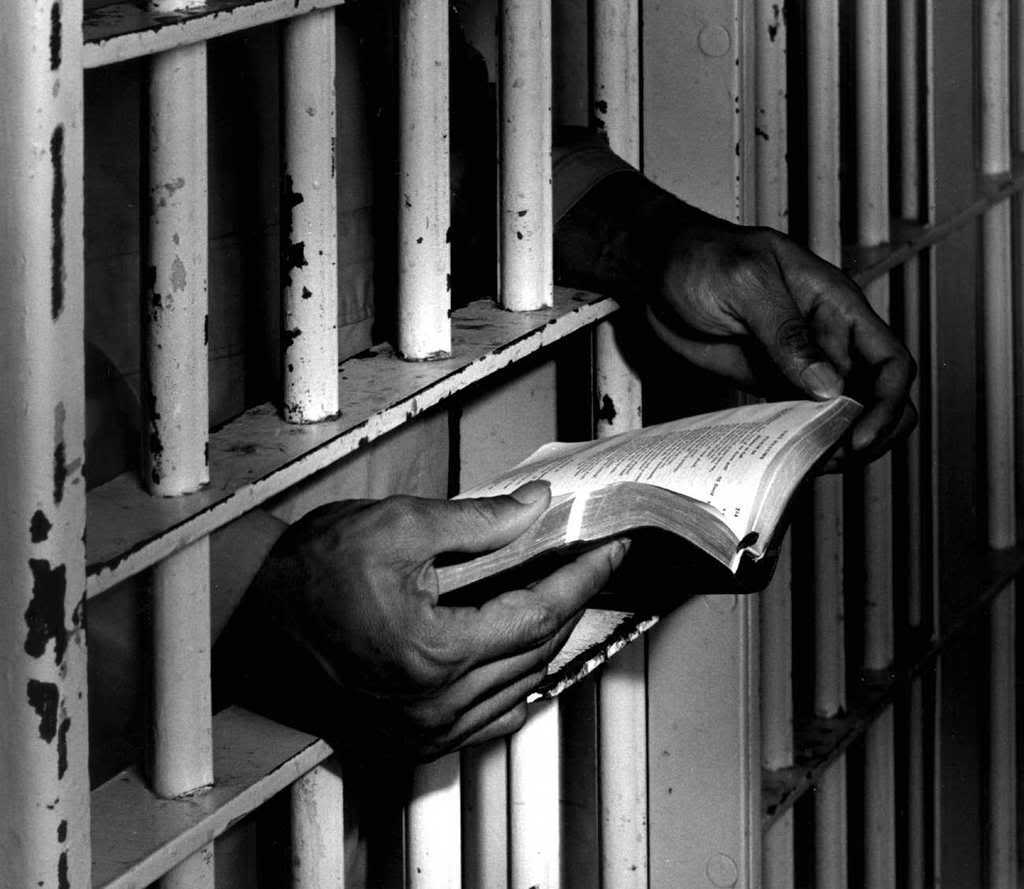
bibleinjail21 Today marks Yom Hashoah – Holocaust Remembrance Day – and as it turns out, this year it falls on a serendipitous milestone: namely the 52nd anniversary of Dr. Martin Luther King’s “Letter from a Birmingham Jail.” Although MLK wrote his letter to respond to the reality of Jim Crow in the American South, I do believe his words have much to offer us as we remember those who perished at the hands of the Nazis during World War II – in particular, King’s insistence on the moral imperative to break unjust laws and the inherent immorality of legal segregation:

(There) are two types of laws: just and unjust. I would be the first to advocate obeying just laws. One has not only a legal but a moral responsibility to obey just laws. Conversely, one has a moral responsibility to disobey unjust laws…

Now, what is the difference between the two? How does one determine whether a law is just or unjust? A just law is a man made code that squares with the moral law or the law of God. An unjust law is a code that is out of harmony with the moral law. To put it in the terms of St. Thomas Aquinas: An unjust law is a human law that is not rooted in eternal law and natural law. Any law that uplifts human personality is just. Any law that degrades human personality is unjust.

All segregation statutes are unjust because segregation distorts the soul and damages the personality. It gives the segregator a false sense of superiority and the segregated a false sense of inferiority. Segregation, to use the terminology of the Jewish philosopher Martin Buber, substitutes an “I it” relationship for an “I thou” relationship and ends up relegating persons to the status of things. Hence segregation is not only politically, economically and sociologically unsound, it is morally wrong and sinful.

In light of King’s words, it is worth noting that the rise of Nazism in Germany was facilitated by largely “legal” means – through myriad laws and regulations that successfully segregated Jews from the rest of German society.  King himself pointed this out in his letter when he wrote:

We should never forget that everything Adolf Hitler did in Germany was “legal…” It was “illegal” to aid and comfort a Jew in Hitler’s Germany. Even so, I am sure that, had I lived in Germany at the time, I would have aided and comforted my Jewish brothers.

In this regard, Dr. King’s insight might well inspire us to commemorate this sacred day by redoubling our resolve to eradicate laws that segregate peoples on the basis of their national, ethnic or religious identities.

Hebron_shuhada

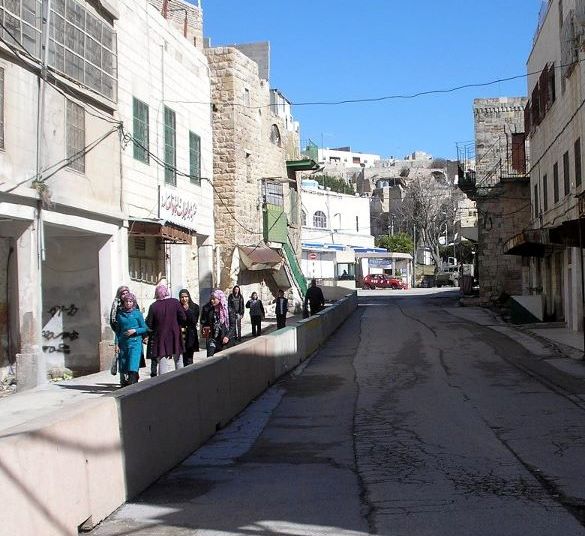
Segregated Shuhada street in Hebron, February 2012 (photo: Hithabrut-Tarabut)

While it pains me to say it, I cannot help but note that the very country that first established Holocaust Remembrance Day itself enforces its own form of legal segregation between Jews and non-Jews. As one Israeli observer wrote in Ha’aretz five years ago, “Segregation of Jews and Arabs in Israel…is almost absolute.” In the West Bank, Jews and non-Jews are segregated by separate legal systems, separate roads, separate transportation systems, and in some cases, separate sidewalks. And in Gaza, Palestinians are segregated from the outside world entirely.

I have no doubt that there will be those who consider it unseemly of me – or worse – to point this out on Yom Hashoah of all days. To this inevitable criticism, I can only respond, how can we purport to take the lessons of the Shoah to heart while ignoring realities such as these? How long will we, as Jews, look way from these unjust laws in Israel that “distort the soul and damage the personality?” On this, of all days, shouldn’t we, as King suggested in his letter, “bring to the surface the hidden tension that is already alive?”

May the memory of the fallen be for a blessing.

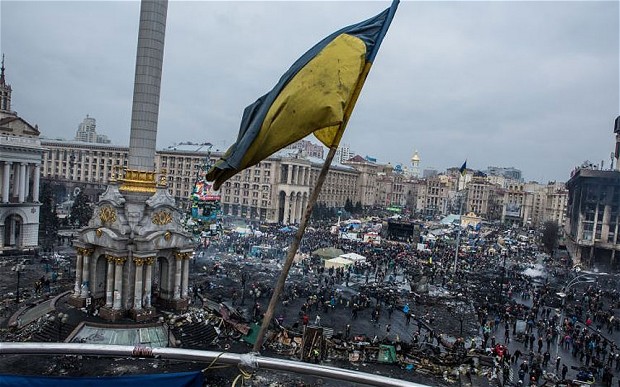
Cantor Vicky Glikin on “the Jewish Question” in the Ukraine

photo: telegraph.co.uk

photo: telegraph.co.uk

I strongly encourage you to read this report, below, by Cantor Vicky Glikin, of Congregation Solel in Highland Park, IL.

Cantor Glikin recently returned from a trip to her native Ukraine, where the political/military upheaval has been been of special concern to the international Jewish community, particularly amidst reports of anti-Semitism against the Ukrainian Jewish population. While it is imperative that we take such reports with the utmost seriousness, it is also critical to separate fear from fact – and not to jump to conclusions about the truth behind these reports. In this regard, eye-witnesses testimonies from knowledgeable insiders such as Cantor Glikin are profoundly important.

Having just finished observing Yom Hashoah (Holocaust Remembrance Day), I am truly inspired by her words, which ultimately counsel hope over fear and engagement over isolation:

Continue reading

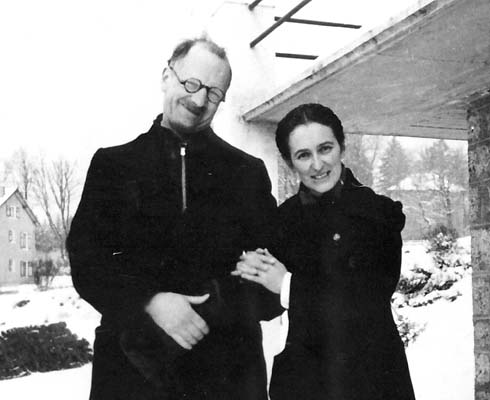
For Yom Hashoah: A Tribute to Pacifist Heroes André and Magda Trocmé

Andre Trocme

In honor of Yom Hashoah, please read about the sacred work of Pastor André and Magda Trocmé, the courageous pacifist Christians who saved 3,000-5,000 Jews from certain death in South Central France. May their memory be for a blessing.

The biography below is reposted from the Swarthmore College Peace Collection:

André and Magda Trocmé are perhaps best known for their work in the small French town of Le Chambon-sur-Lignon where, during World War II, they inspired the villagers to help protect and sometimes to assist in the escape of Jews and other poltiical refugees. This quiet and courageous assistance was given without resorting to violence. Historians estimate that about 3,500 Jews were harbored in the area in and around Le Chambon.

André Trocmé (1901-1971) was born in St. Quentin in the north of France to Huguenot parents. After seminary in Paris and graduate work at Union Theological Seminary in New York, he was ordained into the French Reformed Church and served for eight years among the coal miners and steel workers of Maubeuge and Sin-le-Noble, two small towns in the north of France. He preached nonviolence at a time when such views were unpopular in France. In 1934 André Trocmé accepted a call to be pastor in the remote Huguenot village of Le Chambon-sur-Lignon on the Plateau Vivarais-Lignon in South Central France. These parishioners were more sympathetic to his views on nonviolence.

Magda Trocmé (1901-1996) was born in Italy to an Italian father and a Russian mother. She graduated from the University of Florence with a degree in literature and earned further degrees in French. She and André Trocmé met in the United States while she was attending the New York School of Social Work, and they were married in 1926. The couple had four children, Nelly, Jean-Pierre, Jacques, and Daniel.

In 1938, André Trocmé, and his pacifist colleague Édouard Theis, founded L’Ecole Nouvelle Cévenol in Le Chambon, a Protestant, co-educational secondary school. In addition to the usual French secondary school curriculum, tolerance, honesty, and nonviolence were taught as well. L’Ecole Nouvelle Cévenole soon gained an international focus, and after World War II the name of the school was changed to Collège Cévenol. Magda Trocmé taught Italian at this school which is still in operation today.

During the first part of World War II Le Chambon was located in the “free”( unoccupied) zone of France. By 1942 the Germans had occupied the entire country. However, the population of the Plateau Vivarais-Lignon continued to aid an increasing number of refugees. In 1943, André Trocmé, Édouard Theis, and the head of the public school, Roger Darcissac were interned in a camp by the Vichy police. These men were arrested for their part in assisting the refugees of the area. Trocmé, Theis, and Darcissac were released from prison after one month, but Trocmé and Theis went into hiding for the next ten months.

In the late 1940s André and Magda Trocmé traveled as European Secretaries for the International Fellowship of Reconciliation (IFOR). After their move to Versailles (France) in 1950, the Trocmé’s founded La Maison de la Réconciliation. The Maison de la Reconciliation became an international peace center and the headquarters of the French and Continental Secretariat of the IFOR. During travels in the United States, under IFOR auspices, André Trocmé delivered the Robert Treat Paine lectures which became the basis for his book The Politics of Repentance, published in 1953. During the strife between France and Algeria, André Trocmé helped start Eirene (International Service for Peace), located in Morocco, which provided alternative service for conscientious objectors. He was also active in the movement against atomic weapons, becoming president of the French Federation Against Atomic Armaments in 1959. In 1960, André Trocmé accepted a call to become one of the ministers of the Saint-Gervais Church in Geneva, Switzerland. Many of the sermons he preached at Saint-Gervais were broadcast. His book, Jésus-Christ et la Revolution Non Violente was published in French in 1961 and subsequently in other languages (Orbis Books edition, 2004). In 1965, André Trocmé accompanied a peace mission to Vietnam.

After World War II André Trocmé was awarded the Rosette de la Résistance by the French government. The story of the Trocmé’s pacifist leadership inspired Philip P. Hallie, a professor at Wesleyan University, to write the book Lest Innocent Blood by Shed, published in 1979. Eleven years later Pierre Sauvage produced the documentary Weapons of the Spirit (1988), explaining how his family survived Word War II, through the efforts of the people of Le Chambon.

André Trocmé died in Geneva on June 5, 1971, just a few weeks after he had been scheduled to receive the Médaille des Justes from the government of Israel. As more and more people were recognized as “Righteous Gentiles,” the Yad Vashem honored all the residents of Le Chambon-sur-Lignon and the surrounding area. In their memory an engraved stele and rock garden were installed in the park of Yad Vashem (Israel).

After the death of her husband Magda Trocmé moved to Paris with Alice Reynier (“Jispa”), a close family friend who had lived with the Trocmé family since 1942. Alice Reynier shared their family life and their work. Magda Trocmé received an honorary degree from Haverford College in 1981 in the name of the people of Le Chambon and the surrounding area She died in Paris in 1996. André, Magda, their sons Jean-Pierre and Daniel, and Jispa, are all buried as a family in the cemetery of Le Chambon-sur-Lignon.

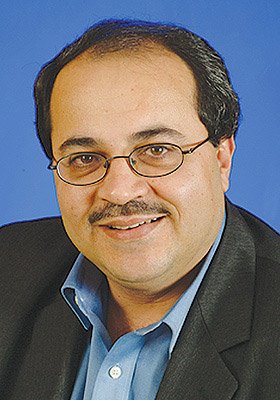
For Yom Hashoah: A Palestinian Meditation on the Holocaust

In recognition of Holocaust Remembrance Day, please read these words of Ahmed Tibi, a Palestinian citizen of Israel and member of Knesset, who offered the following words before the Israeli Parliament in 2010:

This is the place and the time to cry out the cries of all of those who were and are no longer with us, the cries of those who have remained and who are struggling, justifiably so, to unburden themselves from the scenes of death and horror. I will once again repeat that I am full of empathy for the families of the victims of the Holocaust wherever they may be around the world, including those with whom I live on the same land, in the same country.

This is the moment in which every individual must relieve oneself of all of his nationalist or religious hats, relieve oneself of the otherness and wear just one robe: the robe of humanity. One must look at himself, look around him, and be human. Only human.

Full speech here.

Yom Hashoah: A Day to Affirm Universal Human Rights

I can think of no more powerful meditation for Yom Hashoah 5770 than this Huffington Post piece written by Steven Gerber and Rabbi Michael Schwartz, both of Rabbis for Human Rights.

An excerpt:

It is interesting to note how two very different sets of “responses” to the Shoah are heard frequently amongst Jews here in Israel and around the world. These two different responses reflect a shared sense of urgent necessity in responding here today because of what happened there then. At the same time they demonstrate almost opposite worldviews and understandings of Israel’s purpose, and lead toward totally inverse political perspectives and often contradictory activist involvements.

One response is that, essentially, Israel must do anything it wants or needs to do in order to defend itself from hateful enemies set on perpetrating a second holocaust by destroying both the Jewish State and the Jewish People along with it.

The other response is that precisely because of our experience as Jews in the Holocaust and through our history littered with injustice and tragedy, we ourselves must make sure that Israel of all places is a nation that stringently safeguards human rights even in the most difficult of circumstances and establishes, in the words of Israel’s Declaration of Independence, a nation that “foster[s] the development of the country for the benefit of all its inhabitants; [a nation] based on freedom, justice and peace as envisaged by the prophets of Israel.”

Indeed, both the physical and spiritual security of the Jewish People and the State of Israel is best guaranteed by the strength of Israel’s democracy and the rule of just law, its commitment to human rights, and – ultimately – to the achievement of peace.

On this day in which we recall the Jewish people’s loss of human rights, let us ensure that the Jewish state embodies these rights on behalf of all its citizens.

On this day in which we remember the tragedy of our people, may we redouble our efforts on behalf of all people who dwell on earth…