Inauguration Day 2025: “Love Work, Hate Authority and Don’t Cozy Up to the Government”

(Rabbi) Shemiah said, “Love work. Hate authority. Don’t get too friendly with the government.” Pirke Avot, 1:10 (translation, Jacob Neusner).

This classical rabbinic saying comes from “Chapters of the Fathers,” a well-known collection of rabbinic sayings and aphorisms from the 2nd century ACE. While there are many more finessed English renderings of this particular saying (one version, offered by Talmudic scholar Dr. Joshua Kulp reads: “Love work, hate acting the superior and do not attempt to draw near to the ruling authority”), I’ve always appreciated the bluntness of Jacob Neusner’s more direct translation. We don’t know much about Shemiah, but we do know that he was a Jewish leader in the 1st century BCE and the he wasn’t a big fan of Herod, the appointed authority over Palestine during the reign of the Roman empire.

As a member of the Jewish community, I definitely appreciated Shemiah’s caution over cozying up to state power after reading reports from yesterday’s inauguration of Donald Trump, which featured a prayer from Rabbi Ari Berman, the President of Yeshiva University. Among other things Rabbi Berman hailed this “moment of historic opportunity” and prayed for the new administration to “unite us around our foundational biblical values of life and liberty, service and sacrifice, and especially of faith and morality.” (Americans who do not adhere to Biblical tradition were presumably left out of his vision of national unity.)

Needless to say, Rabbi Berman’s legitimizing of Trump’s inauguration did not speak for many of us in the Jewish community, especially when you consider that Trump has now pardoned virtually all of the Capitol insurrectionists, including their white supremacist, neo-Nazi leaders. When you consider that Proud Boys were seen marching and chanting through the streets of DC for the first time since January 6 while Trump was being sworn in as President.

Then there was the moment in which Trump’s new friend Elon Musk – who has made no secret of his support for the European far right – made two clear and unmistakable Nazi salutes at an inaugural event. As painful as this was to witness, for me the even more nauseating moment occurred when the Anti-Defamation League subsequently issued a statement dismissing the salute as an “awkward gesture,” adding: “This is a new beginning. Let’s hope for healing and work toward unity in the months and years ahead.” Apologizing for Nazi messaging at Presidential Inaugural is a truly new low for the ADL – and that is saying a lot.

I also couldn’t help but think of Shemiah’s teaching yesterday as I watched so many public figures, corporate leaders and politicians (from both sides of the aisle) flashing cheerful smiles as they were wined and dined in Washington by this new authoritarian administration – on MLK Day, of all days. “Don’t get too cozy with the government” would have been particularly good advice to New York Mayor Eric Adams, who reportedly cancelled previously scheduled appearances at events celebrating MLK after he received a last-minute invitation to attend the inauguration.

There has been much commentary about how dramatically different Trump’s inauguration feels in comparison to his previous inaugural in 2106, when the resistance was actively organizing and protests would soon fill the streets. This time around, the main theme seems to be political resignation and capitulation. I have no doubt that Michigan’s Democratic governor Gretchen Whitmer spoke for many in her party when she said last week, “My job is to try to collaborate and find common ground wherever I can.” (Couldn’t she have at least chosen a better word than colloborate?”)

As yesterday mercifully came to a close, I finally decided on a new rendering of Rabbi Shemiah’s teaching – one more apropos to the current political moment:

Love the work of resistance. Hate fascism. And don’t expect politicians to save you.

The Gaza Ceasefire: Pharoah is Still Pharoah

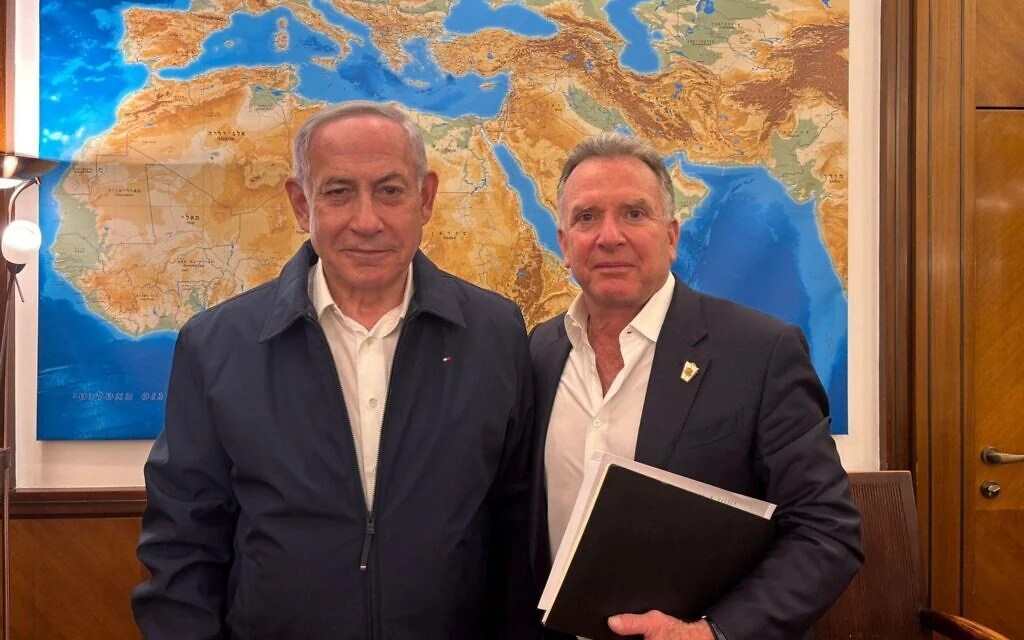
Benyamin Netanyahu and Steve Witkoff, January 11, 2025

For Palestinians and those who stand in solidarity with them, the news of a ceasefire agreement between the Netanyahu administration and Hamas was welcome news. When the reports first broke, and I saw images of Gazans singing and dancing in the streets, I couldn’t help but feel a joyful solidarity with them. But like all brokered agreements between Israelis and Palestinians, this deal is also fragile and fraught – and filled with deeply disingenuous political maneuvering.

Some history: according to reports, this ceasefire deal is identical to the one brokered by the Biden administration last May, which was accepted by Hamas leaders in early July. At the last minute, however, Netanyahu later backed out, insisting on nothing less than the total destruction of Hamas. Israel then assassinated Hamas’ political leader and chief negotiator, Ismail Haniyeh and continued its relentless bombardment of Gaza.

Though this was all a direct affront to the Biden administration, the US government responded not by pressuring Netanyahu to accept the deal but by rewarding Israel with a $20 billion arms sale. Biden and Secretary of State Blinken also actively promoted the lie that it was Hamas and not Israel that had kiboshed the deal. In the meantime, the Israeli military continued with its genocidal onslaught. From the time that the talks fell apart until now, the death toll of Palestinians rose from at least 39,000 to 46,707, including more than 18,000 children.

So why is Israel accepting the very same deal a half a year later? We now know it was due to the efforts of Donald Trump, who has made it clear he didn’t want to deal with the distraction of Israel’s war on Gaza as he began his presidency. Last week, Trump asked his friend, Steve Witkoff, a billionaire real estate developer, to call Netanyahu and tell him in no uncertain terms that Israel’s military operations in Gaza must end before the inauguration.

In other words, a President-elect was able to do with a single visit from a private citizen what the Biden administration was either unable or unwilling to do for over a year.

Though the ceasefire deal was welcome news, it was not accomplished through the “tireless efforts of the Biden administration.” Neither was it due to the altruism (needless to say) of the President elect. Trump is nothing if not transactional – and there is already speculation over what he might give Netanyahu in return, whether it’s a brokered diplomatic deal with Saudi Arabia or the annexation of the West Bank (or both).

In the meantime, within 24 hours of the announcement of the deal, Israel escalated its bombing of Gaza, killing 80 Palestinians. According to analyst Yousef Munayyer, Israel has a habit of late-hour bombing to empty its stockpiles in anticipation of larger military aid packages from the US. In this case, since Israel has not realized its military objective of obliterating Hamas, “there may be an urge to do great damage while they can before ceasefire comes in, reacting to that disappointment.” As of this morning, the Netanyahu government, is indicating his government is prepared to accept the deal, which is set to go into effect on Sunday, but it is still yet to be signed.  

But even if it is finalized, we should have no illusions. Like past deals, there is so much that Israel can do to pursue its own designs going forward. Like past deals, this one is set to unfold in stages. The first phase will feature a ceasefire, a withdrawal of Israeli troops, an initial swap of hostages and prisoners and an influx of humanitarian aid into Gaza. However, the second and third phases are far less developed. There is no agreement on the rebuilding of Gaza, the future of the Israeli military presence, who will govern, or how.

When I read the details of this agreement, I couldn’t help but recall the Oslo Accords in 1993, which was also negotiated in phases. The first was an interim phase, in which Israel would gradually withdraw from Palestinian areas in the West Bank and transfer administrative power to a temporary “Palestinian Authority.” The second phase involved permanent status details such as Jerusalem, refugee rights, settlements and borders. In the end, Israel agreed to the first phase as a cover to extend its settlement regime across the West Bank – all the while enacting policies that further dispossessed Palestinians from their homes.

Oslo was a hard lesson on the ultimate designs of all Israeli administrations, from left to right. No matter who is in power, the Israel’s goals are the goals of Zionism itself: the maintenance of a Jewish majority in the land. This goal necessarily entails the ongoing ethnic cleansing – an ongoing Nakba – of the Palestinian people. After the genocide in Gaza, we can honestly add the words “by any means necessary” to this sentence. No matter the diplomatic rhetoric around this current deal, we must not lose sight of this crucial history. Put simply: Netanyahu is all too likely to assent to phase one of the deal, get back a requisite number of hostages, then continue with the genocide in Gaza in order to destroy Hamas completely, ensure a maximum number of Palestinians are either dead or unable to return to their homes, and re-entrench Israeli civilian settlement there.

In this week’s Torah portion, Parashat Shemot, there arises a new Pharoah who “did not know Joseph.” Threatened by the demographic growth of the Israelite people in the land, he institutes murderous policies to stem their birthrate and reduce their number through harsh enslavement. But there are also those who resist Pharoah’s tyranny through acts of courageous civil disobedience: Hebrew midwives who refuse to kill Israelite baby boys, a mother and sister who save an Israelite child and a daughter of Pharoah who adopts him. All of these events set in motion a chain that will inexorably, inevitably lead toward the liberation of the Israelite people.

So in this moment, let us welcome the prospect of the cessation of hostilities. But let us have no illusions about the designs of all Pharoahs past and present. Like the Israelites in our Torah portion, the Palestinian people continue to cry out for liberation.

Let us continue to heed their call.

Yitzhak Rabin and the Violent Legacy of Shimon and Levi

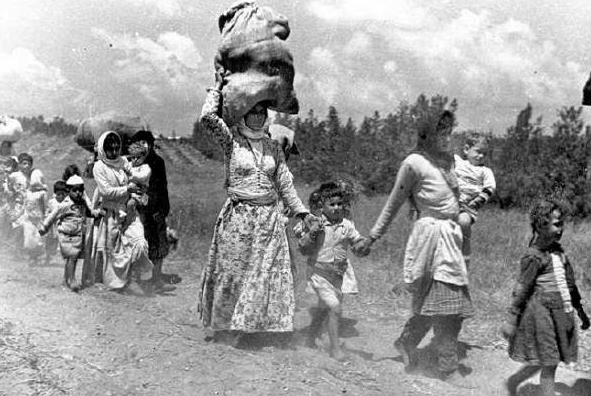
The Lyyda Death March, July 1948

The centerpiece of this week’s Torah portion, Parshat Vayechi, is Jacob’s final soliloquy to his individual sons: a Biblical poem that is equal part blessing and curse, history and prediction. While his words are complex and wide ranging, Jacob saves his harshest words for his sons Shimon and Levi:

Shimon and Levi are a pair/Their weapons are tools of lawlessness. Let not my person be included in their council/Let not my being be counted in their assembly. (Genesis 49:5-6)

Jacob’s curse of Shimon and Levi seems to be a reference to their role in the calculated and deadly attack on Shechem that occurred in Genesis 34. Biblical scholars surmise that these verses likely reflect the tribal biases of the original author. But whatever the reason for Jacob’s words, his characterization of Shimon and Levi have come to represent the cursed impact of calculated and unrestrained violence.

As I read these words this year, I recalled something I hadn’t thought of in a long time: a speech delivered by the late Israeli Prime Minister Yitzhak Rabin on February 28, 1994. Four days earlier, a Jewish extremist settler, Baruch Goldstein, had murdered 29 Muslim worshippers in the Cave of the Patriarchs/Ibrahimi Mosque in Hebron/Al Khalil in a calculated, vicious attack. In an address before the Knesset, Rabin actually quoted Jacob’s words to Shimon and Levi. He then continued, addressing the late Goldstein, who was already becoming viewed as a martyr in the eyes of his zealous followers:

To him and to those like him we say: You are not part of the community of Israel. You are not part of the national democratic camp to which we in this house all belong, and many of the people despise you. You are not partners in the Zionist enterprise. You are a foreign implant. You are an errant weed. Sensible Judaism spits you out. You placed yourself outside the wall of Jewish Law. You are a shame on Zionism and an embarrassment to Judaism.

A year after delivering this speech, Rabin was dead, murdered by another Jewish extremist settler.

Since his death, Yitzhak Rabin has since achieved mythic status in Liberal Zionist circles as a heroic figure who was struck down for daring to make peace with the Palestinians. And for many years, I was among those who believed he was indeed a casualty of the curse of Shimon and Levi to which he referred just one year earlier. As I read Rabin’s speech 30 years later, however, I believe the reality is not nearly that simple.

I’m particularly taken by his characterization of Goldstein as an “errant weed” and “foreign implant” to the Zionist enterprise, as if we can draw a meaningful line between “good Zionism” and “bad Zionism.” It’s worth noting that Rabin himself was the general who oversaw the most massive expulsion of Palestinians during the Nakba: the ethnic cleansing of the Palestinian villages of Lydda and Ramle in July 1948, which included the infamous Lydda massacres and the Lydda death march. Rabin personally signed the expulsion order which stated, “The inhabitants of Lydda must be expelled quickly without attention to age….”

Years later during the First Intifada in 1988/9, Rabin was Israel’s Defense Minister when he issued the well known order to “break Palestinians bones” – a directive that was intended “to permanently disable Palestinian youth by inflicting lasting injuries that incapacitate them.” As generations of disabled Palestinians will attest, the legacy of this order has had a devastating impact on their lives to this day.

Although many promote the mythology of Rabin as a former military man who later became a man of peace, the truth is much more problematic. In fact, Rabin never supported Palestinian statehood throughout the Oslo “peace process.” It is more accurate to say he used the veneer of this process to enable an Israeli settlement regime that has since become permanently entrenched in the West Bank. Rabin’s role in Oslo can be directly linked in a straight line to the systemic violence against Palestinians that is now raging with impunity throughout the Occupied Territories. 

In other words, while Liberal Zionist mythology attributes the curse of Shimon and Levi to “bad apple” Zionists, this kind of systemic, unrestrained violence has been central to the Zionist project from its very beginning. Indeed, Israel’s still ongoing genocide in Gaza is not the result of “errant weeds” in the Israeli government like Netanyahu, Smotrich and Ben-Givir. It is the logical end game of Zionism itself: an ideology and movement that has from its very origins dehumanized and dispossessed Palestinians to make way for Jewish settlement.

As the book of Genesis comes to a close, Jacob’s deathbed words ring out to us with renewed clarity. Zionism’s weapons are tools of lawlessness. Let us not be included in their council. Let our being not be counted in their assembly.  

Some Final Thoughts on Hanukkah (as the Candles Flicker Out…)

Some final thoughts on Hanukkah as we say farewell to this complex holiday:

I’m mindful that many of us struggle to find meaning in the historical events commemorated by Hanukkah. It’s a complicated story that I won’t recount in detail here other than to say that the “heroic” Maccabees were actually religious zealots who engaged in a civil war with the assimilated Hellenistic Jews of their day – and that when they succeeded in overthrowing the Seleucid empire, the independent Hasmonean commonwealth they established was corrupt and oppressive. This period of Jewish independence lasted a little more than 100 years before the Hasmoneans fell to the Roman empire.

The rabbis of classical Pharisaic Judaism were not, to put it mildly, fans of the militaristic, corrupt shenanigans of the Maccabees and the Hasmonean dynasty, which is why this story is nowhere to be found in rabbinic writings (and why the books of the Maccabees were not canonized as part of the Hebrew Bible). The Rabbis knew this all too well: empires, nations and states are artificially-created entities, manufactured through military might and inevitably destined to fall. It was not by coincidence that the famous line from Zechariah: Not by might and not by power but by My spirit says the Lord of Hosts was chosen to be the prophetic portion chanted on the Shabbat of Hanukkah. 

Their famous Talmudic story about rededication of the Temple in Jerusalem and the cruse of oil that miraculously lasted for eight days is much more than a quaint legend. At its heart it’s a spiritual-political allegory about the limits of human military power – and the enduring resilience embodied by faith and light. Although the short-lived victory of the Maccabees is valorized by political Zionism and the state of Israel, I’d argue that the enduring aspect of this holiday is a rejection of the ephemeral, temporary nature of empire and state power – and the recognition of a Power yet greater.  

This Faustian bargain with state power is also at the heart of this week’s Torah portion, Parashat Vayigash, in which Egypt becomes ravaged by famine. In response, Joseph (who is second in power only to Pharoah) offers to sell the Egyptians their own food back to them from Pharaoh’s storehouses that they had previously stocked. When they run out of money, they sell him their livestock. When they run out of livestock, he buys up their land. In the end, the only things they have left to sell are their own bodies and their labor, so they agree to become indentured servants (i.e., slaves) to Pharaoh. 

This part of the Joseph story, needless to say, is not an easy read. Over the years, my shocked Torah study students have compared Joseph’s draconian policies to the mandatory collectivization of agriculture in Maoist China and the US government’s foreclosure of mortgages/repossession of Dust Bowl farms during the Great Depression. Among other things, this episode offers a stark commentary on the wages of absolute political power, and how this power is invariably built upon shaky and precarious foundations. (We will learn about this all too soon when we get to the Exodus story and meet “the Pharaoh who knew not Joseph.”)

The Jewish liberation theologian Marc Ellis, of blessed memory, wrote and spoke a great deal about the complex interface between Jews and power in the post Holocaust era, viewing Jewish state power embodied by the state of Israel as fatally “Constantinian.” At the same time, however, he had no desire to return to the days of Jewish disempowerment at the hands of Christian Europe. “Jewish empowerment,” he once said in an interview, “is important and should be affirmed…I want Jews to be empowered and act justly. Of course, minority communities around the world need empowerment, too. My ideal, which includes Palestinians, is an interdependent empowerment.”

With Hanukkah now behind us, I’m more convinced than ever that this is the sacred core of that holiday: not the ignoble story of the Maccabees and the ill-fated Hasmonean Kingdom, but the light-filled spirit of interdependent empowerment. Let us hold onto this vision as Hanukkah recedes into the daunting challenges of the new year 2025. Let us put our trust in a Power yet greater than the power of the mightiest empire. Let us reject narratives that glorify nationalism and militarism – and instead embrace a vision of Judaism rooted in justice, peace, and collective liberation.

Remembering the Forgotten on Shabbat Hanukkah

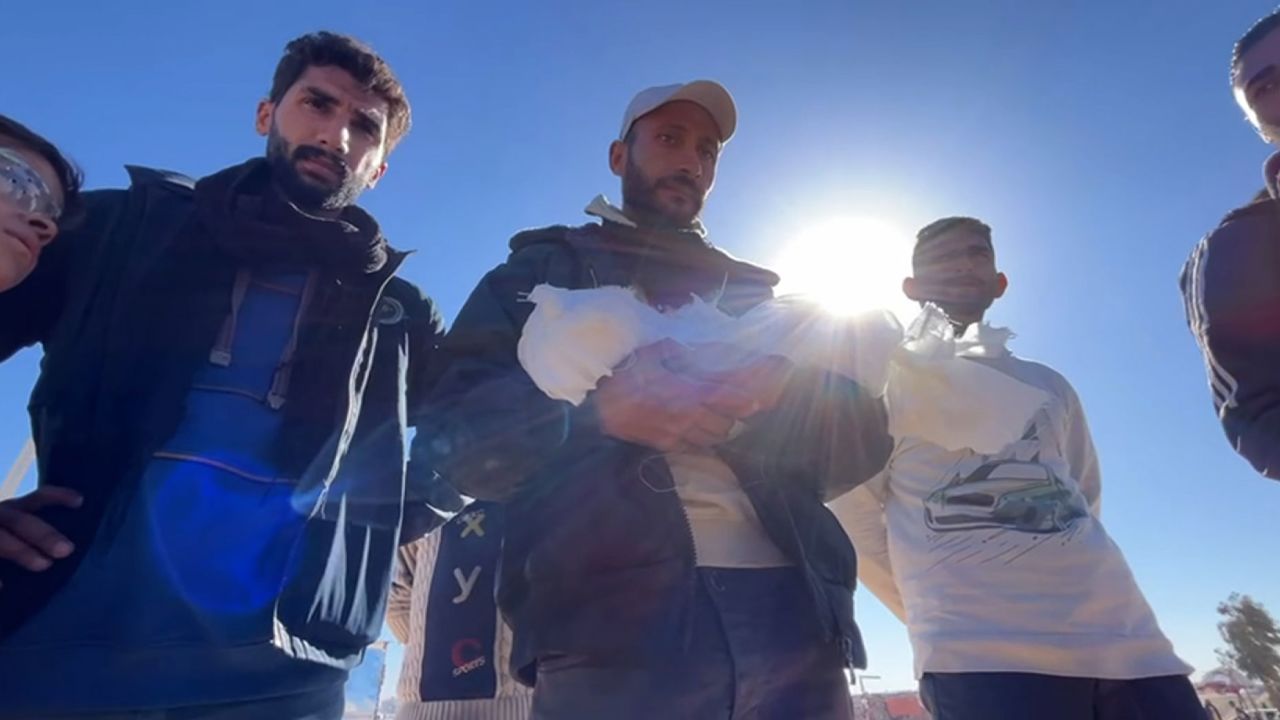
Mahmoud Al-Fasih holds the body of his three-week-old daughter, Sela, before laying her to rest. (Photo: CNN)

I’m sure there are many people who read what I write regularly (or scroll through my social media feeds) and think to themselves, “What a ‘one-note’ rabbi, just going on and on about Gaza. Why doesn’t he write or talk about other things for a change?”

If I could answer, these hypothetical folks, I’d say, yes there are surely many things in the world I could be writing or talking about. But when you live in a time of genocide – particularly one that is being funded by your government and carried out in your name as a Jew – it seems to me that being “one note” is a moral imperative. 

All the more so as Israel’s genocide on Gaza is now in its fourteenth month and the rest of the world seems have moved on – treating Israel’s genocide in Gaza as mere background noise. In such a context, it seems to me, bearing witness – i.e., to remember when others have forgotten – is a profoundly sacred act.  

Though it is not being widely reported, Israel’s mass killing of Gazans has been increasing dramatically in recent weeks. Earlier this week, it was reported that Israel’s genocide claimed 77 lives in one day. Two days ago, Israel attacked five journalists in a clearly marked news van outside Al-Awda Hospital in Nuseirat. (One of the journalists, Ayman Al-Jidi, was waiting for his wife to give birth inside the hospital.) It is also being reported that Gazan babies are freezing to death inside their increasingly frigid tent encampments. Truly, in the face of such shameful and shameless genocidal violence, how can we not bear witness?

Remembering Gaza is at the heart of Tzedek Chicago’s new Hanukkah supplement, “Rededicating our Solidarity with Gaza” which highlights a different group of Gazans who have been subjected to grave and deadly harm during the course of the genocide (including journalists and children). Each group is represented here by individuals whose lives and deaths testify to the dignity and humanity of the Palestinian people. We encourage you to read them aloud each night after reciting the Hanukkah blessings bear witness to their stories and sanctify their memories. 

Remembrance is also an important theme in this week’s Torah portion, Parashat Miketz. At the very end of last week’s Torah portion, while Joseph was languishing in Egyptian prison, he interpreted the dreams of his cell mates, the chief baker and the royal cupbearer. He told the cupbearer, “Think of me when all is well with you again, and do me the kindness of mentioning me to Pharaoh, so as to free me from this place.” But after the cupbearer is released from prison, we are told, “Yet the chief cupbearer did not think of Joseph; he forgot him.”

At the start of this week’s portion, the cupbearer learns of Pharaoh’s nightmares and tells him, “I must make mention today of my misdeeds.” He then tells Pharaoh about Joseph, the young man in prison who has the gift of dream divination. On the surface, this might be the self-effacing rhetoric of a royal courtier addressing his king. But on a deeper level, his statement could be understood as a kind of confession: admission that he has sinned by allowing the incarcerated to remain forgotten. 

Of course, systems of incarceration themselves are inherently sinful inasmuch as they treat humanity as disposable – and too easily forgotten. Whether it is the massive for-profit prison systems, the cages on our border, or the people of Gaza, who have been incarcerated in an open-air prison for over a decade and are now being subjected to genocidal violence at the hands of their captors. 

This Hanukkah, let us shine our lights to remind the world of what it would just as soon forget. Let us commit the kind of hope that is rooted in action: toward a world free of prison walls, a world where no one is disposable and the divine image in all is cherished and nurtured and liberated into its full and unfettered potential.

Shabbat Shalom and Chag Hanukkah Sameach.

Lifting up the Torah of Struggle and Collective Liberation

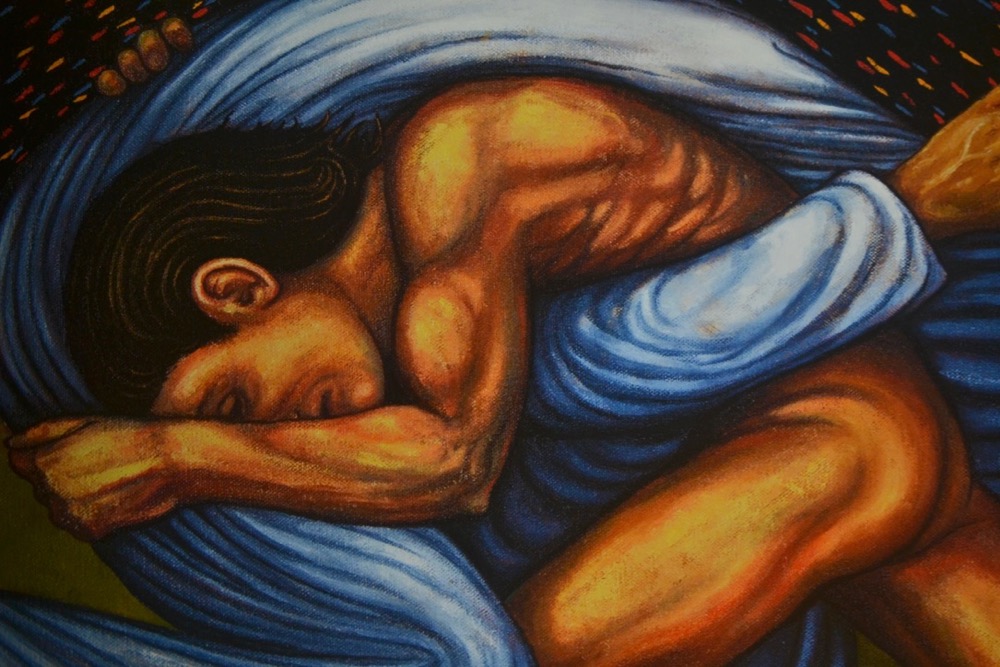
Artist credit: Jack Baumgartner

In this week’s Torah portion, Parashat Vayishlach, Jacob prepares for a meeting with his long-estranged brother, who is coming to meet him with a retinue of four hundred. Understandably frightened, Jacob divides his family up into groups and sends them ahead separately, hoping to placate Esau with tribute. He then spends the night alone on the bank of the Jabbok River.

During the night, Jacob wrestles by the riverbank with a mysterious man until the break of dawn. When the man sees that he cannot prevail against Jacob, he wrenches his hip at the socket. Jacob demands a blessing from the stranger, who renames him Israel (Hebrew for “wrestles with God”) adding, “you have struggled with beings divine and human and you have prevailed.” Jacob names the place of this encounter Peniel, (“God’s face”), saying, “I have seen a divine being face to face and have survived.”

The next morning, Jacob/Israel approaches Esau. Esau runs to greet him and weeping, they embrace and kiss one another. During the course of their reunion, Esau asks why Jacob had sent him gifts. “I have enough, my brother,” he says, “Let what you have remain yours.” But Jacob insists, “No, please do me this favor by accepting this gift, for to see your face is like seeing the face of God.”

There’s so much to say about this short, powerful story. Like much of Genesis, since many characters are representative of nations, we can read it on two levels simultaneously: as a narrative about an extended family and as a symbolic allegory about the relations of nations in the ancient Near East. Here, Jacob represents Israel and Esau is Edom; thus, we are reading both about the struggles of twin siblings and the origins of the fraught relations between the Israelites and Edomites.

Since these two peoples have a largely antagonistic relationship in the Hebrew Bible, classical commentary has not been kind to Esau and the Edomites. The Rabbis famously associated Esau with the Romans, the “wicked empire” who persecuted the Jews before and after the destruction of the Temple. One vivid midrash relates that Esau didn’t kiss but rather bit Jacob in the neck! Jewish commentators later coined the term “Esau hates Jacob,” a reference to (what they believed was) the eternal, immutability of gentile antisemitism.

It has always seemed to me that this complex and poignant narrative of twin brothers struggling toward reconciliation belies this simplistic interpretation of “good Israel” vs. “evil Esau.” I’m struck that the first time we met Jacob and Esau, they are wrestling with each other in utero – and when they are reunited, they embrace. This is not just a simple story about the struggle for personal/national dominance. The struggle we read about here is much deeper and far more profound than that.

I would argue that it is far too reductive – and even dangerous – to view the Torah as a narrative about the heroic Israelite wars with antagonistic nations. Embedded in Biblical tradition, there is a much deeper and more profound portrayal of deep love and solidarity between different peoples who are described as a complex, yet loving extended family. There are numerous examples: Abraham’s sons Isaac and Ishmael reunite to bury their father (as Jacob and Esau do when Isaac dies at the end of our portion). Moses marries Zipporah, the daughter of the Midianite High Priest Jethro (who is his spiritual mentor). Ruth, a Moabite, shows great love and loyalty to her Israelite mother-in-law Naomi, and later marries an Israelite, beginning the lineage that leads to King David. 

In this fearful current moment, when war and fascism is escalating in too many places around the world, it seems to me that these sacred streams of our spiritual tradition are speaking out to us with renewed urgency. Let us reject the voices in Judaism – and all traditions – that preach the immutability of hatred and war. Let us live up to our inherited spiritual legacy as Israel/Godwrestlers. Let us lift up the Torah of struggle that leads to reconciliation and collective liberation.

What Makes Space Sacred? What Makes Land Holy?

photo credit: Zaha Hassan

Are some places in the world more inherently sacred than others? Or is the entire world itself a sacred place? These questions are at the heart of this week’s Torah portion, Parsahat Vayetze.

As the portion opens, Jacob has fled his home to escape from the wrath of his brother, Esau. Alone in the wilderness, he arrives at a place (in Hebrew, makom) to spend the night, using a stone as his pillow. That night, he dreams of steps reaching from earth to heaven, upon which angels ascend and descend. God appears to Jacob and reaffirms the promise made to Isaac and Abraham, promising to protect Jacob on his journey until he returns home.

When Jacob awakens, he exclaims, “Mah norah ha’makom hazeh” – “How awesome is this place! God was present in it and I did not know! This is none other than the house of God and that is the gateway to heaven.” Jacob then sets up the stone he used as his pillow as a sacred pillar and names the place Beit El (“house of God”).

Centuries of commentators have inquired about the specific nature of this makom/place. Was it just a random spot where Jacob happened to spend the night or was it a sacred place toward which he was somehow guided by God? Our interrogation of this question begs an even deeper question: is the whole world in a sense, sacred space or are there some places in the world that are “more sacred” than others?

The answers to these questions are not, of course, are not mutually exclusive. Most spiritual traditions consider certain locations or sites to be uniquely invested with divinity. It is undeniable that Jewish tradition has traditionally ascribed sacred meaning to a specific land known as Eretz Yisrael. Some commentators say this land is uniquely holy because certain commandments can only be observed there and nowhere else. According to Jewish mystical tradition Eretz Yisrael – and the Temple Mount in particular – marks the very center of the universe.

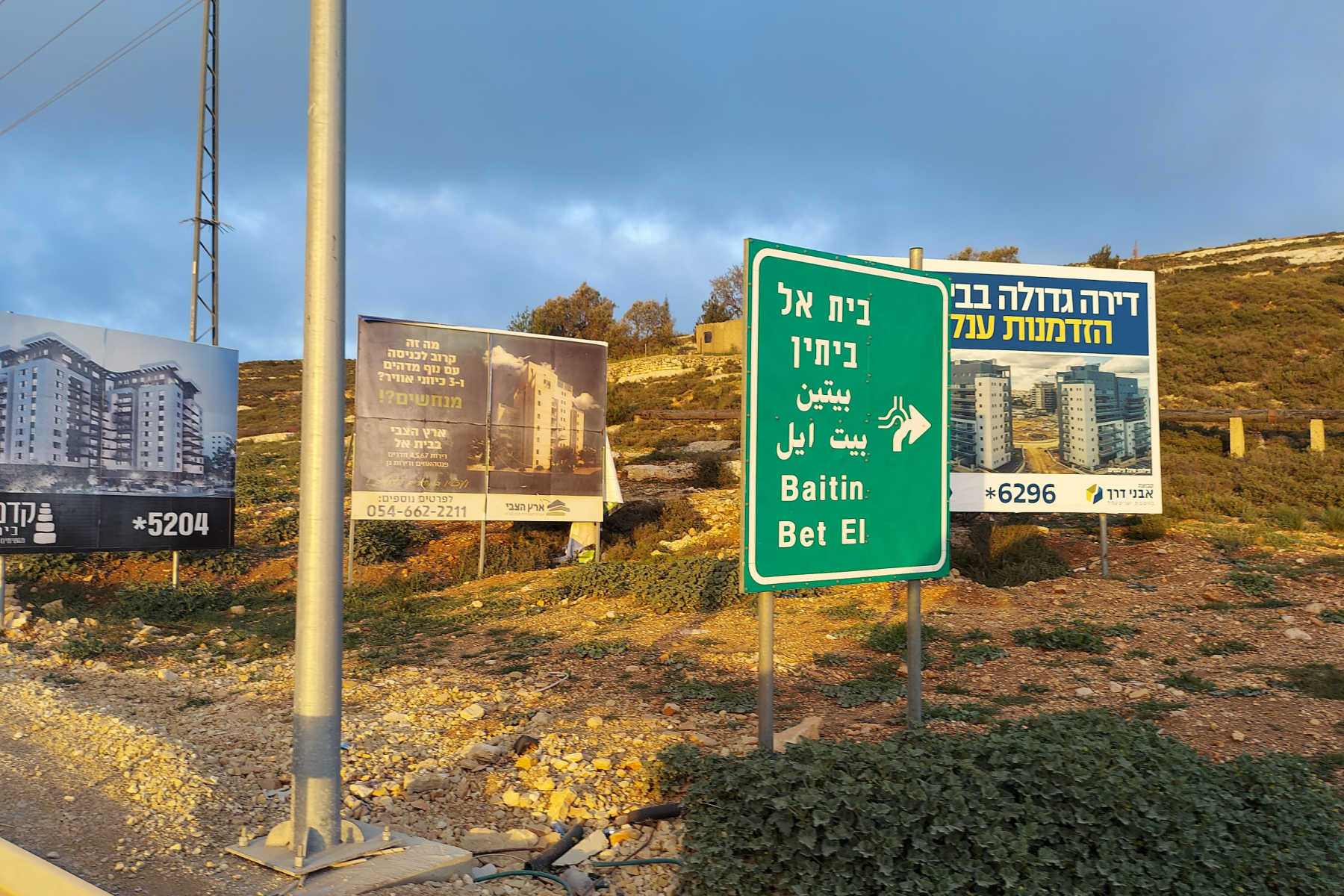
It does not follow, however, that these ideas ipso facto give the Jewish people entitlement to assert control or dominion over the land (or the people who dwell upon it). On the contrary, I would argue that this sense of entitlement actually betrays the sanctity of the land. Indeed, it is difficult to read this Torah portion in the age of Zionism and fail to note that Beit El is the name of a prominent West Bank settlement that was established in 1977 by the ultranationalist settler group Gush Emunim.  

This sacrilegious hyperliteralism also ignores what the Torah teaches us from the very first chapter of Genesis: namely, that the entire earth is God’s divine creation. This ideal became more critical in Judaism after the destruction of the Temple in Jerusalem in 70 CE, when the Jewish people spread throughout the diaspora and created a spiritual system where God could be found anywhere in the world. Notably, the rabbis taught that the word makom is one of the names of God, referring specifically, the experience of the divine that is connected to place. (Or in the words of my favorite movie superhero, “wherever you go, there you are.”)

The Hebrew word for diaspora, galut, literally means exile, but as a famous rabbinic midrash teaches, “when the people of Israel went into exile, God went into exile with them.” Of course, the experience of exile is a universal one: as human beings, we understand that live in an imperfect world that has not yet experienced a complete and lasting justice. Nevertheless, as this midrash suggests, the imperfect exilic state in which we live is still infused with transcendent meaning and purpose wherever our steps may lead us.

As the great Yiddish writer S. Ansky powerfully wrote in his play “The Dybbuk,” “Every piece of ground on a person resides when they raise their eyes to heaven is a Holy of Holies.” That is to say, every place on earth has the potential to be a place of divine encounter. Every place has the potential to be a makom: holy space. Every home we create can be a Beit El – the sacred meeting place between heaven and earth.

I’m sure we all can think of these holy spaces in our own lives: places that are sacred because they were the sites of deep and significant meaning for us; places made holy because of the experiences we experience in them and the sacred memories we associate with them. At the same time, it is impossible to ignore that the entire earth abounds in sanctity – as we read in the book of Isaiah: “The whole world is filled with God’s glory.”

In other words, like Jacob, any place we lay down our heads has the potential to be a makom: a holy place with limitless potential for sacred, transformative experience.

Toward a Judaism of Love over Land, People over Profit

A photograph shows soldiers posing with an orange banner that reads: “Only settlement would be considered victory!” The color orange was used by the settler movement in 2004 and 2005 to protest Israel’s disengagement from Gaza.

It’s becoming ominously clear that the end game of Israel’s genocide in Gaza is the end of game of Zionism itself: namely, settlement. The writing has been on the wall for some time now. As I mentioned on Rosh Hashanah, we now know the existence of the so-called “General’s Plan,” in which:

Israel will control the northern Gaza Strip and drive out the 300,000 Palestinians still there. Major General Giora Eiland, the war’s ideologue, proposes starving them to death, or exiling them, as a lever with which to defeat Hamas. The Israeli right envisions a Jewish settlement of the area, with vast real estate potential of convenient topography, a sea view, and proximity to central Israel…

News accounts bear out that the General’s Plan is well underway. The vast majority of residents of Northern Gaza have now been ethnically cleansed from their homes and Israel has said it has no intentions to let them return. At a recent two-day conference, “Preparing to Resettle Gaza,” Israel’s National Security Minister Itamar Ben-Gvir told the hundreds who gathered, “If we want it, we can renew settlements in Gaza.”

With Trump now poised to take power, there will very likely be new wind behind these plans. Last March, Jared Kushner was quoted as saying: “Gaza’s waterfront property could be very valuable … It’s a little bit of an unfortunate situation there, but from Israel’s perspective I would do my best to move the people out and then clean it up.”  With Kushner widely expected to be “pivotal” to Trump’s Middle East policy, his words now take on a terrifying new resonance of possibility.

Even more ominously, there is every reason to expect these plans will be aided and abetted by the American Jewish communal establishment. One week after Donald Trump’s reelection, Karen Paikin Barall, the Jewish Federation’s VP of government relations, remarked to a group of local Jewish community relations councils, “We should all look forward to the day we can hope to buy townhouses in the West Bank and Gaza.”

As a settler colonial movement, Zionism was always focused on the maintenance of a majority Jewish presence in historic Palestine. However, the seizing and control of resources has been no less integral to this project. The settler colonial reality of the 21st century is driven in no small part by the corporate interest of weapons manufacturers as well as the billionaire and oligarch class that seek to profit off the spoils of war and genocide. In the current moment, it should come as no surprise that there is also unabashed talk about the annexation of the West Bank and even parts of South Lebanon.

Such is the natural result of a movement and ideology that prizes real estate over the well-being of the actual people who happen to live on the land. I’m particularly mindful of this as I contemplate this week’s Torah portion, Chayei Sarah, which begins with the famous episode in which Abraham negotiates with the Hittites to purchase the Cave of Machpelah as a burial site for his recently deceased wife Sarah. This story is often wielded by many Zionists as a deed of sale to this sacred site – and contemporary land acquisition in Palestine as the “inalienable possession of the Jewish people.”

There is, of course, another way to understand the spiritual meaning of this story: it is not about land acquisition but love and loyalty. Abraham is not motivated to purchase this land in order to claim exclusive entitlement to it: he is driven by his desire to honor his beloved wife Sarah, and to ensure that she and his extended family will have a permanent resting place. To read this episode only about entitlement to land is limited at best – and to judge by the apartheid and violence by which Israel maintains its control of this site today – a moral sacrilege at worst.

At the end of the portion, following the death of Abraham, we read that his sons Ishmael and Isaac buried their father together in the Cave of Machpelah. I can think of no better image to underscore the critical importance of pursuing a Judaism that prizes love over land. This Shabbat Chayei Sarah, may we rededicate our commitment to this sacred vision.

After Trump’s Election, We Need Each Other More Than Ever

Like all of you, I’m sure, I’m still in deep shock and anguish over Donald Trump’s electoral victory this past Tuesday. And while I certainly have my opinions about how this terrifying outcome could have possibly happened, I’m going to resist the urge to engage in post-election punditry. There’s more than enough to go around right now, some of it interesting, some of it clarifying, but to my mind, much of it tone-deaf and destructive. There will be time for the analysis, the interrogating and the strategizing. For now, however, I think it is critical that we sit with what has happened and give ourselves space to grieve and respond emotionally to the enormity of what has just occurred.

Of course, none of this happened overnight. Well before last Tuesday, were all too aware of the growth of fascism in the US and around the world, the scourge of state violence and mass incarceration, the loss of reproductive freedoms, the genocide against Palestinians, political targeting of immigrants, LGBTQ+ people, Muslims, disabled people, and other vulnerable minorities. After Tuesday, however, the stakes of these threats have reached a terrifying new level. Yes, what happened this week was shocking and heartbreaking. But it was also clarifying. We should no longer have any illusions about what we are up against.

I know that many of us who have been on the front line of the resistance to these threats are feeling exhausted and demoralized. Those who are members of targeted groups are understandably feeling a new level of fear for their own well-being. That is why, I believe to the core of my being, that the most important thing that those of us who have been organizing movements for justice can do in this moment is to reaffirm our commitment and care for one another.

In order to do that, we will need to resist the politics of division lest they infect the movements of solidarity we’ve been building so carefully and lovingly. During this past election, there was strong and passionate disagreement on whether a vote for Kamala Harris was a vote for genocide or a vote to hold back a Trump presidency. There were good, principled arguments to be made on both side of that debate. Even so, it was immensely painful to witness what this election did to the Palestine solidarity movement. Those who chose to vote for Harris were accused of “supporting genocide.” Those who chose withhold their vote for Harris were accused of being “MAGA enablers.” Our movement was faced with a profoundly untenable choice. There were times I feared it would rip us apart.

But after last Tuesday’s election, none of this really matters anymore. We simply cannot afford to turn on each other. Not now. We need each other more than ever.

I don’t yet know what kind of political strategies we will need to employ to resist the fascist reality posed by the MAGA movement – but I do know that whatever happens, we will need to show up for one another now more than ever. We will need to protect and defend one another. We will need to be clearer than ever about the values we hold sacred and be prepared to ground everything we do in the conviction that every single human life is of infinite worth – and is worth fighting for.

We will need to be clear-eyed about the challenges ahead and stand together to face them. For those of us in the Jewish community, that means lifting up solidarity as our most central sacred imperative. All the rest is mere commentary. As I said this past Yom Kippur:

In the 21st century, I believe this is the sacred calculus the Jewish people have to offer the world: Creation + Exodus = Solidarity. More than ever, the Jewish communities we create simply must value solidarity as our most sacrosanct mitzvah. In an age in which we are witnessing the increased scapegoating, yes of Jews, but also of Muslims, LGBTQ+ people, people of color, disabled people, immigrants, indigenous people and so many others, our sacred tradition must promote collective liberation first and foremost. 

The predominant theme in this week’s Torah portion, Lech Lecha, is the act of going forth into the unknown with nothing but a promise of blessing and liberation. But unlike the literal meaning of the words in our portion, we must affirm that this liberation cannot be for one privileged group of people alone. We must affirm a Lech Lecha of collective liberation, where all people are God’s people and all people are chosen and the boundaries of the Promised Land extend to include all who dwell on earth.

In this moment, like Abraham and Sarah, we are all being called into a land we do not yet know. But as we read in our portion, it is a collective going-forth – for the sake of both the living and future generations.

Yes, in this current moment, there is much we do not yet know. But we do know that we will have the hearts and minds to resist what is to come. That there is still a world worth fighting for. And that the way to that world is through our solidarity and care for one another.

Shabbat Shalom,

Rabbi Brant Rosen