Moment of Truth: Hunger Striker Khader Adnan Released

photo: Ma'an News Agency

Anyone who doubts the power of nonviolent resistance should study the case of Palestinian hunger striker Khader Adnan, who was imprisoned by Israel without charge or trial, fasted in protest for 66 days, lost almost 70 pounds, hovered painfully between life and death – and is now a free man.

From Ma’an News Agency:

Israeli authorities released former hunger-striking administrative detainee Khader Adnan late Tuesday … Adnan arrived at his home in Araba in the northern West Bank to meet his family before returning to a tent reception where he spoke to well-wishers and officials in the village.

Hundreds of Palestinians chanted slogans in solidarity with prisoners as they welcomed the former detainee, whose 66-day hunger strike inspired others to protest administrative detention.

In the meantime, the majority of the 4,699 Palestinians currently held in Israeli prisons refused meals on Prisoners’ Day – and 1,200 of them vow to hunger strike indefinitely to protest unfair conditions.

I’m particularly struck by Israel’s official response:

The Israeli Prisons Authority has coped with hunger strikes in the past and is prepared to cope with it now.

Ever the victim, they still don’t get it.

Palestinian nonviolent resistance is providing Israel with a very real moment of truth. Do they think that releasing Adnan will pacify their resolve? Trust me, this is only the very beginning…

Click here to read Khader Adnan’s remarks upon returning home to his family.

What Must Be Said: We All Profit from Occupations

There’s been a great deal of analysis written about German writer Gunther Grass’ now-infamous new poem, “What Must Be Said” (in which Grass criticized Israel’s nuclear program as endangering an “already fragile world peace.”)  For me, the most astute response by far comes from Mideast historian Mark LeVine, writing in Al-Jazeera.

LeVine skillfully parses the psychology and the politics behind the uproar – but it is his identification of the larger context of the issue that resonates most powerfully for me. Here’s a long excerpt from a much longer article. The entire piece is well worth reading:

Israel has always sought to portray itself as a “normal” country, yet goes out of its way to ensure no one “names it” – to use Grass’ words – as what it is, a colonial state that every day intensifies its occupation of another people’s land. And so Grass has taken it upon himself to “say what must be said”, to name Israel as what it is, a “nuclear power” that “endangers the already fragile world peace”. It’s worth noting he doesn’t even mention the occupation, which is the far greater threat to world peace.

I have no idea if Grass really believed himself to be “bound” to Israel; if he did, we can imagine the bond is broken today, at least by Israel, now that he’s banned from returning. But Grass’ feelings are not what’s interesting or important. What’s important is the larger context, all the other “facts” which refuse to be accepted as “pronounced truths”.

These facts are that Israel, however egregious its crimes – and anyone who denies them is either completely ignorant or a moral idiot – is but one cog in a much larger global machine, one that includes too many other cases of occupation, exploitation, and wanton violence to list comprehensively here (we can name a few – Syria, China, Russia, India, Sudan, Saudi Arabia, Iran, Bahrain, Uzbekistan, Sri Lanka, the Congo, and of course, NATO and the United States – whose oppression, exploitation, and murder of their own or other peoples is a far more concrete “fact” than the potential for mass destruction caused by Israel’s nuclear programme)…

The larger fact is that the global economy is addicted to war, to militarism, oil and the rape of the planet for the minerals and resources that fuel the now globalised culture of hyperconsumption that will doom our descendants to a fate we dare not contemplate. Israel’s gluttony for Palestinian territory, and its willingness to encourage a regional nuclear arms race to keep it, is ultimately no different than the the gluttony for the 60-inch TV, the iPhone/Pad, the cavernous homes and cars, the ability to live at levels of consumption that are only sustainable if most of the world lives in poverty that increasingly defines all our cultures.

Israel has gotten Palestine on the cheap, and it costs relatively little to continue the occupation. Far less than it would cost to end it. So why bother? Especially when everyone else is doing, more or less, the same thing and, it’s clear, no one really cares anymore. Germany, whose remarkable economic stability in the recent global financial crisis is in good measure due to its central role in this global economy of hyper-consumption (think of all the energy and resources that go into making and driving all those fancy German cars), is certainly playing its role all too well.

If Grass is right that we must talk about the threat to world peace posed by Israel’s nuclear programme – and far more by its ongoing occupation – then we must also talk about the threat to global peace posed by the sick global system of which Israel is merely one of the more easily identifiable symptoms. Unlike my parents, I’m happy that Germans finally feel secure enough publicly to speak critically about Israel. But if they want their words to have a chance of bringing about a change in its behaviour, they, and everyone else, needs to broaden the discourse to include their own role in enabling and profiting from the system that Israel’s actions so benefits, and the global scope of the victims it daily produces.

Of course, this discourse would require a much longer and more complex poem, written by an even better poet than Grass. If someone manages to write it, I hope it will get the same publicity as “What Must Be Said”.

Moral Courage from the General’s Son

Please, please take 30 minutes of your time to watch this presentation by Israeli peace activist, Miko Peled, author of the recently published book, “The General’s Son.”

Among other things, Peled’s ideas and convictions carry a profound sense of moral authority because he comes with impeccable Zionist credentials. His grandfather, Avraham Katznelson, was a prominent Zionist leader and signer of the Israeli Declaration of Independence. His father Matti Peled was a major Israeli military leader who fought in the 1948 War of Independence and was an Aluf (“Major-General”) during the 1967 Six-Day War. He later became a scholar of Arabic literature, a leftist politician, and a prominent Israeli advocate of peace talks with the PLO.

Miko is following in his father’s footsteps in more ways than one. In reading his book, it is so clear to me that he is an Israeli through and through and very much a product of his family’s remarkable history. At the same time, he has carried his father’s work of moral witness firmly into the 21st century.

In the video above, he addresses what he considers the fundamental myths of Israeli society: the “Land Without a People for a People Without a Land” myth of 1948, the “War of Survival” myth of 1967, and the myth of “Israeli democracy.” He also speaks eloquently about the moral outrage of the war in Gaza and the issue of Palestinian terror.  (Tragically, Peled’s family has first-hand experience with the latter subject: his niece Smadar was killed by a Palestinian suicide bomber in Jerusalem in 1997).

Please watch the clip and send the link on. Moral heroes such as Miko Peled deserve the widest possible audience.

PS: I’m thrilled to be able to say that the publisher of “The General’s Son,” Just World Books, will be soon publishing my book – a curated anthology of “Shalom Rav” posts and comments from 2008-2010.  Much more on this soon – stay tuned!

Some Thoughts on Passover 5772

This Pesach I’m thinking about the exceedingly radical message at the heart of the story we’ll retell around the seder table tonight.

I’m thinking in particular about what the story tells us about power, about the ways the powerful wield their power against the less powerful, and about the inevitability of corrupt power’s eventual fall. And I’m thinking about what is possibly the most radical message of all: that there is a Power greater, yes even greater than human power.

Woe betide the empire that fails to heed this message. Powerful empires have come and gone, but the Power that Makes for Liberation still manages to live to fight another day. Will the Pharoahs among us ever learn?

There’s no getting around the fact that our seder story is not a neat, tidy or particularly pleasant story. That’s because – as we all know too well – the powerful never give up their power without a fight. No one ever made this point better or more eloquently than Frederick Douglass when he said in 1857:

The whole history of the progress of human liberty shows that all concessions yet made to her august claims have been born of earnest struggle. The conflict has been exciting, agitating, all-absorbing, and for the time being, putting all other tumults to silence. It must do this or it does nothing. If there is no struggle there is no progress. Those who profess to favor freedom and yet deprecate agitation are men who want crops without plowing up the ground; they want rain without thunder and lightning. They want the ocean without the awful roar of its many waters.

This struggle may be a moral one, or it may be a physical one, and it may be both moral and physical, but it must be a struggle. Power concedes nothing without a demand. It never did and it never will.

Read that one around the seder table tonight. And for good measure, throw in this sentence from MLK’s “Letter from a Birmingham Jail:”

We know through painful experience that freedom is never voluntarily given by the oppressor; it must be demanded by the oppressed.

It is my fervent hope that this Pesach, we American Jews, who rank among the most privileged and powerful citizens on earth, will talk openly and honestly about the wages of our power when we gather yet again to tell the story. What would it mean if we truly took to heart our tradition’s most challenging teachings: that God hears the cries of the enslaved, that God is a God of Liberation, that God stands with the oppressed, not the oppressor and demands that we do as well?

Conversely (and much more painfully), are we, as Americans and as Jews, ready to confront the ways we regularly wield our own power and privilege in any number of oppressive ways at home and abroad? Might we possibly be willing to contemplate this truth: that the power that we chronically take for granted, will eventually, inevitably go the way of history as well?

Indeed, if there is any message we learn at seder table tonight, it’s that, to paraphrase the words of poet Kevin Coval, all Pharoahs must eventually fall:

wake in this new day
we will all die soon
let us live while we have the chance
while we have this day
to build and plot and devise
to create and make the world
just
this time for us
this time for all
this time the pharaohs must fall

Read that one around the seder table too.

I’m so proud to be part of a tradition, a people, a spiritual nation that has survived to outlast far mightier nations because it has affirmed a Power even greater. Greater than Pharaoh, greater than Babylon, even greater than the Roman empire that exiled us and dispersed our people throughout the diaspora, where this sacred vision was sown, took root and eventually blossomed forth.

May the story we tell tonight inspire us to be bearers of that vision in our lives and in our world.

All the best for a challenging and liberating Pesach.

Jewish Voices of Support for Church Divestment Resolutions!

I’m already on record as fully supporting the Presbyterian Church (USA) divestment resolution that is being brought to the PC (USA) General Assembly this summer. Now I’m thrilled to report that my colleagues on the Jewish Voice for Peace Rabbinical Council have released a letter in support of both the Presbyterian and the Methodist Church’s efforts to divest from three companies (Caterpillar, Motorola Solutions, and Hewlett-Packard) that profit from the Israeli occupation.

Here’s an excerpt of our letter:

Every day Jewish leaders are building alliances with our interfaith partners to oppose all forms of oppression and to express our outrage over the confiscation of Palestinian land, the destruction of Palestinian farms, groves and homes, and to work to end the daily harassment and violence against Palestinian people.

Several Christian denominations are making brave, constructive decisions to investigate whether their churches’ investments contribute to this violence and oppression in Israel and Palestine.

We believe that to invest your own resources in corporations which pursue your vision of a just and peaceful world, and to withdraw your resources from those which contradict this vision, is the best way to support Muslims, Christians, Jews, Israelis, Palestinians –truly all people.

We can think of no greater act of friendship than to work with us, side by side to bring justice, equality and self-determination to all people. This selective divestment process is one of the strongest tools we have.

In making this decision, we are together, Jews and Christians, living up to the biblical promise to pursue justice.

I encourage you to visit rabbisletter.org for a plethora of resources, including FAQs, additional Jewish expressions of support – and the opportunity to sign on to our letter.

You can also click here to directly support the Methodist resolution (which will be considered at the United Methodist Church General Conference in Tampa on April 24-May 4)  and here to support the Presbyterian initiative (which will brought before the PC USA General Assembly in Pittsburgh, June 30-July 7).

On “Rogues” in Afghanistan and the “Insanity” of War

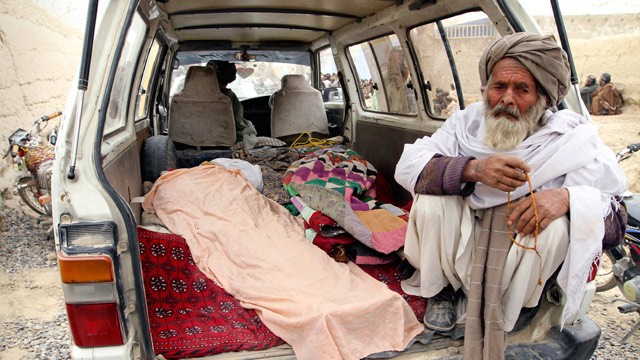
Four Marines urinate on Taliban corpsesUS troops burn Korans on an American army base. Now an American solider has murdered 16 Afghan civilians (including nine children and three women) before burning their corpses.

I’m not paying one whit of heed to what our leaders are telling us about this horrid tragedy. We’re told this act was the work of one lone deranged gunman – and it may well be, despite the fact that some eyewitnesses reported seeing more than one shooter – and other locals are publicly dubious that a single soldier could have shot and killed 16 civilians in houses over a mile apart then burned the bodies afterward.

Defense Secretary Leon Panetta’s explanation: “War is hell.” Yes, I suppose it is, but we are all sadly, tragically deluded if we feel we can sugar-coat the insanity of war by dismissing this incident as the handiwork of one “rogue” gunman.  I’m always fascinated that when these kinds of atrocities occur, defenders of war practically fall over themselves explaining that it was the work of “deranged individuals.” The sad truth is that in war, atrocities are the rule – not the exception.

Camillo “Mac” Bica, writing in a recent op-ed hit this point right on the head:

(Soldiers in war) are dehumanized and desensitized to death and destruction. Judgments of right and wrong – morality – quickly become irrelevant, and cruelty and brutality become a primal response to an overwhelming threat of annihilation. Consequently, atrocities in such an environment are not isolated, aberrant occurrences prosecuted by a few deviant individuals. Rather, they are commonplace, intrinsic to the nature and the reality of war, the inevitable consequence of enduring prolonged, life-threatening and morally untenable conditions, what psychologist Robert Jay Lifton describes as “atrocity-producing situations.”

Let’s assume for the sake of argument that there was only one shooter in this recent tragedy. Authorities report that he was in his fourth combat deployment in ten years and that he had suffered from a war-related head injury. Does this describe a “rogue” gunman to you?  I’d say given the insane circumstances in which his nation had placed him, his actions sound eminently understandable.

Afghanistan is now officially our longest war – i.e., the longest example of mass psychosis in our nation’s history. Contrary to what our leaders have been telling us, we are not experiencing anything resembling “success” in that country. The longer we stay, the more we will continue to desensitize and dehumanize the young Americans we have seen fit to place there – and the more we will continue to rain death and destruction upon the people of that country. Indeed, our interminable presence in Afghanistan virtually guarantees we will see more “rogue” incidents like the one we witnessed this past weekend.

The classic midrashic commentary “Mechilta of Rabbi Ishmaelteaches: When an arrow leaves the hand of a warrior he cannot take it back.  God help us if we truly believe we can control the insane forces we’ve unleashed in Afghanistan. It’s time to come to our senses and bring our troops home.

Rabbis of JVP Call on Obama: Don’t Let Bibi Pressure US into War on Iran!

The Jewish Voice for Peace Rabbinical Council has just released the following statement, below. If you are a rabbi or cantor, please consider signing on.

We, the undersigned American Jewish clergy, are deeply concerned about reports that Prime Minister Netanyahu will demand of President Obama, at their meeting at the White House today, that either the United States attack Iran, or else, Israel will.

We do not welcome the prospect of a nuclear-armed Iran. We call on all the military forces in the region – including Israel’s – to divest themselves of their nuclear armaments and renounce any belligerent nuclear aspirations.

The State of Israel refuses to acknowledge its own nuclear arsenal or to submit to international monitoring. We believe it is hypocritical of Israel to demand of Iran what it refuses to agree to itself.

Most of the people of the State of Israel oppose Prime Minister Netanyahu’s military threats against Iran. They fear the consequences of an attack on Iran. As Jewish leaders, we too believe that the path of wisdom towards achieving peace and stability in the region is through dialog and engagement and not through acts of war. We call on the United States government to safeguard the interests of the people of Israel and Iran.

Nine years after the United States launched a war against Iraq that is widely recognized as having been badly executed and unjustified, Israel would have the U.S. implicate itself in a new war in the region, this time against Iran. We believe that Jews, and other Americans, will not support more reckless adventurism in the Middle East.

In this election year, we call on President Obama not to give in to warmongering. As Jewish leaders we cannot endorse an Israeli act of war against the people of the Islamic Republic of Iran. The Bible teaches us: “bakesh shalom v’rodfehu –  seek peace and pursue it.” We urge President Obama to stand firm and to use his power as Israel’s chief supporter to draw Israel to the path of peace and justice.

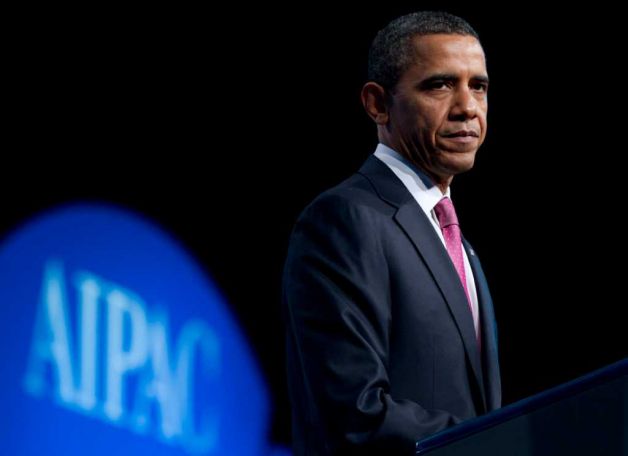
In the meantime, I strongly recommend MJ Rosenberg’s analysis of Obama’s much-anticipated speech at the AIPAC conference yesterday:

The President, in the middle of an election year, offered AIPAC no more than the bare minimum. In order to get away with that, he larded up the speech with embarrassing professions of love for Israel. I say embarrassing because no other country in the world demands such endless coddling. If a president spoke about Canada or the United Kingdom (two far closer allies) the way Obama does about Israel, he might be considered seriously off his game. Not to worry, he won’t.

But the lard doesn’t mean much except to smooth his way to the substance of the speech which Obama knew that neither AIPAC nor Prime Minister Netanyahu would like.

Why I’m Presenting at Harvard’s One-State Conference

The Harvard Kennedy School is hosting a “One State Conference” this weekend and already the usual suspects are crying foul. Since I’m going to be speaking on a panel at the conference on Sunday, I thought it might be a good idea to weigh in with some thoughts.

I’ll begin with the stated vision/goals of the conference, according to student organizers:

To date, the only Israel/Palestine solution that has received a fair rehearsal in mainstream forums has been the two-state solution. Our conference will help to expand the range of academic debate on this issue. Thus, our main goal is to educate ourselves and others about the possible contours of a one-state solution and the challenges that stand in the way of its realization.

Sound reasonable? Not according to self-appointed Jewish community watchdogs like the ADL and NGO Monitor and the ubiquitous Alan Dershowitz and Jeffrey Goldberg.  According to the ADL, such a conference could only be interested in “the elimination of Israel as the national homeland of the Jewish people.”  Dershowitz referred to it as an “anti-Israel hate fest.” Goldberg thinks organizers share “a goal with Hamas: the elimination of Israel as a homeland and haven for Jews.”

Reading incendiary words such as these, I can’t help but be struck by the abject hysteria that gets regularly mistaken for public relations by the American Jewish establishment.

I find it fascinating that these concerned institutions and individuals are more than willing to rail against the wide eyed extremists and useful idiots participating in this conference, yet cannot take the time to ponder what might have brought us to this point in the first place.  Has Abe Foxman, for instance, ever called out Israel over its settlement policy that has by now made a mockery of a viable two-state solution?  Is Alan Dershowitz willing to bring half as much righteous anger to the concern that Israel is fast creating “one state” all by itself?

I wrote recently about the “ever-closing window” on the two state solution. We might still argue about whether or not the window has closed yet, but I think we can all agree that the prospect for a viable, equitable two state solution for Israel/Palestine is in serious jeopardy.

As I pointed out in my post, sooner or later we’ll be forced to choose between a patently undemocratic Jewish state that parcels out rights according to ethnicity and a democratic state in which equal rights are enjoyed by all its citizens. Given this scenario, is it unreasonable that people of good will seek to open conversations and suggest fresh, creative approaches that might ensure a better future for Israelis and Palestinians?

It’s even more ironic when you consider that notable and respected Israeli figures have been discussing a potential one state solution for some time. While the American Jewish establishment grows apoplectic at the very thought, Israeli society seems more than secure enough to tolerate the discussion.

As far back as 1991, for instance, respected Israeli/American political scientist Daniel J. Elazar promoted a one-state “federal solution” for Israel/Palestine (most notably in his book, “Two Peoples – One Land: Federal Solutions for Israel, the Palestinians, and Jordan.”) Meron Benvenisti, an Israeli political scientist who was Deputy Mayor of Jerusalem under Teddy Kollek from 1971 to 1978, has publicly advocated the idea of a bi-national state for several years. A more recent Israeli advocate of one state is Avrum Burg, former Speaker of the Knesset and chairman of the Jewish Agency, who wrote about the subject in a widely read 2011 op-ed in Ha’aretz.

It is even less widely-known in the American Jewish community that prominent numbers of the Israeli right wing, such as former Minister of Defense and Foreign Minister Moshe Arens and current Speaker of the Knesset Reuven Rivlin, have suggested the desirability of some form of a one-state solution. Granted, the solution advocated by Arens and Rivlin – an undivided state that nonetheless retains it’s exclusively Jewish character – differs significantly from the federalist or bi-national models promoted by Elazar, Benvenisti and Burg. Still, I believe these unlikely bedfellows share critical aspects in common: the conviction that a two-state solution is unworkable, a willingness to pursue fresh creative ideas, and – contrary to what many might claim – a hard-headed political realism.

Many of the conference’s critics have pointed out that secular multi-ethnic states simply do not work. Goldberg claims that it “barely works” in Belgium and Dershowitz points out that it failed in India and the former Yugoslavia.  Fine. If this is the criticism, then let’s put this issue on the table and discuss it – as we most certainly will be doing this weekend (most likely at the panels entitled “Nationhood and Cultural Identity: The Preservation of the Peoples” and “What are the Obstacles to the Realization of a One-State Solution?”) But must we seek to marginalize the conference for simply seeking to have the conversation?

There are also criticisms that the conference is too “one sided” and that the presenters are unduly “biased.”  In truth, the presenters in the conference represent a spectrum of opinions on this issue. Some (like Ali Abunimah) have openly advocated a one state solution, others (such as Stephen Walt) support a two state solution and some (like me) are agnostic on the issue.  But I know many of the presenters personally and have long admired many more. Contrary to the venom being slung their way, these are thoughtful – if sometimes controversial – people of good will.  While we are a diverse lot, I believe we share a common desire to broaden this scope of conversation and an eagerness to bring fresh new thinking to a painful and paralyzed status quo.

The student organizers of the conference have released an open letter to their critics. Here’s an excerpt:

The aim of this conference is to explore the possibility of different solutions to the Israeli-Palestinian conflict. Invoking inflammatory language like “anti-semitism” and “destruction of Israel” to describe the ideas and speakers of the conference is not only incorrect and defamatory but serves to prevent rational discussion of ideas and preempt the effective exercise of speech.

I look forward to reporting on my experiences at the conference.

I Support the Presbyterian Church (USA) Divestment Resolution

As a Jew, a rabbi and a person of conscience, I am voicing my support of the divestment resolution being brought to the General Assembly of the Presbyterian Church (USA) this June.

This resolution, which has been a point of divisive contention between the PC (USA) and some American Jewish organizations for many years,  recommends that the Church divest its funds from Caterpillar, Motorola and Hewlett-Packard. It was put forth by the church’s committee on Mission Responsibility Through Investment – an appointed body that recommended church divestment of companies engaged in “non-peaceful pursuits in Israel/Palestine.”

There is a long and tumultuous history to this resolution – here’s a basic outline:

– In 1971 and 1976 the Presbyterian Church stated that it had a responsibility to ensure that its funds be invested responsibly and consistent with the church’s mission.

– In 1986, the PC (USA) formed the Committee for Mission Responsibility Through Investing (MRTI) in 1986. The MRTI Committee carried out the General Assembly’s wish to engage in shareholder activism and as a last resort, divest itself of companies which contravened the GA’s position. Divestment would follow a phased process starting with attempted dialogue and shareholder resolutions and ultimately the total sale of and future ban on the church’s holdings in a company.

– In June 2004, the PC (USA) General Assembly adopted by a vote of 431-62 a resolution that called on the MRTI Committee “to initiate a process of phased, selective divestment in multinational corporations operating in Israel.” The resolution expressed the church’s support of the Geneva Accord, said that “the occupation . . . has proven to be at the root of evil acts committed against innocent people on both sides of the conflict,” that “the security of Israel and the Israeli people is inexorably dependent on making peace with their Palestinian neighbors”, that “horrific acts of violence and deadly attacks on innocent people, whether carried out by Palestinian suicide bombers or by the Israeli military, are abhorrent and inexcusable by all measures, and are a dead-end alternative to a negotiated settlement,” and that the United States government needed to be “honest, even-handed broker for peace.”

– In 2005, MRTI Committee named five US-based companies – Caterpillar Inc., Citigroup, ITT Industries, Motorola and United Technologies – for initial focus and that it would engage in “progressive engagement” with the companies’ management.

– In 2006, following an uproar of criticism from American Jewish organizations, the PC (USA) General Assembly overwhelmingly (483-28) replaced language adopted in 2004 that focused the “phased, selective divestment” specifically on companies working in Israel.  It now called for investment in Israel, the Gaza Strip, eastern Jerusalem and the West Bank “in only peaceful pursuits.” The new resolution also required the consideration of “practical realities,” a “commitment to positive outcomes” and an awareness of the potential impact of strategies on “both the Israeli and Palestinian economies.”  The 2006 resolution also recognized Israel’s right to build a security barrier along its pre-1967 boundaries. The GA acknowledged the “hurt and misunderstanding among many members of the Jewish community and within our Presbyterian communion” that resulted from the 2004 resolution and stated that the Assembly was “grieved by the pain that this has caused, accept responsibility for the flaws in our process, and ask for a new season of mutual understanding and dialogue.”

The most recent resolution is the result of this new process and now focuses on three of the original six companies under consideration.  From the PC (USA) website:

The General Assembly Mission Council (GAMC) is recommending that the upcoming 220th General Assembly of the Presbyterian Church (USA) divest the church of its stock in three companies “until they have ceased profiting from non-peaceful activities in Israel-Palestine.”

The three companies are Caterpillar, Motorola Solutions and Hewlett-Packard.

At issue are their participation in the Israeli occupation of the West Bank, the construction of the “security barrier” between Israel and Palestinian territory, and the destruction of Palestinian homes, roads and fields to make way for the construction of Israeli settlements in the West Bank, which have been declared illegal under international law.

“We have run out of hope that these companies are willing to change their corporate practices [in Israel-Palestine],” said the Rev. Brian Ellison, a Kansas City pastor and chair of the denomination’s Mission Responsibility Through Investment Committee (MRTI). “We have made diligent effort to engage in conversation. We’d like to do more, to make progress, but substantial change does not seem possible.”

As stated above, I support this resolution without reservation and urge other Jewish leaders and community members to do so as well. I am deeply dismayed that along every step of this process, Jewish community organizations (among them, the Anti-Defamation League, the Simon Wiesenthal Center and the Jewish Council on Public Affairs) that purport to speak for the consensus of a diverse constituency have been intimidating and emotionally blackmailing the Presbyterian Church as they attempt to forge their ethical investment strategy in good faith.

It is extremely important to be clear about what is at stake here. First of all, this is not a resolution that seeks to boycott or single out Israel. Divestment does not target countries – it targets companies.  In this regard speaking, the PC (USA)’s ethical investment process seeks to divest from specific “military-related companies” it deems are engaged in “non-peaceful” pursuits.

We’d be hard-pressed indeed to make the case that the Israeli government is engaged in “non-peaceful pursuits” in the Occupied Territories and East Jerusalem.  I won’t go into detail here because I’ve been writing about this tragic issue for many years: the increasing of illegal Jewish settlements with impunity, the forced evictions and home demolitions, the uprooting of Palestinian orchards, the separation wall that chokes off Palestinians from their lands, the arbitrary administrative detentions, the brutal crushing of non-violent protest, etc, etc.

All Americans – Jews and non-Jews alike – have cause for deep moral concern over these issues.  Moreover, we have cause for dismay that own government tacitly supports these actions. At the very least, we certainly have the right to make sure that our own investments do not support companies that profit from what we believe to be immoral acts committed in furtherance of Israel’s occupation.

As the co-chair of the Jewish Voice for Peace Rabbinical Council, I am proud that JVP has initiated its own divestment campaign which targets the TIAA-CREF pension fund, urging it to divest from companies that profit from Israel’s occupation. Among these are two of the three companies currently under consideration by PC (USA): Motorola and Caterpillar.

Why the concern over these specific companies? Because they are indisputably and directing aiding and profiting the oppression of Palestinians on the ground. Caterpillar profits from the destruction of Palestinian homes and the uprooting of Palestinian orchards by supplying the armor-plated and weaponized bulldozers that are used for such demolition work.  Motorola profits from Israel’s control of the Palestinian population by providing surveillance systems around Israeli settlements, checkpoints, and military camps in the West Bank, as well as communication systems to the Israeli army and West Bank settlers.

And why is Hewlett-Packard under consideration for divestment by the PC (USA)? HP owns Electronic Data Systems, which heads a consortium providing monitoring of checkpoints, including several built inside the West Bank in violation of international law.  The Israeli Navy, which regularly attacks Gaza’s fishermen within Gaza’s own territorial waters and has often shelled civilian areas in the Gaza Strip, has chosen HP Israel to implement the outsourcing of its IT infrastructure.  In addition, Hewlett Packard subsidiary HP Invent outsources IT services to a company called Matrix, which employs settlers in the illegal settlement of Modi’in Illit to do much of its IT work at low wages.

I repeat: by seeking to divest from these companies the PC (USA) is not singling out Israel as a nation.  The Presbyterian Church has every right to – and in fact does – divest its funds from any number of companies that enable non-peaceful pursuits around the world.  In this case specifically, the PC (USA) has reasonably determined that these particular “pursuits” aid a highly militarized, brutal and oppressive occupation – and it simply does not want to be complicit in supporting companies that enable it.

I am fully aware that there are several organizations in the Jewish community that are already gearing up a full court press to intimidate the PC (USA) from passing this resolution in June.  JCPA President Rabbi Steve Gutow recently accused national Presbyterian leaders of “making the delegitimization of Israel a public witness of their church.” The Simon Wiesenthal Center has called the resolution “poisonous,” and that by considering it the PC (USA) is “showing its moral bankruptcy.”

These sorts of statements do not speak for me nor, I am sure, do they speak for the wide, diverse spectrum of opinion on the issue in the American Jewish community.  There is no place for public bullying in interfaith relations – it is, needless to say, decidedly counter to principles of honest, good faith dialogue.  To our Presbyterian friends: please know there are many Jewish leaders who stand with you as you support the cause of peace and justice in Israel/Palestine.

In a recent open letter to the PC (USA), Rabbi Margaret Holub, my colleague on the JVP Rabbinical Council expressed this sentiment eloquently with the following words:

Your Church has long been active in pursuing justice and peace by nonviolent means, including divestment, in many places around the world.  As Christians, you have your own particular stake in the land to which both our traditions have long attachments of faith and history.  We particularly acknowledge the oppression of Palestinian Christians under Israeli occupation and the justice of your efforts to relieve the oppression directed against your fellows.

To advocate for an end to an unjust policy is not anti-Semitic.  To criticize Israel is not anti-Semitic.  To invest your own resources in corporations which pursue your vision of a just and peaceful world, and to withdraw your resources from those which contradict this vision, is not anti-Semitic.  There is a terrible history of actual anti-Semitism perpetrated by Christians at different times throughout the millennia and conscientious Christians today do bear a burden of conscience on that account.  We can understand that, with your commitment to paths of peace and justice, it must be terribly painful and inhibiting to be accused of anti-Semitism.

In fact, many of us in the Jewish community recognize that the continuing occupation of Palestine itself presents a great danger to the safety of the Jewish people, not to mention oppressing our spirits and diminishing our honor in the world community.  We appreciate the solidarity of people of conscience in pursuing conscientious nonviolent strategies, such as phased selective divestment, to end the occupation.

I am proud my name is under this letter, alongside many other members of our Rabbinical Council. If you stand with us, please join us in supporting the PC (USA) divestment resolution at their GA in Pittsburgh this summer.

Report: Khader Adnan Ends Hunger Strike

Israeli officials announced today that they have reached a deal with Khader Adnan. According to reports, they will not extend his administrative detention beyond his current term, which ends on April 17.  It has been also reported that he will end his hunger strike, although it has not yet been confirmed that he has accepted Israel’s terms.

Ofir Gendelman, a spokesperson for the Israeli Prime Minister’s office said “if there’s no new evidence against him, he will be released from custody on April 17,” adding that Adnan is also a “dangerous terrorist.”

No new evidence?  Does this mean that their current “evidence” is not sufficient to keep him in prison? Could there be any clearer proof that Israel has no case against Khader Adnan (and who knows how many hundreds of additional detainees?)

This deal only underscores the inherent injustice of Israel’s administrative detention policy – one that makes a mockery of democracy and due process.