Category Archives: Christianity

Rabbinical Support for the End of Unconditional Military Aid to Israel

Cross-posted with The Palestinian Talmud:

The undersigned members of the Jewish Voice for Peace Rabbinical Council stand with our American Christian colleagues in their recent call to “make U.S. military aid to Israel contingent upon its government’s compliance with applicable US laws and policies.”

We are as troubled as our Christian colleagues by the human rights violations Israel commits against Palestinian civilians, many of which involve the misuse of US – supplied weapons. It is altogether appropriate – and in fact essential – for Congress to ensure that Israel is not in violation of any US laws or policies that regulate the use of US supplied weapons.

The US Foreign Assistance Act and the US Arms Export Control Act specifically prohibit assistance to any country which engages in a consistent pattern of human rights violations and limit the use of US weapons to “internal security” or “legitimate self-defense.”  The Christian leaders’ letter points out, in fact, that the most recent 2011 State Department Country Report on Human Rights Practices covering Israel and the Occupied Territories detailed widespread Israeli human rights violations committed against Palestinian civilians, many of which involve the misuse of US – supplied weapons such as tear gas.

It is certainly not unreasonable to insist that foreign assistance be contingent on compliance with US laws and policies. Mideast analyst MJ Rosenberg has rightly pointed out that during this current economic downturn, Congress has been scrutinizing all domestic assistance programs -– including Social Security and food stamps –- to ensure that they are being carried out legally in compliance with stated US policy.  Why should US military aid to Israel be exempt from the same kind of scrutiny?

While some might feel that requiring assistance to be contingent with compliance would compromise Israel’s security, we believe the exactly the opposite is true. As Israel’s primary ally, the US alone is in a place to create the kind of leverage that might challenge Israel to turn away from policies that impede the cause of a just peace for Israelis and Palestinians –- and true security for all who live in the region.

As Jews we acknowledge that the signers of the letter, and the churches they represent, have ancient and continuing ties to the land of Israel just as we do, and that their concerns for the safety and dignity of Christians in Israel and in the occupied Palestinian territories is as compelling as our concern for the safety and dignity of Jews there.

We are troubled that several Jewish organizations have cynically attacked this faithful and sensitive call – and we are deeply dismayed that the Anti-Defamation League has gone so far as to pull out of a scheduled Jewish-Christian dialogue in protest.  We believe that actions such as these run directly counter to the spirit and mission of interfaith dialogue. True dialogue occurs not simply on the areas where both parties find agreement, but in precisely those places where there is disagreement and divergence of opinion. We call on all of our Jewish colleagues to remain at the table and engage our Christian colleagues on this painful issue that is of such deep concern to both our communities.

We express our full support for the spirit and content of this statement and likewise call upon US citizens to urge their representatives to end unconditional military aid to Israel.

Signed (list in formation):

Rabbi Brant Rosen
Rabbi Margaret Holub
Rabbi Alissa Wise
Rabbi Elizabeth Bolton
Rabbi Lynn Gottleib
Rabbi Brian Walt
Rabbi Julie Greenberg
Rabbi David Mivasair
Rabbi Joseph Berman
Cantor Michael Davis
Rabbi Shai Gluskin
Rabbi Tirzah Firestone
Jessica Rosenberg, Rabbinical Student
Ari Lev Fornari, Rabbinical Student

Why I Support Kairos USA

Last week a group of US clergy, theologians and laypersons unveiled Karios USA, a powerful and important American Christian spiritual call for justice in Israel and Palestine.  As a religious Jew, I am inspired by its prophetic courage, its unabashed call for justice and its heartfelt model of compassion. It truly deserves to be shared and studied by all who who seek a genuinely religious call for justice in this land that is so central to so many peoples and spiritual traditions.

Kairos USA is modeled on the religious testimony of Kairos Palestine, a document that was drafted by prominent Palestinian Christian leaders in 2009 (which was itself inspired by the 1985 South African Kairos statement).  Despite these important influences, however, Kairos USA stands on its own as a uniquely American Christian call for justice in Israel/Palestine.

Indeed, this unique mission is evoked in the statement’s Preamble at the very outset:

In June 2011, a group of U.S. clergy, theologians and laypersons, cognizant of our responsibility as Americans in the tragedy unfolding in Israel and Palestine, and mindful of the urgency of the situation, met to inaugurate a new movement for American Christians. We have been inspired by the prophetic church movements of southern Africa, Central and South America, Asia and Europe that have responded to the call of their Christian sisters and brothers in occupied Palestine. This is our statement of witness and confession—and our response as U.S. Christians to the Palestinian call.

And more specifically, from the Introduction:

As U.S. Christians we bear responsibility for failing to say “Enough!” when our nation’s ally, the State of Israel, violates international law. Our government has financed Israel’s unjust policies and has shielded its government from criticism by the international community. At the outset of the current U.S. administration, our government led Palestinians to believe that at last we would pursue a political solution based on justice. But the “peace process” has continued to be no more than a means for the continuing colonization of the West Bank and East Jerusalem, the imprisonment of Gaza and the intensification of the structures of oppression.

I have no doubt at all that like Kairos Palestine, Kairos USA will be excoriated by many self-appointed leaders of the American Jewish establishment.  As for myself, now that I’ve read the document carefully, I can say without hesitation that I believe this statement is a truly sacred testimony, offered in good faith and with genuine religious integrity.

I was particularly moved to read how sensitively Kairos USA treads over some of the most complex hot-button issues in the Jewish-Christian relationship. For instance, on the issue of historical church anti-Semitism, the statement includes the following confession:

As Christians addressing the Palestinian cause we must also acknowledge our shameful role in the historic persecution of the Jewish people. We recognize the dehumanizing and destructive power of doctrines and theologies that denigrated Judaism. Our predecessors perpetuated anti-Semitic stereotypes, practiced scapegoating and cloaked prejudice, hostility and murder itself in the robes of our religion. We confess that our churches failed to resist, and sometimes even aided and abetted pogroms, mass dislocations of Jews, and the calamity of the Nazi Holocaust itself. In so doing, they betrayed the teaching and example of the one we claim to follow. We speak for and with our forbears in expressing deep remorse. With a commitment to never forget those failures and to be instructed by them, we pledge ourselves to growth in faithfulness, compassion and justice.

The statement goes on, however, to state that Christians’ honest desire to repent for the church’s historic crimes against Jews must not inhibit them from speaking out against injustices perpetrated by Israel against Palestinians. To my mind, this is a call for real and honest interfaith relations – dialogue that is not defined by guilt or emotional blackmail, but rather by a willingness to venture into and openly discuss the more difficult and painful places:

We acknowledge with sadness and distress that because of the powerful impulse on the part of Christians to atone for their sins against the Jewish people, vigilance against anti-Semitism today has come to trump working for justice in Palestine and Israel. The Christian need to rectify centuries of anti-Jewish doctrine and actions and to avoid even the perception of anti-Jewish feeling has served to silence criticism of Israel’s policies and any questioning of the consequences of U.S. government support for Israel. Differences between anti-Semitism and legitimate opposition to Israeli actions are avoided or explained away. Responsible discourse about Zionism is often denounced as hostility toward Israel and its citizens or branded as anti-Semitism. We believe that in our dialogue with our Jewish friends, family members and colleagues and in our relationships with the Jewish community on institutional levels, we must confront this pattern of avoiding, denying or suppressing discussion of issues that may cause conflict or discomfort. The fact that anti-Semitism still exists makes it all the more important to differentiate between actual anti-Jewish feelings and criticism of the actions of a nation state. Uncomfortable though it may be, we cannot be afraid to address the urgent issue of justice and human rights in Israel and Palestine with our Jewish sisters and brothers here in the United States.

I also deeply admire the statement’s willingness to directly address the charged issue of so-called Christian “replacement” or “supersessionist” theology (a view that promotes Christianity – and not Judaism – as the genuine fulfillment of Biblical tradition):

We are aware that in denying a theology of entitlement that gives the Jewish people exclusive rights to the Holy Land, we risk the charge of reviving the Christian doctrine known as replacement theology (sometimes known as supersessionism). In this view, the Church takes the place of Israel in God’s purposes, denigrating Judaism itself and condemning the Jews to suffering for rejecting the Gospel. Christians have rightly wished to distance themselves from this destructive and divisive doctrine. We repudiate the anti-Semitic legacy of the church’s past and the theology that undergirds it.

As a Jew who rejects a sense of Jewish entitlement just as strongly as I reject any religious viewpoint that makes an exclusive claim to the land, I particularly appreciate Kairos USA’s religious approach on this point:

Our core Christian belief is that God’s promise in the Gospel is a promise to all nations. This means that God’s kingdom work in Christ is a promise to everyone regardless of race. We believe that the Church has found in Christ a fulfillment of all that God promised in Abraham, and that both Jews and Gentiles have been invited equally into this promise of a world renewed in love and compassion. The Church does not replace Israel. Jews continue to have a place in God’s plan for the world. In Christ, all nations can be blessed (Genesis 18:18, 22:18; Galatians 3:8). In these times of growing international conflict and cultural mistrust, this is a significant promise. Theologies that privilege one nation with political entitlements to the exclusion of others miss a central tenet of the Gospel and inspire increased conflict.

I believe the above statement provides a crucial challenge to both American Jews and Christians.  From a theological point of view, I believe it is time to reframe the issue. The real debate is not about which religious tradition or people has a more compelling religious “right” to the land of Israel, rather, it is between those who make exclusivist theological claims and those whose theology makes room for all peoples who live on or feel a connection to this land.

I also have no doubt that many in the American Jewish establishment will reject out of hand Kairos USA’s positive advocacy of BDS (“Boycott, Divestment and Sanctions”).  But here again, I find that the statement deals with a hot-button issue with sensitivity and integrity:

Participation in the BDS movement by U.S. churches, notably in the form of initiatives to divest church funds from companies profiting from the occupation of the West Bank and the blockade of Gaza, has generated critically-important discussions at local, denominational and ecumenical levels about the responsibility of the church to act. It has also generated intense controversy. Opposition, from Jewish organizations as well as from voices within the churches, has often been fierce, claiming that such actions will inflict grievous damage on hard-won positive relationships with the Jewish community. Many express fear that these actions may encourage anti-Semitism. We note with distress that many have confused these actions with anti-Jewish discrimination and persecution in the Christian past. But BDS is directed at Israeli policy, not the state itself or its citizens, and certainly not against the Jewish people. Divestment and other forms of socially responsible investing (SRI) are not directed against groups, nor are they intended to hurt individuals, corporations or states. They are, rather, directed at unjust, oppressive policies and are about promoting our own values and stated commitments by noncooperation with evil. Furthermore, methods to exert economic pressure on governments and companies, in addition to being a legal, ethical and time-tested way of influencing the political process and corporate behavior, serve to increase awareness, promote open discussion and create the grassroots support required to urge governments to take effective action and to change unjust policies. We urge congregations, clergy and church leaders to become educated about the BDS movement and to consider the many forms that it can take on personal, local and national levels.

As I American Jew who is deeply distressed by the American Jewish establishment’s abject vilification of BDS, I don’t think I could possibly put it any better.

I urge all people – whether religious and secular, Christian, Jewish or Muslim – to read, share, discuss and respectfully debate this important new American statement of faith.  My deepest gratitude to those (including my good friends Mark Braverman and Father Cotton Fite) who helped spearhead and draft Kairos USA.  May it inspire us all to reframe a new religious response to the sorrows of Israel/Palestine – and lead the way to a better future to all who call this land home.

Some Final Thoughts on the United Methodist Divestment Vote

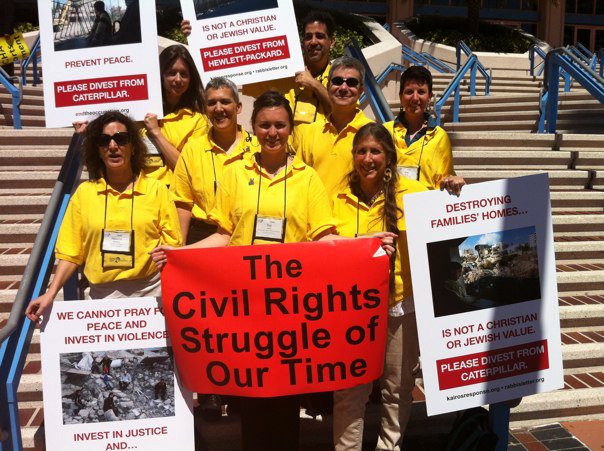
Jewish activists at the 2012 UMGC in Tampa, from left to right: Rebecca Vilkomerson (Executive Director of Jewish Voice for Peace), Anna Baltzer, (National Organizer, US Campaign to End the Israeli Occupation), Dalit Baum (Founder, “Who Profits?”), Rae Abileah (Co-director, CODEPINK Women for Peace), Sydney Levy, (Director of Advocacy, JVP), Rabbi Brant Rosen, Rabbi Lynn Gottlieb (Founder, Shomer Shalom Center for Jewish Nonviolence), Ariel Vegosen (Fair Trade and Media Social Justice Activist)

After the United Methodist divestment resolution was voted down at the UM General Conference last week, I’ve received my fair share of gloating responses from divestment opponents.  (Award for the most colorful goes to “Tzahal,” who sent in this attention-grabber: “BDS Fail, you f***ing KAPO”).

Actually, while many of us were disappointed by the final vote, I don’t view this as a fail. Not by a long shot.

First of all, as I reported from Tampa, I was deeply inspired to meet so many remarkable activists – Christians, Muslims, Palestinians, Israelis and American Jews – who constitute a new community of conscience working for justice in Israel/Palestine. This new interfaith/inter-ethnic coalition is growing rapidly and we are most certainly succeeding in raising conscience and awareness each time these kinds of resolutions are brought forth.

Beyond the final vote on this one specific resolution, we should consider it a success that these issues are increasingly being publicly discussed by our religious communities. My fellow activists and I had numerous conversations with delegates in the convention hall and we were heartened to engage so many people so honestly on this difficult issue. I was particularly gratified to speak with the numerous African delegates (who constituted 40% of the convention) who immediately understood the very real parallels to the legacy of colonialism in their own countries.

In addition, as my fellow activist Anna Baltzer recently pointed out, while the divestment resolution did not ultimately pass, the UM General Conference did adopt a resolution that among other things urged the US government to “end all military aid to the region,” called on all nations “to prohibit… any financial support by individuals or organizations for the construction and maintenance of settlements,” and “to prohibit… the import of products made by companies in Israeli settlements on Palestinian land.”

In BDS terms, this means that while the United Methodists did not affirm D (“Divestment”), they did support B and the S (“Boycott” and “Sanctions”).  No small statement, this.

I am coming away from this experience more convinced than ever that divestment is a critical tool in our quest for a just peace in I/P.  Over and over I’ve heard that divestment is an unduly harsh and polarizing tactic – and that the emphasis should be on positive engagement and investment. This, despite the fact that decades of political engagement by our government have failed miserably. This despite almost a decades worth of failed attempts by church groups to engage companies such as Caterpillar, Motorola Solutions and Hewlett/Packard – companies that literally profit from an oppressive, illegal occupation.

Add to this the testimonials of numerous Palestinian leaders who addressed “positive investment” by telling us it wasn’t charity they needed, but real, actual justice. In the words of Zahi Khouri, a prominent Palestinian Christian businessman and CEO of Coca-Cola Palestine:

It may shock you, but whenever there is a viable project identified in Palestine, we can raise the funds. We don’t need your financial help, your charity. What we need is to be able to operate freely. Divestment is the best, most immediate way that you can help us achieve that. We have been waiting for more than 40 years; we need action now.

Archbishop Desmond Tutu was so correct when he urged support of the divestment resolution by invoking MLK’s “Letter from a Birmingham Jail.” Then, as now, those who sought justice were counseled by religious leaders to “be patient” and to address the issue of oppression through engagement and non-confrontational tactics. Then, as now, there was an assumption that those who wielded corrupt power could somehow be “convinced” to give up their power voluntarily. Then, as now, this kind of patronizing counsel rings hollow and false in the ears of those who continue to suffer daily from ongoing injustice and persecution.

No, this was not a fail. There is a movement is building and this was only the beginning. Stay tuned. Similar resolutions will soon be considered in Pittsburgh at the General Assembly of the Presbyterian Church (USA) and the General Convention of the Episcopal Church in Indianapolis.

My new colleagues and I look forward to continuing this sacred work together.

United Methodist Divestment: Standing in Solidarity in Tampa

It was my honor to attend the opening of the 2012 General Conference of the United Methodist Church in Tampa, where they will be considering a resolution to divest church funds from three companies – Motorola Solutions, Hewlett-Packard and Caterpillar – that profit from Israel’s oppressive occupation.

I’ve been so inspired by the amazing people I’ve met in Tampa – Methodists from around the country, Palestinians, and many Jews – who constitute a new community of conscience on this profoundly important issue. This coming-together has been particularly important for me, because many quarters of the United Methodist Church have been unfairly demonized by the Jewish establishment over the issue of church divestment.

The resolution will be considered in committee some time over the next few days – and may possibly be voted on in plenary next week. If you, like me, stand with our Methodist brothers and sisters in our desire for justice in Israel/Palestine, please sign our Rabbi’s Letter that supports “conscientious nonviolent strategies, such as phased selective divestment, to end the occupation.”

You can read a thorough report about our efforts here on Tampa Community Radio. The clip above: my statements at a press conference yesterday which was convened by my friends at United Methodist Kairos Response – the primary sponsors of the UM divestment resolution.

Rabbi Mordechai Liebling: Why I Now Support Church Divestment

My good friend and colleague Rabbi Mordechai Liebling has just written one of the most eloquent and thoughtful statements in support of church divestment I have yet read. Mordechai’s voice on this subject is particularly noteworthy becuase he has long been an important Jewish community leader on the issue of ethical investing.

Mordechai has previously served as the director of the “Torah of Money” initiative at The Shefa Fund and later became the Executive Vice President of Jewish Funds for Justice. He currently serves as the director of the newly created Social Justice Organizing Program at the Reconstructionist Rabbinical College.  His statement is all the more powerful because in 2004 he wrote a public article questioning the effectiveness of divestment as a strategy – and as late as two years ago, he still viewed divestment as counterproductive.

As he wrote in his statement, he has reconsidered his position for compelling reasons:

What happened that made me change my views? I changed a little, and the reality on the ground changed even more.

At the time I wrote the article I was organizing the Jewish Shareholder Action Network in my capacity as the Torah of Money Director at the ShefaFund. I was very involved in the world of faith-based socially responsible investments and learned a lot about shareholder activism.

When Protestant churches started considering selective divestment from corporations profiting from the occupation back in the mid-2000′s, I knew many of the socially responsible investment staff people in those denominations. I did not think divestment was a good strategy and said so to my colleagues. But things have changed since.

I was concerned about the potential that divestment measures would have in undermining the Israeli political center. I was concerned about Israelis feeling more isolated than ever and adopting a circle-the-wagons mentality that would make peace harder to attain. These concerns are valid and real. But in the last number of years, the Israel political center has moved to the right–even without divestment. The Israeli government has become more intransigent in its position; the settlers more aggressive. The Netanyahu government has already circled the wagons.

Given this reality, we need to take a look at new approaches. We cannot rule out options that are rooted in non-violence, promote non-violence and call for an end to unjust practices. Divestment is one such option. Palestinian nonviolent direct action is another.

If the reality on the ground in Israel and in the West Bank has changed, so have the attitudes of Israeli Jews and Jews abroad towards the use of tools such as divestments and boycotts. Previously very few Jewish groups would have supported such initiatives. Now we see a lively discussion inside our Jewish communities about the appropriateness of using these tactics to end the occupation and oppose settlement expansion. Countless Israeli artists refuse to perform in the Cultural Center of the settlement of Ariel in the West Bank. Boycotting settlement goods is now discussed in Israel, in the pages of the New York Times, and inside our very own Jewish communities. Symptomatic of its move to the right, the Israeli government has outlawed this practice, and the brave Israelis that speak about it, risk heavy court-mandated fines for expressing their views. But inevitably, the more intransigent the Israeli government, the more popular this and other nonviolent measures will become.

Now to be sure, boycott and selective divestment are not the same thing. The former is carried out by consumers; the latter by investors. Divestment from a corporation does not come in a vacuum. It is the logical step that follows after shareholders try to negotiate with a company to address their concerns and after shareholder activism fails. Back when I opposed divestment, I was concerned that divestment was being invoked when the first two steps had not been tried yet, or at least pursued to its completion. This is not the case today. To their credit, the churches have gathered a full record of failed corporate engagement and have experienced years of frustrated shareholder resolutions that do not achieve the desired change in corporate behavior. Now that step one and step two have failed, it is time to move to the inevitable step three, and that is divestment. Not doing so puts at risk the integrity of the whole socially responsible investment model.

I want to make clear that I would not support divestment or boycotts from Israel as a whole. I do not support turning Israel into a pariah state. And it is precisely because of this that I support the churches’ measure approach to selective divestment. The resolutions under consideration–divesting from Caterpillar, Motorola Solutions, and Hewlett-Packard–do not single out Israel, and they certainly do not single out Jews either. They single out specific corporate complicity with the occupation. Churches hold tobacco companies in their no-buy list, not because they believe that smokers are bad people. They do not single out smokers for criticism. They do so because smoking is wrong. In the same way, bulldozing civilian homes and making people homeless is wrong too. It does not matter whether this happens in Israel or elsewhere. The problem is not with the place or with the people, but with the action. This bulldozing is taking place in Jerusalem, where Palestinian homes are being bulldozed to make room for more Jewish settlements. Not condemning wrongdoing simply because it happens in Israel is singling out Israel. Israel does not need affirmative action; it needs to be treated exactly the same as every other state, not better, and not worse. This means acknowledging when it does things right, but also taking corrective action when it does not.

I’m thrilled that Mordechai has now signed on to our Rabbi’s Letter campaign in advance of the United Methodist Conference in Tampa this week, where the divestment resolution will be presented once again.

There will be much more to report on this important story – please stay tuned.

Jewish Voices of Support for Church Divestment Resolutions!

I’m already on record as fully supporting the Presbyterian Church (USA) divestment resolution that is being brought to the PC (USA) General Assembly this summer. Now I’m thrilled to report that my colleagues on the Jewish Voice for Peace Rabbinical Council have released a letter in support of both the Presbyterian and the Methodist Church’s efforts to divest from three companies (Caterpillar, Motorola Solutions, and Hewlett-Packard) that profit from the Israeli occupation.

Here’s an excerpt of our letter:

Every day Jewish leaders are building alliances with our interfaith partners to oppose all forms of oppression and to express our outrage over the confiscation of Palestinian land, the destruction of Palestinian farms, groves and homes, and to work to end the daily harassment and violence against Palestinian people.

Several Christian denominations are making brave, constructive decisions to investigate whether their churches’ investments contribute to this violence and oppression in Israel and Palestine.

We believe that to invest your own resources in corporations which pursue your vision of a just and peaceful world, and to withdraw your resources from those which contradict this vision, is the best way to support Muslims, Christians, Jews, Israelis, Palestinians –truly all people.

We can think of no greater act of friendship than to work with us, side by side to bring justice, equality and self-determination to all people. This selective divestment process is one of the strongest tools we have.

In making this decision, we are together, Jews and Christians, living up to the biblical promise to pursue justice.

I encourage you to visit rabbisletter.org for a plethora of resources, including FAQs, additional Jewish expressions of support – and the opportunity to sign on to our letter.

You can also click here to directly support the Methodist resolution (which will be considered at the United Methodist Church General Conference in Tampa on April 24-May 4)  and here to support the Presbyterian initiative (which will brought before the PC USA General Assembly in Pittsburgh, June 30-July 7).

Jews/Christians and Israel/Palestine: Rediscovering the Prophetic

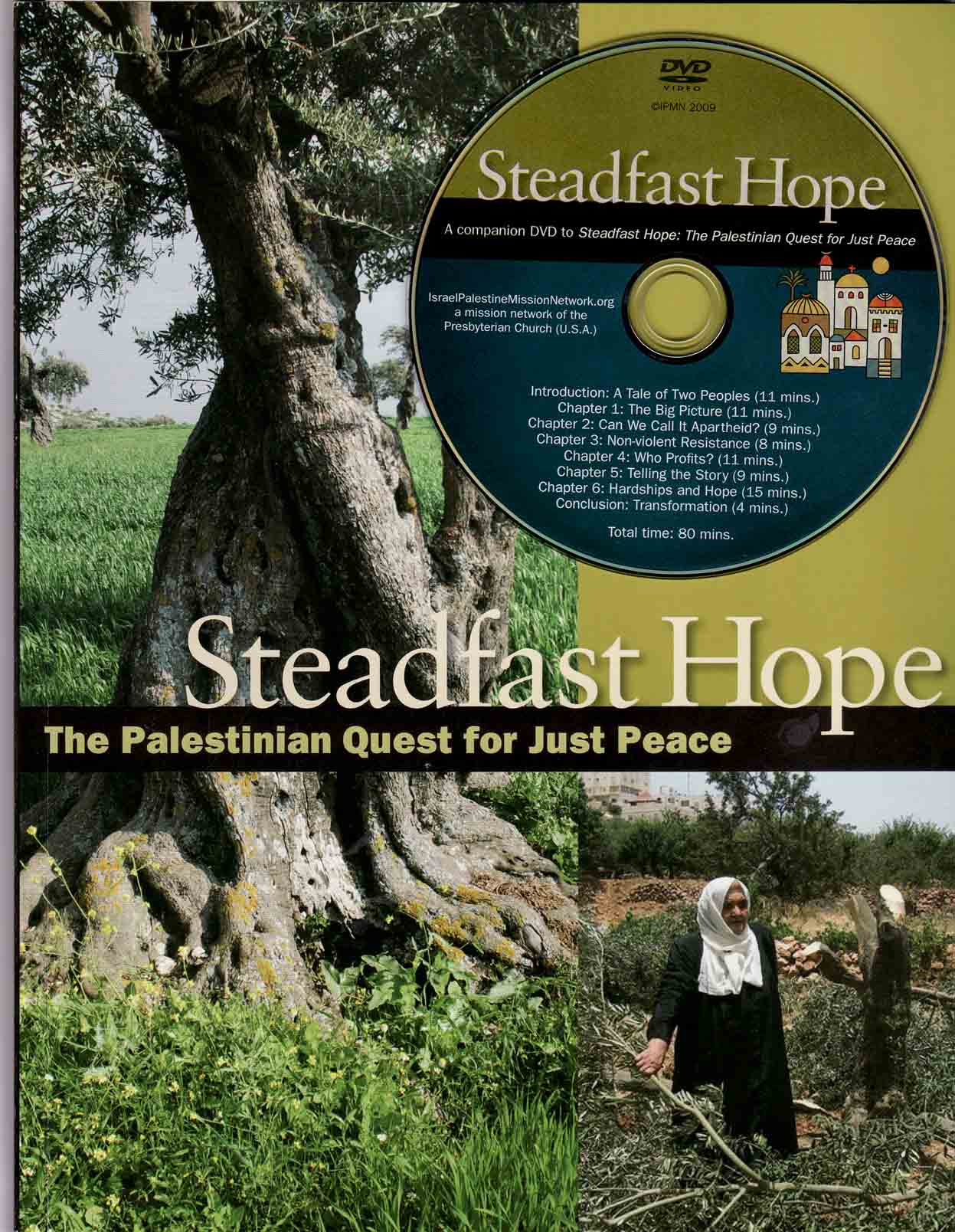
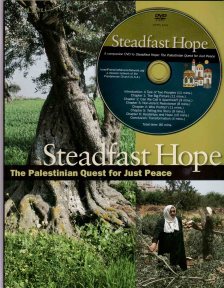
Here is the sermon that I delivered yesterday at St. James Episcopal Cathedral in Chicago. If you would like a copy of “Steadfast Hope,” the study guide to which I refer in my remarks, click here.

I am so pleased to be here with you this morning – and so very honored to have been invited to preach to you today. I want to especially thank Dean Joy Rogers for the invitation and to St. James for hosting me so graciously.

I’d also like to thank my very dear friend, Father Cotton Fite of St. Luke’s Episcopal Church in Evanston, who I believe had no small part in making my visit here a reality.  Many members of my congregation have come to know Father Cotton well – in addition to our friendship, he has become something of a mainstay at our Shabbat morning Torah study group.  I value my friendship with Cotton quite deeply – and I’d like to think that our the work might provide a model for a new kind of interfaith action.  Indeed, this very model is at the heart of my message to you this morning.

I’d like to start properly: with this Sunday’s Episcopal lectionary selection from the Hebrew Bible: 1 Samuel, chapter 3:

In an earlier chapter, we’ve already read that Samuel was born under somewhat remarkable circumstances. Before his birth, his mother Hannah had promised to dedicate him to divine service if only God would only bless her with a child.  In chapter 3, the young Samuel is now serving under Eli the priest at the temple in Shiloh.  We’re told that in those days, “the word of the Lord was rare; prophecy was not widespread” – clearly a literary clue that this all about to change.

Samuel is sleeping in the temple, next to the Ark of God. In the middle of the night, God calls out to Samuel, and Samuel, who thinks he hears Eli calling him, runs to the priest, and says “Hineini – Here I am.”  Eli replies, “I didn’t call you – go back to sleep!”  This happens again, and Eli, presumably with even greater exasperation in his voice now, sends Samuel back to bed.

When it happens a third time, Eli finally realizes what is going on. So he instructs Samuel, “If it happens again, say ‘Speak Lord, for Your servant in listening.”  When Samuel is called yet again, he follows Eli’s instructions. God then reveals to Samuel that Eli’s priestly house is about to be punished, due to the corruption of his sons and his unwillingness to rein them in.

The next morning, Eli asks Samuel what God said, adding “please do not hold anything back.”  And so the young Samuel tells Eli everything: “the good, the bad, and the ugly,” if you will.  Painful though it must have been, Eli accepts God’s word as delivered by Samuel.

At the close of the chapter, we learn that Samuel grew up and “the Lord was with him.” As the text puts it, “(God) did not leave any of Samuel’s predictions unfulfilled.” Thus, Samuel quickly gained a reputation through Israel as a trustworthy prophet. He would go on, of course, to be one of the greatest prophets in Israelite history.

Now on the surface of this story, there is sort of a endearing slapstick quality to the young Samuel’s discovery of his prophetic abilities.  Because of this, I think it’s too easy to misunderstand the real source of Samuel’s greatness.  What made Samuel a great prophet?  Was it because he was promised to God by his mother?  Was it because he had the ability to hear God talking to him when no one else could – not even Eli the priest himself?

No, I believe the key to his prophetic greatness lay in what came next. Samuel learned a harsh and painful truth about a very powerful man – a man who also happened to be his spiritual mentor – and he was willing to speak that unvarnished truth to him.  He did not shrink from his prophetic responsibility, although the chances were probably strong that Eli could cast him out for delivering such a message.

This is, after all the essence of being a prophet. A prophet isn’t someone who can tell the future – and a prophet is certainly not special for being chosen to deliver God’s divine message. No, the essence of being a prophet lies in one’s readiness to speak painful, difficult, often public truths to power.

We will soon learn a great deal about the wages of power in the book of Samuel. The Israelites will eventually come to Samuel and tell him they want a king of their own, telling him they want to be “governed like all the other nations.”

Samuel is grieved by this request – like all prophets, he takes it very personally. But God tells him, “Don’t fret. It’s not you they are rejecting, Samuel, it’s me.  They’ve just never understood where the real source of power in the world lies, despite my attempts to demonstrate this to them over and over again.  If they think that putting their faith in military and political power will save them, fine. But they will soon find out where that path will lead them.”

And of course as they come to discover, kingship in Ancient Israel doesn’t go so well for the new nation. It becomes focused on militarism, becomes incorrigibly corrupt, splits in two and eventually gets overrun from within and without. During this period, it is only the prophets who continue to speak the hard truth to power, who rail against the toxic ambitions of Israelite empire, who warn that this path will eventually be their downfall. And so it becomes.

When I asked Dean Joy for some advice on what I should say in my sermon to you today, she advised me to share my own spiritual vision with you, to speak a bit about the values that drive me as a spiritual leader. So I will say that, personally speaking, prophetic religion is my primary spiritual inspiration as a rabbi, as a Jew, and as a human being. I am driven by religion that speaks hard truth to power. By faith that holds unmitigated human power to account.

I fervently believe that when religion advocates the cause of the powerless, when it stands with those who are victimized by the powerful, when religion proclaims that God stands with the oppressed and seeks their liberation –  this is historically when religion has been at its very best.  And conversely, when religion is used to promote empire, when it is used as by the powerful to justify their rule, when it is wedded to militarism, nationalism and political power – this is, tragically, when we witness religion at its worst.

I cannot help but read Jewish tradition with prophetic eyes.  As a Jew, I’ve always been enormously proud of the classic rabbinical response to empire. I believe that the Jewish people have been able to survive even under such large and mighty powers because we’ve clung to a singular sacred vision.  That there is a power even greater. Greater than Pharaoh, greater than Babylon, even greater than the Roman empire that exiled us and dispersed our people throughout the diaspora. It is a quintessentially Jewish vision best summed up by the prophetic line from the book of Zechariah: “Lo b’chayil v’lo b’koach” – “Not by might and not by power, but by my spirit, says the Lord of Hosts.”

And as a 21st century American Jew, I cannot help but view the world through prophetic eyes as well. Painful though it is, if I am to be true to my understanding of my spiritual tradition, I cannot simply look away when I see my own country going down the road to empire, when I see our nation enmeshed in a state of permanent war around the world with economic disparity growing ever larger here at home.

To be sure, these are not issues of concern for the American Jewish community alone.  And in my own interfaith activism, I have been deeply inspired by my clergy colleagues and other people of faith who share this prophetic vision.  For me, this is the most critical aspect of the interfaith relations – the movements that are created when faith traditions come together to hold power to account in a time of unacceptably growing gaps between the wealthy and poor, the privileged and the exploited, the powerful and powerless.

However, in order for this coalition to truly thrive, more specifically, in order for Jews and Christians to truly work together, we are going to have to find new ways to talk to each other.  We must not park our prophetic values at the door whenever our conversations grow difficult.  And one of the most difficult conversations has to do with the issue of Israel and Palestine.

In my opinion, the issue of Israel – Palestine is the one area in which true interfaith cooperation tends to break down. However, if we are to use the prophetic model as a guide for Jewish-Christian relations, then our communities cannot shirk from sharing hard truths with one another.

Just as the Jewish community does not hesitate to hold the Christian church to task for its anti-Semitic oppression of Jews and Jewish communities throughout the centuries, I do not expect the Christian community to shrink from fully speaking its mind on the contemporary issue of Israel – Palestine. We cannot and should not dance around this issue. To my mind, there is simply too much at stake.

This is, needless to say a painful issue for Jews to talk about amongst themselves, let alone with others.  But I would like to emphasize that there is by no means a uniformity of opinion on this issue in our community.  While I have strong feelings about this subject, I do not pretend to speak for my congregation or the Jewish community at large – nor should any Jewish leader.

In this regard, I want to your church to know I am profoundly appreciative of the Episcopal publication of “Steadfast Hope: The Palestinian Quest for Just Peace,” the report that originated in the Presbyterian Church.  I’m glad to know that your church has been studying it together these past few weeks and I’m so happy to be able to join your study session here after our service this morning.

More than the content itself, I am truly inspired by this study guide because it represents an authentically prophetic statement. It is faithful, forthright, and unflinching. Rather than paper over the difficult issues, it shines a light on them. And in the end, these are the places where real dialogue must ultimately start.

I have no doubt that “Steadfast Hope” is being attacked angrily by some in the Jewish community and elsewhere. But that is, of course, the nature of prophetic witness. You don’t shy away from speaking your truth because you’re worried about hurting feelings, you can’t dwell on the prospect of being labeled any number of names, and you shouldn’t allow yourself to be bullied or cowed into silence.  On the contrary, acting prophetically means speaking your truth knowing full well that there will be strong opposition, but with the faith that there will also be those on the other side who are ready to hear your message and ready to work alongside you in your struggle.

So I’d like to suggest carving out a new place for interfaith relations between our respective communities.  Not one that seeks dialogue for dialogue’s sake, nor one that engages in political bartering, but one that finds common cause in prophetic witness.

Indeed, I hold on to this hope for my own community as well – and here I’d like to return to our lectionary chapter once more. If we read this story carefully, we may well discover that Samuel is not the only hero here. There is also Eli the priest – who is able to hear powerful rebuke, along with a prophecy of terrible consequences for his family.

What does he do? He has the wisdom, the humility and the strong sense of self to ask Samuel for the whole truth – and when he hears it he is able to accept it. He is able to hear this difficult, harsh, prophecy and not react with anger or defensiveness – for he knows it comes from a place of truth and righteousness.

I believe that Eli’s response to Samuel’s prophecy provides a powerful model for my own community. While I fervently hope that we find the strength to offer prophetic witness, I also pray that we find the courage to accept it as well. To overcome the fears that keep us from finding true partners in the struggle for liberation in our world.

So let us come together by facing down the glorification of corrupt power. Let us work together to affirm loudly that it is not by might and not by power but by God’s spirit alone that we will create God’s kingdom here on earth.  And let us find a common worship in the God that stands with the oppressed, the marginalized and the vulnerable.

I look forward to working together with you in this sacred work and, once again, I thank you so very much for inviting me to join you in worship this morning.

We’re Not Muslims! (Not That There’s Anything Wrong With Them…)

Here’s a sure sign that American Islamophobia has officially sent us through the proverbial looking glass.

From the WashPo blog:

A Christian church in Phoenix has had to make a presidential-type denial: It is not Muslim. The building under construction will feature a domed ceiling, and protesters have taken that as a sign the church is not what it says it is. The leaders have hung up a sign saying, “We are building a Christian house of worship,” the Atlantic reports...

“I have nothing against Islamic people,” Carlos Montemayor, the pastor of the church, said in a phone interview. But local commentary had been growing, saying that the building was a mosque and an investigation should be launched into the church. He put the sign up to stop the comments.

South Park and the Religion of Blasphemy

The brouhaha over South Park’s depiction of Mohammed in a recent episode has given rise to some pretty illuminating commentary about the relationship between religion and open society.  I’ve waded through several and recommend two in particular:

Glenn Greenwald’s important column in Salon, in which he correctly points out the “delusional” assumption that it is only Muslims who issue death threats against religious satire that they find offensive.

Austin Dacey’s amazing piece in Religion Dispatches, in which he shows how puerile anti-religious satire actually predates South Park by several centuries:

Forget the South Park dust up; forget Everybody Draw Muhammad Day. If you want to see truly shocking anti-religious cartoons, you have to go back to the sixteenth century. Near the end of Luther’s life, his propaganda campaign against Rome grew increasingly vitriolic and his language grotesquely pungent. He took to calling his ecclesiastical enemies ‘asses,’ ‘dogs,’ ‘pigs,’ ‘blockheads,’ ‘basilisks,’ and ‘pupils of Satan,’ and the Pope himself ‘Her Sodomitical Hellishness’ and ‘fart-ass’ (no, it doesn’t sound much more dignified in German—fartz-Esel). Eric Cartman would be in awe.

His conclusion?

The debate over cartoon depictions of the Prophet Muhammad is often framed as a clash between free speech and religious attitudes. But it is just as much a clash between conflicting religious attitudes, and the freedom at stake is not only freedom of expression but freedom of religion…

The orthodoxy of today is the blasphemy of yesterday. From the beginning, the spiritual search for religious truth has not been against blasphemy, but by way of blasphemy. Depending on where we sit metaphysically, we may want that search called off, or we may want it furthered. Either way, we must welcome religious offense as the unavoidable consequence of a free religious conscience.

Elegy for Janine Denomme

It’s a brave new world. I’ve just officiated at the shiva for Janine Denomme, a 45 year old woman who also happened to be an ordained Catholic priest.

I did not have the honor of knowing Janine personally, but I do know she was a profoundly important spiritual teacher to many. She was active in the Catholic Church and served as a lay preacher, church musician, parish council member, spiritual director and religion teacher. And though she was a gay woman, she consistently considered the Catholic Church to be her spiritual home, and had always dreamed of becoming a priest.

Janine was ordained just this last April by Roman Catholic Womenpriests, an initiative within the Catholic Church that seeks to create “a more inclusive, Christ-centered Church of equals in the twenty-first century.”  Tragically, Janine was diagnosed with cancer as she prepared for ordination – but as it turned out, her struggle with her illness gave her a new spiritual calling. She wrote deeply profound reflections on the journey of a cancer patient, primarily through her Caring Bridge blog. I’ve just finished reading “Via Delorosa” – a piece she wrote this past February in which she charts the stages of her chemo treatment using the religious symbolism of the Stations of the Cross.  It’s quite simply as powerful a piece of contemporary spiritual writing as I’ve ever read.

Needless to say, the Catholic Church does not recognize Janine’s ordination in any fashion – and even more painfully, the Archdiocese of Chicago refused to allow her to be buried in her Catholic parish. Her funeral mass will take place in a Methodist church in Evanston this Saturday.

In a final 21st century twist to this story: Janine’s beloved partner, Nancy Katz, is a member of my congregation – and it was my honor to preside over a Shiva service at their home this evening. Truly an interfaith gathering of the most sacred kind.

You can read more about Janine here in the Windy City Times and in this piece from the Huffington Post. May her memory be for a blessing.