Category Archives: Current Events

Murder in Chapel Hill: This Was Not About Parking and Why That Matters

e1bb8d4656c04448b78098a835378f40_18

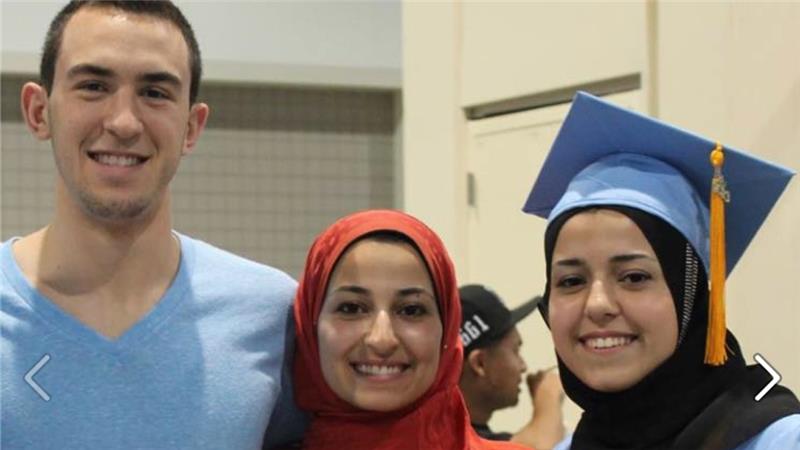
There has been so much – far too much – media discussion as to whether or not the tragic murder of three Muslim-American students, Deah Shaddy Barakat, Yusor Mohammad Abu-Salha and Razan Mohammad Abu-Salha, was a hate crime or merely a parking dispute. During the course of this open conversation, some very well-meaning people have asked, why does it matter if Craig Stephen Hicks killed these three young people because they were Muslim? Hate is hate. Regardless of the murderers specific motivation, three infinitely precious lives have been snuffed out forever.

That is the kind of comment that can only be made by someone who has never felt discriminated against or targeted because of the group to which he/she belongs.

Why does it matter? Because too often, these kinds of crimes are not simply random acts of hate. They are part of a larger pattern. And unless we recognize these patterns and do what we can to address their root causes, these tragedies are surely destined to recur again and again.

Unless one is part of a group that has been historically targeted by hate and intolerance, it is difficult to fully understand the sense of vulnerability that comes from being singled out in this way. As a Jew, I completely understand the feelings of Muslims the world over who saw nothing random about this act – and are deeply galled by the suggestion that this was caused by nothing more than a parking dispute. Such an experience is born from living within a legacy of hate being directed toward one’s people over and over again.

As the Muslim-American journalist Deanna Othman wrote powerfully in today’s Chicago Tribune:

You ask yourself: Are we destined to remain “otherized,” categorically excluded, alienated and repelled from the very society in which we live? Must we constantly assert our Americanness and prove our loyalty, only to be demonized, vilified and caricatured by our media?

It is exhausting to feel compelled to constantly validate your identity. Must Muslims be paragons of excellence, lest there be a motive found for their murder other than sheer hatred? Littering? Running a stop sign? Being too loud?

Existing?

I frankly wish that the media would focus less on the tortured psyche of Craig Stephen Hicks and much more on the truths expressed by the words above. The real question we should be asking ourselves is not whether or not this was about parking spaces but rather how we will address the rising culture of Islamophobia in this country so that there will be less crimes such as this in our future?

While we’re at it, I would suggest avoiding the well-meaning but ultimately empty bromides that point out it doesn’t really matter why Hicks pulled the trigger. It does matter. It matters profoundly.

Tragedy in Gaza: Reckoning with Root Causes

Cross-posted with Tikkun Daily

It’s happening again.

As of this writing, Israel has dropped 800 tons of explosives on Gaza, a strip of land roughly the size of Detroit. The official death toll currently stands at 81, the majority of whom are civilians and half of whom are women and children.

Yes, it’s happening again, and like the similar military onslaughts in 2008/9 and 2012, we’re hearing the same tired talking points from Israeli politicians, the US State Department spokespeople and the American Jewish communal establishment – all variations on the theme of “Well, they started it.” And like before, the suggestion that we examine the larger context of this carnage is tragically lost amidst the noise of the literal and figurative bomb-throwing.

But of course, anyone who is truly interested in seeking a real and lasting solution would do well to look at root causes. In the most immediate sense, that means reckoning seriously with what Forward Editor-at -Large JJ Goldberg has called the “foundation of politics and lies” propagated by Israeli politicians and military leaders that led straight to a “war that nobody wanted — not the army, not the government, not even the enemy, Hamas.”

In the larger context, it means recognizing that this war is but the latest instance of Israel’s “mowing the lawn” in Gaza – a strategy in which Israel shows Hamas who’s boss by way of massive military onslaughts every few years. The most unguardedly honest expression of this strategy was expressed by Israeli journalist Gilad Sharon (son of Ariel) back in 2012:

There is no justification for the State of Gaza being able to shoot at our towns with impunity. We need to flatten entire neighborhoods in Gaza. Flatten all of Gaza. The Americans didn’t stop with Hiroshima – the Japanese weren’t surrendering fast enough, so they hit Nagasaki, too.

And in the ultimate sense, it means admitting that this latest injustice is irrevocably connected to an injustice that occurred decades ago. when scores of Palestinians were driven from their cities and villages in the coastal plain and lower Galilee and warehoused in the tiny Gaza strip. By all accounts, most were simply too overwhelmed to realize what was happening. The ones who tried to return to their homes were termed “infiltrators” and were killed on sight. Others resisted by staging raids in the newly declared state of Israel. Sometimes they succeeded, more often they did not. Either way, Israel decided early on that it would respond to each of these reprisals with a overwhelming military show of force.

In some sense, you might say Israel has been “mowing the lawn” ever since. If there could be any doubt, just read this famous 1956 eulogy given by General Moshe Dayan for a young kibbutznik named Ro’i Rotenberg, who was killed by Gazans who had crossed over the border into Israel:

Do not today besmirch the murderers with accusations. Who are we that we should bewail their mighty hatred of us?  For eight years they sit in refugee camps in Gaza, and opposite their gaze we appropriate for ourselves as our own portion the land and the villages in which they and their fathers dwelled…

This we know: that in order that the hope to destroy us should die we have to be armed and ready, morning and night. We are a generation of settlement, and without a steel helmet and the barrel of a cannon we cannot plant a tree and build a house. Our children will not live if we do not build shelters, and without a barbed wire fence and a machine gun we cannot pave a road and channel water. The millions of Jews that were destroyed because they did not have a land look at us from the ashes of Israelite history and command us to take possession of and establish a land for our nation. (Translation, Michael Shalom Kochin, 2009)

Those who are ready and willing to reckon with root causes must not be content to simply accept these bi-annual military onslaughts as simply the price of Jewish nationhood. Israel will never become, as its national anthem would have it, “a free people in its own land” until it deals squarely with the injustices that led to its birth – and have tragically continued until this very day.

In this regard we can take heart in the small but intrepid cadre of Israelis who have the courage to shine a bright light on this larger context. Take a look at the clip from the modest, yet courageous rally in Tel Aviv, in which protesters stood down angry motorists while holding up a large banner that read “The Occupation Murders Us All.” Read this powerful post by Israeli blogger Noam Sheizaf entitled “Why I Object to This Military Campaign, Even as Missiles Fall on My City,” in which he compares the West Bank to a “minimum security facility” and Gaza to “a maximum security prison.”

And finally, read and consider signing on to this recent Open Letter released by Jewish Voice for Peace that urges us to “face the root cause of this crisis”:

In this time of tremendous suffering and fear, from Jerusalem to Gaza, and from Hebron to Be’er Sheva, we reaffirm that all Israelis and Palestinians deserve security, justice, and equality, and we mourn all those who have died.

Our unshakeable commitment to freedom and justice for all compels us to acknowledge that this violence has fallen overwhelmingly on Palestinians. And it compels us to affirm that this violence has a root cause: Israel’s illegal occupation.

We are united in our belief that:

The denial of Palestinian human rights must end.
Illegal settlements must end.
Bombing civilians must end.
Killing children must end.
Valuing Jewish lives at the expense of others must end.

Only by embracing equality for all peoples can this terrible bloodshed end.

At-Risk Communities from Syria to the South Side: A Sermon for Yom Kippur 5774

AzLP81g

While I’m sure that Syria has been on the lips of many a rabbi this High Holiday season, I’ll be honest with you: I’ve struggled with whether or not to give that sermon this year. Not because I don’t consider it to be an issue of critical importance, quite the contrary – no one can deny that the situation in Syria is a tragic and critically important one in our world at the moment. If I’ve been hesitant, it’s only because I’m not really sure I have much to add to the myriad of political analyses we’ve heard in the media these past few weeks.

So while my words to you today are not directly related to Syria, I would like to begin with one small but powerful story out of this crisis. It comes from an article written by my friend Aziz Abu Sarah, a young Palestinian peace activist and educator. At the moment Aziz is the Co-Executive Director at the Center for World Religions, Diplomacy and Conflict Resolution at George Mason University – and he was recently made a National Geographic Emerging Explorer where he serves as a cultural educator. Several JRC members know Aziz well as he was one of our tour guides of a JRC trip to East Jerusalem and the West Bank two years ago.

As the news out of Syria became more and more dire, particularly the news of the growing refugee crisis, Aziz and a colleague put their heads together to explore some kind of action they might possibly take. There are currently more than 2,000,000 Syrian refugees in camps throughout the Middle East – mostly in Lebanon, Jordan, Turkey, Iraq and Egypt. Women and children make up three quarters of the refugee population. There are over 1,000,000 children refugees as a result of this crisis.

In the end, Aziz and his colleague decided to establish an educational summer camp for refugee children on Syrian-Turkish border. In a blog post about his experiences in the camp, he wrote, “Whether the US bombs Assad or not is not in my control, but being active to help those in need is.”

In his post, Aziz wrote movingly about the children he had met and the stories they told him – stories that were at once horrific and at the same time the ordinary everyday stories of children everywhere. At the conclusion of his post, he wrote:

These are the stories that we need to remember when we argue about Syria. These are the people paying the heavy price. When we pass by a news item about Syria, we must remember the millions of children that could become another lost generation without our willingness to engage and help…

Opening our hearts and finding compassion must come before any discussion on military intervention.

When I read Aziz’s post, it reminded me how easily we debate these crises even while knowing so very little about the people who are actually living through them. How we tend to view these kinds of global tragedies in the abstract. It’s understandable, of course – when we read the staggering statistics coming out of these crises zones, it literally staggers our comprehension. How on earth do we grasp numbers such as these, let alone the reality of the suffering behind the statistics?

But while it’s understandable, I do find something profoundly troubling about this phenomenon. Because when we reduce people in crisis zones to abstractions, it invariably creates a kind of emotional callousness in the ways we think and form our opinions about the crises themselves. When we don’t make an effort to understand the human reality behind the headlines, it seems to me, our political ideas emerge in something of a moral and emotional vacuum.

I do believe that Aziz is absolutely right: before we start holding forth on whether or not to bomb, we must first open our hearts and find compassion for the people of Syria. We must make an effort to learn who they are, to learn about their unique experiences, to listen to them. Whatever we believe must be done, the process by which we form our opinions must begin with an effort to get to know the human beings behind the abstractions.

Now I realize that most of us don’t have the wherewithal to pack up and move to Turkey to work with Syrian refugees – but this doesn’t let us off the hook. Because quite frankly, we don’t have to literally go to the Middle East to discover populations at risk. While Syria has been at the center of the headlines of late, in truth there are all too many of communities in crisis in our midst. We don’t have to go all that far to find them.

Indeed, this is another way that our abstractions affect our perception of the world. Crises are things that happen “over there.” To be honest, sometimes it seems to me that we relate to the at-risk populations in our own backyard as if they are as far away as the Middle East. But of course, they’re not. They are right here, right outside our very door. They may not be of the same magnitude of those in places like Syria, but they are all too real nonetheless.

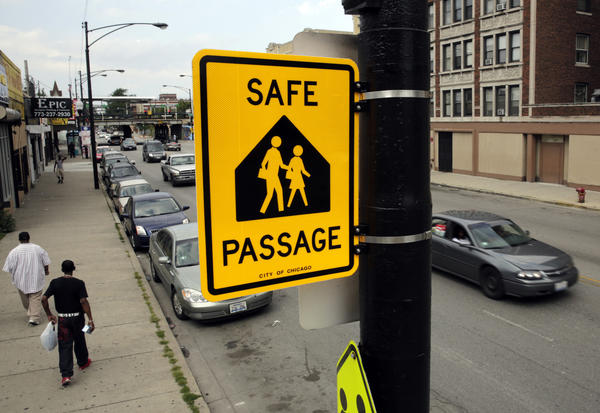
Here’s but one example, from right here in Chicago. Many of you, I know, are familiar with the initiative known as “Safe Passage” a program formed in 2009 as a response to gang and street violence in at risk Chicago neighborhoods. The program places community workers wearing bright fluorescent vests near public schools as a presence that will help create “safe passage” for High Schoolers who were walking to and from school.

The program was expanded significantly this past May, after the Chicago School Board closed almost 50 public elementary and middle schools in predominantly African-American and Hispanic communities on the South and West sides. Among the many devastating impacts of this decision was that it forced many children to walk longer routes to their new schools, through additional dangerous neighborhoods and across multiple gang boundaries. Whereas these children had previously walked an average of a few blocks to their neighborhood schools, many of them now have to walk half a mile or more through areas that are, quite literally, battle zones.

To deal with this reality, the school board expanded Safe Passage, hiring an additional 600 workers at $10 an hour to serve 12,000 schoolchildren in at-risk communities on their way to their new schools. While it is still early in the new school year, the preliminary reports are not promising. There have already been reports of violence along Safe Passage routes – not including the myriad of areas where children are not served by the program. We are now hearing reports that overwhelmed workers are quitting or just not showing up for work. One alderman has suggested the use of drones to protect children along Safe Passage routes.

No, we don’t need to look far away to find stories of children in battle zones. They are, in a very real way, right outside our door.

How do we respond to news such as this? Though it pains me to say so, I would suggest most of us who live the relatively safe and secure neighborhoods of greater Chicago respond to this news the same way we respond to the tragic news coming out of Syria, or Somalia or the Congo. Most of us, I think, thank goodness it’s not our reality. We quantify it in the abstract. We respond as if it’s happening “over there.”

Except it’s not. It’s happening right here in our very own community and in communities just like it across our country. These populations may not be terrorized by tyrannical dictators or civil war, but their lives and their families’ lives are at risk in a very real way. As a parent, I cannot fathom how it must feel to raise my children in neighborhoods wracked with violence, to send them off to walk miles to school through gangland battle zones. I cannot begin to fathom it. And maybe that is part of the problem.

This Yom Kippur, the season when our community honestly takes account of itself and how we might collectively atone, I think it is eminently appropriate to ask ourselves: what has been our response to communities in crisis? And are we truly able to see them? Have we truly opened our eyes and our hearts to their realities – particularly those who live right here in our own nation, our own city?

I can’t help but wonder what our communities would look like if our public policy was guided by such an approach. Let’s return to the example of Safe Passage that I gave earlier. There is no doubt that Chicago Public Schools, like all major urban school districts, faces daunting challenges. But unfortunately in my opinion, the Chicago School Board, like so many other urban school boards, now seeks to address these challenges from a corporate, efficiency-focused mindset rather than a community-based one.

I believe this approach to public education is problematic on many levels – but perhaps the most troubling is the way it has utterly blinded us to the critical role neighborhood schools play as the bedrock of our communities – particularly our at-risk communities. In areas that have already been profoundly destabilized by massive cuts to public services, neighborhood schools have served as the only real glue that holds these communities together. By closing these schools, CPS was in many cases literally cutting the final piece of government investment in these communities – and the last remaining institution in which residents can invest in one another.

It is impossible to understate the devastation these kinds of decisions inflict on low-income communities that have long been seriously at-risk. For decades, in fact, urban renewal policies have been decimating neighborhoods, uprooting residents who are largely poor and people of color. Neighborhood assets, like churches, stores, and parks that have been important community centers for generations, have become abandoned or have disappeared. And so residents have been forced out – they have become refugees, in as sense, of a different sort.

The neighborhood school is often the one institution still surviving in low-income neighborhoods and it has historically served as points of pride and community for families. If you had any doubt that these schools are important to their neighborhoods, you had only to listen to the thousands of parents who attended community meetings on school closings over the past few months. Despite their pleas, however, our new “education reformers” have chosen to close schools rather improve them, using the argument that we are in a time of public sector austerity and that we need to orient them to market forces.

This is what happens when leaders view schools using a corporate model rather than a community-based one. When CPS closed 50 neighborhood schools and slashed the budgets of those that remained, Chicago’s non-elected board addressed this issue with a top-down mindset that was ultimately divorced from the real-life reality on the ground. And so now we have it: thousands of students are now leaving their already devastated neighborhoods every day are forced to walk through battle zones in order to get to their schools.

Of course this phenomenon is not only restricted to our schools. In too many ways, our public policy is guided by the corporate goals of efficiency and profit over community and the greater good. While it is certainly true that many of our public institutions are bloated and inefficient and in need of reform, when we destroy them wholesale in this manner, we fail to reckon with the very real human cost of these actions. Even worse, when we privatize our public works, whether it is public housing, our health care system, or our prisons, we do more than simply turn lives into abstractions. We increasingly view human lives – and in some cases, human misery – as commodities to be profited from.

Whether we call this privatization or neo-liberalism whatever we choose to call it, I do believe it represents a very real form of institutional oppression. It may not be as obvious or as brutal as the oppression meted out by the Bashar Al-Assads of the world, but I submit it is a form of oppression nonetheless. Both stem from a view of our neighbors as somehow “other.” Both benefit from a more privileged people’s willingness to turn a blind eye. And most important, both forms of oppression affect the real lives of real people.

So what is there to be done? On an individual level, I think, one answer is very simple: we need to connect. We need to venture out of the hermetically sealed worlds we too often construct for ourselves and learn more about the people with whom we live – particularly those whose day-to-day reality is fundamentally different from our own.

Earlier this month, I read an article by a German journalist who was in Chicago to write about urban gun violence through a grant from the Pulitzer Center. It was fascinating to read the impressions of this European visitor from a Berlin, a city larger than Chicago but with a fraction of the homicides.

Here is how the journalist, Rieke Havertz, ended the article:

It is human nature to ignore Chicago’s gun violence as long as the shooting stays in the “bad” neighborhoods. Don’t take the “L” down south — that was the advice I always heard when I spoke about visiting less-fortunate neighborhoods.

I ignored the advice and nothing happened to me except that I got to know the city. I discovered that it’s not just money that needs to be thrown at these neighborhoods. They need economic opportunity, education, health care. They need a Chicago that is not a segregated city.

They need people who care. Take a different path, reach over the walls.

I know many JRC members who work and volunteer with in at-risk communities in Chicago and right here in Evanston – and I have learned a great deal from them over the years. I think it would behoove us all to not just to learn about these communities, but to create real connections, nurture real relationships. To meet and listen to those who live there. To relate to them as real people, not as charity cases to be helped or problems to be solved. To learn about their reality, their struggles, their needs, from them, not news reports or politicians or pundits.

We need to learn and act on an advocacy level as well. Here in Chicago, there is a remarkable grass-roots coalition that is shaping up and organizing on behalf of the at-risk communities in our city. In fact, polls show that 60% of Chicago’s citizens oppose the school closings and they are starting to make their voices and their presence heard in a major way. After the CPS’s announcement, many of us took to the streets for three straight days of marches in protest – and although the school closings and budget cuts are now a reality, they have galvanized a movement that is attracting a remarkable coalition – including growing numbers of young people.

But this movement has not grown up overnight – and it is not simply focused on the issue of public schools. It has in fact been building steadily over the years; it is the product of many community-based organizations mobilizing and organizing on behalf of the most vulnerable members of the greater Chicago community.

I’m proud to say here at JRC we are becoming increasingly active in this movement. I encourage you to find out more about our efforts and seriously consider lending us your support. Specifically speaking, I encourage to consider getting involved in our Labor Justice Task Force, our Immigrant Justice Task Force and to speak with JRC members who are currently exploring ways we can become active with Northside P.O.W.E.R., an institution-based people’s power organization with members on the Chicago’s North side and in North Shore Communities.

I have also personally been active with the wonderful organization Arise Chicago, an interfaith community organization that does important, critical local work on behalf of worker justice. (And of course, I would be derelict if I did not mention that we have many other active and vital Tikkun Olam Task Forces at JRC – I hope you will speak to JRC’s VP for Tikkun Olam and  learn how you can get involved in our ongoing social justice efforts.)

I also want to encourage us all to educate ourselves and find ways to act on a national level as well. Indeed, it is not an understatement to say that the at-risk populations in our country are currently vulnerable in ways we haven’t seen in decades. According to new data from the US Department of Agriculture, more than one in five American children face hunger, this at a time in which our Congress is considering cutting the SNAP program (aka food stamps) for more than 800,000 Americans who currently receive them but still do not get enough to eat or maintain only a barely adequate diet.

The crisis facing our food stamp program is a particularly critical issue at this very moment – and I would be extremely derelict if I devoted a sermon to our at-risk populations without mentioning this. According to a new report released just a few days ago by the Agriculture Department, food insecurity in our nation remains at a stubbornly high 14.5 percent. According to these statistics, one in five American children are currently facing hunger.

Thanks to the stimulus package, we’ve been able to address this issue through the SNAP program, which last year served 47 million Americans to meet their basic nutrition requirements. However next week, House Republicans, in an effort led by Representative Eric Cantor, will vote to cut $40 billion out of the food stamp program – an act that would literally force hundreds of thousands of Americans into food insecurity.

In regard to this bill, Rep. Jim McGovern made this very astute comment:

There are 50 million people in the United States of America who are hungry, 17 million are kids. It is something we all should be ashamed of, and the United States House of Representatives is about to make that worse. This is a big deal and my hope is that we’ll treat it as such and not just let it go by without a lot of discussion and debate because we’re all focused on Syria.

Now these cuts are unlikely to become law since the Senate would never pass them and President Obama would certainly never sign them. But the very fact that such a bill could even be voted on in the House is a clear sign that those advocating for the poor and the hungry in our country must remain incredibly vigilant. We simply cannot let our foreign policy discussions, however important, to eclipse these critical issues facing at-risk citizens here at home.

Every Yom Kippur, we recite our prayers in the first person plural. When we seek atonement, hope and healing for the New Year, we don’t do so for our own individual selves – we ask for these things on behalf of our entire community. I would claim that in this day and age it is getting harder and harder for us to connect with this aspect of our Yom Kippur prayers. Increasingly, it feels to me that we liturgical lip service to the concept of community. Too often it seems like we’re all living our parallel lives, without the sense that at the end of the day we’re all somehow in this together.

But in fact, we are. I do believe this sense of living separately from one another is itself the illusion. At the end of the day, our fates are intertwined. We’re very much mistaken if we believe that we’re somehow immune from risk. As we all know too well, the middle class is being squeezed and endangered in ways we haven’t witnessed in decades. Over the years and even now, there have been JRC members living on the verge of hunger and homelessness. These problems are not somewhere “over there” and in truth, they never really were. Perhaps it’s only our individualistic 21st century perspective that has changed.

So this Yom Kippur, I’m suggesting a recalibration of our spiritual perspective. To view the risk to the well-being of some members of our community as a risk to our own well-being. In a very real way, to own the danger and let go of our illusions of invulnerability. Otherwise, what do all of these prayers really mean? What do our lives really amount to if we cannot somehow see them as integrally connected to the lives of others, whether they live in Syria or the Southwest side of Chicago or in Evanston?

May this be the new year we let go of our illusions. May this be the year we decide to share the risks as well as the rewards.

May it be a rewarding year for us all.

(Click here to sign a petition that tells the House and Senate to put low-income families ahead of corporate welfare and to oppose all cuts to food stamps.)

In Memory of our Voting Rights Martyrs: A Sermon for Kol Nidre 5774

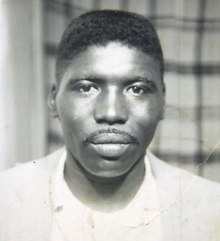
Jimmie Lee Jaskson

Jimmie Lee Jackson

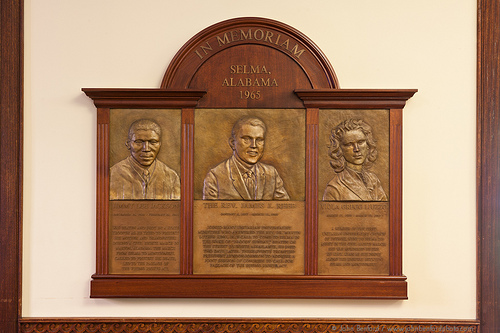
I’d like to begin tonight by telling you the stories of three heroes of the civil rights era. I’d wager most Americans have never heard of them – but as far as I’m concerned, they deserve to be at least as well known as Emmett Till, Medger Evers and Rosa Parks.

The first is Jimmie Lee Jackson, an African-American farmer and woodcutter from in Marion, Alabama. Jackson grew up in poverty, but planned to move North for a better life after graduating from high school. After his father’s early death however, he spent his the remainder of his life on his small family farm in Marion, where he lived together with his sister, mother, and grandfather.

Jackson was an army veteran and a deeply faithful man; he became the youngest deacon in the history of Marion’s St. James Baptist Church. He also turned into a political activist at an early age after unsuccessfully attempting to register to vote for four years. Jackson spearheaded his church’s voter registration drive and eventually became a prominent civil rights leader in Merion.

On the night of February 18, 1965, Jackson participated in a demonstration in which 500 people peacefully marched from a church in Marion to the county Jail about a half a block away to protest the imprisonment of a young civil rights worker. On their way, the marchers were met and beaten by a line of Marion City police officers, sheriff’s deputies, and Alabama State Troopers. Among the injured were two United Press International photographers. A NBC News correspondent was so badly beaten that he was later hospitalized.

The marchers quickly turned and scattered back towards the church. Pursued by the state troopers, Jackson, his sister, mother, and 82-year-old grandfather ran into a café. The troopers followed them in and clubbed his grandfather to the floor. When Jackson’s sister and mother attempted to pull the police off and they began to beat them as well. Jackson went to protect them and a trooper threw him against a cigarette machine. A second trooper moved in and shot Jackson twice at point blank range in the abdomen.

Jackson staggered outside, was clubbed again and fell wounded in the street, where he lay for half an hour. Later that night, Jackson, his mother and grandfather were transported to a hospital in Selma. His mother and grandfather suffered head wounds but were treated and released – Jimmie Lee remained in the hospital where his condition grew steadily worse. Four days later, an Alabama state trooper walked into and hospital room and charged Jackson with assault and battery with intent to murder a peace officer. Eight days later, on Friday, February 26, Jimmie Lee Jackson died from his wounds.

His funeral took place on March 3. Dr. Martin Luther King was among the speakers at the service, after which a thousand people followed Jackson’s casket through the rain to a local cemetery. Four days later, several hundred marchers left Brown Chapel in Selma, formed a long column, and began walking up the steep incline of the Edmund Pettus Bridge, which spans the Alabama River. Their goal was to walk 54 miles to the state capitol in Montgomery to protest Jackson’s death and petition the governor and legislature to open the state’s voting rolls to all citizens. The march ended violently on a day we would all come to know as “Bloody Sunday.” It was a galvanizing moment in the fight for voting rights in this country.
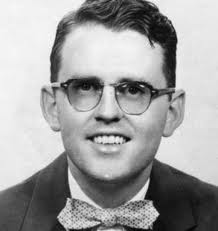
Reverend James Reeb

Reverend James Reeb

The second person I’d like to profile for you now is Reverend James Reeb. Reeb was raised in Caspar, Wyoming, served in the Army during World War II, and was later ordained by the Princeton Theological Seminary. Soon after, however, he left the Presbyterians and joined the Unitarian Universalist church. As a white man who believed in civil rights, he was particularly drawn to the UU’s strong emphasis on social justice.

Reverend Reeb was fully ordained as a Unitarian Universalist minister in 1962. After serving for a few years at All Souls Church in Washington DC, he became the director of the American Friends Service Committee Metropolitan Boston Low Income Housing Program in 1964. With his wife and four children, he moved to Boston and purchased a home in Roxbury, a predominantly African-American area of the city. His daughter Anne later recalled that her father “was adamant that you could not make a difference for African-Americans while living comfortable in a white community.”

Following Bloody Sunday, Reeb went down to Selma with 45 Unitarian ministers and 15 laypeople to participate in the voting rights demonstrations that arose in the wake of Bloody Sunday. On March 9, he joined 2,500 marchers for a second march from Selma to Montgomery. As on previous attempts they were stopped by the police – and so the marchers returned to Browns Chapel for an evening of speeches, singing and prayers.

Later that night, Reeb and two other Unitarian ministers had dinner in a local black restaurant. Although he had planned to return to Boston that night, he called his wife and told her he had decided to stay for one more day. Upon leaving the cafe, the trio was set upon by four men brandishing clubs and yelling racist slurs. They attacked and beat the three men – wounding his two colleagues and severely injuring Reeb with a blow to his skull. Needing a neurosurgeon, he was driven ninety miles by ambulance to University Hospital in Birmingham. He died two days later.

Reverend James Reeb’s death sparked mourning event throughout the country – tens of thousands held vigils in his honor, including a ceremony in Selma, where he, like Jimmie Lee Jackson, was eulogized by Dr. King. That evening, on March 15, President Johnson spoke to a joint session of Congress on behalf of the Voting Rights Act. It was his famous “We Shall Overcome” speech, in which he urged Congress to outlaw all voting practices that denied or abridged “the right of any citizen of the United States to vote on account of race or color.” Six months later, Johnson signed the Voting Rights Act into law.

Viola Liuzzo

Viola Liuzzo

And finally, let me tell you now about Viola Liuzzo – born in 1925 to a poor white family that moved constantly throughout the Deep South. During the early months of World War II, her family moved to Michigan, where she worked in a bomber factory. Eager to contribute to the war effort herself, Viola moved to Detroit, where she married and had two daughters. They divorced shortly after and she eventually married Anthony James Liuzzo, a union organizer for the Teamsters. Anthony adopted her daughters and they had three more children together.

Though she was a high school dropout, Liuzzo trained as a medical laboratory assistant and later took classes at Wayne State University. There she was exposed to political ideas of the time, including debates about the Vietnam War, education reform, and economic justice. This period marked the beginning of her political activism. She was arrested twice in demonstrations and both times she insisted on a trial in order to publicize her causes.

In 1964 Liuzzo, a former Catholic, joined the First Unitarian Universalist Church of Detroit – attracted, like Reverend Reeb, by its commitment to civil rights. She also became active in the Detroit chapter of the NAACP. Like so many others, Liuzzo was galvanized by events in Selma. Following Reverend Reeb’s murder she attended a memorial service for him and soon after, she decided to go down to Selma herself to volunteer for a week. As she explained to her husband, she believed there were “too many people who just stand around talking.” She asked her closest friend, an African-American woman named Sarah Evans, to explain to her children where their mother had gone and to tell them she would call home every night. When Evans warned her that she could be killed, she replied simply, “I want to be part of it.”

So on March 21, Liuzzo joined 3,000 other marchers as they marched across the Edmund Pettus Bridge attempting to reach Montgomery. She stayed on to volunteer over the next few days, driving shuttle runs from the airport to the marchers’ campsite and helping at a first-aid station.

On March 25, she joined the marchers for the final four miles to Montgomery, where she joined the thousands that demonstrated at the Alabama State House. When the march was over, Liuzzo and African-American civil rights worker named Leroy Moton drove five marchers back to Selma. After they were dropped off, Viola volunteered to return Moton to Montgomery. On their way back, four Ku Klux Klan members pulled up alongside their car. Liuzzo tried to outrun them, but they caught up with her car and opened fire. Viola was shot twice in the head and died instantly.

Following her murder, President Johnson publicly demanded that the arrest of Liuzzo’s murderers be a top priority. In just 24 hours, the FBI arrested the four Klan members, one of home was an FBI informant. Johnson appeared personally on national television to announce their arrest.

The FBI would later attempt to publicly discredit Liuzzo – most likely to cover up the fact that their agent was a KKK member and may have actively participated in her murder. J. Edgar Hoover personally spread rumors that Liuzzo was a member of the Communist party and a drug addict and that she had traveled to Selma to have sexual relations with black men. Viola’s family was also targeted by hate groups – after crosses were burned in front of their home. Anthony Liuzzo had to hire armed guards to protect his family.

However, as in the case of Jimmie Lee Jackson and Revered James Reeb, Viola Liuzzo’s death had a powerful impact on the voting rights movement across the country. On March 27 hundreds of protesters marched to the Dallas County courthouse in Selma in her memory. The next day Dr. King eulogized her at San Francisco’s Grace Episcopal Cathedral. The NAACP also sponsored a memorial service for Liuzzo at a Detroit church that was attended by fifteen hundred people including Rosa Parks. A Roman Catholic Church in Detroit celebrated a high requiem mass that was broadcast on TV. Dr. King was among the 750 people in attendance.

As with Jackson and Reeb, Viola Liuzzo’s murder played a critical role in the eventual passage of the Voting Rights Act. According to historians, Johnson invoked her death repeatedly as he lobbied Congress. Five months after she died, he signed it into law.

Why am I telling you the stories of these three individuals tonight? One simple reason is that I believe they deserve to be told. We owe Jimmie Lee Jackson, Reverend James Reeb and Viola Liuzzo at least that much. And we owe it to ourselves. I took the time to tell you about them because so few really know the stories of these American heroes. And we should. We should know who they were, how they lived and the significance of their sacrifice.

I also have a specifically liturgical reason for telling you their stories tonight of all nights. The traditional  Yom Kippur service includes a section known as the Martyrology (or as we call it in Hebrew, “Eleh Ezkarah,” meaning “These I Remember.”) The centerpiece of Martyrology is a long liturgical poem that recounts the death of ten rabbis – including the famous Rabbis Akiba, Ishmael and Shimon ben Gamliel – who were executed for their support of the failed revolt against Rome in the year 132.

We traditionally read these accounts on Yom Kippur because of the classical Jewish belief that blood atones.  Our Torah portion tomorrow will, in fact, describe an ancient sacrificial rite of atonement, in which the High Priest sacrifices a goat on behalf of the entire Israelite people. Though the sacrificial system is no more, we ask for God’s forgiveness by invoking the deaths of those who made the ultimate sacrifice. And so on Yom Kippur, we beseech God: even if we are unworthy of God’s mercy in the coming year, we ask for forgiveness us on account of those who made the supreme sacrifice on our behalf.

Whether or not we buy into such a theology, I believe the Martyrology has an additional function as well: on Yom Kippur we  pose the question honestly: what have we done in the past year to prove ourselves worthy of these profound sacrifices? What have we done to affirm that these courageous people did not die in vain? Have we honored their memories by transforming these lost lives into justice, hope and healing for our world?

When we ask these questions as 21st century American Jews, I believe they resonate for us on multiple levels. When we invoke those Jews who died for practicing their faith, we must ask: have we done what we can to ensure that this Judaism – this exquisite spiritual tradition of ours – will be passed on to future generations? And as Americans, when we remember those who died in furtherance of justice in our country, we are challenged: how have we honored their sacrifice? What to have we done in the past year to ensure that they did not die in vain?

Indeed, at the heart of this liturgy is a refusal to accept that our martyrs have died for nothing. I’ve just recounted for you the stories of three lesser-known martyrs of the American civil rights movement – but this Sunday, as a matter of fact, we will commemorate the 50th anniversary of four others who are much better-known: Addie Mae Collins, Denise McNair, Carole Robertson, and Cynthia Wesley – the four little girls who were killed by a KKK bomb in Birmingham’s 16th St. Baptist Church on September 15, 1963.

At the funeral for three of the girls, Dr. King gave a famous address that has since come to be known as the “Eulogy for the Martyred Children.” At one point in his eulogy, King said as follows:

So they did not die in vain. God still has a way of wringing good out of evil. History has proven over and over again that unmerited suffering is redemptive. The innocent blood of these little girls may well serve as the redemptive force that will bring new light to this dark city … The spilt blood of these innocent girls may cause the white citizenry of Birmingham to transform the negative extremes of a dark past in to the positive extremes of a bright future. Indeed, this tragic event many cause the white South to come to terms with its conscience

Amongst the many religious texts I’ve read on the meaning of martyrdom, I personally find King’s words to be among the most spiritually meaningful and profound. I am particularly moved by his hope, by his realism, but most of all, by his refusal to surrender to the possibility that these four little girls died for nothing. Even in the midst of this wretched tragedy, he was determined to find a spark of spiritual meaning in their loss.

In his eulogy, King also described of blood of the martyrs as redemptive – but he did so in a way that affirmed goodness and justice in the face of an evil, unjust act. As horribly tragic as their deaths were, King could not help but affirm that their deaths would, as he put it, “serve as a redemptive force” that would eventually bring new light during those very dark days. And perhaps most important: his theology was not limited to mere words. As soon as he finished speaking, he continued to lead a movement that would ensure these sacrifices would bring social and political transformation to the American South.

In the end, I’m taking the time to tell you about Jimmie Lee Jackson, Reverend James Reeb and Viola Liuzzo because I believe their stories are utterly appropriate to this day. On Yom Kippur, as we bear witness to their lives, their work and their sacrifice, we are the recipients of a direct spiritual challenge. Now that we’ve heard their stories, it’s time to ask ourselves: have what have we done to carry on the work that they have left unfinished? Have we done all that we can to give their lives and their deaths meaning? Have we done everything in our power to ensure their deaths were not in vain?

Well my friends, we have a very real opportunity to find out, because these are not merely academic questions. Just three months ago, the US Supreme Court dealt a devastating blow to the very cause for which these three individuals sacrificed their lives. As I’m sure everyone here tonight knows, on June 25, the Supreme Court ruled 5-4 to invalidate a key element of the Voting Rights Act – the section that required states with the worst history of voting discrimination to seek preclearance from federal government before implementing new voting changes.

Indeed, there have been numerous attempts to weaken or gut the Voting Rights Act over the past 50 years. Only a month after it was enacted, in fact, it was constitutionally challenged by South Carolina. Over the years, the Voting Rights Act has been challenged in the Supreme Court four separate times – in 1966, 1973, 1980 and 1999 – and each time, the Court has voted to uphold it. Meanwhile, the US Congress has voted to reauthorize the Voting Rights Act on four separate occasions; each and every time it was signed back into law by a Republican president.

In his ruling for the majority last June, Chief Justice John Roberts argued that there is no longer a need for the federal government to actively ensure voting rights:

Nearly 50 years later, things have changed dramatically. Largely because of the Voting Rights Act, (voter) turnout and registration rates in covered jurisdictions now approach parity. Blatantly discriminatory evasions of federal decrees are rare. And minority candidates hold office at unprecedented levels. The tests and devices that blocked ballot access have been forbidden nationwide for over 40 years.

According to this reasoning, voter suppression is simply not the problem it was back in 1965. As Justice Roberts put it, “the Nation is no longer divided along those lines yet the Voting Rights Act continues to treat it as it were.”

Justice Ruth Ginsberg,in a brave and blistering dissent to the majority, stated the patently obvious: the reason things have changed since 1965 because the Voting Rights Act has been in place since 1965. As she wrote:

Throwing out preclearance when it has worked and is continuing to work is like throwing away your umbrella in a rainstorm because you are not getting wet.

If there could be any doubt to Justice Ginsberg’s argument, her point has since been driven home with brutal clarity. Two hours after the ruling, officials in Texas announced that they would begin enforcing a strict photo identification requirement for voters, which had been blocked by a federal court on the grounds that it would disproportionately affect African-American and Hispanic voters. And as we speak, state officials in Mississippi, Alabama, North Carolina and Florida, among others, are now moving to change voter identification laws – laws that had previously been rejected as discriminatory by the federal government.

Make no mistake: this Supreme Court ruling has struck a devastating blow to voting rights in our country. And in so doing, it has reinforced a hard truth: it challenges us with a reminder that the struggle for justice is not a one-time moment but an ongoing process. Indeed, we are so very good at commemorating the victories of the past – but too often, it seems to me, we do it at the expense of the present. I do believe as King has famously said that the arc of freedom bends toward justice – but it doesn’t do so all by itself. Justice will only prevail if we remain vigilant. It is not enough to commemorate and teach our children about the heroes of the civil rights movement in ages gone by. On the contrary, we must teach that we ourselves must consistently do what we must to honor their achievements – and most importantly, their sacrifices.

On Yom Kippur, we ask: who has paid the ultimate sacrifice in the cause of righteousness – and what will we do in the coming year to honor their sacrifice? And on this Yom Kippur, I can think of no better spiritual gesture than to lend our support to the political efforts currently underway to restore the hard fought laws that ensure voting rights for all in our country.

At the moment, these efforts are taking many forms. Given the current reality in Washington, it is clear that our bitterly divided Congress is unable to legislatively address this issue. But there are other efforts ongoing that are eminently worthy of our attention and support. This past July, the Obama administration asked a federal court in Texas to restore the preclearance requirement there. In a speech to the Urban League, Attorney General Eric Holder said that this action is only the first of many different moves the Justice Department will make on behalf of voting rights throughout the country. A more ambitious effort: a Constitutional Amendment that would guarantee the right to vote, is currently being advocated by Wisconsin Congressman Mark Pocan and Minnesota’s Keith Ellison, among others.

In fact, there is no explicit right to vote spelled out in the US Constitution – and as a result, individual states continue to set their own electoral policies and procedures. At present, our electoral system is divided into 50 states, more than 3,000 counties and approximately 13,000 voting districts, all, in sense, separate and unequal. As Rep. Ellison has put it, “It’s time we made it clear once and for all: every citizen in the United States has a fundamental right to vote.”

Obviously passing a Constitutional amendment is a daunting prospect, but this campaign certainly has the potential to build a broad movement that would keep this issue front and center of our national consciousness. And such a movement could well create space for more immediate action at the congressional and state levels to address the devastating fallout from the Supreme Court’s ruling.

I frankly can think of no political actions more appropriate this Yom Kippur than this: actions that will bring redemption to the lives and deaths of Jimmie Lee Jackson, Reverend James Reeb and Viola Liuzzo. I hope you found meaning in their stories – and I fervently hope that we will all come to see ourselves as participants in their stories that continue to unfold even now.

I’d like to conclude with words from Reverend Reeb’s final sermon. They clearly have a heartbreaking significance when you hear them today – but I do believe they speak to us with as much urgency as the day he spoke them in All Souls Church in July 1964: At the very end of his sermon, Reverend Reeb said:

If we are going to be able to meet their need, we are going to have to really take upon ourselves a continuing and disciplined effort with no real hope that in our lifetime we are going to be able to take a vacation from the struggle for justice. Let all who live in freedom won by the sacrifice of others, be untiring in the task begun, till every man on earth is free.

This and every Yom Kippur, may we be worthy of his words.

(Click here to sign a petition that urges the Justice Department to block discriminatory voter ID laws in our country.  Click here to contact your representative and demand Congress act now to pass a constitutional amendment guaranteeing the right to vote.)

Memorial for Jimmie Lee Jackson, Reverend James Reeb and Viola Liuzzo, UU Headquarters, Boston
Memorial for Jimmie Lee Jackson, Reverend James Reeb and Viola Liuzzo, UU Headquarters, Boston

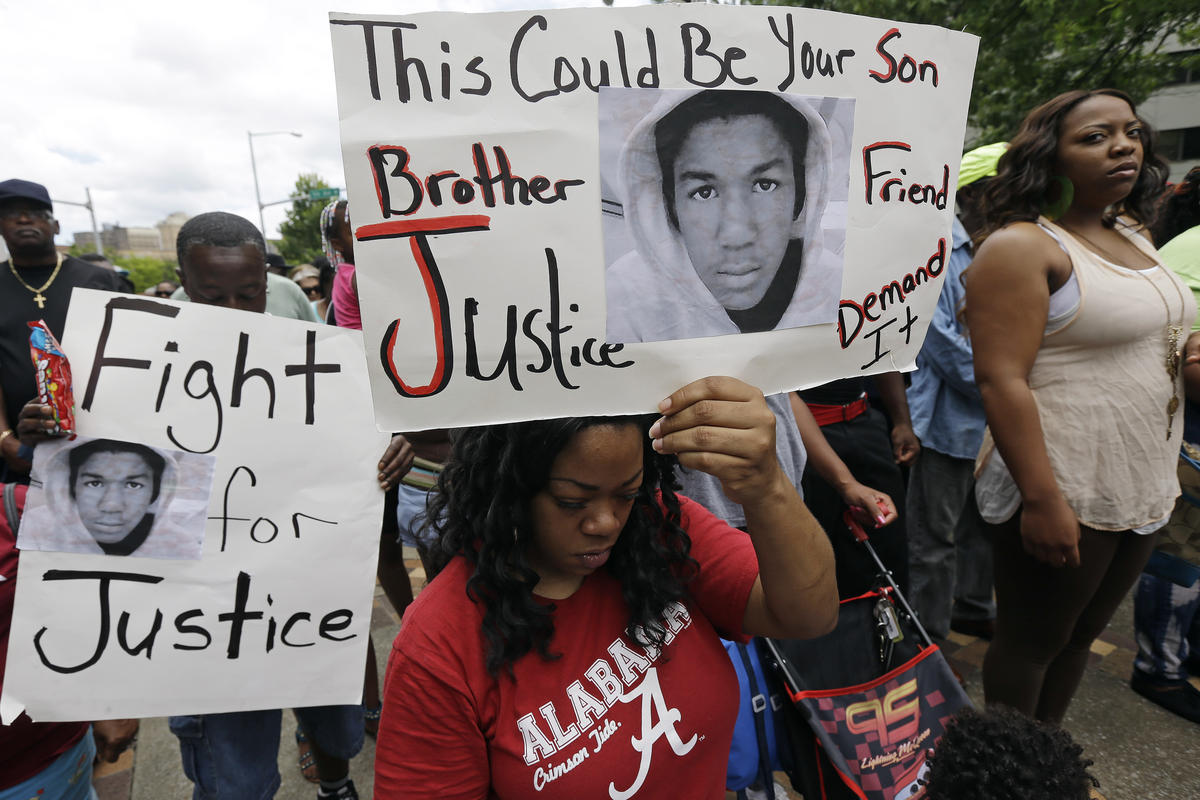
On the Trayvon Martin Verdict and the “National Conversation”

photo credit: Boston Herald

photo credit: Boston Herald

A few thoughts in the wake of Tisha B’Av yesterday…

According to Jewish tradition the Second Temple was destroyed because of the Jewish people’s sinat chinam – or “baseless hatred.”  On Tisha B’Av we affirm that isn’t enough to simply mark our collective tragedies and mourn our collective losses. We must honestly own the ways our own prejudices and intolerance have contributed to these losses.

I was particularly mindful of this spiritual insight this year, as Tisha B’Av followed directly on the heels of the Trayvon Martin verdict and the communal soul-searching it sparked on racism in America. Indeed, more than once over the past several days we’ve heard politicians and pundits call for yet another “national conversation on race.”  Witness Attorney General Eric Holder’s post-verdict remarks:

Independent of the legal determination that will be made, I believe that this tragedy provides yet another opportunity for our nation to speak honestly about the complicated and emotionally-charged issues that this case has raised. We must not – as we have too often in the past – let this opportunity pass.

This isn’t the first time, of course, that we’ve heard the call for such a conversation. I distinctly remember President Bill Clinton making just such a call back in 1997.  It was actually considered fairly controversial at the time  – sad to say we haven’t made much headway in the conversation over the past 17 years.

I don’t mean to be facetious about this. Part of the problem, I think, is that I’m not sure anyone really knows what something as monumental as a “national conversation” would actually look like, particularly on a subject as profoundly charged as race.  Though I hesitate to say so, in some ways I think this call does more harm than good. While I do believe in the importance of dialogue, I can’t help but think that the constant call for communal conversation on race mostly serves to help us to feel better while we dodge the deeper infrastructural realities of racism in America.

While we regularly call for “conversation,” for instance, hard facts such as these continue to go chronically unaddressed:

– Prison sentences of black men are nearly 20% longer than those of white men convicted of similar crimes;

– While people of color make up about 30 percent of the United States’ population, they account for 60 percent of those imprisoned;

– While people of color are no more likely to use or sell illegal drugs than whites, they have higher rate of arrests;

– Voter laws that prohibit people with felony convictions from voting  disproportionately impact men of color.

And the list of shameful statistics goes on and on…

This litany, quite frankly, is nothing short of institutional sinat chinam. And at the end of the day, its going to take much more than dialogue it we’re going to take down the patently unjust and racist laws that oppress people of color in our country.  In this regard, I’d claim national conversation is only truly valuable inasmuch as it leads to real socio-political transformation and change.

So where do we start?  Why not with the “Stand Your Ground” laws, one of which egregiously allowed a man go free after stalking and shooting an unarmed African-American teenager?  It’s critically important that we know that history of laws such this, many of which have been long been pushed through legislatures by the corporate-funded American Legislative Exchange Council (ALEC) and have subsequently been spreading across the country:

Ostensibly a network of state legislators, ALEC is a shadowy, $7 million-a-year organization funded by powerful corporate interests like the Koch brothers, Big Oil, and Big Tobacco.  The NRA has been a longtime financial supporter and served as the corporate co-chair of the ALEC Criminal Justice Task Force, voting with legislators on “model” bills.  Through ALEC, special interests groups like the NRA push their dream legislation through state legislatures. Wal-Mart was corporate co-chair of ALEC task
force approving FL’s “Shoot First” bill as a “model” for other states. The NRA was the next co-chair of that ALEC committee.

According to PR Watch’s Brendan Fischer, ALEC’s influence has has been behind other racially discriminatory legislation as well:

ALEC’s connections to those issues are not limited to Stand Your Ground. The group was instrumental in pushing “three strikes” and “truth in sentencing” laws that in recent decades have helped the U.S. incarcerate more human beings than any other country, with people of color making up 60 percent of those incarcerated. At the same time ALEC was pushing laws to put more people in prison for more time, they were advancing legislation to warehouse them in for-profit prisons, which would benefit contemporaneous ALEC members like the Corrections Corporation of America.ALEC has also played a key role in the spread of restrictive voter ID legislation that would make it harder to vote for as many as ten million people nationwide — largely people of color and students — who do not have the state-issued identification cards the laws require.

If you’d like to engage in action as well as conversation, you can click here to sign a petition urging Attorney General Holder to “review the application of Stand Your Ground laws nationwide and the importance of their repeal.”

And if you live in or around Chicago, I encourage you to join me and other activists of conscience at the ALEC Exposed Protest Rally, which will take place outside ALEC’s 40th Anniversary Conference on Thursday, August 8 at 12 noon.

I hope I’ll see you there.

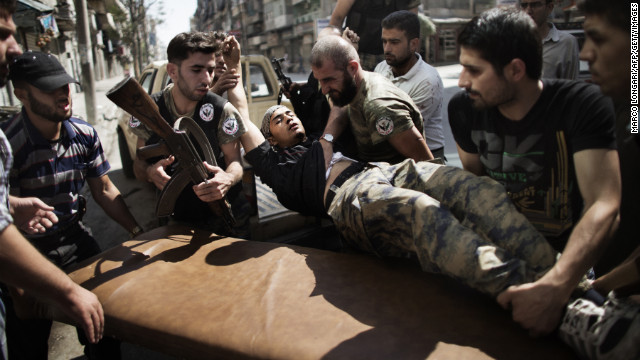
What Would Real Diplomacy in Syria Look Like?

photo: CNN

photo: CNN

Secretary of State Kerry is off to the Middle East, among other things to press for peace talks to stem the tragic bloodshed in Syria. There’s a refreshing thought: up until now we’ve been hearing that the US’s dilemma is essentially a choice between military intervention or inaction. In this day and age, actual diplomacy too often feels like a quaint endangered species.

I’m certainly mindful that US “peace deals” often have more to do with US interests than real and lasting peace – and I fully agree with journalist Shamus Cooke when he writes:

It’s possible that Obama wants to avoid further humiliation in his Syria meddling by a last minute face-saving “peace” deal. It’s equally likely, however, that these peace talks are a clever diplomatic ruse, with war being the real intention. It’s not uncommon for peace talks to break down and be used as a justification for an intensification of war, since “peace was attempted but failed.”

At the same time, however, diplomacy may well be our best option to stem the horrid violence which just seems to spiral and escalate without end. As Iran expert Trita Parsi, recently wrote in Open Zion:

A peaceful and sustainable resolution to the Syrian crisis is not within reach in the short-term. But a significant reduction in the violence and bloodshed can be achieved because the appetite for diplomacy is stronger now than at anytime in the past two years. The peace summit prepared by the U.S. and Russia can achieve this if they bring all the parties to the table.

Some more wise words on the importance of real diplomatic intervention in Syria. First, from Ron Young of the National Interreligious Leadership Initiative for Peace in the Middle East:

To have a realistic chance of success, such an international intervention would have to involve Russia — and Iran and China — as well as countries supporting the rebels. Twin goals of the intervention would be to halt the violence and achieve agreement on a political transition involving the rebels and elements of the current regime that would provide assurances for all of Syria’s diverse internal communities and for interests of the major outside parties. The current U.S. diplomatic initiative with Russia is worthy of public support, and should be pursued with creativity and determination.

And finally, Rich Rubenstein (Professor of Conflict Resolution at George Mason University) writes:

Clearly, any dialogue between the warring parties in Syria is better than continuing to destroy and dismember that nation. Talk, by all means! But the most promising process would involve talks presided over by a team of independent facilitators accepted by both the regime and its opponents – confidential dialogues that would help them explore the systemic causes of the war and fashion a plan for a new Syria. The Americans, Europeans, and neighboring states should agree to stay out of the way while the talks continue and to stand ready to guarantee any agreement reached by the parties.

Israel Seeks Attack on Iran (aka “Politics as Usual”)

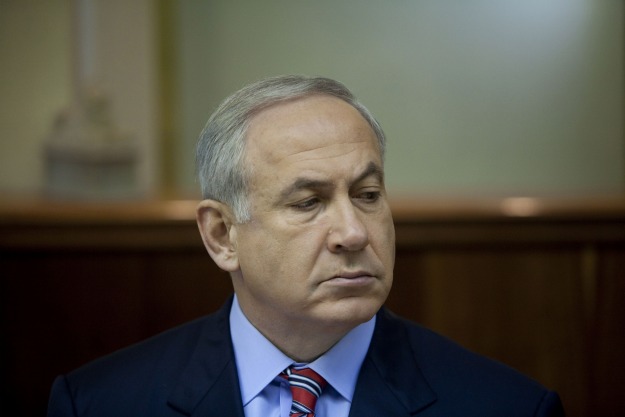
Netanyahu is seeking support in his cabinet for a military attack on Iran. Shimon Peres has just said an attack is “more and more likely.” This, despite the fact that numerous leaders in Israel’s security establishment, including former Mossad chief Meir Dagan, feel that such action would be disastrous.

Make no mistake: this has nothing to do with any imminent threat and everything to do with politics. Even Defense Minister Ehud Barak has said publicly he doesn’t believe Iran would ever drop a nuclear bomb on Israel.

So why this latest panic? Ha’aretz columnist Akiva Eldar hits it right on the head: Netanyahu knows that Obama is politically hamstrung on this issue and he smells serious blood in the water:

(Newt) Gingrich…declared at the week’s end that if the Israeli prime minister reaches the conclusion that the country is in danger, no American president could doubt it and expect Israel to sit with its arms folded and face the danger of another Holocaust. One of his rivals for the candidacy, Rick Perry, then hastened to announce that if Israel decided to attack Iran, he would demand that the United States stand behind it.

What do they have to lose? If this is a false threat designed to goad the United States into exerting more pressure on Tehran, they can wave their support. If a military assault is a new version of the last war in Iraq, they will be able to place the blame on President Barack Obama.

The problem with all this political saber-rattling, as Iran analyst Trita Parsi correctly points out, is that the more Israel presses its cynical “another Holocaust” narrative against Iran, the harder it will be “for any Israeli politician to walk back the threat depiction without losing critical political capital at home.” In other words, all this political bluster could well create a disastrous military fait accomplis.

Last word to David Remnick, who recently posted an important piece on this subject in the New Yorker blog:

A unilateral attack from Israel…would be a grave mistake for all the reasons made plain by Meir Dagan and so many others. It is terrible enough to imagine what might happen if Iran came to possess a bomb; but an attack now would almost certainly lead to a tide of blood in the region. The Middle East today is in a state of fragile possibility, full of peril, to be sure, but also pregnant with promise. A premature unilateral attack could upend everything and one result of many would be an Israel under fire, under attack, and more deeply isolated than ever before.

UNESCO Admits Palestine, the US Pulls $60 Million

The U.N. Educational, Scientific and Cultural Organization (UNESCO) voted yesterday to admit Palestine as its newest member – and the United States promptly responded by cutting off $60 million of funding for the agency.

Apparently our administration feels that Palestine’s membership in an organization committed to “the building of peace, the eradication of poverty, sustainable development and intercultural dialogue” is “reckless,” “anti-Israel and anti-peace.”

Is there anything at all the US will not do for Israel?

From a smart CNN editorial yesterday:

The irony of the decision to cut funding is that UNESCO is one of the few United Nations groups where the U.S. finds a sympathetic ear on issues related to Israel.  UNESCO is actively working with America to promote tolerance and is working to deepen understanding of the Holocaust in countries where people don’t even believe it existed.

Even more important U.S. interests will be at stake if the World Intellectual Property Organization grants Palestinians membership, which as an affiliate of UNESCO they are almost certain to do.  That is where you start directly encountering obvious and significant interests to American business.

To my mind, the best commentary on the absurdity of all this came when AP reporter Matthew Lee questioned State Department spokeswoman Victoria Nuland during a press conference yesterday. You can watch the whole thing above or read a full transcript on Sami Kishawi’s blog.

Here’s my favorite part – Kafka couldn’t have written it better:

Reporter: Okay, and how does it undermine exactly the prospect of where you want to go?

Victoria Nuland: The concern is that it creates tensions when all of us should be concerting our efforts to get the parties back to the table.

Reporter: The only thing it does is it upsets Israel and it triggers this law that you said will require you to stop funding UNESCO. Is there anything else? There’s nothing that changes on the ground, is there?

Victoria Nuland: Our concern is that this could exacerbate the environment which we are trying to work through so that the parties will get back to the table.

Reporter: How exactly does it exacerbate the environment if it changes nothing on the ground unlike, say, construction of settlements? It changes nothing on the ground. It gives Palestine membership in UNESCO, which was a body the US was so unconcerned about for many years that it wasn’t even a member.

Victoria Nuland: Well, I think you know that this administration is committed to UNESCO, rejoined UNESCO, wants to see UNESCO’s work go forward.

Reporter: Actually, it was the last administration that rejoined UNESCO, not this one. But I need to have some kind of clarity on how this undermines the peace process — other than the fact that it upsets Israel.

Victoria Nuland: Again, we are trying to get both of these parties back to the table. That’s what we’ve been doing all along. That was the basis for the President’s speech in May, basis of the diplomacy that the Quartet did through the summer, the basis of the statement that the Quartet came out with in September. So in that context, we have been trying to improve the relationship between these parties, improve the environment between them, and we are concerned that we exacerbate tensions with this, and it makes it harder to get the parties back to the table.

Reporter: Since the talks broke off last September until today, how many times have they met together, with all your effort?

Victoria Nuland: How many times have the parties met?

Reporter: Yes.

Victoria Nuland: I think you know the answer to that question.

Reporter: Correct.

We’re Leaving But Not Really Leaving Iraq

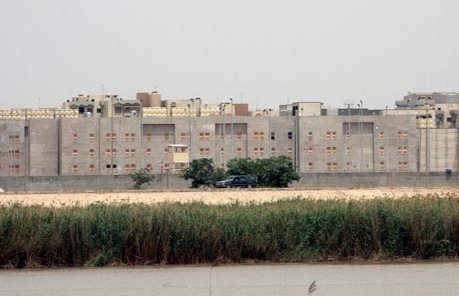
The new American embassy in Iraq is the largest in the world and is built on a tract of land roughly the size of the Vatican

In my recent Yom Kippur sermon, I linked to an article that explained why, even if Obama did honor the pledge to withdraw US troops at the end of 2011, this wouldn’t be the end of our militarized presence in that country by a long shot.

So now that Obama has formally announced the Iraq withdrawal, just pay close, close attention to the heavily militarized State Department presence that will remain.

From a recent WashPo article:

The list of responsibilities the State Department will pick up from the military is daunting. It will have to provide security for the roughly 1,750 traditional embassy personnel — diplomats, aid workers, Treasury employees and so on — in a country rocked by daily bombings and assassinations.

To do so, the department is contracting about 5,000 security personnel. They will protect the U.S. Embassy in Baghdad plus two consulates, a pair of support sites at Iraqi airports and three police-training facilities.

The department will also operate its own air service — the 46-aircraft Embassy Air Iraq — and its own hospitals, functions the U.S. military has been performing. About 4,600 contractors, mostly non-American, will provide cooking, cleaning, medical care and other services. Rounding out the civilian presence will be about 4,600 people scattered over 10 or 11 sites, where Iraqis will be instructed on how to use U.S. military equipment their country has purchased.

“This is not what State Department people train for, to run an operation of this size. Ever since 2003, they’ve been heavily reliant on U.S. military support,” said Max Boot, a national security expert at the Council on Foreign Relations.

Make no mistake: we’re all going to be paying for Bush’s Folly for a long, long time to come…

Understanding the Palestinian UN Initiative: A Conference Call with Josh Ruebner

How can we understand the PA’s initiative to declare statehood at the UN? How should US and the international community respond?  Will it advance the prospects for justice and peace in Israel/Palestine?

To explore these timely issues, Ta’anit Tzedek – Jewish Fast for Gaza is sponsoring a phone conference with Josh Ruebner, National Advocacy Director of the US Campaign to End the Israeli Occupation on Thursday, September 22 at 12 pm (EST)

Ruebner is a former Analyst in Middle East Affairs at Congressional Research Service, a federal government agency providing Members of Congress with policy analysis. His analysis and commentary on US policy toward the Middle East appear frequently in media such as NBC, ABC Nightline, CSPAN, Al Jazeera, USA Today, Los Angeles Times, Huffington Post, Middle East Report, and more.

The US Campaign to End the Israeli Occupation is a national coalition of nearly 350 organizations working to end US support for Israel’s illegal 43-year military occupation of the Palestinian West Bank, East Jerusalem, and Gaza Strip, and to change U.S. policy toward Israel/ Palestine to support human rights, international law, and equality.

Call-in info:

  • Call in number: 1-800-920-7487
  • Code: 92247763#

Participants in the call are encouraged to read one or more of the following articles:

Please join the call!