Category Archives: Gaza

Pride and Prejudice: A Conversation With an Israeli-American Friend

In my last post, I cited a comment from a longtime friend of mine who has been living in Israel for the past twenty years. By way of introduction: his name is David Melman and he lives with his family in a small community village in the Upper Galilee. My friendship with David goes back to our undergraduate days at UCLA, where our mutual connection to Israel was always an important aspect of our relationship. Despite the long distance and the passage of time, our families have remained close.

David and I have been in communication since his first comment to my blog. I’ve asked him if he would be willing to allow me to post our dialogue and he graciously agreed. Click below for his comment, followed by my response.

Continue reading

How to Market Gaza as a Complete Success Story

If you want to cut through the morass of misinformation being disseminated about the siege of Gaza, you should read Gaza Gateway – a website created by Gisha – Legal Center for Freedom of Movement.

GG presents essential information on Gaza Strip border crossings by carefully monitoring the amount of traffic that Israel allows to pass through.  They also provide critical background information, such as the amount of goods allowed through relative to the needs of the population of Gaza.

I particularly recommend GG’s latest post – an ironic piece they call “How to Market Gaza as an Israeli Success Story: The Complete Guide.” It was apparently inspired by a recent report by the Government of Israel that summarized Israel’s “humanitarian activities” for the Gaza Strip in 2009/2010.

Here’s a taste:

Take things out of context. When you say that, “41 truckloads of equipment for the maintenance of the electricity networks were transferred”, you do not need to mention that those spare parts were waiting for many months for clearance, and that, at the end of 2009, the Gaza Electricity Distribution Company reported that 240 kinds of spare parts were completely out of stock or had dipped below the required minimum stock. Likewise, “There was a significant increase in the number of international organization staff entering the Gaza Strip” does not require explanation that, were the productive sector in Gaza not almost completely paralyzed, so many aid workers would not be needed and the number of aid recipients would not be so high. You also don’t need to explain that the high number of staff you quote might be misleading, since it’s likely you are counting individual entrances and not unique visitors (the same international aid workers enter and exit multiple times per month).

Demonstrate impartiality. Present the transfer of 44,500 doses of swine flu vaccine as having nothing to do with you. There is always a chance people will forget it is a border-transcending epidemic and that the head of the Gaza District Coordination Office himself said an outbreak in Gaza would endanger Israel.

Make it look like you are paying the bill. Use vague language such as “In 2009, Israel continued to supply electricity to the Gaza Strip”. Count on the fact that most people don’t know that Israel charges full payment for the electricity by deducting the amount from the VAT and taxes it collects for the Palestinian Authority via import into its territory.

And here’s a PS on my last post:

The Associated Students of UC Berkeley met Wednesday evening to debate and vote on whether or not to override their Presidents veto of the divestment resolution. After a marathon nine hour session, the vote came up short. As the evening ended, they voted to table a final vote on the bill. So it’s stay tuned…

Why I Support the Berkeley Student Divestment Resolution

I’m sure many of you have been following the huge communal dust up that has been swirling around a resolution recently passed by the Associated Students of UC Berkeley. Known as SB118, it calls for the ASUC to divest its holdings in General Electric and United Technologies because of “their military support of the occupation of the Palestinian territories.”

The bill further resolves:

(That) the ASUC will further examine its assets and UC assets for funds being invested in companies that a) provide military support for or weaponry to support the occupation of the Palestinian territories or b) facilitate the building or maintenance of the illegal wall or the demolition of Palestinian homes, or c) facilitate the building, maintenance, or economic development of illegal Israeli settlements on occupied Palestinian territories (and)

(That) if it is found that ASUC and/or the UC funds are being invested in any of the abovementioned ways, the ASUC will divest, and will advocate that the UC divests, all stocks, securities, or other obligations from such sources with the goal of maintaining the divestment, in the case of said companies, until they cease such practices. Moreover, the ASUC will not make further investments, and will advocate that the UC not make futher investments, in any companies materially supporting or profiting from Israel’s occupation in the above mentioned ways.

On March 18, after eight hours of dialogue and deliberation, the resolution passed by a vote of 16-4. After a barrage of criticism from Jewish community and Israel advocacy groups, the resolution was vetoed by the President of the ASUC on March 24. As things currently stand, the veto can be overridden by 14 votes. The final decision will be made on Wednesday April 14 at 7:00 pm (PST).

The most prominent Jewish statement of condemnation against the resolution came in the form of a letter co-signed by a wide consortium of Jewish organizations (including J Street, the ADL and The David Project) that called the bill “anti-Israel,” “dishonest” and “misleading.” Supporters of the resolution have mobilized as well: Jewish Voice for Peace recently responded to the consortium’s letter with a strong public statement and other prominent public figures, including Archbishop Desmond Tutu and Naomi Klein have voiced their support of the Berkeley resolution.

As I’ve written in the past, I do believe that the longer Israel’s intolerable occupation continues, the more we will inevitably hear an increase in calls for boycott, divestment and sanctions (BDS). I’m certainly mindful of what these kinds of calls mean to us in the Jewish community – and I know all too well how the issue of boycott pushes our deepest Jewish fear-buttons in so many ways. Despite these fears, however, I personally support the ASUC resolution.

While I understand the painful resonance that boycotts historically have had for the Jewish community, I truly believe this bill was composed and presented in good faith – and I am troubled that so many Jewish community organizations have responded in knee-jerk fashion, without even attempting to address to the actual content of the resolution.

It is also unfair and untrue to say that this resolution is “anti-Israel.” The bill makes it clear that it is condemning a crushing and illegal occupation – and not Israel as a nation. The wording of the resolution leaves no doubt that its purpose is to divest from specific companies that aid and abet the occupation – and not to “demonize” Israel itself. If a group of students oppose the occupation as unjust, then why should we be threatened if they ask their own organization to divest funds that directly support it? This is not demonization – this is simply ethically responsible investment policy.

Why, many critics ask, are the Berkeley students singling out Israel when there are so many other worse human rights abusers around the world? To answer this, I think we need to look at the origins of the BDS movement itself. This campaign was not hatched by the Berkeley students, or even by international human rights activists. It was founded in 2005 by a wide coalition of groups from Palestinian civil society who sought to resist the occupation through nonviolent direct action.

In other words, BDS is a liberation campaign waged by the Palestinian people themselves – one for which they are seeking international support. By submitting this divestment resolution, the Berkeley students were not seeking to single out Israel as the world’s worst human rights offender – they are responding to a call from Palestinians to support their struggle against very real oppression.

The JVP statement (see above) makes this point very powerfully:

Choosing to do something about Israel’s human rights violations does not require turning a blind eye to other injustices in the world as these groups suggest; but refusing to take action because of other examples would indeed turn a blind eye to this one. Now is the time to support Palestinian freedom and human rights. Berkeley students have done the right thing. Others should follow suit and divest from the occupation, as part of their general commitment to ethical investment policies.

I believe that the actions of these Berkeley students represent an important challenge to those of us who believe that Israel’s occupation equals oppression. Quite simply, we cannot stay silent forever. Sooner or later we will have to ask ourselves: when will we be willing to name this for what it really and truly is? When will we find the wherewithal to say out loud that this policy of home demolitions, checkpoints, evictions, increased Jewish settlements, and land expropriations is inhumane and indefensible? At the very least, will we be ready to put our money where our moral conscience is?

I know that this debate is enormously painful. And I respect that there are members of the Jewish community who disagree with this campaign. But I must say I am truly dismayed when I witness the organized Jewish community responding to initiatives such as these by simply crying “anti-Semitism.” For better or worse, we are going to have to find a better way to have these conversations. Because whatever happens with the ASUC resolution tomorrow, we haven’t heard the end of this movement by a longshot.

This summer, in fact, the Presbyterian Church General Assembly will be taking up a number of resolutions related to Israel/Palestine, including one that recommends divestment from Caterpillar because the company knowingly supplies Israel with bulldozers that are used for illegal (and deadly) home demolitions in the West Bank and Gaza. I’m sad to see that the organized Jewish community is already gearing up for another major confrontation…

If you would like to write a letter to the UC President and UC Berkeley Chancellor before the April 14 vote, click here.

Addendum (April 14): UC Berkeley Professor Judith Butler has written an incredibly eloquent defense of the resolution that she will reportedly read today to the ASUC Student Senate before their override vote. Click here to read it in full.
Ashley Bates Dispatches from Gaza

For an in-depth eyewitness view of life in Gaza, you’ll do no better than, Dispatches from Gaza, a new blog just launched by a young journalist named Ashely Bates.  Ashley has been in Israel/Palestine on on a three month internship for Ha’aretz and in late March she entered Gaza to write free-lance. She’s pitching her articles to various publications – in the meantime her extensive reportage is available via her blog.

Ashley is an amazing and accomplished young woman. Before getting her journalism degree from Northwestern University, she spent two years working for the Peace Corps in Jordan (where she became fluent in Arabic.) She currently works as the Program Director for the Chicago area co-existence program Hands of Peace, which is where I originally had the pleasure of meeting her.

Bookmark her blog. It offers the kind of on-the-ground reportage from Gaza that you will never, ever find in the mainstream media.

An example:

I met today with a soft-spoken village man named Abu Ala’a who is suffering from a serious but treatable spinal condition which is causing him to slowly loose sensations in his limbs. He walks with a limp and can barely feel his left leg. His condition has reached a critical point, and if does not get emergency surgery within the month, he could suffer permanent paralysis, according to his doctor. The Gazan health ministry has requested permission from the Israeli, Egyptian and Jordanian authorities to have him treated abroad, because doctors in Gaza do not have the skills and equipment necessary for the delicate and dangerous operation.

Abu Ala’a wanted me to print his story in an Israeli newspaper because he hoped Israeli civilians might read my article and press the Israeli government to grant him a medical visa. He’s also considering one final, desperate option. “If there’s no other way, I’ll go through the tunnels,” he said, looking at the ground. “I know it’s dangerous, but not more dangerous than the danger of being disabled for the rest of my life.”

Join a Conversation With Young Gazans

Ta’anit Tzedek’s next monthly fast day is Thursday, April 15. To mark the occasion we’ll be sponsoring the second monthly phone conference of our new initiative, Resisting the Siege: Conversations with Gazans.

This month our call will spotlight the Popular Achievement Program in Gaza – a project of the American Friends Service Committee.  This remarkable program works with 14-17 year old Gazan children, instilling values of civic engagement and empowerment to achieve positive social transformation and sustainable development in their communities.  As you can see from the clip above, these kinds of programs demonstrate the critical importance of strengthening Palestinian civil society. Initiatives such as the Popular Achievement Program – not blockades and bombs – are the true key to security for Gazans as well as Israelis.

On our call we will be joined by Popular Achievement director Amal Sabawi and two teenage program participants, Sarah and Roba Salipi, who will discuss how they live with the daily challenges of life in Gaza.

Here’s the call info:

Thursday, April 15, 12:00 pm EST

Toll Free Number: 1-800-868-1837
Direct Dial Number: 1-404-920-6440
Conference Code: 775326#

For those of you who live in the Chicagoland area, Ta’anit Tzedek will also be sponsoring a program, “Dignity Under Siege,” an evening of interfaith reflection, conversation and action on behalf of the citizens of Gaza. Our featured speaker will be Mark Braverman, a longtime advocate for peace and justice in Israel/Palestine and author of the recently published “Fatal Embrace: Christians, Jews, and the Search for Peace in the Holy Land.”

The gathering will take place at the Evanston Galleria, 1702 Sherman Avenue, Evanston, at 7:30 pm. Check the Ta’anit Tzedek website for more info.

Bearing Witness to Collateral Murder

If you ever needed a reminder of the utter obscenity that is war, just watch this clip.

On July 2007, two American Apache helicopters fired on a group of people in the Iraqi suburb of New Baghdad, killing approximately a dozen and wounding many others, including two children. The background of most of the dead are unknown but we do know that among the dead were two Reuters news employees named Saeed Chmagh and Namir Noor-Eldeen.  Following the incident, Reuters demanded an investigation; US military authorities eventually concluded that the soldiers and pilots involved acted in accordance with the law of armed conflict and their Rules of Engagement.

Wikileaks has now obtained and decrypted a video of the entire incident.  After watching it there can be no doubt that the US military acted counter to its own rules – and that its “investigation” was an utter sham. According the Rules of Engagement, soldiers may only “engage the enemy” after hostile fire – but it is quite evident from the video that this firefight was clearly unprovoked.  At worst some of the men walking in the streets appeared to be carrying weapons. Potentially threatening, perhaps, but not in and of itself cause to open fire without warning.

The images in this video are graphic and disturbing enough, but what I found to be most devastating were the offhand, casual, even mocking comments of the soldiers as they mowed down these individuals in the streets. They might as well have been been playing a video game – and perhaps that is just the point. Among other things, this clip provides sobering testimony to the profoundly dehumanizing effects of war. (For me one of the most sickening moments in the video occurs when you hear one soldier chortling as another drives a  Bradley Fighting Vehicle over a dead body in the street.)

“Collateral damage,” of course, is the euphemistic term for the killing of innocents. Those who advocate for war consider the killing of civilians in wartime to be a regrettable but necessary part of the bargain. No doubt we will hear this justification all the more as modern militaries increasingly utilize drones and other forms of high tech military hardware. The more we turn war into a video game, the more we create an artificial distance between ourselves and the ones with whom we wage war. But rarely do we stop to consider the ripple effects of this “collateral damage:” the untold sorrow and grief it creates, the anger and hatred it unleashes in a population.

I encourage you, after watching the video, to read Israeli blogger Yaniv Reich’s piece in Hybrid States, in which he makes the unavoidable connection between this incident and Israel’s war in Gaza and the Goldstone Report:

Those ideologues who supported Israel’s onslaught against the imprisoned population in Gaza need to spend a few extra minutes watching and digesting this video. What this video shows is the massacre of about a dozen people in Iraq, and it shows how very easy it is for even the mightiest and most technologically advanced military in the world to butcher innocents. But we miss thousands of other such videos, which did not make it to Wikileaks.

The images in this video are extremely graphic and unsettling. But I think we at least owe it to ourselves to bear witness to the carnage we ourselves are enabling through our tax dollars – and our silence.

Ta’anit Tzedek Conference Call this Thursday with Craig and Cindy Corrie, Sami Abdel Shafi

Ta’anit Tzedek – Jewish Fast for Gaza has begun a new initiative: “Resisting the Siege: Conversations With Gazans.” On each monthly fast day (the third Thursday of every month) we will convene a conference call featuring a Gazan Palestinian who will discuss his/her experience of life in Gaza, the effects of the siege, and how we can best support efforts to lift the blockade.

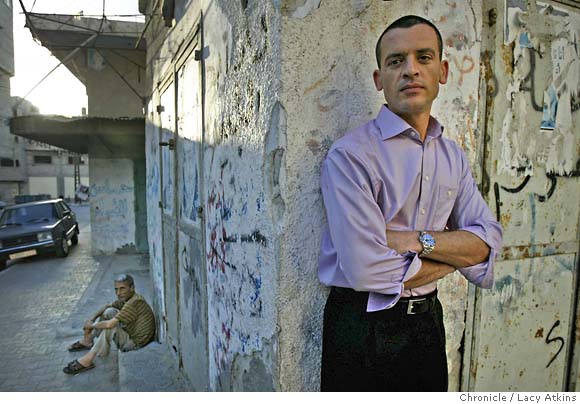
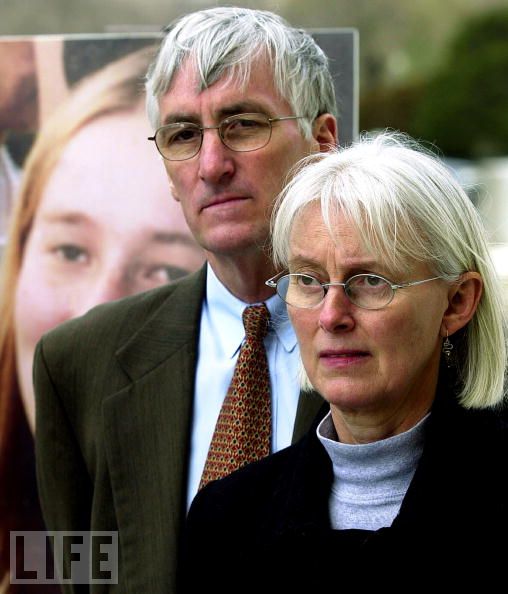
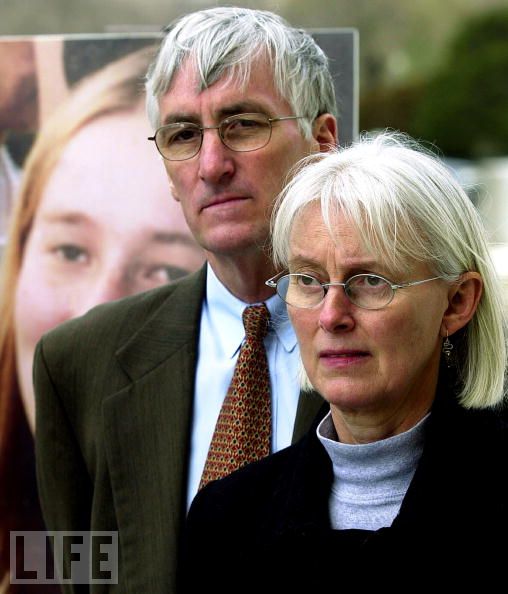
Our next conference call will take place this Thursday, March 18, at 1:00 pm EST and will feature Sami Abdel Shafi (above) an independent political analyst and writer who lives in Gaza. In addition, we will hear from Cindy and Craig Corrie whose daughter Rachel was killed by an Israeli bulldozer in 2003 as she tried to protect a Gazan Palestinian home from demolition.

In an article he wrote for The Guardian last December, Mr. Abdel Shafi wrote eloquently about the nature of the crisis facing Gaza:

Almost nothing has been more deceitful than casting Gaza as a humanitarian case. This is becoming exponentially more problematic a year after the war. Gaza urgently needs far more than merely those items judged by the Israeli military as adequate to satisfy Gaza’s humanitarian needs. This list of allowable items is tiny compared to people’s needs for a minimally respectable civil life.

Gaza is not treated humanely; the immediate concerns about the situation have clearly given way to long-term complacency, while failed politics has now become stagnant. The humanitarian classification conceals the urgent need to address this. Moreover, many in the international community have conveniently resorted to blaming Palestinians for their political divisions, as though they were unrelated to Israel’s policies – most notably Gaza’s closure after Israeli disengagement in 2005.

I also encourage you to read this piece, in which Abdel Shafi discusses the challenges facing the Palestianian Authority during this latest incarnation of the peace process.

The Corries (left) will be joining our call from Haifa where they are currently participating in the hearing of a civil suit they have brought against the Government of Israel. Following Rachel’s death, the Israeli government promised the Bush administration a thorough, credible and transparent investigation of Rachel’s killing. Now seven years later, no such investigation has taken place.

On a recent interview with Democracy Now’s Amy Goodman, the Corries spoke at length about their seven year quest in search of justice and accountability for their daughter’s death:

This is a culmination, really, of seven years of our family searching for some sort of justice in the killing of Rachel. And we’ve tried to do that through diplomatic means, and we’ve asked for a US-led investigation into Rachel’s killing. We also understand that the Israelis, through Prime Minister Sharon, promised President Bush a thorough, credible and transparent investigation of Rachel’s killing. But, by our own government’s measure, that has not happened. So we’re left with simply a civil lawsuit.

So, we’re accusing the state of Israel of either intentionally killing Rachel or guilty of gross negligence in her killing seven years ago. And so, we’re seeking—the only thing you can seek in a civil case is damages. You know, so it’s really a very small part of the story that’s gone on in our lives. But it’s critical to have our time in court.

Our motivation for that was largely that it is an avenue which we understood we would be able to pursue and get information. So, through the discovery process, we were hoping to get a good deal of information. We have gotten some, but they’ve used sort of secrets of state to keep us, block us, from getting other evidence into court. But we’re going forward, and we’re very hopeful that we will get a fair trial.

Today is, in fact, the seventh anniversary of Rachel Corrie’s death. I strongly encourage you to check The Rachel Corrie Foundation for Peace and Justice website to learn how you can honor her memory. We might also heed the words of Craig Corrie (again, from the Democracy Now interview):

(One) other very specific thing that people could do, and I’m calling for people to do—the US government has come out against the blockade or the continued occupation and siege on Gaza. The children that were behind the wall that Rachel stood in front of are still under a state of siege. And I think that, very specifically, people around the world and certainly in this country could write, call or fax the White House and say, not only should we be working to have the Israelis lift that siege, but if they continue to be unwilling to do so, then the United States should come in there, work out a way that they could come in and—the Berlin airlift, it sent a message to the world about our ability to protect people around the world and our willingness to do so. If we did something similar by sea to the Gaza Strip, it would change the view of Americans around the world for maybe another fifty years. It is something that’s doable, and it’s something that the people out, your fans, could actually physically do and ask the White House to do that.

To participate in the conference call:

Dial-in Number: 1-517-417-5200 (caller pays any phone charges)

Participant Access Code: 860453

Questions for Conference Call: If you would like to suggest a question for Mr. Abdel Shafi or for Cindy or Craig Corrie, please email your question to rabbrianwalt@gmail.com or ravboaz@comcast.net no later than Wednesday night.

Rep. Brian Baird is the Bravest, Sanest Politician in the United States

Can I just say that Washington Rep. Brian Baird is my personal hero? Watch this recent interview with RTAmerica which took place on the heels of his third trip to Gaza. Among other things, Baird calls for the US to break the blockade with Gaza, for US envoy George Mitchell to visit Gaza personally, and to consider withholding “certain kinds of aid” to Israel if it continues to settle the West Bank and East Jerusalem.  Toward the end of the interview, he comments: “ignoring the plight of these good people is at our peril.”

On the international front, my personal bravery award goes to Ireland’s Foreign Minister Micheal Martin, who was recently the first European Union foreign minister to visit Gaza in over a year.  He discussed his experiences yesterday in a powerful NY Times  op-ed:

The tragedy of Gaza is that it is fast in danger of becoming a tolerated humanitarian crisis, a situation that most right-thinking people recognize as utterly unacceptable in this day and age but which is proving extremely difficult to remedy or ameliorate due to the blockade and the wider ramifications of efforts to try and achieve political progress in the Middle East.

One can imagine how hard it is not to give in to despair and hopelessness in such an environment. However, what was most impressive and heartening during my visit was the resilience and incredible dignity of ordinary people.

Thank You, Rep. Baird

Yet another American political voice calls to lift the Gaza blockade. From yesterday’s NY Times:

The United States should break Israel’s blockade of Gaza and deliver badly needed supplies by sea, a U.S. congressman told Gaza students.

Rep. Brian Baird, a Democrat from Washington state, also urged President Barack Obama’s Mideast envoy to visit the Hamas-ruled territory to get a firsthand look at the destruction caused by Israeli’s military offensive last year.

Rep. Baird’s statement on Gaza, from his website:

(Rocketing) from Gaza doesn’t necessarily mean that any response, regardless of scope, target or impact on civilians, is necessarily justified, moral or strategically prudent.  This kind of misleading duality itself reflects the thinking, on both sides, that can make peace so hard to achieve and violence so easy to justify.  The fact is, there were and are many alternative responses possible and it is a false dichotomy to suggest, as some have, that if one criticizes the actions taken by Israel in Gaza and the West Bank then one is necessarily ignoring the rocket attacks from Gaza or somehow siding with or enabling terrorists.

In my judgment what has happened in Gaza and what goes on in the West Bank every day endangers U.S. integrity and security and ultimately strengthens hard line extremists at the expense of moderates and to the detriment of long term Israeli security.   I also believe, having traveled and met with people throughout the region, that this adverse effect is not confined to Palestine but extends to varying degrees throughout the Islamic world and beyond.

I understand that people may disagree strongly with this perspective, but I am certainly not alone in expressing it.  Many people have contacted my office to convey support for what we have said about our visit and this includes many friends of Israel within our own country.

Click here to thank Rep. Baird for his courage.

More Join the Call to Lift the Blockade

When Brian Walt and I initiated the Jewish Fast for Gaza last year, advocating for a lifting of the Gaza blockade was not a particularly popular thing to do. I’m gratified to see that situation is beginning to change.

I’ve already reported on the Ha’aretz editorial; and now MJ Rosenberg, a respected Mideast analyst/columnist has recently made a forceful call to end the blockade as well.  In the political arena, 77 members of the British House of Commons have done the same through the introduction of an Early Day Motion. Here in the US, 54 members of Congress recently wrote a letter to President Obama that called for a lifting of the blockade, citing its dire strategic and humanitarian effects:

The unabated suffering of Gazan civilians highlights the urgency of reaching a resolution to the Israeli-Palestinian conflict, and we ask you to press for immediate relief for the citizens of Gaza as an urgent component of your Middle East peace efforts.

Several American Jewish organizations have publicly supported the letter and I was happy to learn that J Street actively lobbied members of Congress to sign on.  Take a look at all 54 signatories of the letter – if your Rep is not on the list, please consider contacting him/her to express your disappointment. (For my part, I’m very disappointed that my Rep, Jan Schakowsky – an active and vocal supporter of J St. – chose not to sign on).

Finally, if you agree with the sentiments expressed above, please sign on as a supporter of Ta’anit Tzedek – Jewish Fast for Gaza. Our next fast day is Thursday, February 18.