Category Archives: Global Activism

Chicago Jewish Delegation Stands Up for LGBT Rights in Uganda

1240376_10152190526038257_795601751_n

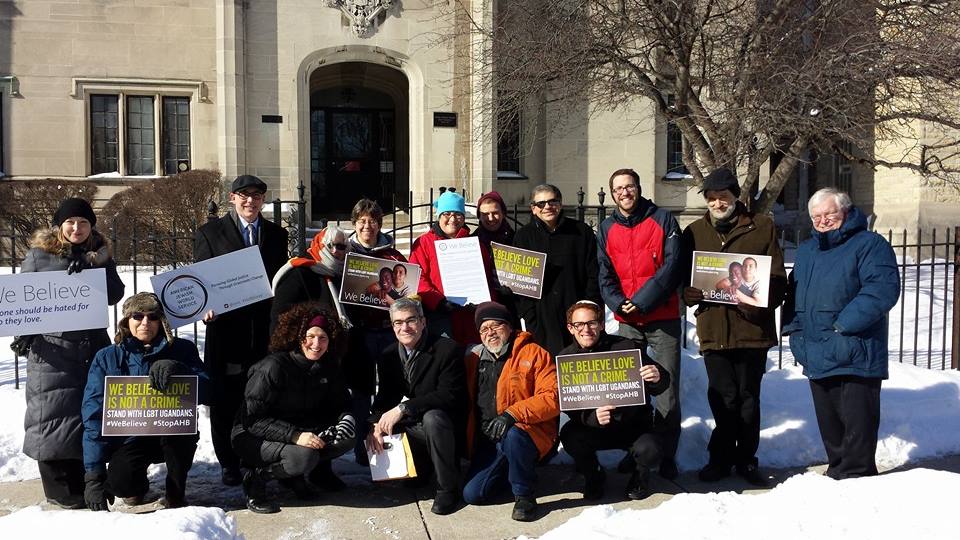
Members of the AJWS Chicago delegation delivering letter to the Ugandan Consulate

Today marked a day of global action of protest against the Ugandan Parliament’s so-called “Anti Homosexuality Bill.” It was my honor to participate by delivering a rabbinic letter to the Ugandan consulate in Chicago along with 15 other members of the the Jewish community, including five rabbis.

This bill, which was passed in December 2013, is a hate-filled piece of legislation that threatens the health and lives of LGBT Ugandans and is a grave violation of human rights. First introduced in 2009, the bill seeks to strengthen existing penalties in Ugandan law against homosexuality. Among the bill’s many cruel and unconscionable provisions is life imprisonment for “repeated homosexual behavior.” It also criminalizes what it describes as “the promotion of homosexuality,” which includes funding organizations that provide basic services such as healthcare to LGBT people.

Our action today was a sponsored by American Jewish World Service, who responded to a call from its partners in Ugandan Human Rights NGO by organizing in communities throughout the US. In addition to Chicago, similar actions took place in New York, Washington DC, Los Angeles and San Francisco.

Here’s the text of the letter we delivered to the Ugandan consul in Chicago:

Dear President Museveni,

I am writing to implore you, respectfully, to veto Uganda’s Anti-Homosexuality Bill that was recently passed by the Ugandan Parliament.

As a rabbi, I honor the inherent dignity of each and every person. Jewish theology, tradition and history compel me to uphold the values of kavod habriyot, respect for all of creation, and btzelem elohim, the notion that all people–including lesbian, gay, bisexual and transgender (LGBT) people–are created in the Divine image. Tragically, I know from our history that the stripping away of human rights from specific minorities is often a precursor to targeted destruction.

If this bill is signed into law, it would be a grave violation of human rights and would be one of the most abhorrent manifestations of discrimination against LGBT people worldwide.

My LGBT friends and colleagues in Uganda are frightened–and I believe they have every reason to be. I do not believe they should live in fear just because of who they are or who they love. I hope you share the same view.

I urge you, Mr. President, to use the power of your position to uphold the human rights and human dignity of all Ugandan citizens. Please stand on the right side of history by vetoing this bill.

I encourage you to click here to sign a similar letter currently being distributed by AJWS. (If you are a rabbi and you have not yet signed the rabbinic letter, click here.)

It’s time to stand with LGBT Ugandans – and all who are targeted by hate-legislation.
1798178_10152190525723257_1237770972_n

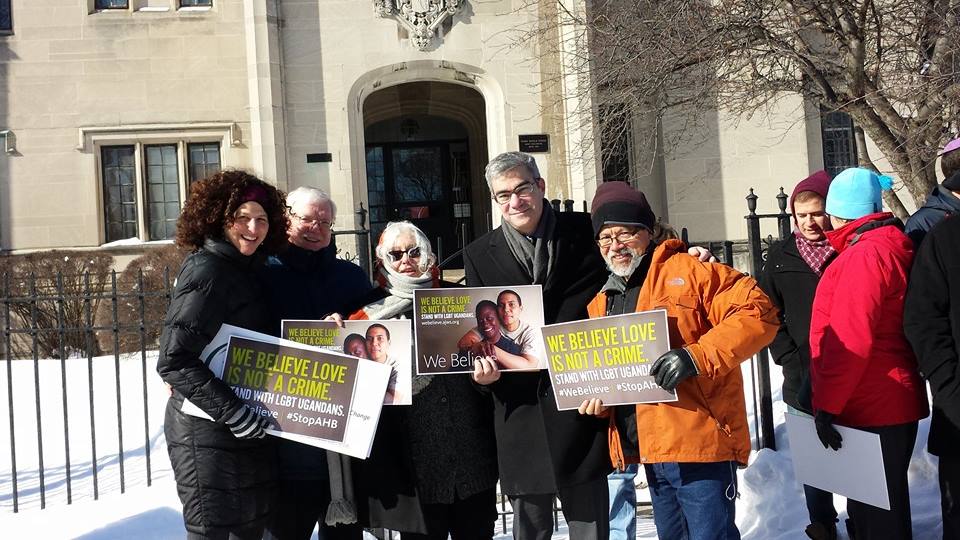
Members of my congregation, JRC, in front of the Ugandan consulate: (left to right: AJWS-Chicago Executive Director Taal Hasak- Lowy, Michael Sehr, Tina Escobar, me, Gonzalo Escobar)
The Horrifying Scope of Israel’s Prawer Plan

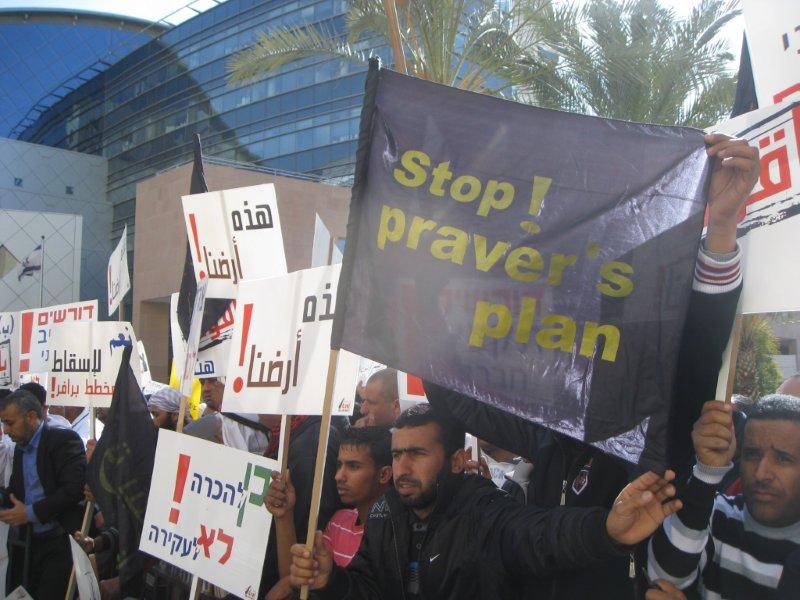
stop-prawer-plan-israel-Bedouin

By now i’ve written more than a few blog posts about Israel’s Prawer-Begin Plan which, if approved by the Knesset would displace tens of thousands of Bedouin from their ancestral home in the Negev desert.  Up until now, many defenders of the plan have claimed that this “relocation” was developed for the benefit of the Bedouin. In recent weeks, Israeli government spokespeople have responded to anti-Prawer protests by claiming 80 percent of the Bedouin population actually support the plan.

The patent falsehood of such claims have now been laid bare. A map of the project has just been released to the Knesset Interior Affairs Committee and the massive extent (and injustice) of the plan has now been brought into the light of day.

Ironically enough, according to Michael Omer-man of +972mag, the map was prepared by the Prime Minister’s Office for Housing Minister Uri Ariel, in an attempt to assuage his party’s fears that too much land would be given to the Bedouin.  (That’s right – apparently the far right Jewish Home party opposes the Prawer Plan because they believe it is too lenient to the Bedouin.)

According to the report, the bill’s co-sponsor Benny Begin has admitted Bedouin leaders have never even seen the plan until now:

Begin on Monday refuted that he ever made such statements, writing, “I have never said to anyone that the Bedouin accept my plan.”

He couldn’t have made such a claim, he explained, because he never even presented the Bedouin community with his plan, “and therefore I could not have heard their reactions to it.”

“[Because] I was not able to know their level of support for the law, it therefore follows that I couldn’t say that I know anything about their support for the law.”

According to the new map, the state of Israel will take over 250,000 dunams (61,700 acres) currently populated by Bedouins, while the Bedouins will be resettled in an area totaling 170,000 dunams (42,000 acres). Around 40,000 people will be forced to leave their homes.

I don’t know any other way to say it: if implemented, this plan would result in a crime that is truly staggering to contemplate. It will lead to the uprooting and forcible eviction of dozens of villages. Tens of thousands of residents will be stripped of their property and their historical land rights. Thousands of families will be condemned to poverty and unemployment. The communal life and social fabric of these villages will be destroyed.

This plan is decidedly not about the best interests of the Bedouin. If it is about anything, it is about a large swath of land in the south of Israel that government leaders have been attempting to “Judaize” since the days of Ben-Gurion. The only reason the Bedouin are slated for removal, quite frankly, is because they are not Jews. By any other name, such an act would be called ethnic cleansing and I am not hesitant to say so.

If you haven’t yet, please join me and the growing number of Jews and people of conscience who are voicing their opposition to the Prawer-Begin plan in no uncertain terms.

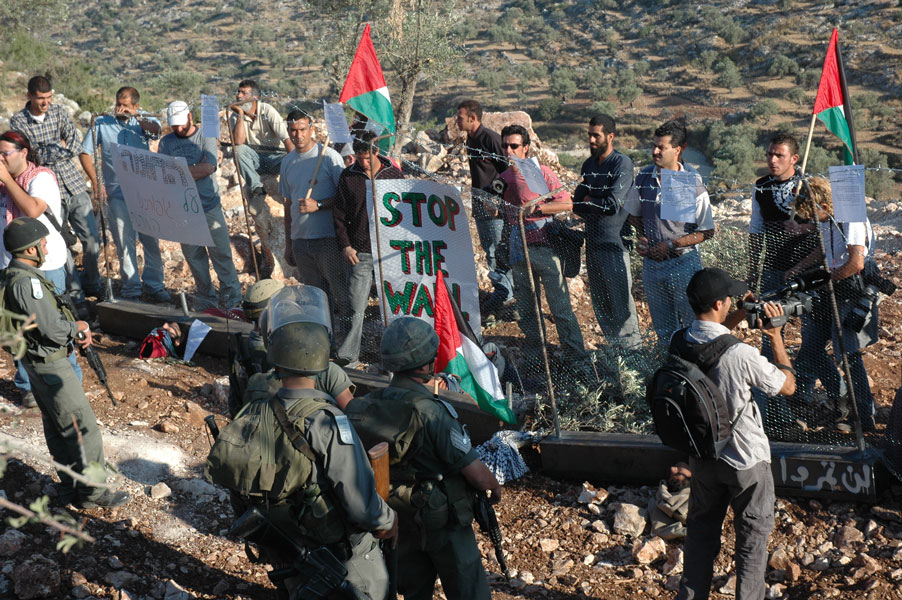
Coming Soon: A Solidarity Delegation to Bil’in

bilin

My next several posts will come from the West Bank, where I will be traveling as part of a group of Chicago-area Jews and Palestinians to learn from and show solidarity with Palestinians who are engaged in nonviolent resistance to the Israeli occupation. Our delegation will be hosted in the village of Bil’in, where, for the past several years, residents have been protesting the construction of the Separation Wall that has separated the village from its farming land – land that Israel is using to expand its settlement of Modi’in Illit, which lies immediately to the west. (You may recall the story of Bil’in is the subject of the great documentary, “5 Broken Cameras.”)

Our group will also be traveling to sites throughout the West Bank and Israel to visit with leaders of the Palestinian nonviolent movement and Israelis who show solidarity with them. I am thrilled to be taking this trip together with dear friends who I have long known though our activism for a just peace in Israel and Palestine.

I will blog as much as I can about my experiences from the ground and upon my return. Please stay tuned!

Israeli Government Poised to Evict 40,000 Bedouin – Please Act Now!

The Israeli government is poised to evict 40,000 Bedouin citizens of Israel from their homes – from land upon which they’ve lived since even before the State of Israel was established.  This Knesset bill, known as the “Prawer-Begin Outline Plan” was designed without the consultation of the Bedouin communities and denies their basic rights over their land and will surely throw them into further unemployment and despair. While the government is trying to force the bill through, but a huge public outcry now can persuade coalition parties to think twice before endorsing this injustice.

The Knesset vote on the “Prawer-Begin Outline” plan was postponed this week – and they may vote next Tuesday. Please click here to to press Knesset members to either vote down the “Prawer-Begin Outline” or withdraw it entirely.

For further information:

From displacement in the Negev to ‘price tag’ attacks: A week in photos – May 23-29
This week: Palestinians and settlers stage West Bank demonstrations, Bedouins and friends protest the Prawer Plan and rebuild demolished homes in Atir, Israelis resist evictions and privatization, free T-shirts remind tourists that Bethlehem is in Palestine, the Israeli army invades refugee camps and Palestinians resist new settler outposts.  (Activestills, +972)

A primer on the proposed Bedouin resettlement in the Negev (Ha’aretz)
http://www.haaretz.com/news/features/a-primer-on-the-proposed-bedouin-resettlement-in-the-negev.premium-1.519738

Ministerial committee approves plan to displace thousands of Bedouin-Palestinians (+972 Blog)
http://972mag.com/nstt_feeditem/ministerial-committee-approves-plan-to-displace-thousands-of-bedouin-palestinians/

Israel ignores Bedouin needs with Begin plan (Association for Civil Rights in Israel paper)
http://www.acri.org.il/en/2013/05/03/information-sheet-begin-plan/

The full Begin plan “Regulating the
 Status 
of 
Bedouin 
Settlement 
in
 the 
Negev” (unofficial translation by ACRI)
http://www.acri.org.il/en/wp-content/uploads/2013/01/Begin-Report-English-January-2013.pdf

Why Be Jewish?: A Sermon for Yom Kippur 5773

From my Yom Kippur sermon yesterday:

Let me leave you with this vision: the vision of a people who have over the centuries learned to build a nation without borders, a multi-ethnic nation suffused with the beauty of a myriad of cultures, a nation inspired by a religious tradition it constructs and reconstructs in every age and in every generation. At its heart, a nation committed to the struggle for meaning in our lives and justice in our world. And in the end, a nation that has nothing to fear and every opportunity to gain from the remarkable changes underway in the 21st century.

Click below to read the entire sermon:

Continue reading

On the Rachel Corrie Verdict and Doing the “Reasonable” Thing

I’m sure many people find it perfectly reasonable that an Israeli court recently ruled Palestinian solidarity protester Rachel Corrie caused her own death in 2003 by standing in front of a moving bulldozer. After all, as Judge Oded Gershon pointed out, she knew the risks. She “chose to endanger herself” by going into a “closed military zone” to try and stop the destruction of a Palestinian home in southern Gaza.  Then she refused to step aside, as “any reasonable person would have done.”

If this verdict all sounds perfectly “reasonable” to some, I believe it is only because it was presented devoid of any real context. It utterly ignores the fact that it is the Israeli military – and by extension, Israel itself – that creates the rules that govern the “reality” of this situation. The court could rule any way it pleased – even despite all evidence to the contrary – because at the end of the day it answers to no one but itself.

Why was this civilian area deemed a “closed combat zone?” Because the Israeli military deemed it as such. This, despite the fact that no combat was taking place in the area on that day and no closed military zone order was ever presented in court. This despite the compelling claims that these home demolitions have nothing to do with Israeli’s security and everything to do with collective punishment.

If you have any doubt about the length and breadth of Israel’s military impunity, I urge you to read this article by the Guardian’s Chris McGreal – to my mind the most important article about the Corrie verdict thus far:

The case laid bare the state of the collective Israeli military mind, which cast the definition of enemies so widely that children walking down the street were legitimate targets if they crossed a red line that was invisible to everyone but the soldiers looking at it on their maps. The military gave itself a blanket protection by declaring southern Gaza a war zone, even though it was heavily populated by ordinary Palestinians, and set rules of engagement so broad that just about anyone was a target.

Yes, Rachel Corrie knew the risks. As an activist with the International Solidarity Movement (ISM), she went through extensive training to prepare herself to engage in this form of nonviolent protest.  Eyewitnesses testified that she wore a high visibility orange vest and stood in full view of the soldier driving the bulldozer. But tragically, I doubt all the precautions in the world could ever have protected her from what McGreal refers to as “the collective Israeli military mind.”

Or, for that matter, Israeli military justice. As is now well known – and has even been admitted by US Ambassador to Israel Dan Shapiro – the IDF’s investigation into Rachel’s death was a sham, carried out by a team of 19-year-old inexperienced boys who never interrogated a single Palestinian or non-military witness. This is a critical point: Israel has to date not carried out a full, credible investigation of its military’s actions on that day – actions that resulted in the death of an American citizen. As Rachel’s mother Cindy has correctly pointed out: “a lawsuit is not a substitute for a legal investigation, which we never had.”

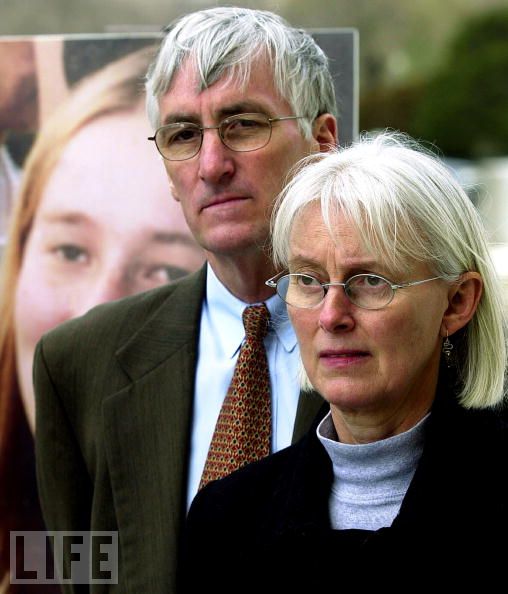
I have met Rachel’s parents Cindy and Craig on several occasions now and I know them to be among the most compassionate and principled social justice activists I have ever met.  Yes, they are pursuing this case because of what happened to their daughter, but anyone who knows them knows they are driven by a deeply held belief in justice.  Notably, they only sought one dollar in damages from the Israeli government – an award which Judge Gershon refused to grant them in his ruling.  I have no doubt that Cindy Corrie meant it from the bottom of her heart when she said after the verdict:

This is a sad day, not only to us, as a family. This is a sad day for Israel, a sad day for human right activists, a sad day for international law, a sad day for justice.

I do agree with Judge Gershon when he ruled that Rachel did not step aside “as any reasonable person would have done.”  As too many nonviolent protesters know all too well, when you find yourself in the midst of an unjust context, doing the just thing is rarely the most reasonable option. (I’m sure many didn’t consider it “reasonable,” for instance, when marchers in Selma walked straight into a line of armed state troopers on the Edmund Pettus Bridge in 1965.)

Look at the clip above. It comes from a Korean news story about the Palestinian nonviolent protest movement in the West Bank. In this clip, you can see ISM founder Huwaida Arraf protecting protesters from armed soldiers with her own body. Nothing reasonable there. How many of us have one iota of her – or Rachel’s – courage to stand firm in the face of such overwhelming injustice?

At the press conference following the verdict, the Corries were asked how they felt that the judge said that Rachel should have moved out of the bulldozer’s way. Cindy Corrie’s response:

I don’t think that Rachel should have moved. I think we should all have been standing there with her.

The Jewish Community Debates BDS

As the Boycott, Divestment and Sanctions movement gains momentum, I’ve been pleasantly surprised to see at least two internal Jewish community conversations in which this painful, volatile issue with was debated with intelligence and mutual respect.

Last month, the New York-based org Jews Say No sponsored a debate/discussion featuring Israeli activist Yonatan Shapira, Birthright Unplugged director Hannah Mermelstein, Forward editor JJ Goldberg and J Street board member Kathleen Peratis.  It takes thirteen YouTube clips to see the entire program, but I highly recommend watching it from beginning to end. I found it informative, intelligent, passionate – and ultimately inspiring for the way a Jewish gathering could discuss such a potentially divisive subject so gracefully. (Click above for the first clip, then surf to the Jews Say No website to watch the next twelve.)

For its part, Tikkun Magazine held its own Jewish roundtable on BDS featuring Tikkun editor Rabbi Michael Lerner, Jewish Voice for Peace director Rebecca Vilkomerson; Rabbi Lynn Gottlieb, founder of Shalom Shomer Network for Jewish Nonviolence, J Street president Jeremy Ben Ami; and Israeli Shministit (refuser) Maya Wind. The entire conversation can only be accessed by purchasing the July/August edition of Tikkun Magazine, but you can read key excerpts at the JVP website.

Passover Supplements Galore!

The Passover 2010 seder supplements are arriving fast and furious. In my last post I shared my JVP supplement – here are a few more you can download and use to spice up your seder meal:

– The “Moral Voices” initiative of Penn Hillel has published “From Chains to Change” – a supplement that connects the lessons of Pesach to the contemporary scourge of human trafficking;

– Workingman’s Circle’s “10 Modern Plagues” demonstrates how our contemporary bounty is diminished by the suffering of others;

– J Street’s supplement asks “Four More Questions” about the prospects for the peace process in the coming year;

Tikkun Magazine’s supplement, thoughtful as ever, is so verbose that it could be its own haggadah…

The new supplement created by American Jewish World Service focuses on disaster relief:  “Dayenu: Supporting the Long Journey from Disaster to Recovery;”

– Jewish Funds for Justice highlights immigration reform with “For We Were Strangers;”

A print-out placemat from Mazon asks a 5th question: “Why On This Night are Millions of People Going Hungry?”

A zissen Pesach – all the best for a sweet and liberating Passover…

Ta’anit Tzedek Conference Call this Thursday with Craig and Cindy Corrie, Sami Abdel Shafi

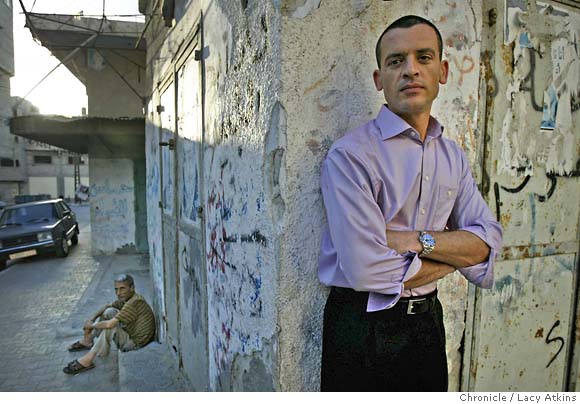
Ta’anit Tzedek – Jewish Fast for Gaza has begun a new initiative: “Resisting the Siege: Conversations With Gazans.” On each monthly fast day (the third Thursday of every month) we will convene a conference call featuring a Gazan Palestinian who will discuss his/her experience of life in Gaza, the effects of the siege, and how we can best support efforts to lift the blockade.

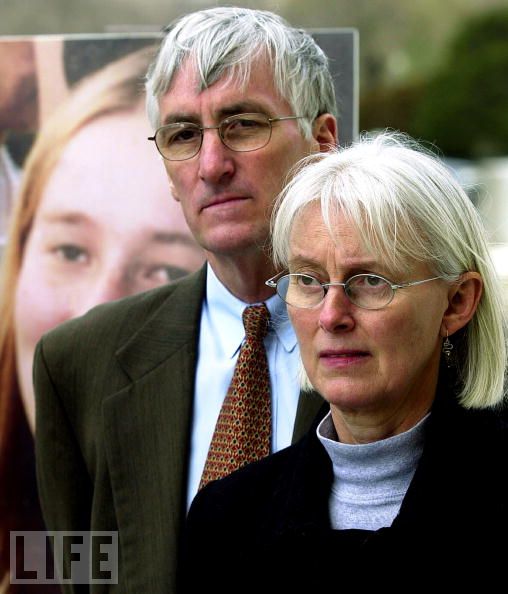
Our next conference call will take place this Thursday, March 18, at 1:00 pm EST and will feature Sami Abdel Shafi (above) an independent political analyst and writer who lives in Gaza. In addition, we will hear from Cindy and Craig Corrie whose daughter Rachel was killed by an Israeli bulldozer in 2003 as she tried to protect a Gazan Palestinian home from demolition.

In an article he wrote for The Guardian last December, Mr. Abdel Shafi wrote eloquently about the nature of the crisis facing Gaza:

Almost nothing has been more deceitful than casting Gaza as a humanitarian case. This is becoming exponentially more problematic a year after the war. Gaza urgently needs far more than merely those items judged by the Israeli military as adequate to satisfy Gaza’s humanitarian needs. This list of allowable items is tiny compared to people’s needs for a minimally respectable civil life.

Gaza is not treated humanely; the immediate concerns about the situation have clearly given way to long-term complacency, while failed politics has now become stagnant. The humanitarian classification conceals the urgent need to address this. Moreover, many in the international community have conveniently resorted to blaming Palestinians for their political divisions, as though they were unrelated to Israel’s policies – most notably Gaza’s closure after Israeli disengagement in 2005.

I also encourage you to read this piece, in which Abdel Shafi discusses the challenges facing the Palestianian Authority during this latest incarnation of the peace process.

The Corries (left) will be joining our call from Haifa where they are currently participating in the hearing of a civil suit they have brought against the Government of Israel. Following Rachel’s death, the Israeli government promised the Bush administration a thorough, credible and transparent investigation of Rachel’s killing. Now seven years later, no such investigation has taken place.

On a recent interview with Democracy Now’s Amy Goodman, the Corries spoke at length about their seven year quest in search of justice and accountability for their daughter’s death:

This is a culmination, really, of seven years of our family searching for some sort of justice in the killing of Rachel. And we’ve tried to do that through diplomatic means, and we’ve asked for a US-led investigation into Rachel’s killing. We also understand that the Israelis, through Prime Minister Sharon, promised President Bush a thorough, credible and transparent investigation of Rachel’s killing. But, by our own government’s measure, that has not happened. So we’re left with simply a civil lawsuit.

So, we’re accusing the state of Israel of either intentionally killing Rachel or guilty of gross negligence in her killing seven years ago. And so, we’re seeking—the only thing you can seek in a civil case is damages. You know, so it’s really a very small part of the story that’s gone on in our lives. But it’s critical to have our time in court.

Our motivation for that was largely that it is an avenue which we understood we would be able to pursue and get information. So, through the discovery process, we were hoping to get a good deal of information. We have gotten some, but they’ve used sort of secrets of state to keep us, block us, from getting other evidence into court. But we’re going forward, and we’re very hopeful that we will get a fair trial.

Today is, in fact, the seventh anniversary of Rachel Corrie’s death. I strongly encourage you to check The Rachel Corrie Foundation for Peace and Justice website to learn how you can honor her memory. We might also heed the words of Craig Corrie (again, from the Democracy Now interview):

(One) other very specific thing that people could do, and I’m calling for people to do—the US government has come out against the blockade or the continued occupation and siege on Gaza. The children that were behind the wall that Rachel stood in front of are still under a state of siege. And I think that, very specifically, people around the world and certainly in this country could write, call or fax the White House and say, not only should we be working to have the Israelis lift that siege, but if they continue to be unwilling to do so, then the United States should come in there, work out a way that they could come in and—the Berlin airlift, it sent a message to the world about our ability to protect people around the world and our willingness to do so. If we did something similar by sea to the Gaza Strip, it would change the view of Americans around the world for maybe another fifty years. It is something that’s doable, and it’s something that the people out, your fans, could actually physically do and ask the White House to do that.

To participate in the conference call:

Dial-in Number: 1-517-417-5200 (caller pays any phone charges)

Participant Access Code: 860453

Questions for Conference Call: If you would like to suggest a question for Mr. Abdel Shafi or for Cindy or Craig Corrie, please email your question to rabbrianwalt@gmail.com or ravboaz@comcast.net no later than Wednesday night.

On Haiti Remembered and Gaza Forgotten

Two prominent Israeli columnists ask: why are Israelis so eager to pitch in to the rescue effort in Haiti and yet show such little concern over the dire humanitarian crisis they’ve helped to create just a few kilometers away in Gaza?

Akiva Eldar, writing in Ha’aretz

(The) remarkable identification with the victims of the terrible tragedy in distant Haiti only underscores the indifference to the ongoing suffering of the people of Gaza. Only a little more than an hour’s drive from the offices of Israel’s major newspapers, 1.5 million people have been besieged on a desert island for two and a half years. Who cares that 80 percent of the men, women and children living in such proximity to us have fallen under the poverty line? How many Israelis know that half of all Gazans are dependent on charity, that Operation Cast Lead created hundreds of amputees, that raw sewage flows from the streets into the sea?

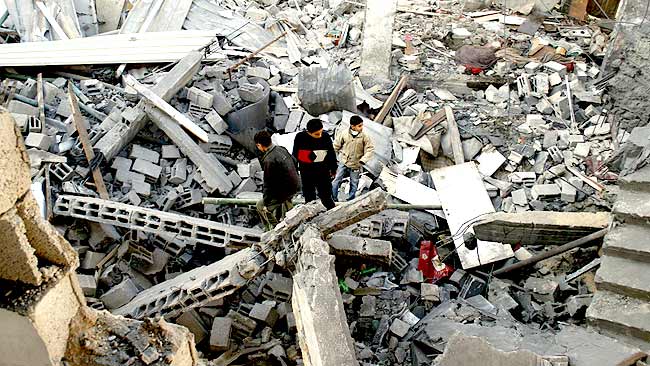
The disaster in Haiti is a natural one; the one in Gaza is the unproud handiwork of man. Our handiwork. The IDF does not send cargo planes stuffed with medicines and medical equipment to Gaza. The missiles that Israel Air Force combat aircraft fired there a year ago hit nearly 60,000 homes and factories, turning 3,500 of them into rubble. Since then, 10,000 people have been living without running water, 40,000 without electricity. Ninety-seven percent of Gaza’s factories are idle due to Israeli government restrictions on the import of raw materials for industry. Soon it will be one year since the international community pledged, at the emergency conference in Sharm el-Sheikh, to donate $4.5 billion for Gaza’s reconstruction. Israel’s ban on bringing in building materials is causing that money to lose its value.

Gershon Baskin, in today’s Jerusalem Post:

Humanitarian disasters around the world bring out the best in Israel and in Israelis. The horrific devastation caused by the earthquake in Haiti and the scenes of unbearable human suffering brought about an immediate enlistment of both civilian and public efforts to come to the aid of the poorest nation in the Western hemisphere…

But what about the humanitarian disaster in our own backyard caused in a large part by our own doing? What about Gaza? More than 1.5 million people are living in total poverty, without sanitary drinking water, under an economic and physical siege, locked in what could easily be called the world’s largest prison. While we ask to see in all of the gory details, all of the destruction including hundreds of corpses on the streets of Port-au-Prince, we wish to see none of the human suffering of our Palestinian neighbors in Gaza where we literally hold the keys to the end of their suffering.