Category Archives: Human Rights

Gaza: A Rabbinical Exchange

GAZA_SCHOOL_One

Since we launched the Jewish Fast for Gaza, we’ve received all kinds of feedback, some supportive, some critical, some utterly unprintable. (My personal favorite from the latter category: “You should all get severe stomach ailments.”)

On occasion, however, our effort has offered us the opportunity for genuinely respectful dialogue. Below is one such exchange – an email I received from a rabbinic colleague, followed by my response:

Dear Ta’anit Tzedek,

Having cares and concerns of the plight of humanity is a most noble cause. That you are willing to extend effort is most commendable. Your organization, however, is extending its efforts in a manner which is not only counterproductive, but can be harmful as well.

How can you look into the face of a 12 year old girl from Sderot who suffers from post traumatic syndrome as for most of life she has been awakened on a nightly basis by sirens and rocket fire? What do you say to the families of victims killed by suicide bombers who killed their teenagers who were casually enjoyed a slice of pizza? What do you say to an organization whose very goal is the annihilation of our people?

You may answer, “Had we been better, they may have liked us more.” or some such configuration thereof. It’s not plausible. Since 1948, the goal of the Arab world has been the removal of a Jewish presence in the middle east. Our interference with their dream of a Pan-Arabic state stretching from Morocco to Iraq is sullied by our very presence.

It would better for your organization to spend is resources on ideals that truly further the continuity of Jews and Judaism.

I await your response,

Rabbi X

Dear Rabbi X,

I want to thank you for taking the time to reach out and respond to our initiative. I’m glad to have the opportunity for this dialogue.

You ask what I would say to the 12 year old girl from Sderot or the families of terror victims. I believe I would say that as a fellow Jew that their pain is my pain as well. I would say that I could not begin to comprehend the realities they must face. But I would also share my belief that that Israel’s current treatment of the people of Gaza will bring them neither safety nor security – and that the only true way out of these traumas is a lifting of the blockade and the negotiation of a settlement by all parties involved.

As regards Hamas “whose very goal is the annihilation of our people:” though I have no love lost for Hamas, the reality is that Israel will have to deal with them if any true peace will be achieved. And in truth, Israel has already dealt with Hamas through any number of channels over the years already. Making peace is a sacrosanct Jewish value – and as difficult as it is, the truth is that we make peace with our enemies. In the past, Israel has made peace with former enemies whom we once believed sought nothing but our “annihilation.” To surrender this value means to doom the people of this region to endless violence and tragedy.

Thus we do indeed believe that this effort furthers the resources of Jews and Judaism. We do not hold that the only Jewish path is the one that addresses Jews and Jewish “needs” alone. In the case of Jews and Palestinians in particular, our fates are fundamentally intertwined: we will either live together or else we will die together. The Jewish path has always been to choose life – this sacred imperative is at the core of our initiative.

Thank you again for sharing your thoughts with us. Even as we may disagree, I hope you will share my conviction that our conversation is a “machloket l’shem shamayim” (“argument for the sake of heaven.”)  I also know that you join with me in prayers for peace for this tortured region that is so dear to both of us.

Kol Tuv,

Rabbi Brant Rosen

Jewish Fast for Gaza

gazapic

In response to the dire humanitarian crisis in Gaza, my dear friend and colleague Rabbi Brian Walt and I have organized a new initiative, Ta’anit Tzedek – Jewish Fast for Gaza.

See below for the press release about the project, which is already attracting increasing numbers of supporters, including many rabbis. Click the link above to visit the website and sign up yourself…

RABBIS  ANNOUNCE MONTHLY FAST FOR GAZA

Seeking “to end the Jewish community’s silence over Israel’s collective punishment in Gaza,”  an ad-hoc group of American rabbis has called for a communal fast.  Known as Ta’anit Tzedek – Jewish Fast for Gaza, this new initiative will organize a series of monthly fasts beginning on July 16.

The project was initiated by a group of thirteen rabbis representing a spectrum of American Jewish denominations. The group’s website explains the religious meaning of the campaign: “In Jewish tradition a communal fast is held in times of crisis both as an expression of mourning and a call to repentance. In this spirit, Ta’anit Tzedek – Jewish Fast for Gaza is a collective act of conscience initiated by an ad hoc group of rabbis, Jews, people of faith, and all concerned with (this) ongoing crisis…”

The fast has four goals: to call for a lifting of the blockade, to provide humanitarian and developmental aid to the people of Gaza, to call upon Israel, the US, and the international community to engage in negotiations with Hamas in order to end the blockade, and to encourage the American government to “vigorously engage both Israelis and Palestinians toward a just and peaceful settlement of the conflict.”

The water-only fast will take place every third Thursday of the month, from sunrise to sunset. In addition to signing on to the fast statement, participants have been asked to donate the money they save on food to the Milk for Preschoolers Campaign sponsored by American Near Eastern Refugee Aid, a relief campaign that combats malnutrition among Gazan preschool children.

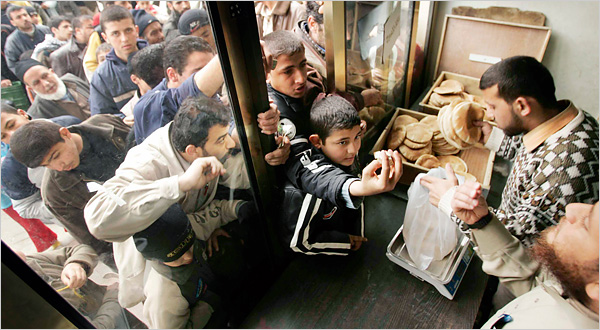
Since the electoral victory of Hamas in January 2006, Israel has imposed a blockade that has severely restricted Gaza’s ability to import food, fuel and other essential materials. As a result, the Gazan economy has completely collapsed and it suffers from high levels of unemployment and poverty and rising levels of childhood malnutrition.

“Israel’s treatment of the Palestinian people in Gaza amounts to nothing less than collective punishment. While we condemn Hamas’ targeting of Israeli civilians, it is immoral to punish an entire population for the actions of a few,” said Rabbi Brant Rosen, who serves Jewish Reconstructionist Congregation in Evanston, IL. “This blockade has only served to further oppress an already thoroughly oppressed people.  As Jews and as human beings of conscience, we cannot stand idly by.”

“We’ve been enormously encouraged by the initial response we’ve received from the Jewish community thus far,” said fast organizer Rabbi Brian Walt, former Executive Director of Rabbis for Human Rights – North America, who noted that the initiative has signed up numerous supporters prior to the launch of the project. “We truly believe this effort is giving voice to a significant number of people who been looking for a Jewish voice of conscience on this issue.”

Rescue the Spirit of Humanity

CYPRUS-MIDEAST-CONFLICT-GAZA-AID-BOAT

The humanitarian situation in Gaza has grown beyond intolerable.  If you have any doubts, just read this devastatingly important article by Sara Roy, senior research scholar at Harvard’s  Center for Middle Eastern Studies:

Today, 96 percent of Gaza’s population of 1.4 million is dependent on humanitarian aid for basic needs. According to the World Food Programme, the Gaza Strip requires a minimum of 400 trucks of food every day just to meet the basic nutritional needs of the population. Yet, despite a 22 March decision by the Israeli cabinet to lift all restrictions on foodstuffs entering Gaza, only 653 trucks of food and other supplies were allowed entry during the week of May 10, at best meeting 23 percent of required need.

Israel now allows only 30 to 40 commercial items to enter Gaza compared to 4,000 approved products prior to June 2006. According to the Israeli journalist, Amira Hass, Gazans still are denied many commodities (a policy in effect long before the December assault): Building materials (including wood for windows and doors), electrical appliances (such as refrigerators and washing machines), spare parts for cars and machines, fabrics, threads, needles, candles, matches, mattresses, sheets, blankets, cutlery, crockery, cups, glasses, musical instruments, books, tea, coffee, sausages, semolina, chocolate, sesame seeds, nuts, milk products in large packages, most baking products, light bulbs, crayons, clothing, and shoes.

What possible benefit can be derived from an increasingly impoverished, unhealthy, densely crowded, and furious Gaza alongside Israel? Gaza’s terrible injustice not only threatens Israeli and regional security, but it undermines America’s credibility, alienating our claim to democratic practice and the rule of law.

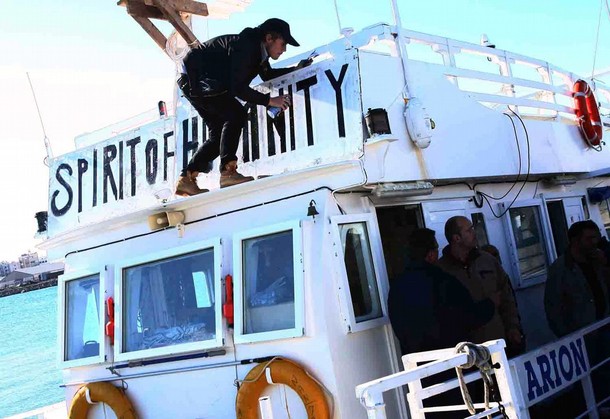
And now the news has just come in that Israel has seized the “Spirit of Humanity,” a boat carrying a cargo of humanitarian aid in international waters, and  is  forcibly towing it to an Israeli port.  The boat contained 21 human rights workers from 11 countries, including Nobel Peace Prize laureate Mairead Corrigan Maguire and former U.S. Congresswoman Cynthia McKinney. It was bringing medicine, toys, and other much needed humanitarian relief.

If you’re looking for a way to channel your upset over this dire situation into effective contribution to Gaza relief, I particularly recommmend American Near East Refugee Aid.  Their projects in Gaza include:

– Delivery of  life-saving pharmaceuticals and medical supplies to hospitals and clinics;

– Distribution of  fortified milk and high-energy biscuits to 25,200 children in 186 preschools.

– Water projects that bring water networks to families in need and pumping systems to keep raw sewage off the streets.

– A psychosocial program that helps thousands of children and parents struggling to survive the effects of war.

– Cash-for-work programs that employ workers to clear agricultural land of plastic waste and provide 200 families a means of self-reliance.

I Can’t Dance Any More

Salah_Fam

I know there are those who wonder why, with all of the various injustices going on in the world, do I seem to dwell on Israel’s treatment of Palestinians?  It’s a fair and important question.  For me it boils down to this: I’ve come to believe that too many of us in the Jewish community will unabashedly protest persecution anywhere in the world, yet remain silent when Israel acts oppressively.

I know all too well how we actively avoid this truth. We use any number of rhetorical and political arguments to deny it, to mitigate the discomfort and pain it causes us.  We engage in a kind of tortured dance of rationalization that we save for no other world issue but this one. But for me, at least, but none of it really addresses the core issue at hand: however difficult it might be for us to face, Israel is unjustly oppressing Palestinians.

So what are we going to do about it?

Many of us deal with it by putting our faith and efforts into the peace process. And well we should: though I’ve been honest in expressing my own doubts and concerns regarding the peace process, I understand that in the end the only true solution to this conflict will be a political one.  But as the peace process enters into its latest incarnation, as the various actors involved painfully wrangle over diplomatic parameters, it is safe to say this saga will continue to take its time to unfold. And in the meantime, the real lives of real Palestinians on the ground will continue to grow increasingly intolerable.

For myself, at least, I cannot use the peace process, critical as it is, as a kind cover to keep me from facing and protesting the oppression that is occuring in Israel/Palestine every day, even as I write these very words.  While I will do what I can to advocate for a just and peaceful political settlement to this crisis, this work does not give me a pass on speaking out. If we truly believe we must protest injustice anywhere, anytime, then it seems to me that this principle must apply to Israel/Palestine as well, no matter how painful or difficult the prospect of doing so.

Earlier this week, I was the moderator of a discussion following the showing of a powerful new documentary, “This Palestinian Life” – a film that was often unbearably painful to watch. TPL documents a little-seen aspect of Palestinian life: the nonviolent steadfastness (in Arabic: “sumoud“) of Palestinian villagers who live with a crushing occupation, constant settler attacks, and the deliberate, relentless annexation of their farm land.

This quote from one villager sums up the movie’s essential theme:

I don’t own a gun.

I don’t own any weapons and I’m not prepared to own any…

My only weapon of defense is that I won’t leave this place…

and my hope is that the world will respond to Israel’s treatment of us.

As difficult as it was, I was honored to have been asked to moderate the post-film discussion. I know there are many who would regard my participation in such a program as an act of disloyalty or at the very least an exercise in masochism. But in the end, it really came down to this: I just can’t do the dance any more.

People You Should Know About: Ezra Nawi

If you’re looking for the definition of an Israeli hero, here’s my nomination: human rights activist Ezra Nawi.  Well-known in the Israeli-Palestinian peace movement, Nawi is a true original. This is how he was described by journalist Neve Gordon in a recent Guardian article:

Nawi is not a typical rights activist. A member of the Ta’ayush Arab-Jewish Partnership he is a Jewish Israeli of Iraqi descent who speaks fluent Arabic. He is a gay man in his fifties and a plumber by trade. Perhaps because he himself comes from the margins, he empathises with others who have been marginalised – often violently.

Nawi has long been active on behalf of the Palestinians and Bedouins of South Hebron, a region where the occupation is particularly oppressive and harassment at the hands of Jewish settlers is virtually constant. While his non-violent activism has helped bring international attention to this troubled region, it has also made him a target in the eyes of the occupation authorities. In July 2007, he was arrested and charged with assaulting a police officer while protesting the destruction of a Palestinian house. He will be sentenced next month and will most certainly face jail time unless there is a significant public outcry.

As it turns out, the home demolition and arrest were all captured on film and broadcast on the Israeli news. (Click above – Nawi is the one in the green jacket and the grey cap.)  The footage is riveting and everything is clearly documented from beginning to end (including the non-assault of the officer.)  Nawi himself gets the last word however. Sitting handcuffed in a military vehicle before laughing, scornful soldiers he says, “Yes, I was also a soldier, but I did not demolish houses. There’s a big difference. The only thing that will be left here is hatred…”

Since Nawi’s arrest, support has been building. Jesse Hochheiser’s blog, “Across the Borderline” contains several powerful testimonials, including this from Hebrew University professor and fellow Ta’ayush activist David Shulman:

Ezra Nawi is probably the most courageous person I have ever met. I have seen him in countless moments when settlers violently attacked him and other peace activists, Palestinians and Israelis; his presence of mind, steadfastness, and clarity always got us through such times. He is that most unusual of human beings– a person of profound inner gentleness and moral principle, selfless and creative in finding ways to help the Palestinian shepherds and farmers of the South Hebron hills.

The only thing standing between Ezra Nawi and imprisonment is your voice. Click here to offer your support.

On Clowns and Illegal Hothouses

PD*28296118

I know I promised to pontificate on this week’s UN World Conference on Racism in Geneva, but I don’t know that I have anything to add that hasn’t already been said about this particular circus. (And I mean this literally – see above.)  For what it’s worth, I found Cecilie Surasky’s dispatches for Muzzlewatch to be the most incisive and helpful reporting on conference doings.

On a completely unrelated topic, I noticed this small news piece in yesterday’s Ha’aretz:

Five Border Policemen were wounded on Thursday in a clash with hundreds of residents of the Israeli Arab town of Kafr Qasem.

The violence broke out when security forces arrived to demolish a concrete surface upon which a hothouse was due to be built illegally. They were met at the scene by about 400 Kfar Kassem residents who had turned out to protest the move.

I suppose its just a minor news story in the scheme of things – still, it did remind me that the media’s impact is often less powerful for what it says than for what it leaves out. In this case, that would be the fact that almost all new building in Israeli Arab villages is technically “illegal” since Israel has made it virtually impossible for its Arab citizens to receive building permits.

From a New Israel Fund report:

There is a lack of planning for Arab neighborhoods and towns that has led to ongoing difficulties in obtaining building permits, and as a result, the demolishing of illegal buildings in the Arab sector. Since 1948, almost no Arab neighborhood or town has legally been permitted to expand.

Also left out of the article is any mention of this particular village’s  tragic history – and why a demolished hothouse is really just the latest chapter for the citizens of Kafr Kassem. Click here to learn more.

The Plight of Roxana Saberi

340x-121Several people have asked me, now that Iranian-American Roxana Saberi has been sentenced to eight years in Iranian prison, if I have reconsidered my opinions about Iran and the importance of American-Iranian diplomacy. If anything, this current crisis has only deepened my convictions on both counts.

As I’ve written here before, I certainly don’t harbor any illusions about the more odious aspects of Iranian politics. In fact, I wrote precisely that upon my return from my trip to Iran this past fall:

None of this is to sugar-coat the more disturbing aspects of the Islamic Republic. If our delegation was ever tempted to do so, we received a hard dose of reality when we read in the Tehran Times about a public hanging of two men convicted of bombing a mosque that was scheduled to take place in Shiraz shortly after we were there. Yes, we are justified in recoiling from reports such as these – and we’d be foolish to deny that there are troubling human rights issues that Iran would do well to address. But at the end of the day, the solutions to these problems are certainly not ours to impose.

How do we further Saberi’s cause and for all who suffer from human rights abuse within Iran? The answer is the same as it ever was: by choosing to speak out and by supporting the grassroots efforts of those citizens and groups on the ground who are directly affected by these violations.  However if we make this choice, we cannot do it selectively – we must apply the same criteria to all human rights abuse whenever and wherever it might occur.  Indeed, that’s what makes the current diplomatic dance over Saberi’s fate is so complex and delicate. For at the end of the day, we Americans must be willing to admit that we are on fairly slippery moral ground whenever we speak out against things like wrongful arrest, imprisonment without due process, and the absence of legal transparency.

Many analysts are suggesting that Saberi is being used as a political pawn between Iran’s hard line judiciary and President Ahmadinejad, whose administration seems to be inclining toward diplomatic engagement with the United States. Others point out that Ahmadinejad is all too happy to exploit this impasse as a feather in his cap in Iran’s current election campaign. Either way, Roxana Saberi’s plight seems to be a symptom of some significant growing pains within the Islamic Regime as well as in their relationship to the international community. The long-term stakes are high – all the more reason that this crisis must be handed with diplomatic skill and care rather than the tired, counterproductive saber-rattling of old.

Speaking of nasty international diplomatic imbroglios, I’ve got some thoughts about the loud noises coming out of Durban II.  More on that later…

Addendum 4/21/09: Click here to send a personal letter to Iran’s Ayatollah Khamenei, urging him to review Saberi’s trial and conviction and to release her immediately from prison.

Is BDS anti-Semitism?

boycott1For many Jews, no three letters seem to conjure up rage and fury as effectively as “BDS.” Still, I have a strong suspicion that we’ll be hearing them bandied about increasingly in the coming months.

Since the Gaza war, the movement for global Boycott/ Divestment/ Sanctions against Israel seems to have gained new momentum. Among its prominent new supporters is economic journalist/activist Naomi Klein, who made a passionate call for BDS at the peak of the crisis:

Every day that Israel pounds Gaza brings more converts to the BDS cause, and talk of cease-fires is doing little to slow the momentum. Support is even emerging among Israeli Jews. In the midst of the assault roughly 500 Israelis, dozens of them well-known artists and scholars, sent a letter to foreign ambassadors stationed in Israel. It calls for “the adoption of immediate restrictive measures and sanctions” and draws a clear parallel with the anti-apartheid struggle. “The boycott on South Africa was effective, but Israel is handled with kid gloves.… This international backing must stop.”

Yet even in the face of these clear calls, many of us still can’t go there. The reasons are complex, emotional and understandable. And they simply aren’t good enough. Economic sanctions are the most effective tools in the nonviolent arsenal. Surrendering them verges on active complicity.

Count longtime peace activist Rabbi Arthur Waskow is one of those who “still can’t go there.” The current issue of “In These Times” contains a fascinating debate between Klein and Waskow on the merits of BDS. For his part, Waskow opposes it primarily for tactical reasons:

(The) BDS approach is not the way to bring about the change that is absolutely necessary.  The most important, and probably the only effective, change that can be brought about is a serious change in the behavior of the U.S. government. That means we need to engage in serious organizing within the United States…Boycotts and divestment are not going to do it. I understand that they express a kind of personal purity—”not with my money you don’t”— but they won’t change U.S. policy, which is exactly what needs to be changed.

Klein and Waskow’s conversation is edifying as far as it goes, but to my mind it doesn’t address the main concern over BDS articulated by so many American Jews: namely that given all of the odious regimes throughout the world, the unique singling out of Israel for sanction is an expression of flat-out anti-Semitism. This point of view was well summed up by Thomas Friedman in the NY Times back in 2002, at a time when student movements were increasingly pressuring universities to divest from Israel:

How is it that Egypt imprisons the leading democracy advocate in the Arab world, after a phony trial, and not a single student group in America calls for divestiture from Egypt? (I’m not calling for it, but the silence is telling.) How is it that Syria occupies Lebanon for 25 years, chokes the life out of its democracy, and not a single student group calls for divestiture from Syria? How is it that Saudi Arabia denies its women the most basic human rights, and bans any other religion from being practiced publicly on its soil, and not a single student group calls for divestiture from Saudi Arabia?

Criticizing Israel is not anti-Semitic, and saying so is vile. But singling out Israel for opprobrium and international sanction — out of all proportion to any other party in the Middle East — is anti-Semitic, and not saying so is dishonest.

For his part, Alan Dershowitz expressed a similar critique in response to recent reports (later retracted) that Hampshire College was divesting from six companies that profit from Israel’s occupation:

The divestment campaign applies to Israel and Israel alone. Hampshire will continue to deal with companies that supply Iran, Saudi Arabia, China, Cuba, North Korea, Zimbabwe, Libya, Syria, Sudan, Belarus and other brutal dictatorships around the world that routinely murder civilians, torture and imprison dissenters, deny educational opportunities to women, imprison gays and repress speech. Indeed many of those who support divestiture against Israel actively support these repressive regimes. This divestment campaign has absolutely nothing to do with human rights. It is motivated purely by hatred for the Jewish state.

Klein is absolutely right when she writes of BDS that “many of us can’t go there.” The reasons for this are complex and painful – and Friedman and Dershowitz do a compelling job of spelling out just how deeply painful and divisive they are. I must admit I have serious hesitation in taking on an issue that pushes so many of my own Jewish fear-buttons. (I’m not unmindful of the tragic historic spectres that boycotts against Jews and Jewish institutions conjure up for us.)  Still and all, I can’t help but wonder that by dismissing BDS as simple, abject hatred of Jews and Israel, we are misunderstanding the essential of the point of this movement. Even more fundamentally, I wonder if our rejection of BDS simply papers over our inability to face the more troubling aspects of the Jewish state.

I’ll start here: in a way, Dershowitz is correct when he writes that BDS has “nothing to do with human rights.” This particular movement did not in fact arise out of the international community’s concern over human rights in Israel/Palestine: it was founded in 2005 by a coalition of Palestinian groups who sought to fight for self-determination through nonviolent direct action. It arose out of their frustration over Israel’s continued refusal to comply with international law on any number of critical issues – and the oppressive manner in which Israel has occupied and ruled over Palestinians.  In other words, it is absolutely true that BDS is not an international human rights campaign. It is, rather, a liberation campaign waged by the Palestinian people – one for which they are seeking international support.

Yes, there are many oppressive nations around the world – and if a call came from indigenous, grassroots movements in these nations calling for international support of BDS, I’d say we most of us would seriously consider lending them our support. To use a partial list of nations mentioned by Friedman-Dershowitz, if any constituencies of the oppressed in Egypt, Syria, Saudia Arabia, Libya, Zimbabwe or Belarus called for nonviolent global boycott/divestment/sanction campaigns to force change in their countries’ policies, yes, I think we might well agree that they would be worthy of our backing. However, the absence of such movements does not necessarily negate the justice of the Palestinians’ current campaign. And it doesn’t seem to me that support of their call automatically constitutes hatred of Israel or Jews.

What I think Friedman-Dershowitz – and so many of us – fail to grasp is this: even as we recoil from nations that “choke the life out of their democracies” and “routinely murder civilians, torture and imprison dissenters, deny educational opportunities to women, imprison gays and repress speech,” the only way we can help truly address this kind of oppression is to support the ones who struggle for rights within these countries themselves – it is not for us Westerners to determine what is best for them. (And I particularly fear that when we frame this as a fight for “democracy,” as Friedman does,  this is really just a code for “imposing Western influence” – but perhaps that is a discussion for another day.)

The bottom line? While I believe there are undoubtedly those out there who will support BDS out of hatred pure and simple, I think it is just too easy to dismiss this movement as ipso facto anti-Semitism. Beyond the fears articulated by Friedman, Dershowitz and so many others like them, I think there’s an even deeper fear for many of us in the Jewish community: the prospect of facing the honest truth of Israel’s oppression of Palestinians.

For so many painful reasons, it is just so hard for us to see Israel as an oppressor – to admit that despite all of the vulnerability we feel as Jews, the power dynamic is dramatically, overwhelmingly weighted in Israel’s favor.  Though a movement like BDS might feel on a visceral level like just one more example of the world piling on the Jews and Israel, we need to be open to the possibility that it might more accurately be described as the product of a weaker, dispossessed, disempowered people doing what it must to resist oppression.

I have to say it feels like I’m going out on a serious limb by writing these words. I’m only raising these issues, as always, in the hope of starting a wider discussion in the Jewish community. Somehow, I feel that it is only by facing the stuff we prefer not to have to face that we might begin to find a way out of the this painful reality.

As always, I welcome your thoughts and reactions…
American Gulag

127166

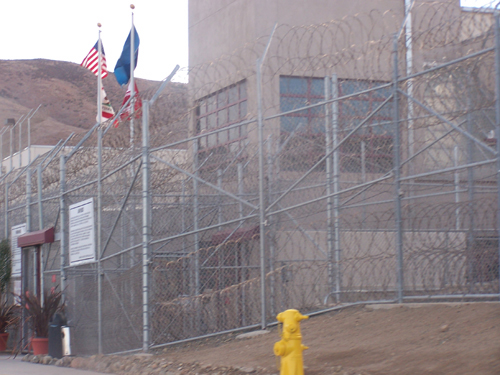
You need to read this new Amnesty International report on immigrant detention in our country. Even those who have some knowledge about this national shame will be jolted by AI’s findings:

– Tens of thousands of people languish in U.S. immigration detention facilities every year — including a number of U.S. citizens — without receiving a hearing to determine whether their detention is warranted.

– Hundreds of millions of taxpayer dollars are being used to hold these people for months—sometimes years—in detention. The people detained include lawful permanent residents, undocumented immigrants, asylum seekers and survivors of torture and human trafficking.

– Oversight and accountability is almost nonexistent and individuals in detention often lack treatment for their medical needs. 74 people have died while in immigration detention over the past five years.

If you’re looking for a healthy way to channel your rage after reading the report, you can send this letter to Homeland Security Secretary Janet Napolitano,  urging her to find meaningful alternatives to detention and ensure that conditions in detention are “humane and meet international standards.”

(…and then while you’re inspired to help change our deeply broken immigration system, send this letter to your congressperson and urge him/her to help pass the Dream Act in 2009. )

Gaza: Soldiers Are Speaking Out

israeli-soliders

Once permission has been given to the destroyer to do harm, it does not discriminate between the guilty and the innocent. (Mechilta, Bo)

Today the NY Times reported on an issue that has gripped the Israeli press and public for some time now:

In the two months since Israel ended its military assault on Gaza…testimony is emerging from within the ranks of soldiers and officers alleging a permissive attitude toward the killing of civilians and reckless destruction of property…On Thursday, the military’s chief advocate general ordered an investigation into a soldier’s account of a sniper killing a woman and her two children who walked too close to a designated no-go area by mistake, and another account of a sharpshooter who killed an elderly woman who came within 100 yards of a commandeered house.

In reading these accounts, I’m especially struck by the powerfully defensive reaction of many within Israel – insisting that these were either isolated incidents or that they were simply untrue. Witness Defense Minister Barak’s recent statement on Israel radio:

The Israeli Army is the most moral in the world, and I know what I’m talking about because I know what took place in the former Yugoslavia, in Iraq.

I don’t know if Israel’s army is the “most moral” in the world. I’m not sure if I even know what that means. I don’t know what we really expect when we train young men and women to kill, give them the most sophisticated killing instruments on earth, then demonize their enemies before sending them off to battle.

Israel has long claimed its army follows the military war ethic of  Tohar Haneshek (“Purity of Arms”). Whether or not this was ever true, there is seems to be growing evidence that in the heat of battle (or if you prefer, the “fog of war”), the difference between “legal killing” and “war crimes” becomes increasingly fuzzy to those who wield the weapons. And I’m fairly sure that this is the case whether or not the soldiers in question happen to be Jewish.

Even more disturbing are the reports from Israeli soldiers that the Israeli rabbinate is urging them to view this conflict as nothing less than a holy war. Richard Silverstein, blogging over at Tikun Olam, has translated some of the Hebrew press accounts, uncovering this jaw-dropping testimony from a commander named Ran:

The military rabbis sent us lots of material and in these articles the message was clear: we are the nation of Israel.  We arrived by a miracle in Israel.  God returned us to the Land (of Israel).  Now we must battle to remove the non-Jews who disturb us in our conquest of the Holy Land.  That was the main message.  And the sense of many of the soldiers in this operation was that it was a religious war.  From my perspective as a commander, I tried to talk about politics and various strains within Palestinian society.  That not everyone in Gaza was Hamas and not every resident wants to conquer us.  I wanted to explain to them that this war was not about Kiddush Hashem (sanctifying the name of God), but about stopping Qassam fire.

Expect more horrifying news in the coming weeks…