Category Archives: Hunger

More Jewish Leaders are Speaking Out on Gaza: But Will it Be Enough?

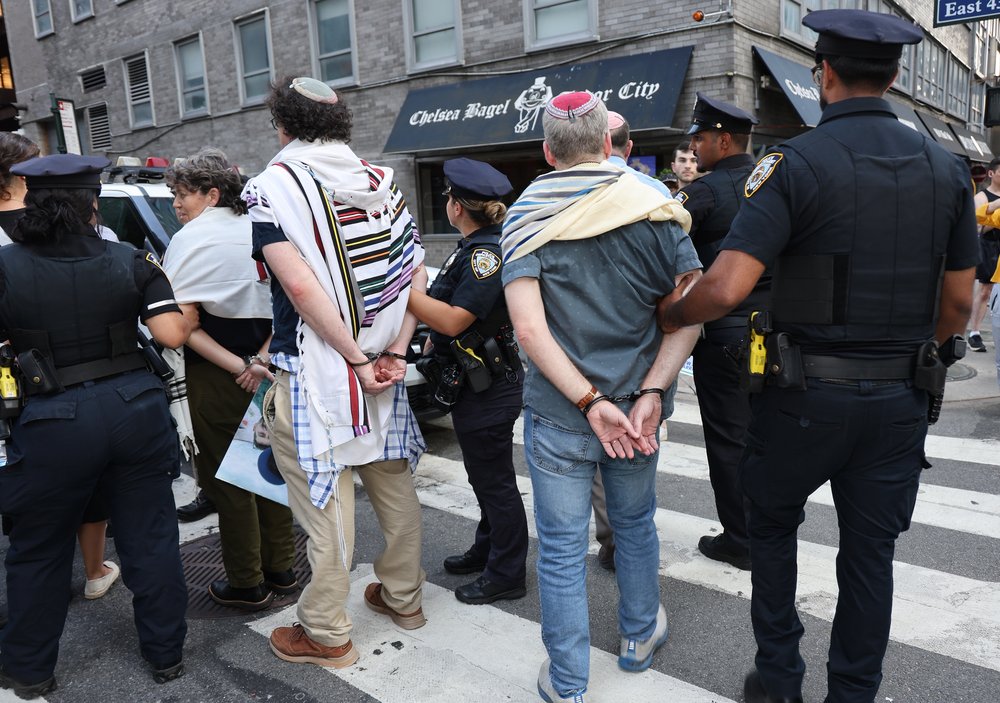
(Photo: Gothamist)

Over the past few weeks, we’ve witnessed a significant surge in Jewish protest over Israel’s starvation/genocide of Palestinians in Gaza. On July 28, two Israeli human rights organizations, B’Tselem and Physicians for Human Rights – Israel, released a comprehensive report that reached the “unequivocal conclusion” that “Israel is committing genocide against Palestinians in the Gaza Strip.” A week earlier Omer Bartov, a noted Israeli professor of Holocaust and genocide studies at Brown University, wrote a widely distributed op-ed for the New York Times entitled “I’m a Genocide Scholar. I Know it When I See It.” Even Jeremy Ben – Ami, the president of the liberal Israel advocacy organization J Street, waded ever-so-gently into the fray with this delicately worded statement: “(While) I am unlikely to use the term (genocide) myself…I cannot and will not argue against those using the term.”

There has also been an increase in rabbis (many of whom consider themselves to be “liberal Zionists”) publicly stepping up and speaking out against Israel’s genocide in Gaza. On July 28, eleven mainstream rabbis protested by blocking traffic in front of the Israeli consulate in midtown Manhattan, with eight taking arrest. One Jewish communal figure noted, “The protests we’ve typically seen at the Israeli Consulate in places like that are from the further left of the community.” 

A day later, in Washington DC a group of 27 rabbis affiliated with the advocacy group Jews for Food Aid for People in Gaza entered Senate Majority leader John Thune’s office, displaying banners reading “Rabbis say: Protect Life!” and “Rabbis say: Stop the Blockade.” Then this past Monday, hundreds gathered (and more than 40 protesters took arrest) in front of the Trump International Hotel in New York City at a protest organized by IfNotNow under the banner “Stop Starving Gaza.” Among the speakers were Rabbi Jill Jacobs of T’ruah, Ruth Messinger, former head of American Jewish World Service and New York City Comptroller Brad Lander. Needless to say, none of them were previously known for taking a stand against Israel in such a dramatic and public manner.

I must admit I have a great deal of cognitive dissonance over these developments. First and foremost, I will say that it is a welcome development that ranks of Jewish leaders in the movement to end the genocide against Palestinians is broadening. In the end, when otherwise mainstream American Jewish leaders are willing to call out this genocidal behavior for what it is, it only further isolates Israel. When lives are literally being taken by Israel in massive numbers on the daily, this is truly an “all hands on deck” moment. Those of us who have been on the front lines of the movement since 2023 can ill afford to cynically dismiss their participation. 

At the same time however, I can’t help but feel cynical over the kudos given to these leaders (many of whom have been silent or equivocal on the genocide until now) for their “bravery” while scores of Palestinians have been organizing, leading protests and crying out in a myriad of different ways for years. Palestinian witness has been insidiously discounted during this genocide just as the Palestinian people have been denied the “permission to narrate” their oppression for over 70 years. I can’t help but grieve the sad irony that any strategic success resulting from this new resurgence will come from the further decentering – and dehumanizing – of Palestinian voices. 

Moreover in this moment, when the images of starving Palestinian children are spurring so many Jewish leaders into action, it’s worth asking whether this protest movement can be sustained and transformed into one that brings true justice and lasting for Palestinians.

I’m not convinced. I couldn’t help but note that in their speeches, many of these liberal Zionist rabbis and Jewish leaders lay the blame for this genocide firmly on the policies of Netanyahu and the current government. A recent op-ed in the Forward by Rabbi Jill Jacobs summed up this attitude perfectly:

 (Our) own fear must not distract us from the reality that the biggest threat to Israel, and indeed to Judaism itself, is coming from Israel’s governing coalition. Israel is increasingly becoming an autocratic and theocratic state. This is the moment for American Jews — including both leaders and ordinary Jewish community members — to raise their voice.

It has become a common trope in the “liberal Zionist” world to personalize this genocide as “Netanyahu’s war.” In fact, the biggest threat to Israel and Judaism is not Israel’s current governing coalition – it comes from a Jewish ethno-national nation state that was established and is maintained through the dispossession of Palestinians for the sole reason that they are not Jewish. Indeed, Israel is not “becoming” an autocratic and theocratic state – it has long been one.

I was also struck by Jacob’s misleading claim that “the vast majority of Israelis want the war to end.” While this is true, it is overwhelmingly due to Jewish Israelis desire for the return of the hostages – not their concern for Palestinian human rights. A more telling poll, which was released this past Tuesday, found that a vast majority of Israeli Jews – 79 percent – say they are “not so troubled” or “not troubled at all” by the reports of famine and suffering among the Palestinian population. And according to a poll from last May, 82 percent of Jewish Israeli respondents supported the expulsion of Gaza’s residents, while 56 percent favored expelling Palestinian citizens of Israel. 

These polls indicate that this is not a problem of the current government.  It is not Netanyahu. It is not an issue of bad policy. It is, in fact, Zionism itself. The real problem is that the entire enterprise of Zionist Judaism has infected Jewish life, as Jewish Currents editor Arielle Angel recently and powerfully wrote, “with a voracious rot.” 

So yes, it is welcome that increasing numbers of liberal Jewish leaders are finally speaking out against Israel’s carnage in Gaza –  but I feel compelled to ask: what will it take to get them to finally break with the Zionist enterprise? When the ethnic cleansing of Gaza is complete? When Israel annexes the West Bank (which the Knesset approved 71-13 in a recent symbolic vote)? When an even more extremist government is elected into power by an increasingly extremist Israeli populace?

As I wrote in December 2023:

If ever there was a moment for Jewish anti-Zionists to proudly show up and be counted, this is it. There could be no more terrifying demonstration of the end game of Zionism than the genocidal violence Israel has been unleashing on Gaza.

It grieves me to my soul that these words are still relevant in August 2025. May the Jewish people and their leaders find the courage of their convictions to call out a genocidal ideology that has caused – and continues to cause – such untold suffering to the Palestinian people in the name of Jewish supremacy. And may this day come soon. 
The Genocide in Gaza is the Shame of Us All

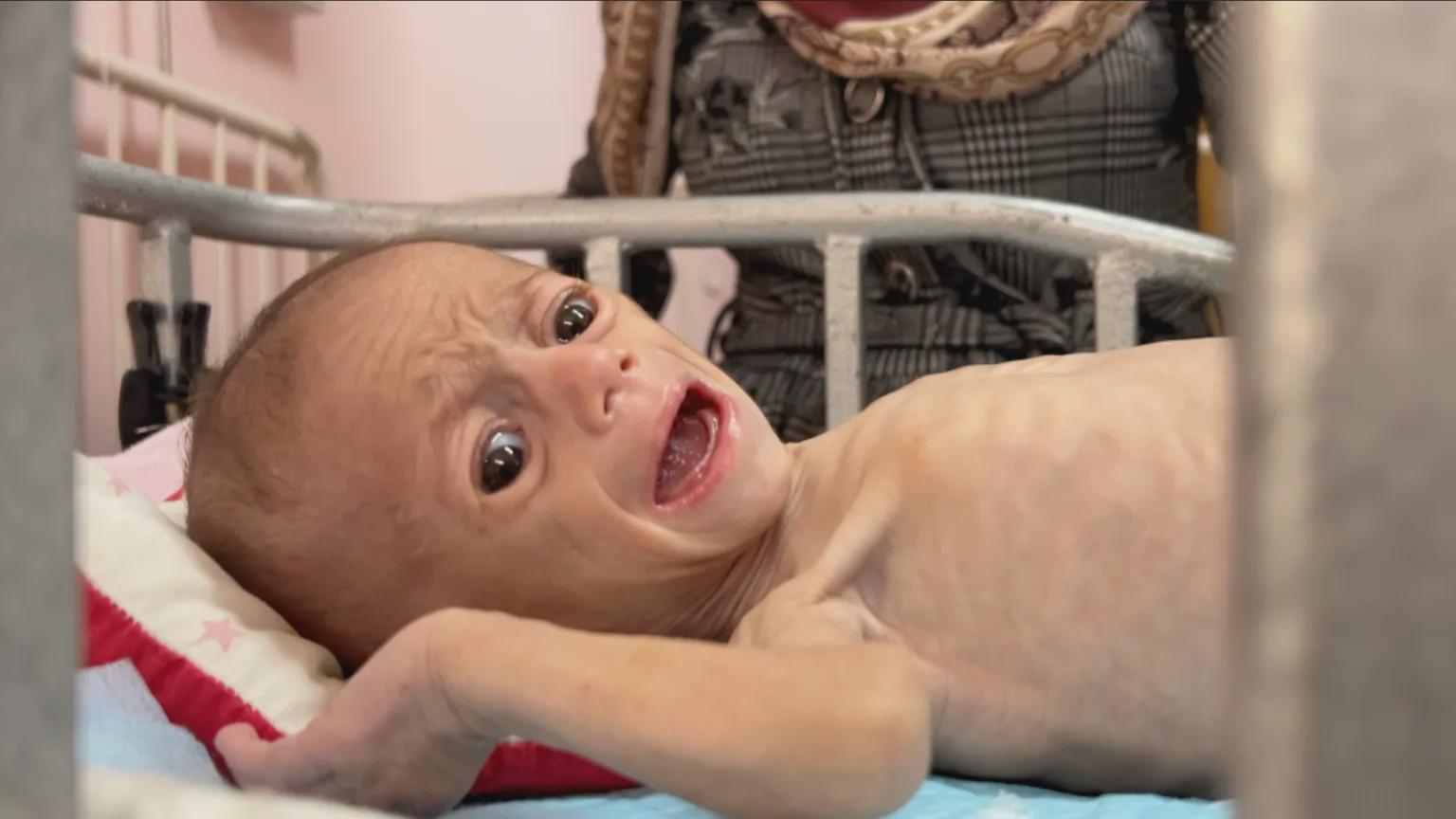
5 month old Gazan baby Sinwar Ashour, starving to death (photo: BBC)

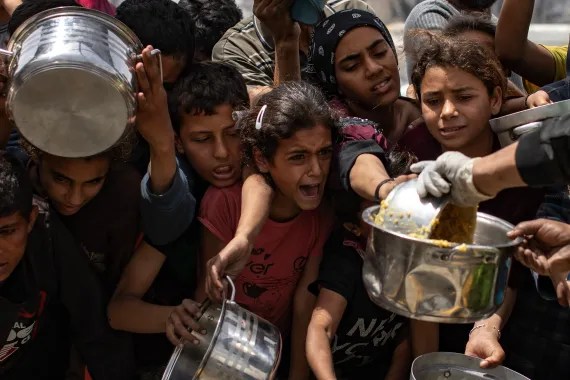
This is what it has come to: Israel is forcibly starving Palestinians. And when Palestinians go to the places Israel has designated as food distribution sites, they shoot them to death.

I will repeat that: Israel is forcibly starving Palestinians. And when Palestinians go to the places Israel has designated as food distribution sites, they shoot them to death.

Health authorities in Gaza said that 19 people died of starvation yesterday, including at least one infant.

Also yesterday, Israel killed 115 Palestinians – 92 of whom were shot while seeking food from the so-called “Gaza Humanitarian Aid Foundation” in Zikim, in Northern Gaza. Israeli troops opened fire and massacred at least 79 Palestinians as they gathered to wait for 25 aid trucks from the UN World Food Program. 

One of those killed was Raed Sindy, who was killed while attempting to access aid for his family. His brother Ahmed said, “They go out just trying to stave off their hunger and the hunger of their children, but they come back wrapped in shrouds.”

And this was just Sunday. Identical massacres and reports of death by starvation have been occurring regularly for months. We know this.

We know this because it has been happening in plain view of the world. Although this news has been all but pushed aside in the mainstream media, it is readily available on Al-Jazeera and alternative news sites and through social media.

Most importantly, we know this because Palestinians themselves have been telling us: reporting on their own genocide every day, in real time. Every day, I scroll through my mobile device and see videos of decapitated babies, corpses pulled from the rubble of bombed houses, bodies burned beyond recognition.

We also know that Israel is building a concentration camp for Palestinians in Rafah, a major southern center which has been completely reduced to rubble. The Israeli Defense Minister is calling it a “humanitarian city,” which will accommodate an initial group of some 600,000 displaced Palestinians. It would then be expanded to accommodate Gaza’s pre-war population of some 2.2 million people. They would not be allowed to move to other areas in Gaza but would instead be encouraged to “voluntarily emigrate” to unspecified countries.

So many of us who have been protesting Israel’s genocide in Gaza for the past year and a half have warned that this what it would come to: the total ethnic cleansing of Gaza. Now it is happening in front of us, for all too see: by bombs, by bullets, by starvation and by forced emigration.

In the decades after the Holocaust, a number of books were written that took the American government and the Allies to task for its inaction during the genocide against European Jewry. But even in that case, it could be argued that while we knew much of what was going on, we didn’t know the full extent of the heinous reality that was the Final Solution. In this case, we have no such excuse. This plans of this genocide are being announced openly and without shame by its perpetrators.

They are doing so because they know they no one will stop them. Not the US government, which is funding and supporting this genocide, not the international community, which is either aiding and abetting or simply wringing its hands. Not the UN, nor the ICC nor the ICJ, which can make pronouncements but have no power of enforcement.

The destruction of the Palestinian people in Gaza is the moral outrage of our time. Shame on every government and institution that has the power to stop it and has refused. Shame on every individual who had the power to lift their voices against this outrage and has remained silent.

For shame. For shame on us all.

The Nakba Unfolds in Gaza as the World Watches

(photo: Haitham Imad/EPA)

In December 2023, just three months into Israel’s genocide on Gaza, Tzedek Chicago’s board released a public statement entitled, “In Gaza, Israel is Revealing the True Face of Zionism,” arguing that “ongoing Nakba is the essential context for understanding the horrifying violence of the past three months.” A year and a half later, these words are resonating with an even more powerful urgency. There is every indication that Israel is beginning the process of engineering the wholesale destruction of Gaza – and the Palestinians who live there – by any means necessary. 

We are now three months into Israel’s total blockade of food, fuel and humanitarian aid – and Gazans are gripped by an increasing famine. On May 4 it was reported by Gaza’s government media office that at least 57 Palestinians have already starved to death, more than 3,500 young children face imminent death from starvation, another 70,000 children are being hospitalized for severe malnutrition, and 1.1 million Palestinian children lack the minimum nutritional requirements for survival. Over 20 UN human rights experts have determined that Israel is wielding starvation as a weapon of war, concluding that “these acts, beyond constituting grave international crimes, follow alarming, documented patterns of genocidal conduct.”

At the same time, the Israeli military has been stepping up its bombing campaign, killing Palestinians at a higher rate than any point since the beginning of the genocide. As of this writing, Israel has killed 100 people in the past 24 hours in a series of bombings throughout northern Gaza. In footage taken by NBC News, the bodies of young children could be seen lying among the dead at Al-Shifa Hospital in Gaza City. 

There are ominous, compelling signs that we are indeed witnessing the end game of Israel’s Nakba in Gaza. On May 4, the Israeli government approved a military operation called “Gideon’s Chariots,” directing the Israeli army to seize complete control of the Gaza Strip and displace the entire population to a small area of land in the south. Though this was technically a leaked story, some Israeli politicians have been unabashed about the plan. Finance Minister Betzalel Smotrich put it very plainly: “Gaza will be entirely destroyed” as a result of an Israeli military victory, and that Palestinians will “start to leave in great numbers to third countries.”

On top of this news, this past Wednesday, Reuters recently reported that the US and Israel have discussed the possibility of Washington leading “a temporary post-war administration of Gaza.” According to five sources, there would be no set timeline for how long the US led administration would last. They compared the proposal to the Coalition Provisional Authority in Iraq that Washington established in 2003, shortly after the US led invasion that toppled the regime of Saddam Hussein. As journalist/commentator Mehdi Hasan correctly pointed out in an interview today, the US’s administration of Iraq was an “absolute disaster.” As Hasan put it, “It increased sectarian tensions. It increased violence. It divided the country. It fomented more violent resistance.”

On May 15, the Palestinian people will observe Nakba Day, their collective observance of their dispossession and ethnic cleansing from their homes. For Palestinians this is not only an acknowledgement of an event that occurred in the past but a commemoration of an injustice that is still unfolding in real time. And yet the genocide in Gaza – as well as the ongoing ethnic cleansing of the West Bank – are completely absent from the mainstream press and international governmental concern. How long will the world allow this decades-long crime to continue? 

I can’t help but note that this week’s Torah portion, Parashat Acharei Mot (which means “after the death”) describes an elaborate sacrificial rite of collective atonement. As I read these words, it is so clear to me that our complicity in this ongoing sacrilege continues to deepen the longer we allow it to unfold. The news out of Gaza has long since receded into the background, even as the Palestinian people continue to cry out to the world.

As the 20 UN human rights experts wrote in their statement:

The world is watching. Will Member States live up to their obligations and intervene to stop the slaughter, hunger, and disease, and other war crimes and crimes against humanity that are perpetrated daily in complete impunity?

…The decision is stark: remain passive and witness the slaughter of innocents or take part in crafting a just resolution. The global conscience has awakened, if asserted – despite the moral abyss we are descending into – justice will ultimately prevail.

Ken Yehi Retzon – So may it be.

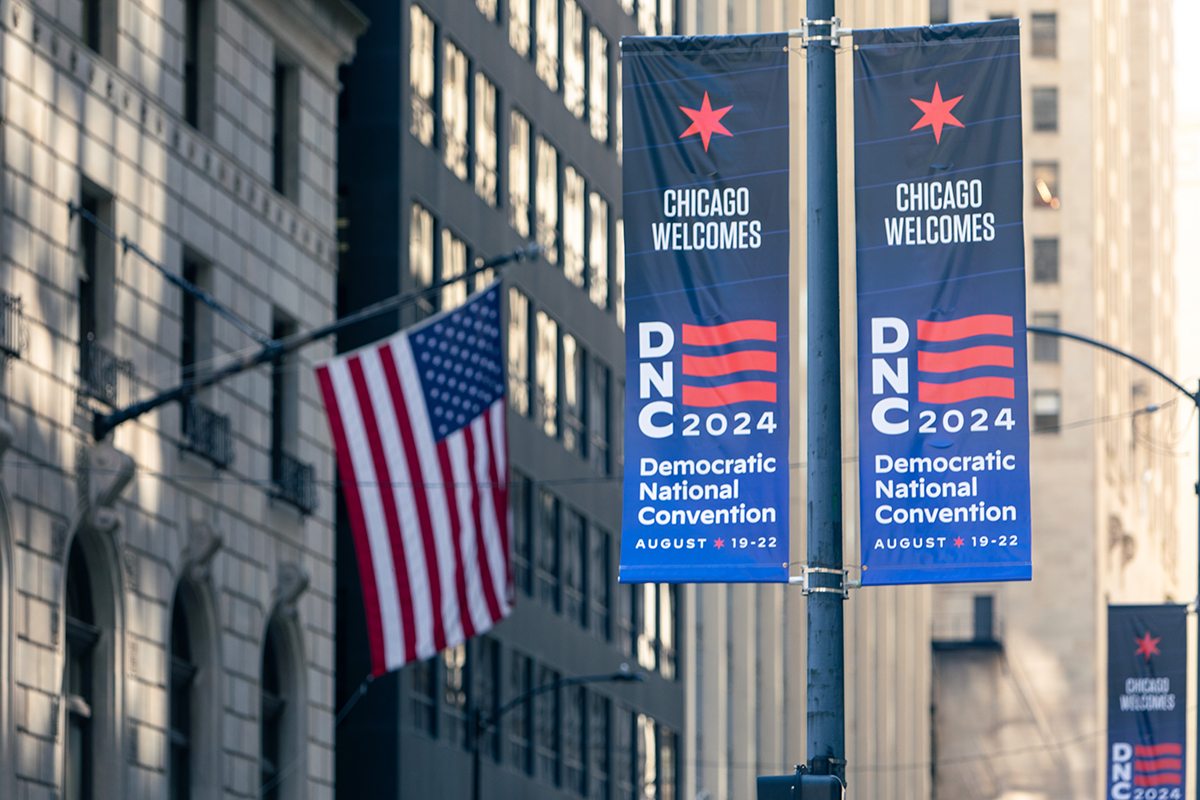
Protesting Genocide at the DNC in Chicago: Beyond “One Issue”

(photo by Keeton Holder)

As I’ve written previously, a large coalition of leftist groups has been preparing to take to the streets when the Democratic National Convention comes to Chicago next week. Although there will be a variety of different demands leveled at the DNC during the course of the convention, one key issue clearly stands out as a central common thread through them all – namely, an immediate US arms embargo and a permanent ceasefire to end Israel’s genocide in Gaza.

To name but one example: a rally and march for reproductive justice (of which my congregation, Tzedek Chicago, is a co-sponsor) will take place this Sunday, on the eve of the convention. As “Bodies Outside of Unjust Laws” organizers have made clear, however, the demands of this protest are not limited to issues of domestic reproductive justice alone:

Reproductive justice inherently includes ending the reproductive genocide in Palestine. As U.S. citizens, it is our duty to call on our own government to end the funding of weapons to Israel that enable this nightmare to continue and robs us of funds at home. As feminists and reproductive justice activists, we must also highlight a horrific aspect of the war on Palestinians: it is a war against women and children, who suffer in uniquely cruel ways. 

Likewise, the Coalition to March on the DNC, a group of over 200 national and local organizations is calling for an “End to US Aid to Israel” along with demands on immigrant justice, police crimes, healthcare, housing and the environment. Here again, justice for Palestinians is not viewed in isolation from other issues. As protest organizers correctly understand, these issues are irrevocably interlinked and intertwined.

During the course of this election cycle, those of us who have been demanding an arms embargo and ceasefire in Gaza have become all too familiar with one recurrent criticism in particular: that we are “one issue voters.” I find this to be a dangerous attitude for a number of reasons. More than anything, it’s an egregiously dismissive stand to take in an age of genocide, smacking of “it’s not my problem” American isolationism during the 1940s. For the Palestinian people, of course, Israel’s genocide in Gaza is not simply one issue – it’s the issue.

Witness, for instance, the news from this past weekend:

Officials in Gaza say more than 100 people were killed Saturday in an Israeli attack on a school and mosque where thousands of displaced Palestinians had sought shelter. The attack on the al-Tabin school in Gaza City was one of the deadliest individual attacks since Israel’s war on Gaza began over 10 months ago. Rescue workers said they did not find a “single full body” among the deceased — just body parts often destroyed beyond recognition. Survivors said Israel attacked the school during morning prayers…

CNN has confirmed a US-made GBU-39 small diameter bomb was used in the Israeli strike on the school. The attack came two days after the Biden administration notified Congress that it was preparing to provide Israel with an additional $3.5 billion to spend on US weapons and military equipment. Congress had approved the money as part of a $14 billion package for Israel in April. Zeteo reports part of the new US package includes a direct sale of 6,500 joint direct action munitions to Israel.

First and foremost, the genocide in Gaza is a crime against humanity that should concern us all. But as citizens of the nation that is funding and abetting this genocide, we Americans cannot look away from the blood that is surely on our collective hands. Nor can we ignore the shock waves that resonate far outside the borders of Palestine/Israel: the threat of an all-out regional war, the profits enjoyed by the arms and surveillance industry at taxpayer expense, the devastating environmental impact – the list goes on and on. Palestinian human rights lawyer and activist Noura Erakat put it perfectly on Twitter/X recently: “PSA: ending a genocide is not ‘a single issue’ it is an entire universe of issues.”

Another refrain I’ve been hearing repeatedly is the critique that protesting at the DNC “will only help Trump.” Harris herself leveled this argument at a campaign rally in Detroit when she sternly admonished pro-Palestinian protesters: “If you want Donald Trump to win, then say that. Otherwise, I’m speaking.” To be sure, it was an astonishingly tone-deaf and dismissive response to make in Michigan, the very birthplace of the Uncommitted Campaign. But on a more fundamental level, Harris’s response denied the very real impact of her own administration’s policies. As one of the protesters later put it, “When people are demanding a ceasefire and arms embargo and an end to the genocide and you say that we want Donald Trump to step in—it just shows a lack of accountability. It shows a lack of leadership, a lack of responsibility and a lack of ownership.”

In essence, Harris’s comment was just the latest version of the “shut up and vote” message that the Democratic party routinely sends progressives during every election cycle. In an age of US-supported genocide, however, the cynical emptiness of this message has become patently, painfully obvious. As journalist Masha Gessen has rightly pointed out. “These voters are not choosing between Harris and Trump. They are choosing between their sense of themselves as moral beings if they vote for Harris and their sense of themselves if they vote for a third-party candidate or for no one at all.”

Of course those who will be protesting at the DNC next week do not want to see Trump elected in November. But even from a purely strategic point of view, what has a better chance of helping the Democrats fortunes in November? We know that a strong majority of American voters across the political spectrum support a permanent ceasefire in Gaza. What would be the more winning strategy: telling those who want to end a genocide to shut up, or exert real leadership that will bring about a ceasefire and an end to the threat of a devastating regional war?

While party conventions function largely as candidate-coronations, they still function as places where parties express their collective vision and finalize their political platforms. On this score, I’m not at all optimistic that an arms embargo to Israel and a permanent ceasefire will find any purchase at the DNC. There are a mere 30 Uncommitted delegates out of 4,600 – and while they are pushing for a voice at the convention (they’ve asked that Dr. Tanya Haj-Hassan, a pediatric intensive care doctor who has volunteered in Gaza, speak from the convention floor), they have still not been offered a slot. Harris’s national security advisor has also made it clear that she opposes an arms embargo to Israel. By every indication, it certainly feels like “shut up and vote” will be the dominant Democratic party message coming out of the convention next week.

I have enormous respect for the Uncommitted delegates who will engage within the convention, particularly co-founder Layla Elabed, who has said even if they are not given a speaking slot, delegates will make their presence known with “news conferences, candle light vigils, tables to distribute literature and, they hope, guest testimonies about life in war-torn Gaza.” When it comes to political advocacy, however, there is always an inside game and an outside game. That’s why those of us who are not delegates will (quite appropriately) be making our presence known outside the walls of the convention hall as well.

Protest organizers have no illusions about the overwhelming militarized presence that will greet us when we gather next week. Federal authorities have divided the area surrounding the United Center, where the main speaking events of the convention will take place, into “soft” and “hard” zones – the latter being off limits to cars and non-credentialled delegates. But even in the soft zones, movement has been heavily restricted. The main protests have been given approved routes far from the convention site, and at one point goes through narrow residential side streets, that will be completely inadequate to handle thousands of protesters. While organizers have appealed the march route, as of this writing there has been no response from the city of Chicago.

When we talk about the potential for police violence next week, of course, the specter of the 1968 Democratic convention in Chicago looms very large. A great deal of ink has been spilled analyzing the differences and similarities between Chicago 1968 and Chicago 2024 – and while I’m loath to venture too far into this rabbit hole, there is one point of commonality I believe bears noting. In general, the mythos around the 1968 DNC protests tend to lay the blame for the Democrats’ defeat on the protest movement that “divided the party.” Often lost in this discussion is the fact that in 1968, those protests were directed toward a political party that had been prosecuting an increasingly unpopular war in Vietnam. Today, as then, I find it deeply misguided to blame protesters and not the immoral policies of the Democratic party itself.

While it’s not particularly helpful to use Chicago 1968 to heighten hysteria over the DNC, protestors are certainly justified in being vigilant over the very real possibility of police violence. I’m not the only one who finds it ominous that the city is doubling down on armed presence in the city. In advance of the convention, the Secret Service agent in charge of “security” has commented that “Chicago has a proven track record when it comes to putting on huge events” – citing the city’s response to Lollapalooza, the NASCAR Chicago Street Race and the Chicago Air & Water Show – as if the DNC is just another tourist event to showcase to the public.

No, we cannot deny of the very real moral and political reality that will be at stake in Chicago next week. We cannot deny that state violence directed against Palestinians is one and the same with so many other forms of state violence that are routinely normalized as “necessary.” And we must resist the call to dismiss any form of systemic violence as just “one issue.” As my friend and comrade, organizer Kelly Hayes has so wisely written:

We have to recognize victims of police brutality, Palestinians, our disabled and unhoused neighbors, and so many others who are subject to forgetting as worthy of grief, outrage and action. Everyday people who are fleeing violence, hunger, and militarism, everyday people whose cites are running out of water or are in danger of disappearing beneath rising flood waters, everyday people who are dying right now because they lack air conditioning amid heat waves – these are the people whose plights and fates should shape our politics. If we are going to fight for any semblance of human decency, we need to reclaim and reassert the value of our lives.

“All Who are Hungry Come and Eat:” A Report from a Passover Action at the Gaza Border

Cross-posted with The Nation

In 2017, I spent several days in Gaza as a staff person for the American Friends Service Committee. Although I took away many powerful and vivid memories from that trip, some of the most indelible involved the delicious food that was continuously served to us by our Gazan hosts. Gazans are famously proud of their cuisine, and rightfully so, as it provides them with a palpable connection to Palestinian history and life outside that small 140 square mile strip – to communities in Palestine that their ancestors used to live. As journalist Laila El-Haddad has observed, Gazan food is “a sort of treasure map to a largely invisible, or invisibilized, world of Palestinian history going back well before the 1948 Nakba.”

During the course of our visit, Ali, a member of the AFSC Gaza staff, mentioned more than once that Gazan knafeh (a traditional Arabic dessert) was by far the best in Palestine. When our staff group gathered at a restaurant in Gaza City for our final meal, Ali was chagrined to learn that there was no more knafeh left in the kitchen. Determined, Ali got up, ran down the street to another restaurant, and returned with a huge round plate of the sticky, golden pastry for our table. It was indeed more delicious than any knafeh I have eaten before or since.

I’ve recalled that sweet memory often over the past seven years. When I think of it now, however, I find its sweetness has curdled into horror. As far back as December, human rights agencies determined that Israel “was using starvation as a weapon of war.” According to the World Food Program, Gaza’s food system was on the brink of collapse and the population was facing a “high risk of famine.”

This past March, the mainstream media published shocking, heartbreaking pictures of Yazan Kafarneh, a 10 year old Gazan boy reduced to skin and bones from starvation. To date, it has been estimated that 28 children have died of malnutrition and starvation in northern Gaza. By all accounts, starvation in Gaza has now reached “catastrophic” proportions. Knowing about the Gazan people’s deep pride in their food culture, I’m experiencing deep heartbreak as I read reports that Palestinians in Gaza are now forced to eat grass just to survive.

As a congregational rabbi, I’ve spoken with many people have told me that they are not sure how – or even if – they will celebrate Passover this year. With the genocide and forced starvation of the people of Gaza deepening with no end in sight, they say, it just feels beyond challenging to celebrate a festival of Jewish liberation. To make the moral dissonance even more dissonant, many in the Jewish communal establishment are framing Passover by focusing exclusively on the Israeli hostages in Gaza and call for their liberation from Hamas, with nary a mention of the 35,000 Gazans who have been destroyed in the process through Israel’s genocidal war of vengeance.

More than once I’ve been asked, “How can I partake of this festive meal while Israel has been starving Palestinians in the name of the Jewish people?” How can I read about Pharaoh’s oppression of Israelite children when I’ve just read the latest death count of Palestinian children dying increasingly things from forced starvation?

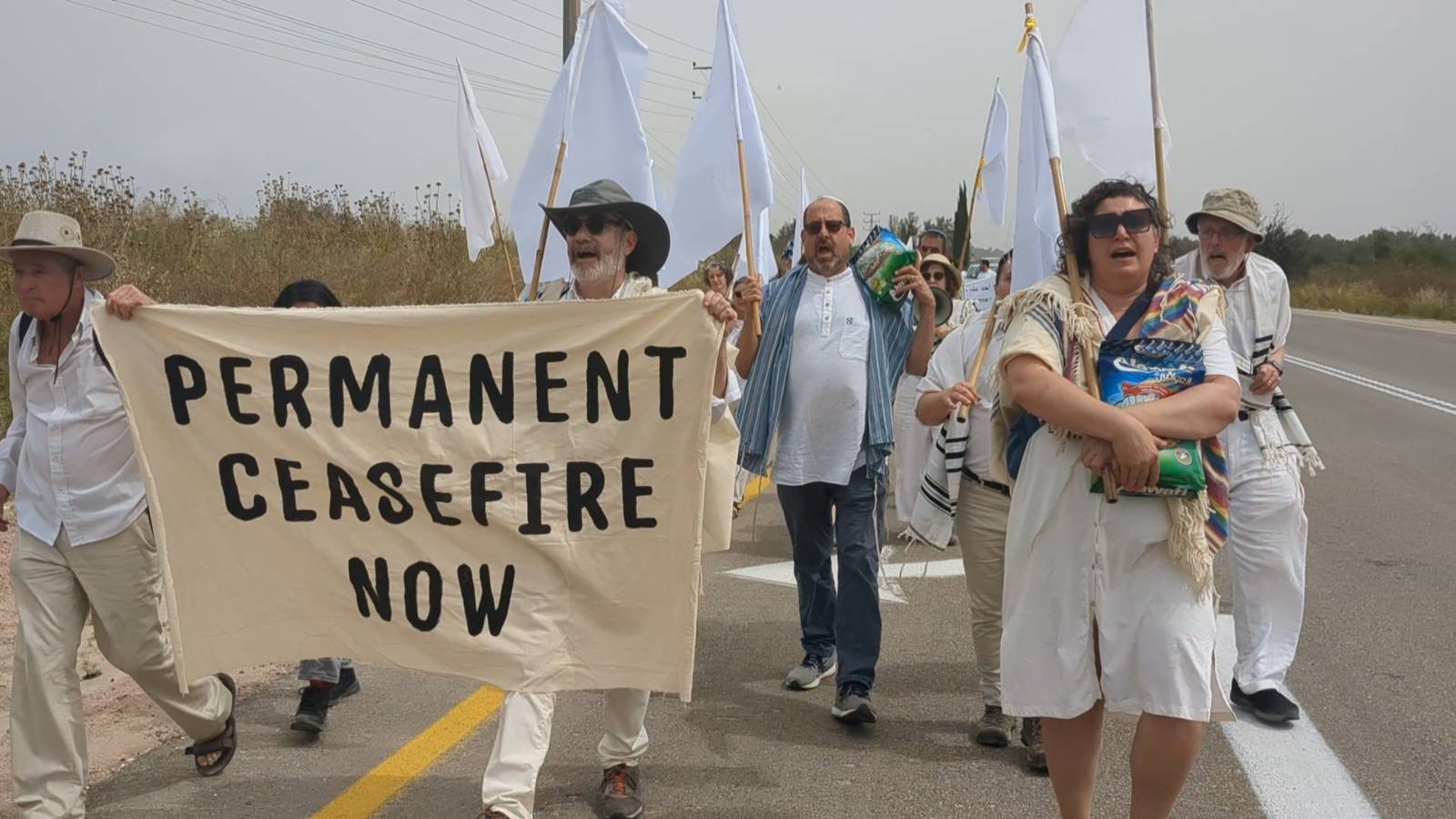
As a political-spiritual response to this unprecedented Passover moment, Rabbis for Ceasefire mobilized and began to organize as action at the Gaza border, to literally bring food supplies with us and demand to that Israel allow us to pass through the Erez Crossing, motivated by Passover’s central imperative, “All who are hungry come and eat!” Our action would include 10 American rabbis, writer/essayist Ayelet Waldman and 30 other Israeli activists – including Israeli rabbis – who have been tirelessly protesting both at the Gaza border and organizing protective presence for West Bank communities targeted by settler violence.

Our action was originally planned for the week leading up to Passover; but when Iran’s missile attack caused the country to go on alert and airlines cancelled their flights to Israel, we almost had to cancel our action. As we read the news, Israel’s escalating hostilities with Iran took front and center The US and the West were rearming Israel and focusing on the threat from Iran – even as Israel continuingly maintained its policy of starvation and bombardment of Gaza. Most alarming were the reports that an Israeli agreement to retaliate lightly against Iran would give them leeway to move ahead with a potentially disastrous ground invasion of Rafah.  We bought plane tickets for the next week, determined to make a collective Passover statement that felt more critical than ever.

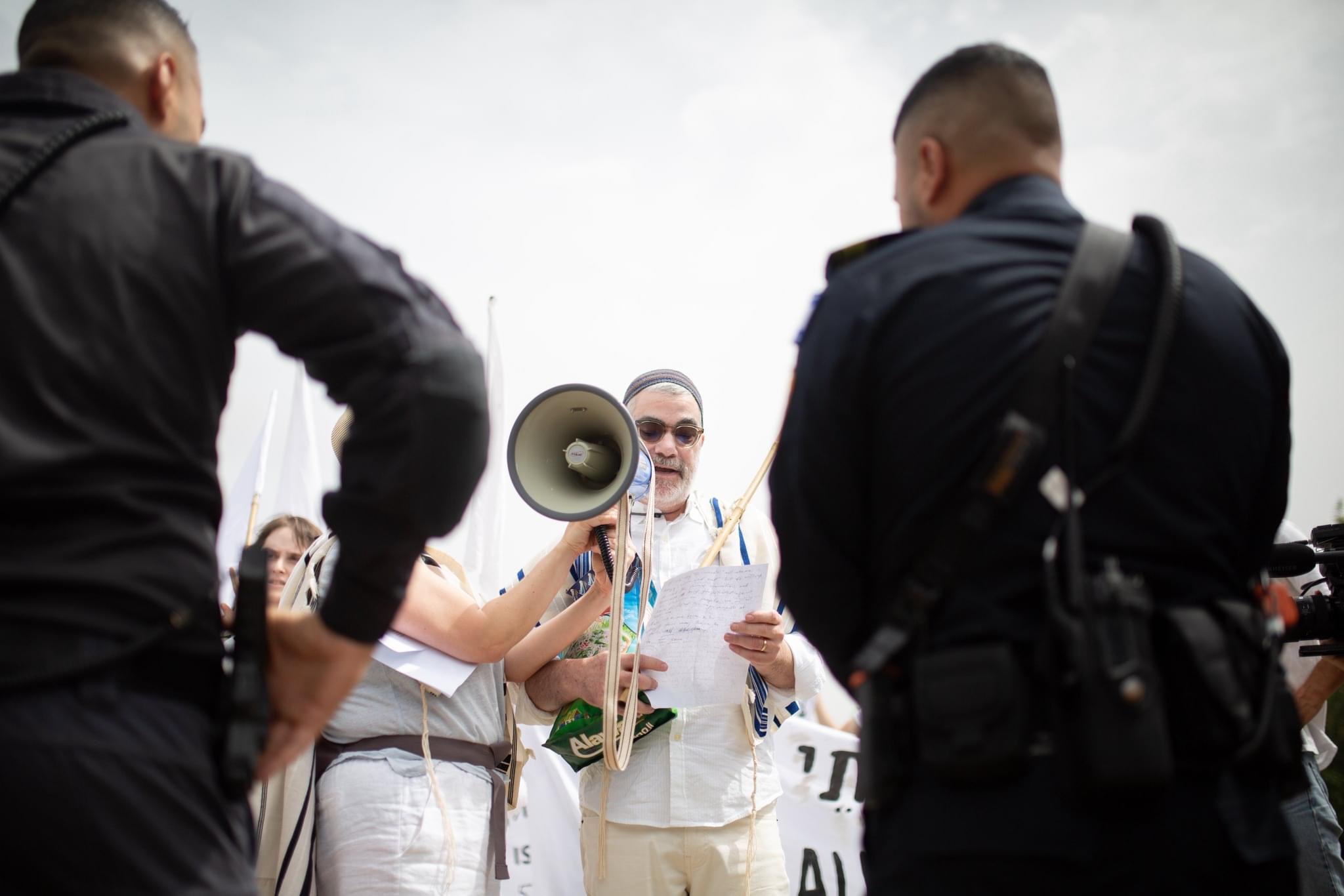
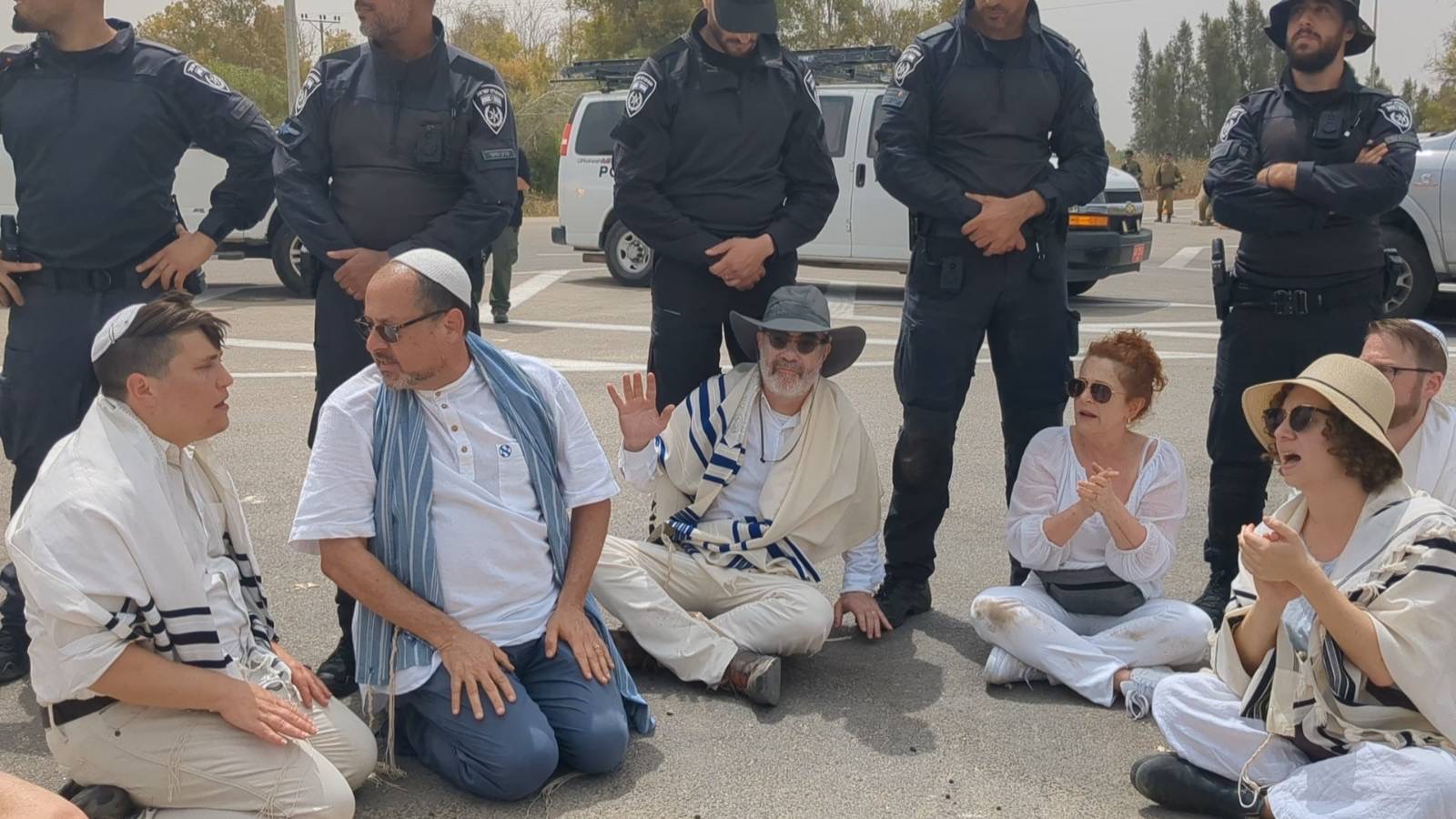
During our action, we gathered at a preplanned meet-up location, with a truck filled with half a ton of flour. We each shouldered backs of rice and, carrying banners and flags, march in the direction of the Erez Crossing. The Israeli police quickly drove up to intercept us. During that initial stand-off, several of us offered statements. I began with an opening prayer, an adaptation of the “Magid” section of the Passover Haggadah:

“This is the bread of affliction, the bread and food systemically, cruelly denied the people of Gaza. Let all who are hungry come and eat. Let all who are oppressed be liberated this Pesach. Now we are here – tomorrow let there be bread for Gaza. Now we are here – next year may there be liberation from the river to the sea!”

Other speakers included Israeli Rabbi Avi Dabush of Rabbis for Human Rights, a resident and survivor of a kibbutz that was attacked on October 7 and Noam Shuster-Eliassi, a well-known Israeli activist, writer and comedian. When our program was over, we pushed forward toward the border. When the soldiers violently attempted to break us up, several of us sat down in the road. During the course of the protest seven of our group: four Americans and three Israelis were arrested.

All of the arrested were fully prepared for this eventuality – the Israelis were in fact veterans at protest-arrests and had previously briefed us on protocol. They were taken to two dentention centers and interrogated for eight to nine hours. The American were told, perversely, that they were being held for “attempting to bring food into Gaza.” All the arrested were released that evening; thankfully the food we attempted to bring into Gaza was not confiscated; as we have previously planned, it was donated to the community of Masafer Yatta – an area in the South Hebron Hills were almost 3,000 residents are resisting the daily threat of demolitions, evictions and dispossession.

While we are satisfied with the attention our action has received, we have no illusions about the current moment in Gaza. Nearly 2.2 million Palestinians in Gaza currently face mass starvation and encroaching famine, these words have resonated with unbearably profound force during Passover this year. Hundreds of trucks filled with humanitarian goods have been sitting idle on roads leading into the Rafah crossing on the border with Egypt, blocked from entering Gaza by a draconian inspection process that severely limits the number of trucks that can pass through. Inside Gaza, the Israeli has been attacking efforts aid efforts with tragic results. According to the UN, the Israeli military has killed 196 relief workers; soldiers have also shot and killed hundreds of Gazans who venture out to seek food.

Amidst it all, the one agency that has the capacity and infrastructure to effectively distribute relief to the people of Gaza, the United Nations Relief and Works Agency (UNRWA), has been defunded by the Biden administration. This past January, the Israeli government leveled the still-unsubstantiated claim that 12 UNRWA employees were involved in Hamas’ October 7 attacks in Israel. Though UNRWA immediately fired the employees in question and launched an investigation, the US immediately withdrew their financial support of the agency, which was founded in 1949 to provide support to the hundreds of thousands of refugees created by the establishment of the state of Israel.

In its spending bill this past March, the US government extended its defunding of UNRWA for a year. Though the agency reports it has sufficient funds to operate until the end of May, its ability to operate in Gaza has already been gutted. Last month, Israel announced it would no longer approve UNRWA food convoys to the north of Gaza, where famine is the most. According to its report this month, the agency noted that “a total of 420 trucks food trucks were denied or impeded by Israeli authorities (during the month of March) …Gaza is on the brink of famine, with 1.1 million people—half of its population—experiencing catastrophic food insecurity due to the intense conflict and severe restrictions on humanitarian access.”

Most ominously, Israel continues to amplify its threats to invade Rafah, which would almost certainly result in massive human tragedy and the complete ethnic cleansing of Palestinians from Gaza. And yet, in the wake our action on the border, I continue to hold out hope. It is clear to me that our border-protest was part of something much larger: the dramatic rise in student resistance on college campuses throughout the US and unprecedented popular Palestine solidarity increasing around the world. For me, this moment expresses the core meaning of Passover powerfully than I have every experienced in my lifetime: in every generation, the cry of the oppressed demands to be heard.

This Passover, I also hold out hope from my own memory of meals in Gaza back in 2017. To be sure, AFSC’s Gaza staff has suffered terribly during this genocidal onslaught – and I’m sure the restaurants and neighborhoods where we enjoyed such delicious meals with our Gazan friends are no more. But I will never forget the tastes of the food that were so graciously served, as well as the communities in Palestine that they represent. And I am more convinced than ever that Israel cannot, try as it may, starve, bomb, or shoot away the Palestinian people’s love for their culture that is so deeply, fragrantly rooted in their homeland: In the words of El-Haddad:

Lately, I’ve been thinking about what I would go back to, and what I would find, if I returned to Gaza. Most of the landmarks have been destroyed. Gone too are many of the people I cherished. But … it feels like I am the torchbearer now, the family’s keeper of treasured recipes. Like Um Hani (Leila’s aunt, who was killed in an Israeli airstrike), I will cook and I will teach, connecting the next generation of Palestinians to our homeland.

Hanukkah Is About Resistance. Let’s Resist This COVID Spike Through Mutual Aid

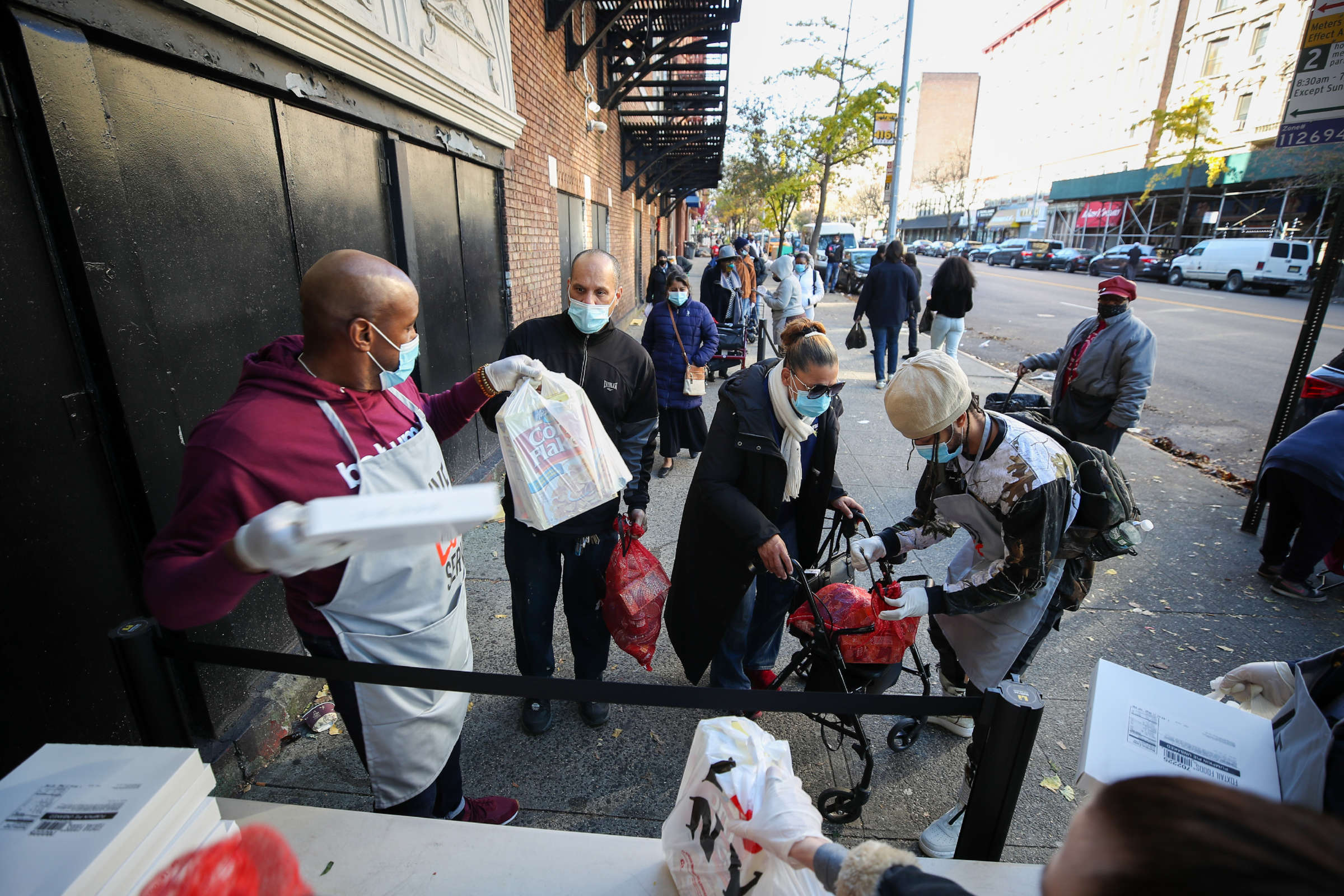
Volunteers from a nonprofit organization provide food supplies to people who line up ahead of Thanksgiving amid the COVID-19 pandemic in the Harlem neighborhood of New York City on November 20, 2020. (TAYFUN COSKUN / ANADOLU AGENCY VIA GETTY IMAGES)

Cross-posted with Truthout

With Hanukkah now upon us, the internet is abuzz with articles offering guidance on how to celebrate the holiday in the age of COVID-19. While most of them focus on practical issues such as socially distanced Hanukkah parties and Zoom candle lightings, I’ve been thinking a great deal on what the story of Hanukkah might have to offer to all of us as we gear up for a winter like none we’ve ever experienced in our lifetimes.

Hanukkah, of course, is based upon the story of the Maccabees, the small group of Jews who successfully liberated themselves from the oppressive reign of the Seleucid Empire in 167 BCE. The legacy of this story, however, is a complex one because the Jewish struggle against religious persecution took place within the context of a bloody and destructive Jewish civil war. In contemporary times, the meaning of Hanukkah has become even more complicated given its proximity to Christmas, subjecting it to the uniquely American religion of unmitigated commercialism.

Beyond all these complications, I’d argue that the essence of Hanukkah is the theme of resistance. At its core, the Hanukkah story commemorates the victorious resistance of the people over the power and might of empire. On a deeper level, we might say that the festival celebrates the spiritual strength of our resistance to an often harsh and unyielding world.

In this regard, it is significant that Hanukkah takes place in the winter. Apropos of the season, the festival prescribes resistance to an increasingly colder and darker world by lighting increasing numbers of candles during this eight-night festival. Those of us who celebrate this holiday are instructed to place our menorahs in our windows as an act of “spiritual defiance,” directing the light outward into the night where it may clearly be seen by the outside world.

There have indeed been moments in Jewish history in which lighting the menorah was literally an act of resistance. One powerful example can be seen offered in a single image: the famous photograph taken in 1932 Germany showing a menorah on the window sill of a Jewish home, with a Nazi flag clearly visible across the street. Another well-known moment of Hanukkah resistance occurred in 1993 when, after a brick was thrown through the window of a Jewish home in Billings, Montana, scores of citizens showed their solidarity with the Jewish community by taping paper menorahs in their windows. More recently, on the Hanukkah after the Pittsburgh synagogue shooting, one local Jewish leader commentedthat the menorah is “not just something that we display in our homes for ourselves … but something we light so that passersby can see. For us, this year that feels like an act of resistance.”

In 2020, we find Hanukkah arriving amid a winter that medical experts are calling “the darkest days of the pandemic” and “COVID hell.” In a recent interview, Michael Osterholm, director of the Center for Infectious Disease Research and Policy at the University of Minnesota, said, “the next three to four months are going to be, by far, the darkest of the pandemic.” Another expert has predicted that more lives will be lost in December than the U.S. saw in March and April combined.

With such an unprecedented and terrifying winter bearing down upon us, I’d suggest that the ideal of Hanukkah resistance is more powerfully relevant than ever. This resistance, of course, presents us with profound challenges. After living with the pandemic for the better part of a year, so many throughout the U.S. are succumbing to “COVID fatigue” — following months of social isolation and anxiety, increasing numbers of people are becoming less vigilant about the pandemic practice of masking and social distancing, even as infection rates spike precipitously.

With the darkest days of the pandemic ahead of us — even as we agitate for rent cancellationeviction resistance and universal health care — we have another form of resistance at our disposal: We can resist government inaction/abandonment of its citizens by participating in the grassroots, self-organized networks of support known as mutual aid.

While these community-based efforts are not new, they have proliferatedwidely since the onset of the pandemic. As Jia Tolentino pointed out in a New Yorker article last May:

[Mutual aid] is not a new term, or a new idea, but it has generally existed outside the mainstream. Informal child-care collectives, transgender support groups, and other ad-hoc organizations operate without the top-down leadership or philanthropic funding that most charities depend on. Since COVID, however, mutual aid initiatives seemed to be everywhere.

The concept of mutual aid was coined in 1902 by the Russian anarchist/scientist/economist/philosopher, Peter Kropotkin, who arguedthat mutual aid could be traced to the “earliest beginnings of evolution.” Kropotkin posited that solidary provided the human species with the best chance of survival, particularly given the emergence of private property and the rise of the State:

It is not love and not even sympathy upon which Society is based in mankind. It is the conscience — be it only at the stage of an instinct — of human solidarity. It is the unconscious recognition of the force that is borrowed by each man from the practice of mutual aid; of the close dependence of every one’s happiness upon the happiness of all; and of the sense of justice, or equity which brings the individual to consider the rights of every other individual as equal to his own. Upon this broad and necessary foundation, the still higher moral feelings are developed.

Some of the most well-known examples of mutual aid in U.S. history, in fact, were the survival programs created by the Black Panther Party (BPP) and the community-based initiatives organized by the Puerto Rican Young Lords Party in the 1960s and ’70s. FBI Director J. Edgar Hoover himself grasped the radical power of these mutual aid projects. In a now infamous internal memo, he wrote that the Black Panther breakfast programs represented “the best and most influential activity going for the BPP, and is as such, the greatest threat to efforts by authorities.”

Another important aspect of mutual aid is the understanding that disenfranchised people cannot ultimately depend on state institutions to save them. According to Puerto Rican scholar Isa Rodríguez, “‘Solo el pueblo salva al pueblo’ — ‘Only the people save the people,’ became a rallying cry for Puerto Ricans following the devastation of Hurricane Maria in 2017 as multiple organizations — mostly based on grassroots groups that existed prior to the hurricane — quickly organized to channel aid.”

The community-based solidarity of mutual aid is also fundamentally different from the approach of private humanitarian charities in which the needy are “saved” through the beneficence of those of greater means. And it must not be viewed through the lens of “crisis response.” Mutual aid, rather, is rooted in long-term alliances between people engaged in a common struggle. As historian/writer, Elizabeth Catte has observed:

Mutual aid can be a form of resistance, but the practice itself requires discipline. We can’t do it because it helps us sugarcoat our trauma, or because it lets us say we have claimed goodness in a world where it is often lacking. Mutual aid is incompatible with charity and should offer no pleasure to the well-resourced person or do-gooder who hopes to find worthy recipients of their kindness, because the practice of mutual aid is intended to destroy categories of worth.

Since mutual aid is rooted in the ideal of solidarity, the first step for anyone interested is to cultivate genuine and accountable relationships within their own local communities. This will be undeniably challenging in a time of pandemic, when our mutual safety literally depends upon socially distancing from one another.

Mutual aid projects, however, are adapting to meet these challenges through creative use of commercial internet platforms, online databasesand toolkits. Additionally, mutual aid projects in the age of COVID insist on strict adherence to public health protocols.

In the words of anarchist organizer Cindy Milstein: “While ‘social’ aka ‘physical’ distancing, hand washing, and mask wearing are necessary tools to help stop the spread of this virus, they will only be effective if it’s grounded in an ethics and practice of social solidarity and collective care.”

The most famous Hanukkah story says that when the Maccabees entered the Temple to relight the menorah, they only found enough oil to last for one day. Miraculously, however, the menorah burned for eight days. At the core of this seemingly simple parable are profound lessons about the power of sustainability and resilience. We know from history that popular movements of resistance have the ability to succeed even against the most daunting of foes.

The prospect of the coming winter — and the new year ahead — are undeniably daunting. Amid it all lie fundamental questions: Where will we find the strength to meet these challenges? How will we keep the fire of our commitment to each other from burning out? Who can we depend upon to see us through the coming season and beyond?

The resistance embodied by mutual aid provides us with a compelling answer — in the end, we have each other. As Dean Spade, who recently published a book titled Mutual Aid: Building Solidarity During this Crisis (and the Next)so aptly puts it, “what happens when people get together to support one another is that people realize that there’s more of us than there is of them.”

True resistance can never occur as long as we expect an external human force to somehow show up to save us. In the end, the true miracle of resistance occurs when we show up for one another.

“It’s Time for All-Out Freedom” A Passover Guest Post by Maya Schenwar

c2tzcfgxgaitcn3

Remarks delivered by Maya Schenwar (editor of Truthout and author of “Locked Down, Locked Out” and the upcoming “Prison by Any Other Name”) at the Tzedek Chicago Passover Seder, April 14, 2020. 

A few months ago, which feels like a few centuries ago, Brant and I discussed the idea of me saying something at this seder about the difference between reform and liberation. I’d been writing about how popular prison reforms such as electronic monitoring, drug courts, and psychiatric institutions are actually entrenching the prison-industrial complex. I thought, what better occasion than Passover to talk about how we shouldn’t be pursuing fake liberation, and how we don’t want nicer-looking reforms that are still forms of oppression? What better occasion to affirm that we have to demand all-out freedom and stick with it?

Now, in these terrifying new times, it feels even more imperative to make vast, sweeping demands—demands that rise higher than we might think we can dream. In the midst of a worldwide plague that, in one way or another, engulfs us all, it’s time for that all-out freedom call.

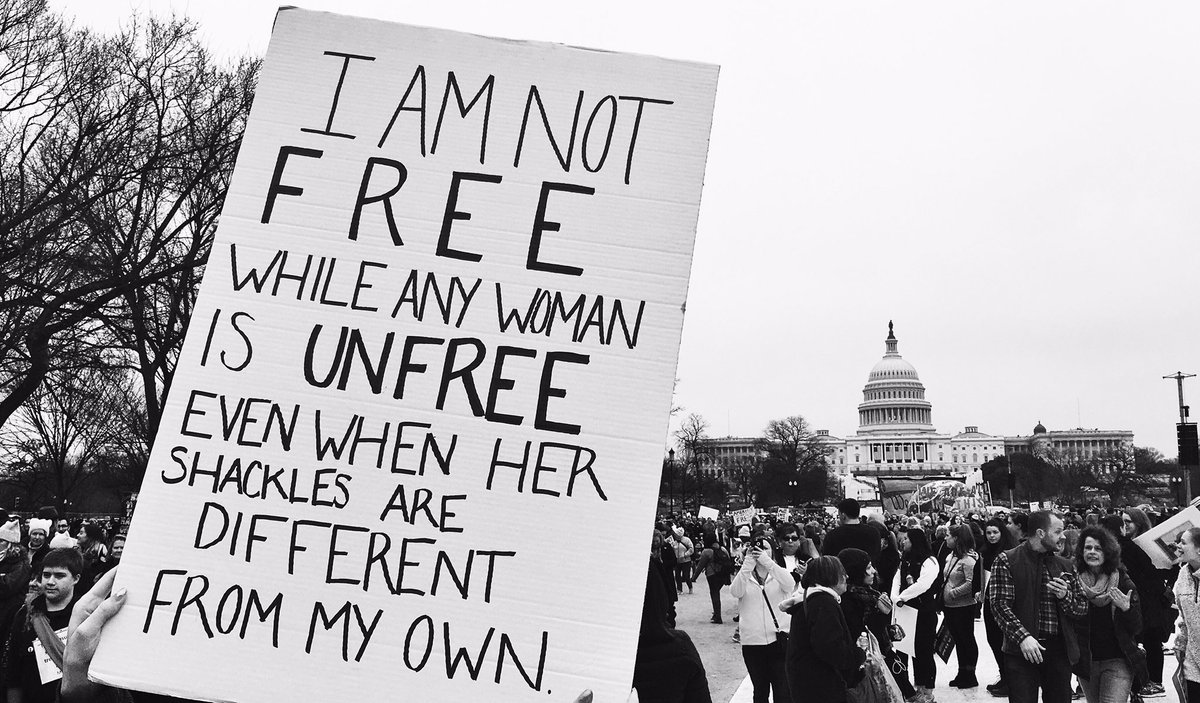
What do I mean by “all-out freedom”? I’m thinking about the refrain that “no one is free while others are oppressed.” I’m thinking about Audre Lorde saying, “I am not free while any woman is unfree, even when her shackles are very different from my own.” The COVID-19 crisis has deeply and horribly impacted our own communities — and communities everywhere. Marginalized people have, of course, been disproportionately impacted. (Consider that approximately 70% of people who’ve died from COVID-19 in Chicago are Black.)

Right now, we are coming to understand that none of us are healthy while others are sick. As long as anyone is in peril, more will be in peril. And liberation for only some is not liberation.

Yet, in a lot of different arenas, we’ve come to accept small offerings from our political representatives and leaders—a bailout mostly geared toward banks and corporations, a slight reduction in drug prices, a few people freed from prisons, some limits on carbon emissions. We say, “Well, something is better than nothing,” even when the something is far from enough, and when the something leaves many people to die.

Even in the face of coronavirus, the health care plan of the presumptive Democratic presidential nominee would leave many millions of Americans uninsured. At this moment in which all of our lives are threatened, it’s time to call for Medicare for All—and much more. We need comprehensive cost-free mental and physical health services, including treatments that go well beyond doctors and hospitals. We need to recognize that plentiful nutritious food, housing, sleep, free time, relaxation, and self-determination are also part of health and survival—and part of liberation. This is the moment to demand universal housing, universal food access, and drastically improved labor practices, which are key to building the kind of freedom that sacrifices no one.

And, at a time when unemployment is skyrocketing and the climate crisis is amplifying the effects of COVID, where is our Green New Deal? Where is our jobs guarantee, our income guarantee for those who don’t work—and our guarantee that our leaders will do everything in their power to confront the climate emergency, which is on track to kill billions? These aren’t far-off dreams or hypotheticals; they are steps that it makes sense to implement now to directly address the public health and economic crises enveloping our country.

At a time when we’re witnessing a shortage of life-saving equipment – ventilators and protective gear – we can issue a pragmatic call for the end of the war industry. In fact, we can challenge the existence of the military-industrial complex as a whole. Has there ever been a clearer moment to say no to the machinery of death, and to demand a mass shift of funds away from the Pentagon and toward public health?

It’s not a time for compromise—not a time to save some and not others.

Moses abided by this philosophy in his dealings with Pharaoh. He said to Pharaoh, “Let us go into the wilderness and worship our own God!” In response, Pharaoh proposed compromises—little reforms, fake liberations.

Pharaoh’s first compromise proposal was for the Jews to stay in Egypt, but worship their own God there. Some people might have said, “Take what you can get! Stop there, Moses! It’s better than nothing.”

But Moses declined the compromise, which was a little better than nothing—but it wasn’t freedom.

So then some plagues happened, as we know, and Moses asked again. Pharaoh scrounged up another compromise: He would let the men go off into the wilderness, but the women and children would have to stay in Egypt. Of course, women and children were groups that were more vulnerable—multiply oppressed, within the oppressed group. And in this compromise, they’d be thrown under the bus.

This compromise reminds me of the “moderate” reforms we see all over the political stage right now, reforms that modestly benefit some people, while throwing other people entirely under the bus:

For example – the proposal that a few more people can have health care, but there will still be millions and millions who are uninsured. Some would say, It’s better than nothing!

And there are the proposals to let some people with nonviolent first-time drug offenses out of prison, while millions of others will be left in cages. Some would say, It’s better than nothing!

And of course, there’s the compromise that younger people with no criminal record will temporarily not be deported, while older people and people with criminal records are condemned to deportation. Some would say, It’s better than nothing!

These are reforms that throw people away. Liberation refuses to throw anybody away.

Moses said no to the compromise, and we have to say no to the politics of disposability, too.

So then there were more plagues, and Pharaoh issued a final compromise: The Jews, including the women and children, could go into the wilderness – but they’d have to leave their animals behind. Basically, they’d have to be released from captivity with barely any resources.

There’s no freedom without some means to survive, and even thrive. A country where many millions are without health care in the middle of a pandemic is not a free country. A country in which people are starving because they’ve suddenly lost their jobs and have no safety net is not a free country. A country in which a few people are released from jails because of a pandemic, but are released into homelessness, is not a free country. In fact, a country in which people experience homelessness is not a free country.

My longtime pen pal and friend Lacino Hamilton, who is incarcerated in Michigan, wrote me a letter about the experience of the pandemic behind bars. He is hoping to be released soon: After 26 years in prison, his challenge to his conviction appears to be on the verge of being recognized. But, Lacino wrote, “I’m worried that I’ll leave here and materially my life will worsen.” He wrote, “Returning citizens are supposed to be happy with dead-end opportunities, the kind that offer only a ‘piece of a life.’ I want a whole life.”

Everyone should have a whole life. Without that, it’s not real liberation.

So, Moses said “no” to the no-animals compromise, because it was not freedom at all.

Eventually, after the most gruesome and horrifying plague of all, the one we hate to talk about, Pharaoh agreed to the whole package.

Of course, that wasn’t the end of the story. Pharaoh tried to prevent the actual implementation of the plan, necessitating some miracles from God to allow the Jews to truly leave.

Some miracles are probably necessary now, too, because the forces of power are never going to agree to full liberation. But I personally don’t think those miracles will be bestowed by a powerful God (who, to be honest, sometimes comes across in parts of the Torah as another angry dictator). I think we have to make those miracles ourselves.

What would it look like for us to create miracles, in the uniquely brutal time we’re currently living through? A couple of weeks ago, Arundhati Roy wrote a beautiful piece about the COVID-19 crisis, in which she talked about this time as one that forces us into a kind of magic. She wrote,

Historically, pandemics have forced humans to break with the past and imagine their world anew. This one is no different. It is a portal, a gateway between one world and the next. We can choose to walk through it, dragging the carcasses of our prejudice and hatred, our avarice, our data banks and dead ideas, our dead rivers and smoky skies behind us. Or we can walk through lightly, with little luggage, ready to imagine another world. And ready to fight for it.

I love that passage, and it speaks to something important. I don’t think the miracle of a full-scale societal transformation that allows for the possibility of liberation will come from above. As far as I know, God cannot unilaterally snap their fingers and provide a universal health care plan or a Green New Deal, or end white supremacy or incarceration, or provide a home for every human being. We will need to grow these things. And I believe that we can, if we remember that no one is safe and healthy until everyone is safe and healthy, and that liberation cannot mean throwing anyone away.

There are many ways to take action right now to pursue liberatory goals, from mutual aid efforts that address urgent needs and build organizing infrastructure for the world we want to live in, to critical housing and labor campaigns, to racial justice movements working to release people from jails and prisons, to environmental campaigns that are drawing connections between this moment and the looming climate emergency, to the ongoing battle for Medicare for All, and much more. Brant is going to share some links in the chat for this Zoom call that will point you toward ways to get involved. These are only a smattering of the many crucial efforts currently underway.

I don’t think we need to drop horrible plagues on our enemies in order to refuse harmful compromises. Instead, we need to unite against horrible plagues – including the plagues of injustice, inequity, and mass violence – and for mass liberation.

I believe that we can enter the portal and fight for that new world, if we are prepared to do it together.

____________________________________________________________________________________________

Action items (National and Chicago-Based):

* The People’s Bailout: a coalitional effort by environmental, economic, racial and health justice groups to advocate a transformative economic package in response to COVID-19. 

#FreeThePeoplea coalition of advocacy organizations who do work to support imprisoned community members across the state of Illinois.

Physicians for a National Health Plan’s COVID-19 and Medicare for All

•  National Nurses United’s broad-based Medicare for All effort. 

Chicago COVID-19 Help & Hardship Page:  a mutual aid effort for direct food and housing assistance.

Rogers Park Food Not Bombs: Saves food from the waste stream while highlighting the inequities of our society.

Brave Space Alliance’s Crisis Food Pantry and Trans Relief Fund.

Greater Chicago Food Depository.

Restore Justice Illinois: to help provide for someone being released from prison.

Help Love & Protect: to make masks for people in women’s prisons:

Autonomous Tenants Union​: an all-volunteer organization committed to organizing for housing justice from below and to the left.

Lift the Ban: to advocate for lifting the ban on rent control in Chicago.

Organized Communities Against Deportations: resistance movement against deportations and the criminalization of immigrants and people of color in Chicago and surrounding areas.

For Tisha B’Av: “Lamentation for a New Diaspora”

0d03e43322bb5421f1550fec070fe051-d5j05xy

photo credit: NateHallinan.com

The Jewish festival of Tisha B’Av begins this Saturday evening, July 21. In anticipation of the day, I’m reposting the new poetic take on Lamentations that I wrote last year.

While this Biblical book is an expression of Jewish communal loss, my new version places these themes in a universal 21st century context, set in a not-too-distant future that I fervently hope shall never come to pass. In this reimagining, it is less an elegy for what was lost than a spiritual/poetic warning about a future cataclysm that is, in many ways, already underway.

May the grief of this Tisha B’Av give us all the strength to fight for the world that somehow still might be.

Click here for the pdf. Feel free to share.

Prayer for the Poor People’s Campaign

homeless-flag_7020

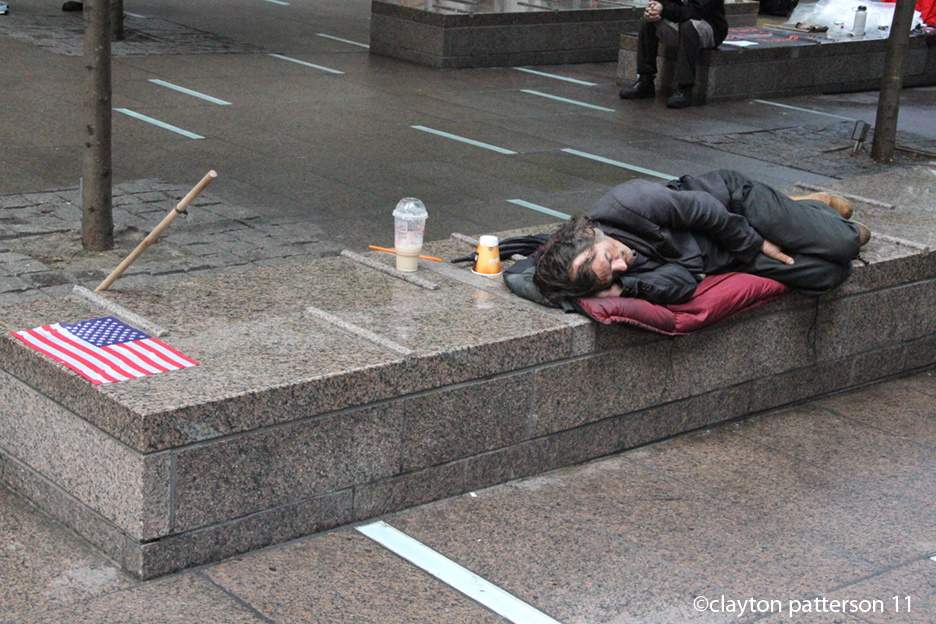
photo: Clayton Patterson

(Delivered at the Poor People’s Campaign Rally for Action, Grace Lutheran Church, Evanston, March 22, 2018.)

Friends, let us bless:

This is a blessing for the ones
who stand up police lines and say:
you may invade our communities,
you may profile and survielle us
you may shoot at our black and brown bodies,
but you will never break us.

This is a blessing for the ones
who lose their homes to predators,
who lose their pensions and healthcare,
while the wealthy grow wealthier
but will never accept that this
is simply the way things must be.

This is a blessing for the ones
who live under the terror
of our drones and our bombs,
whose blood fills the coffers
of our war economy,
whose only consolation is the truth
that while empires may rise,
they are destined to fall.

This is a blessing for the ones
who stand on street corners,
who live in tent encampments
next to luxury condos that soar to the sky
yet refuse to surrender their humanity
to the gears of an inhumane system.

This is a blessing for an earth
that grows more inhabitable by the day
yet is still inhabited by those who struggle
for a planet that will provide a sustainable home
for their children’s children.

This is a blessing for the immigrants
who fear every knock on the door
every cop that pulls them over,
every job application they are handed
yet never give up on the dream
of a better future for themselves
and their families.

So let the justice
that trickles down shallow creeks
roar through the valley and saturate
the dry parched earth,
let it flow relentlessly throughout the land
where life once grew and will grow again.

Let those who cry out in pain
feel strength growing within their broken souls
like green stems shooting through
cracked pavement.

Let us live to see new life spreading
through abandoned streets and
neighborhoods and cities and nations and
let the promise of transformation beckon still
that we might finally take the first
tentative step into this new day, yes
let it be so.

Amen.

Lamentation for a New Diaspora

0d03e43322bb5421f1550fec070fe051-d5j05xy

photo credit: NateHallinan.com

I’ve just written a new poetic take on Lamentations, the Biblical book traditionally read on the Jewish festival of Tisha B’Av (The Ninth of Av). The context of Lamentations is fall of the 1st Temple and destruction of Jerusalem in 586 BCE; it is at once a funeral dirge for the fallen city, a lament over the communal fate of the people, a confession of the collective sins that led to their downfall and a plea to God to rescue them from their dismal fate.

When all five chapters of Lamentations are chanted on Tisha B’Av, its impact can feel shattering. Taken as a whole, it might be said that this epic lament has the raw power of a primal scream. As Biblical scholar Adele Berlin has described it:

The book’s language is highly poetic and extraordinarily moving. Even though often stereotypical, it effectively portrays the violence and suffering of the events. The experiences of warfare, siege, famine, and death are individualized, in a way that turns the natural into the unnatural or anti-natural—brave men are reduced to begging, mothers are unable to nourish their children and resort to cannibalism. The book’s outpouring is addressed to God, so that God may feel the suffering of his people, rescue them, and restore them to their country and to their former relationship with him. The entire book may be thought of as an appeal for God’s mercy. Yet God remains silent.

According to the Mishnah (an early rabbinic era legal text), Tisha B’v commemorates five historical calamities that befell the Jewish people, including the destruction of the 1st and 2nd Temples, and the crushing of the Bar Kochba rebellion. Over the centuries many other historical cataclysms have been added to be to be mourned on this day as well (including the expulsion of the Jews from England in 1290, the expulsion of the Jews from Spain in 1492 and the beginning of World War I in 1914). Although Lamentations was originally written to address a historically specific context, it’s popularity over the centuries testifies to a uniquely timeless quality.

While Lamentations is an expression of Jewish communal loss, this new version places these themes in a universal 21st century context, set in a not-too-distant future that I fervently hope shall never come to pass. In this reimagining, it is less an elegy for what was lost than a spiritual/poetic warning about a cataclysm that may be yet to come if our world does not turn from the perilous path we are currently traveling.

May the grief of this Tisha B’Av give us all the strength to fight for the world that somehow still might be.

Click here for the pdf. Feel free to share.