Category Archives: Jerusalem

Tell JNF to Cease its Practice of Ethnic Cleansing

The Sumarin Family (Photo by: Michal Fattal)

From the newly formed Campaign for Bedouin – Jewish Justice in Israel (a joint project of Rabbis for Human Rights-North America and the Jewish Alliance for Change):

While many of us will be gathering with our loved ones to celebrate Thanksgiving, the Sumarin family will be anxiously sitting on suitcases and wondering whether they will have a home in another week.

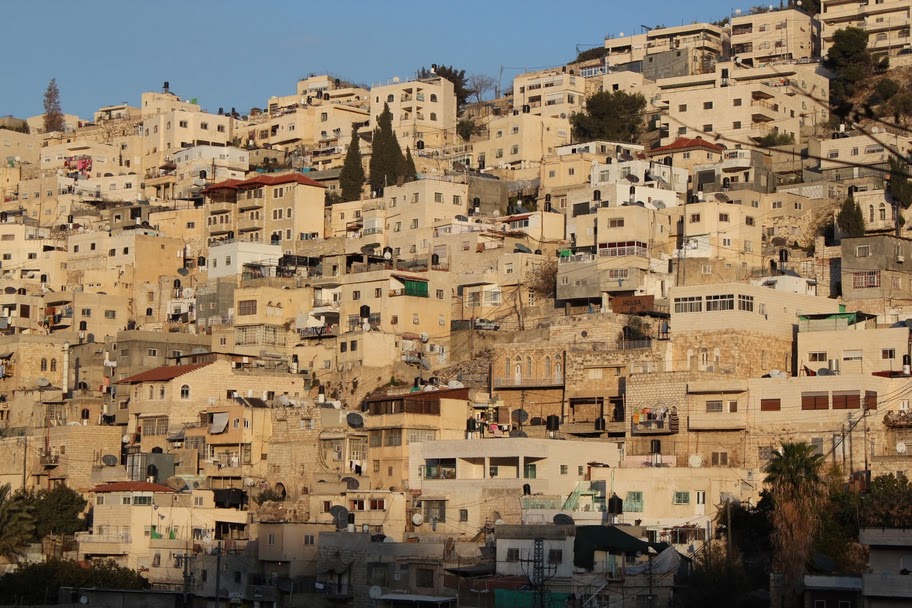
The Sumarins, a Palestinian family of twelve, including five children, a pregnant mother, and a grandfather on dialysis, have lived in their home for more than forty years in the East Jerusalem neighborhood of Silwan.

On Monday, November 28th, they will be evicted from their home – unless we raise our voices now.

We’re deeply troubled that a wholly-owned subsidiary of the Jewish National Fund in Israel, called Himnuta, is behind this move.

To expel this family is a violation of both Jewish and human rights law.   And it risks inflaming Arab-Jewish tensions in Jerusalem, further undermining the hope for Israeli-Palestinian peace.

Send a message now to JNF CEO Russell Robinson and urge him to stop JNF’s Himnuta from expelling the Sumarin family from their home.

The Silwan neighborhood has long been a flash point in the struggle over land in and around the Old City of Jerusalem and the site of clashes between Jews and Palestinians.

Twenty years ago, an ultra-nationalist Israeli government bent on expanding Jewish control in East Jerusalem took legal possession of the Sumarin home, along with other Arab properties in Silwan. The government transferred the Sumarins’ home to JNF’s Himnuta, along with seven other houses in Silwan.

Himnuta then turned its other East Jerusalem properties over to ELAD, a group whose explicit political agenda is to expropriate Palestinian homes and land in Silwan and transfer them to the control of Jewish settlers. There is every reason to expect that the Sumarins’ home will also end up in ELAD’s hands.

How has the Israeli government used the law to expropriate Palestinian property and land in East Jerusalem for Jewish settlers?Go here for the story.

Remind JNF CEO Russell Robinson that “legal” does not mean “just.”  The many anti-democratic and anti-Arab laws recently passed by the Knesset add yet more tragic testimony of the ways law can be used for injustice.

This will not be the last expulsion of a Palestinian family from Silwan by JNF’s Himnuta or ELAD.   Other families are facing the same threat.

Tell JNF CEO Russell Robinson: It’s time to end JNF’s role in expulsions or demolitions of Palestinian and Bedouin homes, whether in the Negev or East Jerusalem.

For more information, see this recent article in Ha’aretz and this post from Sheikh Jarrah Solidarity.
The LA Times on Lifta, Katamon and the Resilience of Memory

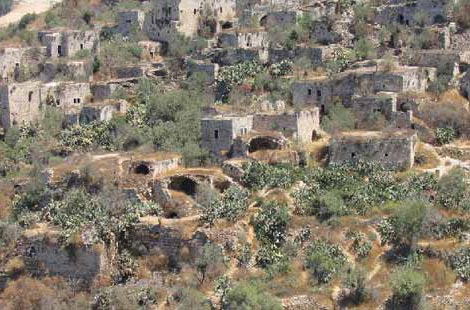
Lifta today

I’ve been increasingly impressed with the LA Times’ willingness to run pieces on Israel/Palestine that unflinchingly explore the deeper dimensions of the conflict. Latest example: a powerful op-ed by Palestinian doctor, academic and writer Ghada Karmi.

In her piece, Karmi responded to a recent LA Times feature that chronicled the events currently swirling around Lifta, the last intact pre-1948 Palestinian village in Israel. The Israel Lands Administration plans to raze this historic site in order to develop 212 luxury apartments, a hotel and retail shops; advocates fighting for the preservation of the site point out that these plans are but the latest example of Israel’s ongoing assault on Palestinian memory.

Karmi commented on the timeliness of the article, noting that April was the month that in 1948, her family was forced from their home in Jerusalem:

The people of Lifta (the village that The Times features), which is just three miles from my old neighborhood in west Jerusalem, were already fleeing in December 1947. The Jewish paramilitary organization Haganah and the Stern Gang, a Jewish dissident group, attacked the villagers with guns and hand grenades. By February 1948, most houses on the edge of the village had been demolished; the inhabitants fled in terror.

The same fate was intended for Katamon, where we lived. Increasing attacks on our street and its vicinity had the same desired effect as in Lifta. After January 1948, when the Semiramis Hotel on a street near ours was bombed by the Haganah, killing 26 people (a nightmare of horror that I dimly remember), the attacks against our neighborhood escalated. Families started leaving, fearful for their children and believing it would be a temporary evacuation. By the time we left, hardly any of our friends remained. The increasing danger around us forced my parents to leave. We took nothing with us, convinced it would not be long before we returned.

Karmi pointed out that unlike Lifta and hundreds of other Palestinian villages, her home is still inhabited today. Then in a throwaway aside, she revealed a minor bombshell: NY Times correspondent Ethan Bronner currently lives in an upper story that was later added on to her family home.

Ali Abunimah covered this particular turn of events one year ago in a piece for The Electronic Intifada. Also recommended: Karmi’s memoir “In Search of Fatima” – particularly the riveting first third of the book in which she recalls her childhood experiences in Jerusalem.

Al-Jazeera Unleashes The Palestine Papers

From Al Jazeera:

Over the last several months, Al Jazeera has been given unhindered access to the largest-ever leak of confidential documents related to the Israeli-Palestinian conflict. There are nearly 1,700 files, thousands of pages of diplomatic correspondence detailing the inner workings of the Israeli-Palestinian peace process. These documents – memos, e-mails, maps, minutes from private meetings, accounts of high level exchanges, strategy papers and even power point presentations – date from 1999 to 2010.

The material is voluminous and detailed; it provides an unprecedented look inside the continuing negotiations involving high-level American, Israeli, and Palestinian Authority officials.

Continue reading

Jerusalem Has Other Lovers, Too: A Guest Post From Palestine

Silwan, E. Jerusalem, 12/24/10 (Photo: Rich Katz)

Here’s a guest post by Liz, another participant from our trip:

Looking back, it becomes clear to me that I fell in love with Jerusalem years before I would ever meet her.

We finally did meet for the first time in 1987, when I went to Israel on a high school summer program. Arriving instantly confirmed my feelings. I saw the forests of trees that I helped to build as a little girl all those times I answered the JNF’s call to give money to plant a tree in Israel. I saw the beautiful Jerusalem stone buildings everywhere. I saw Jews, feeling safe after the Holocaust, walking around proud to be there. I knew I was in love.

Subsequently, now that I was in love, I planned to spend my Junior year of college abroad in Jerusalem. But the Gulf War was launched the semester I was supposed to go and I was stuck in the US, separated from my lover. I missed being in Jerusalem so much that I told myself if I couldn’t go Junior year, then I would go for graduate school. I lived in Jerusalem from 1992-1996 and received my Master’s degree in English and Hebrew Literature from Hebrew University.

I was still in love. I was a young woman in my twenties living in Jerusalem walking the streets with pride — as though my whole life had led me to live, work, and study in this beautiful city. I deserve to be here, I am welcomed here, I need to be here.

Having just returned from the JRC trip to Israel/Palestine, I can’t get two things out of my mind. First, that my love for Jerusalem still runs very deep. And second, that it does for others even more so. Having stayed in the West Bank once before as a facilitator for Hands of Peace (a Chicago-based Israeli-Palestinian coexistence program), I was not blind to the Palestinians’ plight. For many of the Palestinians with whom I stayed, I was the first Jewish person they had met who wasn’t a soldier. They were hospitable, generous, and hungry to tell their stories. I listened, and when I returned to Chicago, I read everything I could.

This JRC trip, however, was very different. It was incredible to go with a group of Jews who had agreed to put themselves in emotionally vulnerable, uncomfortable situations which would require a lot of thinking, reflecting, and feeling. It was as though we all walked out onto a tightrope, knowing we could not go back.

Continue reading

Jerusalem From a Shared Perspective

We’ve just finished the first full day of JRC’s Israel/Palestine study tour – which we devoted to understanding and experiencing Jerusalem as a “shared holy city.” While this might sound like an obvious fact, many Jews today (including myself) have been raised and socialized to regard Israel, if you will,  as a “Jewish city that just happens to be important to some other faiths as well.”

To this end we made a point of visiting and spending time at the three main holy sites of the city: the Western Wall, the al-Aqsa Mosque and the Church of the Holy Sepulchre.  Afterwards we met with two Shaykh Yusuf Abu Sneina, Imam of the al-Aqsa mosque and Rabbi Yechiel Grenimann of Rabbis for Human Rights. Tomorrow morning we’ll be meeting with Revered Naim Ateek of the Sabeel Institute to round out our visits with faith leaders.

Our tour is being led by Aziz Abu Sarah and Kobi Skolnick – who are Palestinian and Israeli respectively. Both Aziz and Kobi are remarkable individuals with powerful personal stories. Aziz is a native of Jerusalem who became radicalized at a young age after the death of his older brother at the hands of the IDF. He became active in the youth movement of Fatah and participated extensively in Palestinian resistance actions during the First Intifada.

Aziz has since become actively involved in Israeli-Palestinian coexistence work. He was one of the original staff members of the Bereaved Parents Circle and works with Rabbi Marc Gopin at the Institute for Conflict Resolution at George Mason University. Aziz and Rabbi Gopin have also founded Mejdi, a business that promotes coexistence through educational tourism and small business cooperation. (You can read an extensive interview with Aziz here.)

Kobi’s story is no less amazing. Born into a Chabad family in Israel, he moved to a settlement in the West Bank during his high school years. There he become a member of Kach – the Jewish extremist movement founded by Rabbi Meir Kahane that actively promotes violence against Palestinians. During his service in the Israeli army Kobi went though a personal transformation as he confronted the reality of the conflict.

Today, Kobi is highly involved in the Israeli-Palestinian peace movement – he was one of the original members of Breaking the Silence and now studies conflict resolution. He travels widely as a trained mediator and facilitator.

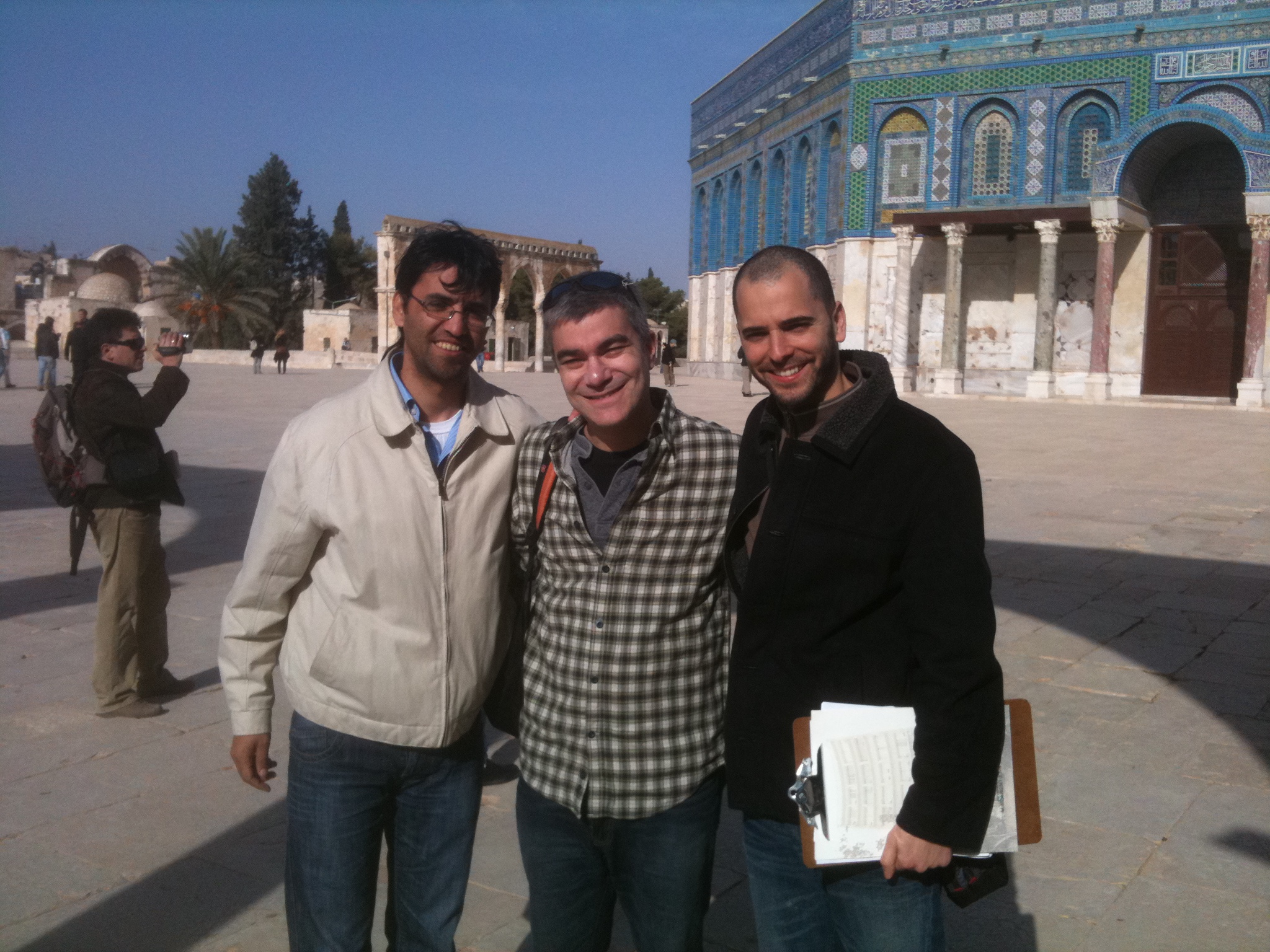
Among other things, the genuine friendship between Aziz and Kobi has powerfully affected the members of our group. Considering their respective backgrounds and personal journeys, their working relationship and very obvious affection for one another is moving and inspiring indeed. (The picture above was taken this morning at next to the Dome of the Rock. That’s me in the middle, with Aziz on the left and Kobi on the right.)

Tomorrow we’re off to tour East Jerusalem and Bethlehem before spending two nights in the Deheishe refugee camp. Stay tuned.

Latest Peace Process Reboot: “Borders First” All Over Again

In yesterday’s post I posed the question:

Does anyone really believe that anything substantive will be accomplished during a ninety day settlement (non) freeze?

According to many peace process policy wonks, the answer is as follows:

The logic behind a 90-day extension is that the two sides would aim for a swift agreement on the borders of a Palestinian state. That would make the long dispute over settlements irrelevant since it would be clear which housing blocks fell into Israel and which fell into a Palestinian state.

This approach is known by said wonks as “Borders First” – and it’s not the first time it’s been attempted by the US. It was, in fact, the method of choice more than a year ago, when the Obama administration first started engaging seriously with the peace process – and the potential pitfalls with this method were pointed out even then.

From Mideast analyst Mark Lynch (aka “Abu Aardvark”) writing in September 2009:

Indeed, “borders first” negotiations under current conditions — especially if Gaza is ignored and the Jersualem area either deferred or ratified — might well lead not to a two state solution but to what I’ve heard described as a “five statelet” outcome: Israel, Gaza, Ramallahstan, Nablusstan in the northern West Bank and Hebronstan in the southern West Bank.  Does anyone really think that this would be the foundation for an end of conflict agreement?

So if ‘borders first’ is going to be the approach to negotiations then I sure hope that early attention is paid to the questions of Gaza and Jerusalem.  If serious spoiler violence is to be avoided, then Hamas and its constituency are going to have to be engaged.  If acceptable borders are going to be drawn, they have to grapple with the realities of the Jerusalem area. And if it is meant to lead to a genuine and lasting end of conflict, then it can’t just be about borders — as Rob Malley has argued the Palestinian refugees need to be brought into the discussion.

I was full agreement with Mr. Aardvark then as now. But now it’s one year later and it seems to be deja vu all over again. While the US again pushes “Borders First,” other core issues are being completely ignored: Israel is still Judaizing East Jerusalem with abandon – and as for the crisis in Gaza, well, no one seems to consider the plight of that region issue even germane to the discussion any more.

I’ve been told Einstein didn’t actually say this, but it doesn’t make it any less true: “Insanity is doing the same thing over and over again and expecting different results.”

Parsing the Latest Peace Process “Breakthrough”

From today’s New York Times:

Prime Minister Benjamin Netanyahu of Israel has agreed to push his cabinet to freeze most construction on settlements in the West Bank for 90 days to break an impasse in peace negotiations with the Palestinians, an official briefed on talks between the United States and Israel said Saturday evening.

In return, the Obama administration has offered Israel a package of security incentives and fighter jets worth $3 billion that would be contingent on the signing of a peace agreement, the official said. The United States would also block any moves in the United Nations Security Council that would try to shape a final peace agreement.

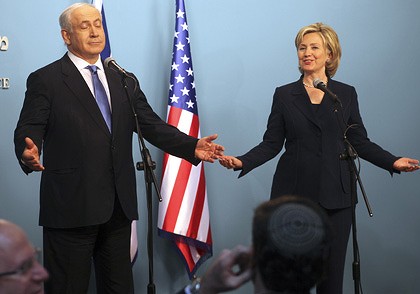
The quid pro quo was hashed out by Mr. Netanyahu and Secretary of State Hillary Rodham Clinton in seven and a half hours of talks in New York on Thursday.

Let’s parse this now:

According to Peace Now’s most recent research, in six short weeks, Israel has all but made up for the construction it lost during the ten month freeze. So that means we’re back to square one. And since this new ninety day freeze is “nonrenewable,” this latest breakthrough is essentially meaningless (except perhaps as a face-saving maneuver on for the Obama administration).

We’re also told that this new freeze would not include East Jerusalem, which was likewise never a part of the last freeze – when home demolitions, evictions of Palestinians, and plans for new Jewish construction continued apace.

(I personally find American Jewry’s deafening silence over what is going on in East Jerusalem to be beyond egregious. Can’t find it in your heart to address the humanitarian implications? Fine. But if you are at all a proponent of the two state solution, you should at least be concerned that Israel’s actions have now made the prospects for a shared capital in Jerusalem all but impossible).

By any other name, this latest diplomatic “breakthrough” is nothing but a fig leaf.  Does anyone really believe that anything substantive will be accomplished during a ninety day settlement (non) freeze? When will our community find the courage to name these dangerously empty gestures for what they really and truly are?