Category Archives: Judaism

Jews/Christians and Israel/Palestine: Rediscovering the Prophetic

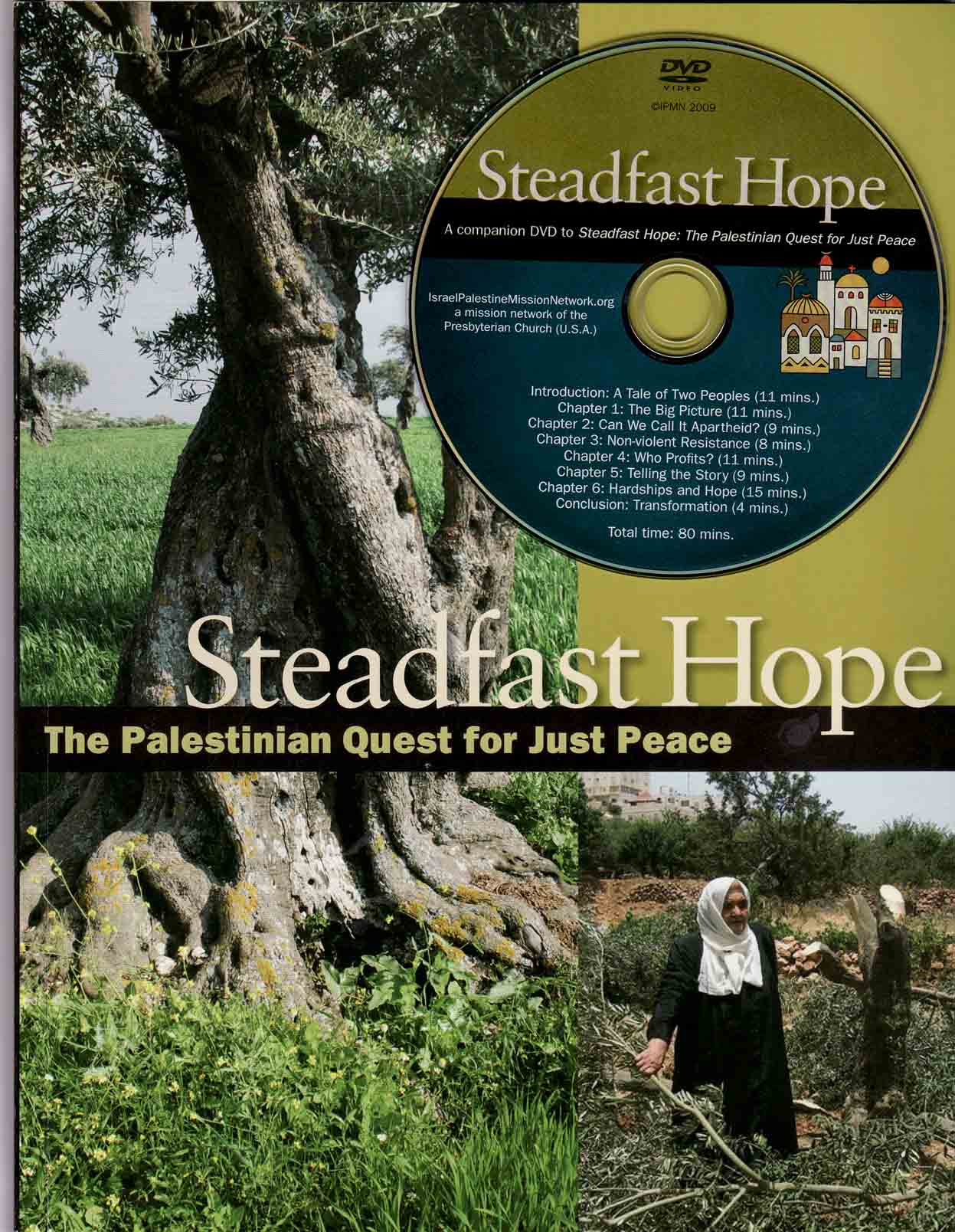
Here is the sermon that I delivered yesterday at St. James Episcopal Cathedral in Chicago. If you would like a copy of “Steadfast Hope,” the study guide to which I refer in my remarks, click here.

I am so pleased to be here with you this morning – and so very honored to have been invited to preach to you today. I want to especially thank Dean Joy Rogers for the invitation and to St. James for hosting me so graciously.

I’d also like to thank my very dear friend, Father Cotton Fite of St. Luke’s Episcopal Church in Evanston, who I believe had no small part in making my visit here a reality.  Many members of my congregation have come to know Father Cotton well – in addition to our friendship, he has become something of a mainstay at our Shabbat morning Torah study group.  I value my friendship with Cotton quite deeply – and I’d like to think that our the work might provide a model for a new kind of interfaith action.  Indeed, this very model is at the heart of my message to you this morning.

I’d like to start properly: with this Sunday’s Episcopal lectionary selection from the Hebrew Bible: 1 Samuel, chapter 3:

In an earlier chapter, we’ve already read that Samuel was born under somewhat remarkable circumstances. Before his birth, his mother Hannah had promised to dedicate him to divine service if only God would only bless her with a child.  In chapter 3, the young Samuel is now serving under Eli the priest at the temple in Shiloh.  We’re told that in those days, “the word of the Lord was rare; prophecy was not widespread” – clearly a literary clue that this all about to change.

Samuel is sleeping in the temple, next to the Ark of God. In the middle of the night, God calls out to Samuel, and Samuel, who thinks he hears Eli calling him, runs to the priest, and says “Hineini – Here I am.”  Eli replies, “I didn’t call you – go back to sleep!”  This happens again, and Eli, presumably with even greater exasperation in his voice now, sends Samuel back to bed.

When it happens a third time, Eli finally realizes what is going on. So he instructs Samuel, “If it happens again, say ‘Speak Lord, for Your servant in listening.”  When Samuel is called yet again, he follows Eli’s instructions. God then reveals to Samuel that Eli’s priestly house is about to be punished, due to the corruption of his sons and his unwillingness to rein them in.

The next morning, Eli asks Samuel what God said, adding “please do not hold anything back.”  And so the young Samuel tells Eli everything: “the good, the bad, and the ugly,” if you will.  Painful though it must have been, Eli accepts God’s word as delivered by Samuel.

At the close of the chapter, we learn that Samuel grew up and “the Lord was with him.” As the text puts it, “(God) did not leave any of Samuel’s predictions unfulfilled.” Thus, Samuel quickly gained a reputation through Israel as a trustworthy prophet. He would go on, of course, to be one of the greatest prophets in Israelite history.

Now on the surface of this story, there is sort of a endearing slapstick quality to the young Samuel’s discovery of his prophetic abilities.  Because of this, I think it’s too easy to misunderstand the real source of Samuel’s greatness.  What made Samuel a great prophet?  Was it because he was promised to God by his mother?  Was it because he had the ability to hear God talking to him when no one else could – not even Eli the priest himself?

No, I believe the key to his prophetic greatness lay in what came next. Samuel learned a harsh and painful truth about a very powerful man – a man who also happened to be his spiritual mentor – and he was willing to speak that unvarnished truth to him.  He did not shrink from his prophetic responsibility, although the chances were probably strong that Eli could cast him out for delivering such a message.

This is, after all the essence of being a prophet. A prophet isn’t someone who can tell the future – and a prophet is certainly not special for being chosen to deliver God’s divine message. No, the essence of being a prophet lies in one’s readiness to speak painful, difficult, often public truths to power.

We will soon learn a great deal about the wages of power in the book of Samuel. The Israelites will eventually come to Samuel and tell him they want a king of their own, telling him they want to be “governed like all the other nations.”

Samuel is grieved by this request – like all prophets, he takes it very personally. But God tells him, “Don’t fret. It’s not you they are rejecting, Samuel, it’s me.  They’ve just never understood where the real source of power in the world lies, despite my attempts to demonstrate this to them over and over again.  If they think that putting their faith in military and political power will save them, fine. But they will soon find out where that path will lead them.”

And of course as they come to discover, kingship in Ancient Israel doesn’t go so well for the new nation. It becomes focused on militarism, becomes incorrigibly corrupt, splits in two and eventually gets overrun from within and without. During this period, it is only the prophets who continue to speak the hard truth to power, who rail against the toxic ambitions of Israelite empire, who warn that this path will eventually be their downfall. And so it becomes.

When I asked Dean Joy for some advice on what I should say in my sermon to you today, she advised me to share my own spiritual vision with you, to speak a bit about the values that drive me as a spiritual leader. So I will say that, personally speaking, prophetic religion is my primary spiritual inspiration as a rabbi, as a Jew, and as a human being. I am driven by religion that speaks hard truth to power. By faith that holds unmitigated human power to account.

I fervently believe that when religion advocates the cause of the powerless, when it stands with those who are victimized by the powerful, when religion proclaims that God stands with the oppressed and seeks their liberation –  this is historically when religion has been at its very best.  And conversely, when religion is used to promote empire, when it is used as by the powerful to justify their rule, when it is wedded to militarism, nationalism and political power – this is, tragically, when we witness religion at its worst.

I cannot help but read Jewish tradition with prophetic eyes.  As a Jew, I’ve always been enormously proud of the classic rabbinical response to empire. I believe that the Jewish people have been able to survive even under such large and mighty powers because we’ve clung to a singular sacred vision.  That there is a power even greater. Greater than Pharaoh, greater than Babylon, even greater than the Roman empire that exiled us and dispersed our people throughout the diaspora. It is a quintessentially Jewish vision best summed up by the prophetic line from the book of Zechariah: “Lo b’chayil v’lo b’koach” – “Not by might and not by power, but by my spirit, says the Lord of Hosts.”

And as a 21st century American Jew, I cannot help but view the world through prophetic eyes as well. Painful though it is, if I am to be true to my understanding of my spiritual tradition, I cannot simply look away when I see my own country going down the road to empire, when I see our nation enmeshed in a state of permanent war around the world with economic disparity growing ever larger here at home.

To be sure, these are not issues of concern for the American Jewish community alone.  And in my own interfaith activism, I have been deeply inspired by my clergy colleagues and other people of faith who share this prophetic vision.  For me, this is the most critical aspect of the interfaith relations – the movements that are created when faith traditions come together to hold power to account in a time of unacceptably growing gaps between the wealthy and poor, the privileged and the exploited, the powerful and powerless.

However, in order for this coalition to truly thrive, more specifically, in order for Jews and Christians to truly work together, we are going to have to find new ways to talk to each other.  We must not park our prophetic values at the door whenever our conversations grow difficult.  And one of the most difficult conversations has to do with the issue of Israel and Palestine.

In my opinion, the issue of Israel – Palestine is the one area in which true interfaith cooperation tends to break down. However, if we are to use the prophetic model as a guide for Jewish-Christian relations, then our communities cannot shirk from sharing hard truths with one another.

Just as the Jewish community does not hesitate to hold the Christian church to task for its anti-Semitic oppression of Jews and Jewish communities throughout the centuries, I do not expect the Christian community to shrink from fully speaking its mind on the contemporary issue of Israel – Palestine. We cannot and should not dance around this issue. To my mind, there is simply too much at stake.

This is, needless to say a painful issue for Jews to talk about amongst themselves, let alone with others.  But I would like to emphasize that there is by no means a uniformity of opinion on this issue in our community.  While I have strong feelings about this subject, I do not pretend to speak for my congregation or the Jewish community at large – nor should any Jewish leader.

In this regard, I want to your church to know I am profoundly appreciative of the Episcopal publication of “Steadfast Hope: The Palestinian Quest for Just Peace,” the report that originated in the Presbyterian Church.  I’m glad to know that your church has been studying it together these past few weeks and I’m so happy to be able to join your study session here after our service this morning.

More than the content itself, I am truly inspired by this study guide because it represents an authentically prophetic statement. It is faithful, forthright, and unflinching. Rather than paper over the difficult issues, it shines a light on them. And in the end, these are the places where real dialogue must ultimately start.

I have no doubt that “Steadfast Hope” is being attacked angrily by some in the Jewish community and elsewhere. But that is, of course, the nature of prophetic witness. You don’t shy away from speaking your truth because you’re worried about hurting feelings, you can’t dwell on the prospect of being labeled any number of names, and you shouldn’t allow yourself to be bullied or cowed into silence.  On the contrary, acting prophetically means speaking your truth knowing full well that there will be strong opposition, but with the faith that there will also be those on the other side who are ready to hear your message and ready to work alongside you in your struggle.

So I’d like to suggest carving out a new place for interfaith relations between our respective communities.  Not one that seeks dialogue for dialogue’s sake, nor one that engages in political bartering, but one that finds common cause in prophetic witness.

Indeed, I hold on to this hope for my own community as well – and here I’d like to return to our lectionary chapter once more. If we read this story carefully, we may well discover that Samuel is not the only hero here. There is also Eli the priest – who is able to hear powerful rebuke, along with a prophecy of terrible consequences for his family.

What does he do? He has the wisdom, the humility and the strong sense of self to ask Samuel for the whole truth – and when he hears it he is able to accept it. He is able to hear this difficult, harsh, prophecy and not react with anger or defensiveness – for he knows it comes from a place of truth and righteousness.

I believe that Eli’s response to Samuel’s prophecy provides a powerful model for my own community. While I fervently hope that we find the strength to offer prophetic witness, I also pray that we find the courage to accept it as well. To overcome the fears that keep us from finding true partners in the struggle for liberation in our world.

So let us come together by facing down the glorification of corrupt power. Let us work together to affirm loudly that it is not by might and not by power but by God’s spirit alone that we will create God’s kingdom here on earth.  And let us find a common worship in the God that stands with the oppressed, the marginalized and the vulnerable.

I look forward to working together with you in this sacred work and, once again, I thank you so very much for inviting me to join you in worship this morning.
“Rabbi Outcast:” Important New Book on Rabbi Elmer Berger

Recently finished Jack Ross’ fine biography, “Rabbi Outcast: Elmer Berger and American Jewish Anti-Zionism.” Highly recommended, especially for those unaware of the American Jewish community’s complex historical relationship to Zionism and the Zionist movement.

Rabbi Elmer Berger is not a commonly known figure in American Jewish history, but as the Executive Director of the American Council for Judaism, he played an important role in promoting alternatives to political Jewish nationalism from before World War II through and after the 1967 Six Day War.  Today Zionism – and the Zionist narrative of Jewish history – occupies an indelible place in the American Jewish communal psyche. But not long ago it was a point of lively debate in our community.

Rabbi Berger himself came from a classical Reform mileau that thoroughly rejected Jewish political nationalism on religious grounds. This ethic was made official Reform movement policy when, under the leadership of Rabbi Isaac Mayer Wise, Reform rabbis passed the 1885 Pittsburgh Platform which declared, among other things:

We consider ourselves no longer a nation, but a religious community, and therefore, expect neither a return to Palestine, nor a sacrificial worship under the sons of Aaron, nor the restoration of any laws concerning the Jewish state.

Even for those familiar with classical Reform’s opposition to Zionism, it is startling to read that anti-Zionism was actually fairly widespread throughout American Jewish communal life at large. I had not realized, for example, that the American Jewish Committee – today among the Jewish community’s leading Israel-advocacy organizations – considered itself “non-Zionist” even after the establishment of the state of Israel in 1948.

I was also rather startled (actually troubled) to learn how deeply the Zionist movement has influenced the evolution of American Jewish communal life. Ross points out, for instance, that the Conference of Presidents of Major Jewish Organizations, considered by many to be the most powerful American Jewish organization today, was originally formed in 1943 as “The Committee on Unity for Palestine” – an effort mobilized specifically to quell dissent over Zionism in the American Jewish community.

Although Zionism would eventually become sine qua non for the Reform movement and the American Jewish community at large, Rabbi Berger’s leadership through the American Council for Judaism continued to provide an important dissenting voice in our community until his death in 1996.  As the the American Jewish community grows increasingly ambivalent to its relationship to Israel and Zionism – and as we witness more and more the sorrows wrought by a Judaism that puts its faith in nation-statism, militarism and land-acquisition, Berger’s vision and leadership feels more relevant than ever. (Jack Ross thoughtfully discusses these implications in depth in his Epilogue.)

Jack packs an enormous amount of material into a relatively short book – and those who are not somewhat versed in the history might find its density challenging. But his book is an important one and is well worth the effort. Click above to hear Jack speaking about his book during a recent appearance at the National Press Club. Pay attention carefully – like his writing style, he often strings his ideas together in something of a mad rush.  But they are critical and pertinent ideas indeed – and deeply deserving of our attention.

Ta’anit Tzedek Conference Call: Journalist Ahmed Moor on the One State Solution

As the prospects for a viable two-state solution for Israel/Palestine grow more and more unlikely, we are witnessing a tentative but growing discussion of a one-state solution in the Jewish community.

Indeed, this concept has already been raised and advocated by respected Israelis. As far back as  2002 a one state solution was publicly supported by famed political scientist Meron Benenisti. And more recently, Israeli journalist Dimi Reider has pointed out:

In light of the ongoing deadlock in Israeli-Palestinian peace talks, leaders such as U.S. Secretary of State Hillary Clinton and Israeli opposition leader Tzipi Livni have raised the specter of a one-state solution. Their intention, of course, is to scare some sense into Israeli Prime Minister Benjamin Netanyahu and his intransigent coalition partners. But, as this once-taboo idea becomes a legitimate part of political discussion in the region, some Israeli intellectuals are making the case that this is not something to fear, but a path toward a viable resolution to the region’s long-running crisis.

Here in the American Jewish community, however, this sort of discussion is considered to be naive at best and heresy at worst. But as difficult and painful as it might be for us to contemplate, I believe that sooner or later (and probably sooner than later) it is a conversation we will inevitably have to have – regardless of where we might personally stand on the issue.

To this end, I am proud to announce the next conference call sponsored by Ta’anit Tzedek – Jewish Fast for Gaza: “Conceiving of a One-State Solution” with Palestinian-American journalist Ahmed Moor on Thursday, December 15 at 12 noon EST.

Ahmed Moor was born in Gaza and raised in the US, graduated from University of Pennsylvania in 2005 and spent several years as a freelance journalist based in Lebanon and Cairo. His work as been published in numerous publications, including Al Jazeera, Huffington Post, and the Los Angeles Times. He is currently a graduate student of Public Policy at Harvard University.

During our conversation, Moor will share his views on the need and the prospects for one secular democratic state in which Jews and Palestinians live together as equal citizens.  Can we conceive of such a solution and what would such a state look like practically speaking?  What are the political realities that mitigate against it and how could they ever be shifted? What are the prospects that these two peoples could live and govern a state together?

Call Info:

Thursday, December 15 at 12 noon EST
Access Number: 1.800.920.7487
Participant Code: 92247763#

As always, there will be opportunities for questions and answers during the call.

We are looking forward to an informative and respectful conversation. I encourage you to join us.

Support Prof. Marc Elllis – and tell Ken Starr to Stand Down!

I first read Professor Marc Ellis’ book “Toward a Jewish Theology of Liberation” as a rabbinical student back in the mid-1980s – and suffice to say it fairly rocked my world at the time. Here was a Jewish thinker thoughtfully and compellingly advocating a new kind of post-Holocaust theology: one that didn’t view Jewish suffering as “unique” and “untouchable” but as an experience that should sensitize us to the suffering and persecution of all peoples everywhere.

And yet further: Ellis had the courage to take these ideas to the place that few in the Jewish world were willing to go.  If we truly believe in the God of liberation, if our sacred tradition truly demands of us that we stand with the oppressed, then the Jewish people cannot only focus on our own oppression – we must also come to grips with our own penchant for oppression, particularly when it comes to the actions of the state of Israel. And yes, if we truly believe in the God of liberation this also means that we must ultimately be prepared to stand with the Palestinians in their struggle for liberation.

When I first read Ellis’ words, I didn’t know quite what to make of them. They flew so directly in the face of such post-Holocaust theologians as Elie Wiesel, Rabbi Irving Greenberg and Emil Fackenheim – all of whom viewed the state of Israel in quasi-redemptive terms. And they were certainly at odds with the views of those who tended the gates of the American Jewish community, for whom this sort of critique of Israel was strictly forbidden.

Over the years, however, I’ve found Ellis’ ideas to be increasingly prescient, relevant – and I daresay even liberating. As a rabbi, I’ve come to deeply appreciate his brave willingness to not only ask the hard questions, but to unflinchingly pose the answers as well. And it is not at all surprising to me that we are now witnessing a new generation of rabbis and young Jewish leaders starting down the road he has paved for us.

All this to say I am profoundly sorrowed to learn that Ellis is currently under threat of losing his job at Baylor University due to an investigation led by new university president Ken Starr.

By every appearance, Ellis has had a distinguished academic career, having taught at Maryknoll School of Theology, Harvard Center for the Study of World Religions and Florida State University.   Thirteen years ago, he was appointed Professor of American and Jewish Studies at Baylor, where he founded Baylor University’s Center for American and Jewish Studies and currently serves as its director.

There is ample reason to mistrust the academic validity of this investigation.  According to a new petition now being circulated by Cornel West and Rosemary Ruether:

Marc Ellis was brought to Baylor in 1998 and all previous presidents supported his dissident voice. After Ken Starr (nemesis of Clinton in the White House) became president in 2010 the attacks started. During the last year Baylor lawyers were instructed to communicate with many of Marc’s colleagues, past students and staff. The objective was to request all of them to report all “abuse of authority.” Most of us explained to the lawyers that was a lost cause because Marc has been an exemplar colleague, professor and mentor.

But starting this Fall he was separated from his classes, his center closed and a hearing scheduled to take place some time in this academic year. As far as we know the accusations are about abuse of authority but we are not aware of the details because they are part of the internal legal process. Obviously it is about something else: Marc’s dissident voice. We will inform all of you as soon as we know more information.

In a statement released yesterday, Ellis commented thus:

Given what I currently understand of the rules of the Baylor process I will, for now, honor the process by not discussing the specifics, except to say that I believe this is a pretext to silence an independent voice at the place for which I have had deep appreciation.

I write now to ask you to please join me in signing this petition in support of Ellis – an important Jewish dissident thinker and (as his many academic colleagues are now attesting) a truly distinguished scholar. I would add: even if you don’t personally agree with all of his ideas, I urge you to support his cause. It is high time for us to stand down those who would trample academic freedom, shun open discourse and debate, and muzzle those with whom they simply disagree.

I’ll end with Professor Ellis’ own words, all too sadly apt under the circumstances:

Prophetic Jewish theology, or a Jewish theology of liberation, seeks to bring to light the hidden and sometimes censored movements of Jewish life. It seeks to express the dissent of those afraid or unable to speak. Ultimately, a Jewish theology of liberation seeks, in concert with others, to weave disparate hopes and aspirations into the very heart of Jewish life.

(“Toward a Jewish Theology of Liberation,” p. 206)

“Social Justice” Israel Trips Must Not Cover Up Oppression

Here is a guest post by Michael Deheeger, who you may know from the radio interview about our JRC Israel/Palestine Study Tour last year.

Michael grew up in my congregation and has worked for several years as in Chicago as a political activist and a community organizer. His most recent job, from which he has just resigned, was as Program Director for AVODAH: Jewish Service Corps in Chicago.

On October 26, I resigned from my position as Chicago Program Director for AVODAH: The Jewish Service Corps. Each day I have spent in this job has been a blessing, but I have no choice in light of AVODAH’s decision to co-sponsor a 10-day “service-learning” trip to Israel with the American Jewish World Service through their joint initiative Pursue: Action for a Just World.

AVODAH and AJWS agreed to this trip as a grant stipulation for funding from the Charles and Lynn Schusterman Family Foundation, a prominent donor in the Jewish nonprofit world, major supporter of pro-Israel causes, and Pursue’s principal funder.

I believe it is irresponsible for social justice organizations to organize a trip that focuses on “diversity, poverty and social integration” without meaningfully, and publicly, addressing Israel’s military occupation of Palestinian land, systematic oppression of Palestinians across “Israel proper” and the Occupied Territories, and enforced exile of Palestinian refugees.

I believe doing so contributes to the “normalization” of a deeply abnormal oppressive situation – presenting Israel as a liberal democracy with nothing more than the usual challenges rather than a state which imposes an ethnicity-based military regime on millions of people. It perpetuates the idea that it is acceptable to ignore Israel’s daily abuses of Palestinians in the pursuit of cultural, religious, financial or other interests.

Similar Jewish “social justice”, artistic, LGBTQ and environmental trips are often used to mount a facade of democracy over Israel’s state-sponsored human rights abuses.  It is well known that Israeli government ministries and American Jewish organizations have been collaborating on an extravagantly funded “Brand Israel” project designed to improve the country’s image abroad by “avoiding any discussion of the conflict with the Palestinians.” Arye Mekel, former Deputy Director-General for Cultural Affairs with Israel’s Foreign Ministry, has described this strategy as a way to “show Israel’s prettier face.” I have no doubt that the Schusterman Foundation has a similar agenda for this Pursue trip.

Through this trip, AVODAH and AJWS become active participants in covering up oppression, whether that is their intention or not. They publicly lend their organizations’ names and reputations to injustice, violating the social justice principles enshrined in their missions which inspired me to join AVODAH’s staff in the first place.

My decision to resign is informed by my support of the Palestinian call for Boycott, Divestment and Sanctions (BDS) against Israel. Initiated in 2005, BDS is a call endorsed by the great majority of Palestinian civil society groups as a nonviolent strategy to pressure Israel into ceasing its systematic oppression of Palestinians.

I believe in listening to people fighting their own oppression when they lay out a strategy to achieve their human rights. For the overwhelming number of Palestinians, BDS is that strategy.  Being strong allies and taking our lead from people directly impacted by oppression is, in fact, a philosophy deeply held by organizations such as AVODAH and AJWS.

I decided to write about my decision in the spirit of Tokhecha, or sacred rebuke, a central value of Torah:

Reprove your kinsman but incur no guilt because of him” (Leviticus 19:17)

Rashi’s interpretation of “incur not guilt” is “Do not embarrass [them] in public.” My goal is not to embarrass or shame AVODAH or AJWS. I love and respect AVODAH, which is staffed by dedicated and thoughtful individuals, and which remains committed to open discussion on this and other issues among its participants and alums.

However, this trip communicates a public message – that these organizations are willing to overlook Israel’s oppression of Palestinians in exchange for funding. It therefore requires a public response.

My understanding of Tokhecha is that it includes the responsibility to help those to whom it is directed make amends. I echo the call put out by AVODAH alums and current Corps members that AVODAH and AJWS commit publicly to “never sponsor an Israel trip in this way again.”

We in the Jewish social justice community have a choice. On the one hand, we can stay silent and try to avoid provoking the ire of powerful donors like the Schusterman Foundation. On the other hand, we can publicly oppose, or at least not cover up, the oppression Israel commits directly in our name.

I have faith that our community, increasingly, will choose the latter, and that as BDS continues to gain traction among young Jews, there will be a growing cost in staff and participants for organizations that allow themselves to be used as cover for the oppression of Palestinians.

War Without End: Sermon for Yom Kippur 5772

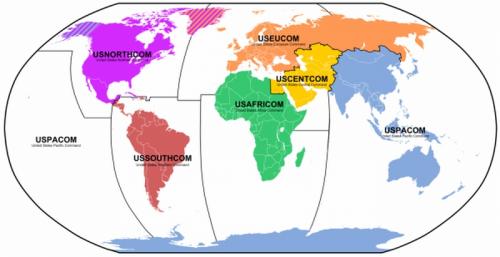
US Global Command and Control System

In 2006, I was approached by JRC’s Peace Dialogue task force and asked if I would consider adding something to our Shabbat prayer for peace. Could we, they asked, introduce the prayer by reading the names of three American soldiers, three Iraqi civilians and three Afghan civilians who had been killed in these two ongoing wars?

The reason, they explained, was to remind ourselves that peace is not just an abstract concept. If we’re going to say a prayer for peace, we should own up to the stakes – we should acknowledge that we are citizens of nation at war, that war comes with a very real human cost, and that as American citizens, we are complicit in all actions made by our country.

Continue reading

They are Young, Jewish, Proud: Will We Let Them In?

“How do we reach Jewish young people?” has long been one of the central mantras of the organized Jewish community, as those of us who work as Jewish professionals can surely attest. But while we wring our hands over at the state of the Jewish future, a remarkable new generation of Jews has been knocking insistently at our door.

Case in point: Almost one year ago, five young Jews disrupted the keynote speech by Israeli Prime Minister Benjamin Netanyahu at the Jewish Federation General Assembly in New Orleans. One by one, at five different points during the speech, the activists stood on their chairs, unfurled banners and shouted out in turn:

Young Jews say the settlements delegitimize Israel!
Young Jews say the Occupation delegitimizes Israel!
Young Jews say the siege of Gaza delegitimizes Israel!
Young Jews say the loyalty oath delegitimizes Israel!
Young Jews say silencing dissent delegitimizes Israel!

With each successive interruption the shouts from the crowd grew louder and angrier. As security attempted to safely walk them out, one protester was put in a choke hold by a convention attendee and wrestled to the floor. Another conventioneer grabbed a banner and tore it in half with his teeth.

At the very same moment, “Young, Jewish, Proud” launched its website, featuring the “Young Jewish Declaration” — an astonishing statement of purpose that seemed to come directly from the collective heart, mind and gut of this newly formed youth movement:

We exist. We are everywhere. We speak and love and dream in every language…

We remember how to build our homes, and our holiness, out of time and thin air, and so do not need other people’s land to do so…

We refuse to have our histories distorted or erased, or appropriated by a corporate war machine. We will not call this liberation…

We commit ourselves to peace. We will stand up with honest bodies, to offer honest bread…

We are young Jews, and we get to decide what that means.

Predictably, the Jewish establishment wasted no time in excoriating the protesters. Some chided them condescendingly for their “misguided” behavior. Others angrily criticized them for “aiding the enemy.”

As for me, I watched these events unfold with genuine hope for our Jewish future.

After all, weren’t these young people claiming and proclaiming their Jewishness in classic Jewish fashion? Like young Abraham destroying his father’s icons, they stood up to the hypocrisy and corruption of their elders. In the heart of the the largest gathering of American Jewish leaders, these proud young Jews called out their community on its most sacred of sacred cows: namely, the unquestioning, unconditional support of the state of Israel.

In all honesty, I can’t say I’ve ever witnessed as authentic an act of young Jewish self-expression as I did that afternoon at the New Orleans General Assembly.

Yes, as a professional Jew, I’ve participated in the “how can we inspire young people?” conversation more times than I care to admit. I’ve watched a myriad of Jewish community-sponsored initiatives come and go. And invariably, all of them focused on what we believed was best for Jewish young people.

But while the Jewish establishment has been excellent at creating and funding expensive projects, we seem to be chronically incapable of actually listening. We love to tell young people how we think they should express their Jewishness, but rarely do we stop long enough to really, truly learn what drives and inspires them.

Taglit-Birthright Israel, the Jewish establishment’s signature youth initiative, is the most obvious case in point. For well over a decade, we have invested literally hundreds of millions of dollars in providing free, all-expense-paid trips to Israel. The essential goal of these trips, as Birthright’s Marketing Director puts it plainly, is to make Israel “an integral part of every Jew’s identity.”

It’s well known that Birthright was born in response to growing reports that American Jewish young people were becoming increasingly disconnected to the state of Israel. But by rushing to address this issue through a massive multimillion dollar community initiative, we successfully avoided asking the deeper questions.

Could it be that we were afraid to know the answers?

Could it be that young people are becoming disenchanted with Israel because they are becoming increasingly troubled by its treatment of Palestinians? Could it be that growing numbers of young Jews regard Israel more as an oppressive colonial project than a source of Jewish pride? Could it be that in the 21st century world, the identities of young Jews are tied less to Jewish ethno-nationalism than to a more universal vision of liberation?

“Young, Jewish, Proud” is decidedly not the product of a Jewish communal initiative. On the contrary it is a grass-roots, self-organized effort of young Jews who seek to express their Jewish identity in a time-honored Jewish manner: by speaking truth to power, by advocating unabashedly for peace, justice and liberation, by standing up to oppression, racism and persecution in Israel/Palestine and throughout the world. They simply aren’t buying what the Jewish establishment has been selling them. They are finding their own voices.

We are young Jews, and we get to decide what that means…

I am well aware that it is not easy for a Jewish community so thoroughly focused on Zionism to hear it challenged in such a fundamental way. But aren’t these young Jews doing precisely what they were raised to do?  They are taking a good, educated look around them, thinking critically about what they see and are taking a stand for what they believe in as Jews.  Are we really prepared to disown them because their conclusions make us uncomfortable?

In the Torah portion for the first day of Rosh Hashanah, we read that when God saves the life of young Ishmael in the wilderness, “God heeded the cries of the boy where he is” (Genesis 21:17). In other words, God was able to find Ishmael by truly listening to him. Not where God wanted him to be or where God thought he should be, but where he was.

This New Year, I fervently hope our community can do the same with our newest adult generation. These young people certainly have every reason to be disenchanted with the organized Jewish community, but for some reason they refuse to go away. They’re here, and they’re knocking loudly at our door.

Do we, the gatekeepers of the Jewish community, have the vision, the faith and the courage to open it up and let them in?

Rabbi Eric Yoffie: “I Prefer to Live With Jews”

Rabbi Eric Yoffie is the outgoing President of the Union for Reform Judaism, arguably the most important Reform Jewish leader in the country. In a recent blog post for the Jerusalem Post, he made the following point in defense of a two-state solution in Israel/Palestine:

I care about humankind, but I love my own group a bit more. I am more comfortable with them. I care more about them, just as I care more about my family than other families. Without a two-state solution, Israel will not longer be a state for my group; it will be a bi-national state without a clear Jewish identity. That is not the kind of place where I, or most Israeli Jews, will want to live.

So there you are. This is where the rubber hits the road. Is the best case we can make for liberal Zionism: that when push comes to shove, Jews prefer to live with Jews?

I think we all owe a very real debt to Rabbi Yoffie. In trying to make a dramatic pedagogical point, he has just shone a very bright light on the dark underbelly of this entire project.

This is abject tribalism, pure and simple. And if it truly is the essence of liberal Zionism, then count me out.

Volunteering + Values: What’s Motivating the Jewish Young Folk?

Repair the World, has just released “Volunteering+Values,” a report commissioned  “to understand the full extent of Jewish young adults’ volunteer habits and preferences.”  I’d say its findings/recommendations contain implications that North American Jewish communal institutions would do well to heed.

Conducted by the Cohen Center for Modern Jewish Studies at Brandeis
University and Gerstein|Agne Strategic Communications, V+V surveyed a sample of Jewish young adults between the ages of 18 and 35 and investigated their volunteer commitments and attitudes.

Among the findings I found notable:

Only a small portion of Jewish young adults prefer to or actually do volunteer with Jewish organizations … The minority of Jewish young adults who volunteer through Jewish organizations do so to support their own people and community. By contrast, the vast majority of Jewish young adults say it does not matter if they volunteer with a Jewish or non-Jewish organization.

Hand in hand with this finding, the report noted a growing universalist identity among Jewish young people:

Jewish young adults are primarily drawn to service through universal rather than Jewish-based values or identity … Only a very small portion of Jewish young adults volunteer as a means to represent the Jewish community to the larger society.

Not surprisingly to me, many Jewish young people seem to be turned off by what they perceive as the overly tribal concerns of the organized Jewish community:

Today’s Jewish young adults have grown up amidst and are at home with ethnic and religious diversity … As a result, most are concerned for all victims of poverty or injustice, not just those who are Jewish. It appears that they do not believe that Jewish organizations share this concern for universal causes.

I was particularly struck that Israel ranked consistently at the bottom of the list of priorities of young Jews. According to one graph, only 1% of those surveyed cited Israel/Middle East Peace as an “issue focus of primary volunteer work” (at the top of the list: “Material Assistance to the Needy.”) Another graph charted the geographic focus of primary volunteer work thus: 79%: Local Community, 13%: Domestic Non-Local, 4%: Developing World, 3%: Israel. (This trend is particularly noteworthy since the primary sample used by V+V was the Birthright applicant pool – a data base of 300,000 young Jews who either participated or applied for a Birthright Israel trip between 2001 and 2010.)

Among the many strategic implications identified by the study, this one resonated for me in particular:

Efforts are needed to educate Jewish young adults of the deep connection between Jewish thought and volunteering without implying that it is an exclusively Jewish perspective or only pertains to support of the Jewish community. Jewish young adults, regardless of denomination or level of religious involvement, should be encouraged to “own” a Jewish perspective on service. Widespread efforts are needed that draw attention to and link the universal and Jewish values that Jewish young adults already hold with the causes about which they care most deeply.

As always, I’d love to hear reactions.

Obama Tames the Lion’s Den

For me, Obama’s speech at AIPAC yesterday was on the same level of rhetorical and political brilliance as his much-vaunted 2008 “race speech.”  I’m really not sure quite how he did it, but he managed to strike an impossibly perfect balance between statements of political necessity:

The bonds between the United States and Israel are unbreakable and the commitment of the United States to the security of Israel is ironclad.

hard-nosed reality:

There’s a reason why the Palestinians are pursuing their interests at the United Nations.  They recognize that there is an impatience with the peace process, or the absence of one, not just in the Arab World — in Latin America, in Asia, and in Europe.  And that impatience is growing, and it’s already manifesting itself in capitals around the world.

political courage:

I know very well that the easy thing to do, particularly for a President preparing for reelection, is to avoid any controversy.  I don’t need Rahm to tell me that.  Don’t need Axelrod to tell me that.  But I said to Prime Minister Netanyahu, I believe that the current situation in the Middle East does not allow for procrastination.

and moral conviction:

The Talmud teaches us that, “So long as a person still has life, they should never abandon faith.”  And that lesson seems especially fitting today.

For so long as there are those across the Middle East and beyond who are standing up for the legitimate rights and freedoms which have been denied by their governments, the United States will never abandon our support for those rights that are universal.

And all this while repeatedly bringing the AIPAC audience to their feet in applause.

Wow.

If I had any doubts about the power of this one speech, the reaction of the leftist blogosphere – where the criticism of Obama’s efforts in Israel/Palestine has been witheringly critical of late – was the ultimate indicator.

Here’s Phil Weiss:

Today’s speech by Barack Obama to AIPAC was a historic speech, maybe the most remarkable speech he has ever given. For a masked and calculating man, it was incredibly sincere. For just below the politically-hogtied phrases and praises for the Israel lobby that controls his future, it was filled with rage. When he spoke over and over of a Jewish democratic state and then said that the world was changing, and spoke about that Jewish state upholding universal values that Americans also share, I heard vicious irony: You want a religious state, you have the power to demand it of me, because you are the Israel lobby, well time is running out on you.

MJ Rosenberg:

Yes, he gave AIPAC the usual Israel boilerplate. He’ll veto a unilaterally declared Palestinian state, etc. But all that stuff is standard and subject to change as situations change. However, the overarching message was the necessity for two states and the unsustainability of the occupation.

And AIPAC applauded. Strongly.

The President did a masterful job. The neocons are outraged. And I expect that Netanyahu, seeing AIPAC’s reaction to their President, will cut his losses and back down.

Bravo, Mr. President. You even brought out the best in AIPAC.

Even Ali Abunimah, in a post that otherwise excoriated US policy in Israel/Palestine, grudgingly admitted that Obama’s speech contained “a number of interesting elements” and “a hard-headed realism about the deep trouble Israel is in.”

Now, however, the real test begins. I’ve made no secret that I believe we’ve passed the point of no return on a two state solution – and I continue to fear that for all of his political courage, Obama’s efforts are arriving too late. As I write, Israel’s settlement juggernaut continues apace, making a mockery of Obama’s stated hope for a “sovereign and contiguous Palestinian state.”  Meanwhile, Netanyahu’s political strategy is patently obvious: keep building settlements, stall Obama as long as possible, cozy up to his personal congressional friends, and do what he can to stoke the fires for a Republican victory in 2012 that will make all this unpleasantness just go away.

No matter how impossible the odds, however, I remain in awe of Obama’s speech, if only that he proved a sitting President does not need to roll over for the Israel Lobby. Could we venture to hope that AIPAC’S financially-driven stranglehold on American foreign policy, its craven bullying of politicians, and its “Israel right or wrong” myopia is now being exposed for what it really and truly is?

Click on the clip above for the entire speech. The good stuff begins at about 14:00 or so.