Category Archives: Lebanon

Assassinating Haniyeh has Devastated Hopes for a Ceasefire – and has Brought the Region to the Brink

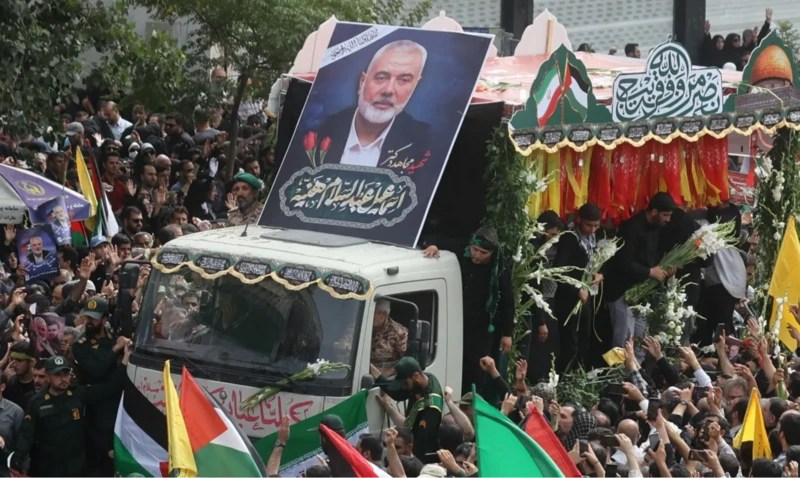
photo: Getty Images

Among the myriad of news items jostling for our attention this past week was the assassination of Ismail Haniyeh, a top political leader of Hamas, who was killed by a bomb in Tehran on Wednesday. Israel is almost surely behind this act, even if it hasn’t publicly acknowledged it. While I realize that there are many in the Jewish community and around the world who are not mourning Haniyeh’s death, it’s difficult to overstate the damaging impact of Israel’s actions on the prospects for a ceasefire in Gaza.

Ismail Haniyeh may have been a leader of Israel’s sworn enemy, but he was also one of the primary figures in ongoing ceasefire negotiations. By killing its own negotiating partner, Israel has made it substantively more difficult to realistically imagine an end to its genocidal violence, a return of Israeli hostages and a Palestinian prisoner exchange any time soon. The Prime Minister of Qatar, who has been a central figure in brokering ceasefire talks put it bluntly: “How can mediation succeed when one party assassinates the negotiator on the other side?”

Why would Israel assassinate Haniyeh, knowing that it might fatally damage ceasefire talks? Many are suggesting that it is in Netanyahu’s personal/political interest to prolong this violence as long as possible – even as it endangers the lives of his own nation’s citizens. While this is no doubt true, I think there is a deeper reason: these latest targeted killings were rooted in Israel’s historic – and fatal – belief that the use of its relentless, overwhelming military force will inevitably force their enemies to submit. It’s worth noting that Haniyeh’s assassination follows the targeted killing of his three sons last April, as well as his sister and nine other members of his family in June. These actions certainly track with Netanyahu’s vow to exact a “mighty vengeance” following Hamas’ October 7 attack.

In fact, Israel has had a long history of assassinating Palestinian leaders, knowing full well that these actions ultimately serve no strategic purpose other than a satisfying show of force. The Israeli military has been assassinating Hamas’ leaders for decades – and Hamas has consistently replaced them. For all its efforts, Israel has succeeded only in increasing the number of Palestinian martyrs and strengthening Hamas’ resolve to resist all the more. In this most recent instance, many observers have pointed out that the killing of Haniyeh will now leave a vacuum to be filled by more radical leaders such as Yahya Sinwar, among others.

Meanwhile, Israel’s genocidal onslaught in Gaza continues with impunity – and nary a protest from the international community. Yesterday, Israel killed at least 15 people – including two children – and injured 40 others in an airstrike that targeted a school-turned-shelter in Gaza’s Shejaiya neighborhood. On Wednesday, the Israeli military killed two journalists from Al-Jazeera, Ismail Al-Ghoul and cameraman, Rami Al-Rifi, with an airstrike on their car. Their colleague Hind Khouri broke down as she reported on their killings, which brings the current number of journalists killed in Gaza to 113.

Israel’s most recent actions have also brought the region, terrifyingly, that much closer to all-out war. On the same day as Ismail Haniyeh’s killing, the Israeli government confirmed that it had assassinated a top Hezbollah leader, Fuad Shukr, in Beirut. The leadership of both Iran and Lebanon, and their proxies in the region are now vowing to retaliate – and the Israeli military is reportedly on “high alert.” Even more ominously, the US intelligence community reports it has received “clear indications” that Iran is planning an attack. One official said the Pentagon and US Central Command are making preparations to help defend Israel militarily, “(involving) US military assets in the Gulf, the Eastern Mediterranean and the Red Sea.”

In times such as these, we are reminded how unbearably high the stakes of a just peace in the region truly are. I understand the palpable sense of powerlessness in the current moment: it sometimes feels as if there is nothing left to do but to pray that leaders on all sides ultimately take a breath and a step back from the brink. In the end, however, we cannot be content to passively hope that the leaders who have brought us to this unthinkable moment will do the right thing.

As has often been said, hope is a discipline. We must find the wherewithal to continue the struggle: to demand a US arms embargo to Israel, an immediate ceasefire in Gaza – and a redoubling of our commitment to a just and equitable peace for all. We must advocate in no uncertain terms that the alternative is utterly unacceptable.

Palestinian Family Ties: The Most Sacred Solidarity

IMG_0808

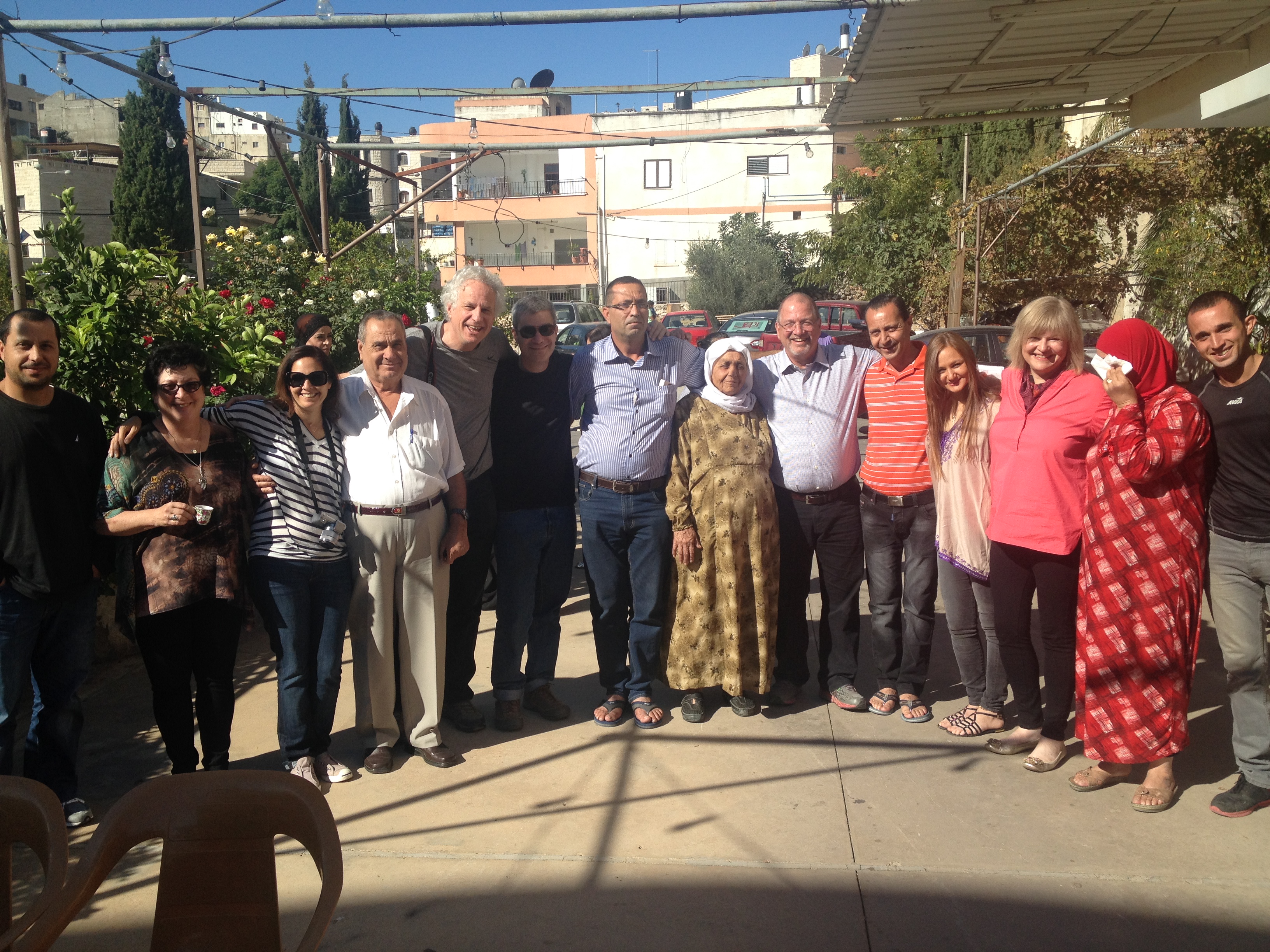
From left to right: delegation members Shafic Budron and his daughter Dima with Shafic’s Uncle Hasan, Al-Bi’na, Israel.

Early in the planning of our delegation, two of our Palestinian-American members, Shafic Budron and his daughter Dima, invited our group to visit to the homes of their family members in the Upper Galilee of Israel.  Shafic and his immediate family are dear friends to many of members of the delegation – and of course we graciously accepted their invitation. I think I can safely say this visit was one of the most eagerly anticipated part of our itinerary.

Like many Palestinian families, Shafic’s family was devastated by the Nakba. While many of his family members became internally displaced – and eventually became Palestinian citizens of Israel, others became refugees. Shafic himself was born after the Nakba and grew up in the infamous Shatilla refugee camp south of Beirut, Lebanon.

Shafic’s personal story is a harrowing one, but he eventually made his way to the US, where he became an American citizen, a successful businessman and a prominent member of the Palestinian community in the Chicago area. Shafic and his family are among the most genuine, open-hearted people I know – indeed his friendship with so many Jewish members of our delegation was a major inspiration for this remarkable trip.

IMG_0797

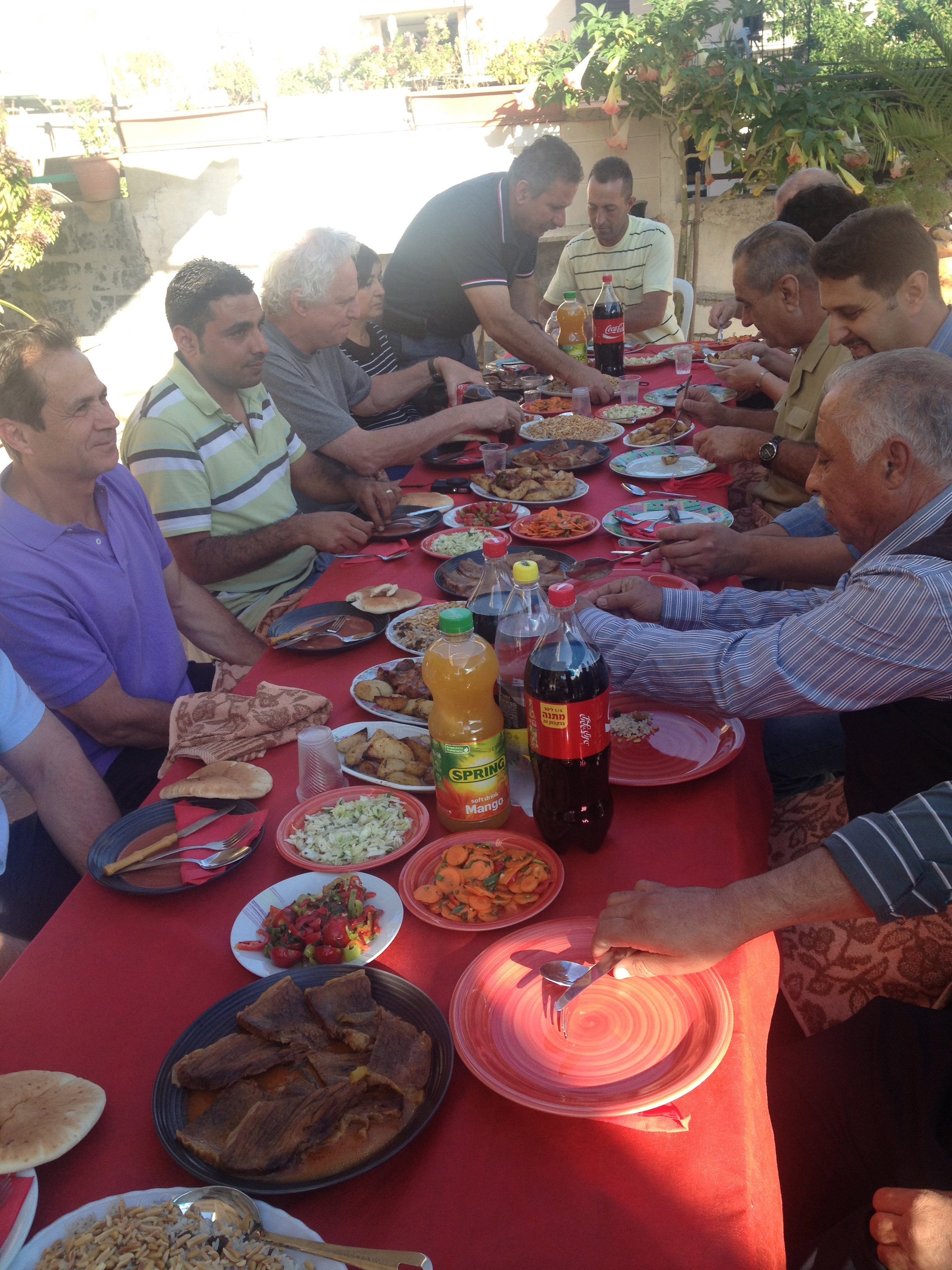
Most of Wednesday was a travel day as we drove north through the Jordan Valley toward the Upper Galilee. When we arrived at our destination in the village of Al-Bi’na, we were literally swarmed by joyous family members, who quickly and graciously welcomed the members of our delegation. Shafic’s uncle Hasan (his father’s youngest and only surviving brother) introduced us to his many children and grandchildren and extended family members as we sat in a circle for a cursory “get to know each other” session. Then we sat down to a sumptuous lunch (above), where we continued to get to know each other some more. By the end of the meal, we felt as if we had become adopted members of the family.

After a visit to the former village of Al-Ghabsiyah (see my earlier post), we went to Shafic’s cousin Dr. Abed’s home in the nearby village of Al-Jedaidah for a dinner that lasted well into the wee hours of the evening. Tired but exhilarated, we were eventually put up in family members’ homes for the night.

IMG_0811

This was clearly an emotional visit for the entire family, not least for Shafic and Dima themselves. The Budrons have, quite understandably, experienced a myriad of emotions on this trip and during our Galilee sojourn in particular. This was, in fact, Dima’s very first trip to Israel/Palestine. While she has visited her father’s family several times in Lebanon, she has never visited her homeland until now. She tells me she has heard stories about her ancestral home from her parents and grandparents for years – and is overwhelmed to finally make the visit now as a young woman.

It has been a profound and emotional visit for our entire American Palestinian/Jewish delegation as well. As of now, the trip has officially wound down. Several members are already returning home and I am preparing to depart today. There’s so much more to say, so many more experiences to describe. I’ll do my best to share as many of them as I can after I return.

In my next and final post, I’ll offer some concluding thoughts – and I have put out an open invitation to our members to share their thoughts with you as well.  Suffice to say for now this has been a sacred journey – one that has strengthened our relationships with one another and our solidarity with those who devote their lives every day toward a just peace in Israel/Palestine.

More thoughts to come…

IMG_0815

Hasan and Shafic say goodbye.

Facing the Silence: On Reading Khirbet Khizeh

When I was twenty or so and living in Israel, I made a valiant attempt to plow my way through the classic 1949 Hebrew novella, Khirbet Khizeh by S. Yizhar. Alas, there was only so much a young American college student could really understand, but I persevered because I was just so eager to experience this seemingly radical counter-cultural work of Israeli literature.

Khirbet Khizeh, which painfully portrays an Israeli unit’s expulsion of Palestinian villagers from their homes in 1948, has long been considered a seminal work in modern Israeli literature, fusing stream of consciousness style Hebrew with poetic Biblical literary allusions.  Even more remarkable is the fact that despite its profoundly controversial subject matter, Khirbet Khizeh has generally been accepted as a classic by Israelis. Indeed, the book has long been included in Israeli high school curriculum and the the author himself went on to enjoy a long and distinguished career as a member of the Knesset.

So imagine my pleasant surprise to learn that almost thirty years later, the great Khirbet Khizeh has finally been published in English translation by a boutique press called Ibis Editions. And I must say that having just now finished it, I am all the more moved by its literary power and moral urgency.

At the same time, however, reading it today left me with a baffling set of resonances. How could a work of such abject moral outrage be widely considered as a classic in Israel? How could a society embrace a work such as this, and be so unwilling to face its essential message? (In Yizhar’s words: “We came, we shot, we burned, we blew up, expelled, drove out and sent into exile.”)

Witness the devastating conclusion of the novella, which is told from the point of view of a morally conflicted Israeli soldier who has just participated in the expulsion of Arab villagers from the fictional village of Khirbet Khizeh:

When they reached their place of exile night would already have fallen. Their clothing would be their only bedding. Fine. What could be done? The third truck began to rumble. Had some astrologer already seen in the conjuncture of the stars in the sky over the village or in some horoscope how things would turn out here? And what indifference there was in us, as if we had never been anything but peddlers of exile, and our hearts had coarsened in the process. But this was not the point either.

And how does it end?

The valley was calm. Somebody started talking about supper. Far away on this dirt track, close to what appeared to be its end, a distant, darkening swaying truck, in the manner of heavy trucks laden with fruit or produce or something, was gradually being swallowed up. Tomorrow, both painful humiliation and helpless rage would turn into a kind of casual irritation, shameful, but fading fast. Everything was suddenly so open. So big, so very big. And we had all become so small and insignificant. Soon a time would arise in the world when it would be good to come home from work, to return exhausted, to meet someone, or walk alone, to walk saying nothing. All around silence was falling, and very soon it would close upon the last circle. And when silence had closed in on everything and no man disturbed the stillness, which yearned noiselessly for what was beyond stillness – then God would come forth and descend to roam the valley, and see whether all was according to the cry that had reached him.

I am particularly taken by Yizhar’s reference to silence – and how he subverts it with a final allusion to the anguished cries of Sodom and Gomorrah. Yizhar, who himself fought in the 1948 war as an intelligence officer, was already able to articulate a deep dark silence descending upon the land in the aftermath of those deep, dark days. Now over sixty years after the terrible events recorded in this novella, it seems that this silence has only deepened all the more.

So how could such a devastating book be considered to be an Israeli classic by Israelis?  By any other yardstick, one might assume that such a work would be considered something of an underground novel. In a recent NY Times feature, Israeli author A.B. Yehoshua suggested that “there was no scandal” when it was written “because the society felt itself so just that it could absorb a critic.”

I interpret his comment to mean that as the victorious party, Israel could certainly allow itself a bit of angst over how its victory was achieved. In this regard, you could well draw a straight line from Khirbet Khizeh to the deep moral challenges represented in works of contemporary Israeli writers such as Amos Oz or David Grossman, or films such as Waltz with Bashir or the just-released Lebanon.

In fact, the Hebrew term “shoot and cry” (“yorim u’vochim“) was actually coined in the wake of the 1982 Lebanon war to describe this unique form of Israeli cultural angst, as if these powerful expressions of moral accounting could somehow erase the guilt of what Israel had perpetrated – and continues to perpetrate – against Palestinians.

And so in the end, despite all of the genuinely anguished soul-searching, we are still left with the terrifying silence. But ironically enough, whatever the statement Yizhar was intending to make with Khirbet Khizeh, whatever its literary/cultural legacy, I find that it still cries out with unbearable intensity.

(Click here to hear a very interesting and informative interview with co-translator Yaacob Dweck.)

Gaza One Year Later: Beyond the Complications

It was exactly one year ago that I read the first news accounts of Israel’s military assault in Gaza:

Waves of Israeli airstrikes destroyed Hamas security facilities in Gaza on Saturday in a crushing response to the group’s rocket fire, killing more than 225 — the highest one-day toll in the Israeli-Palestinian conflict in decades…

(There) was a shocking quality to Saturday’s attacks, which began in broad daylight as police cadets were graduating, women were shopping at the outdoor market, and children were emerging from school. The center of Gaza City was a scene of chaotic horror, with rubble everywhere, sirens wailing, and women shrieking as dozens of mutilated bodies were laid out on the pavement and in the lobby of Shifa Hospital so that family members could identify them. The dead included civilians, including several construction workers and at least two children in school uniforms.

By afternoon, shops were shuttered, funerals began and mourning tents were visible on nearly every major street of this densely populated city.

Previously, whenever I’d hear this kind of news out of Israel/Palestine, my shock and anguish would quickly be tempered by a familiar voice telling me to calm down, don’t overreact, don’t forget how terribly “complicated” the situation is. (Indeed, I recall hearing that voice distinctly three years earlier when the IDF responded to Hezbollah rocket attacks with a similarly massive military onslaught.)

This time, though, it was different. This time I didn’t hear the voice. Somehow, it just didn’t seem all that complicated to me any more.

This is what I wrote on my blog that day:

The news today out of Israel and Gaza makes me just sick to my stomach.

I know, I can already hear the responses: every nation has a responsibility to ensure the safety of its citizens. If the Qassams stopped, Israel wouldn’t be forced to take military action. Hamas also bears responsibility for this tragic situation…

I could answer each and every one of these claims in turn, but I’m ready to stop this perverse game of rhetorical ping-pong. I don’t buy the rationalizations any more. I’m so tired of the apologetics. How on earth will squeezing the life out of Gaza, not to mention bombing the living hell out of it, ensure the safety of Israeli citizens?

We good liberal Jews are ready to protest oppression and human-rights abuse anywhere in the world, but are all too willing to give Israel a pass. It’s a fascinating double-standard, and one I understand all too well. I understand it because I’ve been just as responsible as anyone else for perpetrating it.

So no more rationalizations. What Israel has been doing to the people of Gaza is an outrage. It has brought neither safety nor security to the people of Israel and it has wrought nothing but misery and tragedy upon the people of Gaza.

There, I’ve said it. Now what do I do?

As I read this post one year later, I remember well the emotions I felt as I wrote it. I also realize what a critical turning point that moment represented for me.

As a Jew, I’ve identified deeply with Israel for my entire life. I first visited the country as a young child and since then I’ve been there more times that I can count. Family members and some of my dearest friends in the world live in Israel.

Ideologically speaking, I’ve regarded Zionism with great pride as the “national liberation movement of the Jewish people.” Of course I didn’t deny that this rebirth had come at the expense of another. Of course I recognized that Israel’s creation was bound up with the suffering of the Palestinian people. The situation was, well, it was “complicated.”

Last year, however, I reacted differently. I read of Apache helicopters dropping hundreds of tons of bombs on 1.5 million people crowded into a 140 square mile patch of land with nowhere to run. In the coming days, I would read about the bombing of schools, whole families being blown to bits, children literally burned to the bone with white phosphorous. Somehow, it didn’t seem so complicated at all any more. At long last, it felt as if I was viewing the conflict with something approaching clarity.

Of course I think we’d all agree that the Israeli-Palestinian conflict is technically complicated. But at the same time I think we all know that at the end of the day, there is nothing complicated about persecution. The political situation in Darfur, for instance, is enormously complicated – but these complications certainly haven’t stopped scores of Jews across North America from protesting the human rights injustices being committed there. We do so because we know that underneath all of the geopolitical complexities, oppression is oppression. And as Jews, we know instinctively that our sacred tradition and own tragic history require us to speak out against all oppression committed in our midst.

I’d suggest that if there is anything complicated for us here, it is in possibility that we might in fact have become oppressors ourselves. That is painfully complicated. After all, our Jewish identity has been bound up with the memory of our own persecution for centuries. How on earth can we respond – let alone comprehend – the suggestion that we’ve become our own worst nightmare?

More than anything else, this is was what I was trying to say in that anguished, emotional blog post one year ago: is this what it has come to? Have we come to the point in which Israel can wipe out hundreds of people, whole families, whole neighborhoods and our response as Jews will be to simply rationalize it away? At the very least will we able to stop and question what has brought us to this terrifying point? Have we become unable to recognize persecution for what it really and truly is?

Those who know me (or read my blog) surely know that it has been a painfully challenging year for me. My own relationship to Israel is changing in ways I never could have predicted. Since I started raising questions like those above, I’ve lost some friends and, yes, my congregation has lost some members. If Zionism is the unofficial religion of the contemporary Jewish community then I’m sure there are many who consider me something of an apostate.

But at the same time, I’ve been surprised and encouraged by the large number of people I’ve met who’ve been able to engage with these questions openly and honestly, even if they don’t always agree with me. I suppose this is what I decided to do one year ago: to put my faith in our ability to stand down the paralyzing “complexities,” no  matter how painful the prospect.

One year later, I still hold tight to this faith.

Gilad Shalit and the Sorrows of Tribalism

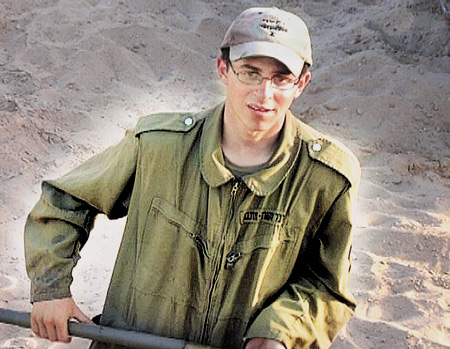
Not long ago I was asked by a friend: why are Israelis and Jews so fixated on the kidnapping of Gilad Shalit? With all of the crises and injustices being committed in the world, why is there such a hue and cry over this one particular man?

I answered that like all nations, Israel takes this kind of thing personally. I mentioned that just like many Jews in Israel and around the world, I also experienced Hamas’ abduction of Gilad Shalit as an injustice committed against one of my own. Even as a Jew living in the comfort of my Evanston home, I felt a visceral sense of pain three years ago when I first heard the news of Shalit’s kidnapping. Over time, my pain turned to anger as Hamas denied him Red Cross visits and refused to confirm (until only recently) whether he was even dead or alive.

I went on to compare Israel’s trauma to the feeling of collective trauma we felt in our country in 1979, when Iranian militants took American embassy workers hostage: how violated our nation felt: how personally we identified with the hostages; how deeply we experienced the injustice of their imprisonment.

On a less tribal level, of course, I do understand that there was a deeper context to the hostage crisis. Underneath our feelings of personal violation were more challenging questions – questions few of us were prepared to ask out loud. Why, for instance, did we have so much concern over 53 fellow Americans, but not for countless other political prisoners around the world, many of them incarcerated by regimes actively supported by our nation?

In just the same way, I believe too few Jews even know – let alone protest – that while Hamas unjustly imprisons Shalit, Israel holds hundreds of Palestinians taken in operations that at best must be considered ethically dubious. While Israel defends its actions legally by terming these prisoners “enemy combatants,” the hard truth remains that for decades Israel’s security services have rounded up scores of Palestinians without charge and have imprisoned them indefinitely – in many cases for years.

Yes, many of the prisoners are undoubtedly guilty of plotting or carrying out violent acts against Israelis. Many of these incarcerations can surely be defended on grounds of security. But it has become impossible to ignore that Israel has also incarcerated considerable numbers of Palestinians who by any reasonable definition must be considered political prisoners.

(One recent case in point: many Jews are familiar with the case of Gilad Shalit, but I’m sure that far fewer know, for instance, about Abdallah Abu Rahmah, a Palestinian high school teacher and coordinator of the non-violent campaign in the West Bank village of Bil’in, who was arrested last week by the Israeli military. According to eyewitness accounts, Abu Rahmah was taken from his bed at 2:00 am in the presence of his wife and children.)

And so, beyond the emotions of tribalism, the question remains: will we ever be able to see past our own loyalties and find equal value in the lives of others – human beings who are just as eminently worthy of fair treatment, justice and dignity? And even more challenging: will we ever be ready to admit that the violence committed against us is often inspired in no small way by the injustices we ourselves have committed – and continue to commit?

To return to the Iranian hostage example: back in 1979, few Americans cared to even ask why their Iranian captors might have been so motivated to commit this act. Most of us were ignorant to the powerful significance of the American embassy for Iranians – that it was this very same embassy from which our nation had plotted the overthrow of Iran’s democratically elected government in 1953. As it turned out, the regime we subsequently installed would persecute and unjustly imprison countless Iranian citizens over the next two decades.

So too in the case of Gilad Shalit. Few of us in the Jewish community are truly ready to examine the source of Gazan’s fury toward Israel – a fury that has been building since long before Hamas even existed. Few of us are willing to face the history of Israel’s oppressive policies in Gaza or the fact that Gazans have been living under an intolerable occupation for decades.

And even fewer of us even know that the overwhelming majority of the 1.5 million who live in Gaza belong to families that originally came from outside of Gaza – from towns and villages like Ashkelon and Beersheba – and were expelled from their homes by the Israeli military in 1948. Indeed, when I think of Gazan rage in 2009, I can’t help but think of these chilling words by Moshe Dayan from back in 1956:

Who are we that we should bewail their mighty hatred of us? (They) sit in refugee camps in Gaza, and opposite their gaze we appropriate for ourselves as our own portion the land and the villages in which they and their fathers dwelled.

The history of Gaza is indeed a tragic one – and yes, Israel’s oppression of its population is a critical part of this tragedy. Unless we take the time to understand this history – and our part in it – I don’t believe we can even begin to pretend there is a way out of this conflict.

To be clear: understanding the source of Gazans feelings toward Israel does not mean condoning their actions. Hamas’ imprisonment of Gilad Shalit is barbaric. As a fellow Jew, I grieve for Shalit and I pray for his safe return. But at the same time, I cannot look away from the more painful realities that led to his capture in the first place, and I truly believe that until we make an honest effort to face and address these realities, there will invariably be more Gilad Shalits in Israel’s future.

Following Israel’s military campaign in Lebanon in the summer of 2006, journalist Amira Hass wrote these powerful words in Ha’aretz. I believe she presents us with a profound model of an Israeli who is able to hold her own concern for her people together with a willingness to face the truth of the injustices perpetrated her nation. Her words are doubly tragic as we now approach the one-year anniversary of Israel’s military campaign in Gaza:

We are justly concerned about the welfare of northern residents, proud of their fortitude, understand those who leave, are shocked by the death of each person and by every rocket hit, and identify with those suffering from anxiety. Take what the northern residents have been going through for a month, multiply it by 1,000, add an economic blockade, power and water cuts, and no wages. This is how the Palestinians in the Gaza Strip have been “living” for the past six years.

The Israelis allow their army to continue destroying, trampling and killing in the Palestinian territories. Here, like in Lebanon, the real intelligence and security failure is Israel’s ignoring the extent of our uninhibited, unrestrained devastation and their amazing power of human endurance. This is why Israel has delusions of “victories.” If the homemade rockets are still being fired at Sderot despite the Palestinians’ extensive suffering, it is because they have concluded, correctly, that Israel’s destruction power is not intended to stop Qassam rockets – or to free Gilad Shalit. It is intended to force them to accept a surrender arrangement, which they reject not with military victories but with their power of endurance.

Dancing Around Bashir

bashir

Waltz With Bashir” has been racking up the prizes. In addition to a slew of international awards, it was awarded Best Picture by the National Society of Film Ciritics, Best Foreign Film at the Golden Globes, and it seems to have the inside track on the same award at the Oscars this Sunday night.  But as “Bashir” amasses its acclaim, some observers are frankly critiquing the film against Israel’s painful present-day reality.

In a recent Nation article, Israeli author Liel Liebovitz wonders why the Israeli public has so thoroughly embraced this fiercely anti-war statement (enough to vote it as their third-favorite Israeli film of all time) while ignoring its “harrowing lessons” through its strong support of their government’s military actions against Gaza.

Liebovitz concludes that “Bashir’s” popularity not withstanding, Israel is sadly disregarding director Ari Folman’s powerfully moral vision – particularly in light of the recent elections:

Israel of today is not Ari Folman’s. It is Avigdor Lieberman’s and Benjamin Netanyahu’s, the country of the countless men and women crying out for revenge. As we root for Waltz with Bashir, if we want to truly honor that film’s message, let us never forget that. Otherwise, all we have is just a pretty animated film.

Journalist Naira Antoun, writing in the Electronic Intifada comes to a similar conclusion:

(We) are reminded of the psychologist’s comment near the start of the film: “We don’t go to places we don’t want to. Memory takes us where we want to go.” Perhaps this explains how at the same time that Gaza was being decimated, Israel heaped acclaim and awards on Waltz with Bashir; in addition to numerous international awards, the film scooped up six awards at the Israeli Film Academy. Indeed, the same Israelis who flocked to see the film gave their enthusiastic approval to Operation Cast Lead in Gaza. According to a poll released on 14 January by Tel Aviv University, a staggering 94 percent of Israeli Jews supported or strongly supported the operation.

As a Palestinian viewer, however, Antoun goes even farther than Liebovitz: she faults the film for rendering Palestinians essentially invisible:

There is nothing interesting or new in the depiction of Palestinians — they have no names, they don’t speak, they are anonymous. But they are not simply faceless victims. Instead, the victims in the story that Waltz with Bashir tells are Israeli soldiers. Their anguish, their questioning, their confusion, their pain — it is this that is intended to pull us…We don’t see Palestinian facial expressions; only a lingering on dead, anonymous faces. So while Palestinians are never fully human, Israelis are, and indeed are humanized through the course of the film.

Among other things, I think these reviews illuminate the painful difficulties inherent in making an anti-war statement while the war is still raging.  A sad anecdote: a congregant recently told me that when she saw the film, a screaming match erupted in the audience after it ended.  Apparently someone screamed “That’s Gaza!” to which another responded “Shut up!” and on it went…

And on it goes…

Update 2/23/09: Thanks to Eric for forwarding this devastating Ha’aretz piece re “Bashir” by (who else?) Gideon Levy.