I encourage you to read this important guest post by Alice Rothchild:
The American Israel Public Affairs Committee is holding its annual conference May 22-24, where Congress people and many of our national leaders will rush headlong into the committee’s open arms and bountiful coffers. In an increasingly bizarre time warp they will congratulate each other and kvell about Israel’s special relationship with the US, our strategic partnership, and Israel’s commitment to democratic ideals in a “sea of dictatorships” (to quote the website).
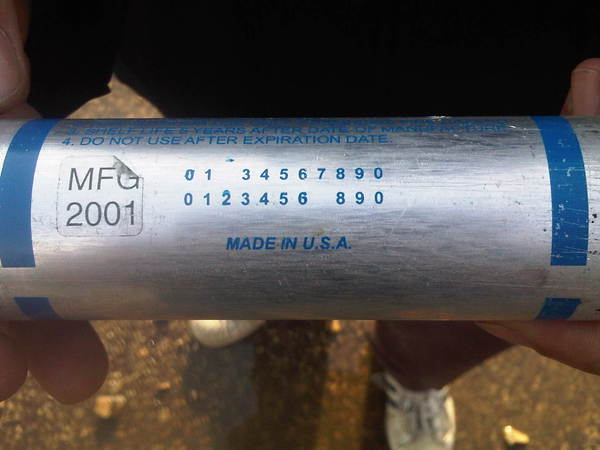
What they will not talk about is reality. US Jews are increasingly uncomfortable with a lobby that claims to represent us, but is deeply committed to the militaristic and rightwing policies of successive Israeli governments. Jews in the US tend to be politically progressive, but we are being asked to suspend our liberal beliefs when it comes to Israel. While maintaining a steady dream beat for war against Iran and a world view that, “Israel continues to fulfill its ancient obligation as a ‘light unto the nations,’” AIPAC lobbyists with their Christian Zionist allies guarantee billions of dollars in military aid for Israel each year . Much of this goes towards buying US military weapons and machinery, cementing the massive, interconnected, and lucrative military-industrial-security complex that now exists between our two countries.
Not only has this made a brutal 43 year military occupation possible, but it also provides military and political support to the current Netanyahu government. Let’s be clear. Netanyahu is committed to building Jewish settlements in the West Bank and East Jerusalem, undermining any possibility for a two-state solution. He is building Jewish settler-only roads and roads for Palestinians funded by USAID. He tightly controls Palestinian movement through checkpoints, permits, and the Separation Wall which has stolen thousands of acres of Palestinian land and destroyed the lives and livelihoods of people whose families have lived in the region for centuries. His idea of Palestinian statehood, (should he still have one), is a scattering of weak enclaves surrounded by Israeli military. The recently released Palestine Papers painfully documented the degree to which Palestinian negotiators were willing to sell their souls while Israeli negotiators refused to accept any concessions. The US was revealed twisting the arms of Palestinians diplomats to give up basic demands and the massive security coordination between the Israelis and the Palestinian Authority was exposed.
Within Israel, there is a rightwing crackdown on human rights activists, and laws brewing in the Knesset that will criminalize:
1. Nonviolent protests (in Israel and internationally) that advocate boycotts, divestments, and sanctions;
2. Providing information that could lead to Israeli war crime charges;
3. Any activity against Israeli soldiers or State symbols including nonviolent legitimate resistance to the occupation;
4. Commemorations of the Nakba, the Palestinian experience of 1948
At the same time there are over 20 laws that maintain the second class status for Palestinians with Israeli citizenship.
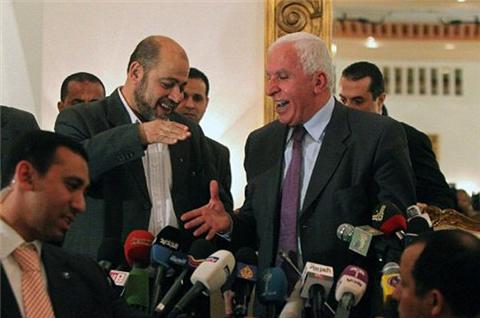
While Israeli activists worry about rising fascism in Israeli society, Palestinians are celebrating the Arab Spring that is blossoming in the region and Fatah and Hamas are gingerly talking about unity and democratic elections. Arabs from Tunisia to Yemen are putting their lives on the line for equality and freedom of speech. This breathtaking political moment is changing the political discourse in the Middle East and the US Congress needs to take notice and shake itself free of the world view that is promoted by AIPAC lobbyists. Fear of anti-Semitism and the traumas of the Holocaust do not justify Israeli exceptionalism, militarism, racism towards Arabs, or a belief in permanent Jewish victimization.
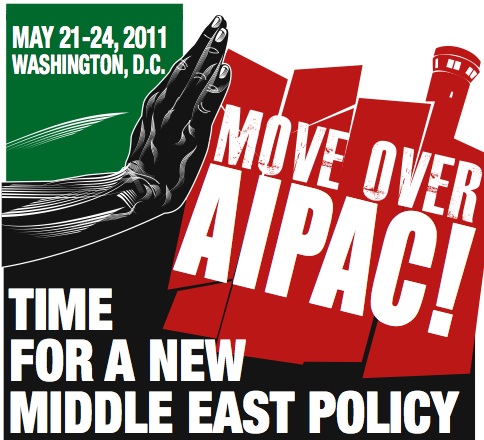
Peace in the Middle East is more urgent than ever, but it needs to be based on international law, human rights, and UN resolutions. AIPAC and its supporters are deluding themselves, promoting a perpetual state of war and hostility, living in a world that does not match reality. At the same time, over 100 peace organizations will be meeting in Washington. Under the call: Move Over AIPAC: Building a New US Middle East Policy, they will explore the impacts of US military aid and political cover, the demand to end the Israeli occupation, and the building of a solution that respects the rights and dignity of everyone in the region. There will be no big donors there, but Congress would do well to listen.




 Shalom Rav