Category Archives: Peace

The Pope Prays in Bethlehem, Lets Graffiti Do the Talking

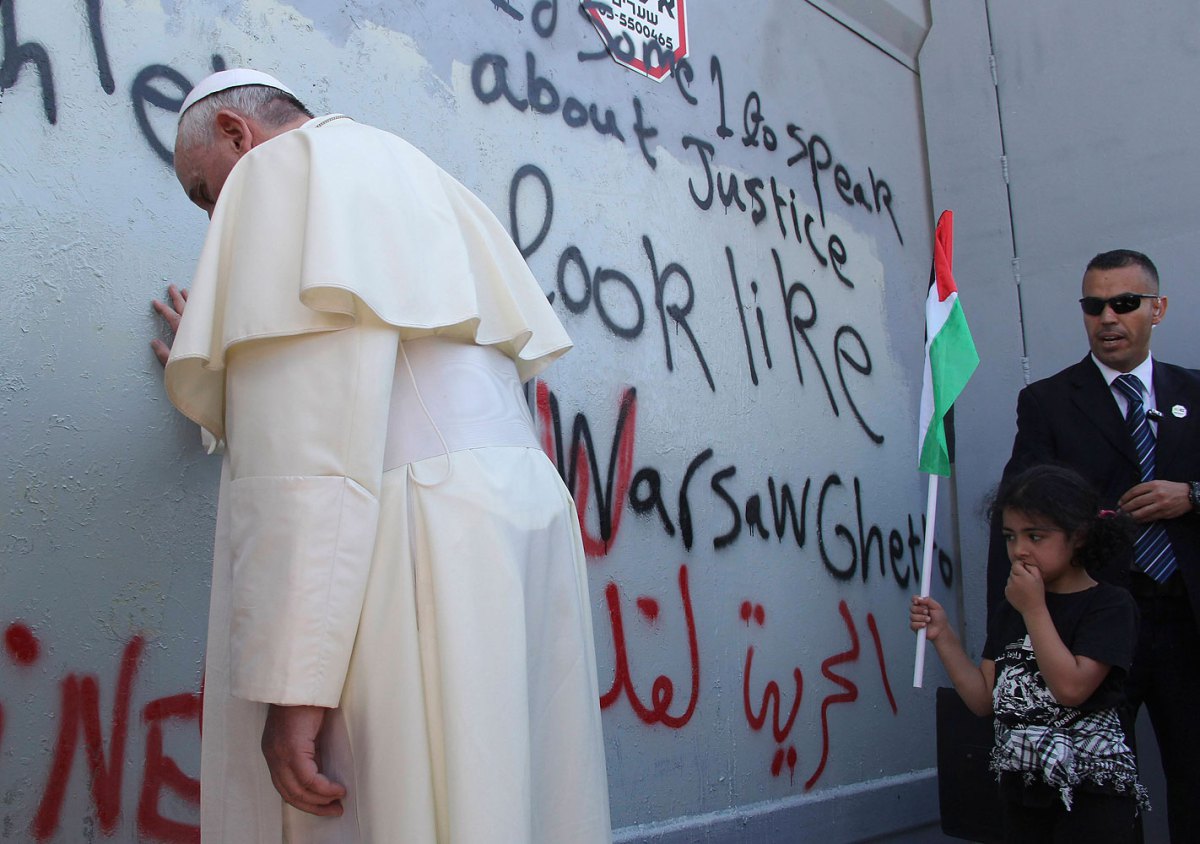
Pope Francis touches the wall that divides Israel from the West Bank in the West Bank city of Bethlehem

In the wake of Pope Francis’ recent visit to Israel/Palestine, many watchers have commented on his unscheduled visit to the separation wall in Bethlehem – and are already referring to the picture taken there as “iconic.”  It is indeed a powerful image: with the Pope leaning his head against the wall in prayer standing next to a young girl holding a Palestinian flag. Emblazoned across the wall, the graffiti pointedly reads, “Pope, we need some 1 to speak about justice” and “Pope, Bethlehem look like the Warsaw ghetto.”

Though the Pope made many stops at both Palestinian and Israeli sites, it is safe to say that his visit to the wall in Bethlehem will provide the most enduring image of the trip. Here we see the Pope praying at a very different kind of “wall.” While Popes and other religious dignitaries have long visited the Western Wall in Jerusalem as a matter of course, this was the first time a Pope had ever prayed at the separation wall. In his way, Pope Francis reminded us that while Israel has its wall, the Palestinians also have theirs. It was difficult to ignore the sacred symbolism of these parallel acts.

It was also difficult to ignore the powerful message imparted by the words of graffiti that framed the Pope as he leaned his head against the wall in prayer. By all accounts, there is every reason to believe that Pope Francis consciously chose this precise spot to alight from his Pope-mobile and engage in this impromptu prayer-session. In an eye-opening blog post , Bethlehem-based photojournalist Kelly Lynn has written about Mohammed Abu Srour, the young Palestinian activist who sprayed the graffiti message in advance of the Pope’s visit. Apparently, Mohammed and his comrades played an extensive game of cat and mouse with IDF soldiers and PA security before he was able to successfully spray his direct message just in time for the Pope’s arrival:

A few minutes before Pope Francis arrived, spray cans surfaced and activists from the previous day’s action began to paint over the newly, newly-painted wall and gate.  Mohammed climbed his friend’s shoulders and because of the frenzy, security personnel could not be bothered. “They painted all of the wall silver, you couldn’t see anything we did yesterday, so we decided to write again for the Pope.  We want him to pay attention to our issues as normal Palestinians,” explained Abu Srour.

And then, in a glass-covered pristine white pick-up truck, he came.

“I didn’t expect the Pope to go down and start to read the sentences and meet the children and people there.  He shocked us,” said Abu Srour.

For his part, the Pope’s driver later told the Wall Street Journal that when the Pope saw the graffiti, he asked him to stop the car:

Francis suddenly asked to pull over so he could step out. He opened the door and wandered toward the wall as his security detail scrambled to keep up with the 77-year-old pope.

Below the watchtower, Francis reached out to near where the graffiti had been scrawled and painted over two times before. He closed his eyes and began to pray.

In most other ways, Pope Francis’ visit represented a boiler plate Papal visit to the Holy Land, as he balanced his time and nuanced his statements with Israelis and Palestinians with the skill of a seasoned tight rope walker. Other than a reference in his sermon to “the State of Palestine,” he largely avoided pointed political comments. He used the safe language of “two states for two peoples” and extended an invitation to Israeli President Shimon Peres and Palestinian President Abbas to visit the Vatican in June to pray together.  In the words of a Vatican spokesman:

The pope does not have a political agenda and does not have a proposal for diplomatic dialogue. This is not his mission. This is not what he desires.

Perhaps, but it is difficult to shake the now enduring image of the moment Pope Francis consciously chose to go off script. Even if protocol would not allow him to say so personally, he still allowed one young Palestinian’s spray painted plea to say it for him.

Israeli Military Destroys Orchards at Tent of Nations – Please Act Now!

The Nassar family farm, before and after its destruction by the Israeli military

The Nassar family farm, before and after its destruction by the Israeli military

I am heartbroken to report that the Israeli military has destroyed between 1,500 and 2,000 fruit trees at the Tent of Nations – the Nassar family farm located south of Bethlehem.

I have written extensively about Tent of Nations and the work of Daoud Nassar, whose struggle to keep his family farm has provided an inspiring model of peaceful resistance to oppression.  I have personally visited his farm with members of my congregation on more than one occasion (most recently this past October) and have hosted Daoud on his visits to Chicago.

Those of us who know Daoud know him to be a profoundly decent and honorable man, thoroughly dedicated to the cause of a just coexistence between Israelis and Palestinians. (On a stone next to the front gate of the Nassar farm are the words “We Will Not Be Enemies.”) Given his personal circumstance, his innate compassion is truly inspirational – and that’s what makes this latest turn of events all the more sickening.

I am forwarding this letter from Bill Plitt, Executive Director of Friends of Tent of Nations, below. Please, please join me in acting on behalf of the Nassar family farm now.

Dear Friends of Tent of Nations,

We are writing this letter to call for action against acts of injustice by the Israeli Military towards the Nassar family farm and their Tent of Nations Peace Project. This farm (known as Daher’s Vineyard) is located just six miles southwest of Bethlehem in the Occupied Territories of Palestine (the West Bank).

As you know, this family has registration papers for their 100-acre farm dating back to the Ottoman Empire, and they are now in a situation where the Israeli Defense Forces (IDF) brought in bulldozers on May 19, 2014 and destroyed between 1,500 and 2,000 mature, fruit-bearing apricot and apple trees and grape vines, all in the lower valley of the farm.

This move was totally unexpected as their latest case for proving ownership has been in the Israeli Military/Civil Courts since February 2013. An appeal was also made on May 5 to protest a warning placed on the land in late April 2014 that declared the land as “State Land” and should be “evacuated”. There was no warning ahead of time about the impending destruction, however (as is the usual case), so the Nassars were caught off guard with the wanton destruction that took place. In addition to the destruction of the trees, the terraced land on which the trees were planted was also destroyed, left in a state of rubble that cannot currently be re-planted.

We are appealing to you to contact appropriate congressional committee members, members of Congress, and others you know who may have some influence in this kind of situation; this can include your church leaders as well and an article in your local newspaper would be more than welcome. We are including a short letter and a timeline of past events you can use to educate people about the details of this farm’s history as well as a sample letter you can use to send out if you want.

In particular, we ask that you contact the U.S. Department of State, the Israeli Embassy in Washington, DC, the U.S. Ambassador to Israel, the U.S. Ambassador in Tel Aviv, and the Consulate General in Jerusalem and ask them to investigate the circumstances surrounding this travesty.

We urge you to contact these authorities as well as others you know personally. You have our permission to use information from this letter in your appeals. We also urge you to sign our Petition  Letter and forward it to all of your own personal contacts, urging them to forward it also.

We would like to have you act on this information as soon as you can in the hopes that we can prevent any more destruction from taking place on Daher’s Vineyard.

Sincerely,

Bill Plitt – Executive Director – on behalf of the FOTONNA Steering Committee


Sample appeal letter:

Dear (church/community leader, etc.),

I/we are writing this letter to call for action against acts of injustice by the Israeli Military towards a Palestinian Christian family (the Nassar family) that has registration papers for their 100-acre farm dating back to the Ottoman Empire. The family has been working through the Israeli Military/Civil Courts and the Israeli Supreme Court since 1991 to defend their rights to the land on a vineyard just six miles southwest of Bethlehem in the Occupied Territories of Palestine (the West Bank). A Peace Project was established on the land in 2001 called Tent of Nations. Thousands of international visitors have visited the farm, worked as volunteers, held workshops and conferences in the facilities there, worked in the Summer Youth Camps, and have taught in the Women’s Education Center they established in the nearby village of Nahalin.

On May 19, 2014, the Israeli Military took unwarranted and illegal action and destroyed between 1,500 and 2,000 mature, fruit-bearing apricot and apple trees and grape vines growing in the lower valley of the farm. We are appealing to you to contact appropriate congressional committees and members of Congress regarding this issue. In addition, we ask that you contact the White House, the State Department, the Israeli Embassy in Washington, DC, our Ambassador in Tel Aviv, and the Consulate General in East Jerusalem (see the attached contact list).

In the past, (December 2012), Israeli Military/Civil Courts threatened to demolish 13 structures on the land (pens for animals, tents for volunteers, compost toilets, etc.) and denied the family’s appeal against these 13 demolitions. By appealing these orders through the family lawyers, however, the deadline for action was moved to February 24, 2013. At the same time, the family also requested (again) that the land be re-registered in their name (having all the papers legally required to prove ownership). The family provided all additional information requested by the Military Court by that date, and they submitted and paid for requests for building permits for the existing 13 structures placed under the demolishing orders.

In late April 2014, the Israeli Military placed a warning on the land declaring that the trees were planted on “State Land” and, therefore, constituted a trespass and should be “evacuted”! The family filed an appeal on May 5; they were waiting for a court decision on these issues, and that is what makes the destruction of these trees illegal.

We would like you to inquire about this issue and why this vendetta against the Daher’s Vineyard is taking place. Israel needs to be held accountable for its actions against a family that lives by the motto ‘We Refuse to be Enemies’ and that believes in non-violence as a solution to the problems there.

If you have any questions, please do not hesitate to contact me at ___________ .

Regards,

(individual or organization)


Timeline of Events

– In 2009, on two separate occasions, Israeli soldiers forced their way onto the property, conducting searches of family members and internationals and threatening to return with eviction papers. They never followed through on that particular threat.

– In May of 2010, they did issue nine demolition orders to remove buildings, tents, animal sheds and restrooms which they claimed the family had no permission to build. The Nassars went to court to stop the demolitions, and no action was taken on the part of the Military courts.

– In April 2011, a court decision was made, without the family’s lawyer present, to follow through on the demolition orders because of a plan to build an Israeli-only road nearby. The lawyer intervened and, to date, no action has taken place.

– On February 14, 2012, as the family was working in the ‘Trees of Life’ orchard, volunteers found, in three different places (under rocks and tacked onto trees), papers with maps signed by the Civil Administration of Judea and Samaria (which is the Israeli Military Government) giving them 45 days to appeal their claim to the land or the land would become State Land. This order covered one-third of the existing 100-acre farm. The family lawyer filed an appeal immediately. Many other Palestinian farmers discovered similar notices under rocks on their land. To date, there has been no decision on the appeal.

– On Monday, May 19, 2012, demolition orders were posted on a portion of the farm in the valley in the same manner as the earlier notices. This time the authorities identified a cistern which has been in use for ten years that was scheduled to be demolished within three days. While the order was contested, the Court ruled in favor of the military, but no action has been taken.

– Other acts of harassment have occurred on a regular basis. On May 5, 2012, civil authorities came and removed the barricade on the road that connects both the farm and the village of Nahalin to Route 60, the main north/south highway in the area. The next day, the bulldozer came and re-barricaded the road, thereby preventing any movement by local residents. Palestinians now, in order to travel between Bethlehem and the Nassar family farm, must travel through the villages of Nahalin and Husan. This is a burdensome detour for them as well as for the 20,000 villagers affected by these new regulations.

– On December 13, 2012, military trucks and large jeeps entered the west side of the village of Nahalin and destroyed olive trees that grow between the village and the settlement of Beitar Elit in the west. Immediately after doing so, they drove to the east side of the village, near Daher’s Vineyard (the family property) and uprooted several fruit trees belonging to village farmers in addition to trees on the Vineyard.

– On December 16, 2012, the Nassar family received notice that their appeal to the Military Court had been denied. The Nassars were given 45 days (January 30 deadline) to demolish the structures themselves or reapply for permits which will cost them $1,500 per structure.  Under the ‘New Rules’ they will also need to submit a zoning plan and sign an agreement that, if the permits are denied, they will pay for the costs of demolishing the structures.  The Nassars are trying to determine the intentions of the Israelis in the hope that access to the farm can be preserved. They have reapplied again for permanent registration of their land. As always, the family wishes to proceed calmly, constructively and legally.

– On January 31, 2013, the family lawyer was told the following:

– The family must reapply for all previous permits (13) including the more recent structures, such as: big tent, cistern near home, a cistern in the valley; and the office trailer. They must do this with the understanding that for those structures denied a permit, the Nassars must demolish them at their own expense.

– They must submit additional land survey maps: one topographical map which shows the farm location in the region; two technical maps, one at 1/250 scale and the other 1/50,000 scale, which show the new structures and their locations and dimensions.

– They must submit plans for sources of providing electricity and water to the land from the village and for provisions for gray water and filtration systems.

– They must apply for approval/signature of the Israeli Ministry of Agriculture, certifying that the land is agricultural land.

All submissions were due by February 24, 2013;

the family was able to meet each of the criteria set out for them.

The courts have not as yet responded to the Nassars appeals or requests for building permits.

In January 2014, three “stop cultivation” orders were found on the land. The Nassars had their lawyers look into the situation, but the courts have not responded to these appeals, either.

– In early May 2014, 1,000 dunums (250 acres) of land bordering the road leading to the farm and south of the nearby village of Nahalin were declared as State Land; this was land owned by other Palestinian farmers. The old blockade to the road leading to the farm was enlarged with additional piles of rubble and boulders, making it even more difficult to walk from the road to the Tent of Nations Peace Project site.

– In late April, the Israeli Military authorities placed a warning on the land declaring that the trees were planted on “State Land” and, there, constituted a trespass and should be “evacuated”!

– On May 5, 2014, the Nassar family filed an appeal with the Military Court against the order. According to the law, no demolition or evacuation is allowed once an appeal is filed and until a final verdict has been forthcoming.

– On May 19, 2014, the Israeli Military bulldozed between 1,500 and 2,000 mature, fruit-bearing apricot and apple trees and grape vines growing in the lower valley of the farm and destroyed the terraced land that had been cleared for planting. There was no forewarning given, and this was an illegal act on the part of the IDF.

Land and Liberation: An Interview with Reverend Naim Ateek

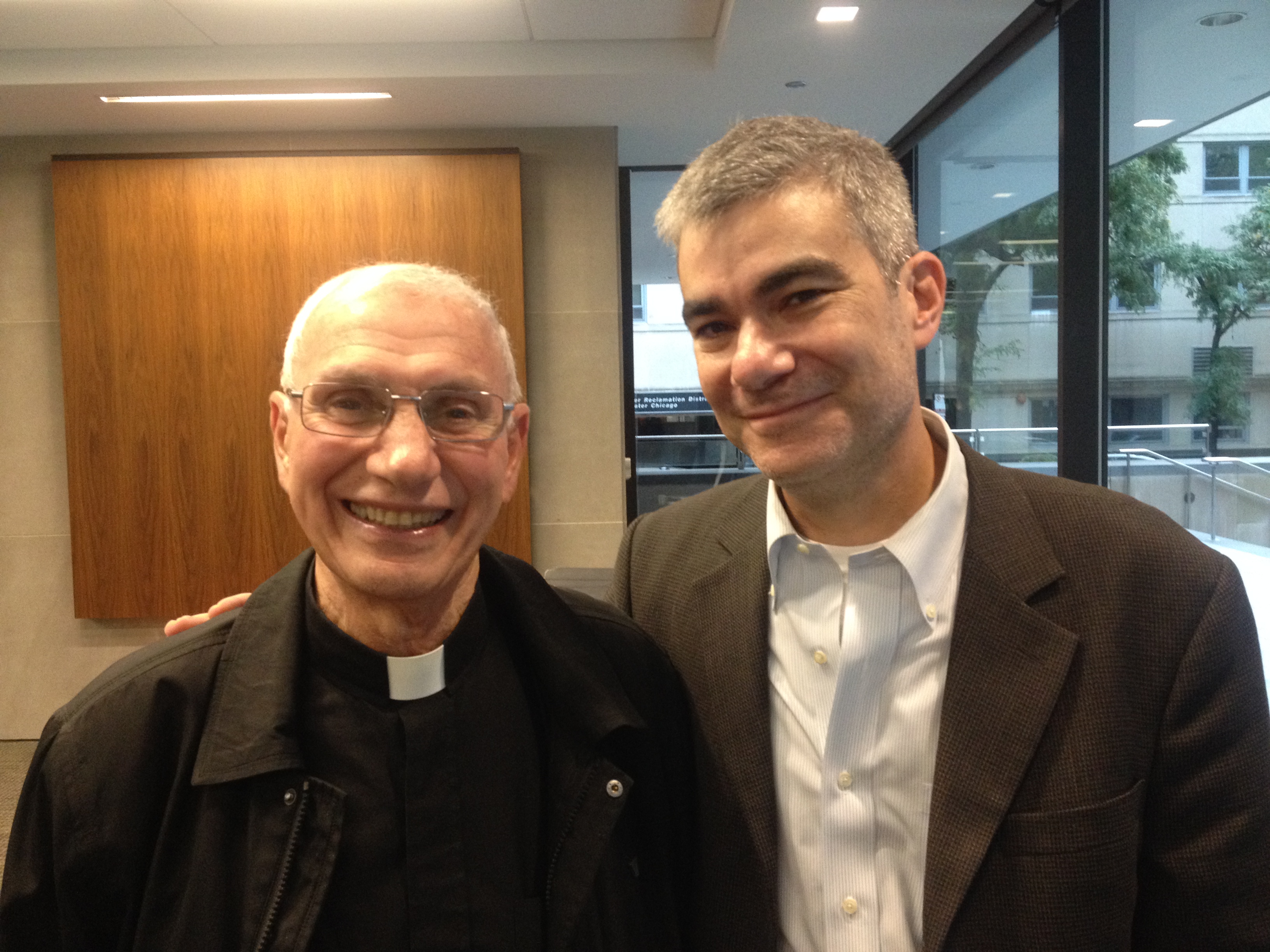
brantandnaim

This past weekend, I had the great pleasure to engage in an extended interview with Reverend Naim Ateek, founder of Sabeel Ecumenical Liberation Theology Center, during a brief visit he made to Chicago. I’ve known Rev. Ateek for several years and am honored to call him a friend and colleague – and I’ve written before about his important work in the development of Palestinian liberation theology.  Since he’s been the object of unrelenting attack by the Jewish institutional establishment, I was particularly grateful for the opportunity to model a different kind of Jewish-Christian engagement on his life and his work.

An edited version of our conversation follows here:

Continue reading

Why I Celebrated the Persian New Year on Purim this Year

Nowruz

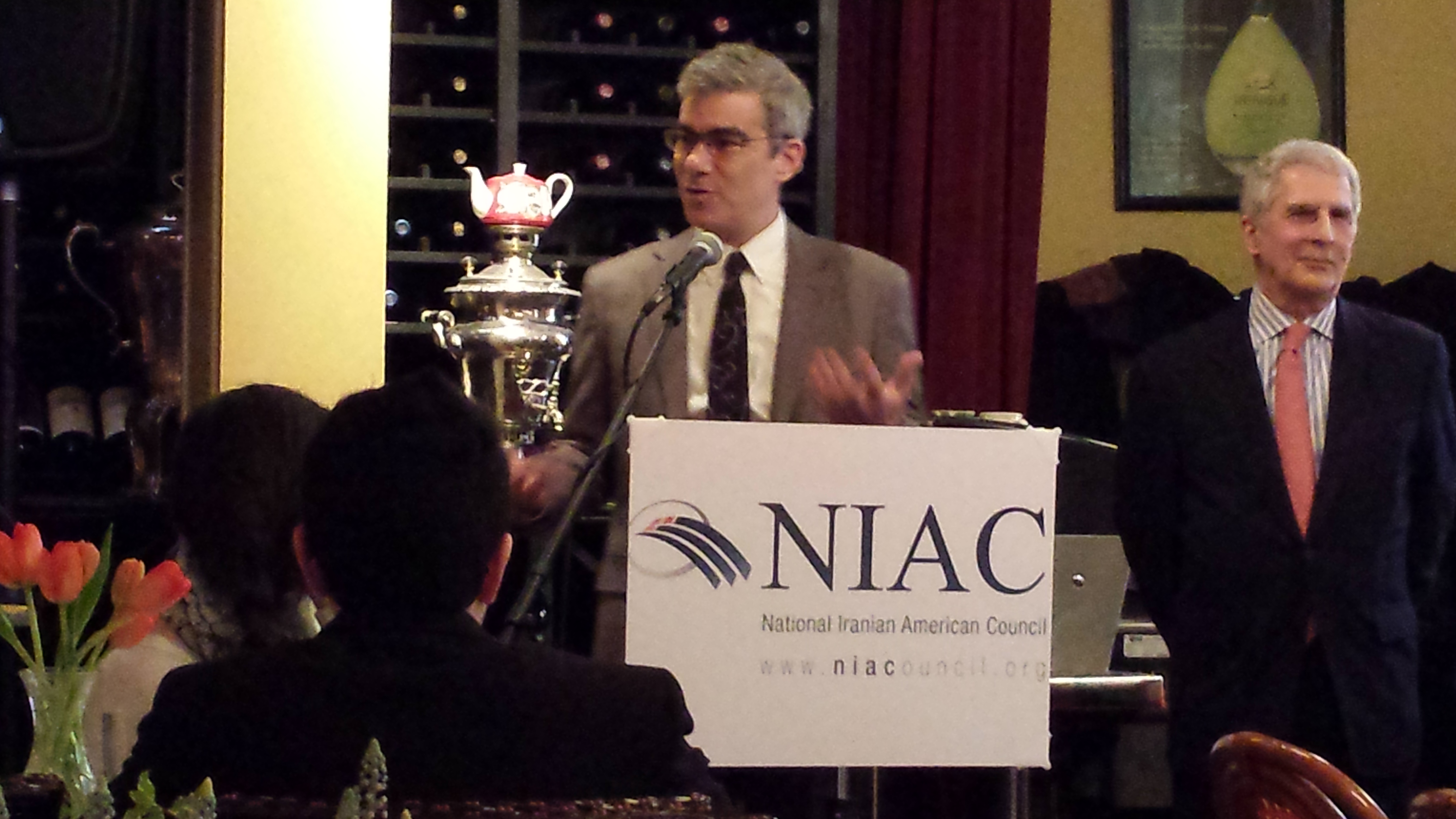
Addressing the NIAC Chicago Nowruz Celebration, March 16, 2014 (photo: Roxane Assaf)

Like many American rabbis around the country, I spent the most of the day yesterday leading my congregation’s noisy, joyously raucous Purim celebration, complete with a carnival and a family Megillah reading. As per usual, we read a somewhat watered-down version of the Book of Esther – one that characteristically kept the sexual hijinx and violence to a minimum.  Even with our PG version, however, there was no getting around the decidedly darker aspects of the Purim story – particularly the infamous ninth chapter in which we read that the Jews of Persia slew 75,000 Persians then celebrated the day after with a festival of “feasting and merry making.”

As always, this part of the story stuck seriously in my throat. While we adults can intellectualize the more disturbing parts of the Purim narrative (“it’s irony,” “it’s a revenge fantasy,” “it’s cathartic,” “it’s not meant to be taken seriously, after all…”) I’m just not sure we do any favors to our children when we read these kinds of stories to them, even in censored form. I’m fast coming to believe it’s time to tell a fundamentally different version of the Purim story to our children – one that celebrates the venerable Persian-Jewish experience rather than cynically telling a Persian version of “when push comes to shove, all the world really just wants the Jews dead.”

I’m also mindful that there are all too many adults who are willing to take the Purim story literally. I’ve written before about the disgusting Purim violence annually inflicted against the non-Jewish population in Israel. And on a geopolitical level, leaders of the state of Israel (and many in the American Jewish establishment) have openly and unabashedly used the Purim story to frame our relationship to Iran – presenting present day Ayatollahs and Mullahs as nothing less than Haman incarnate and promoting all out war as the only way to settle the current nuclear impasse.

For all this, however, I’m happy to report that Purim ended for me on something of a redemptive note this year.

As it turns out, the Persian New Year known as Nowruz is fast approaching and last night, I was thrilled to attend a Nowruz party sponsored by the Chicago chapter of the National Iranian American Council (NIAC).  So after I got home from my congregation’s Purim carnival, I took off my clown costume, put on a suit, and drove to a suburban restaurant where I celebrated the coming of spring with Chicago’s Persian community and supported the important work of NIAC, which among other things supports a “policy of persistent strategic engagement with Iran that includes human rights as a core issue.”

When I addressed the gathering (above), I thanked them for reaching out to me and explained that ever since I returned from a visit to Iran in 2008, I’ve always hoped to score a Nowruz party invitation from my Persian friends. I also explained why celebrating Nowruz with NIAC was for me the perfect, redemptive coda to Purim. And I added that contrary to the impression created by some Israeli politicians and Jewish institutional leaders, there were many in my community who believed that the current crisis should be settled through diplomacy and engagement and not an inexorable march to war.

Now I’m thinking there might well be something to this Nowruz/Purim celebration. Can’t think of a better way to, in words of the Book of Esther, “turn grief and mourning into festive joy….”

My Conversation with Rabbi Leonard Beerman

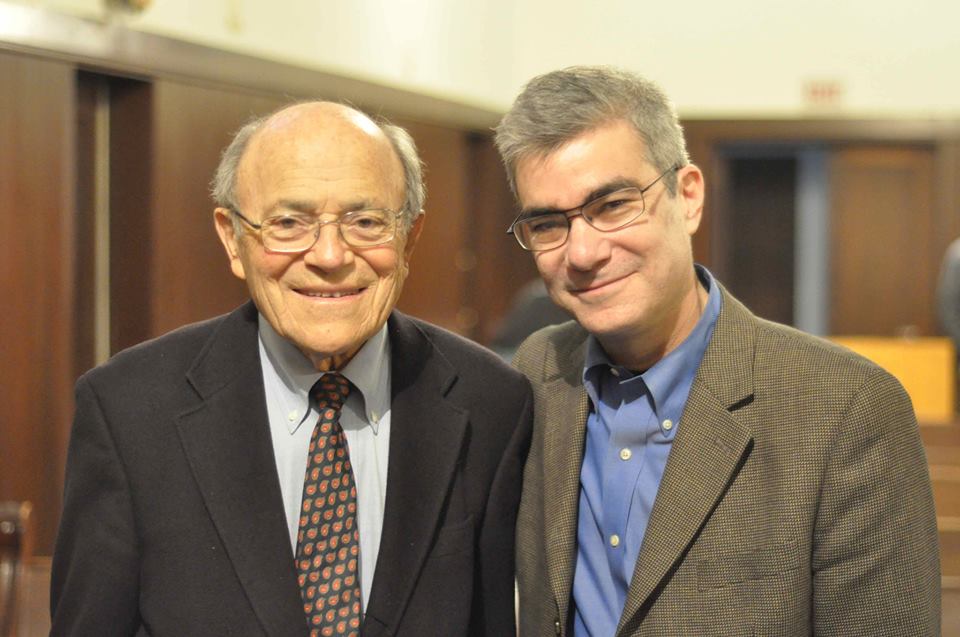
brantandleonard2

This past Sunday I had the great pleasure and honor to participate in a open conversation with Rabbi Leonard Beerman in “Progressive Politics from the Pulpit,” a program sponsored by Jewish Voice for Peace – Los Angeles. As Rabbi Beerman has been one of my true rabbinical heroes for so many years, it was truly a thrill for me to share a podium with him as we shared our thoughts on the challenges facing congregational rabbis who engage in progressive social justice activism.

As a Los Angeles native myself, I’ve long known of Rabbi Beerman’s inspired work during the years he served as the Senior Rabbi of LA’s Leo Baeck Temple. He was the founding rabbi of Leo Baeck in 1949 and stayed there for the next 37 years until his retirement in 1986. During that time, he challenged his congregants – and the Jewish community at large – to awaken to some of the most critical socio-political issues of the late 20th century.

Rabbi Beerman was a maverick in his day – and in many ways still is. He is a self-described pacifist who came by his stance honestly, after serving in the Marines in World War II and in the Haganah in 1947 while attending the newly founded Hebrew University. He was a student of Rabbi Judah Magnes, the great Reform leader who advocated for a bi-national state for Jews and Arabs – and he remains a passionate advocate for a just peace in Israel/Palestine to this day.

Rabbi Beerman came to Leo Baeck fresh from Hebrew Union College in Cincinnati during the height of the Cold War and quickly became an outspoken and visionary peace activist. In one of my very favorite stories, he described his anguish at the execution of Julius and Ethel Rosenberg, which took place on a Friday afternoon in 1953. During Shabbat services that evening, he decided to add their names to the end of the yahrtzeit list (the list of names read before the recitation of the Kaddish) much to the dismay of some of his congregants.

Rabbi Beerman was also one of the first rabbis in the country to publicly condemn the US war in Vietnam and later instituted draft counseling in his congregation. He invited such figures as Daniel Ellsberg (who spoke on Yom Kippur afternoon while he was awaiting trial) and Cesar Chavez to speak at his synagogue. Rabbi Beerman was also a visionary leader for civil rights and worker justice and during the nuclear arms race was one of the leading Jewish voices in the disarmament movement.

I’ve particularly admired Rabbi Beerman’s fearlessness when it came to the subject of Israel/Palestine – clearly the issue that has earned him the angriest criticism from the Jewish establishment. He was a consistent and faithful advocate for justice for the Palestinian people long before such a thing was even countenanced in the Jewish community. Literally going where few other rabbis would dare to tread, he met with Palestinian leaders such as Yasser Arafat and Fatah founder Abu Jihad. That he was able to do all of this while serving a large, established Los Angeles synagogue speaks volumes about his integrity – and the abiding trust he was able to maintain with the members of his congregation.

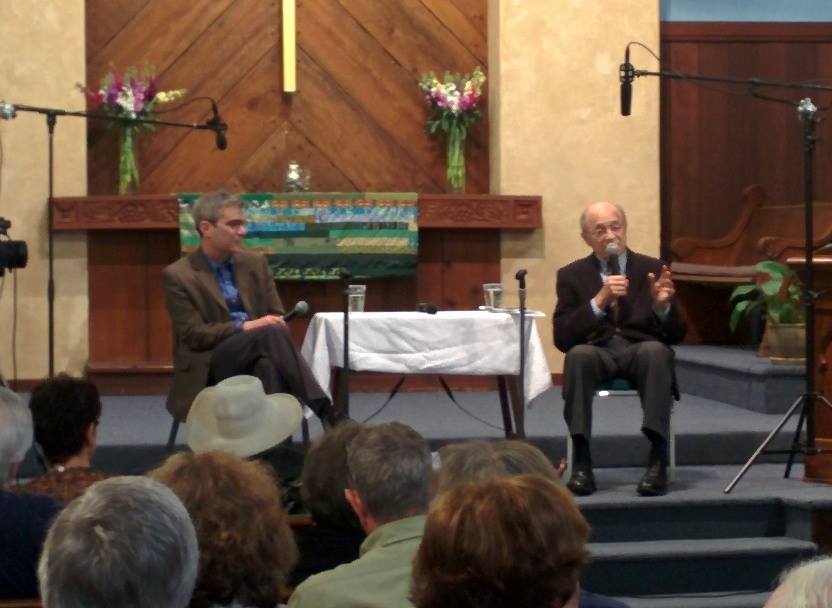
brantandleonard3

Now in his 90s, Rabbi Beerman is still deeply engaged in the issues of our day. During our conversation together, we spoke about the current state of the Israel/Palestine conflict, the languishing peace process and the rise of the Boycott, Divestment and Sanctions movement. I mentioned to those present that in 2008, during the height of Operation Cast Lead, when Rabbi Brian Walt and I were calling rabbinical colleagues to sign on to a Jewish Fast for Gaza, Rabbi Beerman was one of the first to sign on without hesitation. He did the same when we were forming the Jewish Voice for Peace Rabbinical Council and his presence there is truly an inspiration to our members.

I’m still feeling so happy and proud to have been able to share the stage with Rabbi Beerman. Heartfelt thanks to Estee Chandler, the head of JVP – LA for her masterful stewardship of this wonderful event. Thanks also to Eliyahu and Pennie Ungar-Sargon for filming the program – I’ll post the finished video of our talk when it is complete.

PS: After the program was over, I had the pleasure of meeting Rabbi Beerman’s wife, children and grandchildren, who were sitting in the front section. As we chatted I mentioned to them how wonderful it felt to get such a nice reception, adding that Leonard and I were worried there might be “troublemakers” in attendance. His daughter smiled and said, “The only troublemakers were up on the stage…”

Guest Post by Rabbi Brian Walt: Welcoming My Grandson, Micah Mandela

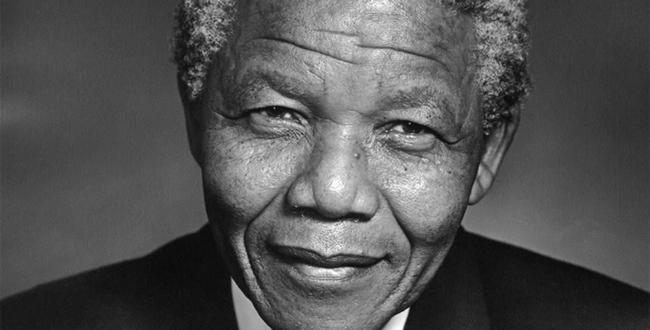
Nelson-Mandela’s-Top-Five-Contributions-to-Humanity

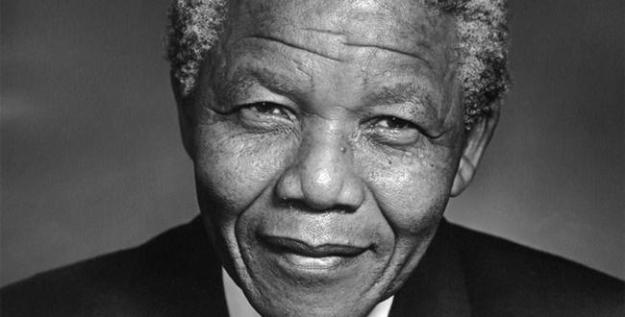
In memory of Nelson Mandela, I offer you this breathtaking Yom Kippur sermon that was delivered three months ago by my dear friend Rabbi Brian Walt. Brian grew up in South Africa and his activism in the anti-apartheid struggle was a defining aspect of his own spiritual/political evolution. I can think of no better tribute to Mandela’s legacy than to share the words of this visionary rabbi, whose grandson now bears Mandela’s name.

In June, when Chana and Lincoln, my daughter and son-in-law, announced at the naming/covenant ceremony that the name of their second child would be Micah Mandela Ritter, I was deeply moved. I never imagined that I would be blessed with a grandchild named Mandela. I feel so blessed to be the zeyde (grandfather) of a child who carries the name of a moral hero of our time, a man who has been central to my own life and has inspired me in so many ways.

I grew up in Cape Town, one of the most beautiful cities in the world. My family’s home was in Sea Point, a suburb that lies between the mountain and the ocean. Our home, number 14 Queens Road, was just a few houses from the ocean. If you looked up the road you could see the mountain; in the other direction, the ocean. The natural beauty that surrounded us was nothing less than spectacular: miles of oceanfront in both directions, lush vegetation, gorgeous flowers and the mountain in the background. In Habonim, my Zionist youth group, we sang, “We come from Cape Town, land of sea and mountain!” Yes, we lived in a spectacularly, beautiful place, “a land of sea and mountain” and much more.

Our family loved to go for walks on the beachfront. We would pass swimming pools, restaurants, playgrounds — all restricted to whites.  The only people of color allowed to live in our neighborhood were domestic servants who lived in separate servants quarters.  Blacks who worked in Sea Point lived in townships far from the city, came in during the day to work and had to carry a pass book confirming that they had a job in our area.

On clear days, we could see an island in the distance: Robben Island, the prison where Nelson Mandela and many of his African National Congress comrades were imprisoned for decades. The gulf between our comfortable and glorious suburb and the prison island we could see with our own eyes was enormous. It seemed unbridgeable. That tragic gap reflected the gulf between the reality of most white South Africans and that of majority of the people who lived in South Africa.

At that time it was illegal to quote Mandela or to print a photograph of him. Merely mentioning his name could make one the subject of suspicion. White South Africa and the Western world, including the United States, considered him persona non grata. He was a “communist” and a “terrorist.” The United States never took Mandela off the terrorist list until 2008 and kept the ANC on the list but made it possible for the status to be waived at times.

It was clear that if there were to be peace in our country it would involve freeing Mandela from prison, legalizing the ANC, and entering into negotiations. When I was growing up this seemed beyond any possibility. We all feared that our country was on the road to a massive and bloody civil war.

Growing up in South Africa, a country with so much racial hatred and devastating poverty and suffering alongside extraordinary privilege and wealth, was very painful for me as a child.   But I also feel profoundly blessed to have grown up in a country with moral heroes like Nelson Mandela and so many others, people who devoted their lives to the pursuit of justice and dignity for all. I am also very fortunate to have grown up in a country that went through a miraculous transformation brought about by thousands of human beings all around the world who put their lives on the line for justice.

I believe that my grandson and all of us have much to learn from Nelson Mandela. And so tonight I want to share three of the many lessons I learned from this extraordinary man: first, about justice and moral vision; second, about compassion and forgiveness; and third, about hope, community and social change.

These lessons are directly relevant to us this day as we reflect on our lives, our own moral vision and issues of forgiveness and change.  Many of us are the beneficiaries of economic and racial privilege and live in a country with a history not so different from South Africa’s.

Lesson #1:  A moral vision of justice

The Torah commands us: “Justice, justice shall you pursue!” The prophets of our tradition call us to justice. “Let justice well up like water,” says Amos. “You know what God has commanded you,” says Micah, “to act justly, love kindness and walk humbly.” The prophetic tradition which is the core of Reform Judaism and much of liberal Judaism puts justice at the center of our religious vision.

Nelson Mandela, although he is not religious, is in the line of the prophetic tradition. His life was devoted to justice and guided by a clear moral vision of a democratic country, a non — racist South Africa, where all people would enjoy equality, dignity and justice. In 1963, when I was 11 years old, Mandela was convicted along with 10 of his comrades, five of whom were Jewish, in the Rivonia Trial, which ended with Mandela sentenced to life imprisonment.

In a moving statement at the trial he articulated this moral vision. First, he described the injustices Africans suffered and what they deserve.

Africans want to be paid a living wage. Africans want to perform work which they are capable of doing, and not work which the government declares them to be capable of. Africans want to be allowed to live where they obtain work, and not be endorsed out of an area because they were not born there. Africans want to be allowed to own land in places where they work, and not to be obliged to live in rented houses which they can never call their own. Africans want to be part of the general population, and not confined to living in their own ghettos.

African men want to have their wives and children to live with them where they work, and not be forced into an unnatural existence in men’s hostels. African women want to be with their menfolk and not be left permanently widowed in the reserves. And then he articulated the most important demand:

Above all, we want equal political rights, because without them our disabilities will be permanent.

This then is what the ANC is fighting. Their struggle is a truly national one. It is a struggle of the African people, inspired by their own suffering and their own experience. It is a struggle for the right to live. During my lifetime I have dedicated myself to this struggle of the African people. I have fought against white domination, and I have fought against black domination. I have cherished the ideal of a democratic and free society in which all persons live together in harmony and with equal opportunities. It is an ideal that I hope to live for and to achieve. But if needs be, it is an ideal for which I am prepared to die.

Mandela’s vision of a “democratic and free society in which all persons live in harmony and with equal opportunities” was not only Mandela’s personal vision; it was the vision of a broad movement that was articulated in the Freedom Charter.  In 1955 the African National Congress sent 50,000 volunteers out into the countryside to ask people what freedoms they wanted. Based on this, they drafted the Freedom Charter, which was then adopted by the multiracial South African Congress Alliance.

The Charter began:

We the People of South Africa declare for our country and the world to know that South Africa belongs to all who live in it, black and white, and that no government can justly claim authority unless it is based on the will of all the people.” The document includes demands for basic human rights (many of which are still not part of the moral vision of the United States): a forty – hour week, equal pay for equal work, a national minimum wage, free compulsory universal and equal education for all children, universal health care.

The document is so inspiring. Most of it, except for the clauses that deal with nationalizing industry or redistributing land, was incorporated into South Africa’s extraordinary constitution in 1996.  Mandela’s vision was not based in any religious tradition, but it is consonant with the central core values of all religion as we understand it: that each and every human being is a child of God entitled to dignity, equality and justice.

Mandela pursued this moral vision relentlessly and at enormous personal cost. When he was offered a deal that would free him but would not guarantee voting rights, he chose to remain in prison and did not emerge until that most basic demand was met.

Mandela’s dedicated commitment to justice was integrated with a profound compassion for all people, even his enemies. This is evident in his unrelenting commitment to a non-racial democracy but also in his greatness of spirit and the forgiveness with which he approached his white oppressors. This is best exemplified in two stories about his relationships to those his enemies and those who supported him.

Lesson #2: Compassion and Forgiveness

In his inauguration address as president of the new South Africa, Mandela urged South Africans to forgive one another and to move beyond the hatred of the past. He declared:

The time for the healing of the wounds has come. The moment to bridge the chasms that divide us has come.

He called on South Africans to work toward a country in which “all South Africans, both black and white, will be able to walk tall, without any fear in their hearts, sure of the inalienable right to human dignity – a rainbow nation at peace with itself and the world.”

On that inauguration day, one of the guests of honor who received a personal invitation from the new president was a man by the name of James Gregory, one of Mandela’s jailers on Robben Island. Gregory worked there for nine years, from 1967 till 1976. When he was transferred to Cape Town, he continued to censor the letters of inmates on the island. Later he was transferred to Pollsmoor prison, and when Mandela and four other A.N.C.leaders were transferred there, Gregory was assigned to Mandela.

Gregory talks about his extraordinary relationship with Mr. Mandela during this period of time:

When he was alone I used to go and sit with him in his cell for hours at a time. We spoke about everything – his family, my family. But never politics and never trying to convince me of his views.

He always called me Mr Gregory and I addressed him as Nelson. When visitors came I would address him as Mr Mandela. After he was released he phoned me here at home and I said, “Hello, Mr Mandela,” and he said, “Where does this mister suddenly come from? You call me Nelson as you always did.”  He now calls me James.

When Mandela was released from Pollsmoor Prison in 1993 James Gregory received a white card to ‘W/O Gregory’. In neat, rounded handwriting, it said: “The wonderful hours we spent together during the last two decades end today. But you will always be in my thoughts.”

In explaining the reason for the invitation to Gregory and two other former prison wardens , Mandela said, “I invited them to come because I wanted them to share in the joys that have emanated around this day. Because in a way they have also contributed.”

What extraordinary forgiveness! To forgive those who have served as your jailers. What a powerful story for this day of forgiveness when each of us is called to ask for and grant forgiveness.

Can we forgive those who have hurt us? Will we?

Alan Brigish, a friend of mine who lives on Martha’s Vineyard and who also grew up in South Africa, tells another extraordinary story about Mandela. His father, Harry Brigish, gave Mandela a job as a law clerk in 1947 .

In 1999, Mandela’s final year as president, Alan took his dad to the doctor who told him that the President had asked him about his father and wanted to see him. Alan immediately called Mandela’s and left a message that he was Harry Brigish’s son and that he had been told the president wanted to see him. He wanted to let him know that Harry would love to see him.

A day later, six cars arrived at the apartment block and Mandela came over for a cup of tea. Alan’s mom asked the president what he was going to do now that his term of office was over. “I am going to be doing much the same as what I am doing now. I am going to find the people who helped me and meet with them to thank them personally and I am going to find the people who hurt me and meet with them and forgive them face to face.” What compassion! What humility! What menshlichkeit!

Do we have the same capacity to thank those who have loved and helped us and to forgive those who have hurt us. Will we do so?

Lesson # 3. Hope and Change

Growing up in South Africa, it was hard to imagine any future other than a massive civil and racial war in which thousands of people would be killed. And yet the determined resistance of millions of South Africans and people around the world made possible what seemed impossible. The apartheid government, facing mounting pressure from the resistance inside the country and from those around the world engaged in Boycott, Sanctions and Divestment, decided to free Nelson Mandela and the other leaders of the resistance and to negotiate with them. The relatively peaceful transfer of power in South Africa was nothing short of miraculous and it is a source of great hope for all who seek social change. Social change takes a long time and demands huge devotion, courage and many sacrifices, but it is possible. Mandela and the movement he led always held to their moral vision and their belief that change could and would happen.

What we can learn is that change is possible when people join together in movements to make change. There is an extraordinary seven-part documentary made by Connie Fields, “Have You Heard From Johannesburg”, that describes how actions in the country and around the world engaged in Boycott, Divestment and Sanctions against South Africa  made that happen.

In July, my sister Yda, a fabric artist who lives in Johannesburg, gave me a shirt she had designed with a quote from Mandela. It reads: “A winner is a dreamer who never gives up.”

A Blessing for Micah Mandela:

And so, my dear Micah Mandela: the man after whom you are named is a winner, a dreamer who never gave up. I hope carrying his name brings you blessings in your life: the blessing of living your life according to a moral vision of justice, your heart filled with compassion for all people, always offering forgiveness. A life of hope, that you always know deep in your heart that people joining together can make a difference in the world. I hope you find your particular way of joining with others to make our world a more just and decent place, and the blessing of honoring the prophetic voices of your Jewish legacy, your own prophetic voice and the prophetic voices in your world.

Always remember the Jewish prophetic legacy that you have received as a gift. Remember what the prophet Micah taught us all. It is not complicated. You know what God desires of you: Act justly, love kindness and walk humbly.

This is my blessing to you and to all your buddies, the next generation who will inherit this world.

And so my dear friends, this is my blessing to you as well. May we always follow a vision of justice, justice that is integrated with compassion and forgiveness, and may we join together in this place with others in the world who are devoted to creating a more just and democratic and peace-loving United States and a just and peaceful world.   May we forgive those who have hurt us and thank those who have helped us.  May we have compassion for those we perceive to be “enemies.”

As Nelson Mandela said in his inauguration address:

Let there be justice for all.

Let there be peace for all.

Let there be work, bread, water and salt for all.

Let each know that for each the body, the mind and the soul have been freed to fulfill themselves.

Let freedom reign. God bless Africa.

And let us add: May God bless us all.

May we all be sealed for a sweet, joyous and healthy New Year.
Daoud Nassar and His Message of Hope

If you’ve been reading my blog for a while, you how I feel about my friend Daoud Nassar, founder of Tent of Nations (and if you haven’t, you can read those posts here, here and here). It’s been my honor to serve on the Advisory Board of Friends of Tent of Nations – North America – and when they told me Daoud was coming to the US for speaking engagements, I jumped at the chance to add Chicago to his itinerary.

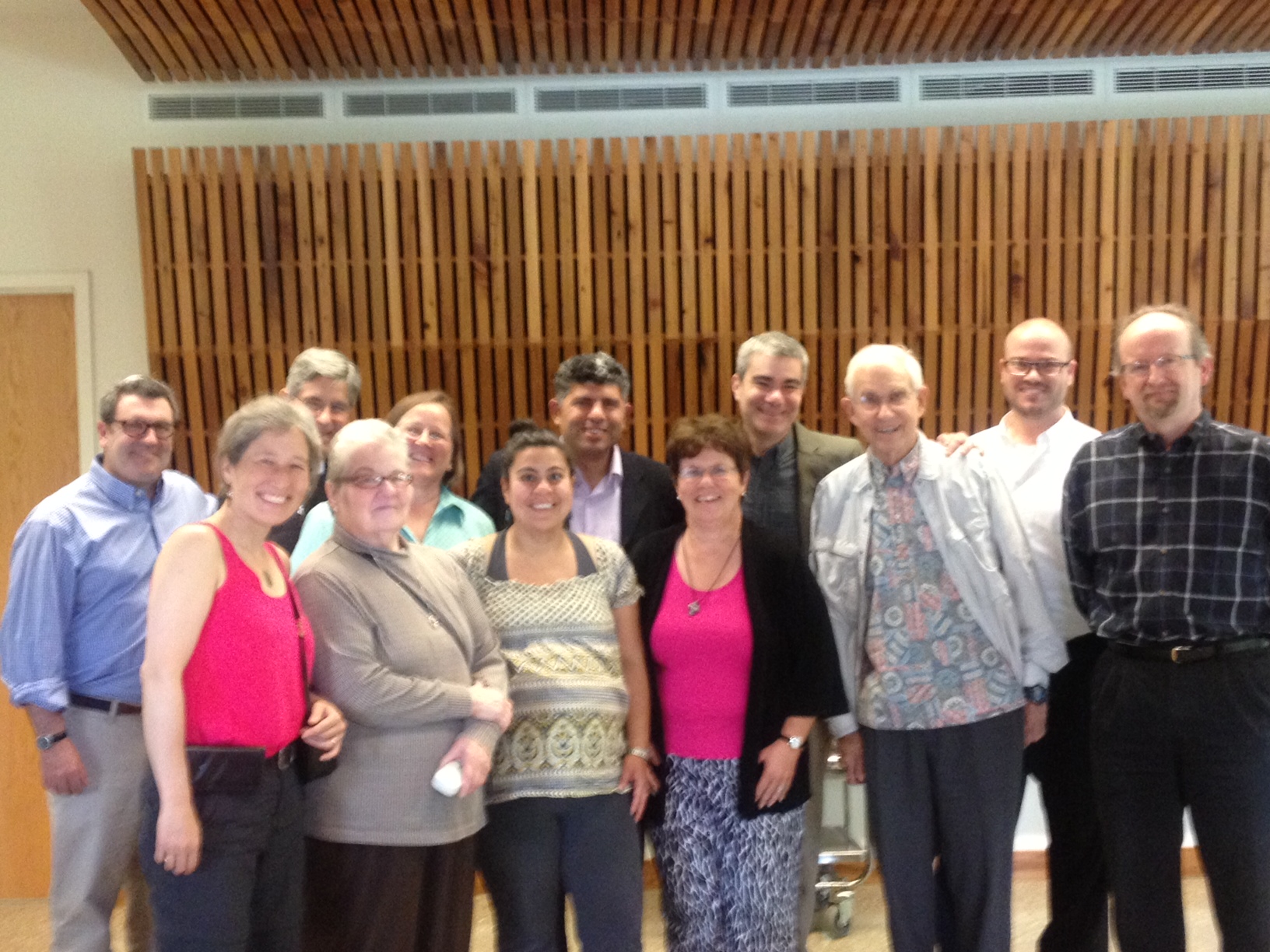
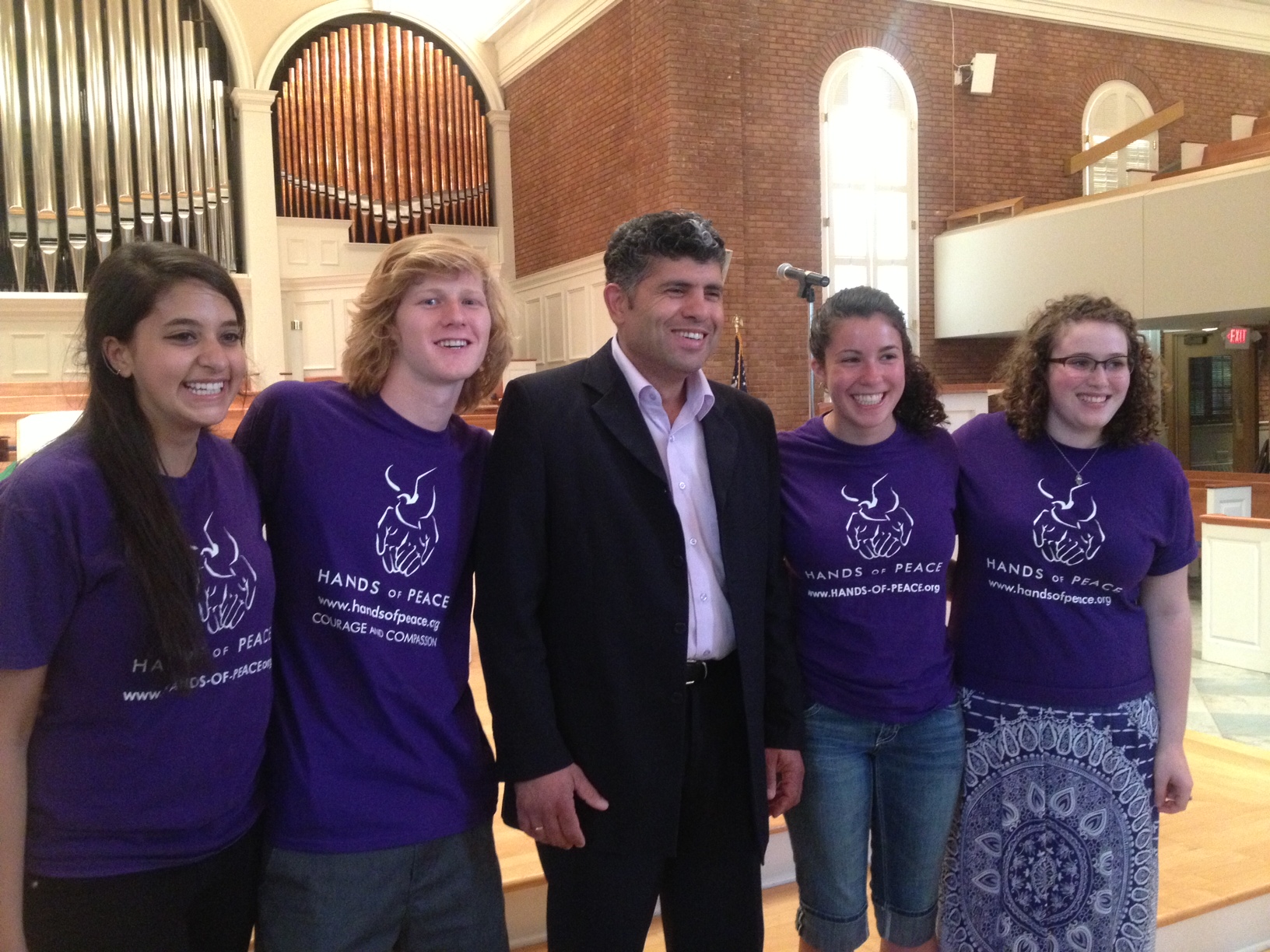
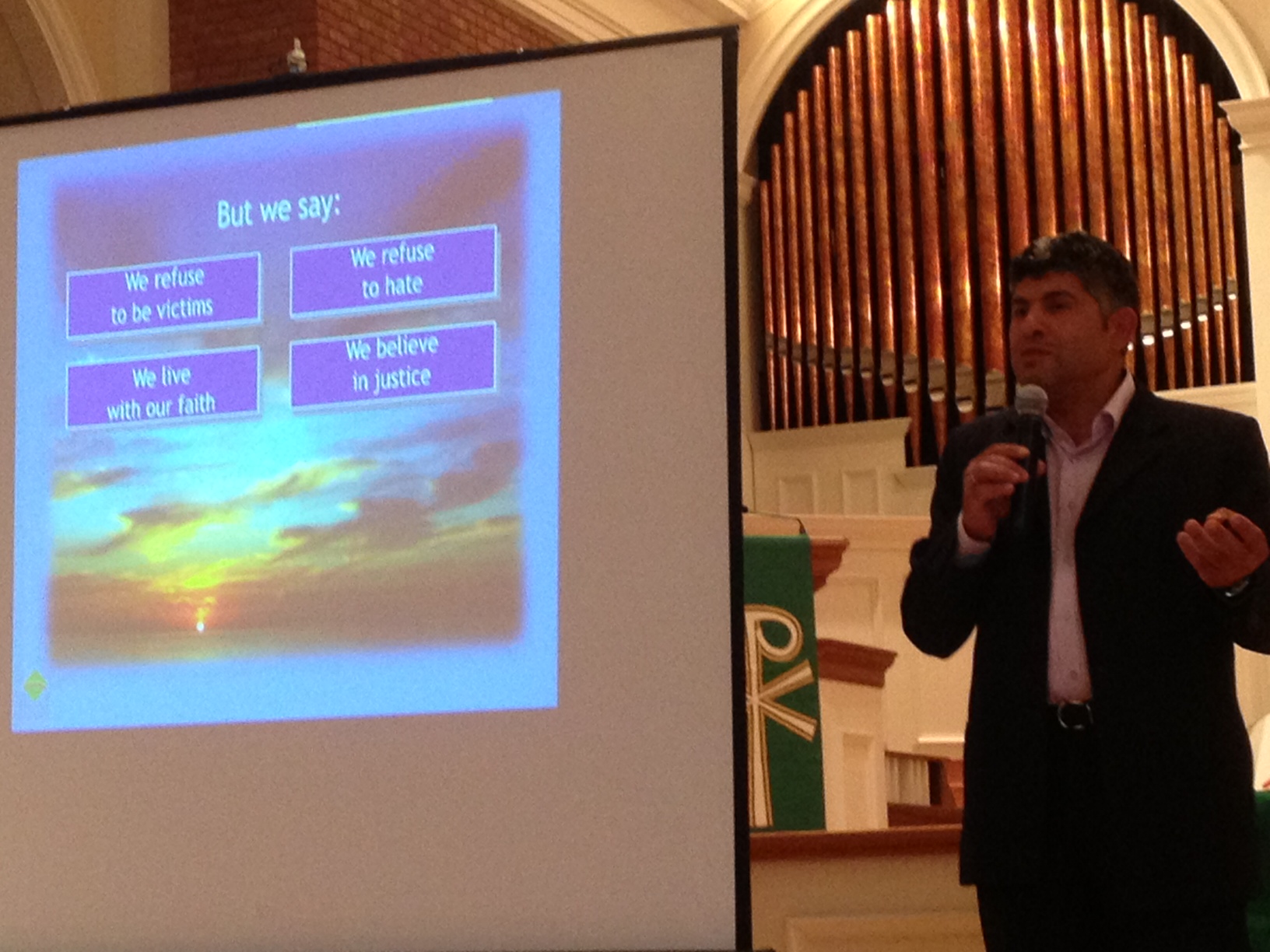
Among his stops here was a meeting with local interfaith clergy (below) and a presentation last night at Glenview Community Church for a program co-sponsored by Hands of Peace, a Chicago-area coexistence initiative on whose Advisory Board I also serve (bottom two pix).  At every stop, it was my pleasure see so many new friends and supporters inspired by Daoud’s message of steadfastness and hope.

Last Sunday, Daoud gave the sermon at the prestigious Riverside Church in New York City. I’ve just watched the video (above) and I was deeply moved by his words. I’ve listened to Daoud present many times, but I’ve never heard him speak in the unique context of his Christian faith.  As a Jew, I found his sermon to be deeply resonant, spiritually profound – grounded both in the truth of his own personal testimony as well as universal values of hope and human dignity. I encourage you to watch it in its entirety.

daoud clergy

daoud and hands

daoud.glenview

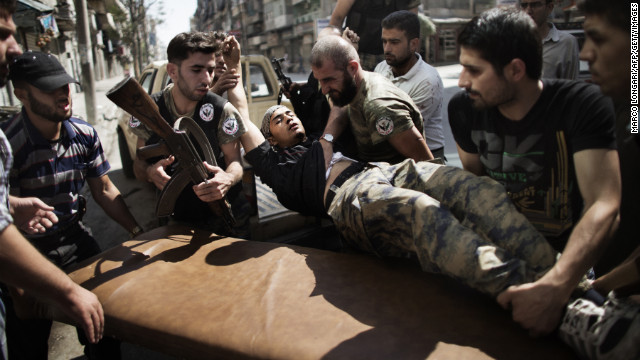
What Would Real Diplomacy in Syria Look Like?

photo: CNN

photo: CNN

Secretary of State Kerry is off to the Middle East, among other things to press for peace talks to stem the tragic bloodshed in Syria. There’s a refreshing thought: up until now we’ve been hearing that the US’s dilemma is essentially a choice between military intervention or inaction. In this day and age, actual diplomacy too often feels like a quaint endangered species.

I’m certainly mindful that US “peace deals” often have more to do with US interests than real and lasting peace – and I fully agree with journalist Shamus Cooke when he writes:

It’s possible that Obama wants to avoid further humiliation in his Syria meddling by a last minute face-saving “peace” deal. It’s equally likely, however, that these peace talks are a clever diplomatic ruse, with war being the real intention. It’s not uncommon for peace talks to break down and be used as a justification for an intensification of war, since “peace was attempted but failed.”

At the same time, however, diplomacy may well be our best option to stem the horrid violence which just seems to spiral and escalate without end. As Iran expert Trita Parsi, recently wrote in Open Zion:

A peaceful and sustainable resolution to the Syrian crisis is not within reach in the short-term. But a significant reduction in the violence and bloodshed can be achieved because the appetite for diplomacy is stronger now than at anytime in the past two years. The peace summit prepared by the U.S. and Russia can achieve this if they bring all the parties to the table.

Some more wise words on the importance of real diplomatic intervention in Syria. First, from Ron Young of the National Interreligious Leadership Initiative for Peace in the Middle East:

To have a realistic chance of success, such an international intervention would have to involve Russia — and Iran and China — as well as countries supporting the rebels. Twin goals of the intervention would be to halt the violence and achieve agreement on a political transition involving the rebels and elements of the current regime that would provide assurances for all of Syria’s diverse internal communities and for interests of the major outside parties. The current U.S. diplomatic initiative with Russia is worthy of public support, and should be pursued with creativity and determination.

And finally, Rich Rubenstein (Professor of Conflict Resolution at George Mason University) writes:

Clearly, any dialogue between the warring parties in Syria is better than continuing to destroy and dismember that nation. Talk, by all means! But the most promising process would involve talks presided over by a team of independent facilitators accepted by both the regime and its opponents – confidential dialogues that would help them explore the systemic causes of the war and fashion a plan for a new Syria. The Americans, Europeans, and neighboring states should agree to stay out of the way while the talks continue and to stand ready to guarantee any agreement reached by the parties.

“Wrestling in the Daylight” in Seattle

Here’s a great quality video of my entire speaking appearance at University Friend’s Meeting in Seattle this past Monday night. I attended series of wonderful – and at times inspiring – events during my short stay in the Northwest and will be reporting on them in due course.  In the meantime here’s a taste:

Rebuilding Alliance Rebuilds Hope for Palestinians in Area C

2832

New Kindergarten facility in Al Aqaba, built through the support of Rebuilding Alliance

In my last post, I addressed Israel’s creeping annexation of Area C, a region that accounts for 60% of the West Bank and contains all the major Jewish “settlement blocs.” It’s a process that has systematically depopulated this area of its Palestinian residents through a militarily-managed bureaucracy of home demolitions, forced evictions, revocation of residency rights while increasing widespread Jewish settlement throughout the region. Since 1967, the Palestinian population in Area C has dropped from as many as 320,000 to 56,000. During the same time, the Jewish population there has grown from 1,200 to 310,000.

In my post I addressed the political implications of these policies – but it’s just as crucial to remember that every home demolished, every residency revoked and every family evicted represents a devastating reality for real lives on the ground.  That’s why it’s so important to support the organizations working valiantly on their behalf.

One of my favorites is Rebuilding Alliance, a coalition of groups and individuals around the world that partners with Israeli and Palestinian NGOs to help devastated Palestinian communities in Area C rebuild in the face of often overwhelming obstacles.

Rebuilding Alliance is truly a model of its kind, using a holistic approach to peace-building, combining community-directed rebuilding with grassroots and diplomatic advocacy.  One of RA’s most important projects has focused on the Area C village of Al Aqaba, located in the Jordan Valley.  Al Aqaba was used for decades as a military training zone, during which twelve villagers were killed and dozens wounded during live-fire training exercises. In 2003, the village won a landmark victory when the Israeli High Court ruled that the army camp at the entrance of the village had to relocate. By that time, however, 70% of the village’s original one thousand residents had already left, seeking safety and better living conditions.

In the hopes that these former residents could return to their homes, the Al Aqaba Village Council appealed to international organizations to help them plan for their future. Among the projects they sought to implement were a medical clinic and a new three-story building that housed a sewing cooperative and a kindergarten for the children of Al Aqaba whose families who had relocated to nearby villages. With the help of grant money, Rebuilding Alliance began construction of a new kindergarten in 2004 (see pic above). As soon as the building was erected however, the military issued demolition orders for it and most of the village.

Through RA’s advocacy, the American Embassy helped stop the bulldozers with two homes demolished. Now they are helping Al Aqaba to legally and diplomatically challenge the demolition orders as they push ahead with plans to rebuild the village. Through its “Rebuilding to Remain” project, it plans to build 30 affordable, colorful, eco-friendly homes and construction has already begun. Breaking ground for this project was a huge victory for Al Aqaba.

Still, like so many villages in Area C, the residents in Al Aqaba live under constant threat of demolition. The pretext for demolishing Palestinian buildings has been the lack of Israel-issued building permits, which are only attainable once a master-plan has been approved, and are virtually unattainable for Palestinians.

mirroringhope1

I had the pleasure of speaking at Rebuilding Alliance’s “Mirroring Hope” dinner in San Mateo, CA when I was in the Bay Area last week (see above) and can attest to the incredible creativity of this courageous organization. I have learned a great deal from the example and work of Founder/Executive Director Donna Baranski-Walker and RA staff person Morgan Bach and it’s truly been a honor for me to support their work.

I urge you to do the same – click here make a donation. Click here to see Rebuilding Alliance’s Palestine Crisis Map, which offers English language news reports of human rights violations and rebuilding efforts in Area C and throughout Israel/Palestine – and to receive alerts on the status of specific villages.