Category Archives: Politics

Rabbinical Support for the End of Unconditional Military Aid to Israel

Cross-posted with The Palestinian Talmud:

The undersigned members of the Jewish Voice for Peace Rabbinical Council stand with our American Christian colleagues in their recent call to “make U.S. military aid to Israel contingent upon its government’s compliance with applicable US laws and policies.”

We are as troubled as our Christian colleagues by the human rights violations Israel commits against Palestinian civilians, many of which involve the misuse of US – supplied weapons. It is altogether appropriate – and in fact essential – for Congress to ensure that Israel is not in violation of any US laws or policies that regulate the use of US supplied weapons.

The US Foreign Assistance Act and the US Arms Export Control Act specifically prohibit assistance to any country which engages in a consistent pattern of human rights violations and limit the use of US weapons to “internal security” or “legitimate self-defense.”  The Christian leaders’ letter points out, in fact, that the most recent 2011 State Department Country Report on Human Rights Practices covering Israel and the Occupied Territories detailed widespread Israeli human rights violations committed against Palestinian civilians, many of which involve the misuse of US – supplied weapons such as tear gas.

It is certainly not unreasonable to insist that foreign assistance be contingent on compliance with US laws and policies. Mideast analyst MJ Rosenberg has rightly pointed out that during this current economic downturn, Congress has been scrutinizing all domestic assistance programs -– including Social Security and food stamps –- to ensure that they are being carried out legally in compliance with stated US policy.  Why should US military aid to Israel be exempt from the same kind of scrutiny?

While some might feel that requiring assistance to be contingent with compliance would compromise Israel’s security, we believe the exactly the opposite is true. As Israel’s primary ally, the US alone is in a place to create the kind of leverage that might challenge Israel to turn away from policies that impede the cause of a just peace for Israelis and Palestinians –- and true security for all who live in the region.

As Jews we acknowledge that the signers of the letter, and the churches they represent, have ancient and continuing ties to the land of Israel just as we do, and that their concerns for the safety and dignity of Christians in Israel and in the occupied Palestinian territories is as compelling as our concern for the safety and dignity of Jews there.

We are troubled that several Jewish organizations have cynically attacked this faithful and sensitive call – and we are deeply dismayed that the Anti-Defamation League has gone so far as to pull out of a scheduled Jewish-Christian dialogue in protest.  We believe that actions such as these run directly counter to the spirit and mission of interfaith dialogue. True dialogue occurs not simply on the areas where both parties find agreement, but in precisely those places where there is disagreement and divergence of opinion. We call on all of our Jewish colleagues to remain at the table and engage our Christian colleagues on this painful issue that is of such deep concern to both our communities.

We express our full support for the spirit and content of this statement and likewise call upon US citizens to urge their representatives to end unconditional military aid to Israel.

Signed (list in formation):

Rabbi Brant Rosen
Rabbi Margaret Holub
Rabbi Alissa Wise
Rabbi Elizabeth Bolton
Rabbi Lynn Gottleib
Rabbi Brian Walt
Rabbi Julie Greenberg
Rabbi David Mivasair
Rabbi Joseph Berman
Cantor Michael Davis
Rabbi Shai Gluskin
Rabbi Tirzah Firestone
Jessica Rosenberg, Rabbinical Student
Ari Lev Fornari, Rabbinical Student

Diplomacy, Not “Red Lines,” this Rosh Hashanah

Source: Ha’aretz

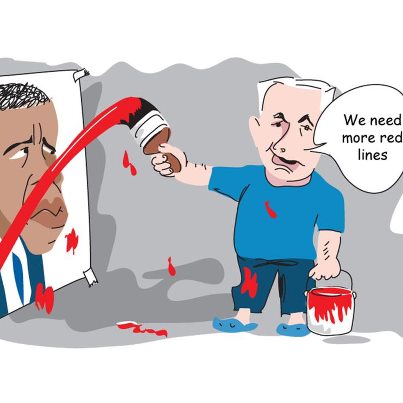
As the Jewish New Year beckons, Bibi Netanyahu is cravenly criticizing the US President for not drawing a “red line” in the sand that would give the US the go-ahead to militarily attack Iran.  I’m tempted to vent my gall, but thank goodness for MJ Rosenberg, who hits the nail right on the head in a blog post with the awesome title, “My Rosh Hashanah Greeting to Netanyahu: Butt the Hell Out of Our Election”:

For the last three weeks, Netanyahu has been openly attacking our president and has made clear his determination to defeat him. He is demanding that the president draw a red line in the sand, one dictated by Netanyahu, and tell the Iranians that if they cross it, we, the United States, will go to war. In short, he is demanding that the United States allow a foreign country to make our decision to commit our forces on his behalf.  (Not even Winston Churchill demanded that and his country was fighting for its life against Nazi Germany not some imagined threat).

Obama is not going to risk American lives because Bibi wants him to. And I don’t think Romney would either. There are limits, not even Adelson’s campaign contributions are likely to buy a war that would destroy Romney’s  presidency.  He is, after all, an American politician  – just like Obama. American.

Right on. I’m heartened that so far Obama has resisted Bibi’s cynical attempts to use our election season for his own political benefit. As Nicholas Kristof put it so aptly in today’s NY Times, “I think Obama should indeed set a red line — warning Netanyahu to stop interfering in American elections.”

This New Year, as I listen to these kinds of threats bandied about, I can’t help but think back to a sermon I gave to my congregation during the High Holidays four years ago – on the eve of my trip to Iran with the Fellowship of Reconciliation. This is what I had to say back then (still all too relevant today):

If we Jews truly want to avoid a “second Holocaust,” I would suggest the first step would be to stop comparing every provocation against Israel and the Jewish people in the most extreme terms possible.  Iran is not the Third Reich and Ahmadinejad is not Hitler. This is not to say we shouldn’t take Ahmadinejad’s hateful rhetoric seriously, but it does mean that this is a thorny, difficult and complex crisis. And we would do well to respond to it with intelligence and understanding, not by drawing lines in the sand and increasing even further the likelihood of yet another tragic military conflict in the Middle East.

You can click here to read the entire sermon. I also blogged extensively during my trip – you can dig up those posts by going to the Categories menu on the right and clicking on “Iran Trip 2008.”

Let us all pray and work for peace in 5773.

After 11 Years, Nationalism is Still Our Preferred Expression of Grief

Immediately after September 11, I was so struck by the predominant collective response: the ubiquitous display of flags everywhere you looked; the knee-jerk “U-S-A! U-S-A!” chant whenever the tragedies were invoked; the widespread desire for retributive justice, wherever, however possible.

Now eleven years later, even after all that’s happened since, I’m just so saddened that nationalistic displays seem to be the only way we know how to commemorate our dead. Maybe I’m naive, but it’s difficult for me to accept that we still haven’t found a healthier national outlet for our grief.  Call me naive, but I was genuinely surprised – and quite honestly mortified – that the loudest cheers at the DNC last week (always accompanied by the still ubiquitous “U-S-A! U-S-A!”) were saved for references to 9/11 and the killing of Osama Bin Laden.

If you found yourself disturbed as well, I highly recommend that you read this recent piece by Glenn Greenwald, who sorrowfully identifies all that was wrong with the bloodlust on unabashed display during the DNC:

Americans once found national purpose – justification for their belief in their own exceptionalism – from inventing new life-improving technologies, or putting a man on the moon, or advancing the cause of equality, or vanquishing the mighty Nazi military machine, or enshrining unparalleled protections for core liberties in the constitution. Now, many Americans find it in the heroic ability to hunt someone down who is in hiding, pummel his skull full of bullets even as he lay dying on the ground, and then dump his corpse into the ocean…

The premise seems to be that – aside from this specific corpse and the others the president has piled up – there is little else for ordinary Americans to celebrate now when it comes to the search for nationalistic achievement, purpose and greatness among their political leadership. That this dark premise appears valid is what is most disturbing of all.

In the meantime, for me the most moving, compassionate and morally honest tribute to the 9/11 fallen – and all who have fallen by our hands since – is this spoken word piece by Palestinian-American Suheir Hammad (above) entitled “First Writing Since.”

i cried when i saw those buildings collapse on themselves like a broken
heart. i have never owned pain that needs to spread like that.

there is no poetry in this. there are causes and effects. there are
symbols and ideologies. mad conspiracy here, and information we will
never know. there is death here, and there are promises of more.

there is life here. anyone reading this is breathing, maybe hurting,
but breathing for sure. and if there is any light to come, it will
shine from the eyes of those who look for peace and justice after the
rubble and rhetoric are cleared and the phoenix has risen.

affirm life.
affirm life.
we got to carry each other now.
you are either with life, or against it.
affirm life.

On the Smear Campaign Against Some “Rabbis for Obama”

Here is a post I co-wrote with Rabbi Alissa Wise for the Forward Thinking Blog of the Jewish Daily Forward:

The Republican Jewish Coalition and the Emergency Committee for Israel this week urged a group of rabbis supporting President Barack Obama’s reelection to purge members of the Jewish Voice for Peace Rabbinical Council from its ranks. The conservative groups claimed they were shocked by the inclusion in the “Rabbis for Obama” list of those whose “values are representative of a small and extreme group of anti-Israel activists.”

We are deeply dismayed by this cynical attempt at political gain through smears, half-truths and innuendos that only serve to create division in the Jewish community.

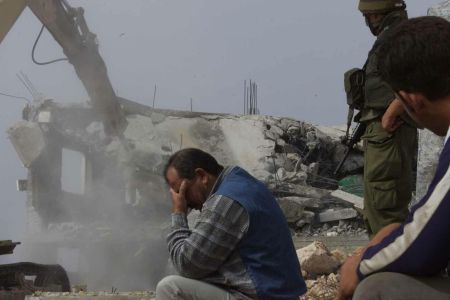
It is certainly true that many of on the JVP Rabbinical Council are deeply critical of Israeli policy (and the U.S. policy that too often enables it). It is not at all true, however, that such criticisms are “extreme” or marginal. Indeed, increasing numbers of Jews and Jewish leaders are finding the courage to speak out publicly against Israel’s practice of home demolition, forced eviction, settlement expansion and administrative detention, as well as its widespread restriction on Palestinians’ freedom of movement in the West Bank and Gaza.

Jewish Voice for Peace rabbis were not the only ones singled out by RJC and ECI’s smear. William Kristol included members of the J Street Rabbinical Cabinet and Rabbis for Human Rights as well. There are many perspectives within the American rabbinical community about how to create a just and lasting peace between Israelis and Palestinians. At the same time, we share a commitment to open and honest conversation about how a negotiated solution can ensure security and human rights for all.

By a margin of more than 2 to 1, according to the Public Religion Research Institute American Jews say that good diplomacy rather than military strength is the best way to ensure peace (63% vs. 24% respectively).

This reality stands in sharp contrast to the Jewish donors to the Republican party, such as Sheldon Adelson, who has reportedly asked Romney to state publicly that Israeli-Palestinian peace talks are a “waste of time.” Adelson is also pressing Romney for a firmer commitment to move the U.S. Embassy in Israel from Tel Aviv to Jerusalem, in what would be a de facto recognition of Israel’s annexation of East Jerusalem. These views lie far outside what most Americans would tolerate or expect from an American president.

We are saddened, but not surprised, by these smear tactics. They have long been the stock in trade of a Jewish establishment that demands lock-step agreement from Jewish rabbis and leaders – and Jewish neo-conservatives who do not hesitate to use divisive rhetoric and slanderous allegations against their own community members to achieve their political goals.

We are proud of the diversity of the American Jewish community and voice our hope that it will make room for all those who are dedicated to a future of peace, justice and dignity in Israel and Palestine. We are heartened that that by resisting calls to purge individual rabbis from their ranks, the leadership of “Rabbis for Obama” is remaining true to this inclusive vision.

“Wrestling in the Daylight” Launch Party!

Please join me in celebrating the publication of my new book, “Wrestling in the Daylight: A Rabbi’s Path to Palestinian Solidarity” on Thursday, September 6, 7:00 pm at The Book Cellar, 4736-38 N. Lincoln Ave, Chicago.

From a recent review by Rabbi Rachel “Velveteen Rabbi” Barenblat:

Gwen Macsai

“Wrestling in the Daylight”… is Rabbi Brant’s self-curated compilation of his blog posts from Shalom Rav, so if you’ve been reading Shalom Rav, this material won’t be new to you. But I’m finding, as I read, that reading the posts in this new setting and context — curated by their author into a narrative which clearly shows the progression of his thinking over time — is a different experience from reading the blog. And Rabbi Brant has chosen to reprint some of the comments from readers as well as responses he’s offered to those comments, which gives the book a bit of the internet’s Talmudic multivocality (and offers an example of how one can host difficult conversations in a thoughtful and generous way — which can be hard to come by on the internet, especially on questions of Israel/Palestine.)

Andrew White

The choice to include commentary makes the book particularly interesting, I think. Some of Rabbi Brant’s most frequent commentors disagree with him deeply. Over the course of the book, one can see conversations unfolding. Sometimes they are quite heated. And his responses are always thoughtful and respectful, even as he resists attempts at derailing the conversation. Having hosted some conversations about Israel at this blog over the years, I have a sense for how difficult that can be.

Kevin Coval

… Rabbi Brant Rosen is one of my role models in the difficult but important work of coming to terms with the clash between the classic Zionist narrative (a story which many of us want to continue believing — I know I still yearn for it to be true) and some of the realities on the ground in Israel and the Palestinian territories. He models for me not how one would do this internal work despite his ardent Jewishness, but precisely of it; not despite being a rabbi, but precisely because his rabbinate calls him to take seriously the Jewish call to stand with those who are oppressed. And he has also taught me a great deal about how to disagree without falling into the trap of looking down on (or dehumanizing) those with whom one disagrees.

If you’re interested in progressive Jewish takes on Israel and Palestine, this book is worth reading, and worth having on your bookshelf to return to again.

I’m thrilled to be joined at our September launch party by local Chicago celebs Kevin Coval, (Poet, Co-Founder, “Louder Than a Bomb“), Gwen Macsai, (Host, WBEZ’s Re:Sound) and Andrew White (Artistic Director, Lookingglass Theatre Company), who will join me in reading excerpts from the book. We’ll also make plenty of time for Q&A, book signing and quality bookstore shmoozing.

It promises to be a wonderful evening – RSVP at our Facebook event page here.

Standing Down Rep. Joe Walsh’s Islamophobic Bigotry

Shortly after a gunman killed six worshipers in a Wisconsin Sikh temple and a Joplin Missouri mosque was burned to the ground, Illinois Congressman Joe Walsh felt perfectly comfortable uttering incendiary anti-Muslim comments at a town hall meeting last Wednesday, warning that “there is a radical strain of Islam in this country…trying to kill Americans every week.”  Offering no evidence or backup for his allegations, he continued: “It’s here. It’s in Elk Grove, it’s in Addison, it’s in Elgin. It’s here.”

Then he poured it on:

I’m looking for some godly men and women in the Senate, in the Congress, who will stand in the face of the danger of Islam in America without political correctness.  Islam is not the peaceful, loving religion we hear about.

Shortly after Walsh’s town meeting remarks, pellet rifle shots were fired at a mosque in Morton Grove, IL.

I don’t know about a domestic “radical Islamic plot” but by now it should be abundantly clear that there is a deadly strain of Islamophobia in our country. In such a climate, I’d say it is the height of irresponsibility for public servants to issue remarks such as these.

It was my honor to stand, together with interfaith colleagues, with my good friends at CAIR – Chicago to express our outrage at Walsh’s sick bigotry (clip above). If you stand with us, please, please let Rep. Walsh know how you feel.

Syrians Pay the Price in a Sick Proxy War

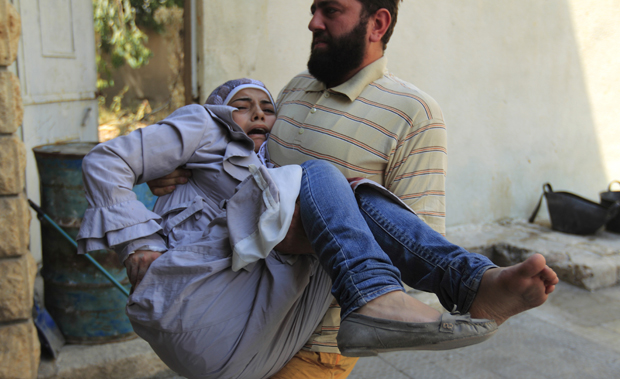
An injured civilian is evacuated after shelling by government forces in Aleppo. (Zohra Bensemra/Reuters)

Now that UN Secretary General Kofi Annan has resigned and is no longer leading the effort to find a diplomatic solution to the horrors unfolding in Syria, the prospect for a peaceful conclusion to this conflict look bleaker than ever – if it’s even possible to suggest such a thing:

(Kofi Annan) cited the Syrian government’s “intransigence” and the opposition’s “escalating military campaign” as major impediments to his peace efforts, along with a lack of unity in the international community on how to deal with the crisis.

I’m thinking “lack of unity in the international community” was just Annan’s polite way of saying this tragic mess in Syria has devolved into a sickening proxy war in which no one’s hands are clean and the only losers are the Syrian people themselves.

If you dare, I recommend you read this blisteringly bitter analysis by journalist Robert Fisk, who excoriates the cynical interests – from the US, to Russia and China, to Qatar and Saudi Arabia, to Hezbollah, to the media, to “our dear liberal selves – who are allowing Syria to be used as a bloody chess board, even as they speak out against the daily atrocities that are occurring there:

Has there ever been a Middle Eastern war of such hypocrisy? A war of such cowardice and such mean morality, of such false rhetoric and such public humiliation? I’m not talking about the physical victims of the Syrian tragedy. I’m referring to the utter lies and mendacity of our masters and our own public opinion – eastern as well as western – in response to the slaughter, a vicious pantomime more worthy of Swiftian satire than Tolstoy or Shakespeare.

What could possibly be the outcome of a cowardly proxy war in a sectarian Middle Eastern country? Samia Nakhoul, in a lengthy piece for Reuters, offered this dismal – if most likely – answer:

With no Western appetite for military intervention and no prospect of an internationally mediated political resolution, many see the civil war spreading and tearing the country apart.

“Disintegration of Syria is a possibility and the problem is it won’t work. It would create a power vacuum in which others get dragged in just like Iraq. It is a very frightening scenario,” (Cambridge University analyst George) Joffe said.

Lebanese columnist Rajeh Khoury predicted: “Syria could plunge into a long protracted civil war that could last years. The civil war in Lebanon, with its much smaller population of five million, lasted 15 years due to foreign interference so Syria would be much more complicated.

“The Syrian crisis is so inflammatory that its flames will affect the region in one way or another.”

A prayer for the people of Syria – and a pox on all our houses…

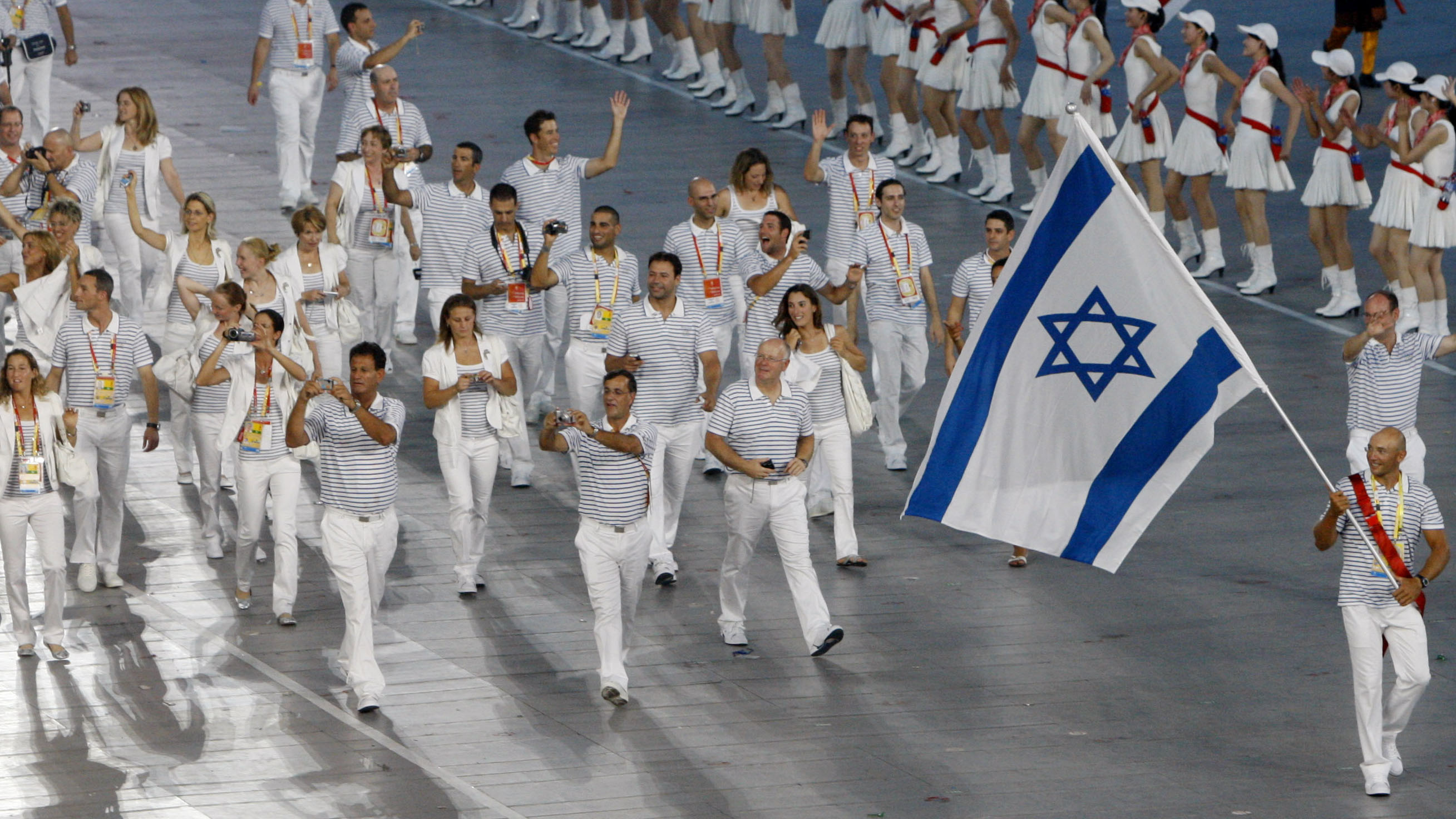
The Olympic Moment of Silence and the Politics of Victimhood

I’ve been following with some interest a cyber-dustup between Emory University Jewish Studies professor Deborah Lipstadt and Elisheva Goldberg, Assistant Editor of the Open Zion blog. In its way, I think it shines an interesting light on the ways the Jewish community deals with its sense of victimhood in public discourse.

The debate began with a piece Lipstadt wrote for Tablet on July 17, entitled “Jewish Blood is Cheap.” In her article, she inveighed against the International Olympic Committee for refusing requests to hold a one minute moment of silence during Opening Ceremonies to commemorate the 40th anniversary of the murder of 11 Israeli athletes in Munich. Lipstadt explored the various reasons given by the IOC for its refusal: that the IOC has honored the athletes repeatedly in other venues, that the Games should be “apolitical,” and that a commemoration of this sort was inappropriate at a “celebratory event.”

Lipstadt would have none of it:

The IOC’s explanation is nothing more than a pathetic excuse. The athletes who were murdered were from Israel and were Jews—that is why they aren’t being remembered. The only conclusion one can draw is that Jewish blood is cheap, too cheap to risk upsetting a bloc of Arab nations and other countries that oppose Israel and its policies.

…This was the greatest tragedy to ever occur during the Olympic Games. Yet the IOC has made it quite clear that these victims are not worth 60 seconds. Imagine for a moment that these athletes had been from the United States, Canada, Australia, or even Germany. No one would think twice about commemorating them. But these athletes came from a country and a people who somehow deserve to be victims. Their lost lives are apparently not worth a minute.

When I first read Lipstadt’s words, I strongly recoiled at her statement “Jewish blood is cheap” – and her claim that the IOC was motivated by anti-Semitism. Whether or not one agrees with the IOC’s decision, I found Lipstadt’s rhetoric to be incendiary and distinctly smacking of “victim politics.”

So, it seems did Elisheva Goldberg, who gently chided Lipstadt in a post for Open Zion. Goldberg pointed out that in fact, IOC President Jacques Rogge did make a statement and lead a minute of silence during a ceremony last Monday at the athlete’s village promoting the Olympic Truce (a UN backed initiative calling on warring parties around the world to end hostilities during the period of the games).  In her post, Goldberg asked what I thought was a valid question: when it comes to public commemoration of these kinds of tragedies, how much is really enough?  Or as she put it, “when will we be satisfied?”

To my dismay, Lipstadt did not think this question worthy of serious consideration – she responded to Goldberg instead with a petulant smackdown. In a Tablet piece entitled “No, Open Zion, Deborah Lipstadt Won’t Shut Up,” she concluded thus:

In making a statement on Monday, the IOC’s president tried to throw the victims’ families a bone. Goldberg has caught it, and is happily gnawing away. I, and many others, have no intention of being so easily satisfied.

While I agree with Lipstadt that Rogge is disingenuous in claiming the Games aren’t “political,” it bears noting that the Jewish establishment’s full court press on this issue has been highly politicized.  The minute of silence has been now pressed on the IOC by Israel’s Foreign Ministry (who produced a one minute video as part of the campaign), it has been introduced as a US House Resolution, and now of course, the obligatory campaign year statements of support have been elicited from President Obama and Mitt Romey. At this point, even if the IOC did assent to minute of silence at the ceremonies, it would resonate more as a moment of political victory than a genuine act of remembrance.

And that’s the problem I have with Lipstadt and the “many others” who have chosen to press the issue in this manner. They – and we – would do well to ask: when does the desire for public commemoration cross the line into cynical politicking?  On a deeper level, we might well ask: at what point does our need for the world to acknowledge Jewish suffering give way to a collective victim mentality?

To me, these are the critical questions, regardless of what does or doesn’t take place at Opening Ceremonies this Friday.

Talking to Iran in Moscow – Pray for Success

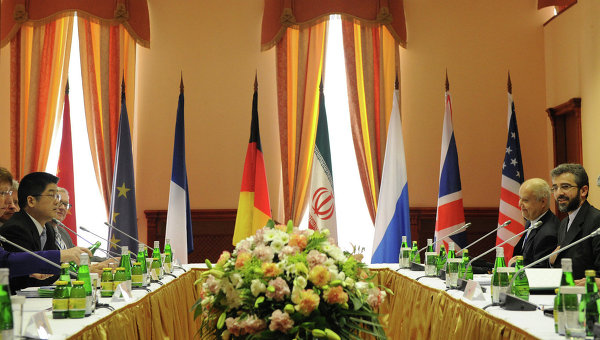
Talks began today in Moscow between Iran and the “P5 +1” (the five permanent member nations of the UN Security Council plus Germany). I’m hoping against hope for a breakthrough, but it’s certainly not looking good.

For a sane and balanced take on Iran, I’ve long turned to Trita Parsi, founder and president of the National Iranian American Council, and one of our foremost experts on US-Iranian relations. In a recent NY Times op-ed, Parsi identified precisely why Obama has precious little room to maneuver going into the Moscow talks. In a word: Congress.

Congress is actively seeking to make a deal on the nuclear issue impossible by imposing unfeasible red lines, setting unachievable objectives — and depriving the executive branch of the freedom to bargain.

Just before last month’s talks in Baghdad, Congress passed a resolution that endorsed the Israeli prime minister Benjamin Netanyahu’s red line on the nuclear issue (Iran can’t have a uranium-enrichment capability), as opposed to the red line adopted by the Pentagon and the president (Iran can’t have a nuclear weapon).  The problem is, Mr. Netanyahu’s red line isn’t feasible and doesn’t leave any room for negotiations…

If Iran agrees in Moscow to accept the American demand that it halt uranium enrichment at the 20 percent level — too low a level to quickly create a nuclear weapon — this would effectively obstruct any Iranian shortcut to a bomb. Congress must then give Mr. Obama the political space to be able to take yes for an answer.

Congress must make up its mind. Does it want to prevent an Iranian nuclear bomb or does it want to maintain its sanctions? Going forward, it can’t have both.

As if to put a period on Parsi’s analysis, last Friday 44 senators (23 of whom were Democrats) sent a letter to President Obama demanding that he insist upon three “absolute minimum steps” for continuation of talks: shutting down the Fordow nuclear enrichment facility, freezing all uranium enrichment above 5%, and shipping all uranium enriched above 5% out of the country.

The letter concludes:

If the sessions in Moscow produce no substantive agreement, we urge you to reevaluate the utility of further talks at this time and instead focus on significantly increasing the pressure on the Iranian government through sanctions and making clear that a credible military option exists. As you have rightly noted, ‘the window for diplomacy is closing. Iran’s leaders must realize that you mean precisely that.

If you needed any evidence of Parsi’s claim that Congress is “actively seeking to make a deal on the nuclear issue impossible by imposing unfeasible red lines, setting unachievable objectives — and depriving the executive branch of the freedom to bargain,” this letter provides it.  The writers and signers of this letter clearly know full well that these demands will be a non-starter for Iran.

Even more disturbing is the role of the Israel lobby in these cynical maneuvers. Mideast analyst MJ Rosenberg revealed, in a piece posted four days before the letter was released, that the letter was drafted by AIPAC staffers, pointing out that it was essentially

an AIPAC device for scoring senators in an election year. Those who sign will be rewarded or left alone. Those who don’t will hear from AIPAC and its friends. Not a pretty possibility.

OK, I’ll say it: the role of the Israel lobby in the Iran issue has been nothing short of shameful.  And at times openly, brazenly disingenuous.  Among the more odious examples: the Emergency Committee for Israel, (what you might call the more “zealous” wing of the lobby) recently released a 30 second scare-ad that proclaimed, among other things, that “Iran has enough fuel for five nuclear bombs” – a spurious claim which belies that fact that Iran currently has no weapons grade material at all.

Yes, this election year gives Obama precious little room to maneuver – and the lobby is clearly doing everything it can to exploit this.  But since Obama has repeatedly bent over backwards to prove his allegiance to Israel and AIPAC, I don’t see how bowing to these latest salvos will do much to significantly improve his electoral prospects. And since he’s going to be excoriated by his political rivals no matter what he does, why not stick to his own administration’s stated policy, behave like a statesman and push for a diplomatic success? After all, who should be determining Obama administration negotiating strategy – the Obama administration or Congress/AIPAC?

When you consider that the alternative is another ill-advised march to another disastrous Mideast war, the stakes could not possibly be higher.

Pray for a breakthrough in Moscow this week.

PS:  I’m honored to be discussing this issue further in a dialogue with Trita Parsi entitled “Can War with Iran be Averted?” on Thursday, June 28, 7:00 pm at Jewish Reconstructionist Congregation in Evanston, IL. Click here for more details.

Obama in 2012: Won’t Get Fooled Again

Just happened to glance at a blog post I wrote during the 2008 Presidential General Election campaign entitled “Go Rabbis for Obama!”

Man, what a difference four years makes. I think I can safely say it will be impossible for me to summon the kind of excitement I expressed in that giddy blog post just four short years ago.

Actually, if truth be told, it was just one year into his presidency when I concluded that Obama, from a foreign policy point of view at least, was essentially Bush 2.0.  Now as his first term comes to a close, I’m daring to consider the possibility that he might actually be worse.

I’ve already written a fair amount about my disillusionment on this score – most pointedly in my Yom Kippur serrmon from earlier this year:

For some Americans the most salient lesson of 9/11 was that the world is a dangerous place and we must use military power to mitigate the danger.  I include myself among those who learned a very different lesson: 9/11 taught us that when we intervene militarily abroad, we beget blowback here at home.

Many of us had hope that Obama truly believed this as well – that he would turn back the Bush doctrine and steer our nation’s foreign policy toward a saner course. But as it has turned out, the very opposite has happened. He has embroiled us in even more Mideast wars and has deployed even larger numbers of special operations forces to that region.  He has also transferred or brokered the sale of substantial quantities of weapons to these countries and has continued to build and expand US military bases at an ever-increasing rate.

He also promised to prosecute the so-called “War on Terror” with greater attention to civil liberties, but that hope has been fairly dashed as well.  During his campaign, note what he had to say about this subject:

“As president, I will close Guantanamo, reject the Military Commissions Act, and adhere to the Geneva Conventions. Our Constitution and our Uniform Code of Military Justice provide a framework for dealing with the terrorists. Our Constitution works. We will again set an example for the world that the law is not subject to the whims of stubborn rulers, and that justice is not arbitrary.”

Well, it’s over two years later and Guantanamo is still open. This past March, the Obama administration announced it would be resuming military tribunals there. And just last week, we learned that our President did something truly unprecedented – our President actually approved the extra-judicial assassination of an American citizen in Yemen.

And it’s gotten even worse since then. More recently, we’ve learned that Nobel Peace Prize Laureate Obama has been personally been maintaining a drone “kill list” which, according to the NY Times:

counts all military-age males in a strike zone as combatants … unless there is explicit intelligence posthumously proving them innocent. (Emphasis mine).

Even more recently, the NY Times has revealed that President Obama has been secretly overseeing a massive cyber-war initiative against Iran (known as “Olympic Games”) that, among other things, almost assuredly represents the official kickoff to a global cyber-weapons race. As the article correctly concludes, the blowback to our nation from Obama’s cyber-adventures could potentially be devastating:

(No) country’s infrastructure is more dependent on computer systems, and thus more vulnerable to attack, than that of the United States. It is only a matter of time, most experts believe, before it becomes the target of the same kind of weapon that the Americans have used, secretly, against Iran.

But my disillusionment in the Obama administration is most profound when it comes to its handling Israeli-Palestinian peace process.  I’ve written about this issue over and over as well – but if you still need more convincing that this administration has utterly caved to the Israel lobby and has abdicated any semblance of “honest broker” status in this process, it was recently reported that Obama unabashedly assured a group of Jewish orthodox leaders that his administration is “decidedly more attentive to Israel than it is to the Palestinians.”

All this to say that I’m in a very different frame of mind as Obama now runs for reelection. The giddiness has been replaced with a dose of hard, cold realism about the role of the President in the 21st century national security regime:

Again, from my Yom Kippur sermon:

I’m focusing these observations exclusively on our Commander-in-Chief, but of course I realize that this issue is much, much larger than just one man.  I know it’s natural to look to our primarily to our President, but in truth what we call “Washington” is really a massive bureaucracy that includes a myriad of interests. It’s a far reaching power elite that includes not only the federal government but the national security state, as well as the intelligence and federal law enforcement communities. It also includes big banks and other financial institutions, defense contractors, major corporations and any number of lawyers, lobbyists former officials, and retired military officers, all of whom hold enormous influence over our foreign policy.

So as we swing into summer and we listen to Obama and Romney trade salvos over foreign policy, don’t be fooled – at the end of the day there is less than an inch of daylight between the two.  Mideast analyst Aaron David Miller, in a Foreign Policy post entitled “Barack O’Romney” only half jokingly suggested that if reelected, Obama ought to consider making Mitt Romney his new Secretary of State.  Another respected analyst, MJ Rosenberg, has gone as far as to suggest that President Obama would actually be more likely to bomb Iran than a President Romney.

What should we do with all this hard political realism?  As for me, I’m taking my cue from the classical Jewish text, Pirke Avot:

Love work. Hate authority. Don’t get too friendly with the government. (1:10)

And for good measure:

Be careful with the government, for they befriend a person only for their own needs. They appear to be friends when it is beneficial to them, but they do not stand by a person at the time of his distress. (2:3)

The events of these last four years have provided a painful education for me.  I’ve learned more than ever that it is not politicians who create socio-political change – it is, rather, the people and the movements who make it impossible for them not to.

Yes, there are some important domestic issues at stake in this election (not least of which are potential Supreme Court appointments) but let’s not be fooled into thinking that the future of US foreign policy fundamentally depends on who we choose to be our Commander in Chief.

The real difference will depend on our readiness to hold him accountable once the election is over.