Category Archives: Politics

NATO in Chicago: A Meaningless Demonstration

Now that the NATO Summit has swept out of my city, the local press can’t stop fawning over the performance of the Chicago police – and gloating over how silly and meaningless the mass demonstrations turned out to be in the end.

Mission accomplished. With all of the focus on the Chicago streets, I guess we were successfully distracted from the truly meaningless demonstration that was the NATO Summit.

As for me, I’m in full agreement with Stephen Walt, who has correctly pointed out that this massive, fancy, expensive, city-paralyzing event was little more than a “fig-leaf” for NATO – a pageant designed to put a happy face on an Afghanistan war that is hugely unpopular and has suffered from ever-changing objectives from the very beginning.

Actually, Obama’s summit pledge “to responsibly wind down the war” by the summer of 2014 is worse than a fig leaf – it’s simply not true. Earlier this month, Obama visited Afghanistan and signed a pact with Afghan president Hamid Karzai that will ensure a US military presence in Afghanistan until at least 2024. (This agreement was first made in secret, then when the news leaked out, the administration vehemently denied it. Later they conceded it was true, making no attempt to explain why they lied in the first place.)

And please don’t be fooled by the explanation that NATO will be ending “combat operations” by 2014.  Officials have openly stated that these post-2014 “non-combat” troops will continue to launch “anti-terror” raids – which is simply just another way of saying they will continue to do what they’ve been doing all along.

But for the most powerful rejoinder to the farce that was NATO in Chicago, I strongly encourage you to read this important piece by Gary Younge, who pointed out the irony (or if you prefer, the utter hypocrisy) of Mayor Rahm Emanuel’s boast that the summit was “an opportunity to showcase what is great about the greatest city in the greatest country.”

The murder rate in Chicago in the first three months of this year increased by more than 50% compared with the same period last year, giving it almost twice the murder rate of New York. And the manner in which the city is policed gives many as great a reason to fear those charged with protecting them as the criminals. By the end of July last year police were shooting people at the rate of six a month and killing one person a fortnight.

This violence, be it at the hands of the state or gangs, is both compounded and underpinned by racial and economic disadvantage. The poorer the neighbourhood the more violent, the wealthier the safer. This is no coincidence. Much like the NATO summit – and the G8 summit that preceded it – the system is set up not to spread wealth but to preserve and protect it, not to relieve chaos but to contain and punish it…

The paradox inherent in a city like Chicago hosting a summit like this not only lays bare the brutal nature in which these inequalities are maintained at a global level, but it lends us an opportunity to understand how those inequalities are replicated locally.

Chicago illustrates how the developing world is everywhere, not least in the heart of the developed. The mortality rate for black infants in the city is on a par with the West Bank; black life expectancy in Illinois is just below Egypt and just above Uzbekistan. More than a quarter of Chicagoans have no health insurance, one in five black male Chicagoans are unemployed and one in three live in poverty. Latinos do not fare much better. Chicago may be extreme in this regard, but it is by no means unique. While the ethnic composition of poverty may change depending on the country, its dynamics will doubtless be familiar to pretty much all of the G8 participants and most of the NATO delegates too.

The gated communities – like the one in which Trayvon Martin was killed – have been erected on a global scale to protect those fleeing the mayhem wrought by our economic and military policies. This was exemplified last March when a boat with 72 African refugees fled the NATO-led war in Libya. When the boat found itself stranded it sent out a distress signal that was passed on to NATO which had “declared the region a military zone under its control”, and then promptly ignored it, as did an Italian ship. The boat bobbed around in the Mediterranean for two weeks. All but nine on board were left to die from starvation, thirst or in storms, including two babies.

A meaningless demonstration indeed…

What Must Be Said: We All Profit from Occupations

There’s been a great deal of analysis written about German writer Gunther Grass’ now-infamous new poem, “What Must Be Said” (in which Grass criticized Israel’s nuclear program as endangering an “already fragile world peace.”)  For me, the most astute response by far comes from Mideast historian Mark LeVine, writing in Al-Jazeera.

LeVine skillfully parses the psychology and the politics behind the uproar – but it is his identification of the larger context of the issue that resonates most powerfully for me. Here’s a long excerpt from a much longer article. The entire piece is well worth reading:

Israel has always sought to portray itself as a “normal” country, yet goes out of its way to ensure no one “names it” – to use Grass’ words – as what it is, a colonial state that every day intensifies its occupation of another people’s land. And so Grass has taken it upon himself to “say what must be said”, to name Israel as what it is, a “nuclear power” that “endangers the already fragile world peace”. It’s worth noting he doesn’t even mention the occupation, which is the far greater threat to world peace.

I have no idea if Grass really believed himself to be “bound” to Israel; if he did, we can imagine the bond is broken today, at least by Israel, now that he’s banned from returning. But Grass’ feelings are not what’s interesting or important. What’s important is the larger context, all the other “facts” which refuse to be accepted as “pronounced truths”.

These facts are that Israel, however egregious its crimes – and anyone who denies them is either completely ignorant or a moral idiot – is but one cog in a much larger global machine, one that includes too many other cases of occupation, exploitation, and wanton violence to list comprehensively here (we can name a few – Syria, China, Russia, India, Sudan, Saudi Arabia, Iran, Bahrain, Uzbekistan, Sri Lanka, the Congo, and of course, NATO and the United States – whose oppression, exploitation, and murder of their own or other peoples is a far more concrete “fact” than the potential for mass destruction caused by Israel’s nuclear programme)…

The larger fact is that the global economy is addicted to war, to militarism, oil and the rape of the planet for the minerals and resources that fuel the now globalised culture of hyperconsumption that will doom our descendants to a fate we dare not contemplate. Israel’s gluttony for Palestinian territory, and its willingness to encourage a regional nuclear arms race to keep it, is ultimately no different than the the gluttony for the 60-inch TV, the iPhone/Pad, the cavernous homes and cars, the ability to live at levels of consumption that are only sustainable if most of the world lives in poverty that increasingly defines all our cultures.

Israel has gotten Palestine on the cheap, and it costs relatively little to continue the occupation. Far less than it would cost to end it. So why bother? Especially when everyone else is doing, more or less, the same thing and, it’s clear, no one really cares anymore. Germany, whose remarkable economic stability in the recent global financial crisis is in good measure due to its central role in this global economy of hyper-consumption (think of all the energy and resources that go into making and driving all those fancy German cars), is certainly playing its role all too well.

If Grass is right that we must talk about the threat to world peace posed by Israel’s nuclear programme – and far more by its ongoing occupation – then we must also talk about the threat to global peace posed by the sick global system of which Israel is merely one of the more easily identifiable symptoms. Unlike my parents, I’m happy that Germans finally feel secure enough publicly to speak critically about Israel. But if they want their words to have a chance of bringing about a change in its behaviour, they, and everyone else, needs to broaden the discourse to include their own role in enabling and profiting from the system that Israel’s actions so benefits, and the global scope of the victims it daily produces.

Of course, this discourse would require a much longer and more complex poem, written by an even better poet than Grass. If someone manages to write it, I hope it will get the same publicity as “What Must Be Said”.

Rabbis of JVP Call on Obama: Don’t Let Bibi Pressure US into War on Iran!

The Jewish Voice for Peace Rabbinical Council has just released the following statement, below. If you are a rabbi or cantor, please consider signing on.

We, the undersigned American Jewish clergy, are deeply concerned about reports that Prime Minister Netanyahu will demand of President Obama, at their meeting at the White House today, that either the United States attack Iran, or else, Israel will.

We do not welcome the prospect of a nuclear-armed Iran. We call on all the military forces in the region – including Israel’s – to divest themselves of their nuclear armaments and renounce any belligerent nuclear aspirations.

The State of Israel refuses to acknowledge its own nuclear arsenal or to submit to international monitoring. We believe it is hypocritical of Israel to demand of Iran what it refuses to agree to itself.

Most of the people of the State of Israel oppose Prime Minister Netanyahu’s military threats against Iran. They fear the consequences of an attack on Iran. As Jewish leaders, we too believe that the path of wisdom towards achieving peace and stability in the region is through dialog and engagement and not through acts of war. We call on the United States government to safeguard the interests of the people of Israel and Iran.

Nine years after the United States launched a war against Iraq that is widely recognized as having been badly executed and unjustified, Israel would have the U.S. implicate itself in a new war in the region, this time against Iran. We believe that Jews, and other Americans, will not support more reckless adventurism in the Middle East.

In this election year, we call on President Obama not to give in to warmongering. As Jewish leaders we cannot endorse an Israeli act of war against the people of the Islamic Republic of Iran. The Bible teaches us: “bakesh shalom v’rodfehu –  seek peace and pursue it.” We urge President Obama to stand firm and to use his power as Israel’s chief supporter to draw Israel to the path of peace and justice.

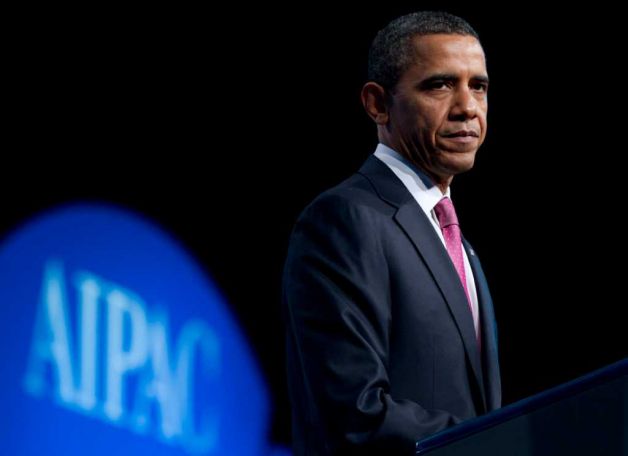
In the meantime, I strongly recommend MJ Rosenberg’s analysis of Obama’s much-anticipated speech at the AIPAC conference yesterday:

The President, in the middle of an election year, offered AIPAC no more than the bare minimum. In order to get away with that, he larded up the speech with embarrassing professions of love for Israel. I say embarrassing because no other country in the world demands such endless coddling. If a president spoke about Canada or the United Kingdom (two far closer allies) the way Obama does about Israel, he might be considered seriously off his game. Not to worry, he won’t.

But the lard doesn’t mean much except to smooth his way to the substance of the speech which Obama knew that neither AIPAC nor Prime Minister Netanyahu would like.

Why I’m Presenting at Harvard’s One-State Conference

The Harvard Kennedy School is hosting a “One State Conference” this weekend and already the usual suspects are crying foul. Since I’m going to be speaking on a panel at the conference on Sunday, I thought it might be a good idea to weigh in with some thoughts.

I’ll begin with the stated vision/goals of the conference, according to student organizers:

To date, the only Israel/Palestine solution that has received a fair rehearsal in mainstream forums has been the two-state solution. Our conference will help to expand the range of academic debate on this issue. Thus, our main goal is to educate ourselves and others about the possible contours of a one-state solution and the challenges that stand in the way of its realization.

Sound reasonable? Not according to self-appointed Jewish community watchdogs like the ADL and NGO Monitor and the ubiquitous Alan Dershowitz and Jeffrey Goldberg.  According to the ADL, such a conference could only be interested in “the elimination of Israel as the national homeland of the Jewish people.”  Dershowitz referred to it as an “anti-Israel hate fest.” Goldberg thinks organizers share “a goal with Hamas: the elimination of Israel as a homeland and haven for Jews.”

Reading incendiary words such as these, I can’t help but be struck by the abject hysteria that gets regularly mistaken for public relations by the American Jewish establishment.

I find it fascinating that these concerned institutions and individuals are more than willing to rail against the wide eyed extremists and useful idiots participating in this conference, yet cannot take the time to ponder what might have brought us to this point in the first place.  Has Abe Foxman, for instance, ever called out Israel over its settlement policy that has by now made a mockery of a viable two-state solution?  Is Alan Dershowitz willing to bring half as much righteous anger to the concern that Israel is fast creating “one state” all by itself?

I wrote recently about the “ever-closing window” on the two state solution. We might still argue about whether or not the window has closed yet, but I think we can all agree that the prospect for a viable, equitable two state solution for Israel/Palestine is in serious jeopardy.

As I pointed out in my post, sooner or later we’ll be forced to choose between a patently undemocratic Jewish state that parcels out rights according to ethnicity and a democratic state in which equal rights are enjoyed by all its citizens. Given this scenario, is it unreasonable that people of good will seek to open conversations and suggest fresh, creative approaches that might ensure a better future for Israelis and Palestinians?

It’s even more ironic when you consider that notable and respected Israeli figures have been discussing a potential one state solution for some time. While the American Jewish establishment grows apoplectic at the very thought, Israeli society seems more than secure enough to tolerate the discussion.

As far back as 1991, for instance, respected Israeli/American political scientist Daniel J. Elazar promoted a one-state “federal solution” for Israel/Palestine (most notably in his book, “Two Peoples – One Land: Federal Solutions for Israel, the Palestinians, and Jordan.”) Meron Benvenisti, an Israeli political scientist who was Deputy Mayor of Jerusalem under Teddy Kollek from 1971 to 1978, has publicly advocated the idea of a bi-national state for several years. A more recent Israeli advocate of one state is Avrum Burg, former Speaker of the Knesset and chairman of the Jewish Agency, who wrote about the subject in a widely read 2011 op-ed in Ha’aretz.

It is even less widely-known in the American Jewish community that prominent numbers of the Israeli right wing, such as former Minister of Defense and Foreign Minister Moshe Arens and current Speaker of the Knesset Reuven Rivlin, have suggested the desirability of some form of a one-state solution. Granted, the solution advocated by Arens and Rivlin – an undivided state that nonetheless retains it’s exclusively Jewish character – differs significantly from the federalist or bi-national models promoted by Elazar, Benvenisti and Burg. Still, I believe these unlikely bedfellows share critical aspects in common: the conviction that a two-state solution is unworkable, a willingness to pursue fresh creative ideas, and – contrary to what many might claim – a hard-headed political realism.

Many of the conference’s critics have pointed out that secular multi-ethnic states simply do not work. Goldberg claims that it “barely works” in Belgium and Dershowitz points out that it failed in India and the former Yugoslavia.  Fine. If this is the criticism, then let’s put this issue on the table and discuss it – as we most certainly will be doing this weekend (most likely at the panels entitled “Nationhood and Cultural Identity: The Preservation of the Peoples” and “What are the Obstacles to the Realization of a One-State Solution?”) But must we seek to marginalize the conference for simply seeking to have the conversation?

There are also criticisms that the conference is too “one sided” and that the presenters are unduly “biased.”  In truth, the presenters in the conference represent a spectrum of opinions on this issue. Some (like Ali Abunimah) have openly advocated a one state solution, others (such as Stephen Walt) support a two state solution and some (like me) are agnostic on the issue.  But I know many of the presenters personally and have long admired many more. Contrary to the venom being slung their way, these are thoughtful – if sometimes controversial – people of good will.  While we are a diverse lot, I believe we share a common desire to broaden this scope of conversation and an eagerness to bring fresh new thinking to a painful and paralyzed status quo.

The student organizers of the conference have released an open letter to their critics. Here’s an excerpt:

The aim of this conference is to explore the possibility of different solutions to the Israeli-Palestinian conflict. Invoking inflammatory language like “anti-semitism” and “destruction of Israel” to describe the ideas and speakers of the conference is not only incorrect and defamatory but serves to prevent rational discussion of ideas and preempt the effective exercise of speech.

I look forward to reporting on my experiences at the conference.

I Support the Presbyterian Church (USA) Divestment Resolution

As a Jew, a rabbi and a person of conscience, I am voicing my support of the divestment resolution being brought to the General Assembly of the Presbyterian Church (USA) this June.

This resolution, which has been a point of divisive contention between the PC (USA) and some American Jewish organizations for many years,  recommends that the Church divest its funds from Caterpillar, Motorola and Hewlett-Packard. It was put forth by the church’s committee on Mission Responsibility Through Investment – an appointed body that recommended church divestment of companies engaged in “non-peaceful pursuits in Israel/Palestine.”

There is a long and tumultuous history to this resolution – here’s a basic outline:

– In 1971 and 1976 the Presbyterian Church stated that it had a responsibility to ensure that its funds be invested responsibly and consistent with the church’s mission.

– In 1986, the PC (USA) formed the Committee for Mission Responsibility Through Investing (MRTI) in 1986. The MRTI Committee carried out the General Assembly’s wish to engage in shareholder activism and as a last resort, divest itself of companies which contravened the GA’s position. Divestment would follow a phased process starting with attempted dialogue and shareholder resolutions and ultimately the total sale of and future ban on the church’s holdings in a company.

– In June 2004, the PC (USA) General Assembly adopted by a vote of 431-62 a resolution that called on the MRTI Committee “to initiate a process of phased, selective divestment in multinational corporations operating in Israel.” The resolution expressed the church’s support of the Geneva Accord, said that “the occupation . . . has proven to be at the root of evil acts committed against innocent people on both sides of the conflict,” that “the security of Israel and the Israeli people is inexorably dependent on making peace with their Palestinian neighbors”, that “horrific acts of violence and deadly attacks on innocent people, whether carried out by Palestinian suicide bombers or by the Israeli military, are abhorrent and inexcusable by all measures, and are a dead-end alternative to a negotiated settlement,” and that the United States government needed to be “honest, even-handed broker for peace.”

– In 2005, MRTI Committee named five US-based companies – Caterpillar Inc., Citigroup, ITT Industries, Motorola and United Technologies – for initial focus and that it would engage in “progressive engagement” with the companies’ management.

– In 2006, following an uproar of criticism from American Jewish organizations, the PC (USA) General Assembly overwhelmingly (483-28) replaced language adopted in 2004 that focused the “phased, selective divestment” specifically on companies working in Israel.  It now called for investment in Israel, the Gaza Strip, eastern Jerusalem and the West Bank “in only peaceful pursuits.” The new resolution also required the consideration of “practical realities,” a “commitment to positive outcomes” and an awareness of the potential impact of strategies on “both the Israeli and Palestinian economies.”  The 2006 resolution also recognized Israel’s right to build a security barrier along its pre-1967 boundaries. The GA acknowledged the “hurt and misunderstanding among many members of the Jewish community and within our Presbyterian communion” that resulted from the 2004 resolution and stated that the Assembly was “grieved by the pain that this has caused, accept responsibility for the flaws in our process, and ask for a new season of mutual understanding and dialogue.”

The most recent resolution is the result of this new process and now focuses on three of the original six companies under consideration.  From the PC (USA) website:

The General Assembly Mission Council (GAMC) is recommending that the upcoming 220th General Assembly of the Presbyterian Church (USA) divest the church of its stock in three companies “until they have ceased profiting from non-peaceful activities in Israel-Palestine.”

The three companies are Caterpillar, Motorola Solutions and Hewlett-Packard.

At issue are their participation in the Israeli occupation of the West Bank, the construction of the “security barrier” between Israel and Palestinian territory, and the destruction of Palestinian homes, roads and fields to make way for the construction of Israeli settlements in the West Bank, which have been declared illegal under international law.

“We have run out of hope that these companies are willing to change their corporate practices [in Israel-Palestine],” said the Rev. Brian Ellison, a Kansas City pastor and chair of the denomination’s Mission Responsibility Through Investment Committee (MRTI). “We have made diligent effort to engage in conversation. We’d like to do more, to make progress, but substantial change does not seem possible.”

As stated above, I support this resolution without reservation and urge other Jewish leaders and community members to do so as well. I am deeply dismayed that along every step of this process, Jewish community organizations (among them, the Anti-Defamation League, the Simon Wiesenthal Center and the Jewish Council on Public Affairs) that purport to speak for the consensus of a diverse constituency have been intimidating and emotionally blackmailing the Presbyterian Church as they attempt to forge their ethical investment strategy in good faith.

It is extremely important to be clear about what is at stake here. First of all, this is not a resolution that seeks to boycott or single out Israel. Divestment does not target countries – it targets companies.  In this regard speaking, the PC (USA)’s ethical investment process seeks to divest from specific “military-related companies” it deems are engaged in “non-peaceful” pursuits.

We’d be hard-pressed indeed to make the case that the Israeli government is engaged in “non-peaceful pursuits” in the Occupied Territories and East Jerusalem.  I won’t go into detail here because I’ve been writing about this tragic issue for many years: the increasing of illegal Jewish settlements with impunity, the forced evictions and home demolitions, the uprooting of Palestinian orchards, the separation wall that chokes off Palestinians from their lands, the arbitrary administrative detentions, the brutal crushing of non-violent protest, etc, etc.

All Americans – Jews and non-Jews alike – have cause for deep moral concern over these issues.  Moreover, we have cause for dismay that own government tacitly supports these actions. At the very least, we certainly have the right to make sure that our own investments do not support companies that profit from what we believe to be immoral acts committed in furtherance of Israel’s occupation.

As the co-chair of the Jewish Voice for Peace Rabbinical Council, I am proud that JVP has initiated its own divestment campaign which targets the TIAA-CREF pension fund, urging it to divest from companies that profit from Israel’s occupation. Among these are two of the three companies currently under consideration by PC (USA): Motorola and Caterpillar.

Why the concern over these specific companies? Because they are indisputably and directing aiding and profiting the oppression of Palestinians on the ground. Caterpillar profits from the destruction of Palestinian homes and the uprooting of Palestinian orchards by supplying the armor-plated and weaponized bulldozers that are used for such demolition work.  Motorola profits from Israel’s control of the Palestinian population by providing surveillance systems around Israeli settlements, checkpoints, and military camps in the West Bank, as well as communication systems to the Israeli army and West Bank settlers.

And why is Hewlett-Packard under consideration for divestment by the PC (USA)? HP owns Electronic Data Systems, which heads a consortium providing monitoring of checkpoints, including several built inside the West Bank in violation of international law.  The Israeli Navy, which regularly attacks Gaza’s fishermen within Gaza’s own territorial waters and has often shelled civilian areas in the Gaza Strip, has chosen HP Israel to implement the outsourcing of its IT infrastructure.  In addition, Hewlett Packard subsidiary HP Invent outsources IT services to a company called Matrix, which employs settlers in the illegal settlement of Modi’in Illit to do much of its IT work at low wages.

I repeat: by seeking to divest from these companies the PC (USA) is not singling out Israel as a nation.  The Presbyterian Church has every right to – and in fact does – divest its funds from any number of companies that enable non-peaceful pursuits around the world.  In this case specifically, the PC (USA) has reasonably determined that these particular “pursuits” aid a highly militarized, brutal and oppressive occupation – and it simply does not want to be complicit in supporting companies that enable it.

I am fully aware that there are several organizations in the Jewish community that are already gearing up a full court press to intimidate the PC (USA) from passing this resolution in June.  JCPA President Rabbi Steve Gutow recently accused national Presbyterian leaders of “making the delegitimization of Israel a public witness of their church.” The Simon Wiesenthal Center has called the resolution “poisonous,” and that by considering it the PC (USA) is “showing its moral bankruptcy.”

These sorts of statements do not speak for me nor, I am sure, do they speak for the wide, diverse spectrum of opinion on the issue in the American Jewish community.  There is no place for public bullying in interfaith relations – it is, needless to say, decidedly counter to principles of honest, good faith dialogue.  To our Presbyterian friends: please know there are many Jewish leaders who stand with you as you support the cause of peace and justice in Israel/Palestine.

In a recent open letter to the PC (USA), Rabbi Margaret Holub, my colleague on the JVP Rabbinical Council expressed this sentiment eloquently with the following words:

Your Church has long been active in pursuing justice and peace by nonviolent means, including divestment, in many places around the world.  As Christians, you have your own particular stake in the land to which both our traditions have long attachments of faith and history.  We particularly acknowledge the oppression of Palestinian Christians under Israeli occupation and the justice of your efforts to relieve the oppression directed against your fellows.

To advocate for an end to an unjust policy is not anti-Semitic.  To criticize Israel is not anti-Semitic.  To invest your own resources in corporations which pursue your vision of a just and peaceful world, and to withdraw your resources from those which contradict this vision, is not anti-Semitic.  There is a terrible history of actual anti-Semitism perpetrated by Christians at different times throughout the millennia and conscientious Christians today do bear a burden of conscience on that account.  We can understand that, with your commitment to paths of peace and justice, it must be terribly painful and inhibiting to be accused of anti-Semitism.

In fact, many of us in the Jewish community recognize that the continuing occupation of Palestine itself presents a great danger to the safety of the Jewish people, not to mention oppressing our spirits and diminishing our honor in the world community.  We appreciate the solidarity of people of conscience in pursuing conscientious nonviolent strategies, such as phased selective divestment, to end the occupation.

I am proud my name is under this letter, alongside many other members of our Rabbinical Council. If you stand with us, please join us in supporting the PC (USA) divestment resolution at their GA in Pittsburgh this summer.

Biblical Myths, Cultural Boundaries and Political Realities: Rachel Havrelock’s Important New Book

I don’t usually review books while I’m reading them, but I’m definitely making an exception in this case.

I’m currently enthralled by and savoring “River Jordan: The Mythology of a Dividing Line,” an amazing new book by by Rachel Havrelock of the University of Illinois at Chicago. Havrelock, an associate professor of Jewish studies and English at UIC is a particularly gifted scholar of the Hebrew Bible, its historical interpretation and contemporary cultural/political relevance. I don’t think I’ve ever read a book that so skillfully maneuvers through the terrain of Biblical scholarship, cultural anthropology, modern history and contemporary politics.

In “River Jordan,” Havrelock investigates what she identifies as five essential “national myths” in the Hebrew Bible and discusses their history, their implications and their uses. Her ideas will certainly surprise those who have internalized more conventional assumptions about Biblical national mythology – and particular the Biblical myths that have been utilized by modern Zionism.  All of this, needless to say, has very real – and profoundly important – implications for envisioning a viable future for contemporary Israel/Palestine.

For an introduction to Havrelock’s work, I strongly recommend watching her presentation in the video interview above.

An excerpt:

There are two maps that have really impacted political life and one of these is the idea from the book of Deuteronomy and related sources of the expansionist idea, of conquest and expelling indigenous others. The other idea, the kind of Priestly idea of a discrete land that ends at the Jordan river, these have participated in a prominent way in modern political thought.

But there are other maps there – and the ones that I talk about in the book, that I try to make available also for political use, are on the one hand are this idea of the Northern Kingdom of Israel where boundaries aren’t fixed lines – they’re open, fluid frontiers and people cross them, they go in and out… But there also is a very potent geographic tradition in the book of Joshua.  In chapters 12 through 21 there are all of these regional maps or “boundary lists” if you will, and they talk about the tribes of Israel ultimately settling and living and they concede to the fact that Israel under Joshua did not expel everyone or exterminate them but rather that they lived alongside them.

And so we see in these traditions in the book of Joshua the coexistence of overlapping claims, the simultaneity of different identities and different peoples and we also really get to a regional model. In chapter 15 of the book of Joshua, there’s even a verse that says “until today, the tribe of Judah and the Jebusites live in Jerusalem.” Jerusalem is divided between them.  So there, right in the Bible, is the idea of a shared Jerusalem which really is much closer to the reality of contemporary Jerusalem – and it has Biblical precedent.

So I would say to those who say wait, Jerusalem must be Judaicized, Palestinians must be run out of their neighborhoods – and the idea that this has to be done in the name of King David, I would tell them to look closer at the text and see how these traditions of coexistence have as much root in the Bible as the military traditions that inspired the early movement and the wars in many ways.

Truthout has also recently published this extended written interview as well.  If all this whets your appetite for more, it’s time to check out her book.  Highly, highly recommended.

Moment of Truth for Liberal Zionism

For the last ten plus years, advocates of a two-state solution in Israel/Palestine have been warning that the “window of opportunity” for a two-state solution is closing fast.

Here’s Jordan’s King Abdullah II using the image in a 2005 speech:

Israelis and Palestinians must take advantage of a “small window of opportunity” for peacemaking, he warned. “If we don’t do it, I think the Middle East will be doomed, unfortunately, to many more decades of violence.”

From a 2007 Boston Globe report:

Secretary of State Condoleezza Rice said yesterday that a “two-state solution” in the Middle East is in jeopardy and described a narrow window of opportunity to push Israel and the Palestinians toward peace.

J Street director Jeremy Ben-Ami, writing in a 2008 Forward op-ed:

The window is closing on a two-state solution, and Israel’s prospects for a second, safer 60 years grow are growing ever dimmer.

And as recently as two weeks ago, Ben-Ami used a different metaphor to underscore the urgency of the latest “moment:”

If this round of talks breaks down yet again – and you’ll be hard-pressed to find a single observer who’ll argue that they won’t – then Israel, like the boater on the river, can briefly revel in having avoided the risk of heading to shore.

But bear in mind that “sitting this one out” isn’t an option. The waterfall is still dead ahead.

As someone who’s invoked the “closing window” more than once myself over the years, I’m quite familiar with this pedagogy. Time is running out for a viable negotiated two-state agreement between Israelis and Palestinians – and thus the future of a Jewish and democratic state. The status quo – namely unrestricted Israeli settlement of the West Bank, coupled with an ever-increasing Palestinian birth rate – simply cannot be sustained.

At a certain point, however, I think it’s fair to pose the challenge: how many times can you repeatedly warn of a last chance before the notion is rendered devoid of all meaning? How long can advocates of a two-state solution invoke the urgency of a fleeting opportunity before admitting that this solution is simply no longer a realistic option any more?

To be sure, with each passing day, the warning of a last chance opportunity appears increasingly toothless. The latest “window of opportunity” occurred earlier this month when it was reported that Israeli Prime Minister Bibi Netanyahu was “mulling gestures to Palestinians to keep the peace talks going.” Barely a week later, we learned that Israeli officials had formally informed the PA of its position that West Bank settlements “must be a part of the Israeli State.”

Such a position, of course, makes a complete mockery of any suggestion of a viable, contiguous Palestinian state. It lays bare the truth that Israel is not really interested in two actual states, but merely the formalization of an inherently inequitable status quo.

The political realities here are stark and undeniable. Israel’s settlement of the West Bank continues with impunity and the US continues to provide its “closest ally” with all the diplomatic cover it needs to do so. Politically speaking, it is no longer possible to invoke windows of opportunity with a straight face. Perhaps the real question before us is not “how many times have we missed these opportunities?” but rather, “did they ever really exist at all?”

So what happens now? It’s reasonable to assume that this paralyzed, inequitable status quo will continue apace into the indeterminate future. Israel will continue to create facts on the West Bank with the tacit permission of the US, creating a conditions that no Palestinian leader could possibly be expected to accept.

Under such circumstances, it is equally reasonable to expect the reality for Palestinians on the ground to grow increasingly oppressive and dire.  As this occurs, their plight and their cause will be more difficult for the world to ignore. Governments, individuals and institutions will increasingly rally to Palestinian requests for support, most prominently the Palestinian civil society call for Boycott, Divestment and Sanctions against Israel.

In turn, Israel’s actions will be increasingly more difficult for its supporters to defend.  As the status quo is allowed to languish, the state of Israel will become further and further isolated from the rest of the world community and more pressure will be brought to bear upon the political elites to fundamentally change their approach to ending this conflict.

While these are certainly sobering and painful prospects, I don’t think they are exaggerated or far-fetched. On the contrary, I believe the burden of proof is on those who believe the same tired approach to the “peace process” will somehow yield results in the future when it has failed repeatedly in the past.

Once we accept that a division into two states is no longer realistically possible, the calculus is sobering, to put it mildly: we will be forced to choose between a patently undemocratic apartheid Jewish state, in which a minority rules over a majority or a civil democracy in which all citizens have equal rights under the law.

For many liberal Zionists, this unbearably painful decision will represent a profound moment of truth. If forced to choose, which will it be? A Jewish state that parcels out its citizens’ rights according to their ethnicity – or a democratic state in which equal rights are enjoyed by all its citizens?

I truly believe this is more than an academic question.  Perhaps it’s time to stop talking about mythic “windows of opportunity” and open a new discussion: what will it take for us to admit that it is finally closed? And what will our options be then?

Ta’anit Tzedek Conference Call: Journalist Ahmed Moor on the One State Solution

As the prospects for a viable two-state solution for Israel/Palestine grow more and more unlikely, we are witnessing a tentative but growing discussion of a one-state solution in the Jewish community.

Indeed, this concept has already been raised and advocated by respected Israelis. As far back as  2002 a one state solution was publicly supported by famed political scientist Meron Benenisti. And more recently, Israeli journalist Dimi Reider has pointed out:

In light of the ongoing deadlock in Israeli-Palestinian peace talks, leaders such as U.S. Secretary of State Hillary Clinton and Israeli opposition leader Tzipi Livni have raised the specter of a one-state solution. Their intention, of course, is to scare some sense into Israeli Prime Minister Benjamin Netanyahu and his intransigent coalition partners. But, as this once-taboo idea becomes a legitimate part of political discussion in the region, some Israeli intellectuals are making the case that this is not something to fear, but a path toward a viable resolution to the region’s long-running crisis.

Here in the American Jewish community, however, this sort of discussion is considered to be naive at best and heresy at worst. But as difficult and painful as it might be for us to contemplate, I believe that sooner or later (and probably sooner than later) it is a conversation we will inevitably have to have – regardless of where we might personally stand on the issue.

To this end, I am proud to announce the next conference call sponsored by Ta’anit Tzedek – Jewish Fast for Gaza: “Conceiving of a One-State Solution” with Palestinian-American journalist Ahmed Moor on Thursday, December 15 at 12 noon EST.

Ahmed Moor was born in Gaza and raised in the US, graduated from University of Pennsylvania in 2005 and spent several years as a freelance journalist based in Lebanon and Cairo. His work as been published in numerous publications, including Al Jazeera, Huffington Post, and the Los Angeles Times. He is currently a graduate student of Public Policy at Harvard University.

During our conversation, Moor will share his views on the need and the prospects for one secular democratic state in which Jews and Palestinians live together as equal citizens.  Can we conceive of such a solution and what would such a state look like practically speaking?  What are the political realities that mitigate against it and how could they ever be shifted? What are the prospects that these two peoples could live and govern a state together?

Call Info:

Thursday, December 15 at 12 noon EST
Access Number: 1.800.920.7487
Participant Code: 92247763#

As always, there will be opportunities for questions and answers during the call.

We are looking forward to an informative and respectful conversation. I encourage you to join us.

Some Thanksgiving Thoughts for America

Some reading material for you this Thanksgiving. Feel free to read excerpts around the table tonight:

A powerful meditation on lost opportunity by journalist Robert Scheer, writing in Truthdig:

How many folks from my generation are honestly sanguine about the economic future of their children and grandchildren? What I have heard constantly, and just this week from a former top investment banker addressing a college class I teach, is that our offspring probably will face a decade of lost opportunity. I thought back to my college days and how shocked any of us, even those from the most impoverished of circumstances, would have been to hear such a prediction.

As The New York Times editorialized this Thanksgiving, “One in three Americans—100 million people—is either poor or perilously close to it.”

A bummer of a message, I know, until I think of those pepper-sprayed college students linking arms, and of all the Americans, young, old and between, who have occupied their minds with a challenge—that it doesn’t have to be this way. For their brave spirit of resistance we should be most grateful this Thanksgiving.

Retired Air Force lieutenant colonel William J. Astore expresses some Thanksgiving gratitude for our nation’s public servants:

As we sit down to our Thanksgiving dinners, we should reflect on the true roots of our national greatness: Our enshrinement of individual freedoms and liberties exercised within communal settings that are consistent with principles of human dignity and decency. True public servants support such ideals, to include our troops, our police – and our protesters, who dare to confront us with reminders of democratic ideals that we as a country are failing to meet.

Yes, protesters are public servants too, deserving of a fair hearing and a measure of respect. Yet the more we deploy armed forces to suppress such protesters, the more our democracy withers from within, even as we claim to be spreading it from without.

A nation simply cannot sow the seeds of democracy in other lands while poisoning the seedlings of democracy in its own land.

This Thanksgiving, let us reflect on the dangers of using one group of public servants (the police) to suppress another group of public servants (the protesters).  Let us ponder the dangers of putting armed forces empowered by noble oaths to ignoble purposes. And let us ponder as well what suffers most when our public servants are turned against one another – and who profits most.

And finally, Aisha Ali’s excellent and important survey of the real history of Thanksgiving:

Americans should know the history behind Thanksgiving. The images of Pilgrims continually celebrating Thanksgiving, and Native Americans being invited out of goodwill is false. As tension mounted, and wars erupted between Native Americans and Pilgrims, there were no future Thanksgivings.  Native American history involves successive colonization, intrusion of colonists’ beliefs, sacrilege of lands and sacred burial sites, and the unjust force of Native Americans further west. However, this was not always the story of Native Americans.  Native Americans used to live in a harmonious society.  “Earth Mother” or “Mother Earth” was respected and she in return, blessed Native Americans with bountiful crops, peace, and health. Since then, America has become a place of corruption, racism, segregation, and capitalism– all due to the foundation on which America was built.  As Abigail Adams once questioned how could any good come from a White House that was built by half-hungry slaves, how can America be a place of good will, liberty, and welfare without acknowledging the bloodshed and tragedy of its native peoples?

What many of us eat today, including our Thanksgiving menu, comes from the harvest crop initially cultivated by Natives, which accounts for nearly 70 percent of all crops, including corn, potatoes, and tomatoes.  It is important that we teach our children the truth on which America was founded.  The images, the story, the history of Native Americans must be changed.  What we have all learned is based on both truth and myth.  It is our duty as parents to educate our children and teach them the real story of not only Thanksgiving, but also America, wholly.  How can races/ethnicities ever heal unless we are able to address the problems and move on together to face them?

Yet, the true theme existing behind Thanksgiving should not be ignored, as everyone should be thankful for his or her blessings and this is something we must instill in all children: the acknowledgment of your blessings and being grateful for them.   But most importantly, we must instill in them, the truth.

Sorry Newt, but there is no Anti-Semitism at Occupy Wall St.

Accusations of anti-semitism in the Occupy Wall Street movement are flying fast and furious now. Newt Kingrich leveled the charge today on the CBS’s Early Show. David Brooks insinuated it in the NY Times not long ago. And Bill Kristol’s Emergency Committee on Israel has actually bought air time in New York and DC to run a laughably misleading ad that implores viewers to “Tell Obama and Leader Pelosi to stand up to the (anti-semitic, anti-Israel) mob.”

Watch the above clip for the real story.  Then read this thorough piece by commentator MJ Rosenberg. It would all be pretty hilarious if it wasn’t such a horribly cynical exploitation exploit the real pain and fear of anti-semitism to slow down a movement committed to justice and dignity for all – which is, in the end, what Judaism is all about.