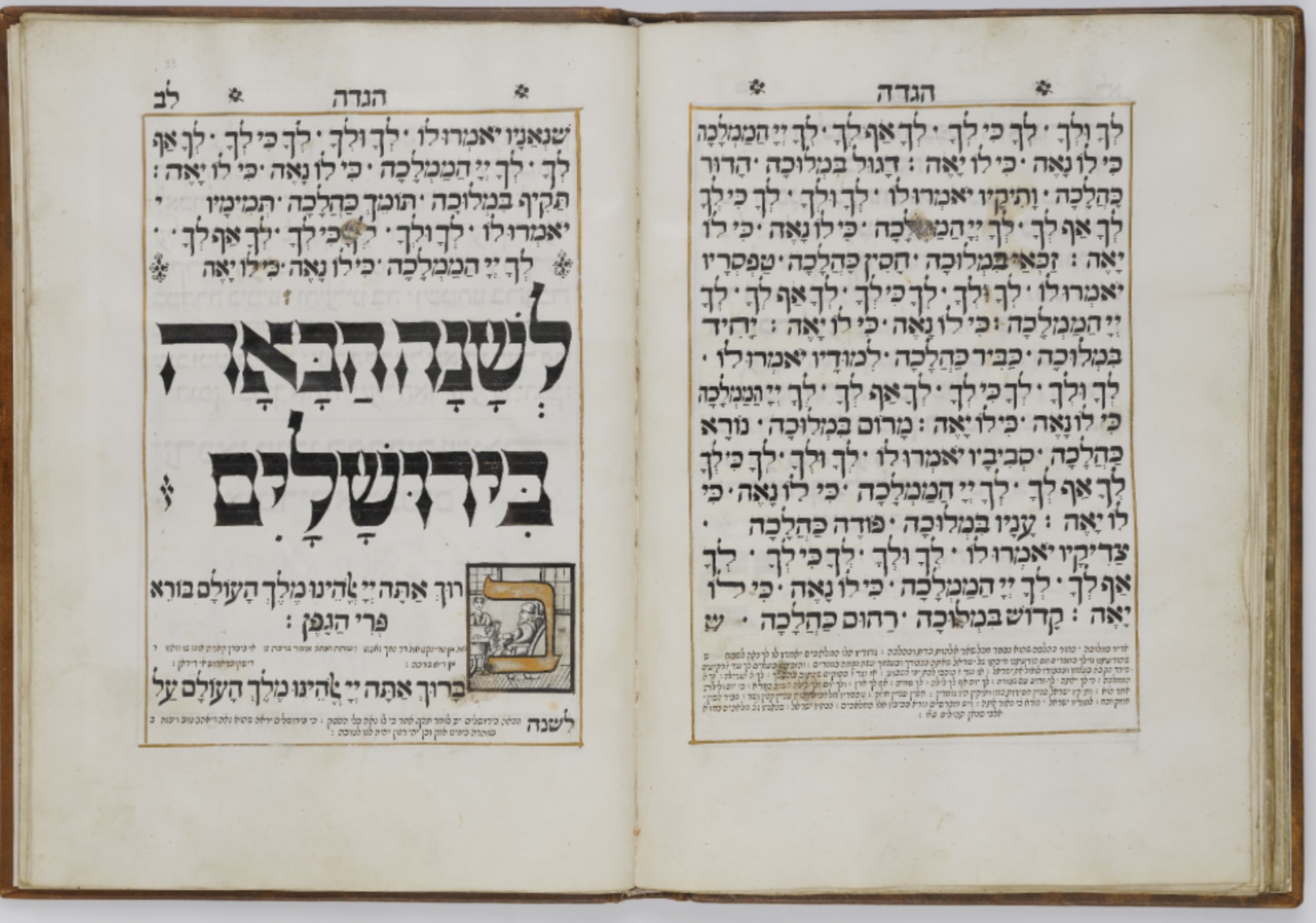
I’m sure I’m not the only anti-Zionist Jew who experiences cognitive dissonance when we get to the line that ends every Passover seder, “Next year in Jerusalem!” In the age of Zionism, what do these words really mean: when a Jewish person can fly to Jerusalem not next year, but tomorrow, and become an instant citizen upon arrival? How can we joyfully shout these words knowing that Israel ethnically cleansed half of Jerusalem in 1948 and militarily conquered and occupied the other half in 1967? What do they mean while scores of Palestinians who have deep generational ties to the land are forbidden from even setting foot in that city?
Over the years, I’ve come to the conclusion that the only way I can say this line with moral integrity is to understand the word “Jerusalem” not as referring to a physical city but to a spiritual ideal. This ideal, in fact, is central to Jewish tradition. After the destruction of the Temple and the ruination of Jerusalem by the Romans, the rabbis posited the existence of two Jerusalems: Yerushalayim Shel Mata (“Jerusalem Below”) and Yerushalayim Shel Mala (“Jerusalem Above”). Earthly Jerusalem is the physical city we know while the Heavenly Jerusalem is the messianic Jerusalem: a mirror reflection of the city on high: the Jerusalem of our highest aspirations.
In other words, while a small number of Jews always lived in the city after the destruction of the Temple, for the majority of Jews who lived throughout the diaspora, the concept of Jerusalem became a spiritualized symbol. I’ve often been struck that diaspora cities that were centers of robust Jewish life have typically been referred to as “Jerusalems.” In the late 16th and early 17th centuries, for instance, Amsterdam was referred to as the “Jerusalem of the West” following the immigration of Sephardic Jews from Spain and Portugal. Likewise, Vilna was known as the “Jerusalem of Lithuania” and Tlemcen, Algeria was called “Jerusalem of the Maghreb.”
When the ideology of Zionism emerged, and this spiritual ideal was subsumed into a physical place, the words “Next Year in Jerusalem” became a literal battle cry. But when we limit our understanding of Jerusalem to one specific city, we do damage to the very idea of Jerusalem itself. It’s tragically ironic that while the Hebrew word Yerushalayim literally means “City of Peace,” it has rarely known a moment’s peace in its history. It certainly hasn’t since the establishment of the state of Israel.
While the metaphor of Jerusalem still has a prominent place in Jewish tradition and liturgy – the words “Next Year in Jerusalem” mark the end of Yom Kippur as well as the Pesach seder – this ideal can be deeply meaningful even for those of us who do not ascribe to the messianic aspects of Jewish tradition. They can continue to be deeply aspirational, indicating our hope for a future of justice, equity, and peace throughout the world – and our commitment to the work it will take to make that future real.
For anti-Zionist Jews, these words are not only a statement, but an affirmation of our opposition to the violence and dispossession that continues to be wrought in the name of the Jewish people in that city and throughout the land. “Next Year in Jerusalem” can mean “Next Year, a Jerusalem for all its inhabitants.” It means “Next Year in Jerusalem without Jewish Supremacy.” It can mean “Next Year, may there be a return for all who have been dispossessed from their homes.” When we affirm that Jerusalem is not only an earthly location, we affirm the true Jerusalem cannot be destroyed, conquered or reconquered: it continues to live in our hearts and motivate our actions.
May it be so this and every Passover: “Next Year in Jerusalem!”
In this week’s Torah portion, Parashat Va’era, God’s tells Moses to return to Mitzrayim and say to the Israelites:
“I am יהוה. I will free you from the labors of the Egyptians and deliver you from their bondage. I will redeem you with an outstretched arm and through extraordinary chastisements.” (Exodus 6:6)
But when Moses attempts to impart this message of liberation to the people, they weren’t able to hear it as “their spirits were crushed (kotzer ruach) by cruel bondage.” (6:9)
This one verse says so much about the trauma of personal and systemic abuse. The Hebrew word ruach means both “spirit” and “breath/wind.” On one level this could mean that their oppression was so severe that individual Israelites could barely breathe. On a deeper level, it might indicate that their collective spirit was so damaged they couldn’t even begin to comprehend the possibility of liberation.
The dual meaning of the word ruach in Jewish tradition suggests that the divine spirit is embodied by our very breath: the life force that we share with God and all that lives. In the first chapter of Genesis, we read that the process of creation began when the ruach elohim (“God’s breath”) rippled across the primordial waters. Humanity itself came to life when God breathed into the first human. In Jewish liturgy, we awaken every morning expressing gratitude for “the breath of every living thing and the spirit of all flesh.”
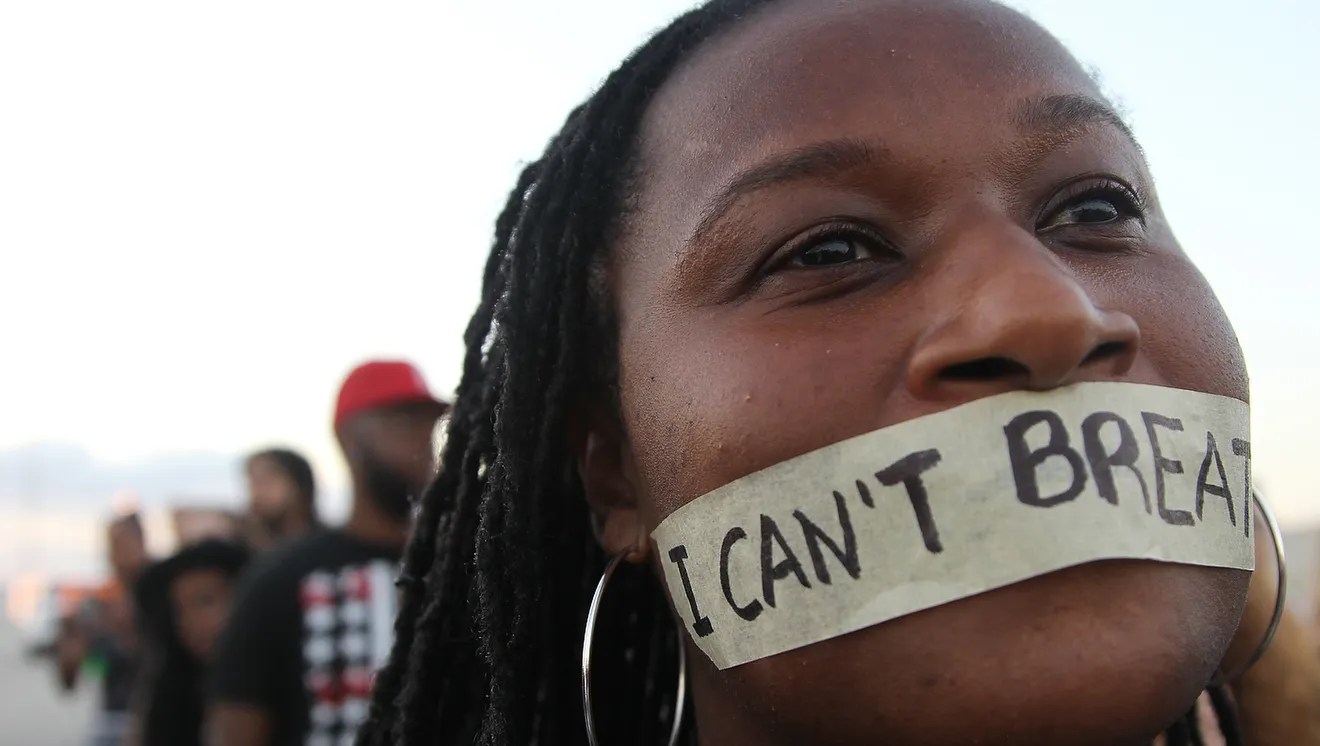
I believe there are powerful spiritual/political implications embedded in this theological concept. It suggests that when human beings – or humanly-created systems of oppression – deprive people of their ability to breathe freely, the flow of divine life force in the world is disrupted. Moreover, the demand to be able to breathe is itself a clarion call to action. We need look no farther than the phrase “I can’t breathe,” the final words of George Floyd and Eric Garner, whose deaths at the hands of systemic racism provided a powerful spark for the Black Lives Matter movement. Nigerian writer/poet Ben Okri has suggested that these three words “should become the mantra of oppression,” from the racist systems in our communities to the life-choking forces of global climate change.
In this regard, we might view the Jewish practice of giving thanks for our breath every morning as much more than a simple prayer discipline: it is nothing less than a statement of connection and solidarity with all that lives. Those who can breathe easily tend to regard the act of breathing as a natural, involuntary reflex. But as those with chronic respiratory illnesses will surely attest, it is no small thing to be able to take a breath. And in the age of COVID and climate change, millions throughout the world are increasingly becoming chronically kotzer ruach as a result of systemic oppression and corporate profit.
In other words, a commitment to a world in which everyone can breathe freely is a spiritual/political act of resistance. As disability justice activist Rabbi Julia Watts Belser has written:
Let’s learn to work more slowly, move more deliberately. Let’s learn to listen, when our bones say no. Let’s mandate breaks for anyone who works outside. Let’s require air purifiers, ventilation systems and safe work environments. Let’s make sure that all of us can breathe.
It is not too hyperbolic to suggest that the current political moment has left many of us breathless. As we death-scroll through the news of Trump’s executive orders and authoritarian policies, the ferocity of this onslaught can leave us literally or figuratively gasping for air. But this is, of course, just what Trump and his movement wants: to leave us reeling through a calculated strategy of shock and awe. They want us to feel breathless, paralyzed, despairing. We must not succumb. We must not accept that breathlessness is the new existential normal of our political age. We cannot become, like the Israelites of our Torah portion, so kotzer ruach that we cannot even imagine the possibility of something better beyond this authoritarian tyranny.
In the work of resistance, the first order of business is, quite simply, remembering to take a breath. Because in the end, if we are paralyzed with breathlessness for the next four years, we will be of no use to ourselves or anyone else. Moreover, once we regain our breath and our equilibrium, we will be in a better place to discern what we can do to meet this moment. In the wise words of Chicago organizer Kelly Hayes:
When your enemy wants you disoriented, your ability to focus is an important means of self-defense. What matters to you in this moment? Most of us can meaningfully dedicate ourselves to one or two causes, at the most. What can you commit to doing something about? Where do you get trustworthy information about those subjects? Who do you connect with when deciding what to do about what you’ve learned? Is there an organization whose resources you will employ or whose calls to action you will answer? Do you have a friend group or solidarity network that will formulate a response together? Answering these questions is key to steadying yourself in these times. Remember: Vulnerable people don’t need a sea of reactivity right now. They need caring groups of people who are working together to create as much safety as they can. We need to create a rebellious culture of care. That will take focus and intention. It will take relationships and a whole lot of energy.
This Shabbat, let’s all commit to breathing more freely. Then let’s fight for a world in which that freedom is extended to all.
Over the past year, I’ve been writing Jewish liturgies as a spiritual/political response to Israel’s ongoing genocidal assault on Gaza. They can be found on the website Jewish Prayers for Gaza.
I will continue to add to the site regularly – please feel free to use and share them widely, with attribution.
Exactly ten years ago, the Jewish fast day of Tisha B’Av arrived as Israel was winding down “Operation Protective Edge” – it’s deadly two-month military assault on Gaza. By the end of the summer of 2014, it would eventually leave more than 2,000 Palestinians dead and more than 10,000 wounded. I remember thinking at the time how the scale of human loss was utterly incomprehensible, which of course, it was.
With Tisha B’Av 2014 approaching, I met with a small group of Jewish friends and activists who had been active in the Palestine solidarity movement to plan an observance. Tisha B’Av (literally, the 9th of the month of Av) is a day of mourning for the destruction of the 1st and 2nd Temples in Jerusalem – and by extension the myriad of other tragedies that have befallen the Jewish people throughout the centuries. In addition to a day-long fast, the traditional Tisha B’Av observance includes the chanting Biblical book of Eicha (Lamentations), which vividly and painfully describes the fall of Jerusalem to the Babylonians.
Given the violence Israel had been unleashing on Palestinians in Gaza that summer, we just couldn’t bear to observe the festival in the traditional manner, i.e., as a day of mourning exclusively for Jewish loss. And so, when the festival arrived, we gathered in a home in Evanston to share our fears, our grief, our outrage, over what had transpired over the course of that tragic summer. In a sense, we were mourning the loss of Judaism itself as we had known it. Though it was obviously far from a traditional Tisha B’Av observance, those who attended will never forget that gathering – and would agree it was a turning point in our Jewish lives and identities.
Among the readings shared at the ceremony, was a new poetic translation of the first chapter of Eicha that I had written for the occasion, entitled “A Lamentation for Gaza.” This is how it began:
Gaza weeps alone. Bombs falling without end her cheeks wet with tears. A widow abandoned imprisoned on all sides with none willing to save her.
We who once knew oppression have become the oppressors. Those who have been pursued are now the pursuers. We have uprooted families from their homes, we have driven them deep into this desolate place, this narrow strip of exile.
It’s fair to say that none of those who attended that ceremony could ever have imagined the scale of the genocidal carnage that Israel would unleash on Gaza ten years later. To date, nearly 40,000 Gazans have been killed, though the actual number will almost surely climb far higher. The Israeli military has indiscriminately killed random civilians, relief workers, journalists and health care workers. Israel has wiped out the bloodlines of entire families. The Gaza strip is now gripped by spreading famine and polio epidemics. And unlike ten years ago, this current violence has now brought the entire region to the brink of all-out war.
In anticipation of Tisha B’Av this year, I recently re-read my “Lamentation for Gaza” – and while it’s an accurate snapshot of my feelings at the time, I don’t think it fully expresses my heart and soul now the way it did during the summer of 2014. Most fundamentally, I no longer relate to the essential perspective of the lamentation itself, which I wrote in the first-person plural:
We have become Gaza’s master leveling neighborhoods with the mere touch of a button for her transgression of resistance. Her children are born into captivity they know us only as occupiers enemies to be feared and hated.
When I read this now, it is jarring to realize how I – a diaspora Jew living in the United States – wrote from the perspective of “Gaza’s master” and an “occupier.” When I wrote those words, I still maintained a personal connection to Zionism and reflexively adopted Israel’s perspective. At the same time, however, I clearly expressed deep anguish over what “we” had wrought – as if I didn’t know fully where I stood anymore.
Ten years later, I’m fully secure in my identity as an anti-Zionist Jew. Tzedek Chicago, is (yes) almost ten years old – and avowedly lifts up core values that express diasporist-focused Judaism beyond Zionism. I’m part of a Jewish community that is unabashed about taking a stand in the face of genocide.
I don’t believe it’s an exaggeration to say that as Tisha B’Av falls this year, the Jewish communal fissures over Palestine/Israel have become an abyss – perhaps even a schism. We are facing a deep and profound divide between those who place political nationalism at the center of their Jewish identity and those who refuse to associate settler colonialism, apartheid – and now genocide – with their Judaism. And though it pains me to say so, I don’t think there will be any bridging this gap. Contrary to the final line of Lamentations, “chadesh yameinu ke’kedem” (“renew our days as they were before”), there is no going back to the days of old. There will be no putting the pieces back together the way they were.
According to classical Jewish theology, the cataclysmic fall of the Second Temple in Jerusalem occurred as a result of “sinat chinam” – the baseless internecine hatred in the Jewish community that allowed the Romans to come breach the walls of the city and conquer Jerusalem. There is deep division in the Jewish community in the current moment as well, but now our Jewish trauma and hatred is directed outward rather than inward. Now, it is the Palestinian people – not we – who are bearing the full brunt of violent dispossession and collective loss.
While it would be hubris to predict what the future will hold for our tradition, I fervently believe that the Judaism of the future must be universalist in nature. Just as I suggested this past April that Passover cannot commemorate Jewish liberation exclusively, so too Tisha B’Av can no longer focus on Jewish mourning alone. Our cries of grief must include the Palestinian people – and all who are targeted, othered, and singled out for oppression through state violence.
This year, Tisha B’Av eve falls on Monday night August 12 – and this time, I know where I belong. I encourage local members of Tzedek Chicago to join us at Federal Plaza in downtown Chicago, where we will collaborate with Higaleh Nah, a local non-Zionist havurah, to chant the entire book of Eicha. It feels absolutely fitting that we will gather at the seat of state power to send forth our lamentations toward the nation that is arming and enabling this ongoing genocide in our name.
May our cries pierce the highest heavens, and may our mourning be expansive enough to include all who are oppressed in our midst.
When I heard the initial reports that Palestinians had breached the fences of Gaza this past Saturday, I will be completely honest – my first reaction was “good for them.” Israel had been collectively punishing Palestinians in Gaza for years with a crushing blockade with little to no care from the rest of the world. Now, amazingly, Palestinians had broken free from this seemingly impenetrable open-air prison. With power and ingenuity, they were resisting their oppression, reminding Israel – and the world at large – that they were still here. That they would not submit.
Inevitably, as the news of the attacks trickled in during the course of the day, however, my emotions turned to shock and grief. Along with the rest of the world, I learned about the sheer scale of violence committed by Hamas militants against Israeli civilians: the largest single day massacre in Israeli history. At last count, at least 1,200 Israelis have been killed and it is estimated that 150 have been abducted and taken hostage into Gaza. Everyone in Israel and many Jews throughout the world, know people – or know of people – who were killed, injured or taken hostage. Like so many in the Jewish community, my social media feed has been filled with heartbreaking pictures and stories of Israelis who have been slain or are still unaccounted for.
Amidst all the grief, however, I was also deeply troubled by the ominous, growing cries for vengeance voiced by the Israeli government and media, and felt a creeping dread over the shattering military response that would almost certainly rain down on the people of Gaza. And now that day has come. Israel has shut off all electricity and water for over two million Palestinians as the military wreaks complete and total devastation on across that tiny strip, attacking hospitals, schools, mosques, marketplaces, and apartment buildings. As of this writing, the death toll has risen to more than 1,200, with 5,600 wounded. More than 250,000 people have been rendered homeless – and these numbers will almost certainly rise significantly in the coming days and weeks.
In a letter to my congregation a few days ago, I wrote that “so many of us are feeling layers upon layers of intense emotion, in often confusing and contradictory ways. For Jews who stand in solidarity with Palestinians, I know these confusing contradictions are particularly keen.” Even so, I wrote, we simply must lift up the underlying context of this horrible violence. I continue to hold tightly to this conviction. While the sheer scope of our grief may feel incomprehensible, we simply must find the wherewithal to say out loud that the facts of these events have not only been comprehensible, but in fact inevitable.
Indeed, Palestinians and their allies have long been sounding the alarm that Israel was subjecting Palestinians to a brutally violent apartheid regime with impunity – and that there would be terrible consequences if the international community failed to intervene. Over and over, we’ve been warned about the cataclysmic violence that would inevitably ensue if Israel was not held to account. As Palestinian historian Rashid Khalidi put it recently, “an entire people (has been) living under this kind of incredible oppression, in a pressure cooker. It had to explode.”
As we attempt to understand the context of this recent violence, I believe it’s utterly critical to know where to plot the starting point – and to my mind, this is precisely where most of the media analyses of the past several days have sadly gone astray. To judge by any number of pundits, this current outbreak of violence began alternatively with the US – Saudi deal or the policies of the far-right Netanyahu administration. While it might be said that any of these causes may have provided the most recent spark, I’ve been deeply disappointed, if not surprised, that precious few of these analyses have even mentioned the Nakba in relation to this latest outbreak of violence.
To be sure, the Nakba was an act of violence and harm that has been reverberating through the land between the river and the sea from 1948 until this very day. To put it simply, for the past 75 years, Israel has been violently dispossessing Palestinians in order to make way for a majority Jewish state. And for just as long, the Palestinian people have been resisting their dispossession – yes, often violently.
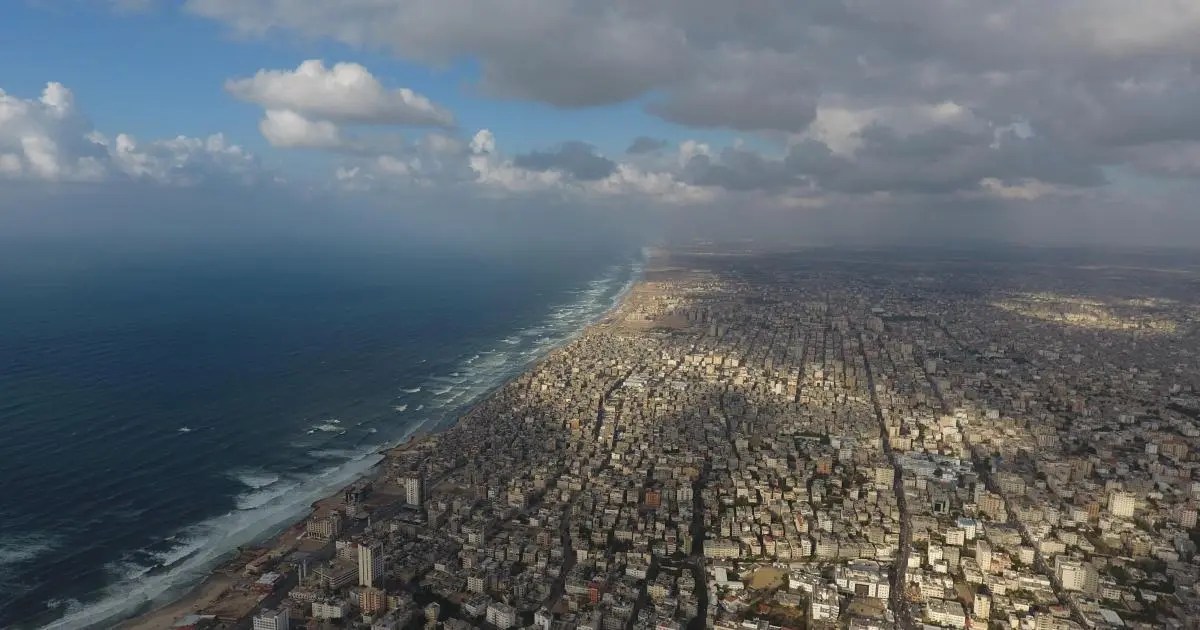
It is not by chance that this most recent violence has occurred in and around Gaza. As many commentators have observed, Gaza has in many ways been the epicenter of the Nakba – and of the Palestinian people’s resistance to it. To grasp this fully, it is important to understand the history of this region. Gaza’s narrative did not begin with Israel’s blockade or the political ascension of Hamas. What we call today the “Gaza Strip” was artificially created in 1949, when it became a repository for a flood of ethnically cleansed Palestinian refugees from cities and villages in the coastal plain and lower Galilee. Before the Nakba, the population of this small region numbered 60 to 80,000 residents. By the end of the hostilities, at least 200,000 refugees were crowded into this 140 square mile strip of land.
At the time, most of the refugees fully expected to return home – some could even see their towns and villages through the fences. Those who crossed the border to gather their possessions or harvest their crops were considered “infiltrators” by Israel and shot on sight. Eventually, it became all too clear there would be no return. Over the years the tents turned into concrete buildings that grew ever higher along that narrow corridor. The numbers of that once sparse territory have grown to a population today of over 2,000,000 people – at least 70% of whom are refugees.
Following the founding of the state of Israel, many of the original settlements and kibbutzim founded on the border with Gaza were military outposts, most of which were built on top of or near demolished Palestinian villages. In fact, the sites that suffered the brunt of last Saturday’s massacres (including Kibbutz Kfar Aza, Re’im and Sderot) were settlements that were originally established in these locations for reasons of Israeli “national security.”
One such site was Kibbutz Nahal Oz, which was flooded by dozens of Hamas militants, and where, according to witnesses, at least two entire families were killed, and two more kidnapped and taken to Gaza as hostages. When I heard about the massacre at Nahal Oz, I couldn’t help but recall that this was not the first time this community had experienced Palestinian armed resistance. Back in 1956, a group of Palestinian militants entered Nahal Oz and killed a kibbutznik named Roi Rotenberg. At the time, this tragedy was keenly felt throughout the nascent state of Israel. At Roi’s funeral, the famed Israeli general Moshe Dayan offered a eulogy, expressing himself with brutal and unexpected honesty:
Do not today besmirch the murderers with accusations. Who are we that we should bewail their mighty hatred of us? For eight years they sit in refugee camps in Gaza, and opposite their gaze we appropriate for ourselves as our own portion the land and the villages in which they and their fathers dwelled…This we know: that in order that the hope to destroy us should die we have to be armed and ready, morning and night. We are a generation of settlement, and without a steel helmet and the barrel of a cannon we cannot plant a tree and build a house. Our children will not live if we do not build shelters, and without a barbed wire fence and a machine gun we cannot pave a road and channel water. The millions of Jews that were destroyed because they did not have a land look at us from the ashes of Israelite history and command us to take possession of and establish a land for our nation.
Dayan’s words resonate today with terrible prescience. Decades later, the descendants of this original Gazan generation still remain in refugee camps in Gaza, “gazing though the barrier fences as Israel appropriates as its own portion the land and the villages in which their ancestors dwelled.” Dayan’s eulogy also powerfully described a hypervigilant Israeli mindset that has only deepened throughout the decades. Since the Nakba could not and did not result in the complete ethnic cleansing of Palestinians from their homes, Israel has attempted to control them with a “steel helmet and the barrel of a cannon” for the past 75 years. During this time, Israel has widened its regime of violence in order to contain Palestinians in the occupied territories, subjecting them to a daily context of systemic, unceasing state violence every moment of their lives.
It is also telling that Dayan invoked the trauma of the Holocaust in his eulogy – and today, so many decades later, we can clearly see that this trauma was not limited to his generation alone. If anything, it has been handed down to subsequent generations in way that are all too real and all too palpable. Indeed, we can clearly see this generational trauma at work in Jewish responses to this latest violence, which is being openly characterized as “the worst mass murder of Jews since the Holocaust.” It is painfully poignant to consider that these massacres occurred in a state that was founded in the wake of the Holocaust in order to safeguard Jewish lives once and for all.
At the same time, however, this Holocaust rhetoric is deeply troubling given the vengeful fury currently being whipped up by a far-right Israeli government that is demonizing Palestinians with unabashedly genocidal language. Israel’s Defense Minister Yoav Gallant recently stated “Israel is fighting human animals” and should “act accordingly.” Netanyahu has promised that Israel’s military offensive on Gaza will “reverberate for generations.” One prominent Israeli general has promised to “open the gates of hell.” And perhaps most chillingly, a member of Israeli Parliament has called for a “second Nakba that will overshadow the Nakba of 1948.”
As I write these words, the Israeli military is mercilessly bombarding the Gaza Strip with a ferocity that is truly terrifying to behold. For the past few days, I’ve been combing social media for their postings from friends in Gaza, as I helplessly watch footage of whole neighborhoods and communities completely destroyed along with their inhabitants. One of the last messages I read came from a friend and former colleague at American Friends Service Committee: “Nothing left to say. More than 80 hours without electricity, water, or internet connection. Communication is very limited with everyone inside or outside Gaza. Carnage everywhere, hard to recognize streets, we are all waiting for the time to die.”
It is not an understatement to suggest that the Jewish community is now faced with a profound moral challenge. Even as we mourn our dead in Israel, we must acknowledge and protest the genocide Israel is currently perpetrating in their memory in no uncertain terms. I cannot say this forcefully enough: those of us who ignore this reality – who mourn the Jewish dead exclusively without even a mention of the massive crimes Israel is actively committing against the Palestinian people – will be quite frankly, complicit in this horrific bloodshed.
Over the past several days, I’ve found myself returning to a famous narrative from this week’s Torah portion: the story of Cain and Abel. In the wake of the first act of violence in human history, God says to Cain, “What have you done? The blood of your brother is crying out to me from the ground! Cursed by the ground that opened its mouth to receive the blood of your brother.” From this we learn, among other things, that bloodshed actually has the power to pollute the earth. Later on in the Torah, we will learn that nothing can ever be the same – or considered normal again – when blood is spilled. it must be expiated, or atoned for through a set of very complex and explicit sacrificial rituals. In our day, we can understand these to be acts of reparation, restoration and repatriation. We will only truly make atonement for this bloodshed with very real measures that will restore justice and balance for those who dwell in the land.
As I read this story, I can’t help but think of the blood originally shed in the terrible days of the Nakba, and how it continues to cry out to us all from the ground. I can’t help but think of the immense amount of blood that has been shed since, whose collective cry must certainly be a searing roar, if only we would allow ourselves to hear it. But we will never heed the cry as along as we remain hardened into sides, into “us and them.” In fact, in this week’s Torah portion, there are no “sides” to speak of. There are no nations, no Israelites, no Canaanites, no Amalekites, no Moabites. There is only one common humanity, struggling how to live together in a too often harsh and unyielding world.
Those it may seem more painfully difficult than ever, let us hearken to this voices that have so long been crying out from the ground. Let us respond with understanding, compassion and action. Even amidst the terrible grief, let us shine an unflinching light on the true roots of this violence – and on the vision of a future based on justice and equality for all who live in the land.
With this in mind, I will conclude now with the prayerful words of my dear friend and colleague Rabbi Alissa Wise:
May the One Who Remembers allow us to hold in one hand 75 years of occupation, dispossession and violence and in the other a future of peace, justice and freedom;
May the One Who is Slow to Anger soften our hearts and our fists helping us to put down the sword even at the height of the arc of our rage;
May the One of Possibility remind us that a future of peace with justice is possible;
May the One Who Awakens Us to Life hold us in our pain and vindictiveness until we set those down for the sake of life;
May the One Who Endures allow us to act for the sake of the coming generations;
May the One Who is Without Limit expand our senses of what is possible as we reach for justice, freedom and peace for us all.
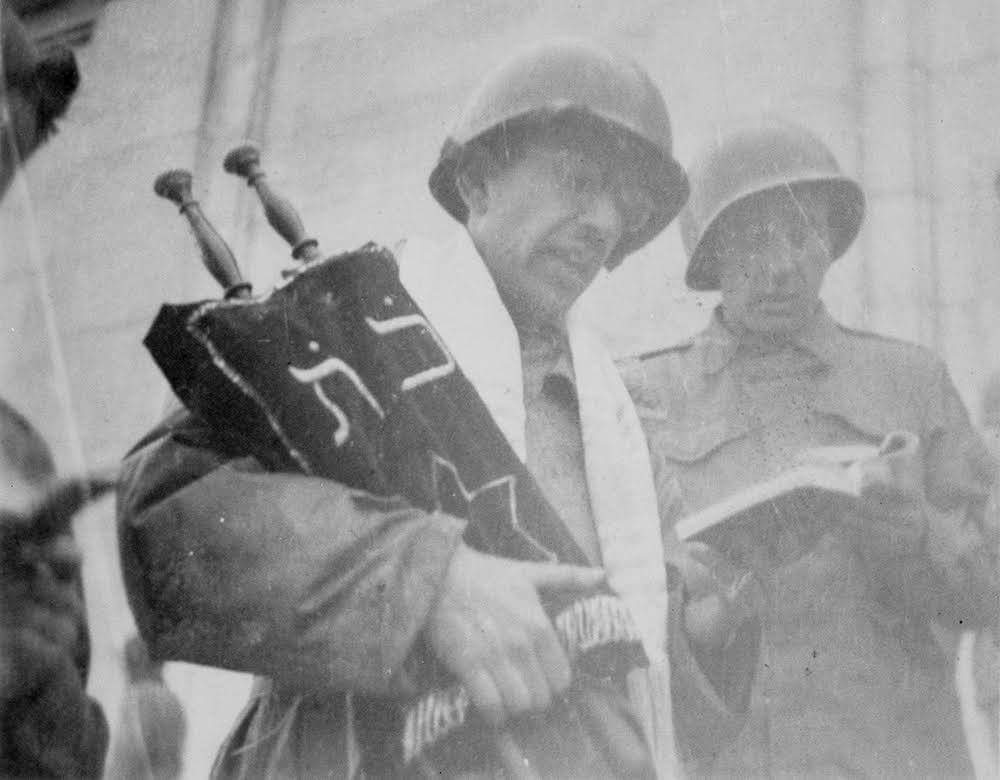
Today marks the seventy eighth anniversary of a public Shabbat service held in liberated Dachau. While it’s not a particularly well-known story, it deserves to be commemorated and widely retold, not least because it illuminates the powerful ways that prayer has historically served as a form of resistance.
The service was led by Rabbi David Max Eichhorn, a Jewish chaplain in the US Army’s XV Corps. Rabbi Eichhorn wrote extensively about this – and many other of his remarkable wartime experiences – in letters that were compiled in (the highly recommended) book, “The GI’s Rabbi.” While Eichhorn experienced a number of well-known historical events during the war, for me, the most indelible moments in the book come from his witness to the liberation of Dachau: from his description of the army’s numbing discovery of masses of naked, emaciated bodies, to the acts of revenge committed by ex-prisoners against their former captors, to his moving description of courageous non-Jews who “had saved Jewish lives at the risk of their own.”
Eichhorn’s most memorable recollections of the liberation of Dachau involve his role in the Shabbat service he led on May 5, 1945. One day before, on Friday afternoon, after leading a service in the women’s barracks, a lieutenant colonel approached him with tears in his eyes. It was the famed Hollywood film director George Stevens, who was in charge of the Signal Corps unit that had been taking official army footage of Dachau. (Stevens’ movie “D-Day to Berlin” is among the films made by five Hollywood directors who were embedded in Europe to document the war effort – a project powerfully recollected in the book and documentary “Five Came Back” – also highly recommended.)
Eichhorn and Stevens made arrangements for Stevens to film the camp-wide service that was scheduled to take place the next day in the main square of the Dachau compound. When Eichhorn arrived the next morning, however, he discovered that no preparations had been made. He was subsequently informed that Polish non-Jewish inmates had threatened to break up the service by force if was held in the main square. As a result, the service was moved to the camp laundry, which only accommodated a fraction of Jews who desired to attend. As Eichhorn recalls it:
While the service was in progress, in a jam-packed room with hundreds of others crowded around the open doors and windows, Colonel Stevens came in, elbowed his way to my side and demanded to know why the service was not being held in the square. His cameras and crews were ready for action and he wanted the event to go on as scheduled…After hearing the “inside story,” he exploded in anger. “I did not give up my good job in the movie business in Hollywood,” he bellowed, “to risk my life in combat for months and months, in order to free the world from the threat of Fascism and then stand idly by while the very victims of Fascism seek to perpetuate its evils.” …He took me to the Camp Commandant, and with a loudness of voice and much banging on the table, George Stevens repeated his anti-Fascistic sentiments.
…And so, thanks to the decent instincts of an American movie director, the camp-wide service was held in the main square. It was attended by every Jewish male and female whose health permitted. As promised, every nationality was represented by flag and delegation. There were an estimated two thousand Jews and non-Jews at the service. And ringing the outer rim of the service with faces turned away from the platform was the American military “guard of honor.” They were prepared to deal with a situation which did not develop. No untoward incident of any kind marred the service.
(from “The GI’s Rabbi: World War II Letters of David Max Eichhorn,” pp. 185-186.)
When I first watched it on YouTube, I found that the very familiar words of these prayers had a powerful new resonance. It was essentially an abbreviated Torah service, with other added prayers relevant to the occasion. It began with a prayer known as the Shehechianu – a blessing of gratitude for having been kept alive long enough to celebrate a sacred moment or season. He followed with Birkat Hagomel – a blessing traditionally recited by someone who has recovered from a serious illness or has otherwise survived a traumatic, potentially life-threatening episode. While I have been part of countless services that have included these blessings, it is indescribably moving to witness them recited by thousands of Jews recently liberated from a death camp. I had a similar response to the recitation of El Male Rachimim – the prayer for the dead – a prayer that has become a staple at Holocaust remembrance services.
In the end, however, it seems to me that the very act of holding the service was itself an act of resistance. I was most moved by the sight of the Torah scroll – the most indelible symbol of Jewish spiritual survival – being held aloft before the liberated of Dachau. It is, in its way, an iconic and redemptive image – one that speaks not only to this historical moment, but to our collective responsibility to a liberative future.
As Rabbi Eichhorn so aptly put it to his “congregation” that day:
What message of comfort and strength can I bring you from your fellow Jews? What can I say that will compare in depth or intensity to that which you have suffered and overcome? Full well do I know and humbly do I confess the emptiness of mere words in this hour of mingled sadness and joy. Words will not being the dead back to life nor right the wrongs of the past ten years. This is not a time for words, you will say, and rightfully so. This is a time for deeds, deeds of justice, deeds of love … Justice will be done.
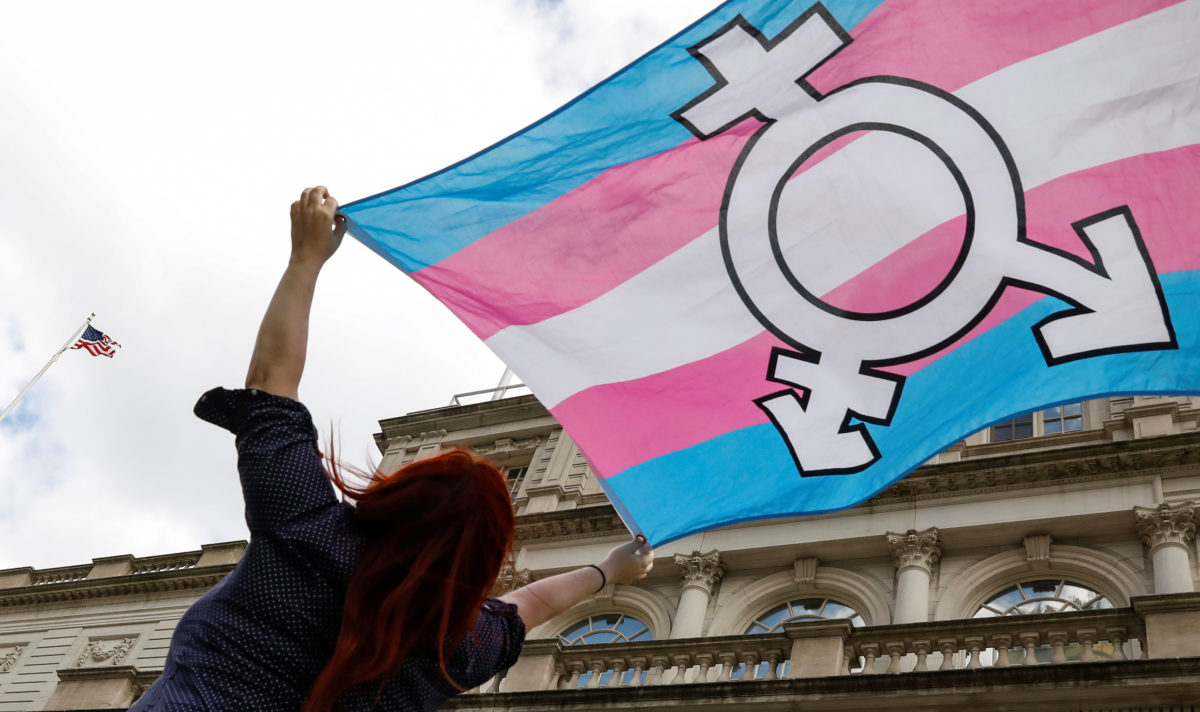
This year, the Passover seder supplement I’ve composed for Tzedek Chicago highlights the rise of anti-trans hate legislation throughout the US. In addition to the reading, the supplement contains action components to help you participate in the resistance movement to the growing threat to the well-being of trans, non-binary, and gender non-conforming people.
As it concludes:
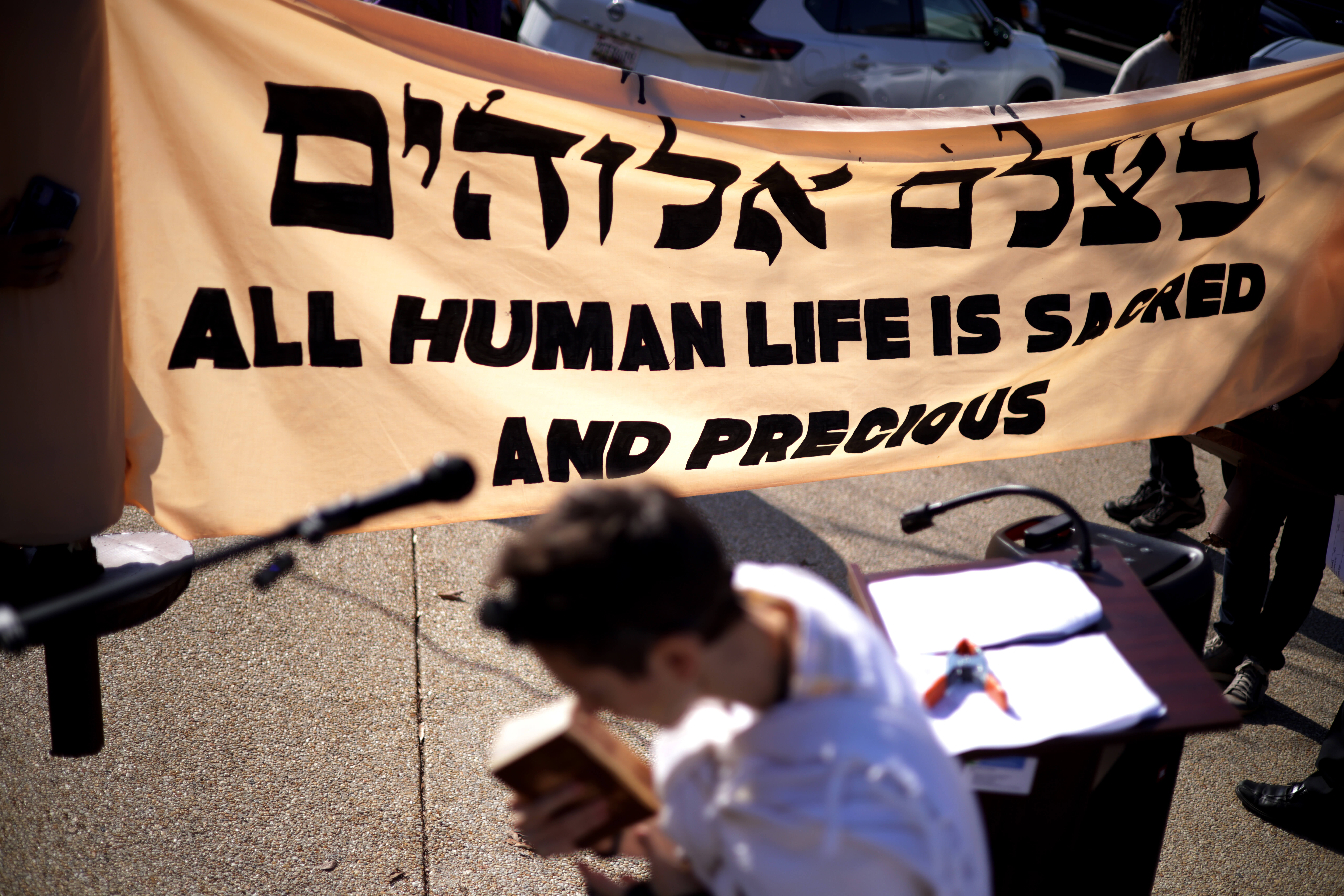
May the bitterness of this maror awaken us to resist and turn back all legislated hate directed toward trans, non-binary, and gender non-conforming people. Let us redouble our resolve to build a society that recognizes the tzelem elohim – the divine image – in all people – and a world that cherishes each and every one of us for all of who we are.
Here are a few more Passover resources that I’ve developed over the years – feel free to print out, share and use at your seders this week:
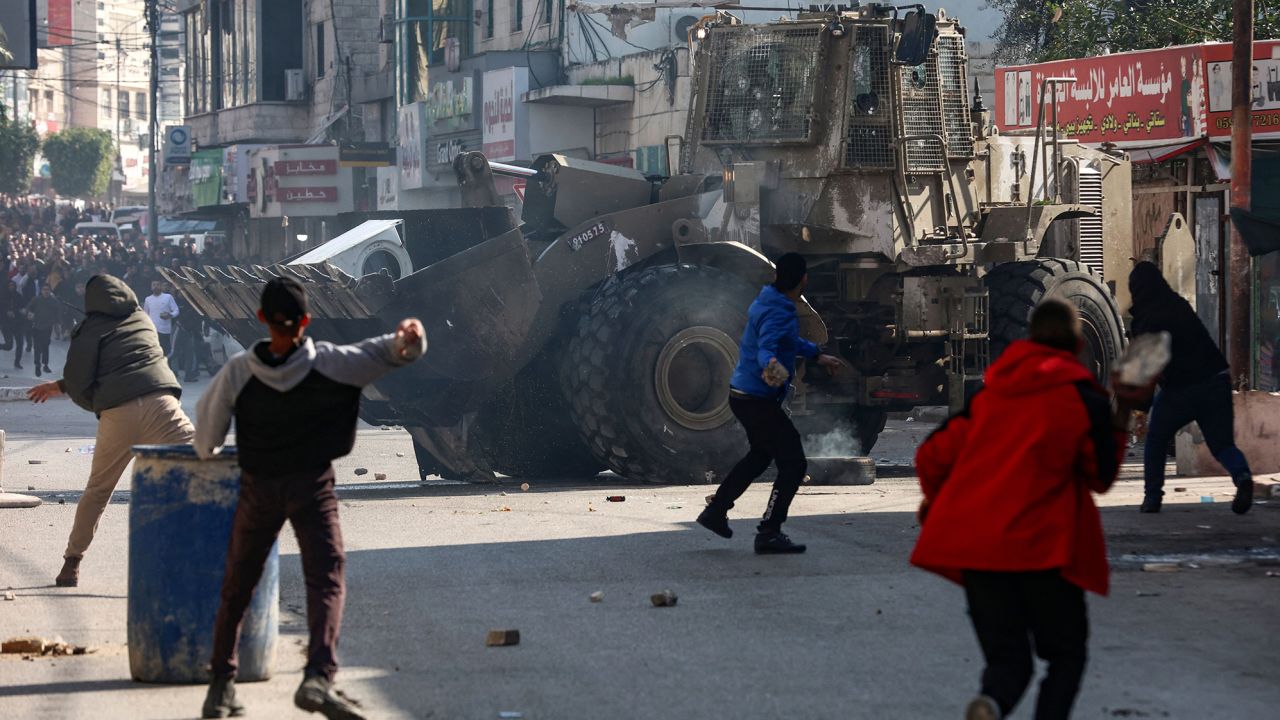
As I write these words, it’s been reportedthat Israeli troops have killed nine Palestinians, including an elderly woman, in the Jenin refugee camp. Another twenty have been wounded, at least four of whom are in critical condition.
This tragedy should not come as a surprise to us. Observers have noted that the Israeli military has been killing Palestinians with alarming regularity in recent months. According the UN, 2022 was the deadliest year for Palestinians since 2006. 30 Palestinians have been killed in January alone – and the month isn’t even over yet.
Though it has not been widely reported, Israel has been dramatically escalating these deadly raidsagainst Palestinians in the West Bank. While the election of its radical right-wing government is garnering the lion’s share of attention these days, it’s important to note that these raids were initiated well before Netanyahu’s regime took power. As journalists Mariam Barghouti and Yumna Patel reportedlast October (before the election):
The past few weeks have witnessed a noticeable intensification of Israel’s crackdown on Palestinians in the West Bank, targeting both ordinary civilians in their homes and villages, and armed resistance fighters and groups…
The current repression, and the resistance to it, are part of a larger, months-long campaign to quell growing Palestinian resistance, particularly armed resistance, which has seen a resurgence in areas of the West Bank.
While the Israeli government justifies this violence as “security measures to fight terrorists” and the mainstream media describes these events as “clashes,” I’d argue for a different power analysis: “this is state violence, full stop. The state of Israel was founded upon the dispossession of Palestinians and Palestinians have been resisting that dispossession ever since. Yes, some of that resistance is violent in nature. Such has been the nature of resistance struggles from time immemorial.
As I watch this current violence unfold, I’m mindful that we’re currently reading the Exodus story in our weekly cycle of Torah portions. At its core, this narrative has a very clear power analysis: it’s a story about resistance to violent state power. How else are we to regard Pharaoh, who responds to the demographic growth of the Israelites by subjecting them to avodah kashah (“brutal servitude”)? How else are we to understand a God who “hearkens to the cry of the oppressed?”
If we are to be true to this sacred narrative, I do not think we can dither on this point. Yes, as a Jew, I’ve obviously been conditioned to identify with the Israelites – but as I’ve learned about the history of liberation movements (including those inspired by this very story), I’ve come to understand that any people who suffer under oppressive state violence are, in a sense, Israelites. And any state — even a Jewish state — that builds its statehood on the backs of another people can become a Pharaoh.
To the One who demands justice… give us the strength to resist power wielded with fear and dread; fill us with the vision and purpose to build a power yet greater, a power rooted in solidarity, liberation and love.
Grant us the courage to dismantle systems of oppression – and when they are no more, let us dedicate our wealth and resources toward the well-being of all.
May we abolish all forms of state violence that we might make way for a world free of racism and militarization, a world where no one profits off the misery of others, a world where the bills owed those who have been colonized, enslaved and dispossessed are finally paid in full.
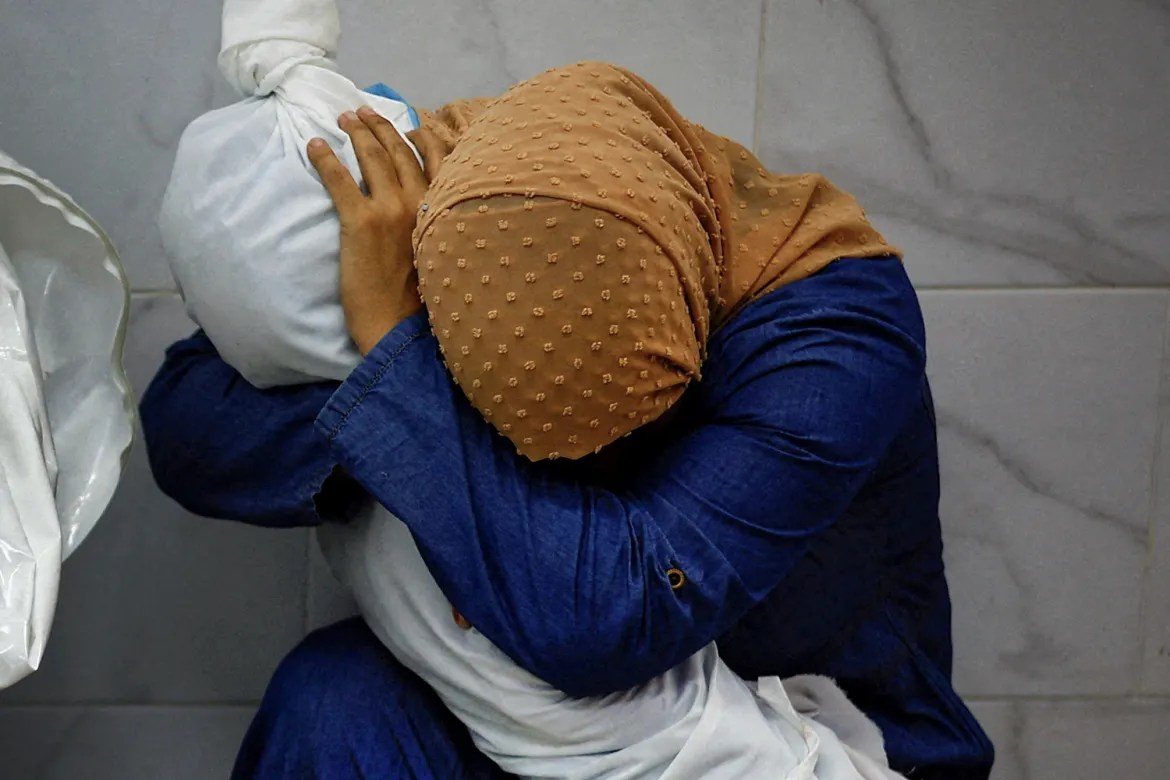
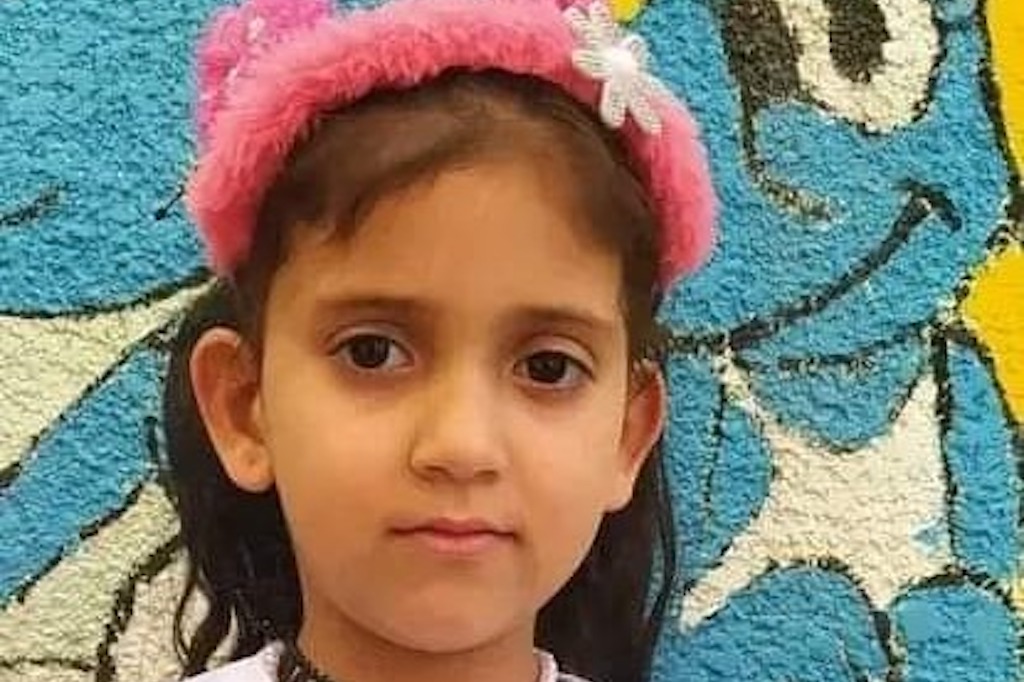
Alaa Abdullah Riyad Qaddoum, age 5, killed by the Israeli military in Gaza City on August 5, 2022.
In August 2014, the Jewish festival of Tisha B’Av arrived as Israel was waging a military onslaught on Gaza that would eventually kill 2,251 Palestinians, 1,462 of whom were civilians, including over 500 children. Tisha B’Av is traditionally observed a day of mourning over the destruction of the Temple in Jerusalem and by extension, the tragedies that have befallen the Jewish people throughout its history. To mark the occasion of the festival in 2014, I wrote a new version of the first chapter of Lamentations (the Biblical book traditionally chanted on Tisha B’Av). At the time, I suggested this new version be added to the ceremony to acknowledge the massive tragedy the state of Israel was inflicting on Palestinians in Gaza in the name of the Jewish people.
Now eight years later, the eve of Tisha B’Av 2022 arrives this evening amidst yet another grievous military assault on Gaza. As of this writing, 24 people have been killed and over 120 more have been wounded. The Israeli military reports it is preparing for a week long operation “that could take longer, if needed.” It is not currently engaging in any ceasefire negotiations.
As in 2014, Israel, its supporters and the mainstream media at large are selling this latest military onslaught by claiming “Israel has a right to defend itself” from Gazan rocket fire. But as I wrote about Israel’s actions in 2014, this is a cynical and empty posture. As was the case eight years ago, this new war on Gaza was openly and unabashedly provoked by Israel. The timeline leading up to this latest assault is a matter of public record that is available to anyone interested in reading past Israel’s hollow propaganda:
• This past May, it was reported that the Israeli military was expanding what it described as a “bank of targets” in the Gaza Strip it had identified since its most recent military offensive in 2021.
• On Monday, August 1, the Israeli military arrested Bassam al-Saadi, a senior member of the Palestinian Islamic Jihad (PIJ), during a raid on the Jenin refugee camp. The PIJ issued threats in response but took no action.
• Concerned that the PIJ would attack in retaliation, the Israeli military directed authorities to close roads near the Gaza border.
• Yesterday, claiming that it was responding to an “imminent threat,” Israel unleashed a wave of airstrikes in Gaza, killing PIJ military commander Tayseer Jabari along with seven other people, including a 5 year old girl, Alaa Abdullah-Riyad Qaddoum.
• The PIJ retaliated by sending more than 100 missiles into Israel. The Israeli military reported that it had intercepted about 95 percent of the rockets. There were no reports of significant property damage.
• The US Ambassador to Israel, Tom Nides, stated that “the United States firmly believes that Israel has a right to protect itself.”
This is, in short, purposeful wanton aggression. That it is repeatedly committed against a blockaded, besieged population of 2,000,000 who literally have nowhere to run raises it to the level of atrocity. It is no less abominable to rationalize it away by with the bromide that “Israel has the right to defend itself” or to blame Palestinians themselves for their own destruction by invoking the allegation of “human shields” – a false claim that has been repeatedly disproved by human rights observers.
These rationalizations are particularly profane in the way they rob Palestinians of their basic humanity. I remember thinking of precisely this on Tisha B’Av 2014 – and how incongruous it felt to engage in a ceremony of grief over Jewish loss while a nation state purporting to act in the name of the Jewish people inflicted such unspeakable losses on another people.
According to Jewish tradition, the fall of the Temple was caused by internal sinat chinam – baseless hatred – that wracked the disempowered, besieged Jewish community of ancient Jerusalem. In the age of Zionism, it seems to me, we must be ready to acknowledge a different kind of sinat chinam – one that is wielded by a Jewish state power against a people it continues to disempower and besiege.
As in 2014, I will not be mourning the destruction of the Temple this Tisha B’Av. I will be mourning the losses of yet another merciless war waged by Israel against the Palestinian people. And as in 2014, this will be my lament:
For these things I weep: for the toxic fear we have unleashed from the dark place of our hearts for the endless grief we are inflicting on the people of Gaza.
“I Don’t Think I Can Celebrate this Holiday Anymore.”
As a Jewish kid growing up in Los Angeles in the 1970s, I remember Yom Ha’atzmaut as the one day every year in which our city’s Jewish community would turn out en masse in celebration. I have vivid memories of our marching through the sidewalks of West LA, waving our Israeli flags, ending with a picnic at Rancho Park. As in many US cities, Yom Ha’atzmaut was the “go-to” day for expressing our Jewish communal pride.
In addition to this annual event, I also remember regularly celebrating Yom Ha’atzmaut as a religious festival on the Jewish holiday calendar. Every year, usually on the closest Shabbat to May 15, our Reform Temple would acknowledge the occasion with special prayers and songs – including the Israeli national anthem, Hatikvah. In short, Yom Ha’atzmaut was not only an occasion to express our Jewish communal solidarity with the state of Israel – it was a day we invested with sacred meaning. When I became a rabbi many years later, I accepted it as common practice to acknowledge Yom Ha’atzmaut in this manner.
Over the years, however, as my own relationship to Israel and Zionism changed, I found the religious observance of Yom Ha’atzmaut increasingly problematic, even painful. In a 2009 blog post, I shared my struggle publicly:
I’ve decided not to celebrate Yom Ha’atzmaut today. I don’t think I can celebrate this holiday any more.
That doesn’t mean I’m not acknowledging the anniversary of Israel’s independence – only that I can no longer view this milestone as a day for unabashed celebration. I’ve come to believe that for me, Yom Ha’atzmaut is more appropriately observed as an occasion for reckoning and honest soul searching.As a Jew, as someone who has identified with Israel for his entire life, it is profoundly painful to me to admit the honest truth of this day: that Israel’s founding is inextricably bound up with its dispossession of the indigenous inhabitants of the land. In the end, Yom Ha’atzmaut and what the Palestinian people refer to as the Nakba are two inseparable sides of the same coin. And I simply cannot separate these two realities any more.
By this point I had come to believe that Yom Ha’atzmaut was a paradigmatic of a deeper moral problem: that the creation of a Jewish nation state in historic Palestine resulted in injustice against the Palestinian people – an injustice that was in fact still ongoing. I could no longer regard it as something to celebrate, let alone invest with religious meaning.
“May Our Eyes See the Complete Redemption of Israel”
The creation of a Jewish religious holiday by government legislation is, needless to say, unprecedented in Jewish history. Its origins date back to the period immediately following Israel’s birth, when the Knesset officially established the 5th of the Jewish month of Iyar1 as its permanent date. At the time, Knesset members were unanimous that this holiday should have “traditional Jewish significance” and the new government subsequently created a committee to consult with Israel’s new Chief Rabbis in order to determine the precise nature of its religious observance.2 In a subsequent letter to their Rabbinate council, Israel’s Chief Rabbis Yitzchak HaLevi Herzog and Ben-Zion Meir Hai Uziel framed the day as a celebration of divine deliverance and redemption:
The fundamental turning point in God’s compassion on us, the declaration of our independence in the Land, which saved us and redeemed our souls, obligates us to uphold and keep this day of the fifth of Iyar, the day of the declaration of the State of Israel, for all generations, a day of joy of the beginning of the redemption for all of Israel.3
Over the next few months, Israeli religious authorities held extensive debates over how the new holiday should be acknowledged liturgically. Many of these questions focused on the recitation of Hallel – a series of Psalms of praise traditionally added to the morning worship service for festivals. The first formal Jewish liturgy developed specifically for Yom Ha’atzmaut was a new version of Al Hanisim (“For the Miracles”), a traditional prayer recited on the festivals of Purim and Hanukkah praising God’s miraculous deliverance of the Jewish people from their enemies. While it was not approved by Israel’s Chief Rabbinate and did not gain universal acceptance upon its introduction, the practice of reciting Al Hanisim on Yom Ha’atzmaut has since grown in popularity and the prayer has appeared in many different forms throughout the decades.
The first Al Hanisim for Yom Ha’atzmaut was written in 1949 by Biblical and Talmudic scholar Rabbi Ezra Zion Melamed and later published by the Kibbutz Hadati (the Religious Kibbutz Movement):
For the miracles and for the redemption and for the mighty deeds and for the deliverance and for the wars that You did for our fathers and for us in those days at this season.
You, O God, awakened the heart of our fathers to return to the mountain of Your inheritance, to settle there and to rebuild it from the ruins, and its land. And when an evil regime stood over us and shut the gates of our land to our brethren who were fleeing from the sword of a cruel enemy, and they sent them back in ships to the islands of the sea and to distant shores, You in Your might toppled his throne and freed the land from his hand. And when enemies rose against us and plotted to destroy us, You in your might sent upon them fear and panic, and they abandoned all their goods, and fled in confusion and haste beyond the borders of our land.
And when seven nations rose up against us to conquer our land and to make us as bonded servants, You in Your mercies stood by the right hand of the Israel Defense Army and delivered the mighty into the hands of the weak, the many into the hands of the few, and evildoers into the hands of the righteous. And with Your outstretched arm you helped the young men of Israel to expand the boundaries of our settlement, and to bring our brethren up from the concentration camps.
For all this we thank You, O Lord our God, with bowed head; and on this, our day of festivity and joy, we stretch our hands before You and beseech pray on behalf of our dispersed brethren and say: Please, our Father, our Shepherd, gather them quickly to Your holy habitation, and may they dwell there in peace and calm and tranquility and security. Expand the borders of our land as You promised our forefathers, to give to their seed from the River Euphrates to the Brook of Egypt. Build your holy city Jerusalem, capital of Israel, and reestablish there your Temple as in the days of Solomon. And as we have merited to see the beginning of our redemption and the liberation of our souls, so may we live and may our eyes see the complete redemption of Israel and renew our days as of old. Amen! 4
Using unabashedly Biblical language, this new prayer rendered the Zionist colonization of Palestine as an “awakening” and “return” to the Jewish peoples’ “inheritance.” The British Mandatory authorities were referred to as “an evil regime.” The Zionist militias’ dispossession of Palestinians from their homes (still ongoing at the time of its writing in the spring of 1949), was ascribed to divine intervention, using imagery that evoked the conquest of the Biblical Canaanites. Similar framing was used to describe the Arab armies that joined the war in 1949; the term “seven nations” was a pointed reference to the Canaanite nations dispossessed from the land by the Biblical Israelites in the book of Joshua.5
The final stanza of the prayer contained a reference to kibbutz galuyot (the “ingathering of the exiles”), God’s promise to return the Israelites to their land following the Babylonian exile.6 The term was used here according to the tenets of religious Zionism, which viewed the establishment of a Jewish state in the land as a necessary precursor to the coming of the messiah.7 The prayer concludes by looking forward to a return to the widest Biblical borders of Israel (from the Euphrates to the Nile) and the reestablishment of the Temple in Jerusalem.
“To Serve God in the Joy of Victory”
In due time, American Jewish denominations would formally adopt the observance of Yom Ha’atzmaut as a religious holiday as well. The Conservative movement included its own version of Al Hanisim for Yom Ha’atzmaut in its 1961 Weekday Prayerbook8 and later in its 1985 prayer book SiddurSim Shalom:
In the days when Your children were returning to their borders, at the time when our people took root in its land as in days of old, the gates to the land of our ancestors were closed before those who were fleeing the sword. When enemies from within the land, together with seven neighboring nations, sought to annihilate Your people, You, in Your great mercy, stood by them in time of trouble. You defended them and vindicated them. You gave them courage to meet their foes, to open the gates to those seeking refuge, and to free the land of its armed invaders. You delivered the many into the hands of the few, the guilty into the hands of the innocent. You have revealed Your glory and Your holiness to all the world, achieving great victories and miraculous deliverance for Your people Israel to this day.9
While considerably shorter than the original version, the Conservative movement Al Hanisim retains many of its central themes – particularly the Biblical concept of return and kibbutz galuyot. It also deletes the dated references to British Mandate authorities, firmly identifying Palestinians (“enemies from within the land”) and “seven neighboring nations” as the primary enemies of the Jewish people.
Given the Zionist narrative of Israel’s establishment, it’s not difficult to understand why Al Hanisim became a popular prayer for Yom Ha’atzmaut. The traditional version for Purim recalls the account in the Book of Esther in which ancient Persia “rose up against them and sought to destroy, to slay, and to exterminate all of the Jews, young and old…” On Hanukkah, the prayer extols how God “delivered the strong into the hands of the weak, the many into the hands of the few, the impure into the hands of the pure…” In a sense, the Al Hanisim for Yom Ha’atzmaut combines both of these narratives. Indeed, Israel’s “miraculous” victory over its Arab foes would become central to Zionist mythology following 1948 – and even more so after the Six Day War in 1967.
While the American Reform movement did not originally include prayers for Yom Ha’atzmaut in its Union Prayer Book (almost certainly due to that denomination’s historically anti-Zionist orientation), the Central Conference of American Rabbis eventually established Yom Ha’atzmaut as “a permanent annual festival in the religious calendar of Reform Judaism” in 1970. Five years later, the movement’s prayer book, “Gates of Prayer” included an extensive service for the holiday, including a partial Hallel.10 The most recent Reform prayer book, Mishkan T’filah (2007), contains a seven-candle lighting ceremony for Yom Ha’atzmaut, featuring a variety of prayers, poems and songs (including Hatikvah, Israel’s national anthem). The service also references kibbutz galuyot with this passage from the Biblical book of Jeremiah 23:3, 8: “And Myself will gather the remnants of the flock from all the lands…And I will bring them back to their pasture. And they will dwell upon their own soil.” 11
The Reconstructionist movement prayer book, Kol Haneshama includes a similar Yom Ha’atzmaut service12 that includes Hatikvah as well as the famous “valley of the dry bones” prophecy from Ezekiel 37:13-14. Here, Israel’s founding is juxtaposed with God’s promise to “resurrect” and restore the Israelites to the land of Israel following their exile in Babylonia: “Behold, I am opening your graves, and I shall raise you up from where you lie, my people, and shall bring you to the land of Israel, and you shall know that I am The Eternal One, I who open up your graves and raise you up, my people, from your place of burial!” 13
In addition to these Yom Ha’atzmaut liturgies, many prominent American Jewish scholars and leaders frame the day as a sanctification of sovereign state power. In his popular book “The Jewish Holidays: A Guide and Commentary,” Rabbi Michael Strassfeld suggests, “as our religious perspective on Israel deepens, Yom Ha’atzmaut will become more and more a reflection of a vision rather than the simple birthday party of a nation.” 14
For Strassfeld, that vision involves a dialectic between the “Torah of Sinai” and the “Torah of Jerusalem.” The former, he posits, reflects the revelation that “took place outside of the land of Israel at Sinai” that has become “familiar to us as the life of our people during the 2,000 years of the Diaspora.” The latter emphasizes “sovereignty and independence” and “finds its symbols in the place itself – the site of the ancient temple of sacrifices and the political capital of King David.” 15 As Strassfeld explains:
We need both, for with only Israel and its Torah, it would be easy to make an idolatry of nationalism. We would end up reveling in earth, blood, and power. But with only the Torah of Sinai, we could continue to revel in abstractness and powerlessness, constructing worlds, as the Talmud does, made of oxen that fall into pits and gore each other.16
In his book “The Jewish Way: Living the Holidays,” Rabbi Irving Greenberg goes even farther, suggesting that Yom Ha’atzmaut celebrates “a new Exodus” and represents “a call to power to end the tradition of suffering, to serve God in the joy of victory.” 17 Noting Israel’s early tradition of military parades on Yom Ha’atzmaut, Greenberg writes,
Diaspora Jews who still live with the ideals and illusions of powerlessness are often embarrassed by this phenomenon. Yet a military parade is a most appropriate symbol for an era whose central theme, set in motion by the Holocaust and the creation of the state, is the emergence of Jews from powerlessness.18
Among other things, these Yom Ha’atzmaut liturgies and commentaries attest to the deep influence of Religious Zionist ideology on American Jewish life. It is indeed troubling to consider: the prayers of every American Jewish denomination frame Israel’s military dispossession of Palestinians from their homes in the context of holy war and ascribe explicitly messianic meaning to Zionist colonization of the land.
Thus, to return to the questions I asked in my 2009 blog post, I ask again: how should we reckon with the knowledge that Jewish communities the world over offer prayers of joy and praise that essentially celebrate the Palestinian people’s collective tragedy? Might it be possible, to use Edward Said’s term, to view Zionism from “the standpoint of its victims?” If so, what might a Jewish ritual acknowledgement of this event actually look like?
“Beyond Fear and Omnipotence, Beyond Innocence and Militarism”
American Jews – and young American Jews in particular – are starting to ask this very question. In 2013 New Voices, a journal published by the Jewish Student Press Service, published an article that featured Jewish student essays debating whether to “celebrate, commemorate or mourn” on Yom Ha’atzmaut. More recently, the relatively mainstream Jewish newspaper, the Forward featured a debate between two of its regular columnists entitled “Should American Jews celebrate Yom Ha’atzmaut?” As one writer observed:
It seems to me that the elevation of Yom Ha’atzmaut to the level of a religious holiday…is an attempt not to provide American Jews with holidays that celebrate our identities as we are, but to construct our identities politically.
As well, some liberal quarters of the American Jewish community now make a point of acknowledging the Nakba in relation to Yom Ha’atzmaut. The Reconstructionist volume, “Guide to Jewish Practice: Shabbat and Holidays,” for instance, includes the following commentary:
The creation of Israel came with a real cost of hundreds of thousands of Palestinians being displaced from their homes. Yom Ha’atzmaut may be a joyous day for us, but the Nakba reminds us that this joy, as on Passover, has its limits.19
Similarly, in 2015, Rabbi Donniel Hartman, president of the Shalom Hartman Institute, led a session for American rabbis entitled, “Yom Ha’atzmaut: Between Redemption and Nakba.” In his session he noted that the increasing awareness of the Nakba means that Israelis and Jewish Zionists can no longer “control the narrative” of Israel’s establishment, adding tellingly: “If we have to ‘sell’ and get people excited about the redemption narrative, we have to make room for the fact that ‘something happened.’”
In the end, however, these mild interventions fail to address the heart of the conceptual/ethical issue at hand, as they ultimately seek to strengthen and uphold the Jewish redemption narrative. Is it possible to commemorate this occasion with a fundamentally different Jewish narrative? One that stands down this redemptive view of militarism and state power?
In my own search for answers to this question, the work of several Jewish scholars has become particularly important to me. One such figure is Marc Ellis who has written extensively about the theological dynamics of Jewish empowerment in the wake of the Holocaust and the establishment of the state of Israel:
In the formation, sustenance and expansion of Israel, Judaism and Jewish identity has likewise been actively employed, indeed has been militarized and, yes, infected with atrocity. Because once religion and identity become accomplices to atrocity it must disguise that atrocity and twist it to conform to an innocence and redemption that is now visited, as a form of oppression, on the Other, in this case the Palestinian people.
For Ellis, the onset of Jewish state power has resulted in an era of “Constantinian Judaism,” comparable to the elevation of Christianity to the religion of empire in the 4th century. In the current age, Ellis suggests, “dissenting Jews must learn how to practice their Judaism in the shadow of Constantinian Judaism.” 20 He refers to these dissenting Jews as “Jews of Conscience” who, he writes, “are fighting a high stakes battle against the final Jewish assimilation to unjust power which, in their view, articulated in overt Jewish language or not, signals the end of Jewish history.”
Likewise, Sara Roy, whose work has detailed the devastating effect of Israel’s ongoing blockade of Gaza on Palestinians, has written, in an essay entitled “A Jewish Plea:”
I have come to accept that Jewish power and sovereignty and Jewish ethics and spiritual integrity are, in the absence of reform, incompatible, unable to coexist or be reconciled. For if speaking out against the wanton murder of children is considered an act of disloyalty and betrayal rather than a legitimate act of dissent, and where dissent is so ineffective and reviled, a choice is ultimately forced upon us between Zionism and Judaism.
Roy then asks, powerfully:
As Jews in a post-Holocaust world empowered by a Jewish state, how do we as a people emerge from atrocity and abjection, empowered and also humane, something that still eludes us? How do we move beyond fear and omnipotence, beyond innocence and militarism, to envision something different, even if uncertain?
“A Full Accounting of the Wrongdoing that was Committed in Our Name.”
In response to challenges such as these, we are now witnessing the tentative emergence of new alternative approaches to Yom Ha’atzmaut/Nakba Day as an occasion for reckoning and remembrance rather than joy and celebration. One such example is the “Joint Nakba Remembrance Ceremony,” an annual gathering sponsored by the Israeli organization Combatants for Peace and co-sponsored by a variety of Israeli and Palestinian NGOs. According to organizers, this ceremony seeks
to bring attention to the Nakba and acknowledge the great pain it brings, through the understanding of the Nakba’s importance in the Palestinian collective memory and in the history of the Israeli-Palestinian conflict. The ceremony’s message is that we must face our past with honesty, integrity, and empathy in order to bring a future of reconciliation, liberty and peace for both sides.
My own synagogue, Tzedek Chicago, has been exploring ways to develop a Jewish observance of Nakba Day with a service of combining prayer, readings, poetry and survivor testimonies. Here, for instance, is my “Jewish Prayer for Nakba Day,” which I wrote to be a centerpiece of our ritual:
Le’el she’chafetz teshuvah, to the One who desires return:
Receive with the fulness of your mercy the hopes and prayers of those who were uprooted, dispossessed and expelled from their homes during the devastation of the Nakba.
Sanctify for tov u’veracha, for goodness and blessing, the memory of those who were killed in Lydda, in Haifa, in Beisan, in Deir Yassin and so many other villages and cities throughout Palestine.
Grant chesed ve’rachamim, kindness and compassion, upon the memory of the expelled who died from hunger, thirst and exhaustion along the way.
Shelter beneath kanfei ha’shechinah, the soft wings of your divine presence, those who still live under military occupation, who dwell in refugee camps, those dispersed throughout the world still dreaming of return.
Gather them mei’arbah kanfot ha’aretz from the four corners of the earth that their right to return to their homes be honored at long last.
Let all who dwell in the land live in dignity, equity and hope so that they may bequeath to their children a future of justice and peace.
Ve’nomar and let us say, Amen.
Le’el she’chafetz teshuvah, to the One who desires repentance:
Inspire us to make a full accounting of the wrongdoing that was committed in our name.
Help us to face the terrible truth of the Nakba and its ongoing injustice that we may finally confess our offenses; that we may finally move toward a future of reparation and reconciliation.
Le’el malei rachamim, to the One filled with compassion:
show us how to understand the pain that compelled our people to inflict such suffering upon another – dispossessing families from their homes in the vain hope of safety and security for our own.
Osei hashalom, Maker of peace,
guide us all toward a place of healing and wholeness that the land may be filled with the sounds of joy and gladness from the river to the sea speedily in our day.
Ve’nomar and let us say,
Amen.
In this prayer, I use the Hebrew word “teshuvah” according to two of its meanings: both “return” and “repentance.” The first half of the prayer acknowledges the historical reality of the Nakba. The phrase “gather them from the four corners of the earth” is an explicit reference to kibbutz galuyot – “the ingathering of the exiled,” applying it here to the Palestinian right of return. The second half of the prayer uses the word teshuvah/repentance in the context of the collective Jewish responsibility to confess Jewish complicity in the depopulation, destruction and replacement of Palestine, looking forward to a future of “reparation and reconciliation.”
It should be noted that as as Jewish community in the diaspora, our service differs in crucial ways from the Israeli-Palestinian Nakba Remembrance Ceremony noted above. For Jewish Israelis and Palestinians living in a Jewish nation-state, the vision of a “future of reconciliation, liberty and peace for both sides” has a very specific political meaning. For Jews who seek liberation in a diasporic context, this goal must necessarily exist within the vision of a greater transformation.
In the end, we cannot interrogate the meaning of the Jewish diaspora without also understanding the diasporas of other transnational and/or dispossessed peoples. From a Jewish diasporist perspective, the aspiration for a just future in Israel/Palestine cannot help but be bound up with the prophetic vision of justice and liberation for marginalized and colonized communities everywhere.
The diasporic position … is the condition for the prophetic: standing at the boundaries between society and the reins of governance, the prophet demands justice from the governing, while giving voice to the unheard who suffer at the hands of the regime.
My own personal struggle with the legacy of Yom Ha’atzmaut has led me to explorations I could never have imagined when I wrote that blog post in 2009. While these new Jewish approaches to Yom Ha’atzmaut are obviously in a nascent stage, we may reasonably expect them to develop and evolve, particularly as demographic studies of the American Jewish community indicate an increasing detachment of American Jewish connection to the state of Israel. As the Forward article cited above notes: “When you interview young American Jews who disaffiliate, the politics of Yom Ha’atzmaut celebrations come up as a major reason why.”
As the American Jewish community continues to transform, we can only hope we will witness the further transformation of this festival as well: from a day celebrating political nationalism and colonial dispossession to a Jewish observance rooted in solidarity, memory and repentance.
Footnotes:
1 This day corresponded to May 15, 1948 – the date the state of Israel was declared one year earlier. As Yom Ha’atzmaut is determined according to the lunar Jewish calendar, it falls on different days during the months of April or May.
2 Katz, Shmuel, “Establishing a Holiday: The Chief Rabbinate and Yom HaAtzma’ut,” in The Koren Mahzor for Yom Haatzmaut and Yom Yerushalayim, Jerusalem: Koren Publishers, 2016 p. 188.
3 IBID, p. 190.
4 Seder Tefillot le-Yom ha-Atzmaut, 2nd edition, Tel Aviv: Hotza’at Ha-kibbutz ha-Dati, 1969, p. 101, (translation mine).
5 There were actually five – not seven – Arab nations involved in the 1948-49 war. The number seven seems to be used here to directly equate them with the seven Biblical Canaanite nations.
6 See Deuteronomy 30:1-5, Isaiah 11:11-12, Jeremiah 29:14 and Ezekiel 20:41-42. Kibbutz galuyot would later come to be understood in messianic terms – see for instance, Maimonides, Mishneh Torah, Laws of Kings, 11:1-2.
7 This precept is also cited in the “Prayer for the Welfare of the State of Israel,” written in 1948 by Israel’s Chief Rabbis, which described the establishment of the state as “the beginning of the flowering of our redemption.”
8 Weekday Prayer Book, New York: Rabbinical Assembly, 1961, pp.64-65.
9 Siddur Sim Shalom, Harlow, Jules, ed., New York: Rabbinical Assembly/United Synagogue of America, 1985, p. 183.
10Gates of Prayer: The New Union Prayerbook, Stern, Chaim, ed., New York: CCAR Press, 1975, pp. 590-611.
11Mishkan T’filah: Services for Shabbat, Frishman, Elyse D., ed., New York: CCAR Press, 2007, p. 542.
12Kol Haneshamah: Limot Hol, Teutsch, David, ed., Pennsylvania: The Reconstructionist Press. 1996, pp. 456-471.
13 IBID, p. 460.
14 Michael Strassfeld, The Jewish Holidays: A Guide and Commentary, New York: Harper and Row, 1985, p. 66.
15 IBID, p. 65.
16 IBID
17 Irving Greenberg, The Jewish Way: Living the Holidays, New York: Summit Books, p. 387.
18 IBID 396.
19 A Guide to Jewish Practice Volume 2: Shabbat and Holidays, Pennsylvania: RRC Press, 2014, p. 693.
20 Marc H. Ellis, Toward a Theology of Liberation, 3rd expanded edition, Waco:Baylor University Press, 2004, p. 206.

 Shalom Rav