Category Archives: Refugees

At-Risk Communities from Syria to the South Side: A Sermon for Yom Kippur 5774

AzLP81g

While I’m sure that Syria has been on the lips of many a rabbi this High Holiday season, I’ll be honest with you: I’ve struggled with whether or not to give that sermon this year. Not because I don’t consider it to be an issue of critical importance, quite the contrary – no one can deny that the situation in Syria is a tragic and critically important one in our world at the moment. If I’ve been hesitant, it’s only because I’m not really sure I have much to add to the myriad of political analyses we’ve heard in the media these past few weeks.

So while my words to you today are not directly related to Syria, I would like to begin with one small but powerful story out of this crisis. It comes from an article written by my friend Aziz Abu Sarah, a young Palestinian peace activist and educator. At the moment Aziz is the Co-Executive Director at the Center for World Religions, Diplomacy and Conflict Resolution at George Mason University – and he was recently made a National Geographic Emerging Explorer where he serves as a cultural educator. Several JRC members know Aziz well as he was one of our tour guides of a JRC trip to East Jerusalem and the West Bank two years ago.

As the news out of Syria became more and more dire, particularly the news of the growing refugee crisis, Aziz and a colleague put their heads together to explore some kind of action they might possibly take. There are currently more than 2,000,000 Syrian refugees in camps throughout the Middle East – mostly in Lebanon, Jordan, Turkey, Iraq and Egypt. Women and children make up three quarters of the refugee population. There are over 1,000,000 children refugees as a result of this crisis.

In the end, Aziz and his colleague decided to establish an educational summer camp for refugee children on Syrian-Turkish border. In a blog post about his experiences in the camp, he wrote, “Whether the US bombs Assad or not is not in my control, but being active to help those in need is.”

In his post, Aziz wrote movingly about the children he had met and the stories they told him – stories that were at once horrific and at the same time the ordinary everyday stories of children everywhere. At the conclusion of his post, he wrote:

These are the stories that we need to remember when we argue about Syria. These are the people paying the heavy price. When we pass by a news item about Syria, we must remember the millions of children that could become another lost generation without our willingness to engage and help…

Opening our hearts and finding compassion must come before any discussion on military intervention.

When I read Aziz’s post, it reminded me how easily we debate these crises even while knowing so very little about the people who are actually living through them. How we tend to view these kinds of global tragedies in the abstract. It’s understandable, of course – when we read the staggering statistics coming out of these crises zones, it literally staggers our comprehension. How on earth do we grasp numbers such as these, let alone the reality of the suffering behind the statistics?

But while it’s understandable, I do find something profoundly troubling about this phenomenon. Because when we reduce people in crisis zones to abstractions, it invariably creates a kind of emotional callousness in the ways we think and form our opinions about the crises themselves. When we don’t make an effort to understand the human reality behind the headlines, it seems to me, our political ideas emerge in something of a moral and emotional vacuum.

I do believe that Aziz is absolutely right: before we start holding forth on whether or not to bomb, we must first open our hearts and find compassion for the people of Syria. We must make an effort to learn who they are, to learn about their unique experiences, to listen to them. Whatever we believe must be done, the process by which we form our opinions must begin with an effort to get to know the human beings behind the abstractions.

Now I realize that most of us don’t have the wherewithal to pack up and move to Turkey to work with Syrian refugees – but this doesn’t let us off the hook. Because quite frankly, we don’t have to literally go to the Middle East to discover populations at risk. While Syria has been at the center of the headlines of late, in truth there are all too many of communities in crisis in our midst. We don’t have to go all that far to find them.

Indeed, this is another way that our abstractions affect our perception of the world. Crises are things that happen “over there.” To be honest, sometimes it seems to me that we relate to the at-risk populations in our own backyard as if they are as far away as the Middle East. But of course, they’re not. They are right here, right outside our very door. They may not be of the same magnitude of those in places like Syria, but they are all too real nonetheless.

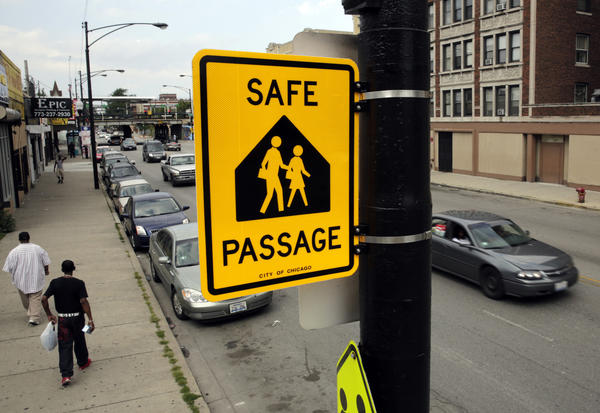
Here’s but one example, from right here in Chicago. Many of you, I know, are familiar with the initiative known as “Safe Passage” a program formed in 2009 as a response to gang and street violence in at risk Chicago neighborhoods. The program places community workers wearing bright fluorescent vests near public schools as a presence that will help create “safe passage” for High Schoolers who were walking to and from school.

The program was expanded significantly this past May, after the Chicago School Board closed almost 50 public elementary and middle schools in predominantly African-American and Hispanic communities on the South and West sides. Among the many devastating impacts of this decision was that it forced many children to walk longer routes to their new schools, through additional dangerous neighborhoods and across multiple gang boundaries. Whereas these children had previously walked an average of a few blocks to their neighborhood schools, many of them now have to walk half a mile or more through areas that are, quite literally, battle zones.

To deal with this reality, the school board expanded Safe Passage, hiring an additional 600 workers at $10 an hour to serve 12,000 schoolchildren in at-risk communities on their way to their new schools. While it is still early in the new school year, the preliminary reports are not promising. There have already been reports of violence along Safe Passage routes – not including the myriad of areas where children are not served by the program. We are now hearing reports that overwhelmed workers are quitting or just not showing up for work. One alderman has suggested the use of drones to protect children along Safe Passage routes.

No, we don’t need to look far away to find stories of children in battle zones. They are, in a very real way, right outside our door.

How do we respond to news such as this? Though it pains me to say so, I would suggest most of us who live the relatively safe and secure neighborhoods of greater Chicago respond to this news the same way we respond to the tragic news coming out of Syria, or Somalia or the Congo. Most of us, I think, thank goodness it’s not our reality. We quantify it in the abstract. We respond as if it’s happening “over there.”

Except it’s not. It’s happening right here in our very own community and in communities just like it across our country. These populations may not be terrorized by tyrannical dictators or civil war, but their lives and their families’ lives are at risk in a very real way. As a parent, I cannot fathom how it must feel to raise my children in neighborhoods wracked with violence, to send them off to walk miles to school through gangland battle zones. I cannot begin to fathom it. And maybe that is part of the problem.

This Yom Kippur, the season when our community honestly takes account of itself and how we might collectively atone, I think it is eminently appropriate to ask ourselves: what has been our response to communities in crisis? And are we truly able to see them? Have we truly opened our eyes and our hearts to their realities – particularly those who live right here in our own nation, our own city?

I can’t help but wonder what our communities would look like if our public policy was guided by such an approach. Let’s return to the example of Safe Passage that I gave earlier. There is no doubt that Chicago Public Schools, like all major urban school districts, faces daunting challenges. But unfortunately in my opinion, the Chicago School Board, like so many other urban school boards, now seeks to address these challenges from a corporate, efficiency-focused mindset rather than a community-based one.

I believe this approach to public education is problematic on many levels – but perhaps the most troubling is the way it has utterly blinded us to the critical role neighborhood schools play as the bedrock of our communities – particularly our at-risk communities. In areas that have already been profoundly destabilized by massive cuts to public services, neighborhood schools have served as the only real glue that holds these communities together. By closing these schools, CPS was in many cases literally cutting the final piece of government investment in these communities – and the last remaining institution in which residents can invest in one another.

It is impossible to understate the devastation these kinds of decisions inflict on low-income communities that have long been seriously at-risk. For decades, in fact, urban renewal policies have been decimating neighborhoods, uprooting residents who are largely poor and people of color. Neighborhood assets, like churches, stores, and parks that have been important community centers for generations, have become abandoned or have disappeared. And so residents have been forced out – they have become refugees, in as sense, of a different sort.

The neighborhood school is often the one institution still surviving in low-income neighborhoods and it has historically served as points of pride and community for families. If you had any doubt that these schools are important to their neighborhoods, you had only to listen to the thousands of parents who attended community meetings on school closings over the past few months. Despite their pleas, however, our new “education reformers” have chosen to close schools rather improve them, using the argument that we are in a time of public sector austerity and that we need to orient them to market forces.

This is what happens when leaders view schools using a corporate model rather than a community-based one. When CPS closed 50 neighborhood schools and slashed the budgets of those that remained, Chicago’s non-elected board addressed this issue with a top-down mindset that was ultimately divorced from the real-life reality on the ground. And so now we have it: thousands of students are now leaving their already devastated neighborhoods every day are forced to walk through battle zones in order to get to their schools.

Of course this phenomenon is not only restricted to our schools. In too many ways, our public policy is guided by the corporate goals of efficiency and profit over community and the greater good. While it is certainly true that many of our public institutions are bloated and inefficient and in need of reform, when we destroy them wholesale in this manner, we fail to reckon with the very real human cost of these actions. Even worse, when we privatize our public works, whether it is public housing, our health care system, or our prisons, we do more than simply turn lives into abstractions. We increasingly view human lives – and in some cases, human misery – as commodities to be profited from.

Whether we call this privatization or neo-liberalism whatever we choose to call it, I do believe it represents a very real form of institutional oppression. It may not be as obvious or as brutal as the oppression meted out by the Bashar Al-Assads of the world, but I submit it is a form of oppression nonetheless. Both stem from a view of our neighbors as somehow “other.” Both benefit from a more privileged people’s willingness to turn a blind eye. And most important, both forms of oppression affect the real lives of real people.

So what is there to be done? On an individual level, I think, one answer is very simple: we need to connect. We need to venture out of the hermetically sealed worlds we too often construct for ourselves and learn more about the people with whom we live – particularly those whose day-to-day reality is fundamentally different from our own.

Earlier this month, I read an article by a German journalist who was in Chicago to write about urban gun violence through a grant from the Pulitzer Center. It was fascinating to read the impressions of this European visitor from a Berlin, a city larger than Chicago but with a fraction of the homicides.

Here is how the journalist, Rieke Havertz, ended the article:

It is human nature to ignore Chicago’s gun violence as long as the shooting stays in the “bad” neighborhoods. Don’t take the “L” down south — that was the advice I always heard when I spoke about visiting less-fortunate neighborhoods.

I ignored the advice and nothing happened to me except that I got to know the city. I discovered that it’s not just money that needs to be thrown at these neighborhoods. They need economic opportunity, education, health care. They need a Chicago that is not a segregated city.

They need people who care. Take a different path, reach over the walls.

I know many JRC members who work and volunteer with in at-risk communities in Chicago and right here in Evanston – and I have learned a great deal from them over the years. I think it would behoove us all to not just to learn about these communities, but to create real connections, nurture real relationships. To meet and listen to those who live there. To relate to them as real people, not as charity cases to be helped or problems to be solved. To learn about their reality, their struggles, their needs, from them, not news reports or politicians or pundits.

We need to learn and act on an advocacy level as well. Here in Chicago, there is a remarkable grass-roots coalition that is shaping up and organizing on behalf of the at-risk communities in our city. In fact, polls show that 60% of Chicago’s citizens oppose the school closings and they are starting to make their voices and their presence heard in a major way. After the CPS’s announcement, many of us took to the streets for three straight days of marches in protest – and although the school closings and budget cuts are now a reality, they have galvanized a movement that is attracting a remarkable coalition – including growing numbers of young people.

But this movement has not grown up overnight – and it is not simply focused on the issue of public schools. It has in fact been building steadily over the years; it is the product of many community-based organizations mobilizing and organizing on behalf of the most vulnerable members of the greater Chicago community.

I’m proud to say here at JRC we are becoming increasingly active in this movement. I encourage you to find out more about our efforts and seriously consider lending us your support. Specifically speaking, I encourage to consider getting involved in our Labor Justice Task Force, our Immigrant Justice Task Force and to speak with JRC members who are currently exploring ways we can become active with Northside P.O.W.E.R., an institution-based people’s power organization with members on the Chicago’s North side and in North Shore Communities.

I have also personally been active with the wonderful organization Arise Chicago, an interfaith community organization that does important, critical local work on behalf of worker justice. (And of course, I would be derelict if I did not mention that we have many other active and vital Tikkun Olam Task Forces at JRC – I hope you will speak to JRC’s VP for Tikkun Olam and  learn how you can get involved in our ongoing social justice efforts.)

I also want to encourage us all to educate ourselves and find ways to act on a national level as well. Indeed, it is not an understatement to say that the at-risk populations in our country are currently vulnerable in ways we haven’t seen in decades. According to new data from the US Department of Agriculture, more than one in five American children face hunger, this at a time in which our Congress is considering cutting the SNAP program (aka food stamps) for more than 800,000 Americans who currently receive them but still do not get enough to eat or maintain only a barely adequate diet.

The crisis facing our food stamp program is a particularly critical issue at this very moment – and I would be extremely derelict if I devoted a sermon to our at-risk populations without mentioning this. According to a new report released just a few days ago by the Agriculture Department, food insecurity in our nation remains at a stubbornly high 14.5 percent. According to these statistics, one in five American children are currently facing hunger.

Thanks to the stimulus package, we’ve been able to address this issue through the SNAP program, which last year served 47 million Americans to meet their basic nutrition requirements. However next week, House Republicans, in an effort led by Representative Eric Cantor, will vote to cut $40 billion out of the food stamp program – an act that would literally force hundreds of thousands of Americans into food insecurity.

In regard to this bill, Rep. Jim McGovern made this very astute comment:

There are 50 million people in the United States of America who are hungry, 17 million are kids. It is something we all should be ashamed of, and the United States House of Representatives is about to make that worse. This is a big deal and my hope is that we’ll treat it as such and not just let it go by without a lot of discussion and debate because we’re all focused on Syria.

Now these cuts are unlikely to become law since the Senate would never pass them and President Obama would certainly never sign them. But the very fact that such a bill could even be voted on in the House is a clear sign that those advocating for the poor and the hungry in our country must remain incredibly vigilant. We simply cannot let our foreign policy discussions, however important, to eclipse these critical issues facing at-risk citizens here at home.

Every Yom Kippur, we recite our prayers in the first person plural. When we seek atonement, hope and healing for the New Year, we don’t do so for our own individual selves – we ask for these things on behalf of our entire community. I would claim that in this day and age it is getting harder and harder for us to connect with this aspect of our Yom Kippur prayers. Increasingly, it feels to me that we liturgical lip service to the concept of community. Too often it seems like we’re all living our parallel lives, without the sense that at the end of the day we’re all somehow in this together.

But in fact, we are. I do believe this sense of living separately from one another is itself the illusion. At the end of the day, our fates are intertwined. We’re very much mistaken if we believe that we’re somehow immune from risk. As we all know too well, the middle class is being squeezed and endangered in ways we haven’t witnessed in decades. Over the years and even now, there have been JRC members living on the verge of hunger and homelessness. These problems are not somewhere “over there” and in truth, they never really were. Perhaps it’s only our individualistic 21st century perspective that has changed.

So this Yom Kippur, I’m suggesting a recalibration of our spiritual perspective. To view the risk to the well-being of some members of our community as a risk to our own well-being. In a very real way, to own the danger and let go of our illusions of invulnerability. Otherwise, what do all of these prayers really mean? What do our lives really amount to if we cannot somehow see them as integrally connected to the lives of others, whether they live in Syria or the Southwest side of Chicago or in Evanston?

May this be the new year we let go of our illusions. May this be the year we decide to share the risks as well as the rewards.

May it be a rewarding year for us all.

(Click here to sign a petition that tells the House and Senate to put low-income families ahead of corporate welfare and to oppose all cuts to food stamps.)

The Village of Iqrit and the Dream of Return

I’ve been following with great interest an ongoing campaign by Palestinian citizens of Israel to reestablish their village of Iqrit, which was depopulated of its inhabitants in 1948 and destroyed by the Israeli military a few years later. In its way, I think this story shines an important light on the reverberations caused by the founding of a Jewish state in historic Palestine – and how they continue to resonate profoundly even today.

Iqrit was a Palestinian Christian village in northern Galilee which was emptied of it inhabitants in November, 1948. Unlike residents of other Arab villages in Palestine, Iqrit’s inhabitants weren’t forcibly expelled and they did not flee. Rather, they surrendered to Israeli military forces with the promise that they would be able to return in two weeks at the end of military operations.

Most of Iqrit’s 490 inhabitants were transferred to a nearby village, taking only basic necessities – shortly thereafter, the area was declared a military zone and the villagers were forbidden from returning. The villagers took their case to Israel’s Supreme Court, which ruled in July 1951 that they must be permitted to return to their homes. On Christmas Eve of that year, however, the Israeli military demolished the village and took it over for “state use,” leaving only the church and the cemetery intact. Since that time, Iqrit’s former inhabitants have been allowed to hold services in the church and bury their dead in the cemetery, but have not been allowed to return.

Now decades later, the villagers and their descendants are seeking to return and rebuild their ancestral village. In the words of Walaa Sbait, a young music teacher who lives in Haifa: “At the moment Iqrit people have the right to return only in a coffin, but we want to live here.”

Sbait is among a group of remarkable young activists who have literally been returning to the village from which their grandparents were exiled. Last summer set up a makeshift camp in Iqrit and have been staying there in shifts, living in an improvised annex to the church that houses a sitting area and kitchen. Nearby tin shacks provide showers and toilets. (They also planted saplings and built a chicken coop, which were subsequently demolished.)

Explains Sbait:

We never lost the connection to this place. Every summer we hold a summer school here for the children to learn about the village and their past. And once a month the villagers hold a service at the church. For us, this was always our real home.

When I visited the website of the Iqrit Community Association, I was deeply moved by the palpable sense of community expressed by the ancestors of this lost village. Reading through their extensive testimonies and reports, it became powerfully clear to me that their passion for return has kept this community intact long after the bricks and mortar of their village were destroyed.

The new camp established at Iqrit is only the beginning. According to a recent article by journalist Jonathan Cook, a residents’ committee is due to publish a master plan for the village this summer, showing how it would be possible to build a modern community of 450 homes, including a school, for the villagers-in-exile, who today number 1,500.

Cook writes:

Iqrit’s refugees are also involved in a pilot project to work out the practicalities of implementing the right of return, understanding the legal, technical and psychological problems facing the refugees.

“This really is a historic moment for the Palestinian community,” said Mohammed Zeidan, head of the Nazareth-based Human Rights Association, which has been helping to organise the project. “For the first time, we are acting rather than just talking.

“The villagers are not waiting for Israel to respond to their grievance, they are actively showing Israel what the return would look like.”

For those who scoff at the Palestinians’ desire for Israel to honor their right of return, this case represents an important challenge. Indeed, it is all to easy to dismiss the claims of refugees, who have precious little political clout. It is far more difficult, however, to brush off similar claims of Palestinians who are actually citizens of the State of Israel.

According to Cook, there were some Israeli government attempts to set aside a small area for Iqrit to be rebuilt in the early 1990s. However in 2002, Prime Minister Ariel Sharon decided that the promise to the villagers of Iqrit (and another village, Biram) could not be implemented because it “would set a precedent for the return of other refugees and threaten Israel’s Jewish majority.” 

It seems clear to me that beyond this “demographic slippery slope” argument lies a more fundamental issue: by granting the Iqrit’s villagers’ request, Israel would be making a tacit admission that it committed an injustice by depopulating and destroying a Palestinian village and refusing to allow its residents to return. And if it does so in this case, it would also be forced to admit that it did so in literally hundreds of others cases throughout historic Palestine in 1947/48.

Jonathan Cook’s article thoroughly explores this critical point, noting that the Iqrit villagers’ campaign to rebuild is occurring just as Israel’s treatment of Palestinian refugees from 1948 is coming under renewed public scrutiny. In particular, recent files unearthed by Israeli researchers have confirmed suspicions that Israel’s chief historical claim for denying the refugees’ right of return – namely that Arab leaders had ordered the Palestinian villagers to leave – was essentially invented by Israeli officials:

The files, located in the state archives, reveal that David Ben Gurion, Israel’s prime minister in 1948 and for many years afterwards, set up a research unit in the early 1960s to try to prove that Arab leaders had ordered the Palestinian villagers to leave.

Israel’s move was a response to growing pressure from the United States president of the time, John F Kennedy, that it allow several hundred thousand refugees to return to their lands.

I encourage you to read Jonathan Cook’s article in full and to visit the website of the Iqrit Community Association.  I cannot help but be struck by the Palestinian dream of return – and the obvious resonances it evokes for me as a Jew. The concept of return is part of the spiritual DNA of my religious tradition – but I fervently believe we are being challenged to honestly confront what has the Zionist “return” has wrought.  How do we understand a Jewish “right of return” to Israel that grants automatic citizenship to any Jew anywhere in the world while denying that same right to the very people who actually lived on this land not long ago?

And can any “return” truly be complete as long as it denies that right to others?

Outrage in Gaza Redux

Israel’s military assault on Gaza in 2008-09 represented an important turning point in my own relationship with Israel. I recall experiencing a new and previously unfamiliar feeling of anguish as Israel bombarded the people living in that tiny, besieged strip of land over and over, day after day after day. While I certainly felt a sense of tribal loyalty to the Israelis who withstood Qassam rocket fire from Gaza, I felt a newfound sense of concern and solidarity with Gazans who I believed were experiencing nothing short of oppression during this massive military onslaught.

And now it’s happening again. Only this time I don’t think the term “anguish” quite fits my mindset. Now it’s something much closer to rage.

It’s happening again. Once again 1.7 million people, mostly refugees, who have been living in what amounts to the world’s largest open air prison, are being subjected to a massive military assault at the hands of the world’s most militarized nation, using mostly US-made weapons. And our President is not only looking on – he is defending Israel’s onslaught by saying it has a right to “self-defense in light of the barrage of rocket attacks being launched from Gaza against Israeli civilians.”

Let’s be clear: this tragedy didn’t start with the Qassams.  It didn’t start with the election of Hamas. And it didn’t start with the “instability” that followed Israel’s withdrawal from Gaza.

No, this is just the latest chapter of a much longer saga that began in 1947-48, when scores of Palestinians were ethnically cleansed from their cities and villages in the coastal plain and lower Galilee and warehoused in a tiny strip of land on the edge of the Mediterranean. By all accounts, most were simply too overwhelmed to realize what was happening. The ones who tried to return to their homes were termed “infiltrators” and were killed on sight. Others resisted by staging raids in the newly declared state of Israel. Sometimes they succeeded, more often they did not. Either way, Israel decided early on that it would respond to each of these reprisals with a overwhelming military show of force.  And those reprisals and that show of force have essentially been ongoing until this very day.

I realize, of course, there is plenty of political subtext to this latest go-around.  I’ve read the timelines and have formed my own opinions on the latest “who started it?” debate. I’ve also read plenty of analyses by Israeli observers who believe that this was not a response to Qassam fire at all but was very much a “war of choice” waged by an Israeli administration looking to shore up political support in an election season.

I’ve also read a widely circulated article from Ha’aretz about Israel’s recent execution of Ahmed Jabari (the head of Hamas’ military wing). I learned that up until now, Jabari was “Israel’s subcontractor” for security in the Gaza Strip, that Israel has been literally funding Hamas through intermediaries in exchange for peace and quiet on their southern border, and that when Jabari failed to deliver of late, the decision came down to take him out. Another article, written by the Israeli who negotiated with Jabari for the release of Gilad Shalit, revealed that negotiations were still ongoing with Jabari when the Israeli military assassinated him with a drone strike.

Yes, the wonky side of me has been avidly reading all these analyses. And while I do believe they provide an important counterbalance to the mythic statements by Israel’s Foreign Ministry and the US State Department, the more I read the cynical political subtext for this war, the sicker I get. No, this isn’t about Qassams, but don’t be fooled into thinking it’s about elections either. It’s really just the most recent chapter in a much longer litany of injustice – the latest attempt by Israel bring the Palestinians to their knees through the sheer force of their formidable military might.

Of all the analyses I’ve yet read, one of the very few that truly seemed to grasp this truth came from Yousef Munayyer, of The Jerusalem Fund/Palestine Center:

The problem Gaza presents for Israel is that it won’t go away—though Israel would love it if it would. It is a constant reminder of the depopulation of Palestine in 1948, the folly of the 1967 occupation, and the many massacres which have happened since them. It also places the Israelis in an uncomfortable position because it presents a problem (in the form of projectiles) which cannot be solved by force…

Israel has tried assassinating Palestinian leaders for decades but the resistance persists. Israel launched a devastating and brutal war on Gaza from 2008 to 2009 killing 1,400 people, mostly civilians, but the resistance persists.

Why, then, would Israel choose to revert to a failed strategy that will undoubtedly only escalate the situation? Because it is far easier for politicians to lie to voters, vilify their adversaries, and tell them ‘we will hit them hard’ than to come clean and say instead, ‘we’ve failed and there is no military solution to this problem.’

Like last time, I know many in the Jewish community will say it is unseemly of me to criticize Israel this way while Israelis live in fear of Qassam fire out of Gaza. I know there are those who believe that by writing these words, I’m turning my back on my own people in their time of need. But I know in my heart that my outrage at Israel’s actions goes hand in hand with compassion for Israelis – particularly those who know that their leaders’ devotion to the sword is leading them into the abyss.

Additionally, as I wrote under tragically similar circumstances in 2009:

I believe Israel’s response to Hamas’ missile attacks have been disproportionate and outrageous. I believe their actions only further endanger the security of  Israelis while inflicting collective punishment and a severe humanitarian crisis upon Gazans. Indeed, just as I cannot understand what it must be like to be a citizen of Sderot, I cannot even begin to imagine what it must be like to be a Gazan citizen at the moment, living under constant air attack, with no running water or electricity and dwindling food, as hospitals fill up with wounded and corpses lie rotting in the streets because relief workers are unable to reach them.

When will we be ready to accept that this is not a “balanced” conflict or even a “war” by any reasonable definition – and that it never was?  When will we face the painful truth that this is not a story about one side versus the other but about one side oppressing the other?  Frankly, all the well-meaning liberal comments about “praying for peace on both sides” and leave me cold. Worse, I find them insidious because they simply serve to support the myth that this is a conflict between two equal parties. It is not. And peace will not come until we admit this – until we admit that there is an essential injustice at the heart of this tragedy and that try as it might, Israel will never be able to make it go away through the sheer force of its increasingly massive military might.

Beyond the rage, I’m heartened that this time around there is a growing community of conscience that is speaking out publicly and in no uncertain terms to protest Israel’s latest outrage in Gaza. I am so deeply grateful for my friends and colleagues at Jewish Voice for Peace, who is alone in the Jewish world in condemning this latest assault.  I urge you to read JVP’s courageous statement, which I know gives voice to increasing numbers of Jews and non-Jews, young and old, religious and secular, who are coming together through the courage of their conscience.

At this point in my posts I would typically write “click here” to lend your voice to some kind of collective statement.  I’m going resist that temptation and urge you instead to take to the streets.

I’ll see you there.

Ahmed Moor on the One-State Solution

Last Thursday, Ta’anit Tzedek hosted a fascinating, stimulating conference call with Palestinian-American journalist Ahmed Moor. Moor, who was born in Gaza, has reported from Lebanon and Egypt and is currently a graduate student in public policy at Harvard.  He has been an outspoken advocate of a one-state solution in Israel/Palestine – and during our conversation he elaborated extensively on a subject not commonly countenanced in the American Jewish community.

We recorded the call and will be posting it on our website soon. In the meantime, I’ve transcribed portions of our conversation and have posted them below. Personally speaking, I find Moor’s way of thinking to be fresh and important and I believe these kinds of ideas deserve a fair hearing in our community.

On the notion that Israel must exist in order to safeguard Jewish culture:

First I want to address this idea that a Jewish state has a right to exist because Jewish culture is valuable.  Jewish culture is valuable. Hebrew culture is valuable. It is intrinsic – that’s true whether or not Newt Gingrich thinks it’s invented. But the question of whether culture needs to be mapped on a geographical space in a state environment, I think, is one that is open to discussion.

And so when we think about Jewish life here in America, I don’t know that many people would disagree with me when I say that some of the most vibrant examples of Jewish life are here in America, in the diaspora, amongst non-Jewish people. So right-wing Israelis like to make the argument that where Hitler failed, assimilation is going to succeed. Intermarriage is the biggest threat to the Jewish people, not Iran.

Well, if you believe that Israel is the homeland of the Jewish people and that it’s the only state guarding Jewish culture, well then you are in a sense aligning yourself with those arguments.  It’s illiberal, fundamentally illiberal.  We know from American experience that a multiplicity of cultures can exist alongside one another and engage with one another and strengthen one another and maybe, even yes, impact one another in positive ways.

And when it comes to Palestine and Israel, American Jews say, “Well this is kind of the homeland of the Jewish people, it’s going to preserve Jewish culture for us,” but it’s almost a relationship apt to an amusement park. “I don’t want to live there – I want to experience it for two weeks. I want to take some of the symbols home with me, but I don’t really want to engage with it in the way that I do at home.”

Well, that’s unfair. No matter how much you value Jewish culture, and no matter how much you believe Israel needs to exist for the preservation of Jewish culture, if it’s a museum, which I don’t think it is, you’ve got to realize that your cultural progress is coming at the expense of somebody else’s freedom. And I think that there’s an asymmetry there in what matters.

On the notion that Israel should exist in case another Holocaust should occur – and Israelis’ fears that a one-state solution is just a pretext for “throwing them into the sea:”

I think that first we’ve got to look at the reality today. The status quo is about expelling Palestinians from Jerusalem, their land in the West Bank, and disenfranchising them in greater ways in Israel proper…So the reality is exactly the opposite. The status quo, the two-state solution process, is about pushing the Palestinians not into the sea, but in the other direction.

First I want to address Jewish American fear, and I hear this from a lot of Jewish Americans of a certain age, when they talk about the Holocaust, which is obviously an evil, genocidal but I want to emphasize, a historical act. I had the benefit of speaking with (New York Times columnist) Roger Cohen recently, and we talked about American Jewish life and I asked him whether he feels unsafe in America. And he was unequivocal: “Absolutely not, America is safe for the Jewish people, we’re welcome here, we’re part of the people, we’re part of the cultural fabric. We are America. America is us.”

Do you ever believe as American people that there’s ever going to be something like Kristallnacht or a pogrom targeting the Jewish people in America?  If the answer is yes, well then perhaps it’s time to move to Israel – and that’s what most right-wing Israelis say. If the answer is no, well then you’ve got to realize that you are opting for the preservation of an insurance policy, but the price of that insurance policy is being borne by another people. The Palestinians are paying the cost of a Jewish American insurance policy. There’s that asymmetry again. That doesn’t work. That’s not a moral position to take and it’s unsustainable.

As for Israelis’ fear about whether we seek to ethnically cleanse them, I think there’s again a gap in perceptions of realities. The Israelis are the ones with the guns. The Israelis are the ones with the American support. When the one-state solution is actualized, it’s going to be necessarily through Israeli consent. The idea that the Middle East or Palestine has to be in any way ethnically cleansed of Jewish people is a European action transplanted onto Palestine.

On Israeli historian Gershon Gorenberg’s recent claim that a one-state solution in Israel/Palestine would create civil war à la Lebanon:

Gershon’s fear is related directly to governmental structures – the way in which you structure multi-ethnic, multi-religious societies, or sectarian societies. In Lebanon I think it was structured exactly the wrong way. In Lebanon, whether you’re liberal or you’re somebody who’s more conservative, whether you believe in one policy versus another, the state almost compels you to vote along sectarian lines.

In Lebanon the Speaker of the Parliament has to be a Shia Muslim, the Prime Minister is a Sunni and the President has to be a Maronite Christian. That’s constitutionally true – that’s mandated. And so what that means is that you end up voting – where your vote is impactful and meaningful – is in your sectarian group. The Lebanese demography there is so sensitive – they haven’t had a national census since 1932 or 33, I think.

You have the American case, on the other hand – the structure of this country is along a federal basis. Federalism enabled this country to recover from the wounds of the Civil War and to persist for another 150 – 160 years since the Civil War ended.

It’s important that we think about questions like the ones Gershon is raising, but I don’t think that those questions necessarily stand in the way of a one-state solution. So there are good federal structures, confederal structures even, for dealing with ethnic or religious strife in democracy.

What I’m thinking of specifically is a state with four federal units: the Gaza Strip, Jerusalem is its own district, sort of like Washington DC, central Israel and the Negev and finally the West Bank and the Mediterranean corridor so now you’ve got four districts and Jerusalem. And each of those federal units would be defined geographically and every one of them, with the exception of the Strip, would be made up of minorities either of Jewish people or Palestinian people.

And so in the West Bank federal state you’d have an expression mostly of Palestinian culture. Why? Because 5 out of every 6 people on the West Bank are Palestinians. In the Gaza Strip you could have an expression of Palestinian culture. In the northwestern state there’s a big minority of Palestinian Israelis, but it’s primarily Jewish. I mean we’re talking about the Tel Aviv – Haifa corridor and that would be a majority Hebrew culture state. Same with the Negev.

So you have parity amongst the states because the states are defined geographically and you enable people over time to move for personal preference reasons. Over time your could get a drift across these federal lines, kind of like what happened in the States. You used to define yourself as an American 100 years ago as a South Carolinian or a New Yorker, but today your primary locus of identity is as an American when you deal with the rest of the world. This was the failure of Lebanon – instead of geographically defining the states, the individual community boundaries within Lebanon don’t allow for that drift, so what they’ve ended up with is kind of ossified sectarian structure.

So I don’t think it will be perfect, I don’t it will be easy, but the idea is that you grant people equal rights and give them the freedom to move back and forth across borders. They won’t initially, but they will eventually. That’s been the American experience.

On the political future of the one-state solution:

I heard an Israeli speak recently, an older guy, an activist, and he mentioned the one-state solution is about where he remembers the two-state solution was in the seventies. And so it’s really about changing discourse, changing people’s thought patterns. Lots of people will come into the one-state conversation because they’ve realized the two-state solution is unworkable and that apartheid is just not something they are capable of supporting.  We’ll achieve a critical mass. It’s impossible to predict how or when, but two states isn’t going to work and apartheid isn’t going to work. And so you can arrive at this position by default even if you don’t actually believe it’s the best thing anyway.

On cultural autonomy in one democratic state:

People talk about a unitarian model where it would be just one man/one vote and I think that’s a great model to think about. My biggest concern there would be preservation of cultural autonomy, which I think many people at this stage really, really value in that part of the world. Palestinians don’t want to give up what it means to be a Palestinian and I think Jewish Israelis have developed a Jewish kind of culture. I don’t know whether its an Ashkenazic culture or a Sephardic culture, I don’t know. It’s not for me to decide. But there is an Israeli culture and I think those people want to preserve it. And when American Jewish people talk about Jewish culture in Israel, that’s something they’d like to be capable of accessing. And so I’m concerned that the unitary system may not permit the kind of cultural autonomy that many people would like.

But we’re still in the early stages of imagining what it could look like and the question of how to get there really does hinge on people of good will standing up and saying no to apartheid.

On the Palestinian right of return:

The right of return today for the Palestinians is actually about the right to be able to go back and live in Palestine. Lots of people still remember native villages which no longer exist, so the practicalities of it are difficult to map out.

The right of return for the diaspora is more about, I think, official recognition of the ethnic cleansing of Palestine in 1948 and in the period leading up to May 15 1948. It’s an official apology, reparations where appropriate and possible and just recognition. And I think the Jewish people probably understand this better than anybody. Once a historical injustice has been done to you as a people, recognition matters. Apologies matter. Reparations matter. Even symbolic measures matter a great deal.

When it comes to the practical implementation of the right of return, (Palestinian researcher) Salman Abu-Sitta has done really great work on identifying where refugees could return to.  Eitan Bronstein of Zochrot, an Israeli organization, has also done a lot of great work on the right of return…

Who do I believe will return to Palestine? I think most of us will not. The Palestinians in the diaspora have done pretty well for themselves. Palestinians in Jordan have done pretty well, the ones in Western Europe, in Latin America, in Northern America are doing pretty well. I think you could draw a direct analogy to the Jewish American diaspora. You want to go you want to visit, you want to go and hang out on the beach and go home to where you’re from.

The only missing group of Palestinian refugees who will actually return to Palestine if they have the opportunity are the 300,000 or 400,000 Palestinian refugees who live in Lebanon. Their lot really is very, very poor and the Lebanese state is racist in many ways in the way they interact with Palestinians there – it’s inexcusable, but that’s also the reality. And given the opportunity I think many of them will leave their squalid and impoverished camps and return to Palestine. But everywhere else, I think you’ll get kind of a vibrant interaction with a diaspora community and the country itself, which I think mirrors, in many ways, the Jewish experience.

Nadia Hijab: Human Rights for Everybody

We’ve just uploaded the transcript of our conference call with Nadia Hijab last month – the Ta’anit Tzedek website now contains a recording as well as a full text of the call. I encourage you to read and/or listen to this amazing conversation. (Click here for the audio/transcript.)

Nadia covered a wide range of issues during the call, from the one state vs. two state, to human rights, to the Arab Spring, to the evolving Palestinian grassroots leadership. Listening to the conversation again, I was reminded of her impressively  clear-headed, rights-based approach to the conflict – often challenging the conventional liberal American Jewish mindset in important ways.

When we ourselves challenged Nadia to state where she was on the one state vs. two state question, this was her eloquent response:

I believe the Palestinian people have the right to self-determination.  I don’t care if that is exercised in one state or two states.  I believe that whether it’s one state or two states, they should both be states that guarantee equality for all their citizens.

Now, separately from that, I do believe the Palestinians – and this is an individual right – have a right of return. (They) have a right to say if they would like to go back to what is now Israel and live as equal citizens in that state or if they would like to – we have the individual right to say if we’d like to stay in the countries where we’ve landed up and have rights there as citizens or if we’d like to go back to the new state of Palestine and be a citizen there, etc.  Each Palestinian needs to be asked how each one wants to fulfill his or her right of return.

Another highlight from the call:

Rabbi Brian Walt: How do you, as a Palestinian, relate to Jews who feel quite attached to Israel or very attached to Israel and what it offers for Jews?  And how do you feel about that sort of liberal Zionist argument that is perhaps portrayed best by J Street and other organizations like Americans for Peace now, that strongly support a two-state solution but don’t want to deal with the questions of 1947-48?

 Nadia Hijab: Let me answer that in two parts.  First, let me assume, just for the sake of argument that not a single Palestinian refugee returns to Israel.  Let’s just assume that.  There are 1.2 million Palestinian citizens of Israel and that is a challenge to Israel’s current attempt to present itself as a democratic state.  It’s not.  It is by law discriminatory to the Palestinians who are not even recognized as citizens.  They have passports, they’re called Israelis, but they don’t actually have citizenship.  And there are about twenty or thirty laws on the books, and more being added every day, to make sure that they are kept down and, hopefully some day, also out.

There’s a very racist discourse in Israel, a very openly racist discourse, that says: to the extent that we can maybe reshape the borders and get rid of some of these Palestinian Israelis, then we can keep Israel “pure,” ethnically “pure.” Well, in the 21st century that’s nonsense.  And in fact, it’s been nonsense since 1948, because 1948 was not only the year that Israel was created but 1948 was the adoption of the Universal Declaration of Human Rights.  Humanity had been moving towards that after one horror after another during the World Wars and other wars.  So humanity has been trying to define how people deal with each other and how they relate to each other, whether as individuals or as communities or as states.

And in this day and age, it’s no longer acceptable – it’s universally seen as immoral and illegal – to discriminate against people on the basis of their religion or their race or their color, and now growing (on the basis of) their sexuality.  You know, discrimination is abhorrent.

And what Israel is doing, even if you don’t take into account any of what’s going on with the occupation…what Israel is doing within its country is abhorrent.  So therefore, Israel as it’s currently defined: as a state for Jews, by Jews, of Jews – that’s not a modern state, nor is it, by the way, as many states define themselves in the Arab world, (i.e.) by Muslims, for Muslims.

People have to have equal rights, whether Muslim or Christian or Jewish or men or women.  A state is simply a construct in this day and age.  It’s a construct for how to manage resources in a way that is fair and equitable and guaranteeing the rights of its citizens.  That is what a state is.  So Israel faces that challenge irrespective of whether there’s a two-state solution or a one-state solution.

Then I wanted to touch on the other part of your question, which is very important, how Jews feel about Israel or how I feel about Jews and what they feel about Israel.  I work a lot with Jews who uphold a human rights approach, no matter what.  And these are people who are my friends and I work extremely closely with them.  And they struggle for justice for Palestinians as well as human rights for everybody, whether they’re Israelis or Palestinians, in the same way that I do.

I respect the work of many, let’s say, American Jews or liberal Zionists or whatever who stand up for some freedoms and some rights.  But then when it comes to a question of Israel’s security they are less clear about where their loyalties lie.  That’s problematic for me.

But I recognize that there is now a Jewish attachment to Israel and I think that over time it will be okay, because Israel exists – it was created.  It was created in a way that was immoral and unjust to the Palestinians, but it was created.  And eventually the attachment and the sense of belonging will be a cultural one, a social one, and maybe of family ties.

And then those attachments can be built across the Arab world as well.  They don’t have to be restricted to Israel.  And Israel will become a state of all its citizens, in which Palestinians and Jews and Arabs and Muslims and Christians are all equal and just one of the many states of the region.

The Nakba Isn’t Over

There are many  in the Jewish community who view the Nakba as simply a historical fait accomplis. The attitude goes something like this: “Yes, during the creation of the state of Israel, Palestinians were displaced. That’s how nations get created. Today the state of Israel is just a fact – it’s time to get over it.”

The problem with this attitude – beyond the sheer injustice of it – is that the Nakba isn’t actually over.  In truth, government-sponsored displacement of Palestinians from their land has been continuing apace for the past 63 years.

One recent example: Ha’aretz recently revealed that Israel used a covert procedure to banish Palestinians from the West Bank by stripping them of their residency rights between 1967 and 1994:

(The) procedure, enforced on Palestinian West Bank residents who traveled abroad, led to the stripping of 140,000 of them of their residency rights. Israel registered these people as NLRs − no longer residents − a special status that does not allow them to return to their homes…

The sweeping denial of residency status from tens of thousands of Palestinians and deporting them from their homeland in this way cannot be anything but an illegitimate demographic policy and a grave violation of international law. It’s a policy whose sole purpose is to thin out the Palestinian population in the territories.

The ongoing Nakba was also evident in news last month of a new military order that will enable the military to summarily deport tens of thousands of Palestinians from the West Bank:

The order’s vague language will allow army officers to exploit it arbitrarily to carry out mass expulsions, in accordance with military orders which were issued under unclear circumstances. The first candidates for expulsion will be people whose ID cards bear addresses in the Gaza Strip, including children born in the West Bank and Palestinians living in the West Bank who have lost their residency status for various reasons.

Israel’s founders understood full well that the Arab population of Palestine was the most significant barrier to the creation of a Jewish state. At the beginning of the 20th century, the population of Palestine was around 4% Jewish and 96% Arab. Although the events of 1948 tipped that scale significantly, it’s common parlance in Israel to view the growing presence of Palestinians as a “demographic threat.” So it’s not difficult at all to understand why Israel continues to institute these kinds of “thinning out” policies.

In a lengthy (but highly recommended) +972 post entitled “Why Jews need to talk about the Nakba,” Israeli blogger Noam Sheizaf writes:

The Palestinians won’t forget the Nakba. In many ways, it seems that with each year, the memory is just getting stronger.

It’s an interesting, counter-intuitive phenomenon: one would expect that the the memory of displacement would fade as the event itself recedes into the past and new facts in the ground take hold. In fact, the exact opposite seems to be happening. There are doubtless many explanations for this, but primary among them must be the fact that displacement continues to be the very real experience of succeeding generations of Palestinians.

This fact was very much on my mind as I read news reports that thousands of Palestinian refugees crossed Israel’s borders during Nakba Day demonstrations last Sunday.  As I watched scores of unarmed Palestinians willing to face live ammunition as they jumped the border fences, it was clear to me that they weren’t simply commemorating a “long-past” event.

For them, as for Israel, the Nakba isn’t over yet.

In Memory of Juliano Mer Khamis

It is with great sadness that I note the murder of activist, actor, director Juliano Mer Khamis, the director of the Jenin Freedom Theater. Although there are currently conflicting press reports regarding the circumstances of his killing, Palestinian authorities have reported that he was shot five times by “Palestinian militants.”

Mer Khamis was a remarkable and inspiring man – the son of a Palestinian father and a Jewish mother who devoted his life to giving the young people of the Jenin refugee camp a healing, creative outlet in the midst of unbearably dire cirumstances.

From a powerful, heartbreaking tribute by Israeli journalist Dimi Reider:

Mer Khamis…has faced threats since forever: From conservatives in the camp who took a strong dislike to the theatre’s liberal repertoire and casting of both men and women, both boys and girls; from nationalists who saw him as an agent of the occupation, a promoter of normalization; and from just about every Israeli who commented on any news piece covering him and his activity.

There will be so much said and written about Juliano in the coming days. Friends and students will laud his tremendous bravery, his contempt for the walls and barriers – especially barriers of fear – that crisscross our country, his sense of stage, his talent. Enemies will pour mud on him, rejoicing in the death of one they see as a half-breed and a turncoat. Comrades will remember a complex and uneasy man, as famous for his rough temper as he was for his devotion to the cause.

I had the honor of visiting the Jenin Freedom Theater this past December with 20 members of my congregation. Although we didn’t get to meet Juliano personally, we can all attest to the inspiring fruits of his life’s work. May it live on forever. And may his memory be for a blessing.

I can think of no great honor to his memory that to watch “Arna’s Children” – an amazing 2003 documentary, co-directed by Mer Khamis, that profiles the history of the Freedom Theater. Please click on the clip above for the first installment. The following eight can be found on YouTube – search: “Arna’s Children.”

Initial Impressions and Later Reflections: A Guest Post From Palestine

Photo by Rich Katz

Here’s a guest post by Michael Shapiro, another participant from our JRC trip to Israel/Palestine:

Let me first thank Rabbi Brant Rosen for his vision and leadership in organizing this trip and for his astuteness in working with Aziz and Kobi.  They were articulate, deeply knowledgeable, warm and witty guides, but through their life histories and their relationship modeled the struggle for mutual understanding between their communities.  I am also grateful to Rabbi Rosen for the invitation to post on his blog.

The trip gave me a deeper understanding of the way the conflict burdens the lives of Palestinians.  It was no surprise to me that the weight of military occupation could be oppressive, but I now have a more acute sense of what it is like for those whose daily lives include humiliation and harassment at checkpoints or for those separated from farms, jobs, schools, and families by a wall built on their own land.

I will not forget hearing Marge Frank translate our Jenin host’s anguished and angry account of being made, more than once, to strip to his underwear at a checkpoint he had to pass through on his way to work in Israel. Nor will I forget the head of the Budrus Popular Committee, who led his village in a successful non-violent protest that resulted in a rerouting of the wall.  These and other equally indelible memories have deepened my understanding of the conflict and of the unconscionable injustice and suffering inflicted on the Palestinian people by the occupation and settlements.

In some instances, however, I have found that distance and reflection have placed initial impressions in a wider context and introduced  “complications,” a word that can sometimes mask moral callousness if not moral cowardice, but can sometimes challenge simplistic thinking by focusing  on  thorny realities. I would offer three examples.

Continue reading

Seeking Dignity Under Occupation

Our Wednesday began with a visit with Reverend Naim Ateek (above), founder and head of Sabeel, a well-known institute that advocates Palestinian Chrisitian Liberation Theology. As readers of my blog might know, I’ve long been an admirer of Reverend Ateek’s theological writings. In particular, his work has informed and challenged my own thinking about the Jewish conception of the land and the dangers inherent in wedding religion to power. It was a great pleasure to finally meet Reverend Ateek personally and to introduce him to members of my congregation.

To my dismay, Ateek has been unfairly and relentlessly attacked by the American Jewish establishment – largely, I believe, because he does not shrink from illuminating the problems that come with the land-centric nature of Zionist ideology. For myself, I’ve learned much from Ateek’s suggestion that Zionism represents a kind of “Constantinian Judaism” – i.e., a fusing of Judaism with Empire.

Whether or members of the Jewish community agree with him or not, I believe it would greatly behoove us to enter in dialogue with Ateek and others in the Palestinian Christian community – and I told him as much during our meeting. At the very least, it is my sincere hope that there might be Jewish leaders actively participating rather than protesting during the next American Friends of Sabeel conference.

After our visit we were joined by Meirav Zonsztein, (above) an Israeli/American journalist/blogger/activist, who led us on a tour of East Jerusalem. We first stopped at Gilo, a prominent development located east of the Green Line southwest of Jerusalem. Gilo is emblematic of a settlement considered by most Israelis to be part of the Jerusalem municipality, but its ongoing expansion has been severely encroaching upon Palestinian neighborhoods in the area. Gilo is but one of Israel’s many settlement projects that renders a viable, contiguous Palestinian state that much more remote.

We also stopped at Silwan, an Arab neighborhood located alongside the City of David outside the Old City. Silwan is currently the focus of a bitter struggle between Palestinian residents and an Israeli government that seeks to create a greater Jewish presence in East Jerusalem. In this case, the attempt to drive Arabs from their home is occurring under the guise of Israel’s historical “claim” to Biblical Jerusalem.

What makes this situation particularly galling is Israel has handed over the management of the archeological excavations to Elad, a private Jewish organization that seeks to “reclaim” Biblical Jerusalem in order to pave the way for the rebuilding of the Third Temple. Most visitors to the City of David excavations have no idea that their entrance fees to this popular tourist site fund this religiously radical organization.

To make matters worse, the Jerusalem municipality now plans to create an archeological park that will further decimate the Arab population of Silwan. According to a recent article by Israeli academic/activist Alice Shalvi,

The plans call for the demolition of 22 houses in the area, which the city claims were built without the necessary permits. (Ironically, the illegally constructed multi-story Beit Yonatan which towers above the overcrowded hovels of the village has not yet been evacuated and sealed, in defiance of a court order.) Few people are aware that the residents of Silwan, at their own expense, sought professional experts to draw up a plan which would enable them to engage in the kind of urban renewal that has taken place in other hitherto neglected areas of the city…The Jerusalem municipal authorities arbitrarily rejected the plan without even bringing it before the relevant planning forums.

Our group will return to Silwan this Friday to attend a major protest organized by the Sheikh Jarrah solidarity movement.

We then traveled into the West Bank to visit Wadi Fukin, an Arab village just east of the Green Line in the Gush Etzion bloc. In recent years, Wadi Fukin has been threatened by Israel’s planned construction of the Separation Barrier, which would cut off the village’s water source from numerous natural springs that the villagers use to irrigate their fields and orchards.

In a particularly inspiring example of coexistence and solidarity, the residents of Wadi Fukin were joined by residents of the nearby Israeli village of Tzur Hadassah in fighting the planned construction. Through a massive petition drive signed by hundreds of Israelis and Palestinians, Israel has for now forgone its plans to construct the wall – one of the very few success stories of its kind.

In the meantime, however, Wadi Fukin’s future is also being threatened by the expansion of nearby settlement Betar Illit. Ongoing construction of this populous and rapidly growing ultra-orthodox development is literally encircling the village and would likewise dry up Wadi Fukin’s freshwater springs. To add insult to injury, Beitar Illit regularly dumps its sewage into the village’s water supply, despite the repeated protests of village residents.

Despite these horrid hardships, Wadi Fukin is forging on with the help of Friends of the Earth -Middle East, an environmental NGO that has included the village in its “Good Water Neighbors” project. That’s Iyad Aburdeineh below, project co-cordinator of FOE-Middle East Wadi Fukin initiative, who led us on a tour of the village.

While in Wadi Fukin, our group was treated to a delicious lunch cooked for us the staff of the village’s Women’s Center. In all, it was impossible for us to be unmoved by the story of the village, one inspiring success story amidst an increasing dire situation in the Occupied Territories.

From there we traveled to Deheishe, a refugee camp near Bethlehem. Deheishe (below) was established as a refuge for 3,400 Palestinians who were expelled from 45 villages west of Jerusalem and Hebron in 1948. Originally simply a collection of tents, Deheishe is now a densely packed urban labyrinth of over 9,000 residents.

Adminstered by UNRWA, the camp is bordered to the north by the Jewish settlement of Efrat and to the south by Bethlehem. Like many Palestinian refugee camps, Deheishe has nowhere to grow but up – most of the homes have three stories and the camp seems to be in a constant state of vertical expansion.

Upon our arrival we were greeted by Deheishe resident Mazen Faraj, who coordinated our visit and introduced us to our host families. My group of seven was hosted by Nidal and Newarah and their three children, Haya, 18, Moad 17, and Tariq, 12, who opened their recently built home to us and were utterly gracious hosts to our intrepid little crew. They treated us to a delicious – actually sumptuous – dinner and we enjoyed each others’ company talking, sharing and laughing until the wee hours of the morning.

I spoke at length with Moad, who at one point took me out for a long night stroll through the winding alleyways of the camp, introducing me to friend after friend until it felt like I had met virtually the entire teenage population of Deheishe. After coming home, we continued to talk together as neighbors came and went through their home at a dizzying pace.

For right now, I don’t really know how else to describe our visit other than a genuinely delightful evening with wonderful new friends. I’ll share many more thoughts about our Deheishe soujourn in my next post. For now, suffice to say it today was an incredible journey for us all – and it has only been our second full day.

Much more to follow…

Gilad Shalit and the Sorrows of Tribalism

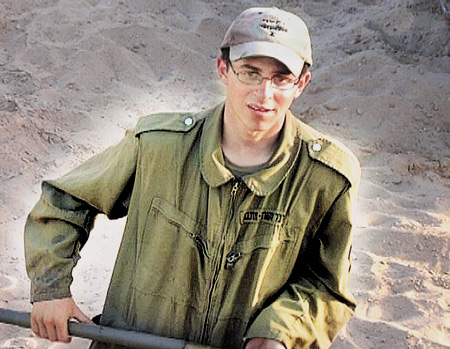
Not long ago I was asked by a friend: why are Israelis and Jews so fixated on the kidnapping of Gilad Shalit? With all of the crises and injustices being committed in the world, why is there such a hue and cry over this one particular man?

I answered that like all nations, Israel takes this kind of thing personally. I mentioned that just like many Jews in Israel and around the world, I also experienced Hamas’ abduction of Gilad Shalit as an injustice committed against one of my own. Even as a Jew living in the comfort of my Evanston home, I felt a visceral sense of pain three years ago when I first heard the news of Shalit’s kidnapping. Over time, my pain turned to anger as Hamas denied him Red Cross visits and refused to confirm (until only recently) whether he was even dead or alive.

I went on to compare Israel’s trauma to the feeling of collective trauma we felt in our country in 1979, when Iranian militants took American embassy workers hostage: how violated our nation felt: how personally we identified with the hostages; how deeply we experienced the injustice of their imprisonment.

On a less tribal level, of course, I do understand that there was a deeper context to the hostage crisis. Underneath our feelings of personal violation were more challenging questions – questions few of us were prepared to ask out loud. Why, for instance, did we have so much concern over 53 fellow Americans, but not for countless other political prisoners around the world, many of them incarcerated by regimes actively supported by our nation?

In just the same way, I believe too few Jews even know – let alone protest – that while Hamas unjustly imprisons Shalit, Israel holds hundreds of Palestinians taken in operations that at best must be considered ethically dubious. While Israel defends its actions legally by terming these prisoners “enemy combatants,” the hard truth remains that for decades Israel’s security services have rounded up scores of Palestinians without charge and have imprisoned them indefinitely – in many cases for years.

Yes, many of the prisoners are undoubtedly guilty of plotting or carrying out violent acts against Israelis. Many of these incarcerations can surely be defended on grounds of security. But it has become impossible to ignore that Israel has also incarcerated considerable numbers of Palestinians who by any reasonable definition must be considered political prisoners.

(One recent case in point: many Jews are familiar with the case of Gilad Shalit, but I’m sure that far fewer know, for instance, about Abdallah Abu Rahmah, a Palestinian high school teacher and coordinator of the non-violent campaign in the West Bank village of Bil’in, who was arrested last week by the Israeli military. According to eyewitness accounts, Abu Rahmah was taken from his bed at 2:00 am in the presence of his wife and children.)

And so, beyond the emotions of tribalism, the question remains: will we ever be able to see past our own loyalties and find equal value in the lives of others – human beings who are just as eminently worthy of fair treatment, justice and dignity? And even more challenging: will we ever be ready to admit that the violence committed against us is often inspired in no small way by the injustices we ourselves have committed – and continue to commit?

To return to the Iranian hostage example: back in 1979, few Americans cared to even ask why their Iranian captors might have been so motivated to commit this act. Most of us were ignorant to the powerful significance of the American embassy for Iranians – that it was this very same embassy from which our nation had plotted the overthrow of Iran’s democratically elected government in 1953. As it turned out, the regime we subsequently installed would persecute and unjustly imprison countless Iranian citizens over the next two decades.

So too in the case of Gilad Shalit. Few of us in the Jewish community are truly ready to examine the source of Gazan’s fury toward Israel – a fury that has been building since long before Hamas even existed. Few of us are willing to face the history of Israel’s oppressive policies in Gaza or the fact that Gazans have been living under an intolerable occupation for decades.

And even fewer of us even know that the overwhelming majority of the 1.5 million who live in Gaza belong to families that originally came from outside of Gaza – from towns and villages like Ashkelon and Beersheba – and were expelled from their homes by the Israeli military in 1948. Indeed, when I think of Gazan rage in 2009, I can’t help but think of these chilling words by Moshe Dayan from back in 1956:

Who are we that we should bewail their mighty hatred of us? (They) sit in refugee camps in Gaza, and opposite their gaze we appropriate for ourselves as our own portion the land and the villages in which they and their fathers dwelled.

The history of Gaza is indeed a tragic one – and yes, Israel’s oppression of its population is a critical part of this tragedy. Unless we take the time to understand this history – and our part in it – I don’t believe we can even begin to pretend there is a way out of this conflict.

To be clear: understanding the source of Gazans feelings toward Israel does not mean condoning their actions. Hamas’ imprisonment of Gilad Shalit is barbaric. As a fellow Jew, I grieve for Shalit and I pray for his safe return. But at the same time, I cannot look away from the more painful realities that led to his capture in the first place, and I truly believe that until we make an honest effort to face and address these realities, there will invariably be more Gilad Shalits in Israel’s future.

Following Israel’s military campaign in Lebanon in the summer of 2006, journalist Amira Hass wrote these powerful words in Ha’aretz. I believe she presents us with a profound model of an Israeli who is able to hold her own concern for her people together with a willingness to face the truth of the injustices perpetrated her nation. Her words are doubly tragic as we now approach the one-year anniversary of Israel’s military campaign in Gaza:

We are justly concerned about the welfare of northern residents, proud of their fortitude, understand those who leave, are shocked by the death of each person and by every rocket hit, and identify with those suffering from anxiety. Take what the northern residents have been going through for a month, multiply it by 1,000, add an economic blockade, power and water cuts, and no wages. This is how the Palestinians in the Gaza Strip have been “living” for the past six years.

The Israelis allow their army to continue destroying, trampling and killing in the Palestinian territories. Here, like in Lebanon, the real intelligence and security failure is Israel’s ignoring the extent of our uninhibited, unrestrained devastation and their amazing power of human endurance. This is why Israel has delusions of “victories.” If the homemade rockets are still being fired at Sderot despite the Palestinians’ extensive suffering, it is because they have concluded, correctly, that Israel’s destruction power is not intended to stop Qassam rockets – or to free Gilad Shalit. It is intended to force them to accept a surrender arrangement, which they reject not with military victories but with their power of endurance.