Category Archives: Religion

More Heat Than Light: My Response to Rev. Chris Leighton

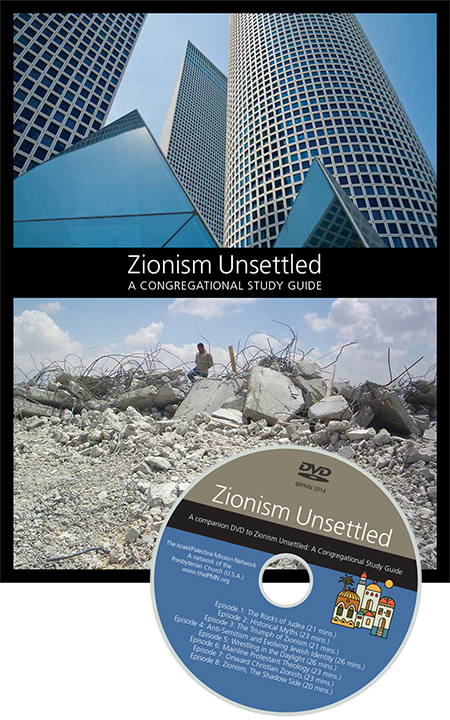
RNS-Zionism-Unsettled-study-guide

Dear Reverend Leighton,

Thank you for your response to my open letter. While I’m also not particularly interested in turning our dialogue into a debate to be “won” or “lost,” I do take exception to much of what you wrote and feel compelled to respond in kind. I agree with you that our differences are worthy of ongoing dialogue. I can only hope that the airing of our disagreement might somehow be helpful to those who struggle with an issue that is of such critical importance to our respective faith communities.

I’d like to start with your observation:

(To) deny…Zionism and Judaism do not share deep historical and religious roots…strikes me as a serious error. You work with a very limited conception of Zionism as a 19th century political movement that breaks from Jewish tradition. I work with a much broader understanding of Zionism and see this movement as driven by yearnings for a Jewish homeland with deep biblical underpinnings. The blending of peoplehood, land and Torah strikes me as integral to Jewish tradition.

In writing this statement, you’ve chosen to sidestep my point that for thousands of years, the Jewish connection to the land was expressed as a spiritual yearning – not as a desire to create a sovereign Jewish nation.  “Homeland” and “political nation” are two intrinsically different concepts, and as I’ve already written, Jewish tradition consistently regarded the notion of Jewish political nationhood to be an anathema. Political Zionism was never “integral to Jewish tradition” and this concept was not even introduced into Jewish life until the 19th century.

By insisting on this point, your analysis of Jewish tradition and history betrays a characteristically Zionist bias that assumes the centrality of sovereign statehood. That is fine – you are certainly welcome to your biases. But you should at least be prepared to own them for what they are and not attempt to present them as normative.

The very concept of nation-statehood itself is a fundamentally modern notion. Like all modern forms of nationalism, Zionism arose to consciously create a sense of seamless continuity to the past through recourse to an ancient mythic history. But of course, this is an artificial “continuity;” one that owes more to modern political ideology than Jewish religious tradition.

It also has little to do with actual “history” as we know it today. As “Zionism Unsettled” notes, it is extremely problematic to use the Bible as a history book to lay claim to particular piece of land. In the first place, the Bible is a profoundly ahistorical document, as we have long since learned from literary scholars and archaeologists.  Moreover, the Bible was certainly never intended to be “history” according to our current understanding of the term. The authors of the Bible did not purport to create a literal history of the events of their day – rather, it is a religiously inspired narrative that reflects ideas and values unique to the world of the ancient Near East.

This is more than just an academic point. As “Zionism Unsettled” points out, the use of the Bible as a historical justification for a modern nationalist movement is not merely historically problematic – it has had tragic consequences for the inhabitants of historic Palestine, particularly when you consider Biblical passages that express entitlement to the land, a religious intolerance of the “foreign nations of Canaan” and commandments that require nothing short of their total dispossession – and in some cases, even annihilation.

So in one sense we are in complete agreement when you write “even the more secular strains of Zionism that became predominant in the 19th century were suffused with Biblical imagery.” Perhaps we only disagree on the dark outcome of this phenomenon.  We should not be unmindful of the ways that the Biblical land traditions were used by early Zionist ideologues and the political founders of the state – and are currently wielded by Israeli politicians, settler leaders and ultra-religious rabbis alike.  This use of Biblical imagery must not be dismissed as mere religious rhetoric – these theological linkages have enormous power, particularly when we consider the expulsion of Palestinians from their homes in 1947-48 and policies of displacement and transfer that continue to this very day.

You go on to ask:

Do you want to uncouple Zionism from Judaism altogether, or do you want to critique its more militant and “colonial” manifestations? Can all expressions and forms of Zionism be accurately placed into an ideological lump and legitimately condemned as a movement that leads “inexorably” to the displacement and mistreatment of the Palestinians, as the IPMN guide indicates? Do you think that Jews do not belong or have a legitimate claim to the land of Israel?

It is true that there are many different forms of Zionism – a fact that is extensively explored in “Zionism Unplugged” (see Chapter 2).  I would argue, however, that since the establishment of the state of Israel, the existence of these various “Zionisms” has largely become an academic point. In a very real way, the birth of Israel represents the ultimate victory of the values of political Zionism that were promoted by the founders of the state.

As someone who identified as a Zionist for most of his adult life, it is with no small measure of sadness that I acknowledge the ways political Zionism has “inexorably led to the displacement and mistreatment of the Palestinians.”  Perhaps most critically, I have come to painfully reckon with the ethnic nationalism at the core of political Zionism’s raison d’etre – and its insistence upon the maintenance of a demographic Jewish majority in the land to safeguard the “Jewish character of the state.”  In the end, no matter how vociferously Israel might insist that it is, in fact, “Jewish and democratic,” I do not believe it is ultimately possible to establish a demographically Jewish state without regarding the presence of non-Jews to be a problem.

In this regard, I do believe that “Zionism Unsettled” bravely shines a light on the tragic legacy of the Zionist idea, a concept that ultimately resulted in the forced depopulation of Palestinians from their homes in 1947/48 (a phenomenon by now well attested to by Israeli historians) as well as the policies of dispossession that continue to be enacted by the Israeli government even today. These events and policies do not exist in a vacuum – they are the logical end-product of a very specific nationalist ideology that privileges the rights of one particular group over another.

You ask me if I believe Jews “do not belong” or “have a legitimate claim to the land of Israel.” Of course I believe that Jews have every right to live in the land. I’m not sure, however, what you mean by a “legitimate claim.” If you mean can we Jews rightly maintain a religious connection to the land, then my answer is certainly yes. If you mean do we have some kind of intrinsic right to exert our political sovereignty over this land, then my answer is most certainly no. When it comes to nation-statism, it has historically been the case that “might makes right.”  The real question, it seems to me, is not “who has the right to this land?” but rather “how can we extend full rights to all who live on this land?”

You write that you “have yet to see efforts to undo the establishment of the State of Israel produce constructive results.”  I’m struck that you equate an insistence upon equal rights for all to be tantamount to Israel’s “undoing.”  But when it comes to a choice between a Jewish and democratic state, as increasingly seems likely, what should be our choice?  My community is fast approaching a reckoning: which kind of state will ultimately be more “Jewish,” one that unabashedly places Jewish rights above Palestinian rights or one that allows full and equal rights for all?

I also find your statement about “Israel’s undoing” to be more than a little incendiary. By projecting nefarious designs onto an entire movement, this kind of rhetoric only exploits the deepest and darkest of Jewish fears. I will tell you that I have been participated in the Palestinian solidarity movement for some years now and have yet to encounter the kind of anti-Semitic anti-Zionists you speak of. Are there anti-Semites in this movement? Undoubtedly. There are odious types on the margins of every political movement. But I can say without hesitation that the Palestinians and pro-Palestinian activists I have met and worked with have nothing but the deepest respect for Jews and Judaism at large and consistently endeavor, as I do, to draw a scrupulous differentiation between Zionism and Judaism.

I don’t disagree with you that  “the quest for home is deeply woven into the tissue of our humanity” and that this concept is deeply woven into the fabric of Jewish collective consciousness. But I must disagree with you strongly when you insist that “the search for homeland aim(s) at sovereignty.” To me, this is an astonishingly narrow and reductionist reading of the notions of home and homeland.

You write that “a national identity is difficult to construct and preserve without the power and freedom that is exercised by the state.” But in fact, that is precisely what the Jewish people have done for centuries.  Judaism as we know it was born in the wake of the destruction of the Second Temple, as a profound and spiritually courageous response to the reality of dispersion and exile. As such, Jewish tradition is replete with teachings that respond to this trauma with a message of spiritual hope and renewal.

In one of my favorite rabbinic midrashim, for instance, Rabbi Akiba teaches, “Wherever the people of Israel were exiled, the Divine Presence was exiled with them.”  In other words, Judaism arose to assert that despite the experience of exile, the Jewish people would always be “home.” God was no longer geographically specific to one particular land – spiritual meaning and fulfillment could be found throughout the diaspora wherever the Jewish people might live.  (The midrash ends, notably, on a messianic note: “And when they return in the future, the Divine Presence will return with them.”)

In so doing, the rabbinic Judaism transformed a land-based cultic practice to a global religion, enabling Jewish life to flourish and grow widely throughout the Diaspora. This, I believe represents the intrinsic beauty and genius of the Jewish conception of peoplehood: in a time of profound upheaval and crisis we spiritualized the concept of homeland and redefined ourselves as a globally based, multi-ethnic, multi-cultural nation that viewed the entire world as its “home.” The concept of exile became, in a sense, a spiritual prism through which we viewed the world and our place in it. It might well be claimed that centuries of Jewish religious creativity resulted from this profound existential mindset.

As a Jew I do not need you to tell me that this conception of Judaism is somehow “exceptionalist” because it “refuses the rights and conditions that every other nation claims for itself.”  With all due respect, it is not for you to take it upon yourself to define my Jewish rights and claims, particularly when it runs counter to centuries of Jewish tradition and experience. I understand that you have chosen to adopt the Zionist narrative of my history and that is certainly your right. But you do not have the right to preach to a Jew that his understanding of “homeland” must ipso facto be expressed through sovereign statehood.

Moreover, there are numerous stateless peoples throughout the world. Would you go on to suggest that they too have the intrinsic right to “the opportunities and burdens of an independent state?” If so, where does this right come from and how might it possibly be implemented? If not, then why are you granting this unique right to the Jewish people?  Quite frankly, I find your conflation of the concepts of “homeland” and “nation-state” to be hopelessly confused, creating a myriad more problems than it purports to solve.

On the concept of exceptionalism, you write:

I have yet to encounter a nation or religion that does not fuse religion and politics – and overtly or implicitly make a claim to being exceptional. The challenge is how to identify and respond when the mixture turns toxic.

Like the authors of “Zionism Unsettled” I would go much farther than this. I believe that challenge is to identify and respond to those aspects of our respective religious traditions that assume our superiority over others – and to thoroughly disavow them.

It is all well and good to “support and sustain our nations, our religious communities, and families with financial and psychological investments that give them priority.”  I’m even willing to admit that it is natural for a person or group to feel “chosen” in a way that doesn’t automatically denote superiority.  The problem occurs, as ZU rightly points out, when exceptionalism “exempts the chosen from the need to conform to normal rules, laws, or general principles that we use to hold other people accountable.” (p. 8)

As the study guide notes, religious exceptionalism has historically been at its most dangerous when it is wedded to state power. In illuminating this point, ZU actually devotes a significant amount of analysis to post-Constantinian Christianity and its legacy of anti-Semitism over the centuries. In so doing, it identifies the ultimate problem as the merging of religion and empire – not Zionism per se. You misrepresent the guide egregiously when you accuse it of treating Zionism as “an exceptional and inherently evil manifestation of nationalism.” In fact, “Zionism Unsettled” repeatedly places political Zionism within the larger context of religious and national exceptionalism – a phenomenon that has historically proven to be, to paraphrase your words, a uniquely toxic mixture.

Finally, you bemoan the lack of a more “comprehensive and balanced account” in “Zionism Unsettled.” I would suggest that this lack of balance does not originate in the guide but rather the Israel-Palestine conflict itself.  To be sure, this conflict does not and has never constituted a level playing field. Rather, it has pitted one of the most militarized nations in the world – one that enjoys the near unconditional support of the world’s largest superpower – against a people it has dispossessed from its land; a people whose yearning for home now reflects, as you so eloquently put it, “a quest…that is woven into the very tissue of (its) humanity.”

I do believe this is the most critical place where you and I part company. You express your religious faith through your work in the world of interfaith dialogue – an arena that assumes balance and equity on two equal “sides.” I view my faith as refracted through my work as an activist who stands in solidarity with a people that is seeking its liberation. As such I do not view this conflict in any way as a balanced equation. On the contrary, I seek to re-right what I believe to be an inherently unbalanced situation.

I realize full well that by saying such things I leave myself open to further accusations of “polemical excess that does not do justice to what needs to be said.” So be it. I would only ask you to consider that rhetoric has a fundamentally different function in the world of dialogue than in the arena of political transformation. I understand that in your world, words are typically wielded in the furtherance of creating “more light than heat.” But when there is very real oppression occurring, as I truly believe is the case here, it is not at all inappropriate to turn up the heat, no matter how upsetting it may be for Israel and its advocates.

I do not know if you have ever visited Palestinians in the West Bank or Gaza and have witnessed first hand the deeply oppressive reality of their daily existence. If you haven’t, I encourage you to do so. I encourage you to talk to Palestinians who live in villages whose livelihood has been choked off by a wall that separates them from their agricultural lands in order to make way for the growth of Jewish settlements.  I encourage you to meet with Palestinians whose weekly nonviolent demonstrations against the wall are met regularly with brutal force by the Israeli military. Speak to Palestinians mothers and fathers whose children have been abducted in the middle of the night by the IDF and subjected to interrogation in Israeli prisons. Get to know Palestinians who have had their residency rights revoked and/or their homes demolished so that Jewish demographic facts can be created on the ground. Talk with Palestinians in Gaza who are being collectively punished by a crushing blockade and subjected to life inside what has essentially become one of the largest open air prisons in the world.

I believe if you take the time to do so you will invariably come to find that these men and women represent spiritual teachers just as compelling as the American Jews and Christians which whom you regularly engage in dialogue. At the very least, I hope they might somehow challenge your views on “what needs to be said” about this conflict.

While you may well consider the above to be just another example of my “polemical excess,” I would only say that my convictions come from a faithful place – and from a religious tradition that exhorts me to stand with the oppressed and call out the oppressor. I also believe these same religious convictions inform the very heart of “Zionism Unplugged” and whatever its specific flaws, I find it to be an enormously important and courageous resource.  You claim that the “vast majority of Presbyterians will not align themselves with a project that aims to disassemble the State of Israel.” Of course the guide does nothing of the kind. It does, however, call for the dissembling of an inequitable system that privileges one group over another and replacing it with one that guarantees full rights for all. For this it makes no apology, nor should it.

You certainly know the Presbyterian community better than I, but I will say that I have met and spoken with many Presbyterians – and members of other Protestant denominations – who have expressed gratitude for this new guide and are eager to use it in their churches. As with my own faith community, I do sense that we are currently in the midst of a paradigm shift on the issue of Zionism and I am not anywhere near as certain as you that the “vast majority” of Christians or Jews are so ready as you to denounce such ideas as abject anti-Semitism.

Again, thank you for taking the time to respond to my open letter. I agree with you that there is much more to be discussed. Whether or not we engage in further exploration together, I hope and trust that our conversation might still be helpful to those who have read our exchange.
Guest Post: Rev. Chris Leighton Responds to My Open Letter

zionism_unsettledRev. Chris Leighton has responded to my open letter of February 19, in which I addressed what I considered to be his troubling and unfounded attack on the newly released study guide, “Zionism Unsettled.” I have posted his words below. I genuinely appreciate his desire to enter into dialogue and will post my own response in several days.

I appreciate the time and thought that you directed to my critique of “Zionism Unsettled.” I am not particularly interested in entering a debate that yields winners and losers and that drives combatants more deeply into their entrenched positions. I am interested in conversation that might enable people with deep disagreements to learn from one another, and I am acutely aware of how much more I have to learn in the ongoing struggle to understand and respond to the complexities of the Palestinian-Israeli impasse. Colleagues such as Nancy Fuchs Kreimer, A.J. Levine, Peter Ochs, Tikva Frymer Kensky (of blessed memory) and even your former havrutah partner and now staff member at the ICJS, Ilyse Kramer (among others including folks at the Hartman Institute) continue to rattle me out of my complacency and remind me constantly that mahloket is a rabbinic discipline desperately needed in these tempestuous times.

You make a number of observations that I want to ponder more deeply. You also indulge in some polemical excess that does not do justice to what needs to be said. At the end of the day, you believe that this congregational guide can prove a helpful resource. I think that it is so riddled with historical and theological flaws, and so dismissive of the Jewish community that it will do much more harm than good. We disagree, and the most immediate question whether our differences might prove worthy of some ongoing dialogue.

I wonder if we might begin more productively by examining some arguments that you make that I find puzzling. They may clarify our divergent readings of ZU and enable us to better understand when and where we speak past one another.

You make a strong case for the separation of Judaism from Zionism, and I think rightly note the mistakes that arise when the two are collapsed. At the same time to deny that Zionism and Judaism do not share deep historical and religious roots also strikes me as a serious error. You work with a very limited conception of Zionism as a 19th century political movement that breaks from the Jewish tradition. I work with a much broader understanding of Zionism and see this movement as driven by a yearning for a Jewish homeland with deep biblical underpinnings. The blending of peoplehood, land and Torah strikes me as integral to Jewish tradition. Even the more secular strains of Zionism that became predominant in the 19th century were suffused with biblical imagery and so this movement was not as radical a rupture from the Jewish tradition as the more secular Zionists imagined.

So here is where I found your account confounding. Do you want to uncouple Zionism from Judaism altogether, or do you want to critique its more militant and “colonial” manifestations? Can all expressions and forms of Zionism be accurately placed into an ideological lump and legitimately condemned as a movement that leads “inexorably” to the displacement and mistreatment of Palestinians, as the IPMN guide indicates? Do you think that Jews do not belong or have a legitimate claim to the land of Israel? Do you want to trace the problem to the UN’s 1947 resolution to partition the land and to establish the State of Israel? Or do want to focus on the problems that emerge in the wake of the Six Day War of 1967?

I have yet to see efforts to undo the establishment of the State of Israel produce constructive results. I have seen efforts to de-legitimize the State, to brand it as “an apartheid nation,” and to punish Israel economically and politically polarize and fragment our communities. This is not to say that all anti-Zionists are anti-Semites. Yet it would be a terrible blunder not to acknowledge that many of them are. At another time we can circle back to clarify what constitutes “antisemitism” and its relationship to “anti-Judaism” before exploring who decides when it is fair and accurate to apply these categories. I do want to note that I did not throw around the term, indeed I used it only once and quite specifically in my critique.

Back to the issue of a Jewish homeland. I believe that the quest for a home is deeply woven into the tissue of our humanity, and you would not deny that this yearning has occupied a prominent, if not central role among Jews over the centuries. My impression is that you would not annul the longing to establish a Jewish homeland nor characterize this desire as intrinsically pernicious. Does the problem then take hold when Jews move from claims to a homeland to making their bid to establish a sovereign state? Homeland is OK. Sovereign State for Jews is not (unless divinely implemented).

When a Frenchman speaks of his homeland, or an Irishman, or American, or a Palestinian, or a Tibetan are they designating an attachment to a specific land independent of the sovereignty on which the messy business of governments depend? Does not the search for a “homeland” aim at “sovereignty?” A national identity is difficult to construct and preserve without the power and freedom that is exercised by the state. One of the truly remarkable achievements of the Jewish people has been the ability to endure and even flourish over a remarkable span of history without the powers of a sovereign state. Yet to acknowledge the claims to homeland while denying Jews the opportunities and burdens of an independent of state enshrines the status of Jews as “exceptional” and refuses them the rights and conditions that every other nation claims for itself. Your line of thinking seems to me to end up creating the very phenomenon that you and the guide condemn, albeit it is a different form of “exceptionalism.”

Finally, I do not know of a nation, a religion, or even a family that does not hold to some kind of exceptionalism. Our national, religious, and familial identities are constructed on the basis of stories that distinguish us from others. Even when we insist that we are not superior to others (and hopefully we regard this task as a moral imperative), we support and sustain our nations, our religious communities, and families with financial and psychological investments that give them priority. We live our lives treating our own with greater levels of time, energy, and resource—even as we strive to respond to the legitimate claims of those who need and demand our active engagement. Furthermore, I have yet to encounter a nation that does not fuse religion and politics—and overtly or implicitly make a claim to being exceptional. The challenge is how to identify and respond when the mixture turns toxic. I suspect that we agree that this is a vital responsibility of our religious leaders.

While keenly aware that your movement has for the most part rejected the notion of “chosenness,” I do not think that this category invariably generates a sense of superiority. The rejection of “exceptionalism” strikes me as a thinly veiled rejection of a concept that remains prominent in much, if not most of the Jewish world. The step from a condemnation of “exceptionalism” and “Chosenness” to an indictment of Israel and the larger Jewish community as ethnocentrically racist is made without qualification.

The concept of “exceptionalism” (at least as it is defined and applied in this guide) strikes me as a problematic. Are not the real problems to which you point a manifestation of “nationalism?” And if every country must be vigilant about the dangerous directions in which nationalism can move, why would the guide not acknowledge this challenge within Palestinian nationalism? It certainly would not be an arduous task to illustrate the problematics by offering a brief overview from George Antonius to the Hamas Charter.

One example of dishonesty that I find troubling in the study guide is the unwillingness to offer a more comprehensive and balanced account. If the problem is that Jewish nationalism is different from other kinds of nationalism and deserving of condemnation, then the guide once again becomes guilty of the very error that it impugns. In other words, Zionism becomes an exceptional and inherently evil manifestation of nationalism. At best I think that the analytic methods used in this guide are intellectually shoddy and the terminology reinforces the tendency to use confused and confusing generalizations—thereby reinforcing the polemical discourse that generates plenty of heat and a shortage of light.

These flaws point to a more serious issue, namely the unwillingness of the study guide to come clean on what it really believes is the necessary end game. Is the goal to help Israel achieve the democratic ideal embodied in its May 14, 1948 Declaration of the Establishment of the State of Israel, or to reject this national project, work to dismantle the current State of Israel, and create a new and different national entity? What do the authors really think necessary to overcome the plight of the Palestinians? It is essential to own up to the vision that animates this study guide, because the tools that are being deployed need to be appraised on the basis of ends that they serve.

In my opinion, the vast majority of Presbyterians will not align themselves with a project that aims to disassemble the State of Israel. I think that the authors and editors of the guide know this and therefore have strategically decided to conceal the objectives for which they strive. Again this strikes me as dishonest.

There is of course much more to be discussed. Perhaps these reflections will at the very least open up some points for further exploration.

The Reverend Christopher Leighton is a Presbyterian minister and the Executive Director of the Institute for Christian & Jewish Studies in Baltimore, Maryland.

Reconsidering “Zionism Unsettled:” An Open Letter to Reverend Chris Leighton

zionism_unsettled-618x330

Dear Reverend Leighton,

I read with dismay your recent “Open Letter to the Presbyterian Church,” in which you referred to the Israel Palestine Mission Network of the Presbyterian Church (USA) as “extremist” and called to their newly-published study guide, “Zionism Unsettled” a “dishonest screed.” As a rabbi who works actively alongside the IPMN – and whose words are quoted extensively in the guide – I am saddened by your words and feel compelled to respond.

As you might imagine, I take exception to your characterization of me as an “(accomplice) to sweeping denunciations of the Jewish people and their sacred traditions.” Needless to say,  if I felt for a moment that “Zionism Unsettled” represented an attack on Jews and Judaism I obviously would never have agreed to be quoted in the guide.

Granted, ZU is not a perfect document – but while I might disagree with some of its characterizations and specific points of rhetoric, I do believe it shines a courageous and important light on the ideological roots of the political reality in Israel-Palestine. It certainly bears little resemblance to the “anti-Semitic,” “ignorant” tome you so thoroughly excoriate in your letter.

I am tempted to respond point by point to your specific criticisms of the guide – and perhaps some day we will have the opportunity to debate them more thoroughly. For now, however, I’d like to address a paragraph in your letter that I found to be particularly troubling:

Even a cursory study of history reveals the varied and complex forms that Zionism has taken over the centuries. The yearning for their national homeland has been woven into the Jewish community’s daily life for millennia. The Torah (Deuteronomy) and the Tanakh (2 Chronicles) both end with images of yearning to return to the land; synagogues face Jerusalem; the Passover seder celebrated annually concludes with the prayer, “Next year in Jerusalem.” To suggest that the Jewish yearning for their own homeland—a yearning that we Presbyterians have supported for numerous other nations—is somehow theologically and morally abhorrent is to deny Jews their own identity as a people. The word for that is “anti-Semitism,” and that is, along with racism, sexism, homophobia, and all the other ills our Church condemns, a sin.

I believe your characterization of my sacred tradition is incorrect – and dangerously so. It is prejudicial in the extreme to equate Zionism with Judaism itself.  Zionism – that is, the movement to create a Jewish nation-state in historic Palestine – is in fact a political movement that was born in 19th century Europe. As such, it was a conscious and radical break with centuries of Jewish tradition that strongly cautioned against the establishment of an independent Jewish state in the land.

While it is certainly true, as you write, that the yearning for a “return to Zion” is suffused throughout Jewish tradition, it is important to note that this yearning was pointedly directed toward a far off messianic future. The rabbinic sages repeatedly and forcefully forbid the “forcing of God’s hand” through the creation of a humanly-established, independent Jewish state in the land, which they believed would occasion disaster for the Jewish people. Throughout the centuries, the Jewish return to Zion functioned as a symbolic expression of hope – not as a political call to action.

Contrary to your assertion, “Zionism Unsettled” never makes the claim that the Jewish yearning for return “is somehow theologically and morally abhorrent.” It simply makes the correct distinction between a centuries-old religious tradition that spiritualized the notion of return and the politicization of this idea by a modern nationalist movement.

In this regard, I find your use of the term “anti-Semitism” to slur those who oppose Zionism to be particularly pernicious. In fact, as I point out in the guide, before the establishment of the state of Israel, the political Zionist idea was hotly debated within the Jewish community itself. Many reputable Jewish figures such as Rabbi Judah Magnes and Hannah Arendt warned that the establishment of an exclusively Jewish state in a historically multi-religious and multi-ethnic land would inevitably result in conflict and a permanent state of war. It was certainly not “anti-Semitic” of them to suggest such a thing. On the contrary, they – and many others like them – were motivated by their concern for the security of the Jewish people and as well as for the well-being of all peoples who lived in the land.

While it is true that Jewish anti-Zionism has become a dissident voice in our community since the establishment of the state of Israel, as a rabbi who works actively in the Jewish community, I can attest that there are growing numbers of Jews – particularly young Jews – who refuse to tie their Jewish identity so thoroughly to the highly militarized ethnic nation-state that Israel has become.

At the very least, there is a growing desire to allow non-Zionist voices to be part of the Jewish communal debate once more. One notable bellwether of this phenomenon may be found in the Swarthmore Hillel student board’s recent unanimous decision to defy the guidelines of Hillel International and declare itself an “Open Hillel.” In a statement accompanying their resolution, these Jewish students noted:

All are welcome to walk through our doors and speak with our name and under our roof, be they Zionist, anti-Zionist, post-Zionist, or non-Zionist. We are an institution that seeks to foster spirited debate, constructive dialogue, and a safe space for all, in keeping with the Jewish tradition.

I trust you would never suggest that these Jewish students are driven by “anti-Semitism.” On the contrary, they are clearly motivated by sacred Jewish values and a courageous refusal to reduce Jewish identity to one political ideology. It is particularly notable that a number of prominent liberal Zionist voices are publicly voicing their support for the students of Swarthmore Hillel, indicating that our community may well be ready to return to a truly wide-tent debate on the role of Zionism in Jewish life.

For all of this, however, “Zionism Unsettled” does not, as you suggest, “(attribute) the plight of the Palestinians to a single cause: Zionism.” On the contrary, the study guide repeatedly points out that the political strife in Israel/Palestine is rooted in religious exceptionalist attitudes that are embedded within Judaism, Christianity and American culture alike.

For many of us, these are the critical – and too often ignored – questions for interfaith dialogue: what will we do with those aspects of our religious traditions that value entitlement over humility? Do we believe that this land was promised by God to one particular group of people, or will we affirm a theology that promises the land to all who dwell upon it?  Will we lift up the fusing of religion with state power and empire or will we advocate a religious vision that preaches solidarity with the powerless, the disenfranchised and the downtrodden?

There is much more I would like to say in response to your letter – and again, I hope that we might have the opportunity to debate the specifics more thoroughly. For now, I will only encourage you to reconsider your claim that “Zionism Unsettled” represents “a theological delegitimization of a central concern of the Jewish people.”

As a Jew, I can only respond that it is not for you – or anyone – to blithely conflate the tenets of a modern nationalist movement with a venerable and centuries-old religious tradition. And it is certainly not “anti-Semitic” to say so.

“Zionism Unsettled” – A Smart and Gutsy New Church Study Guide

ZU-cover_DVDSo great to receive my copy of “Zionism: Unsettled” – an exciting new church study guide published by the Israel/Palestine Network of the Presbyterian Church (USA). As someone who has been collaborating with Protestant church denominations on the issue of Israel/Palestine for a number of years now, I can say without hesitation that this is a much-needed resource: smart and gutsy and immensely important.

“Zionism Unsettled” is based on the upcoming anthology, “Zionism and the Quest for Justice in the Holy Land,” to be published this summer by Wipf and Stock. While the anthology will be fairly academic in tone, “Zionism Unsettled” has digested its contents into a book and DVD for use by laypeople in congregational study settings. I’m thrilled that the IPMN has made this resource available to reach a much wider audience. (It was my honor to contribute an essay to that book, which has been adapted for a chapter in this study guide.)

ZU unsparingly examines Jewish and Christian forms of Zionism – with special attention to the way they have historically provided theological and ideological “cover” for the the dispossession of the Palestinian people. It’s a critical emphasis; indeed while there are no lack of political analyses on this subject, far less attention has been paid to the ways in which religious ideology has shaped the political context in Israel/Palestine.

This guide fills that void powerfully with careful, impressively researched chapters on the history of political Zionism as well as examinations of evangelical and mainline Protestant Zionism. My own chapter, “A Jewish Theology of Liberation” proposes a Jewish alternative to land-based nationalism – namely, a Judaism based in values of universal values of justice and dignity for all who live in the land.

As a Jew, I’m especially appreciative that while ZU is strongly critical of Zionism, it doesn’t flinch from extensive Christian self-criticism. The guide is particularly candid in its examination of the oppressive legacy of the post-Constantinan Church, replacement theology – and Christian anti-Semitism in general. In fact, throughout the guide there is a strong and palpable critique of exceptionalism of all stripes. In the end, the most basic criticism of “Zionism Unsettled” is leveled against triumphalist claims of every empire that has conquered and colonized this land throughout the centuries:

Exceptionalism is not unique to Zionism; rather it is present whenever exceptionalist religious ideology is fused with political power. Christian exceptionalist beliefs and actions contributed to the Nazi Holocaust, the genocide of Native Americans, and countless other instances of tragic brutality. Exceptionalist doctrines and behaviors within Islam have contributed to grievous human rights abuses such as the massacres during the closing days of the Ottoman Empire which crescendoed with the Armenian genocide in 1915.

I will say I do not personally agree with everything in this guide. In particular I’m at all comfortable with the theological analysis of Dr. Gary Burge, who rightly criticizes Christian replacement theology (the belief that the Jewish covenant with God has been “replaced” by the new covenant in Christ), yet seems to reaffirm it when he suggests a concept of a “’suspended blessing’ that will be restored at the end of history when ‘all Israel will be saved’”(p. 47).  It’s not at all clear to me how this conception differs fundamentally from the Christian “one covenant” theology he purports to disavow.

I was also disappointed by the chapter entitled “A Palestinian Muslim Experience with Zionism,” which does not at all apply kind of critical pedagogy to Islam that characterizes the chapters on Christianity and Judaism. While this chapter rightly spotlights “the inclusive theology of the Qur’an,” it fails to explore the exceptionalist manifestations of Islam in the same unsparing manner that pervades the rests of the book. As a result, this chapter feels to me somewhat tacked-on and represents a bit of a missed opportunity.

Despite my issues with “Zionism Unsettled,” however, I nonetheless find it to be a courageous work that has the potential to be a genuine game changer in interfaith conversations over Israel/Palestine. While I have no doubt it will be enormously controversial in many liberal religious circles, I believe it is an essential resource that boldly reframes the terms of interfaith encounter in ways that are long overdue.

I deeply admire its bravery and look forward to the conversations it will most certainly inspire.

Reclaiming a Tu B’shvat of Liberation

central-park-snow-snow-covered-trees-and-benches---central-park-new-york-city-a-6sa3zgb0

Tonight is the eve of Tu B’shvat, the Jewish festival that celebrates the “New Year of the Trees.” According to the Talmud, Tu B’shvat marks the dividing point for the tithing of the fruit from trees for the year to come. Throughout the centuries, this festival has been announced by the blossoming of the white almond blossoms that proliferate throughout the central and northern parts of the land of Israel.

As a celebration of the natural world and the tentative beginnings of spring, Tu B’shvat has been celebrated in different ways during different eras of Jewish history and through a variety of Jewish cultural contexts around the world. But with the rise of the Zionist movement and the establishment of the state of Israel, Tu B’shvat has become, for many Jews, almost exclusively associated with the Jewish National Fund’s fund raising efforts to plant pine forests throughout modern-day Israel.

In a recent blog post, my friend and colleague Cantor Michael Davis underlined the darker legacy of this particular Tu B’shvat observance, noting that the JNF’s mission to create Jewish facts on the land has led to tragedy for the Palestinian people:

My first home in Israel was in a little village in the Jerusalem hills. On the bus to school in Jerusalem, I could see the pine forests stretching from the crest of the hilltops down to the dirt trail at the base of the slopes. Sometimes, I would go on hikes along these trails, passing through the deserted stone buildings of Lifta at the entrance to Jerusalem. Close up, I could see the man-made stone terraces hidden by the trees.

Occasionally, you would come across broken stone walls tracing the shape of a ruined house. The pines blurred the lines of previous ownership and concealed the destruction of Palestinian civilization that happened with the birth of the State. (Over) 80% of the forests were planted after the birth of the State of Israel, many of them on land vacated by the departing indigenous population. Some 80% of the Palestinian population left in 1948, never to return. And this project continues with JNF’s focus on land in the Palestinian areas of the State of Israel in the Galilee and Negev and the secretive planting of trees in the West Bank. (In a call-in interview that JNF just posted on YouTube, the organization’s CEO, Russell Robinson, does not answer a caller’s question about JNF tree planting over the Green Line.)

I was particularly struck by Cantor Davis’ observation that the forests of the Jewish National Fund forests are not fruitbearing, but pine:

It is deeply symbolic then that the early 20th century Eastern European settlers chose a non-native, barren tree. Symbolically and in a real sense, this foreign tree displaced the olive trees of the indigenous population.

Might there be a way to decouple Tu B’shvat from this destructive legacy of colonialism and disenfranchisement? I’d like to suggest one possibility:

I’ve long noticed the power of celebrating this “harbinger of spring” in the colder climates of the northern-hemisphere diaspora, where we are barely one month into winter and the landscape is filled not by the white of newly-budding almond blossoms, but by the white of snow-covered trees.

While some might think this would be an unlikely setting to celebrate Tu B’shvat, I actually find it quite profound to contemplate the coming of Spring in the midst of a Chicago winter. It comes to remind us that even during this dark, often bitterly cold season, there are unseen forces at work preparing our world for renewal and rebirth. Deep beneath the ground, the sap is beginning to rise in the roots of our trees. In the chilly diaspora, we can celebrate the invisible forces of liberation reborn underground even as the prison of winter seems to reign above.

Thus we observe Tu B’shvat as a welcome reminder that spring will always follow winter; that even in the coldest and darkest of times, the unseen power of liberation will inexorably rise up.

I encourage you to reclaim Tu B’shvat as a celebration of liberation: seasonal, spiritual, political, or all of the above.

Click here for more information on how you can support tree-planting for justice, not disenfranchisement.

Civil Disobedience in Chicago for Immigrant Justice!

Photo: Illinois Coalition for Immigrant and Refugee Rights

photo: Illinois Coalition for Immigrant and Refugee Rights

This evening it was my honor to participate in an act of civil disobedience in Chicago in support of immigrant justice – a cause I fervently believe is the civil rights issue of our time. One hundred and sixty strong, a large and diverse coalition of activists, faith leaders, politicians, labor leaders and undocumented immigrants sat down together in the busy intersection of Congress and Clark in the South Loop with two demands: that Speaker of the House John Boehner bring comprehensive immigration reform to a vote, and that President Obama stop the oppressive deportations of undocumented immigrants (which have now grown to 2,000,000 under his administration.)

We gathered at 3:30 pm for a press conference, after which we filed off the sidewalk into the intersection and sat down around a banner reading “Stop Deportations – Give us a Vote.” On all four corners of the intersection, hundreds of supporters unfurled banners and held signs and chanted along with us. Eventually, after three warnings, Chicago police led each of us away one by one.

photo: Jewish Council on Urban Affairs

photo: Jewish Council on Urban Affairs

Our demonstration tonight was but one of a growing numbers of civil disobedience actions currently proflierating across the country. Last month, thousands rallied for immigration reform on the National Mall in Washington DC during the government shutdown – and 200 were led away by police.  A few days earlier, similar rallies were held in Los Angeles, San Diego and Boston and other cities as part of a “National Day of Immigrant Dignity and Respect.”

While politicians in post-shutdown Washington dither on this critical issue in Washington, citizens are literally taking to the streets to demand compassionate immigration reform. There is a very real movement building – trust me, as long our leaders refuse to act, you will be witnessing many more actions such as these in the coming weeks and months.

photo: Tina Escobar

photo: Tina Escobar

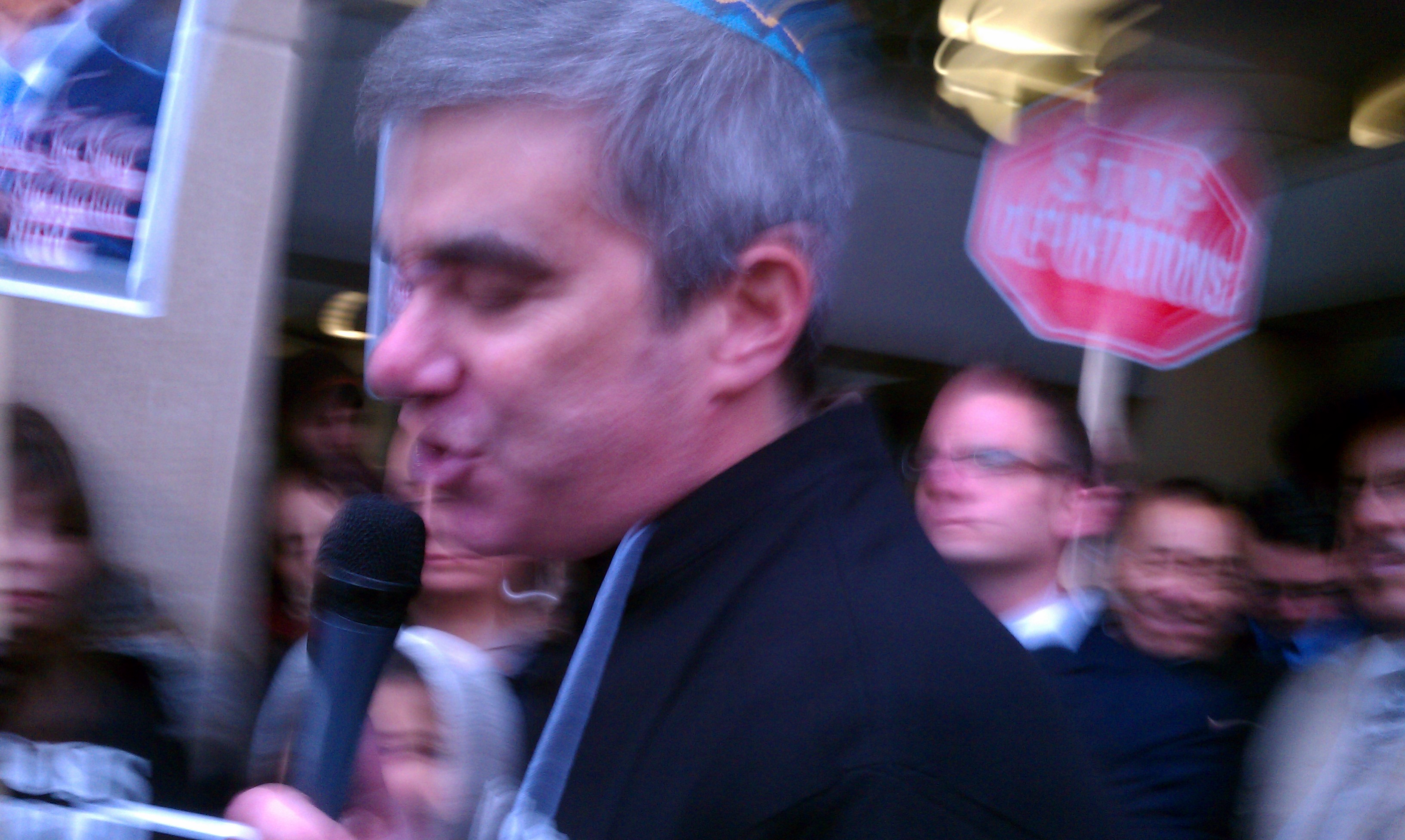
It was my honor to be among the speakers at  press conference before the demonstration (above). Here is the full text of my remarks (which was shortened due to time restraints):

My name is Brant Rosen – I’m the rabbi of Jewish Reconstructionist Congregation in Evanston and I’m a member of this amazing, diverse and growing coalition of activists who are working for the cause of immigrant justice. I am part of the majority of Americans and 80% of Illinoisians who support compassionate immigration reform that provides a path to citizenship.

And I am here to say it is time for our national leaders to lead. It is time for Speaker John Boehner and Republican leader Peter Roskam to give us a vote. It is time for President Barack Obama to end the daily deportatins that are now approaching 2,000,000 and has left 3,000,000 children orphaned.  This is not simply a political issue – and shame on any politician who treats immigration reform as “business as usual.”  Immigration reform is one of the most critical moral and human rights issues facing our country today.

As a Jew, my faith tradition teaches that societies will ultimately be judged by the way they treat their immigrants. My faith tradition teaches that when we label another human being as “illegal,” we diminish God’s presence in our world. When we incarcerate and deport those who come to this country seeking a better life, we diminish God’s presence in our world. And when we create and enforce laws that rip children away from their parents – and parents from their children – we most certainly diminish God’s presence in our world.

My faith tradition also teaches that God stands with the oppressed and demands that we do the same.  And make no mistake: our immigration system constitutes a very real form of oppression against families in our nation.  It is thus our sacred duty to stand here today, in front of US Immigration Customs and Enforcement headquarters, to say: this oppression must end.  The destruction of our families must end. The daily deportations of 1,100 human beings must end.  It is our sacred duty to bring it to an end.

John Boehner and Peter Roskam: It’s time to give us a vote on citizenship.  It’s time to end the oppression of our undocumented brothers and sisters.  President Obama: it’s time to keep your promise to the American people. 2,000,000 deportations is 2,000,000 too many. Stop deportations now!

If our national leaders refuse to lead, then it is time to take to the streets. And tonight, we will take to the streets. Our movement is the new civil rights movement growing in cities across the nation, rising up to demand compassionate immigration reform now. You will hear from us tonight in Chicago – and you will be hearing from us again and again until our oppressive immigration system is no more!

It has been my honor to stand together in this movement with so many people from so many different faiths and ethnicities and histories. It has been a particular honor to stand together with our undocumented sisters and brothers, whose steadfast courage and dignity are an inspiration to us all.

My own grandparents were immigrants to this nation. I know all too well that I am the beneficiary of their decision to come to this country, and of my country’s willingness to provide them with a path to citizenship. For those of us who enjoy the privileges of the courageous decisions of those who came before us, it would be a profound betrayal if we did not stand together here today.

We are here today. We will be here tomorrow. And we will stand together every day until compassionate immigration reform is finally a reality in our country.  Ken Yehi Ratzon – as it is God’s will, so my it be ours.

Amen and thank you all for coming out tonight.

___________________________________

En Español (Gracias a Gonzalo Escobar):

Mi nombre es Brant Rosen – Soy el rabino de la Congregación Judía Reconstruccionista en Evanston y soy un miembro de esta increíble y diversa y creciente coalición de activistas que trabajan por la causa de la justicia para los inmigrantes. Yo soy parte de la mayoría de los estadounidenses y el 80 % de Illinoisians que apoyan la reforma migratoria compasiva que proporcione un camino a la ciudadanía.

Y yo estoy aquí para decir que es hora de que nuestros líderes nacionales para hagan su trabajo de legislar. Es hora de que los Representantes, John Boehner, y el líder republicano Peter Roskam nos den un voto. Es hora de que el presidente Barack Obama ponga fin a las deportaciones diarias que se están acercando a 2 millones y han dejado a 3 millones de niños y niñas huérfanos. Esto no es simplemente una cuestión política y es una vergüenza que un político trate la reforma migratoria como “como si no pasara nada”, la reforma de inmigración es uno de los temas de derechos humanos y morales más importantes que enfrenta nuestro país hoy en día.

Como judío, mi tradición de fe nos enseña que las sociedades en última instancia, serán juzgadas por la forma en que tratan a sus inmigrantes. Mi tradición de fe nos enseña que cuando etiquetamos a otro ser humano como “ilegal”, disminuimos la presencia de Dios en nuestro mundo. Cuando encarcelamos y deportamos a los que vienen a este país en busca de una vida mejor, disminuimos la presencia de Dios en nuestro mundo. Y cuando creamos y hacemos cumplir las leyes que separan a los niños de sus padres – y a los padres de sus hijos – ciertamente estamos disminuyendo la presencia de Dios en nuestro mundo.

Mi tradición de fe también enseña que Dios está con los oprimidos y demanda que hagamos lo mismo. Y no nos engañemos: nuestro sistema de inmigración constituye una forma muy real de la opresión contra las familias en nuestro país. Por tanto, es nuestro deber sagrado de estar aquí hoy, frente a la sede de inmigración y aduanas de EE.UU. para decir: la opresión debe terminar. La destrucción de nuestras familias debe terminar. Las deportaciones diarias de 1.100 seres humanos deben terminar. Es nuestro sagrado deber de ponerle fin.

John Boehner y Peter Roskam : Es hora de que nos den un voto para la ciudadanía . Es hora de poner fin a la opresión de nuestros hermanos y hermanas indocumentados. Presidente Obama: es el momento de mantener su promesa al pueblo estadounidense. 2 millones de deportaciones y 2 millones es demasiado. ¡Detengan las deportaciones ahora!

Si nuestros líderes nacionales se niegan a legislar, entonces es el momento de salir a la calle. Y esta noche, vamos a salir a las calles. Nuestro movimiento es el nuevo movimiento de derechos civiles que crece en las ciudades de todo el país, para exigir una reforma migratoria compasiva ahora. Ustedes nos escucharán esta noche en Chicago -¡y ustedes nos escucharan a nosotros una y otra vez hasta que nuestro sistema de inmigración opresivo no exista más!

Ha sido un honor para mí estar juntos en este movimiento con tantas personas de tantas religiones y etnias e historias diferentes. Ha sido un gran honor particular, estar junto a nuestras hermanas y hermanos indocumentados, cuyo valor y dignidad inquebrantable son una inspiración para todos nosotros.

Mis abuelos eran inmigrantes de esta nación. Sé muy bien que soy el beneficiario de su decisión de venir a este país, y de la voluntad de mi país para proporcionarle un camino a la ciudadanía. Para aquellos de nosotros que disfrutamos de los privilegios de las decisiones valientes de los que vinieron antes que nosotros, sería una traición profunda si no nos mantenemos unidos hoy aquí.

Estamos aquí hoy. Vamos a estar aquí mañana. Y vamos a estar juntos todos los días hasta que la reforma migratoria compasiva sea finalmente una realidad en nuestro país. Como se dice en Hebreo “Ken Yehi Ratzon” – ya que es la voluntad de Dios, y será la nuestra.

Amén y gracias a todos por venir esta noche.

Why I’m Participting in the Sabeel – North America Conference in Chicago

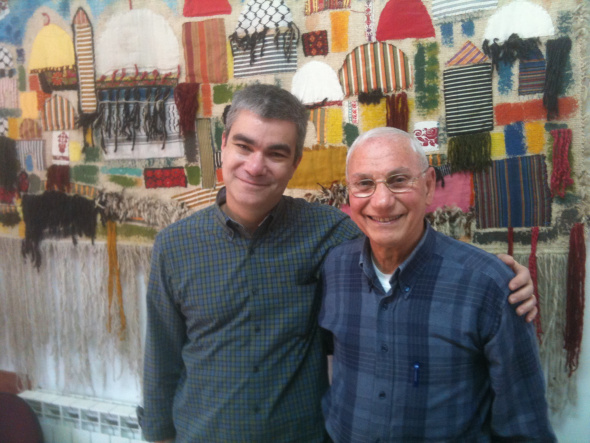
With Rev. Dr. Naim Ateek (Dec. 2010)

With Rev. Dr. Naim Ateek (Dec. 2010)

It is truly my honor to be included in the program of the upcoming conference, “A Wide Tent for Justice: Next Steps for Peace in Palestine/Israel,” sponsored by Friends of Sabeel – North America and the Chicago Faith Coalition on Middle East Policy.  And I’m particularly honored to be participating on a panel and leading a workshop together with Rev. Dr. Naim Ateek, founder of the Sabeel Insititute and one of the most important purveyors of Palestinian Christian liberation theology.

I can safely say my own spiritual understanding of the Israel/Palestine conflict has been profoundly influenced and challenged by the work of Rev. Dr. Ateek.  I do believe religious Jews have a great deal to learn from liberation theology in general and Palestinian liberation theology in particular.  I’ve long admired Ateek for his willingness to shine a light on the theological problems that come with the land-centric nature of Zionist ideology.  I believe his criticism of Zionism as a “retrogression” to a Biblically-based nationalist Jewish expression is a critical one for us to consider – painful though it may be for many in my community.

Responding to the challenge of Rev. Dr. Ateek and his colleagues, I’ve been working over the past year on developing a potential framework toward a theology of Jewish liberation that reclaims the universal vision of the Prophets and provides a progressive spiritual alternative to the fusing of religion and state power. I’ve been encouraged by the response to my initial efforts thus far – from Jews and Christians alike – and am increasingly coming to believe that there is a critical place for such ideas in the post-modern Jewish theological world.

Alas, much to my sadness and dismay, many in the Jewish establishment world continues to vilify Rev. Dr. Ateek and the Sabeel Institute. While I certainly understand that many are challenged – often profoundly – by Palestinian liberation theology, it grieves me that the “official” Jewish communal response to this movement has been to publicly excoriate its leaders as anti-Semitic rather than to engage them in real and honest dialogue.

I do believe this kind of posturing has everything to do with politics and very little to do with actual interfaith dialogue.  True dialogue occurs when respective communities agree to explore the hard places – the tension points – no matter how painful. In my own dialogue with Palestinian Christians (and those in the Protestant church who stand in solidarity with them), my own sensibilities have been challenged and broadened – but I’ve also found that my participation allows me to have a similar kind of impact on my Christian partners. And while we might not agree on every issue, we ultimately emerge from our encounter strengthened by our common commitment to universal prophetic values of justice.

Back in 2010, when I visited the Sabeel Institute in Jerusalem with members of my congregation, I wrote the following:

Whether or members of the Jewish community agree with him or not, I believe it would greatly behoove us to enter in dialogue with Ateek and others in the Palestinian Christian community – and I told him as much during our meeting. At the very least, it is my sincere hope that there might be Jewish leaders actively participating rather than protesting during the next American Friends of Sabeel conference.

I sincerely hope that will be the case at the upcoming conference here in Chicago (hosted by St. James Cathedral from Oct. 3 – 5).  In the past, Friends of Sabeel – North America conferences have occasioned fierce political pushback from the Jewish communal establishment. Sad to say, last year, Jewish leaders in Albuquerque pressured a local Episcopal church into canceling its sponsorship of the the Sabeel – NA conference there.  While I have every confidence that this will not occur in Chicago, I fully expect that some members of the Jewish communal establishment here will publicly tar organizers and co-sponsors of the event with the tired accusations of “anti-Semitism.”

Still, I am hoping against hope that members of my community will see fit to attend the conference in the spirit of openness and with a willingness to be challenged. I do believe this is nothing less than the most critical Jewish-Christian dialogue of our time.

Sukkot Sacrilege: House Votes to Gut Food Stamp Program

It’s Sukkot – the Jewish harvest festival in which we acknowledge the fragility of our lives and invoke God’s sheltering presence. How sad and ironic, then, that the US House of Representatives voted on this very day to slash $40 billion from the federal food stamp program (known as SNAP). An act of sacrilege on any day but on this day in particular.

As I mentioned in my Yom Kippur sermon, the House Republicans know full well that these draconian cuts will never be passed by the Senate or signed by the President. But don’t be fooled – this is clearly a ploy to try and pressure the Senate into make even deeper cuts than the ones they have passed already.

Click here to read Feeding America’s extensive report, “Fact, Myths and Realities on the Food Stamp Program.”  Then please click here to sign a petition urging the House to “end its quest to stigmatize and traumatize poor people.”

I frankly can think of no more sacred gesture this Sukkot season.

At-Risk Communities from Syria to the South Side: A Sermon for Yom Kippur 5774

AzLP81g

While I’m sure that Syria has been on the lips of many a rabbi this High Holiday season, I’ll be honest with you: I’ve struggled with whether or not to give that sermon this year. Not because I don’t consider it to be an issue of critical importance, quite the contrary – no one can deny that the situation in Syria is a tragic and critically important one in our world at the moment. If I’ve been hesitant, it’s only because I’m not really sure I have much to add to the myriad of political analyses we’ve heard in the media these past few weeks.

So while my words to you today are not directly related to Syria, I would like to begin with one small but powerful story out of this crisis. It comes from an article written by my friend Aziz Abu Sarah, a young Palestinian peace activist and educator. At the moment Aziz is the Co-Executive Director at the Center for World Religions, Diplomacy and Conflict Resolution at George Mason University – and he was recently made a National Geographic Emerging Explorer where he serves as a cultural educator. Several JRC members know Aziz well as he was one of our tour guides of a JRC trip to East Jerusalem and the West Bank two years ago.

As the news out of Syria became more and more dire, particularly the news of the growing refugee crisis, Aziz and a colleague put their heads together to explore some kind of action they might possibly take. There are currently more than 2,000,000 Syrian refugees in camps throughout the Middle East – mostly in Lebanon, Jordan, Turkey, Iraq and Egypt. Women and children make up three quarters of the refugee population. There are over 1,000,000 children refugees as a result of this crisis.

In the end, Aziz and his colleague decided to establish an educational summer camp for refugee children on Syrian-Turkish border. In a blog post about his experiences in the camp, he wrote, “Whether the US bombs Assad or not is not in my control, but being active to help those in need is.”

In his post, Aziz wrote movingly about the children he had met and the stories they told him – stories that were at once horrific and at the same time the ordinary everyday stories of children everywhere. At the conclusion of his post, he wrote:

These are the stories that we need to remember when we argue about Syria. These are the people paying the heavy price. When we pass by a news item about Syria, we must remember the millions of children that could become another lost generation without our willingness to engage and help…

Opening our hearts and finding compassion must come before any discussion on military intervention.

When I read Aziz’s post, it reminded me how easily we debate these crises even while knowing so very little about the people who are actually living through them. How we tend to view these kinds of global tragedies in the abstract. It’s understandable, of course – when we read the staggering statistics coming out of these crises zones, it literally staggers our comprehension. How on earth do we grasp numbers such as these, let alone the reality of the suffering behind the statistics?

But while it’s understandable, I do find something profoundly troubling about this phenomenon. Because when we reduce people in crisis zones to abstractions, it invariably creates a kind of emotional callousness in the ways we think and form our opinions about the crises themselves. When we don’t make an effort to understand the human reality behind the headlines, it seems to me, our political ideas emerge in something of a moral and emotional vacuum.

I do believe that Aziz is absolutely right: before we start holding forth on whether or not to bomb, we must first open our hearts and find compassion for the people of Syria. We must make an effort to learn who they are, to learn about their unique experiences, to listen to them. Whatever we believe must be done, the process by which we form our opinions must begin with an effort to get to know the human beings behind the abstractions.

Now I realize that most of us don’t have the wherewithal to pack up and move to Turkey to work with Syrian refugees – but this doesn’t let us off the hook. Because quite frankly, we don’t have to literally go to the Middle East to discover populations at risk. While Syria has been at the center of the headlines of late, in truth there are all too many of communities in crisis in our midst. We don’t have to go all that far to find them.

Indeed, this is another way that our abstractions affect our perception of the world. Crises are things that happen “over there.” To be honest, sometimes it seems to me that we relate to the at-risk populations in our own backyard as if they are as far away as the Middle East. But of course, they’re not. They are right here, right outside our very door. They may not be of the same magnitude of those in places like Syria, but they are all too real nonetheless.

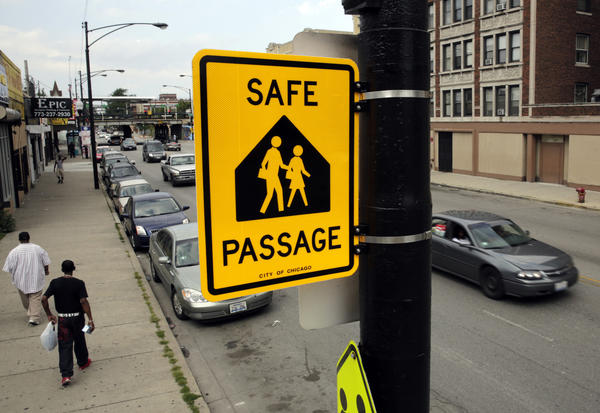
Here’s but one example, from right here in Chicago. Many of you, I know, are familiar with the initiative known as “Safe Passage” a program formed in 2009 as a response to gang and street violence in at risk Chicago neighborhoods. The program places community workers wearing bright fluorescent vests near public schools as a presence that will help create “safe passage” for High Schoolers who were walking to and from school.

The program was expanded significantly this past May, after the Chicago School Board closed almost 50 public elementary and middle schools in predominantly African-American and Hispanic communities on the South and West sides. Among the many devastating impacts of this decision was that it forced many children to walk longer routes to their new schools, through additional dangerous neighborhoods and across multiple gang boundaries. Whereas these children had previously walked an average of a few blocks to their neighborhood schools, many of them now have to walk half a mile or more through areas that are, quite literally, battle zones.

To deal with this reality, the school board expanded Safe Passage, hiring an additional 600 workers at $10 an hour to serve 12,000 schoolchildren in at-risk communities on their way to their new schools. While it is still early in the new school year, the preliminary reports are not promising. There have already been reports of violence along Safe Passage routes – not including the myriad of areas where children are not served by the program. We are now hearing reports that overwhelmed workers are quitting or just not showing up for work. One alderman has suggested the use of drones to protect children along Safe Passage routes.

No, we don’t need to look far away to find stories of children in battle zones. They are, in a very real way, right outside our door.

How do we respond to news such as this? Though it pains me to say so, I would suggest most of us who live the relatively safe and secure neighborhoods of greater Chicago respond to this news the same way we respond to the tragic news coming out of Syria, or Somalia or the Congo. Most of us, I think, thank goodness it’s not our reality. We quantify it in the abstract. We respond as if it’s happening “over there.”

Except it’s not. It’s happening right here in our very own community and in communities just like it across our country. These populations may not be terrorized by tyrannical dictators or civil war, but their lives and their families’ lives are at risk in a very real way. As a parent, I cannot fathom how it must feel to raise my children in neighborhoods wracked with violence, to send them off to walk miles to school through gangland battle zones. I cannot begin to fathom it. And maybe that is part of the problem.

This Yom Kippur, the season when our community honestly takes account of itself and how we might collectively atone, I think it is eminently appropriate to ask ourselves: what has been our response to communities in crisis? And are we truly able to see them? Have we truly opened our eyes and our hearts to their realities – particularly those who live right here in our own nation, our own city?

I can’t help but wonder what our communities would look like if our public policy was guided by such an approach. Let’s return to the example of Safe Passage that I gave earlier. There is no doubt that Chicago Public Schools, like all major urban school districts, faces daunting challenges. But unfortunately in my opinion, the Chicago School Board, like so many other urban school boards, now seeks to address these challenges from a corporate, efficiency-focused mindset rather than a community-based one.

I believe this approach to public education is problematic on many levels – but perhaps the most troubling is the way it has utterly blinded us to the critical role neighborhood schools play as the bedrock of our communities – particularly our at-risk communities. In areas that have already been profoundly destabilized by massive cuts to public services, neighborhood schools have served as the only real glue that holds these communities together. By closing these schools, CPS was in many cases literally cutting the final piece of government investment in these communities – and the last remaining institution in which residents can invest in one another.

It is impossible to understate the devastation these kinds of decisions inflict on low-income communities that have long been seriously at-risk. For decades, in fact, urban renewal policies have been decimating neighborhoods, uprooting residents who are largely poor and people of color. Neighborhood assets, like churches, stores, and parks that have been important community centers for generations, have become abandoned or have disappeared. And so residents have been forced out – they have become refugees, in as sense, of a different sort.

The neighborhood school is often the one institution still surviving in low-income neighborhoods and it has historically served as points of pride and community for families. If you had any doubt that these schools are important to their neighborhoods, you had only to listen to the thousands of parents who attended community meetings on school closings over the past few months. Despite their pleas, however, our new “education reformers” have chosen to close schools rather improve them, using the argument that we are in a time of public sector austerity and that we need to orient them to market forces.

This is what happens when leaders view schools using a corporate model rather than a community-based one. When CPS closed 50 neighborhood schools and slashed the budgets of those that remained, Chicago’s non-elected board addressed this issue with a top-down mindset that was ultimately divorced from the real-life reality on the ground. And so now we have it: thousands of students are now leaving their already devastated neighborhoods every day are forced to walk through battle zones in order to get to their schools.

Of course this phenomenon is not only restricted to our schools. In too many ways, our public policy is guided by the corporate goals of efficiency and profit over community and the greater good. While it is certainly true that many of our public institutions are bloated and inefficient and in need of reform, when we destroy them wholesale in this manner, we fail to reckon with the very real human cost of these actions. Even worse, when we privatize our public works, whether it is public housing, our health care system, or our prisons, we do more than simply turn lives into abstractions. We increasingly view human lives – and in some cases, human misery – as commodities to be profited from.

Whether we call this privatization or neo-liberalism whatever we choose to call it, I do believe it represents a very real form of institutional oppression. It may not be as obvious or as brutal as the oppression meted out by the Bashar Al-Assads of the world, but I submit it is a form of oppression nonetheless. Both stem from a view of our neighbors as somehow “other.” Both benefit from a more privileged people’s willingness to turn a blind eye. And most important, both forms of oppression affect the real lives of real people.

So what is there to be done? On an individual level, I think, one answer is very simple: we need to connect. We need to venture out of the hermetically sealed worlds we too often construct for ourselves and learn more about the people with whom we live – particularly those whose day-to-day reality is fundamentally different from our own.

Earlier this month, I read an article by a German journalist who was in Chicago to write about urban gun violence through a grant from the Pulitzer Center. It was fascinating to read the impressions of this European visitor from a Berlin, a city larger than Chicago but with a fraction of the homicides.

Here is how the journalist, Rieke Havertz, ended the article:

It is human nature to ignore Chicago’s gun violence as long as the shooting stays in the “bad” neighborhoods. Don’t take the “L” down south — that was the advice I always heard when I spoke about visiting less-fortunate neighborhoods.

I ignored the advice and nothing happened to me except that I got to know the city. I discovered that it’s not just money that needs to be thrown at these neighborhoods. They need economic opportunity, education, health care. They need a Chicago that is not a segregated city.

They need people who care. Take a different path, reach over the walls.

I know many JRC members who work and volunteer with in at-risk communities in Chicago and right here in Evanston – and I have learned a great deal from them over the years. I think it would behoove us all to not just to learn about these communities, but to create real connections, nurture real relationships. To meet and listen to those who live there. To relate to them as real people, not as charity cases to be helped or problems to be solved. To learn about their reality, their struggles, their needs, from them, not news reports or politicians or pundits.

We need to learn and act on an advocacy level as well. Here in Chicago, there is a remarkable grass-roots coalition that is shaping up and organizing on behalf of the at-risk communities in our city. In fact, polls show that 60% of Chicago’s citizens oppose the school closings and they are starting to make their voices and their presence heard in a major way. After the CPS’s announcement, many of us took to the streets for three straight days of marches in protest – and although the school closings and budget cuts are now a reality, they have galvanized a movement that is attracting a remarkable coalition – including growing numbers of young people.

But this movement has not grown up overnight – and it is not simply focused on the issue of public schools. It has in fact been building steadily over the years; it is the product of many community-based organizations mobilizing and organizing on behalf of the most vulnerable members of the greater Chicago community.

I’m proud to say here at JRC we are becoming increasingly active in this movement. I encourage you to find out more about our efforts and seriously consider lending us your support. Specifically speaking, I encourage to consider getting involved in our Labor Justice Task Force, our Immigrant Justice Task Force and to speak with JRC members who are currently exploring ways we can become active with Northside P.O.W.E.R., an institution-based people’s power organization with members on the Chicago’s North side and in North Shore Communities.

I have also personally been active with the wonderful organization Arise Chicago, an interfaith community organization that does important, critical local work on behalf of worker justice. (And of course, I would be derelict if I did not mention that we have many other active and vital Tikkun Olam Task Forces at JRC – I hope you will speak to JRC’s VP for Tikkun Olam and  learn how you can get involved in our ongoing social justice efforts.)

I also want to encourage us all to educate ourselves and find ways to act on a national level as well. Indeed, it is not an understatement to say that the at-risk populations in our country are currently vulnerable in ways we haven’t seen in decades. According to new data from the US Department of Agriculture, more than one in five American children face hunger, this at a time in which our Congress is considering cutting the SNAP program (aka food stamps) for more than 800,000 Americans who currently receive them but still do not get enough to eat or maintain only a barely adequate diet.

The crisis facing our food stamp program is a particularly critical issue at this very moment – and I would be extremely derelict if I devoted a sermon to our at-risk populations without mentioning this. According to a new report released just a few days ago by the Agriculture Department, food insecurity in our nation remains at a stubbornly high 14.5 percent. According to these statistics, one in five American children are currently facing hunger.

Thanks to the stimulus package, we’ve been able to address this issue through the SNAP program, which last year served 47 million Americans to meet their basic nutrition requirements. However next week, House Republicans, in an effort led by Representative Eric Cantor, will vote to cut $40 billion out of the food stamp program – an act that would literally force hundreds of thousands of Americans into food insecurity.

In regard to this bill, Rep. Jim McGovern made this very astute comment:

There are 50 million people in the United States of America who are hungry, 17 million are kids. It is something we all should be ashamed of, and the United States House of Representatives is about to make that worse. This is a big deal and my hope is that we’ll treat it as such and not just let it go by without a lot of discussion and debate because we’re all focused on Syria.

Now these cuts are unlikely to become law since the Senate would never pass them and President Obama would certainly never sign them. But the very fact that such a bill could even be voted on in the House is a clear sign that those advocating for the poor and the hungry in our country must remain incredibly vigilant. We simply cannot let our foreign policy discussions, however important, to eclipse these critical issues facing at-risk citizens here at home.

Every Yom Kippur, we recite our prayers in the first person plural. When we seek atonement, hope and healing for the New Year, we don’t do so for our own individual selves – we ask for these things on behalf of our entire community. I would claim that in this day and age it is getting harder and harder for us to connect with this aspect of our Yom Kippur prayers. Increasingly, it feels to me that we liturgical lip service to the concept of community. Too often it seems like we’re all living our parallel lives, without the sense that at the end of the day we’re all somehow in this together.

But in fact, we are. I do believe this sense of living separately from one another is itself the illusion. At the end of the day, our fates are intertwined. We’re very much mistaken if we believe that we’re somehow immune from risk. As we all know too well, the middle class is being squeezed and endangered in ways we haven’t witnessed in decades. Over the years and even now, there have been JRC members living on the verge of hunger and homelessness. These problems are not somewhere “over there” and in truth, they never really were. Perhaps it’s only our individualistic 21st century perspective that has changed.

So this Yom Kippur, I’m suggesting a recalibration of our spiritual perspective. To view the risk to the well-being of some members of our community as a risk to our own well-being. In a very real way, to own the danger and let go of our illusions of invulnerability. Otherwise, what do all of these prayers really mean? What do our lives really amount to if we cannot somehow see them as integrally connected to the lives of others, whether they live in Syria or the Southwest side of Chicago or in Evanston?

May this be the new year we let go of our illusions. May this be the year we decide to share the risks as well as the rewards.

May it be a rewarding year for us all.

(Click here to sign a petition that tells the House and Senate to put low-income families ahead of corporate welfare and to oppose all cuts to food stamps.)

In Memory of our Voting Rights Martyrs: A Sermon for Kol Nidre 5774

Jimmie Lee Jaskson

Jimmie Lee Jackson

I’d like to begin tonight by telling you the stories of three heroes of the civil rights era. I’d wager most Americans have never heard of them – but as far as I’m concerned, they deserve to be at least as well known as Emmett Till, Medger Evers and Rosa Parks.

The first is Jimmie Lee Jackson, an African-American farmer and woodcutter from in Marion, Alabama. Jackson grew up in poverty, but planned to move North for a better life after graduating from high school. After his father’s early death however, he spent his the remainder of his life on his small family farm in Marion, where he lived together with his sister, mother, and grandfather.

Jackson was an army veteran and a deeply faithful man; he became the youngest deacon in the history of Marion’s St. James Baptist Church. He also turned into a political activist at an early age after unsuccessfully attempting to register to vote for four years. Jackson spearheaded his church’s voter registration drive and eventually became a prominent civil rights leader in Merion.

On the night of February 18, 1965, Jackson participated in a demonstration in which 500 people peacefully marched from a church in Marion to the county Jail about a half a block away to protest the imprisonment of a young civil rights worker. On their way, the marchers were met and beaten by a line of Marion City police officers, sheriff’s deputies, and Alabama State Troopers. Among the injured were two United Press International photographers. A NBC News correspondent was so badly beaten that he was later hospitalized.

The marchers quickly turned and scattered back towards the church. Pursued by the state troopers, Jackson, his sister, mother, and 82-year-old grandfather ran into a café. The troopers followed them in and clubbed his grandfather to the floor. When Jackson’s sister and mother attempted to pull the police off and they began to beat them as well. Jackson went to protect them and a trooper threw him against a cigarette machine. A second trooper moved in and shot Jackson twice at point blank range in the abdomen.

Jackson staggered outside, was clubbed again and fell wounded in the street, where he lay for half an hour. Later that night, Jackson, his mother and grandfather were transported to a hospital in Selma. His mother and grandfather suffered head wounds but were treated and released – Jimmie Lee remained in the hospital where his condition grew steadily worse. Four days later, an Alabama state trooper walked into and hospital room and charged Jackson with assault and battery with intent to murder a peace officer. Eight days later, on Friday, February 26, Jimmie Lee Jackson died from his wounds.

His funeral took place on March 3. Dr. Martin Luther King was among the speakers at the service, after which a thousand people followed Jackson’s casket through the rain to a local cemetery. Four days later, several hundred marchers left Brown Chapel in Selma, formed a long column, and began walking up the steep incline of the Edmund Pettus Bridge, which spans the Alabama River. Their goal was to walk 54 miles to the state capitol in Montgomery to protest Jackson’s death and petition the governor and legislature to open the state’s voting rolls to all citizens. The march ended violently on a day we would all come to know as “Bloody Sunday.” It was a galvanizing moment in the fight for voting rights in this country.

Reverend James Reeb

Reverend James Reeb

The second person I’d like to profile for you now is Reverend James Reeb. Reeb was raised in Caspar, Wyoming, served in the Army during World War II, and was later ordained by the Princeton Theological Seminary. Soon after, however, he left the Presbyterians and joined the Unitarian Universalist church. As a white man who believed in civil rights, he was particularly drawn to the UU’s strong emphasis on social justice.

Reverend Reeb was fully ordained as a Unitarian Universalist minister in 1962. After serving for a few years at All Souls Church in Washington DC, he became the director of the American Friends Service Committee Metropolitan Boston Low Income Housing Program in 1964. With his wife and four children, he moved to Boston and purchased a home in Roxbury, a predominantly African-American area of the city. His daughter Anne later recalled that her father “was adamant that you could not make a difference for African-Americans while living comfortable in a white community.”

Following Bloody Sunday, Reeb went down to Selma with 45 Unitarian ministers and 15 laypeople to participate in the voting rights demonstrations that arose in the wake of Bloody Sunday. On March 9, he joined 2,500 marchers for a second march from Selma to Montgomery. As on previous attempts they were stopped by the police – and so the marchers returned to Browns Chapel for an evening of speeches, singing and prayers.

Later that night, Reeb and two other Unitarian ministers had dinner in a local black restaurant. Although he had planned to return to Boston that night, he called his wife and told her he had decided to stay for one more day. Upon leaving the cafe, the trio was set upon by four men brandishing clubs and yelling racist slurs. They attacked and beat the three men – wounding his two colleagues and severely injuring Reeb with a blow to his skull. Needing a neurosurgeon, he was driven ninety miles by ambulance to University Hospital in Birmingham. He died two days later.

Reverend James Reeb’s death sparked mourning event throughout the country – tens of thousands held vigils in his honor, including a ceremony in Selma, where he, like Jimmie Lee Jackson, was eulogized by Dr. King. That evening, on March 15, President Johnson spoke to a joint session of Congress on behalf of the Voting Rights Act. It was his famous “We Shall Overcome” speech, in which he urged Congress to outlaw all voting practices that denied or abridged “the right of any citizen of the United States to vote on account of race or color.” Six months later, Johnson signed the Voting Rights Act into law.

Viola Liuzzo

Viola Liuzzo

And finally, let me tell you now about Viola Liuzzo – born in 1925 to a poor white family that moved constantly throughout the Deep South. During the early months of World War II, her family moved to Michigan, where she worked in a bomber factory. Eager to contribute to the war effort herself, Viola moved to Detroit, where she married and had two daughters. They divorced shortly after and she eventually married Anthony James Liuzzo, a union organizer for the Teamsters. Anthony adopted her daughters and they had three more children together.

Though she was a high school dropout, Liuzzo trained as a medical laboratory assistant and later took classes at Wayne State University. There she was exposed to political ideas of the time, including debates about the Vietnam War, education reform, and economic justice. This period marked the beginning of her political activism. She was arrested twice in demonstrations and both times she insisted on a trial in order to publicize her causes.

In 1964 Liuzzo, a former Catholic, joined the First Unitarian Universalist Church of Detroit – attracted, like Reverend Reeb, by its commitment to civil rights. She also became active in the Detroit chapter of the NAACP. Like so many others, Liuzzo was galvanized by events in Selma. Following Reverend Reeb’s murder she attended a memorial service for him and soon after, she decided to go down to Selma herself to volunteer for a week. As she explained to her husband, she believed there were “too many people who just stand around talking.” She asked her closest friend, an African-American woman named Sarah Evans, to explain to her children where their mother had gone and to tell them she would call home every night. When Evans warned her that she could be killed, she replied simply, “I want to be part of it.”

So on March 21, Liuzzo joined 3,000 other marchers as they marched across the Edmund Pettus Bridge attempting to reach Montgomery. She stayed on to volunteer over the next few days, driving shuttle runs from the airport to the marchers’ campsite and helping at a first-aid station.

On March 25, she joined the marchers for the final four miles to Montgomery, where she joined the thousands that demonstrated at the Alabama State House. When the march was over, Liuzzo and African-American civil rights worker named Leroy Moton drove five marchers back to Selma. After they were dropped off, Viola volunteered to return Moton to Montgomery. On their way back, four Ku Klux Klan members pulled up alongside their car. Liuzzo tried to outrun them, but they caught up with her car and opened fire. Viola was shot twice in the head and died instantly.

Following her murder, President Johnson publicly demanded that the arrest of Liuzzo’s murderers be a top priority. In just 24 hours, the FBI arrested the four Klan members, one of home was an FBI informant. Johnson appeared personally on national television to announce their arrest.

The FBI would later attempt to publicly discredit Liuzzo – most likely to cover up the fact that their agent was a KKK member and may have actively participated in her murder. J. Edgar Hoover personally spread rumors that Liuzzo was a member of the Communist party and a drug addict and that she had traveled to Selma to have sexual relations with black men. Viola’s family was also targeted by hate groups – after crosses were burned in front of their home. Anthony Liuzzo had to hire armed guards to protect his family.

However, as in the case of Jimmie Lee Jackson and Revered James Reeb, Viola Liuzzo’s death had a powerful impact on the voting rights movement across the country. On March 27 hundreds of protesters marched to the Dallas County courthouse in Selma in her memory. The next day Dr. King eulogized her at San Francisco’s Grace Episcopal Cathedral. The NAACP also sponsored a memorial service for Liuzzo at a Detroit church that was attended by fifteen hundred people including Rosa Parks. A Roman Catholic Church in Detroit celebrated a high requiem mass that was broadcast on TV. Dr. King was among the 750 people in attendance.

As with Jackson and Reeb, Viola Liuzzo’s murder played a critical role in the eventual passage of the Voting Rights Act. According to historians, Johnson invoked her death repeatedly as he lobbied Congress. Five months after she died, he signed it into law.

Why am I telling you the stories of these three individuals tonight? One simple reason is that I believe they deserve to be told. We owe Jimmie Lee Jackson, Reverend James Reeb and Viola Liuzzo at least that much. And we owe it to ourselves. I took the time to tell you about them because so few really know the stories of these American heroes. And we should. We should know who they were, how they lived and the significance of their sacrifice.

I also have a specifically liturgical reason for telling you their stories tonight of all nights. The traditional  Yom Kippur service includes a section known as the Martyrology (or as we call it in Hebrew, “Eleh Ezkarah,” meaning “These I Remember.”) The centerpiece of Martyrology is a long liturgical poem that recounts the death of ten rabbis – including the famous Rabbis Akiba, Ishmael and Shimon ben Gamliel – who were executed for their support of the failed revolt against Rome in the year 132.

We traditionally read these accounts on Yom Kippur because of the classical Jewish belief that blood atones.  Our Torah portion tomorrow will, in fact, describe an ancient sacrificial rite of atonement, in which the High Priest sacrifices a goat on behalf of the entire Israelite people. Though the sacrificial system is no more, we ask for God’s forgiveness by invoking the deaths of those who made the ultimate sacrifice. And so on Yom Kippur, we beseech God: even if we are unworthy of God’s mercy in the coming year, we ask for forgiveness us on account of those who made the supreme sacrifice on our behalf.

Whether or not we buy into such a theology, I believe the Martyrology has an additional function as well: on Yom Kippur we  pose the question honestly: what have we done in the past year to prove ourselves worthy of these profound sacrifices? What have we done to affirm that these courageous people did not die in vain? Have we honored their memories by transforming these lost lives into justice, hope and healing for our world?

When we ask these questions as 21st century American Jews, I believe they resonate for us on multiple levels. When we invoke those Jews who died for practicing their faith, we must ask: have we done what we can to ensure that this Judaism – this exquisite spiritual tradition of ours – will be passed on to future generations? And as Americans, when we remember those who died in furtherance of justice in our country, we are challenged: how have we honored their sacrifice? What to have we done in the past year to ensure that they did not die in vain?

Indeed, at the heart of this liturgy is a refusal to accept that our martyrs have died for nothing. I’ve just recounted for you the stories of three lesser-known martyrs of the American civil rights movement – but this Sunday, as a matter of fact, we will commemorate the 50th anniversary of four others who are much better-known: Addie Mae Collins, Denise McNair, Carole Robertson, and Cynthia Wesley – the four little girls who were killed by a KKK bomb in Birmingham’s 16th St. Baptist Church on September 15, 1963.

At the funeral for three of the girls, Dr. King gave a famous address that has since come to be known as the “Eulogy for the Martyred Children.” At one point in his eulogy, King said as follows:

So they did not die in vain. God still has a way of wringing good out of evil. History has proven over and over again that unmerited suffering is redemptive. The innocent blood of these little girls may well serve as the redemptive force that will bring new light to this dark city … The spilt blood of these innocent girls may cause the white citizenry of Birmingham to transform the negative extremes of a dark past in to the positive extremes of a bright future. Indeed, this tragic event many cause the white South to come to terms with its conscience

Amongst the many religious texts I’ve read on the meaning of martyrdom, I personally find King’s words to be among the most spiritually meaningful and profound. I am particularly moved by his hope, by his realism, but most of all, by his refusal to surrender to the possibility that these four little girls died for nothing. Even in the midst of this wretched tragedy, he was determined to find a spark of spiritual meaning in their loss.

In his eulogy, King also described of blood of the martyrs as redemptive – but he did so in a way that affirmed goodness and justice in the face of an evil, unjust act. As horribly tragic as their deaths were, King could not help but affirm that their deaths would, as he put it, “serve as a redemptive force” that would eventually bring new light during those very dark days. And perhaps most important: his theology was not limited to mere words. As soon as he finished speaking, he continued to lead a movement that would ensure these sacrifices would bring social and political transformation to the American South.

In the end, I’m taking the time to tell you about Jimmie Lee Jackson, Reverend James Reeb and Viola Liuzzo because I believe their stories are utterly appropriate to this day. On Yom Kippur, as we bear witness to their lives, their work and their sacrifice, we are the recipients of a direct spiritual challenge. Now that we’ve heard their stories, it’s time to ask ourselves: have what have we done to carry on the work that they have left unfinished? Have we done all that we can to give their lives and their deaths meaning? Have we done everything in our power to ensure their deaths were not in vain?

Well my friends, we have a very real opportunity to find out, because these are not merely academic questions. Just three months ago, the US Supreme Court dealt a devastating blow to the very cause for which these three individuals sacrificed their lives. As I’m sure everyone here tonight knows, on June 25, the Supreme Court ruled 5-4 to invalidate a key element of the Voting Rights Act – the section that required states with the worst history of voting discrimination to seek preclearance from federal government before implementing new voting changes.

Indeed, there have been numerous attempts to weaken or gut the Voting Rights Act over the past 50 years. Only a month after it was enacted, in fact, it was constitutionally challenged by South Carolina. Over the years, the Voting Rights Act has been challenged in the Supreme Court four separate times – in 1966, 1973, 1980 and 1999 – and each time, the Court has voted to uphold it. Meanwhile, the US Congress has voted to reauthorize the Voting Rights Act on four separate occasions; each and every time it was signed back into law by a Republican president.

In his ruling for the majority last June, Chief Justice John Roberts argued that there is no longer a need for the federal government to actively ensure voting rights:

Nearly 50 years later, things have changed dramatically. Largely because of the Voting Rights Act, (voter) turnout and registration rates in covered jurisdictions now approach parity. Blatantly discriminatory evasions of federal decrees are rare. And minority candidates hold office at unprecedented levels. The tests and devices that blocked ballot access have been forbidden nationwide for over 40 years.

According to this reasoning, voter suppression is simply not the problem it was back in 1965. As Justice Roberts put it, “the Nation is no longer divided along those lines yet the Voting Rights Act continues to treat it as it were.”

Justice Ruth Ginsberg,in a brave and blistering dissent to the majority, stated the patently obvious: the reason things have changed since 1965 because the Voting Rights Act has been in place since 1965. As she wrote:

Throwing out preclearance when it has worked and is continuing to work is like throwing away your umbrella in a rainstorm because you are not getting wet.

If there could be any doubt to Justice Ginsberg’s argument, her point has since been driven home with brutal clarity. Two hours after the ruling, officials in Texas announced that they would begin enforcing a strict photo identification requirement for voters, which had been blocked by a federal court on the grounds that it would disproportionately affect African-American and Hispanic voters. And as we speak, state officials in Mississippi, Alabama, North Carolina and Florida, among others, are now moving to change voter identification laws – laws that had previously been rejected as discriminatory by the federal government.

Make no mistake: this Supreme Court ruling has struck a devastating blow to voting rights in our country. And in so doing, it has reinforced a hard truth: it challenges us with a reminder that the struggle for justice is not a one-time moment but an ongoing process. Indeed, we are so very good at commemorating the victories of the past – but too often, it seems to me, we do it at the expense of the present. I do believe as King has famously said that the arc of freedom bends toward justice – but it doesn’t do so all by itself. Justice will only prevail if we remain vigilant. It is not enough to commemorate and teach our children about the heroes of the civil rights movement in ages gone by. On the contrary, we must teach that we ourselves must consistently do what we must to honor their achievements – and most importantly, their sacrifices.

On Yom Kippur, we ask: who has paid the ultimate sacrifice in the cause of righteousness – and what will we do in the coming year to honor their sacrifice? And on this Yom Kippur, I can think of no better spiritual gesture than to lend our support to the political efforts currently underway to restore the hard fought laws that ensure voting rights for all in our country.

At the moment, these efforts are taking many forms. Given the current reality in Washington, it is clear that our bitterly divided Congress is unable to legislatively address this issue. But there are other efforts ongoing that are eminently worthy of our attention and support. This past July, the Obama administration asked a federal court in Texas to restore the preclearance requirement there. In a speech to the Urban League, Attorney General Eric Holder said that this action is only the first of many different moves the Justice Department will make on behalf of voting rights throughout the country. A more ambitious effort: a Constitutional Amendment that would guarantee the right to vote, is currently being advocated by Wisconsin Congressman Mark Pocan and Minnesota’s Keith Ellison, among others.

In fact, there is no explicit right to vote spelled out in the US Constitution – and as a result, individual states continue to set their own electoral policies and procedures. At present, our electoral system is divided into 50 states, more than 3,000 counties and approximately 13,000 voting districts, all, in sense, separate and unequal. As Rep. Ellison has put it, “It’s time we made it clear once and for all: every citizen in the United States has a fundamental right to vote.”

Obviously passing a Constitutional amendment is a daunting prospect, but this campaign certainly has the potential to build a broad movement that would keep this issue front and center of our national consciousness. And such a movement could well create space for more immediate action at the congressional and state levels to address the devastating fallout from the Supreme Court’s ruling.

I frankly can think of no political actions more appropriate this Yom Kippur than this: actions that will bring redemption to the lives and deaths of Jimmie Lee Jackson, Reverend James Reeb and Viola Liuzzo. I hope you found meaning in their stories – and I fervently hope that we will all come to see ourselves as participants in their stories that continue to unfold even now.

I’d like to conclude with words from Reverend Reeb’s final sermon. They clearly have a heartbreaking significance when you hear them today – but I do believe they speak to us with as much urgency as the day he spoke them in All Souls Church in July 1964: At the very end of his sermon, Reverend Reeb said:

If we are going to be able to meet their need, we are going to have to really take upon ourselves a continuing and disciplined effort with no real hope that in our lifetime we are going to be able to take a vacation from the struggle for justice. Let all who live in freedom won by the sacrifice of others, be untiring in the task begun, till every man on earth is free.

This and every Yom Kippur, may we be worthy of his words.

(Click here to sign a petition that urges the Justice Department to block discriminatory voter ID laws in our country.  Click here to contact your representative and demand Congress act now to pass a constitutional amendment guaranteeing the right to vote.)

Memorial for Jimmie Lee Jackson, Reverend James Reeb and Viola Liuzzo, UU Headquarters, Boston

Memorial for Jimmie Lee Jackson, Reverend James Reeb and Viola Liuzzo, UU Headquarters, Boston