Category Archives: Religion

Blowing the Whistle: A Sermon for Rosh Hashanah 5774

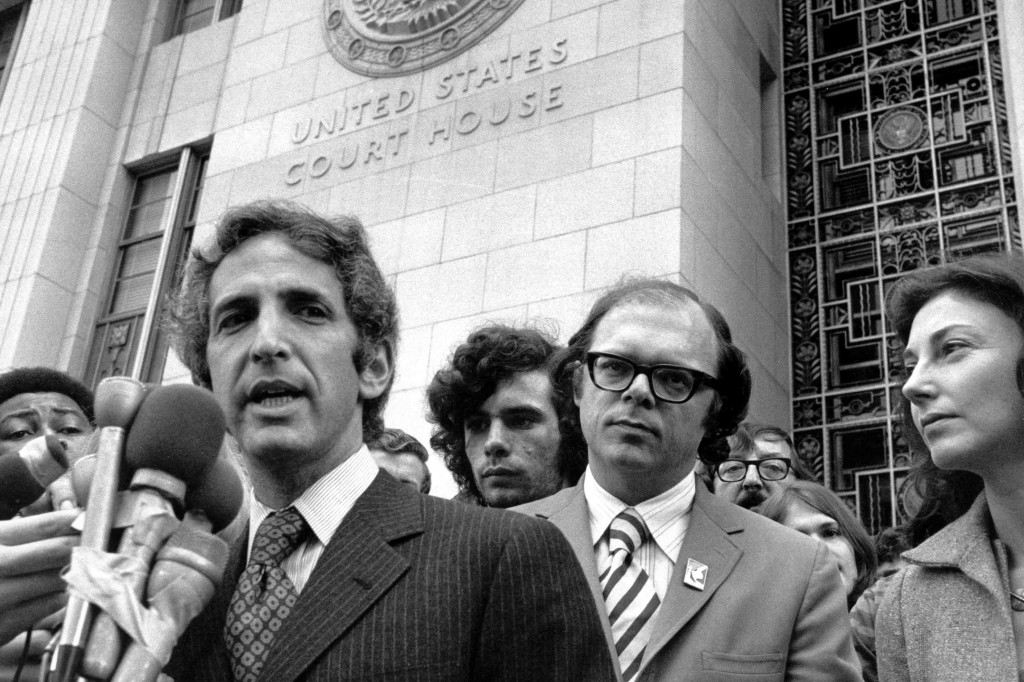
Ellsberg-on-trial-for-Pentagon-Papers-e1373757335455-1024x682

I’m sure many of you remember the story of John Walker Lindh, a young American citizen who converted to Islam as a teenager and eventually went to Afghanistan to fight with the Taliban. Lindh was captured by the US military in November 2001 and was eventually brought back to the US to stand trial.  It was the Justice Department’s first high-profile case in the post-9/11 war on terror.

While many are familiar with the story of the so-called “American Taliban,” I’m sure far fewer know the story of a woman named Jesselyn Radack, who was a legal advisor to the Justice Department at the time.  Shortly after Lindh was arrested, Radack received a call from an FBI attorney, who asked her about the ethics of interrogating Lindh without a lawyer present, specifically mentioning that Lindh’s father had retained counsel for his son. Radack told the FBI that under no circumstances could Lindh be interviewed without his lawyer present.

In spite of her clear response – and numerous follow-up emails to that effect – John Walker Lindh was subsequently interrogated without counsel. Attorney General John Ashcroft then held a press conference where he stated, bald-faced, “The subject here is entitled to choose his own lawyer and to our knowledge has not chosen a lawyer at this time.”  It was clear to Jesselyn Raddack that Ashcroft and the Justice Department had lied to the American public about its legal handling of John Walker Lindh.

Around this time, Radack discovered the emails she had written to the FBI – emails that explicitly spelled out Lindh’s rights – had disappeared from the Justice Department office files.  When she realized what was going on, she resigned her post. To her mind, something very, very wrong was going on and she refused to be party to it.

When Lindh’s initial hearing began, it became clear to Radack that none of her emails had been presented to the judge on the case – communications that were clearly germane to Lindh’s defense.  Now Radack was now faced with an even more powerful ethical decision.  She could do nothing, which would in effect continue the cover-up, or she could blow the whistle on the Justice Department.

So in June of 2002, three weeks before Lindh’s hearing was to take place, Jesselyn Radack downloaded the emails from her personal files and sent them to Newsweek magazine. Her revelation of the Justice Department’s malfeasance had a powerful impact on the government’s case.  Although he originally faced three life sentences, Lindh eventually plea-bargained to 20 years in prison without possibility of parole.

For her part, Radack’s whistleblowing came at a huge price, as she knew it would.  The Justice Department subsequently brought a criminal case against her, although she was never told for what she was being investigated or for what she might be charged.  She also lost her new job at a private law firm after her former government employers put pressure on her partners.   The Justice Department then referred her for discipline to her bar associations, effectively rendering her unemployable. As a final insult, she was placed on the national “no-fly” list.

The criminal case against Radack was later dropped without explanation and she was eventually removed from the no-fly list, but the damage to her career and her livelihood was permanent.  Her experience obviously cost her any future in government, but in the end it led her to a different calling.  Radack now devotes her life to defending whistleblowers at the Government Accountability Project.

I first learned about Jesselyn Radack’s story when I read an article she wrote about it in, of all places, Reform Judaism magazine.  In the article Radack, who is an active member of the Jewish community, wrote openly and passionately about the Jewish values that lay behind her actions. She quoted her adult Bat Mitzvah Torah portion: “Lo ti’eh aharay rabim” – “Thou shalt not follow a multitude to do wrong” (Exodus 22:3) – a dictum she says has motivated her ethical decision-making ever since.

Here’s what Radack had to say in the conclusion of the article:

People also ask me if this experience has engendered a crisis of faith. On the contrary, Judaism has helped me get through this difficult period. My (rabbis have) been sympathetic and supportive. I have also drawn strength from the writings of Rabbi Harold Kushner, who taught me that God did not cause my suffering and could not prevent it.  Rabbi Kushner’s re-interpretation of the story of Adam and Eve teaches that the ability to choose between right and wrong is what makes us human. God does not interfere with that choice. But God can give us the strength of character we need to handle the consequences.

I chose my conscience over my career and take pride in having spoken truth to power.

I remember reading that article back in 2006 – and in particular I remember being deeply affected by the religious and moral convictions that motivated her actions.  On a personal level, I’d always been a strong advocate of whistleblowers and the value of government transparency.  But I don’t think I had ever truly thought about the act of whistleblowing in the context of Jewish values until I read Jesselyn Radack’s words in Reform Judaism magazine that day.

Since that time, I’ve thought a great deal about this issue.  And so this morning I’d like to take some time to discuss the subject of whistleblowing – a subject that has been in the media spotlight a great deal this past year.  I’d like to explore the issues raised by the more well-known whistleblowers such as Chelsea (formerly Bradley) Manning and Edward Snowden – and others who are not as well known but whose actions are just as worthy of our attention.  Most of all, I want to share with you why I believe whistleblowing is not only a critically important American value, but a deeply sacred Jewish value as well – one that challenges us particularly as we gather now for the New Year.

I’ve often been struck that while government whistleblowers are often excoriated as unpatriotic at best and traitors at worst, the practice of whistleblowing is in fact rooted in American values. Our founding fathers fervently believed, and wrote repeatedly, that democracy is strengthened when it is transparent – and that government can only be truly accountable when it ensures an informed citizenry.  As John Adams famously wrote:

And liberty cannot be preserved without a general knowledge among the people who have a right from the frame of their nature to knowledge … But besides this they have a right, an indisputable, unalienable, indefeasible divine right to the most dreaded and envied kind of knowledge, I mean of the characters and conduct of their rulers.

True whistleblowing is not a traitorous act, though I think many governments would love their citizens to believe so.  Whistleblowers are not employed by enemy nations – by definition they act individually and out of their own conscience. And while they do break laws, they do so not for personal gain but for the greater good. They do so to assert that no one – not even the most powerful of governments – are above the law.

In their defense, governments will invariably claim that secrecy is essential to “national security.”  On the face of it, it’s difficult defense to for us to refute.  After all, every nation’s primary duty is to ensure the safety and security of its citizens – it would be naive and in fact dangerous to try to claim otherwise.  But it would be equally naive to assume that when our government acts in secrecy, it must somehow be doing so for reasons of legitimate national security.  History has taught us repeatedly that governments will invariably use secrecy to cover up their own illegitimate actions – actions that will often end up betraying the very well-being and security of their own citizens.

Possibly the most famous whistleblower in American history, Daniel Ellsberg, has written extensively and eloquently on this subject and about the process he went through that ultimately led to his revelation of the Pentagon Papers in 1971.  Ellsberg was a former marine who joined the Pentagon in 1964 and later worked for the RAND Corporation.  Like almost all whistleblowers, he was originally among the “true faithful” – a patriotic American who believed that the US could and should be a force for good in the world.  But as his government career progressed, he harbored profound inner doubts as he became privy to the highest decision making institutions during the buildup of Vietnam War.

Daniel Ellsberg had first hand knowledge that leaders at the highest levels of government knew from early on that the Vietnam war could never be won and yet insisted otherwise to the Congress and the American public. Moreover, they continued to escalate a war they knew was doomed, knowing full well their actions would lead to more American deaths overseas.

When Ellsberg went public with the Pentagon Papers, he went up against a powerful bureaucracy and government culture of secrecy. As a former insider, he had a first row seat at a massive act of government malfeasance, but he also was constrained by a deep-seated mentality that considered the telling of secrets to be a traitorous act.  It’s no coincidence that most whistleblowers begin as patriotic insiders. But ironically enough, it’s the same motivation that initially drives them to serve their country that eventually drives them to bring the truth of their government’s wrongdoing into the light of day.

It is, of course, an act that carries with it a huge cost.  When whistleblowers decide to go public, they know full well it is an act that will cost them their jobs and their livelihoods.  They know they will likely be publicly vilified, their personal lives dissected, their reputations slandered.  And of course, they also know they will likely endure prison time, be forced to go underground or live in exile.

Whistleblowers are indeed lightning rods – and governments count on this.  That’s why, I believe, we invariably focus more attention on the whistleblowers themselves than the actual crimes they reveal. That’s why, for instance, I believe we’re hearing so much bandied about regarding Chelsea Manning’s personal life and emotional struggles.  Our leaders and the media would much rather we focus on Manning personally. As long as we do so, we’re given a pass on the disturbing information Manning brought to light – and we don’t have to confront the truths of our nation’s crimes in Iraq, in Guantanamo and around the world.

Among Manning’s many revelations through Wikileaks is the now infamous video taken from an Apache helicopter in 2007, in which Americans soldiers shot and killed eleven individuals, including two Reuters reporters, in the streets of New Baghdad.  When a van arrived to help the injured, the soldiers fired upon it as well, seriously injuring two children. As you watch the video, you can hear the voices of American soldiers urging each other on, joking about the dead and dying. At one point a soldier laughs when Humvee runs over a dead body lying in the street.

I remember watching this video when it was released in 2010. I posted and wrote strongly about it on my blog at the time. It was deeply and profoundly horrifying to see the dark reality of our military actions in Iraq in such a graphic and brazen manner.  But I remember well being so grateful that this video had been brought out into the light of day.

As it turned out, however, Manning was not the only member of the military who recoiled from this particular action.  An American infantryman named Ethan McCord rescued the two children from the shot-up van – and after the video was released, McCord publicly thanked Manning for bringing it to light.

McCord later criticized the media for going into great and often lurid detail about Manning’s gender identity issues while utterly ignoring the devastating significance of his revelations.  In a letter to the editor of New York Magazine, McCord wrote the following:

By focusing so heavily on Manning’s private life (the article) removes politics from a story that has everything to do with politics. The important public issues wrapped up with PFC Manning’s case include: transparency in government; the Obama Administration’s unprecedented pursuit of whistle-blowers; accountability of government and military in shaping and carrying out foreign policy; war crimes revealed in the WikiLeaks documents… and more.

McCord then ended his letter with these words:

If PFC Manning did what he is accused of, he is a hero of mine, not because he’s perfect or because he’s never struggled with personal or family relationships –most of us do – but because in the midst of it all he had the courage to act on his conscience.

Chelsea Manning has paid a profound price for blowing the whistle on the actions of the American military.  After her arrest, she was put in a Marine brig in Quantico, Virginia, held in solitary confinement for 23 hours a day for nine months, forced to sleep naked without pillows and sheets and restricted from physical recreation or access to a television or newspaper. Manning’s punishment was later condemned as “excessive” by a military judge and “torture” by the UN. And of course, Manning has now been sentenced and faces an additional 35 years in prison.

As for the soldiers responsible for the attack in the video?  The US military conducted its own investigation of the incident and eventually cleared everyone involved of wrongdoing. To date, no one has ever been held accountable – for these or for any of the numerous disturbing revelations Manning has brought to light.

I don’t think I could put it any better than the ACLU when it made this statement following Manning’s sentencing:

When a soldier who shared information with the press and public is punished far more harshly than others who tortured prisoners and killed civilians, something is seriously wrong with our justice system.

On Rosh Hashanah, the day for asking the hard questions, it’s well worth asking: who has committed the greater crime? The government that breaks the law and covers its actions up under the pretense of national security, or the single individual that breaks the law in order that these crimes might be brought out into the light?

It’s well worth asking why?  Why is Chelsea Manning facing thirty five years in prison for revealing the disturbing truths about our government’s actions in Iraq while the very leaders who deceived us into that war have yet to be made to account for their actions?

And why, for that matter, has Edward Snowden, the man who blew the whistle on the NSA’s surveillance on American citizens, been forced to live in exile in Russia while our Director of National Intelligence can deny the facts Snowden brought to light under oath and still remain in his job?

I believe Jewish tradition demands that we ask these kinds of questions. After all, asking hard questions to powerful leaders is a time-honored Jewish value that dates all the way back to the days of the Prophets.  The Prophets were, in fact, the whistleblowers of their day. Just like our present day examples, they too spoke truth to power; they too sought to publicly reveal political corruption and hypocrisy of the governments of their time; and they too were hounded and persecuted by the powers that be for their truth-telling.

I’ve said and written often that I believe the prophetic stream in Judaism to be the most important – and in many ways the most sacred – of our tradition. As a Jew, I’ve always been enormously proud of the classic rabbinical response to government power. I believe that the Jewish people have been able to survive even under such large and mighty powers because we’ve clung to a singular sacred vision that says there is a Power even greater. Greater than Pharaoh, greater than Babylon, even greater than the mighty Roman empire and the myriad of powerful empires that have come and gone since.

As Jews, we know all too well that powerful nations and empires have historically exploited fear in order to increase their control at home and abroad. To be sure, it’s when times are fearful that we need these kinds of truth tellers the most.  In today’s post 9/11 world, I think it’s fair to say that levels of our government’s control – and the secrecy it employs to cover it up – go deeper than anything we witnessed even at the height of the Cold War.

Indeed, over the past decade, we’ve created a national security bureaucracy that many believe has evolved into a juggernaut with a life of its own. As one important Washington Post investigative article concluded:

The top-secret world the government created in response to the terrorist attacks of Sept. 11, 2001, has become so large, so unwieldy and so secretive that no one knows how much money it costs, how many people it employs, how many programs exist within it or exactly how many agencies do the same work.

During his first presidential campaign, Obama promised to rein in Washington’s culture of secrecy that has grown so significantly during our nation’s so-called War on Terror.  While we can argue about whether or not he’s been successful in this regard, it cannot be denied that Obama has become he most aggressive president in American history when it comes to whistleblowers.

Until this administration, only three government whistleblowers (including Daniel Ellsberg) had ever been charged by the Justice Department under the Espionage Act of 1917.  Under Obama, the Justice Department has brought charges against eight individuals – more than all previous American presidents combined.  His administration’s actions drive home the reality that this issue is not really about left or right.  It is about government – and in particular, large powerful governments such as ours, that will invariably abuse their power and act to cover up their abuses.

To quote another great American truth teller, the venerable investigative journalist Izzy Stone,  “All governments lie.”   Stone didn’t mean this to be a criticism of government itself – on the contrary, he wrote endlessly about the critical role governments must play in creating ordered and just societies.  He simply meant that there will always be a gap between what a government does and what it says it is doing. And that as citizens, we simply cannot sit back and assume governments will voluntarily rein in their abuse of power or hold themselves to account.

That, quite frankly, is our job. And that is why whistleblowers are so critical and why I believe they are worthy of our gratitude and support. They represent, in a sense, the final defense of an informed citizenry. They are the ones who are willing, at great personal sacrifice, to hold the most powerful people and institutions in the world accountable.

I know that all citizens want to trust their governments. We all want to believe our governments have our best interests at heart and will act to keep us safe – particularly in fearful times such as these.  But as fearful as we are, we would do we to ask whether increased militarism abroad and the narrowing of our civil liberties here at home will truly bring us security in the end.

As for me, I tend to agree with Daniel Ellsberg, who recently wrote: “One of the lessons of the Pentagon Papers and Snowden’s leaks is simple: secrecy corrupts just as power corrupts.”  Today, as in years past, we owe a profound debt to those who courageous enough to tear down the shrouds of secrecy, often at enormous personal cost, so that we may all find our way to a future of true security – not a false sense of security in which the powerful hide behind higher and higher walls but a real security based upon leaders and citizens are truly accountable to one another.

After all, isn’t that really what our sacred day today is all about? When we sound the Shofar on Rosh Hashanah, we are, in a sense, “blowing the whistle.”  The Shofar represents, among other things, an act of revelation. When the shofar is sounded, we bring all the secrets of the past year out of the shadows. We announce our readiness to shine light into the dark places of our souls and all the actions for which we are accountable.  We do this because we know, deep down that secrecy corrupts the soul – and that true security, true liberation, can only come from living lives of transparency and openness.

I do believe what is true for our national soul is true for our individual souls as well.  Up until now, I’ve been specifically addressing the topic of government whistleblowers, but of course, whistleblowing takes many forms – it comes in may shapes and sizes. You might say that each of us is presented the opportunity to be a whistleblower in ways large and small each and every day. Every day, each of us is challenged by the Torah demonstrated to us so eloquently by Jesselyn Radack: “Do not follow the multitude to do wrong.”

Indeed, in the coming year, each of us will inevitably be faced with the challenge to speak out or remain silent. To remain in the darkness, in a place or secrecy and shame, or to shine a light into the dark places that we might all find our way forward together.  This New Year, I hope we can all find the means to be truth tellers in our own right, to find the courage to speak where there is only silence.  And to wrestle honestly with the questions: what is the world in which we truly seek to live?  Where, in the end, will we find true security? And what will we be willing to do about it?

Baruch ma’avir afeilah u’meivi orah – Blessed is the one who removes the darkness and brings light.

Amen.
On the Trayvon Martin Verdict and the “National Conversation”

photo credit: Boston Herald

photo credit: Boston Herald

A few thoughts in the wake of Tisha B’Av yesterday…

According to Jewish tradition the Second Temple was destroyed because of the Jewish people’s sinat chinam – or “baseless hatred.”  On Tisha B’Av we affirm that isn’t enough to simply mark our collective tragedies and mourn our collective losses. We must honestly own the ways our own prejudices and intolerance have contributed to these losses.

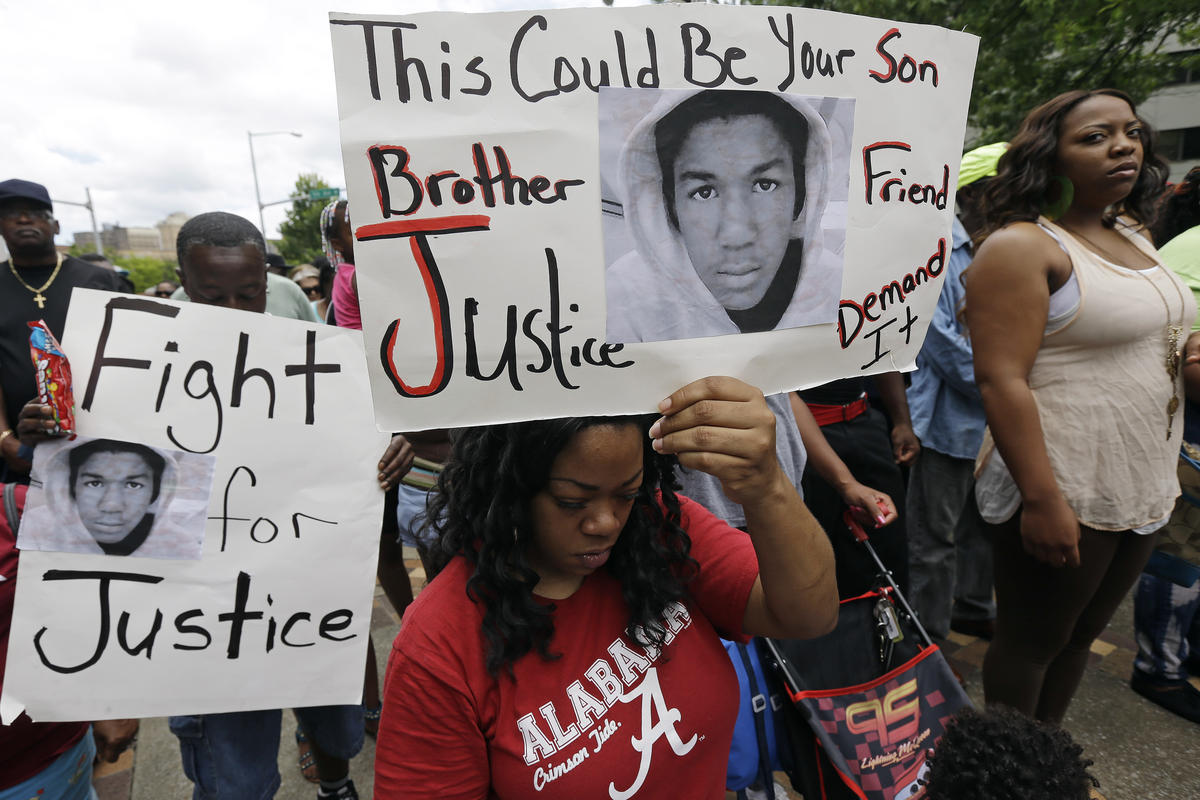
I was particularly mindful of this spiritual insight this year, as Tisha B’Av followed directly on the heels of the Trayvon Martin verdict and the communal soul-searching it sparked on racism in America. Indeed, more than once over the past several days we’ve heard politicians and pundits call for yet another “national conversation on race.”  Witness Attorney General Eric Holder’s post-verdict remarks:

Independent of the legal determination that will be made, I believe that this tragedy provides yet another opportunity for our nation to speak honestly about the complicated and emotionally-charged issues that this case has raised. We must not – as we have too often in the past – let this opportunity pass.

This isn’t the first time, of course, that we’ve heard the call for such a conversation. I distinctly remember President Bill Clinton making just such a call back in 1997.  It was actually considered fairly controversial at the time  – sad to say we haven’t made much headway in the conversation over the past 17 years.

I don’t mean to be facetious about this. Part of the problem, I think, is that I’m not sure anyone really knows what something as monumental as a “national conversation” would actually look like, particularly on a subject as profoundly charged as race.  Though I hesitate to say so, in some ways I think this call does more harm than good. While I do believe in the importance of dialogue, I can’t help but think that the constant call for communal conversation on race mostly serves to help us to feel better while we dodge the deeper infrastructural realities of racism in America.

While we regularly call for “conversation,” for instance, hard facts such as these continue to go chronically unaddressed:

– Prison sentences of black men are nearly 20% longer than those of white men convicted of similar crimes;

– While people of color make up about 30 percent of the United States’ population, they account for 60 percent of those imprisoned;

– While people of color are no more likely to use or sell illegal drugs than whites, they have higher rate of arrests;

– Voter laws that prohibit people with felony convictions from voting  disproportionately impact men of color.

And the list of shameful statistics goes on and on…

This litany, quite frankly, is nothing short of institutional sinat chinam. And at the end of the day, its going to take much more than dialogue it we’re going to take down the patently unjust and racist laws that oppress people of color in our country.  In this regard, I’d claim national conversation is only truly valuable inasmuch as it leads to real socio-political transformation and change.

So where do we start?  Why not with the “Stand Your Ground” laws, one of which egregiously allowed a man go free after stalking and shooting an unarmed African-American teenager?  It’s critically important that we know that history of laws such this, many of which have been long been pushed through legislatures by the corporate-funded American Legislative Exchange Council (ALEC) and have subsequently been spreading across the country:

Ostensibly a network of state legislators, ALEC is a shadowy, $7 million-a-year organization funded by powerful corporate interests like the Koch brothers, Big Oil, and Big Tobacco.  The NRA has been a longtime financial supporter and served as the corporate co-chair of the ALEC Criminal Justice Task Force, voting with legislators on “model” bills.  Through ALEC, special interests groups like the NRA push their dream legislation through state legislatures. Wal-Mart was corporate co-chair of ALEC task
force approving FL’s “Shoot First” bill as a “model” for other states. The NRA was the next co-chair of that ALEC committee.

According to PR Watch’s Brendan Fischer, ALEC’s influence has has been behind other racially discriminatory legislation as well:

ALEC’s connections to those issues are not limited to Stand Your Ground. The group was instrumental in pushing “three strikes” and “truth in sentencing” laws that in recent decades have helped the U.S. incarcerate more human beings than any other country, with people of color making up 60 percent of those incarcerated. At the same time ALEC was pushing laws to put more people in prison for more time, they were advancing legislation to warehouse them in for-profit prisons, which would benefit contemporaneous ALEC members like the Corrections Corporation of America.ALEC has also played a key role in the spread of restrictive voter ID legislation that would make it harder to vote for as many as ten million people nationwide — largely people of color and students — who do not have the state-issued identification cards the laws require.

If you’d like to engage in action as well as conversation, you can click here to sign a petition urging Attorney General Holder to “review the application of Stand Your Ground laws nationwide and the importance of their repeal.”

And if you live in or around Chicago, I encourage you to join me and other activists of conscience at the ALEC Exposed Protest Rally, which will take place outside ALEC’s 40th Anniversary Conference on Thursday, August 8 at 12 noon.

I hope I’ll see you there.

Daoud Nassar and His Message of Hope

If you’ve been reading my blog for a while, you how I feel about my friend Daoud Nassar, founder of Tent of Nations (and if you haven’t, you can read those posts here, here and here). It’s been my honor to serve on the Advisory Board of Friends of Tent of Nations – North America – and when they told me Daoud was coming to the US for speaking engagements, I jumped at the chance to add Chicago to his itinerary.

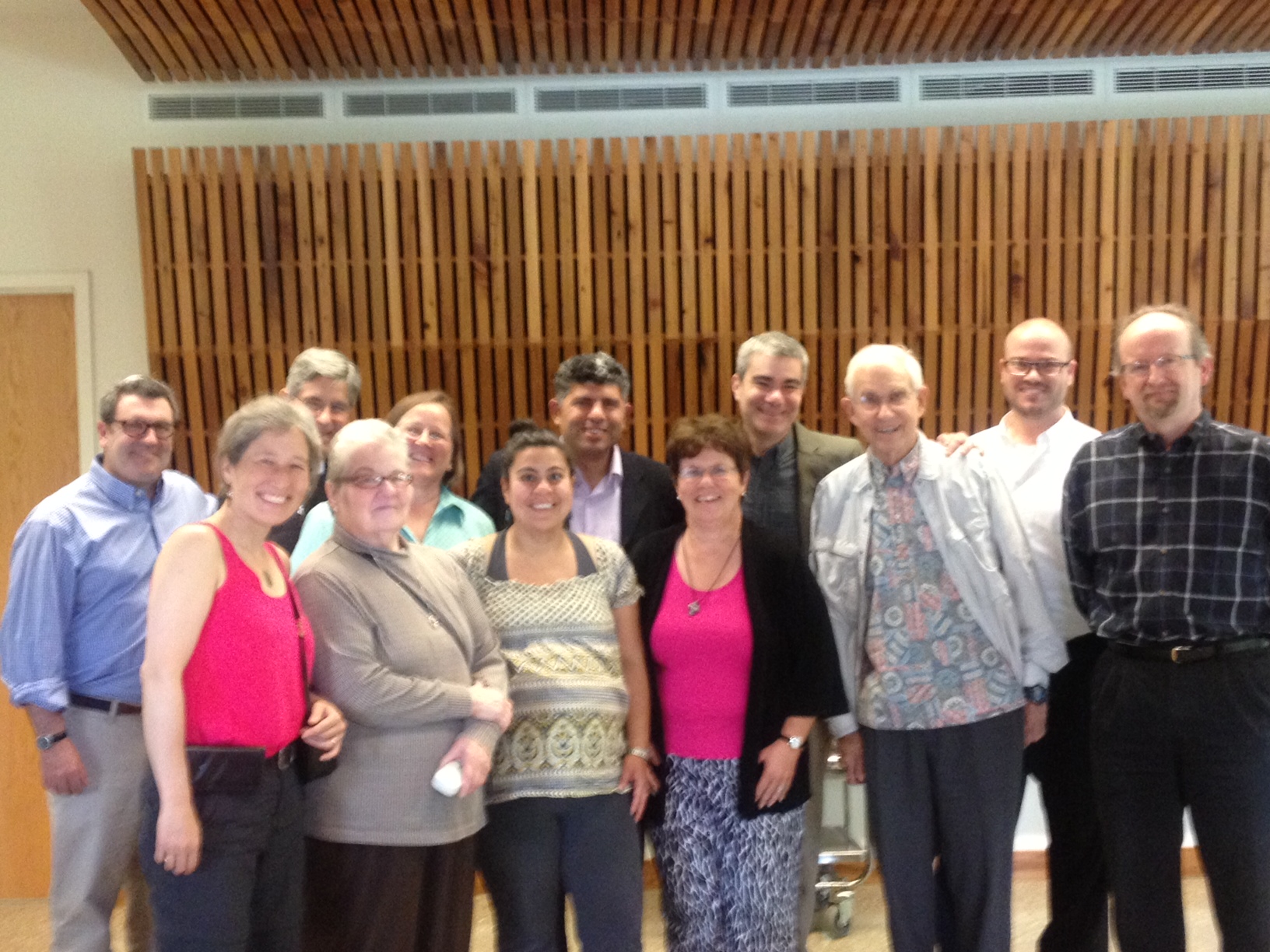
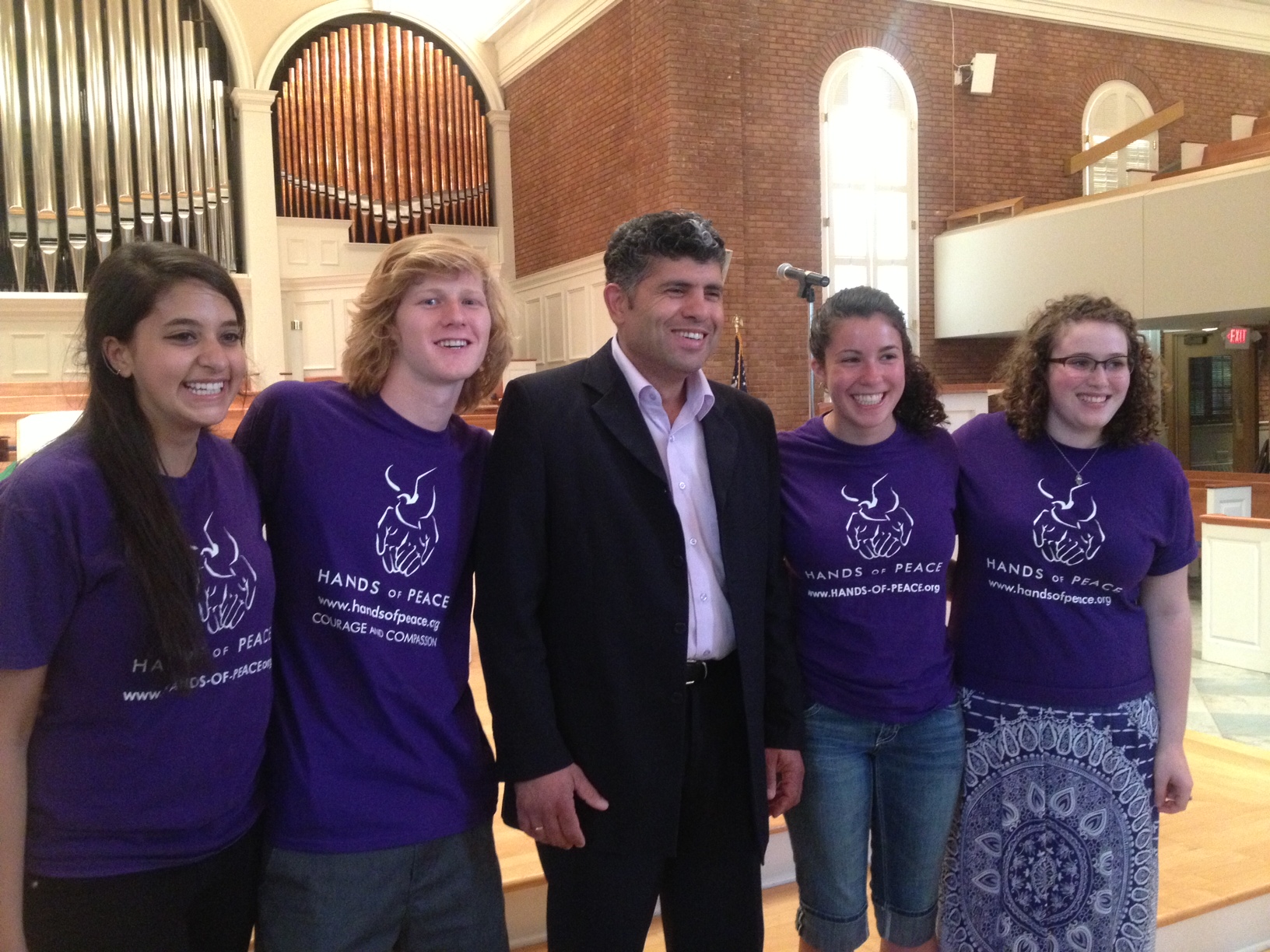
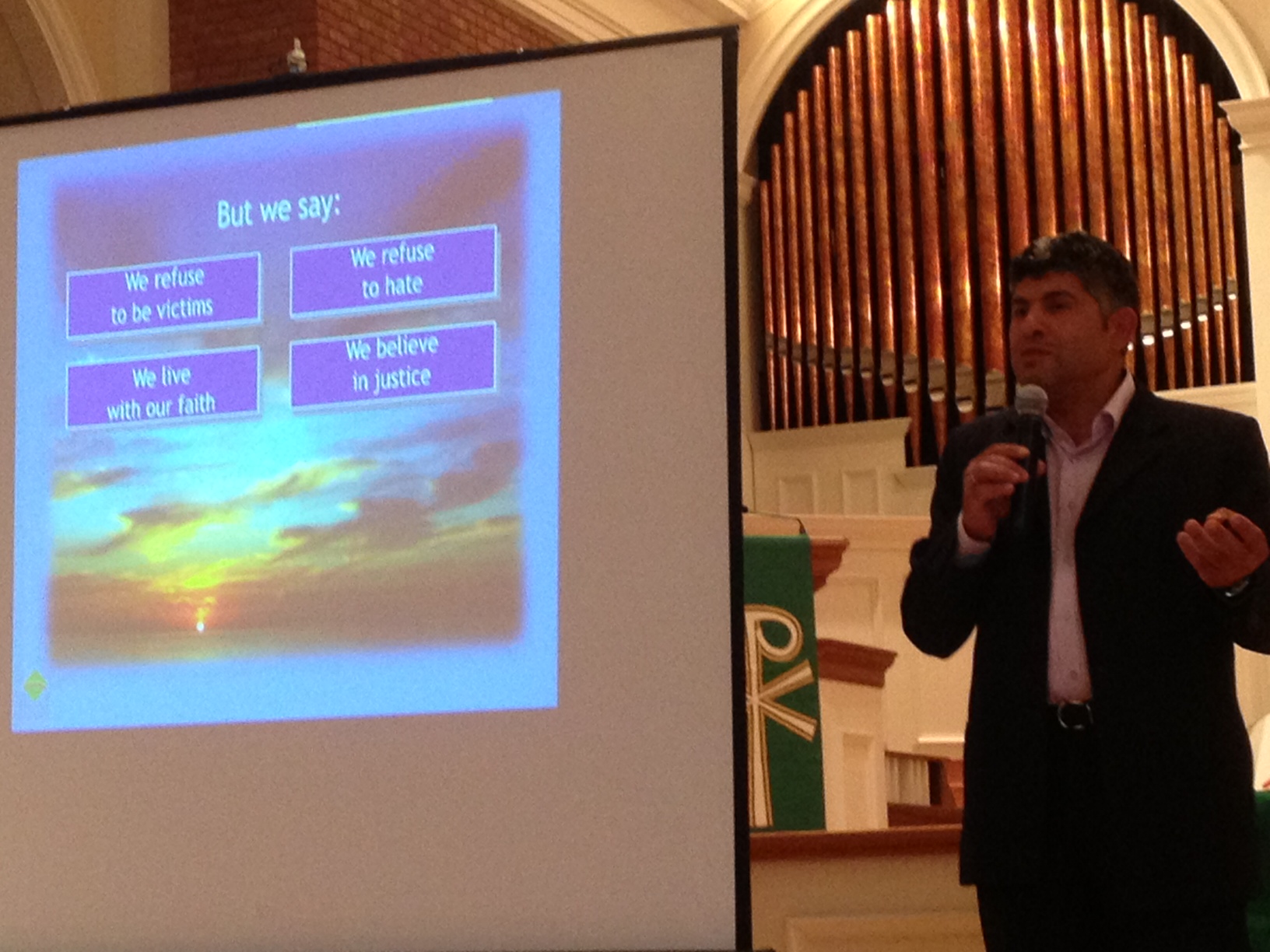
Among his stops here was a meeting with local interfaith clergy (below) and a presentation last night at Glenview Community Church for a program co-sponsored by Hands of Peace, a Chicago-area coexistence initiative on whose Advisory Board I also serve (bottom two pix).  At every stop, it was my pleasure see so many new friends and supporters inspired by Daoud’s message of steadfastness and hope.

Last Sunday, Daoud gave the sermon at the prestigious Riverside Church in New York City. I’ve just watched the video (above) and I was deeply moved by his words. I’ve listened to Daoud present many times, but I’ve never heard him speak in the unique context of his Christian faith.  As a Jew, I found his sermon to be deeply resonant, spiritually profound – grounded both in the truth of his own personal testimony as well as universal values of hope and human dignity. I encourage you to watch it in its entirety.

daoud clergy

daoud and hands

daoud.glenview

Annoucing: A Psalm a Day!

Sefer Tehillimx506

I’ve just taken on the ambitious goal of writing poetic renderings of the Biblical Psalms – one every day.

Those of you who have read my other blog, Yedid Nefesh, know that I enjoy writing my own version of “Biblical free verse.”  It’s my own way of commenting on these texts  – by shaping them into a poetic format that broadens (and often subverts) their literal meaning.  I’ve done new versions of several Psalms in the past and have often flirted with the idea of taking on all 150. So here I go!

I’m going to do my level best to hold to my one a day quota (except for Shabbat/Saturday). For maximum impact, I recommend reading them together with a more traditional translation (or if you read Hebrew, obviously, the original text.)  They will all be posted on Yedid Nefesh – I hope you enjoy reading them and would love to hear your thoughts and responses!

Click here for Psalm 1.

For Shavuot: Solidarity With Women Workers at Hyatt

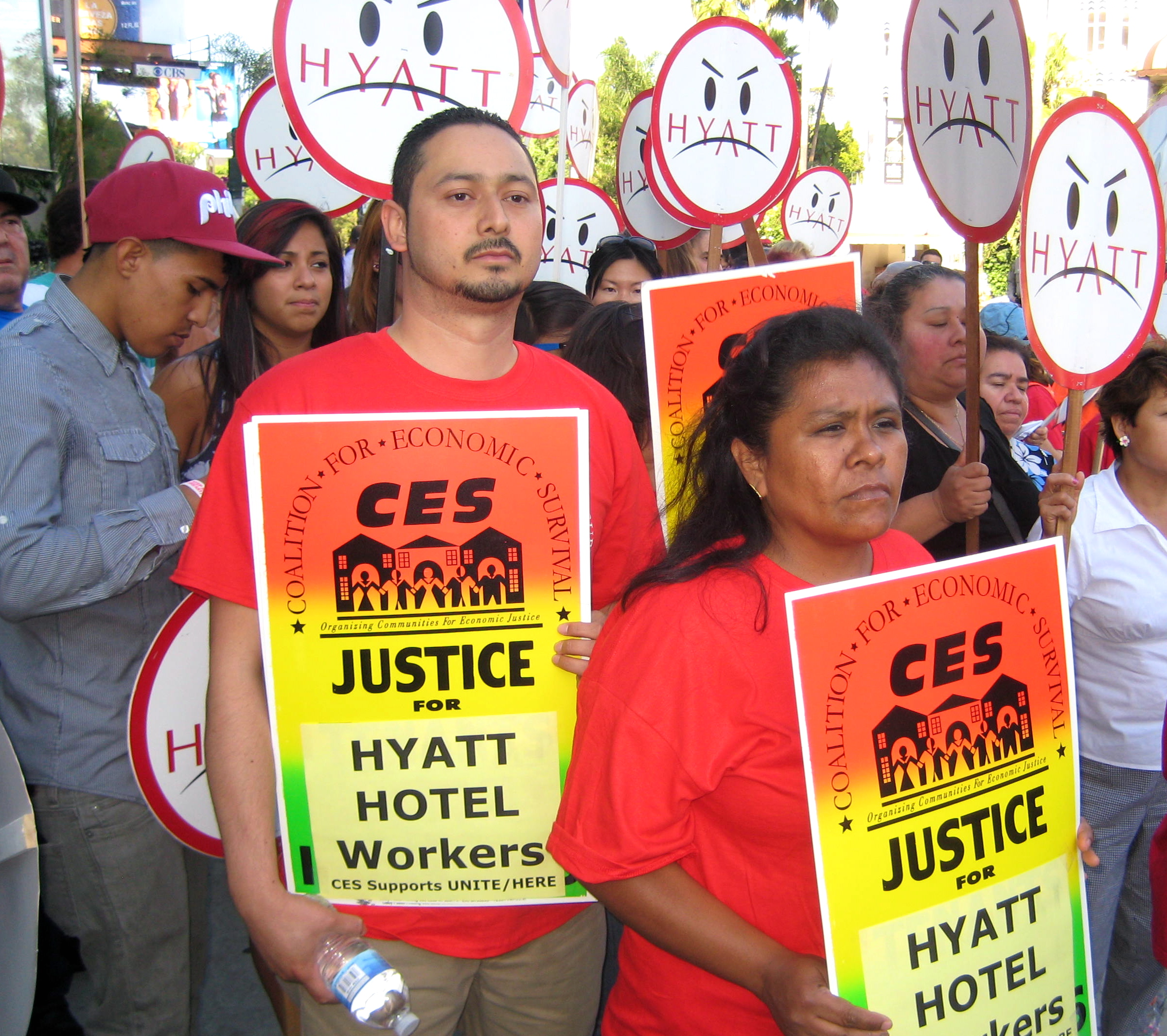
carlos-hyattJust in time for the Jewish festival of Shavuot, I strongly commend to you “Poverty, Chesed and Justice,” a text study just released by T’ruah: the Rabbinic Call for Human Rights together with Justice at Hyatt.

It is customary to engage in a late night study session on the eve of Shavuot – and since the story of Ruth is traditionally read on this festival, a study that focuses on the struggle of women workers at Hyatt feels profoundly appropriate.

As the introduction notes:

In the Book of Ruth, Ruth’s actions are lauded as acts of chesed, kindness. Ruth’s kindness is embodied through action: not just following her bereft mother-in-law Naomi back to the land of Israel, but taking on grueling work in the fields in order to keep them from falling into abject poverty. It is this determination and chesed that causes Boaz to notice Ruth and to perform his own acts of chesed in return. We hope that this Shavuot, the Hyatt Hotel Chain will display similar chesed toward the women who toil every day to change linens, scrub bathroom floors, and carry heavy bedding, all in the hopes of providing a better future for their children.

Right on. The story of Ruth is a story of solidarity, compassion and redemption. Here’s hoping the workers of Hyatt – and all workers everywhere – find an ample measure of each this Shavuot

“Wrestling in the Daylight” in Seattle

Here’s a great quality video of my entire speaking appearance at University Friend’s Meeting in Seattle this past Monday night. I attended series of wonderful – and at times inspiring – events during my short stay in the Northwest and will be reporting on them in due course.  In the meantime here’s a taste:

For Yom Hashoah: A Tribute to Pacifist Heroes André and Magda Trocmé

Andre Trocme

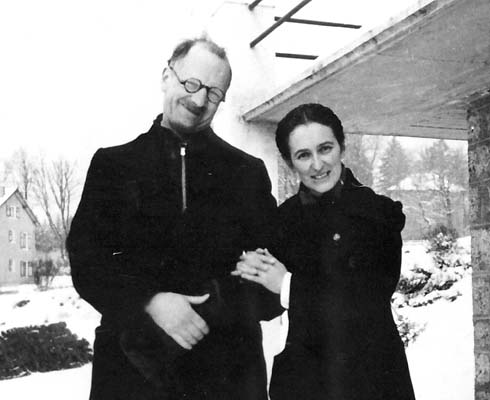
In honor of Yom Hashoah, please read about the sacred work of Pastor André and Magda Trocmé, the courageous pacifist Christians who saved 3,000-5,000 Jews from certain death in South Central France. May their memory be for a blessing.

The biography below is reposted from the Swarthmore College Peace Collection:

André and Magda Trocmé are perhaps best known for their work in the small French town of Le Chambon-sur-Lignon where, during World War II, they inspired the villagers to help protect and sometimes to assist in the escape of Jews and other poltiical refugees. This quiet and courageous assistance was given without resorting to violence. Historians estimate that about 3,500 Jews were harbored in the area in and around Le Chambon.

André Trocmé (1901-1971) was born in St. Quentin in the north of France to Huguenot parents. After seminary in Paris and graduate work at Union Theological Seminary in New York, he was ordained into the French Reformed Church and served for eight years among the coal miners and steel workers of Maubeuge and Sin-le-Noble, two small towns in the north of France. He preached nonviolence at a time when such views were unpopular in France. In 1934 André Trocmé accepted a call to be pastor in the remote Huguenot village of Le Chambon-sur-Lignon on the Plateau Vivarais-Lignon in South Central France. These parishioners were more sympathetic to his views on nonviolence.

Magda Trocmé (1901-1996) was born in Italy to an Italian father and a Russian mother. She graduated from the University of Florence with a degree in literature and earned further degrees in French. She and André Trocmé met in the United States while she was attending the New York School of Social Work, and they were married in 1926. The couple had four children, Nelly, Jean-Pierre, Jacques, and Daniel.

In 1938, André Trocmé, and his pacifist colleague Édouard Theis, founded L’Ecole Nouvelle Cévenol in Le Chambon, a Protestant, co-educational secondary school. In addition to the usual French secondary school curriculum, tolerance, honesty, and nonviolence were taught as well. L’Ecole Nouvelle Cévenole soon gained an international focus, and after World War II the name of the school was changed to Collège Cévenol. Magda Trocmé taught Italian at this school which is still in operation today.

During the first part of World War II Le Chambon was located in the “free”( unoccupied) zone of France. By 1942 the Germans had occupied the entire country. However, the population of the Plateau Vivarais-Lignon continued to aid an increasing number of refugees. In 1943, André Trocmé, Édouard Theis, and the head of the public school, Roger Darcissac were interned in a camp by the Vichy police. These men were arrested for their part in assisting the refugees of the area. Trocmé, Theis, and Darcissac were released from prison after one month, but Trocmé and Theis went into hiding for the next ten months.

In the late 1940s André and Magda Trocmé traveled as European Secretaries for the International Fellowship of Reconciliation (IFOR). After their move to Versailles (France) in 1950, the Trocmé’s founded La Maison de la Réconciliation. The Maison de la Reconciliation became an international peace center and the headquarters of the French and Continental Secretariat of the IFOR. During travels in the United States, under IFOR auspices, André Trocmé delivered the Robert Treat Paine lectures which became the basis for his book The Politics of Repentance, published in 1953. During the strife between France and Algeria, André Trocmé helped start Eirene (International Service for Peace), located in Morocco, which provided alternative service for conscientious objectors. He was also active in the movement against atomic weapons, becoming president of the French Federation Against Atomic Armaments in 1959. In 1960, André Trocmé accepted a call to become one of the ministers of the Saint-Gervais Church in Geneva, Switzerland. Many of the sermons he preached at Saint-Gervais were broadcast. His book, Jésus-Christ et la Revolution Non Violente was published in French in 1961 and subsequently in other languages (Orbis Books edition, 2004). In 1965, André Trocmé accompanied a peace mission to Vietnam.

After World War II André Trocmé was awarded the Rosette de la Résistance by the French government. The story of the Trocmé’s pacifist leadership inspired Philip P. Hallie, a professor at Wesleyan University, to write the book Lest Innocent Blood by Shed, published in 1979. Eleven years later Pierre Sauvage produced the documentary Weapons of the Spirit (1988), explaining how his family survived Word War II, through the efforts of the people of Le Chambon.

André Trocmé died in Geneva on June 5, 1971, just a few weeks after he had been scheduled to receive the Médaille des Justes from the government of Israel. As more and more people were recognized as “Righteous Gentiles,” the Yad Vashem honored all the residents of Le Chambon-sur-Lignon and the surrounding area. In their memory an engraved stele and rock garden were installed in the park of Yad Vashem (Israel).

After the death of her husband Magda Trocmé moved to Paris with Alice Reynier (“Jispa”), a close family friend who had lived with the Trocmé family since 1942. Alice Reynier shared their family life and their work. Magda Trocmé received an honorary degree from Haverford College in 1981 in the name of the people of Le Chambon and the surrounding area She died in Paris in 1996. André, Magda, their sons Jean-Pierre and Daniel, and Jispa, are all buried as a family in the cemetery of Le Chambon-sur-Lignon.

Kevin Coval’s “Schtick” – A Take-No-Prisoners Jewish Classic

602968_489173091137490_436884167_n

I’ve just finished Chicago hip-hop poet Kevin Coval’s soon-to-be-released book, “Schtick” (Haymarket Books) – a collection of poems that takes aim and fires at the sensitive edge of every nerve ending in the American Jewish psyche. It’s a new take-no-prisoners Jewish classic.

Coval has long been known here in Chicago as one of our great local treasures. He’s probably best-known as the founder of “Louder Than a Bomb: The Chicago Youth Poetry Festival,” which was recently the subject of an award-winning documentary of the same name. He’s also the author of numerous poetry collections, serves as Artistic Director of Young Chicago Authors, and offers youth writing workshops throughout Chicago and beyond.

While Coval has explored Jewish identity through his writing before, “Schtick” is his most extensive published collection of Jewish-themed poems thus far. It includes previously released poems such as “what i will tell my jewish kids” and “why i stopped going to shul” together with more recently written pieces – en masse, they serve to dissect the post-modern American Jewish experience in as devastating a fashion as you are ever likely to read.

Although I’m a longtime Kevin Coval fan, I will confess that there were more than few times in which I flinched at this unabashed, occasionally venomous assault on the hottest of Jewish hot buttons. I will also say without hesitation that these poems deserve to be read and discussed by the widest possible audience.

At heart, Coval’s work places him in long and venerable tradition of Jewish dissident writers – a legacy he very consciously celebrates. Indeed, this dissident tradition is palpable throughout virtually every poem in this collection. In “what will i tell my jewish kids,” for instance, he writes:

we are a bridge people. red sea parters. translators
between the warring. we see connections. the i in i
the i in thou. Buber taught us that or was it Haile Selassie
or Freud? and what was it Marx demanded, we live as Moses
bent and davening toward justice. a radical equity where everything is
sacred or nothing is. Einstein to unify the chaos.
Emma Goldman to arrange the pieces.

Though there will inevitably be those who find Coval’s writing to be the work of a “self-hating Jew” (he confronts this very issue in a poem entitled, you guessed it, “self-hating jew”), I’d suggest the poems in “Schtick” are quintessentially Jewish. Coval walks proudly in the “self-hating” Jewish steps of Abbie Hoffman, Philip Roth, Howard Zinn and Groucho Marx – a path trod by generations leading all the way back to the young Abraham, the Jewish upstart who one day grabbed a stick and smashed his father’s icons to shards.

As the title of his book implies, Coval’s counts the edgiest of the edgy Jewish comedians among his favorite iconoclasts. His clearest hero and spiritual ancestor is the great Lenny Bruce (“Lenny the Prophet!/Elijah, opening doors”). Coval also pays loving homage to Don Rickles, Sid Casear, Roseanne and Joan Rivers, with particular appreciation for the way they habitually skewer the goyishe power elite – and get away with it. (In “Don Rickles Roasts Ronald Reagan” Coval portrays Rickles as a sacrilegious Jewish court jester, peppering the poem with excerpts from his routine at Reagan’s Second Inaugural Ball.)

Of course, Coval finds equal inspiration from rappers, poets, freedom fighters and truth tellers as diverse as Public Enemy’s Chuck D, Allen Ginsburg, Fred Hampton and (in a choice certain to stick in many a Jewish craw) Louis Farrakhan. His target of choice is the American majority culture of power, privilege and empire  – and the Jews who make their bed in it. He rails against racists of various shapes and sizes, including anti-Semitic icons Mel Gibson and Henry Ford as well as the recently resigned Pope Benedict (“the pope is a nazi/and this is the truth.”)

cityroom_20091230_mtownsend_143567_From_largeIn poem after poem, he delves deeply into the adventures and follies of Jewish assimilation into the white American establishment – an act that he paints as the ultimate betrayal of our minority Jewish heritage. In one notable series, he explores this complex, often absurd process through poetic profiles of show biz figures Irving “White Christmas” Berlin, Al Jolson (“the confused horrible hope of this new country”) and Jennifer Grey (a third generation Jewish performer whose nose job successfully derailed her film career.)

His poem, “how the jews became white” – a meditation on the tragic events that unfolded during the Springfield race riots of 1908 – unpacks the most extreme example of Jewish “assimilation” imaginable. Among the more infamous moments during the riots occurred when Abraham Raymer, a poor Jewish delivery man, was accused of participating in the murder and lynching of of William Donnegan, an elderly, relatively wealthy (and intermarried) African-American man in front of his wife and neighbors:

Donnegan is not isaac
Donnegan is the lamb
abraham sacrifices to the white
g-d of america
slit throat and strung up
front lawn of a house they’d burn
like temples.
abraham raymer
the yiddisher lyncher
the jury of peers
the acquitted
the freshly born
and baptized
american
white man

After reading this poem, I couldn’t help but think that while the lynching of Leo Frank has entered  deeply into Jewish mythic consciousness, the name Abraham Raymer remains utterly unknown to most American Jews. And that, of course, is precisely Coval’s point.

Coval’s forte has always been poems that seamlessly mix the personal with the political – and in the chapter entitled “the family business,” he explores Jewish identity politics through his own personal family history. While I doubt his family members will kvell at some of his revelations, his remembrances of his 1980s Bar Mitzvah (by turns mortifying, hilarious and heartbreaking), family seders and Thanksgiving dinners resonates with a deep truth and the kind of love that refuses to profane his memories with shallow nostalgia.

While American Jews of a certain generation will likely nod in recognition with many of his family reminiscences, Coval’s family poems manage to be both brilliantly universal and nakedly specific at the same time. He shines a particularly unflinching light on the painful dissonance he experienced growing up in an economically struggling Jewish family living in the Chicago suburb of Highland Park. Among other things, these profoundly personal reflections go a long way to explain his own deep identification with the Jews as a “bridge people.”

The chapter entitled “all the pharaoh’s must fall” contains his most directly political pieces, most of them centering on the subject of Israel/Palestine. And for all of his deeply edgy poems, I have no doubt that it is from here that “Schtick” will almost certainly receive the most venomous reception from the Jewish establishment.

While Coval has long addressed the issue of Israel in his work, he took on these themes on in earnest in 2009, when he publicly declared himself to be “a Jewish-American man in solidarity with the Palestinian people.” In a widely read article for the Huffington Post, Coval wrote:

I am in solidarity with Israeli and American and all people who work and risk their lives and livelihood for justice. I am not restricted to working within the confines of the Jewish-American community. Justice and the resistance to imperialism is a global, human concern for all people down to struggle. For Jews, yes, but not Jews alone. For Palestinians, yes, but not Palestinians alone. It will take us all to push and demand governments and corporate interests to create fair, equitable living conditions. It will take all people to hold history accountable for the atrocities that occur.

Coval has expressed these convictions in numerous poems he has written since then, many of which are included in this latest collection. The poignant “explaining myself[1]” is written as a plea for understanding to his father. The title poem of the chapter, a stirring call to action written in response to the Arab Spring, deserves to become a seder table staple.  And in his final poem, appropriately entitled, “post-schtick,” Coval uses an attempted lynching of Palestinian youths by Israeli teenagers as a frame for understanding the sorrows of Jewish empire: “you don’t ask the mouth/from which the rope hangs/to explain the reasons/it’s being lynched.”

In “on becoming a man,” Coval recalls that before his Bar Mitzvah service began, his rabbi made him promise that he would not return to be confirmed.  By standing so firmly on the third rail of Israel/Palestine, Coval is virtually ensuring that he will remain outside the proclaimed borders of the American Jewish establishment. No matter. In the meantime he continues to carve out an authentically Jewish place in the borderlands – a place where Jews have always made their most productive homes.

But make no mistake, Kevin Coval is not simply interested in tossing spitballs from the back of Hebrew school class. On the contrary, he’s knocking loudly at the door. His Jewish vision is carefully and mindfully cultivated, his grasp of Jewish cultural memory undeniable, his respect for his spiritual Jewish ancestors deep and palpably real. And he is among the leaders of an eloquent generation that seeks to find a genuinely Jewish voice to sound a universal message of liberation:

wake in this new day
we will all die soon
let us live while we have the chance while we have this day
to build and plot and devise
to create and make the world
just
this time for us
this time for all
this time the pharaohs must fall

Reflections on the Four Cups – A Guest Post by Rabbi Lynn Gottlieb

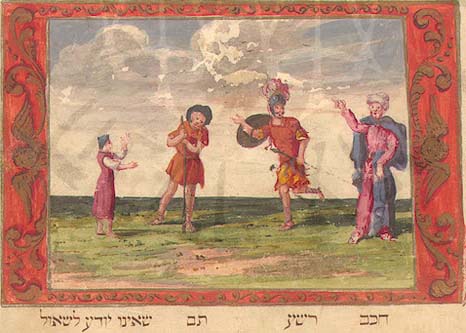
4cupsHere is a guest post written by my friend and colleague, Rabbi Lynn Gottlieb, founder of Shomer Shalom Institute for Jewish Nonviolence. Read it around your seder table:

Talmud Yerushalmi (Pesachim 10a) associates the four verses that describe the liberation of the families of Israel from subjugation with the four cups of wine at the Passover table. As it is written, “Say, therefore to the Families of Yisrael, ‘I am Adonai and I will take you out from under the burdens of Mitzryim, and I will save you from their bondage, and I will redeem you with an outstretched arm and with great judgments and I will take you to Me as a people…and you shall know the Spirit that draws you forth from under the burdens of subjugation.”

The four words imply a process a process of transformation. This process has four parts: Mitzryim is the Hebrew word that refers to the condition of structural subjugation. Pesakh moves from limping under the burden of the oppression to leaping like a liberated lamb through the parting seas that lead to freedom. The process happens in stages.

V’hotzayti~I will take you out: Complete subjugation is resisted by resisting the occupation of the mind that oppression imposes. In this stage we must ask questions that release us from the narratives that justify subjugation. That is why the seder begins with a collective invitation to the poor and oppressed to speak their stories and share a meal. The four children are a way of exploring one’s own relationship to subjugation.

V’he’tzal’ti~I will save you: Mitzryim is not mentioned by name, implying a lessening of the power of subjugation. At this stage, the community engages in acts of resistance and noncooperation-direct action in order to embody the liberation and begin the long journey of stepping out of subjugation. The midwives boycotting Pharaoh’s order to harm children, and instead, made the healing of children their first priority. Some traditions say they were non-Jewish midwives, and other traditions equate them with Miriam and Yochevet. What is clear for all of us? Liberation depends on multicultural, intergenerational and multifaith solidarity. Freedom is a country without borders.

V’ga’al’ti~I will redeem you:  Redemption requires collective mass action and the building of pillars of support in sections of society that have not yet taken action. Systematic and structural violence can be overcome when the society as a whole no longer accepts the normative status quo. Oppression is moved out of the margins into the center as a social issue.  During this stage oppression can increase because people are moving closer to the goal of overcoming subjugation. Pharaoh sends his armies to attack those seeking liberation. At this moment we need to call upon the entire nation’s faith that the seas will part.

Lakach’ti~I will take you in beloved relationship: Liberation requires a communal effort to building alternative institutions, and to create alternatives to the violent narratives of oppression. Liberation is the creation of a new reality outside the subjugation framework where the dignity of every single human being is valued. Dignity is a country without borders, it is the promised land.

As the process of liberation proceeds, we come to V‘yadatem~and you shall know. This knowledge is the knowledge of the heart that comes from faith in nonviolence and compassion.  When liberation is internalized  it is a powerful turning point in the healing process.  It is awakening to the realization that we are all equal and precious in the eyes of the Creator.

For Passover: A Meditation on the Four Children

4sons1Here’s a new Passover seder supplement that I’ve just written for Jewish Voice for Peace. Click the link below if you’d like a pdf to print out and read at you seder table next week.

JVP Seder Supplement 2013

As Jews, how do we respond when we hear the tragic news regularly coming out of Israel/Palestine? How do we respond to reports of checkpoints and walls, of home demolitions and evictions, of blockades and military incursions?

It might well be said that there are four very different children deep inside each of us, each reacting in his or her own characteristic way.

The Fearful Child is marked by the trauma of the Shoah and believes that to be a Jew means to be forever vulnerable. While he may be willing to accept that we live in an age of relative Jewish privilege and power, in his heart he feels that all of these freedoms could easily be taken away in the blink of an eye. To the Fearful Child, Israel represents Jewish empowerment – the only place in the world that can ensure the collective safety of the Jewish people.

The Bitter Child channels her Jewish fears into demonization of the other. This child chooses to view anti-Semitism as the most eternal and pernicious of all forms of hatred and considers all those “outside the tribe” to be real or potential enemies. She believes that Palestinians fundamentally despise Jews and will never tolerate their presence in the land – and that brute force is the only language they will ever understand.

The Silent Child is overwhelmed with the myriad of claims, histories, narratives and analyses that emerge from Israel/Palestine. While he dreams of a day in which both peoples will live in peace, he is unable to sift through all that he hears and determine how he might help bring that day about. At his most despairing moments, he doesn’t believe a just peace between these two peoples will ever be possible. And so he directs his Jewish conscience toward other causes and concerns – paralyzed by the “complexities” of this particular conflict.

The Courageous Child is willing to admit the painful truth that this historically persecuted people has now become a persecutor. This child understands and empathizes with the emotions of the other children all too well – in truth, she still experiences them from time to time. In the end, however, the Courageous Child refuses to live a life defined by fear, bitterness or complacency. She understands it is her sacred duty to stand in solidarity with all who are oppressed, particularly when she herself is implicated in that oppression.

At one time or another we have heard within ourselves the voices of any or all of these children.

How will we respond to them?