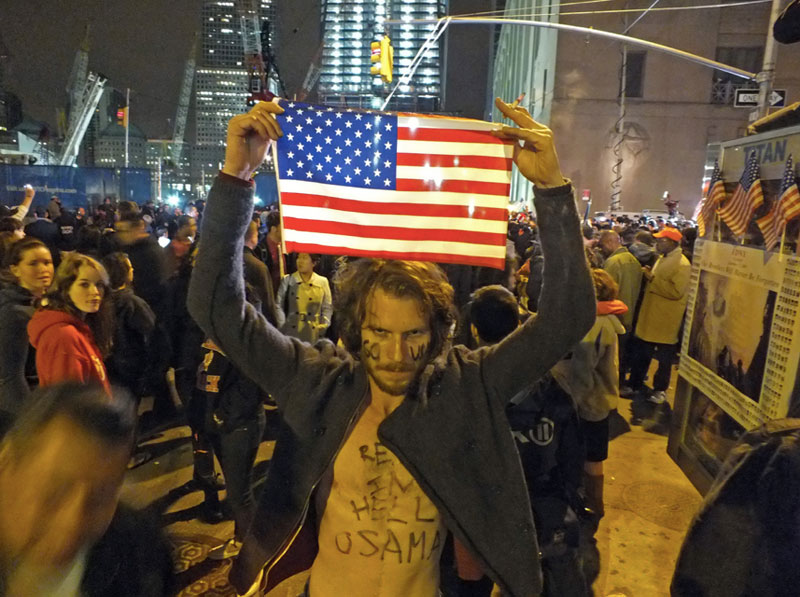
On nights like this one, we can say to those families who lost loved ones to al Qaeda’s terror: justice has been done (President Obama, May 1, 2011)
I can’t say that.
In Jewish tradition, there are two different terms for “justice.” The first is mishpat, which is generally understood to mean “retributive justice.” In other words, we apply mishpat when we settle our disputes by right rather than by might, through due process of law rather than by resorting to revenge or vigilantism. Jewish – as well as American – values teach that law must be held in the highest regard by any community that considers itself a free society.
By this standard, justice was certainly not done when bin Laden was summarily executed by extra-judicial assassination. Many American leaders have repeated that terrorists have declared war on American values. What does it mean, then, when we fight them by betraying the very values of justice that we purport to uphold?
Louise Richardson, whose book “What Terrorists Want” is the wisest book on terrorism I’ve ever read, hits right it on the head:
Had we captured bin Laden alive and then resisted the very human urge to exact revenge and instead handed him over to an international court of impeccable rectitude and reputation for trial on charges against humanity, we would have deprived him of glory and demonstrated, even to the skeptical, the vast difference between his values and ours (p. 198)
(Though I hold tight to this moral conviction, I have no illusions that trying bin Laden in an international court would have been anywhere near the realm of political possibility. Just last month, the White House gave up on its intention to try accused 9/11 mastermind Khalid Shaikh Mohammed in a New York civilian court. Attorney General Eric Holder now says Mohammed and four other 9/11 terror suspects will face a military trial at, you guessed it, Guantanamo Bay.)
The other word for justice is tzedek, or “distributive justice.” According to this definition, we promote justice whenever we strive to eradicate the inequities in our society, be they imbalances of wealth, power, or privilege.
By this measure, our execution of bin Laden represents the tragic failure of imagination that our government calls the “War on Terror.” We are sadly deluded if we believe we will end terror through the force of our military might. We will never fully eradicate terrorism – but we can certainly mitigate it by taking responsibility for the ways our nation may be contributing to the global injustices that create breeding grounds for terrorists around the world.
Now that we’ve killed bin Laden, are we ready to have a real national conversation about the hundreds of military bases our country maintains around the world, our ongoing wars in three Middle Eastern countries, and our unconditional military support for Israel’s occupation? For all of the billions of dollars we are pouring into our national military machine, might we be prepared to contemplate, as Richardson suggests, “the adoption of a comprehensive development agenda to address the underlying or permissive causes of terrorism?” (p. 221)
No, I do not believe justice, in any sense of the word has been achieved here. Visceral satisfaction, relief or grim pleasure, perhaps, but not justice.

 Shalom Rav