In my last post, I cited a comment from a longtime friend of mine who has been living in Israel for the past twenty years. By way of introduction: his name is David Melman and he lives with his family in a small community village in the Upper Galilee. My friendship with David goes back to our undergraduate days at UCLA, where our mutual connection to Israel was always an important aspect of our relationship. Despite the long distance and the passage of time, our families have remained close.
David and I have been in communication since his first comment to my blog. I’ve asked him if he would be willing to allow me to post our dialogue and he graciously agreed. Click below for his comment, followed by my response.
Ta’anit Tzedek’s next monthly fast day is Thursday, April 15. To mark the occasion we’ll be sponsoring the second monthly phone conference of our new initiative, Resisting the Siege: Conversations with Gazans.
This month our call will spotlight the Popular Achievement Program in Gaza – a project of the American Friends Service Committee. This remarkable program works with 14-17 year old Gazan children, instilling values of civic engagement and empowerment to achieve positive social transformation and sustainable development in their communities. As you can see from the clip above, these kinds of programs demonstrate the critical importance of strengthening Palestinian civil society. Initiatives such as the Popular Achievement Program – not blockades and bombs – are the true key to security for Gazans as well as Israelis.
On our call we will be joined by Popular Achievement director Amal Sabawi and two teenage program participants, Sarah and Roba Salipi, who will discuss how they live with the daily challenges of life in Gaza.
For those of you who live in the Chicagoland area, Ta’anit Tzedek will also be sponsoring a program, “Dignity Under Siege,” an evening of interfaith reflection, conversation and action on behalf of the citizens of Gaza. Our featured speaker will be Mark Braverman, a longtime advocate for peace and justice in Israel/Palestine and author of the recently published “Fatal Embrace: Christians, Jews, and the Search for Peace in the Holy Land.”
The gathering will take place at the Evanston Galleria, 1702 Sherman Avenue, Evanston, at 7:30 pm. Check the Ta’anit Tzedek website for more info.
If you ever needed a reminder of the utter obscenity that is war, just watch this clip.
On July 2007, two American Apache helicopters fired on a group of people in the Iraqi suburb of New Baghdad, killing approximately a dozen and wounding many others, including two children. The background of most of the dead are unknown but we do know that among the dead were two Reuters news employees named Saeed Chmagh and Namir Noor-Eldeen. Following the incident, Reuters demanded an investigation; US military authorities eventually concluded that the soldiers and pilots involved acted in accordance with the law of armed conflict and their Rules of Engagement.
Wikileaks has now obtained and decrypted a video of the entire incident. After watching it there can be no doubt that the US military acted counter to its own rules – and that its “investigation” was an utter sham. According the Rules of Engagement, soldiers may only “engage the enemy” after hostile fire – but it is quite evident from the video that this firefight was clearly unprovoked. At worst some of the men walking in the streets appeared to be carrying weapons. Potentially threatening, perhaps, but not in and of itself cause to open fire without warning.
The images in this video are graphic and disturbing enough, but what I found to be most devastating were the offhand, casual, even mocking comments of the soldiers as they mowed down these individuals in the streets. They might as well have been been playing a video game – and perhaps that is just the point. Among other things, this clip provides sobering testimony to the profoundly dehumanizing effects of war. (For me one of the most sickening moments in the video occurs when you hear one soldier chortling as another drives a Bradley Fighting Vehicle over a dead body in the street.)
“Collateral damage,” of course, is the euphemistic term for the killing of innocents. Those who advocate for war consider the killing of civilians in wartime to be a regrettable but necessary part of the bargain. No doubt we will hear this justification all the more as modern militaries increasingly utilize drones and other forms of high tech military hardware. The more we turn war into a video game, the more we create an artificial distance between ourselves and the ones with whom we wage war. But rarely do we stop to consider the ripple effects of this “collateral damage:” the untold sorrow and grief it creates, the anger and hatred it unleashes in a population.
I encourage you, after watching the video, to read Israeli blogger Yaniv Reich’s piece in Hybrid States, in which he makes the unavoidable connection between this incident and Israel’s war in Gaza and the Goldstone Report:
Those ideologues who supported Israel’s onslaught against the imprisoned population in Gaza need to spend a few extra minutes watching and digesting this video. What this video shows is the massacre of about a dozen people in Iraq, and it shows how very easy it is for even the mightiest and most technologically advanced military in the world to butcher innocents. But we miss thousands of other such videos, which did not make it to Wikileaks.
The images in this video are extremely graphic and unsettling. But I think we at least owe it to ourselves to bear witness to the carnage we ourselves are enabling through our tax dollars – and our silence.
Here’s one I’ve been meaning to get to for a few weeks now: a great point/counterpoint between Rabbi Daniel Gordis and journalist Charles London (above).
Back in February, Gordis wrote a Jerusalem Post column in which he addressed Im Tirtzu’s nasty campaign against the New Israel Fund and its President, Naomi Chazan. His conclusion: while Im Tirtzu may have gone a bit overboard in its rhetoric, folks need to understand that the Jewish people are at war with those who would “delegitimize Israel.” And when you are fighting a war, you can ill-afford luxuries such as civil liberties:
Commitment to our democracy must not come at the cost of commitment to our survival. No country at war maintains the same freedoms of speech or action that countries not facing existential threat can permit themselves. Since the Jewish people is at war, it must think as a people at war must think.
In my experience around the world, the Jewish people are not at war. There are Bosnian Jews building institutions in cooperation with their Muslim and Christian neighbors; there are Ugandan Jews who are at war with Malaria, HIV, and poverty, but not with some eternal anti-Jewish enemy. There are Iranian Jews struggling alongside Sunni, Shiite, Christian, and Baha’i for the very “liberties” their government denies all Iranians. There are Israeli Jews who are trying to build democratic institutions, multi-ethnic schools, and interfaith understanding, all of whom should take serious umbrage at his characterization of the Jews as a people at war.
Bravo: London’s response to Gordis’s Jewish siege mentality is spot on.
Yes, the Jewish people face challenges today, but we have faced daunting challenges throughout our history. And through them all, we have resolutely rejected the notion that physical might can ensure our survival. Mighty empires have come and gone, but the Jewish people have remained not by compromising our values (as Gordis counsels) but by affirming them. By connecting our survival to a more transcendent truth. By asserting that there is a Power far greater than physical power.
On this point, the young journalist eloquently reminds the rabbi:
I fear that arguments like Gordis’s war without end and war that values cannot endure undermines the spiritual genius of our culture. Jews have not survived for 2500 years because of nation-states, nor because they were not willing to risk life and limb for higher values. They have not survived merely to survive.
If this Jewish vision is your cup of tea, check out London’s recent book “Far from Zion: In Search of Global Jewish Community.” (I far preferred it to Gordis’s “Saving Israel: How the Jewish People Can Win a War That May Never End.”)
Yet another American political voice calls to lift the Gaza blockade. From yesterday’s NY Times:
The United States should break Israel’s blockade of Gaza and deliver badly needed supplies by sea, a U.S. congressman told Gaza students.
Rep. Brian Baird, a Democrat from Washington state, also urged President Barack Obama’s Mideast envoy to visit the Hamas-ruled territory to get a firsthand look at the destruction caused by Israeli’s military offensive last year.
(Rocketing) from Gaza doesn’t necessarily mean that any response, regardless of scope, target or impact on civilians, is necessarily justified, moral or strategically prudent. This kind of misleading duality itself reflects the thinking, on both sides, that can make peace so hard to achieve and violence so easy to justify. The fact is, there were and are many alternative responses possible and it is a false dichotomy to suggest, as some have, that if one criticizes the actions taken by Israel in Gaza and the West Bank then one is necessarily ignoring the rocket attacks from Gaza or somehow siding with or enabling terrorists.
In my judgment what has happened in Gaza and what goes on in the West Bank every day endangers U.S. integrity and security and ultimately strengthens hard line extremists at the expense of moderates and to the detriment of long term Israeli security. I also believe, having traveled and met with people throughout the region, that this adverse effect is not confined to Palestine but extends to varying degrees throughout the Islamic world and beyond.
I understand that people may disagree strongly with this perspective, but I am certainly not alone in expressing it. Many people have contacted my office to convey support for what we have said about our visit and this includes many friends of Israel within our own country.
I’ve been reading and listening to Howard Zinn’s work since learning of his death last week – and I’m become increasingly saddened at just what we’ve lost in his passing. Here are just a few pieces that have moved me tremendously:
– Click above to see a clip in which Zinn shares his thoughts on human nature and aggression.
I would never have become a historian if I thought that it would become my professional duty to go into the past and never emerge, to study long-gone events and remember them only for their uniqueness, not connecting them to events going on in my time. If the Holocaust was to have any meaning, I thought, we must transfer our anger to the brutalities of our time. We must atone for our allowing the Jewish Holocaust to happen by refusing to allow similar atrocities to take place now—yes, to use the Day of Atonement not to pray for the dead but to act for the living, to rescue those about to die.
We need to imagine that the awful scenes of death and suffering we are now witnessing on our television screens have been going on in other parts of the world for a long time, and only now can we begin to know what people have gone through, often as a result of our policies. We need to understand how some of those people will go beyond quiet anger to acts of terrorism.
We need new ways of thinking. A $300 billion dollar military budget has not given us security. Military bases all over the world, our warships on every ocean, have not given us security. Land mines and a “missile defense shield” will not give us security. We need to rethink our position in the world. We need to stop sending weapons to countries that oppress other people or their own people. We need to decide that we will not go to war, whatever reason is conjured up by the politicians of the media, because war in our time is always indiscriminate, a war against innocents, a war against children. War is terrorism, magnified a hundred times.
Our security can only come by using our national wealth, not for guns, planes, bombs, but for the health and welfare of our people – for free medical care for everyone, education and housing guaranteed decent wages and a clean environment for all. We can not be secure by limiting our liberties, as some of our political leaders are demanding, but only by expanding them.
We should take our example not from our military and political leaders shouting “retaliate” and “war” but from the doctors and nurses and medical students and firemen and policemen who have been saving lives in the midst of mayhem, whose first thoughts are not violence, but healing, not vengeance but compassion.
Zichrono Livracha – may the memory of this righteous man be for a blessing. And may we continue his work of bearing witness through our words and deeds…
My friend Rabbi Brian Walt is currently living in Jerusalem with his family and will be there for next five months. I strongly encourage you to read his blog posts, in which he powerfully reflects on his experiences and describes the struggle for justice in Israel/Palestine. He just posted a piece on a recent demonstration in Sheikh Jarah; his post on a visit to Hebron last week is breathtaking.
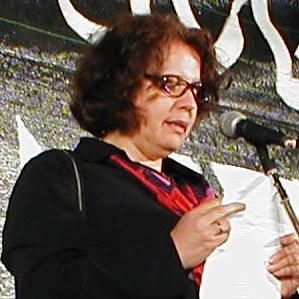
Dr. Nurit Peled Elhanan is an Israeli woman whose 13 year old daughter was killed by a Palestinian suicide bomber in 1997. Shortly after, she helped found the Bereaved Parent’s Circle, a courageous Israeli-Palestinian coexistence group about which I’ve frequently written. It’s not an exaggeration to say that over the past two decades she has become one of the most important and eloquent members of the Israeli peace activist community.
On January 2, Peled Elhanan gave an emotional speech in Tel Aviv at a rally commemorating the one-year anniversary of Israel’s military assault on Gaza. I don’t know how else to describe it but as a primal scream – a cry from deep within the reaches of her heart. It is a gut-wrenching read, but also, in its way, enormously edifying. More than anything else I’ve read lately, it addresses head-on the poison that has been spreading through Israel’s soul – a phenomenon many fear to be true, but few are willing to identify out loud.
Please make sure to read all the way to the end, including the footnotes, which will help you to better understand her references, as well as the Jewish soul that throughly permeates her words.
There is new tension along the Israel-Gaza border. Israel is bombing targets in Gaza; mortar shells and Qassams are flying into southern Israel once again. If Israel’s massive military assault last year was designed to deter Hamas and/or provide security for the citizens of southern Israel – then it now appears that effort has been for naught.
When will we learn that bombs won’t work? As so many of us have been shouting for so long, the only true solution to the Gaza conflict is a political solution: to open the border, to provide relief and development assistance, to engage with Hamas directly.
A renewal of rocket fire shows that even a major military operation that brought death and destruction cannot ensure long-term deterrence and calm. Israel has an interest in stopping escalation at the border so as not to find itself caught up in another belligerent confrontation with Hamas …
Instead of erring by invoking the default solution of more force, which does not create long-term security or ease the distress of the Palestinians in Gaza, the crossings between Israel and the Gaza Strip should be opened and indirect assistance rendered to rebuild its ruins.
Amen. Massive military bombardment and a crushing blockade is not making either side more secure – it is only exacerbating the conflict and ensuring the likelihood we will be reading more tragic news from a small patch of land that has known nothing but tragedy for the past six decades.
PS: Since I wrote this post this morning, I’ve been thinking all day about how I addressed the Gaza conflict as largely a strategic policy issue. If I’m going to be totally honest, however, I’d have to admit that my feelings about this issue go deeper than simply “war doesn’t work.”
I’ve come to accept that at its heart, this conflict is not simply strategy but about justice. To anyone who believes that this latest border issue is about Hamas and its missiles, I’d respond that it is only the latest incarnation of an injustice that was committed against the Palestinian people, long, long before the Qassams started flying.
I’m currently reading Joe Sacco’s devastating graphic-novel style reportage, “Footnotes in Gaza.” I highly recommend it to anyone interested in the tragic history of the Palestinian experience in Gaza.
(An) Italy-based group of researchers studied Israel’s use of ammunition and said the population of the Gaza Strip is “in danger.” It based the claim on soil analysis of four bomb craters. “It is essential to intervene at once to limit the effects of the contamination on people, animals and cultivation,” the researchers stated…
“Our study indicates an anomalous presence of toxic elements in the soil,” (the committee’s spokesperson) stated. This included metals that “can cause tumors and problems with fertility, and they can have serious effects on newborns, like deformities and genetic pathologies.”
The article continues:
Professor Gerald Steinberg, founder of the Jerusalem-based, non-governmental Monitor organization, said the study did not present enough evidence to support its claim… (He) said the committee’s “accusations are designed to stigmatize Israel and erase the context of mass terror.” He said he considers the accusations “a modern form of blood libel.”
Dr. Moshe Kantor, president of the European Jewish Congress had a similar reaction:
“This so-called research is eerily reminiscent of ancient blood libels against the Jewish people, when rumors were spread about Jews poisoning wells” … “Today we are seeing a recurrence of all the worst excesses of anti-Semitism and diatribes that we perhaps naively thought had remained in the Dark Ages.”
I don’t know if the Italian scientists’ research is accurate or not, but I do know this: we Jews are becoming much too fond of shouting “blood libel” for political purposes.
“This is an anti-Semitic blood libel against the Jewish people and the Jewish state. The Swedish government cannot remain apathetic,” said Israel’s Finance Minister Yuval Steinitz.
“We know the origins of these claims. In medieval times, there were claims that the Jews use the blood of Christians to bake their Matzas for Passover. The modern version now is that the IDF (Israel Defense Forces) soldiers use organs of Palestinians to make money.”
When I first heard this news, I was also outraged by the allegations. Then I read last month that a former head of an Israeli forensic institute admitted that forensic pathologists did indeed illegally harvest organs from bodies, including Palestinian bodies, in the 1990s.
According to reports there was no proof that individuals were actually killed for their organs – but as I continue to read up on this incident, I’ve become further mortified to learn that NGOs have long considered Israel to be among the top purveyors of illegal organ-trafficking in the world. Will we take these kinds of reports seriously or will we simply accuse these organizations of blood libel as well?
While there is still no lack of irrational hatred directed at Jews, I believe Israel does the Jewish people no good every time its leaders invoke the spectre of anti-Semitism to deflect criticism. At the end of the day, which is worse: the very real scourge of anti-Jewish prejudice or the cynical accusation of blood libel to cover up potential crimes of our own?