Category Archives: War

Gaza One Year Later: Beyond the Complications

It was exactly one year ago that I read the first news accounts of Israel’s military assault in Gaza:

Waves of Israeli airstrikes destroyed Hamas security facilities in Gaza on Saturday in a crushing response to the group’s rocket fire, killing more than 225 — the highest one-day toll in the Israeli-Palestinian conflict in decades…

(There) was a shocking quality to Saturday’s attacks, which began in broad daylight as police cadets were graduating, women were shopping at the outdoor market, and children were emerging from school. The center of Gaza City was a scene of chaotic horror, with rubble everywhere, sirens wailing, and women shrieking as dozens of mutilated bodies were laid out on the pavement and in the lobby of Shifa Hospital so that family members could identify them. The dead included civilians, including several construction workers and at least two children in school uniforms.

By afternoon, shops were shuttered, funerals began and mourning tents were visible on nearly every major street of this densely populated city.

Previously, whenever I’d hear this kind of news out of Israel/Palestine, my shock and anguish would quickly be tempered by a familiar voice telling me to calm down, don’t overreact, don’t forget how terribly “complicated” the situation is. (Indeed, I recall hearing that voice distinctly three years earlier when the IDF responded to Hezbollah rocket attacks with a similarly massive military onslaught.)

This time, though, it was different. This time I didn’t hear the voice. Somehow, it just didn’t seem all that complicated to me any more.

This is what I wrote on my blog that day:

The news today out of Israel and Gaza makes me just sick to my stomach.

I know, I can already hear the responses: every nation has a responsibility to ensure the safety of its citizens. If the Qassams stopped, Israel wouldn’t be forced to take military action. Hamas also bears responsibility for this tragic situation…

I could answer each and every one of these claims in turn, but I’m ready to stop this perverse game of rhetorical ping-pong. I don’t buy the rationalizations any more. I’m so tired of the apologetics. How on earth will squeezing the life out of Gaza, not to mention bombing the living hell out of it, ensure the safety of Israeli citizens?

We good liberal Jews are ready to protest oppression and human-rights abuse anywhere in the world, but are all too willing to give Israel a pass. It’s a fascinating double-standard, and one I understand all too well. I understand it because I’ve been just as responsible as anyone else for perpetrating it.

So no more rationalizations. What Israel has been doing to the people of Gaza is an outrage. It has brought neither safety nor security to the people of Israel and it has wrought nothing but misery and tragedy upon the people of Gaza.

There, I’ve said it. Now what do I do?

As I read this post one year later, I remember well the emotions I felt as I wrote it. I also realize what a critical turning point that moment represented for me.

As a Jew, I’ve identified deeply with Israel for my entire life. I first visited the country as a young child and since then I’ve been there more times that I can count. Family members and some of my dearest friends in the world live in Israel.

Ideologically speaking, I’ve regarded Zionism with great pride as the “national liberation movement of the Jewish people.” Of course I didn’t deny that this rebirth had come at the expense of another. Of course I recognized that Israel’s creation was bound up with the suffering of the Palestinian people. The situation was, well, it was “complicated.”

Last year, however, I reacted differently. I read of Apache helicopters dropping hundreds of tons of bombs on 1.5 million people crowded into a 140 square mile patch of land with nowhere to run. In the coming days, I would read about the bombing of schools, whole families being blown to bits, children literally burned to the bone with white phosphorous. Somehow, it didn’t seem so complicated at all any more. At long last, it felt as if I was viewing the conflict with something approaching clarity.

Of course I think we’d all agree that the Israeli-Palestinian conflict is technically complicated. But at the same time I think we all know that at the end of the day, there is nothing complicated about persecution. The political situation in Darfur, for instance, is enormously complicated – but these complications certainly haven’t stopped scores of Jews across North America from protesting the human rights injustices being committed there. We do so because we know that underneath all of the geopolitical complexities, oppression is oppression. And as Jews, we know instinctively that our sacred tradition and own tragic history require us to speak out against all oppression committed in our midst.

I’d suggest that if there is anything complicated for us here, it is in possibility that we might in fact have become oppressors ourselves. That is painfully complicated. After all, our Jewish identity has been bound up with the memory of our own persecution for centuries. How on earth can we respond – let alone comprehend – the suggestion that we’ve become our own worst nightmare?

More than anything else, this is was what I was trying to say in that anguished, emotional blog post one year ago: is this what it has come to? Have we come to the point in which Israel can wipe out hundreds of people, whole families, whole neighborhoods and our response as Jews will be to simply rationalize it away? At the very least will we able to stop and question what has brought us to this terrifying point? Have we become unable to recognize persecution for what it really and truly is?

Those who know me (or read my blog) surely know that it has been a painfully challenging year for me. My own relationship to Israel is changing in ways I never could have predicted. Since I started raising questions like those above, I’ve lost some friends and, yes, my congregation has lost some members. If Zionism is the unofficial religion of the contemporary Jewish community then I’m sure there are many who consider me something of an apostate.

But at the same time, I’ve been surprised and encouraged by the large number of people I’ve met who’ve been able to engage with these questions openly and honestly, even if they don’t always agree with me. I suppose this is what I decided to do one year ago: to put my faith in our ability to stand down the paralyzing “complexities,” no  matter how painful the prospect.

One year later, I still hold tight to this faith.

Palestinian Christians: “The Occupation is a Sin”

Last week, a group of Palestinian Christians representing a variety of churches and church-related organizations issued a powerful, prayerful call for an end to the Israeli occupation.  My friend Rabbi Brian Walt was present at the meeting in Bethlehem in which the statement – known as  “The Kairos Palestine Document” – was released. Upon his return, he described to me his profound, often painful conversations with Palestinian Christians and he told me that as a Jew, he considered the Kairos Document to be an enormously important spiritual/political statement. Having now read the entire 12 page document, I must say that I agree wholeheartedly.

Palestinian Christian liberation theologians such as Naim Ateek of the Sabeel Institute have been doing important work for decades and I believe their ideas present important spiritual challenges to the Jewish community. Many Jews point to the more radical incarnations of these theologies – and while I share some of these concerns, I believe that we make a profound mistake by dismissing Palestinian Christian theology wholesale. (Frankly, I am much more troubled by the “End of Days” theologies of fundamentalist Zionist Christians such as Pastor John Hagee than I am by Naim Ateek and the authors of the Kairos document.)

My friend and colleague Father Cotton Fite of St. Luke’s Church in Evanston, tells me he hopes that American Christians will study the Kairos Document carefully. I mentioned to him that I hoped Jews would read it as well. In fact, I think we should create opportunities to read it together. Despite our differences, I believe it offers both of our communities an ideal place to begin meaningful dialogue over the spiritual implications of this conflict.

One of the more important and challenging passages:

Our presence in this land, as Christian and Muslim Palestinians, is not accidental but rather deeply rooted in the history and geography of this land, resonant with the connectedness of any other people to the land it lives in. It was an injustice when we were driven out. The West sought to make amends for what Jews had endured in the countries of Europe, but it made amends on our account and in our land. They tried to correct an injustice and the result was a new injustice.

I can already predict that many Jews will bristle that this passage does not specifically reference the Jewish connection to the land as well. To this I would say, how deeply do we Jews ever honor the reality that we are not the only people who are “deeply rooted in the history and geography of this land?” Moreover, how deeply do we ever face the true injustice that was committed when a people with deep roots in the land were driven out and not allowed to return?

Another sobering passage in the document describes the Occupation as no less than a “sin:”

We also declare that the Israeli occupation of Palestinian land is a sin against God and humanity because it deprives the Palestinians of their basic human rights, bestowed by God. It distorts the image of God in the Israeli who has become an occupier just as it distorts this image in the Palestinian living under occupation. We declare that any theology, seemingly based on the Bible or on faith or on history, that legitimizes the occupation, is far from Christian teachings, because it calls for violence and holy war in the name of God Almighty, subordinating God to temporary human interests, and distorting the divine image in the human beings living under both political and theological injustice.

Many of us view the Occupation as a political problem to be solved. But indeed, as Jews, we must admit basic human rights are rooted in our religious tradition. Like Christians, we also believe that all human beings are created in the image of God. We also believe that when the basic dignity of anyone’s humanity is diminished, the Divine Image is diminished as well. How then, can we fail to understand that the Occupation is not only a geo-political problem but a spiritual/moral problem as well?

This conclusion leads to a logical next step:

Love is seeing the face of God in every human being. Every person is my brother or my sister. However, seeing the face of God in everyone does not mean accepting evil or aggression on their part. Rather, this love seeks to correct the evil and stop the aggression.

The injustice against the Palestinian people which is the Israeli occupation, is an evil that must be resisted. It is an evil and a sin that must be resisted and removed. Primary responsibility for this rests with the Palestinians themselves suffering occupation. Christian love invites us to resist it. However, love puts an end to evil by walking in the ways of justice. Responsibility lies also with the international community, because international law regulates relations between peoples today. Finally responsibility lies with the perpetrators of the injustice; they must liberate themselves from the evil that is in them and the injustice they have imposed on others.

Again, the Occupation is viewed not as a diplomatic issue to be negotiated but a spiritual evil to be resisted.

I have no illusions that for many Jews, suggestions such as these present daunting and painful challenges.  So will many of the ultimate political ramifications of the Kairos Document. All I can hope for is that political disagreements will not keep us from honestly facing the profound spiritual dimensions of this conflict.  Speaking for myself, I do believe this statement was written in good faith, genuine love and true religious conviction:

Our message to the Jews tells them: Even though we have fought one another in the recent past and still struggle today, we are able to love and live together. We can organize our political life, with all its complexity, according to the logic of this love and its power, after ending the occupation and establishing justice.

What can I say to this except “Amen?”

Gilad Shalit and the Sorrows of Tribalism

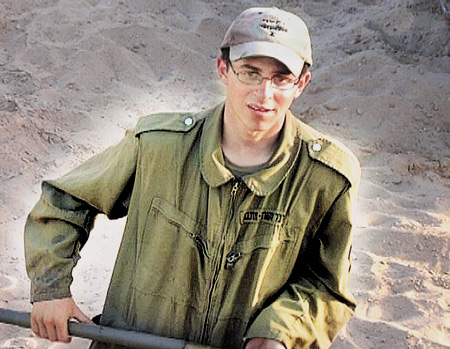
Not long ago I was asked by a friend: why are Israelis and Jews so fixated on the kidnapping of Gilad Shalit? With all of the crises and injustices being committed in the world, why is there such a hue and cry over this one particular man?

I answered that like all nations, Israel takes this kind of thing personally. I mentioned that just like many Jews in Israel and around the world, I also experienced Hamas’ abduction of Gilad Shalit as an injustice committed against one of my own. Even as a Jew living in the comfort of my Evanston home, I felt a visceral sense of pain three years ago when I first heard the news of Shalit’s kidnapping. Over time, my pain turned to anger as Hamas denied him Red Cross visits and refused to confirm (until only recently) whether he was even dead or alive.

I went on to compare Israel’s trauma to the feeling of collective trauma we felt in our country in 1979, when Iranian militants took American embassy workers hostage: how violated our nation felt: how personally we identified with the hostages; how deeply we experienced the injustice of their imprisonment.

On a less tribal level, of course, I do understand that there was a deeper context to the hostage crisis. Underneath our feelings of personal violation were more challenging questions – questions few of us were prepared to ask out loud. Why, for instance, did we have so much concern over 53 fellow Americans, but not for countless other political prisoners around the world, many of them incarcerated by regimes actively supported by our nation?

In just the same way, I believe too few Jews even know – let alone protest – that while Hamas unjustly imprisons Shalit, Israel holds hundreds of Palestinians taken in operations that at best must be considered ethically dubious. While Israel defends its actions legally by terming these prisoners “enemy combatants,” the hard truth remains that for decades Israel’s security services have rounded up scores of Palestinians without charge and have imprisoned them indefinitely – in many cases for years.

Yes, many of the prisoners are undoubtedly guilty of plotting or carrying out violent acts against Israelis. Many of these incarcerations can surely be defended on grounds of security. But it has become impossible to ignore that Israel has also incarcerated considerable numbers of Palestinians who by any reasonable definition must be considered political prisoners.

(One recent case in point: many Jews are familiar with the case of Gilad Shalit, but I’m sure that far fewer know, for instance, about Abdallah Abu Rahmah, a Palestinian high school teacher and coordinator of the non-violent campaign in the West Bank village of Bil’in, who was arrested last week by the Israeli military. According to eyewitness accounts, Abu Rahmah was taken from his bed at 2:00 am in the presence of his wife and children.)

And so, beyond the emotions of tribalism, the question remains: will we ever be able to see past our own loyalties and find equal value in the lives of others – human beings who are just as eminently worthy of fair treatment, justice and dignity? And even more challenging: will we ever be ready to admit that the violence committed against us is often inspired in no small way by the injustices we ourselves have committed – and continue to commit?

To return to the Iranian hostage example: back in 1979, few Americans cared to even ask why their Iranian captors might have been so motivated to commit this act. Most of us were ignorant to the powerful significance of the American embassy for Iranians – that it was this very same embassy from which our nation had plotted the overthrow of Iran’s democratically elected government in 1953. As it turned out, the regime we subsequently installed would persecute and unjustly imprison countless Iranian citizens over the next two decades.

So too in the case of Gilad Shalit. Few of us in the Jewish community are truly ready to examine the source of Gazan’s fury toward Israel – a fury that has been building since long before Hamas even existed. Few of us are willing to face the history of Israel’s oppressive policies in Gaza or the fact that Gazans have been living under an intolerable occupation for decades.

And even fewer of us even know that the overwhelming majority of the 1.5 million who live in Gaza belong to families that originally came from outside of Gaza – from towns and villages like Ashkelon and Beersheba – and were expelled from their homes by the Israeli military in 1948. Indeed, when I think of Gazan rage in 2009, I can’t help but think of these chilling words by Moshe Dayan from back in 1956:

Who are we that we should bewail their mighty hatred of us? (They) sit in refugee camps in Gaza, and opposite their gaze we appropriate for ourselves as our own portion the land and the villages in which they and their fathers dwelled.

The history of Gaza is indeed a tragic one – and yes, Israel’s oppression of its population is a critical part of this tragedy. Unless we take the time to understand this history – and our part in it – I don’t believe we can even begin to pretend there is a way out of this conflict.

To be clear: understanding the source of Gazans feelings toward Israel does not mean condoning their actions. Hamas’ imprisonment of Gilad Shalit is barbaric. As a fellow Jew, I grieve for Shalit and I pray for his safe return. But at the same time, I cannot look away from the more painful realities that led to his capture in the first place, and I truly believe that until we make an honest effort to face and address these realities, there will invariably be more Gilad Shalits in Israel’s future.

Following Israel’s military campaign in Lebanon in the summer of 2006, journalist Amira Hass wrote these powerful words in Ha’aretz. I believe she presents us with a profound model of an Israeli who is able to hold her own concern for her people together with a willingness to face the truth of the injustices perpetrated her nation. Her words are doubly tragic as we now approach the one-year anniversary of Israel’s military campaign in Gaza:

We are justly concerned about the welfare of northern residents, proud of their fortitude, understand those who leave, are shocked by the death of each person and by every rocket hit, and identify with those suffering from anxiety. Take what the northern residents have been going through for a month, multiply it by 1,000, add an economic blockade, power and water cuts, and no wages. This is how the Palestinians in the Gaza Strip have been “living” for the past six years.

The Israelis allow their army to continue destroying, trampling and killing in the Palestinian territories. Here, like in Lebanon, the real intelligence and security failure is Israel’s ignoring the extent of our uninhibited, unrestrained devastation and their amazing power of human endurance. This is why Israel has delusions of “victories.” If the homemade rockets are still being fired at Sderot despite the Palestinians’ extensive suffering, it is because they have concluded, correctly, that Israel’s destruction power is not intended to stop Qassam rockets – or to free Gilad Shalit. It is intended to force them to accept a surrender arrangement, which they reject not with military victories but with their power of endurance.

The Voice of Reason and Honest Hearts in Dark Times

I’ve been reading With an Iron Pen, a newly translated anthology of Israeli protest poetry from the past two decades.  I can’t recommend it enough – especially for those prefer poetry that goes straight to the heart and the gut.

Though I’d heard of some of these poets, I was unfamiliar with the remarkable depth and breadth of this particular genre.  It’s a diverse collection with one critical aspect in common: all these poems express a powerful voice of protest against Israel’s oppressive treatment of Palestinians dating back to the days of the First Intifada. The collection felt to me like nothing other than forty-two poets letting loose one singular prophetic howl of rage and sorrow over what their nation has wrought.

And like all protest poetry, this is art that clearly seeks to transform. As the editors write in introduction:

The ethical stand taken by the poets and poems of this anthology represents today the minority position – a minority that is seen by the majority of the Jewish Israeli public as “self-hating” and as desecrators of sacred ideals. And still, throughout history, literary creations have expressed  the forbidden and revolutionary and have preceded – in fact precipitated – changes in attitudes and societal norms. The day will come when the poems collected in With an Iron Pen will be read as the voice of reason and of honest hearts in dark times.

I see something quintessentially Jewish in the inner struggle reflected these poems – and at the same time, the tradition of protest they draw upon is so clearly universal.  I can’t help but think that these works represent, in their way, a contemporary form of sacred text.

Check out Richard Silverstein’s wonderful review for Tikkun. Click below for two of my particular favorites from the collection:

Continue reading

“Cursed Be He That Keepeth Back His Sword From Blood.”

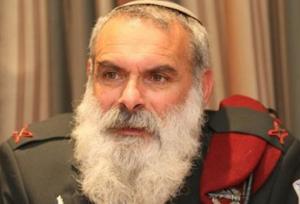
Rabbi-Avi-Ronzki_From yesterday’s Ha’artez:

The Israel Defense Forces’ chief rabbi told students in a pre-army yeshiva program last week that soldiers who “show mercy” toward the enemy in wartime will be “damned.”

Brig. Gen. Avichai Rontzki also told the yeshiva students that religious individuals made better combat troops.  Speaking Thursday at the Hesder yeshiva in the West Bank settlement of Karnei Shomron, Rontzki referred to Maimonides’ discourse on the laws of war. That text quotes a passage from the Book of Jeremiah stating: “Cursed be he that doeth the work of the Lord with a slack hand, and cursed be he that keepeth back his sword from blood.”

In Rontzki’s words, “In times of war, whoever doesn’t fight with all his heart and soul is damned – if he keeps his sword from bloodshed, if he shows mercy toward his enemy when no mercy should be shown.”

Whatever else we might think about Maimonides’ (or Jeremiah’s) words, we are certainly free to debate their academic meaning. But when they are uttered by the Chief Rabbi of the IDF to future Israeli soldiers, words such as these are much, much more than merely academic.

You may remember that Rabbi Rontzki (above) was in the news following Israel’s military operation in Gaza, when soldiers alleged that he gave them a religious booklet entitled “Go Fight My Fight.”  This publication includes extensive quotes by Rabbi Shlomo Aviner, head of the Ateret Cohanim yeshiva in Jerusalem, who ruled that Palestinians were the equivalent of the Biblical Philistines and that cruelty can sometimes be a “good attribute.”

You may also remember that Israeli soldiers from the organization Shovrim Shtika (“Breaking the Silence”) brought this issue to light following the war in Gaza.  Though they have been attacked mercilessly by the Israeli political establishment, these young soldiers have continued to speak out. Last September, Gal Einav and Shamir Yeger, two reserve infantry soldiers who fought in Gaza wrote a powerful editorial in the Israeli press about what they considered to be an unwelcome “messianic” religious influence into the IDF:

There is a problem with the growing tendency to provide religious elements with a monopoly on values and fighting spirit, and particularly with the legitimacy granted to organizations with a missionary and messianic character to operate amongst the soldiers. Most of the commanders in our division are religious, yet up until the last war there was complete separation between their private world and their military position.

If we fail to clearly draw the line right now, in a few years we shall find ourselves shifting from wars of choice or no-choice to holy wars.

In a September BBC report, Reserve General Nehemia Dagan had this to say about the issue:

We (soldiers) used to be able to put aside our own ideas in order to do what we had to do. It didn’t matter if we were religious or from a kibbutz. But that’s not the case anymore.

The morals of the battlefield cannot come from a religious authority. Once it does, it’s Jihad. I know people will not like that word but that’s what it is, Holy War. And once it’s Holy War there are no limits.

(You can watch the BBC report in its entirety here and here. Highly recommended).

What explains the growth of this right-wing religious influence in the IDF? I tend to agree with blogger Zachary Goelman, who points out an larger demographic trend in Israeli society:

With conscription rates dropping annually, especially among secular Jews, and a simultaneous increase in the country’s religious population, Yeger and Einav are part of a shrinking minority. No doubt they know many who ducked their conscription call. If they have draft-age children, they’ve certainly heard them discuss the myriad ways of obtaining a deferral.

This trend is reversed in the dati-le’umi sector, the category of Israeli Jews broadly classified as “national religious.” In one way or another the men and women woven from this cloth see military and national service as a form of religious duty, and their ranks in uniform and civil society will increase in the coming decades. Coupled with the consistent growth of ultra-orthodox families, secular Israel may be in the final throes of its götterdämmerung.

Whatever the explanation, I personally find the implications of this trend to be beyond troubling. How will we, as Jews, respond to the potential growth of Jewish Holy War ideology within the ranks of the Israeli military?  How do we  feel about Israeli military generals holding forth on the religious laws of warfare? Most Americans would likely agree that in general, mixing religion and war is a profoundly perilous endeavor.  Should we really be so surprised that things are now coming to this?

I do not ask these questions out of a desire to be inflammatory. I ask them only because I believe we need to discuss them honestly and openly – and because these kinds of painful questions have for too long been dismissed and marginalized by the “mainstream” Jewish establishment.

For myself at least – as a Jew and as a rabbi – I will take this opportunity to register my personal offense at statements such as those made last week by Rabbi Rontzki.

Gaza 1956

gaza1956

Earlier this year I shared a 2004 Jerusalem Post interview with Arnon Soffer, the architect of Israel’s disengagement from the Gaza Strip. It was a painfully sobering read, not least for his chilling predictions of Israel’s post-disengagement reality:

(When) 2.5 million people live in a closed-off Gaza, it’s going to be a human catastrophe. Those people will become even bigger animals than they are today, with the aid of an insane fundamentalist Islam. The pressure at the border will be awful. It’s going to be a terrible war. So, if we want to remain alive, we will have to kill and kill and kill. All day, every day…

If we don’t kill, we will cease to exist. The only thing that concerns me is how to ensure that the boys and men who are going to have to do the killing will be able to return home to their families and be normal human beings.

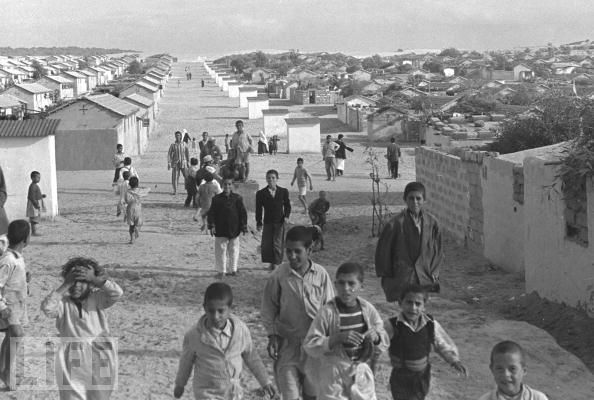
I thought of this article today as I read another piece about Gaza: a famous 1956 eulogy given by Moshe Dayan for a young kibbutznik named Ro’i Rotenberg, who was killed by Gazan Arabs who had crossed over the border into Israel.

At the start of his eulogy, Dayan offered these astonishingly candid remarks:

Do not today besmirch the murderers with accusations. Who are we that we should bewail their mighty hatred of us?  For eight years they sit in refugee camps in Gaza, and opposite their gaze we appropriate for ourselves as our own portion the land and the villages in which they and their fathers dwelled.

Not from the Arabs in Gaza, but from ourselves shall we require the blood of Ro’i. How did we close our eyes so as not to see the goal of our generation in its full measure of cruelty?  Did we forget that this group of young men and women, which dwells in Nahal Oz, bear on their shoulders the heavy gates of Gaza, gates on the other side of which are crowded together with hundreds of thousands of eyes and hands that pray for our weakness, that it may come, so that they may rip us to shreds – have we forgotten this?

This we know: that in order that the hope to destroy us should die we have to be armed and ready, morning and night. We are a generation of settlement, and without a steel helmet and the barrel of a cannon we cannot plant a tree and build a house. Our children will not live if we do not build shelters, and without a barbed wire fence and a machine gun we cannot pave a road and channel water. The millions of Jews that were destroyed because they did not have a land look at us from the ashes of Israelite history and command us to take possession of and establish a land for our nation.

(Translation, Michael Shalom Kochin, 2009)

B’tselem Endorses Ta’anit Tzedek

bstelemI’m thrilled to report that the Israeli human rights organization B’tselem has officially endorsed Ta’anit Tzedek.  B’tselem has long been high up on my list of organizations that do right by the Jewish people and we’re incredibly honored to receive their support.

Amidst the intense Jewish community vilification of Goldstone and his report, it’s extremely important to note that B’stelem and other Israeli human rights organizations reached many similar conclusions in their Gaza investigations as well. Witness this excerpt from a September 9 press release on B’stelem’s findings – which were released almost a month before the Goldstone report:

According to B’Tselem’s research, Israeli security forces killed 1,387 Palestinians during the course of the three-week operation. Of these, 773 did not take part in the hostilities, including 320 minors and 109 women over the age of 18. Of those killed, 330 took part in the hostilities, and 248 were Palestinian police officers, most of whom were killed in aerial bombings of police stations on the first day of the operation. For 36 people, B’Tselem could not determine whether they participated in the hostilities or not…

Behind the dry statistics lie shocking individual stories. Whole families were killed; parents saw their children shot before their very eyes; relatives watched their loved ones bleed to death; and entire neighborhoods were obliterated.

The extremely heavy civilian casualties and the massive damage to civilian property require serious introspection on the part of Israeli society. B’Tselem recognizes the complexity of combat in a densely populated area against armed groups that do not hesitate to use illegal means and find refuge within the civilian population. However, illegal and immoral actions by these organizations cannot legitimize such extensive harm to civilians by a state committed to the rule of law.

The moral courage of the Israeli human rights community is something of which all Jews can justifably be proud. But I also see little point in this pride unless we are ready to confront the painful truths they bring to our door. B’stelem is among the true modern day prophets of Israel. It is time we heeded their call.

(I’m currently at the J Street conference in Washington DC. There’s much to report – I’ll be sending out some thoughts about my experiences here soon. Please stay tuned…)

The Goldstone Interview: Now Go and Study…

We’ve just uploaded the transcript of Ta’anit Tzedek‘s recent rabbical conference call with Judge Richard Goldstone. As I wrote in my last post, you need to read it.  Goldstone addresses a variety of critical issues, including  how his mission conducted its investigation, the report’s suggestion that there were intentional IDF attacks on Gazan civilian targets, whether or not he’s backing away from its findings, how he felt about his experience as a  Zionist and a South African, and much more.

Click below for a cleaned up, very slightly edited version. You can also listen to an audio file of the entire interview here.

Continue reading

A Conversation with Judge Goldstone

Ta’anit Tzedek convened an conference call last night between Judge Richard Goldstone and 150 American rabbis. I’m still sorting through this remarkable, inspiring experience but what I’m mostly left with is this: the world owes Judge Goldstone an enormous debt of gratitude for his commitment to humanitarian ideals and much of the Jewish world owes him a huge apology for the egregious way he has been assailed for his efforts.

A full audio file of the call can be found on the Ta’anit Tzedek website. Kudos to the Velveteen Rabbi, who has already transcribed major portions of the conversation. The JTA has reported on the call today as well.

A full written transcript will be up on the Ta’anit Tzedek website this Thursday. It deserves to be read as widely as possible. Beyond its value as a new item, it provides us all with a profound, resolutely moral statement of purpose.

Please read it.

Iran: Setting the Record Straight

brant-ayatollah1

I’ve read and heard about some silly misinformation being spread around regarding my trip last year to Iran – and I’m thinking it might behoove me to set the record straight.

I will say at the outset that I gave a Yom Kippur sermon on this topic and I blogged extensively from Iran. If you haven’t read these posts yet, please do so. They will give you a pretty good sense of the why, what and how of my Iran experiences.

Right off the bat: I did not meet with Mahmoud Ahmadinejad.

Now that I’ve gotten that straightened out, I’d like to address one particular quote of mine that’s being bandied about out of context:

While I prefer not to weigh in on the rhetorical hairsplitting debate on [President Mahmoud] Ahmadinejad’s notorious 2005 threat to wipe Israel off the map, I’ll only suggest that our attitudes and foreign policy must be based on real intelligence and understanding, and not fear-based, knee-jerk assumptions.

I still think this quote should pretty well speak for itself, but apparently I need to explain further.  I know of at least two instances in which this quote was used to somehow imply traitorous intentions on my part – i.e., that I prefer not to “weigh in” on the serious threats posed by Iran toward the Jewish state.

To those who doubt where my ultimate loyalties lay, I was actually referring with this quote to the rhetorical debate over the actual Farsi meaning of Ahmadinejad’s words from this oft-quoted speech. There has been an important ongoing debate as to whether these words were intended as a threat of genocide against the Jewish state or a predication of the eventual dissolution of the “Zionist regime” from within.

A recent blog post by Juan Cole represents this point of view well:

President Mahmoud Ahmadinejad did quote Ayatollah Khomeini to the effect that “this Occupation regime over Jerusalem must vanish from the page of time” (in rezhim-e eshghalgar-i Qods bayad as safheh-e ruzgar mahv shavad). This was not a pledge to roll tanks and invade or to launch missiles, however. It is the expression of a hope tha the regime will collapse, just as the Soviet Union did. It is not a threat to kill anyone at all.

As I myself am not a scholar of Farsi, I don’t consider myself qualified to weigh in on this debate, but I do believe that “our attitudes and foreign policy must be based on real intelligence and understanding, and not fear-based, knee-jerk assumptions.” I continue to stand by this assertion – I’m simply not a fan of fear-based foreign policy.  I am well aware that there are those who will say, “maybe Iran does intend to destroy Israel or maybe it doesn’t, but can we really take that chance?” I’m more inclined to say it this way: “when we jump to conclusions and base our reactions on fear rather than true understanding, we may ultimately cause our deepest fears to actually come true.”

By the way,  I encourage you to read Cole’s entire post, entitled “Top Things You Think You Know About Iran That Are Not True.” Whether or not you agree with his analysis, I believe his perspective provides a thought-provoking corrective to so many of the fear-based assumptions currently being bandied about regarding Iran.

Here are a few excerpts:

Belief: Iran is a militarized society bristling with dangerous weapons and a growing threat to world peace.

Reality: Iran’s military budget is a little over $6 billion annually. Sweden, Singapore and Greece all have larger military budgets. Moreover, Iran is a country of 70 million, so that its per capita spending on defense is tiny compared to these others, since they are much smaller countries with regard to population. Iran spends less per capita on its military than any other country in the Persian Gulf region with the exception of the United Arab Emirates.

Belief: Isn’t the Iranian regime irrational and crazed, so that a doctrine of mutually assured destruction just would not work with them?

Actuality: Iranian politicians are rational actors. If they were madmen, why haven’t they invaded any of their neighbors? Saddam Hussein of Iraq invaded both Iran and Kuwait. Israel invaded its neighbors more than once. In contrast, Iran has not started any wars. Demonizing people by calling them unbalanced is an old propaganda trick. The US elite was once unalterably opposed to China having nuclear science because they believed the Chinese are intrinsically irrational. This kind of talk is a form of racism.

PS: By the way, did I mention I didn’t meet with Ahmadinejad?