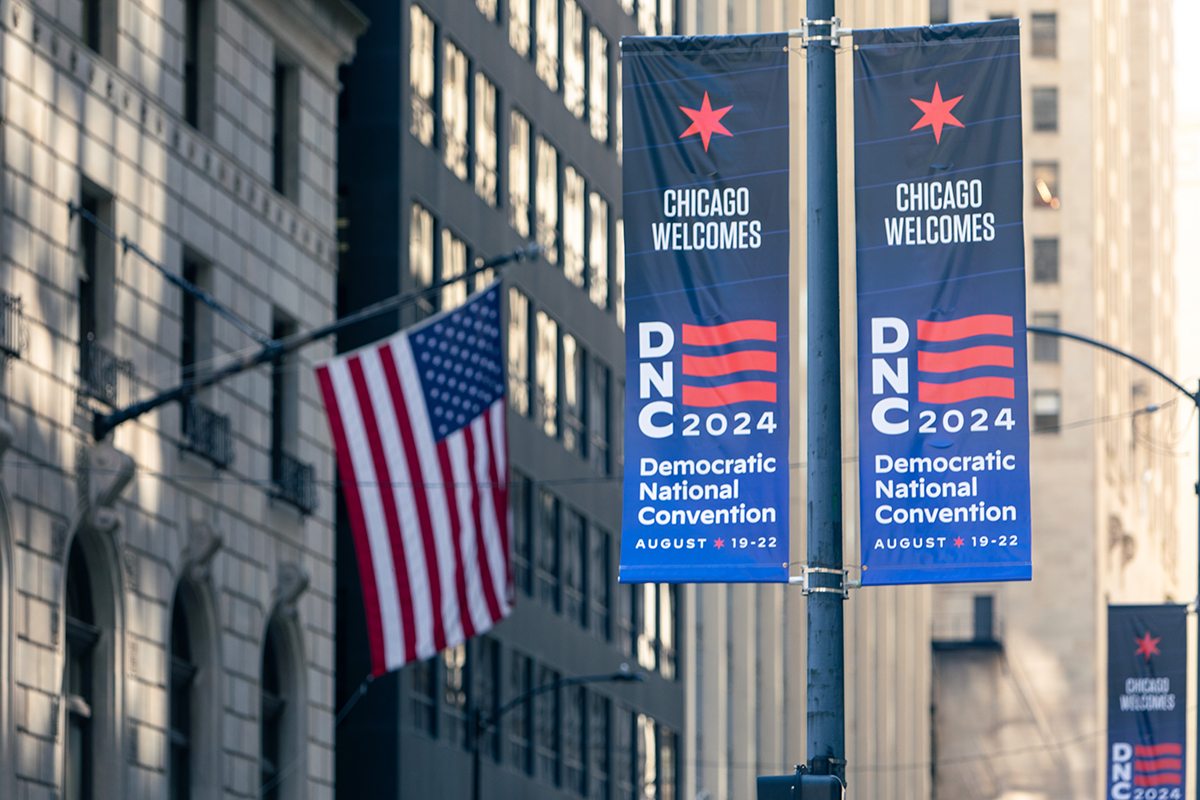
As I’ve written previously, a large coalition of leftist groups has been preparing to take to the streets when the Democratic National Convention comes to Chicago next week. Although there will be a variety of different demands leveled at the DNC during the course of the convention, one key issue clearly stands out as a central common thread through them all – namely, an immediate US arms embargo and a permanent ceasefire to end Israel’s genocide in Gaza.
To name but one example: a rally and march for reproductive justice (of which my congregation, Tzedek Chicago, is a co-sponsor) will take place this Sunday, on the eve of the convention. As “Bodies Outside of Unjust Laws” organizers have made clear, however, the demands of this protest are not limited to issues of domestic reproductive justice alone:
Reproductive justice inherently includes ending the reproductive genocide in Palestine. As U.S. citizens, it is our duty to call on our own government to end the funding of weapons to Israel that enable this nightmare to continue and robs us of funds at home. As feminists and reproductive justice activists, we must also highlight a horrific aspect of the war on Palestinians: it is a war against women and children, who suffer in uniquely cruel ways.
Likewise, the Coalition to March on the DNC, a group of over 200 national and local organizations is calling for an “End to US Aid to Israel” along with demands on immigrant justice, police crimes, healthcare, housing and the environment. Here again, justice for Palestinians is not viewed in isolation from other issues. As protest organizers correctly understand, these issues are irrevocably interlinked and intertwined.
During the course of this election cycle, those of us who have been demanding an arms embargo and ceasefire in Gaza have become all too familiar with one recurrent criticism in particular: that we are “one issue voters.” I find this to be a dangerous attitude for a number of reasons. More than anything, it’s an egregiously dismissive stand to take in an age of genocide, smacking of “it’s not my problem” American isolationism during the 1940s. For the Palestinian people, of course, Israel’s genocide in Gaza is not simply one issue – it’s the issue.
Witness, for instance, the news from this past weekend:
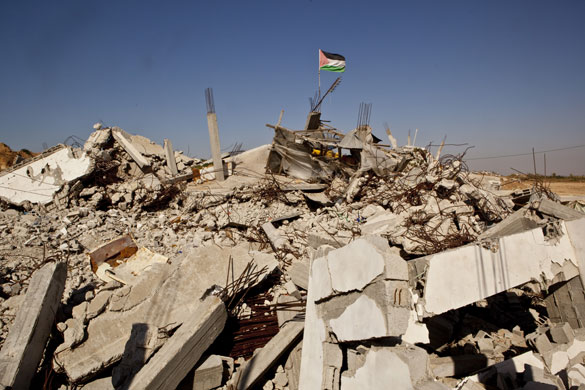
Officials in Gaza say more than 100 people were killed Saturday in an Israeli attack on a school and mosque where thousands of displaced Palestinians had sought shelter. The attack on the al-Tabin school in Gaza City was one of the deadliest individual attacks since Israel’s war on Gaza began over 10 months ago. Rescue workers said they did not find a “single full body” among the deceased — just body parts often destroyed beyond recognition. Survivors said Israel attacked the school during morning prayers…
CNN has confirmed a US-made GBU-39 small diameter bomb was used in the Israeli strike on the school. The attack came two days after the Biden administration notified Congress that it was preparing to provide Israel with an additional $3.5 billion to spend on US weapons and military equipment. Congress had approved the money as part of a $14 billion package for Israel in April. Zeteo reports part of the new US package includes a direct sale of 6,500 joint direct action munitions to Israel.
First and foremost, the genocide in Gaza is a crime against humanity that should concern us all. But as citizens of the nation that is funding and abetting this genocide, we Americans cannot look away from the blood that is surely on our collective hands. Nor can we ignore the shock waves that resonate far outside the borders of Palestine/Israel: the threat of an all-out regional war, the profits enjoyed by the arms and surveillance industry at taxpayer expense, the devastating environmental impact – the list goes on and on. Palestinian human rights lawyer and activist Noura Erakat put it perfectly on Twitter/X recently: “PSA: ending a genocide is not ‘a single issue’ it is an entire universe of issues.”
Another refrain I’ve been hearing repeatedly is the critique that protesting at the DNC “will only help Trump.” Harris herself leveled this argument at a campaign rally in Detroit when she sternly admonished pro-Palestinian protesters: “If you want Donald Trump to win, then say that. Otherwise, I’m speaking.” To be sure, it was an astonishingly tone-deaf and dismissive response to make in Michigan, the very birthplace of the Uncommitted Campaign. But on a more fundamental level, Harris’s response denied the very real impact of her own administration’s policies. As one of the protesters later put it, “When people are demanding a ceasefire and arms embargo and an end to the genocide and you say that we want Donald Trump to step in—it just shows a lack of accountability. It shows a lack of leadership, a lack of responsibility and a lack of ownership.”
In essence, Harris’s comment was just the latest version of the “shut up and vote” message that the Democratic party routinely sends progressives during every election cycle. In an age of US-supported genocide, however, the cynical emptiness of this message has become patently, painfully obvious. As journalist Masha Gessen has rightly pointed out. “These voters are not choosing between Harris and Trump. They are choosing between their sense of themselves as moral beings if they vote for Harris and their sense of themselves if they vote for a third-party candidate or for no one at all.”
Of course those who will be protesting at the DNC next week do not want to see Trump elected in November. But even from a purely strategic point of view, what has a better chance of helping the Democrats fortunes in November? We know that a strong majority of American voters across the political spectrum support a permanent ceasefire in Gaza. What would be the more winning strategy: telling those who want to end a genocide to shut up, or exert real leadership that will bring about a ceasefire and an end to the threat of a devastating regional war?
While party conventions function largely as candidate-coronations, they still function as places where parties express their collective vision and finalize their political platforms. On this score, I’m not at all optimistic that an arms embargo to Israel and a permanent ceasefire will find any purchase at the DNC. There are a mere 30 Uncommitted delegates out of 4,600 – and while they are pushing for a voice at the convention (they’ve asked that Dr. Tanya Haj-Hassan, a pediatric intensive care doctor who has volunteered in Gaza, speak from the convention floor), they have still not been offered a slot. Harris’s national security advisor has also made it clear that she opposes an arms embargo to Israel. By every indication, it certainly feels like “shut up and vote” will be the dominant Democratic party message coming out of the convention next week.
I have enormous respect for the Uncommitted delegates who will engage within the convention, particularly co-founder Layla Elabed, who has said even if they are not given a speaking slot, delegates will make their presence known with “news conferences, candle light vigils, tables to distribute literature and, they hope, guest testimonies about life in war-torn Gaza.” When it comes to political advocacy, however, there is always an inside game and an outside game. That’s why those of us who are not delegates will (quite appropriately) be making our presence known outside the walls of the convention hall as well.
Protest organizers have no illusions about the overwhelming militarized presence that will greet us when we gather next week. Federal authorities have divided the area surrounding the United Center, where the main speaking events of the convention will take place, into “soft” and “hard” zones – the latter being off limits to cars and non-credentialled delegates. But even in the soft zones, movement has been heavily restricted. The main protests have been given approved routes far from the convention site, and at one point goes through narrow residential side streets, that will be completely inadequate to handle thousands of protesters. While organizers have appealed the march route, as of this writing there has been no response from the city of Chicago.
When we talk about the potential for police violence next week, of course, the specter of the 1968 Democratic convention in Chicago looms very large. A great deal of ink has been spilled analyzing the differences and similarities between Chicago 1968 and Chicago 2024 – and while I’m loath to venture too far into this rabbit hole, there is one point of commonality I believe bears noting. In general, the mythos around the 1968 DNC protests tend to lay the blame for the Democrats’ defeat on the protest movement that “divided the party.” Often lost in this discussion is the fact that in 1968, those protests were directed toward a political party that had been prosecuting an increasingly unpopular war in Vietnam. Today, as then, I find it deeply misguided to blame protesters and not the immoral policies of the Democratic party itself.
While it’s not particularly helpful to use Chicago 1968 to heighten hysteria over the DNC, protestors are certainly justified in being vigilant over the very real possibility of police violence. I’m not the only one who finds it ominous that the city is doubling down on armed presence in the city. In advance of the convention, the Secret Service agent in charge of “security” has commented that “Chicago has a proven track record when it comes to putting on huge events” – citing the city’s response to Lollapalooza, the NASCAR Chicago Street Race and the Chicago Air & Water Show – as if the DNC is just another tourist event to showcase to the public.
No, we cannot deny of the very real moral and political reality that will be at stake in Chicago next week. We cannot deny that state violence directed against Palestinians is one and the same with so many other forms of state violence that are routinely normalized as “necessary.” And we must resist the call to dismiss any form of systemic violence as just “one issue.” As my friend and comrade, organizer Kelly Hayes has so wisely written:
We have to recognize victims of police brutality, Palestinians, our disabled and unhoused neighbors, and so many others who are subject to forgetting as worthy of grief, outrage and action. Everyday people who are fleeing violence, hunger, and militarism, everyday people whose cites are running out of water or are in danger of disappearing beneath rising flood waters, everyday people who are dying right now because they lack air conditioning amid heat waves – these are the people whose plights and fates should shape our politics. If we are going to fight for any semblance of human decency, we need to reclaim and reassert the value of our lives.

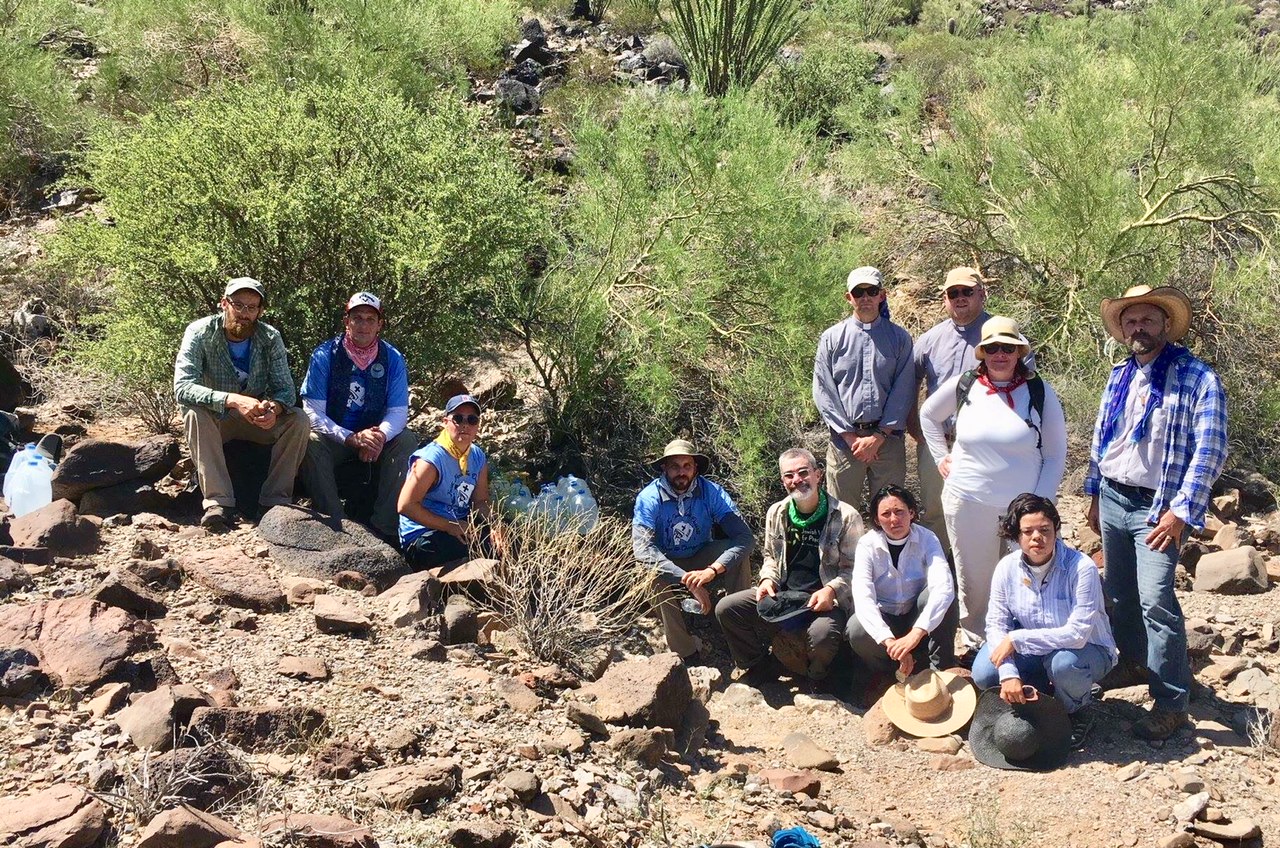 I’ve just returned from a weekend at the border in the southern Arizona desert where I participated in a delegation of 60 faith leaders from around the country in an initiative called “Faith Floods the Desert,” supporting the of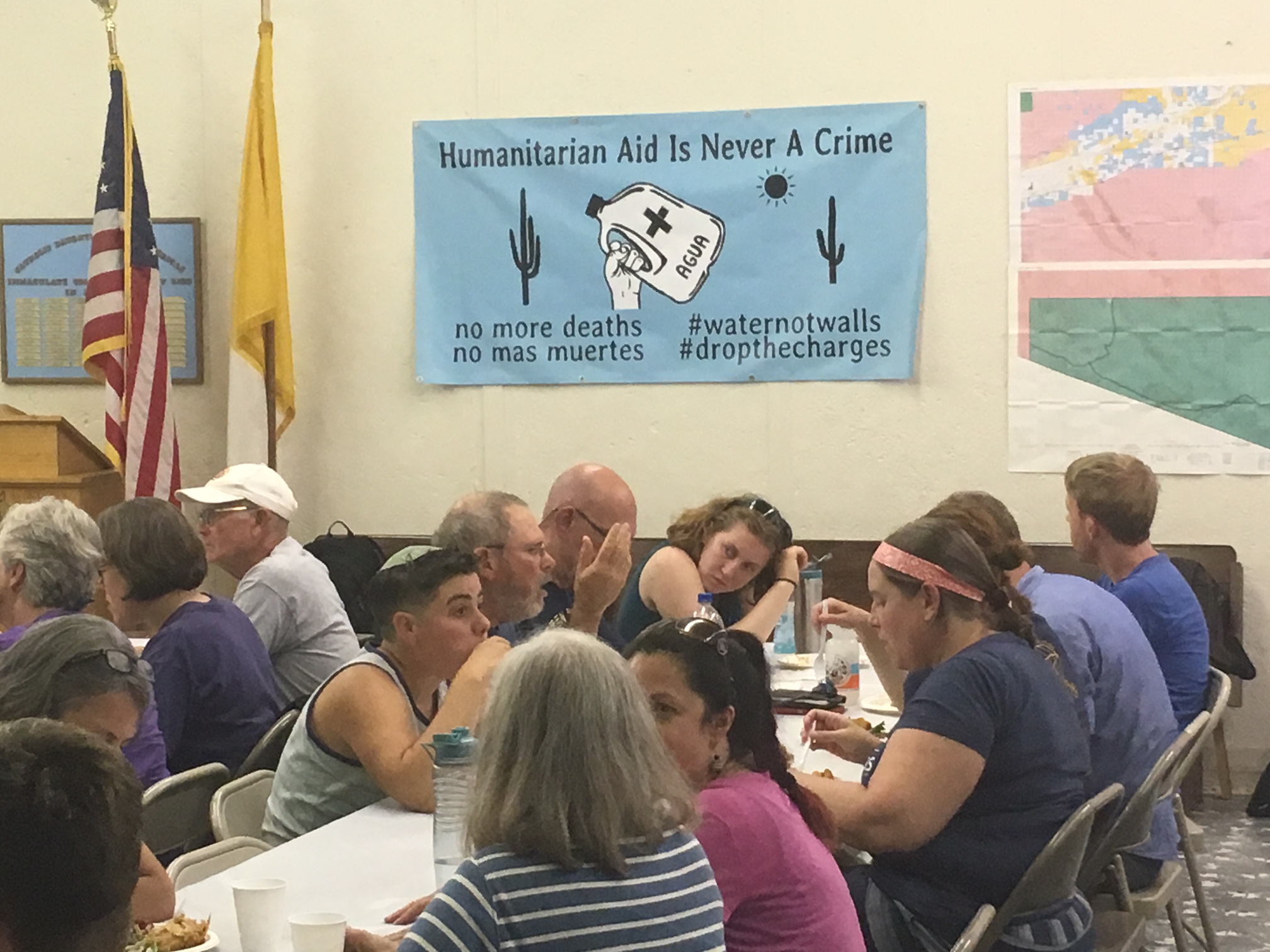
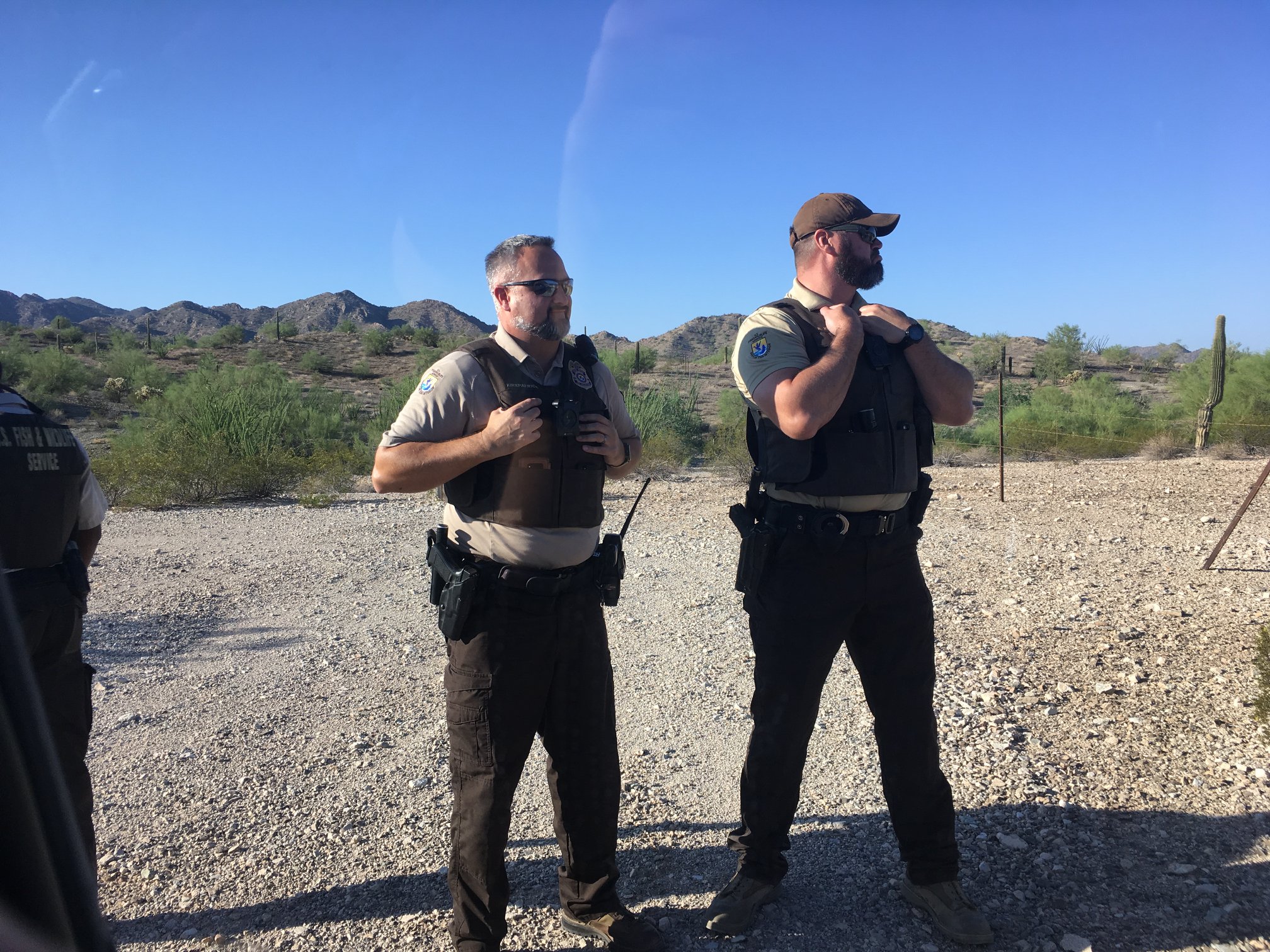
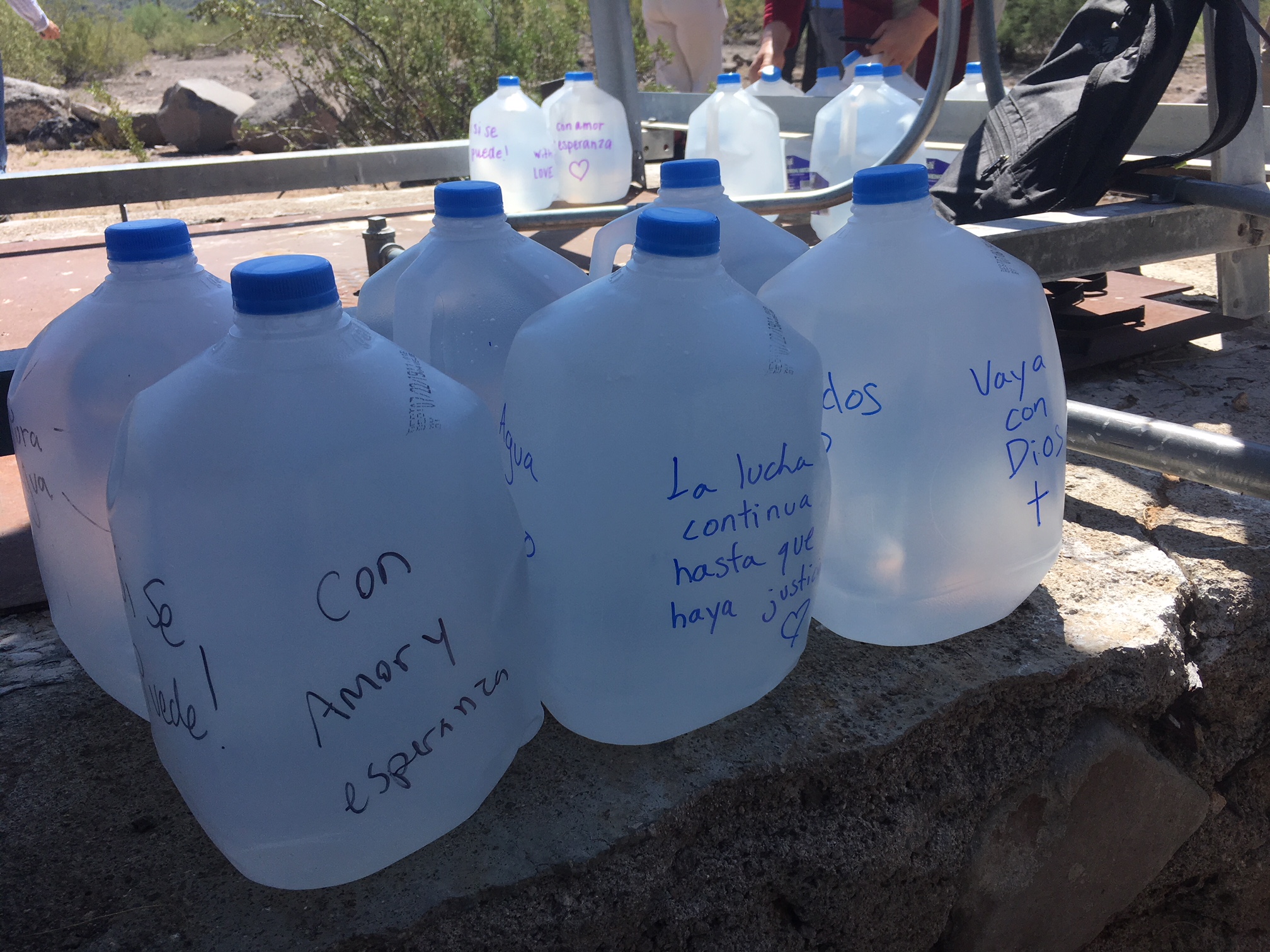
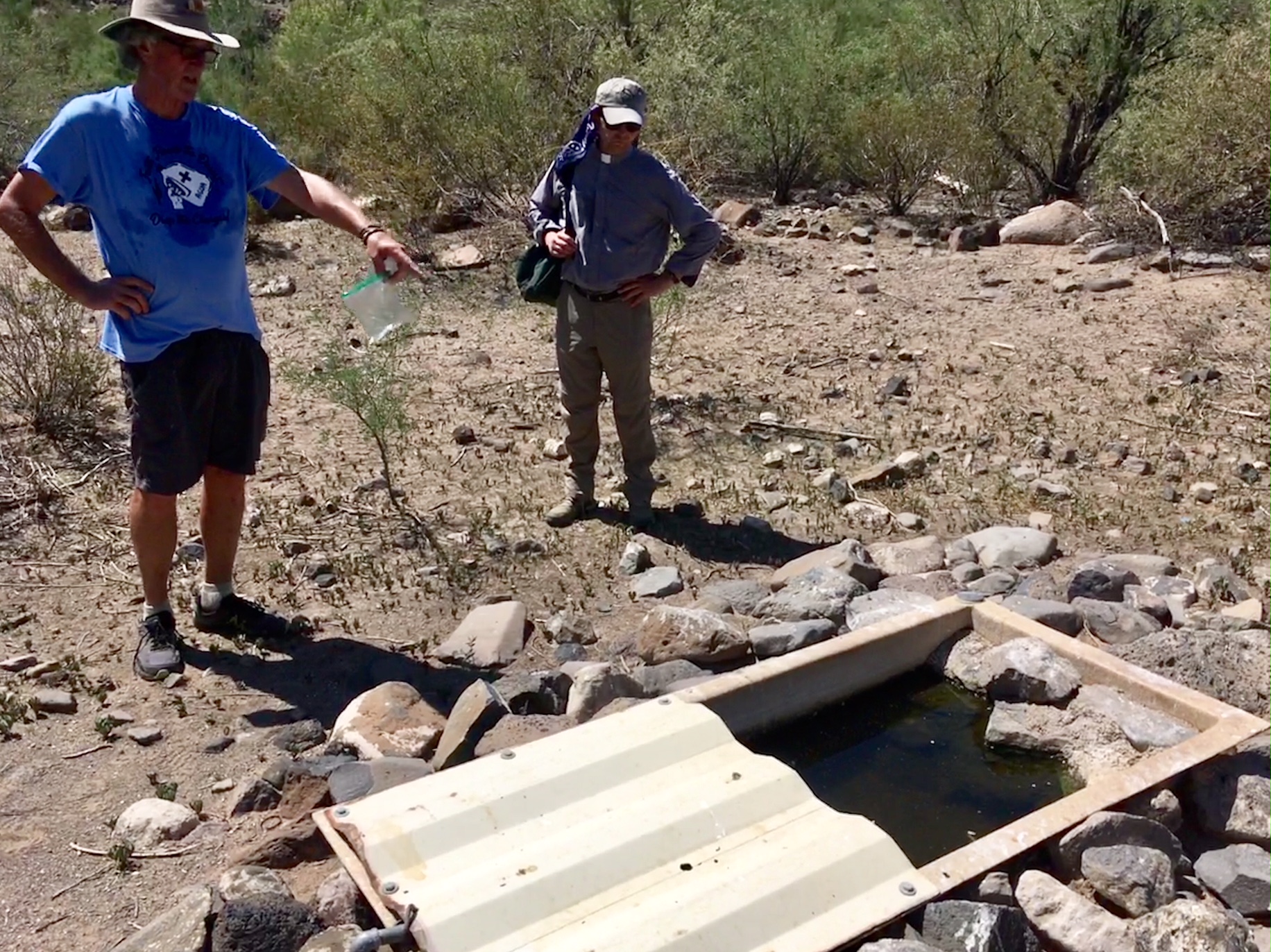

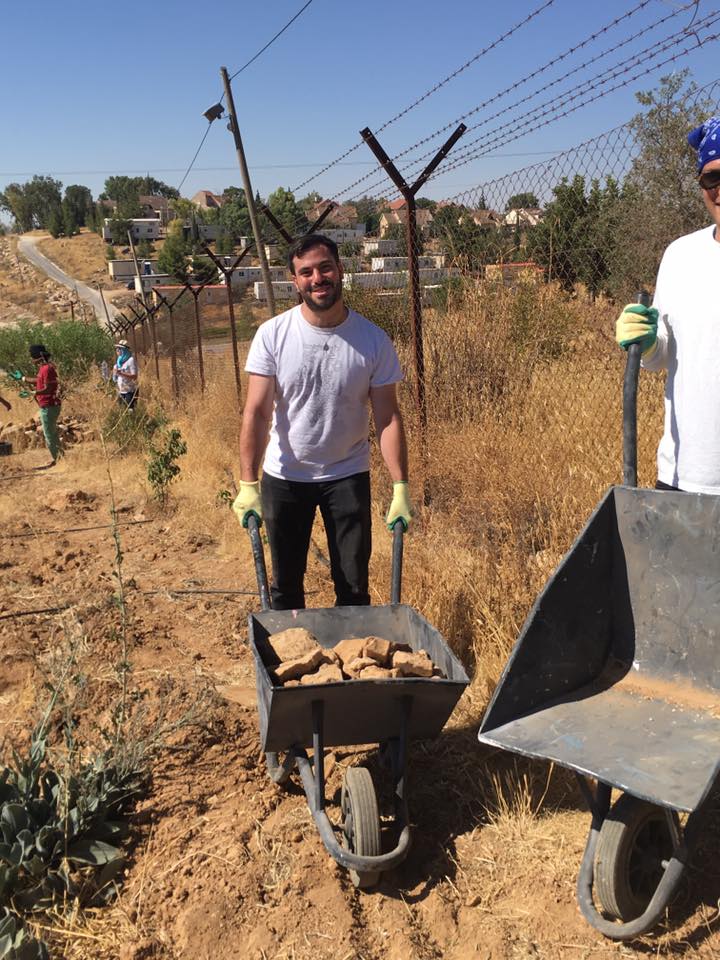
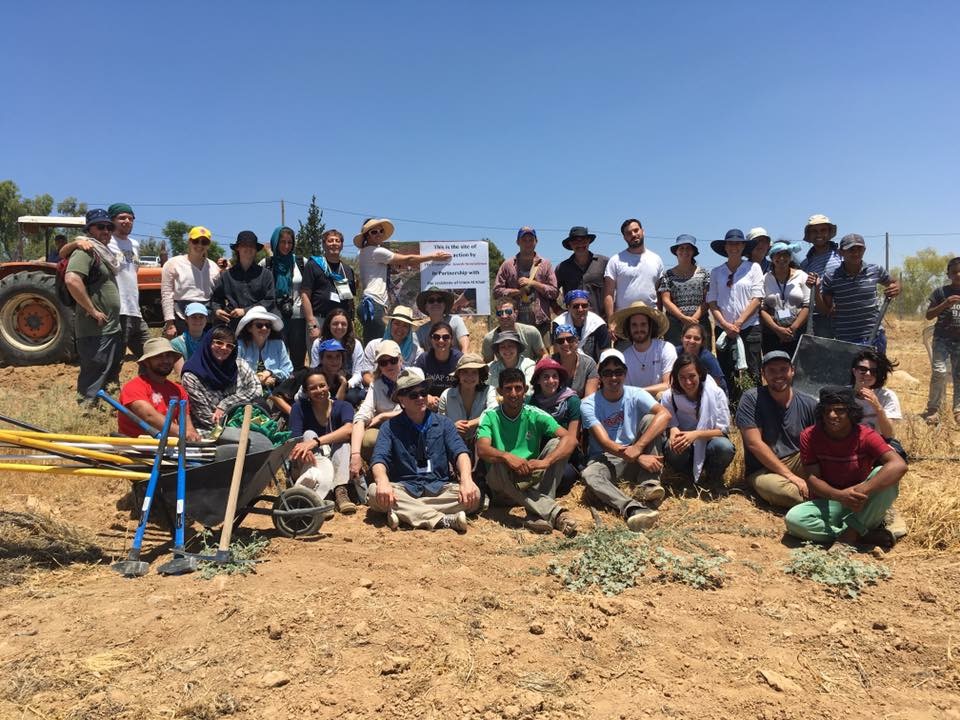 For our delegation’s first day in the field we traveled to the Bedouin village of Umm al-Kheir in the South Hebron Hills.The Bedouin residents of Umm al-Kheir came to this region over 60 years ago, after they were expelled from Tel Arad (in the Negev desert) by the Israeli military. After coming north, they purchased this land from the Palestinian village of Yatta and lived there peacefully until the mid-1980’s, when the Jewish settlement of Carmel was built directly next to it.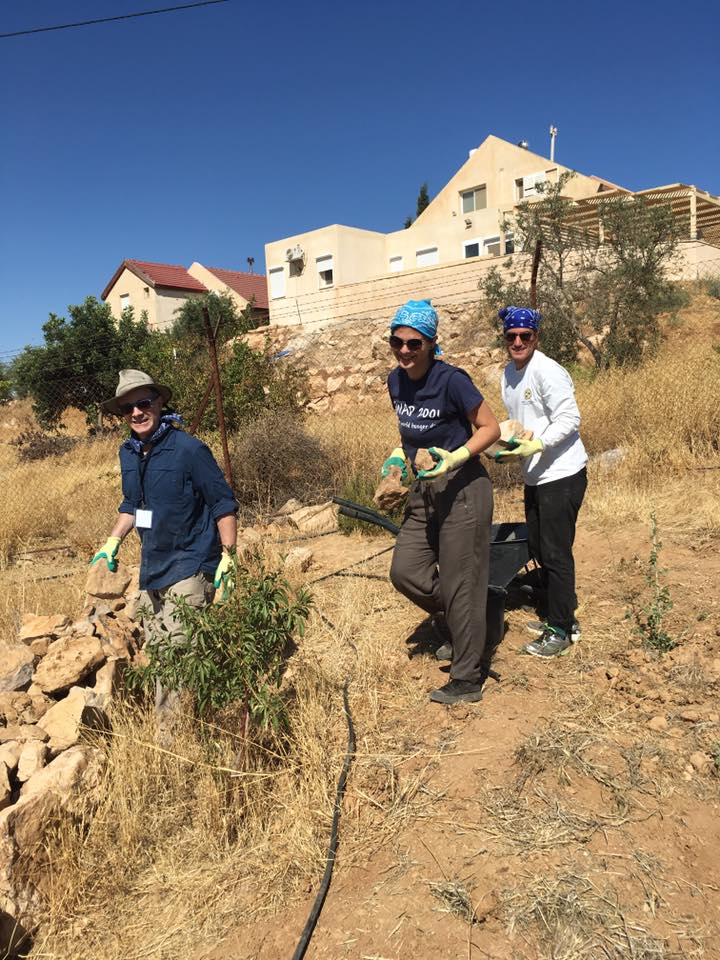
 Shalom Rav