Category Archives: Zionism

We Charge Genocide: A Sermon for Rosh Hashanah 5785

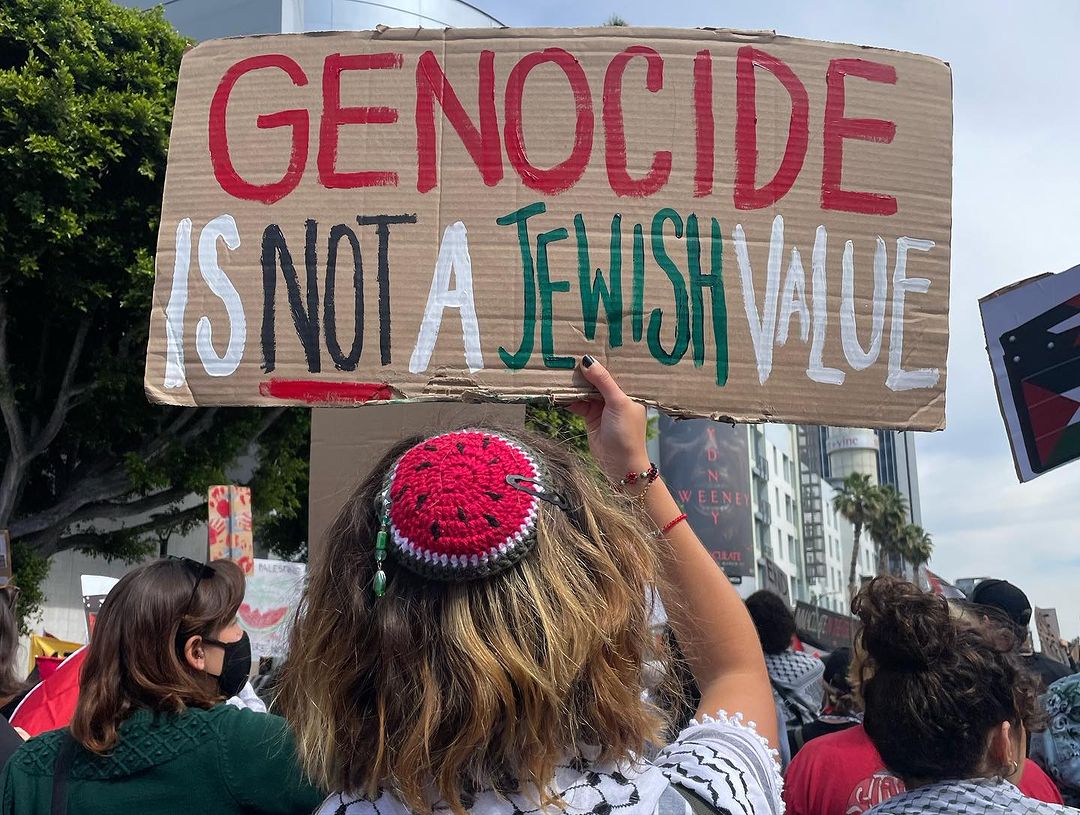
(photo credit: Jewish Voice for Peace)

Cross-posted, in article format, in Truthout

Why do we sound the shofar on Rosh Hashanah? Over the centuries, commentators have offered us a variety of reasons. Moses Maimonides famously called it a wake-up call to personal atonement; others view it a call to action or a tribute to God’s power. This new year, however, I believe one reason stands out among all others. Today, this Rosh Hashanah, we sound the shofar as a call to moral accountability.

Today, we begin the holiest season of the year. Over the next ten days, we’ll be challenged to break open the shells of inertia and complacency that have built up over the past year. We’ll sound the shofar to herald the inauguration of a deep, collective soul searching: to look deep within, to face honestly what must be faced, if we are to truly begin our new year anew. 

To put it frankly, I honestly cannot remember a Rosh Hashanah when the collective moral stakes were any higher for the Jewish community than this year. I would even go as far to say that this may be the most morally consequential High Holiday season of our lifetimes. As we begin this new year, the shofar calls us to account for a genocide, ongoing even as we speak, perpetrated by a nation acting in the name of the Jewish people. 

How can we begin to fathom a moral accounting of such a magnitude? Over 41,000 Palestinians killed in Gaza to date and over 95,000 injured, the majority of whom are women and children. According to one estimate, the ultimate death toll may eventually be nearly 200,000. Whole extended families, entire Palestinian bloodlines have been wiped out completely. Much of Gaza has been literally reduced to a human graveyard, with scores of bodies buried beneath the rubble of destroyed and bulldozed homes. Neighborhoods and regions have been literally wiped off the map. 

Gaza’s infrastructure and health care system has been decimated. According to the UN an “intentional and targeted starvation campaign” has led to widespread famine and disease throughout the Gaza strip. Polio has now broken out – relief workers are literally working to deliver vaccines to children as bombs and missiles fall around them. 

Health care workers, humanitarian workers and journalists are being killed, injured and imprisoned in massive numbers. Human rights agencies have documented widespread torture and abuse of prisoners, including sexual abuse, throughout a network of torture camps. 

Please note that this unspeakable litany is not a review of the past year. It is a description of a nightmare that continues as I speak, with no end in sight. 

As we contemplate this inhuman status quo, it occurs to me that this Rosh Hashanah, the broken sound of the shofar is more than a mere all to accounting. It is a broken wail of grief – and a desperate moral challenge. This year the shofar calls out to us in no uncertain terms: We Charge Genocide

This is not a point upon which we can equivocate. Not today. On this day, we face what must be faced and say out loud what must be said. To argue this point now would frankly be a sacrilege. 

From a purely legal point of view, a myriad of academic and legal experts have long since confirmed the charge of genocide. As far back as October, Holocaust and Genocide scholar Raz Segal has called Israel’s actions in Gaza “a textbook case of genocide.” On October 18, almost 800 scholars, lawyers and practitioners called on “all relevant UN bodies…as well as the Office of the Prosecutor of the International Criminal Court to immediately intervene…to protect the Palestinian population from genocide.” More recently, Omer Bartov, a respected historian of the Holocaust and Genocide Studies at Brown University accused Israel of “systematic war crimes, crimes against humanity and genocidal actions.” 

But beyond the legal arguments, there is a critical, moral imperative behind this claim. For many Jews, it’s impossible to imagine – let alone say out loud – that a Jewish state, founded in the wake of the Holocaust, could possibly be perpetrating a genocide. 

I understand the pain behind this refusal. I know it confronts many Jews with an unimaginable prospect: to accept that we have become our own worst nightmare. But if we cannot admit the truth on this of all days, then why bother gathering for Rosh Hashanah in the first place? To dither on this point would make a sham of a festival we dare to call the holiest season of the year. 

Not long ago I had a long conversation with my dear friend and colleague Rachel Beitarie, director of the Israeli organization Zochrot. Rachel is among the precious few Israeli activists who are in unabashed solidarity with Palestinians. You may remember her presentation to our Tzedek community several months ago. Among other things, she spoke about what it was like to be an Israeli activist for Palestinian liberation who grew up on a kibbutz near the Gaza border, who personally knew Israelis who were killed and taken hostage on October 7. 

During our recent conversation, Rachel and I talked in particular about the way Israel metabolizes the traumatic memory of the Holocaust as a way to rationalize away its genocidal violence in Gaza. In a follow up letter to our conversation, Rachel wrote the following words to me:

As years go by and most Holocaust survivors are no longer with us, the identification and reliving of the trauma of former genocide seems to only grow, in direct relation to the crimes committed under the excuse of the right to defend ourselves and “prevent a second Holocaust.” 

Because of this unrelenting propaganda, the linkage of the Hamas attack of October 7 to the Holocaust was made immediately, even though it was logically bogus. ​​It was understandable at first, especially from people – many of my friends and acquaintances among them – who personally experienced the horrors of that day, waiting for help that took many hours to come. 

Having grown up in Israel, exposed as we are to re-traumatizing Holocaust education, the associative connection was almost inevitable. Soon however, it became clear that this linkage was being overblown and manipulated to justify the annihilation of Gaza; to justify, dare I say it, another Holocaust.

Many outside of Israel have made the linkage between October 7 and the Holocaust as well. Almost immediately in fact, the terrible massacres of that day were openly characterized as “the worst mass murder of Jews since the Holocaust.” As Rachel pointed out, the two events have nothing to do with each other whatsoever. Still, it is indeed painfully poignant to consider that this mass killing occurred in a state founded in the wake of the Holocaust in order to safeguard Jewish lives once and for all.

We can only imagine what on earth will be said about October 7 on its one year anniversary, which will arrive exactly between Rosh Hashanah and Yom Kippur. From what I’ve read about officially sponsored Jewish community commemorations, the dominant message will be thoroughly suffused with a Holocaust-informed victim mentality: “Bring them home,” “We stand with Israel,” “It’s us against the world,” with nary a mention of the vengeful carnage Israel has been unleashing on Gaza for the better part of a year.

In contrast to this particular messaging, however, I would suggest that sacred Jewish tradition presents us with an important opportunity on this anniversary. Yes, the Days of Awe are an occasion to mourn the losses of the past year – but this season is also a time to seek out a deeper understanding. To do a genuine accounting and to take real accountability. 

As we start to reckon with the events of October 7, I would suggest that the first step would be to admit that this date was not a starting point. If we are to truly and honestly commemorate this tragic anniversary, we must understand it in the context of the ongoing violence and injustice known as the Nakba – a nightmare that began decades ago and is still ongoing. 

As Israel’s violence in Gaza escalated during the final months of 2023, Tzedek Chicago’s board had numerous conversations about whether or not to issue a congregational statement. I’ll make a confession: I wasn’t originally in favor of it. To be honest, I was starting to become dubious about the value of these kinds of gestures. At a moment when so many of us were working overtime organizing on behalf of the Palestine solidarity movement, it seemed like a waste of time to spend our time on a congregational statement. It felt as if the only statement that needed to be made, over and over again in the streets, was “Ceasefire Now!” 

Eventually, however, I came to agree with our board that Tzedek Chicago – as an avowedly anti-Zionist congregation – had a unique voice to offer on this issue. And so, during the month of December, we worked together to craft a statement titled, “In Gaza, Israel is Revealing the True Face of Zionism.” 

Here’s an excerpt:

We … know there was a crucial, underlying context to (the) horrible violence (of October 7). We assert without reservation that to contextualize is not to condone. On the contrary, we must contextualize these events if we are to truly understand them – and find a better way forward.

The violence of October 7 did not occur in a vacuum. It was a brutal response to a regime of structural violence that has oppressed Palestinians for decades. At the root of this oppression is Zionism: a colonial movement that seeks to establish and maintain a Jewish majority nation-state in historic Palestine.

While Israel was founded in the traumatic wake of the Holocaust to create safety and security for the Jewish people, it was a state founded on the backs of another people, ultimately endangering the safety and security of Jews and Palestinians alike. Israel was established through what Palestinians refer to as the Nakba: the ethnic cleansing of 750,000 Palestinians from their homes in 1948. And since that time, Israel has subjected Palestinians to a regime of Jewish supremacy in order to maintain its demographic majority in the land.

This ongoing Nakba is the essential context for understanding the horrifying violence of the past three months. Indeed, since October 7, Israeli politicians have been terrifyingly open about their intentions, making it clear that the ultimate end goal of their military assault is to ethnically cleanse Gaza of its 2.2 million Palestinian residents. One prominent member of the Israeli government put it quite plainly: “We are now rolling out the Gaza Nakba. Gaza Nakba 2023. That’s how it’ll end.” More recently, Prime Minister Netanyahu was reported as saying that he is actively working to transfer Palestinians out of Gaza. The problem, he said, “is which countries will take them.”

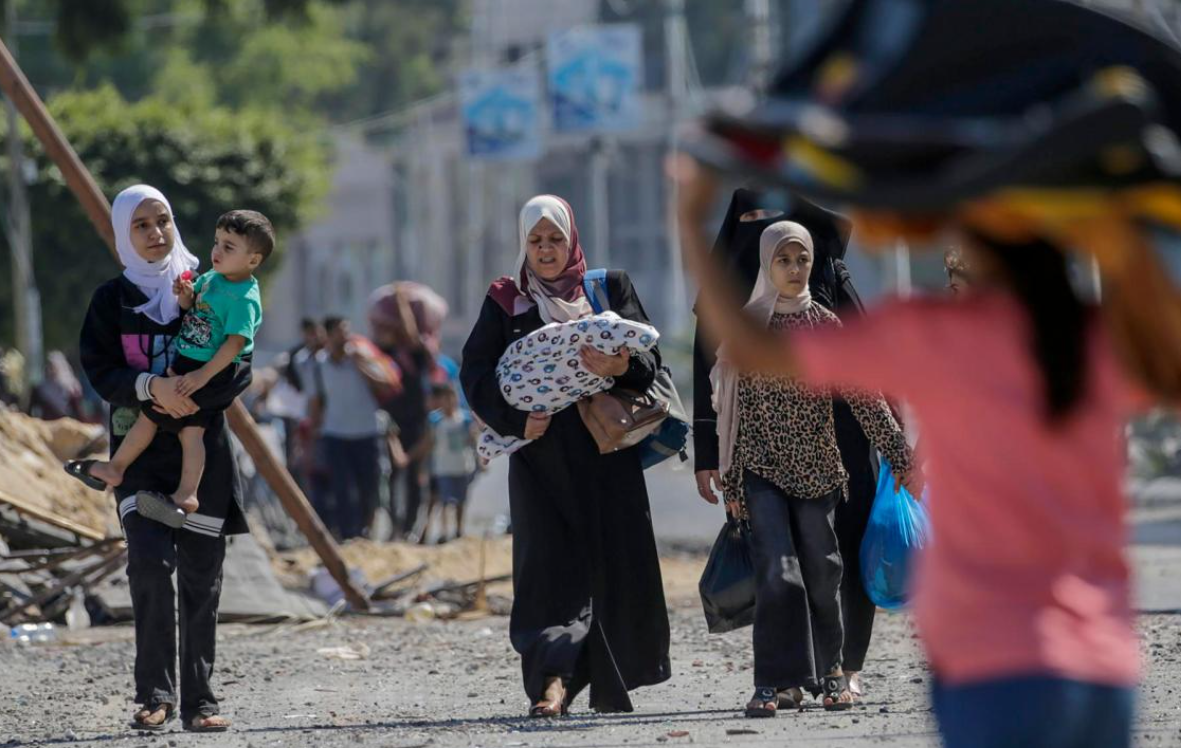
Israeli leaders are being true to their word: we are witnessing the continuation of the Nakba in real time. As in 1948, Palestinians are being driven from their homes through force of arms. As in 1948, families are being forced to march long distances with hastily-collected possessions on their backs. As in 1948, entire regions are being razed to the ground, ensuring that they will have no homes to return to. As in 1948, Israel is actively engineering the wholesale transfer of an entire population of people.

It is now eight months since we released that statement and I believe it is more accurate than ever. In her letter to me, Rachel observed the irony that more and more Israelis are now threatening a “second Nakba” when “until recently Israelis denied that the Nakba ever happened.” Now however, many Israelis are using the term with unabashed vengeance. Through word and deed, Israel’s ultimate end game is becoming all too clear: it is the ethnic cleansing of Gaza. 

This past August, in fact, the Israeli press revealed the presence of a government plan for Israel’s long term occupation of Gaza on “the day after.” According to the plan: 

Israel will control the northern Gaza Strip and drive out the 300,000 Palestinians still there. Major Gen.Giora Eiland, the war’s ideologue, proposes starving them to death, or exiling them, as a lever with which to defeat Hamas. The Israeli right envisions a Jewish settlement of the area, with vast real estate potential of convenient topography, a sea view, and proximity to central Israel… The southern Gaza Strip will be left for Hamas, which will have to care for the destitute residents under Israeli siege, even after the international community loses interest in the story and moves on to other crises.

In other words, a “real time Nakba” is being discussed openly in Israeli political and academic circles. More recently, on September 15, Professor Uri Rabi, a prominent researcher at Tel Aviv University, actually said these words in a radio interview: “Remove the entire civilian population from the north, and whoever remains there will be lawfully sentenced as a terrorist and subjected to a process of starvation or extermination.” 

As we engage in moral accounting over the next ten days, we must reckon seriously with words such as these. Indeed, from the very beginning of this genocide, Israeli leaders and politicians have been all too transparent about their intentions. Just as the founders of the Zionist movement themselves, from Theodor Herzl to David Ben-Gurion promoted the “transfer” of the native Palestinian population to make way for a majority Jewish state. Then, as now, we must take these leaders at their word. We must take them very seriously. We can never say we didn’t know. 

More than ever before, this High Holiday season calls to us to reckon seriously with what Zionism has wrought. Not only in Gaza, but throughout the West Bank, where violence and ethnic cleansing is running rampant and in Lebanon, which is now experiencing its own carnage and displacement, bringing the entire region ever closer to all-out war. 

How could it be otherwise? This is what comes of an ideology and movement that from the beginning viewed Jewish safety as zero sum; in which our security can only be achieved at the expense of others, empowerment gained through the sheer power of superior military technology, stronger weapons and higher walls. 

And finally, this High Holiday season, we must take this opportunity to ask ourselves collectively: where have we fallen short? This is a critical question in particular for those of us who have been active in the Palestine solidarity movement. 

If this is indeed the season for hard truths, we must face the fact that despite all our efforts this past year, we failed to stop a genocide. For all our calls for ceasefire, on street corners and in the halls of city governments, for all of the mass protests and acts of civil disobedience, for all of the courageous student activism on college campuses, a ceasefire seems farther away than ever at the moment. 

This is not to say that there has not been genuine progress this past year. But how do we measure these successes against the mass killing that has occurred and continues to occur every single day? On this point, I’d like to share with you the words of Sumaya Awad, of the Adalah Justice Project, who offered us this powerful challenge at the plenary for the Socialism 2024 conference here in Chicago last month:

We know that there has been a massive shift in the United States around Palestine. We have seen poll after poll show that the majority of Americans support an arms embargo, the majority of Americans don’t want to support Israel, are critical of Israel and yet we haven’t seen that translate into the mass action we need. 

Despite this massive shift, we grapple with the fact that this shift came at the expense of how many lives lost? How many people murdered? Who paid the price for these people to shift? And it’s not to say that this shift is not tremendous and incredible and good – it is all of those things, but we must also grapple with the fact that lives are being lost on the daily. And that it is all by design and that it all can be stopped in basically a moment.

And I say all of this not to pity Palestinians, quite the opposite, nor that we must grieve more. Grief is necessary, but that’s not the answer. I say it all because … we have to keep asking ourselves – you have to ask yourselves – what am I doing with this knowledge?  What am I doing with this education? How is it translating into action? How does it translate into action that does not preach to the choir, but preaches to those who are not yet where we need them to be? 

And you have to have an answer to that question. Because a year from now, when you are back here, you have to have an answer. Don’t find yourself just asking the same question. Be ready to answer, what have I done in the last year? 

Though Sumaya spoke these words in a very different context, I find them nonetheless appropriate to the sacred imperative of this new year. A year from now, when we are back here, we will have to have an answer. We can’t find ourselves just asking the same question. We must be ready to answer: what did we do in the last year to bring this genocide to an end? 

I know this in my heart and soul as well: years from now, we will likewise have to stand in judgment. When the story of this genocide is written, we will be asked: did we speak out? And if so, what did we say? What did we risk?  

For now, that book is still open, even if every new page is becoming increasingly unbearable to read. Even if the world would rather move on to another story. How will we write ourselves into this book when it is finally recorded? 

May we all play our part in bringing this book of the genocide to a finish. May it come to an end soon, in our own day. And when it does, may we come to understand it was only part of a larger story – an even greater book that will conclude with these glorious words: “then Palestine was finally free, from the river to the sea.”
Confronting Tisha B’Av and Gaza: Ten Years Later

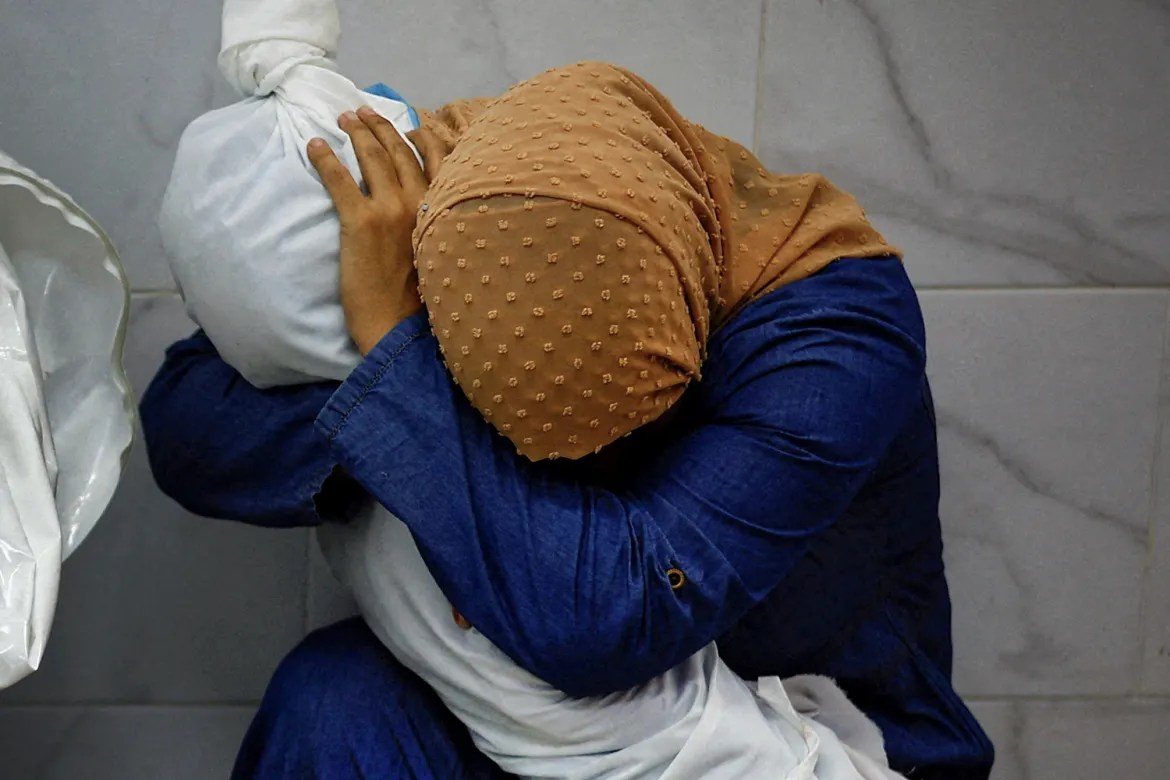
 [photo: Mohammed Salem/Reuters]

Exactly ten years ago, the Jewish fast day of Tisha B’Av arrived as Israel was winding down “Operation Protective Edge” – it’s deadly two-month military assault on Gaza. By the end of the summer of 2014, it would eventually leave more than 2,000 Palestinians dead and more than 10,000 wounded. I remember thinking at the time how the scale of human loss was utterly incomprehensible, which of course, it was.

With Tisha B’Av 2014 approaching, I met with a small group of Jewish friends and activists who had been active in the Palestine solidarity movement to plan an observance. Tisha B’Av (literally, the 9th of the month of Av) is a day of mourning for the destruction of the 1st and 2nd Temples in Jerusalem – and by extension the myriad of other tragedies that have befallen the Jewish people throughout the centuries. In addition to a day-long fast, the traditional Tisha B’Av observance includes the chanting Biblical book of Eicha (Lamentations), which vividly and painfully describes the fall of Jerusalem to the Babylonians.

Given the violence Israel had been unleashing on Palestinians in Gaza that summer, we just couldn’t bear to observe the festival in the traditional manner, i.e., as a day of mourning exclusively for Jewish loss. And so, when the festival arrived, we gathered in a home in Evanston to share our fears, our grief, our outrage, over what had transpired over the course of that tragic summer. In a sense, we were mourning the loss of Judaism itself as we had known it. Though it was obviously far from a traditional Tisha B’Av observance, those who attended will never forget that gathering – and would agree it was a turning point in our Jewish lives and identities.  

Among the readings shared at the ceremony, was a new poetic translation of the first chapter of Eicha that I had written for the occasion, entitled “A Lamentation for Gaza.” This is how it began:

Gaza weeps alone.
Bombs falling without end
her cheeks wet with tears.
A widow abandoned
imprisoned on all sides
with none willing to save her.

We who once knew oppression
have become the oppressors.
Those who have been pursued
are now the pursuers.
We have uprooted families
from their homes, we have
driven them deep into
this desolate place,
this narrow strip of exile.

It’s fair to say that none of those who attended that ceremony could ever have imagined the scale of the genocidal carnage that Israel would unleash on Gaza ten years later. To date, nearly 40,000 Gazans have been killed, though the actual number will almost surely climb far higher. The Israeli military has indiscriminately killed random civilians, relief workers, journalists and health care workers. Israel has wiped out the bloodlines of entire families. The Gaza strip is now gripped by spreading famine and polio epidemics. And unlike ten years ago, this current violence has now brought the entire region to the brink of all-out war.

In anticipation of Tisha B’Av this year, I recently re-read my “Lamentation for Gaza” – and while it’s an accurate snapshot of my feelings at the time, I don’t think it fully expresses my heart and soul now the way it did during the summer of 2014. Most fundamentally, I no longer relate to the essential perspective of the lamentation itself, which I wrote in the first-person plural:

We have become Gaza’s master
leveling neighborhoods
with the mere touch of a button
for her transgression of resistance.
Her children are born into captivity
they know us only as occupiers
enemies to be feared
and hated.

When I read this now, it is jarring to realize how I – a diaspora Jew living in the United States – wrote from the perspective of “Gaza’s master” and an “occupier.” When I wrote those words, I still maintained a personal connection to Zionism and reflexively adopted Israel’s perspective. At the same time, however, I clearly expressed deep anguish over what “we” had wrought – as if I didn’t know fully where I stood anymore.

Ten years later, I’m fully secure in my identity as an anti-Zionist Jew. Tzedek Chicago, is (yes) almost ten years old – and avowedly lifts up core values that express diasporist-focused Judaism beyond Zionism. I’m part of a Jewish community that is unabashed about taking a stand in the face of genocide.

I don’t believe it’s an exaggeration to say that as Tisha B’Av falls this year, the Jewish communal fissures over Palestine/Israel have become an abyss – perhaps even a schism. We are facing a deep and profound divide between those who place political nationalism at the center of their Jewish identity and those who refuse to associate settler colonialism, apartheid – and now genocide – with their Judaism. And though it pains me to say so, I don’t think there will be any bridging this gap. Contrary to the final line of Lamentations, “chadesh yameinu ke’kedem” (“renew our days as they were before”), there is no going back to the days of old. There will be no putting the pieces back together the way they were.

According to classical Jewish theology, the cataclysmic fall of the Second Temple in Jerusalem occurred as a result of “sinat chinam” – the baseless internecine hatred in the Jewish community that allowed the Romans to come breach the walls of the city and conquer Jerusalem. There is deep division in the Jewish community in the current moment as well, but now our Jewish trauma and hatred is directed outward rather than inward. Now, it is the Palestinian people – not we – who are bearing the full brunt of violent dispossession and collective loss.

While it would be hubris to predict what the future will hold for our tradition, I fervently believe that the Judaism of the future must be universalist in nature. Just as I suggested this past April that Passover cannot commemorate Jewish liberation exclusively, so too Tisha B’Av can no longer focus on Jewish mourning alone. Our cries of grief must include the Palestinian people – and all who are targeted, othered, and singled out for oppression through state violence.

This year, Tisha B’Av eve falls on Monday night August 12 – and this time, I know where I belong. I encourage local members of Tzedek Chicago to join us at Federal Plaza in downtown Chicago, where we will collaborate with Higaleh Nah, a local non-Zionist havurah, to chant the entire book of Eicha. It feels absolutely fitting that we will gather at the seat of state power to send forth our lamentations toward the nation that is arming and enabling this ongoing genocide in our name.

May our cries pierce the highest heavens, and may our mourning be expansive enough to include all who are oppressed in our midst.

On Gaza: Religion, Politics and Solidarity

Here are my remarks from, “Gaza: Religion, Politics and Solidarity,” a program sponsored by Bright Stars of Bethlehem on May 5, held at the First Presbyterian Church in Evanston. It was my honor to speak in conversation with Palestinian liberation theologian Rev. Dr. Mitri Raheb (founder and President of Dar al-Kalima University College of Arts and Culture in Bethlehem), Dr, Rami Nashashibi, (founder and Executive Director of the Inner-City Muslim Action Network) and Dr. Iva E. Carruthers, (General Secretary of the Samuel DeWitt Proctor Conference).

To view the entire program, click here.

The World as it Should Be: Reflections on the DePaul Student Encampment

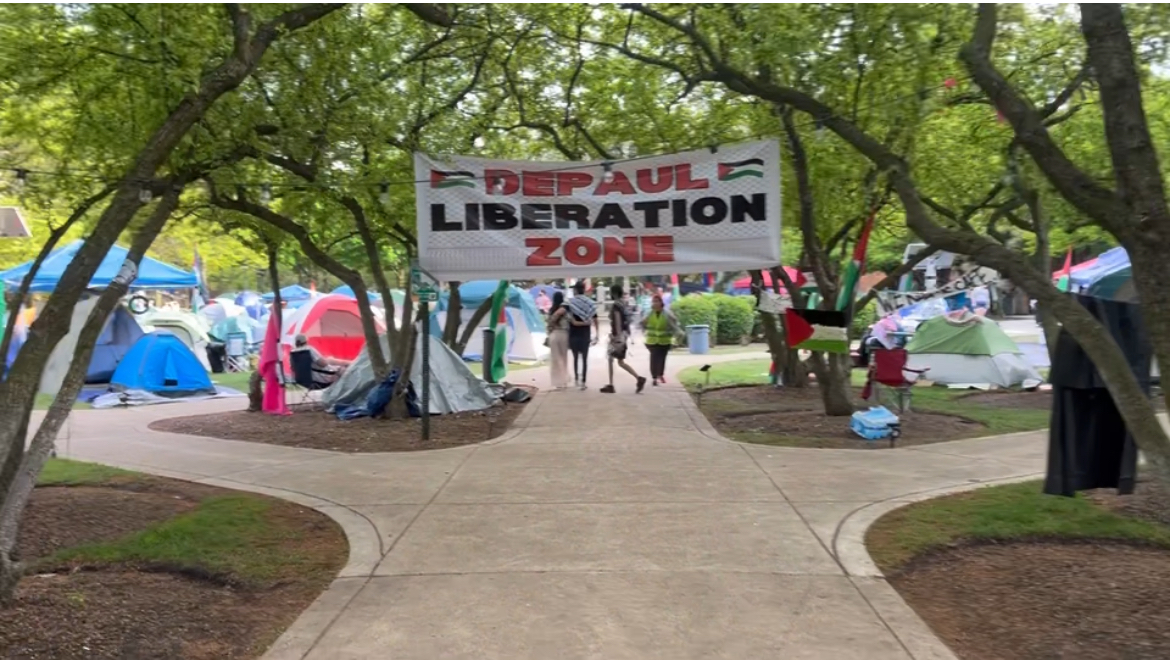
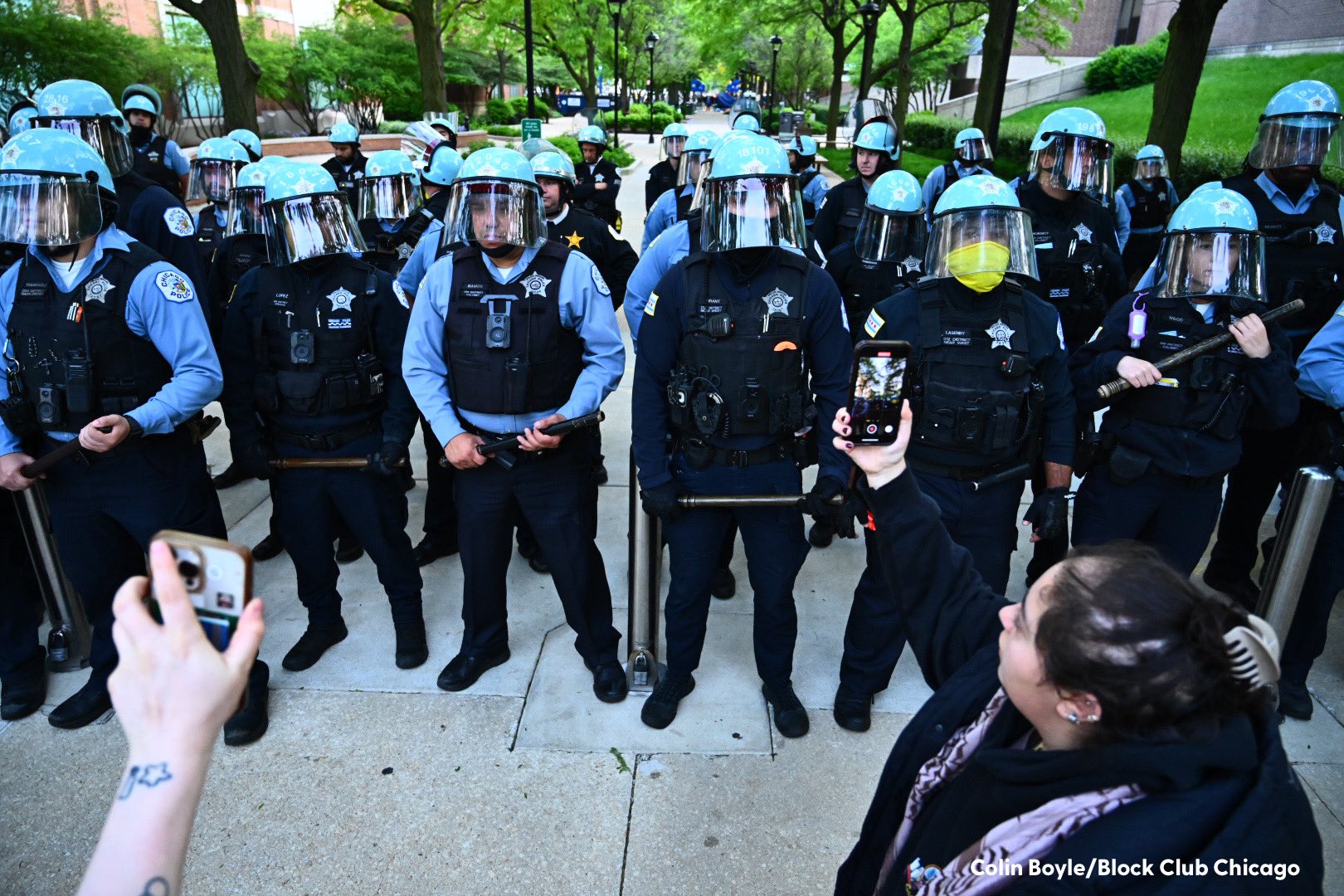
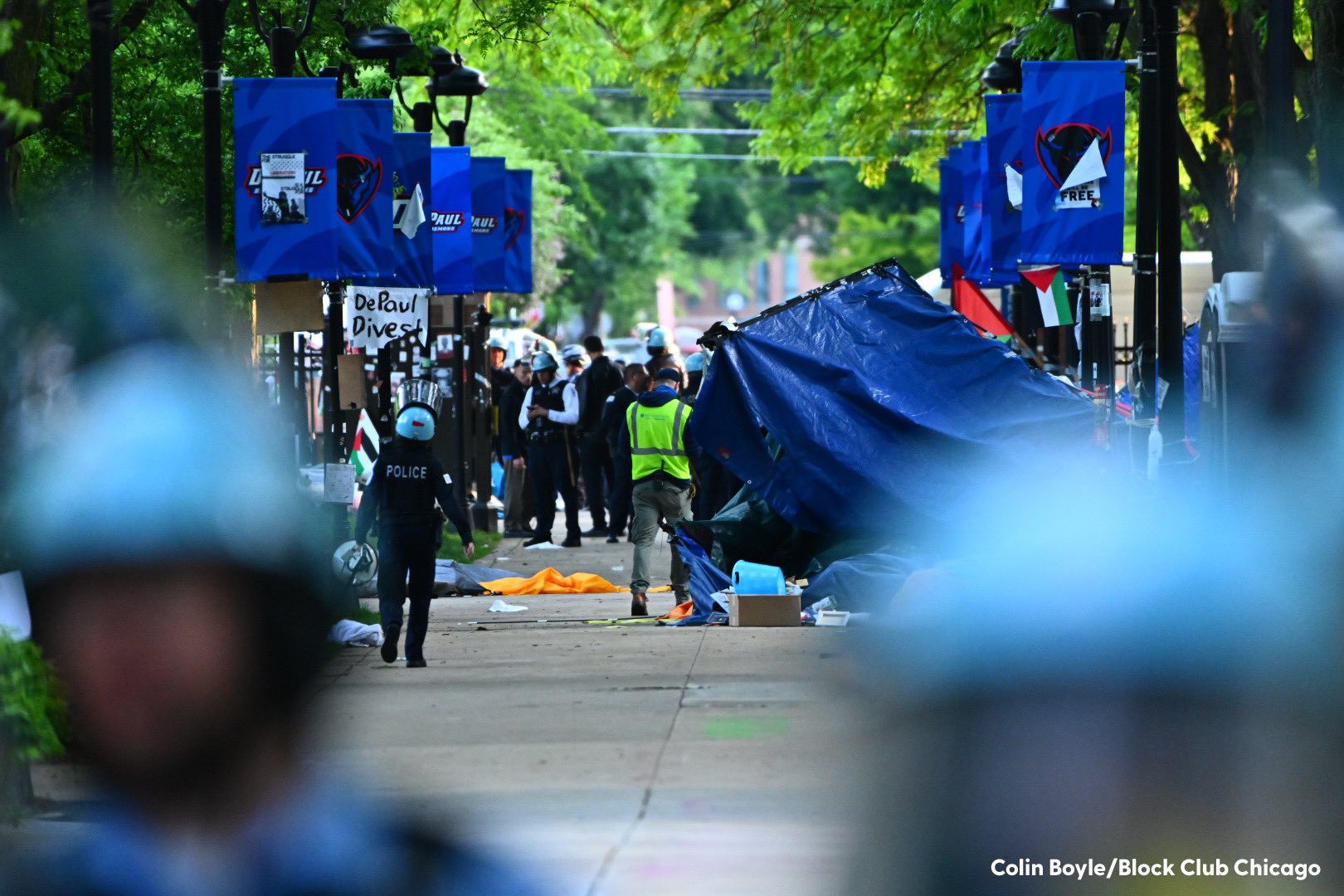
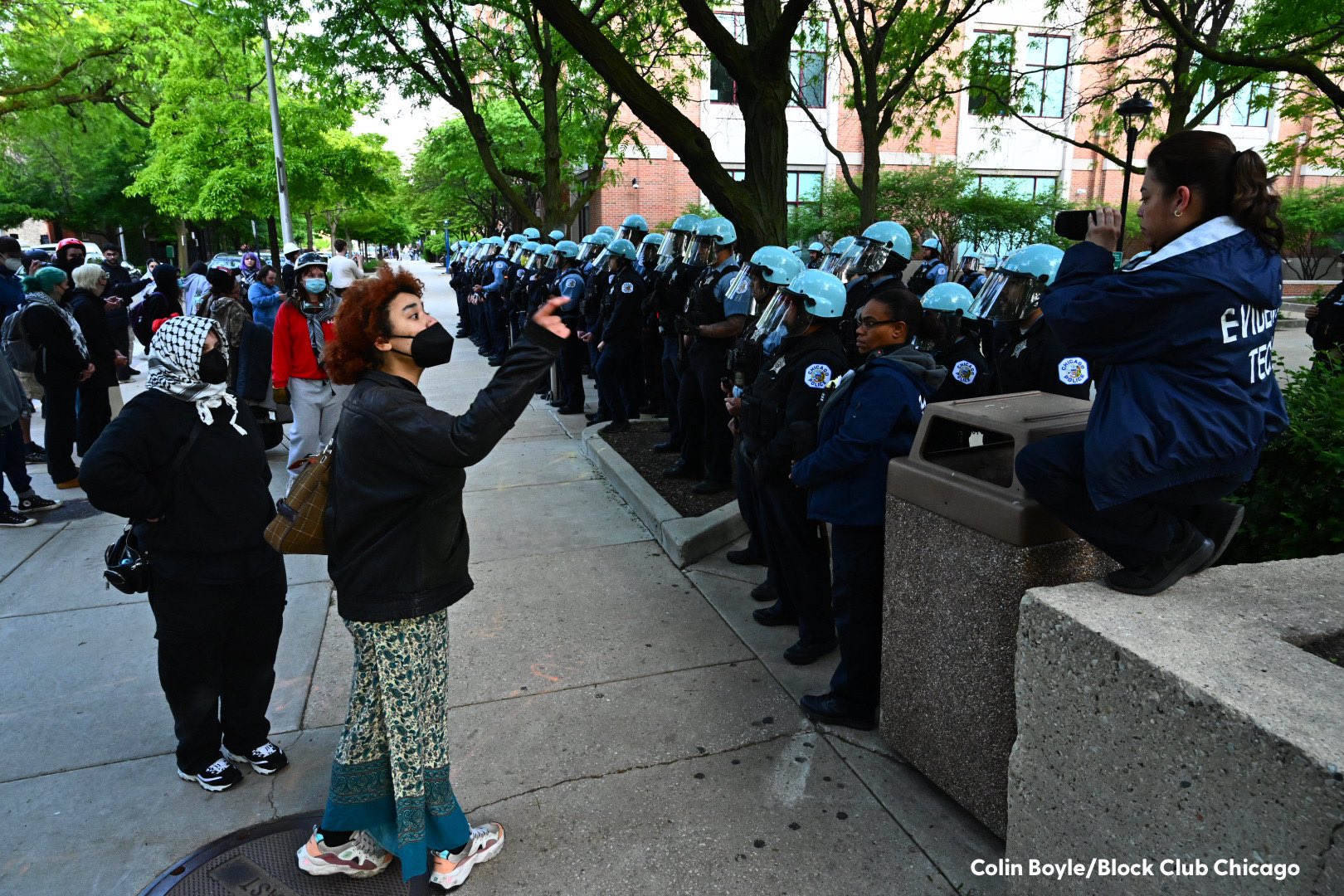
Early yesterday morning, the Chicago Police Department raided and destroyed the student encampment at DePaul University. The DePaul Liberation Zone was the last remaining student encampment in the Chicago area and had been ongoing for seventeen days. Here are my remarks from the student-called press conference at the DePaul student center that took place last night:

My name is Brant Rosen – I’m the rabbi of the congregation Tzedek Chicago and the co-founder of the Jewish Voice for Peace Rabbinical Council, and I’m here today representing the rapidly growing section of the Jewish community that is actively protesting Israel’s genocidal violence against the Palestinian people. As part of this protest, we stand with the student movement across the country – and around the world – that demand their schools divest from Israel’s war crimes in Gaza and throughout Palestine.

It has been my personal honor to visit the DePaul Liberation Zone numerous times over the past two weeks. Together with members of my congregation, we led two Havdalah services – the ceremonies that mark the end of the Jewish Sabbath. We were invited and scheduled to lead Shabbat services at the student encampment tomorrow evening – and are deeply saddened that this will now not be possible.

When I led Havdalah, I made the observation that Jewish tradition views Shabbat as a foretaste of Olam Haba – the World to Come. I added that this is exactly what the students were creating in their encampment. The students of DePaul created for themselves the World-As-It-Should-Be in real time. 

In truth, it was less a political protest encampment than a mindfully organized, genuine grassroots community. There was a planning committee to schedule ongoing events. There was a food tent and a first aid center. There were tutoring sites. There was training in nonviolent resistance and de-escalation. The students supported one another. They took care of one another. And they celebrated together as a truly multi-faith, multi-ethnic community. Last Saturday, our Jewish service was preceded by a Muslim call to prayer. Afterwards, a dance and music ceremony was performed by a local Aztec indigenous troupe.

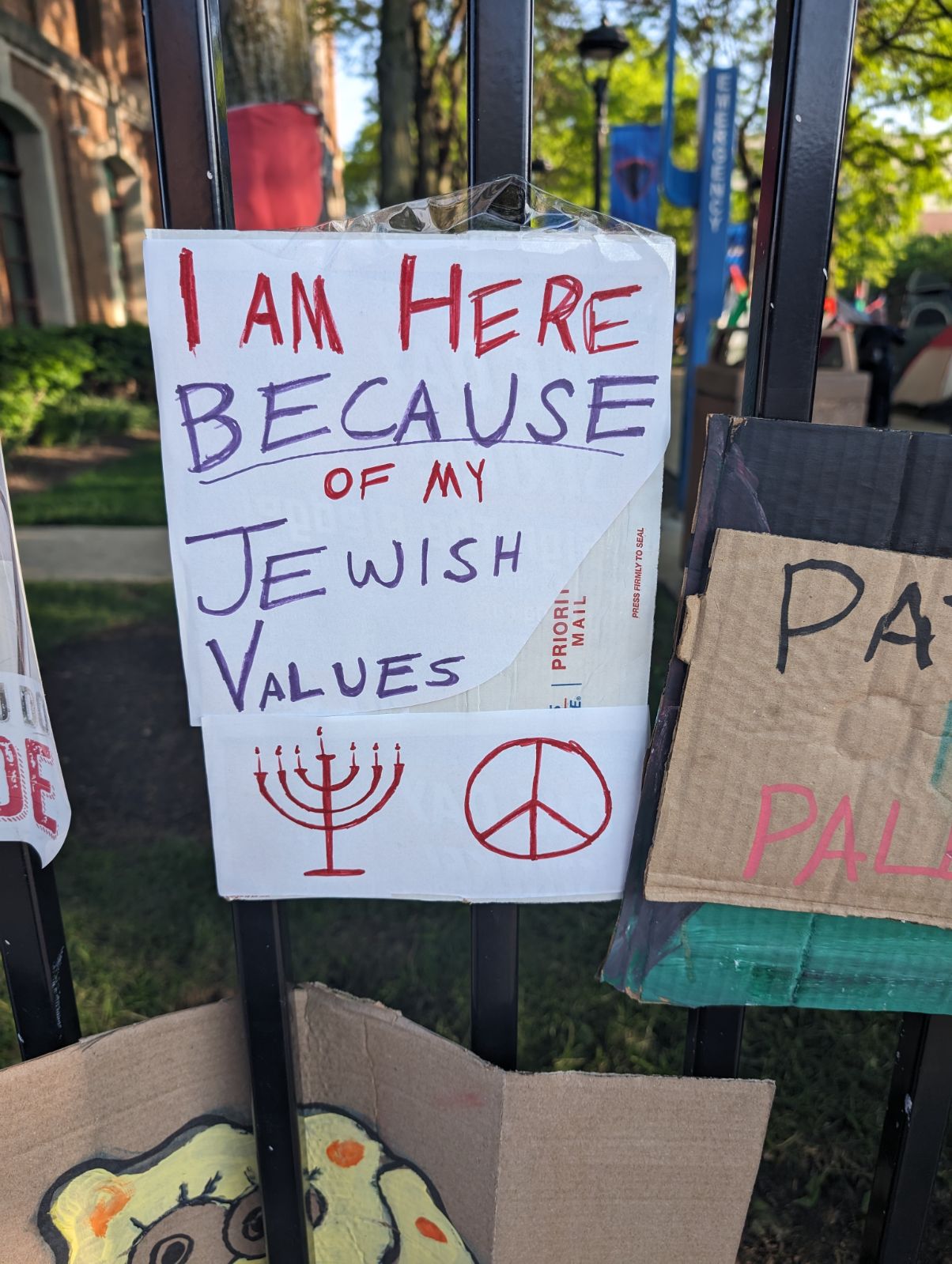
I want it to be known, for the record, that Jewish students – many of them members of Jews 4 Justice at DePaul, were an integral part of the DePaul Liberation Zone community. And I want to say as clear as I possibly can that the cynical characterization of this encampment – and others like it across the country – as bastions of Jew hatred could not be farther from the truth. As a Jewish person, I was welcomed into this community as an honored guest.

Last week, after leading Havdalah, I was approached by scores of students – many of them Palestinian – who expressed their appreciation for our presence there. There were also many Jewish students who thanked us for giving them a spiritual Jewish context for their solidarity. To my mind, this was the safest possible place I could be as a Jew: at a place where security was a shared and mutual concern. If there was any threat to safety, it came from the state violence that was unleashed on this community by DePaul and the Chicago Police Department.

As a faith-based university, DePaul should have respected the deep moral conviction at the heart of the student community. They could have followed the example of Rev. Serene Jones, the President of Union Theological Seminary, who had this to say about the students at the Columbia University encampment:

I’ve had the chance to see the protests up close, where the simple message of the demonstrators can still be heard: Stop the war, now. And I’ve learned a lot about who these protesters really are…

First and foremost, these encampments are filled with students from different religious traditions — Jews, Muslims, Christians, Buddhists, unaffiliated as well as spiritual but not religious students. They are finding solace and courage among themselves.

These spontaneous, interreligious communities happened organically, with the strikingly easy flow of connection different from self-consciously manufactured “interfaith moments.” It is simply who these protesters are: a community bound by a greater common cause to stop the mass killing of besieged Palestinians.”

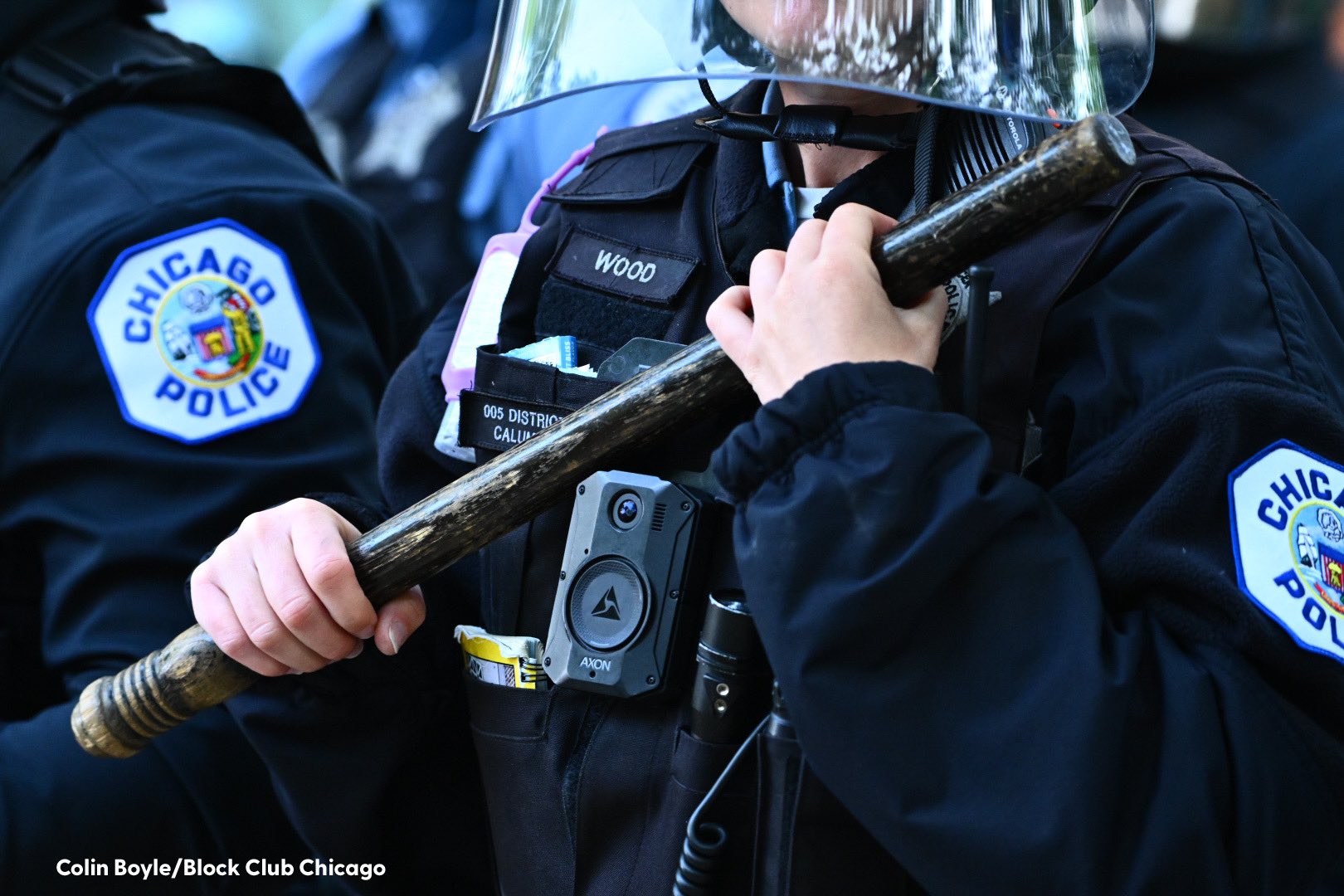
But shamefully, tragically, the DePaul administration chose a different course. It chose to negotiate in bad faith. They never seriously engaged with students’ deeply held, conscience-based convictions. They egregiously demanded that student leaders attend meetings during the Muslim and Jewish Sabbaths. Rather than responding honestly to the students’ counter proposals, they abruptly declared that the negotiations were at a stalemate, unlilaterally bringing the process to a halt. And then, early this morning, they brought in the CPD, clad in full riot gear, to violently overturn and destroy a peaceful student community.

Let me be clear – what DePaul did to its students this morning was a shandeh: for shame. It represents a moral stain on a university that purports to uphold Vincentian religious values of peace and justice. It represents a failure of leadership and imagination by responding violently to a good faith, conscience-driven action of students who were challenging their school to behave morally and to divest from genocidal violence. 

That their demand has occasioned such vicious state violence clearly demonstrates the truth of the students’ essential point for all the world to see. Their acts of solidarity and mutual support are a clear and direct threat to state power. There can be no better example of this truth than the travesty we witnessed at DePaul this morning.

But make no mistake, this violence will not break the will of these students, nor will it slow the progress of a solidarity movement that is breaking wide open across the country and around the world. We are all – as I speak to you now – living in a very real moment of truth. We are all being challenged to answer the question: where do I stand? Will I remain silent or will I speak out? Will I be complicit, or will I demand accountability? Will I enable the oppressive status quo, or will I call I find the courage to say out loud, “From the river to the sea, Palestine will be free!”

These students know the answers to these questions. We would do well to listen and learn from them. We would do well to follow their example. No matter how cynically they are characterized, no matter how violent the response to their moral challenge, they will not be deterred until liberation. And until that moment comes, it will be my honor – and the honor of so many others – to stand right alongside them.

“All Who are Hungry Come and Eat:” A Report from a Passover Action at the Gaza Border

Cross-posted with The Nation

In 2017, I spent several days in Gaza as a staff person for the American Friends Service Committee. Although I took away many powerful and vivid memories from that trip, some of the most indelible involved the delicious food that was continuously served to us by our Gazan hosts. Gazans are famously proud of their cuisine, and rightfully so, as it provides them with a palpable connection to Palestinian history and life outside that small 140 square mile strip – to communities in Palestine that their ancestors used to live. As journalist Laila El-Haddad has observed, Gazan food is “a sort of treasure map to a largely invisible, or invisibilized, world of Palestinian history going back well before the 1948 Nakba.”

During the course of our visit, Ali, a member of the AFSC Gaza staff, mentioned more than once that Gazan knafeh (a traditional Arabic dessert) was by far the best in Palestine. When our staff group gathered at a restaurant in Gaza City for our final meal, Ali was chagrined to learn that there was no more knafeh left in the kitchen. Determined, Ali got up, ran down the street to another restaurant, and returned with a huge round plate of the sticky, golden pastry for our table. It was indeed more delicious than any knafeh I have eaten before or since.

I’ve recalled that sweet memory often over the past seven years. When I think of it now, however, I find its sweetness has curdled into horror. As far back as December, human rights agencies determined that Israel “was using starvation as a weapon of war.” According to the World Food Program, Gaza’s food system was on the brink of collapse and the population was facing a “high risk of famine.”

This past March, the mainstream media published shocking, heartbreaking pictures of Yazan Kafarneh, a 10 year old Gazan boy reduced to skin and bones from starvation. To date, it has been estimated that 28 children have died of malnutrition and starvation in northern Gaza. By all accounts, starvation in Gaza has now reached “catastrophic” proportions. Knowing about the Gazan people’s deep pride in their food culture, I’m experiencing deep heartbreak as I read reports that Palestinians in Gaza are now forced to eat grass just to survive.

As a congregational rabbi, I’ve spoken with many people have told me that they are not sure how – or even if – they will celebrate Passover this year. With the genocide and forced starvation of the people of Gaza deepening with no end in sight, they say, it just feels beyond challenging to celebrate a festival of Jewish liberation. To make the moral dissonance even more dissonant, many in the Jewish communal establishment are framing Passover by focusing exclusively on the Israeli hostages in Gaza and call for their liberation from Hamas, with nary a mention of the 35,000 Gazans who have been destroyed in the process through Israel’s genocidal war of vengeance.

More than once I’ve been asked, “How can I partake of this festive meal while Israel has been starving Palestinians in the name of the Jewish people?” How can I read about Pharaoh’s oppression of Israelite children when I’ve just read the latest death count of Palestinian children dying increasingly things from forced starvation?

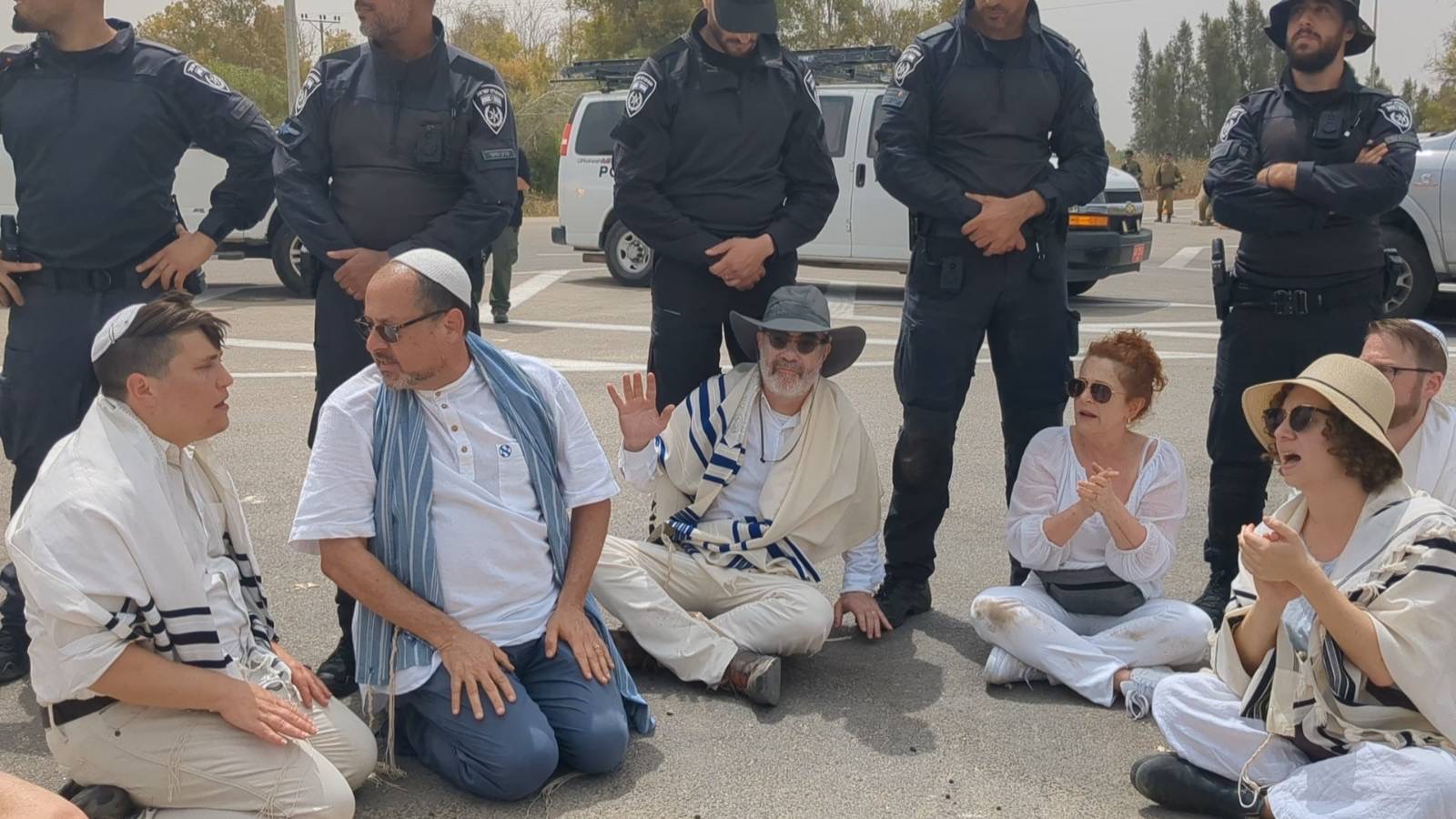
As a political-spiritual response to this unprecedented Passover moment, Rabbis for Ceasefire mobilized and began to organize as action at the Gaza border, to literally bring food supplies with us and demand to that Israel allow us to pass through the Erez Crossing, motivated by Passover’s central imperative, “All who are hungry come and eat!” Our action would include 10 American rabbis, writer/essayist Ayelet Waldman and 30 other Israeli activists – including Israeli rabbis – who have been tirelessly protesting both at the Gaza border and organizing protective presence for West Bank communities targeted by settler violence.

Our action was originally planned for the week leading up to Passover; but when Iran’s missile attack caused the country to go on alert and airlines cancelled their flights to Israel, we almost had to cancel our action. As we read the news, Israel’s escalating hostilities with Iran took front and center The US and the West were rearming Israel and focusing on the threat from Iran – even as Israel continuingly maintained its policy of starvation and bombardment of Gaza. Most alarming were the reports that an Israeli agreement to retaliate lightly against Iran would give them leeway to move ahead with a potentially disastrous ground invasion of Rafah.  We bought plane tickets for the next week, determined to make a collective Passover statement that felt more critical than ever.

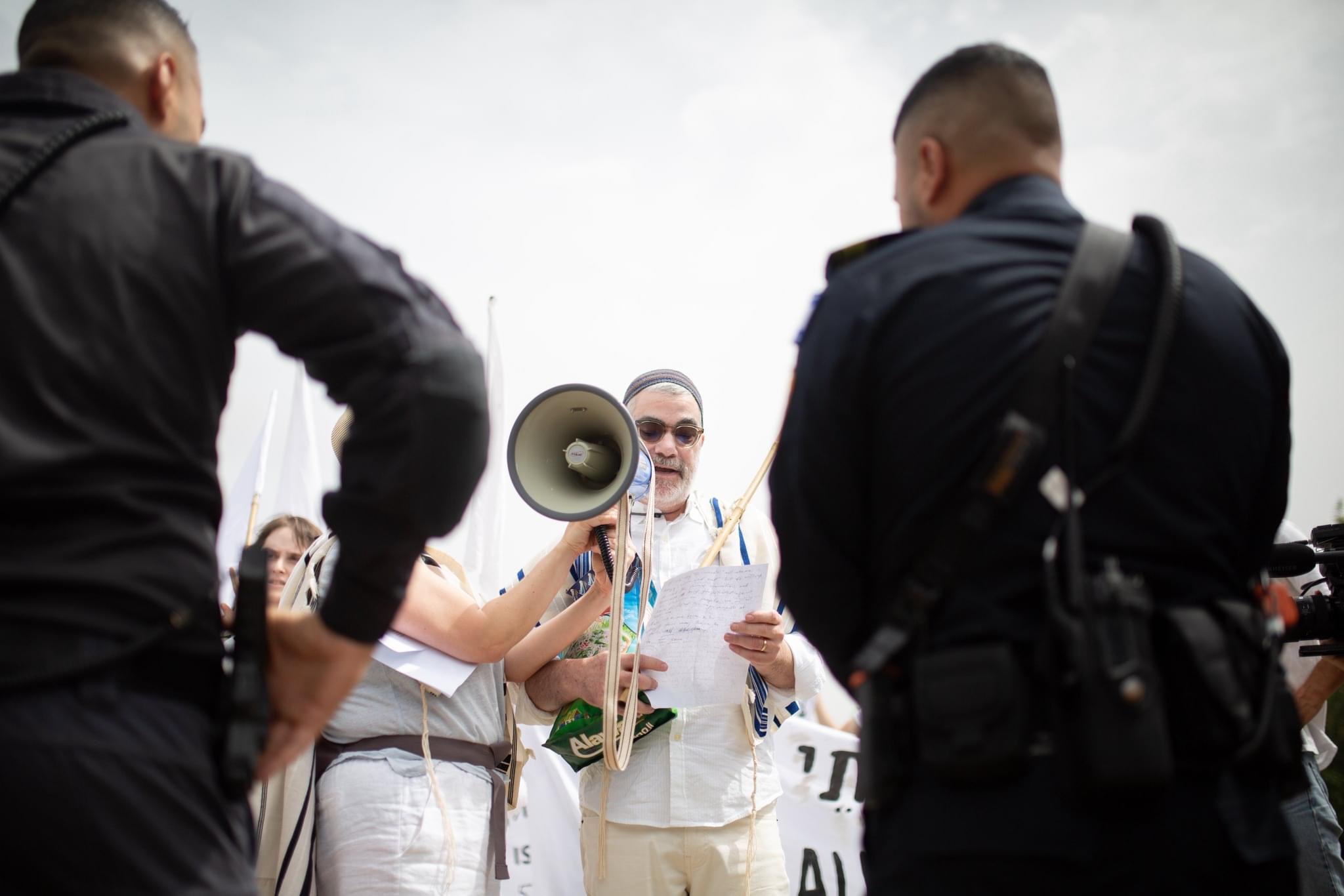
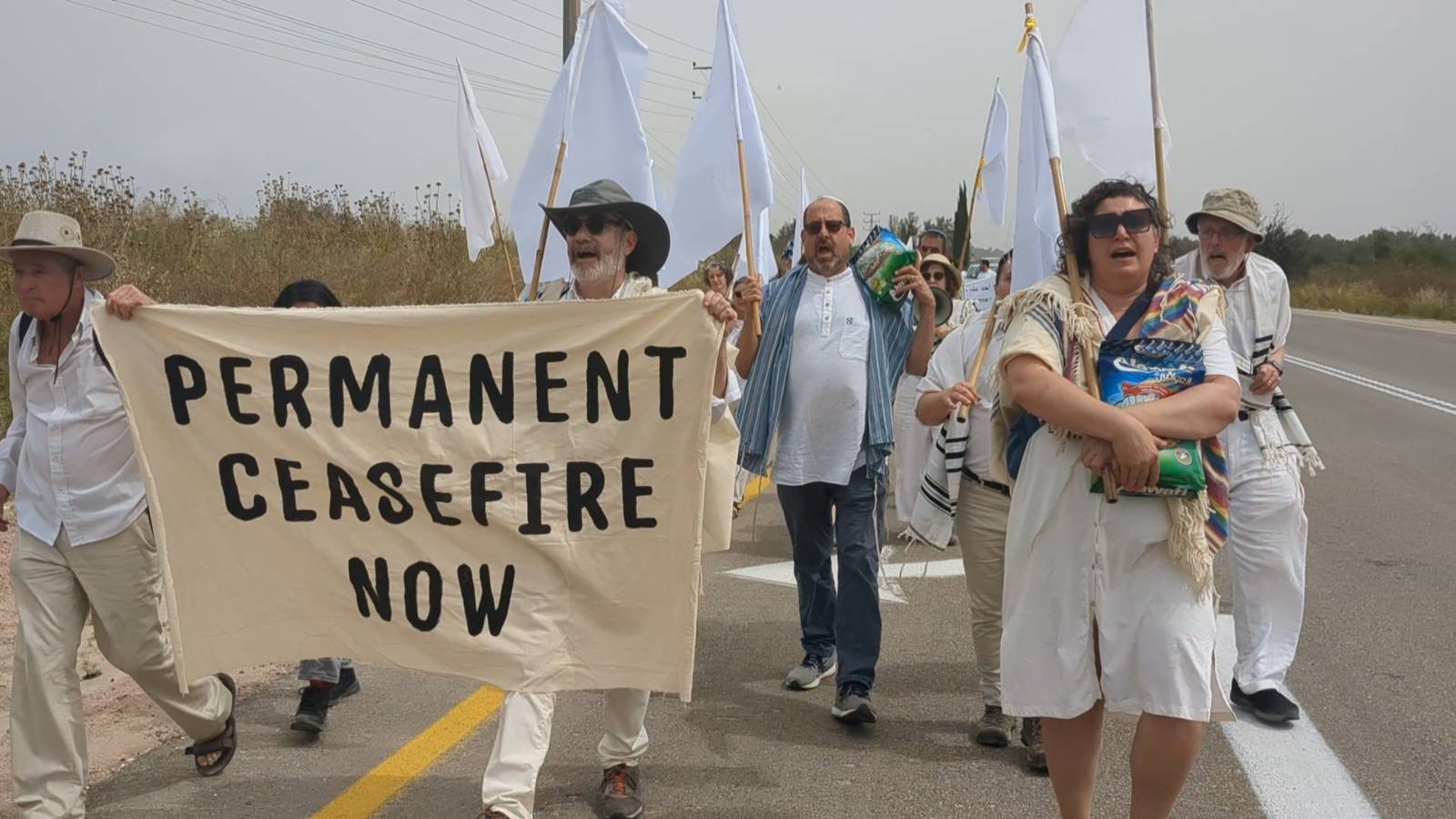
During our action, we gathered at a preplanned meet-up location, with a truck filled with half a ton of flour. We each shouldered backs of rice and, carrying banners and flags, march in the direction of the Erez Crossing. The Israeli police quickly drove up to intercept us. During that initial stand-off, several of us offered statements. I began with an opening prayer, an adaptation of the “Magid” section of the Passover Haggadah:

“This is the bread of affliction, the bread and food systemically, cruelly denied the people of Gaza. Let all who are hungry come and eat. Let all who are oppressed be liberated this Pesach. Now we are here – tomorrow let there be bread for Gaza. Now we are here – next year may there be liberation from the river to the sea!”

Other speakers included Israeli Rabbi Avi Dabush of Rabbis for Human Rights, a resident and survivor of a kibbutz that was attacked on October 7 and Noam Shuster-Eliassi, a well-known Israeli activist, writer and comedian. When our program was over, we pushed forward toward the border. When the soldiers violently attempted to break us up, several of us sat down in the road. During the course of the protest seven of our group: four Americans and three Israelis were arrested.

All of the arrested were fully prepared for this eventuality – the Israelis were in fact veterans at protest-arrests and had previously briefed us on protocol. They were taken to two dentention centers and interrogated for eight to nine hours. The American were told, perversely, that they were being held for “attempting to bring food into Gaza.” All the arrested were released that evening; thankfully the food we attempted to bring into Gaza was not confiscated; as we have previously planned, it was donated to the community of Masafer Yatta – an area in the South Hebron Hills were almost 3,000 residents are resisting the daily threat of demolitions, evictions and dispossession.

While we are satisfied with the attention our action has received, we have no illusions about the current moment in Gaza. Nearly 2.2 million Palestinians in Gaza currently face mass starvation and encroaching famine, these words have resonated with unbearably profound force during Passover this year. Hundreds of trucks filled with humanitarian goods have been sitting idle on roads leading into the Rafah crossing on the border with Egypt, blocked from entering Gaza by a draconian inspection process that severely limits the number of trucks that can pass through. Inside Gaza, the Israeli has been attacking efforts aid efforts with tragic results. According to the UN, the Israeli military has killed 196 relief workers; soldiers have also shot and killed hundreds of Gazans who venture out to seek food.

Amidst it all, the one agency that has the capacity and infrastructure to effectively distribute relief to the people of Gaza, the United Nations Relief and Works Agency (UNRWA), has been defunded by the Biden administration. This past January, the Israeli government leveled the still-unsubstantiated claim that 12 UNRWA employees were involved in Hamas’ October 7 attacks in Israel. Though UNRWA immediately fired the employees in question and launched an investigation, the US immediately withdrew their financial support of the agency, which was founded in 1949 to provide support to the hundreds of thousands of refugees created by the establishment of the state of Israel.

In its spending bill this past March, the US government extended its defunding of UNRWA for a year. Though the agency reports it has sufficient funds to operate until the end of May, its ability to operate in Gaza has already been gutted. Last month, Israel announced it would no longer approve UNRWA food convoys to the north of Gaza, where famine is the most. According to its report this month, the agency noted that “a total of 420 trucks food trucks were denied or impeded by Israeli authorities (during the month of March) …Gaza is on the brink of famine, with 1.1 million people—half of its population—experiencing catastrophic food insecurity due to the intense conflict and severe restrictions on humanitarian access.”

Most ominously, Israel continues to amplify its threats to invade Rafah, which would almost certainly result in massive human tragedy and the complete ethnic cleansing of Palestinians from Gaza. And yet, in the wake our action on the border, I continue to hold out hope. It is clear to me that our border-protest was part of something much larger: the dramatic rise in student resistance on college campuses throughout the US and unprecedented popular Palestine solidarity increasing around the world. For me, this moment expresses the core meaning of Passover powerfully than I have every experienced in my lifetime: in every generation, the cry of the oppressed demands to be heard.

This Passover, I also hold out hope from my own memory of meals in Gaza back in 2017. To be sure, AFSC’s Gaza staff has suffered terribly during this genocidal onslaught – and I’m sure the restaurants and neighborhoods where we enjoyed such delicious meals with our Gazan friends are no more. But I will never forget the tastes of the food that were so graciously served, as well as the communities in Palestine that they represent. And I am more convinced than ever that Israel cannot, try as it may, starve, bomb, or shoot away the Palestinian people’s love for their culture that is so deeply, fragrantly rooted in their homeland: In the words of El-Haddad:

Lately, I’ve been thinking about what I would go back to, and what I would find, if I returned to Gaza. Most of the landmarks have been destroyed. Gone too are many of the people I cherished. But … it feels like I am the torchbearer now, the family’s keeper of treasured recipes. Like Um Hani (Leila’s aunt, who was killed in an Israeli airstrike), I will cook and I will teach, connecting the next generation of Palestinians to our homeland.

The “Jewish Community” Letter to Mayor Johnson, With Commentary

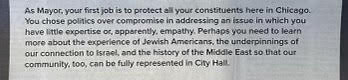
Last Sunday, this full-page ad appeared in the Chicago Tribune: a hate-filled diatribe against Mayor Brandon Johnson for his support of the recent city council ceasefire resolution. Here it is, in full, along with my commentary.

Criticizing one resolution for “doing nothing to substantively affect the outcomes in the Middle East” is a straw man argument. No one who supported this resolution has any illusions that it alone will change the terrible facts on the ground in Israel-Palestine. It does represent, however, a civic statement of conscience. To date, over 70 US cities have passed similar ceasefire resolutions. Taken together, they constitute a collective moral call for an end to the humanitarian nightmare that has been unfolding and escalating in Gaza for the past four months.

The letter makes the unsubstantiated claim that the City Council’s resolution proceedings “fanned the flames of antisemitism.” This is a serious accusation – and it is exceedingly irresponsible to level such a claim without any examples or proof. No, ceasefire resolutions do not cause antisemitism – and protesting Israel’s genocidal violence against Palestinians in Gaza is not antisemitic. It is a call for justice.

Chicago’s ceasefire resolution was based on a resolution passed by the UN last December, which emphasized that “the Palestinian and Israeli civilian populations must be protected in accordance with international humanitarian law.” It also called for “the immediate and unconditional release of all hostages, as well as ensuring humanitarian access.”

This is an exceedingly fair resolution. No, it did not absolve Hamas for the war and civilian deaths, but neither did it condemn Israel for its outrageous prosecution of a military assault that international experts and courts have have claimed fits the definition of genocide.

The letter then goes on to say that Hamas “misused humanitarian aid” – another unsubstantiated claim – and criticizes the resolution for failing to demand that Hamas disarm. Since this is an Israeli demand, to include this would be to inject an egregiously partisan statement into the resolution.

The January 30 high school walkouts were powerful demonstrations of collective student conscience that Mayor Johnson was right to support. The claim that “hundreds of CPS parents, students and teachers” were harassed during the protests is completely anecdotal and in fact, outrageous. If harassment on such a scale actually took place, there would surely be widespread press and investigations into these alleged actions. In fact, the press around the walkouts cited “worries from some CPS parents and Jewish groups that Jewish students could be targeted or made to feel uncomfortable.” There is, of course, a world of difference between “uncomfortable” and “unsafe.”

Palestinians have long pointed out that the call “from the river to the sea” is not a genocidal threat, but a demand for equality and justice for all. If that makes some Jews uncomfortable, they should interrogate their support for “the world’s only Jewish state” – an ethno-nation that does not afford equal rights to the Palestinians who happen to live between the river and the sea.

The “compromises” suggested in this letter are exceedingly more political than anything Mayor Johnson supported – and slamming him for having no expertise or empathy is hateful in its own right. What these signees really want is for him to submit to their own personal opinions about “the Jewish American experience, the underpinnings of our (sic) connection to Israel and the history and the history of the Middle East.”

For shame. These individuals speak for themselves – not for the growing numbers of American Jews who are actively protesting Israel’s genocidal violence in Gaza – and who fully support Mayor Johnson’s courageous moral leadership.

On Gaza, Genocide and International Holocaust Remembrance Day

 (Photo by Axel Koester/Los Angeles Daily News)

It’s safe to day that International Holocaust Remembrance Day will arrive tomorrow at a deeply fraught moment for the Jewish community. Just today, we’ve received the news that the International Court of Justice, ruling on a case brought by South Africa, has ordered Israel to take action to “prevent acts of genocide” in Gaza. And later today, a federal court in California will hear a case brought by the Center for Constitutional Rights on behalf of Palestinian human rights organizations, Palestinians in Gaza and Palestinian Americans accusing Biden and other senior US leaders of being complicit in genocide.

In short, International Holocaust Remembrance Day 2024 is arriving just as Israel and the US government are literally being judged on the world stage for an ongoing genocide against the Palestinian people.

As we contemplate the monumental nature of this moment, it’s instructive to consider the history of International Holocaust Remembrance Day itself. This annual commemoration was created by the UN in 2005, to take place annually on January 27: the day Auschwitz was liberated by allied forces. In its resolution establishing the day, the UN General Assembly made it clear that this observance would not merely be about commemorating the past; it pointedly urged member states “to develop educational programs that will inculcate future generations with the lessons of the Holocaust in order to help to prevent future acts of genocide.”

The GA also made it explicit that this remembrance would not be limited to the European Jewry alone, but should also extend to “countless members of other minorities” who were murdered en masse by the Nazi regime. As then Secretary General Ban-Ki Moon pointedly commented during the 2015 commemoration, “More than a million inmates, primarily Jews, were brutally and systematically killed in the place where the Nazis introduced the monstrous concept of ‘industrialized murder.’ Among the other victims were non-Jewish Poles, political prisoners, Soviet prisoners of war, Sinti and Roma, homosexuals, disabled persons and Jehovah’s witnesses.”

In other words, International Holocaust Remembrance Day was purposely established to universalize the memory and the lessons of the Holocaust.

There is of course, another Holocaust memorial day widely observed by the world Jewish community – namely, Yom Hashoah. In contrast, to International Holocaust Remembrance Day, Yom Hashoah is not universal in nature – it is a day set apart by the Jewish community to mourn their own in a Jewish context, as part of the Jewish festival calendar. While it is altogether appropriate for the Jewish people to honor the memories of our ancestors in such a way, it’s worth noting the history of this particular day as well.

Yom Hashoah was officially founded by an act of Israeli parliament in 1951, immediately following the founding of the state itself. It was purposefully established on Jewish date of the 27 Nisan (April/May) to begin a week of commemoration leading into Yom Hazikaron (Memorial Day), concluding with Yom Ha’atzmaut (Independence Day). In this way, Yom Hashoah served to promote the Zionist historical mythology that viewed the establishment of the state of Israel as a “rebirth,” arising out of the ashes of the Holocaust, through the brave sacrifice made by the soldiers who fought in the War of Independence.

Like many Jews growing up in America, I simply accepted Yom Hashoah as an organic part of the rhythm of the Jewish year, observed annually in synagogue services and communal commemorations. I was never taught that it was first and foremost an Israeli national holiday. And of course, I was never taught that the state of Israel was founded in the wake of the Holocaust through the ethnic cleansing of the Palestinian people from their homes.

While there should most certainly be a communal Jewish day of memorial for the six million, it’s worth questioning the prominent status afforded Yom Hashoah by world Jewry. This is, after all, a day that serves to reinforce the view that the Israel’s founding was a “redemptive” moment for the Jewish people following the tragic cataclysm of the Holocaust – utterly ignoring the reality that the state of Israel was established through the dispossession of another people. I strongly believe we should consider an entirely different Jewish frame for commemorating the Holocaust; in the meantime, however, we should have no illusions about the real agenda behind Yom Hashoah and the problematic narrative it seeks to support.

It might well be said that in this terrifying current moment, the very real implications of this Zionist mythology are being directly challenged by the universal message of International Holocaust Remembrance Day. It’s actually quite staggering to consider: as the world prepares to observe this day, compelling legal proceedings are formally accusing Israel of (and the US of abetting) genocide. Even more sobering: it arrives amidst an increasingly damning verdict in the court of public opinion in which, according to a recent poll, “more than one in three Americans believe Israel is committing genocide against Palestinians.”

I realize how painful – even unthinkable – it will be for many Jews to lift up the lessons of International Holocaust Remembrance Day to suggest Israel that is committing genocide against the Palestinian people. But as I suggested in my sermon this past Yom Kippur, we must find the courage to say out loud the words that must be spoken. If this particular day is truly is to be a day for us to apply the “lessons of the Holocaust in order to help to prevent future acts of genocide,” it is all the more critical for us to speak out and name a genocide that is literally unfolding before us in real time. No matter how uncomfortable or painful the prospect.

In this regard, I’m immensely proud to be part of a Jewish community that has the courage to say these words out loud. In a just released public letter to President Biden, the Jewish Voice for Peace Rabbinical Council is demanding that he “honor the word and spirit of the International Holocaust Remembrance Day by using (his) office to bring a ceasefire to this tragic violence — and to stop blocking efforts toward building a truly just peace for all who live between the river and the sea.”

An excerpt:

We hold the traumatic history of our people with care and sensitivity — and know how painful it is for Jews to grasp that a Jewish state could possibly commit a genocide. Nevertheless, we must agree with increasing numbers of scholars and international rights experts who have determined that Israel’s actions in Gaza constitute, in the words of Prof. Raz Segal, “a textbook case of genocide.” 

We support and uplift South Africa’s recent application to the International Court of Justice claiming Israel is in breach of the 1948 Convention on the Prevention and Punishment of the Crime of Genocide. And now, Palestinian human rights organizations, together with Palestinians in the US and Gaza, are bringing a case against your administration for failure to prevent, and complicity in, the Israeli government’s unfolding genocide against them, their families, and the 2.2 million Palestinians in Gaza. We stand in support of their action as well.

According to a core teaching of Jewish spiritual tradition, humanity was created in the image of God. That means that each and every human being is of infinite value. The UN 1948 Convention on Genocide was created to uphold this very idea. The Torah also teaches that there will always be moments when we must make a critical moral choice. As Deuteronomy 30:19 says, “I have put before you life and death, blessing and curse. Choose life.” President Biden, you have chosen death. Instead of using your considerable power to prevent or end this genocide, you have directly abetted it with weapons, funds and diplomatic cover. 

On this day of remembrance in 2021, you noted that, “The Holocaust was no accident of history.” As you stated, “It occurred because too many governments cold-bloodedly adopted and implemented hate-fueled laws, policies, and practices to vilify and dehumanize entire groups of people, and too many individuals stood by silently. Silence is complicity.” 

President Biden, what is happening right now in Gaza is no accident of history — and your complicity has been anything but silent. We call upon you to be true to your word and end US complicity in Israel’s genocide against the Palestinian people.

This International Holocaust Remembrance Day, let us find the courage to speak the words that must be spoken. This International Holocaust Remembrance Day, let us find the courage to speak the words that must be spoken: Ceasefire now. Never again, for anyone. No more genocide.

Reenacting Pharoah’s Genocidal Decree in Gaza

(Photo: EFE)

The introduction to the book of Exodus, which we begin reading this Shabbat, has never resonated so deeply or so powerfully for me as it does this very moment.

We’re all familiar with the events that spark the Exodus narrative: a new Pharoah arises over Mitzrayim who does not know or remember Joseph. Alarmed that the Israelite minority is growing, he oppresses them with forced labor – but the more he oppresses them, the more the Israelites increase in number.

Pharoah then attempts to stem the Israelite birth rate directly by ordering the Hebrew midwives Shifra and Puah to kill every newborn boy. When they defy his order, Pharoah orders that every newborn boy be cast into the Nile. Commentators differ on why Pharoah made this very specific decree. Some say that in his paranoia, he believed the boys would eventually grow up to be soldiers and take up arms against his people. Other say his soothsayers predicted the birth of Moses. Still others say Pharoah believed that the Israelite women would intermarry and assimilate into the majority culture.

Whatever the reason, it is striking to note that Exodus’ liberation narrative begins with Pharoah’s efforts to head off the Israelite birth rate. As I’ve noted before, there are powerful parallels between this narrative and the state of Israel’s regard of the Palestinian people as a “demographic threat” to their Jewish majority. But in the midst of Israel’s genocidal assault on the people of Gaza, I’m finding that these verses now resonate with a brutal – and almost unbearable – urgency.

On November 3, less than a month into Israel’s military bombardment of Gaza, UNICEF, the World Health Organization and other NGOs reported that “Women, children and newborns in Gaza are disproportionately bearing the burden of the escalation of hostilities in the occupied Palestinian territory, both as casualties and in reduced access to health services.” More recently, the UN estimated that “around 50,000 pregnant women are currently living in Gaza, with more than 180 births taking place every day amid the ‘decimation’ of its healthcare system.”

The most devastating details on the impact of this onslaught on Gazan mothers can be read in the South African government’s application to the International Court of Justice, formally accusing Israel of committing genocide in Gaza. I strongly recommend reading this document in its entirety. Though South Africa’s claim was cynically dismissed by the White House as “meritless, counterproductive and completely without any basis in fact whatsoever,” its 84 page report is painstakingly researched, citing 574 independent sources. Though it is often near-unbearable to read, I believe it is an immensely important document and deserves the widest possible readership.

Here is a sample of the report’s findings on impact of Israel’s genocidal violence on pregnant women and newborn babies. Please be warned: the following quote it includes very graphic descriptions of traumatic violence inflicted on women and children.

Pregnant women and children –– including newborn babies –– are also particularly impacted by displacement, lack of access to food and water, shelter, clothes, hygiene and sanitation, and lack of access to health services. These effects are severe and significant. An estimated 5,500 of approximately 52,000 pregnant Palestinian women in Gaza giving birth each month are doing so in unsafe conditions, often with no clean water, much less medical assistance, “in shelters, in their homes, in the streets amid rubble, or in overwhelmed healthcare facilities, where sanitation is worsening, and the risk of infection and medical complications is on the rise”. Where they are able to get to a functioning hospital, pregnant women are having to undergo caesarean sections without anaesthetic.

Given the lack of access to critical medical supplies, including blood, doctors are being compelled to perform ordinarily unnecessary hysterectomies on young women in an attempt to save their lives, leaving them unable to have more children. Indeed, the Minister of Health for the State of Palestine, Dr May al-Kaileh, confirms that the only option facing Palestinian women in Gaza who ‘bleed out’ after giving birth is to undergo a hysterectomy in order for their lives to be saved. The lack of available drugs, such as the anti-D injection –– given to Rhesus negative women on the birth of a Rhesus positive baby –– also seriously impacts the possibility of future healthy pregnancies for affected women.

Premature births have reportedly increased by between 25-30 per cent, as stressed and traumatised pregnant women face a myriad of challenges, including being compelled to walk long distances in search of safety, attempting to escape from bombs and being crowded into shelters in often squalid conditions. Particularly in northern Gaza, cases of placenta abruption –– a serious condition that occurs to pregnant women during childbirth which is potentially life-threatening to both mother and baby –– have more than doubled.

An ever-increasing number of Palestinian babies in Gaza are reportedly dying from entirely preventable causes, brought about by Israel’s actions: newborns up to three months old are dying of diarrhea, hypothermia, and other preventable causes. Without essential equipment and medical support, premature and underweight babies have little to no chance of survival. Palestinian newborn babies have died due to the lack of fuel to supply hospital generators; others have been found decomposing in their hospital cots, medical staff taking care of them having been forced by Israel to evacuate.

On 3 November 2023, the World Health Organisation warned that “[m]aternal deaths are expected to increase given the lack of access to adequate care”, with deadly consequences on reproductive health, including a rise in stress-induced miscarriages, stillbirths and premature births. The impact will necessarily be long lasting and severe for Palestinians in Gaza as a group. By 22 November 2023 the United Nations Special Rapporteur on violence against women and girls, its causes and consequences, has expressly warned that:

“[T]he reproductive violence inflicted by Israel on Palestinian women, newborn babies, infants, and children could be qualified as… acts of genocide under Article 2 of the Convention on the Prevention of Genocide … including “imposing measures intended to prevent births within a group”. She stressed that “States must prevent and punish such acts in accordance with their responsibilities under the Genocide Convention.”

(Sections 96-100)

If there could be any doubt as to the question of intentionality behind these barbaric measures, the section immediately following these findings includes exhaustive quotes by Israeli politicians and military leaders that make their genocidal intentions all too clear. Most chillingly, it offers this quote from 95-year old Israeli army reservist Ezra Yachin — a veteran of the Deir Yassin massacre during the 1948 Nakba — who was called up for reserve duty to “boost morale” amongst Israeli troops ahead of the ground invasion: Be triumphant and finish them off and don’t leave anyone behind. Erase the memory of them. Erase them, their families, mothers and children. These animals can no longer live. . . Every Jew with a weapon should go out and kill them. (Section 102)

In this week’s Torah portion, the cry of the oppressed Israelites rises up to God, who hears and hearkens to their pain. This year, there can be no more critical question posed by our Torah portion: will God hearken to the collective cry of the people of Gaza?

The answer, as ever, is up to us all.

“In Gaza, Israel is Revealing the True Face of Zionism”

Last week, the board of my congregation, Tzedek Chicago released this statement in repsonse to Israel’s ongoing military assault in Gaza. Although it is addressed to all people of conscience, it contains a specific challenge to the Jewish community at large. I’m immensely proud of the statement, which I hope will be considered seriously even (especially) by those members of the community aren’t ready to heed its words.

Our statement is not so much an academic argument as it is a call to moral action. As we say in our statement, “We are witnessing the continuation of the Nakba in real time…Now more than ever, it is time for Jews of conscience to call out the essential injustice at the heart of Zionism in no uncertain terms.

The full statement follows below:

The unspeakable violence currently unfolding in Gaza is confronting the Jewish community with the most critical moral challenge of our lifetime.

As of this writing, over 21,000 Palestinians have been killed by the Israeli military, almost half of them children. According to the UN, nearly two million people have been internally displaced, confining them to less than one-third of the Gaza Strip’s territory. Disease and starvation are rampant, subjecting one in four households into “catastrophic conditions.” As the Secretary General of the UN recently described, “(Gaza) is at a breaking point. There is a high risk of a total collapse of the humanitarian system.”

Together with Jews and allies around the world, we grieve the massive loss of life that occurred as a result of Hamas’ heinous violence in Israel on October 7. We join with those around the world who are demanding the safe return of the remaining hostages currently being held in Gaza. We unreservedly condemn Hamas’ actions on that terrible day – there can be no justification for this brutal attack on civilian life.

We also know there was a crucial, underlying context to this horrible violence. We assert without reservation that to contextualize is not to condone. On the contrary, we must contextualize these events if we are to truly understand them – and find a better way forward.

The violence of October 7 did not occur in a vacuum. It was a brutal response to a regime of structural violence that has oppressed Palestinians for decades. At the root of this oppression is Zionism: a colonial movement that seeks to establish and maintain a Jewish majority nation-state in historic Palestine.

While Israel was founded in the traumatic wake of the Holocaust to create safety and security for the Jewish people, it was a state founded on the backs of another people, ultimately endangering the safety and security of Jews and Palestinians alike. Israel was established through what Palestinians refer to as the Nakba: the ethnic cleansing of 750,000 Palestinians from their homes in 1948. And since that time, Israel has subjected Palestinians to a regime of Jewish supremacy in order to maintain its demographic majority in the land.

This ongoing Nakba is the essential context for understanding the horrifying violence of the past three months. Indeed, since October 7, Israeli politicians have been terrifyingly open about their intentions, making it clear that the ultimate end goal of their military assault is to ethnically cleanse Gaza of its 2.2 million Palestinian residents. One prominent member of the Israeli government put it quite plainly: “We are now rolling out the Gaza Nakba. Gaza Nakba 2023. That’s how it’ll end.” More recently, Prime Minister Netanyahu was reported as saying that he is actively working to transfer Palestinians out of Gaza. The problem, he said, “is which countries will take them.”

Israeli leaders are being true to their word: we are witnessing the continuation of the Nakba in real time. As in 1948, Palestinians are being driven from their homes through force of arms. As in 1948, families are being forced to march long distances with hastily-collected possessions on their backs. As in 1948, entire regions are being razed to the ground, ensuring that they will have no homes to return to. As in 1948, Israel is actively engineering the wholesale transfer of an entire population of people.

In a statement last week, the UN Special Rapporteur on the human rights of internally displaced persons warned:

As evacuation orders and military operations continue to expand and civilians are subjected to relentless attacks on a daily basis, the only logical conclusion is that Israel’s military operation in Gaza aims to deport the majority of the civilian population en masse.

In short: Israel’s military onslaught on Gaza is revealing the true face of Zionism.

From its founding, Tzedek Chicago has openly rejected the conflation of Judaism with Zionism. As expressed in our congregation’s core values statement: We are anti-Zionist, openly acknowledging that the creation of an ethnic Jewish nation state in historic Palestine resulted in an injustice against the Palestinian people – an injustice that continues to this day. 

Since Israel’s most recent military assault on Gaza began, Tzedek Chicago has been a proud and active participant in the cease-fire movement, which has been steadily growing in the Jewish community. This movement is collectively motivated by the Jewish mitzvah of pikuach nefesh – the sacred imperative to save life. At the same time, however, it is critical to assert the Jewish value of “tzedek, tzedek tirdof” – “justice, justice shall you pursue.” Beyond ceasefire, we must acknowledge and call out the human dispossession that is at the root of Israel’s latest assault on Gaza. 

Now more than ever, it is time for Jews of conscience to call out the essential injustice at the heart of Zionism in no uncertain terms. This is a critical moment for our Jewish communal organizations as well. We know it is not easy for Jewish institutions to reject Zionism, but we believe it’s critical that they do. In particular, we ask synagogues that are proudly “standing with Israel” to morally reckon with whom they are choosing to stand and consider the real human costs of their position. 

There are some Jewish congregations that maintain an inclusive “wide tent” that makes room for both Zionists and anti-Zionists alike. While this may seem like a welcome development, we encourage these synagogues to consider how this inherently contradictory position nonetheless enables the violence Israel is perpetrating against Palestinians. We also invite congregations that publicly support “Palestinian liberation” to be clear about what this liberation will ultimately look like. Will it be a liberation in name only or will it include the dismantling and transformation of the colonial Zionist project once and for all?

The moral challenge of the moment is clear. We invite other Jews of conscience to join us in the creation of a thriving movement of Judaism beyond Zionism. A Judaism that lifts up a diasporic consciousness that doesn’t express entitlement over land. A Judaism that rejects ethno-nationalism, militarism and dispossession and celebrates our spiritual tradition of justice, liberation and solidarity with all who are oppressed. 

Let our call for ceasefire be but the first step toward a greater liberation: one that extends true justice and equality for all who live between the river and the sea. 

In Solidarity and Shalom, 

The Tzedek Chicago Board

Rabbi Brant Rosen

Lifting Up the Torah of Ceasefire in Chicago City Hall

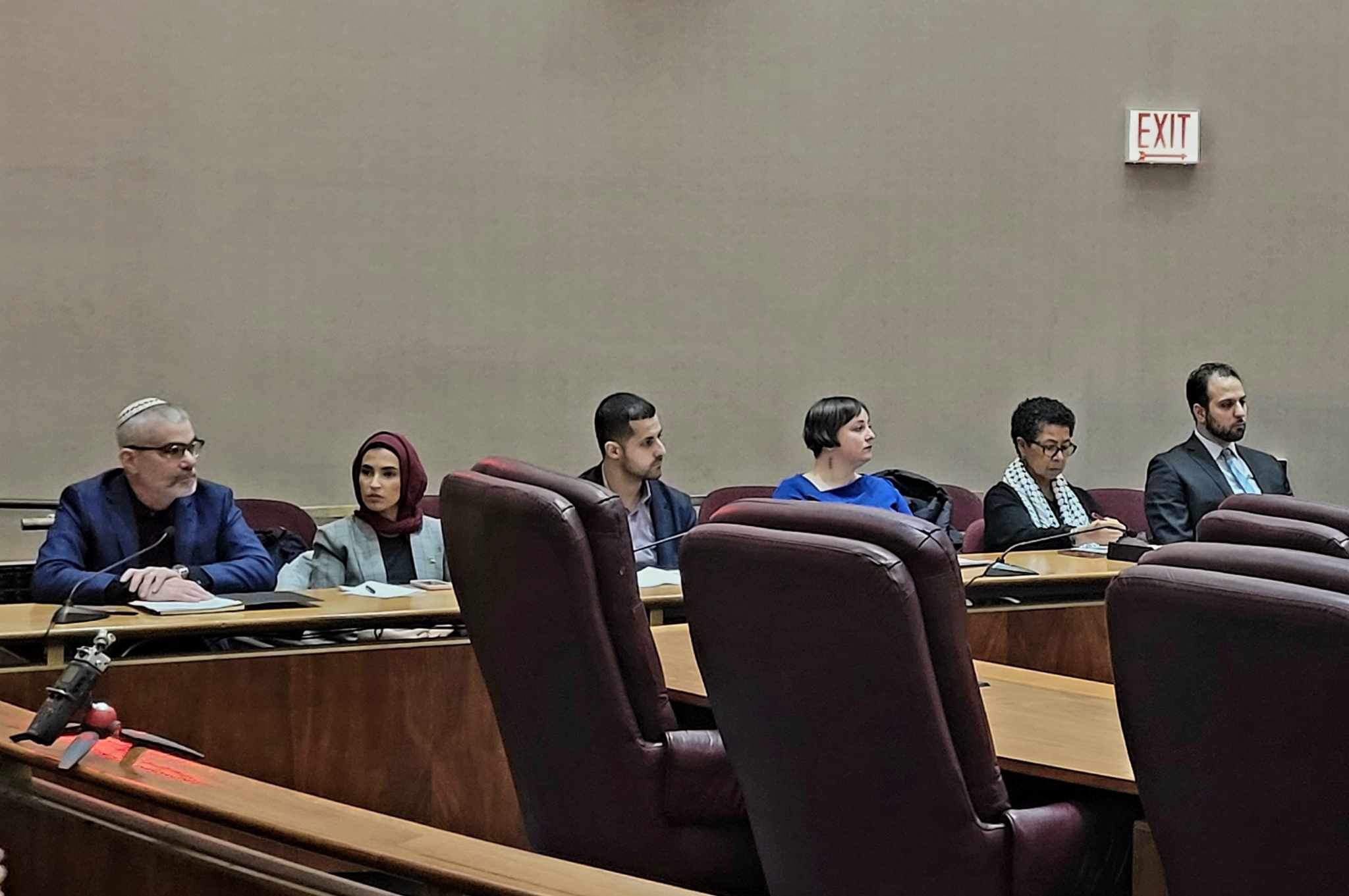
Here are the remarks, below, that I delivered at Chicago City Hall yesterday at a meeting of the Committee on Health and Human Relations as it considered an endorsement of UN Resolution 377, which calls for an immediate ceasefire in Gaza. I was among a panel of community members – which included historian Dr. Barbara Ransby and State Rep. Abdulnasser Rashid – who offered statements at the meeting. In the end, the committee voted unanimously to approve the resolution, which will now go before the entire city council in January.

As has been the case with many local legislative bodies around the county, the politics around the issue of ceasefire has been marked by deep cowardice and toxicity. In October, the city council passed a strongly worded resolution in support for Israel that only glancingly referred to Palestinians – or to Israel’s rapidly escalating military onslaught on Gaza. As it became clear that the very word “ceasefire” was a political non-starter, Alder Rossana Rodriguez-Sanchez of the 33rd Ward decided to build support for the UN resolution as chair of the Committee on Health and Human Services. Such is the politics of ceasefire in this horrid moment: it takes these kinds of torturous procedural efforts just to get a city council to call for an end to genocidal violence that has killed 20,000 people, almost half of whom are children.

Due to time constraints, I didn’t read my entire statement. Here are my remarks, in full:

I’m honored to be able to offer these remarks here today in support of this resolution. I agree with so much of the powerful testimony that was given during public comment and I want to thank the speakers for those remarks. I don’t want to go over much of what has been said other than to say I lift up the sentiment of outrage over the genocidal violence that Israel is committing in Gaza even as we speak.

But I would like to speak in particular, as a leader in the Jewish community, to many of the disingenuous and frankly false claims about Jews, about Judaism, about Zionism, about antisemitism that are being lifted up over the past two plus months during this terrible, tragic time. I hope it will at least provide a little bit of context as we start to consider the importance of calling for a ceasefire and our support of this resolution here in the city of Chicago.

We are living, at this very moment, through an extraordinary moment of reckoning. It’s not an understatement to say that the ongoing, unspeakable violence in Israel-Palestine is confronting us with the most critical moral challenge of our lifetimes. I can personally attest that this is most certainly the case in the Jewish community. Hamas’ violent attack on October 7 has deeply traumatized Israelis and many Jews throughout the world. This trauma, however, is not being manifest in one particular way. There are many Jews, myself included, who are deeply grieving these losses, who pray for the safe return of Israeli hostages – but who are also anguished and appalled at the massive violence and trauma Israel has been unleashing on the people of Gaza.

The Jewish community has never been monolithic – and it certainly has never been lockstep on the issue of Israel. And right now, the divisions within our community are becoming manifest in unprecedented ways. For the past two months, day after day, thousands of Jews have been organizing and taking to the streets throughout the country, engaging in relentless acts of civil disobedience to demand an immediate ceasefire in Gaza.

In October, there were massive protests in Washington DC, at the White House and on Capitol Hill. In New York City, Jewish protestors shut down Grand Central Station and the Statue of Liberty. Here in Chicago hundreds of Jews and allies took arrest at Ogilvie Transportation Center; last Thursday, on the final night of Hanukkah, hundreds of us marched from Daley Plaza to Boeing headquarters. This was one of eight coordinated Jewish actions that took place across the country that evening.

The events of the past two months reflect an important trend that has long been growing in the American Jewish community. The traditional legacy Jewish organizations, who have typically purported to speak for the Jewish community have become increasingly out of touch on the issue of Israel-Palestine. Over the past two decades, every Jewish communal survey has shown support for the state of Israel steadily eroding in the American Jewish community. 

Moreover, the percentage of Jews – particularly young Jews – who identify as anti-Zionist is growing. We are pushing back strongly on the fallacy that Judaism = Zionism – and the deeply disingenuous accusation that anti-Zionism is antisemitism. We hear this claim being made repeatedly by the state of Israel and its advocates in the American Jewish establishment. Here’s but one example: Jonathan Greenblatt, the CEO of the Anti-Defamation League, who has been repeating this accusation over and over again in recently said this in an interview with the New Yorker:

Zionism, a desire to go back to Jerusalem, the longing for Zion, isn’t something that David Ben-Gurion came up with. It isn’t something that Theodor Herzl came up with. It has been embedded in the faith and the traditions of Judaism for thousands of years. You can’t open a Torah on a Saturday morning for your daily prayer, you can’t go through a holiday, without seeing these references.

I’d like to address this claim head on because it a deeply inaccurate statement – and in its way, even dangerous. Greenblatt is of course correct that there is an important connection in Judaism to the Land of Israel. And yes, this connection is quite clear throughout the Torah, liturgy and Jewish tradition in general. However – and this is a big however – the notion of creating a political Jewish nation state was never part of Jewish tradition until the rise of the Zionist movement in the 19th century.

Judaism is a centuries-old Jewish peoplehood. Zionism is a political movement of modernity that arose in Europe that sought to radically change Jewish identity and Jewish life. For most of Jewish history, the yearning to return to Zion was expressed as an idealized messianic vision. Some Jews made pilgrimage to the land. And a small minority of indigenous Jews consistently lived in historic Palestine throughout the centuries. But the rabbis fervently opposed the establishment of a 3rd Jewish commonwealth in historic Palestine. They actually considered it to be blasphemous – a “forcing of God’s hand” to create something that could and should only occur in the messianic age.

From the very beginning, there has always been principled Jewish opposition to Zionism. Many Jews have embraced anti-Zionism not as a matter of traditional messianic belief, but as a matter of Jewish moral and political conscience. We recognize that there is a fundamental injustice at the core of Zionism, namely, the creation of a Jewish majority state through the dispossession and oppression of another people.

It is important to note that political Zionism is a form of ethno-nationalism. In other words, the Jewish identity of the state of Israel is predicted on the maintenance of a majority of one particular group of people in the land. Up until 1948, Jews were a minority in Palestine – and this necessarily posed a problem for the Zionist movement. In the end, the state of Israel could only be created one way: through what Palestinians refer to as the Nakba. Today, even many Israeli historians agree: the state of Israel was founded through the ethnic cleansing of Palestinian Arabs from their homes and Israel’s refusal to let them return. This is what happened in 1948 – and this dispossession of Palestinians to make way for a Jewish state has been happening every day for the past 75 years.

In 2021, B’Tselem, a respected Israeli human rights organization released a 300-page report in which it concluded, “The Israeli regime, which controls all the territory between the Jordan River and the Mediterranean Sea, seeks to advance and cement Jewish supremacy throughout the entire are.” I want to make this clear: a prominent Israeli human rights organization has said that Israel has created a regime of Jewish supremacy between the river and the sea. This is not an antisemitic claim – it is a claim rooted international law and human rights. This is what it means when Palestinians and solidarity activists call for Palestine to be free “from the river to the sea” – they are expressing basic human rights that we all take for granted – or should. And it is not antisemitic to say so.

Are there some individual anti-Zionists who antisemitic? Undoubtedly. But it is disingenuous and wrong to claim that anti-Zionism is fundamentally antisemitic. As I said earlier, there are increasing numbers of Jews, myself included, whose are anti-Zionist as a deep expression of our Jewish values. Torah teaches that all human beings are created in the divine image, that we must seek justice and liberation for all. It teaches that love for Zion is not divine entitlement to a piece of land, but an expression of a Zion consciousness. That the land – like the entire earth itself – does not belong to us but to God, and we are but strangers upon it.

Another central precept of Judaism is the prophetic injunction, “Not by might and not by power, but by my spirit, says the Lord of Hosts.” This sacred imperative is what compels us to reject Israel’s militarism or to affirm in any way that Jewish state power will keep Jews safe. If there was ever any doubt, the events of the last two months should make this abundantly clear. It makes us all less safe – Jewish and Palestinians alike. And make no mistake: if this nightmarish war should spread through the region, it will endanger the safety and security of us all.

This why so many of us in the Jewish community are literally taking to the streets, calling for an immediate ceasefire and return of all hostages. This is why we welcome and support resolutions like UN Resolution 377. And this is why we are urging our political leaders, on every level, to join the call for ceasefire. This is moment of deep moral reckoning for us – and for the world. History will judge us by our action or our inaction in this critical moment. And that is why I urge us all to support the cause of justice and peace for all who live between the river and the sea – and for all who dwell and earth.

Again, I thank you for giving me the opportunity to speak to you today.