It’s certainly been a strange and surreal week for the American Jewish community. As is all too painfully well known by now, this past Tuesday, the New York Times reported that Donald Trump would sign an Executive Order that would “interpret Judaism as a race or nationality” to prompt a federal law penalizing colleges and universities that failed to protect Jewish students from the threat of BDS activism. This news caused an almost immediate upheaval, with vociferous protest emanating from a wide swath of the Jewish community concerned that this order could easily enable the antisemitic canard of Jewish “dual loyalties.”
While I certainly shared the outrage upon hearing this news, I harbored a deeper concern that I shared on my congregation‘s Facebook group page: i.e., that the Jewish community was making this issue exclusively about us, ignoring the fact that Trump’s order was ultimately aimed at silencing Palestinians and those who stand in solidarity with them. “As ever,” I wrote:
I would suggest the most important response we can make to this latest cynical maneuver is to redouble our solidarity with the Palestinian people and to rededicate our support of the BDS movement – not merely for the sake of “free speech” but for a free Palestine. We must recommit ourselves to the central goals of the BDS call from Palestinian civil society itself: for a land where all who live between the river and the sea are full and equal citizens.
As it turned out, the New York Times report turned out to be false. The actual text of the Executive Order, which Trump signed at a bizarre White House Hanukkah reception, did not explicitly define Jews as a nationality (though it did rely on Title VI of the Civil Rights Act, which “prohibits discrimination on the basis of race, color and national origin” but not religion). Upon hearing this news, many in the Jewish community seemed to breathe a sigh of relief. Others dismissed the order itself, saying it was just a reaffirmation of the Obama administration’s policy and that “it wouldn’t change much at all.”
Whatever else this might mean, we certainly shouldn’t downplay the threat posed by this cynical Executive Order, which essentially puts into law what Israel advocates and their allies in Congress were unable to do with the stalled, ill-fated “Antisemitism Awareness Act.” Going forward, agencies and departments charged with enforcing Title VI can now “consider” using the International Holocaust Remembrance Alliance’s (IHRA) definition of antisemitism, which was never intended to be used to be enforce standards on college campuses.
There are a myriad of problems with the IHRA definition. In one oft-quoted line, for instance, it prohibits “applying double standards by requiring of it a behavior not expected or demanded of any other democratic nation.” However, as journalist Paul Waldman recently pointed out in the Washington Post, while “someone might apply double standards to Israel out of antisemitism, the idea that doing so is inherently antisemitic is preposterous. We can decry double standards, but people use them all the time in policy debates without being defined as bigoted.” Moreover, Waldman wrote, “‘saying criticism of Israel similar to that leveled against any other country’ is not antisemitic would mean criticisms of Israel would have to meet a higher standard than criticism of other countries or else they’re antisemitic.”
Additionally, the IHRA definition deems it antisemitic to “deny the Jewish people their right to self-determination.” This is a muddy and subjective standard that comes dangerously close to making the fallacious claim that anti-Zionism is synonymous with antisemitism. In fact, there are many different definitions of self-determination other than political nation-statism. It could well be argued (as I have on several occasions) that the Jewish people have no more inherent “right” to create a political nation state in a specific piece of land than any other people might have – and it is certainly not antisemitic to say so. On the other hand, it would be immensely antisemitic to suggest that Jews do not have a right to self-determination as minority communities of the nations in which they live.
I certainly realize that how events of this past week may have conjured up the the deepest fears of American Jews. And I know full well that we cannot and must not be sanguine about the threat of resurgent antisemitism. But I would also suggest that is critically important that we remember where this threat is actually coming from – and where it is not. Indeed, it is critical to note that while the American Jewish community was tying itself up in knots around the issue of the so-called “antisemitic threat” of BDS on college campuses, four people, including two Jews, were killed in a kosher market in Jersey City, an incident the police is now investigating as a hate crime.
In an age where Jews are being regularly targeted and murdered by extremists, it is not only disingenuous of our government to spend so much time, energy and resources on combatting BDS – a nonviolent movement rooted in human rights for all – it is downright dangerous. It is time to stand down the false and pernicious equation of antisemitism coming from both the “right and the left.” We know full well where the most dangerous and deadly antisemitism is truly coming from – and we need to make this clear to the world in no uncertain terms.
In the end, I believe the most telling commentary on the events of this past week came in an op-ed by Kenneth Stern, one of the authors of the definition of antisemitism used in Trump’s Executive Order. I’ll let him have the last word:
Rather than champion the chilling of expressions that pro-Israel Jews find disturbing, or give the mildest criticism (if any) of a president who repeatedly uses antisemitic tropes, why weren’t those Jewish officials who were present when Trump signed the executive order reminding him that last year, when he demonized immigrants and called them “invaders”, Robert Bowers walked into a Pittsburgh synagogue because he believed Jews were behind this “invasion” of brown people as part of a plot to harm white people, and killed 11 of us?
One of the signature moments on Rosh Hashanah is the sentence traditionally proclaimed after the shofar is sounded: “Hayom Harat Olam” (“Today is the birthday of the world.”) On Rosh Hashanah, tradition tells us, we celebrate a world reborn, joyfully acknowledging the order and balance of God’s creation and the awesome power embedded deep within it. What better way to celebrate the potential for our own renewal in the year ahead than by looking to a world that renews itself every year according to the sacred rhythms of birth and rebirth?
While I personally find this idea to be among the most profound of this season, I’ll confess, I’ve been struggling with it in recent years. With the hard reality of the global climate crisis hitting home deeper and deeper every year, I find myself asking, what does it mean to gather every Rosh Hashanah to reaffirm creation even as we are literally undoing it? How can we honestly celebrate the power embedded in God’s world, even as human power is steadily destroying it? Even as the world is literally on fire? To be completely honest, in this era of global climate crisis, I’m not sure the traditional understanding of Rosh Hashanah really makes much sense any more.
And it is indeed a crisis. Many are suggesting, in fact, that we’ve moved beyond crisis and have entered the category of emergency. And we can’t say we haven’t been warned. As far back as 1992, 1700 scientists around the world issued a famous statement called a “warning to humanity,” declaring that we were on a “collision course” with the natural world if we did not “fundamentally change” the way we lived upon it.
More than 25 year later, almost all of their chilling predictions are now in full swing. Last year, the UN Intergovernmental Panel on Climate Change (IPCC) issued the first in a series of three reports that describe in vivid detail the effects of greenhouse gas emissions throughout the world. The first of three reports, which came out last October, warned that we have only a dozen years to keep global warming to a maximum of 1.5 degrees Celsius beyond pre-industrial levels. If we go up even half a degree beyond this, we will significantly worsen the risks of drought, floods, extreme heat and poverty for hundreds of millions of people.
However, this was not merely a prediction: the report made it clear that this crisis was already well underway. The world is currently 1.1 degrees warmer than pre-industrial levels. The average global temperature for 2015–2019 is already the hottest of any five-year period on record. The Amazon rainforest, even as I speak now, is still burning. It’s been estimated that we’ve already lost 50% of the planet’s biodiversity in the past four decades. 20% of the earth’s coral reefs have died. The Antarctic ice sheet has lost three trillion tons of ice in the last 25 years. In roughly that same amount of time, the rate of global ocean warming has doubled. Many, if not most, of these losses are irreversible.
And these losses are increasing exponentially.
Every new half degree will cause rapidly increasing and irreversible chain
reactions: growing species extinction, greater food insecurity, the
disappearance of coastal cities and island nations, increased migration and
social conflict, more wildfires and hurricanes, the destruction of polar ice,
the loss of entire ecosystems.
It’s important to note however, that the IPCC report did not conclude that all is lost. The scientists repeatedly stressed that it was still possible to limit warming to 1.5 degrees. But they also made it clear it will take a radical global effort to achieve this goal. Jim Skea, Co-Chair of IPCC Working Group put it this way: “Limiting warming to 1.5°C is possible within the laws of chemistry and physics, but doing so would require unprecedented changes.”
Unprecedented indeed. Given our voracious dependance upon fossil fuels – and the economic interests in the companies that produce them – the hard truth is that we have only twelve years to reverse the growth of global capitalism itself. This is not a radical statement – I’d argue it’s actually quite reasonable under the circumstances. Those who dismiss advocate structural proposals such as the Green New Deal as naive, “pie in the sky” ideas routinely miss this one essential point: we need radical solutions if we are to take on the unfettered economic greed that has brought us to this terrifying moment in human history.
Now I know that many, if not most of you have heard these facts and figures before. But even so, as I pondered what to talk about this Rosh Hashanah, it felt enormously important to me that the findings of the IPCC report be spoken out loud. We need to say them out loud. Otherwise, I’m really not sure if the rest of our prayers really make much sense.
I realize how depressing, how enormous – how terrifying – it is to
contemplate all of this. But as we gather for Rosh Hashanah, I really can’t
think of a more important issue for us to talk about. And so this
morning, I’d like to push a brief pause on our celebration of creation’s power
and face the ways we are willfully degrading that power. I’d like to offer a
few thoughts on how we might reframe our understanding of this crisis so that
we might avoid the inevitable overwhelm, paralysis and despair that comes with
it. Ultimately, I suppose, what I’d really like to do is offer a measure of
hope in the face of an increasingly hopeless reality. To take our cue from the
new year and imagine a world reborn – so that we might feel that much more
ready to go forth and actually make it so.
When most of us confront the overwhelming reality of the global
climate crisis, I think we tend to do what comes naturally: we compartmentalize
it. We silo it into its own separate category the way we do with so many other
complex social issues. We view it as one issue among many in the desperate hope
that if we isolate it, we might be able to find a way to somehow address
it.
But in truth, the climate crisis isn’t one issue. In fact, I would say it is in many ways the issue. It’s the one universal issue that connects all others. The changes we are causing to the earth’s temperatures have direct causal relationships to immigration, to human rights, to poverty, to housing, to war, to so many examples of social and political upheaval worldwide.
So yes, addressing this crisis means we must advocate for policies that will keep global temperatures from reaching the 1.5 mark. But it cannot only mean that. It must also mean that we must stand with the scores of people around the world who are already suffering from the effects of the climate crisis. In the end, there is really no contradiction between working for justice and climate activism. They are, in fact, intimately intertwined.
We know full well that the primary brunt of the
global climate crisis is being borne by the poor and communities of color. It
has been estimated that the global climate crisis could push more than 120
million more people into poverty by 2030. Even if we do manage to increase to
only 1.5 degrees by 2100, extreme temperatures in the global south will leave
disadvantaged populations increasingly food insecure, with less incomes and
worsening health. Increasing numbers of people will have to make the agonizing
choice between starvation or migration.
Here in the US, we can see the connection between the climate crisis and structural racism all too well. Polluting facilities are routinely built in low-income neighborhoods and communities of color, which means that people with marginalized identities experience more asthma, a greater likelihood of heart attacks and premature death. The disadvantages that come with those health issues create a cycle of poverty and lack of access to opportunity for people of color and the poor in the United States.
It’s a sad irony that the ones least responsible
for the climate crisis are bearing the brunt of it – and have the least
capacity to protect themselves. This phenomenon has been referred to as
“environmental racism” or “climate apartheid” – in which the wealthy have the
means to escape overheating, hunger and conflict while the rest of the world is
left to fend for itself.
We witnessed climate apartheid in full swing when the devastating Hurricane Dorian slammed into the Bahamas earlier this month. In advance of the hurricane, the ultra-wealthy homeowners on Abaco Island hired local workers to board up their vacation houses, while they escaped to their primary homes in the US or Europe. The Baker’s Bay Golf & Ocean Club hired a private security team, equipped with helicopters and assault rifles, to protect their property. The rest of the island’s residents, made up mostly of undocumented Haitians, had nowhere to go and had to ride out the storm in shanty towns and church shelters. Within hours, the community was almost completely flattened. Dozens of poor residents were killed and thousands more are still missing.
As Jews, we need to acknowledge that climate apartheid is deeply enmeshed throughout Israel/Palestine as well. Since the Middle East is among the hardest hit by global warming, the issue of justice in Israel/Palestine is directly related to the control of water resources – and Israel has almost complete control over water sources in the region. The so-called Mountain Aquifer, the most critical water source in Israel/Palestine, is situated almost completely east of the Green Line. This goes a long way to explain why Israel has not and likely will never give up the West Bank – as doing so would mean surrendering its most valuable water source.
The environmental situation in Gaza is even more dire, due largely to Israel’s crushing blockade. At present, 97% of Gaza’s freshwater is unsuitable for human consumption, and only 10% of Gaza’s two million people have access to safe drinking water. As a result of Israel’s regular military assaults, 110 million liters of raw and untreated sewage are pouring directly into the Mediterranean every day, creating a massive sanitation crisis.
But, as is invariably the case in all forms of climate apartheid, what goes around comes around. This past June, Ha’aretz reported on the effects of Gaza’s toxic pollution on Israel. The headline read: “Collapsing Environmental State of Gaza Poses Threat to Israel’s National Security, Report Warns.” Tellingly, even as it maintains total control over natural resources, Israel cannot escape the devastating impact of the growing climate crisis.
My friend and colleague, Robert Cohen, a writer and blogger from the UK, recently wrote a post in which he argued that “the climate emergency makes Zionism obsolete.” In it, he made this very compelling argument:
How can Israel present itself as a Jewish safe haven from a hostile world when its water security is at high risk, crop yields will soon be falling and fires will be raging all year round. In a region already fraught with conflict, climate analysts expect temperature rise to have a multiplier effect that exacerbates and accelerates wars and mass migrations. Promoting Zionism starts to look like an invitation to Jews to jump from the metaphorical frying pan into the literal fire.
When it comes to climate change, national borders will offer no protection from antisemitism. Climate has no interest in faith or ethnicity or in historical or religious claims to a particular piece of land. Climate change is staunchly apolitical, ahistorical and agnostic.
Of course, climate change won’t make antisemitism go away. But like much else that’s wrong and unfair about the world, the Climate Emergency compels us to look at things differently, consider the root causes, and understand the interconnectedness of injustice. As well as terrible threats, climate change forces upon us the possibility of a profound ethical revolution.
I believe Robert hits the nail on the head with this analysis. In
a way, the Israel/Palestine issue is a microcosm of a much larger, universal
issue. In the face of global climate crisis, nationalism will not save us.
Stronger borders will not save us. Sooner or later this crisis will come for us
all. In the meantime, however, we can be sure that those who have more power
will do everything they can to protect themselves from its effects until the
very bitter end – at the expense of everyone else.
This is where, as Robert Cohen puts it, the “profound ethical
revolution” comes in. Yes, to address the climate crisis, we must be advocating
for policies and practices that decrease our global carbon output – but it must
mean standing in solidarity with those most affected by the crisis as well. There
can be no separation between the two. And in this regard, we all have a part to
play.
The first step, I believe, is to resist the temptation toward
overwhelm and despair. This is, quite frankly, a luxury we cannot afford. While
it can be tempting to adopt a fatalistic, “all is lost” attitude, we would do
well to remind ourselves that some of the most committed, inspired climate
activists are those who are most directly affected by it. If they have
not succumbed to despair, than neither can we.
In fact, the movement for climate justice is being led by members of indigenous nations worldwide. This past April in Brazil, an estimated 4,000 indigenous peoples from various tribes gathered for three days in that nation’s capital to protest for their rights, demonstrate their traditions and confront congressional leaders. This nonviolent mobilization, called Free Land Camp, has taken place every year since 2004 and is organized by the Articulation of Indigenous Peoples of Brazil — an alliance of indigenous communities and organizations from several regions of the country.
Closer to home, the resistance by at Standing Rock has been at the vanguard of the fight for climate justice in this country. And as this movement is increasingly youth led, we need to be lifting up the work of indigenous youth activists – young people such as 15 year old Autumn Peltier, of the Wiik-wem-koong First Nation in Northern Ontario who recently spoke at the UN and 19 year old Naelyn Pike, of the San Carlos Apache tribe in Arizona, who had this to say in her speech at a youth leadership gathering in 2017:
I’m saying no! And many people, millions of people in this world, are saying no! We have so many sacred lands that are going to be desecrated, so many fights to protect Chaco Canyon, to protect Bears Ears, to protect Indigenous land, food, water, the right to live, our identity. We’re fighting against so many pipelines. And the thing is that these generations behind us had told us this prophecy.
But there’s another prophecy: That the youth is going to stand. And that’s us today. That’s us here and now.
In addition to Indigenous-led movements, there are any number of growing climate justice movements that deserve our attention and support – and I know many in this room have long been active in these efforts: the Sunrise Movement, the Climate Strike, +350 and Extinction Rebellion, to name a few. And as I mentioned earlier, given everything that is at stake, we need to wage an all-out political fight against the economic interests that make greater profit through increased greenhouse gas emissions. In this country, this fight is primarily being waged nationally via the Green New Deal, but it is also being fought on state and local levels as well. As I said before, there is a part we can all play. The main thing is to connect the dots, to understand that the climate crisis is at heart a justice issue – and that all struggles for justice are ultimately bound up with the movement to roll back the climate crisis.
So what can Rosh Hashanah mean at this moment in human history, in this unprecedented time when the very future of our world is literally hanging in the balance? I want to suggest that we can no longer celebrate the new year – the birthday of the world – without explicitly spelling out what is at stake. Yes, it is a day of hope, but this hope must be celebrated together with a hard and sober realism.
We know that the task ahead of us will be
daunting. We know that some of the effects of climate
change can yet be turned back. But we also know that some of the damage we’ve
inflicted upon the earth is permanent. We do have a window of time in which we
can stop or decrease global temperatures, but it will take a Herculean
world-wide effort to achieve this. We’ve been told by scientists that we have
12 years before the social and economic fabric we take for granted starts to
unravel beyond the point of no return. We need to admit this and say it out
loud if these New Year’s rituals are to retain any meaning for us whatsoever
any more.
In the end, it may well be that the High Holidays will hold more
meaning than ever before. After all, when the new year is through, when we move
toward Yom Kippur, our prayers will literally evoke a world that hangs in the
balance. We will ask “who shall live and who shall die?” We will plead to be
written into the Book of Life. We will ask ourselves honestly, how can we
change our ways to ensure it shall be so? It seems to me that these prayers
have never had more universal, global meaning than right now.
One of the things I love most about Judaism and Jewish culture in
general, is that it invites us to work toward the world to come, the world as
it should be. Yes, this work can be a struggle, but it can also be filled with
joy and celebration. And there are yet times during the struggle when we create
a microcosm – when we get a glimpse of the world to come. These moments remind
us we must continue to live with a spirit of joyous resistance, even if we know
full well that world we seek may never be at hand.
How do we possibly do this? How do we find the strength to fight a fight we know we may not win? And to so joyfully? Let me share with you the words of indigenous activist and organizer, Kelly Hayes, who offers us as eloquent a manifesto for the new year as I can imagine:
I would prefer to win, but struggle is about much more than winning. It always has been. And there is nothing revolutionary about fatalism. I suppose the question is, are you antifascist? Are you a revolutionary? Are you a defender of decency and life on Earth? Because no one who is any of those things has ever had the odds on their side. But you know what we do have? A meaningful existence on the edge of oblivion. And if the end really is only a few decades away, and no human intervention can stop it, then who do you want to be at the end of the world? And what will you say to the people you love, when time runs out? If it comes to that, I plan on being able to tell them I did everything I could, but I’m not resigning myself to anything and neither should you. Adapt, prepare, and take the damage done seriously, but never stop fighting. Václav Havel once said that “Hope is not the conviction that something will turn out well, but the certainty that something is worth doing no matter how it turns out.” I live in that certainty every day. Because while these death-making systems exist both outside and inside of us, so do our dreams, so long as we are fighting for them. And my dreams are worth fighting for. I bet yours are too.
This new year, let us commit to fight like hell for the world of
our dreams, for a world reborn anew. Let us fight with joy, commitment and
solidarity, knowing full well that this is a fight for the survival of the
world as we know it. And let us fight not with the certainty that we will
ultimately be victorious, but with the faith that it is worth waging no matter
what.
Ken Yehi Ratzon – May it be our will this new year – and every new year from this time forward.
Observers have long suggested that two radically different visions of Judaism are currently unfolding in the contemporary world: one in Israel and the other in North America. While this isn’t a particularly new phenomenon, I can’t recall a time in which there were both so fully on display as they were last Sunday during the Jewish holy day of Tisha B’Av – when two very different Jewish communities observed the day in dramatically different fashion.
Tisha B’Av (literally “the 9th of the month of Av”) is a Jewish fast day of quasi-mourning that commemorates the destruction of the Temple in Jerusalem. In addition to chanting from the Book of Lamentations, Tisha B’Av contains prayers that yearn for the restoration of the Temple. But while traditionally religious Jews characteristically view this mythic restoration in the context of a far-off messianic age, there is a rapidly growing extremist movement in Israel that has been calling for the literal rebuilding of the Temple on the Temple Mount. The Temple movement also advocates the destruction of Muslim shrines – an act that would undeniably result in a violent cataclysm of unthinkable proportions.
Last Sunday, the Temple Mount became a flash point for violence on the day of Tisha B’Av – which happened this year to coincide with the Muslim festival of Eid al-Adha. In anticipation of the day, Temple movement leaders were pushing hard on the Israeli government to upend the status quo and allow them to worship on the site (which is ruled off limits to Jews by Jewish law – and thus the state of Israel.) Eventually, the political pressure from the Temple movement and far-right Israeli politicians caused Prime Minister Netanyahu to cave and allow the extremist worshippers to enter the Temple Mount. In midst of election season, Netanyahu is loath to alienate the extreme rightist voters he has been desperately trying to court.
Thus, on Sunday morning. Temple movement worshippers gathered on the Temple Mount. Later that morning, violence erupted after Muslim worshipers finished their prayers at the Al-Aqsa Mosque. According to reports, police forces fired stun grenades and tear gas canisters after, they claimed, “worshipers began hurling objects at officers and yelling ‘nationalistic remarks.'” The Palestinian Red Crescent said 61 Palestinians were wounded in the clashes, with 15 evacuated to nearby hospitals. The police reported that seven people were arrested.
This then, was how Tisha B’Av was celebrated in Israel this year: a politically emboldened group of Jewish zealots was given license by the Israeli government to provoke violence on a site considered holy by both Jews and Muslims.
(AP Photo/Mahmoud Illean)
Now compare this with Tisha B’Av in the United States, when thousands of American Jews attended immigration protests and vigils in over 60 cities, organized by a broad network of Jewish groups, including Never Again Action, T’ruah, Bend the Arc, Jews for Racial and and Economic Justice, and a myriad of local immigrant justice organizations.
At one of the more substantive actions, more than 1,000 demonstrators sat down in an Amazon store in NYC to protest Amazon’s technology contract with ICE. 40 protesters took arrest, including numerous local area rabbis. In downtown Los Angeles, members of Southern California’s Jewish community and other immigrant rights advocates held a “Close the Camps” rally at the Metropolitan Detention Center. Here in Illinois, it was my honor to be among the 250 Jews and allies gathered at the Jerome Combs Detention Center in Kankakee for a Tisha B’Av ceremony that included the chanting from Lamentations, and the recitation of prayers, songs and personal testimonies.
It’s not an understatement to suggest that the nascent Jewish resistance movement embodied by Never Again Action is one of the most remarkable and significant religious-political developments in American Jewish life in generations, as Allison Kaplan Sommer recently pointed out in a feature for Ha’aretz:
Never Again Action’s emergence highlights a growing trend: progressive young American Jews interested in political activism while clearly identifying themselves as Jews – in causes that have no direct link to Judaism. They wear T-shirts with Jewish slogans, sing Hebrew songs and in some cases even conduct prayer wearing kippot and tallit.
Critically, Sommer noted, “the issues that energize such leftist activists have nothing to do with Israel,” adding that “Israel has become a topic that divides their community rather than uniting it, depleting people rather than energizing them.”
I’d suggest that last week’s Tisha B’Av events demonstrated an even deeper dichotomy between these two communities. In Israel, the day was commemorated through a distinctly land-focused, land-centric style of Judaism that ultimately resulted in violence on the Temple Mount. Zionism after all, is an ideology that views the return to the land in real terms, and redemption is not envisioned in a far-off messianic age but through the real time settling of Jews in the land – an act that resulted, and continues to result, in the violent displacement of the Palestinian people.
Given this land-centric focus, it was really only a matter of time before Tisha B’Av became an occasion for viewing the destruction of the Temple as a historic loss that could only be redeemed through its literal rebuilding. It’s particularly notable that the Temple movement, once considered a fringe movement in Israel, is rapidly ascending in political power and is increasingly considered to be an important political bloc by the government of Israel .
By comparison, the diaspora movement of Jewish resistance currently emerging throughout North America regards the destruction of the Temple in mythic – not literal – terms. Note for instance, this pointed description of the Tisha B’Av vigil at the Illinois detention center, taken from its Facebook event page:
Tisha B’Av is a Jewish fast day that honors and mourns the brokenness, loss, and shattered ideals in whose shadow we live every day, symbolized by the destruction of Jerusalem 2,000 years ago.
This Tisha b’Av we’ll mourn the brokenness of a nation that hunts down, detains and deports immigrants, separates families, cages children and turns away asylum seekers. We will also explore our communal culpability in this tragedy and ask honestly: how do we stand down this causeless hatred?
Here, the destruction of the Temple is not regarded as a literal tragedy/loss, but a mythic moment of brokenness that is embodied by the chronically broken world in which we live. According to this view, redemption occurs not through the quasi-pagan deification of bricks and mortar but through sacred actions of resistance to injustice and oppression. Could there be any greater demonstration of the radical dichotomy between these two fundamentally divergent spiritual approaches?
There is, of course, a much simpler way to describe the difference between these two Tisha B’Av moments: one the one hand, redemption occurs through the physical power of the state while on the other, redemption occurs through resistance to that power.
Postscript: as of this writing we are receiving news that an ICE police guard has driven a truck into a peaceful crowd of Never Again protesters at a detention center in Rhode Island.
Last Tuesday, the House voted overwhelmingly to pass an anti-BDS bill with the strong support of progressive democrats (including “squad” member Ayanna Pressley). I know there are many who are asking how and why did this happen? As I see it, the answer, as always, is pure politics.
Just a bit of history: the genesis of the bill known as H. Res. 246 dates back to the AIPAC convention last March, when a number of liberal Jewish groups, including J Street, Ameinu, National Council of Jewish Women, Partners for Progressive Israel and Reconstructing Judaism (my own denomination), met informally to give their preliminary approval to this prospective bill. As they saw it, this was a strategic move. The bill was designed to give cover to liberal Democrats who had previously voted against anti-constitutional bills that virtually criminalized BDS. This new bill would allow them to vote on the record for a non-binding bill that criticized BDS without curtailing freedom of speech or labeling it as antisemitic. It would also give Democrats aligned with liberal Zionist groups the opportunity to reaffirm their support for the two state solution.
Like I said, pure politics.
Still, no matter how much liberal Democrats might rationalize their support for H. Res. 246, (Rep. Pressley explained on Twitter that her vote affirmed to her “constituents raised in the Jewish faith Israel’s right to exist”) no amount of explaining can wash away the fact that this resolution is a cynical political move that unfairly and incorrectly attacks a genuinely non-violent movement for human rights – and will do little to advance the cause of real justice in Israel/Palestine.
• While the resolution mentions “rising anti-Semitism,” it is completely silent on anti-Palestinian oppression and the threat of Islamophobia. Even the simple term “occupation” is nowhere to be found.
• The resolution claims that the BDS “seeks to exclude the State of Israel and the Israeli people from the economic, cultural, and academic life of the rest of the world.” In fact, this is not the goal of BDS; the very suggestion reduces the entire movement to an essentially nefarious aim. Rather, the Palestinian civil society call for BDS advocates for non-violent economic activism as a tactic toward three rights-based goals: an end to the occupation, equal rights for Palestinian citizens of Israel, and a recognition of the right of return for Palestinian refugees.
• The resolution claims that BDS “undermines the possibility for a negotiated solution to the Israeli-Palestinian conflict by demanding concessions of one party alone and encouraging the Palestinians to reject negotiations.” The three goals of BDS above are not “concessions” – they are basic rights enshrined in international law that have been patently ignored or denied in previous negotiations. There is nothing in the BDS call that “rejects negotiations.”
• The resolution quotes BDS leader Omar Barghouti (who addressed Tzedek Chicago on the eve of Passover this year) thus: “We oppose a Jewish state in any part of Palestine. No Palestinian, rational Palestinian, not a sell-out Palestinian, will ever accept a Jewish state in Palestine.” While this quote is genuine, it crucially omits the first part of his statement: “A Jewish state cannot but contravene the basic rights of the land’s indigenous Palestinian population and perpetuate a system of racial discrimination that ought to be opposed categorically, as we would opposed a Muslim state or a Christian state or any kind of exclusionary state…”
Here, Barghouti calls into question whether an exclusively Jewish state – as opposed to one state of all its citizens – can ever be truly democratic. This is an important question that deserves genuine consideration and debate. This egregiously truncated quote, however, only serves to imply Barghouti and the BDS movement seeks nothing more than the “destruction of the Jewish state.”
• The resolution states that the BDS movement ” targets … individual Israeli citizens of all political persuasions, religions, and ethnicities, and in some cases even Jews of other nationalities who support Israel.” This is a false and spurious accusation that the resolution offers with no evidence whatsoever. The targets of BDS campaigns have always been institutions, not individuals. (The government of Israel and Israel advocacy organizations, however, routinely target individuals with blacklisting websites such as Canary Mission and by barring entry of Palestine solidarity activists into the country.)
• The resolution states “BDS does not recognize the right of the Jewish people to self-determination.” There is no universal consensus that self-determination for any group of people must ipso facto mean the establishment of an independent nation state on a particular piece of land. Self-determination goes by many definitions and takes many forms. There are millions of Jews around the world who are happy to enjoy individual self determination in the nations in which they live. (It’s also worth noting that the Israeli government recently passed a law declaring that only Jews have a right to self-determination in Israel.)
• The resolution states that BDS “leads to the intimidation and harassment of Jewish students and others who support Israel.” Here again, the resolution is putting out a damaging claim without offering any evidence whatsoever. What can be stated however, is that however uncomfortable some Jewish students may be made to feel by pro-divestment campaigns on their campuses, pro-Israel activist students enjoy significant support from college and university administrations. By contrast, Palestine solidarity activists (including many Jewish students) experience routine suppression of their freedom of speech. Palestine Legal reports that “seventy-six percent of the incidents Palestine Legal responded to in 2018 were campus related” and that they “responded to 51 administrative complaints against Palestine activists, double the number from 2017.”
• The resolution states “in contrast to protest movements that have sought racial justice and social change, the Global Boycott, Divestment and Sanctions Movement targeting Israel is not about promoting coexistence, civil rights, and political reconciliation but about questioning and undermining the very legitimacy of the country and its people.” To this, I can only say, see bullet point #2 above. In fact, the BDS call is actually very much akin to “protest movements that have sought racial justice and social change.” Nowhere does it “delegitimize” the state of Israel. Anyone who take the time to read the actual call will see it focuses exclusively on the basic, essential rights that Israel routinely denies Palestinians.
To this final point, it was quite sobering to contemplate that on the very day that the House voted to condemn a nonviolent Palestinian call for human rights, House members were notably silent in response to Israel’s massive demolition of homes in East Jerusalem that took place at the very same moment.
In the end, despite the cynical politics behind this particular bill, I cannot personally view this as merely a political issue alone. As a Jew and a person of faith, I view the BDS call as nothing short of a religious imperative. I said as much in an address I was honored to deliver at the American Academy of Religion two years ago:
I realize there may be some in this room who cannot bear to hear me say these words, but I – and increasing numbers of people around the world – believe them to be true, no matter how painful it feels to hear them. Israel is oppressing Palestinians. And when a people are oppressed, they will inevitably resist their oppression – yes sometimes violently.
In this case, however, a nonviolent call for popular resistance has been placed before us. Thus, for those of us that believe God hears the cry of the oppressed and demands that we do the same, the BDS call represents a direct challenge to our faith. Will we be like God, and hearken to their cries, or will we be like Pharaoh and ignore them?
As a Jew, as an American, as a person of conscience, I would suggest this call presents us with nothing less than the most consequential spiritual challenge of our time.
Blessed are the ones who hearken to the cry of the oppressed.
Israeli Ambassador to the UN, Danny Danon, created something of viral sensation last week when, during a speech in the Security Council, he dramatically brandished a Bible and declared “This is the deed to our land.”
He then continued:
From the book of Genesis; to the Jewish exodus from Egypt; to receiving the Torah on Mount Sinai; to the gates of Canaan; and to the realization of God’s covenant in the Holy Land of Israel; the Bible paints a consistent picture. The entire history of our people, and our connection to Eretz Yisrael, begins right here.
Danon’s use of an ancient religious text as justification for the State of Israel’s right to the land was likely an astonishing moment for many. What on earth was a secular Israeli doing lecturing the UN on “God’s covenant in the Holy Land of Israel?” For those familiar with Zionist pedagogy however, his comments were neither unusual nor unprecedented.
When I heard about Danon’s Biblical tutorial, I immediately recalled a famous story about a 1937 meeting between David Ben-Gurion and Lord Peel, who was then heading the British Royal Peel Commission of Inquiry into the potential partition of Mandate Palestine. According to the story, Lord Peel asked Ben-Gurion where he was born and Ben-Gurion replied that he was from Plonsk, Poland. Lord Peel responded that the Arab leaders with whom he had met were all born in Palestine and most of the Jewish leaders were from Eastern Europe. Peel noted that the Arab people had a kushan (Ottoman land deed) that entitled them to the land – and asked Ben-Gurion if he also had a document that proved the land belonged to him.
At that point, Ben-Gurion became aware of the Bible upon which he had just sworn as a commission witness. He grabbed it, held it up and exclaimed, “Here is your kushan. It is the world’s most highly respected book and I believe that you British regard it with much respect too. We must have this land!”
This phenomenon – that of otherwise secular Israeli Jews proclaiming “God gave this land to us” – is not particularly uncommon. It is actually rooted in the unique form of nationalist ideology that gave rise the state of Israel. If we are to grasp this mentality properly then, we must first understand the early ideological trends that motivated Israel’s original settlers and eventual founders.
Many scholars have pointed out that Zionists – particularly those from Russia and Poland – were markedly influenced by the ideas of European Romantic nationalism (also known as “ethnic nationalism,” “organic nationalism” or “integral nationalism”) an intellectual movement that spread across Europe in the mid-19th century. The early seeds of this ideology were planted in the ideas of Rousseau, Hegel and particularly the German philosopher Johann Gottfried von Herder, who posited that “each nation is separate, distinguished by climate, education, custom, tradition, and heredity.”
These ideas were a powerful part of the ideological fabric of 19th century Europe from which Zionism emerged. In his book “The Founding Myths of Israel,” Israeli historian Zeev Sternhell notes that “Herder’s thinking had tremendous importance in Eastern Europe” during the 19th century and that these ideas were formative for important Labor Zionists such as A.D. Gordon, Berl Katznelson and David Ben-Gurion. Sternhell’s work compellingly demonstrates how otherwise secular socialists could espouse an ideology that articulated a deeply spiritual – and at times almost mystical connection of the Jewish people to land, history, language and ritual:
A cultural-organic conception of the nation necessarily included religion, which it saw as an inseparable part of national identity. This was the case in Eastern Europe, but also in Western Europe, in France and Spain. French integral nationalism was no less Catholic than Polish nationalism, and religion played the same role in it as it did in Poland or Romania. It was a focus of unity and identity, over and beyond social divisions. In integral nationalism religion had a social function, unconnected with its metaphysical content. Generally, it was a religion without God; in order to fulfill its function as a unifying force, religion required only external symbols, not inner content (p. 56, emphasis mine.)
In other words, the settlers and eventual founders of the Jewish state instrumentalizedreligion, emphasizing its social function to unify the people under one national identity. Indeed, the idea of a “religion without God” can be clearly discerned in the words of many pivotal Zionists. Thus Gordon, the father of Labor Zionism, could in one breath excoriate traditional Judaism with incredible vehemence while claiming that “the greatness of nationalism is its cosmic dimension” (p. 62). Sternhell also describes the venerable Labor Zionist figure, Berl Katznelson, as “a kind of secular rabbi whose strength lay in a direct contact with a sect of believers” (p. 135).
As my anecdote above demonstrates, Ben-Gurion’s world view was also deeply motivated by this mindset. Decades after lifting a Bible before Lord Peel, Ben-Gurion famously convened a study group of archeologists, academics and military officers to read and discuss the Biblical book of Joshua. It was well known that Joshua, which describes the Israelite conquest of Canaan in vivid detail, was Ben-Gurion’s favorite book of the Bible. In keeping with the ways of Romantic nationalists, he considered the Bible to be the Jewish people’s “national epic,” connecting them to a glorious ancient past as well as the a justification for their contemporary settlement of the land.
As American scholar Rachel Haverlock has noted:
Similar to other national movements, Zionism appealed to the glories of an ancient past and brought biblical words and phrases into spoken Hebrew. The Hebrew Bible served as a linguistic source and literary template in the prestate Yishuv and early decades of the State of Israel…
Ben-Gurion saw the biblical war narrative as constituting an ideal basis for a unifying myth of national identity. Not only could modern Israelis relate to the processes of conquest and settlement, but through the prism of Joshua they could also understand them as reenactments of the biblical past (“The Joshua Generation: Conquest and the Promised Land ” p. 309.)
The use of the Bible as national epic was not the exclusive provenance of Labor Zionists. Zeev Jabotinsky, the founder of Revisionist Zionism (the ideology of the present-day Likud party) wrote the 1927 novel, “Samson the Nazirite,” which portrays Samson as a Jewish national hero. Though Jabotinsky was a passionate opponent of Labor Zionism, he and his socialist Zionist compatriots clearly shared a deep attachment to the trappings of Romantic nationalism.
Since the founding of the state (when the Bible was invoked in its Declaration of Independence), these romantic mythic narratives have since exerted an indelible hold over Israeli socio-political culture. Well before Danon’s UN pronouncement one could choose from a myriad of examples. To offer but one more: Netanyahu’s 2015 speech before Congress, in which invoked the Biblical book of Esther to drive home the “threat” of present day Iran to the state of Israel. (“Today the Jewish people face another attempt by yet another Persian potentate to destroy us.”)
With the political ascendency of the settler movement, it might be said that the Romantic nationalism Israel’s of socialist founders has found common cause with religious Zionists who use the Bible to make unabashedly fundamentalist claims on the land. Thus, an extreme nationalist Israeli politician like Ayelet Shaked can be accurately described as “a secular woman from left-leaning Tel Aviv (who has) become the most successful spokesperson for the religious-nationalist party and the settlement movement it strongly supports.” In a sense, we might say that the trajectory of contemporary Zionism has hopelessly conflated secular nationalism and religious ideology into one Biblically-based claim to historic Palestine.
In the end, however, whether it is used by Labor Zionists, Revisionist Zionists or right wing West Bank settlers, the use of the Bible as the “Jewish people’s deed of sale” to the land of Israel represents a radical break with Jewish history, throughout which Jews regarded this text as a religious – not a political – document. It is also a profoundly fraught enterprise, particularly when you consider that the Zionist national epic includes God’s command in the book of Joshua for the Israelites to take the land by force and dispossess its Canaanite residents.
In an era that is currently witnessing the rise of romantic/ethnic (read “white”) nationalism throughout the world once more, it is critical that nations honestly assess what it is that truly binds them together. Is it one people’s “organic right” to a particular land or a commitment to the individual rights of all who dwell upon it?
Here are the remarks that Jay Stanton offered at Tzedek Chicago’s Passover seder last night. Jay was formerly Tzedek’s rabbinical intern – and I’m delighted to announce we’ve just hired him to be part of our staff for the coming year:
In a traditional seder, four children are described: a wise child, who likes learning all the ins and outs of Jewish law, a wicked child, who pokes fun at the whole idea of a seder, a simple child who seeks basic information, and a child who does not know how to ask. These archetypical children help us explore what it means to fulfill the mitzvah of telling our children about the Exodus from Egypt. I have a confession to make; I am a wicked child. Of course, there are the ways society and the Jewish community in general have cast me as the wicked child: being queer and trans and supporting Palestinian rights not least among them. But I’m also a self-identified wicked child. I am personality-wise and ethically the kind of person that voices my disapproval of standard approaches and doesn’t care what you think of me in response. I’m a contrarian by nature, and I like asking difficult questions. Last year at this time, I asked all of us what we were doing here when we could be somewhere else doing something to make the world better. And here we are this year, doing this peculiar ritual yet again. I’m a wicked child. I want to know what this means to you and why you think this is the way we should celebrate liberation. Wouldn’t it be better to hear directly from people who have escaped modern slavery and to have real conversations about global abolition of slavery and how to establish reparations to address the ongoing legacies of slavery in America? Plus, the Exodus never happened; the seder is an exercise in remembering alternative facts, which is to say lies. I told you I’m a wicked child. And I’m guessing I’m not the only one here. Despair not! Wicked children are valued by Jewish tradition. Because the Talmud values contrarians. Because the seder itself values the wicked child. After their question, “What does this ritual mean to you?”, the wicked child is not sent to bed without their supper. Instead, the parent responds in kind. “This is because of what God did for me when I went free from Egypt. For me, and not for you, because if you had been there, you would not have gone free.” It’s a contrarian response, not a real argument. In our Exodus narrative, more people than the Israelites left Egypt together. In Hebrew this is called ‘erev rav, translated as a very diverse group or coalition. I imagine the wicked children marched out of Egypt as part of the liberation coalition, where they found ample opportunity to critique the choices of the liberatory leaders, like leading the group directly to a body of water while being chased by the Egyptian military. Maybe a frustrated wicked child yelled at Moses, “What are you going to do now? Hold up your staff and just wait for God?!” Voices of critique and dissent have pushed our conversation toward progress, inclusion, and more ethical behavior for thousands of years. They are enshrined in Talmud and indeed in the Haggadah. Judaism is enriched, not threatened, by a multiplicity of opinions and approaches. To put it differently, the vital role of wicked children in our Passover seder exemplifies spiritual freedom. Spiritual freedom, one of Tzedek Chicago’s core values, is more than active inclusion of atheists, agnostics, and non-Jews in our midst. It is an affirmation of the ‘erev rav as a diverse, universalist community, and it is an elevation of critique from an obstacle to overcome to a necessary part of collective liberation. We not only allow the wicked child to derail the Passover seder, we need them. Judaism needs its wicked children. Just as political freedom provides a check against political tyranny, spiritual freedom provides a check against spiritual tyranny. Both human and so-called divine spiritual authority have tendencies toward the coercive and oppressive. We could dismiss this problem as one that only affects the religious right. However, we are also at risk of spiritual tyranny here at Tzedek Chicago. We could give too much power to our spiritual leader and follow Brant even if and when he’s wrong, but spiritual freedom gives every one of us the tools to speak up if Brant starts leading us down the wrong path. We are a community for people who share Tzedek’s specific values, and we say freely that people who object to them can find other Jewish communities. There’s not much distance between that and establishing some kind of review committee to determine whether you faithfully adhere to every line of each of our core values in every aspect of your life. Don’t worry; we’re not going to establish an Inquisition. Spiritual freedom ensures we are universalist not only in our outcomes but also in our process. When our leaders are wrong or when we feel excluded, we get to speak up and remain wicked children at the table. As a wicked child, I wonder how the rest of the wicked child Passover conversation goes. If I were continuing it, I would caution the parent, saying “Now you sound like the oppressor. Do you want to be like Pharaoh?!” Mah ha’avodah hazot lakhem? What does this ritual mean to you?
Even as bullets pierced the barrier
their dream of return rose
up to the heavens
like black tire smoke curling
dancing then disappearing
into a warm spring sky.
And in that instant
their cries of pain transformed
into songs of joy and peals of laughter
yes in one fleeting moment
the tear gas lifted and they knew
they were going home.
They will return.
Like water flowing back
down parched river beds
like seeds blossoming into life
out of the hard dry ground
like rusted locks
clicked open by ancient keys
they will return.
To Safad to Hifa to Lydda
to al-Majdal to Ashdud
to al-Ramla and Bir Saba
they will return.
Though the thick dark smoke
obscures our vision today
we who have known dreaming
must surely know
that those who choke on their own tears
will return to harvest their fields
once again.
The Jewish interwebs have been abuzz regarding Yair Rosenberg’s December 17 Tablet article in which he criticized the New York Times Book Review for its interview with Alice Walker. In last Sunday’s “By the Book” column, the Times asked Walker what books she had on her nightstand; among those she cited was a book by British antisemitic conspiracy theorist David Icke entitled, “And the Truth Shall Set You Free.” Walker commented, “In (his) books there is the whole of existence, on this planet and several others, to think about. A curious person’s dream come true.”
In his article, Rosenberg listed a litany of odious excerpts from Icke’s book, including his praise of “The Protocols of the Elders of Zion,” his claims that the B’nai B’rith was behind the slave trade and his belief that the Rothschilds bankrolled Adolf Hitler. He also offered a long list of the numerous times Walker has endorsed Ickes’ ideas, including her posting of his video interview (now blocked by YouTube) with Infowars’ Alex Jones, of which she wrote:
I like these two because they’re real, and sometimes Alex Jones is a bit crazy; many Aquarians are. Icke only appears crazy to people who don’t appreciate the stubbornness required when one is called to a duty it is impossible to evade.
Rosenberg also posted in full, a deeply disturbing poem written by Walker in 2017 entitled “It is Our (Frightful) Duty to Study the Talmud.” This excerpt should give you a good idea about the tone and substance of Walker’s piece:
For a more in depth study
I recommend starting with YouTube. Simply follow the trail of “The
Talmud” as its poison belatedly winds its way
Into our collective consciousness.
I will sadly confess that I was unaware of Alice Walker’s history of antisemitic attitudes, even though this was apparently common knowledge among many on the left. During the Twitter eruption that followed Rosenberg’s piece for instance, Roxane Gay commented:
Those of us who were hearing of Walker’s antisemitic proclivities for the first time were particularly saddened to learn that this eloquent champion of anti-racism had been expressing such poisonous ideas toward Jews and Judaism. Journalist/filmmaker Rebecca Pierce spoke for many of us when she tweeted this response:
In his article, Rosenberg made mention of Walker’s anti-Israel politics, challenging “the progressive left” to call out antisemitism that is “presented in the righteous guise of ‘anti-Zionism.’” Although I don’t share Rosenberg’s conservative Israel politics, I accept his challenge. And yes, it’s painfully true that Walker’s Talmud poem egregiously cites Jewish religious tradition as the root cause of Israel’s oppression of Palestinians (as well as American police brutality, mass incarceration and “war in general”):
For the study of Israel, of Gaza, of Palestine,
Of the bombed out cities of the Middle East,
Of the creeping Palestination
Of our police, streets, and prisons
In America,
Of war in general,
It is our duty, I believe, to study The Talmud.
It is within this book that,
I believe, we will find answers
To some of the questions
That most perplex us.
Walker’s claim that the Talmud is “evil” and “poisonous” – a common antisemitic trope – is worth unpacking here. First of all, what is referred to as “The Talmud” is actually a vast corpus of Jewish civil and ritual law mixed with freewheeling legend and Biblical commentary composed between 200 and 500 CE. Though it is one of Jewish tradition’s foundational texts, Talmudic literature is not, to put it mildly, immediately accessible to the untrained reader. It’s typically studied by traditional Jews in the rarified world of schools known as yeshivot, where students’ primary focus is on the unique pedagogy of Talmudic argumentation.
Like all forms of religious literature, Talmudic tradition expresses a wide spectrum of ideas and attitudes. The contemporary reader would likely find its content to be alternately inscrutable, inspiring, challenging, archaic – and yes, at times even repugnant. It contains passages for example, that are profoundly misogynistic. And as Walker pointed out in her poem, it also contains occasional material that is decidedly anti-Gentile, including a notorious passage that depicts Jesus condemned to suffer in hell in a vat of burning excrement. (Yep, it’s true.) There are also texts that unabashedly claim Jewish lives must take precedence over non-Jewish lives – an idea that was also advocated centuries later by Moses Maimonides.
These texts are undeniably, inexcusably offensive and they must be called out, full stop. At the same time however, it is exceedingly disingenuous to judge a religion on the basis of its most problematic pronouncements. This attitude simplistically accepts these texts at face value, devoid of any context or historical background. It also ignores the fact that almost all faith traditions address the offensive, archaic or inconsistent elements in their sacred literature through the use of hermeneutics – that is, principles and methods that help readers understand their meaning in ever-changing societal contexts.
How for instance, might a contemporary religious feminist read and understand a blatantly misogynist Talmudic text? In an article entitled “When Sages are Wrong: Misogyny in Talmud,” Dr, Ruhama Weiss, of Hebrew Union College offers one hermeneutical approach:
(These Talmudic traditions) caused me a powerful disturbance. They forced me to think and react; to think about mechanisms of power and control and about the ability to be free from them. To make an effort to find and highlight additional voices, earlier voices, buried and hidden in misogynist rabbinic discussions.
Most importantly, these difficult sources teach me a lesson in modesty; from them I learn that unequally talented and wise people with good intentions can bequeath to subsequent generations difficult and bad traditions. I see the moral blind spots of my ancestors, and I am obligated to examine my own moral blind spots. Bad and disturbing sources make me think.
Indeed, this same hermeneutic method can be applied to Talmud’s xenophobic, anti-Gentile content as well. That is to say, these texts can challenge us to see “the moral blind spots of our ancestors and thus to examine our own moral blind spots.” They can help us confront “mechanisms of power and control” and contemplate the ways we might be able to “free ourselves of them.” These bad and disturbing sources can “make us think.”
Of course there are those who will read the texts of their faith through a more literal, fundamentalist hermeneutic. In such cases, it is up to those who cherish their religious tradition and the value of human rights for all to challenge such interpretations, particularly when the lines between church and state power become increasingly blurred.
On the subject of state power, I must add that I find it exceedingly problematic when folks criticize Talmudic tradition for its xenophobic attitudes without acknowledging the fundamentally anti-Jewish attitudes that are embedded deep within Christian religious tradition. It’s also important to note that antisemitic church teachings were historically used to inspire centuries of anti-Jewish persecution throughout Christian Europe, while the Talmud was written and compiled in a context of Jewish political powerlessness.
Today, in this relatively new era of Jewish power, it is certainly important to remain vigilant over the ways Jewish tradition is used to justify the oppression of Palestinians. Indeed, since the establishment of the State of Israel, this subject has been intensely debated throughout Israel and the Jewish Diaspora. As I write these words in fact, I’m recalling a blog post I wrote back in 2009 about then Chief Rabbi of the Israeli Defense Forces Avichai Rontzki, who made a comment, based on Jewish religious texts, that soldiers who “show mercy” toward the enemy in wartime will be “damned”:
How will we, as Jews, respond to the potential growth of Jewish Holy War ideology within the ranks of the Israeli military? How do we feel about Israeli military generals holding forth on the religious laws of warfare? Most Americans would likely agree that in general, mixing religion and war is a profoundly perilous endeavor. Should we really be so surprised that things are now coming to this?
I do not ask these questions out of a desire to be inflammatory. I ask them only because I believe we need to discuss them honestly and openly – and because these kinds of painful questions have for too long been dismissed and marginalized by the “mainstream” Jewish establishment.
In the end, every faith tradition has its good, bad and ugly. And in the end, I would submit that the proper way to confront these toxic texts is for people of faith to own the all of their religious heritage – and to grapple with it seriously, honestly and openly. And while we’re at it, it’s generally a good rule of thumb to avoid using the bad, ugly stuff in any religion’s textual tradition to make sweeping historical or political claims about that religion and/or the folks who adhere to it.
What is not at all helpful is for people such as Alice Walker to cherry-pick and decontextualize quotes from one particular religious tradition and warn that its “poison” is “winding its way into our collective consciousness.”
Like many of my friends who are just now learning about her adherence to antisemitic tropes, I fervently hope she will come to understand, as Rebecca Pierce put it, that the attitudes she endorses “are part of the same white supremacist power structure she so deftly fought through her written work in the past.”
In her recent op-ed “War Must Never Be Inevitable, Even Between Israel and Hamas,” (Ha’aretz, 11/12/18) Rabbi Jill Jacobs suggests a Jewish religious frame for “avoiding a deadly escalation of violence” between Israel and Gaza. While her attempt to offer hope in the midst of a profoundly hopeless situation is laudable, her analysis suffers from fundamental flaws that ultimately muddle the moral/political context of this tragic crisis.
Jacobs bases her argument on a teshuvah (legal opinion) issued by former Sephardic Chief Rabbi of Tel Aviv Rabbi Hayyim David Halevy, who forcefully advocated for a peace treaty between Israel and Egypt on the eve of the Camp David Accords. Jacobs applies his message to today’s current reality, observing that Halevy’s position “represented a courageous act of religious leadership at a time when most of the religious right opposed the agreement…” There is however, a critical difference between the reality facing Israel and Egypt in 1978 and the one in which Israel and Gaza finds itself today.
When he wrote those words, Halevy was addressing a situation of relative parity between two major nation states, each of whom maintained significant military power. Only a few years earlier, they had been engaged in what we might call a conventional war that eventually drew to a military stalemate. In other words, the Israel-Egypt negotiations emerged out of a balance of power that played out on a level playing field in which two regional powers found it in their respective national interests to make peace instead of war.
But there is no level playing field when it comes to Israel and Gaza. This is not a pairing of two equal sovereign powers, but rather of vast inequity where one power maintains almost complete control over a people it has dispossessed and occupied. Israel enjoys an immense power advantage over Gaza – and it has wielded it mercilessly throughout the years. For over a decade now, Israel has maintained a crushing blockade, turning a 140-square-mile strip of land into a virtual open-air prison. While Jacobs does briefly refer to the blockade, she does so in counterpoint to the equal “blame” borne by Hamas, as if this constituted in any way a balanced conflict.
Jacobs also uses the pedagogy of “both sides” when it comes to direct military violence, claiming that “Hamas bears significant blame for ongoing flare ups at the border” and noting that “firing rockets into civilian areas constitutes a human rights violation.” Again, this frame completely decontextualizes the historical reality in Gaza, a strip of land that was filled with refugees Israel dispossessed from their homes in 1948/49 and whose right to return they have denied ever since. It also ignores the research that convincingly demonstrates the violence in Gaza consistently flares up when Israel – not Hamas – has broken cease fires. (This was indeed the case this past week, when its covert operation “went bad,” leaving seven Palestinians dead.)
Moreover, the devastating series of military operations Israel has launched on Gaza over the past decade cannot rationally be viewed as “conventional wars.” On the contrary: these regular assaults have pitted the world’s most powerful military against small militias that wield crude and largely ineffective missiles and an imprisoned civilian population that literally has nowhere to run.
If there were any doubt, the statistics should make the disproportionate devastation abundantly clear. During “Operation Protective Edge” in 2014, the Israeli military killed at least 2,104 Palestinians, including 1,462 civilians, of whom 495 were children and 253 women. 11,000 were wounded, including 3,000 children. 20,000 homes were destroyed and up to 500,000 residents displaced. By contrast, during the same military operation, six Israeli civilians, one migrant worker and 66 Israeli soldiers were killed.
Jacobs writes that “avoiding a descent into violence will require Israeli political leaders to loosen the closure of Gaza” and to “provide humanitarian relief.” In fact, an end to the violence will only occur when Israel ends its brutal blockade of Gaza, full stop. By using this “noblesse oblige” approach, Jacobs only continues to normalize the inherent inequity of this conflict.
After “loosening the closure,” Jacobs writes optimistically, Israel should “take the leap of faith necessary to negotiate a long-term agreement with sworn enemies.” Of course in order for this to happen, the US government would have to serve as an honest broker. The Carter administration played just such a role the Camp David Accords of 1978, because it – along with Israel and Egypt – deemed a peace treaty as in its own strategic self-interest. This is decidedly not the case today. On the contrary, the US and Israel both consider Hamas to be a “terrorist organization” and a proxy of Iran. Given the current geopolitical reality, it is the height of naïveté to assume either power would view comprehensive negotiations with Hamas in its national or regional self-interest.
Quoting Halevy further, Jacobs writes: “Just as for a generation, we carried out wars with
strength and might, God will bless us now that we will also know how to make peace.” It’s a powerful statement, but it offers no insight into how a nation should know when to stop making war and start making peace. Indeed, the government of Israel has continued to carry out wars against Hamas with “strength and might,” offering no indication it would consider otherwise. And why should it? It oppresses the people of Gaza with impunity – and with the full support of the world’s largest superpower.
Yes, as Jacobs points out, “Israeli communities on the border should not have to live in fear of rocket fire or arson or need to race their children into shelters night after night,” but in reality, Israel has long calculated that this is the price it is willing to pay for maintaining its strategic military edge over the Palestinian people. There is also ample evidence that Israel benefits economically from keeping Gaza on the brink of humanitarian catastrophe and from using Gaza as a laboratory in which it can test its latest military hardware.
In the end, this is where Jacobs’ analysis ultimately fails. Notwithstanding her romantic notion that “Zionism has always meant doing the impossible,” historically speaking sovereign nations have always decided to make peace when it benefits them more than waging war – and Israel has been no different in this regard. However, when it comes to conflicts between oppressor and oppressed, powerful nations don’t tend to give up their power unless they are forced to do so. And so it is in the case of Israel’s oppression of Gazans – and of Palestinians at large.
With apologies to Rabbi Halevy, I’d suggest the ancient wisdom of the Talmud would serve us better when it comes to the tragic reality facing Israel and Gaza: “Rabbi Simeon ben Gamliel said, ‘three things preserve the world: truth, justice, and peace.’” (Avot 1:18)
In other words, true peace will not come when Israel deigns to negotiate a treaty, but when it is held to account by movements and nations who push them to recognize that peace without justice is no peace at all.
If the charge of antisemitism becomes a tactic to suppress open criticism and debate on the State of Israel, its practices of dispossession and occupation, its founding and the ongoing implications of that founding for Palestinians, then it will lose its claim to truth…Who will believe the charge when it is used to name and oppose the rising forms of fascism or actual ideologies bound up with its actual toxicity?
– Judith Butler, “On Antisemitism: Solidarity and the Struggle for Justice”
The tragic killing of 11 worshippers at a Pittsburgh synagogue last Saturday has created a painful reckoning over the resurgence of anti-Semitism in the US. If there was ever any question about the threat white nationalism poses to the Jewish community, there can be no doubt after this attack, which some are calling the deadliest act of anti-Semitism in American history.
But if we are to truly respond to this resurgence, we must take pains to analyze anti-Semitism for what it is and what it is not. This is particularly important in the face of Israeli politicians and Israel advocacy organizations that are currently muddling the definition of anti-Semitism for cynical political gain.
One stark and egregious example of this occurred the day after the massacre, when Ron Dermer, the Israeli ambassador to the US, conflated neo-Nazi Jew-hatred with what he described as anti-Semitism of the “radical left” found on college campuses:
One of the big forces in college campuses today is anti-Semitism. And those anti-Semites are usually not neo-Nazis, on college campuses. They’re coming from the radical left. We have to stand against anti-Semitism whether it comes from the right or whether it comes from the left.
While it is important to acknowledge that truly anti-Semitic ideas that paint Jews as rich, conspiratorial “globalists” are occasionally parroted on the left as well as on the right, Dermer is not talking about real anti-Semitism within leftist communities; rather, he is disingenuously seeking to cast all Palestine solidarity activism as necessarily anti-Semitic.
While some Jewish college students may feel discomfort when confronted by a strong criticism of Israel by Palestine solidarity activists, this does not mean that criticisms of Israel are by definition anti-Semitic. This claim blithely conflates the state of Israel with all Jews and ignores the historic reality that there have always been Jews who have criticized Israel’s oppression of Palestinians – and have even opposed the very premise of an ethnically Jewish nation-state itself. In truth, there is a significant and growing percentage of Jews actively participating in Palestine solidarity campaigns who are not motivated by “Jewish self-hatred” but by the deeply held Jewish values of justice and the dignity for all.
The attempt to conflate criticisms of Israel on the left with bigoted anti-Semitism on the right is a tactic that has long been employed by the Israeli government and professional Israel advocacy organizations. Now that we are coming face to face with the deadly truth of neo-Nazi anti-Semitism in our country, however, it is becoming increasingly clear how their tactic not only enables violence toward Palestinians, but also puts Jews at greater peril by ignoring the resurgence of alt-right rhetoric and violence against them.
Unfortunately, there is every sign that Israel advocacy organizations are doubling down on this tactic. This past week, the Louis B. Brandeis Center for Human Rights Under Law in conjunction with Hasbara Fellowships ( a pro-Israel campus advocacy organization) announced the launching of its so-called “Jigsaw Initiative,” described as an “unprecedented pilot program to train law students and combat and prevent insurgent anti-Semitism.”
In a press release, Brandeis Center President and General Counsel Alyza B. Lewin stated:
As the tragic and horrific events in Pittsburgh made abundantly clear, anti-Semitism is escalating at an alarming rate in the US…We must reverse this rising trend of anti-Semitism and ethnic racism, and there is no substitute for legal action. By properly training a select team of law students to work with undergraduates and utilize specific tools and strategy, we can begin to take the tide in this battle.
While Lewin didn’t mention it in her statement, the “anti-Semitism” the Brandeis Center seeks to fight legally has nothing to do with white supremacist Jew-hatred. In fact, the Louis B. Brandeis Center for Human Rights Under Law is an organization which, despite its lofty universalist name, has dedicated itself almost exclusively to fighting public criticism of Israel by branding critics as “anti-Semitic.” Over the years, the Brandeis Center and other Israel advocacy organizations had tried and failed to prosecute campus anti-Semitism cases through the Office of Civil Rights under Title VI of the 1964 Civil Rights Act — a provision that was originally used during the 1960s to desegregate schools in the South.
The Brandeis Center was founded in 2012 by Kenneth L. Marcus, a far-right ideologue who has a history of abusing civil rights law to further a conservative political agenda and suppress college activists’ criticism of Israel. During his tenure as head of the US Commission on Civil Rights under George W. Bush, he oversaw the publication of a report backing the dismantling of affirmative action in law schools and argued against universities’ use of race-neutral criteria to achieve diversity. He also opposed a proposal to expand the scope of the US Commission on Civil Rights to investigate violations of LGBTQ rights and broader human rights.
Last year, Trump announced Marcus’ nomination to be the new head of the Education Office’s Civil Rights. During his confirmation hearings last year, hundreds of civil rights organizations and academics expressed their opposition to Marcus’ appointment. Despite widespread concern, Marcus was eventually confirmed by a narrow 50-46 Senate vote — and since then it was only a matter of time until he used the power of his new office to quash criticism of Israel on college campuses. One month later, Marcus and the Office of Civil Rights announced they would be reopening a seven-year-old case brought by a Zionist group against Rutgers University, saying the Obama administration, in closing the case, ignored evidence that suggested the school allowed a hostile environment for Jewish students.
Marcus also did not waste any time in announcing his support for the reintroduction of the Congressional Anti-Semitism Awareness Act. While the title of this legislation suggests a sensible government attempt to raise the public consciousness, this bill has zero to do with combating actual anti-Semitism. Quite the contrary, in fact.
The Anti-Semitism Awareness Act has a long and somewhat tortured history. In December 2016, the Senate passed the first version of this bill quickly, unanimously and without debate. Introduced by Senators Bob Casey and Tom Scott, the bill purports to address claims of anti-Semitism on college campuses as “civil rights violations.”
For many, most troubling aspects of the bill came from the way it defined anti-Semitism itself:
For purposes of this Act, the term ‘‘definition of anti-Semitism’’’—
(1) includes the definition of anti-Semitism set forth by the Special Envoy to Monitor and Combat Anti-Semitism of the Department of State in the Fact Sheet issued on June 8, 2010, as adapted from the Working Definition of Anti-Semitism of the European Monitoring Center on Racism and Xenophobia (now known as the European Union Agency for Fundamental Rights); and
(2) includes the examples set forth under the headings ‘‘Contemporary Examples of Anti-Semitism’’ and ‘‘What is Anti-Semitism Relative to Israel?’’ of the Fact Sheet.
Both the State Department and the “What is Anti-Semitism Relative to Israel?” fact sheets contain definitions of Anti-Semitism that include such vague criteria as “demonizing,” “delegitimizing,” and “applying a double-standard to the state of Israel” — broad and vague language that would allow virtually any criticism of Israel to be labeled as anti-Semitic.
The Anti-Semitism Awareness Act was pushed through the Senate despite the strong opposition of numerous civil rights and free speech advocacy groups. Following its passage, the ACLU released a statement warning that the bill “poses a serious threat to the First Amendment free speech rights of those on campus who may hold certain political views,” adding that they were confident that Senators “must have been unaware of the unconstitutional implications of the only operative provision of the bill.”
The House soon introduced its own version of the bill, but despite furious lobbying by Israel advocacy groups, it failed to pass before Congress wrapped up its 2016 legislative session. Not surprisingly, Congress re-introduced the Anti-Semitism Awareness Act in June 2018. Shortly after, in an August letter obtained by The New York Times, Marcus notified the Zionist Organization of America that the Office of Civil Rights would put the full force of his government office behind the State Department definition of Anti-Semitism.
Clearly, the effects of this new inquisition on the Palestine solidarity movement on campus — and the cause of free speech in general — are potentially devastating. At the same time, many are warning this legislation will do meaningful damage to the cause to fight the very real threat of Trump-era anti-Semitism in the US.
In his testimony before the House Judiciary Committee during its debate over the original Antisemitism Awareness Act, Holocaust historian Barry Trachtenberg of Wake Forest University openly stated that the supporters of the bill were “motivated less by an actual threat facing American or world Jewry than they are part of a persistent campaign to thwart debates, scholarly research, and political activism that is critical of the State of Israel.”
He went on to point out that despite widely reported “depictions of rampant anti-Semitism… in the press,” a Stanford University study reported that they do not represent the “actual experiences” of Jewish students at the campus level. They discovered that campus life is neither threatening nor alarmist. “In general,” noted Trachtenberg, “students reported feeling comfortable on their campuses, and, more specifically, feeling comfortable as Jews on their campuses.”
It is also worth noting that like all forms of racism, anti-Semitism is most dangerous and deadly when it is enabled and supported by state power. In the US, the anti-Semitism that fits this description is the “alt-right” anti-Semitism enabled and emboldened by a Trump administration that clearly views this movement as an essential part of its base. We would do well to view legislation such as the Anti-Semitism Awareness Act as a form of state-sponsored oppression inasmuch as it unfairly targets an oppressed group and its allies for exercising their constitutional rights of free speech.
While this misguided focus commits a very real injustice to the cause of Palestinian human rights, it will also make it more difficult to identify and combat the real threat of anti-Semitism in our midst today. If there was ever any doubt, it should have been made abundantly clear last summer in Charlottesville, when neo-Nazis rallied in Charlottesville with torches chanting “Jews will not replace us” while others stood across from a local synagogue armed with semi-automatic rifles shouting “There’s the synagogue!” and “Sieg Heil!”
Following the tragic Pittsburgh synagogue massacre of course, there can no longer be any doubt that old-style anti-Semitism is real and deadly in the United States. While our government uses spurious claims of anti-Semitism to suppress criticism of Israel on college campuses, real anti-Semites have gunned down 11 Jewish worshippers in their synagogue. It’s long past time to put to rest the equation of “far right and far left anti-Semitism” for cynical political gain.

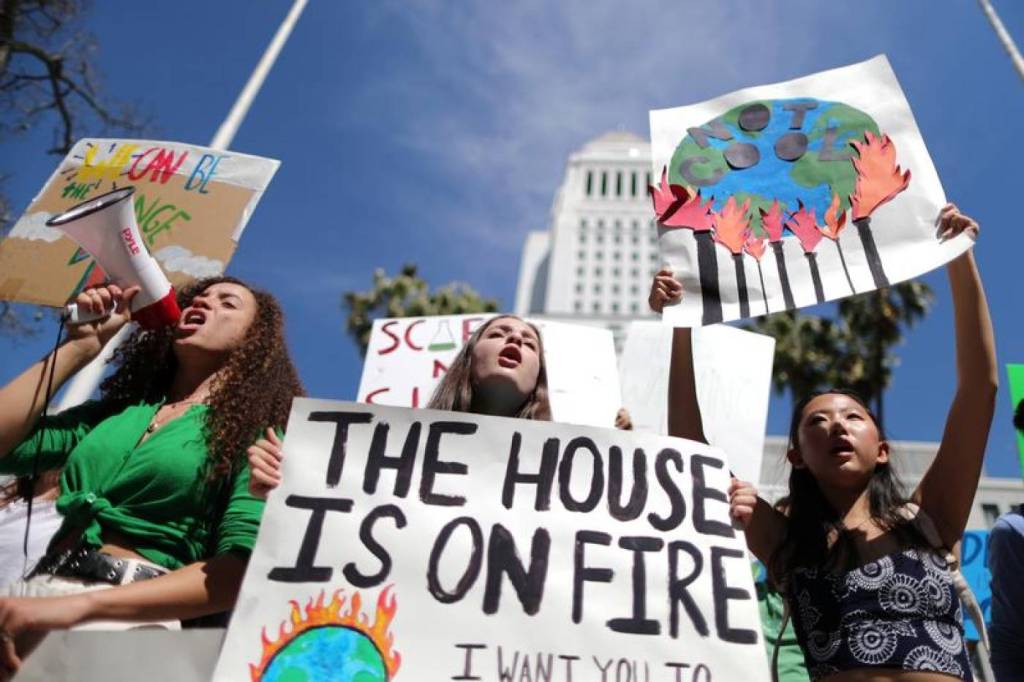
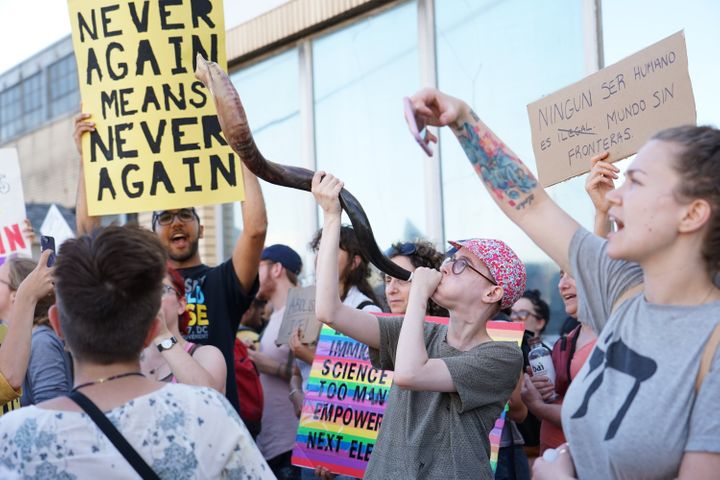
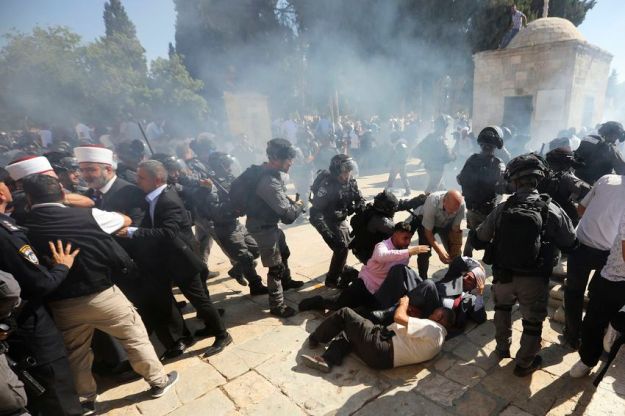
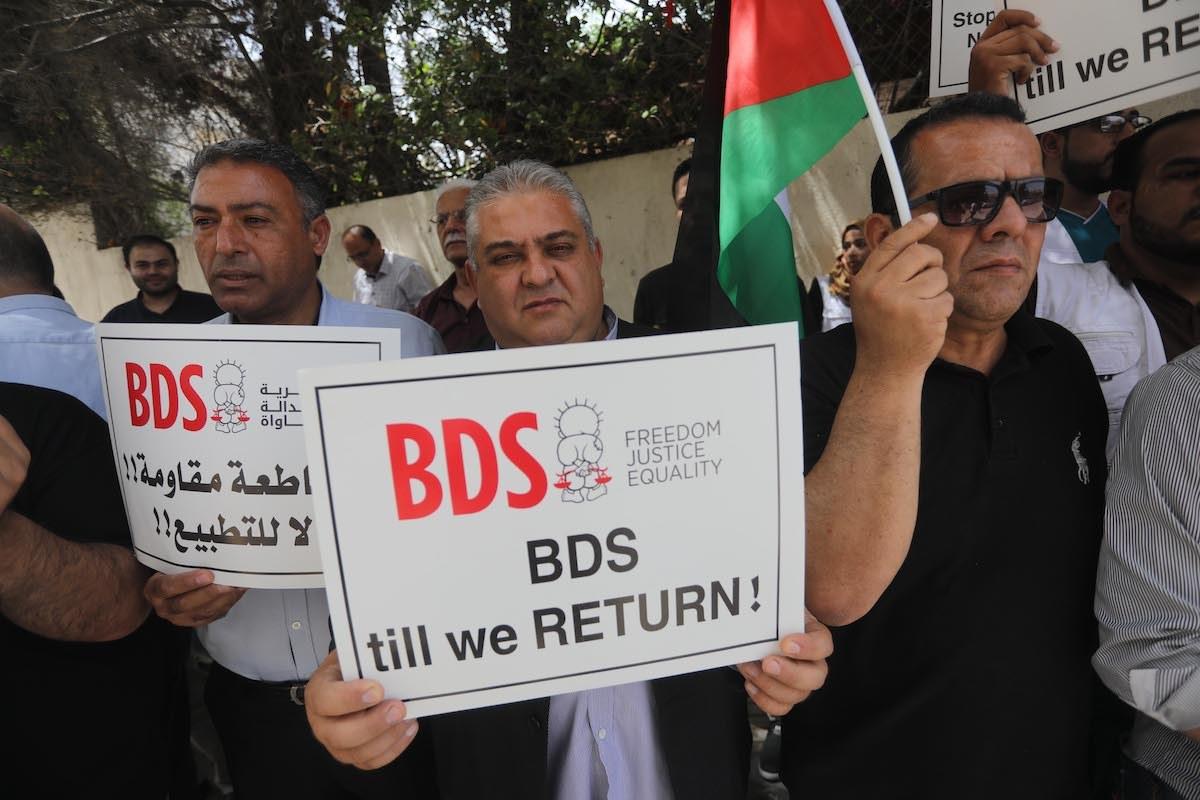
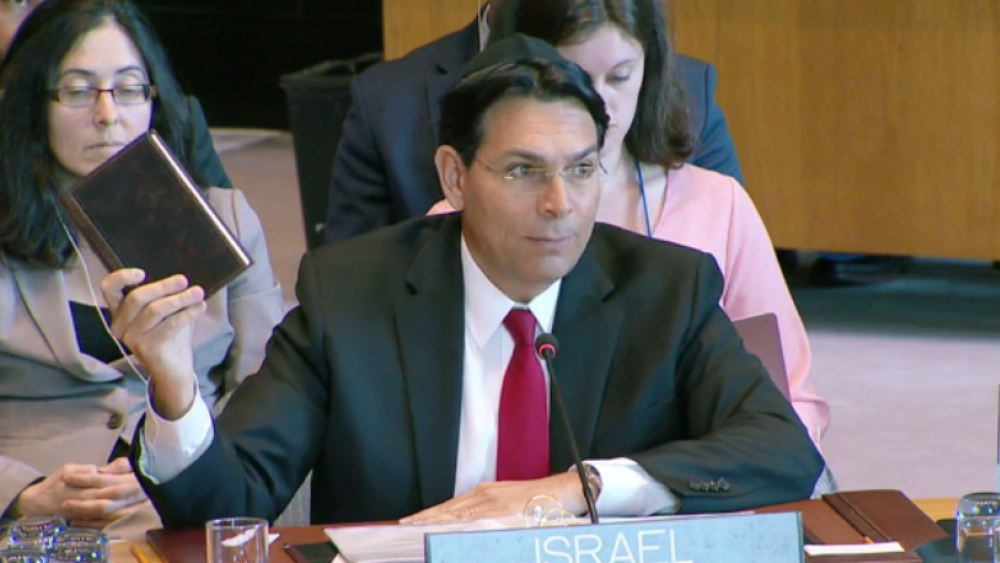
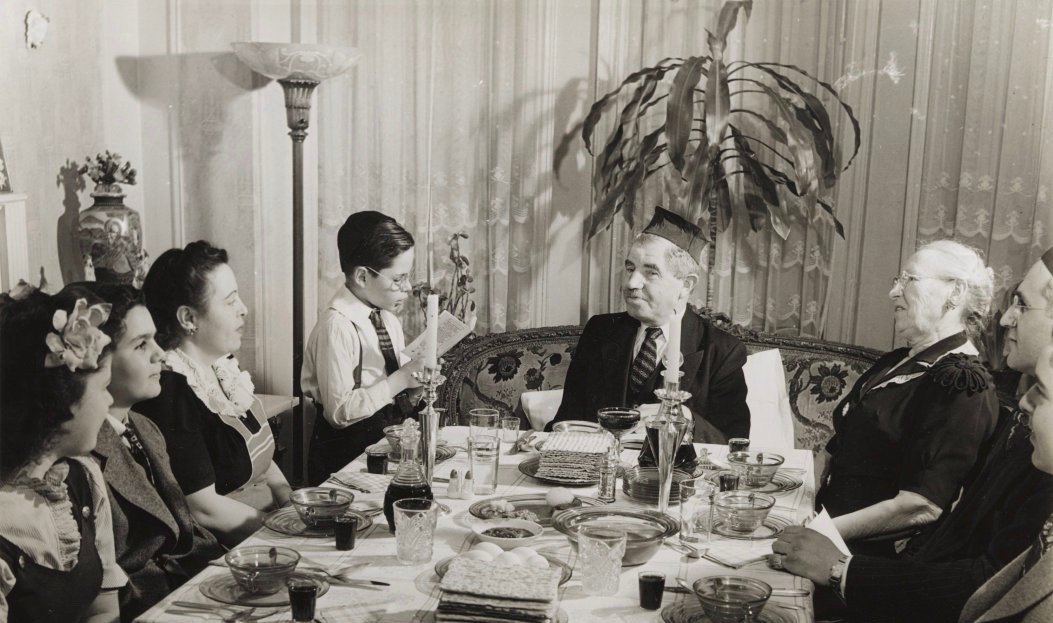 Here are the remarks that Jay Stanton offered at Tzedek Chicago’s Passover seder last night. Jay was formerly Tzedek’s rabbinical intern – and I’m delighted to announce we’ve just hired him to be part of our staff for the coming year: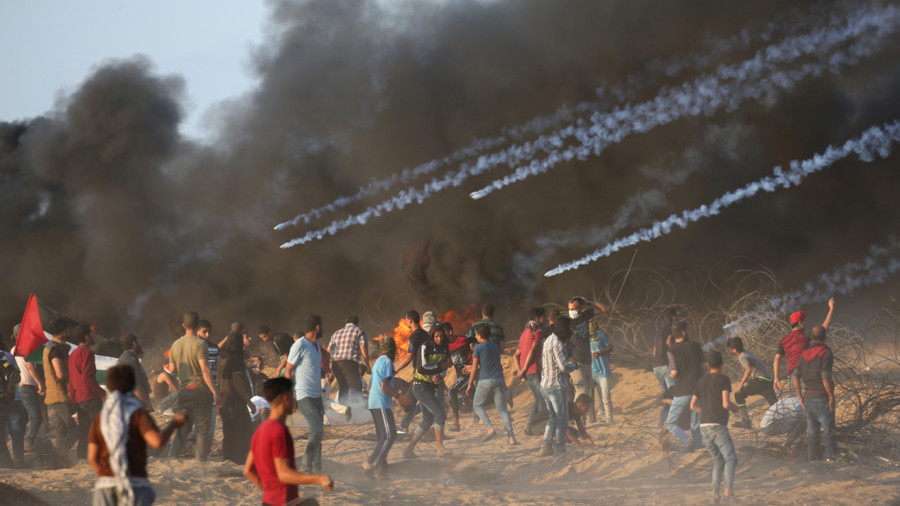
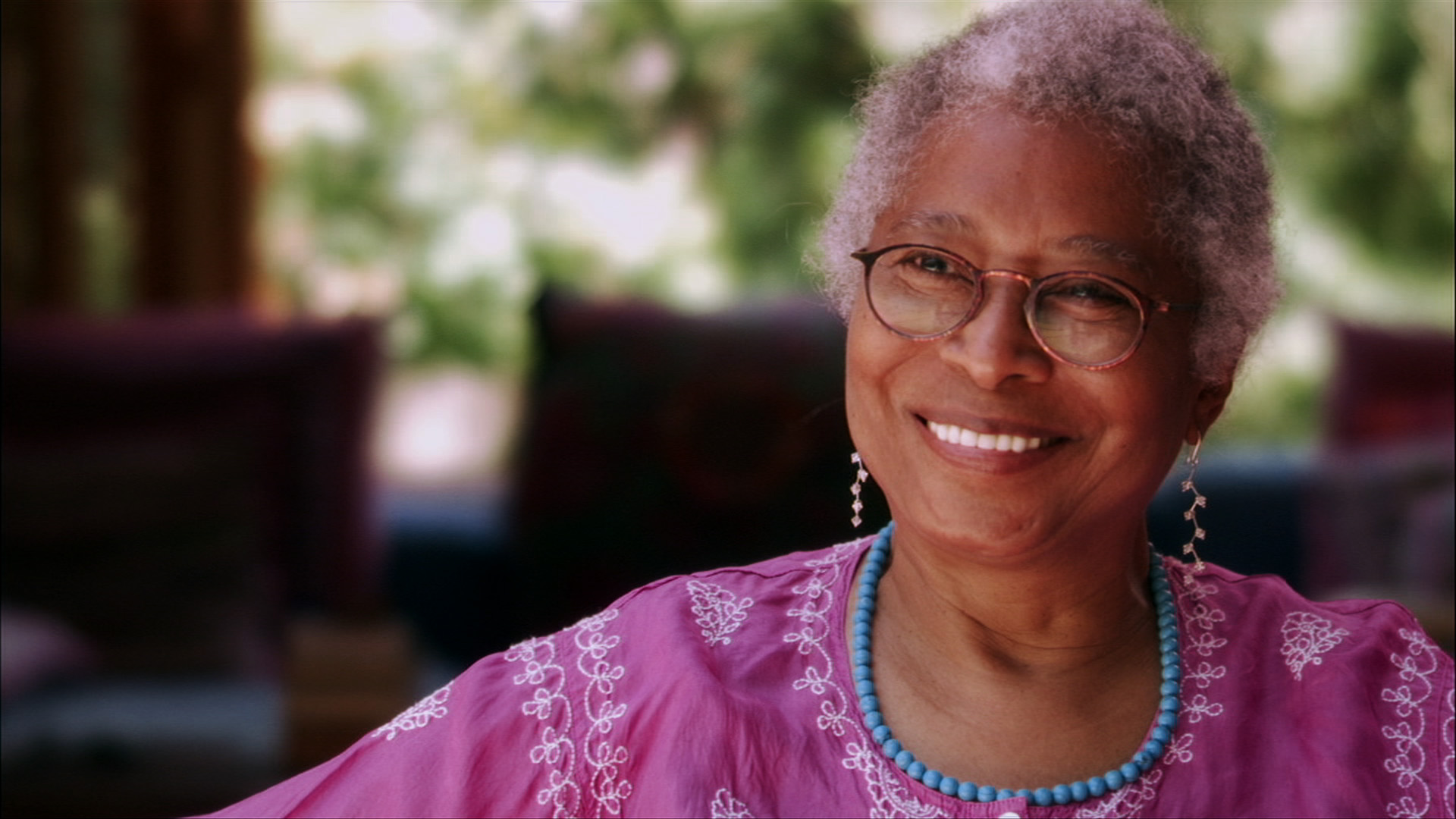
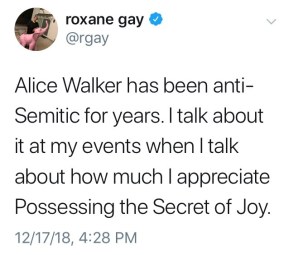
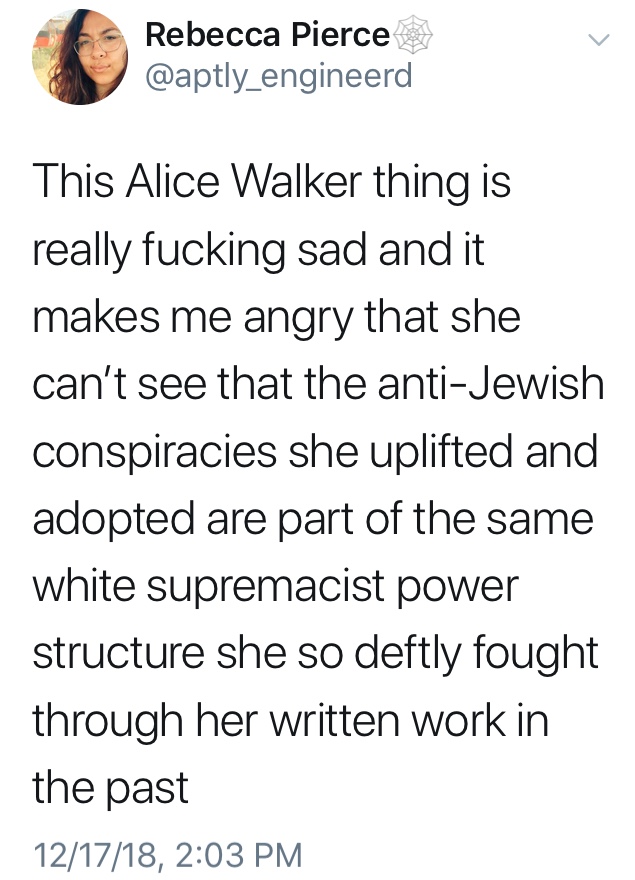
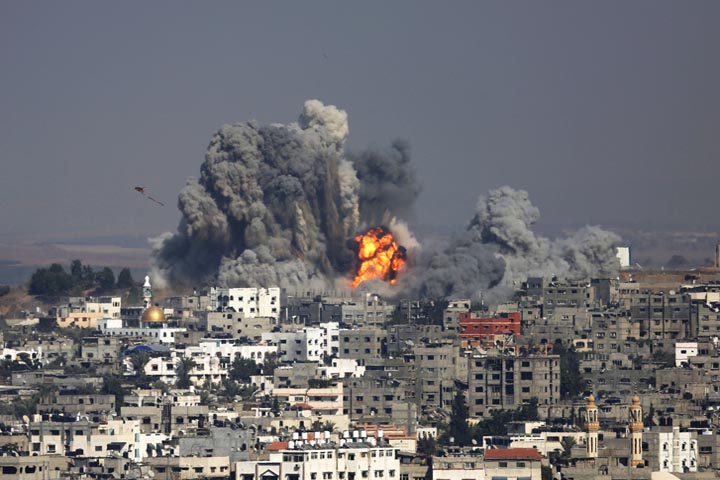

 Shalom Rav