Seeing Palestinian Resistance for Ourselves

Demonstration in Al Ma'asara

Demonstration in Al Ma’asara

Cross-posted with the Jewish Forward

Who will are the change agents of our world? Are they our elected officials and politicians or the ones who march in the streets in order to hold them accountable? These questions were clarified for me in profound ways during my recent trip to the West Bank as part of a delegation of Chicago-area Jews and Palestinian Americans.

The focus of our delegation was the Palestinian popular resistance movement in the West Bank, a phenomenon that is sadly unfamiliar to the majority of Americans and American Jews. In a world far removed from the images reflected in the mainstream media and the postures of political elites, we discovered a decidedly different reality: ordinary men and women struggling to live lives of dignity while actively resisting an inequitable and oppressive military occupation.

During our weeklong stay, we were hosted in Bil’in, a village that is has, along with many other villages throughout the West Bank, long been holding weekly popular demonstrations against the occupation over the past ten years. In Bil’in, as in most villages in this movement, the focus of the protests are Israel’s Separation Wall which cuts into the heart of numerous Palestinian populations centers, devastating these communities by cutting them off from their olive groves and farmland.

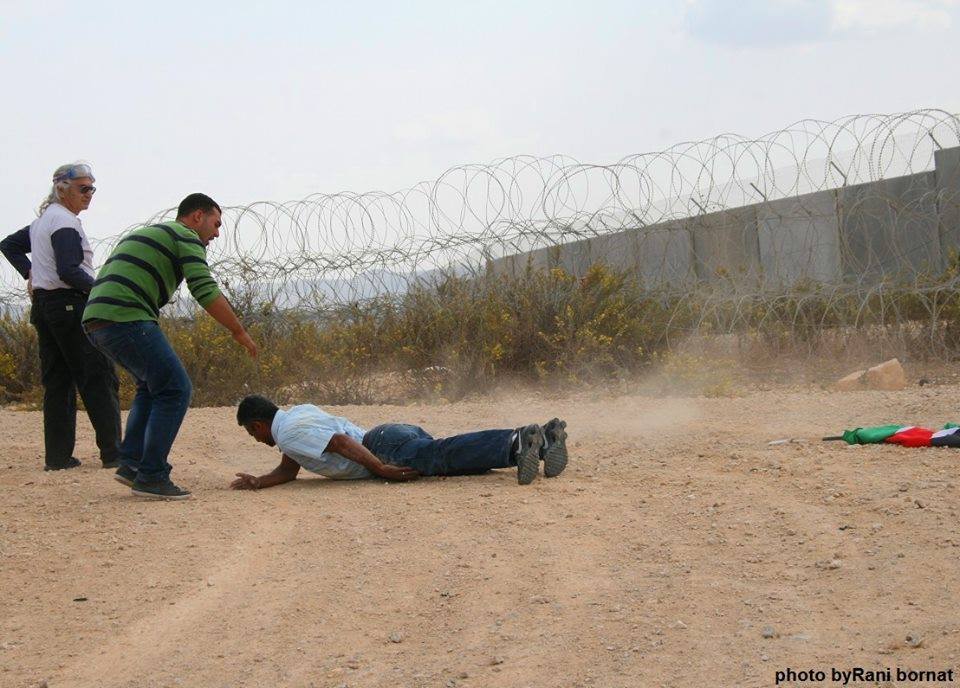
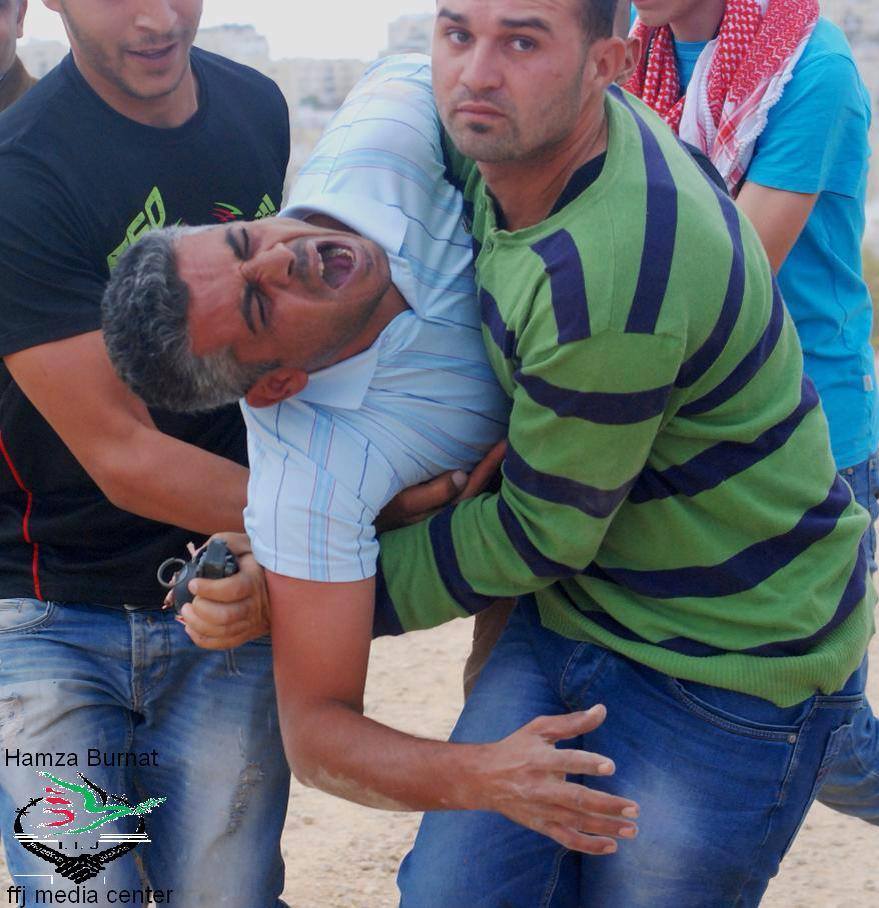
These weekly demonstrations have become part of the fabric of West Bank life for the past ten years, though few Americans are even aware of their existence. They have consistently been met with overwhelming military force from the IDF. Scores of Palestinians have been injured or killed in these protests, largely from high velocity tear gas canisters, coated steel bullets and live ammunition fired directly into crowds of unarmed protesters.

As we quickly came to see, the violence faced by Palestinians under occupation is a palpable and all-encompassing aspect of their lives. While the political parameters of this conflict are often characterized by Israel’s demand for Palestinian leaders to renounce and rein in Palestinian violence, the view from the ground reveals a different picture entirely: it is the Palestinians who live within a constant daily context of violence.

This is a difficult concept to grasp for those who have not visited or lived in the Occupied Territories. Every day Palestinian mothers, fathers and children experience physical violence from soldiers and settlers who attack them with impunity. Every day, moment they experience the structural violence of checkpoints, land confiscation, and home demolitions.

Our delegation experienced three violent encounters with the IDF during our short one-week stay. While touring the refugee camp of Aida, we inadvertently walked into the line of fire as the IDF shot tear gas canisters directly at local children. One morning in Bil’in we awoke to the sounds of explosions and gunshots. When we ran outside we found the entire village shrouded in thick, choking tear gas. We later learned that the IDF had chased a suspect in a bus bombing into the area and had killed him in a cave on the edge of Bil’in. Before they left, they bulldozed olive trees, shot up the elementary school and shot tear gas throughout the entire village.

One member of our delegation, Kalman Resnick, spent a day monitoring settler attacks on the Palestinian olive harvest with Israeli organizations Rabbis for Human Rights and Yesh Din. Kalman, a seasoned immigration lawyer from Chicago well versed in the Israel/Palestine conflict returned to our group that evening shell-shocked by what he had witnessed. He showed me nearly one hundred pictures he had taken on his phone – among the wretched images were severely injured Palestinians (including one man with his head split open), rows and rows of olive trees hacked to the ground and farmers literally attempting to harvest olives from dead trees.

As Israeli journalist Mairav Zonszein recently wrote in the pages of the Forward:

These incidents — now particularly heightened during the olive harvest season — are not the aberration from the norm, but a regular feature of life in the occupied West Bank. In 2012, over 7,500 Palestinian olive trees were destroyed. In the 5-year period between 2007 and 2011, there was a 315 percent increase in settler violence

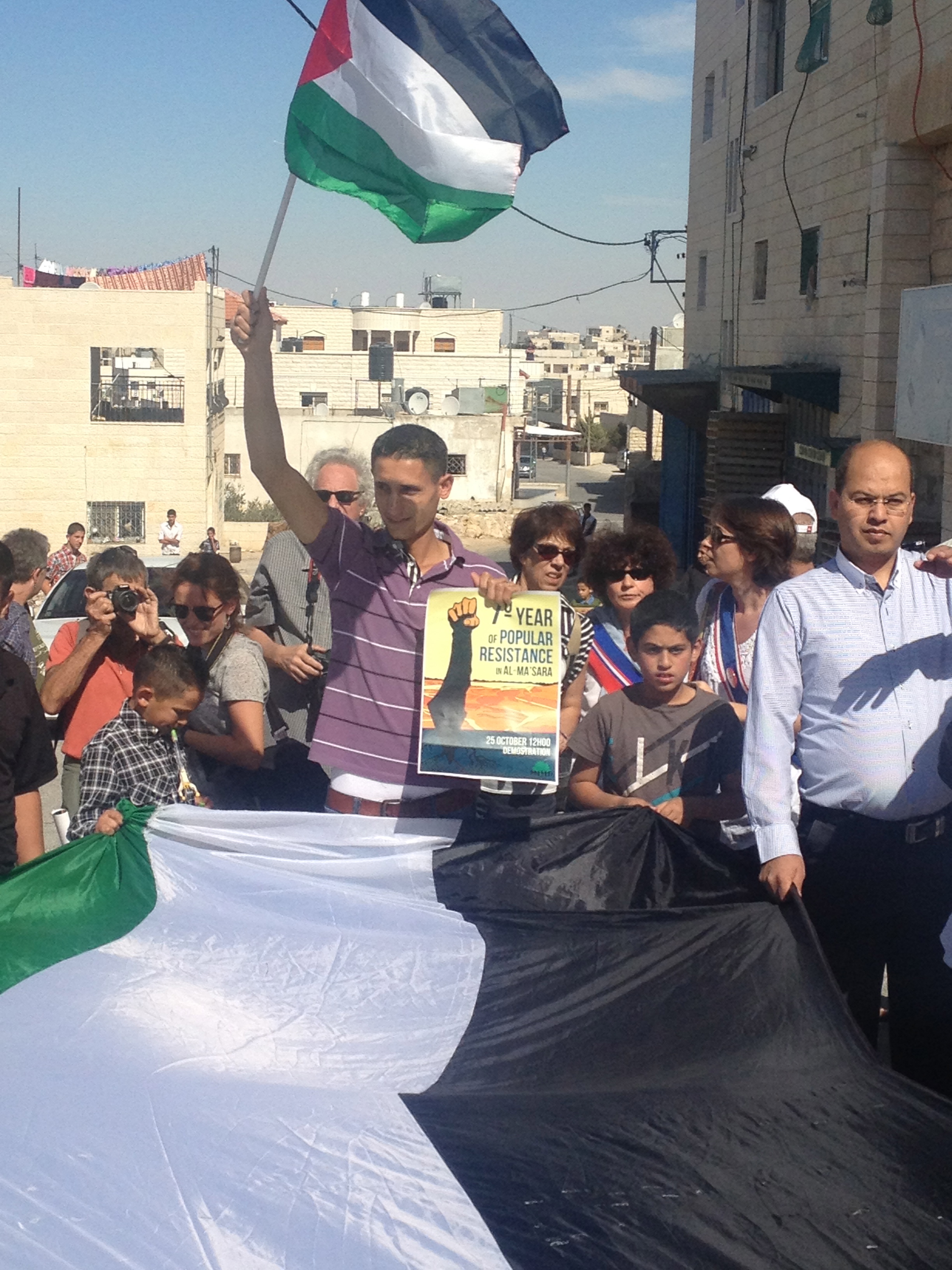
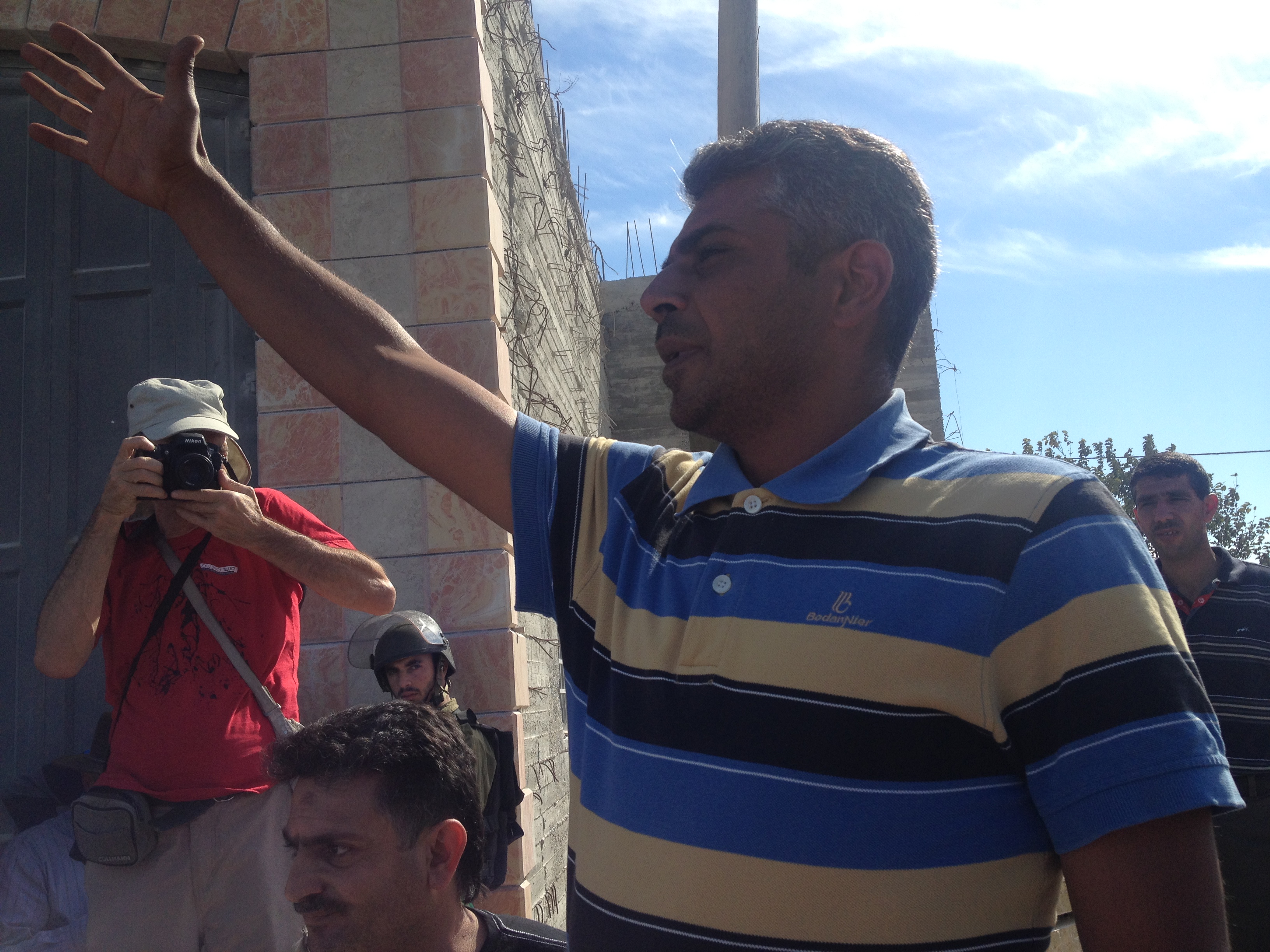
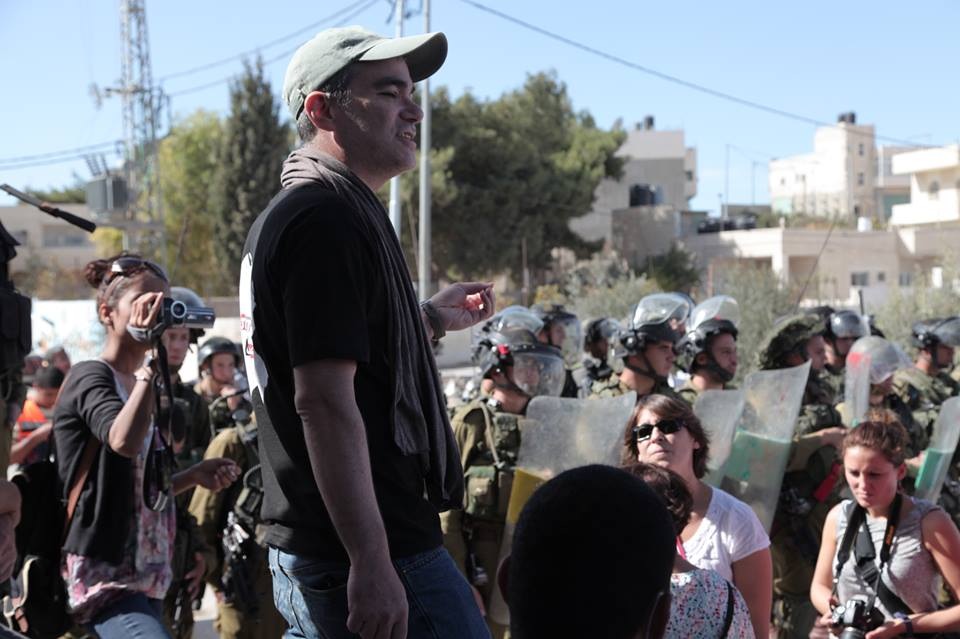
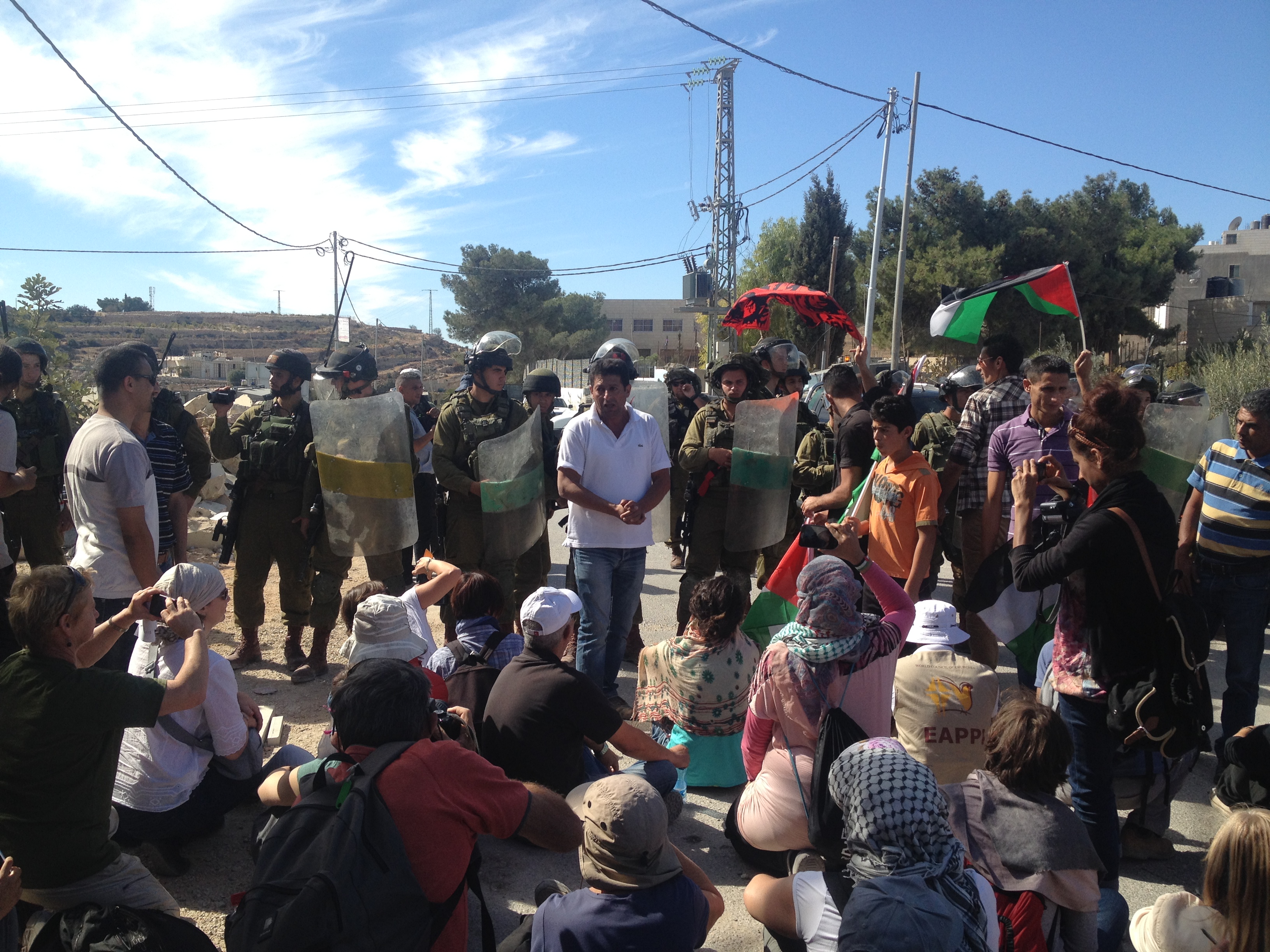
Despite this overwhelming context of everyday violence, we witnessed remarkable examples of principled steadfastness by the leaders of the Palestinian popular resistance. Perhaps the most powerful occurred during the weekly protest in the village of Al Ma’asara, who were celebrating the seven-year anniversary of their participation in the West Bank popular resistance movement.

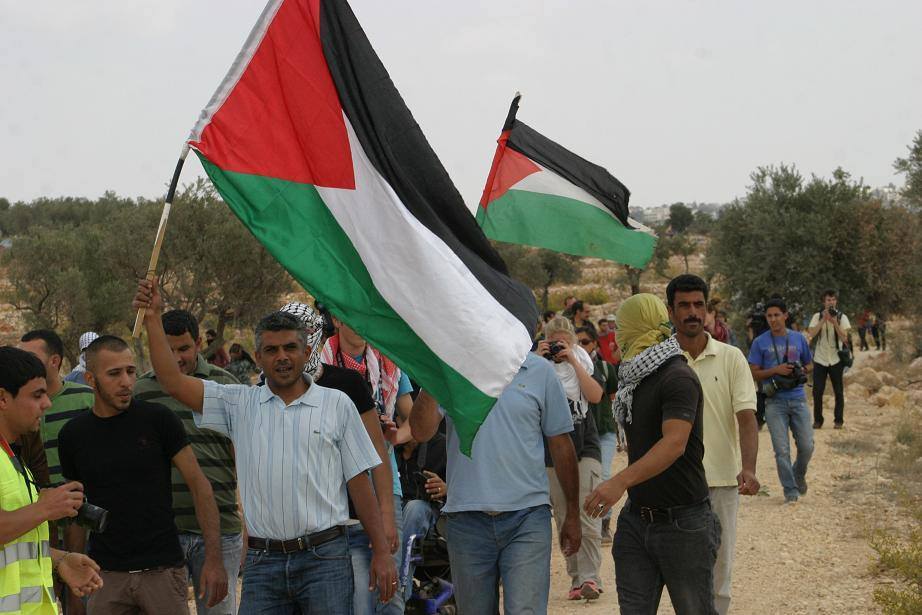
At the outset, it felt to me that this protest resembled many other American demonstrations in which I have participated over the years. The street was filled with hundreds of individuals: young and old, locals joined together with Israeli and international solidarity activists. There was a joyous air of solidarity as we chanted through the streets and were cheered on by bystanders.

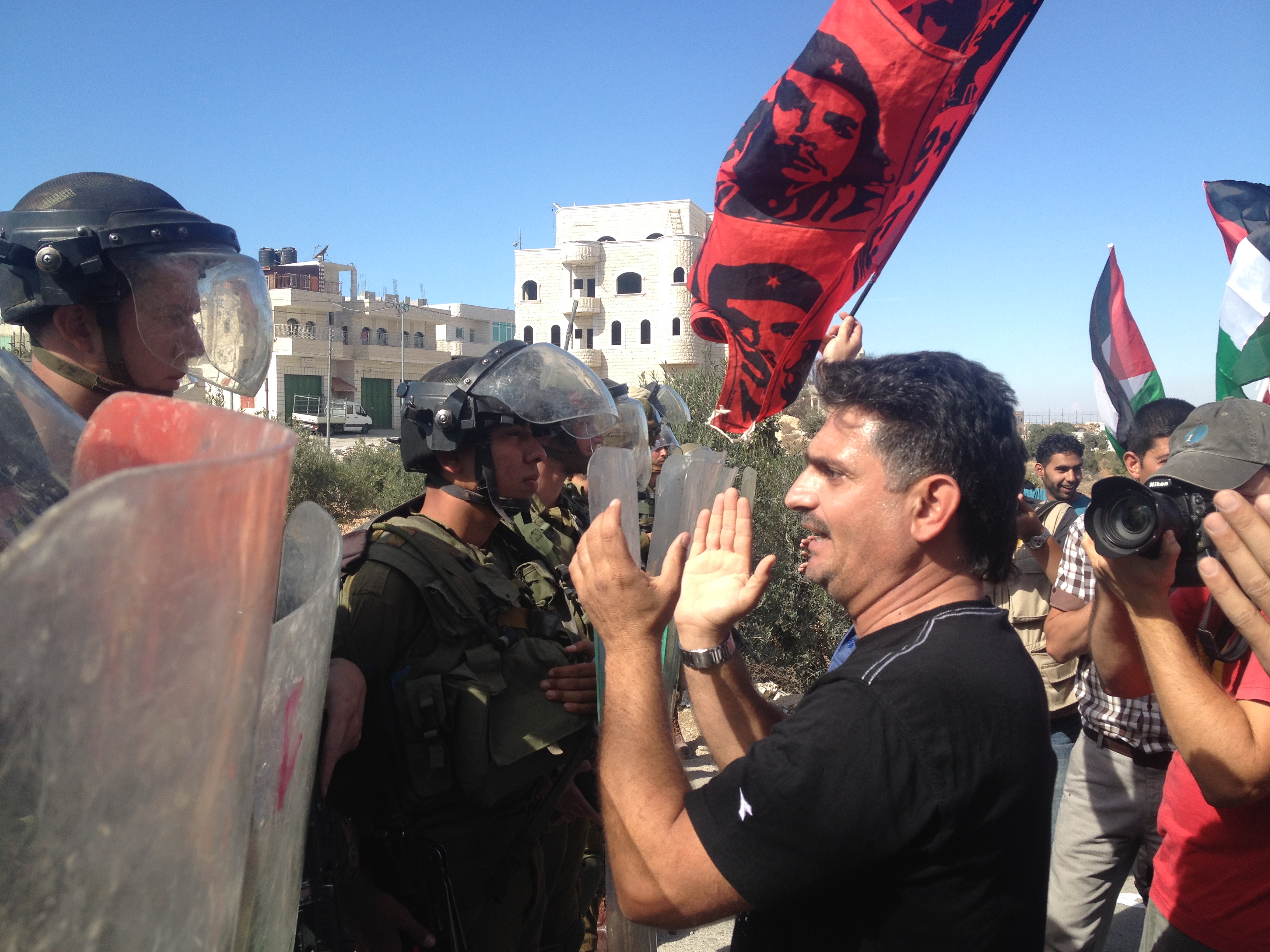
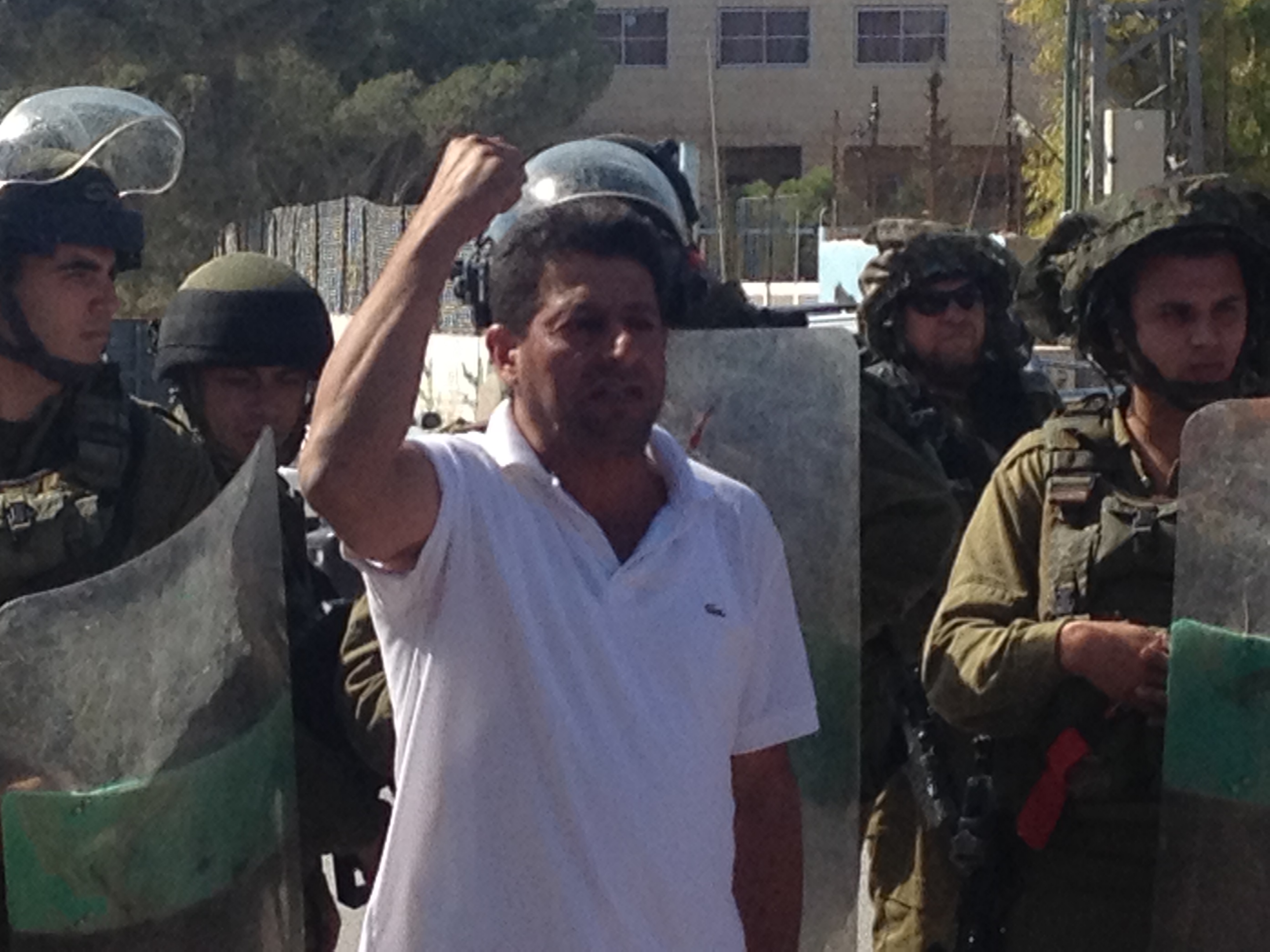
At the end of the main street, however, the tension level changed dramatically. When the marchers encountered a long line of Israeli soldiers in riot gear blocking our way to the Wall, we pressed up close against the soldiers and a standoff commenced. After a military commander announced that we were denied passage, a leader of the local popular resistance committee, Mahmoud Zwhare, stepped forward and starting chastising the soldiers in English.

Careful not to use any physical violence or violent rhetoric, he asked the soldiers why they were not allowed the right to live and assemble freely in their own village. He explained to them they could oppress the villagers all they wanted, but one day like all oppressed people, they would be free. Pointing to their riot gear, their bulletproof vests and their M-16s, he noted that all of the extensive equipment they used to protect the wall was meaningless when the real wall they needed to address was the wall “in their minds.”

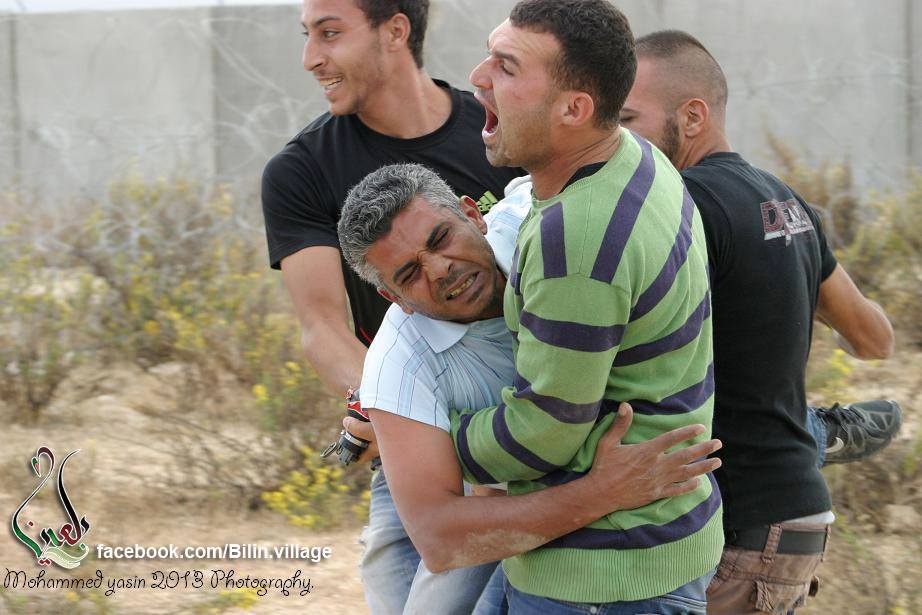
The protest ended without violence, though there were some moments of pushing and shoving between soldiers and protesters – and as we left the demonstration we learned that there had been a tear gas attack in another part of the village. As I thought about our experience later, it occurred to me that this was precisely the same circumstance that occurred on the Edmund Pettus Bridge in Selma in 1965. The demand for justice was the same, the solidarity was the same, the method of civil disobedience was the same, as was the show of force by a brutal and over-militarized gauntlet. Moreover, that particular standoff ended in a way all to familiar to Palestinians. In a very real sense, Bloody Sunday is reenacted every week in villages throughout the West Bank.

In our meetings with popular resistance leaders we heard many common refrains. Our host Iyad Burnat of Bil’in and many others spoke of Ghandi, Dr. Martin Luther King and Nelson Mandela as role models. We heard a deep disillusionment with political leaders on all sides. And we heard of their desire to create a “Third Global Intifada” worldwide movement of solidarity consciously modeled on the grassroots popular resistance of the First Intifada.

At the same time, however, the Palestinian popular leadership left us with the ominous impression that their movement is fast arriving at a moment of truth. The Israeli military is successfully inhibiting the growth of the popular resistance by jailing its leaders indefinitely and dividing villages from one another through a massive occupation regime. Nearly every leader with who we spoke had spent considerable time in jail, including our Bil’in host Iyad Burnat and Bassem Tamimi of Nabi Saleh.

In numerous conversations, popular resistance leaders expressed the frustration that it is becoming increasingly difficult to maintain morale and convince new villages to join the movement as Israel’s settlements expand and their oppressive reality continues unabated. Despite the profound steadfastness of so many Palestinians, we sensed a growing fear that if the Occupation’s brutal reality is allowed to continue indefinitely, armed resistance will break out across the West Bank – i.e. that the next mass Palestinian movement will look more like the Second Intifada than the First.

It is time for those who venerate the American civil rights movement and the South African anti-apartheid movement to take a good hard look at these Palestinians who are likewise putting their bodies on the line to resist an unjust and inequitable regime. While many liberals – particularly in the American Jewish community – will clearly be loath to support a “Third Global Intifada,” it is well worth asking: will we continue to put our faith in fruitless political negotiations that only entrench an inequitable status quo or a popular Palestinian movement that is resisting this oppression in the manner of so many similar movements before them?

Who are the true change agents in the world? After living with and marching with the Palestinians throughout the West Bank, I couldn’t help but recall the words written by Dr. Martin Luther King in a Birmingham jail in response to liberal clergy colleagues who urged had urged him not to march, counseling that negotiations were a “better path:”

We know through painful experience that freedom is never voluntarily given by the oppressor; it must be demanded by the oppressed.

Stand in Solidarity with Walmart Workers this Black Friday!

If you want to do a mitzvah this Black Friday, please consider joining the growing movement that is demanding that Walmart treat its employees with human dignity and pay them a livable wage.

Emboldened by news from Walmart CEO that hundreds of thousands of Walmart workers are paid less than $25,000 a year, Walmart workers and supporters announced plans today for protests on Black Friday (November 29). Workers are demanding that Walmart to commit to improving labor standards, providing workers with more full time work at $25,000 a year and to put an end to illegal retaliation.

Today’s announcement follows revelations this week that many Walmart workers don’t have enough money to cover Thanksgiving dinner for their families, as well as the historic federal government finding that Walmart has been violating workers’ rights nationwide. In the meantime Walmart is the country’s largest retailer and employer, making more than $17 billion in profits, with the wealth of the Walton family totaling over $144.7 billion – equal to that of 42% of Americans.

Check out the new online video, above, in which the OUR Walmart campaign member Martha Sellers discusses employee’s struggles to get by on Walmart’s low pay. The video includes incredulous reactions from the media to the news that employees – not the company – are coming together to donate food to those who can’t afford a Thanksgiving dinner on their Walmart wages.

Over the past month, there have been exciting grassroots Walmart actions across the country, including the largest-ever civil disobedience against the retail giant in Los Angeles, Chicago, Miami, Seattle, Ohio and Dallas. On Black Friday last year, 30,000 Americans called for the country’s largest employer to change at over 1,000 stores in 46 states. This year is set to be even bigger, with experts like Occidental College professor Peter Dreier already calling Black Friday 2013 a “day for the history books” and a “major turning point in American history, similar to the Flint sit-down strikes of 1937.

Click here for information about a Walmart action near you (or to register one). Click here to sign an online petition started by Walmart employee Charmain Givens-Thomas that calls on President Obama to meet with strikers to “hear firsthand why they are appealing for respect and calling on Walmart to pay them enough to feed and support their families.”

I’ll see you in the streets this Black Friday!

Firebrand Rabbi Looks “Vanilla”

Vanilla-Ice-Cream-ice-cream-34732705-1528-2307Headline from a just-published feature about me and my activism from the Jewish Forward:

Brant Rosen looks every bit like a plain vanilla suburban Chicago rabbi. He doubles as a firebrand critic of Israel — and his congregation has stood by him through thick and thin.

“Plain vanilla” – my kids got a kick out of that one…
Click here to read the entire article.

Labor Organizing at Rivers Casino: Clergy in Solidarity!

IMG_0922

Right: restaurant host Jake Posner; left: steward Rosaura Villanueva

Today I attended a clergy lunch hosted by labor union Unite Here to learn about the struggle being waged by workers at Rivers Casino in Chicago (Rosemont) to organize a union. I’m honored to say I stand in solidarity with them in their efforts to achieve job security, economic stability and respect from their employer.

Some background: Rivers Casino is owned by real estate and casino magnate Neil Bluhm, a founder and current President of JMB Realty Corporation. JMB owns a number of luxury hotels, casinos and office buildings throughout the US – most notably in Bluhm’s hometown of Chicago. Bluhm’s current net worth is $2.5 billion, making him the 222nd richest man in the world according to Forbes Magazine.

Since opening two years ago, Rivers Casino in Rosemont has made $285 million in cash profits and has become the most profitable casino in Illinois.  Alas, these profits have not been reaching the 440 employees of the casino whose hard work has been critical to its success.  By way of comparison, Chicago’s Ritz-Carlton – a union hotel owned by Bluhm – made $16 million in cash profits over the past two years, yet workers there earn significantly more than Rivers employees in comparable positions. Perhaps most critically, individual healthcare for Ritz-Carlson workers is free while it costs Rivers employees $50.24 to $80.66 per month. And family healthcare costs anywhere from $155.88 to $247.90 monthly while Ritz-Carlton workers pay only $30.00 monthly. These numbers are particularly galling when you consider that the cash profits Bluhm reaps at Rivers Casino are considerably higher than at the Ritz.

Among other things, numbers such as these demonstrate the critical role unions play in ensuring a fair and livable wage – an especially critical issue in this era of increasing wealth disparity. Research repeatedly demonstrates, in fact, that there is actually less income inequality in regions where there is greater union density. Anyone concerned with the growing gap between the rich and poor (and a livable wage for the latter) would do well to consider the importance of unions in ensuring the well being our nation’s working women and men.

The Chicago organizing initiative is just getting underway, joining similar campaigns in Bluhm-owned casinos in Pittsburgh and Philadelphia. At my meeting today I had the chance to hear from Unite Here organizers as well as two Rivers employees who have joined the union organizing commitee: Jake Posner, who works as a host at the Hugo’s Steak House in the casino, and steward Rosaura Villanueva.  Both of them spoke movingly of their exceedingly difficult and untenable job conditions – as well as the hope that has been kindled as they organize their fellow employees one by one.

Naturally, management is already fighting back hard. There is clearly a painful struggle ahead – but to date over one hundred Rivers employees have already signed on and the workers are clearly gaining momentum in their organizing efforts. I will continue to report on this campaign and will make sure to include information on how you can show your solidarity with the men and women of Rivers Casino in the coming weeks and months.

Civil Disobedience in Chicago for Immigrant Justice!

Photo: Illinois Coalition for Immigrant and Refugee Rights

photo: Illinois Coalition for Immigrant and Refugee Rights

This evening it was my honor to participate in an act of civil disobedience in Chicago in support of immigrant justice – a cause I fervently believe is the civil rights issue of our time. One hundred and sixty strong, a large and diverse coalition of activists, faith leaders, politicians, labor leaders and undocumented immigrants sat down together in the busy intersection of Congress and Clark in the South Loop with two demands: that Speaker of the House John Boehner bring comprehensive immigration reform to a vote, and that President Obama stop the oppressive deportations of undocumented immigrants (which have now grown to 2,000,000 under his administration.)

We gathered at 3:30 pm for a press conference, after which we filed off the sidewalk into the intersection and sat down around a banner reading “Stop Deportations – Give us a Vote.” On all four corners of the intersection, hundreds of supporters unfurled banners and held signs and chanted along with us. Eventually, after three warnings, Chicago police led each of us away one by one.

photo: Jewish Council on Urban Affairs

photo: Jewish Council on Urban Affairs

Our demonstration tonight was but one of a growing numbers of civil disobedience actions currently proflierating across the country. Last month, thousands rallied for immigration reform on the National Mall in Washington DC during the government shutdown – and 200 were led away by police.  A few days earlier, similar rallies were held in Los Angeles, San Diego and Boston and other cities as part of a “National Day of Immigrant Dignity and Respect.”

While politicians in post-shutdown Washington dither on this critical issue in Washington, citizens are literally taking to the streets to demand compassionate immigration reform. There is a very real movement building – trust me, as long our leaders refuse to act, you will be witnessing many more actions such as these in the coming weeks and months.

photo: Tina Escobar

photo: Tina Escobar

It was my honor to be among the speakers at  press conference before the demonstration (above). Here is the full text of my remarks (which was shortened due to time restraints):

My name is Brant Rosen – I’m the rabbi of Jewish Reconstructionist Congregation in Evanston and I’m a member of this amazing, diverse and growing coalition of activists who are working for the cause of immigrant justice. I am part of the majority of Americans and 80% of Illinoisians who support compassionate immigration reform that provides a path to citizenship.

And I am here to say it is time for our national leaders to lead. It is time for Speaker John Boehner and Republican leader Peter Roskam to give us a vote. It is time for President Barack Obama to end the daily deportatins that are now approaching 2,000,000 and has left 3,000,000 children orphaned.  This is not simply a political issue – and shame on any politician who treats immigration reform as “business as usual.”  Immigration reform is one of the most critical moral and human rights issues facing our country today.

As a Jew, my faith tradition teaches that societies will ultimately be judged by the way they treat their immigrants. My faith tradition teaches that when we label another human being as “illegal,” we diminish God’s presence in our world. When we incarcerate and deport those who come to this country seeking a better life, we diminish God’s presence in our world. And when we create and enforce laws that rip children away from their parents – and parents from their children – we most certainly diminish God’s presence in our world.

My faith tradition also teaches that God stands with the oppressed and demands that we do the same.  And make no mistake: our immigration system constitutes a very real form of oppression against families in our nation.  It is thus our sacred duty to stand here today, in front of US Immigration Customs and Enforcement headquarters, to say: this oppression must end.  The destruction of our families must end. The daily deportations of 1,100 human beings must end.  It is our sacred duty to bring it to an end.

John Boehner and Peter Roskam: It’s time to give us a vote on citizenship.  It’s time to end the oppression of our undocumented brothers and sisters.  President Obama: it’s time to keep your promise to the American people. 2,000,000 deportations is 2,000,000 too many. Stop deportations now!

If our national leaders refuse to lead, then it is time to take to the streets. And tonight, we will take to the streets. Our movement is the new civil rights movement growing in cities across the nation, rising up to demand compassionate immigration reform now. You will hear from us tonight in Chicago – and you will be hearing from us again and again until our oppressive immigration system is no more!

It has been my honor to stand together in this movement with so many people from so many different faiths and ethnicities and histories. It has been a particular honor to stand together with our undocumented sisters and brothers, whose steadfast courage and dignity are an inspiration to us all.

My own grandparents were immigrants to this nation. I know all too well that I am the beneficiary of their decision to come to this country, and of my country’s willingness to provide them with a path to citizenship. For those of us who enjoy the privileges of the courageous decisions of those who came before us, it would be a profound betrayal if we did not stand together here today.

We are here today. We will be here tomorrow. And we will stand together every day until compassionate immigration reform is finally a reality in our country.  Ken Yehi Ratzon – as it is God’s will, so my it be ours.

Amen and thank you all for coming out tonight.

___________________________________

En Español (Gracias a Gonzalo Escobar):

Mi nombre es Brant Rosen – Soy el rabino de la Congregación Judía Reconstruccionista en Evanston y soy un miembro de esta increíble y diversa y creciente coalición de activistas que trabajan por la causa de la justicia para los inmigrantes. Yo soy parte de la mayoría de los estadounidenses y el 80 % de Illinoisians que apoyan la reforma migratoria compasiva que proporcione un camino a la ciudadanía.

Y yo estoy aquí para decir que es hora de que nuestros líderes nacionales para hagan su trabajo de legislar. Es hora de que los Representantes, John Boehner, y el líder republicano Peter Roskam nos den un voto. Es hora de que el presidente Barack Obama ponga fin a las deportaciones diarias que se están acercando a 2 millones y han dejado a 3 millones de niños y niñas huérfanos. Esto no es simplemente una cuestión política y es una vergüenza que un político trate la reforma migratoria como “como si no pasara nada”, la reforma de inmigración es uno de los temas de derechos humanos y morales más importantes que enfrenta nuestro país hoy en día.

Como judío, mi tradición de fe nos enseña que las sociedades en última instancia, serán juzgadas por la forma en que tratan a sus inmigrantes. Mi tradición de fe nos enseña que cuando etiquetamos a otro ser humano como “ilegal”, disminuimos la presencia de Dios en nuestro mundo. Cuando encarcelamos y deportamos a los que vienen a este país en busca de una vida mejor, disminuimos la presencia de Dios en nuestro mundo. Y cuando creamos y hacemos cumplir las leyes que separan a los niños de sus padres – y a los padres de sus hijos – ciertamente estamos disminuyendo la presencia de Dios en nuestro mundo.

Mi tradición de fe también enseña que Dios está con los oprimidos y demanda que hagamos lo mismo. Y no nos engañemos: nuestro sistema de inmigración constituye una forma muy real de la opresión contra las familias en nuestro país. Por tanto, es nuestro deber sagrado de estar aquí hoy, frente a la sede de inmigración y aduanas de EE.UU. para decir: la opresión debe terminar. La destrucción de nuestras familias debe terminar. Las deportaciones diarias de 1.100 seres humanos deben terminar. Es nuestro sagrado deber de ponerle fin.

John Boehner y Peter Roskam : Es hora de que nos den un voto para la ciudadanía . Es hora de poner fin a la opresión de nuestros hermanos y hermanas indocumentados. Presidente Obama: es el momento de mantener su promesa al pueblo estadounidense. 2 millones de deportaciones y 2 millones es demasiado. ¡Detengan las deportaciones ahora!

Si nuestros líderes nacionales se niegan a legislar, entonces es el momento de salir a la calle. Y esta noche, vamos a salir a las calles. Nuestro movimiento es el nuevo movimiento de derechos civiles que crece en las ciudades de todo el país, para exigir una reforma migratoria compasiva ahora. Ustedes nos escucharán esta noche en Chicago -¡y ustedes nos escucharan a nosotros una y otra vez hasta que nuestro sistema de inmigración opresivo no exista más!

Ha sido un honor para mí estar juntos en este movimiento con tantas personas de tantas religiones y etnias e historias diferentes. Ha sido un gran honor particular, estar junto a nuestras hermanas y hermanos indocumentados, cuyo valor y dignidad inquebrantable son una inspiración para todos nosotros.

Mis abuelos eran inmigrantes de esta nación. Sé muy bien que soy el beneficiario de su decisión de venir a este país, y de la voluntad de mi país para proporcionarle un camino a la ciudadanía. Para aquellos de nosotros que disfrutamos de los privilegios de las decisiones valientes de los que vinieron antes que nosotros, sería una traición profunda si no nos mantenemos unidos hoy aquí.

Estamos aquí hoy. Vamos a estar aquí mañana. Y vamos a estar juntos todos los días hasta que la reforma migratoria compasiva sea finalmente una realidad en nuestro país. Como se dice en Hebreo “Ken Yehi Ratzon” – ya que es la voluntad de Dios, y será la nuestra.

Amén y gracias a todos por venir esta noche.

Postscript: A Shooting in Bil’in

iyad1

Postscript to my last post: this morning members of our delegation were furiously texting each other with the horrible news that our dear friend Iyad Burnat, leader of the Popular Committee in Bil’in was shot during their weekly demonstration today.

According to reports on Bil’in’s Facebook page, Iyad and the other marchers were approaching the separation wall when the IDF opened fire with tear gas and coated steel bullets – two of which struck Iyad directly. Hearts sinking, we waited for a full report – much to our relief, we eventually learned that his injury was not life-threatening.

Just another reminder of the unbearably high stakes faced weekly by the Palestinian nonviolent activists in villages across the West Bank…

Iyad2

iyad4

Iyad3

The Varieties of Palestinian Resistance: Some Final Thoughts

al maasra (1)

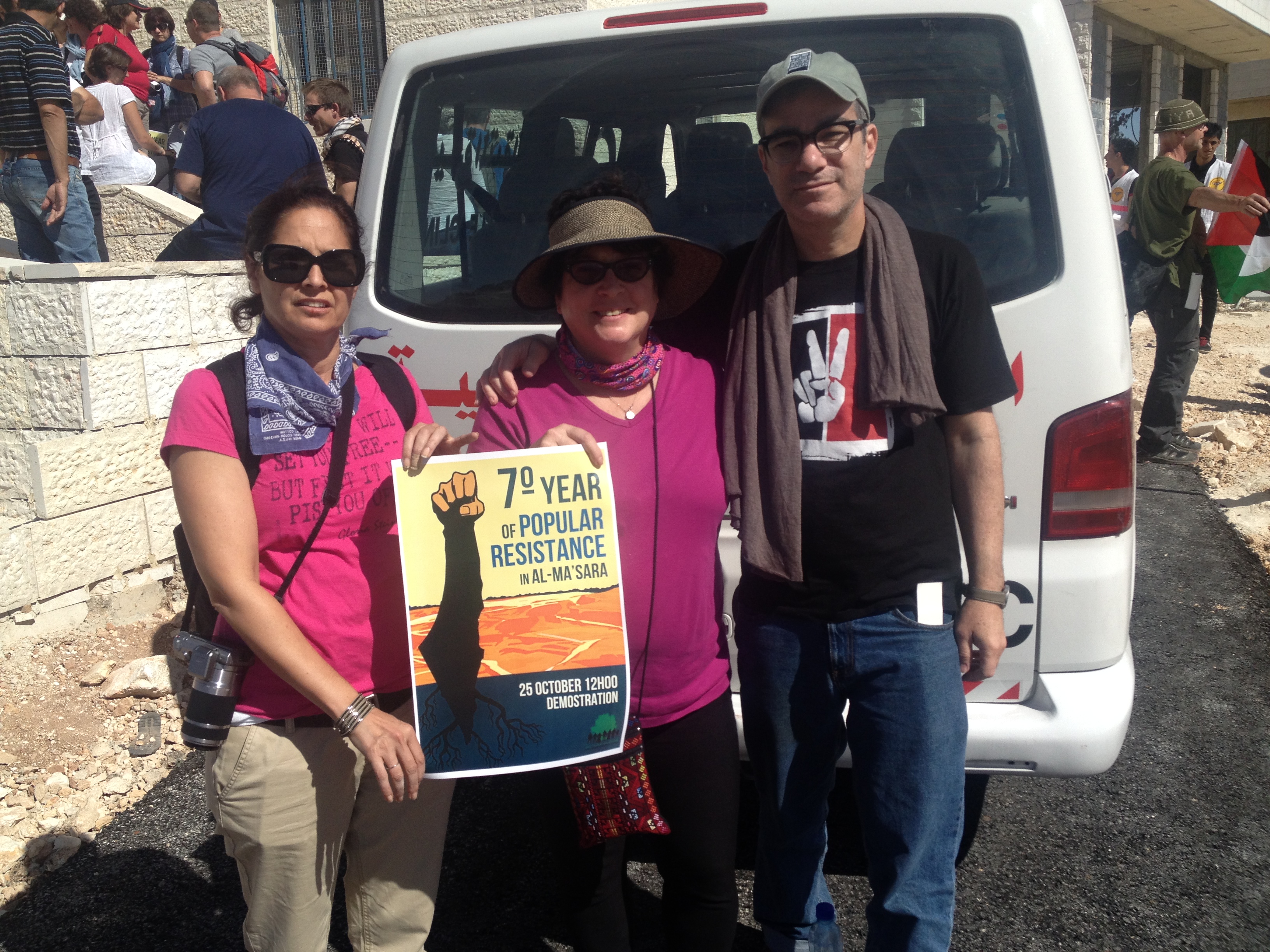
Demonstration in Al Ma’asra (left to right: Estee Chandler, Lynn Pollack, me)

I’ve been home for a few days now and am sorting through a myriad of emotions and experiences from our delegation to the West Bank and Israel. I’m not sure I will do them all justice, but I know I promised some concluding thoughts, so here goes:

The essential mission of our delegation of American Jews and Palestinians was to show solidarity with the burgeoning Palestinian popular resistance movement to the Israeli occupation. We wanted to experience this movement first hand: to live in their homes, to meet with their rank and file as well as their leaders, to march together with them in their weekly demonstration.

In the end, we did all this and more. During the course of our short sojourn, we created new friendships and connections with fellow activists on the ground – and we also strengthened our relationships with one another all the more. I do believe this kind of joint Jewish/Palestinian delegation is a model that can and should be emulated. If the goal is a better future for Jews and Palestinians, I believe it makes eminent sense to travel toward it together.

One of the most important lessons we learned on our trip is that Palestinian resistance is a multifaceted phenomenon.  Thanks to the images relentlessly portrayed by the mainstream media, too many in the West assume Palestinian resistance exclusively takes the form of armed resistance.  But in fact we we discovered (and I hope my blog posts reflected) the Palestinian people have been resisting decades of injustice through a myriad of means: through cultural expression, through education, through familial ties, through remembrance and through nonviolent direction action, to name but a few.

This point was underlined powerfully by Palestinian academic and activist Dr. Mazin Qumsiyeh, with whom we met in Bethlehem.  Dr. Qumsiyeh, who is well known in the Palestinian civil society world (and the author of the recent book, “Popular Resistance in Palestine: A History of Hope and Empowerment“) pointed out to us that in fact, Palestinian popular resistance long predated the establishment of the State of Israel. (One such example he cited was the Arab Palestinian Women’s Union, founded in Jerusalem in 1921, a proto-feminist group that protested against British support of the Zionist colonization of the Palestine – but also advocated for a myriad of women’s issues such as family planning, forced marriage, etc.)

mazin

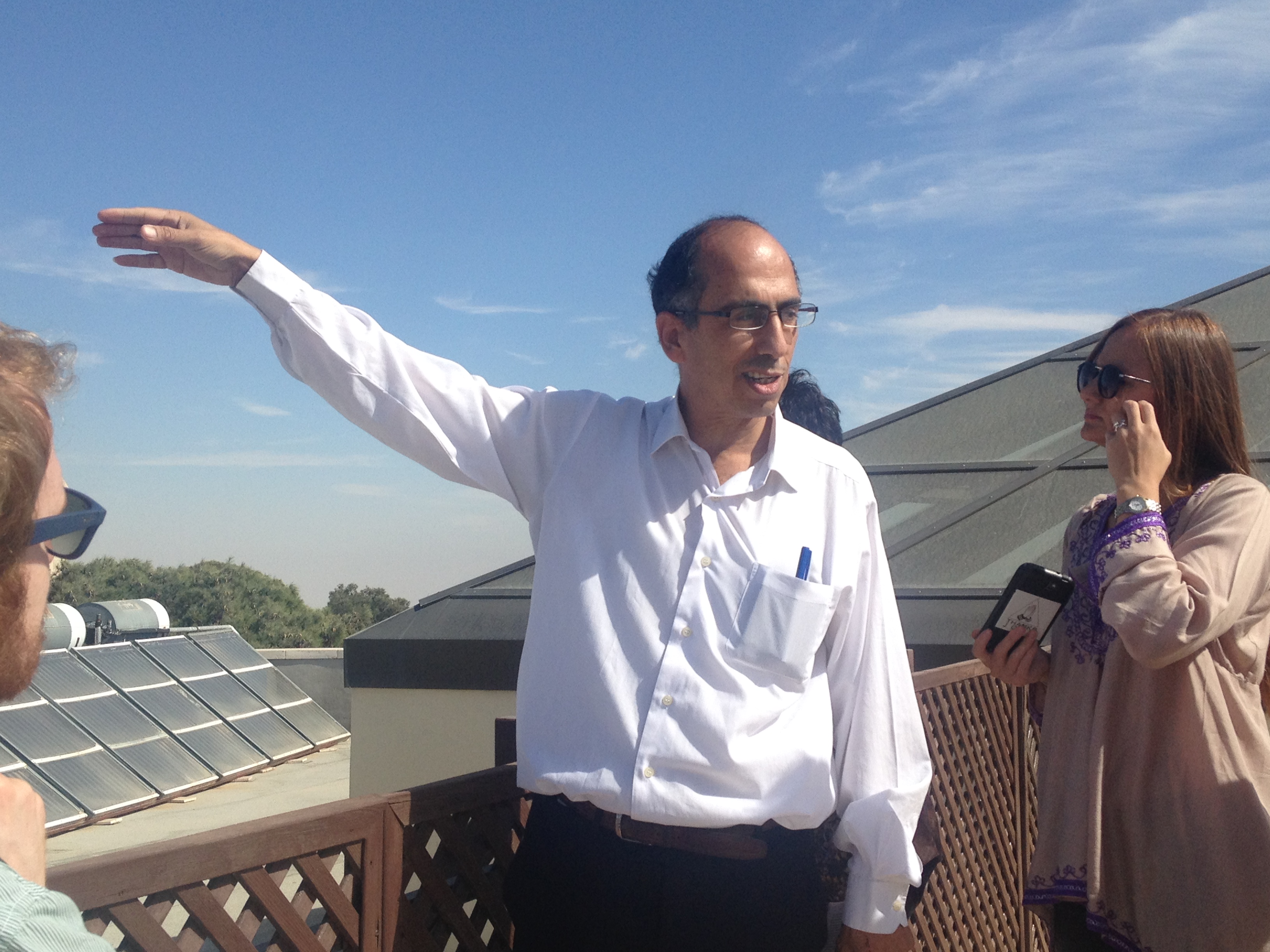
Left to right: Aaron Cahan, Dr. Mazin Qumsiyeh, Dima Budron (at Bethlehem University)

I’ve long believed that the current incarnation of the Palestinian popular resistance is eminently worthy of our attention and support – and I was so grateful for this opportunity to experience it and write about it from within. Too often we hear the oft-repeated shibboleths: “the Palestinians want to push the Jews into the sea,”  “Palestinians are terrorists” and “where are the Palestinian Ghandis?” I hope that my last several posts have helped you to understand the fallacies of knee-jerk comments such as these.

Where are the Palestinian Ghandis?  We met them over and over again: in Bil’in, in Nabi Saleh, in Bethlehem, in Ramallah and so many places in between. Granted, this movement currently lacks a singular unifying leader – and on this issue, Dr. Qumsiyeh made an important point.  He told us he once heard a presentation by a prominent biographer of MLK, who was asked if the American civil rights movement would have existed if Dr. King had never been born. The biographer had no doubt that it would have, pointing out that leaders do not create movements – but rather, it is movements that create leaders. We can only hope that sooner than later, this will be the case regarding the Palestinian popular resistance as well.

This is not to underestimate the daunting challenges facing this movement. A number of Palestinian activists spoke to us about their hope for a “Global Intifada” – a worldwide movement that might leverage a variety of tactics of nonviolent resistance in popular support of justice for the Palestinians. While this movement is indeed taking shape, Iyad Burnat, Bassem Tamimi and others made it clear to us that they have no illusions. Yes, the weekly demonstrations continue, but they still occur in only semi-coordinated fashion in isolated villages throughout the West Bank. Popular movement leaders are struggling in so many ways to maintain momentum and morale, given that the ongoing reality of these Palestinian communities remains so oppressive and so dire.

downloadAnd it is an oppression we saw for ourselves quite literally on a daily basis.  It is difficult to do justice to the stifling atmosphere in these West Bank communities that are struggling so hard to live a semblance of normalcy amid the separation wall, the checkpoints, the ever-growing settlements, the night raids and the tear gas.  As we saw for ourselves, their very steadfastness represents their purest form of resistance.  As it is written in various points along the separation wall: “To Exist is to Resist.”

I want to thank my colleagues and on this delegation, who have become dear friends all the more. My love and respect to Shafic Budron, Dima Budron, Rich Cahan, Aaron Cahan, Estee Chandler, Lisa Kosowski, Lynn Pollack, Emman Randazzo, Isobel Randazzo, Kalman Resnick. Stay tuned for their guest posts yet to come. Although I will let their words speak for themselves, I think I can safely say we are united in our conviction that this was only the beginning of a much, much longer journey.

To be continued…

Palestinian Family Ties: The Most Sacred Solidarity

IMG_0808

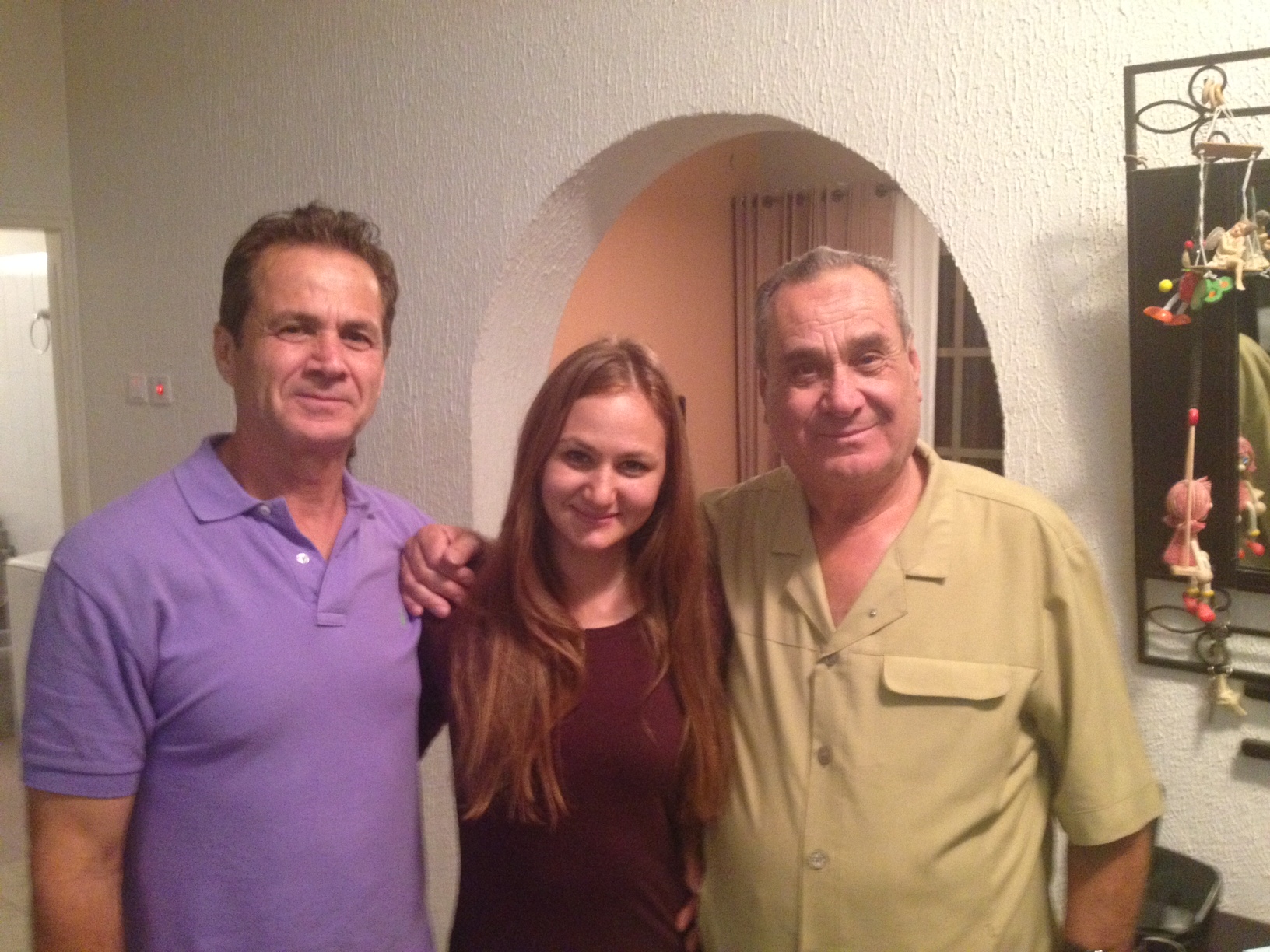
From left to right: delegation members Shafic Budron and his daughter Dima with Shafic’s Uncle Hasan, Al-Bi’na, Israel.

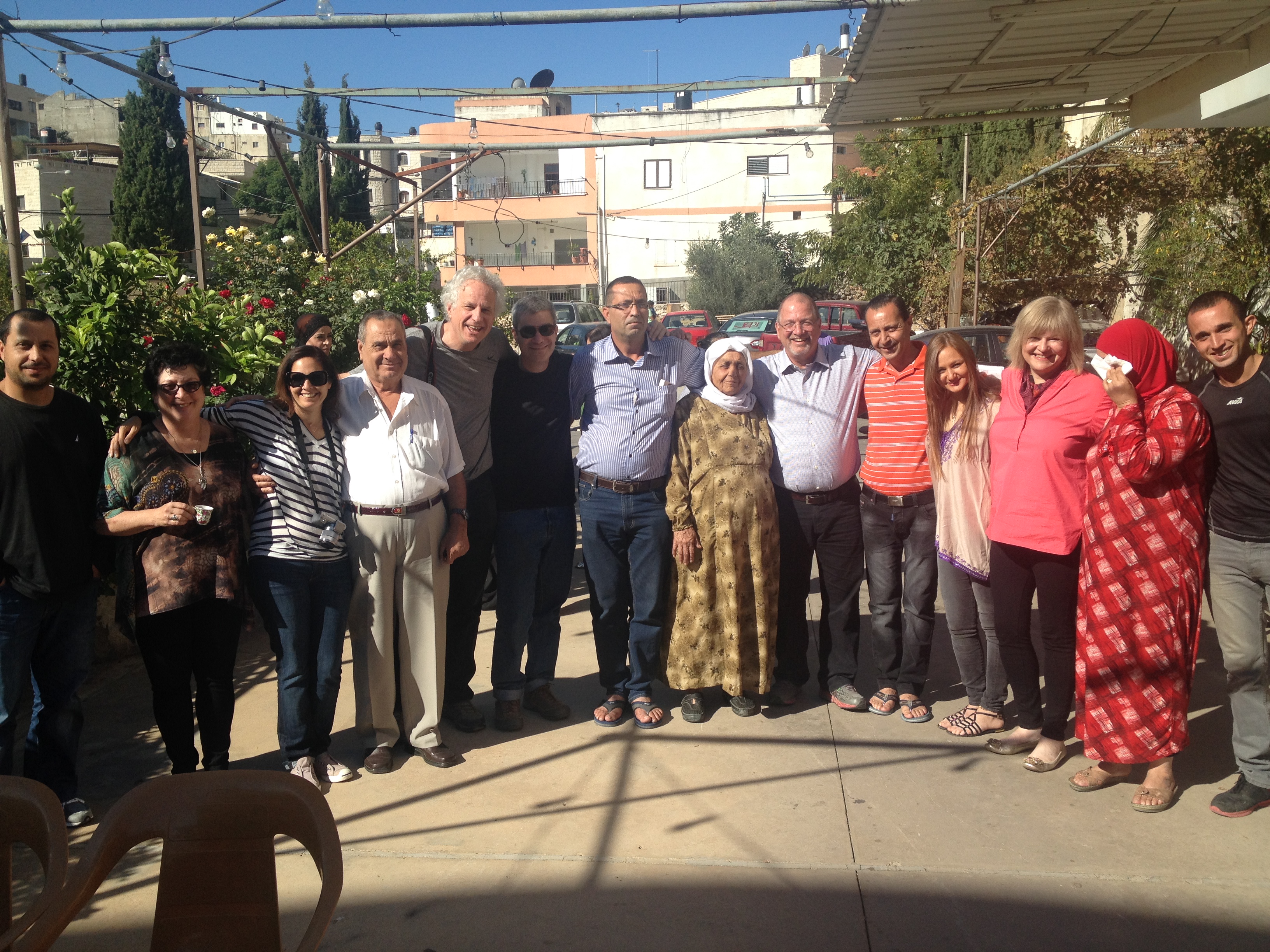
Early in the planning of our delegation, two of our Palestinian-American members, Shafic Budron and his daughter Dima, invited our group to visit to the homes of their family members in the Upper Galilee of Israel.  Shafic and his immediate family are dear friends to many of members of the delegation – and of course we graciously accepted their invitation. I think I can safely say this visit was one of the most eagerly anticipated part of our itinerary.

Like many Palestinian families, Shafic’s family was devastated by the Nakba. While many of his family members became internally displaced – and eventually became Palestinian citizens of Israel, others became refugees. Shafic himself was born after the Nakba and grew up in the infamous Shatilla refugee camp south of Beirut, Lebanon.

Shafic’s personal story is a harrowing one, but he eventually made his way to the US, where he became an American citizen, a successful businessman and a prominent member of the Palestinian community in the Chicago area. Shafic and his family are among the most genuine, open-hearted people I know – indeed his friendship with so many Jewish members of our delegation was a major inspiration for this remarkable trip.

IMG_0797

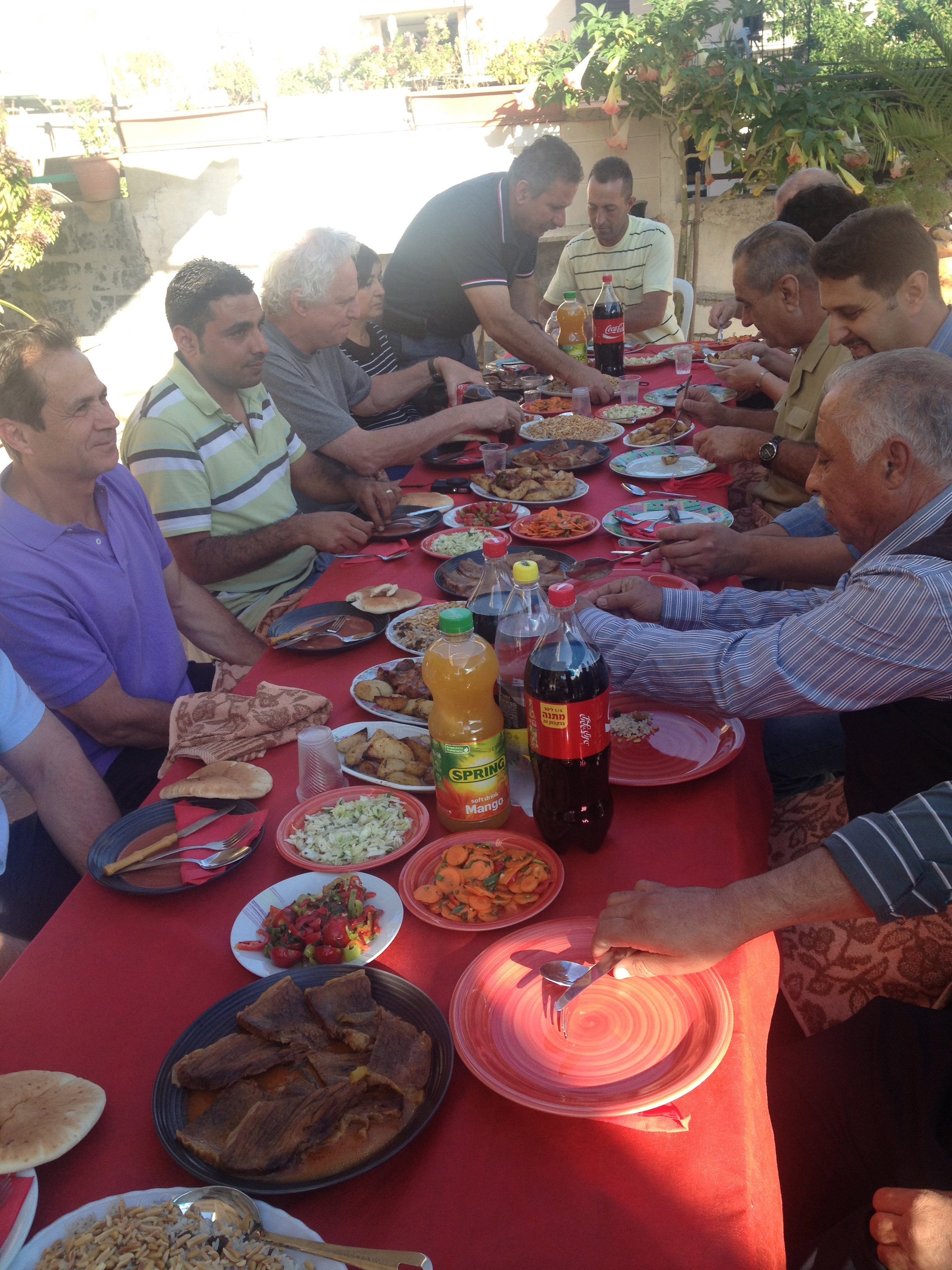
Most of Wednesday was a travel day as we drove north through the Jordan Valley toward the Upper Galilee. When we arrived at our destination in the village of Al-Bi’na, we were literally swarmed by joyous family members, who quickly and graciously welcomed the members of our delegation. Shafic’s uncle Hasan (his father’s youngest and only surviving brother) introduced us to his many children and grandchildren and extended family members as we sat in a circle for a cursory “get to know each other” session. Then we sat down to a sumptuous lunch (above), where we continued to get to know each other some more. By the end of the meal, we felt as if we had become adopted members of the family.

After a visit to the former village of Al-Ghabsiyah (see my earlier post), we went to Shafic’s cousin Dr. Abed’s home in the nearby village of Al-Jedaidah for a dinner that lasted well into the wee hours of the evening. Tired but exhilarated, we were eventually put up in family members’ homes for the night.

IMG_0811

This was clearly an emotional visit for the entire family, not least for Shafic and Dima themselves. The Budrons have, quite understandably, experienced a myriad of emotions on this trip and during our Galilee sojourn in particular. This was, in fact, Dima’s very first trip to Israel/Palestine. While she has visited her father’s family several times in Lebanon, she has never visited her homeland until now. She tells me she has heard stories about her ancestral home from her parents and grandparents for years – and is overwhelmed to finally make the visit now as a young woman.

It has been a profound and emotional visit for our entire American Palestinian/Jewish delegation as well. As of now, the trip has officially wound down. Several members are already returning home and I am preparing to depart today. There’s so much more to say, so many more experiences to describe. I’ll do my best to share as many of them as I can after I return.

In my next and final post, I’ll offer some concluding thoughts – and I have put out an open invitation to our members to share their thoughts with you as well.  Suffice to say for now this has been a sacred journey – one that has strengthened our relationships with one another and our solidarity with those who devote their lives every day toward a just peace in Israel/Palestine.

More thoughts to come…

IMG_0815

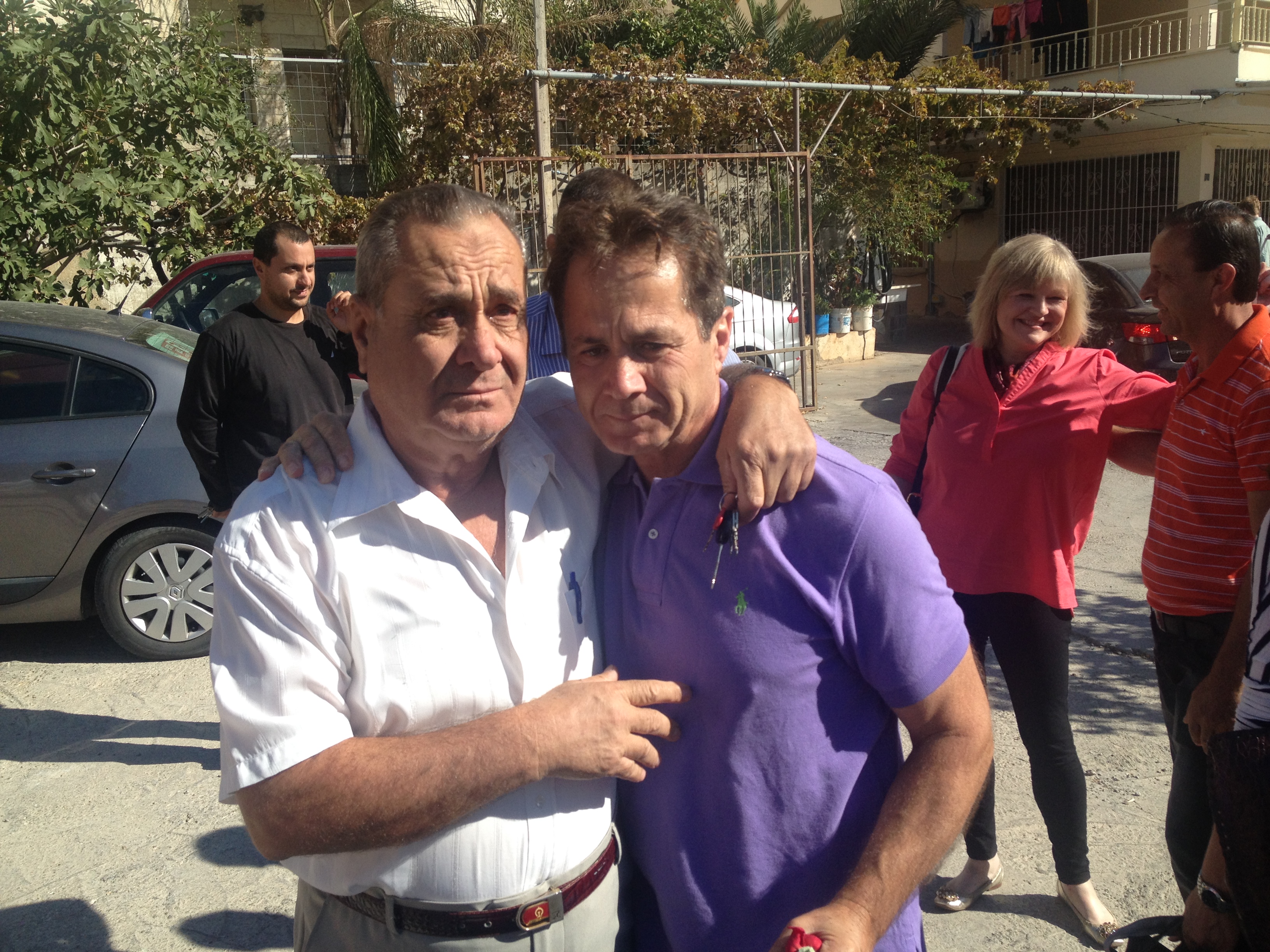
Hasan and Shafic say goodbye.

“Beautiful Resistance” in Aida Refugee Camp

Our trip is winding down, but I’m going to try and slip in a few more posts before I head stateside…

As I mentioned in an earlier post, Palestinian resistance takes many different forms. On Thursday, we received a profound tutorial in cultural resistance courtesy of the educational and theatre training center, Alrowwad.

Alrowwad (in Arabic: “Pioneers for Life”) is located in the Aida refugee camp adjacent to Bethlehem and refers to its mission as “Beautiful Resistance.” As their vision statement eloquently articulates:

(We seek to create) an empowered Palestinian Society on educational and artistic level, free of violence, respectful of human rights and values, (with special focus on children and women) based on the spirit of social entrepreneurship and innovation in self-expression and respect of human values.

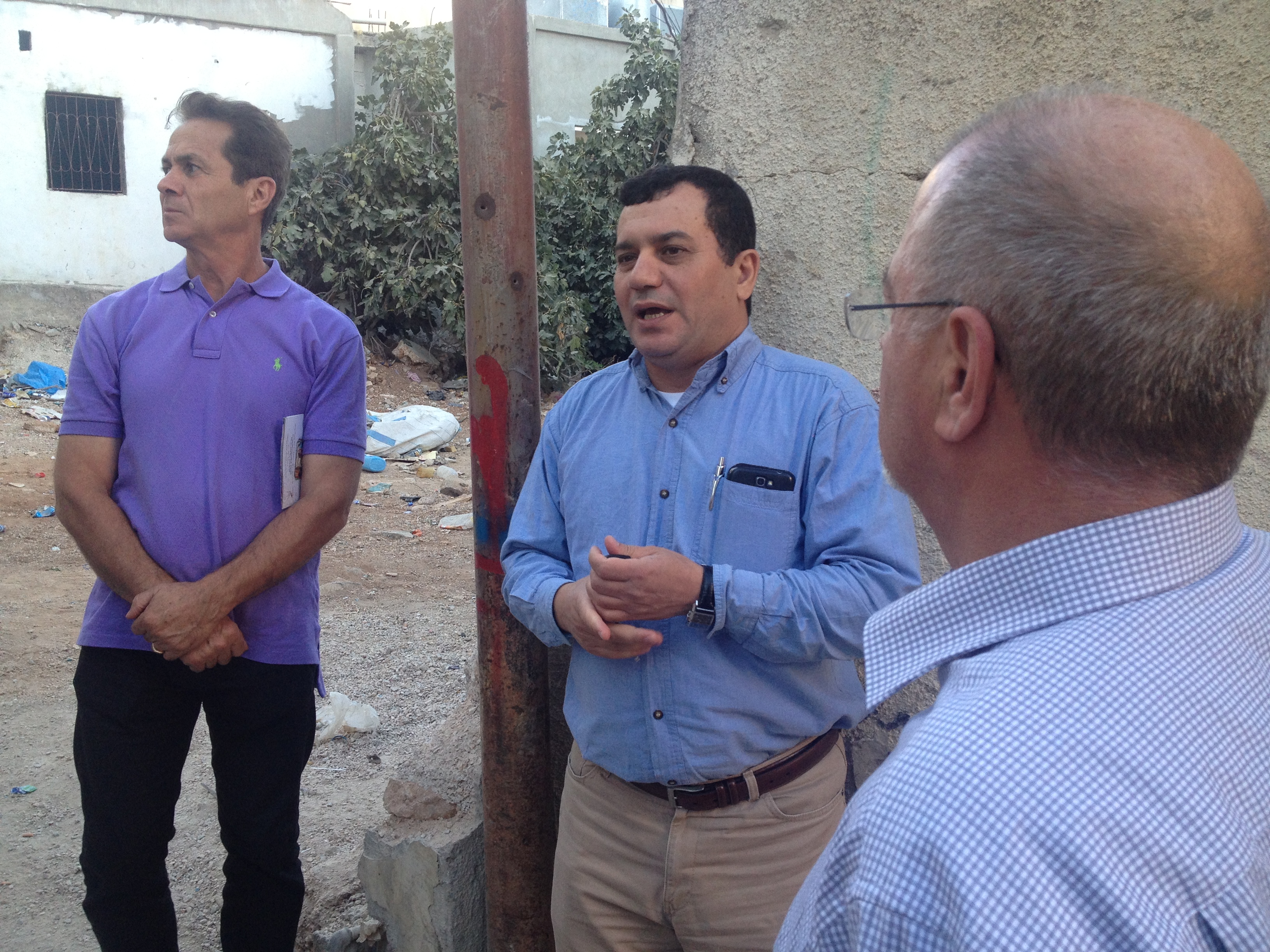
We spent the afternoon with Alrowwad’s founder and director, the inspiring and visionary Dr. Abdelfattah Abusrour (below), who gave us a tour of the center and the Aida refugee camp itself.  Abdelfattah was born and raised in Aida, but went to Paris to study Biological and Medical Engineering at Nord University. While in France, he also nurtured a passion for theater and painting and he quickly became involved in the educational/cultural life of Paris. He told us that he could easily have “married a French woman” and lived a comfortable life in France, but he eventually felt compelled to return to Aida and utilize his cultural training in his home community.

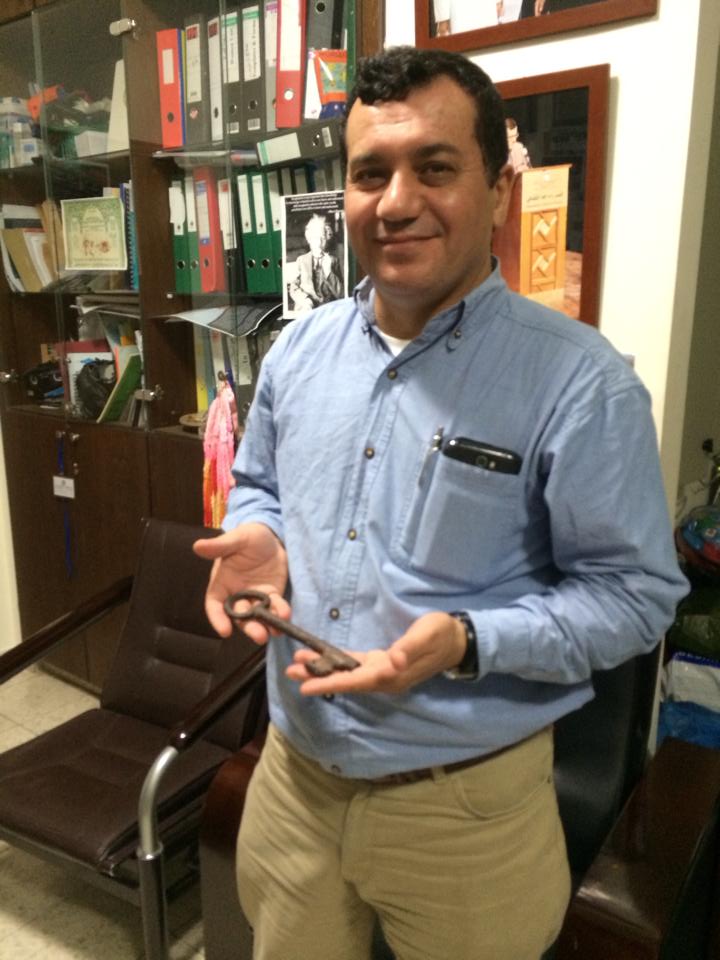
Dr. Abdelfattah Abusrour with the key to his family's home (it is a well-known custom for Palestinian families to keep the keys to the homes they lost during the Nakba as a sign of their hope for return.

Dr. Abdelfattah Abusrour with the key to his family’s ancestral home (it is a well-known custom for Palestinian families to keep the keys to the homes they lost during the Nakba as a sign of their hope for return.)

Abdelfattah established Alrowwad in 1998, and it very quickly became an anchor in the Aida community.  It has also become a model of cultural resistance for Palestinian society at large. Their concept of “Beautiful Resistance” uses culture as a therapeutic method to encourage and promote creativity and non-violence, and to teach peace and respect for others.

Abdelfattah and Alrowwad has now introduced a future generation of Palestinian youth to this a new method of self-expression and resistance. They believe their work increases the spirit of collaboration between children as well as their sense of belonging in the community. Their hope is that given the chance to be creative and to set their own priorities, children can provide a bridge for a democratic and independent Palestinian society — to build a better future even amidst a dire present.

IMG_0826

In many ways, touring Alrowwad reminded me the Jenin Freedom Theatre, which I visited with my congregational delegation in 2010. Adelfattah told me that his center does indeed collaborate with the Freedom Theatre, as well as other similar Palestinian cultural projects throughout the West Bank. Adelfattah also travels abroad to promote his work – and this spring will be directing a performance of “The Diary of Anne Frank” in North Carolina!  Just another reminder that there is an extensive and powerful grassroots movement of Palestinian cultural resistance that is relatively unknown to the West, but is eminently worthy of our support.

IMG_0831

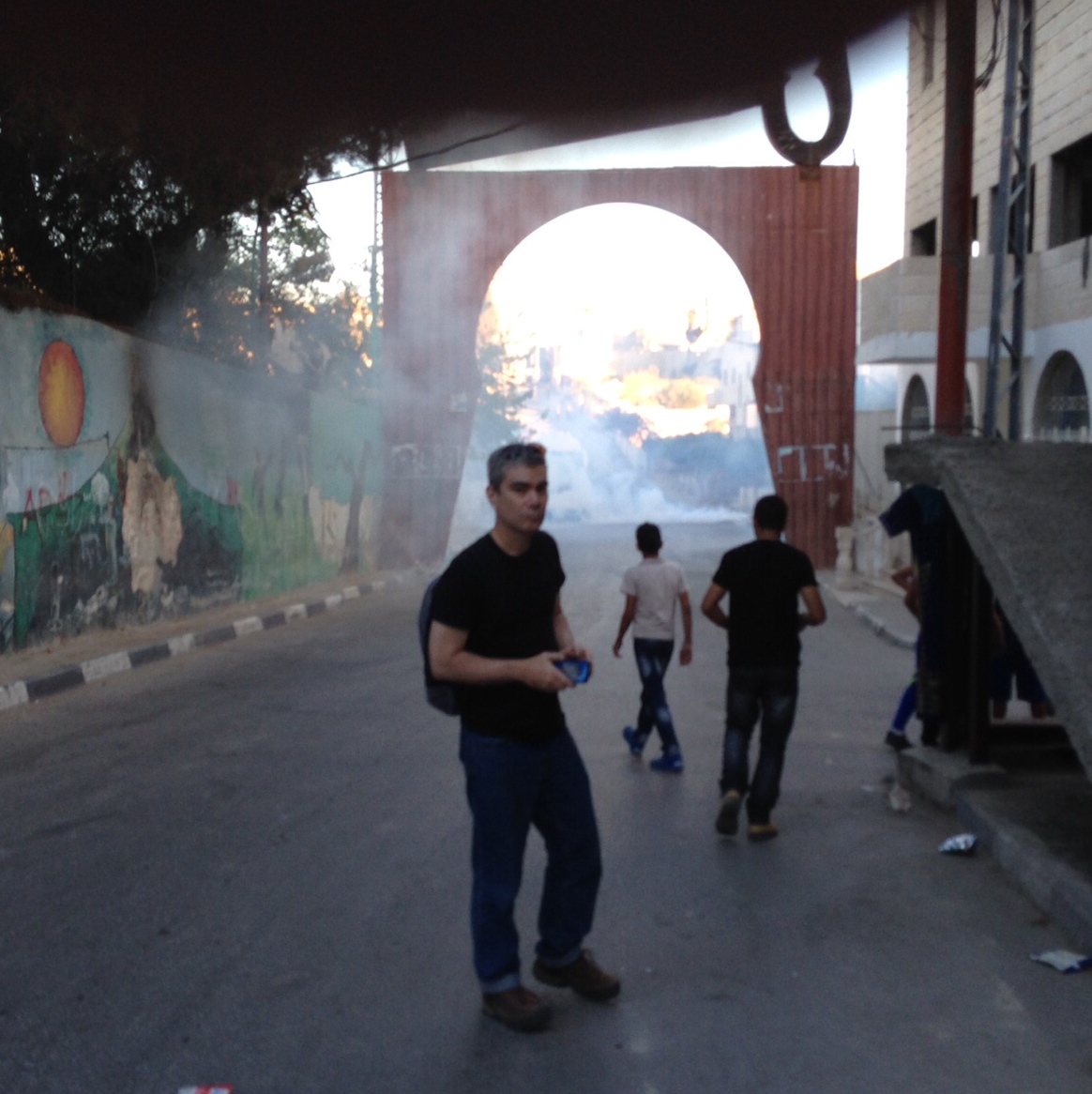
During our tour of Aida (above), Abdelfattah gave us a glimpse of the life of his community – explaining its history and illuminating life amidst the ever-present reality of military incursions, night raids, etc. At one point, our group actually witnessed this reality up close: near the gate to the camp, several IDF soldiers shot tear gas at some children who were a few meters in front of us. (We did not witness the incident that precipitated this violence.) Though we were not in the immediate vicinity of the tear gas clouds, it carried toward us downwind – and though it was only a vestige of the gas, several of us experienced its powerful, lingering sense of burning in our eyes and throats. (I can’t begin to imagine what it must feel like to sustain a direct hit.)

teargas

We continued our way down the streets of Aida, along the separation wall that butts up directly against Bethlehem. As we walked, a women called to Adelfattah from a third story window and invited us up for tea. We sat together on the roof of her home, sipping our tea and looking out over the wall toward the wide open spaces that led toward greater Jerusalem. Our hostess told us that she and Aida owes their very lives to Abdelfattah and it was an honor to have us in her home.

Please join us in supporting the work of Alrowwad through Friends of Alrowward USA. Our delegation can personally attest to the power of their “Beautiful Resistance.”

An Anniversary of Popular Struggle in Al-Ma’asra

IMG_0883

Al-Ma’asra Popular Committee Leader Hassan Brijeh

Earlier in the week, our Bil’in host Iyad Burnat told us that a neighboring village, Al-Ma’sara, was celebrating the 7th anniversary of its popular resistance against the occupation – and was inviting other village communities involved in the movement to march join them for their weekly Friday demonstration. Although our original plan was to march in the weekly demonstration in Bil’in, this turned out to be a rare opportunity to see the wider movement in action. So on Friday, our delegation traveled with Iyad to show solidarity with the people of Al-Ma’asra.

Al-Ma’asra is located in the Southern Bethlehem area, with a population of approximately 950 residents, 50 of whom are between the ages of 6 and 18. Like many villages in this location – near Israel’s coveted Gush Etzion settlement region – the construction of the separation wall is cutting off Al-Ma’asra from accessing more than half of their land and the main water supply.

About 90% of the houses in Al-Ma’asra are located in Area C – a region in which Israel is rapidly demolishing houses and moving out its Palestinian residents. (I’ve written extensively about this issue here, among other places).  Like Bil’in, Nabi Saleh and so many other villages, Al-Ma’asra has turned to popular resistance – including weekly nonviolence demonstrations – to protest the theft of their land and devastation of their livelihood. And like these other villages, they have been subject to the Israeli military’s devastating use of tear gas, sound bombs, coated steel bullets etc. Since the beginning of their demonstrations, more than 30 of their inhabitants have been arrested.

IMG_0886

After we arrived in Al-Ma’asra, we received a briefing/update from Mohammed Brijeh (above, later at the rally), after which we joined the growing ranks of villagers, Israeli solidarity activists and internationals who were quickly pouring into the village’s main street.  Then at 12:00 pm we gathered together and began marching. The street was filled with approximately 300 individuals: young and old, representing a myriad of nationalities and ethnicities. But it was clearly the people of Al-Ma’asra who were leading the way: leading us in chants, singing songs and waving to their neighbors,

IMG_0874

After 15 minutes or so, we noticed a long line of Israeli soldiers in riot gear, standing in formation across the street, blocking our way to the wall. The crowd pressed up close against the soldiers and standoff commenced. When the villagers were told they were denied passage, Mahmoud stepped forward and starting chastising the soldiers in English. Careful not to use any physical violence or overly incendiary rhetoric, he asked the soldiers why they were not allowed the right to live and assemble freely in their own village.

He explained to them they could oppress them all the wanted, but that one day, like all oppressed people, they would be free. Pointing to their extensive riot gear, their bullet-proof vests, their M-16s, their helmets, he told them that none of this expensive equipment would ever bring them peace – then pointing to his head, he said “it’s not what you wear, it’s what’s in here that you need to change.”

Perhaps the most powerful moment for me came when he said to one soldier, “What would your mother think – would she want you to bully the people of this village, to oppress them, to take their land away from them? Shame on you!” The chant spread quickly through the crowd: “Shame on you! Shame on you!”

About 20 minutes or so into the standoff, there was a roll call of participants, a myriad of countries were called out with the obligatory hometown cheers. (Among those represented: the US, Great Britain, Ireland, Germany, Scandinavia, France, Spain, and more). A succession of speakers then got up on a raised area to the right of the soldiers to give speeches. They introduced Iyad, and he offered greetings (below) from their brothers and sisters in Bil’in.

IMG_0882

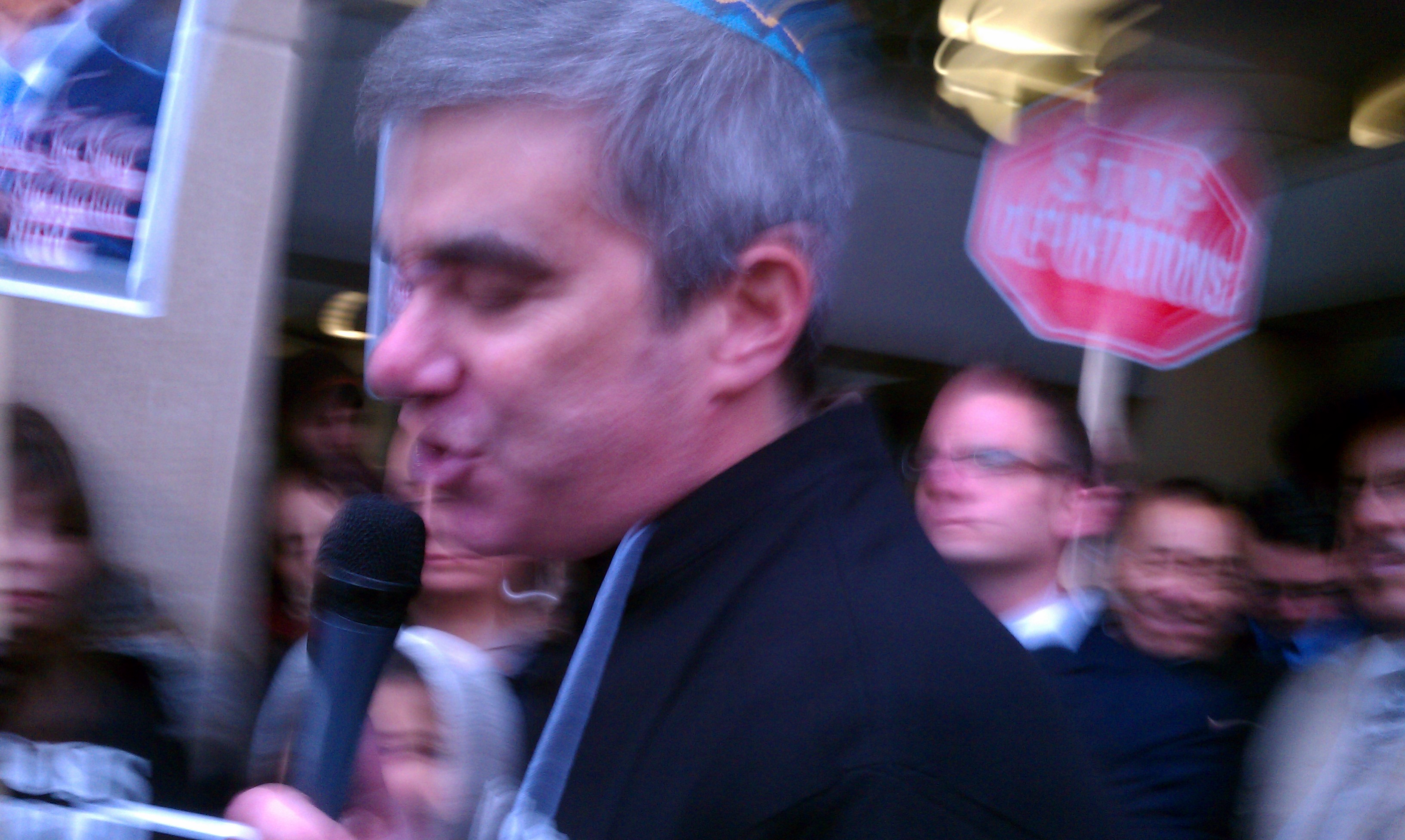
After Iyad spoke, one of our delegation participants, Estee Chandler, called out “We have a rabbi here!” Then one of the organizers shouted, “We have a rabbi here! Let’s here from the rabbi!”  And before I could even think about what I might possibly say, I got up and started to address the crowd (below).

I told them that the Torah teaches us – as all spiritual traditions do – that God stands with the oppressed and demands that we do the same. Thus, I said, this demonstration was a sacred act for all of us – a mitzvah. And that it was all the more sacred because it contained such a diversity of nationalities and religions. I told them we were honored to stand together with our Palestinian brothers and sisters who were struggling for justice and dignity and that we would take this message back with us when we returned home to the US.

IMG_0895

After the speakers, something of a waiting game began. The demonstrators sat down in the street in front of the solders, singing and chanting as the soldiers were obviously conferring on their next move. Eventually, the commander told us we have 5 minutes to disperse before they opened fire on us. Little by little, the crowd got up and walked back down the street. Some of the younger villagers went to another main street where we later could see some kind of skirmish in the distance.

In the end, all the demonstrators dispersed; I felt a myriad of emotions at that moment. I had no doubt that the decision to disperse came from the organizers, who understandably wanted to avoid violence in the streets. Still, I admit it felt galling that in the eyes of the IDF, this was a just another “successful” job of unruly crowd control . On the other hand, the message of solidarity and defiance had been delivered – as it had been every week for the previous seven years in Al-Ma’asra and would for many more years to come. And in so doing, new relationships were created, new coalitions built – and the movement was that much stronger for having come together that day.

During our standoff in the street with the IDF, it occurred to me that this was precisely the same circumstance that occurred on the Edmund Pettus Bridge in Selma in 1965. The demand for justice was the same, the solidarity was the same, the message of nonviolence was the same, as was the  show of force by a brutal and overmiltarized gauntlet. Though that particular standoff ended violently, I was all too mindful that, in a sense, there is a reenactment of Bloody Sunday every week in villages throughout the West Bank.

PS: Upon our return, we learned to our dismay that the village of Bil’in was tear-gassed during their demonstration that day.  We were told that several canisters actually landed near Iyad’s house and at one point most of the village was shrouded in choking white smoke.

This is life on the front lines of the Palestinian popular resistance – just a small sample of the regular crimes committed against a people who are literally choking on an unjust and illegal occupation.