Some More Thoughts on Caterpillar Divestment


A follow-up on my last post:

I just read an interesting article in the Jewish Telegraphic Agency by Ron Kampeas that concludes the sale of Caterpillar tractors to Israel was a factor (if not the “determining one”) in the MSCI and TIAA-CREFF decisions to delist Caterpillar from its portfolios.

For such a mainstream Jewish publication, it was a fairly bold admission. Of course the article also contained the obligatory statements from Caterpillar and Jewish establishment reps downplaying CAT’s responsibility in the sale of armored/weaponized bulldozers to the Israeli military.  In one instance, Kampeas’ article quoted a Caterpillar statement that denied the direct sales of the infamous D9 Track-Type bulldozers to Israel:

“This is how it works,” corporate spokesman Jim Dugan said. “Caterpillar sells equipment to the U.S. government, which then transfers the equipment to the Israeli government, which then transfers it to the Israeli military.  Israeli is one of about 150 countries that take part in the program, which supports U.S. allies. For the D9s, the protective armor plating, the bullet resistant glass and other modifications take place after the machine has been transferred to the Israeli government by the U.S. government.  These changes happen after the sale, not in our factories.”

Actually, it’s misleading in the extreme to claim that Caterpillar “sells its equipment to the US government.”  In truth, the US government acts as a intermediary between the CAT and the Israeli military through the US Foreign Military Sales program (FMS).  Caterpillar certainly knows full well that it is entering into a contract with the Israeli military – every FMS sale is preceded by a notification to Congress that lists the government purchasing the equipment and the contractor providing it.

It is also highly disingenuous to claim CAT has nothing to do with the armoring and weaponizing of the D9s.  In fact, these massive bulldozers are retrofitted by ITE – Caterpillar’s sole representative in Israel, who is also responsible for the D9’s ongoing maintenance and support during operations, including military operations.

To put it simply, the relationship between CAT and the Israeli military are a key part of the military-corporate alliance that enables the occupation.

I was also struck by this quote from Ethan Felson, the vice president of the Jewish Council for Public Affairs:

Felson … said that linking Caterpillar to Israeli practices was “nonsensical,” noting that it had no say in how the US military resells the tractors, and that it could not legally turn down the U.S. military as a client.

In fact, Felson’s statement is beyond “nonsensical.”  CAT has “no say in how the US resells the tractors?”  The US Foreign Military Sales program exists for the specific purpose of facilitating individual contracts between companies and foreign governments. Moreover, Caterpillar certainly has the right and the ability not to renew its contract with Israel’s military if it determines its equipment is being used to violate human rights.

Yes, there were likely many factors considered in this latest divestment decision, but as the article points out, the efforts of divestment activists certainly played an important part. And it is also important to bear in mind that this is not ultimately about MSCI or TIAA-CREFF or even Caterpillar – it is about exposing the human rights abuses committed by Israel in pursuance of its brutal and illegal occupation.

The professional apologists can spin or distort the facts all they want – but in the end, the dogged efforts of divestment activists are helping, slowly but surely, to bring Israel’s egregious policies out into the light of day.

UPDATE 6/27/12: In a just-released statement, MSCI stated that the “on-going controversy associated with use of the company’s equipment in the occupied Palestinian territories” was a “key factor” in their decision to drop Caterpillar.

MSCI and TIAA-CREFF Divest from Caterpillar!

This is huge.

In the most significant Israel divestment milestone to date, the MSCI (Morgan Stanley Capital International) World Socially Responsible Index recently removed Caterpillar from its list.  Shortly thereafter, financial retirement fund giant TIAA-CREF divested Caterpillar from its portfolio as well!

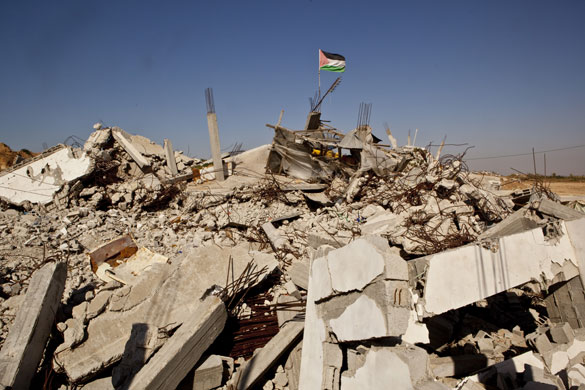
Did I say this was huge? CAT has been a target of divestment activists for many years – and rightly so. The company has come under increasing criticism from human rights organizations for continuing to supply bulldozers to Israel, which uses them to demolish Palestinian civilian homes and destroy crops and agricultural land in the occupied territories. In the succinct words of Amnesty International: “Thousands of families have had their homes and possessions destroyed under the blades of the Israeli army’s US-made Caterpillar bulldozers.”

This is only the beginning. Last month, the Quaker Friends Fiduciary Corporation, divested $900,000 in shares of Caterpillar. And earlier this month the undergraduate student government at Arizona State University,  unanimously passed a bill demanding that ASU divest from and blacklist all companies that continue to provide the IDF with weapons and militarized equipment.  All this in advance of the Presbyterian Church (USA) General Assembly in Pittsburgh later this month, in which church commissioners will vote on a motion to divest from Caterpillar and two other companies (Motorola Solutions and Hewlett-Packard) that profit from Israel’s occupation.

To those who say that the BDS (Boycott, Divestment and Sanctions) movement will not succeed, stay tuned.  This is precisely how movements get started. A few significant victories and the dominoes begin to fall more rapidly.  Individual actions such as this may have more symbolic than financial impact, but don’t discount the power of symbolic victories.  History has taught us again and again that nonviolent direct action has the power, step by step, to leverage real and lasting political change.

Israel continues its brutal occupation and settlement policy with impunity and no government (notably our own) seems able or willing to hold it to account.

Just watch as people power moves in to fill the vacuum.

Talking to Iran in Moscow – Pray for Success

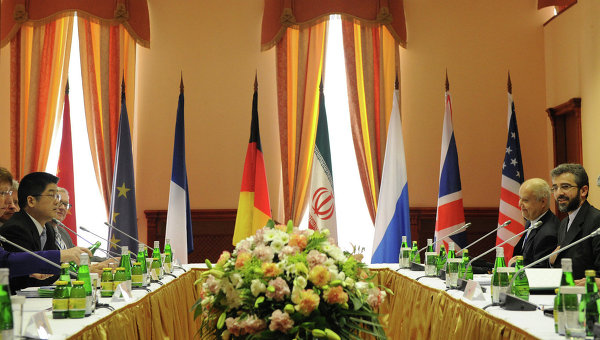
Talks began today in Moscow between Iran and the “P5 +1” (the five permanent member nations of the UN Security Council plus Germany). I’m hoping against hope for a breakthrough, but it’s certainly not looking good.

For a sane and balanced take on Iran, I’ve long turned to Trita Parsi, founder and president of the National Iranian American Council, and one of our foremost experts on US-Iranian relations. In a recent NY Times op-ed, Parsi identified precisely why Obama has precious little room to maneuver going into the Moscow talks. In a word: Congress.

Congress is actively seeking to make a deal on the nuclear issue impossible by imposing unfeasible red lines, setting unachievable objectives — and depriving the executive branch of the freedom to bargain.

Just before last month’s talks in Baghdad, Congress passed a resolution that endorsed the Israeli prime minister Benjamin Netanyahu’s red line on the nuclear issue (Iran can’t have a uranium-enrichment capability), as opposed to the red line adopted by the Pentagon and the president (Iran can’t have a nuclear weapon).  The problem is, Mr. Netanyahu’s red line isn’t feasible and doesn’t leave any room for negotiations…

If Iran agrees in Moscow to accept the American demand that it halt uranium enrichment at the 20 percent level — too low a level to quickly create a nuclear weapon — this would effectively obstruct any Iranian shortcut to a bomb. Congress must then give Mr. Obama the political space to be able to take yes for an answer.

Congress must make up its mind. Does it want to prevent an Iranian nuclear bomb or does it want to maintain its sanctions? Going forward, it can’t have both.

As if to put a period on Parsi’s analysis, last Friday 44 senators (23 of whom were Democrats) sent a letter to President Obama demanding that he insist upon three “absolute minimum steps” for continuation of talks: shutting down the Fordow nuclear enrichment facility, freezing all uranium enrichment above 5%, and shipping all uranium enriched above 5% out of the country.

The letter concludes:

If the sessions in Moscow produce no substantive agreement, we urge you to reevaluate the utility of further talks at this time and instead focus on significantly increasing the pressure on the Iranian government through sanctions and making clear that a credible military option exists. As you have rightly noted, ‘the window for diplomacy is closing. Iran’s leaders must realize that you mean precisely that.

If you needed any evidence of Parsi’s claim that Congress is “actively seeking to make a deal on the nuclear issue impossible by imposing unfeasible red lines, setting unachievable objectives — and depriving the executive branch of the freedom to bargain,” this letter provides it.  The writers and signers of this letter clearly know full well that these demands will be a non-starter for Iran.

Even more disturbing is the role of the Israel lobby in these cynical maneuvers. Mideast analyst MJ Rosenberg revealed, in a piece posted four days before the letter was released, that the letter was drafted by AIPAC staffers, pointing out that it was essentially

an AIPAC device for scoring senators in an election year. Those who sign will be rewarded or left alone. Those who don’t will hear from AIPAC and its friends. Not a pretty possibility.

OK, I’ll say it: the role of the Israel lobby in the Iran issue has been nothing short of shameful.  And at times openly, brazenly disingenuous.  Among the more odious examples: the Emergency Committee for Israel, (what you might call the more “zealous” wing of the lobby) recently released a 30 second scare-ad that proclaimed, among other things, that “Iran has enough fuel for five nuclear bombs” – a spurious claim which belies that fact that Iran currently has no weapons grade material at all.

Yes, this election year gives Obama precious little room to maneuver – and the lobby is clearly doing everything it can to exploit this.  But since Obama has repeatedly bent over backwards to prove his allegiance to Israel and AIPAC, I don’t see how bowing to these latest salvos will do much to significantly improve his electoral prospects. And since he’s going to be excoriated by his political rivals no matter what he does, why not stick to his own administration’s stated policy, behave like a statesman and push for a diplomatic success? After all, who should be determining Obama administration negotiating strategy – the Obama administration or Congress/AIPAC?

When you consider that the alternative is another ill-advised march to another disastrous Mideast war, the stakes could not possibly be higher.

Pray for a breakthrough in Moscow this week.

PS:  I’m honored to be discussing this issue further in a dialogue with Trita Parsi entitled “Can War with Iran be Averted?” on Thursday, June 28, 7:00 pm at Jewish Reconstructionist Congregation in Evanston, IL. Click here for more details.

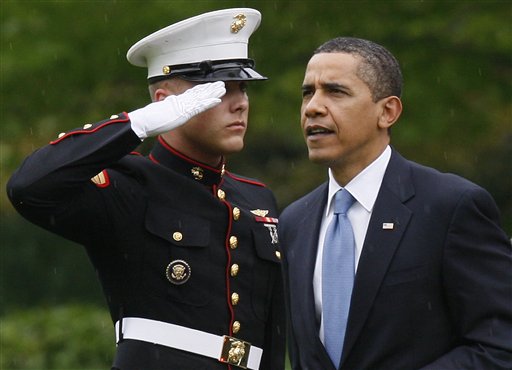
Obama in 2012: Won’t Get Fooled Again

Just happened to glance at a blog post I wrote during the 2008 Presidential General Election campaign entitled “Go Rabbis for Obama!”

Man, what a difference four years makes. I think I can safely say it will be impossible for me to summon the kind of excitement I expressed in that giddy blog post just four short years ago.

Actually, if truth be told, it was just one year into his presidency when I concluded that Obama, from a foreign policy point of view at least, was essentially Bush 2.0.  Now as his first term comes to a close, I’m daring to consider the possibility that he might actually be worse.

I’ve already written a fair amount about my disillusionment on this score – most pointedly in my Yom Kippur serrmon from earlier this year:

For some Americans the most salient lesson of 9/11 was that the world is a dangerous place and we must use military power to mitigate the danger.  I include myself among those who learned a very different lesson: 9/11 taught us that when we intervene militarily abroad, we beget blowback here at home.

Many of us had hope that Obama truly believed this as well – that he would turn back the Bush doctrine and steer our nation’s foreign policy toward a saner course. But as it has turned out, the very opposite has happened. He has embroiled us in even more Mideast wars and has deployed even larger numbers of special operations forces to that region.  He has also transferred or brokered the sale of substantial quantities of weapons to these countries and has continued to build and expand US military bases at an ever-increasing rate.

He also promised to prosecute the so-called “War on Terror” with greater attention to civil liberties, but that hope has been fairly dashed as well.  During his campaign, note what he had to say about this subject:

“As president, I will close Guantanamo, reject the Military Commissions Act, and adhere to the Geneva Conventions. Our Constitution and our Uniform Code of Military Justice provide a framework for dealing with the terrorists. Our Constitution works. We will again set an example for the world that the law is not subject to the whims of stubborn rulers, and that justice is not arbitrary.”

Well, it’s over two years later and Guantanamo is still open. This past March, the Obama administration announced it would be resuming military tribunals there. And just last week, we learned that our President did something truly unprecedented – our President actually approved the extra-judicial assassination of an American citizen in Yemen.

And it’s gotten even worse since then. More recently, we’ve learned that Nobel Peace Prize Laureate Obama has been personally been maintaining a drone “kill list” which, according to the NY Times:

counts all military-age males in a strike zone as combatants … unless there is explicit intelligence posthumously proving them innocent. (Emphasis mine).

Even more recently, the NY Times has revealed that President Obama has been secretly overseeing a massive cyber-war initiative against Iran (known as “Olympic Games”) that, among other things, almost assuredly represents the official kickoff to a global cyber-weapons race. As the article correctly concludes, the blowback to our nation from Obama’s cyber-adventures could potentially be devastating:

(No) country’s infrastructure is more dependent on computer systems, and thus more vulnerable to attack, than that of the United States. It is only a matter of time, most experts believe, before it becomes the target of the same kind of weapon that the Americans have used, secretly, against Iran.

But my disillusionment in the Obama administration is most profound when it comes to its handling Israeli-Palestinian peace process.  I’ve written about this issue over and over as well – but if you still need more convincing that this administration has utterly caved to the Israel lobby and has abdicated any semblance of “honest broker” status in this process, it was recently reported that Obama unabashedly assured a group of Jewish orthodox leaders that his administration is “decidedly more attentive to Israel than it is to the Palestinians.”

All this to say that I’m in a very different frame of mind as Obama now runs for reelection. The giddiness has been replaced with a dose of hard, cold realism about the role of the President in the 21st century national security regime:

Again, from my Yom Kippur sermon:

I’m focusing these observations exclusively on our Commander-in-Chief, but of course I realize that this issue is much, much larger than just one man.  I know it’s natural to look to our primarily to our President, but in truth what we call “Washington” is really a massive bureaucracy that includes a myriad of interests. It’s a far reaching power elite that includes not only the federal government but the national security state, as well as the intelligence and federal law enforcement communities. It also includes big banks and other financial institutions, defense contractors, major corporations and any number of lawyers, lobbyists former officials, and retired military officers, all of whom hold enormous influence over our foreign policy.

So as we swing into summer and we listen to Obama and Romney trade salvos over foreign policy, don’t be fooled – at the end of the day there is less than an inch of daylight between the two.  Mideast analyst Aaron David Miller, in a Foreign Policy post entitled “Barack O’Romney” only half jokingly suggested that if reelected, Obama ought to consider making Mitt Romney his new Secretary of State.  Another respected analyst, MJ Rosenberg, has gone as far as to suggest that President Obama would actually be more likely to bomb Iran than a President Romney.

What should we do with all this hard political realism?  As for me, I’m taking my cue from the classical Jewish text, Pirke Avot:

Love work. Hate authority. Don’t get too friendly with the government. (1:10)

And for good measure:

Be careful with the government, for they befriend a person only for their own needs. They appear to be friends when it is beneficial to them, but they do not stand by a person at the time of his distress. (2:3)

The events of these last four years have provided a painful education for me.  I’ve learned more than ever that it is not politicians who create socio-political change – it is, rather, the people and the movements who make it impossible for them not to.

Yes, there are some important domestic issues at stake in this election (not least of which are potential Supreme Court appointments) but let’s not be fooled into thinking that the future of US foreign policy fundamentally depends on who we choose to be our Commander in Chief.

The real difference will depend on our readiness to hold him accountable once the election is over.

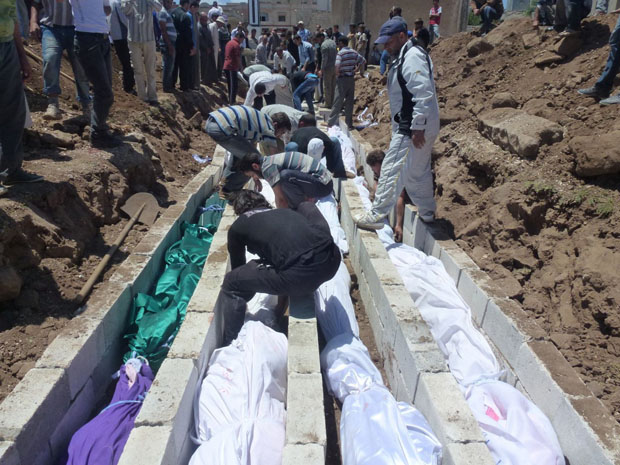
On Syrians, Palestinians and American Options

I’ve just written the following in response to a comment on the tragic situation unfolding in Syria,  but I think it bears posting here front and center on the main page. Further comments, as always, are welcome:

Ike, you are right that the butchery going on in Syria is heinous and deserves the highest possible condemnation. I also agree 100% with you that the human rights situation going on there is far more acute than “what is going on with the Palestinians.” In fact, Palestinian blogger Sami Kishawi recently made this very point in a recent post in which he also quoted a Palestinian protester in New York who said on YouTube:

The horrible things happening in Syria, even Israel didn’t do to us in Palestine. Anybody who says that the Assad regime is with Palestine and that the atrocities happening are in our favor is wrong, and if the freedom of Palestine was dependent on the slaughtering of Syrian children, I would tell you as a Palestinian that I don’t want to be free.

While this certainly should not be about “who is suffering more,” I do think it’s important to point out that the Syrian situation has been front and center in the mainstream media for at least a year – and has been met with world-wide condemnation, while the Palestinians’ plight, which is constant and ongoing, has flown well under the media radar – and not only is it not condemned by the West; it is actually enabled and made possible by our country. As I’ve written many times before, as Americans and as Jews, I/we are directly culpable in this situation – and, yes, this is indeed something I try to highlight in my blog.

On the issue of “pressing our government to do something about” the Syrian crisis: as tragic as this slaughter may be, I do not think the US has many good options to stop the bloodshed beyond what it is doing right now – and I strongly believe that US military intervention would only beget even greater tragedy. On this point I am in full agreement with Josh Landis – one of the smartest and most insightful Syria experts we have. I recommend his recent post in Syria Comment on this issue:

The US, Europe and the Gulf states want regime change in Syria so they are starving the regime and feeding the opposition. They have sanctioned Syria to a fare-thee-well and are busy shoveling money and arms to the rebels. This will change the balance of power in favor of the revolution. Crudely put, the US is pursuing regime-change by civil-war. This is the most it can and should do…

It seems heartless to stand by and do so little as massacres such as that carried out at Houla continue. More than 13 thousand Syrians have been killed in the last 14 months of revolution. All the same US intervention is not the solution. American troops killed over 10 thousand Iraqis in the first month of invasion in 2003. They killed a further 120,000 Iraqis in anger by the time the country was stabilized and safe to leave – and even then Iraq remains in turmoil and a new dictatorship seems to be taking shape. Car bombs are a daily occurrence in Baghdad.

In all likelihood, the Syrian revolution will be less bloody if Syrians carry it out for themselves. A new generation of national leaders will emerge from the struggle. They will not emerge with any legitimacy if America hands them Syria as a gift. How will they claim that they won the struggle for dignity, freedom and democracy? America cannot give these things. Syrians must take them. America can play a role with aid, arms and intelligence, but it cannot and should not try to decide Syria’s future, determine winners, and take charge of Syria. If Syrians want to own Syria in the future, they must own the revolution and find their own way to winning it. It is better for Syria and it is better for America.

Anti-Semitism in Kiev? What is our Response?

photo: World Forum of Russian Jewry

I’ve been thinking all day about a recent article in the Forward that documented the vicious beating of a 25 year old yeshiva student in Kiev – and the Jewish reactions it has engendered.

According to the article, Alexander “Aron” Goncharov left the hostel of Kiev’s Brodsky Synagogue on the second night of Passover and never returned. Yeshiva authorities found him the next day in hospital, barely alive after suffering massive head wounds.  A few days later, Goncharov was flown to a Tel Aviv hospital for emergency treatment and was put in a medically induced coma. When he awoke one week later, he said that his attackers had yelled “Yid” as they beat him.

Not surprisingly, the Israeli establishment was quick to make political hay out of the incident:

Israel’s chief rabbi Yona Metzger visited Goncharov on Holocaust Remembrance Day, underlining his new status as a symbol of contemporary anti-Semitism. Goncharov told Metzger that he hoped to immigrate to Israel, calling it “the safest place for Jews.”

What I found interesting, however, was reaction of many in Kiev’s Jewish community itself. While some attributed it to anti-Semitism, others flatly denied it:

“It has nothing to do with anti-Semitism,” said Yaakov Dov Bleich, rabbi of Kiev’s Podol Synagogue and one of several rabbis who claim the mantle of chief rabbi of Ukraine. “The fact he was taken to Israel will probably stop any [police] investigation in its tracks.”

I was also struck by this response:

Vyacheslav Likhachev, a researcher focused on racism, said there was little evidence that the attack was anti-Semitic. Likhachev, who has studied anti-Semitism in Ukraine for the Euro-Asian Jewish Congress for 10 years, told the Forward that anti-Semitic incidents have fallen in Ukraine in recent years…

“I don’t want to say there is no Nazi violence in Ukraine,” Likhachev hastened to say. But he said that Africans and Asians suffer much more than Jews. In an article published soon after the attack, Likhachev noted that on the same night Goncharov was injured, an African student was severely beaten. He said that the following week, a court case opened into a “racist pogrom” which resulted in four students from India, Azerbaijan and Turkmenistan being seriously injured.

Likhachev went on to point out that while Ukrainian President Viktor Yanukovych publicly condemned the attack on Goncharov, he “did not deem it necessary to make a statement on these crimes.”

And this for me is the rub: whether or not this was an act of anti-Semitic violence, what should be our response? For me the answer is clear: it is not to let anti-Jewish actions to drive us from our homes. And it is not to insist that Jews will only truly be safe if they retreat into a nation-state ghetto of their own making.

Rather, we must understand Jew-hatred as no different from any other form of prejudice.  And if we do agree that this is the case, then it would behoove us to find common cause with all minorities targeted with racism.

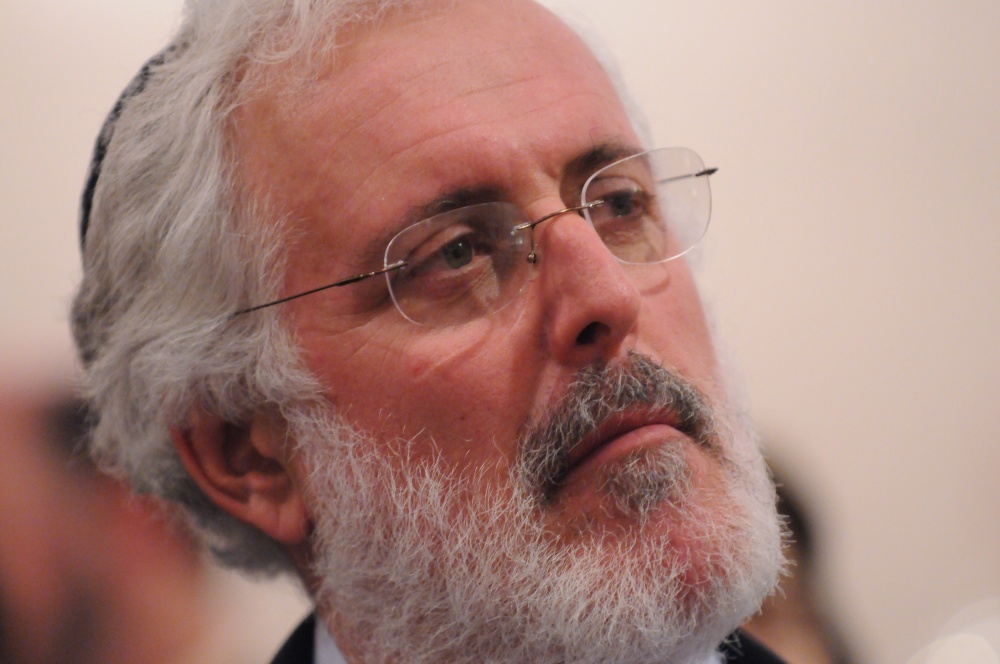
Rabbi Brian Walt Imagines a Judaism Without Zionism

My dear friend and colleague Rabbi Brian Walt just posted a transcript of his talk, “Affirming a Judaism and Jewish Identity Without Zionism” – a breathtaking piece that deserves the widest possible audience. I don’t know exactly how describe it except to say it’s at once an intensely personal confession, spiritual autobiography, political treatise and most of all, an anguished cri de coeur.

I finally had to admit to myself what I had known for a long time but was too scared to acknowledge: political Zionism, at its core, is a discriminatory ethno-nationalism that privileges the rights of Jews over non-Jews. As such political Zionism violates everything I believe about Judaism. While there was desperate need in the 1940s to provide a safe haven for Jews, and this need won over most of the Jewish world and the Western world to support the Zionist movement, the Holocaust can in in no way justify or excuse the systemic racism that was and remains an integral part of Zionism.

In the past I believed that the discrimination I saw – the demolished homes, the uprooted trees, the stolen land – were an aberration of the Zionist vision. I came to understand that all of these were not mistakes nor a blemishes on a dream – they were all the logical outcome of Zionism.

As a Jew, I believe in the inherent dignity of every human being. As a Jew, I believe that justice is the core commandment of our tradition. As a Jew, I believe that we are commanded to be advocates for the poor, the oppressed, the marginalized. Zionism and the daily reality in Israel violated each of these core values. And I could no longer be a Zionist. I will always be a person with deep and profound connection to Israel and my friends and family there, but I was no longer a Zionist.

I’m sure many readers will not agree with Brian’s conclusions. I’m even surer he will be attacked viciously by many for such “apostasy.”  As for me, I salute the courage it took for him to venture out onto such a precarious limb by sharing his thoughts.

Whatever your reactions, I hope you will be open to the challenge he lays before us.

After Cast Lead, Israeli Companies Now Profit from Rebuilding Gaza

More than three years after Israel inflicted widespread damage on the infrastructure of Gaza during Operation Cast Lead, two Israeli companies have now won bids issued by the UNICEF for reconstruction projects there.  In other words, after destroying much of the Gaza Strip, Israel is now reaping significant economic benefits from its reconstruction.

This is called “disaster capitalism” – something Israel has turned into something of an art form. To understand the phenomenon more thoroughly, read Chapter 21 of Naomi Klein’s essential book “The Shock Doctrine,” which explains in vivid detail why Israel now believes it is more in its economic interest to wage war than to make peace:

Clearly, Israeli industry no longer has reason to fear war. In contrast to 1993, when conflict was seen as a barrier to growth, the Tel Aviv Stock Exchange  went up in August 2006, the month of the devastating war with Lebanon. In the final quarter of the year, which had also included the bloody escalation in the West Bank and Gaza … Israel’s overall economy grew by a staggering 8 percent – more than triple the growth rate of the U.S. economy in the same period. The Palestinian economy, meanwhile, contracted by between 10 and 15 percent in 2006, with poverty rates reaching close to 70 percent.

My Congregation Presents “Untold Stories” of Life Under Occupation

My hometown paper, the Evanston Roundtable, has just published a thorough feature on “Untold Stories,” a program initiated by my congregation’s Peace Dialogue Task Force that features Palestinians sharing their personal stories of their lives under occupation.

“Untold Stories” was initiated after we invited two Chicago-area Palestinians  – a man from Gaza and a woman from the West Bank – two speak about their lives during our Rosh Hashanah discussion groups. The presentation was so successful and well-received, the Peace Dialogue decided to make it an ongoing program – and eventually invite other faith communities in Evanston to participate as well.

From the article:

This fall, St. Nicholas Church will host another chapter of “Untold Stories,” knowing the narratives lend themselves to surprise endings. They allow (Palestinian presenter) Daniel Bannoura to learn that in Chicago, some of his best friends can be Jewish. And (JRC’s Peace Dialogue chairperson) Sallie Gratch can discover that her involvement with Palestinians and their stories “sticks closer to my Jewish values than anything I’ve ever done.”

NATO in Chicago: A Meaningless Demonstration

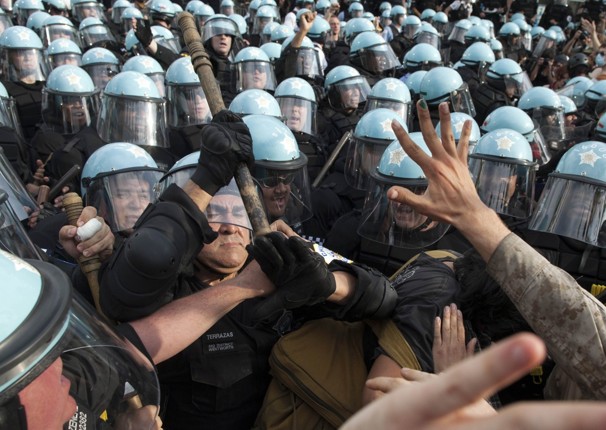
Now that the NATO Summit has swept out of my city, the local press can’t stop fawning over the performance of the Chicago police – and gloating over how silly and meaningless the mass demonstrations turned out to be in the end.

Mission accomplished. With all of the focus on the Chicago streets, I guess we were successfully distracted from the truly meaningless demonstration that was the NATO Summit.

As for me, I’m in full agreement with Stephen Walt, who has correctly pointed out that this massive, fancy, expensive, city-paralyzing event was little more than a “fig-leaf” for NATO – a pageant designed to put a happy face on an Afghanistan war that is hugely unpopular and has suffered from ever-changing objectives from the very beginning.

Actually, Obama’s summit pledge “to responsibly wind down the war” by the summer of 2014 is worse than a fig leaf – it’s simply not true. Earlier this month, Obama visited Afghanistan and signed a pact with Afghan president Hamid Karzai that will ensure a US military presence in Afghanistan until at least 2024. (This agreement was first made in secret, then when the news leaked out, the administration vehemently denied it. Later they conceded it was true, making no attempt to explain why they lied in the first place.)

And please don’t be fooled by the explanation that NATO will be ending “combat operations” by 2014.  Officials have openly stated that these post-2014 “non-combat” troops will continue to launch “anti-terror” raids – which is simply just another way of saying they will continue to do what they’ve been doing all along.

But for the most powerful rejoinder to the farce that was NATO in Chicago, I strongly encourage you to read this important piece by Gary Younge, who pointed out the irony (or if you prefer, the utter hypocrisy) of Mayor Rahm Emanuel’s boast that the summit was “an opportunity to showcase what is great about the greatest city in the greatest country.”

The murder rate in Chicago in the first three months of this year increased by more than 50% compared with the same period last year, giving it almost twice the murder rate of New York. And the manner in which the city is policed gives many as great a reason to fear those charged with protecting them as the criminals. By the end of July last year police were shooting people at the rate of six a month and killing one person a fortnight.

This violence, be it at the hands of the state or gangs, is both compounded and underpinned by racial and economic disadvantage. The poorer the neighbourhood the more violent, the wealthier the safer. This is no coincidence. Much like the NATO summit – and the G8 summit that preceded it – the system is set up not to spread wealth but to preserve and protect it, not to relieve chaos but to contain and punish it…

The paradox inherent in a city like Chicago hosting a summit like this not only lays bare the brutal nature in which these inequalities are maintained at a global level, but it lends us an opportunity to understand how those inequalities are replicated locally.

Chicago illustrates how the developing world is everywhere, not least in the heart of the developed. The mortality rate for black infants in the city is on a par with the West Bank; black life expectancy in Illinois is just below Egypt and just above Uzbekistan. More than a quarter of Chicagoans have no health insurance, one in five black male Chicagoans are unemployed and one in three live in poverty. Latinos do not fare much better. Chicago may be extreme in this regard, but it is by no means unique. While the ethnic composition of poverty may change depending on the country, its dynamics will doubtless be familiar to pretty much all of the G8 participants and most of the NATO delegates too.

The gated communities – like the one in which Trayvon Martin was killed – have been erected on a global scale to protect those fleeing the mayhem wrought by our economic and military policies. This was exemplified last March when a boat with 72 African refugees fled the NATO-led war in Libya. When the boat found itself stranded it sent out a distress signal that was passed on to NATO which had “declared the region a military zone under its control”, and then promptly ignored it, as did an Italian ship. The boat bobbed around in the Mediterranean for two weeks. All but nine on board were left to die from starvation, thirst or in storms, including two babies.

A meaningless demonstration indeed…