Author Archives: Rabbi Brant Rosen

Unknown's avatar

About Rabbi Brant Rosen

I'm a rabbi, blogger, and activist with a special interest in Israel/Palestine justice work.

Why Should European Jews Move to Israel? Israel is Already Europe

lehava1612014

There has been a great deal of press devoted to the Israeli government’s efforts to convince European Jewry to escape anti-semitism and flee for their lives to Israel. Leading the charge is Israeli Prime Minister Benyamin Netanyahu, who commented thus following the attack on a Copenhagen synagogue this past weekend:

Jews were killed on European land just because they were Jewish. This wave of attacks will continue. I say to the Jews of Europe – Israel is your home.

I can’t help but be struck a certain absurdity at the heart of Netanyahu’s invitation. Why should European Jews move to Israel? After all, it could be compellingly argued that Israel is already a European nation.

Israel was, after all, born of a distinctly European ideology; indeed, the roots of political Zionism are buried firmly in the soil of 19th century European nationalism and colonialism. Zionist figures from Theodor Herzl (whose novel “Altnueland” imagined the Jewish state in Palestine à la 19th century Vienna) to former Prime Minister Ehud Barak, who infamously described Israel as “a villa in the jungle,” have fancied the Israel as a European style nation-state outpost in an otherwise uncivil Middle East.

This socio-cultural legacy is manifest in a variety of ways. It’s enormously telling, for instance, that Israel is the only Middle Eastern country that chooses to compete in the annual Eurovision Song Contest, as well as the European soccer and basketball championships. At the end of the day, though Israel and the EU may experience their fair share of political tensions, Israel is a European country at heart in so many tangible and intangible ways.

Israel has been also proving itself all-too European in a decidedly different way: through the the nationalist racism that plagues its civic life. To cite but one example, Israel has its own brand of European-style racist soccer hooligans who cheer on their teams by violently attacking minorities in the streets.

From March 2012:

Hundreds of Beitar Jerusalem supporters assaulted Arab cleaning personnel at the capital’s Malha shopping center on Monday, in what was said to be one of Jerusalem’s biggest-ever ethnic clashes. “It was a mass lynching attempt,” said Mohammed Yusuf, a team leader for Or-Orly cleaning services.

Despite CCTV footage of the events, no one was arrested. Jerusalem police said that is because no complaint was filed. Witnesses said that after a soccer game in the nearby Teddy Stadium, hundreds of mostly teenage supporters flooded into the shopping center, hurling racial abuse at Arab workers and customers and chanting anti-Arab slogans, and filled the food hall on the second floor.

Or witness this horrid incident from this past summer:

Earlier this week, Israeli authorities arrested six men in connection with the ghastly killing of Palestinian teen Mohammed Abu Khieder, who, according to reports, was forced into a car and then beaten and burned to death…

Initial reports suggested that some of the suspects in Abu Khieder’s killing were connected to La Familia, a notorious wing of soccer fans connected to Beitar Jerusalem, one of Israel’s more prominent soccer clubs. La Familia… has come to define the club to outside observers as a bastion of xenophobia and racism in Israel.

But it’s not only soccer hooligans. Believe it or not, this is an actual report from Ha’aretz last summer:

Some of the right-wing protesters who beat leftist demonstrators in Tel Aviv on Saturday night wore T-shirts bearing a neo-Nazi symbol, photos and videos show.

As shown on journalist Tal Schneider’s Hebrew-language blog, some of the right-wingers wore T-shirts bearing the slogan “Good night left side.”

Neo-Nazis in Europe wear shirts with this phrase, which accompanies an image of a man attacking a left-wing activist, denoted by a star or anarchy symbol…The emblem and slogan are a response to the original left-wing counterpart: “Good night white pride.”

While this kind of street racism is deeply disturbing, it is, of course, the legislated variety that is traditionally the most dangerous. As I wrote this past October in addressing the recent rise of European anti-semitism,

As troubling it is to read of shootings and firebombings, I believe we should be far more disturbed when we hear reports of far-right and even neo-Nazi candidates being elected into Parliaments throughout Europe.

So too we should be equally as troubled by the increasing numbers of high ranking racist Israeli politicians who incite violence against Israel’s African immigrants, call for the transfer of Palestinian citizens of Israel out of the country, or introduce legislation that effectively force non-Jews out of its political life.

The legislation I’m speaking of, by the way, was not introduced by a fringe Knesset minister – it Is advocated by none other than the Prime Minister of Israel himself, who is currently attempting to change Israel’s Basic Laws to legally define Israel as “the national state of the Jewish people.” As Netanyahu explained it, Israel “is the nation state of one people only – the Jewish people – and of no other people.”

Statements like this make it clear that Israel is not merely a European-style nation – it is a nation that dances with some of the darkest aspects of European ethnic nationalism: i.e., a nation founded exclusively upon the identity of one group and that ipso facto treats its non-majority population as other.

In this regard, we might say that Israel’s commitment to democracy measures up quite poorly against many Western European countries. Just compare Netanyahu’s comments above to the recent statement by French Prime Minister Manuel Valls, that “A Jew who leaves France is a piece of France that is gone.” Or to the remarks made by Danish Prime Minister Helle Thorning-Schmidt this past Monday following the Copenhagen synagogue attack:

I want to make very clear that the Jewish community has been in this country for centuries… They belong in Denmark. They’re part of the Danish community and we wouldn’t be the same without the Jewish community.

Before we judge European countries to harshly for this recent rise in anti-semitism, consider this: could you possibly imagine Netanyahu – or any Israeli Prime Minister, for that matter – saying this following the immolation-murder of Palestinian teenager Mohammed Abu Khieder:

I want to make very clear that the Palestinian community has been in this country for centuries… They belong in Israel. They’re part of the Israeli community and we wouldn’t be the same without the Palestinian community.

Let’s be clear. Those European Jews who do in fact pack up and move to Israel are not simply fleeing anti-semitism to find safe haven in the Jewish state. They are moving to a ethnocractic nation-state that is coaxing them to its shores because it needs them to stand down the non-Jewish “demographic threat.”

And in so doing they are, in a very real way, opting into the power and privilege that comes with being the majority oppressor class in a different kind of European country.
Anti-Semitic Violence in Copenhagen: Responding With Solidarity, Not Cynicism

rtr4plu4

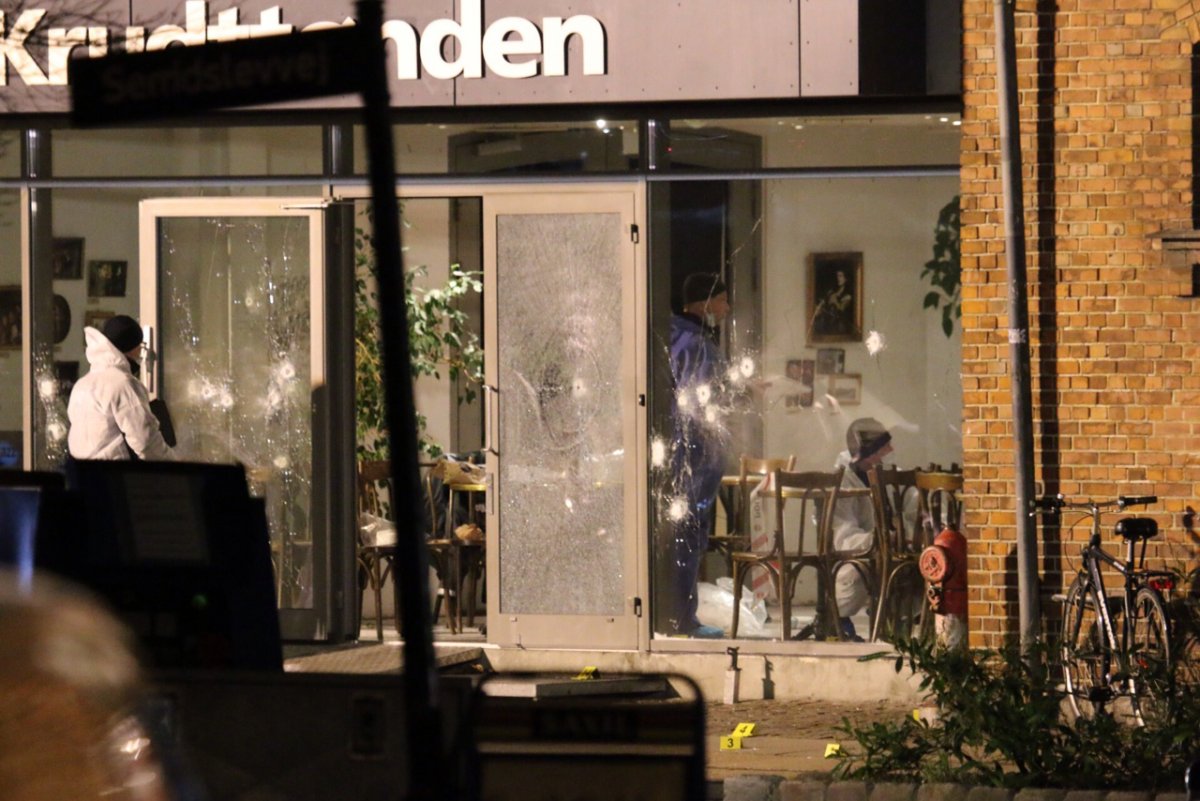
Another week, another tragic hate crime – this time in Copenhagen, in which a gunman attacked a cultural center during a program on freedom of expression, killing 55 year old film director Finn Nørgaard, then shortly thereafter shot and killed Dan Uzan, 37, who was guarding a synagogue during a Bat Mitzvah celebration. Three police officers were wounded during the first attack and two during the second. The gunman, whose identity has not yet been made public, was reportedly “on the radar” of Danish intelligence services and may have been “inspired by militant Islamist propaganda.”

There was a chilling similarity between this attack and a murderous incident in a Parisian kosher market in which four Jewish hostages – Yoav Hattab, Philippe Braham, Yohan Cohen and Francois-Michel Saada – were brutally executed. I use the word chilling because I know all too well that incidents such as these conjure up our worst fears about Jewish life in Europe.

Alas, there are many in the Jewish community who are more than willing to respond to these kinds of attacks by cynically playing on those fears. None more so that Israeli Prime Minister Benyamin Netanyahu who, in the wake of the Paris killings exhorted French Jews to flee Europe and immigrate to Israel:

To all the Jews of France, all the Jews of Europe, I would like to say that Israel is not just the place in whose direction you pray, the state of Israel is your home…This week, a special team of ministers will convene to advance steps to increase immigration from France and other countries in Europe that are suffering from terrible anti-Semitism.

At the time, I couldn’t help but wonder at the twisted logic of Netanyahu’s invitation: telling the Jews of France to flee their homes to the safety and security of a over-militarized Jewish garrison state in the Middle East, where just last summer Israeli citizens spent day after day running for their lives to bomb shelters?

And on still more twisted level, I couldn’t help but note how Netanyahu’s attitude toward Europe ironically plays into the designs of the worst European anti-Semites. Ha’aretz bureau chief Chemi Shalev nailed it perfectly with this tweet:

Call for mass Jewish emigration helps terrorists finish the job started by Nazis and Vichy: making France Judenrein.

Following the Paris attacks, I was enormously heartened by the strong response of French Jewry to Netanyahu’s heavy-handed overtures. After he spoke at a Paris synagogue, he was forced to stand by awkwardly when the congregation spontaneously burst into the French national anthem. He was also dressed down by Rabbi Menachem Margolin, director of the European Jewish Association, who said in an interview:

Every such Israeli campaign severely weakens and damages the Jewish communities that have the right to live securely wherever they are. The reality is that a large majority of European Jews do not plan to emigrate to Israel. The Israeli government must recognize this reality… and cease this Pavlovian reaction every time Jews in Europe are attacked.

Netanyahu clearly has not gotten the message. Following yesterday’s attacks in Copenhagen, he’s played the same cynical card, calling for “massive immigration” and making a thinly reference to the Holocaust by telling Danish Jews:

Jews were killed on European land just because they were Jewish. This wave of attacks will continue. I say to the Jews of Europe – Israel is your home.

Again, it seems European Jewry is having none of it. Denmark’s Chief Rabbi Jair Melchior has said today that he was “disappointed” in Netanyahu’s remarks, adding “Terror is not a reason to move to Israel.”

No, the answer to European anti-Semitism is most decidedly not to adopt a Zionist victim mentality and urge the poor Jews of Europe to flee for their lives. Quite the opposite.

I said as much during my sermon this last Yom Kippur:

What should be our response as we read these reports of rising European anti-Semitism? I would suggest that the answer is not to put our faith in nationalism and militarism to keep the Jewish people safe. I believe our first response should be to understand that anti-Semitism is but one form of racism and prejudice – and as such it is no different than the intolerance that is directed toward any people or group in the world who are perceived as “other.” The appropriate response, it seems to me, is not to recede behind higher walls or build stronger weapons, but rather to find common cause and solidarity with all who are being targeted in this way. To publicly affirm that the well-being of the Jewish people is irrevocably connected to the well-being of every group victimized by racism.

From Paris to Chapel Hill to Copenhagen: the answer, as ever, is to redouble our efforts toward solidarity, democracy, and pluralism no matter where we happen to live.

Murder in Chapel Hill: This Was Not About Parking and Why That Matters

e1bb8d4656c04448b78098a835378f40_18

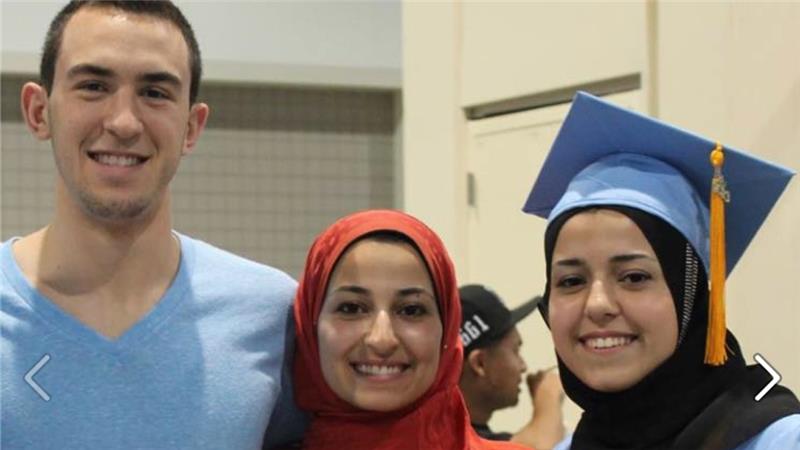
There has been so much – far too much – media discussion as to whether or not the tragic murder of three Muslim-American students, Deah Shaddy Barakat, Yusor Mohammad Abu-Salha and Razan Mohammad Abu-Salha, was a hate crime or merely a parking dispute. During the course of this open conversation, some very well-meaning people have asked, why does it matter if Craig Stephen Hicks killed these three young people because they were Muslim? Hate is hate. Regardless of the murderers specific motivation, three infinitely precious lives have been snuffed out forever.

That is the kind of comment that can only be made by someone who has never felt discriminated against or targeted because of the group to which he/she belongs.

Why does it matter? Because too often, these kinds of crimes are not simply random acts of hate. They are part of a larger pattern. And unless we recognize these patterns and do what we can to address their root causes, these tragedies are surely destined to recur again and again.

Unless one is part of a group that has been historically targeted by hate and intolerance, it is difficult to fully understand the sense of vulnerability that comes from being singled out in this way. As a Jew, I completely understand the feelings of Muslims the world over who saw nothing random about this act – and are deeply galled by the suggestion that this was caused by nothing more than a parking dispute. Such an experience is born from living within a legacy of hate being directed toward one’s people over and over again.

As the Muslim-American journalist Deanna Othman wrote powerfully in today’s Chicago Tribune:

You ask yourself: Are we destined to remain “otherized,” categorically excluded, alienated and repelled from the very society in which we live? Must we constantly assert our Americanness and prove our loyalty, only to be demonized, vilified and caricatured by our media?

It is exhausting to feel compelled to constantly validate your identity. Must Muslims be paragons of excellence, lest there be a motive found for their murder other than sheer hatred? Littering? Running a stop sign? Being too loud?

Existing?

I frankly wish that the media would focus less on the tortured psyche of Craig Stephen Hicks and much more on the truths expressed by the words above. The real question we should be asking ourselves is not whether or not this was about parking spaces but rather how we will address the rising culture of Islamophobia in this country so that there will be less crimes such as this in our future?

While we’re at it, I would suggest avoiding the well-meaning but ultimately empty bromides that point out it doesn’t really matter why Hicks pulled the trigger. It does matter. It matters profoundly.

Living our Values: Quaker and Jewish Connections – Part 2

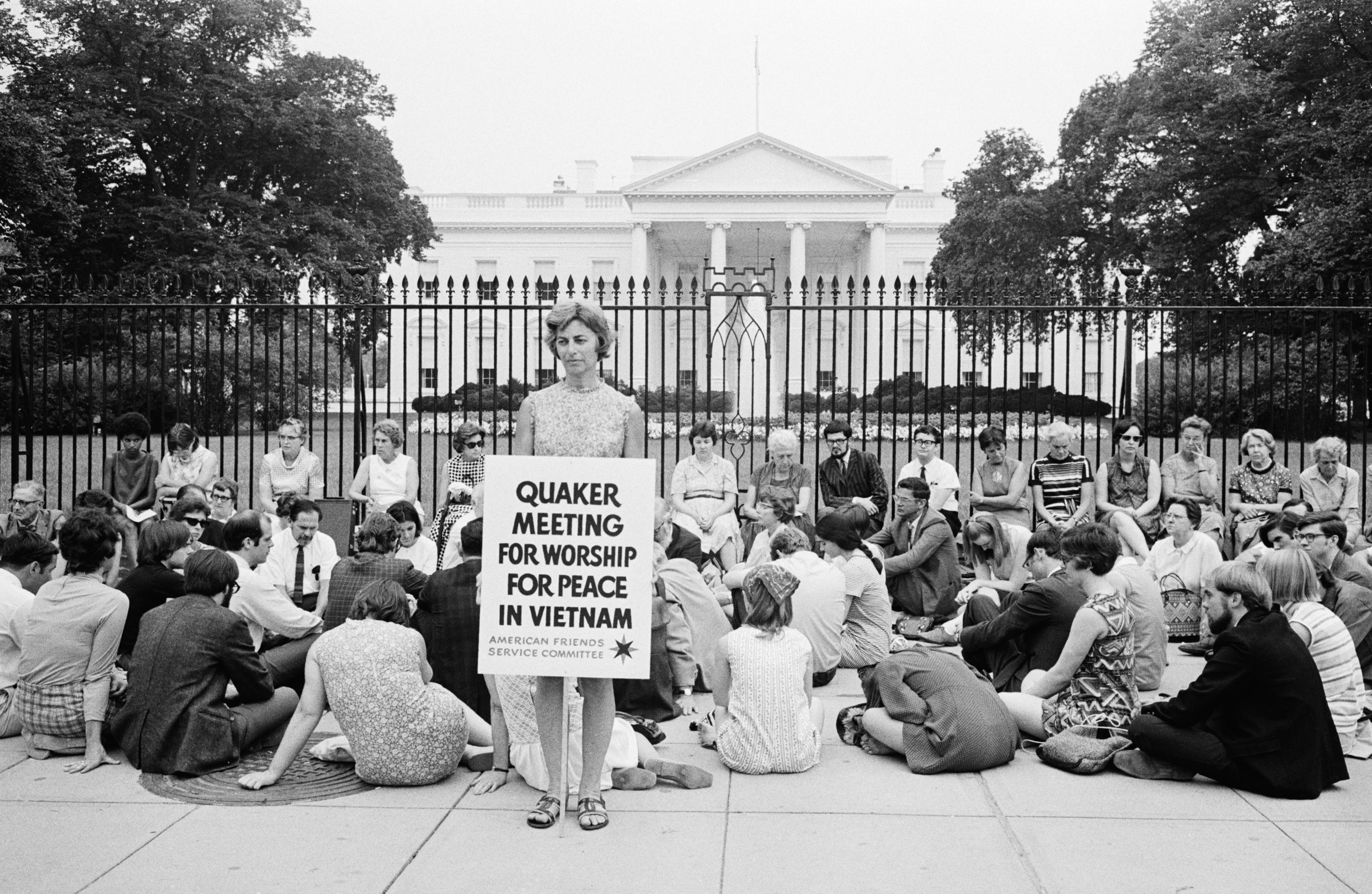
Quakers Demonstrating Outside the White House

Crossposted with “Acting in Faith”

In my previous post, I explored the ways that Quakers and Jews have been historically connected and proposed a deeper spiritual connection between our respective faith traditions. As a rabbi who now works for AFSC, I can say without hesitation that my spiritual life has greatly benefitted from my encounter with Quaker thought and practice. The more I dwell in these two religious communities, the more I am able to discern important parallels between them.

I’ve found particularly fertile ground in my study of Quaker Testimonies, which have clear commonalities with Jewish spiritual values. Here, then, are some excerpts from the AFSC booklet, “An Introduction to Quaker Testimonies,” juxtaposed with parallel values from Jewish tradition. I present them with the hopes that such a consideration might point us toward a deeper place of Quaker-Jewish encounter, collaboration and solidarity.

Peace: Peacemaking at Home and Abroad

Friends oppose and refuse to engage in war and violence. In pursuit of lasting, sustainable peace, they seek to eliminate causes of violent conflict, such as poverty, exploitation and intolerance.

For us, peace is not just ending war or violence, but nurturing the capacity of individuals, communities, and societies to sustain harmonious relationships based on mutual respect and caring for the welfare of all. We seek to reconcile enemies and serve the needs of all sides torn by violent strife.

Shalom: The Pursuit of Peace

Jewish tradition is replete with commandments that exhort the pursuit of peace as a central religious precept. As the great Jewish sage Rabbi Hillel wrote, “Be disciples of Aaron, loving peace and pursuing peace, loving people and bringing them closer to Torah.”

While Judaism contains a vast repository of positions on the subject of war and peace, it is certainly possible to discern a distinct tradition of Jewish pacifism. In fact, Judaism itself was born out of an act of non-violent cultural resistance, when in the wake of the destruction of the Second Temple, Rabbi Yochanan Ben Zakkai refused to join the ill-fated Jewish revolt against Rome and instead negotiated to establish a center of Jewish learning in Yavneh. Ben Zakkai’s courageous rejection of Jewish violence enabled Judaism to survive and grow as a global religious faith. Moreover, throughout Jewish history, Jewish pacifism has been promoted by important figures such as Rabbi Aaron Samuel Tamaret, Rabbi Judah Magnes, Rabbi Leonard Beerman, and Rabbi Everett Gendler, among many others.

Equality: Seeking Social Justice

Friends hold that all people are equal in the eyes of God and have equal access to the “inner Light.” This profound sense of equality leads Friends to treat each person with respect, looking for “that of God” in everyone.

AFSC supports the development of societies and structures that recognize the dignity of every person. We seek to work with all people in pursuit of justice – the economically impoverished and the materially comfortable, the disenfranchised and the powerful – inviting the Spirit to move among all these groups, making great change possible.

Tzelem Elohim – Humanity Created in the Divine Image

One of the central universalist values in Jewish tradition is the Biblical teaching that allof humanity is created in God’s image. In a celebrated classical Jewish commentary on the book of Leviticus, Rabbi Akiba and Rabbi Ben Azzai debate the central principle of Torah. Rabbi Akiba cites the verse from Leviticus, “You shall love your neighbor as yourself.” In response, Ben Azzai chooses the verse from Genesis 5: “When God created humankind, God created humankind in God’s image.”

Akiba’s approach is the more particularistic philosophy; according to him, Judaism is rooted in the idea that we should love those around us – our family, friends and community. Ben Azzai’s, citation, the other hand, holds that we should respect and honor all people whether we are in direct relationship with them or not. From this we learn that all people – regardless of religion, ethnicity, nationality, age, mental faculties, physical capabilities, etc. – are of intrinsic and inestimable value.

Integrity: Consistency in Word and Deed

In the AFSC community, we are committed to making our words, actions, and beliefs consistent. We “speak truth to power” – and to each other – even when it is difficult and our message may be unpopular. We deal honestly and fairly with colleagues and partners. We take responsibility for our actions and their results. We fulfill our commitments, and we give credit to others for their contributions.

Derech Eretz: The Way of the World

Derech Eretz  is often understood to mean “common decency,” its essential meaning is even more fundamental. A classic Jewish saying teaches: “Derech Eretz precedes Torah” – suggesting that even before we engage deeply spiritual behaviors such as prayer or study, we must first ensure that we are living lives of fairness and integrity.

The Jewish value of integrity is also deeply rooted to the prophetic ideal: i.e., “speaking truth to power,” even when (or especially when) that truth may well not be particularly popular. In the words of the great Rabbi Abraham Joshua Heschel, who famously commented after marching with Dr. Martin Luther King in Selma:

For many of us, the march from Selma to Montgomery was both protest and prayer. Legs are not lips, and walking is not kneeling. And yet our legs uttered songs. Even without words, our march was worship. I felt my legs were praying.

Community: Living in Fellowship

At AFSC, we nurture relationships and partner with communities, believing that, in gathering together, people increase their strength, vision, wisdom and creativity. We accompany and support communities in their efforts to seek justice and improve their own lives and circumstances. Where people are divided, we strive to build bridges, encourage trust, and create spaces for dialogue and cooperation.

Kehillah – God in Community

In the words of Rabbi Lawrence Kushner: “Hermits and monasteries are noticeably absent from Jewish history; we are hopelessly communal people.”

According to the Talmud, “When two or three people study Torah, God is present.” Not only does this teaching reinforce the central importance of study; it illuminates the sacred nature of relationship itself. Quite simply, God is most immediately present in fellowship. The personal and political implications of this idea are powerful indeed.

Simplicity: Spirit-Led Restraint

In contemporary terms, Friends try to live lives in which activities and possessions so not get in the way of open and unencumbered communication with others and with one’s own spirituality. Clearing away the clutter makes it easier to hear the “still small voice within.”

In (AFSC)’s work, simplicity requires focusing our efforts on what is most important rather than diffusing our energies too broadly. In our personal lives, simplicity may mean limiting our consumerism – and resisting over-commitment, so that we have time to care for ourselves and to be present with one another.

Histapkut – Simplicity

These words remind me in particular of the values of Musar – a Jewish ethical movement that arose in Eastern Europe in the 19th century and has undergone something of a contemporary popular revival in recent years.

The importance of living a life of simplicity (in Hebrew: “Histapkut”) lies at the center of the Musar way of life. On this subject, the contemporary Musar teacher Rabbi Ira Stone has written powerfully:

Defined as temperance, Histapkut is often seen as embracing simplicity, being content with less. Not focusing on trying to fulfill never-ending needs and desires frees us to be fully present to the moment and available to the others in our lives…

(Histapkut) asks us to respond to the basic questions about our relationship to the acquisition of the material in our lives. “What is enough?” “Do I have enough?” “Can I choose to be content with less?” “What am I consciously choosing to acquire?”

Stewardship: Care for the Earth and Its Inhabitants

Friends strive to use God’s gifts wisely, with gifts conceived in the broadest of terms. These gifts include our talents and our possessions, as well as our natural environment. Friends believe that such gifts are not ours alone.

(At AFSC), we are attentive to conserving energy, recycling, and reducing waste. Concern for the ecosystem also leads us to strive to reduce our personal consumption and develop a simple yet adequate lifestyle.

Shomer Adamah/Ahavat Habriyot – Guarding the Earth/Love for All that Lives 

The importance of human stewardship over creation has deep roots in Jewish tradition. The very first chapter in the Torah makes it clear that the earth belongs to God and that humanity are its stewards. Judaism later expanded this idea to develop a host of commandments focused on the care of the earth and its creatures.

Judaism teaches us over and over again that acts of care for our natural world are among the most essential in our tradition. According to an oft-quoted classical Jewish commentary on the book of Ecclesiastes:

When God created the first human beings, God led them around the Garden of Eden and said: “Look at my works! See how beautiful they are—how excellent! For your sake I created them all. See to it that you do not spoil and destroy My world; for if you do, there will be no one else to repair it.

In this era of climate change and an ever-increasing reliance on fossil fuels, this sacred rejoinder has clear and obvious ramifications.

Though the examples above merely scratch the surface of a larger Quaker-Jewish inquiry, I offer them here in the hopes that they might offer us a useful place to start. Indeed, as I think more deeply about these Quaker-Jewish points of spiritual connection, I can’t help but hope that such an investigation might eventually take us to a place beyond simple interfaith dialogue.

Might this spiritual exploration have real movement-building implications for Jews and Quakers? I’m genuinely excited by the prospect.

A Rabbi at AFSC: Quaker and Jewish connections – Part 1

American Quaker Marjorie McClelland with Jewish refguee child, Vichy France (photo: Ha'aretz)

American Quaker Marjorie McClelland with Jewish refugee child, Vichy France (photo: Ha’aretz)

(Crossposted with Acting in Faith)

When I tell people that I’ve just started working for the American Friends Service Committee, some will inevitably scratch their heads and ask, “What is a rabbi doing working for a Quaker organization?”

Those who know me well, know enough not to ask. During my twenty-plus years as a congregational rabbi/activist, I’ve often worked alongside AFSC staff and progressive Quakers, particularly on the issue of Mideast peace and justice. I’ve cultivated a wonderful ongoing relationship with the Friends Meeting in my hometown of Evanston and have spoken there on more than one occasion. During the course of my travels throughout the peace and justice activist community in Chicago and beyond, I can say without hesitation that some of my best friends have been Friends.

For those who do ask, I explain that while AFSC is a Quaker organization, it is wonderfully multi-faith in its composition. I’m certainly not the first Jew to work for AFSC (nor am I even the first rabbi – my friend and colleague Rabbi Lynn Gottlieb served as Co-Director of AFSC’s Middle East Program in San Francisco from 2007 to 2009). Since the announcement of my hiring, in fact, I’ve heard from increasing numbers of Jewish friends and colleagues who have told me of their involvement in AFSC in various capacities over the years.

Of course this connection is more than merely anecdotal; there are in fact important historical affinities between Quakers and Jews. During the course of the 20th and 21st centuries, our respective communities have been proportionally well represented in progressive movements of social change, particularly in the American civil rights and anti-war movements. Our faith communities are also historically linked by the heroic efforts of Quakers and the AFSC to help save thousands of European Jews during the Holocaust and to provide relief for scores of Jewish refugees in the war’s aftermath.

Quakers from AFSC handing out blankets in Gaza, 1948 (photo: AFSC)

Quakers from AFSC handing out blankets in Gaza, 1948 (photo: AFSC)

In more recent years, it would be fair to say that the Quaker-Jewish connection has become somewhat fractured over the Israel-Palestine issue. While this subject deserves consideration in another blog post, I will only say for now that I have long been dismayed at the hypocrisy of those in my community who applaud the Quakers’ work on behalf of Jewish refugees, yet bitterly criticize them for applying the very same values and efforts on behalf of Palestinian refugees. I would add as well that there are increasing numbers of Jews like myself who reject the nationalism/militarism of Zionism in favor of a Jewish vision that promotes peace with justice and full rights for all who live in the land. I do believe that this trend is providing an important new place of connection between Jews and Quakers – particularly among a younger generation of activists and organizers.

Beyond these historical connections, I’ve become increasingly interested in exploring a different form of Quaker-Jewish encounter: namely, the deeper spiritual commonalities between our respective faith traditions themselves. I do believe that this Jewish-Quaker connection transcends simple political affinity. In this regard, I’ve been particularly struck by Jews who identify deeply with the Jewish people and Jewish tradition while at the same time unabashedly embrace Quaker practice and spirituality.

For instance, Claire Gorfinkel, who worked for the AFSC for many years and attends both a Quaker Meeting and a Jewish synagogue, explored this territory memorably in her 2000 Pendle Hill pamphlet, “I Have Always Wanted to be Jewish – And Now Thanks to the Religious Society of Friends I Am.”

For Gorfinkel, the most critical point of commonality between these two faiths lies in their rejection of Divine intermediation as well as their powerful ethical traditions:

For both Quakerism and Judaism, God is directly accessible to the seeker, without need for priests or other intermediaries. God appears in the faces of our community and in the wonders of our natural world.

For both traditions, faith and the words we use are far less important than how we treat one another and our environment. Our human worth is measured in acts of loving kindness, “doing justice, loving mercy, walking humbly with your God.” (p. 31)

More recently, Jonathan Zasloff, a Jewish law professor at UCLA wrote a powerful piece for the Los Angeles Jewish Journal entitled, “Some of My Best Jews are Friends.” In his article, a commentary on Prophetic portion for the Sabbath of Hanukkah, Zasloff revealed that he regularly attends a Quaker meeting – and that the practice of silence “has deeply enhanced (his) Jewish practice.”

Contending that “silence and individual spiritual expression” are “absent from modern Judaism,” he suggested “there is no reason why Jews cannot adopt Quaker practice:”

Some form of silent worship has a long tradition in Judaism, one that our people has regrettably allowed to lapse. The Talmudic sages would “be still one hour prior to each of the three prayer services, then pray for one hour and afterwards be still again for one hour more.” (Moses Maimonides) interpreted this as silent motionlessness in order “to settle their minds and quiet their thoughts.”

As a Jew who also finds a comfortable spiritual home in the Quaker community, I’m encouraged and excited by these kinds of connections. In our increasingly multi-faith 21st century, I firmly believe it is time to seek out those places where we might lift up and celebrate our spiritual commonalities rather than simply fall back upon a religious tribalism for its own sake.

As I think more about potential areas of further Jewish – Quaker encounter, I am particularly intrigued by the parallels between Quaker Testimonies and Jewish religious values. Indeed, when I first read AFSC’s booklet “An Introduction to Quaker Testimonies,” I was immediately struck by a myriad of connections – causing me to think more deeply about the similar ways these ideals have been understood and acted upon in unique ways by our respective faith traditions.

As I read through them, I’m struck by a number of questions. As a Jew who has found a comfortable home in the Quaker community, I wonder:

To what extent do these testimonies/values reflect the unique experiences of our respective faith communities?

What is ultimately more important: the uniqueness of our paths or our shared vision of universal peace and justice?

And how might we find the wherewithal, despite our differences, to travel this road together?


Talking JRC and AFSC on WBEZ: My Interview with “The Morning Shift”

MicI had the pleasure this morning of being interviewed by Chicago Public Radio’s Jason Marck for the “The Morning Shift” program on WBEZ.

Here’s their description of our conversation:

After 17 years as the rabbi and spiritual leader at JRC-The Jewish Reconstructionist Congregation in Evanston–Rabbi Brant Rosen conducted his last service on December 19th. His views, work, and words on the Israel/Palestine issue caused deep rifts among the members at JRC, and Rosen ultimately believed it was best for himself and the community that he resign. Rosen joins us to talk about the decision, the controversies, and his new job with the American Friends Service Committee.

Click here to give a listen.

Thoughts on the Passing of Rabbi Leonard Beerman, of Blessed Memory

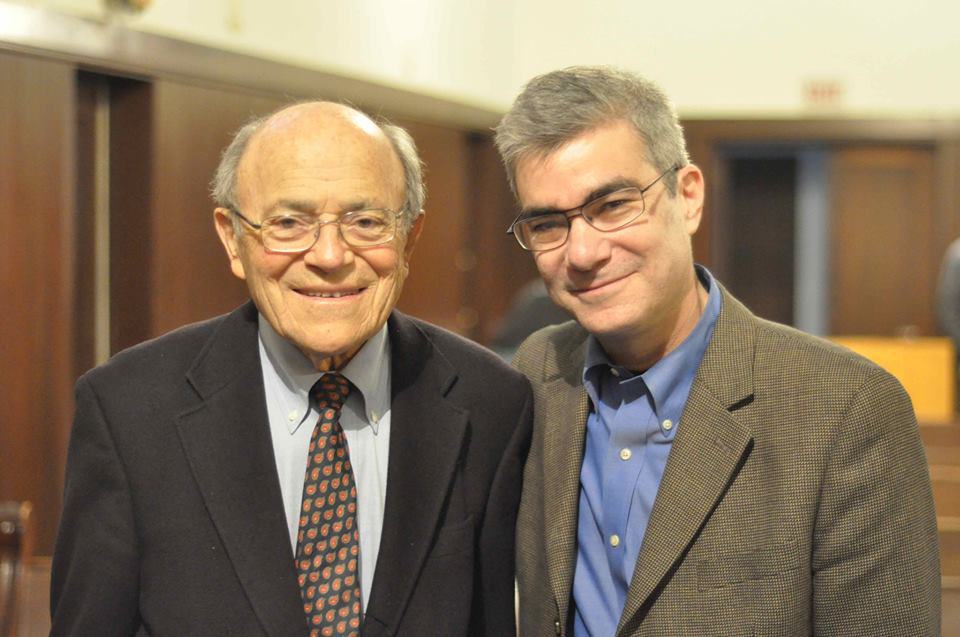
With Rabbi Leonard Beerman, left, Los Angeles, 2/2014

With Rabbi Leonard Beerman, left, Los Angeles, 2/2014

I am devastated to learn of the passing of my dear friend and mentor, Rabbi Leonard Beerman z”l, who died early this morning at the age of 93. His death comes as a profound shock to those of us who knew and loved him. Despite his advanced age, Leonard maintained his extraordinary vigor and energy until very recent days.

Readers of this blog may recall my post on our joint speaking presentation in Los Angeles last February. It was such a tremendous honor for me hold this open conversation with him, in which we mutually explored the subject of “Progressive Politics from the Pulpit.”

Here’s what I wrote at the time:

As Rabbi Beerman has been one of my true rabbinical heroes for so many years, it was truly a thrill for me to share a podium with him as we shared our thoughts on the challenges facing congregational rabbis who engage in progressive social justice activism.

As a Los Angeles native myself, I’ve long known of Rabbi Beerman’s inspired work during the years he served as the Senior Rabbi of LA’s Leo Baeck Temple. He was the founding rabbi of Leo Baeck in 1949 and stayed there for the next 37 years until his retirement in 1986. During that time, he challenged his congregants – and the Jewish community at large – to awaken to some of the most critical socio-political issues of the late 20th century.

Rabbi Beerman was a maverick in his day – and in many ways still is. He is a self-described pacifist who came by his stance honestly, after serving in the Marines in World War II and in the Haganah in 1947 while attending the newly founded Hebrew University. He was a student of Rabbi Judah Magnes, the great Reform leader who advocated for a bi-national state for Jews and Arabs – and he remains a passionate advocate for a just peace in Israel/Palestine to this day.

Rabbi Beerman came to Leo Baeck fresh from Hebrew Union College in Cincinnati during the height of the Cold War and quickly became an outspoken and visionary peace activist. In one of my very favorite stories, he described his anguish at the execution of Julius and Ethel Rosenberg, which took place on a Friday afternoon in 1953. During Shabbat services that evening, he decided to add their names to the end of the yahrtzeit list (the list of names read before the recitation of the Kaddish) much to the dismay of some of his congregants.

Rabbi Beerman was also one of the first rabbis in the country to publicly condemn the US war in Vietnam and later instituted draft counseling in his congregation. He invited such figures as Daniel Ellsberg (who spoke on Yom Kippur afternoon while he was awaiting trial) and Cesar Chavez to speak at his synagogue. Rabbi Beerman was also a visionary leader for civil rights and worker justice and during the nuclear arms race was one of the leading Jewish voices in the disarmament movement.

I’ve particularly admired Rabbi Beerman’s fearlessness when it came to the subject of Israel/Palestine – clearly the issue that has earned him the angriest criticism from the Jewish establishment. He was a consistent and faithful advocate for justice for the Palestinian people long before such a thing was even countenanced in the Jewish community. Literally going where few other rabbis would dare to tread, he met with Palestinian leaders such as Yasser Arafat and Fatah founder Abu Jihad. That he was able to do all of this while serving a large, established Los Angeles synagogue speaks volumes about his integrity – and the abiding trust he was able to maintain with the members of his congregation.

Now in his 90s, Rabbi Beerman is still deeply engaged in the issues of our day. During our conversation together, we spoke about the current state of the Israel/Palestine conflict, the languishing peace process and the rise of the Boycott, Divestment and Sanctions movement. I mentioned to those present that in 2008, during the height of Operation Cast Lead, when Rabbi Brian Walt and I were calling rabbinical colleagues to sign on to a Jewish Fast for Gaza, Rabbi Beerman was one of the first to sign on without hesitation. He did the same when we were forming the Jewish Voice for Peace Rabbinical Council and his presence there is truly an inspiration to our members.

Little did I know, as I wrote these words, that I would be posting them again in less than a year’s time, as a tribute to his memory. And little did I know last February, as I openly shared my open admiration for Leonard as a congregational rabbinical role model, that in only a few months I would be find myself unable to continue combining radical political activism with a congregational rabbinate. I am all the more in awe of what Leonard was able to achieve, serving as the rabbi for Leo Baeck Temple for 37 years as he bravely spoke out on important and controversial issues of his day. We will not soon see the likes of him again.

I encourage you to read this wonderful LA Times profile of Rabbi Beerman that was published just last month. You can see our presentation in its entirety below.

May his memory be a blessing forever.

From JRC to AFSC: On Painful Transitions and Exciting New Beginnings

logo_1_1As many readers of this blog already know, I resigned from Jewish Reconstructionist Congregation last August and have recently started a wonderful new gig as Midwest Regional Director for the American Friends Service Committee. I’m still sorting through a variety of emotions. The circumstances of my leaving JRC were complex and painful – and things were complicated yet further by a spate of (largely inaccurate) media articles about my resignation. I wrote about this subject at length in my Erev Rosh Hashanah sermon; of all the reports, probably the most thorough and accurate was this piece in the Chicago Jewish News.

afsc-logo-gifI will undoubtedly share some thoughts about my experience in future posts. In the meantime, however, I am looking forward to the future with genuine excitement and am thrilled to be working for the AFSC, an organization I’ve known well for many years and whose peace and justice mission is so near and dear to my heart. I look forward to posting on this blog about my ongoing work with AFSC in much the same way that I did with my former job. My disclaimer, however, still holds: the positions and opinions I express here are fully my own and not reflective of my employer or any other organization with which I am affiliated.

For starters here is a recent “Introduction to the new Midwest Regional Director” that was recently posted on the AFSC website. I hope it conveys how blessed I feel to be continuing my rabbinate in this new and exciting way:

Please tell us something about yourself.

I’m a native of Los Angeles but have lived in Evanston since 1998, where until recently I’ve served as the rabbi of Jewish Reconstructionist Congregation. My wife Hallie and I have been married since 1987 and we have two sons, Gabe (21) and Jonah (18). Before coming to the Chicago area we lived in Philadelphia for five years (where I attended the Reconstructionist Rabbinical College) and in Denver for five years, where I served my first congregation.

While I suppose many might describe my demeanor as laid back, I tend to get very passionate and driven, whether it is books or movies that I love, relationships that are important to me, or causes that I believe in. When I think about the most important influences in my life, I’d say that my family and my upbringing bequeathed to me my deep connection to Jewish identity as well as my strong devotion to activism and social justice. For better or worse, unfairness and injustice tend to keep me up nights – and getting involved in progressive movements for social change has always felt pretty much unavoidable for me.

What has drawn you to work for AFSC?

During the course of my activist work, I’ve invariably found myself working with and marching alongside AFSC folks and progressive Quakers in general. AFSC has really been a fairly ubiquitous and natural presence in the circles in which I’ve traveled. As I’ve become increasingly involved with Palestinian solidarity work in particular, I’ve found wonderful colleagues and friends among the staff people in AFSC’s Middle East program, both here in Chicago and around the country.

I’ve been especially mindful and appreciative of AFSC’s deep engagement in Israel/Palestine justice work. Too often, I think, we in the Jewish community have maintained something of a proprietary relationship to that particular piece of land – and it has been important to me to learn that there are many other important “stake holders” in Israel/Palestine, including AFSC, which has been deeply invested there since well before the state of Israel was founded.

Having said this, I’m also struck that AFSC programs tend to focus on virtually all the issues I’ve been concerned about and involved in over the years: i.e. anti-militarism, immigrant and labor justice, mass incarceration, and issues of structural racism in general. Closer to home, I’ve also cultivated a nice relationship with Evanston Friends Meeting; I’ve spoken there on more than one occasion and have worked with some of its members in local Evanston peace actions.

Now that I’m officially a “Quaker Rabbi,” I’m eager to learn more about Quaker history, ideology and spirituality. From what I’ve learned already, I can clearly see important parallels between Quaker Testimonies and Jewish spiritual values. (I’m going to write more about this for AFSC’s blog “Acting in Faith,” so stay tuned….)

What’s your vision of peace and justice work in AFSC’s Midwest Region?

First and foremost, I share AFSC’s profound vision of “a world in which lasting peace with justice is achieved through nonviolence and the transforming power of love.” I don’t know how to say it any better actually and I’m grateful to AFSC for articulating this vision so simply and powerfully (and, I hasten to add, for implementing this vision around the world in transformative ways for almost a century).

In a more immediate sense, I’m eager to learn how AFSC’s social justice mission has been realized in the unique context of the Midwest Region. While the imperative to create “lasting peace with justice” is obviously a universal one, I’m also well aware that our programs in the Midwest have a history and culture all their own – and I’m excited to learn how this vision has been translated and realized in regional terms. I’m especially looking forward to meeting and getting to know our staff, Executive Committee members and volunteers to learn from them where we’ve succeeded, where we’ve encountered obstacles, and to envision together how to implement our shared vision in an impactful and sustainable way.

Having been involved extensively in programmatic work from my experience in congregational life, I’ve come to believe strongly that the best way to build successful programs is from the ground up, i.e., meeting our constituents where they are and not where we think they “should be.” Simply put, that means we need to be an integral part of the communities we serve, to build real relationships with those whose lives are most directly impacted by the issues we address.

I also believe that while we might separate issues from one another for good tactical reasons, we would do well to understand their intersectionality. To cite but one recent example: I was so struck – and in fact moved – when I read tweets this past summer from Palestinians in the West Bank and Gaza to demonstrators in Ferguson, Missouri that explained how to concoct homemade remedies for tear gas inhalation. These simple gestures of solidarity were for me a reminder of the manner in which American militarism impacts lives both here and abroad – and why the proper response must ultimately be one that consciously connects these dots.

How do you take care of yourself in doing this challenging work? 

Any form of caregiving work – whether pastoral or political – necessitates giving fully of our authentic selves. However, I’ve come to learn, from hard experience, that we will easily run dry if we don’t take real responsibility for refilling the emotional/spiritual wells which keep us going. I think many of us mistakenly assume that giving of ourselves is its own reward. And while this kind of work is undeniably gratifying, it is also by its very nature exhausting and depleting, unless we regularly take the time to replenish ourselves and our souls.

And so if we’re truly in this for the long haul, I believe we must constantly ask ourselves, “What replenishes my soul?” “How will I refill the well?” That answer will obliviously differ from person to person. For many of us, of course, it means cultivating a genuine and meaningful spiritual life – but even then, the specific answers to these questions will invariably change and evolve throughout our lives. But no matter what the answers might be, I do strongly believe that we must find the wherewithal to incorporate self–care into our lives if we want to make a difference in the lives of others and the world around us.

So, have you changed your allegiance from the Dodgers to the Cubs since your move to Chicago? 

Oh yeah, I’m a fickle fan. But don’t tell anyone…

How Will We Memorialize the Dead in Jerusalem?

1022111_Candlelight_Vigil_1_AC

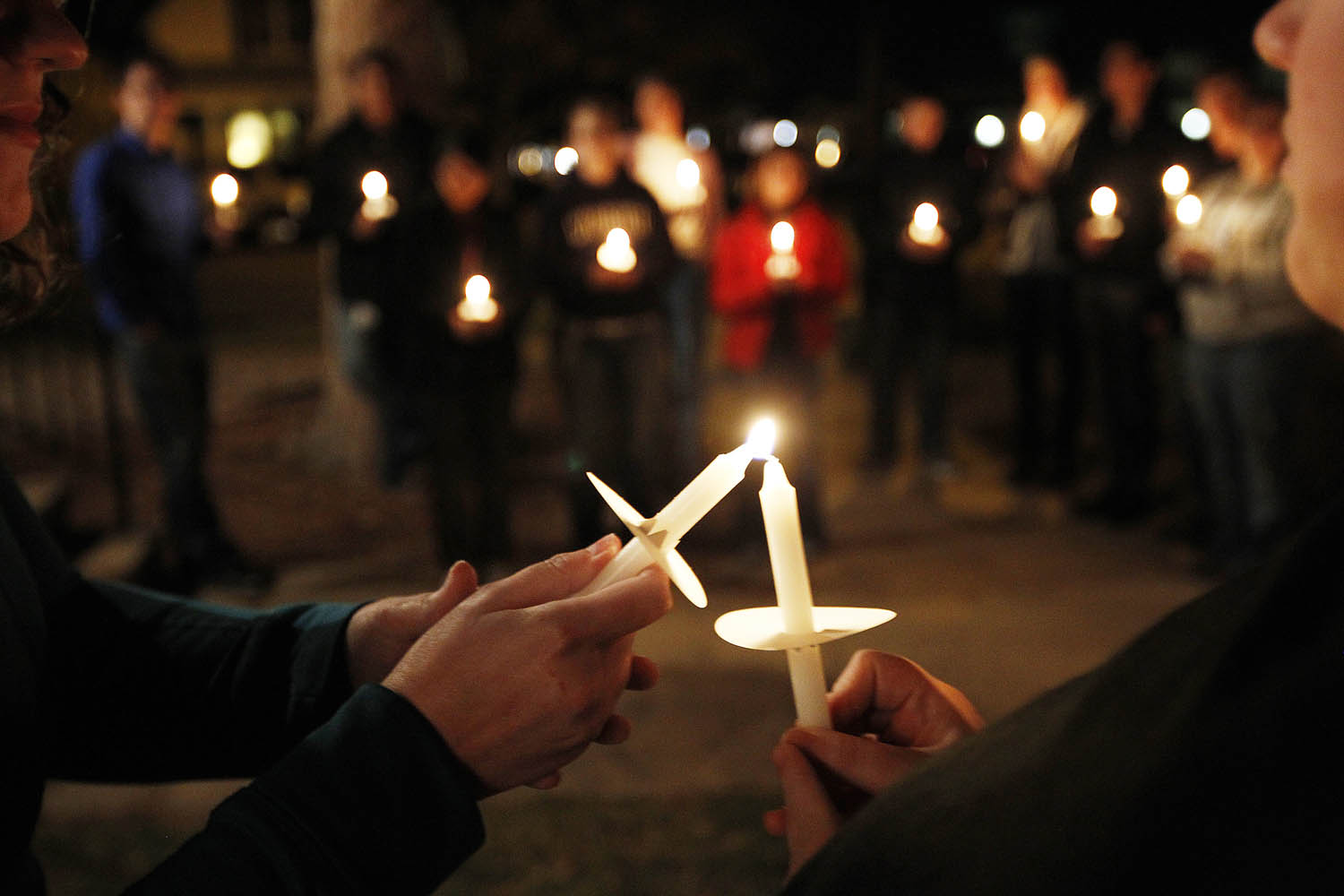
Here, below, is the Shabbat e-mail I sent to my congregation today in response to the recent violence in Jerusalem. Click here to read a letter I co-wrote with Rabbi Alissa Wise for Jewish Voice for Peace, addressing the political context of these tragic events.

Dear Haverim,

In this week’s Torah portion, Parashat Toldot, Rebecca experiences great pain as her twins struggle in her womb. After inquiring of God, she is told that her two sons represent two warring peoples, one of whom will be mightier than the other. As she experiences her prenatal pain, Rebecca says, “If so, why do I exist?”

There are many ways to understand Rebecca’s comment; one interpretation views her exclamation as the endlessly desperate response of humanity to the seemingly unfixed and eternal nature of war and bloodshed between people and nations.

Such grief stricken exclamations have surely been issuing from the city of Jerusalem this past week – a city that has seen its share of bloodshed over the centuries. There is no denying that there is a political context to this recent violence – and like many, I have my own opinions about this context and what must be done to avoid violence in the future. Regardless of where we fall on this issue, I do believe that if we are honor the dead – of Jew and Palestinian alike – we must redouble our efforts toward pursuing a just peace in this land.

The question remains, however, how do we, as Jews, grieve amidst such such a context? How do we find a measure of comfort when violence occurs in a time that more often than not feels so endlessly, painfully hopeless? I’d like to offer you two Jewish responses that personally offered me a measure of comfort this past week.

The first is this message to the Jewish community that was recently released from the widows and families of the four Jewish victims who were murdered in a Jerusalem synagogue this past Tuesday:

A request from the grieving widows and families:

From the depth of our broken hearts and with tears over the murder of the holy victims, the heads of our families, we turn to our brothers and sisters, every Jew, wherever you are, and request that we all join together as one, to bring heavenly mercy upon us. Therefore, let us accept upon ourselves to increase our love and brotherhood with each other, between each of us, between different groups, and between different communities.

We request that each person endeavors this Friday afternoon before Shabbat Parshat Toldot to sanctify this Shabbat (Erev Rosh Chodesh Kislev) as a day of causeless love, a day on which we all refrain from talking about our differences and grievances against others, and refrain from any slander or evil gossip.

Through this may there be a great merit for the souls of the fathers of our families who were slaughtered for the sanctity of God.

May God look down from above, and see our grief, and wipe away our tears, and proclaim ‘enough with the suffering!’, and may we merit to see the arrival of the Messiah, may it happen speedily in our days, Amen.

Chaya Levin, and family
Brayna Goldberg, and family
Yakova Kupinsky, and family
Basha Twersky, and family

I also encourage you to read this post from Lew Weissman, a traditional orthodox Jewish blogger whose writings I’ve followed for many years and whose teachings I have found to be profoundly wise and compassionate.

Here is an excerpt:

When I see the picture of a man in tallit and tefillin (like me every morning) shot dead in a pool of blood in synagogue (where I too customarily go every day) I am overcome with a wave of nausea followed by a surge of anger. I don’t have words for the fury and the fear at the thought of a person charging into our place of worship and hacking a fellow Jew, who, like me, appears before God in tallit and tefillin, to death. If he weren’t just like me would I feel the same? I don’t know. I look at the black pants, the white shirt, the build of the man, the black striped tallis that I wear and this is deeply personal. This brutal monster has killed one of US and I am furious.

In that, I am just the same as the person who taunts me.

Where I differ is that while I get that I am going to feel more intensely when I have an affinity for another human being as a fellow Jew, I also strive to see all human beings as “in the image of God” (so to speak, trust me on this my Muslim friends, this really is NOT a blasphemous notion- its metaphorical). Each human being is a reflection of the Divine majesty and precious to their Creator. Where is that well of outrage when every single day human beings are being hacked, torn, shot for every possible excuse? Where are my tears for the innocent of every color, race, language, and faith?

…Where I differ is that as much as I sometimes want to, I don’t believe that I have permission to give up. I feel compelled by the example of Abraham, who pleaded to God for the murderous idolaters of Sodom. My struggle, like his, is to strive to uplift humanity in any way that I can, not to wish for its destruction, not even the destruction of the worst of us. Abraham believed that even a few righteous people could turn around an entire world gone crazy. So I reach out to the righteous, encourage the good where I can because it’s the only plan I have got.

May the memory of all the dead be for a blessing.

Remember Tomas Young: No More Boots in Iraq!

Like many I’m sure, when I heard about the death of courageous Iraq war veteran/anti-war activist, Tomas Young last week, I felt deep sadness at the loss of one more precious voice for peace and justice in the world. At the same time, given the grievous chronic pain he endured as a result of his war injuries, I found some comfort in the knowledge that he was finally free from his suffering.

And, yes, I also felt a sense of rising anger that while I read the obituary that described his legacy of sacred witness, I was all too aware of the reports that our government was gearing up to send combat troops back into Iraq.

I first learned about Tomas Young from the 2007 documentary, “Body of War” a profound and at times unbearably painful testimony to the human cost of war. Upon hearing of his death, I re-watched the film and re-read Young’s searing 2013 essay, “A Message to George W. Bush and Dick Cheney from a Dying Veteran,” which he wrote after deciding to enter hospice care and refuse nutrition through a feeding tube. (He later changed his mind, citing the love and support of his second wife Claudia). “Message” is, quite simply, one of the most important anti-war documents of our time:

I write this letter on behalf of husbands and wives who have lost spouses, on behalf of children who have lost a parent, on behalf of the fathers and mothers who have lost sons and daughters and on behalf of those who care for the many thousands of my fellow veterans who have brain injuries. I write this letter on behalf of those veterans whose trauma and self-revulsion for what they have witnessed, endured and done in Iraq have led to suicide and on behalf of the active-duty soldiers and Marines who commit, on average, a suicide a day. I write this letter on behalf of the some 1 million Iraqi dead and on behalf of the countless Iraqi wounded. I write this letter on behalf of us all—the human detritus your war has left behind, those who will spend their lives in unending pain and grief.

“Body of War” is both an intimate document of Young’s painful post-war odyssey and a damning exposé of political hypocrisy. The film is framed by the Congressional debates on whether or not to grant President Bush the authority to invade Iraq; as we witness Young pay the costs of this misbegotten war, we watch as one by one, Democrats and Republicans alike line up to parrot the Bush administration lies that led us into Iraq in 2003.

(photo via Nation of Change)

(photo via Nation of Change)

And now we learn that our nation’s military adventures in Iraq are not over by a long shot.  Just days after Young’s death, in fact, Congress has begun gearing up for a debate on whether or not to grant President Obama the authority to wage war in Iraq and Syria. While the chairman of the Joint Chiefs of Staff has said he might recommend sending combat units back into Iraq, the chairman of the House Armed Services Committee has declared that any authorization of force that ruled out the use of US ground troops in Iraq would be “dead on arrival.”

Please don’t let Tomas Young’s suffering and death be in vain. Watch “Body of War.” (The full movie is available on YouTube) Read “Message From a Dying Veteran.”  Read this moving description of his final days by Chris Hedges. Then sign this petition that rightly declares:

Forgotten in the rush to war is the fact that we have been at this abyss before. The US invasion of Iraq in 2003 preceded the growth of Al Qaeda there. ISIS became its malignant offshoot in Sunni regions repressed by our client state in Baghdad. Is this not a case where the military medicine worsens the disease? The last Iraq War led to long-terms costs in thousands of lives lost and trillions of dollars wasted which should have been spent on the environment, education and jobs. We simply cannot afford to repeat the past…

We call for a full debate on whether to authorize the widening new war in Iraq and Syria. A congressional vote will allow citizens to hold their elected representatives accountable now and in 2016. Since President Obama already says there is no military solution and the war will last at least three years, we urge a No vote. If the new war is authorized, the following conditions must be debated and voted on:

1. A narrow definition of “the enemy” – the Islamic State – no loophole to a wider war as occurred in the war-on-terrorism, where an open-ended mandate led to wars and quagmires in many countries

2. Keep the presidential pledge that there will be no American ground troops; already that promise has changed to no “combat” troops;

3. A sunset provision ending the war authorization in one year, thus requiring another Congressional approval before 2016;

4. An independent reporting mechanism for all casualties, civilian casualties, direct and indirect taxpayer costs, and measurements of progress;

5. A primary emphasis on diplomacy aimed at power-sharing among disenfranchised communities and a prohibition against funding sectarian war.

Wars are easy for politicians to approve. But history shows that lives and resources are needlessly lost, and careers ruined, when they become quagmires.