Author Archives: Rabbi Brant Rosen

Unknown's avatar

About Rabbi Brant Rosen

I'm a rabbi, blogger, and activist with a special interest in Israel/Palestine justice work.

In Memory of our Voting Rights Martyrs: A Sermon for Kol Nidre 5774

Jimmie Lee Jaskson

Jimmie Lee Jackson

I’d like to begin tonight by telling you the stories of three heroes of the civil rights era. I’d wager most Americans have never heard of them – but as far as I’m concerned, they deserve to be at least as well known as Emmett Till, Medger Evers and Rosa Parks.

The first is Jimmie Lee Jackson, an African-American farmer and woodcutter from in Marion, Alabama. Jackson grew up in poverty, but planned to move North for a better life after graduating from high school. After his father’s early death however, he spent his the remainder of his life on his small family farm in Marion, where he lived together with his sister, mother, and grandfather.

Jackson was an army veteran and a deeply faithful man; he became the youngest deacon in the history of Marion’s St. James Baptist Church. He also turned into a political activist at an early age after unsuccessfully attempting to register to vote for four years. Jackson spearheaded his church’s voter registration drive and eventually became a prominent civil rights leader in Merion.

On the night of February 18, 1965, Jackson participated in a demonstration in which 500 people peacefully marched from a church in Marion to the county Jail about a half a block away to protest the imprisonment of a young civil rights worker. On their way, the marchers were met and beaten by a line of Marion City police officers, sheriff’s deputies, and Alabama State Troopers. Among the injured were two United Press International photographers. A NBC News correspondent was so badly beaten that he was later hospitalized.

The marchers quickly turned and scattered back towards the church. Pursued by the state troopers, Jackson, his sister, mother, and 82-year-old grandfather ran into a café. The troopers followed them in and clubbed his grandfather to the floor. When Jackson’s sister and mother attempted to pull the police off and they began to beat them as well. Jackson went to protect them and a trooper threw him against a cigarette machine. A second trooper moved in and shot Jackson twice at point blank range in the abdomen.

Jackson staggered outside, was clubbed again and fell wounded in the street, where he lay for half an hour. Later that night, Jackson, his mother and grandfather were transported to a hospital in Selma. His mother and grandfather suffered head wounds but were treated and released – Jimmie Lee remained in the hospital where his condition grew steadily worse. Four days later, an Alabama state trooper walked into and hospital room and charged Jackson with assault and battery with intent to murder a peace officer. Eight days later, on Friday, February 26, Jimmie Lee Jackson died from his wounds.

His funeral took place on March 3. Dr. Martin Luther King was among the speakers at the service, after which a thousand people followed Jackson’s casket through the rain to a local cemetery. Four days later, several hundred marchers left Brown Chapel in Selma, formed a long column, and began walking up the steep incline of the Edmund Pettus Bridge, which spans the Alabama River. Their goal was to walk 54 miles to the state capitol in Montgomery to protest Jackson’s death and petition the governor and legislature to open the state’s voting rolls to all citizens. The march ended violently on a day we would all come to know as “Bloody Sunday.” It was a galvanizing moment in the fight for voting rights in this country.

Reverend James Reeb

Reverend James Reeb

The second person I’d like to profile for you now is Reverend James Reeb. Reeb was raised in Caspar, Wyoming, served in the Army during World War II, and was later ordained by the Princeton Theological Seminary. Soon after, however, he left the Presbyterians and joined the Unitarian Universalist church. As a white man who believed in civil rights, he was particularly drawn to the UU’s strong emphasis on social justice.

Reverend Reeb was fully ordained as a Unitarian Universalist minister in 1962. After serving for a few years at All Souls Church in Washington DC, he became the director of the American Friends Service Committee Metropolitan Boston Low Income Housing Program in 1964. With his wife and four children, he moved to Boston and purchased a home in Roxbury, a predominantly African-American area of the city. His daughter Anne later recalled that her father “was adamant that you could not make a difference for African-Americans while living comfortable in a white community.”

Following Bloody Sunday, Reeb went down to Selma with 45 Unitarian ministers and 15 laypeople to participate in the voting rights demonstrations that arose in the wake of Bloody Sunday. On March 9, he joined 2,500 marchers for a second march from Selma to Montgomery. As on previous attempts they were stopped by the police – and so the marchers returned to Browns Chapel for an evening of speeches, singing and prayers.

Later that night, Reeb and two other Unitarian ministers had dinner in a local black restaurant. Although he had planned to return to Boston that night, he called his wife and told her he had decided to stay for one more day. Upon leaving the cafe, the trio was set upon by four men brandishing clubs and yelling racist slurs. They attacked and beat the three men – wounding his two colleagues and severely injuring Reeb with a blow to his skull. Needing a neurosurgeon, he was driven ninety miles by ambulance to University Hospital in Birmingham. He died two days later.

Reverend James Reeb’s death sparked mourning event throughout the country – tens of thousands held vigils in his honor, including a ceremony in Selma, where he, like Jimmie Lee Jackson, was eulogized by Dr. King. That evening, on March 15, President Johnson spoke to a joint session of Congress on behalf of the Voting Rights Act. It was his famous “We Shall Overcome” speech, in which he urged Congress to outlaw all voting practices that denied or abridged “the right of any citizen of the United States to vote on account of race or color.” Six months later, Johnson signed the Voting Rights Act into law.

Viola Liuzzo

Viola Liuzzo

And finally, let me tell you now about Viola Liuzzo – born in 1925 to a poor white family that moved constantly throughout the Deep South. During the early months of World War II, her family moved to Michigan, where she worked in a bomber factory. Eager to contribute to the war effort herself, Viola moved to Detroit, where she married and had two daughters. They divorced shortly after and she eventually married Anthony James Liuzzo, a union organizer for the Teamsters. Anthony adopted her daughters and they had three more children together.

Though she was a high school dropout, Liuzzo trained as a medical laboratory assistant and later took classes at Wayne State University. There she was exposed to political ideas of the time, including debates about the Vietnam War, education reform, and economic justice. This period marked the beginning of her political activism. She was arrested twice in demonstrations and both times she insisted on a trial in order to publicize her causes.

In 1964 Liuzzo, a former Catholic, joined the First Unitarian Universalist Church of Detroit – attracted, like Reverend Reeb, by its commitment to civil rights. She also became active in the Detroit chapter of the NAACP. Like so many others, Liuzzo was galvanized by events in Selma. Following Reverend Reeb’s murder she attended a memorial service for him and soon after, she decided to go down to Selma herself to volunteer for a week. As she explained to her husband, she believed there were “too many people who just stand around talking.” She asked her closest friend, an African-American woman named Sarah Evans, to explain to her children where their mother had gone and to tell them she would call home every night. When Evans warned her that she could be killed, she replied simply, “I want to be part of it.”

So on March 21, Liuzzo joined 3,000 other marchers as they marched across the Edmund Pettus Bridge attempting to reach Montgomery. She stayed on to volunteer over the next few days, driving shuttle runs from the airport to the marchers’ campsite and helping at a first-aid station.

On March 25, she joined the marchers for the final four miles to Montgomery, where she joined the thousands that demonstrated at the Alabama State House. When the march was over, Liuzzo and African-American civil rights worker named Leroy Moton drove five marchers back to Selma. After they were dropped off, Viola volunteered to return Moton to Montgomery. On their way back, four Ku Klux Klan members pulled up alongside their car. Liuzzo tried to outrun them, but they caught up with her car and opened fire. Viola was shot twice in the head and died instantly.

Following her murder, President Johnson publicly demanded that the arrest of Liuzzo’s murderers be a top priority. In just 24 hours, the FBI arrested the four Klan members, one of home was an FBI informant. Johnson appeared personally on national television to announce their arrest.

The FBI would later attempt to publicly discredit Liuzzo – most likely to cover up the fact that their agent was a KKK member and may have actively participated in her murder. J. Edgar Hoover personally spread rumors that Liuzzo was a member of the Communist party and a drug addict and that she had traveled to Selma to have sexual relations with black men. Viola’s family was also targeted by hate groups – after crosses were burned in front of their home. Anthony Liuzzo had to hire armed guards to protect his family.

However, as in the case of Jimmie Lee Jackson and Revered James Reeb, Viola Liuzzo’s death had a powerful impact on the voting rights movement across the country. On March 27 hundreds of protesters marched to the Dallas County courthouse in Selma in her memory. The next day Dr. King eulogized her at San Francisco’s Grace Episcopal Cathedral. The NAACP also sponsored a memorial service for Liuzzo at a Detroit church that was attended by fifteen hundred people including Rosa Parks. A Roman Catholic Church in Detroit celebrated a high requiem mass that was broadcast on TV. Dr. King was among the 750 people in attendance.

As with Jackson and Reeb, Viola Liuzzo’s murder played a critical role in the eventual passage of the Voting Rights Act. According to historians, Johnson invoked her death repeatedly as he lobbied Congress. Five months after she died, he signed it into law.

Why am I telling you the stories of these three individuals tonight? One simple reason is that I believe they deserve to be told. We owe Jimmie Lee Jackson, Reverend James Reeb and Viola Liuzzo at least that much. And we owe it to ourselves. I took the time to tell you about them because so few really know the stories of these American heroes. And we should. We should know who they were, how they lived and the significance of their sacrifice.

I also have a specifically liturgical reason for telling you their stories tonight of all nights. The traditional  Yom Kippur service includes a section known as the Martyrology (or as we call it in Hebrew, “Eleh Ezkarah,” meaning “These I Remember.”) The centerpiece of Martyrology is a long liturgical poem that recounts the death of ten rabbis – including the famous Rabbis Akiba, Ishmael and Shimon ben Gamliel – who were executed for their support of the failed revolt against Rome in the year 132.

We traditionally read these accounts on Yom Kippur because of the classical Jewish belief that blood atones.  Our Torah portion tomorrow will, in fact, describe an ancient sacrificial rite of atonement, in which the High Priest sacrifices a goat on behalf of the entire Israelite people. Though the sacrificial system is no more, we ask for God’s forgiveness by invoking the deaths of those who made the ultimate sacrifice. And so on Yom Kippur, we beseech God: even if we are unworthy of God’s mercy in the coming year, we ask for forgiveness us on account of those who made the supreme sacrifice on our behalf.

Whether or not we buy into such a theology, I believe the Martyrology has an additional function as well: on Yom Kippur we  pose the question honestly: what have we done in the past year to prove ourselves worthy of these profound sacrifices? What have we done to affirm that these courageous people did not die in vain? Have we honored their memories by transforming these lost lives into justice, hope and healing for our world?

When we ask these questions as 21st century American Jews, I believe they resonate for us on multiple levels. When we invoke those Jews who died for practicing their faith, we must ask: have we done what we can to ensure that this Judaism – this exquisite spiritual tradition of ours – will be passed on to future generations? And as Americans, when we remember those who died in furtherance of justice in our country, we are challenged: how have we honored their sacrifice? What to have we done in the past year to ensure that they did not die in vain?

Indeed, at the heart of this liturgy is a refusal to accept that our martyrs have died for nothing. I’ve just recounted for you the stories of three lesser-known martyrs of the American civil rights movement – but this Sunday, as a matter of fact, we will commemorate the 50th anniversary of four others who are much better-known: Addie Mae Collins, Denise McNair, Carole Robertson, and Cynthia Wesley – the four little girls who were killed by a KKK bomb in Birmingham’s 16th St. Baptist Church on September 15, 1963.

At the funeral for three of the girls, Dr. King gave a famous address that has since come to be known as the “Eulogy for the Martyred Children.” At one point in his eulogy, King said as follows:

So they did not die in vain. God still has a way of wringing good out of evil. History has proven over and over again that unmerited suffering is redemptive. The innocent blood of these little girls may well serve as the redemptive force that will bring new light to this dark city … The spilt blood of these innocent girls may cause the white citizenry of Birmingham to transform the negative extremes of a dark past in to the positive extremes of a bright future. Indeed, this tragic event many cause the white South to come to terms with its conscience

Amongst the many religious texts I’ve read on the meaning of martyrdom, I personally find King’s words to be among the most spiritually meaningful and profound. I am particularly moved by his hope, by his realism, but most of all, by his refusal to surrender to the possibility that these four little girls died for nothing. Even in the midst of this wretched tragedy, he was determined to find a spark of spiritual meaning in their loss.

In his eulogy, King also described of blood of the martyrs as redemptive – but he did so in a way that affirmed goodness and justice in the face of an evil, unjust act. As horribly tragic as their deaths were, King could not help but affirm that their deaths would, as he put it, “serve as a redemptive force” that would eventually bring new light during those very dark days. And perhaps most important: his theology was not limited to mere words. As soon as he finished speaking, he continued to lead a movement that would ensure these sacrifices would bring social and political transformation to the American South.

In the end, I’m taking the time to tell you about Jimmie Lee Jackson, Reverend James Reeb and Viola Liuzzo because I believe their stories are utterly appropriate to this day. On Yom Kippur, as we bear witness to their lives, their work and their sacrifice, we are the recipients of a direct spiritual challenge. Now that we’ve heard their stories, it’s time to ask ourselves: have what have we done to carry on the work that they have left unfinished? Have we done all that we can to give their lives and their deaths meaning? Have we done everything in our power to ensure their deaths were not in vain?

Well my friends, we have a very real opportunity to find out, because these are not merely academic questions. Just three months ago, the US Supreme Court dealt a devastating blow to the very cause for which these three individuals sacrificed their lives. As I’m sure everyone here tonight knows, on June 25, the Supreme Court ruled 5-4 to invalidate a key element of the Voting Rights Act – the section that required states with the worst history of voting discrimination to seek preclearance from federal government before implementing new voting changes.

Indeed, there have been numerous attempts to weaken or gut the Voting Rights Act over the past 50 years. Only a month after it was enacted, in fact, it was constitutionally challenged by South Carolina. Over the years, the Voting Rights Act has been challenged in the Supreme Court four separate times – in 1966, 1973, 1980 and 1999 – and each time, the Court has voted to uphold it. Meanwhile, the US Congress has voted to reauthorize the Voting Rights Act on four separate occasions; each and every time it was signed back into law by a Republican president.

In his ruling for the majority last June, Chief Justice John Roberts argued that there is no longer a need for the federal government to actively ensure voting rights:

Nearly 50 years later, things have changed dramatically. Largely because of the Voting Rights Act, (voter) turnout and registration rates in covered jurisdictions now approach parity. Blatantly discriminatory evasions of federal decrees are rare. And minority candidates hold office at unprecedented levels. The tests and devices that blocked ballot access have been forbidden nationwide for over 40 years.

According to this reasoning, voter suppression is simply not the problem it was back in 1965. As Justice Roberts put it, “the Nation is no longer divided along those lines yet the Voting Rights Act continues to treat it as it were.”

Justice Ruth Ginsberg,in a brave and blistering dissent to the majority, stated the patently obvious: the reason things have changed since 1965 because the Voting Rights Act has been in place since 1965. As she wrote:

Throwing out preclearance when it has worked and is continuing to work is like throwing away your umbrella in a rainstorm because you are not getting wet.

If there could be any doubt to Justice Ginsberg’s argument, her point has since been driven home with brutal clarity. Two hours after the ruling, officials in Texas announced that they would begin enforcing a strict photo identification requirement for voters, which had been blocked by a federal court on the grounds that it would disproportionately affect African-American and Hispanic voters. And as we speak, state officials in Mississippi, Alabama, North Carolina and Florida, among others, are now moving to change voter identification laws – laws that had previously been rejected as discriminatory by the federal government.

Make no mistake: this Supreme Court ruling has struck a devastating blow to voting rights in our country. And in so doing, it has reinforced a hard truth: it challenges us with a reminder that the struggle for justice is not a one-time moment but an ongoing process. Indeed, we are so very good at commemorating the victories of the past – but too often, it seems to me, we do it at the expense of the present. I do believe as King has famously said that the arc of freedom bends toward justice – but it doesn’t do so all by itself. Justice will only prevail if we remain vigilant. It is not enough to commemorate and teach our children about the heroes of the civil rights movement in ages gone by. On the contrary, we must teach that we ourselves must consistently do what we must to honor their achievements – and most importantly, their sacrifices.

On Yom Kippur, we ask: who has paid the ultimate sacrifice in the cause of righteousness – and what will we do in the coming year to honor their sacrifice? And on this Yom Kippur, I can think of no better spiritual gesture than to lend our support to the political efforts currently underway to restore the hard fought laws that ensure voting rights for all in our country.

At the moment, these efforts are taking many forms. Given the current reality in Washington, it is clear that our bitterly divided Congress is unable to legislatively address this issue. But there are other efforts ongoing that are eminently worthy of our attention and support. This past July, the Obama administration asked a federal court in Texas to restore the preclearance requirement there. In a speech to the Urban League, Attorney General Eric Holder said that this action is only the first of many different moves the Justice Department will make on behalf of voting rights throughout the country. A more ambitious effort: a Constitutional Amendment that would guarantee the right to vote, is currently being advocated by Wisconsin Congressman Mark Pocan and Minnesota’s Keith Ellison, among others.

In fact, there is no explicit right to vote spelled out in the US Constitution – and as a result, individual states continue to set their own electoral policies and procedures. At present, our electoral system is divided into 50 states, more than 3,000 counties and approximately 13,000 voting districts, all, in sense, separate and unequal. As Rep. Ellison has put it, “It’s time we made it clear once and for all: every citizen in the United States has a fundamental right to vote.”

Obviously passing a Constitutional amendment is a daunting prospect, but this campaign certainly has the potential to build a broad movement that would keep this issue front and center of our national consciousness. And such a movement could well create space for more immediate action at the congressional and state levels to address the devastating fallout from the Supreme Court’s ruling.

I frankly can think of no political actions more appropriate this Yom Kippur than this: actions that will bring redemption to the lives and deaths of Jimmie Lee Jackson, Reverend James Reeb and Viola Liuzzo. I hope you found meaning in their stories – and I fervently hope that we will all come to see ourselves as participants in their stories that continue to unfold even now.

I’d like to conclude with words from Reverend Reeb’s final sermon. They clearly have a heartbreaking significance when you hear them today – but I do believe they speak to us with as much urgency as the day he spoke them in All Souls Church in July 1964: At the very end of his sermon, Reverend Reeb said:

If we are going to be able to meet their need, we are going to have to really take upon ourselves a continuing and disciplined effort with no real hope that in our lifetime we are going to be able to take a vacation from the struggle for justice. Let all who live in freedom won by the sacrifice of others, be untiring in the task begun, till every man on earth is free.

This and every Yom Kippur, may we be worthy of his words.

(Click here to sign a petition that urges the Justice Department to block discriminatory voter ID laws in our country.  Click here to contact your representative and demand Congress act now to pass a constitutional amendment guaranteeing the right to vote.)
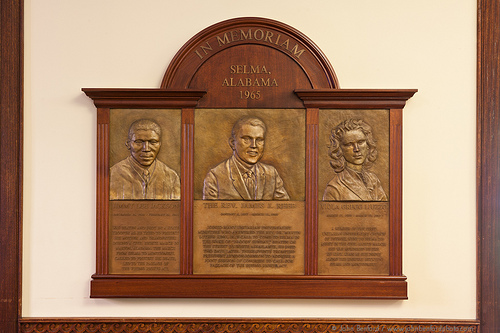
Memorial for Jimmie Lee Jackson, Reverend James Reeb and Viola Liuzzo, UU Headquarters, Boston
Memorial for Jimmie Lee Jackson, Reverend James Reeb and Viola Liuzzo, UU Headquarters, Boston
Blowing the Whistle: A Sermon for Rosh Hashanah 5774

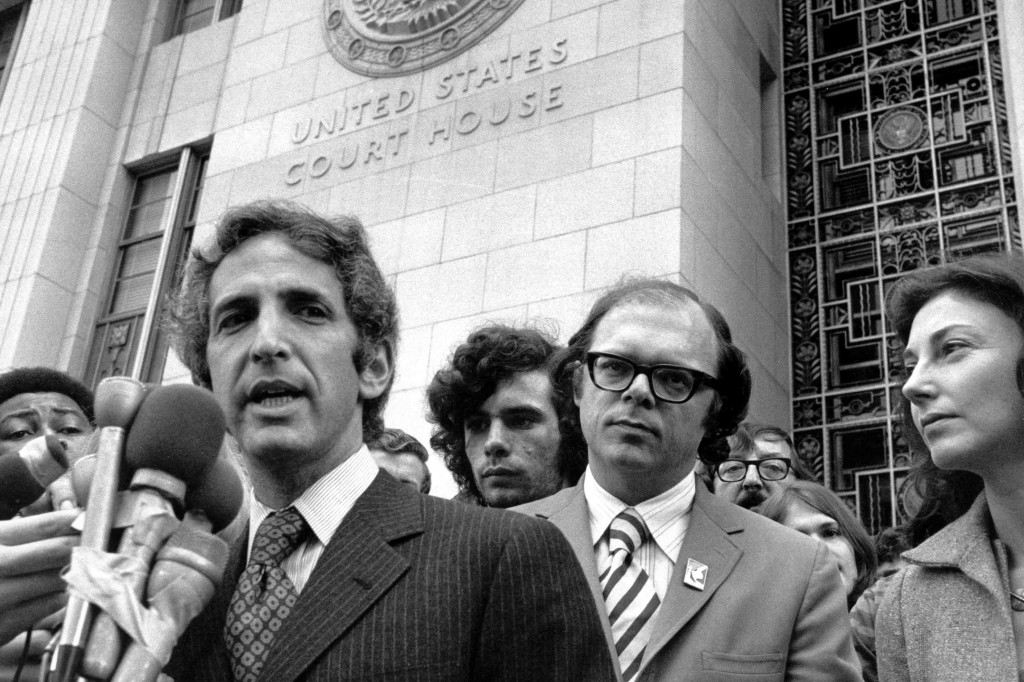
Ellsberg-on-trial-for-Pentagon-Papers-e1373757335455-1024x682

I’m sure many of you remember the story of John Walker Lindh, a young American citizen who converted to Islam as a teenager and eventually went to Afghanistan to fight with the Taliban. Lindh was captured by the US military in November 2001 and was eventually brought back to the US to stand trial.  It was the Justice Department’s first high-profile case in the post-9/11 war on terror.

While many are familiar with the story of the so-called “American Taliban,” I’m sure far fewer know the story of a woman named Jesselyn Radack, who was a legal advisor to the Justice Department at the time.  Shortly after Lindh was arrested, Radack received a call from an FBI attorney, who asked her about the ethics of interrogating Lindh without a lawyer present, specifically mentioning that Lindh’s father had retained counsel for his son. Radack told the FBI that under no circumstances could Lindh be interviewed without his lawyer present.

In spite of her clear response – and numerous follow-up emails to that effect – John Walker Lindh was subsequently interrogated without counsel. Attorney General John Ashcroft then held a press conference where he stated, bald-faced, “The subject here is entitled to choose his own lawyer and to our knowledge has not chosen a lawyer at this time.”  It was clear to Jesselyn Raddack that Ashcroft and the Justice Department had lied to the American public about its legal handling of John Walker Lindh.

Around this time, Radack discovered the emails she had written to the FBI – emails that explicitly spelled out Lindh’s rights – had disappeared from the Justice Department office files.  When she realized what was going on, she resigned her post. To her mind, something very, very wrong was going on and she refused to be party to it.

When Lindh’s initial hearing began, it became clear to Radack that none of her emails had been presented to the judge on the case – communications that were clearly germane to Lindh’s defense.  Now Radack was now faced with an even more powerful ethical decision.  She could do nothing, which would in effect continue the cover-up, or she could blow the whistle on the Justice Department.

So in June of 2002, three weeks before Lindh’s hearing was to take place, Jesselyn Radack downloaded the emails from her personal files and sent them to Newsweek magazine. Her revelation of the Justice Department’s malfeasance had a powerful impact on the government’s case.  Although he originally faced three life sentences, Lindh eventually plea-bargained to 20 years in prison without possibility of parole.

For her part, Radack’s whistleblowing came at a huge price, as she knew it would.  The Justice Department subsequently brought a criminal case against her, although she was never told for what she was being investigated or for what she might be charged.  She also lost her new job at a private law firm after her former government employers put pressure on her partners.   The Justice Department then referred her for discipline to her bar associations, effectively rendering her unemployable. As a final insult, she was placed on the national “no-fly” list.

The criminal case against Radack was later dropped without explanation and she was eventually removed from the no-fly list, but the damage to her career and her livelihood was permanent.  Her experience obviously cost her any future in government, but in the end it led her to a different calling.  Radack now devotes her life to defending whistleblowers at the Government Accountability Project.

I first learned about Jesselyn Radack’s story when I read an article she wrote about it in, of all places, Reform Judaism magazine.  In the article Radack, who is an active member of the Jewish community, wrote openly and passionately about the Jewish values that lay behind her actions. She quoted her adult Bat Mitzvah Torah portion: “Lo ti’eh aharay rabim” – “Thou shalt not follow a multitude to do wrong” (Exodus 22:3) – a dictum she says has motivated her ethical decision-making ever since.

Here’s what Radack had to say in the conclusion of the article:

People also ask me if this experience has engendered a crisis of faith. On the contrary, Judaism has helped me get through this difficult period. My (rabbis have) been sympathetic and supportive. I have also drawn strength from the writings of Rabbi Harold Kushner, who taught me that God did not cause my suffering and could not prevent it.  Rabbi Kushner’s re-interpretation of the story of Adam and Eve teaches that the ability to choose between right and wrong is what makes us human. God does not interfere with that choice. But God can give us the strength of character we need to handle the consequences.

I chose my conscience over my career and take pride in having spoken truth to power.

I remember reading that article back in 2006 – and in particular I remember being deeply affected by the religious and moral convictions that motivated her actions.  On a personal level, I’d always been a strong advocate of whistleblowers and the value of government transparency.  But I don’t think I had ever truly thought about the act of whistleblowing in the context of Jewish values until I read Jesselyn Radack’s words in Reform Judaism magazine that day.

Since that time, I’ve thought a great deal about this issue.  And so this morning I’d like to take some time to discuss the subject of whistleblowing – a subject that has been in the media spotlight a great deal this past year.  I’d like to explore the issues raised by the more well-known whistleblowers such as Chelsea (formerly Bradley) Manning and Edward Snowden – and others who are not as well known but whose actions are just as worthy of our attention.  Most of all, I want to share with you why I believe whistleblowing is not only a critically important American value, but a deeply sacred Jewish value as well – one that challenges us particularly as we gather now for the New Year.

I’ve often been struck that while government whistleblowers are often excoriated as unpatriotic at best and traitors at worst, the practice of whistleblowing is in fact rooted in American values. Our founding fathers fervently believed, and wrote repeatedly, that democracy is strengthened when it is transparent – and that government can only be truly accountable when it ensures an informed citizenry.  As John Adams famously wrote:

And liberty cannot be preserved without a general knowledge among the people who have a right from the frame of their nature to knowledge … But besides this they have a right, an indisputable, unalienable, indefeasible divine right to the most dreaded and envied kind of knowledge, I mean of the characters and conduct of their rulers.

True whistleblowing is not a traitorous act, though I think many governments would love their citizens to believe so.  Whistleblowers are not employed by enemy nations – by definition they act individually and out of their own conscience. And while they do break laws, they do so not for personal gain but for the greater good. They do so to assert that no one – not even the most powerful of governments – are above the law.

In their defense, governments will invariably claim that secrecy is essential to “national security.”  On the face of it, it’s difficult defense to for us to refute.  After all, every nation’s primary duty is to ensure the safety and security of its citizens – it would be naive and in fact dangerous to try to claim otherwise.  But it would be equally naive to assume that when our government acts in secrecy, it must somehow be doing so for reasons of legitimate national security.  History has taught us repeatedly that governments will invariably use secrecy to cover up their own illegitimate actions – actions that will often end up betraying the very well-being and security of their own citizens.

Possibly the most famous whistleblower in American history, Daniel Ellsberg, has written extensively and eloquently on this subject and about the process he went through that ultimately led to his revelation of the Pentagon Papers in 1971.  Ellsberg was a former marine who joined the Pentagon in 1964 and later worked for the RAND Corporation.  Like almost all whistleblowers, he was originally among the “true faithful” – a patriotic American who believed that the US could and should be a force for good in the world.  But as his government career progressed, he harbored profound inner doubts as he became privy to the highest decision making institutions during the buildup of Vietnam War.

Daniel Ellsberg had first hand knowledge that leaders at the highest levels of government knew from early on that the Vietnam war could never be won and yet insisted otherwise to the Congress and the American public. Moreover, they continued to escalate a war they knew was doomed, knowing full well their actions would lead to more American deaths overseas.

When Ellsberg went public with the Pentagon Papers, he went up against a powerful bureaucracy and government culture of secrecy. As a former insider, he had a first row seat at a massive act of government malfeasance, but he also was constrained by a deep-seated mentality that considered the telling of secrets to be a traitorous act.  It’s no coincidence that most whistleblowers begin as patriotic insiders. But ironically enough, it’s the same motivation that initially drives them to serve their country that eventually drives them to bring the truth of their government’s wrongdoing into the light of day.

It is, of course, an act that carries with it a huge cost.  When whistleblowers decide to go public, they know full well it is an act that will cost them their jobs and their livelihoods.  They know they will likely be publicly vilified, their personal lives dissected, their reputations slandered.  And of course, they also know they will likely endure prison time, be forced to go underground or live in exile.

Whistleblowers are indeed lightning rods – and governments count on this.  That’s why, I believe, we invariably focus more attention on the whistleblowers themselves than the actual crimes they reveal. That’s why, for instance, I believe we’re hearing so much bandied about regarding Chelsea Manning’s personal life and emotional struggles.  Our leaders and the media would much rather we focus on Manning personally. As long as we do so, we’re given a pass on the disturbing information Manning brought to light – and we don’t have to confront the truths of our nation’s crimes in Iraq, in Guantanamo and around the world.

Among Manning’s many revelations through Wikileaks is the now infamous video taken from an Apache helicopter in 2007, in which Americans soldiers shot and killed eleven individuals, including two Reuters reporters, in the streets of New Baghdad.  When a van arrived to help the injured, the soldiers fired upon it as well, seriously injuring two children. As you watch the video, you can hear the voices of American soldiers urging each other on, joking about the dead and dying. At one point a soldier laughs when Humvee runs over a dead body lying in the street.

I remember watching this video when it was released in 2010. I posted and wrote strongly about it on my blog at the time. It was deeply and profoundly horrifying to see the dark reality of our military actions in Iraq in such a graphic and brazen manner.  But I remember well being so grateful that this video had been brought out into the light of day.

As it turned out, however, Manning was not the only member of the military who recoiled from this particular action.  An American infantryman named Ethan McCord rescued the two children from the shot-up van – and after the video was released, McCord publicly thanked Manning for bringing it to light.

McCord later criticized the media for going into great and often lurid detail about Manning’s gender identity issues while utterly ignoring the devastating significance of his revelations.  In a letter to the editor of New York Magazine, McCord wrote the following:

By focusing so heavily on Manning’s private life (the article) removes politics from a story that has everything to do with politics. The important public issues wrapped up with PFC Manning’s case include: transparency in government; the Obama Administration’s unprecedented pursuit of whistle-blowers; accountability of government and military in shaping and carrying out foreign policy; war crimes revealed in the WikiLeaks documents… and more.

McCord then ended his letter with these words:

If PFC Manning did what he is accused of, he is a hero of mine, not because he’s perfect or because he’s never struggled with personal or family relationships –most of us do – but because in the midst of it all he had the courage to act on his conscience.

Chelsea Manning has paid a profound price for blowing the whistle on the actions of the American military.  After her arrest, she was put in a Marine brig in Quantico, Virginia, held in solitary confinement for 23 hours a day for nine months, forced to sleep naked without pillows and sheets and restricted from physical recreation or access to a television or newspaper. Manning’s punishment was later condemned as “excessive” by a military judge and “torture” by the UN. And of course, Manning has now been sentenced and faces an additional 35 years in prison.

As for the soldiers responsible for the attack in the video?  The US military conducted its own investigation of the incident and eventually cleared everyone involved of wrongdoing. To date, no one has ever been held accountable – for these or for any of the numerous disturbing revelations Manning has brought to light.

I don’t think I could put it any better than the ACLU when it made this statement following Manning’s sentencing:

When a soldier who shared information with the press and public is punished far more harshly than others who tortured prisoners and killed civilians, something is seriously wrong with our justice system.

On Rosh Hashanah, the day for asking the hard questions, it’s well worth asking: who has committed the greater crime? The government that breaks the law and covers its actions up under the pretense of national security, or the single individual that breaks the law in order that these crimes might be brought out into the light?

It’s well worth asking why?  Why is Chelsea Manning facing thirty five years in prison for revealing the disturbing truths about our government’s actions in Iraq while the very leaders who deceived us into that war have yet to be made to account for their actions?

And why, for that matter, has Edward Snowden, the man who blew the whistle on the NSA’s surveillance on American citizens, been forced to live in exile in Russia while our Director of National Intelligence can deny the facts Snowden brought to light under oath and still remain in his job?

I believe Jewish tradition demands that we ask these kinds of questions. After all, asking hard questions to powerful leaders is a time-honored Jewish value that dates all the way back to the days of the Prophets.  The Prophets were, in fact, the whistleblowers of their day. Just like our present day examples, they too spoke truth to power; they too sought to publicly reveal political corruption and hypocrisy of the governments of their time; and they too were hounded and persecuted by the powers that be for their truth-telling.

I’ve said and written often that I believe the prophetic stream in Judaism to be the most important – and in many ways the most sacred – of our tradition. As a Jew, I’ve always been enormously proud of the classic rabbinical response to government power. I believe that the Jewish people have been able to survive even under such large and mighty powers because we’ve clung to a singular sacred vision that says there is a Power even greater. Greater than Pharaoh, greater than Babylon, even greater than the mighty Roman empire and the myriad of powerful empires that have come and gone since.

As Jews, we know all too well that powerful nations and empires have historically exploited fear in order to increase their control at home and abroad. To be sure, it’s when times are fearful that we need these kinds of truth tellers the most.  In today’s post 9/11 world, I think it’s fair to say that levels of our government’s control – and the secrecy it employs to cover it up – go deeper than anything we witnessed even at the height of the Cold War.

Indeed, over the past decade, we’ve created a national security bureaucracy that many believe has evolved into a juggernaut with a life of its own. As one important Washington Post investigative article concluded:

The top-secret world the government created in response to the terrorist attacks of Sept. 11, 2001, has become so large, so unwieldy and so secretive that no one knows how much money it costs, how many people it employs, how many programs exist within it or exactly how many agencies do the same work.

During his first presidential campaign, Obama promised to rein in Washington’s culture of secrecy that has grown so significantly during our nation’s so-called War on Terror.  While we can argue about whether or not he’s been successful in this regard, it cannot be denied that Obama has become he most aggressive president in American history when it comes to whistleblowers.

Until this administration, only three government whistleblowers (including Daniel Ellsberg) had ever been charged by the Justice Department under the Espionage Act of 1917.  Under Obama, the Justice Department has brought charges against eight individuals – more than all previous American presidents combined.  His administration’s actions drive home the reality that this issue is not really about left or right.  It is about government – and in particular, large powerful governments such as ours, that will invariably abuse their power and act to cover up their abuses.

To quote another great American truth teller, the venerable investigative journalist Izzy Stone,  “All governments lie.”   Stone didn’t mean this to be a criticism of government itself – on the contrary, he wrote endlessly about the critical role governments must play in creating ordered and just societies.  He simply meant that there will always be a gap between what a government does and what it says it is doing. And that as citizens, we simply cannot sit back and assume governments will voluntarily rein in their abuse of power or hold themselves to account.

That, quite frankly, is our job. And that is why whistleblowers are so critical and why I believe they are worthy of our gratitude and support. They represent, in a sense, the final defense of an informed citizenry. They are the ones who are willing, at great personal sacrifice, to hold the most powerful people and institutions in the world accountable.

I know that all citizens want to trust their governments. We all want to believe our governments have our best interests at heart and will act to keep us safe – particularly in fearful times such as these.  But as fearful as we are, we would do we to ask whether increased militarism abroad and the narrowing of our civil liberties here at home will truly bring us security in the end.

As for me, I tend to agree with Daniel Ellsberg, who recently wrote: “One of the lessons of the Pentagon Papers and Snowden’s leaks is simple: secrecy corrupts just as power corrupts.”  Today, as in years past, we owe a profound debt to those who courageous enough to tear down the shrouds of secrecy, often at enormous personal cost, so that we may all find our way to a future of true security – not a false sense of security in which the powerful hide behind higher and higher walls but a real security based upon leaders and citizens are truly accountable to one another.

After all, isn’t that really what our sacred day today is all about? When we sound the Shofar on Rosh Hashanah, we are, in a sense, “blowing the whistle.”  The Shofar represents, among other things, an act of revelation. When the shofar is sounded, we bring all the secrets of the past year out of the shadows. We announce our readiness to shine light into the dark places of our souls and all the actions for which we are accountable.  We do this because we know, deep down that secrecy corrupts the soul – and that true security, true liberation, can only come from living lives of transparency and openness.

I do believe what is true for our national soul is true for our individual souls as well.  Up until now, I’ve been specifically addressing the topic of government whistleblowers, but of course, whistleblowing takes many forms – it comes in may shapes and sizes. You might say that each of us is presented the opportunity to be a whistleblower in ways large and small each and every day. Every day, each of us is challenged by the Torah demonstrated to us so eloquently by Jesselyn Radack: “Do not follow the multitude to do wrong.”

Indeed, in the coming year, each of us will inevitably be faced with the challenge to speak out or remain silent. To remain in the darkness, in a place or secrecy and shame, or to shine a light into the dark places that we might all find our way forward together.  This New Year, I hope we can all find the means to be truth tellers in our own right, to find the courage to speak where there is only silence.  And to wrestle honestly with the questions: what is the world in which we truly seek to live?  Where, in the end, will we find true security? And what will we be willing to do about it?

Baruch ma’avir afeilah u’meivi orah – Blessed is the one who removes the darkness and brings light.

Amen.

Shalom Rav Now On Sabbatical!

indexYou may have noted that my posts on Shalom Rav have gotten fewer and more far between of late. There are many reasons for this, but the long and short of it is that I’ve decided to take a brief hiatus from my Shalom Rav postings – at least until after the Jewish High Holidays.

But don’t fret – in the remote possibility that you absolutely need to read my writing on a regular basis, you should know that I’m still posting daily poetry on my other blog, Yedid Nefesh (yes, my “Psalm a Day” project is still going strong!)  So please feel free to check in and, as always, to add your thoughts and comments.

All the best for a restful and renewing summer.

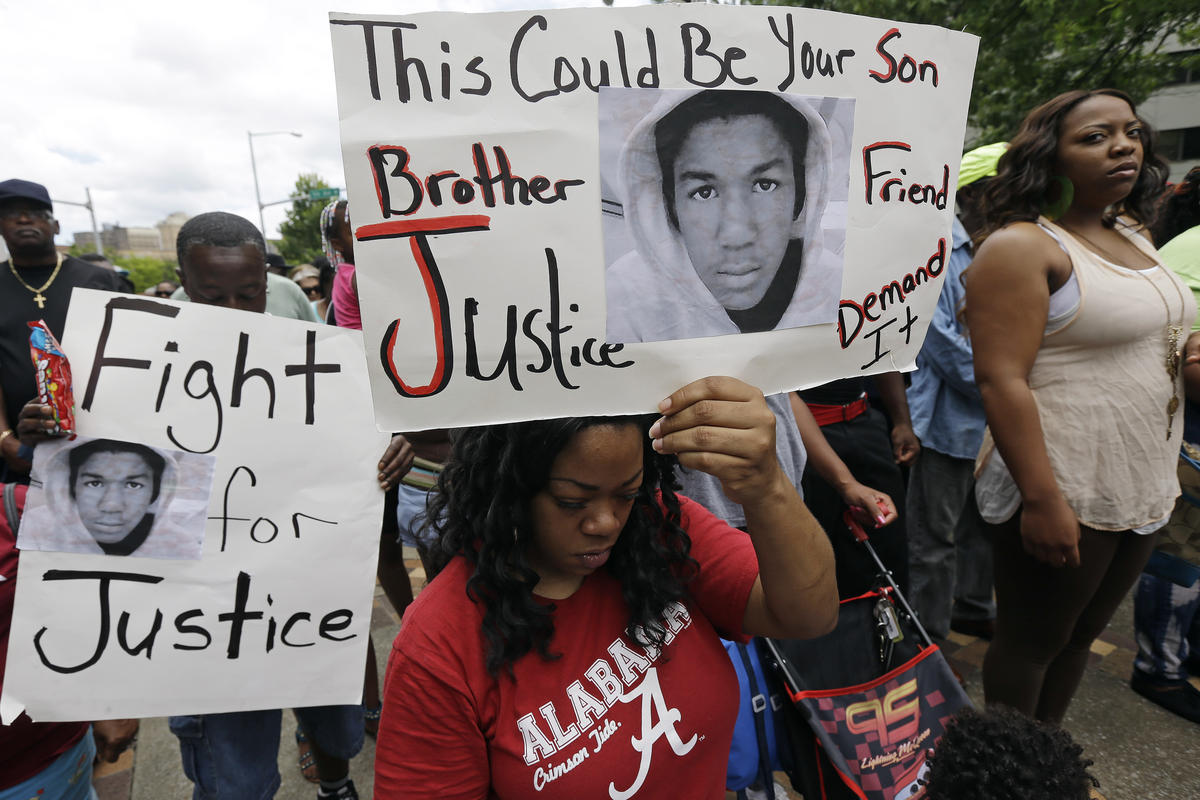
On the Trayvon Martin Verdict and the “National Conversation”

photo credit: Boston Herald

photo credit: Boston Herald

A few thoughts in the wake of Tisha B’Av yesterday…

According to Jewish tradition the Second Temple was destroyed because of the Jewish people’s sinat chinam – or “baseless hatred.”  On Tisha B’Av we affirm that isn’t enough to simply mark our collective tragedies and mourn our collective losses. We must honestly own the ways our own prejudices and intolerance have contributed to these losses.

I was particularly mindful of this spiritual insight this year, as Tisha B’Av followed directly on the heels of the Trayvon Martin verdict and the communal soul-searching it sparked on racism in America. Indeed, more than once over the past several days we’ve heard politicians and pundits call for yet another “national conversation on race.”  Witness Attorney General Eric Holder’s post-verdict remarks:

Independent of the legal determination that will be made, I believe that this tragedy provides yet another opportunity for our nation to speak honestly about the complicated and emotionally-charged issues that this case has raised. We must not – as we have too often in the past – let this opportunity pass.

This isn’t the first time, of course, that we’ve heard the call for such a conversation. I distinctly remember President Bill Clinton making just such a call back in 1997.  It was actually considered fairly controversial at the time  – sad to say we haven’t made much headway in the conversation over the past 17 years.

I don’t mean to be facetious about this. Part of the problem, I think, is that I’m not sure anyone really knows what something as monumental as a “national conversation” would actually look like, particularly on a subject as profoundly charged as race.  Though I hesitate to say so, in some ways I think this call does more harm than good. While I do believe in the importance of dialogue, I can’t help but think that the constant call for communal conversation on race mostly serves to help us to feel better while we dodge the deeper infrastructural realities of racism in America.

While we regularly call for “conversation,” for instance, hard facts such as these continue to go chronically unaddressed:

– Prison sentences of black men are nearly 20% longer than those of white men convicted of similar crimes;

– While people of color make up about 30 percent of the United States’ population, they account for 60 percent of those imprisoned;

– While people of color are no more likely to use or sell illegal drugs than whites, they have higher rate of arrests;

– Voter laws that prohibit people with felony convictions from voting  disproportionately impact men of color.

And the list of shameful statistics goes on and on…

This litany, quite frankly, is nothing short of institutional sinat chinam. And at the end of the day, its going to take much more than dialogue it we’re going to take down the patently unjust and racist laws that oppress people of color in our country.  In this regard, I’d claim national conversation is only truly valuable inasmuch as it leads to real socio-political transformation and change.

So where do we start?  Why not with the “Stand Your Ground” laws, one of which egregiously allowed a man go free after stalking and shooting an unarmed African-American teenager?  It’s critically important that we know that history of laws such this, many of which have been long been pushed through legislatures by the corporate-funded American Legislative Exchange Council (ALEC) and have subsequently been spreading across the country:

Ostensibly a network of state legislators, ALEC is a shadowy, $7 million-a-year organization funded by powerful corporate interests like the Koch brothers, Big Oil, and Big Tobacco.  The NRA has been a longtime financial supporter and served as the corporate co-chair of the ALEC Criminal Justice Task Force, voting with legislators on “model” bills.  Through ALEC, special interests groups like the NRA push their dream legislation through state legislatures. Wal-Mart was corporate co-chair of ALEC task
force approving FL’s “Shoot First” bill as a “model” for other states. The NRA was the next co-chair of that ALEC committee.

According to PR Watch’s Brendan Fischer, ALEC’s influence has has been behind other racially discriminatory legislation as well:

ALEC’s connections to those issues are not limited to Stand Your Ground. The group was instrumental in pushing “three strikes” and “truth in sentencing” laws that in recent decades have helped the U.S. incarcerate more human beings than any other country, with people of color making up 60 percent of those incarcerated. At the same time ALEC was pushing laws to put more people in prison for more time, they were advancing legislation to warehouse them in for-profit prisons, which would benefit contemporaneous ALEC members like the Corrections Corporation of America.ALEC has also played a key role in the spread of restrictive voter ID legislation that would make it harder to vote for as many as ten million people nationwide — largely people of color and students — who do not have the state-issued identification cards the laws require.

If you’d like to engage in action as well as conversation, you can click here to sign a petition urging Attorney General Holder to “review the application of Stand Your Ground laws nationwide and the importance of their repeal.”

And if you live in or around Chicago, I encourage you to join me and other activists of conscience at the ALEC Exposed Protest Rally, which will take place outside ALEC’s 40th Anniversary Conference on Thursday, August 8 at 12 noon.

I hope I’ll see you there.

Stand in Sacred Solidarity with Imprisoned Hunger Strikers

This year, the Islamic fast of Ramadan (which began Monday night and will last until August 7) will serendipitously coincide with the Jewish fast of Tisha B’Av (Monday night July 15 to Tuesday, July 16). Given this harmonic interfaith convergence, I’ve been thinking more about the function of fasting as a time honored tactic of sacred protest – and in particular as a powerful act of civil disobedience. And so in honor of both of these sacred fasting festivals, I’d like to spotlight several ongoing fasts/hunger strikes that I believe are profoundly worthy of our attention and solidarity:

At Guantanamo Bay, many prisoners have been engaged in a longtime hunger strike to protest their conditions and their indefinite confinement. Lawyers for prisoners say the most recent strike began in February; according to the military, 106 of the 166 detainees met criteria to be declared hunger strikers (a definition that includes missing nine consecutive meals):

Prison medical officials have determined that 45 of the prisoners have lost enough weight that they can be fed liquid nutrients, by force if necessary, with a nasogastric tube to prevent them from starving themselves to death. The U.S. military intends to feed all prisoners, including those on hunger strike, before dawn and after sunset during the Muslim holy period of Ramadan to accommodate the men’s religious practices. Military officials have said the feeding process is not painful and only done to prevent any of the men from dying, not as punishment.

A recently released video (above) certainly belies the military’s claims.  In an act of what can only be called deeply courageous solidarity, rapper/actor/activist Yasiin Bey (aka Mos Def) subjected himself to the force-feeding to demonstrate the grievous nature of this procedure. I will warn you that it’s not at all easy to watch. I’ll let you judge for yourself as to whether this act constitutes torture or cruel/unusual punishment, but as far as I’m concerned, this video is worth a thousand words.  On this point, it’s worth nothing that a US federal judge ruled yesterday the practice appears to violate international law – and that President Obama can resolve the issue.

Click here to sign a petition that condemns the use of force-feeding, and demand that President Obama help end the hunger strike by addressing the legitimate grievances of detainees.

Here at home, 30,000 prisoners in California prisons began a hunger strike yesterday in what has been described as possibly “the largest prison protest in state history.”  The protest, organized by a group of inmates held in segregation at Pelican Bay State Prison demands an end to state policies that allow inmates to be held in isolation indefinitely, in some cases for decades.  While the UN has determined solitary confinement for longer that 15 days constitutes torture, many prisoners in California state prisons have languished in solitary for 10 to 40 years.

In California, there are nearly 12,000 prisoners who spend 23 of 24 hours living in a concrete cell smaller than a large bathroom. The cells have no windows, no access to fresh air or sunlight. People in solitary confinement exercise an hour a day in a cage the size of a dog run. They are not allowed to make any phone calls to their loved ones or talk to other prisoners.  They are denied all educational programs, and their reading materials are censored.

Yesterday, the Prisoner Hunger Strike Solidarity Coalition released a lengthy statement that details the history of this issue and explains why the decision was made to begin a hunger strike:

Family members, advocates, and lawyers will announce their support for the peaceful hunger strike and job actions beginning today throughout the California prisons starting on Monday July 8.   Prisoners have been clear since January that they are willing to starve themselves unless the California Department of Corrections and Rehabilitation (CDCR) agrees to negotiate honestly about their demands.

Click here to support the California prison hunger strikers and to sign a personal “Pledge of Resistance.”

I’ve also written extensively in the past about Palestinian prison hunger strikers who have long been engaged in nonviolent resistance to Israel’s illegal practice of administrative detention. While these protests consistently and egregiously fly under the radar of the mainstream media, they demand our attention – particularly as a response to the chronic question “where are the Palestinian Ghandis?”

Click here to learn more about the most current Palestinian hunger strikers. This link also includes the names/addresses of Israeli government, military and legal authorities to whom you can write to protest the prisoners’ treatment and demand their release.

May our respective fasts bring us closer to empathy and solidarity. As we say in my spiritual tradition: Baruch matir asurim – Blessed is the One who liberates the imprisoned.

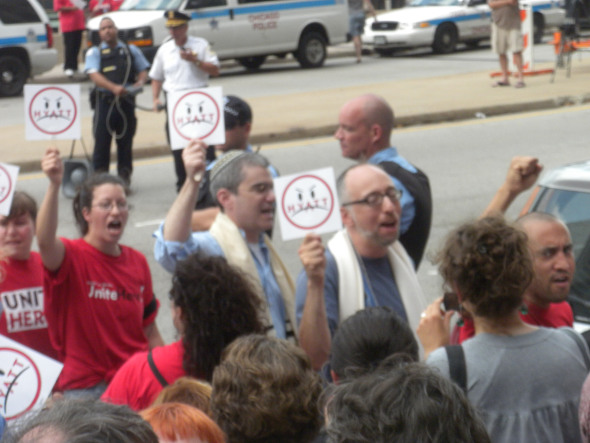
UNITE HERE and Hyatt Reach an Agreement!

dscn95343

Readers of this blog know I’ve long stood in solidarity with Hyatt hotel workers during their four year struggle for justice. (If you’d like a little history, you can read about it here, here, here and here, for instance.)

I’m thrilled to now learn that the Hyatt workers’ union, UNITE HERE has reached a national agreement with Hyatt. According to a union press release which came out yesterday, both UNITE HERE and Hyatt have hailed the agreement as “a positive step:”

The agreement will go into effect upon the settlement and ratification of union contracts by Hyatt associates in San Francisco, Honolulu, Los Angeles, and Chicago.  Pending associate approval, the contracts will provide retroactive wage increases and maintain quality health care and pension benefits.  The proposed new contracts would cover associates into 2018.A key provision of the agreement establishes a fair process, which includes a mechanism for employees at a number of Hyatt hotels to vote on whether they wish to be represented by UNITE HERE.  As part of the accord, upon ratification of the union contracts, UNITE HERE will end its global boycott of Hyatt.

D. Taylor, the president of UNITE HERE, said, “We look forward to a new collaborative relationship with Hyatt.  This agreement shows that when workers across the hotel industry stand together, they can move forward, even in a tough economy.  Both organizations deserve credit for working out this constructive step forward.”

“We are delighted that our associates in Chicago, Los Angeles, San Francisco, and Waikiki will have contracts and the pay raises that go with them,” said Doug Patrick, Senior Vice President, Human Resources for Hyatt.

The Chicago Tribune has reported that according to the agreement, about 5,000 workers would see pay and benefits packages rise an average of 4 percent a year. Regarding the issues of job safety and outsourcing (two key issues for the union), Chicago Public Radio reports “the new contracts will include no new safety language but will bring some outsourced work back to Hyatt.”

I’m delighted for the workers of Hyatt and it has been my honor to stand with them during the course of this long and difficult struggle. One important takeaway for me is the importance and effectiveness of boycotts as an essential tool of the labor movement. In particular, I hope organizations will increasingly insist upon protective language in their hotel contracts so that they can honor boycotts without penalty.

This campaign has also opened my eyes to the hard truth that labor justice is nowhere near the priority in the Jewish community that it once was. Indeed, the Hyatt boycott represented an important test to my community – and it is clear to me that there is much work left to be done. I wrote as much in the Jewish Forward last year when it was revealed that the Religious Action Center of Reform Judaism had signed contracts with boycotted Hyatt Hotels for their conventions:

It is simply not enough to invoke the International Ladies Garment Workers Union and offer bland statements about the historic role Jews played in building the American labor movement. True solidarity means understanding that the struggle ever continues. And that there are flesh and blood “stakeholders” in our own day who call on us to support the sacred cause of worker justice.

Congratulations to UNITE HERE and to all those who stood in solidarity with the workers of Hyatt. And now the struggle continues…

Chicago Students Organize to Save Their Schools

If you want to see an inspiring example of young people speaking truth to power, take a look at the clip above. At a recent meeting of the Chicago School Board a group of students publicly demanded to know, one after the other, why the board was closing down fifty public schools in predominantly black and brown Chicago neighborhoods – and publicly asked why the students themselves had no voice in decisions that directly affect them and their communities.

The video begins with a single student speaking at the podium. At about the 2:00 mark individual students begin standing up and speaking out from the audience as security guards rush in and escort them from the room. Finally a hand is placed over the video taker’s camera and he is pushed out – you can hear his voice telling the guard, “I’m just here for students.”

The students’ action is all the more dramatic when you consider that the Chicago School Board is an unelected body that is appointed by Chicago Mayor Rahm Emanuel – meaning they are utterly unaccountable to the community.  Underscoring the depths of this fraudulent “public body”, Emanuel recently announced that he was appointing millionaire venture capitalist Deborah Quazzo to replace outgoing board member, billionaire Hyatt heiress Penny Pritzker (recently nominated by President Obama to be US Commerce Secretary).

What makes Quazzo qualified to make decisions that will impact the 400,000 students that attend Chicago Public Schools? According to reports, Quazzo is the daughter of a corporate CEO/bank chairman from Jacksonville who moved to Chicago after marrying Stephen Quazzo, Co-Founder and CEO of Pearlmark Real Estate Partners. She successfully climbed the ranks of investment banking and venture capital at J.P. Morgan and Merrill Lynch. In 2001, she co-founded ThinkEquity Partners – an “investment firm boutique” that a few years later ran into serious financial problems and eventually had to file for Chapter 7 bankruptcy protection.

Quazzo is just the latest example of the kind of people who the mayor has personally chosen to serve on the Chicago School Board (which is headed up by President David Vitale, Chairman of Urban Partnership Bank and former President and Chief Executive Officer of the Chicago Board of Trade.)

This, in a nutshell, is why these courageous young students spoke their truth to a body that so patently answers to wealthy corporate interests rather than the communities of Chicago. 

For my part, I’ll second the words of the invisible cameraman: “I’m here for the students.” Please watch this clip and share this widely.

The Prawer Plan Passes First Knesset Reading

2850693083UPDATED 6/25/13

A follow up to my post of May 31:

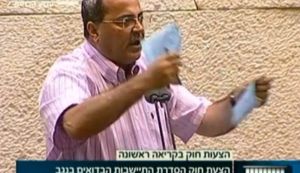
Ha’aretz has just reported that the Israeli government’s Prawer-Begin plan, which would evict up to 40,000 Bedouin citizens of Israel from their homes in the Negev, has passed its first Knesset reading by a majority of 43 to 40:

The vote on the Begin-Prawer plan was held following a tense Knesset session, in which the Arab MKs rose one by one and tore up the draft in a declaration of their their opposition to it…

The Ministerial Committee on Legislation last month approved the law to resolve land-use issues related to the population, after Housing and Construction Minister Uri Ariel managed to reach a series of compromises with Prime Minister Benjamin Netanyahu and former minister Benny Begin on that matter to win the support of the Habayit Hayehudi party…

The plan has sparked fury in the Bedouin community, who call it immoral and impractical.

If you haven’t yet, please, please sign and send this Avaaz.org petition that calls upon Knesset members to vote against the Prawer plan.

UPDATE: Jewish Voice for Peace has just sent out an email blast which includes a link to send an email to Israeli Ambassador Michael Oren urging him to use his “influence to warn Knesset members from taking further steps forward, while there is still time to avoid this human rights catastrophe.”

Daoud Nassar and His Message of Hope

If you’ve been reading my blog for a while, you how I feel about my friend Daoud Nassar, founder of Tent of Nations (and if you haven’t, you can read those posts here, here and here). It’s been my honor to serve on the Advisory Board of Friends of Tent of Nations – North America – and when they told me Daoud was coming to the US for speaking engagements, I jumped at the chance to add Chicago to his itinerary.

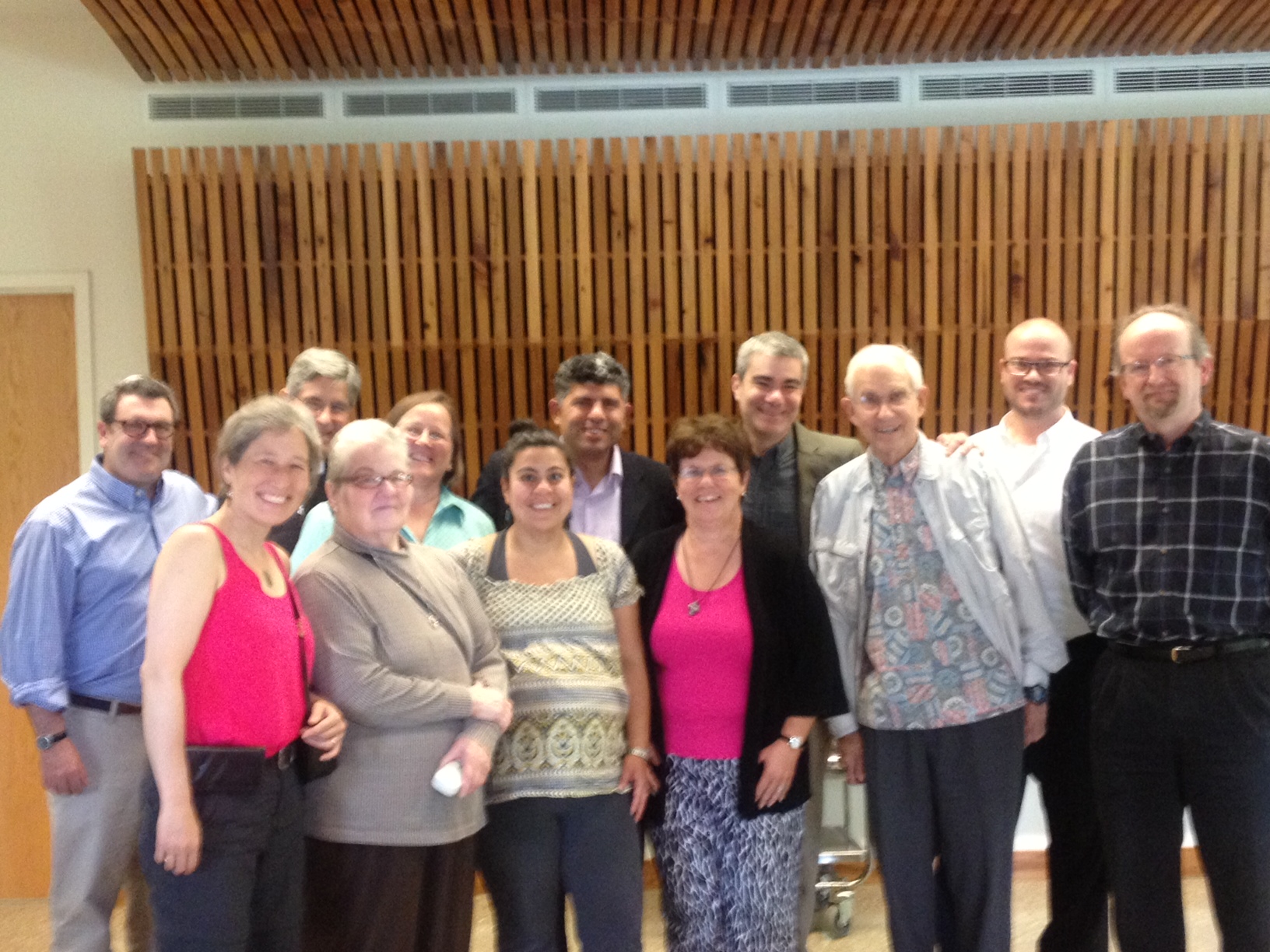
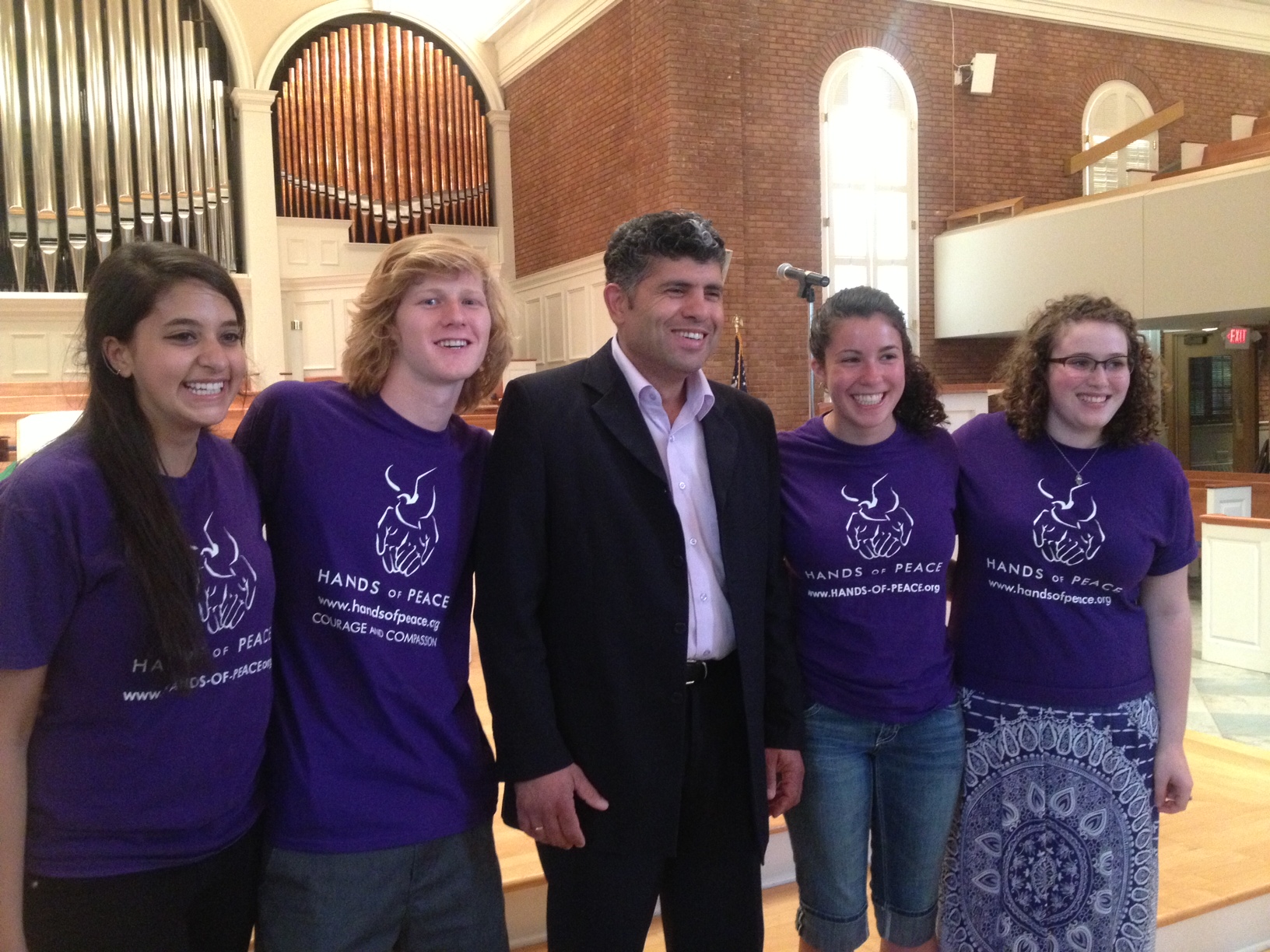
Among his stops here was a meeting with local interfaith clergy (below) and a presentation last night at Glenview Community Church for a program co-sponsored by Hands of Peace, a Chicago-area coexistence initiative on whose Advisory Board I also serve (bottom two pix).  At every stop, it was my pleasure see so many new friends and supporters inspired by Daoud’s message of steadfastness and hope.

Last Sunday, Daoud gave the sermon at the prestigious Riverside Church in New York City. I’ve just watched the video (above) and I was deeply moved by his words. I’ve listened to Daoud present many times, but I’ve never heard him speak in the unique context of his Christian faith.  As a Jew, I found his sermon to be deeply resonant, spiritually profound – grounded both in the truth of his own personal testimony as well as universal values of hope and human dignity. I encourage you to watch it in its entirety.

daoud clergy

daoud and hands

daoud.glenview

B’tselem Reports on Israel’s “De Facto Annexation” of Area C

201306_area_c_map_engAs the we wait in vain for a “breakthrough” in the current incarnation of  “peace process,” I’d like to recommend some essential reading: “Acting the Landlord: Israel’s policy in Area C, the West Bank” – a report released this month by B’Tselem – The Israeli Information Center for Human Rights in the Occupied Territories. It will go a long way in explaining to you how Israel has effectively closed the door on a viable two-state solution.

Some background:

As part of the 1993 Oslo Accords, the West Bank was divided up into three administrative regions: Areas A, B and C. According to these interim accords, the Palestinian Authority was given full civil and security control over Area A, which today accounts for 18% of the West Bank. In Area B, which takes up 21% of the West Bank,  the PA was given civil control while Israeli maintains security control.

Area C, which makes up 60% of the West Bank and contains all the major Jewish “settlement blocs,” is under full Israeli civil and security control. In the map on the right, Area C is marked in red, Area B in the lined sections, and Area A in white. You can clearly how Areas A and B are scattered like an archipelago in the ocean of Area C, cut off from each other and essentially under the ultimate control of the Israel Defense Forces.

Slowly but surely, Israel has been moving Palestinians into these disconnected islands while strengthening its settlement regime over Area C. It is also rapidly blurring the distinction between Area C and Israel proper. Israeli-only highways now lead from Israel into the heart of the West Bank, connecting the Jewish settlements to each other while bypassing Palestinian communities. Jewish communities are also connected through their common use of electrical and water resources that are denied non-Jewish communities. Israel is literally investing billions of shekels in Area C while deliberately preventing the development of Palestinian infrastructure there.  The new B’tselem report now offers a detailed and devastating picture of the sophisticated bureaucratic process by which Israel has been able to create these facts on the ground.

From the report summary:

Israel prohibits Palestinian construction and development on some 70 percent of Area C territory by designated certain areas as “state lands” or “firing zones.” Meanwhile, Israel refuses to recognize most of the villages in the area or draw up plans for them, prevents the expansion and development of Palestinian communities, demolishes homes and does not allow the communities to hook up to infrastructure. Thousands of inhabitants live under the constant threat of expulsion for living in alleged firing zones or “illegal” communities.

In addition, Israel has taken over most of the water sources in Area C and has restricted Palestinian access to them. In theory, Israel retains full control in the West Bank only of Area C. In practice, Israel’s control of Area C adversely affects all Palestinian West Bank residents. Scattered throughout the vast expanses of Area C are 165 “islands” of Area A- and B-land that are home to the major concentrations of population in the West Bank. The land reserves that surround the built-up sections of West Bank towns and villages are often designated as Area C, and Israel does not allow construction or development on these reserves. Israel thereby stifles many Area A and B communities, denying them the opportunity to develop.

This is one of the contributing factors to the difficulty in obtaining lots for construction, the steep price hike in the cost of the few available plots, the dearth of open areas, and the total lack of suitable sites for infrastructure and industrial zones. If, for want of an alternative, residents of these areas build homes without permits on nearby land – owned by them but classified “Area C” – they live under the constant shadow of the threat of demolition.

This report presents Israel’s policy as implemented in Area C, primarily by the Civil Administration, and explores the policy’s implications for the population of the West Bank as a whole. The report focuses on several specific locations in Area C where the policy has considerable impact on the lives of the residents:

– There are dozens of Palestinian villages in the South Hebron Hills that the Civil Administration refuses to recognize and for which it does not prepare master plans. Over 1,000 people, residents of eight of these villages, currently live under the perpetual threat of expulsion on the grounds of residing in a designated “firing zone”.

– The Civil Administration plans to uproot at least two thousand Bedouins from land near the settlement of Ma’ale Adumim and transfer them to so-called “permanent communities” in order to expand nearby Israeli settlements and achieve a contiguous built-up bloc linking the settlements to the city of Jerusalem. Previously, hundreds of Bedouins from this area had been displaced for the establishment and then the expansion of Ma’ale Adumim.

– Palestinians in the Jordan Valley are subject to frequent house demolitions. They are occasionally evacuated for the benefit of military exercises and must deal with the confiscation of water cisterns that are the source of drinking water for them and their livestock.

– Al-Khader, Yatma and Qibyah are examples of Palestinian communities most of whose built-up area is located in Area B. Yet most of these communities’ lands available for construction of homes, infrastructure and public services are located in Area C, where the Civil Administration does not allow construction and development. Palestinians in these communities who, for the want of any other options, built homes on their community’s lands in Area C,  face the constant threat of demolition.

Some Area C residents, harmed by Israel’s planning and building policy, have applied to Israel’s High Court of Justice for redress. However, of the dozens of petitions submitted, the court deemed not a single case worthy of its intervention with Civil Administration considerations. The court thus enabled the restrictive, harmful and discriminatory policy to carry on.

At the same time, and counter to international law, Israel encourages its own nationals to settle in the West Bank. Israel allocates vast tracts of land and generous water supplies to these settlements, draws up detailed plans that take into account both current requirements and future expansion, and turns a blind eye to violations of planning and construction laws in settlements.

Israel’s policy in Area C is anchored in a perception of the area as meant above all to serve Israeli needs. Consequently, Israel consistently takes actions that strengthen its hold on Area C, displace Palestinian presence, exploit the area’s resources to benefit Israelis, and bring about a permanent situation in which Israeli settlements thrive and Palestinian presence is negligible. Israel’s actions have brought about a de facto annexation of Area C and have created circumstances that will influence the final status of the area.

Israel’s policy in Area C violates the essential obligations of international humanitarian law, namely: to safeguard occupied territory on a temporary basis; to refrain from altering the area or exploiting its resources to benefit the occupying power; and, most importantly, to undertake to fulfill the needs of the local residents and respect their rights. Instead, through the Civil Administration, Israel pursues a policy designed to achieve precisely the opposite: the Civil Administration refuses to prepare master plans for the Area C communities and draws on the absence of these plans to justify the prohibition of virtually all Area C construction and infrastructure hook-ups. In cases where, having no alternative, residents carry out construction despite the prohibition, the Civil Administration demolishes their homes. Israel utterly ignores the reality that residents cannot build their homes legally. Israel conducts itself as though this situation were not in fact a direct result of its own policy.

One of the most important sentences in the report above:

Israel’s actions have brought about a de facto annexation of Area C and have created circumstances that will influence the final status of the area.

Increasingly, we are hearing educated observers say out loud what many of us have long suspected: Israel has successfully annexed most of the territory long considered to be the heart of an eventual Palestinian state.

Please read this report and share it widely.