Category Archives: Anti-Semitism

JVP Statement: UCLA Resolution on Anti-Semitism Creates Dangerous Precedent

6291479824_197fdd1283_z

Please read this important statement just released by Jewish Voice for Peace. I strongly second its conclusion that “addressing anti-Semitism must go hand in hand with addressing all forms of racism.”

Jewish Voice for Peace welcomes the commitment of the UCLA Undergraduate Student Association Council (USAC) to addressing issues of anti-Semitism on campus. We recognize that a recent series of troubling incidents, including anti-Semitic graffiti and inappropriate questioning of a Jewish student, have raised concerns about rising anti-Semitism on campus, which we condemn in the strongest terms. However, we are also deeply concerned that the resolution passed by the USAC on March 10, 2015 further enshrines long-standing political efforts to silence legitimate criticism of the state of Israel by codifying its inclusion in the definition of anti-Semitism.

The resolution draws on the “State Department Definition of Anti-Semitism,” (sometimes referred to as the “3 D’s”). However, this definition has no legal standing in the US and was actually removed as a working definition by the European body where it originated. The ‘3Ds’ included in this definition (“demonization, delegitimization and applying a double-standard” to the state of Israel) are so vague that they could be, and have been, construed to silence any criticism of Israeli policies. This ‘working definition’ is in fact the product of long-term lobbying efforts by Israel advocacy groups who seek to codify criticism of the State of Israel as anti-Semitic. This is a deeply dangerous assertion that conflates Israel with Jewish people around the world.

“Classifying criticism of the state of Israel as ‘anti-Semitic’ curtails freedom of speech and dilutes the power of the term, which should be reserved for hatred, violence, intimidation or discrimination targeting Jews because of their ethnic and religious identity,” stated Rabbi Alissa Wise, Director of Organizing, Jewish Voice for Peace. “This resolution therefore dangerously silences legitimate criticism of Israel’s human rights abuses and violations of international law that urgently need to be addressed and remedied.” The United States Department of Education’s (DOE) Office for Civil Rights has emphatically affirmed that criticism of the state of Israel is protected speech on campus.

“The enforcement of this definition of anti-Semitism is part of long-term efforts on the part of Israel advocates to silence and intimidate supporters of Palestinian human rights,” stated Jacob Manheim, JVP-UCLA organizer. “The resolution, which states that only the self-appointed “organized Jewish community’ can define anti-Semitism, marginalizes the growing number of Jews like me who support nonviolent efforts to hold Israel accountable for human rights violations. We are frequently excluded from Jewish institutions, including UCLA Hillel, who barred our chapter from inclusion as a Hillel organization last spring.”

Efforts by Israel lobby groups to expand the definition of anti-Semitism to include criticism of Israeli policies have had the adverse impact of weakening the meaning of the term when actual cases of anti-Jewish hate are reported. For example, the much-cited recent Brandeis Center survey on the rise of anti-Semitism on campuses was methodologically flawed in that it left the definition of anti-Semitism to the respondents. Simultaneously, while there has been a media attention given to reports of a rise in anti-Semitism, there has been nearly no attention given to rising Islamophobia on campuses.  For example, in recent weeks there was an Islamophobic smear campaign against Palestinian rights activists at UCLA and prominent US campuses promoted by the right-wing David Horowitz Freedom Center.

Addressing anti-Semitism must go hand in hand with addressing all forms of racism. We at Jewish Voice for Peace are committed to addressing anti-Semitism in the context of other systems of oppression, including, for example, racism and Islamophobia.

Why Should European Jews Move to Israel? Israel is Already Europe

lehava1612014

There has been a great deal of press devoted to the Israeli government’s efforts to convince European Jewry to escape anti-semitism and flee for their lives to Israel. Leading the charge is Israeli Prime Minister Benyamin Netanyahu, who commented thus following the attack on a Copenhagen synagogue this past weekend:

Jews were killed on European land just because they were Jewish. This wave of attacks will continue. I say to the Jews of Europe – Israel is your home.

I can’t help but be struck a certain absurdity at the heart of Netanyahu’s invitation. Why should European Jews move to Israel? After all, it could be compellingly argued that Israel is already a European nation.

Israel was, after all, born of a distinctly European ideology; indeed, the roots of political Zionism are buried firmly in the soil of 19th century European nationalism and colonialism. Zionist figures from Theodor Herzl (whose novel “Altnueland” imagined the Jewish state in Palestine à la 19th century Vienna) to former Prime Minister Ehud Barak, who infamously described Israel as “a villa in the jungle,” have fancied the Israel as a European style nation-state outpost in an otherwise uncivil Middle East.

This socio-cultural legacy is manifest in a variety of ways. It’s enormously telling, for instance, that Israel is the only Middle Eastern country that chooses to compete in the annual Eurovision Song Contest, as well as the European soccer and basketball championships. At the end of the day, though Israel and the EU may experience their fair share of political tensions, Israel is a European country at heart in so many tangible and intangible ways.

Israel has been also proving itself all-too European in a decidedly different way: through the the nationalist racism that plagues its civic life. To cite but one example, Israel has its own brand of European-style racist soccer hooligans who cheer on their teams by violently attacking minorities in the streets.

From March 2012:

Hundreds of Beitar Jerusalem supporters assaulted Arab cleaning personnel at the capital’s Malha shopping center on Monday, in what was said to be one of Jerusalem’s biggest-ever ethnic clashes. “It was a mass lynching attempt,” said Mohammed Yusuf, a team leader for Or-Orly cleaning services.

Despite CCTV footage of the events, no one was arrested. Jerusalem police said that is because no complaint was filed. Witnesses said that after a soccer game in the nearby Teddy Stadium, hundreds of mostly teenage supporters flooded into the shopping center, hurling racial abuse at Arab workers and customers and chanting anti-Arab slogans, and filled the food hall on the second floor.

Or witness this horrid incident from this past summer:

Earlier this week, Israeli authorities arrested six men in connection with the ghastly killing of Palestinian teen Mohammed Abu Khieder, who, according to reports, was forced into a car and then beaten and burned to death…

Initial reports suggested that some of the suspects in Abu Khieder’s killing were connected to La Familia, a notorious wing of soccer fans connected to Beitar Jerusalem, one of Israel’s more prominent soccer clubs. La Familia… has come to define the club to outside observers as a bastion of xenophobia and racism in Israel.

But it’s not only soccer hooligans. Believe it or not, this is an actual report from Ha’aretz last summer:

Some of the right-wing protesters who beat leftist demonstrators in Tel Aviv on Saturday night wore T-shirts bearing a neo-Nazi symbol, photos and videos show.

As shown on journalist Tal Schneider’s Hebrew-language blog, some of the right-wingers wore T-shirts bearing the slogan “Good night left side.”

Neo-Nazis in Europe wear shirts with this phrase, which accompanies an image of a man attacking a left-wing activist, denoted by a star or anarchy symbol…The emblem and slogan are a response to the original left-wing counterpart: “Good night white pride.”

While this kind of street racism is deeply disturbing, it is, of course, the legislated variety that is traditionally the most dangerous. As I wrote this past October in addressing the recent rise of European anti-semitism,

As troubling it is to read of shootings and firebombings, I believe we should be far more disturbed when we hear reports of far-right and even neo-Nazi candidates being elected into Parliaments throughout Europe.

So too we should be equally as troubled by the increasing numbers of high ranking racist Israeli politicians who incite violence against Israel’s African immigrants, call for the transfer of Palestinian citizens of Israel out of the country, or introduce legislation that effectively force non-Jews out of its political life.

The legislation I’m speaking of, by the way, was not introduced by a fringe Knesset minister – it Is advocated by none other than the Prime Minister of Israel himself, who is currently attempting to change Israel’s Basic Laws to legally define Israel as “the national state of the Jewish people.” As Netanyahu explained it, Israel “is the nation state of one people only – the Jewish people – and of no other people.”

Statements like this make it clear that Israel is not merely a European-style nation – it is a nation that dances with some of the darkest aspects of European ethnic nationalism: i.e., a nation founded exclusively upon the identity of one group and that ipso facto treats its non-majority population as other.

In this regard, we might say that Israel’s commitment to democracy measures up quite poorly against many Western European countries. Just compare Netanyahu’s comments above to the recent statement by French Prime Minister Manuel Valls, that “A Jew who leaves France is a piece of France that is gone.” Or to the remarks made by Danish Prime Minister Helle Thorning-Schmidt this past Monday following the Copenhagen synagogue attack:

I want to make very clear that the Jewish community has been in this country for centuries… They belong in Denmark. They’re part of the Danish community and we wouldn’t be the same without the Jewish community.

Before we judge European countries to harshly for this recent rise in anti-semitism, consider this: could you possibly imagine Netanyahu – or any Israeli Prime Minister, for that matter – saying this following the immolation-murder of Palestinian teenager Mohammed Abu Khieder:

I want to make very clear that the Palestinian community has been in this country for centuries… They belong in Israel. They’re part of the Israeli community and we wouldn’t be the same without the Palestinian community.

Let’s be clear. Those European Jews who do in fact pack up and move to Israel are not simply fleeing anti-semitism to find safe haven in the Jewish state. They are moving to a ethnocractic nation-state that is coaxing them to its shores because it needs them to stand down the non-Jewish “demographic threat.”

And in so doing they are, in a very real way, opting into the power and privilege that comes with being the majority oppressor class in a different kind of European country.

Anti-Semitic Violence in Copenhagen: Responding With Solidarity, Not Cynicism

rtr4plu4

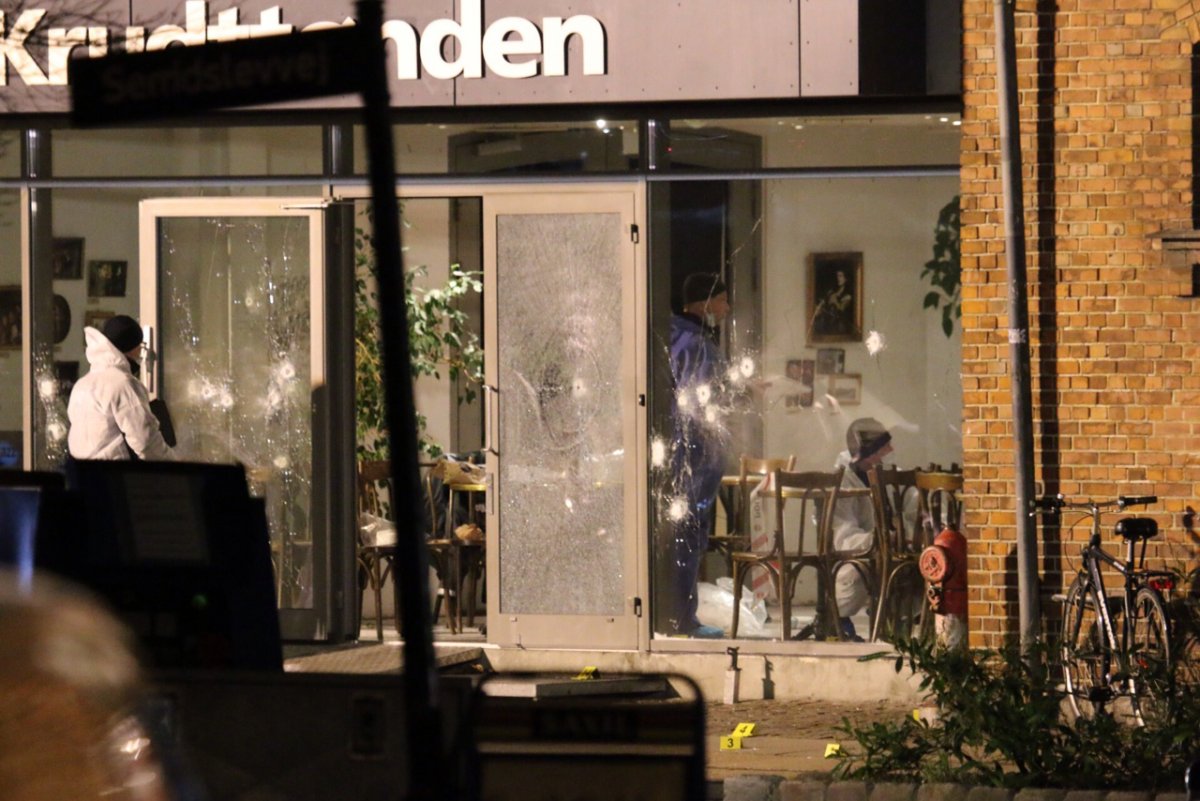
Another week, another tragic hate crime – this time in Copenhagen, in which a gunman attacked a cultural center during a program on freedom of expression, killing 55 year old film director Finn Nørgaard, then shortly thereafter shot and killed Dan Uzan, 37, who was guarding a synagogue during a Bat Mitzvah celebration. Three police officers were wounded during the first attack and two during the second. The gunman, whose identity has not yet been made public, was reportedly “on the radar” of Danish intelligence services and may have been “inspired by militant Islamist propaganda.”

There was a chilling similarity between this attack and a murderous incident in a Parisian kosher market in which four Jewish hostages – Yoav Hattab, Philippe Braham, Yohan Cohen and Francois-Michel Saada – were brutally executed. I use the word chilling because I know all too well that incidents such as these conjure up our worst fears about Jewish life in Europe.

Alas, there are many in the Jewish community who are more than willing to respond to these kinds of attacks by cynically playing on those fears. None more so that Israeli Prime Minister Benyamin Netanyahu who, in the wake of the Paris killings exhorted French Jews to flee Europe and immigrate to Israel:

To all the Jews of France, all the Jews of Europe, I would like to say that Israel is not just the place in whose direction you pray, the state of Israel is your home…This week, a special team of ministers will convene to advance steps to increase immigration from France and other countries in Europe that are suffering from terrible anti-Semitism.

At the time, I couldn’t help but wonder at the twisted logic of Netanyahu’s invitation: telling the Jews of France to flee their homes to the safety and security of a over-militarized Jewish garrison state in the Middle East, where just last summer Israeli citizens spent day after day running for their lives to bomb shelters?

And on still more twisted level, I couldn’t help but note how Netanyahu’s attitude toward Europe ironically plays into the designs of the worst European anti-Semites. Ha’aretz bureau chief Chemi Shalev nailed it perfectly with this tweet:

Call for mass Jewish emigration helps terrorists finish the job started by Nazis and Vichy: making France Judenrein.

Following the Paris attacks, I was enormously heartened by the strong response of French Jewry to Netanyahu’s heavy-handed overtures. After he spoke at a Paris synagogue, he was forced to stand by awkwardly when the congregation spontaneously burst into the French national anthem. He was also dressed down by Rabbi Menachem Margolin, director of the European Jewish Association, who said in an interview:

Every such Israeli campaign severely weakens and damages the Jewish communities that have the right to live securely wherever they are. The reality is that a large majority of European Jews do not plan to emigrate to Israel. The Israeli government must recognize this reality… and cease this Pavlovian reaction every time Jews in Europe are attacked.

Netanyahu clearly has not gotten the message. Following yesterday’s attacks in Copenhagen, he’s played the same cynical card, calling for “massive immigration” and making a thinly reference to the Holocaust by telling Danish Jews:

Jews were killed on European land just because they were Jewish. This wave of attacks will continue. I say to the Jews of Europe – Israel is your home.

Again, it seems European Jewry is having none of it. Denmark’s Chief Rabbi Jair Melchior has said today that he was “disappointed” in Netanyahu’s remarks, adding “Terror is not a reason to move to Israel.”

No, the answer to European anti-Semitism is most decidedly not to adopt a Zionist victim mentality and urge the poor Jews of Europe to flee for their lives. Quite the opposite.

I said as much during my sermon this last Yom Kippur:

What should be our response as we read these reports of rising European anti-Semitism? I would suggest that the answer is not to put our faith in nationalism and militarism to keep the Jewish people safe. I believe our first response should be to understand that anti-Semitism is but one form of racism and prejudice – and as such it is no different than the intolerance that is directed toward any people or group in the world who are perceived as “other.” The appropriate response, it seems to me, is not to recede behind higher walls or build stronger weapons, but rather to find common cause and solidarity with all who are being targeted in this way. To publicly affirm that the well-being of the Jewish people is irrevocably connected to the well-being of every group victimized by racism.

From Paris to Chapel Hill to Copenhagen: the answer, as ever, is to redouble our efforts toward solidarity, democracy, and pluralism no matter where we happen to live.

Responding to European Anti-Semitism: A Sermon for Erev Yom Kippur 5775

jewish-cemetery

According to legend, the U’netaneh Tokef – the High Holiday prayer in which we publicly ponder “who shall live and who shall die” in the coming year – was originally written by Rabbi Amnon of Mainz, Germany. As legend would have it, this 11th century sage was pressured to convert to Catholicism by the Archbishop. The rabbi asked for three days to think it over, presumably as a delaying tactic, and later refused to respond to the Archbishop. When he was brought before him, Rabbi Amnon asked that his own tongue be cut off to atone for his sin of even considering conversion.

The Archbishop ordered something even more ghastly: he decreed that Rabbi Amnon’s arms and legs to be amputated limb by limb as punishment for refusing to come when ordered. At each point, he was given the opportunity to convert – and at each point, the Rabbi refused. As this was the eve of Rosh Hashanah, Rabbi Amnon asked to be brought to the synagogue where he composed and recited the U’netaneh Tokef prayer in his dying breath. Three days later, the Rabbi’s spirit appeared to one of his rabbinical colleagues and asked that this prayer be included as part of the High Holiday service. And so, the legend tells us, U’netaneh Tokef became part of the regular liturgy of this season.

It’s not the most heartwarming legend – but then again, U’netaneh Tokef isn’t exactly the most heartwarming of prayers. It’s actually among the most emotionally raw prayers in Jewish tradition: a collective crying out against the randomness of our world and the vulnerability of our lives. It might well be called the quintessential prayer of the High Holiday season.

It also seems to me that this legend is a commentary on the ways that the U’netaneh Tokef is a product of the Jewish communal experience. This prayer might well be viewed as the liturgical expression of a people that has experienced more than its share of randomness and vulnerability over the course its collective history. Indeed, it’s not difficult to read the words “who shall live and who shall die” and not imagine how they must have resonated for Jews living under the very real existential threat of anti-Semitism throughout the centuries.

For the majority of 21st century Jews, this resonance is far less powerful than it has been for previous generations – perhaps than at any other time in Jewish history. Still, I’m sure there are those who would claim that the words “who shall live and who shall die” have been gradually taking on renewed power for the Jewish people in recent years.

I’m speaking in particular about the reports of a significant rise of anti-Semitic attitudes and incidents in Europe. In past year in particular, press reports and polls have been painting an alarming picture. In a recent survey by the European Union Agency for Fundamental Rights, 66% of the Jewish respondents felt anti-Semitism in Europe was on the rise. 76% said anti-Semitism had increased in their country over the past five years. In the 12 months after the survey, nearly half said they worried about being verbally insulted or attacked in public because they were Jewish.

Much of this ominous news comes from France. According to France’s Society for the Protection of the Jewish Community, totals of anti-Semitic acts in the 2000s are seven times higher than in the 1990s. This past summer, during the war in Gaza, there were disturbing reports that protests against Israel’s actions spilled over from anti-Israel calls into anti-Jewish rhetoric and even violence. Over a two-day period, protesters marched through the streets of the predominantly Jewish suburb of Sarcelles, reportedly chanting “Death to Jews” and “Gas the Jews.” Protestors also firebombed Jewish-owned businesses and two synagogues and one Jewish-owned pharmacy was burned to the ground.

Last May in Belgium, a country with a much smaller Jewish population, a gunman murdered four people in front of the Jewish Museum in Brussels. And this past month, during a Holocaust Memorial dedication on their European Day of Jewish Culture, youths hurled stones and bottles until the police arrived. Three days later, a fire erupted on an upper floor of a Brussels synagogue; the authorities investigated the incident as arson.

In Germany, there have been reports of similar incidents, including the attempted arson of the Bergische synagogue in Wuppertal. In an interview with the Guardian magazine, Dieter Graumann, president of Germany’s Central Council of Jews, said:

These are the worst times since the Nazi era… On the streets, you hear things like ‘the Jews should be gassed’, ‘the Jews should be burned’ – we haven’t had that in Germany for decades. Anyone saying those slogans isn’t criticizing Israeli politics, it’s just pure hatred against Jews: nothing else. And it’s not just a German phenomenon. It’s an outbreak of hatred against Jews so intense that it’s very clear indeed.

There have also been reports of similar incidents in Italy as well as throughout the Netherlands. A few months ago, a Dutch Jewish watchdog group reported a 23 percent increase in the number of anti-Semitic incidents in the Netherlands since 2012. In Malmo, Sweden, for instance, there has been a rise in anti-Semitic violence over the past several years, causing some members of the Jewish community to emigrate.

My very good friend, Rabbi Rebecca Lillian has lived in Malmo for several years and has reported frankly to me about the impact of anti-Semitism on her adopted hometown. In 2012, the Malmo JCC, where Rebecca lives, was vandalized by heavy rocks and an explosive device that thankfully did little damage. In a recent e-mail to me, she described the issue of anti-Semitism in Europe as a “festering sore,” adding “it’s ugly.”

Rebecca added that the recent upswing of incidents in Malmo, as in the rest of Europe, was mostly in response to the violence in Gaza, which she said “naturally spurred a lot of random, violent hate directed at Jewish people and Jewish places.” She said the Chabad rabbi there was attacked several times, but fortunately was never hurt. Another one of her friends, a modern orthodox Jew who wears a kippah, was so tired of being harassed that he has taken to wearing a baseball cap over it. She wrote to me, “Even I was a bit fearful of, for example, taking a taxi to the JCC where we live. I would ask to be left on the corner, even with luggage.”

What do we make of reports such as these? As Jews, as people of conscience, what should be our response to news of a resurgence of anti-Semitism throughout Europe? There is, of course, one answer on which I believe we can all agree: we must call it out. As with any form of racism or prejudice, silence equals assent. When we hear these kinds of reports, it is our sacred duty to speak up – and to act.

Beyond this basic answer, however, it gets more complicated. When confronted with the reality of anti-Semitism in this day and age, what we say and do will depend on our analysis of its causes. I would go even further and suggest that the nature of our analysis may well define what kind of Jews we want to be – and what kind of Judaism we seek to affirm.

Many Jews will look at the resurgence of anti-Semitism in Europe and conclude that this demonstrates the critical importance of the state of Israel. After all, Zionism itself arose in response to European anti-Semitism. Political Zionists dating back to Theodor Herzl have posited that the only thing that could effectively safeguard the collective security of the Jewish people is a Jewish state of their own. And since its founding Israel has become the symbol of Jewish empowerment: a Jewish nation-state with a Jewish army that ensures the security of Jews not only in Israel, but around the world.

It is not uncommon today to hear the claim from some in the Jewish community that Israel is a kind of “Jewish insurance policy” – that if (or when) things invariably go bad for the Jews anywhere in the world they will always have Israel to go to. For many Jews, in fact, the critical importance of a Jewish state is the central lesson of the Holocaust. Never again will we depend upon other nations to keep us safe. For so many in our community, a Jewish state is our island of security in a dangerous world.

While I certainly understand the logic and psychology of this response, particularly living as we do in the post-Holocaust era, I find this narrative to be problematic in many ways – grounded more in ideology than reality. At the end of the day, I simply don’t believe that statehood has provided us with a real or effective answer to the problem of anti-Semitism.

In some ways, it might be claimed that the exact opposite has occurred. While Israel was largely created to ensure Jewish safety and survival, it has become, ironically enough, the one Jewish community in the world that lives in a near-constant state of vulnerability and insecurity. Indeed, for all of the troubling reports of European anti-Semitism this past summer, the most indelible images of Jewish insecurity came from news footage of Israelis traumatized by missiles coming from Gaza, running for bomb shelters at the repeated sounds of air raid sirens. This was not – to put it mildly – the picture of a “safe haven” for Jews.

I believe these images sadly drive home the tragic reality behind the Zionist dream. Israel, the nation that was created to be a safe home for the Jewish people, has been in a perpetual state of war since its’ founding. Israel, the nation founded to normalize Jewish collective existence, routinely characterizes itself as a small country surrounded and besieged on all sides by hostile enemies. Whatever else we might believe about how a nation can achieve safety and security in the 21st century, I would posit that the founding of Israel has not provided the Jewish people with a panacea.

It is certainly true that Israel has historically opened its arms to oppressed Jews around the world – and we certainly should not understate its importance in this regard. More recently it has been reported in the media that European Jews – particularly Jews from France – are starting to immigrate to Israel in response to rising anti-Semitism. The predominant narrative here is that there is now a new European exodus of oppressed Jews to the Jewish state.

Again, however, I believe these reports have more to do with ideology than reality. According to data from the Israel’s Ministry of Aliyah and Immigrant Absorption, there has indeed been an increase in the number of immigrant from Western Europe in recent years: from 3,339 in 2012 to 4,694 in 2013. What many news reports fail to mention, however, is that Israeli Jews are immigrating to Western Europe at nearly the same rate. In fact, the number of Israeli Jews living abroad has been estimated at 1,000,000with most émigrés citing the economy and war-weariness as their main reason for leaving Israel. Berlin alone is home to 17,000 Israelis, according to the German embassy in Tel Aviv. Though it is remarkable to even contemplate just decades after the Holocaust, there is a thriving and growing Israeli expat community in Germany, with its own radio station and cultural arts scene. When we take a close look at what is really going on, then, the reality is much more complex that what the media has been reporting.

When all is said and done, the tragic reality is that Israel was born in conflict and has lived with conflict as its daily reality for its entire existence. Since 1967 Israel has been militarily occupying another people – and I don’t believe it is a stretch to suggest that this ongoing, often brutal occupation impacts attitudes toward Jews not only in Israel but worldwide.

By every indication, whenever violence connected to the Occupation has risen, so too have the incidence of anti-Semitic attitudes and acts around the world. I’ve already mentioned that European anti-Semitism spiked during the Gaza war this summer – as it did during the Gaza wars of 2012 and 2009 as well as the First and Second Intifadas. But it is also worth noting that this linkage works both ways. During periods of peace and diplomacy, particularly during the optimistic days of the peace process under Yitzhak Rabin, in the early 1990s period, global anti-Semitism was at an all time low. As much as violence begets violence, so too, apparently, does tolerance beget tolerance.

What should be our response as we read these reports of rising European anti-Semitism? I would suggest that the answer is not to put our faith in nationalism and militarism to keep the Jewish people safe. I believe our first response should be to understand that anti-Semitism is but one form of racism and prejudice – and as such it is no different than the intolerance that is directed toward any people or group in the world who are perceived as “other.” The appropriate response, it seems to me, is not to recede behind higher walls or build stronger weapons, but rather to find common cause and solidarity with all who are being targeted in this way. To publicly affirm that the well-being of the Jewish people is irrevocably connected to the well-being of every group victimized by racism.

Here’s an concrete example of this response in action: back in 2012, Rabbi Rebecca Lillian wrote that when the Jewish Community Center in Malmo, Sweden was attacked, she was appalled to read quotes by American Jewish leaders proclaiming that Malmo was an unsafe travel destination for Jews and that they should prepare to flee to Israel or another country. In fact, Rebecca pointed out, immediately after the attack, Malmo’s Network for Faith and Understanding held a solidarity vigil, in which women, men and children gathered in front of the JCC with candles. Leaders of several Christian churches, two Muslim groups, and other spiritual and social organizations came together and offered public speeches of support and solidarity.

Indeed, while much attention is paid to the fundamentalist Muslim perpetrators of anti-Semitic attacks throughout Europe, relatively little is devoted to the local actions of Jews and Muslims who come together to stand up against the bigotry that ultimately affects both communities. I was heartened to hear from Rebecca that despite the recent uptick in anti-Semitism in Malmo, their interfaith group is “stronger than ever.”

As she wrote to me in her e-mail:

Even during the (Gaza) war, we spoke candidly about the need to work together to fight any type of hate crime. At a panel discussion, I spoke as a Jew for humanitarian aid to Gaza and for an end to the killing and injuring of civilians. The Imam on the Board spoke about the need for Muslim youth to not attack Jewish people and property. We all spoke of co-existence. In the words of my friend who wears the kippah, the answer lies in education. We need to learn about one another. And the good news is that is indeed happening.

When we contemplate our response to this new anti-Semitism, I believe we should also take pains to differentiate between individual anti-Semitic acts and the much more serious phenomenon of state sponsored anti-Semitism. While we should be alarmed and should rightly protest whenever we hear about anti-Semitic incidents and attacks, historically speaking the most insidious and deadly form of anti-Semitism has been the legislated variety. We must not forget that the Holocaust, like all genocides, occurred when a government directed it own state institutions and resources against minorities in its midst.

Thus, as troubling it is to read of shootings and firebombings, I believe we should be far more disturbed when we hear reports of far-right and even neo-Nazi candidates being elected into Parliaments throughout Europe. My friend Rebecca referred to this phenomenon as the “dark underbelly” of Swedish anti-Semitism. She pointed out that in recent elections, “a relatively large percentage of the voters went for Sweden Democrats, a hard-line anti-immigrant group that has roots in neo-Nazism. There is a group of thugs that are equal opportunity haters, who are fans of neither Muslims nor Jews.”

For all of the recent news coming out of Europe, we should be heartened by the knowledge that there are no longer and Jewish communities anywhere in the world that are collectively targeted and oppressed by its government for being Jewish. And we should be likewise heartened when we hear the heads of European governments pledging their support to minority communities plagued with hate crimes. In response to the recent anti-Semitic incidents in his country, for instance, French Prime Minister, Manuel Valls, has publicly said, “to attack a Jew because he is a Jew is to attack France. To attack a synagogue and a kosher grocery store is quite simply anti-Semitism and racism.” Likewise, at a recent rally, Germany’s chancellor, Angela Merkel, has called the recent incidents “an attack on freedom and tolerance and our democratic state.”

In the end, this may well be the most important, profound and effective response of all. The answer to anti-Semitism, as with all forms of racism is not to adopt a victim mentality or to circle the wagons, but to demand more democracy, more civil rights, more humans rights for all. As American Jews, we should know this better than anyone. We should understand that our new-found engagement with the world has resulted in freedoms truly unprecedented in our history. Today, in our globally engaged 21st century world, I believe we of all people should be on the forefront of this call.

I’d like to conclude now where I began: with the U’netaneh Tokef prayer. As it happens, the legend of the martyred Rabbi Amnon turns out to be precisely that: merely a legend. Scholars tell us that in fact, this prayer was actually composed several centuries earlier, and was likely an edited product of many different authors, influenced by a variety of early Christian hymns. As always, the reality is more complex than our often fatalistic mythology would have it.

And in the end, I believe it is a more hopeful reality. Yes, as this prayer reminds us, the world can be a dangerous place. No, we do not know what this new year has in store for us. It may be a year of blessing or a year of curse, or more likely something in between. But no matter what emotional or historical baggage what we bring to this prayer, we would to well to remember that we always end with the uplifting words, “U’teshuvah, u’tefillah, u’tzedakah ma’avirin et ro’ah ha’gezeirah” – “Repentance, Prayer and Tzedakah lessen the severity of the decree.”

In other words, we must respond to the often harsh nature of our world by engaging with it. Not by hiding from it or fighting against it, but acknowledging all that is good and right and just about it – and then by fighting for these values in no uncertain terms.

In the coming year, in all the years to come, may we do what we can to mitigate the harshness of the decree.


The ADL Global 100: Challenging Our Narratives of Anti-Semitism

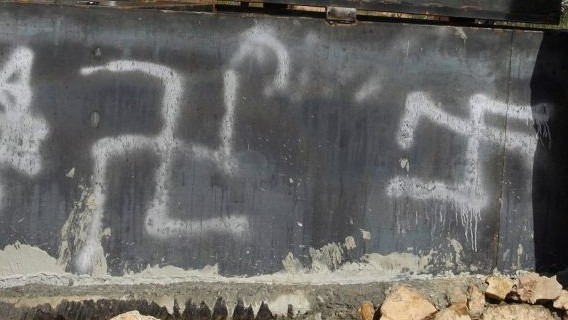
swastikas-e1399556633779

There’s been a great deal written about the report, “Global 100: An Index of Anti-Semitism,” released last month by the Anti-Defamation League. While the ADL has trumpeted the survey as “the most extensive such poll ever conducted,” reactions in the mainstream media have been mixed. In one widely read piece, Noah Feldman criticized the ADL’s methodology as “stacking the deck in favor of anti-Semitic answers.” Blogger/journalist Mitchell Plitnick has also written an important article that unpacks the political agenda behind the survey (writes Plitnick, “the cry of anti-Semitism is becoming the cry of the wolf-shouting boy.”)

For my part, I’ve been struck by the way the ADL’s survey unwittingly (and ironically) betrays some of the mainstream Jewish community’s most deeply held narratives on anti-Semitism. One of the survey’s most striking findings, for instance, reveals that Iran is by far the least anti-Semitic country in the Middle East. To be sure, the ADL hasn’t gone out of its way to publicize this point – you can only deduce it by comparing Iranian responses to those of other Middle Eastern countries. But in fact, Iran scores better on every one of the ADL’s eleven survey questions by a statistically significant margin. And as Israel/Iran analyst Marsha B. Cohen, has pointed out, Iran doesn’t even make it into the ADL survey’s “worldwide top 20 anti-Semitic hotspots.”

Sobering findings indeed, when you consider that Israeli politicians have long predicated their foreign policy on a narrative that views Iran as the world’s #1 threat to the Jewish people.  (Just this past April, in fact, Israeli PM Netanyahu mentioned Iran in the same breath as Nazi Germany during a Holocaust Remembrance ceremony at Yad Vashem.)

Among other things, I believe these findings shed much-needed light on the cynical tropes wielded by Israel and the American Jewish establishment. I’m certainly not surprised that the ADL hasn’t promoted this particularly inconvenient truth in their press releases on the survey, but at the very least I believe it should encourage us to seek out a different kind of narrative vis a vis Iran: one that might encourage engagement and diplomacy over confrontation and lines in the sand.

On the other end of the spectrum, the ADL’s survey found that Middle Eastern anti-Semitism was the most pronounced among Palestinians in the West Bank and Gaza. No shocker there. As Plitnick notes in his post:

There you will find many people, with no power who are dominated by a state that insists on claiming (falsely) to represent the world’s Jews. Are we to be surprised that an awful lot of them believe that “the Jews” have too much power, too much influence on other countries’ decisions, too much wealth, etc?

And that, I posit, is the real reason for the ADL’s report. No sooner had the report been issued than Israeli Prime Minister Benjamin Netanyahu pounced on it as “proof” that the Palestinian Authority “incites” hatred of Israel and Jews. As if the settlers and soldiers – who are the only examples of Jews or Israelis that Palestinians ever see anymore — don’t do that quite efficiently all by themselves. What would one expect of an occupied population, in the West Bank, and a deliberately starved and besieged one on Gaza? That these conditions would breed a great love of Jews and of Israel?

And here I would submit, the survey belies yet another narrative popularized by Israel and so many American Jewish leaders: that Israel represents the most important defense/response to anti-Semitism  (a claim that dates back to the days of Theodor Herzl.) In the face of findings such as these, we might justifiably ask: in what ways do Israel’s actions actually foster anti-Semitism? This question is particularly salient as regards Palestinians who live under Israeli military occupation. At the end of the day, can Israel truly claim to be a Jewish “safe haven” with such a population in its midst?

We might also ask, to what extent do Israel’s oppressive treatment of Palestinians inspire anti-Semitism throughout the world? Anti-semitism, like all forms of prejudice, is very real – and we must certainly respond to it with all due seriousness. But at the same time, might it be possible that some of the attitudes uncovered by the ADL survey are less the result of genuine Jew-hatred than anger toward unjust actions perpetrated by a state that purports to represent all Jews everywhere?

Again, I’m sure the ADL never intended its study to inspire questions such as these – but we’d do well to consider them.

Cantor Vicky Glikin on “the Jewish Question” in the Ukraine

photo: telegraph.co.uk

photo: telegraph.co.uk

I strongly encourage you to read this report, below, by Cantor Vicky Glikin, of Congregation Solel in Highland Park, IL.

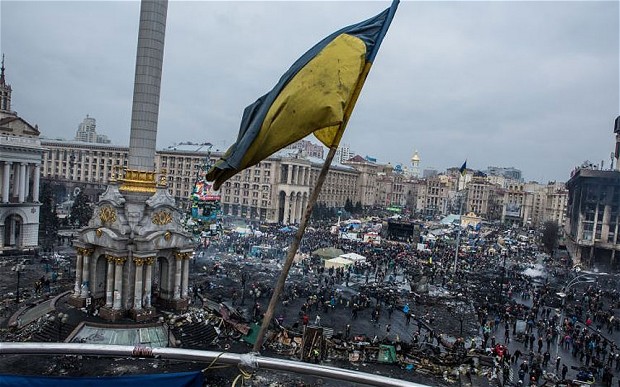
Cantor Glikin recently returned from a trip to her native Ukraine, where the political/military upheaval has been been of special concern to the international Jewish community, particularly amidst reports of anti-Semitism against the Ukrainian Jewish population. While it is imperative that we take such reports with the utmost seriousness, it is also critical to separate fear from fact – and not to jump to conclusions about the truth behind these reports. In this regard, eye-witnesses testimonies from knowledgeable insiders such as Cantor Glikin are profoundly important.

Having just finished observing Yom Hashoah (Holocaust Remembrance Day), I am truly inspired by her words, which ultimately counsel hope over fear and engagement over isolation:

Continue reading

Why I Celebrated the Persian New Year on Purim this Year

Nowruz

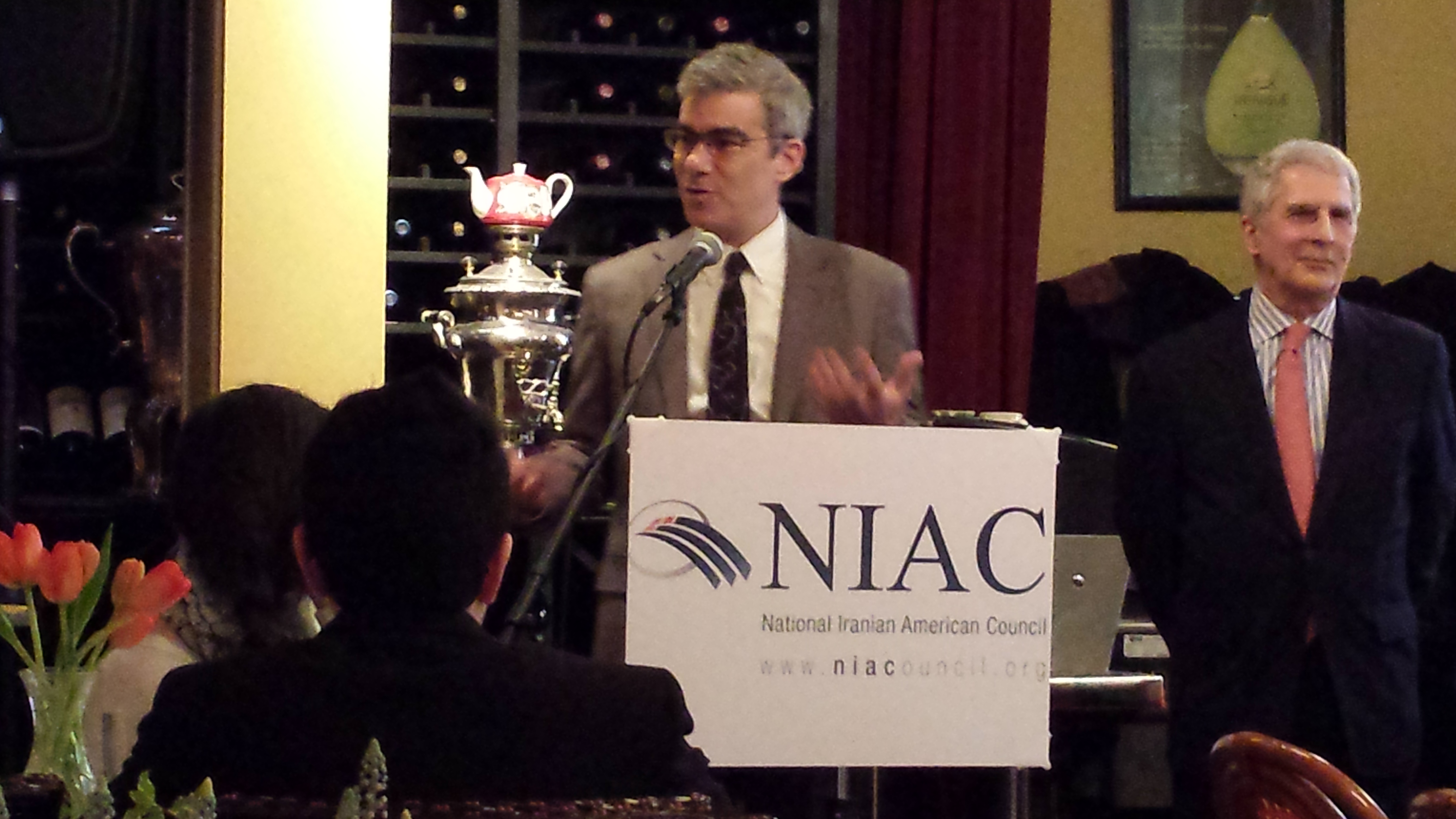
Addressing the NIAC Chicago Nowruz Celebration, March 16, 2014 (photo: Roxane Assaf)

Like many American rabbis around the country, I spent the most of the day yesterday leading my congregation’s noisy, joyously raucous Purim celebration, complete with a carnival and a family Megillah reading. As per usual, we read a somewhat watered-down version of the Book of Esther – one that characteristically kept the sexual hijinx and violence to a minimum.  Even with our PG version, however, there was no getting around the decidedly darker aspects of the Purim story – particularly the infamous ninth chapter in which we read that the Jews of Persia slew 75,000 Persians then celebrated the day after with a festival of “feasting and merry making.”

As always, this part of the story stuck seriously in my throat. While we adults can intellectualize the more disturbing parts of the Purim narrative (“it’s irony,” “it’s a revenge fantasy,” “it’s cathartic,” “it’s not meant to be taken seriously, after all…”) I’m just not sure we do any favors to our children when we read these kinds of stories to them, even in censored form. I’m fast coming to believe it’s time to tell a fundamentally different version of the Purim story to our children – one that celebrates the venerable Persian-Jewish experience rather than cynically telling a Persian version of “when push comes to shove, all the world really just wants the Jews dead.”

I’m also mindful that there are all too many adults who are willing to take the Purim story literally. I’ve written before about the disgusting Purim violence annually inflicted against the non-Jewish population in Israel. And on a geopolitical level, leaders of the state of Israel (and many in the American Jewish establishment) have openly and unabashedly used the Purim story to frame our relationship to Iran – presenting present day Ayatollahs and Mullahs as nothing less than Haman incarnate and promoting all out war as the only way to settle the current nuclear impasse.

For all this, however, I’m happy to report that Purim ended for me on something of a redemptive note this year.

As it turns out, the Persian New Year known as Nowruz is fast approaching and last night, I was thrilled to attend a Nowruz party sponsored by the Chicago chapter of the National Iranian American Council (NIAC).  So after I got home from my congregation’s Purim carnival, I took off my clown costume, put on a suit, and drove to a suburban restaurant where I celebrated the coming of spring with Chicago’s Persian community and supported the important work of NIAC, which among other things supports a “policy of persistent strategic engagement with Iran that includes human rights as a core issue.”

When I addressed the gathering (above), I thanked them for reaching out to me and explained that ever since I returned from a visit to Iran in 2008, I’ve always hoped to score a Nowruz party invitation from my Persian friends. I also explained why celebrating Nowruz with NIAC was for me the perfect, redemptive coda to Purim. And I added that contrary to the impression created by some Israeli politicians and Jewish institutional leaders, there were many in my community who believed that the current crisis should be settled through diplomacy and engagement and not an inexorable march to war.

Now I’m thinking there might well be something to this Nowruz/Purim celebration. Can’t think of a better way to, in words of the Book of Esther, “turn grief and mourning into festive joy….”

More Heat Than Light: My Response to Rev. Chris Leighton

RNS-Zionism-Unsettled-study-guide

Dear Reverend Leighton,

Thank you for your response to my open letter. While I’m also not particularly interested in turning our dialogue into a debate to be “won” or “lost,” I do take exception to much of what you wrote and feel compelled to respond in kind. I agree with you that our differences are worthy of ongoing dialogue. I can only hope that the airing of our disagreement might somehow be helpful to those who struggle with an issue that is of such critical importance to our respective faith communities.

I’d like to start with your observation:

(To) deny…Zionism and Judaism do not share deep historical and religious roots…strikes me as a serious error. You work with a very limited conception of Zionism as a 19th century political movement that breaks from Jewish tradition. I work with a much broader understanding of Zionism and see this movement as driven by yearnings for a Jewish homeland with deep biblical underpinnings. The blending of peoplehood, land and Torah strikes me as integral to Jewish tradition.

In writing this statement, you’ve chosen to sidestep my point that for thousands of years, the Jewish connection to the land was expressed as a spiritual yearning – not as a desire to create a sovereign Jewish nation.  “Homeland” and “political nation” are two intrinsically different concepts, and as I’ve already written, Jewish tradition consistently regarded the notion of Jewish political nationhood to be an anathema. Political Zionism was never “integral to Jewish tradition” and this concept was not even introduced into Jewish life until the 19th century.

By insisting on this point, your analysis of Jewish tradition and history betrays a characteristically Zionist bias that assumes the centrality of sovereign statehood. That is fine – you are certainly welcome to your biases. But you should at least be prepared to own them for what they are and not attempt to present them as normative.

The very concept of nation-statehood itself is a fundamentally modern notion. Like all modern forms of nationalism, Zionism arose to consciously create a sense of seamless continuity to the past through recourse to an ancient mythic history. But of course, this is an artificial “continuity;” one that owes more to modern political ideology than Jewish religious tradition.

It also has little to do with actual “history” as we know it today. As “Zionism Unsettled” notes, it is extremely problematic to use the Bible as a history book to lay claim to particular piece of land. In the first place, the Bible is a profoundly ahistorical document, as we have long since learned from literary scholars and archaeologists.  Moreover, the Bible was certainly never intended to be “history” according to our current understanding of the term. The authors of the Bible did not purport to create a literal history of the events of their day – rather, it is a religiously inspired narrative that reflects ideas and values unique to the world of the ancient Near East.

This is more than just an academic point. As “Zionism Unsettled” points out, the use of the Bible as a historical justification for a modern nationalist movement is not merely historically problematic – it has had tragic consequences for the inhabitants of historic Palestine, particularly when you consider Biblical passages that express entitlement to the land, a religious intolerance of the “foreign nations of Canaan” and commandments that require nothing short of their total dispossession – and in some cases, even annihilation.

So in one sense we are in complete agreement when you write “even the more secular strains of Zionism that became predominant in the 19th century were suffused with Biblical imagery.” Perhaps we only disagree on the dark outcome of this phenomenon.  We should not be unmindful of the ways that the Biblical land traditions were used by early Zionist ideologues and the political founders of the state – and are currently wielded by Israeli politicians, settler leaders and ultra-religious rabbis alike.  This use of Biblical imagery must not be dismissed as mere religious rhetoric – these theological linkages have enormous power, particularly when we consider the expulsion of Palestinians from their homes in 1947-48 and policies of displacement and transfer that continue to this very day.

You go on to ask:

Do you want to uncouple Zionism from Judaism altogether, or do you want to critique its more militant and “colonial” manifestations? Can all expressions and forms of Zionism be accurately placed into an ideological lump and legitimately condemned as a movement that leads “inexorably” to the displacement and mistreatment of the Palestinians, as the IPMN guide indicates? Do you think that Jews do not belong or have a legitimate claim to the land of Israel?

It is true that there are many different forms of Zionism – a fact that is extensively explored in “Zionism Unplugged” (see Chapter 2).  I would argue, however, that since the establishment of the state of Israel, the existence of these various “Zionisms” has largely become an academic point. In a very real way, the birth of Israel represents the ultimate victory of the values of political Zionism that were promoted by the founders of the state.

As someone who identified as a Zionist for most of his adult life, it is with no small measure of sadness that I acknowledge the ways political Zionism has “inexorably led to the displacement and mistreatment of the Palestinians.”  Perhaps most critically, I have come to painfully reckon with the ethnic nationalism at the core of political Zionism’s raison d’etre – and its insistence upon the maintenance of a demographic Jewish majority in the land to safeguard the “Jewish character of the state.”  In the end, no matter how vociferously Israel might insist that it is, in fact, “Jewish and democratic,” I do not believe it is ultimately possible to establish a demographically Jewish state without regarding the presence of non-Jews to be a problem.

In this regard, I do believe that “Zionism Unsettled” bravely shines a light on the tragic legacy of the Zionist idea, a concept that ultimately resulted in the forced depopulation of Palestinians from their homes in 1947/48 (a phenomenon by now well attested to by Israeli historians) as well as the policies of dispossession that continue to be enacted by the Israeli government even today. These events and policies do not exist in a vacuum – they are the logical end-product of a very specific nationalist ideology that privileges the rights of one particular group over another.

You ask me if I believe Jews “do not belong” or “have a legitimate claim to the land of Israel.” Of course I believe that Jews have every right to live in the land. I’m not sure, however, what you mean by a “legitimate claim.” If you mean can we Jews rightly maintain a religious connection to the land, then my answer is certainly yes. If you mean do we have some kind of intrinsic right to exert our political sovereignty over this land, then my answer is most certainly no. When it comes to nation-statism, it has historically been the case that “might makes right.”  The real question, it seems to me, is not “who has the right to this land?” but rather “how can we extend full rights to all who live on this land?”

You write that you “have yet to see efforts to undo the establishment of the State of Israel produce constructive results.”  I’m struck that you equate an insistence upon equal rights for all to be tantamount to Israel’s “undoing.”  But when it comes to a choice between a Jewish and democratic state, as increasingly seems likely, what should be our choice?  My community is fast approaching a reckoning: which kind of state will ultimately be more “Jewish,” one that unabashedly places Jewish rights above Palestinian rights or one that allows full and equal rights for all?

I also find your statement about “Israel’s undoing” to be more than a little incendiary. By projecting nefarious designs onto an entire movement, this kind of rhetoric only exploits the deepest and darkest of Jewish fears. I will tell you that I have been participated in the Palestinian solidarity movement for some years now and have yet to encounter the kind of anti-Semitic anti-Zionists you speak of. Are there anti-Semites in this movement? Undoubtedly. There are odious types on the margins of every political movement. But I can say without hesitation that the Palestinians and pro-Palestinian activists I have met and worked with have nothing but the deepest respect for Jews and Judaism at large and consistently endeavor, as I do, to draw a scrupulous differentiation between Zionism and Judaism.

I don’t disagree with you that  “the quest for home is deeply woven into the tissue of our humanity” and that this concept is deeply woven into the fabric of Jewish collective consciousness. But I must disagree with you strongly when you insist that “the search for homeland aim(s) at sovereignty.” To me, this is an astonishingly narrow and reductionist reading of the notions of home and homeland.

You write that “a national identity is difficult to construct and preserve without the power and freedom that is exercised by the state.” But in fact, that is precisely what the Jewish people have done for centuries.  Judaism as we know it was born in the wake of the destruction of the Second Temple, as a profound and spiritually courageous response to the reality of dispersion and exile. As such, Jewish tradition is replete with teachings that respond to this trauma with a message of spiritual hope and renewal.

In one of my favorite rabbinic midrashim, for instance, Rabbi Akiba teaches, “Wherever the people of Israel were exiled, the Divine Presence was exiled with them.”  In other words, Judaism arose to assert that despite the experience of exile, the Jewish people would always be “home.” God was no longer geographically specific to one particular land – spiritual meaning and fulfillment could be found throughout the diaspora wherever the Jewish people might live.  (The midrash ends, notably, on a messianic note: “And when they return in the future, the Divine Presence will return with them.”)

In so doing, the rabbinic Judaism transformed a land-based cultic practice to a global religion, enabling Jewish life to flourish and grow widely throughout the Diaspora. This, I believe represents the intrinsic beauty and genius of the Jewish conception of peoplehood: in a time of profound upheaval and crisis we spiritualized the concept of homeland and redefined ourselves as a globally based, multi-ethnic, multi-cultural nation that viewed the entire world as its “home.” The concept of exile became, in a sense, a spiritual prism through which we viewed the world and our place in it. It might well be claimed that centuries of Jewish religious creativity resulted from this profound existential mindset.

As a Jew I do not need you to tell me that this conception of Judaism is somehow “exceptionalist” because it “refuses the rights and conditions that every other nation claims for itself.”  With all due respect, it is not for you to take it upon yourself to define my Jewish rights and claims, particularly when it runs counter to centuries of Jewish tradition and experience. I understand that you have chosen to adopt the Zionist narrative of my history and that is certainly your right. But you do not have the right to preach to a Jew that his understanding of “homeland” must ipso facto be expressed through sovereign statehood.

Moreover, there are numerous stateless peoples throughout the world. Would you go on to suggest that they too have the intrinsic right to “the opportunities and burdens of an independent state?” If so, where does this right come from and how might it possibly be implemented? If not, then why are you granting this unique right to the Jewish people?  Quite frankly, I find your conflation of the concepts of “homeland” and “nation-state” to be hopelessly confused, creating a myriad more problems than it purports to solve.

On the concept of exceptionalism, you write:

I have yet to encounter a nation or religion that does not fuse religion and politics – and overtly or implicitly make a claim to being exceptional. The challenge is how to identify and respond when the mixture turns toxic.

Like the authors of “Zionism Unsettled” I would go much farther than this. I believe that challenge is to identify and respond to those aspects of our respective religious traditions that assume our superiority over others – and to thoroughly disavow them.

It is all well and good to “support and sustain our nations, our religious communities, and families with financial and psychological investments that give them priority.”  I’m even willing to admit that it is natural for a person or group to feel “chosen” in a way that doesn’t automatically denote superiority.  The problem occurs, as ZU rightly points out, when exceptionalism “exempts the chosen from the need to conform to normal rules, laws, or general principles that we use to hold other people accountable.” (p. 8)

As the study guide notes, religious exceptionalism has historically been at its most dangerous when it is wedded to state power. In illuminating this point, ZU actually devotes a significant amount of analysis to post-Constantinian Christianity and its legacy of anti-Semitism over the centuries. In so doing, it identifies the ultimate problem as the merging of religion and empire – not Zionism per se. You misrepresent the guide egregiously when you accuse it of treating Zionism as “an exceptional and inherently evil manifestation of nationalism.” In fact, “Zionism Unsettled” repeatedly places political Zionism within the larger context of religious and national exceptionalism – a phenomenon that has historically proven to be, to paraphrase your words, a uniquely toxic mixture.

Finally, you bemoan the lack of a more “comprehensive and balanced account” in “Zionism Unsettled.” I would suggest that this lack of balance does not originate in the guide but rather the Israel-Palestine conflict itself.  To be sure, this conflict does not and has never constituted a level playing field. Rather, it has pitted one of the most militarized nations in the world – one that enjoys the near unconditional support of the world’s largest superpower – against a people it has dispossessed from its land; a people whose yearning for home now reflects, as you so eloquently put it, “a quest…that is woven into the very tissue of (its) humanity.”

I do believe this is the most critical place where you and I part company. You express your religious faith through your work in the world of interfaith dialogue – an arena that assumes balance and equity on two equal “sides.” I view my faith as refracted through my work as an activist who stands in solidarity with a people that is seeking its liberation. As such I do not view this conflict in any way as a balanced equation. On the contrary, I seek to re-right what I believe to be an inherently unbalanced situation.

I realize full well that by saying such things I leave myself open to further accusations of “polemical excess that does not do justice to what needs to be said.” So be it. I would only ask you to consider that rhetoric has a fundamentally different function in the world of dialogue than in the arena of political transformation. I understand that in your world, words are typically wielded in the furtherance of creating “more light than heat.” But when there is very real oppression occurring, as I truly believe is the case here, it is not at all inappropriate to turn up the heat, no matter how upsetting it may be for Israel and its advocates.

I do not know if you have ever visited Palestinians in the West Bank or Gaza and have witnessed first hand the deeply oppressive reality of their daily existence. If you haven’t, I encourage you to do so. I encourage you to talk to Palestinians who live in villages whose livelihood has been choked off by a wall that separates them from their agricultural lands in order to make way for the growth of Jewish settlements.  I encourage you to meet with Palestinians whose weekly nonviolent demonstrations against the wall are met regularly with brutal force by the Israeli military. Speak to Palestinians mothers and fathers whose children have been abducted in the middle of the night by the IDF and subjected to interrogation in Israeli prisons. Get to know Palestinians who have had their residency rights revoked and/or their homes demolished so that Jewish demographic facts can be created on the ground. Talk with Palestinians in Gaza who are being collectively punished by a crushing blockade and subjected to life inside what has essentially become one of the largest open air prisons in the world.

I believe if you take the time to do so you will invariably come to find that these men and women represent spiritual teachers just as compelling as the American Jews and Christians which whom you regularly engage in dialogue. At the very least, I hope they might somehow challenge your views on “what needs to be said” about this conflict.

While you may well consider the above to be just another example of my “polemical excess,” I would only say that my convictions come from a faithful place – and from a religious tradition that exhorts me to stand with the oppressed and call out the oppressor. I also believe these same religious convictions inform the very heart of “Zionism Unplugged” and whatever its specific flaws, I find it to be an enormously important and courageous resource.  You claim that the “vast majority of Presbyterians will not align themselves with a project that aims to disassemble the State of Israel.” Of course the guide does nothing of the kind. It does, however, call for the dissembling of an inequitable system that privileges one group over another and replacing it with one that guarantees full rights for all. For this it makes no apology, nor should it.

You certainly know the Presbyterian community better than I, but I will say that I have met and spoken with many Presbyterians – and members of other Protestant denominations – who have expressed gratitude for this new guide and are eager to use it in their churches. As with my own faith community, I do sense that we are currently in the midst of a paradigm shift on the issue of Zionism and I am not anywhere near as certain as you that the “vast majority” of Christians or Jews are so ready as you to denounce such ideas as abject anti-Semitism.

Again, thank you for taking the time to respond to my open letter. I agree with you that there is much more to be discussed. Whether or not we engage in further exploration together, I hope and trust that our conversation might still be helpful to those who have read our exchange.

Guest Post: Rev. Chris Leighton Responds to My Open Letter

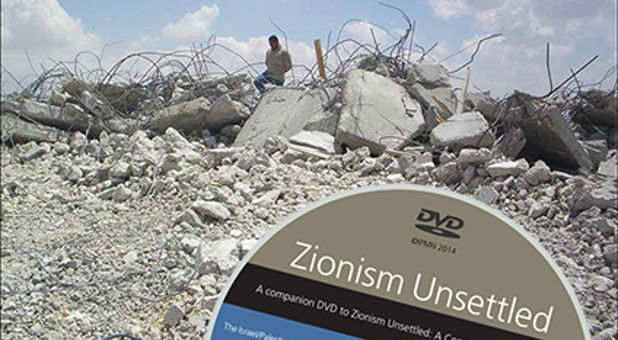
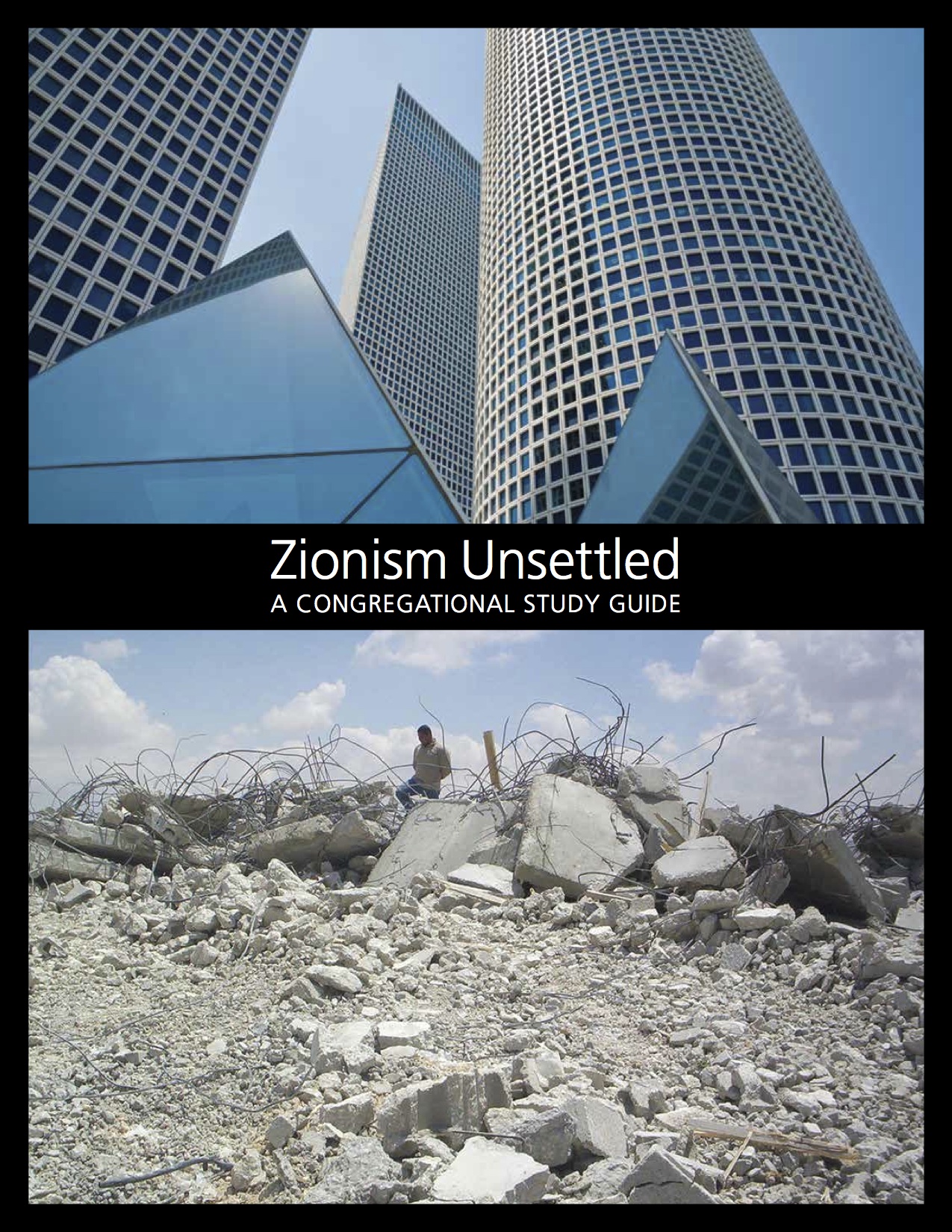
zionism_unsettledRev. Chris Leighton has responded to my open letter of February 19, in which I addressed what I considered to be his troubling and unfounded attack on the newly released study guide, “Zionism Unsettled.” I have posted his words below. I genuinely appreciate his desire to enter into dialogue and will post my own response in several days.

I appreciate the time and thought that you directed to my critique of “Zionism Unsettled.” I am not particularly interested in entering a debate that yields winners and losers and that drives combatants more deeply into their entrenched positions. I am interested in conversation that might enable people with deep disagreements to learn from one another, and I am acutely aware of how much more I have to learn in the ongoing struggle to understand and respond to the complexities of the Palestinian-Israeli impasse. Colleagues such as Nancy Fuchs Kreimer, A.J. Levine, Peter Ochs, Tikva Frymer Kensky (of blessed memory) and even your former havrutah partner and now staff member at the ICJS, Ilyse Kramer (among others including folks at the Hartman Institute) continue to rattle me out of my complacency and remind me constantly that mahloket is a rabbinic discipline desperately needed in these tempestuous times.

You make a number of observations that I want to ponder more deeply. You also indulge in some polemical excess that does not do justice to what needs to be said. At the end of the day, you believe that this congregational guide can prove a helpful resource. I think that it is so riddled with historical and theological flaws, and so dismissive of the Jewish community that it will do much more harm than good. We disagree, and the most immediate question whether our differences might prove worthy of some ongoing dialogue.

I wonder if we might begin more productively by examining some arguments that you make that I find puzzling. They may clarify our divergent readings of ZU and enable us to better understand when and where we speak past one another.

You make a strong case for the separation of Judaism from Zionism, and I think rightly note the mistakes that arise when the two are collapsed. At the same time to deny that Zionism and Judaism do not share deep historical and religious roots also strikes me as a serious error. You work with a very limited conception of Zionism as a 19th century political movement that breaks from the Jewish tradition. I work with a much broader understanding of Zionism and see this movement as driven by a yearning for a Jewish homeland with deep biblical underpinnings. The blending of peoplehood, land and Torah strikes me as integral to Jewish tradition. Even the more secular strains of Zionism that became predominant in the 19th century were suffused with biblical imagery and so this movement was not as radical a rupture from the Jewish tradition as the more secular Zionists imagined.

So here is where I found your account confounding. Do you want to uncouple Zionism from Judaism altogether, or do you want to critique its more militant and “colonial” manifestations? Can all expressions and forms of Zionism be accurately placed into an ideological lump and legitimately condemned as a movement that leads “inexorably” to the displacement and mistreatment of Palestinians, as the IPMN guide indicates? Do you think that Jews do not belong or have a legitimate claim to the land of Israel? Do you want to trace the problem to the UN’s 1947 resolution to partition the land and to establish the State of Israel? Or do want to focus on the problems that emerge in the wake of the Six Day War of 1967?

I have yet to see efforts to undo the establishment of the State of Israel produce constructive results. I have seen efforts to de-legitimize the State, to brand it as “an apartheid nation,” and to punish Israel economically and politically polarize and fragment our communities. This is not to say that all anti-Zionists are anti-Semites. Yet it would be a terrible blunder not to acknowledge that many of them are. At another time we can circle back to clarify what constitutes “antisemitism” and its relationship to “anti-Judaism” before exploring who decides when it is fair and accurate to apply these categories. I do want to note that I did not throw around the term, indeed I used it only once and quite specifically in my critique.

Back to the issue of a Jewish homeland. I believe that the quest for a home is deeply woven into the tissue of our humanity, and you would not deny that this yearning has occupied a prominent, if not central role among Jews over the centuries. My impression is that you would not annul the longing to establish a Jewish homeland nor characterize this desire as intrinsically pernicious. Does the problem then take hold when Jews move from claims to a homeland to making their bid to establish a sovereign state? Homeland is OK. Sovereign State for Jews is not (unless divinely implemented).

When a Frenchman speaks of his homeland, or an Irishman, or American, or a Palestinian, or a Tibetan are they designating an attachment to a specific land independent of the sovereignty on which the messy business of governments depend? Does not the search for a “homeland” aim at “sovereignty?” A national identity is difficult to construct and preserve without the power and freedom that is exercised by the state. One of the truly remarkable achievements of the Jewish people has been the ability to endure and even flourish over a remarkable span of history without the powers of a sovereign state. Yet to acknowledge the claims to homeland while denying Jews the opportunities and burdens of an independent of state enshrines the status of Jews as “exceptional” and refuses them the rights and conditions that every other nation claims for itself. Your line of thinking seems to me to end up creating the very phenomenon that you and the guide condemn, albeit it is a different form of “exceptionalism.”

Finally, I do not know of a nation, a religion, or even a family that does not hold to some kind of exceptionalism. Our national, religious, and familial identities are constructed on the basis of stories that distinguish us from others. Even when we insist that we are not superior to others (and hopefully we regard this task as a moral imperative), we support and sustain our nations, our religious communities, and families with financial and psychological investments that give them priority. We live our lives treating our own with greater levels of time, energy, and resource—even as we strive to respond to the legitimate claims of those who need and demand our active engagement. Furthermore, I have yet to encounter a nation that does not fuse religion and politics—and overtly or implicitly make a claim to being exceptional. The challenge is how to identify and respond when the mixture turns toxic. I suspect that we agree that this is a vital responsibility of our religious leaders.

While keenly aware that your movement has for the most part rejected the notion of “chosenness,” I do not think that this category invariably generates a sense of superiority. The rejection of “exceptionalism” strikes me as a thinly veiled rejection of a concept that remains prominent in much, if not most of the Jewish world. The step from a condemnation of “exceptionalism” and “Chosenness” to an indictment of Israel and the larger Jewish community as ethnocentrically racist is made without qualification.

The concept of “exceptionalism” (at least as it is defined and applied in this guide) strikes me as a problematic. Are not the real problems to which you point a manifestation of “nationalism?” And if every country must be vigilant about the dangerous directions in which nationalism can move, why would the guide not acknowledge this challenge within Palestinian nationalism? It certainly would not be an arduous task to illustrate the problematics by offering a brief overview from George Antonius to the Hamas Charter.

One example of dishonesty that I find troubling in the study guide is the unwillingness to offer a more comprehensive and balanced account. If the problem is that Jewish nationalism is different from other kinds of nationalism and deserving of condemnation, then the guide once again becomes guilty of the very error that it impugns. In other words, Zionism becomes an exceptional and inherently evil manifestation of nationalism. At best I think that the analytic methods used in this guide are intellectually shoddy and the terminology reinforces the tendency to use confused and confusing generalizations—thereby reinforcing the polemical discourse that generates plenty of heat and a shortage of light.

These flaws point to a more serious issue, namely the unwillingness of the study guide to come clean on what it really believes is the necessary end game. Is the goal to help Israel achieve the democratic ideal embodied in its May 14, 1948 Declaration of the Establishment of the State of Israel, or to reject this national project, work to dismantle the current State of Israel, and create a new and different national entity? What do the authors really think necessary to overcome the plight of the Palestinians? It is essential to own up to the vision that animates this study guide, because the tools that are being deployed need to be appraised on the basis of ends that they serve.

In my opinion, the vast majority of Presbyterians will not align themselves with a project that aims to disassemble the State of Israel. I think that the authors and editors of the guide know this and therefore have strategically decided to conceal the objectives for which they strive. Again this strikes me as dishonest.

There is of course much more to be discussed. Perhaps these reflections will at the very least open up some points for further exploration.

The Reverend Christopher Leighton is a Presbyterian minister and the Executive Director of the Institute for Christian & Jewish Studies in Baltimore, Maryland.

Reconsidering “Zionism Unsettled:” An Open Letter to Reverend Chris Leighton

zionism_unsettled-618x330

Dear Reverend Leighton,

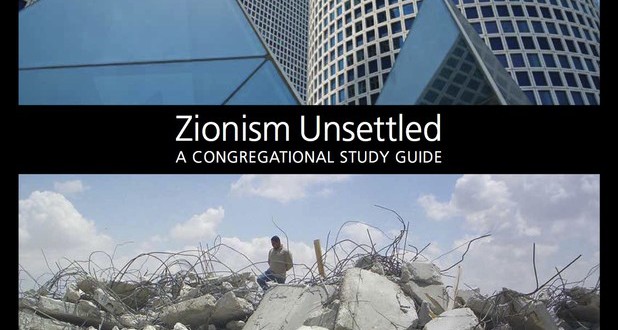
I read with dismay your recent “Open Letter to the Presbyterian Church,” in which you referred to the Israel Palestine Mission Network of the Presbyterian Church (USA) as “extremist” and called to their newly-published study guide, “Zionism Unsettled” a “dishonest screed.” As a rabbi who works actively alongside the IPMN – and whose words are quoted extensively in the guide – I am saddened by your words and feel compelled to respond.

As you might imagine, I take exception to your characterization of me as an “(accomplice) to sweeping denunciations of the Jewish people and their sacred traditions.” Needless to say,  if I felt for a moment that “Zionism Unsettled” represented an attack on Jews and Judaism I obviously would never have agreed to be quoted in the guide.

Granted, ZU is not a perfect document – but while I might disagree with some of its characterizations and specific points of rhetoric, I do believe it shines a courageous and important light on the ideological roots of the political reality in Israel-Palestine. It certainly bears little resemblance to the “anti-Semitic,” “ignorant” tome you so thoroughly excoriate in your letter.

I am tempted to respond point by point to your specific criticisms of the guide – and perhaps some day we will have the opportunity to debate them more thoroughly. For now, however, I’d like to address a paragraph in your letter that I found to be particularly troubling:

Even a cursory study of history reveals the varied and complex forms that Zionism has taken over the centuries. The yearning for their national homeland has been woven into the Jewish community’s daily life for millennia. The Torah (Deuteronomy) and the Tanakh (2 Chronicles) both end with images of yearning to return to the land; synagogues face Jerusalem; the Passover seder celebrated annually concludes with the prayer, “Next year in Jerusalem.” To suggest that the Jewish yearning for their own homeland—a yearning that we Presbyterians have supported for numerous other nations—is somehow theologically and morally abhorrent is to deny Jews their own identity as a people. The word for that is “anti-Semitism,” and that is, along with racism, sexism, homophobia, and all the other ills our Church condemns, a sin.

I believe your characterization of my sacred tradition is incorrect – and dangerously so. It is prejudicial in the extreme to equate Zionism with Judaism itself.  Zionism – that is, the movement to create a Jewish nation-state in historic Palestine – is in fact a political movement that was born in 19th century Europe. As such, it was a conscious and radical break with centuries of Jewish tradition that strongly cautioned against the establishment of an independent Jewish state in the land.

While it is certainly true, as you write, that the yearning for a “return to Zion” is suffused throughout Jewish tradition, it is important to note that this yearning was pointedly directed toward a far off messianic future. The rabbinic sages repeatedly and forcefully forbid the “forcing of God’s hand” through the creation of a humanly-established, independent Jewish state in the land, which they believed would occasion disaster for the Jewish people. Throughout the centuries, the Jewish return to Zion functioned as a symbolic expression of hope – not as a political call to action.

Contrary to your assertion, “Zionism Unsettled” never makes the claim that the Jewish yearning for return “is somehow theologically and morally abhorrent.” It simply makes the correct distinction between a centuries-old religious tradition that spiritualized the notion of return and the politicization of this idea by a modern nationalist movement.

In this regard, I find your use of the term “anti-Semitism” to slur those who oppose Zionism to be particularly pernicious. In fact, as I point out in the guide, before the establishment of the state of Israel, the political Zionist idea was hotly debated within the Jewish community itself. Many reputable Jewish figures such as Rabbi Judah Magnes and Hannah Arendt warned that the establishment of an exclusively Jewish state in a historically multi-religious and multi-ethnic land would inevitably result in conflict and a permanent state of war. It was certainly not “anti-Semitic” of them to suggest such a thing. On the contrary, they – and many others like them – were motivated by their concern for the security of the Jewish people and as well as for the well-being of all peoples who lived in the land.

While it is true that Jewish anti-Zionism has become a dissident voice in our community since the establishment of the state of Israel, as a rabbi who works actively in the Jewish community, I can attest that there are growing numbers of Jews – particularly young Jews – who refuse to tie their Jewish identity so thoroughly to the highly militarized ethnic nation-state that Israel has become.

At the very least, there is a growing desire to allow non-Zionist voices to be part of the Jewish communal debate once more. One notable bellwether of this phenomenon may be found in the Swarthmore Hillel student board’s recent unanimous decision to defy the guidelines of Hillel International and declare itself an “Open Hillel.” In a statement accompanying their resolution, these Jewish students noted:

All are welcome to walk through our doors and speak with our name and under our roof, be they Zionist, anti-Zionist, post-Zionist, or non-Zionist. We are an institution that seeks to foster spirited debate, constructive dialogue, and a safe space for all, in keeping with the Jewish tradition.

I trust you would never suggest that these Jewish students are driven by “anti-Semitism.” On the contrary, they are clearly motivated by sacred Jewish values and a courageous refusal to reduce Jewish identity to one political ideology. It is particularly notable that a number of prominent liberal Zionist voices are publicly voicing their support for the students of Swarthmore Hillel, indicating that our community may well be ready to return to a truly wide-tent debate on the role of Zionism in Jewish life.

For all of this, however, “Zionism Unsettled” does not, as you suggest, “(attribute) the plight of the Palestinians to a single cause: Zionism.” On the contrary, the study guide repeatedly points out that the political strife in Israel/Palestine is rooted in religious exceptionalist attitudes that are embedded within Judaism, Christianity and American culture alike.

For many of us, these are the critical – and too often ignored – questions for interfaith dialogue: what will we do with those aspects of our religious traditions that value entitlement over humility? Do we believe that this land was promised by God to one particular group of people, or will we affirm a theology that promises the land to all who dwell upon it?  Will we lift up the fusing of religion with state power and empire or will we advocate a religious vision that preaches solidarity with the powerless, the disenfranchised and the downtrodden?

There is much more I would like to say in response to your letter – and again, I hope that we might have the opportunity to debate the specifics more thoroughly. For now, I will only encourage you to reconsider your claim that “Zionism Unsettled” represents “a theological delegitimization of a central concern of the Jewish people.”

As a Jew, I can only respond that it is not for you – or anyone – to blithely conflate the tenets of a modern nationalist movement with a venerable and centuries-old religious tradition. And it is certainly not “anti-Semitic” to say so.