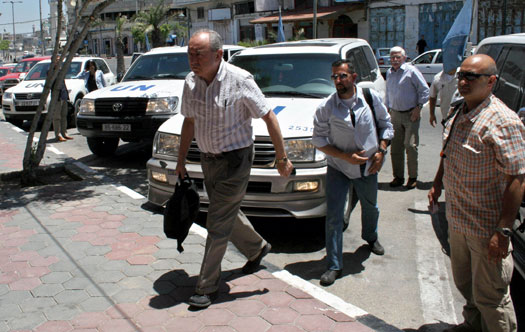
Category Archives: Iran

Iran: Setting the Record Straight

brant-ayatollah1

I’ve read and heard about some silly misinformation being spread around regarding my trip last year to Iran – and I’m thinking it might behoove me to set the record straight.

I will say at the outset that I gave a Yom Kippur sermon on this topic and I blogged extensively from Iran. If you haven’t read these posts yet, please do so. They will give you a pretty good sense of the why, what and how of my Iran experiences.

Right off the bat: I did not meet with Mahmoud Ahmadinejad.

Now that I’ve gotten that straightened out, I’d like to address one particular quote of mine that’s being bandied about out of context:

While I prefer not to weigh in on the rhetorical hairsplitting debate on [President Mahmoud] Ahmadinejad’s notorious 2005 threat to wipe Israel off the map, I’ll only suggest that our attitudes and foreign policy must be based on real intelligence and understanding, and not fear-based, knee-jerk assumptions.

I still think this quote should pretty well speak for itself, but apparently I need to explain further.  I know of at least two instances in which this quote was used to somehow imply traitorous intentions on my part – i.e., that I prefer not to “weigh in” on the serious threats posed by Iran toward the Jewish state.

To those who doubt where my ultimate loyalties lay, I was actually referring with this quote to the rhetorical debate over the actual Farsi meaning of Ahmadinejad’s words from this oft-quoted speech. There has been an important ongoing debate as to whether these words were intended as a threat of genocide against the Jewish state or a predication of the eventual dissolution of the “Zionist regime” from within.

A recent blog post by Juan Cole represents this point of view well:

President Mahmoud Ahmadinejad did quote Ayatollah Khomeini to the effect that “this Occupation regime over Jerusalem must vanish from the page of time” (in rezhim-e eshghalgar-i Qods bayad as safheh-e ruzgar mahv shavad). This was not a pledge to roll tanks and invade or to launch missiles, however. It is the expression of a hope tha the regime will collapse, just as the Soviet Union did. It is not a threat to kill anyone at all.

As I myself am not a scholar of Farsi, I don’t consider myself qualified to weigh in on this debate, but I do believe that “our attitudes and foreign policy must be based on real intelligence and understanding, and not fear-based, knee-jerk assumptions.” I continue to stand by this assertion – I’m simply not a fan of fear-based foreign policy.  I am well aware that there are those who will say, “maybe Iran does intend to destroy Israel or maybe it doesn’t, but can we really take that chance?” I’m more inclined to say it this way: “when we jump to conclusions and base our reactions on fear rather than true understanding, we may ultimately cause our deepest fears to actually come true.”

By the way,  I encourage you to read Cole’s entire post, entitled “Top Things You Think You Know About Iran That Are Not True.” Whether or not you agree with his analysis, I believe his perspective provides a thought-provoking corrective to so many of the fear-based assumptions currently being bandied about regarding Iran.

Here are a few excerpts:

Belief: Iran is a militarized society bristling with dangerous weapons and a growing threat to world peace.

Reality: Iran’s military budget is a little over $6 billion annually. Sweden, Singapore and Greece all have larger military budgets. Moreover, Iran is a country of 70 million, so that its per capita spending on defense is tiny compared to these others, since they are much smaller countries with regard to population. Iran spends less per capita on its military than any other country in the Persian Gulf region with the exception of the United Arab Emirates.

Belief: Isn’t the Iranian regime irrational and crazed, so that a doctrine of mutually assured destruction just would not work with them?

Actuality: Iranian politicians are rational actors. If they were madmen, why haven’t they invaded any of their neighbors? Saddam Hussein of Iraq invaded both Iran and Kuwait. Israel invaded its neighbors more than once. In contrast, Iran has not started any wars. Demonizing people by calling them unbalanced is an old propaganda trick. The US elite was once unalterably opposed to China having nuclear science because they believed the Chinese are intrinsically irrational. This kind of talk is a form of racism.

PS: By the way, did I mention I didn’t meet with Ahmadinejad?

Conservative Movement: Hatikvah Instead of Shofar

The Rabbinical Assembly (the rabbinical association of the Conservative movement) distributed this letter today to its members, asking its rabbis to read the piece below in lieu of the Shofar service on Rosh Hashanah. (The shofar is traditionally not sounded when RH falls on Shabbat, as it does this year.)

Friends,

On this Rosh Hashanah our brothers and sisters in Israel face the threat of a nuclear Iran – a threat to Israel’s very existence.

Today, we Jews around the world also confront the anti-Semitism and anti-Israel sentiment of the Goldstone report which blames Israel disproportionately for the tragic loss of human life incurred in Operation Cast Lead, which took place last winter in Gaza.  This unbalanced United Nations sponsored report portends serious consequences for Israel and the Jewish people.

On this holy day, which is not only Rosh Hashanah, but also Shabbat, the Shofar is silent in the face of this spurious report, the world is far too silent.

Today the state of Israel needs us to be the kol shofar, the voice of the shofar!

We ask you to write to our governmental leaders and call upon them to condemn the Goldstone report and to confront the threat of a nuclear Iran.

While the shofar is silent today, all Conservative rabbis, cantors and congregations have been asked to sing Hatikvah at this moment in the service.

We rise in solidarity with our brothers and sisters in Israel.

What troubles me most about this suggestion is how profoundly it flies in the face of the very meaning of the festival itself. On Rosh Hashanah, we affirm Malchuyot – God’s sovereignty over the universe. Rosh Hashanah is the only time of the year that Jews are commanded to bow all the way to the ground and pledge our allegiance to God and God alone. We acknowledge that our ultimate fealty lies with a Power beyond ourselves, beyond any mortal ruler, any government, any earthly power.

Beyond the political arguments over such a statement, it strikes me as something approaching idolatry.

I’m curious to know your reactions, particularly in regard to its religious implications.

The UN Reports on Gaza: How Will We Respond?

gaza-un-investigation

The long awaited UN Human Rights Council Fact Finding Report on Israel’s war in Gaza has finally been released and its conclusions are breathtaking. The mission led by Justice Richard Goldstone (above) has concluded that serious violations of international human rights and humanitarian law were committed by Israel during the Gaza conflict, and that Israel committed actions amounting to war crimes, and possibly crimes against humanity.

Some background: Justice Richard Goldstone, who is Jewish, is a highly respected international jurist. He is a former member of the South African Constitutional Court and former Chief Prosecutor of the International Criminal Tribunals for the former Yugoslavia and Rwanda. His mission compiled a 574 page report, which contains detailed analysis of 36 specific incidents in Gaza, as well as a number of others in the West Bank and Israel.  According to the UN press release announcing the report:

The Mission conducted 188 individual interviews, reviewed more 10,000 pages of documentation, and viewed some 1,200 photographs, including satellite imagery, as well as 30 videos. The mission heard 38 testimonies during two separate public hearings held in Gaza and Geneva, which were webcast in their entirety. The decision to hear participants from Israel and the West Bank in Geneva rather than in situ was taken after Israel denied the Mission access to both locations. Israel also failed to respond to a comprehensive list of questions posed to it by the Mission. Palestinian authorities in both Gaza and the West Bank cooperated with the Mission.

Here is what the Mission concluded:

In the lead up to the Israeli military assault on Gaza, Israel imposed a blockade amounting to collective punishment and carried out a systematic policy of progressive isolation and deprivation of the Gaza Strip. During the Israeli military operation, code-named “Operation Cast Lead,” houses, factories, wells, schools, hospitals, police stations and other public buildings were destroyed. Families are still living amid the rubble of their former homes long after the attacks ended, as reconstruction has been impossible due to the continuing blockade. More than 1,400 people were killed during the military operation.

Significant trauma, both immediate and long-term, has been suffered by the population of Gaza. The Report notes signs of profound depression, insomnia and effects such as bed-wetting among children. The effects on children who witnessed killings and violence, who had thought they were facing death, and who lost family members would be long lasting, the Mission found, noting in its Report that some 30 per cent of children screened at UNRWA schools suffered mental health problems.

The report concludes that the Israeli military operation was directed at the people of Gaza as a whole, in furtherance of an overall and continuing policy aimed at punishing the Gaza population, and in a deliberate policy of disproportionate force aimed at the civilian population. The destruction of food supply installations, water sanitation systems, concrete factories and residential houses was the result of a deliberate and systematic policy which has made the daily process of living, and dignified living, more difficult for the civilian population.

The Report states that Israeli acts that deprive Palestinians in the Gaza Strip of their means of subsistence, employment, housing and water, that deny their freedom of movement and their right to leave and enter their own country, that limit their rights to access a court of law and an effective remedy, could lead a competent court to find that the crime of persecution, a crime against humanity, has been committed.

According to the JTA, the Israeli government and the American Jewish establishment has wasted no time in pouncing on the report. But from what I’ve read so far, none of the respondents have addressed its substance. Not surprisingly, they’re only interested in attacking the UN – in particular, the UN Human Rights Council. 

Israeli Knesset Speaker Reuven Rivlin said, “The same U.N. that allows (Iranian President Mahmoud Ahmadinejad) to announce on a podium its aspiration to destroy the State of Israel has no right to teach us about morality.” According to ADL Director Abe Foxman: “This is a report born of bias. What do you do with an initiative born of bigotry?”

AJC Director David Harris:

Let us not forget that this commission was a creation of the Human Rights Council, arguably the U.N.’s most flawed body. The Council has consistently demonized Israel, while giving a free pass to some of the world’s worst tyrants, from Sudan to Iran.

My two cents:

It is worth noting that this “flawed, biased” commission had this to say about Palestinian human rights abuse during the Gaza war:

The Fact-Finding Mission also found that the repeated acts of firing rockets and mortars into Southern Israel by Palestinian armed groups “constitute war crimes and may amount to crimes against humanity,” by failing to distinguish between military targets and the civilian population. “The launching of rockets and mortars which cannot be aimed with sufficient precisions at military targets breaches the fundamental principle of distinction,” the report says. “Where there is no intended military target and the rockets and mortars are launched into civilian areas, they constitute a deliberate attack against the civilian population.”

The Mission concludes that the rocket and mortars attacks “have caused terror in the affected communities of southern Israel,” as well as “loss of life and physical and mental injury to civilians and damage to private houses, religious buildings and property, thereby eroding the economic and cultural life of the affected communities and severely affecting the economic and social rights of the population.”

The Mission urges the Palestinian armed groups holding the Israeli soldier Gilad Shalit to release him on humanitarian grounds, and, pending his release, give him the full rights accorded to a prisoner of war under the Geneva Conventions including visits from the International Committee of the Red Cross. The Report also notes serious human rights violations, including arbitrary arrests and extra-judicial executions of Palestinians, by the authorities in Gaza and by the Palestinian Authority in the West Bank.

So much for the accusations of bias.

If Foxman, Harris, et al have any problems with the procedural process of the Mission (with which Israel refused to cooperate) I’m interested in hearing it. And if they have any evidence that counters the findings of the report, then let them bring it. Until this happens, I’m not sure their general opinion of the UN is germane to the matter at hand.

 Based upon comments and e-mails I get on a daily basis, I know I will be considered by some to be a self-righteous simpleton at best and a traitor to my people at worst. But here goes: as a Jew, I am devastated by these findings.  The moral implications of this report should challenge us to the core. And I am deeply, deeply troubled that the primary response of our Jewish communal leadership is to attack the source of the report while saying absolutely nothing about its actual content.

Yes, there are other human rights abusers in the world. And yes, some of them are even worse than Israel. Yes, the structure and governance policy of the UN is far from perfect. And yes, nations tend to use the UN for their own self-serving ends. But do these facts give us a pass on holding Israel up to the most basic standards of human rights and international law?
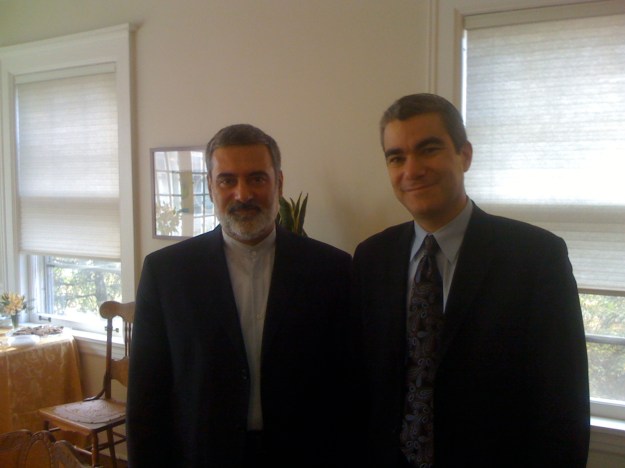
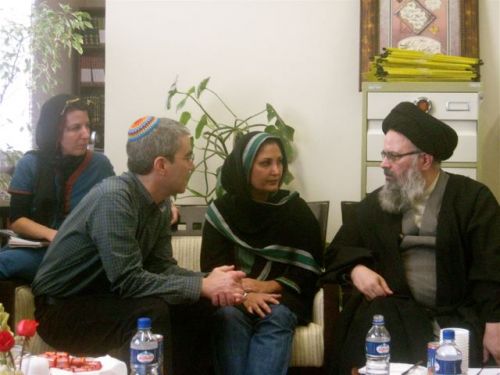
Iran for Iranians

28685775

In my final post from my visit to Iran this past fall, I wrote the following:

We’d be foolish to deny that there are troubling human rights issues that Iran would do well to address. But at the end of the day, the solutions to these problems are certainly not ours to impose.

I felt that passionately then and as I watch the Iranian people take to the streets day after day to demand justice in their country, I feel it even more passionately now.  I’m also immensely proud that our President refuses give in to the misguided voices that urge him to force himself on this process as it unfolds. Our country seems to finally be learning that imposing our “democracy” on other countries might not be the most effective foreign policy.

This is particularly the case with Iran, a nation that has experienced its share of empires meddle in its affairs over the centuries. Indeed, even as thousands of the Iranian people bravely demonstrate for democracy, you can be sure that it is lost on none of them that the last country to overthrow an Iranian regime was none other than the United States. The Islamic Republic may be odious in any number of ways, but at the end of the day, we must remind ourselves that it is the first Persian regime in centuries that truly belongs to its people.

Yesterday, I read a letter to the editor of the NY Times that said simply: “The Islamic Revolution has become the shah.”  A horribly mistaken analysis. For Iranians, the Shah was not simply an oppressive ruler – he was an oppressive ruler who was installed by the Americans after they took it upon themselves to overthrow Iran’s democratically elected Prime Minister.

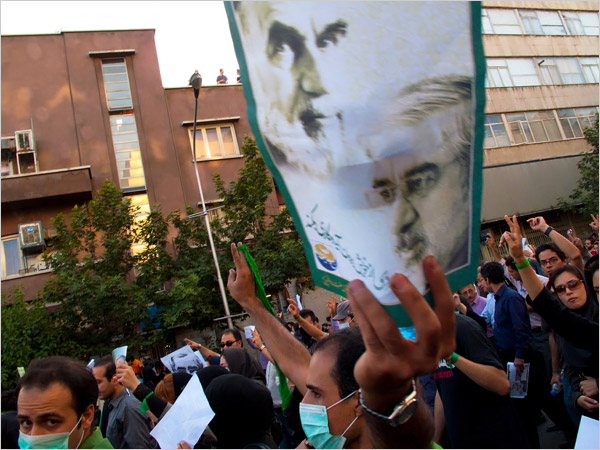
Take a look at the picture above (also from the New York Times.) It’s very telling: a demonstrator’s sign juxtaposes the Ayatollah Khomeini with Mir Hossein Moussavi (who was himself one the leaders of the 1979 revolution. An interesting article in today’s NY Times, in fact, explores the historically close relationship between Khomeini and Moussavi.)

This is enormously important for us in the West to understand: whatever we might think about Khomeini, in the eyes of many Iranians, he was the one who gave their country back to them. Whatever we might think about the republic to which the revolution gave rise, it is the Iranians’ republic. Those who demonstrate in the streets are not rebelling against the revolution – they are demanding that it live up to its promise.

“Justice, justice shall you pursue.” This is what precisely what we are witnessing in the streets of Iran. We can surely support their pusuit in any number of ways, but in the end, this particular justice is theirs’ to pursue and achieve – not ours’ to dictate.

PS: Among the many blogs and e-news outlets I’ve been following, my favorite is a photo blog called Tehran 24 that updates daily with astonishing pix of the demonstrations. Definitely worth a thousand words…

Six Months and Counting

250_bibiIt’s no longer speculation to imagine an Israeli military attack on Iran. Following his visit to Washington, Netanyahu has made his ultimate intentions perfectly clear:

These are not regular times. The danger is hurtling toward us. The real danger in underestimating the threat.  My job is first and foremost to ensure the future of the state of Israel … The leadership’s job is to eliminate the danger. Who will eliminate it? It is us or no one.

Never thought I’d  live to find myself saying this, but here goes: the voice of sanity on this issue comes from the US Secretary of Defense:

The only way we can prevent Iran from getting a nuclear weapon is for the Iranians themselves to decide that it’s too costly. And that it absolutely detracts from their security rather than enhances it.

If we or the Israelis or somebody else strike (Iran) militarily, in my view, it would delay the Iranian program for some period of time, but only delay it, probably only one to three years. You would unify the nation, you would cement their determination to have a nuclear program, and also build into the whole country an undying hatred of whoever hits them.

I have a sinking feeling about this. The Obama administration has painted itself into a corner by giving talks with Iran a six month deadline – a daunting task by any reasonable standard.  Are Netanyahu’s threats mere bluster? I for one wouldn’t want to test that theory.

Pray for the peacemakers…

On Clowns and Illegal Hothouses

PD*28296118

I know I promised to pontificate on this week’s UN World Conference on Racism in Geneva, but I don’t know that I have anything to add that hasn’t already been said about this particular circus. (And I mean this literally – see above.)  For what it’s worth, I found Cecilie Surasky’s dispatches for Muzzlewatch to be the most incisive and helpful reporting on conference doings.

On a completely unrelated topic, I noticed this small news piece in yesterday’s Ha’aretz:

Five Border Policemen were wounded on Thursday in a clash with hundreds of residents of the Israeli Arab town of Kafr Qasem.

The violence broke out when security forces arrived to demolish a concrete surface upon which a hothouse was due to be built illegally. They were met at the scene by about 400 Kfar Kassem residents who had turned out to protest the move.

I suppose its just a minor news story in the scheme of things – still, it did remind me that the media’s impact is often less powerful for what it says than for what it leaves out. In this case, that would be the fact that almost all new building in Israeli Arab villages is technically “illegal” since Israel has made it virtually impossible for its Arab citizens to receive building permits.

From a New Israel Fund report:

There is a lack of planning for Arab neighborhoods and towns that has led to ongoing difficulties in obtaining building permits, and as a result, the demolishing of illegal buildings in the Arab sector. Since 1948, almost no Arab neighborhood or town has legally been permitted to expand.

Also left out of the article is any mention of this particular village’s  tragic history – and why a demolished hothouse is really just the latest chapter for the citizens of Kafr Kassem. Click here to learn more.

The Plight of Roxana Saberi

340x-121Several people have asked me, now that Iranian-American Roxana Saberi has been sentenced to eight years in Iranian prison, if I have reconsidered my opinions about Iran and the importance of American-Iranian diplomacy. If anything, this current crisis has only deepened my convictions on both counts.
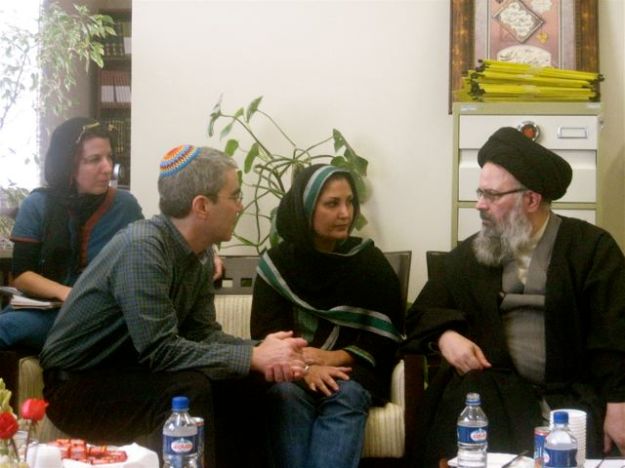
As I’ve written here before, I certainly don’t harbor any illusions about the more odious aspects of Iranian politics. In fact, I wrote precisely that upon my return from my trip to Iran this past fall:

None of this is to sugar-coat the more disturbing aspects of the Islamic Republic. If our delegation was ever tempted to do so, we received a hard dose of reality when we read in the Tehran Times about a public hanging of two men convicted of bombing a mosque that was scheduled to take place in Shiraz shortly after we were there. Yes, we are justified in recoiling from reports such as these – and we’d be foolish to deny that there are troubling human rights issues that Iran would do well to address. But at the end of the day, the solutions to these problems are certainly not ours to impose.

How do we further Saberi’s cause and for all who suffer from human rights abuse within Iran? The answer is the same as it ever was: by choosing to speak out and by supporting the grassroots efforts of those citizens and groups on the ground who are directly affected by these violations.  However if we make this choice, we cannot do it selectively – we must apply the same criteria to all human rights abuse whenever and wherever it might occur.  Indeed, that’s what makes the current diplomatic dance over Saberi’s fate is so complex and delicate. For at the end of the day, we Americans must be willing to admit that we are on fairly slippery moral ground whenever we speak out against things like wrongful arrest, imprisonment without due process, and the absence of legal transparency.

Many analysts are suggesting that Saberi is being used as a political pawn between Iran’s hard line judiciary and President Ahmadinejad, whose administration seems to be inclining toward diplomatic engagement with the United States. Others point out that Ahmadinejad is all too happy to exploit this impasse as a feather in his cap in Iran’s current election campaign. Either way, Roxana Saberi’s plight seems to be a symptom of some significant growing pains within the Islamic Regime as well as in their relationship to the international community. The long-term stakes are high – all the more reason that this crisis must be handed with diplomatic skill and care rather than the tired, counterproductive saber-rattling of old.

Speaking of nasty international diplomatic imbroglios, I’ve got some thoughts about the loud noises coming out of Durban II.  More on that later…

Addendum 4/21/09: Click here to send a personal letter to Iran’s Ayatollah Khamenei, urging him to review Saberi’s trial and conviction and to release her immediately from prison.

The Jews of Iran: Beyond the Rhetoric

p1000298

I was pleased to read two particularly intelligent Iran-related op-eds in the NY Times today: one by columnist Roger Cohen on the Iranian Jewish community and another by Iranian journalist Ali Reza Eshraghi on the importance of engaging diplomatically with Ahmadinejad.

From Cohen’s piece:

Perhaps I have a bias toward facts over words, but I say the reality of Iranian civility toward Jews tells us more about Iran — its sophistication and culture — than all the inflammatory rhetoric.

That may be because I’m a Jew and have seldom been treated with such consistent warmth as in Iran. Or perhaps I was impressed that the fury over Gaza, trumpeted on posters and Iranian TV, never spilled over into insults or violence toward Jews. Or perhaps it’s because I’m convinced the “Mad Mullah” caricature of Iran and likening of any compromise with it to Munich 1938 — a position popular in some American Jewish circles — is misleading and dangerous.

Cohen’s report is very much in line with my own experience. When I attended an interfaith delegation to Iran this past November, we spent considerable time with the Jewish community – and among the many surprising impressions we received was their obvious sense of comfort and safety living as Jews under an Islamic regime.

American Jews are invariably astounded when I tell them that I myself wore a kippah publicly throughout Iran without a moment’s nervousness. (Once we were approached and asked by an Iranian man if we were Jewish – he turned out to be a Jew himself and he promptly invited us to his shul for Shabbat). I’m not being facetious when I say that in retrospect, I realize I actually felt safer as a Jew walking the streets Tehran than I often do in Israel – the only place in the world, frankly, where Jewish lives are under constant threat.

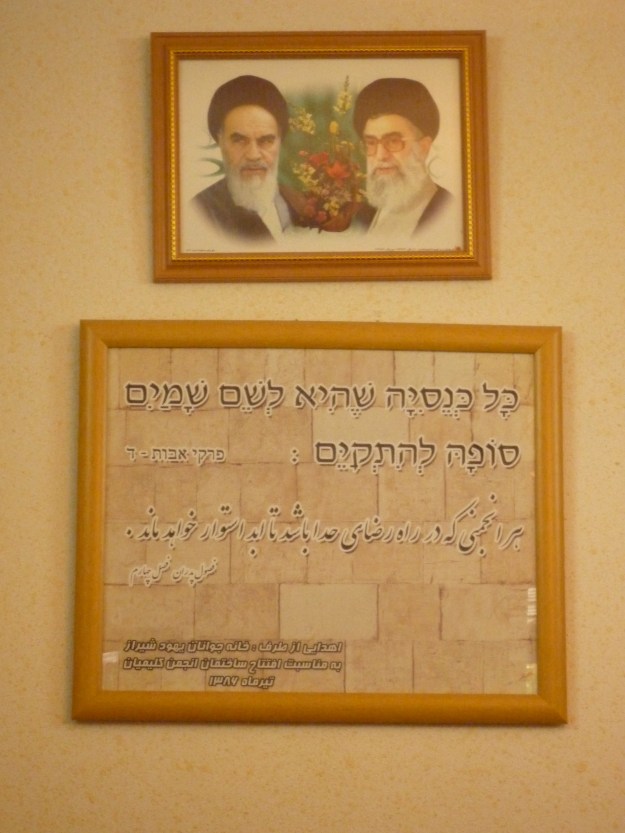
I took the picture above, by the way, at the Jewish community center in Shiraz. Just another assumption-busting Jewish Iranian image: the obligatory Ayatollahs Khomeini and Khamanei hanging on the wall above a classic Jewish quote from Pirkei Avot in Hebrew and Farsi: “Every assembly that is for the sake of heaven will endure.”

(To those who live in the Chicagoland area:  I’ll be speaking about my experiences in Iran tomorrow evening, Tuesday, February 24, 7:00 at the Chicago Chapter of the American Friends Service Committee

Home From Iran, Final Thoughts

brant-ayatollah1During our final night in Iran, I was interviewed at length by two reporters from a Tehran newspaper. I mentioned to them that during my High Holiday sermon to my congregation, I noted that Americans (and especially American Jews) chronically misunderstand Iran. I told the reporters that ironically enough, I learned on this trip that I really hadn’t understood Iran nearly as well as I had thought myself.
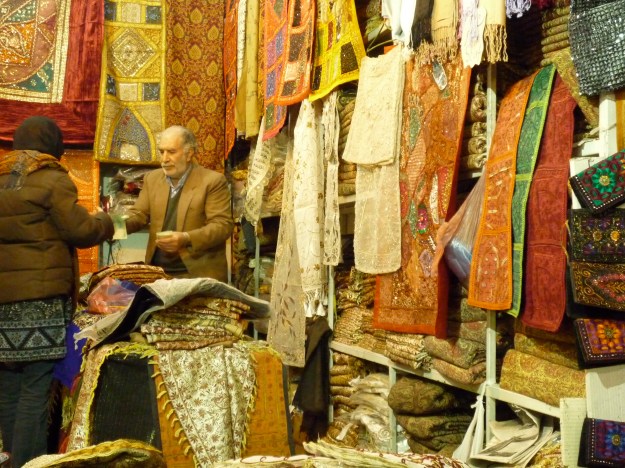
The most essential thing I’ve learned is in some ways the most basic: Iran is a beautiful country with a venerable history and wonderful, gracious people. It is also a powerfully complicated country, marked by a myriad of cultural/political/religious/historical layers.  I am now more convinced than ever that we in the West harbor egregiously stereotypical assumptions about this country – and that we harbor them at our mutual peril.

p1000270

We spoke to many Iranian citizens during this trip and probably the most common comment we heard was that they had no problems with Americans – and that the real problem lay with our respective governments. (On more than one occasion, I heard this said in regard to Israel as well.)  While I realize that statements like these probably reflect characteristically Iranian t’aarof, (“graciousness”), I don’t underestimate their abiding truth. I do believe that we ultimately have more in common than not. I do believe that our respective governments continually misunderstand and misuse one another.  And I do believe that true communication and reconciliation between our two nations is not only possible, but utterly essential.

The challenge of communication was driven home to us over and over during the course of our formal meetings and dialogues. It became fairly clear to us fairly soon that even with direct face to face conversation, even with decent interpreters, miscommunication was virtually inevitable. And though these kinds of miscues might have seemed to us to be fairly benign at the time, we came to appreciate that even subtle misunderstandings had important implications.

More often than not, these barriers were due to cultural differences where words/idioms could not be simply translated literally in a single rendering.  And I can’t help but believe that many of the more ominous assumptions we hold about Iran and Iranians are due less to substance than to cultural misunderstanding. While I prefer not to weigh in on the rhetorical hairsplitting debate on Ahmadinejad’s notorious 2005 “threat” to “wipe Israel off the map,” I’ll only suggest that our attitudes (not to mention our foreign policy) must be based on real intelligence and understanding, and not fear-based, knee-jerk assumptions.

p10002564

None of this is to sugar-coat the more disturbing aspects of the Islamic Republic. If our delegation was ever tempted to do so, we received a hard dose of reality when we read in the Tehran Times about a public hanging of two men convicted of bombing a mosque that was scheduled to take place in Shiraz shortly after we were there. Yes, we are justified in recoiling from reports such as these – and we’d be foolish to deny that there are troubling human rights issues that Iran would do well to address. But at the end of the day, the solutions to these problems are certainly not ours to impose.

As a matter of fact, the Iranian human rights community has been confronting these issues for some time. And it is worth noting that their fight for peace and justice serves as a challenge to us as well. On the final night of our stay in Iran several women from our delegation met with members of Iranian Mothers for Peace, an anti-war NGO founded by courageous women, many of whom  have done time in Iranian prisons for speaking out against the injustices of the  Islamic Republic. But they have also gone on record against the US war in Iraq and in particular against a potential US attack on Iran.

From one of their public letters:

To all peace-loving mothers of America,

We are addressing you from the Middle East. Our motherly instincts compel us to share a common pain with those of you whose children are fighting in the Iraq war. Iranian Mothers for Peace is an independent organization that was established in October 2007 to object the war and warmongers both in Iran and the United States of America. We are diverse in terms of ethnicity, religion, and ideology. Iranian Mothers for Peace opposes war, human rights abuses, injustice, and poverty…

The wars in Iraq and Afghanistan are costing each American family $25,000 a year during a time in which the United States is in an economic crisis, with many citizens still lacking health care and economic stability.  Once again American Government officials are singing the ominous song of war – this time against Iran. It is unjust for our children to be killed and murdered while the weapons manufacturers and oil monopolies collect blood money.

Therefore, we are asking all of you peace-loving American mothers to oppose the war and those who are inciting the war in order to prevent this mistake from happening again. Please do not let our children draw weapons against each other. Please do not allow the decision makers to force Iranian, American, Iraqi, and Afghani mothers to suffer from pain and heartbreak for their children forced into fighting unjust wars.

As I read these words, I’m reminded of the many remarkable, inspired individuals we met on our journey:  Dr. Raffi, committed to serving a Jewish community that makes its home in an Islamic Republic; Habib, who seeks peace by bearing witness through his art; Dr. Rasoulipour, who devotes his life to religious understanding and tolerance, but to name a few.

So in the end I find myself returning to the subject of understanding – a concept that seems to be in such painfully short supply these days. If anything, I believe our trip highlighted for us the critical need for mutual understanding. Such a simple thing, yet somehow still so tragically elusive in our world.

There’s so much more to say, and perhaps I’ll have the opportunity to say it somehow down the line. For now, these are the impressions that will live with me forever: a beautiful country with an exquisite heritage. A gracious, poetic people who showed us the true meaning of honor and hospitality. And perhaps the most important: a reminder, despite all reports to the contrary, of our common humanity.

I can only hope that our experience can, in its small way, help bring this blessing to a world that needs it now more than ever. Inshallah…p1000128

Pickup at Hafez’s Tomb

iran7-003

We’ve spent the last two days in Shiraz – and among other things our experience in this beautiful city gave us a still deeper into to Persia’s soul.

We’ve been told that while Esfahan is generally considered to represent Iran’s historical spirit, Shiraz reflects Iran’s cultural spirit. Indeed, while Iran is an Islamic Republic, Islam is not the only defining aspect of Iranian identity.

Among our many visits in Shiraz was a visit to Zoastrian Fire Temple. Zoastrianism was the religion of the ancient Persian empire and remained so until the Arab conquest converted Persia to Islam in the 7th century. Today, although the active Zoastrian community of Iran is extremely small (there are approximately 1,000 in the country) it continues to occupy an important place in Persian culture. All Iranians regardless of their religion identify with the traditions of Zoastrianism, which is in a sense regarded to be their “native religious culture.” The festival of Yalda, which occurs during the Winter Solstice and Noruz, the two week spring celebration of the Zoastrian New Year, are universally popular national holidays.

iran7-002

It would have been extremely interesting to dialogue with members of the Zoastrian community, but alas, we learned at the last minute that they were not available to meet us at the Temple. Still, it has been impossible for us to ignore the impact of this ancient religion upon present day Iran. The image of Ahura Mazda, the Zoastrian God, is ubiquitous throughout the country, not only at the ancient ruins of Persepolis (above), but on travel signs, office buildings and souvenir stands.

An interesting anecdote in this regard: when we were at Mofid University in Qom, one young student of Islam proudly showed me his Ahura Mazda necklace, and told me this image was an important part of his history. When I asked if any of his clerical teachers objected, he emphatically shook his head. “It is an important part of our history,” he said. To be sure, more than one person has told us that the Islamic regime is lenient about such things because it understands the importance role Zoastrianism plays in the cultural life of Persia

Another central aspect of the Iranian collective soul, of course, is their poetry. Iranians are justifiably proud of their literary tradition; every Iranian child is read Ferdowsi’s epic “Shahnameh” as well as national poets such as Hafez, Saadi and Rumi.  The more time we spend here, the more I realize we can never underestimate the depth of pride that Iranians have in their national/cultural traditions. It is a modern-day nation can literally experience its own history back across thousands and thousands of years. And though they have been dominated by countless empires over the centuries, they have never surrendered their unique connection their culture, their heritage, their history, their language.

This is something that is very difficult for Americans in particular to grasp – our national history goes back little more than 200 years and most of us ultimately originate from somewhere else. While we study American history, our connection to it is nowhere near as profound at that of Iranians to theirs’.  At the same time, for most Americans, Iran is just another Islamic nation in the Middle East. However, you have only to spend a small amount of time here to understand that this country is much, much more.

I’m sure this sounds like a cliché, but it’s true: in order to understand Iranians, you must understand their poetry. Or at the very least, to their deep connection to their poetry that truly sings in their soul. For example, among the most important cultural landmarks in Iran are the tombs of their poets, which serve as almost quasi-sacred sites. Last night we went to two of the most important in Shiraz: the Tomb of Saadi and of Hafez. I’m still at bit mind-blown by our experience at Hafez’s tomb in particular (top pic), which was unlike anything I’ve ever experienced. It’s an immensely popular site for Iranians, particularly young Iranian young people, whose idea of a great evening is to visit Hafez’s tomb and read his spiritually passionate poems of wine, longing and romance (see below). It’s also something of a romantic hot spot, where young people can mingle, meet and (I imagine) maybe even get lucky…

iran7-0041

We’ve heard that the social atmosphere in Shiraz is a bit looser than in other Iranian cities, and that the regime’s “Morality Police” tend to let things go there a bit more easily. And apparently the Tomb of Hafez is one of the few places in Iran where young people of the opposite sex can mingle together publically without few of official harassment.

This certainly seemed to be the case last night. Throngs gathered near and around the crypt, reading poems, laughing and chatting. We spent a fair amount of time meeting and talking to folks and wouldn’t you know it, inevitably someone from our group got hit upon. Sarah Bassin reported later that a young man approached her, asked her where she was from, told her about how bad his marriage was, then proclaimed to her: “Your face is delicious.”

After teasing Sarah mercilessly about her quintessentially Persian encounter, we all agreed that our brief sojourn at Hafez’s tomb was unexpectedly and deeply moving. I’d say there is much we Americans can learn from a culture as profound as this one.