Category Archives: American Jewish Community

“Occupation is Not Our Judaism” – Some Final Thoughts


video by A. Daniel Roth

Even though I’ve been back from the Center for Jewish Nonviolence delegation for almost a week now, I’ll take this opportunity to end this series with some final closing thoughts. There’s so much I wasn’t able to cover – and so much more to say about what I did – but I do at least want to highlight some of my major takeaways from this amazing experience.

To start: I have no doubt in my mind now that a genuine diaspora-based Jewish movement for Palestinian solidarity is rapidly growing. It’s real, it’s broad based and its gaining some serious traction. When I was first invited by CJNV founder Ilana Sumka to join this delegation, I went to their website and read that the trip would include Jews who come from a wide spectrum of organizations such as Jewish Voice for Peace, J Street, Open Hillel, If Not Now and Students for Justice in Palestine. I will admit I was dubious. It was simply unprecedented for a Jewish organization to bring such an ideologically diverse array of Jews together to stand in solidarity with Palestinians.

But I also knew that if anyone could build such a Jewish coalition together, it was an organizer such as Ilana, who invests her head and her heart in creative and inspiring ways. The mission and values of CJNV are powerfully straightforward: the conviction that all individuals are equal based on our shared humanity and therefore have the right to be treated equally under the law; a commitment to principles and practices of nonviolent resistance; and unwavering opposition to Israel’s unjust occupation.

In our group there were obviously real political differences (i.e. BDS, the specific meaning of “occupation” and one state vs. two) but in the end we weren’t there to debate our issues – we were there to stand in solidarity with Palestinians. Because of our diversity we had a real strength in numbers; indeed it’s hard to dismiss 40 diaspora Jews openly responding to a call from Palestinians to stand with them in their struggle. It will be even harder next year, when CJNV organizes 200 diaspora Jews to answer the call. I have no doubt in my mind that there will be at least that many participants – if not more.

I also believe that this movement is the real deal because the majority of participants on this delegation were Jewish millennials. I’ve seen this coming for a while now: back in 2010 I wrote that there was a growing generation of young proud Jews who were openly rejecting the Jewish establishment’s orthodoxy on Israel. And I noted that they were “growing in number (and) rapidly finding their voice.”

Well, I’ve believe they’ve found their collective voice. Journalist Peter Beinart, who has also been warning the Jewish establishment about this phenomenon for some time, attended our action and later wrote in Ha’artez that after talking with these young activists, he “realized how formidable a challenge they’re likely to pose to the American Jewish establishment in the years to come.”

Another takeaway from this experience for me was the critical importance of solidarity as a discipline as well as a value. Far too often, leftist activists approach this kind of work using what I would call a “liberal benevolence” paradigm – i.e. helping oppressed people on their own terms rather than taking their lead from those who are most directly affected by this oppression. It was very clear to us through the course of this delegation that the leadership of CJNV had cultivated genuine, longtime relationships with Palestinians activists and Palestinian resistance groups on the ground. And every step of the way, we were reminded that the actions we undertook were at the request of our Palestinian partners.

It was crucial for us to understand that in the end, this is not ultimately our struggle – and that as diaspora Jews we have real power and privilege that we cannot take for granted. On the contrary, we were there to leverage our privilege to support the Palestinian struggle and to shine a light on a system that privileges one group of people over another in such blatant and immoral ways. In Susiya, the only reason the Palestinian villagers could return to visit their original homes was because as Jews, we could purchase tickets to an archaeological park for our entire group. In Hebron, we were well aware that as diaspora Jews, we could garner publicity about Tel Rumeida to an extent that would never be afforded to Palestinians alone. We were also we aware that as diaspora Jews, we were treated far better than the Palestinian activists from Youth Against the Settlements, who were arrested virtually on the spot by the IDF and Israeli police as we continued to work and sing.

It is our hope that through our privilege, we were be able to spotlight the courageous leadership of Palestinian nonviolent leaders such as Aziz and Eid Hathaleen of Umm al-Kheir, Nasser Nawaja of Susiya, Issa Amro of Hebron and Zuheir Elrajabi of Batan al-Hawa and so many others who engage in resistance every single day in their communities. It has been our honor to get to know them, to support their struggle and to do what we can to bring their work to the attention of the world so that many more might stand with them as well.

Yet another gift from this delegation: the opportunity to get to know the Israeli members of the Palestine solidarity community. It is too often said that there is “no longer such a thing as the Israeli left.” While this may be true politically, there is a small but thriving movement of Israeli grassroots activists who actively support the Palestinian struggle and are themselves worthy of our support. I’m referring to groups such as Tayush, All That’s Left, Rabbis for Human Rights and Breaking the Silence among others, who join direct actions, document abuses, help rebuild homes and provide legal support with their Palestinian partners. These Israeli activists are intensely stigmatized and marginalized by Israeli society – and are too often physically harmed in the process. To my mind, however, they are all that remains of the Jewish ethical soul in Israel. As the far right continues its inexorable political ascendance, I do believe these activists are among only ones left standing between sanity and the abyss. It was such an honor to work alongside them as well.

One final takeaway:

I mentioned in an earlier post that our Cinema Hebron action took place at an old factory owned by Jawad Abu Aisha. The Abu Aisha family is in fact, a venerable family in the Tel Rumeida neighborhood of Hebron. Like many families there, they originally had amicable relations with the Jewish communities up until the late 19th/early 20th centuries.  This relative peace was tragically rent asunder in 1929 when growing Arab-Jewish tensions resulted in the brutal murder of 67 Jews in Hebron. The trauma of this moment remains fixed in the memory of many Jewish Israelis. What is lesser known is that many more Jews would have been killed had they not been saved by their Palestinian neighbors.

The Abu Aisha family were among those neighbors. And to this day they keep a sacred record of their family’s redemptive act in 1929:

The paper that (Muhammad) Abu Aisha keeps in his pocket … is a faded photocopy of a page of “The Hebron Book,” a deluxe album that was published at the start of the 1970s in order to perpetuate the memory of the Jewish community that lived in the town until the massacre in 1929. Even though he does not read Hebrew, he knows very well what is written on the page, an account of those among the Arabs of Hebron who risked their lives to save their Jewish neighbors. At the bottom of the page is a blurred photograph of two men embracing. “This is Ya’akov Ezra and this is my father, Hamed Abu Aisha,” says the elderly man.

As radical Jewish settlers began to move back into the heart of Hebron in the 1980s, the Abu Aisha family, like many other Palestinian families in that area, became targets of harassment and abuse. For at least two decades now the Abu Aisha family lives in what is known as the “caged house” in Tel Rumeida, with iron bars across their windows to protect them from settler violence. Their house and its adjoining properties are considered prime real estate by the extremist settler community who has been gradually encroaching on their property with the tacit permission of the Israeli civil authority.

But as our group worked alongside Palestinians from Tel Rumeida to clear garbage and weeds from the Abu Aisha’s property that Friday morning, I couldn’t help but think of the time not so long ago when the Jews and Palestinians lived together, side by side, not separated by “sterile roads” and caged windows.

And I couldn’t help but think that in some small redemptive way, our action might somehow be bringing Hebron that much closer to such a time once again.
 

Breaking Ground at Cinema Hebron

This past Friday, I had the honor to participate in an incredible, unprecedented mass action of civil disobedience in the H2 section of Hebron – in the heart of Israel’s unjust and illegal occupation.

I’ll start with a little bit of history:

In 1968, a year after Israel conquered the West Bank, a group of radical religious settlers led by Rabbi Moshe Levinger, led a group of followers to a hotel in Hebron – with the government’s support – to observe a Passover seder. When it was over, they refused to leave; and following a negotiation with the government, they were allowed to create a settlement to the east of Hebron that they named Kiryat Arba  Since that time, Jewish settlers gradually moved into Hebron proper. Over the years tension gradually increased in Hebron. Things changed drastically in 1995 after Baruch Goldstein murdered 29 Muslim worshippers in the Ibrahimi mosque. Fearful of reprisals, the IDF imposed increasing curfews and restriction of movement on the Palestinian population.

In 1996, as part of the Oslo agreement, Hebron was divided into two sections: H1 and H2. H1 is locally governed by the Palestinian Authority and is home to approximately 120,000 Palestinians. Tens of thousands of Palestinians live in H2 along with 600 Jewish settlers. Since the Second Intifada, Israel increased their security crackdown on this part of the city, blocking off major streets to Palestinians – most notably the main commercial road, Shuhadah Street. (The army refers to them as “sterile roads”).

Virtually every Palestinian shop in H2 has been closed and their doors welded shut by the army. Because the Palestinian residents of Shuhadah St. are not allowed to walk on the road, they must enter and exit through the rear of homes because they cannot leave their own front doors. Because of these measures – and the ongoing harassment and violence at the hands of Jewish settlers – what was once the busting commercial center of Hebron has become a ghost town. 42% of its Palestinian homes are empty and 70% of its Palestinian business have been shut down.

We visited Hebron earlier this week and it was a truly chilling experience. Our group went on a tour led by Breaking the Silence, an organization of Israeli army veterans who are speaking out about the abuses the IDF are committing in Hebron. I did a BTS tour in 2008 during my first real foray into the reality of contemporary Hebron. Today, the situation there is even more dire if such a thing is possible.

IMG_2490

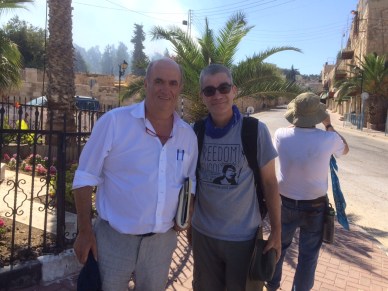
With Colm Toibin in Hebron

Before we started our tour, we witnessed an incident in which a settler attacked an Israeli photographer and damaged his camera. As it turned out the photographer was the celebrated photojournalist Oren Ziv. who was accompanying a private BTS tour for Irish author Colm Tóibín. The incident was captured on film by a member of our delegation. He gave a copy of the video to Ziv so he could press charges against the settler for damages. (We never found out whether or not he actually succeeded).

As we walked down Shuhadah St., the intimidating presence of the settlers was impossible to ignore. At one point we saw Tóibín and his tour guide on the side of the road. A car with two settlers drove up and the driver proceeded to scream obscenities at them for ten minutes.

Hebron’s settlers are truly the most brutal, ideologically extreme and heavily armed of the entire settler movement. They walk and drive the streets with impunity and full protection of the IDF.  As is the case throughout the West Bank, Jews are governed by Israeli civil law – and as a result the army cannot and does not intervene when settlers harass Palestinians. However, since Palestinians are subject to military law, they face dual oppression from soldiers and settlers alike.

After our BTS tour we walked to the Tel Rumeida neighborhood of Hebron to meet with Issa Amro, founder/director of Youth Against the Settlements. YAS is an increasingly powerful and important Palestinian nonviolent organization; among other things, it sponsors the annual Open Shuhadah Street campaign and regularly organizes/empowers the youth of Hebron.

Issa is truly a visionary leader in the Palestinian popular resistance movement. He has been arrested and detained countless times for his activism but has clearly become well known throughout Hebron as force to be reckoned with. Palestinian activists such as Issa tend to infuriate the Israeli military because their principled commitment to nonviolence cannot be quelled militarily. Although he and his comrades have been arrested and detained numerous times, YAS has come to represent a ray of hope for the Palestinian residents of Hebron.

We met Issa in the YAS center, which has an interesting history all its own. Originally Palestinian-owned, the building was taken over by settlers several years ago. But through a methodical campaign of legal pressure and nonviolent resistance, the settlers were eventually evicted and it was turned into YAS’s central headquarters. Last November, the center was raided by the IDF and temporarily declared a “closed military zone” (I’ll get back to this term later). Still, Issa and YAS remain steadfast.

FullSizeRender

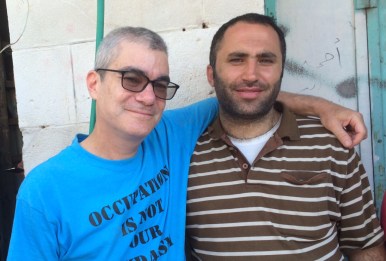
With Issa Amro of Youth Against the Settlements

On Thursday we prepared to return to Hebron for our nonviolent direct action, which had been almost two years in the planning by YAS and the Israeli anti-occupation collective All That’s Left. The Center for Jewish Nonviolence was invited to be part of this action as well so that its message could be strengthened through the solidarity of diaspora Jewry. CJNV has cultivated a strong relationship with both YAS and ATL and other Israeli/Palestinian partners on the ground. It is truly a sign of the times that diaspora Jews are joining this increasingly broad-based solidarity movement.

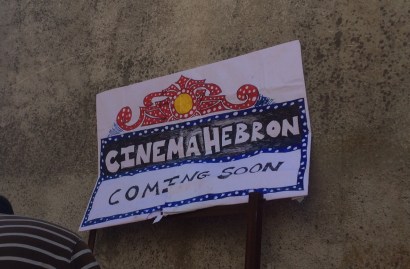
The goal of the action was to begin the process of turning an old metal factory in the Tel Rumeida neighborhood of Hebron into a movie theater: Cinema Hebron.YAS chose to build a movie theater so that the isolated, segregated Palestinian residents of H2 could have a place to come together in community – to experience even a little slice of normalcy in this intensely abnormal, unjust environment. It was also designed to be a statement to the settler community that the Palestinian residents of Hebron will continue to resist the theft of their property – and that Jews from around the world are ready to stand in solidarity with them.

The factory is owned by Jawad Abu Aisha, the patriarch of a prominent family in Tel Rumeida. As was the case with the YAS center, Jewish settlers were gradually encroaching toward this particular property – and based on past history, it seemed it was only a matter of time before it was taken it over completely. Tel Rumeida is heavily desired by settlers and has long been one of the tensest areas of Hebron. (This past March, Tel Rumeida made the news after a solider was filmed shooting a wounded Palestinian in the head while he was lying in the street.)

We spent all day Thursday preparing for the action, which was prepared down to the most minute detail. Our plan was to go to the old, cluttered site, begin the process of cleaning it up and announce our intention to turn it into Cinema Hebron to the press. Inevitably the IDF and police would show up and eventually declare it a “closed military zone” – their standard operating procedure when dealing with protests.

Legally speaking, the military needs to get a signed order to declare a closed military zone, but they often dispense with that pretense. Our plan was to keep cleaning up the site until the soldiers returned with their order. In the meantime, we would put up a mock marquee, pass out Cinema Hebron popcorn, give interviews to press, chant and sing, and do our best to clean up the site before they soldiers and police ordered us out.

There were 60 participants all told – 40 from CJNV and another twenty from Youth against the Settlements and All That’s Left. Our group split up into three “pods” – Green (those who would work until the soldiers returned but would not take an arrest), Yellow (those who would would be willing to be arrested if it was deemed necessary by our leaders) and Red (those who would stay until they were arrested.)

cinemahebronAs an extra precautionary measure, we drove to the site in separate vans to the site. Unfortunately, the military was somehow tipped off that there was some kind of action being planned for Hebron that day – and the van coming with ATF activists from Jerusalem was stopped en route. Our CJNV delegation all made it in safely, however. We gathered in an old metal warehouse until we were given the word that our tools had arrived. Then we put up the marquee and got to work.
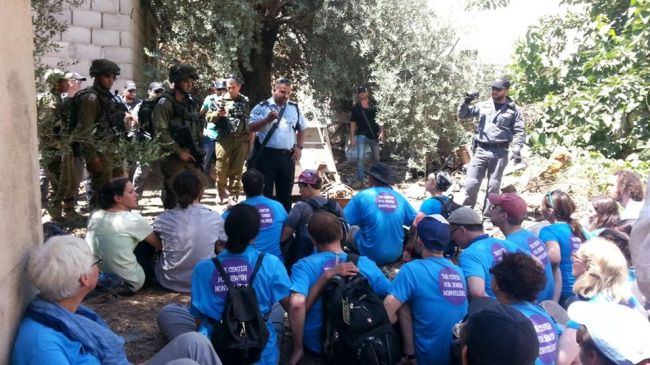
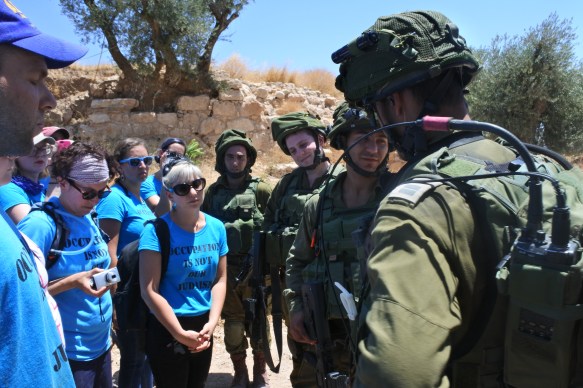
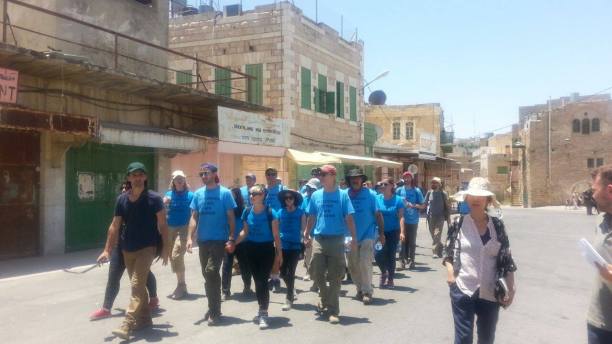
The site was heavily overgrown with high weeds and all kinds of scrap metal everywhere. As we started raking, hauling, piling junk we sang a every Jewish song and civil rights chant we knew. In short order settlers started to gather, peering at us through the front gate. The IDF and police arrived soon as well – we worked for about an hour or an hour and a half before they actually entered the site. They began arguing with the Palestinian owners and after some back and forth, they eventually fell back and we continued with our work.

After another hour or so, they returned and announced that the area was closed military zone. At this point, the some members of our delegation left and the rest of us sat down in the middle of the site, continuing to chant and sing. A police officer came up to us and told us that our presence on the site was illegal and if we did not leave in two minutes, we would be arrested (below). When our two minutes were up, they started to physically remove us (see the clip at the top of this post). They shoved us to the back of the site, gathered us together and ordered to take out our passports. They then asked the six Israelis from our delegation to take out their identity cards and led them away. We were sent out in the other direction and told to leave the site.

13730785_1728357484103891_5709147705551236607_o

Photo: A. Daniel Roth – http://allthesedays.org

At that point we gathered together and discussed what to do next. It seemed clear to us that the Israelis were targeted because they were easier to process – and that the authorities likely wanted to avoid the bad publicity of arresting internationals. When we received word from our lawyers that our six friends had been taken to the police station in Kiryat Arba, we decided to walk there together and demand their release.

After walking for only ten minutes or so we were stopped by five soldiers who told us we couldn’t continue because the area was (you guessed it) a closed military zone. We refused to leave and said we simply wanted to visit our friends in the police station. Thus began a stand off, during which the lead soldier called his commander four or five times. They clearly had never dealt with a group like ours and were somewhat bewildered that we wouldn’t leave when ordered. Finally Issa arrived and argued loudly with the soldiers. I’m not sure how he managed it but we were finally told we could continue along a detoured route.

DSC_1320 copy

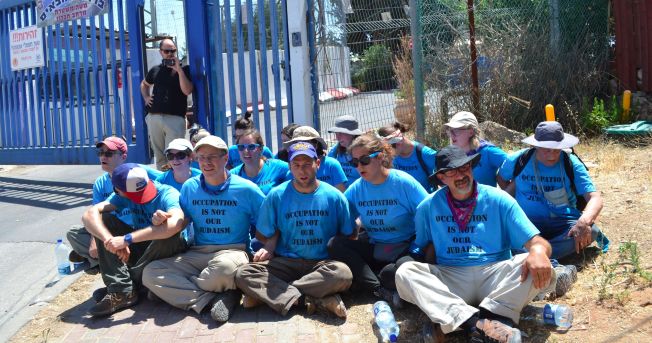
We eventually made it to Shuhadah St., continued down the road, passed the Ibrahimi Mosque and headed up a hill that led us in the direction of Kiryat Arba. As we walked in, we were joined by soldiers who silently walked alongside us. It quickly became clear to me that they weren’t there to impede us but rather to protect us from angry settlers. (I’m fairly sure this was the first time the residents of Kiryat Arba had ever witnessed a group of singing diaspora Jews walking down the street wearing “Occupation in Not Our Judaism” T-shirts ).

13710599_1728365224103117_2611826575131292990_o

Photo: A. Daniel Roth – http://allthesedays.org

We finally arrived at a gated area and faced yet another gauntlet of soldiers. After yet another round of back and forth, we were sent around to the front gate. Then we walked down a residential community to the end of the street where the police station was located. We talked to the guard at the front gate and explained we wanted to see our friends inside. After other policemen gathered we were told that our six friends were indeed inside but that we would not be allowed to see them. At this point, increasing numbers of residents from the neighborhood had come to mock and taunt us. Many of them filmed us with their cell phones. Eventually we sat down on the ground in front of the station gate and began to sing and chant once more.

The leaders of our delegation were in cell phone contact with the lawyers and our friends inside, who told us they could actually hear us singing and calling out their names. They were in the process of being interrogated by the police one by one but were otherwise fine. By this point quite a crowd had started to gather around us. We kept on singing as more police cars arrived. The original officer came back to us and told us that this was an illegal assembly – and that we had two minutes to disperse before they arrested us.

activists-1468604402

Photo credit: Jewish Forward

After talking with our lawyers, we decided against taking an arrest. They told us they believed our friends would likely be released in several hours, adding that our arrest would not help their cause and might even hinder it. So after spending an hour at the station we got up, walked together down the street and gathered near the front gate. As Shabbat was getting closer, we sang Shalom Aleichem and Lecha Dodi together with our other songs. Then together, we walked to a YAS home in H1 to meet up with the rest of our crew, eat a late lunch, debrief, share stories and nap after our physically/emotionally exhausting experience. Eventually we boarded our bus and returned to Susiya, in the South Hebron Hills where we would spend our Shabbat.

That evening just after a gorgeous sunset, we made a circle on a rocky hill and I began to lead our Shabbat service. As I prepared to lead Lecha Dodi, the prayer that welcomes the Shabbat bride, I heard someone shout. I looked up and saw two cars pulling up. Our six friends got out, grinning ear to ear as we cheered their arrival. After lots of hugs and laughter, we all continued with our service.

Shabbat had arrived.

(PS: You can read about our Cinema Hebron action here and here and our Shabbat in Susiya here).

Campus Update: Hateful Islamophobia at IUPUI

iupui-university-library

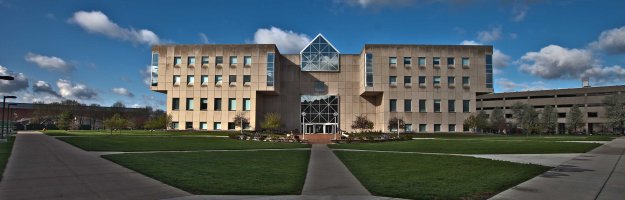
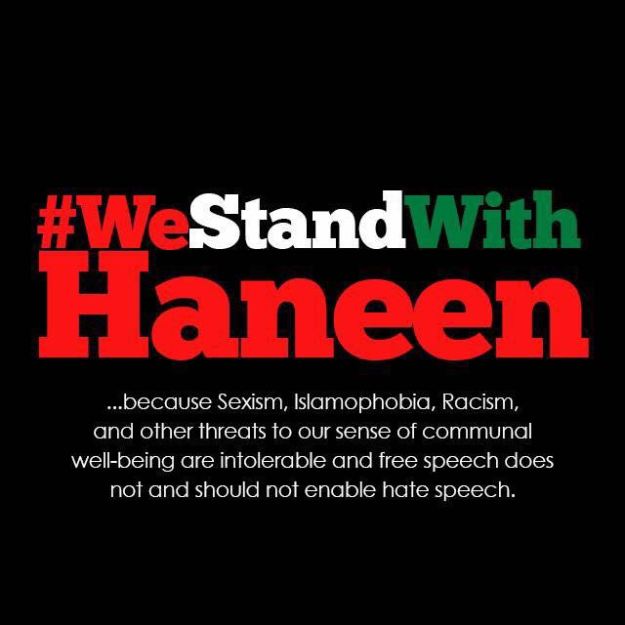
Students for Justice in Palestine (SJP) has done important and inspirational work on colleges around the country – often in the face of death threats, harassment and personal attack. The latest example: just this past week, a student leader of the SJP at University of Indiana – Purdue University Indianapolis (UIPUI) named Haneen (I’ve been asked to not use her last name out of concern for her safety) has been subject to threats, harassment and defamation through anonymous blog posts and flyers left on campus.

Among other things, this hate campaign characterized her as an advocate and supporter of terrorism, made sexist comments about her appearance, urged “authorities to look into her history of violence and investigate whether or not she is an immediate threat to…the nation’s capital.” One post attacked her for partnering with Black Lives Matter , calling it “a group that is also prone to acts of violence.” She has also received harassing phone calls at her home.

Haneen has received heartening support from a variety of corners, including a group of seventy five UIPUI faculty members and student who have signed a letter that calls upon UIPUI Chancellor Nasser Paydar to:

(1) to issue a strong public statement condemning these attacks and (2) to make clear the status of the University’s investigation of these heinous acts.

We encourage the Deans of each IUPUI school to educate their communities on sexism, Islamophobia, racism, and other threats to our sense of communal well-being.

We ask every IUPUI community member to challenge sexism, racism, Islamophobia, and all other forms of discrimination in their everyday interactions both on and off campus.

Making clear our university community’s values and mission in the face of fear and intimidation is necessary to creating a welcoming campus for all. Courage, hope, and love can defeat the hatred that has shown its face among us. We pledge to help in whatever ways we can.

I was encouraged to learn that the Indianapolis Jewish Community Relations Council has written Haneen a letter of support as well. Despite the appropriate demands that the University administration take immediate and meaningful action, however, the only response to date has been a bland, general statement from Chancellor Paydar that IUPUI “abhors all forms of racism, bigotry and discrimination, including discrimination based on religious beliefs or political views.” 

Representing the faculty letter signers, lecturer Lindsay Lettrell rightly and eloquently responded:

Dear Chancellor Paydar,

While we welcome your statement affirming that “the university abhors all forms of racism, bigotry and discrimination, including discrimination based on religious beliefs or political views,” we, faculty, staff and student supporters of Haneen, believe that these immediate, specific problems of racism, sexism, and Islamophobia need to named and condemned explicitly. Our student’s safety and future is on the line, and Haneen has asked that her University speak publicly about her right to safety as a part of our campus community. While the generalities in your message are relevant, we still ask you to address this specifically. After all, as the team of her supporters has reminded us, “She is a real person, not an idea. Her name is Haneen. She is Palestinian. She is a Muslim. She is a woman. (And, I add, she is our student.) She has a face. She has a voice. And her voice is our voice.”

Click here to contact Chancellor Paydar and demand that IUPUI denounce this act of hatred and move swiftly to investigate it.

12987033_448742761996059_3715131622213391113_n


What is Really Behind the UC’s Statement on Anti-Semitism?

University of California Intolerance

(AP Photo/Eric Risberg)

The regents of the University of California have spoken and has voted unanimously to adopt its working group’s “Principles Against Intolerance.” As I wrote last week, it is a report that dangerously conflates anti-Zionism with anti-Semitism in ways that make the report muddled, unenforceable, and a very real threat to the free speech of pro-Palestinian student groups on campus.

While most of the public debate over this report has focused on the challenge of balancing the UC’s desire to combat intolerance with the need to protect freedom of speech, it seems to me that one critical aspect of this issue has gone largely unaddressed: the fact that this report which purports to address the issue of intolerance on campus frames the issue almost exclusively in terms of anti-Semitism.

To be sure, if this report was intended to be a comprehensive statement on intolerance, wouldn’t the UC’s working group have consulted with a wide variety of experts on the campus intolerance currently faced by Muslim students, students of color, LGBTQ students, etc?  Tellingly, the report states that the working group “invited four recognized scholars and/or leaders on the subjects of discrimination, with a particular focus on anti-Semitism, and on free speech.” (Among these four expert/scholars were Rabbi Marvin Hier, of the Simon Wiesenthal Center, a high profile Israel advocate whose organization is currently building its”Museum of Tolerance” on top of an ancient Muslim cemetery in Jerusalem.)

Even more troubling, the opening “Contextual Statement” of the report states that the working group was formed in response to”public comment and concern from a variety of sources that there has been an increase in incidents reflecting anti-Semitism on UC campuses.”  The regents offer nothing more than this anecdotal statement to justify the formation of a working group and a months-long deliberation and debate on this issue. There is, however, no real evidence to support the claim that campus anti-Semitism is on the rise. Quite the contrary, as the Anti-Defamation League itself recently reported:

While (anti-Semitic) inci­dents are cer­tainly dis­turb­ing, it is important to note that these inci­dents are rel­a­tively rare, and the vast major­ity of Jew­ish stu­dents report feeling safe on their cam­puses.

This all begs the obvious question: why did the regents of UC feel the need to form a working group and hold a long public debate over a report such as this? I would submit it has nothing to do with genuine concern about intolerance on campus and everything to do with politics. This report is but a part of a much larger effort that seeks to stem the growing tide of the Boycott, Divestment and Sanctions movement on college campuses.

As the LA Times just reported:

The drive for the UC statement was led by the Amcha Initiative, a group that combats anti-Jewish bias on college campuses. Tammi Rossman-Benjamin, the group’s director and a lecturer at UC Santa Cruz, said campus demonstrations against Israeli policies and calls for the university to divest from firms with financial ties to Israel’s military have created blowback for Jewish students.

The involvement of the AMCHA Initiative with this “drive” tells you everything you need to know about the motivation behind the UC’s statement. AMCHA is a zealous Israel advocacy organization that fights campus “anti-Semitism” by monitoring college classes, spying on students and publishing names of “anti-Israel”professors. It bears noting that AMCHA was publicly admonished in 2014 by San Francisco State University (along with, you guessed it, the Simon Wiesenthal Center) for making false accusations against a professor. That same year, a group of forty Jewish studies professors from across North America wrote a public letter condemning AMCHA and its tactics.

Here’s an excerpt:

It goes without saying that we, as students of antisemitism, are unequivocally opposed to any and all traces of this scourge. That said, we find the actions of AMCHA deplorable.

Its technique of monitoring lectures, symposia and conferences strains the basic principle of academic freedom on which the American university is built. Moreover, its definition of antisemitism is so undiscriminating as to be meaningless. Instead of encouraging openness through its efforts, AMCHA’s approach closes off all but the most narrow intellectual directions and has a chilling effect on research and teaching.

Given the involvement of groups such as AMCHA, it is difficult to view the regents’ statement as anything other than a caving in to the pressure of professional advocacy groups determined to quash BDS and shut down pro-Palestinian advocacy on college campuses. Sadly, by labeling this criticism of Israel and anti-Zionism as anti-Semitic, it only silences students, renders the term meaningless and makes it that much harder to take actual allegations of campus anti-Semitism seriously.

As the ADL has reported, the vast major­ity of Jew­ish stu­dents report they feel safe on their cam­puses. Some of them may be made to feel uncomfortable by Palestinian activism and divestment resolutions, but uncomfortable is a far cry from unsafe. And it is shameful that UC has allowed itself to be pressured into issuing an unnecessary and downright dangerous statement such as this.

Given the current climate in our nation, I’d wager if there was a group of students who might well feel justifiably unsafe, it is Muslim students. By all reports, college campuses are feeling the impact of anti-Muslim hatred that began with 9/11, and is currently being fanned yet further during this horrid election cycle. For more this particular subject, I highly recommend this powerful article by Nasreen Mohamed, an administrator at the University of Minnesota. I’ll end with her words:

After the ending of a successful program to welcome new international students, I noticed one of the students who attended the program struggling to figure out the bus route to get home. I stopped to assist her, and we ended up walking together as I happened to be going in the same direction. We struck up a conversation about walking on campus. She is a Lebanese Muslim woman who wears a hijab.  She asked me how safe it was for her to walk on campus. I gave her my administrative cautionary tale about taking safety precautions and avoiding walking alone late in the evening. After a pause, she asked me how safe it was to walk on campus as a Muslim woman, wearing a hijab. I realized in her pause and clarification that there was very little I could offer her in terms of a sense of safety. All I could do was to give her a realistic picture. I told her that there had been violence in the Twin Cities  and in Greater Minnesota, but nothing violent had occurred on campus. After I walked away, I realized that she will be met with the same micro aggressions that I had experienced post 9/11, and that our campus was still not equipped to protect her spirit.

Anti-Zionism Isn’t a ‘Form of Discrimination,’ and It’s Not anti-Semitism

2261882899

Cross-posted with Ha’aretz

As an alum of UCLA, I was particularly interested when I learned that the working group for the Regents of the University of California Board had released their draft “Statement of Principles Against Intolerance.”  Having followed the news at my alma mater I knew that despite its title, this report wasn’t going to be merely a general statement about the importance of tolerance on campus. It was written in response to allegations of rising anti-Semitism at UCLA and other UC campuses.

On the face of it, there is much to admire about the report, particularly its strong support of campus environments “in which all are included, all are given an equal opportunity to learn and explore, in which differences as well as commonalities are celebrated, and in which dissenting viewpoints are not only tolerated but encouraged.”

In the end, however, this “Statement of Tolerance” actually achieves the exact opposite of its stated goals. If heeded, it would serve to silence dissent and open debate on college campuses.

At the beginning of the draft report, it states:

Fundamentally, commenters noted that historic manifestations of anti‐Semitism have changed and that expressions of anti‐Semitism are more coded and difficult to identify.In particular, opposition to Zionism often is expressed in ways that are not simply statements of disagreement over politics and policy, but also assertions of prejudice and intolerance toward Jewish people and culture.

The statement thus concludes that “anti‐Semitism, anti‐Zionism and other forms of discrimination have no place at the University of California.”

It is certainly important to state unequivocally that anti-Semitism will not be tolerated on UC campuses. But it is incorrect and even disingenuous of the report to make the unsupported claim that anti-Zionism is “often expressed (as) assertions of prejudice and intolerance toward Jewish people and culture,” and blithely conflate anti-Semitism with anti-Zionism as a “form of discrimination”.

It is true that some anti-Semites lurk behind the label of anti-Zionism – and when they do they should rightly be exposed and condemned. But it is deeply problematic to label anti-Zionism as a form of discrimination.

In fact, growing numbers of Jews and others identify as anti-Zionists for legitimate ideological reasons. Many profess anti-Zionism because they do not believe Israel can be both a Jewish and democratic state. Some don’t believe that the identity of a nation should be dependent upon the demographic majority of one people over another. Others choose not to put this highly militarized ethnic nation-state at the center of their Jewish identity.  Far from being discriminatory, their beliefs are motivated by values of equality and human rights for all human beings.

Blurring the distinction between anti-Zionism and anti-Semitism muddles the definition of anti-Semitism to the point that it becomes meaningless.This conflation is irresponsible and harmful and invariably draws our attention away from real anti-Semitism, whether it be the targeting of Jews, the vandalization of synagogues and cemeteries or the proliferation of hate groups at home and abroad.

Certainly all forms of racism should be called out in no uncertain terms. But erasing the lines between anti-Semitism and anti-Zionism only makes this task more difficult.

I can’t help but notice that this report’s broadside on anti-Zionism strongly evokes the right-wing agenda of groups such as the AMCHA initiative. Tammi Rossman-Benjamin, Director of AMCHA has long made it clear that tarring anti-Zionists as anti-Semites is part of a larger strategy to ban Palestinian solidarity groups from campuses across the country.

Such a policy would have a devastating impact on Palestinian activists and their allies. It would prevent many Palestinian and Israeli human rights advocates from speaking on college campuses. It would prevent students from displaying a model of Israel’s separation wall to demonstrate to the oppressive effects of Israel’s occupation. And it would forbid student efforts to hold Israel accountable through economic pressure, through campaigns to boycott and divest from settlements or from corporations that profit from the abusive policies of the state of Israel.

Having long worked in the Jewish community, I know that some Jewish organizations equate anti-Zionism with anti-Semitism because they seek to protect Israel’s image or because they do not want Jewish college students to have to tolerate criticism of Israel and Zionism.Those who believe in a one state solution are accused of seeking “the destruction of the Jewish state” when they actually hold their position as a result of honest political analysis and a genuine concern for all who live in the land, regardless of their religion or ethnicity.

Yes, critics of Israel and Zionism can sometimes be harsh and their tactics confrontational, but I do believe we do our young people no favors when we attempt to silence them. Though I have come a long way since my UCLA days, I still remember all too well how uncomfortable it was to have one’s beliefs and opinions challenged.But we should not confuse “uncomfortable” with “unsafe.” Forbidding debate and free speech will not create more comfortable campus environments – it will only marginalize students for legitimately expressing their beliefs.

The UC Regents claims to support the open exchange of ideas on their campuses. But they will never accomplish this if they teach students that their ideas only matter if they pass a political litmus test.

On the Uprisings in Jerusalem: Let Israel Renounce Violence

Photo: ynet.com

Photo: ynet.com

During the course of the tragic violence coming out of Jerusalem in the past week, I’ve been reading with familiar frustration the American Jewish establishment’s predictable accusations of “Palestinian incitement.” But I must confess I’m finding the reactions of some liberal Jewish leaders to be even more infuriating.

One prominent rabbi, for instance, who I know personally and would surely describe herself as on the progressive side of the Israeli peace camp, recently wrote this on her Facebook page:

Punching back with violence as a response to violence is the easy reaction. Each side has much to point to on the other side — each claims the mantel of victim, each claims the justice of their violent response. It takes courage to commit to non violence and lasting justice for all.

This is, indeed, the liberal Jewish meme when it comes to these outbreaks of violence in Israel/Palestine: “the level playing field.” According to this narrative, there is violence on both sides and peace will only come when courageous leaders on both sides commit to nonviolence.

The only problem with this narrative of course, is that it utterly ignores the all-pervasive and overwhelming nature of Israeli state violence. And given this structural imbalance of power, it is disingenuous in the extreme to somehow claim that “each side has much to point to on the other side.”

Yes, all violence is ugly and it is tragic – but this violence also exists within a context. Logically and ethically speaking, we simply cannot equate the brutal reality of state violence with the violence of those who resist it.

Yes, it does take “courage to commit to nonviolence and justice for all.” But when a state regularly employs violence to control and dominate another people, it is so very wrong to blithely call for “nonviolence” on all sides when that people inevitably fights back.

Nelson Mandela (once a “terrorist” now a “statesman”) certainly understood this when then South African Prime Minister P.W. Botha offered him the chance to be let out of prison (for the sixth time) if he publicly renounced violence – and Mandela famously responded, “Let him renounce violence.”

And even the most revered nonviolent leader of our day – Dr. Martin Luther King Jr. – had this to say in 1967 after speaking to the “the desperate, rejected and angry young men” who resorted to violence in America’s black ghettos:

I knew that I could never again raise my voice against the violence of the oppressed in the ghettos without having first spoken clearly to the greatest purveyor of violence in the world today, my own government.

Yes, those in the Jewish community who purport to support the cause of peace must first reckon with the reality of the context of violence that exists every single day by a people who live under military occupation.

How many liberal Jewish leaders have called for “nonviolence” when last year, one Palestinian was killed by the Israeli military every 4.26 days? How many called for Israeli “nonviolence” last month after the killing of  Hadeel al-Hashlamoun, an 18 year old Palestinian woman who was shot and killed by an Israeli soldier in Hebron in what Amnesty International has described as an “extrajudicial execution?” For that matter, how many called for “lasting justice” this last July, when a Palestinian family was burned alive by settlers and the Israeli government stated it “had chosen to prevent legal recourse” even though it knew the identity of the murderers?

Frankly, given this constant and all pervasive context of Israeli state violence, it’s remarkable that these kinds of Palestinian uprisings don’t break out more often than they do. But when they invariably occur, we do the cause of peace no favors when we proclaim that “each side has much to point to on the other side” and call for a renewed commitment to “nonviolence.”

How will we achieve lasting justice for all? To paraphrase the oft-quoted Nelson Mandela: “Let Israel renounce violence.”

What Will We Make Different this Year? A Guest Sermon for Erev Yom Kippur by Jay Stanton

neilah art wohl

Here is the guest sermon that was delivered by Tzedek Chicago member Jay Stanton at our Erev Yom Kippur service last Tuesday night:

Why is this night different from all other nights? I know – wrong holiday. Bear with me. Why is the Day of Atonement different from all other nights?

I] Asking permission

Tonight is the only time we ask permission to pray with other wrongdoers. When actively atoning, we easily acknowledge our wrongdoings. Each of us has transgressed. Today is the most obvious day to pray with transgressors. So why ask permission? Acknowledging our capacity to inflict harm could render us speechless, unable to continue repenting. Giving ourselves permission, having God grant us permission, gives us the courage to confront our failing selves. Is not confronting the self the goal of Yom Kippur?

In our Tzedek community, we face two major obstacles to achieving this goal. The first is feeling we have little merit. A few months ago, my friend Kelvin and I came to an intersection while walking. A car was coming, but there was a stop sign, so I stepped into the intersection, and Kelvin followed hesitantly. After we crossed, Kelvin confessed that, as a Black man, he cannot assume cars will stop for him even at a stop sign. I acknowledged my white privilege and thanked Kelvin for alerting me to this instance of it, of which I was previously unaware. Kelvin thanked me for being aware of my privilege.

From this interaction, Kelvin gained an ally; I gained guilt. How could I, someone actively engaged in antiracist work, be so oblivious to this white privilege? But my awareness of my privilege was enough for Kelvin that day. Our sense of immense guilt over our sins, collective and individual, could paralyze us. How do we move forward with teshuvah when the task is so great?

The other major obstacle we face is potential denial. We created our core values of a Judaism beyond borders, a Judaism of solidarity, a Judaism of nonviolence, a Judaism of spiritual freedom, a Judaism of equity, a Judaism beyond nationalism. We value these just ideals, so we could easily say: therefore, we practice a Judaism beyond borders, a Judaism of solidarity, a Judaism of nonviolence, a Judaism of spiritual freedom, a Judaism of equity, a Judaism beyond nationalism. We did teshuvah for the harms of border-obsessed Judaisms, insular Judaisms, violent Judaisms, coercive Judaisms, oppressive Judaisms, and nationalist Judaisms. We’re done now: we put justice on the agenda and only act justly. Anyone complaining of injustice in our ranks is wrong.

The fear of that outcome weighs heavily on many of us. Are we destined to abandon our values, or, worse, to become some dystopian entity talking justice while perpetuating injustice? I don’t share this fear, and my reason is not because I optimistically see Tzedek as a utopia immune from injustice or a meritocracy of the most righteous folks in the Chicago area. I do not think we can adhere to our core values completely. We will miss the mark. Even behaving our best, we were socialized in systems of oppression which we cannot leave at the door because we wish. We are still unlearning Islamophobia, racism, sexism, transphobia, classism, ableism, heterosexism, Ashkenormativity, militarism, capitalism, and nationalist exceptionalism, to name a few. We cannot completely unlearn these biases. So we will be wrong; we know that. That’s the best possible news for us going into Yom Kippur.

II] Tallit

We are practiced at calling out harmful behavior. The Rev. Stacy Alan teaches that defining sin abstractly is impossible, but that we all get the concept of “messing up.” Tokheja, rebuke, is the prerequisite for meaningful teshuvah. Understanding our wrongs is the only way we can amend our behavior.

We are also committed to becoming more just. As a new community, we are in danger of creating margins. Some people are in the center and some pushed to the edges. Tzedek, however, has another structure in mind. Brant asking me to speak tonight demonstrates this structure. No one would begrudge Brant speaking. We might learn something more interesting, and, we, most of all me, might prefer it. At Tzedek, we each have a say. How many Jewish communities are being addressed tonight by a young, less-than-able-bodied, Sephardic, transgender recovering addict who grew up in an interfaith household? In any other community I would be on the fringe, as I am also here. At Tzedek, Brant is on the fringe, too. We will function best if all at the margin, mimicking this garment, this tallit, evening wear traditionally only this night. The tzitzit, the fringes, are the parts that remind us to engage in mitzvot. At Tzedek, we strive to live at the edge, on the fringe of the community. We are not creating an insular circle, but facing outward, like tzitzit. That way, we avoid a power and oppression dynamic, and we have enough of a marginal perspective that we can call out injustice within our walls. The edge here defines the center, not the reverse.

III] Jacob and Esau

A good structure means little without substance. We need not to only identify injustice but also work to correct it. We need to do our part. We need to take Yom Kippur seriously; we need to take the project of teshuvah seriously.

Again, we face obstacles. Traditionally, the Yom Kippur liturgy dances between two problematic theologies of an authoritarian deity: one, a strict adherent of reward and punishment, and the other, a completely arbitrary megalomaniac. How can we reconcile our knowledge of justice with these concepts of the Divine?

So we are doing liturgy differently at Tzedek. Tomorrow, we will not read from the passage in Leviticus which describes the ancient practice of transferring our sins onto goats and arbitrarily killing one and sending the other away. We know we cannot make teshuvah by putting our sins onto any scapegoat. Instead, we will read the passage in Genesis about Jacob’s reconciliation with Esau. With themes of generosity, transformation, and moving forward from wrongs done without revising or denying past harms, this text reflects the kind of teshuvah we wish to do. It provides hope for intractable conflicts to be resolved justly. We will read about a moment so transformative it turned Jacob from a conniving person into a gentle one. We want that for ourselves. Why is this Yom Kippur different from all other days? Because we can find an example of teshuvah in our text we wish to emulate.

Many say we can’t do this. We can’t establish a Jewish community beyond borders or nationalism, and we certainly can’t change the liturgy or Torah reading for the day. After all, hasn’t it been that way for thousands of years? To them, and to those of us who might be wondering if we should hedge more, I offer this history. Amram Gaon, a 9th century Spanish sage, called the recitation of kol nidre a minhag shetut – a foolish custom. Why? Even though the prayer was already beloved, it encouraged problematic thinking that we can escape responsibility for transgressions with a contract rider on the Covenant. Amram Gaon knew sins don’t transfer to goats and a string of words doesn’t negate injustice we cause. Changing ritual to conform to Jewish values isn’t new.

In tomorrow’s text, we identify with both twins. Jacob victimized Esau. He erred when he stole Esau’s birthright. But we root for Jacob in this reconciliation – not because of lineage but because we know a deep truth. God is the ally of those who seek forgiveness. The story makes us more inclined to forgive and to believe we can be forgiven. Because we are forgiven, for the record. The biggest spoiler in Jewish liturgy is vayomer Adonai salajti kidvarekha. God says I forgive you as I promised. But Jacob messed up. We get the guilt that lives in Jacob’s heart because it lives in ours. Even after we make amends or especially if we cannot, we need God’s help letting go. If our part is making teshuvah, the Lady Magnificent must forgive.

IV] Ne’ilah as protest

Normally, we view Yom Kippur as an end to a process of reflection. This year, Yom Kippur is a beginning. We can use the day of prayer to take stock of our sins. What would we say about our behavior if we had a marginal perspective? What needs to change for us individually and collectively to help us decrease injustice in the coming year? How will we respond when we mess up? When others do?

When we come to ne’ilah tomorrow as the sun sets on this Day of Atonement, let’s be radical. We usually take the idea that the gates of repentance will close as the impetus to finish faster, higher, stronger – to be Olympic penitents.   Instead, we should see it as a call to action. When we read:

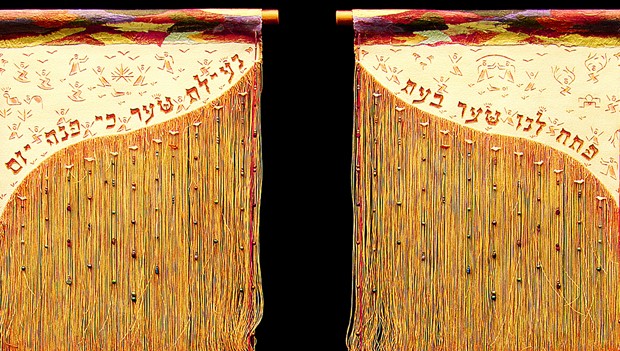
פתח לנו שער בעת נעילת שער כי פנה יום. היום יפנה השמשה יבוא ויפנה נבואה שעריך.

Instead of reading it as a lament about the gates closing: Open the gate for us even though the gate is closing because a day turns. Today will pass, the sun will come and set, before it does, please let us enter the gates. Otherwise we’ll be stuck outside – guilty. Instead of reading it that way, let us read it as an exhortation to a Powerful Boss holed up in a gated estate. Ne’ilah is a sit-in, and this is our chant: Keep the gate open for us even at the imposed curfew time, when the day turns to night. We don’t care that today will pass, that the sun comes and goes, we will enter the gates!

When the sun sets tomorrow, we need to occupy Heaven. This won’t require occupying the Luther Memorial Church, but it will require calling out God to make repentance and transformation Her foremost priority not only on Yom Kippur but every day. Our covenantal benefits are not enough. Guaranteed forgiveness on one day a year out of more than 300? That’s less than 1% of the time. We need a better contract. We need better working conditions for creating God’s justice on Earth. We need a more involved, more present, more compassionate boss! We need fewer arbitrary injustices. Life outcomes for teenage boys in Chicago depend on whether the boy is Black. In the West Bank, they depend on whether the boy is Palestinian. And how about less injustice? We didn’t meet our own expectations this year, but why didn’t God soften the hearts of the Pharaohs, free the captive, uplift the fallen? When Jacob wrestled with the man the night before reconciliation with Esau, he did not let the man go until the man gave him a blessing. Similarly, we can’t let God go until She accepts everyone’s teshuvah, which might be until some people are ready to change. So tomorrow night, let’s occupy Heaven.

Strike that (pun intended)! The gates are open now. Let’s move in with our permission to pray with sinners, and let’s extend the opportunity for repentance until those with blood on their hands (literal or symbolic) repent. Let all who lost hope they can change, that those around them can change, enter the gates! Let all who are hungry for justice enter the gates! Let all who are thirsty for forgiveness enter the gates! We transgressors will keep them open until God grants the pardon She promised.

Tzom kal. May your fast be physically easy and spiritually meaningful.

A Force More Powerful: A Sermon for Tzedek Chicago’s Inaugural Rosh Hashanah Service

10420349_10207561208128694_6384056792802564034_n

One of the most celebrated lines in the traditional Rosh Hashanah liturgy is the verse “Hayom Harat Olam” – “Today is the birthday of the world.” As you might imagine, these words have an added resonance for me on this particular Rosh Hashanah. Hayom Harat Olam indeed. On this day the world was created – and recreated anew for us all.

As our new congregation celebrates its very first Rosh Hashanah, it is difficult to put into words just how profoundly humbling this moment is for me. At this very moment, we are creating a community out of whole cloth, a fabric of connection out of deeply shared communal values. I am so very grateful to be granted this opportunity and so inspired by the many people who have stepped forward so readily and so eagerly to make Tzedek Chicago a reality.

This Rosh Hashanah, I’m feeling, if you pardon the expression, as if we’re celebrating a New Year on steroids. This is truly a season of newness, of potential, a blank canvas upon which we can throw our deepest hopes and dreams and visions. More than any other Jewish holiday, Rosh Hashanah is the time in which we proclaim without hesitation that anything is possible in our lives and our world. And I am truly blessed to be sharing it with you.

I’ll be honest with you: I still can’t quite believe that we pulled this off. It was only a short time ago that we even began to think about creating this new congregation. The leadership of Tzedek Chicago began these conversations a few months ago, and we held our first orientation meeting just this last summer. Our start up period has been astonishingly short – but I think I can speak for the entire leadership of Tzedek when I say I’m not surprised by how far we’ve come in this relatively brief period of time. I’ve known in my heart that there is very real need in the world for a congregation such as ours.

We are at heart, a values-based congregation. As the name of our congregation makes clear, our community is deeply informed by the sacred values of social justice. In this regard, the establishment of Tzedek Chicago is a very mindful attempt to create a Jewish spiritual home for those in our community who cherish these values and are seeking a spiritual community in which to express them.

If you haven’t yet, I encourage you to go to our website and read our six core values carefully. While they are listed separately, I do believe they are part of a larger unified story: a narrative of liberation that runs through the heart of Judaism and Jewish history. It is a narrative rooted in the Exodus story that tells of a God who stands by the oppressed and demands that we do the same. It resonates through the words of Biblical prophets who spoke truth to corrupt power. And it can be found in the courageous example of ancient rabbis who responded to the trauma of exile from the land by creating a global religion with a universal message of healing and hope.

It is particularly relevant to invoke this liberatory narrative on Rosh Hashanah, of all days. Indeed, one of the central themes of this day is the concept of Malchuyot – God’s ultimate sovereignty over our lives and our world. Even if you don’t adhere to the literal belief in God as a supernatural King sitting on his throne on high, I believe we have much to learn from this concept. At its core, I would suggest affirming Malchuyot means affirming that there is a Force Yet Greater: greater than Pharoah in Egypt, greater than the mighty Roman empire, greater than the myriad of powerful empires that have oppressed the Jewish people and many so other peoples throughout the world.

I would argue that this sacred conviction has been one of the central driving forces of Jewish tradition throughout the centuries: that it is not by might and not by power – but by God’s spirit that l our world will ultimately be redeemed. I would further argue that this belief in a Power Yet Greater sustained Jewish life in a very real way during some very dark periods of our history. After all, the Jewish people are still here, even after far mightier empires have come and gone. It might well be said that this allegiance to a Power Yet Greater is the force that keeps alive the hopes of all peoples who have lived with the reality of dislocation and oppression.

I will submit to you, however, that we have tragically betrayed this Jewish narrative of liberation in our own day. With the onset of modernity, we have largely surrendered the ideal of “not by might and not by power” through a kind of Faustian bargain with might and power. We now embrace a new narrative – one that responds to trauma not with a message of healing and hope, but by placing our faith in humanly wielded power. Our new narrative teaches that the pain of our Jewish past will inevitably become our future unless we embrace the ways of power and privilege; nationalism and militarism.

Historically speaking, we know what can happen when religion has been used to justify the aims of empire. This phenomenon is sometimes referred to as Constantinian religion, in reference to the Emperor Constantine, who in the fourth century began the process of making Christianity the official religion of the Roman Empire. In that one critically historic moment, what had previously been a small and persecuted religious community in the first century after Jesus, became a religion of state power. We know the rest. The Jewish people in particular know all too well the sorrows that inevitably ensued from Christianity’s bargain with empire.

In our own day, however, the Jewish people have made a similar kind of tragic bargain. Jewish theologian and thinker Marc Ellis has coined a term for it: “Constantinian Judaism.” With the onset of Zionism and the establishment of the state of Israel, Judaism has now itself become wedded to empire. The unavoidable focal point of Jewish life is now a Jewish nation-state that venerates Jewish power, Jewish militarism and Jewish privilege. Although Israel was established through a mythology of Jewish liberation and a “return to the land,” it has done so on the backs of that land’s indigenous inhabitants. The unavoidable truth is that the Jewish nation state has come into existence – and is continuing to justify its existence – through the oppression of the Palestinian people.

It is difficult to underestimate the extent to which Jewish life now centers on the rationalization and perpetuation of this new Jewish narrative, this new deal with empire. As Marc Ellis points out, we American Jews are deeply implicated in this new Constatinian Judaism:

(The) Jewish establishments in America and Israel have made their own empire deal. Jews are blessed in America. America blesses Israel. What is good for one is good for the other. For the protection American foreign policy offers Israel, Jews offer their support to the American government. (“Future of the Prophetic,” p. 36)

This new narrative has also become an indelible part of American synagogue life. There are so many examples I could point to. Here in Chicago, almost every synagogue has a sign in front with American and Israeli flags that proclaim, “We Stand With Israel.” Congregational religious schools and Jewish camps routinely cite “cultivating a connection to Israel” as an essential part of their curriculum. Perhaps most symbolically telling: it has become standard in most American synagogues to place a US and Israeli flag on either side of the Aron Kodesh.

In other words, in our most sacred Jewish spaces, we are literally bowing down to physical symbols of national power. This is a powerful demonstration of how completely this new narrative has taken hold of post-Holocaust Jewish identity. To my mind, it is nothing short of idolatry – and our inability to recognize it as such shows just how deeply we have bought into a religious mindset that radically values physical power over spiritual power.

So yes, Tzedek Chicago makes a point of stating the following in one of our six congregational core values:

While we appreciate the important role of the land of Israel in Jewish tradition, liturgy and identity, we do not celebrate the fusing of Judaism with political nationalism. We are non-Zionist, openly acknowledging that the creation of an ethnic Jewish nation state in historic Palestine resulted in an injustice against its indigenous people – an injustice that continues to this day.

We reject any ideology that insists upon exclusive Jewish entitlement to the land, recognizing that it has historically been considered sacred by many faiths and home to a variety of peoples, ethnicities and cultures. In our advocacy and activism, we oppose Israel’s ongoing oppression of the Palestinian people and seek a future that includes full civil and human rights for all who live in the land – Jews and non-Jews alike.

With these words, we are intentionally standing down the new Jewish narrative. I know full well what it means to do this. I certainly have no illusions how a Jewish congregation describing itself as “non-Zionist” and openly protests “Israel’s ongoing oppression of the Palestinian people” will be received by the Jewish establishment.  Given centrality of Zionism and Israel advocacy in Jewish communal life, Tzedek Chicago is clearly a dissident congregation in the Jewish world.

I do believe, however, that we must make room in our community for Jews whose values dissent from what the communal establishment deems “mainstream.” It bears noting that dissent has historically occupied a venerable and even sacred place in Jewish life. (It also bears noting that Zionism itself was once a dissident movement in Jewish life.) Our congregation consciously and proudly seeks to lift up this dissident legacy – one that has long been central to Jewish tradition itself in so many critical ways.

After all, we are not promoting dissent for its own sake. We are seeking to reclaim a sacred legacy – a liberatory narrative that has long been indigenous to Jewish life. But I want to underscore – this is not simply a nostalgic exercise in venerating the past. Jewish life in the 21st century is radically different than any in which we have lived before. We live in a global world in which we are connected to individuals, nations and cultures, in unprecedented ways. Having just come out of the ghetto, we have no desire to build new ghettos of our own making. To quote our core values once more:

We celebrate with a Judaism that builds more bridges, not higher walls. Our religious services and educational programs promote a universalist Jewish identity – one that seeks a greater engagement in the world around us. Within our congregation, we view our diversity as our strength. In our activism, we advocate for a world beyond borders and reject the view that any one people, ethnic group or nation is entitled to any part of our world more than any other.

Through our activism and organizing efforts, we pursue partnerships with local and national organizations and coalitions that combat institutional racism and pursue justice and equity for all. We promote a Judaism rooted in anti-racist values and understand that anti-Semitism is not separate from the systems that perpetuate prejudice and discrimination. As members of a Jewish community, we stand together with all peoples throughout the world who are targeted as “other.”

As I said at the outset, I do believe there are many out there who are thirsting for a Jewish community that espouses values such as these. At the same time, however, I am all too mindful that Tzedek Chicago is not for everyone. But that’s OK. In fact, I think, that’s how it should be.

I daresay if you go to the websites of most liberal American congregations and read their core values, you’ll read words like “welcoming,” “inclusive” “warm” and “open.” When you stop to think of it, most of these terms are actually pretty value-free. They aren’t really values per se so much as virtues. They don’t really represent anything anyone would object to and they don’t tell you anything about what the community ultimately stands for.

The reason for this, I believe, is that the overwhelming number of American liberal synagogues simply don’t view political action as part of their mission. Many will articulate a commitment to Tikkun Olam, or “repair of the world,” but whenever this term is invoked, it invariably refers to direct service projects such as soup kitchens or coat drives for the homeless. Now there is of course, a dire need to support service work – particularly in a day and age when our social safety net is under constant and unceasing attack. As you know, here at Tzedek Chicago we are coordinating a High Holiday food drive in conjunction with the Greater Chicago Food Depository – and we thank you for your support of this sacred effort.

But while every religious community should and must engage in service work, we must also ask: what does it mean to ignore the wider context of this reality? What does it mean to do direct service to people in need without directly addressing the political conditions that creates these needs in the first place?

In truth, most liberal congregations are not designed to make waves. They might connect their Jewish identities to political action – they might invoke Jewish community support of the civil rights movement for instance – but when pushed to take a stand on the real political issues of our day, they ultimately fall back on “being inclusive” of the diversity of opinions in the congregation. They won’t mix religion with politics – the notable exception being, naturally, support and advocacy for the state of Israel.

So yes, you might say Tzedek Chicago isn’t really an inclusive congregation. We’re a intentional community driven by very specific values. We’re a community bound by the conviction that a Jewish congregation should be more than simply a fee for service institution for the Jewish middle and upper middle class. We hold that a synagogue should not merely comfort the afflicted, but also afflict the comfortable. We understand that a congregation should not only be about personal transformation, but socio-political transformation as well.

There has been a fair amount of press about our new congregation of late – and one of my favorite lines came from one of our detractors who was quoted as saying about us, “Statistically speaking, they don’t exist.” Now that may actually be true. There aren’t really congregations such as ours in the Jewish world. But I can’t help but be deeply gratified at how far we’ve come in such an astonishingly amount short time. By the growing numbers of people who have formally joined us as members; including many who are joining a Jewish congregation for the very first time in their lives. And by those who have stepped forward to volunteer considerable time and energy on our behalf.

And I will say moreover, that ever since our announcement, I’ve been hearing consistently from people all over the country who have told me they wish that something like Tzedek existed in their community. So while we might not statistically exist in the institutional sense, I believe we are very much alive out there in the borderlands of Jewish life. I just know in my heart that there is a place for a Jewish congregation such as ours. And while we are starting off modestly, mindful of our capacity, of what we are able and not able to do during this first year of our existence, I do believe the response we’ve received thus far indicates that the time has truly arrived for a congregation such as Tzedek Chicago.

And finally, on a personal note, I want to express once more how blessed I feel that I have been granted such an opportunity at this point in my life and my career. I am so very grateful and excited to be embarking on a journey such as this with all of you and many more who will be joining us as we make our way. I know it will be a complex and challenging journey in many ways. We’ve set our sights high and it goes without saying that we will be learning together as we go.

To be sure, it is not easy to do this kind of work. It is challenging, it is painful, it can often mean being alienated or isolated from family and friends, from the larger community. But for so many of us, we don’t have a choice but to do this work – and we know that we will ultimately find the strength to continue this work through the sacred relationships we cultivate along the way. In the end, this is a journey we have no choice but to take – and I can’t think of anyone I’d rather take it with than all of you. Speaking for myself and the leadership of Tzedek Chicago, thank you for putting your faith in us and in one another. Wherever our steps may lead us, I know we will be going from strength to strength.

And finally, please join me in expressing gratitude at having been sustained long enough to reach this incredible new season together:

Holy One of Blessing, your presence fills creation, you have given us life, sustained us and brought us all to this very sacred time together.

Amen.

Tzedek Chicago: A New Congregation Puts Justice on the Agenda!

11666185_10207354434087806_2956182957487251406_n

With Steering Committee co-chairs Mark Miller (left) and Susan Klonsky (right) at the Tzedek Chicago launch event, June 28, 2015 (photo: Lisa Kosowski)

I’m honored and very, very excited to announce the creation of a new Jewish congregation: Tzedek Chicago. We recently held our launch program in our new home at Luther Memorial Church in the Lincoln Square neighborhood of Chicago – and I’m sure all who were present would agree there was a joyous excitement in the room as we shared our vision for our new congregation.

We’ll continue to reach out to potential members during the course of the summer and will officially kick off our religious programmatic calendar with High Holiday services this fall. I will be serving as the spiritual leader of Tzedek Chicago on a part time basis while continuing in my full time position as the Midwest Regional Director for the American Friends Service Committee. I feel blessed indeed to be returning to congregational life in addition to my important work at AFSC, which has itself become a meaningful professional, spiritual and political home for me in so many ways.

How to describe our new congregation? Let me begin by sharing our core values with you:

We value…

…a Judaism beyond borders:

We celebrate with a Judaism that builds more bridges, not higher walls. Our community promotes a universalist Jewish identity – one that seeks a greater engagement in the world around us. Within our congregation, we view our diversity as our strength. Membership is not restricted to Jews or those who are partnered with Jews; our community welcomes all who share our values.

We advocate for a world beyond borders and reject the view that any one people, ethnic group or nation is entitled to any part of our world more than any other. Guided by the values in Jewish tradition that bids us to care for the earth that we share with all peoples and all life, we promote personal behaviors and public policies that will ensure preservation of our planet’s natural resources and its survival for future generations.

…a Judaism of solidarity:

We are inspired by prophetic Judaism: our tradition’s sacred imperative to take a stand against the corrupt use of power. We also understand that the Jewish historical legacy as a persecuted people bequeaths to us a responsibility to reject the ways of oppression and stand with the most vulnerable members of our society. We emphasize the Torah’s repeated teachings to stand with the oppressed and to call out the oppressor.

We actively pursue partnerships with local and national organizations and coalitions that combat institutional racism and pursue justice and equity for all. We promote a Judaism rooted in anti-racist values and understand that anti-Semitism is not separate from the systems that perpetuate prejudice and discrimination. As members of a Jewish community, we stand together with all peoples throughout the world who are targeted as “other.”

…a Judaism of nonviolence:

We honor those aspects of our tradition that promote peace and reject the pursuit of war as a solution to our conflicts. We openly disavow those aspects of our religion – and all religions – that promote violence, intolerance and xenophobia.

Our activism is based upon a vision of shared security for the world; we support the practices of nonviolence, civil resistance, diplomacy and human engagement. We take a stand against militarism and colonialism, particularly when it is waged in our name as Jews and Americans.

We oppose all forms of communal, family and interpersonal violence and support organizations working to strengthen community health, and peaceful, supportive coexistence. In all aspects of our communal life, we expect our members to treat each other with respect, engagement, and openness to the differences among us.

…a Judaism of spiritual freedom:

We promote spiritual exploration and encourage our members’ diverse beliefs. Some of our members adhere to more traditional views of the divine while others view God as a human expression of our highest, most transcendent aspirations. Others do not define themselves as religious, but identify with the humanist and cultural aspects of Jewish tradition.

We honor the inherent integrity of all faith traditions and reject all forms of religious exceptionalism. We actively partner with other faith communities in ways that celebrate our shared values and common humanity. In our activism, we actively work for religious freedom in our country and throughout the world.

…a Judaism of equity

In accordance with Torah’s imperative that there should be no needy among us, we work in solidarity with those who assert that poverty has no place in a civilized and moral society – and that all people have the right to safe food and water, safe living spaces, health care and education.

We are committed to transparent and egalitarian governance and decision-making in our congregational life. We value the contributions of all members equally, regardless of age, gender, sexual orientation, wealth or social standing.

…a Judaism beyond nationalism

While we appreciate the important role of the land of Israel in Jewish tradition, liturgy and identity, we do not celebrate the fusing of Judaism with political nationalism. We are non-Zionist, openly acknowledging that the creation of an ethnic Jewish nation state in historic Palestine resulted in an injustice against its indigenous people – an injustice that continues to this day.

We reject any ideology that insists upon exclusive Jewish entitlement to the land, recognizing that it has historically been considered sacred by many faiths and home to a variety of peoples, ethnicities and cultures. We oppose Israel’s ongoing oppression of the Palestinian people and seek a future that includes full civil and human rights for all who live in the land – Jews and non-Jews alike.

I’m leading with this list because Tzedek Chicago is first and foremost a values-based community. What we do will be deeply informed by the values that drive us. By establishing this new congregation, we are very consciously attempting to create a Jewish spiritual home for the growing numbers of American Jews who cherish these values and seek a spiritual community in which to express them.

I’ve served as a congregational rabbi in liberal Jewish congregations for most of my adult life. And while I have found this work to be professionally meaningful and spiritually nourishing in its own right, I am now eager to explore a fundamentally different approach to Jewish congregational life. In particular, I’m interested in building an intentional Jewish community that views the pursuit of social justice as its central driving force.

I realize of course, that by espousing values such as these, our new congregation crosses any number of the contemporary Jewish community’s red lines. I certainly have no illusions how a Jewish congregation describing itself as “non-Zionist” and openly protests “Israel’s ongoing oppression of the Palestinian people” will be received by the Jewish establishment. Given centrality of Zionism and Israel advocacy in Jewish communal life, it would be fair to say that Tzedek Chicago is very much a dissident congregation in the Jewish world.

I do believe, however, that we must make room in our community for Jews whose values dissent from what the communal establishment deems “mainstream.” It bears noting that dissent has historically occupied a venerable and even sacred place in Jewish life. Our congregation consciously and proudly seeks to lift up this dissident legacy – one which has long been indigenous to Jewish tradition itself in so many critical ways.

Indeed, the values I’ve listed above reflect a distinct liberatory narrative that runs through the heart of Judaism and Jewish history. It is a narrative rooted in the Exodus story that tells of a God who stands by the oppressed and demands that we do the same. It resonates through the words of Biblical prophets who spoke dangerous truths to power. It can be found in the courageous example of ancient rabbis who responded to the trauma of exile at the hands of the world’s mightiest empire by creating a religion with a universal message of healing and hope.

Among other things, the founding of Tzedek Chicago is an attempt to reclaim this Jewish narrative of liberation. As such, it reflects our desire to stand down a decidedly different Jewish narrative that has taken hold of the Jewish community since the end of the Holocaust and the establishment of the state of Israel – one that teaches that traumas of the past will inevitably become our future unless the Jewish people embraces the ways of empire, nationalism, physical might and militarism.

There is clearly much more to say about this phenomenon (and those who have followed this blog surely know that I’ve had a great deal to say about it over the years.) For now I’ll only add this: there are increasing numbers who believe this new Jewish narrative represents a betrayal of our most sacred legacy – and who seek to place solidarity, liberation and justice back on the Jewish agenda.

A few more specifics about our new congregation:

– In addition to major holidays, we will be holding two Shabbat programs per month – one on Friday evening and one on Saturday morning.

– We have intentionally kept our annual dues affordable – at $150.00 per member – so that the baseline expectation for full membership can be accessible to as many as possible.

– We will provide children’s programming during the course of the year. We will not be establishing a formal religious school at the outset because we believe it should emerge organically out of the community we create (and not vice versa).

– Rather than engage in social justice activism, our community will focus on organizing to help build movements for social change. To this end, we will participate actively  in the growing grassroots solidarity movement that is organizing for a just peace in Israel/Palestine. We will also participate in Chicago’s rich and venerable organizing tradition by partnering with local community groups working for justice.

Needless to say, I will be posting about the work of our new community over the coming months and years. If our values and vision resonate with you please join us. You can visit our website here and our Facebook page here. If you have questions, feel free to email us at tzedekchicago@gmail.com

Finally, as I am filled with awe and gratitude to have reached this moment, I can only conclude with:

Source of all that lives and all that is:

We are so very grateful that you have given us life, sustained us, and brought us to this very sacred new beginning.


Confronting the “New Campus Anti-Semitism”

wall-palestine-side1-brown-u

Throughout the organized Jewish community, the mainstream media and academia, we’re hearing increasing talk of a sharp increase in anti-Semitism on American college campuses. In response to recent incidents at UCLA and elsewhere, one congregational rabbi from LA has warned of  “something deeper, more troubling, insidious, and pervasive…on college campuses nationwide.” Another rabbi has declared ominously, “This is a war — a war for the heart, mind, and soul of the American university.” Barry Kosmin of Trinity College, who co-authored a recent study alleging rising antisemitism on campus, has opined that the “the events in California” were not “isolated incidents” and that this “type of hatred, stereotyping and bias is a worrying new development that suggests a generational problem.”

To judge from these comments, it would appear that colleges and universities have become virtual petri dishes of Jew-hatred. Have our campuses indeed become overrun by anti-Semitism?

I would argue that something very different is going on. As the movement for Boycott, Divestment and Sanctions against Israel grows and student divestment campaigns increasingly find traction throughout the United States, we’re witnessing a new kind of tension forming between Palestinian solidarity activists and Israel advocates on college campuses. And while it doesn’t surprise me that some Jewish community leaders are raising the all too familiar cry of anti-Semitism, I believe it’s critical to carefully examine the context that lies beyond the hysteria.

Some background: the UCLA incident occurred last February, when a student candidate for the Judicial board of the Undergraduate Students Association was asked by a student member how, given that she was Jewish and affiliated with Jewish campus organizations, would she “see (herself) being able to maintain an unbiased view?”  After a subsequent discussion, the council first voted to reject her nomination – but after a faculty adviser pointed out that it was not appropriate to view a student’s affiliation with Jewish organizations as a conflict of interest, the students voted again and unanimously approved of her nomination.

This incident, which was captured on video and posted on YouTube, led to an intense and at times painful reckoning throughout the UCLA campus community. The four students who initially opposed the student’s nomination wrote a public apology in the campus newspaper, stating that their “intentions were never to attack, insult or delegitimize the identity of an individual or people” and that they were “truly sorry for any words used during this meeting that suggested otherwise.” UCLA’s chancellor, referred to the incident as a “teaching moment.” Later, the student council  unanimously passed a sweeping resolution condemning anti-Semitism.

Many observers have referred to the board members’ line of questioning as “anti-Semitic,” claiming that their questions raised the infamous anti-Jewish tropes of dual loyalties. But whether their comments were anti-Semitic, obnoxious, or merely naive, it is important to note that in the charged world of campus divestment politics, attitudes toward Jewish students – particularly those who serve on student boards – do not exist in a vacuum.

To begin with, any serious analysis of this issue must factor in the heavy-handed interventions of off-campus advocates of Israel into student politics. Perhaps the most infamous example is Adam Milstein, a businessman and convicted felon who is connected to right-wing Zionist groups and has reportedly funneled money through UCLA Hillel to influence student elections and oppose divestment campaigns.

Blogger Richard Silverstein has written extensively on the controversies surrounding Milstein’s activities at UCLA:

For at least the past three years, Milstein has donated funds via UCLA Hillel (another comprehensive review of the entire scandal is here) to support the pro-Israel student government slate Bruins United, an affiliate of Bruins for Israel.  Though we know that Milstein personally donated $1,000 to the slate (e-mails confirming this are published here), he also solicited funding from other pro-Israel donors.  Both he, Hillel, and the slate have refused to reveal how much external funding was given. Milstein was much more than a mere donor.  He held strategy sessions with the executive candidates.  He held a gala fundraising event at his home attended by Hillel staff, prospective donors, and UCLA faculty and staff.  The purpose was to encourage donors to participate in the project to benefit both Hillel and Bruins United and to oppose BDS.

In addition to individual actors such as Milstein, there are many Jewish institutional initiatives (such as AIPAC Campus Initiatives, Hasbara Fellows, the JNF Campus Fellowship Program) that receive direct support from the State of Israel  to train students to advocate for Israel and combat divestment initiatives. Last year, in fact, the Judicial board of the UCLA Undergraduate Students Association heard a complaint that two student government members had taken trips to Israel sponsored by the Anti-Defamation League and the American Jewish Committee prior to voting on a student divestment resolution.

Although this context has not been widely reported, it is crucial to our understanding of the most recent incident involving the questioning of the student Judicial board candidate. Given the high profile of professional Israel advocates in student affairs, it is fair to assume that these interventions might well affect attitudes and assumptions about the loyalties of Jewish students at UCLA.

Having said this, it would be a mistake to characterize these campus tensions in simple binary terms as a conflict between Jewish students and Palestinian solidarity activists. In truth, there is a significant and growing percentage of Jewish students actively participating in campus divestment campaigns through Students for Justice in Palestine and student chapters of Jewish Voice for Peace. I know first hand that many of them are motivated to their activism by their deeply held Jewish values of justice and the dignity of all. I took it as something of a sign of the times when just a few months ago, I was contacted by a undergraduate at Northwestern University who grew up in my congregation. This young man, whom I had not seen since his Bar Mitzvah, told me he was involved in the student divestment campaign and invited me to speak in support of it on campus.

By the same token, it would be mistaken to assume that all campus Israel advocates are necessarily Jewish. There are for instance numerous Christian Zionist campus groups that work alongside Jewish Israel advocates, the most prominent of which is CUFI on Campus – the student affiliate of Pastor John Hagee’s Christians United for Israel.

On their website, CUFI on Campus notes:

As anti-Semitic activity on American college campuses has steadily increased, CUFI recognizes that Christian students have a responsibility to speak up on behalf of Israel and the Jewish people.Field Organizers travel the country actively developing student leaders. Our Field Organizers travel the country actively developing student leaders to ensure they have the skills, resources, and guidance they need to do this successfully on their campuses.

Anyone familiar with the right wing Evangelical theology of Christians United for Israel might well find it puzzling that CUFI on Campus is concerned with rising anti-Semitism on college campuses, particularly when you consider that CUFI Pastor John Hagee has long preached that the Holocaust was God’s will, that the Jewish people need to accept Jesus to avoid going to hell, and that the contemporary Zionist settlement of Israel is a necessary precursor to Armageddon.

Despite these its embrace of these wildly anti-Semitic beliefs, Jewish Federations and Zionist organizations have had no qualms about partnering with CUFI when it comes political Israel advocacy. The same can be said for student groups. Earlier this month, for instance, CUFI on Campus co-sponsored a program with Rutgers Hillel which focused, ironically enough, on “how to combat anti-Semitism.”

Given these realities, I would suggest we avoid simplistic narratives that blame Palestinian solidarity activists for creating an “unsafe environment” for Jewish students. The truth is that there are Jewish students and non- Jewish students on both sides of this issue.

We should also think seriously about what we mean by the term “unsafe” – an oft-heard complaint of Jewish Israel advocates on campus. I have no doubt that some Jewish students are uncomfortable with divestment resolutions and other actions employed by Palestinian solidarity activists. I also have no doubt that on occasion such actions might spill over into the inappropriate or offensive. But as a rabbi who has worked together with activists from SJP and JVP on several campuses over the years, I can personally attest that I have found these student leaders to be smart, passionate organizers who are motivated by deeply held anti-racist values – and who understand full well the difference between anti-Israel and anti-Semitic.

And if, on occasion, the line between the two sometimes get blurred, we might well ask ourselves: is this due to the abject Jew-hatred on the part of Palestinian solidarity activists or a contemporary Jewish communal mentality that has placed support for the State of Israel at the center of Jewish identity?

In fact, for all of the hue and cry about the rise of campus anti-Semitism, statistics show otherwise. In fact, a recent Forward editorial entitled “The Anti-Semitism Surge that Isn’t” dismissed the Trinity College report as flawed, citing studies by the Anti-Defamation League that show campus anti-Semitism is in fact at “the lowest it’s been since the ADL started keeping track in 1999:”

In its audit of 2014, set to be released April 1 and shared with the Forward, the ADL said there were 47 incidents of anti-Semitism on campuses nationwide, where hundreds of thousands of Jews study. The number organically fluctuates year to year … but this is one trend that’s unmistakeable. Overall, anti-Semitic incidents are at the lowest point in 15 years.

47 incidents of anti-Semitism on campuses nationwide. Now compare that to the institutional repression faced by Palestinian campus activists during the same year. According to Liz Jackson, a staff attorney with Palestinian Solidarity Legal Support:

The reality is that, for every real incident of anti-Semitism on campus, Palestine Solidarity Legal Support has documented many more false accusations aimed solely at thwarting serious discussions about Israel’s treatment of Palestinians. In 2014 alone, we documented over 240 incidents of repression and requests for legal advice, nearly 75% on campuses. These ranged from disciplinary actions against students for peaceful speech activities, to attempts to cancel events, to smear campaigns against groups, students and professors, to death threats and anti-Arab and Islamophobic slurs and assaults against activists because they voiced their views. Virtually all of these cases resulted from unfounded accusations of anti-Semitism and unrelenting pressure from Israel advocacy groups to censor and punish those organizing and engaging in speech activities advocating for Palestinian rights. So far this year, we have already documented over 80 such cases, 40 of which occurred in California.

In the end, I would suggest this concern over the “new campus anti-semitism” is really a red herring. Anti-semitism, like all forms of racism should certainly be condemned and stood down in no uncertain terms. But for all the concern over anti-Jewish attitudes, it is worth noting that Jewish students and Israel advocates face absolutely no institutional restrictions to their cause or to their freedom of speech on campus.

It is far from clear that the same could be said for students who advocate on behalf of Palestinian rights.