Category Archives: Peace

Support “A People Without a Land” – New Documentary on Israel/Palestine

In 2007, Orthodox Jewish filmmaker Eliyahu Ungar-Sargon made “Cut,” a provocative and important film about circumcision. Now he’s poised to do the same with Israel/Palestine:

“A People Without a Land,” is a feature-length documentary that challenges the conventional wisdom about the Israeli-Palestinian conflict. (It) grew out of our frustration with the narrowness and lack of depth that characterizes so many discussions about the conflict. We wanted to make a film that would both broaden the conversation and articulate a vision for a real and lasting solution. Unlike many films about Israel/Palestine, we do not limit our field of vision to Israel’s 1967 occupation of the West Bank and Gaza Strip. A People Without a Land examines the questions that lie at the heart of the conflict: Why has the peace process failed? What does it mean that Israel is a Jewish State? What should happen to the millions of Palestinian refugees? How about the Palestinian citizens of Israel, or the West Bank settlers? We believe that by directly addressing these questions, we can jump-start a conversation that will ultimately lead to a just solution.

This project promises to be pretty special: among those interviewed are Ali Abunimah, co-founder of the Electronic Intifada, Eitan Bronstein, founder of Zochrot, Middle East scholar Ghada Karmi and Neta Golan, co-founder of the International Solidarity Movement. It will also feature the music of klezmer great Daniel Kahn and the Painted Bird as well as a score by Alan Sufrin of Stereo Sinai.

Ungar-Sargon is currently raising money for “A People Without a Land” through a Kickstarter campaign. It’s entered into its final week – click here to contribute.

Stanford Professor, Poet and Ex-Sixties Radical Hilton Obenzinger on What it Means to Be a Jew

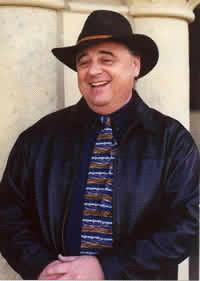
obenzingerHighly recommended: this recent interview with Stanford professor Hilton Obenzinger, who among other things is a prolific writer and poet and was one of the student leaders of the 1968 Columbia University protests which led to the six day takeover of the President’s office.  Obenzinger definitely speaks my heart on all kinds of issues. (h/t: Susan Klonsky)

A few choice excerpts:

What makes you proud to be a Jew?

Jewish culture is rich and varied with a transnational sense of peoplehood. In Europe, my ancestors were everything from ultra-orthodox to Polish nationalists, to escape-to-America émigrés, to Zionist and Communist. The Nazis murdered almost all of them. In the face of that horror and other horrors of history, Jewish survival is astonishing.

I’m especially proud of the American Jewish experience that pushed me, and others, to join the civil rights and social justice movements. I’ve heard it said that support for equality and justice flows from Jewish ethics and from the history of Jewish persecution. I’d like to believe it.

What are you most ashamed about Jews as an ethnic group?

From my point of view, Zionism turned out to be a moral disaster for the Jews. American Jews have been suckered into supporting Israel in unthinking ways. This has been changing, but not enough American Jews are yelling and screaming to stop Israel’s expansion.

Forty years ago, did you believe there would be a resolution to the conflict between Israel and the Palestinians?

Yes. And I still do.

Do you see a resolution to the conflict in your own lifetime?

Assuming I live another decade or two, probably not. But you never know. Who would have thought the Soviet Union would collapse? Or a black man would be president? I may not live to see it but it’s likely to happen.

Do you think that there can be a one-state solution to the conflicts between Palestinians and Israelis?

Of course, there can be — which doesn’t mean it will happen, at least in the near future. The conflict is not at root religious and it hasn’t been going on for thousands of years, as many claim. It started about 130 years ago when Zionism, a Western political movement, called for the settlement of Palestine and the exclusion of the native people. It’s a conflict started by people, not by God; humans created it; humans can fix it.

What do you see happening now?

Israeli Jews are a nationality with their own language and culture, as are the Palestinians, so it would take a lot of good faith to fit all of them together, including the refugees. Good faith is not an abundant commodity nowadays. Meanwhile, the Israeli government has been doing all it can to prevent a two-state solution by expanding settlements and uprooting Palestinian communities.

One state may be inevitable, since the foundations for a viable Palestinian state have been greatly undermined. Israel might move further in its current colonialist direction, creating reservations for the natives and a large open-air prison in Gaza. I don’t care if there are one or four states, actually, just so long as equality and democratic rights are at the core of all of them.

What have you learned from studying the Holocaust?

When we protested the war in Vietnam many of us didn’t want to be “good Germans” — people passively accepting evil and genocide. My family’s murder always weighs on my mind, so for me it’s imperative to speak out about injustice.

I produced my aunt’s oral testimony called Running through Fire about her escape from the Warsaw Ghetto. I learned from her that everything is muddy — with some Germans acting morally and courageously and some Jews acting in a craven fashion. I also leaned that in a situation of utter horror, no matter how smart and skilled and, in her case, how beautiful you were, pure luck is a determining factor. I’ve also learned to keep my passport up-to-date.

What does it mean to you to be a Jew?

After my son’s birth I felt compelled to pass on to him a positive Jewish experience without the corruptions of anti-Arab racism, and the “Jewish Disneyland” kitsch that American Jews love. I wanted my son to laugh, to enjoy the bar mitzvah experience, to feel comfortable being Jewish and Filipino — which is his mother’s ethnic identity.

What do you think Jews and Arabs have in common?

I told my aunt who survived the Nazis that if she could meet Palestinians in refugee camps she would like them, and that they were a lot like her. Palestinians, like Jews, value education and culture, and they insist on persisting. They, too, have historical memories that they won’t allow to be erased and that they act upon. Both Israeli Jews and Palestinians have also managed to drive each other insane. It’s painful watching two peoples destroy each other.

Time for Visions Beyond the Two State Solution

beyond-the-two-state-solution-a-jewish-political-essayI’ve been pointing out for some time now that Israel has been increasingly building settlements in Area C of the West Bank, while evicting Palestinians from their homes there and moving them to far reaching sections of Areas A and B. The intention? To eventually annex Area C to Israel and warehouse the Palestinian population of the West Bank in disconnected, isolated, bantustans.

Now it’s come to this: Israeli coalition leaders are unabashedly bandying about this plan in public:

From a recent article in the Jerusalem Post:

Israeli annexation of the West Bank’s Area C – where all settlements are located – received public support from two high-ranking Likud politicians on Tuesday evening, Public Diplomacy Minister Yuli Edelstein and MK Ze’ev Elkin.

“Lack of Israeli sovereignty over Area C means the continuation of the status quo,” said Edelstein, as he spoke about an area of the country that is now under Israeli military control. “It strengthens the international community’s demand for a withdrawal to the pre-1967 lines.”

But Edelstein and Elkin cautioned that annexation was a process that should happen slowly, not immediately.

Together with the Netanyahu government’s stated intention to build in the critical West Bank territory of E-1, it is clearer than ever that the conventional liberal Zionist notion of a two-state solution is a dead anachronism. It’s even worse, actually: as long as we cling to a two-state paradigm, Israel will be given free reign to entrench this injustice in perpetuity.

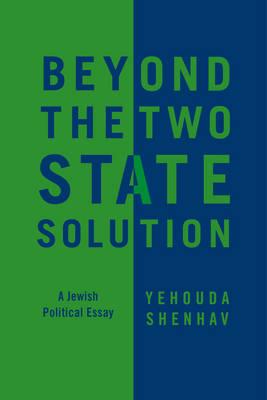
I’ve also come to believe that its high time for those who are interested in a truly just peace between Israelis and Palestinians to come forth with some new creative thinking that might provide alternatives to an obsolete two-state model. In this regard, I was happy to learn that “Beyond the Two State Solution: A Jewish Political Essay” by the great Israeli academic Yehouda Shenhav, has finally been published in English. Shenhav has long been providing precisely the kind of innovative thinking that I believe is so very lacking in political circles – and I’m delighted his work on this subject will now find a wider audience.

Using post-colonial political and critical theory, Shenhav challenges many of the fundamental paradigms and assumptions that have delineated the Israeli political “left” and “right,” while suggesting new and exciting models that might well help us to envision a better future for Palestinians and Jews in the land.

Here’s an excerpt, from his Introduction:

I am deeply concerned with the violation of the political rights of the Palestinians, but no less so with the future political rights of the Jews themselves. I believe that the combination of a persistent foundational state of emergency and blatantly racist legislation – which grows restrictive and bare-faced day by day – poses a threat not only to Palestinians, but to Jews in the Middle East. For this reason, I wish to unpack the Jewish-Israeli discourse on the conflict, to highlight the dangerous political zones within which it roams, and offer an alternative political vision in which the rights of both Jews and Palestinians are intertwined and co-determined…

In particular, I argue that the so-called “two-state solution” in the form proposed by the Israeli liberal left no only is unrealistic but in essence is based on false assumptions that sustain and reinforce the non-democratic Israeli regime and mask the essence of the conflict. Instead, I offer a different vision for political thought, which is not based on state terror or Jewish supremacy.

Shenhav is a well known thinker in Israel, but less familiar to American audiences. Whether or not you agree with his ideas, I hope you will at least be open to this sort of new thinking. I personally find it liberating – I do believe that these kinds of outside the box ideas serve to provide us with a ray of hope along what is otherwise a very dark road…

American Rabbis to Obama: Hold Netanyahu Accountable!

Obama-and-Netanyahu-rangling-over-Iran

The following letter was just released by Jewish Voice for Peace and will soon be delivered to the White House:

Dear President Obama,

We are writing this letter to you as American rabbis, cantors and rabbinical students, serving a wide range of Jewish communities.   We were dismayed to learn that, immediately following the recognition by the United Nations of observer status for Palestine, the government of Israel issued permits to begin development of two large tracts of settlement housing in highly contested areas in  East Jerusalem (E-1) and the West Bank (Maaleh Adumim.)

As you well know, these expansion permits are damaging not only to prospects for Palestinian self-determination but also for peace in the region.  We urge you in the strongest terms to use your full authority to oppose these expansions, which are illegal under international law and which also make impossible any hope of creating a viable Palestinian state in the West Bank.

We represent a growing voice within American Jewry which seeks an end to Israel’s occupation of the West Bank and its stranglehold by blockade of the people of Gaza.  We believe that the aggressive expansion of settlements in the Occupied territories constitutes a deliberate strategy to obstruct a peaceful resolution to the conflict between Israel and Palestine.  We believe further that the United States, as the primary global source of financial and political support for the  Israeli government, has an obligation to hold the Netanyahu government accountable for these actions, which thwart the possibility of peaceful resolution of the conflict.

It is no longer the case — if it ever was — that the Jewish community in the United States  is unified in its support of the policies of successive Israeli governments, which have sought to create “facts on the ground” that obstruct the hopes of independence and sustainability for the Palestinian people.  Absent active intervention by the United States and other nations, Israel will surely continue to implement these destructive policies.

As leaders of the American Jewish community, we join you in hope for a just peace for all the peoples of the region.  Please know that you have our strong support for demanding that the government of Israel reverse for this latest action and for all that you can do to lead the way to a fair and sustainable resolution.

Yours sincerely,

Rabbi Margaret Holub

Rabbi Brant Rosen

Rabbi Brian Walt

Rabbi Lynn Gottleib

Rabbi Joseph Berman

Rabbi Laurie Zimmerman

Rabbi Elizabeth Bolton

Rabbi Julie Greenberg

Rabbi Borukh Goldberg

Rabbi Eyal Levinson

Rabbi David Mivasair

Rabbi Rebecca Lillian

Rabbi Rachel Barenblat

Alana Alpert

Cantor Michael Davis

Rabbi Michael E. Feinberg

Rain Zohav

Rabbi Zev-Hayyim Feyer

Jessica Rosenberg

Ken Rosenstein

Rabbi Shai Gluskin

Rabbi Rebecca Alpert

Ari Lev Fornari

Rabbi Art Donsky

Rabbi Jeremy Milgrom

Rabbi Linda Holtzman

Rabbi Leonard Beerman

Rabbi Alexis Pearce

Rabbi Sarra Lev

David Basior

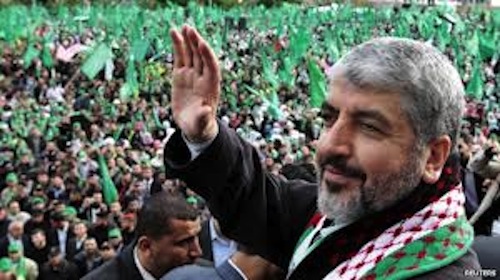
Khaled Meshaal’s Speech: Actions Speak Louder

Khaled-Meshaal

I’ve just finished reading Hussein Ibish’s excoriation of Hamas leader Khaled Meshaal’s victory speech in Gaza last week, in which he accuses Meshaal of “unhelpful escalating rhetoric” against Israel. Along the way, Ibish dishes out a fair amount of rhetorical hyperbole himself, calling Meshaal’s speech “one of the most cynical, damaging and dangerous speeches in the history of the Palestinian national movement” and “profoundly toxic from every perspective.”

It’s certainly true that Meshaal’s speech, which he delivered as he made his first-ever visit to Gaza on the occasion of the 25th anniversary of Hamas and the end of Israel’s latest military campaign, Operation Pillar of Defense, struck a note of resolute defiance.

Here’s a translated excerpt from an Al Jazeera report:

“Palestine is our land and nation from the [Mediterranean] sea to the [Jordan] river, from north to south, and we cannot cede an inch or any part of it,” he said. “We fight Zionists, not Jews. We fight whoever occupied our land, regardless of religion … Statehood will be the fruit of resistance, not negotiations,” Meshaal told cheering fans.

Hamas does not belong to the PLO, but Meshaal said a year ago that it and other factions were “on the path to joining” it.

While this is certainly strong – even incendiary – stuff, are we really to believe it was “one of the most cynical, damaging and dangerous speeches in the history of the Palestinian national movement?”

First of all, let’s take a closer look at the context in which this speech occurred. Shortly before Meshaal’s visit, Israel had leveled a devastating military assault against Hamas in Gaza. During two weeks of fighting, Hamas sent numerous missles into Israel – some of which landed close to major population centers in Tel Aviv and Jerusalem. The violence was eventually quelled through a US/Egypt brokered ceasefire. 

In other words, this is what it took to elicit the US’s active engagement with Israel and Palestine. Years of IDF crushing of Palestinian non-violent demonstrators have garnered nothing but silence. The PA’s attempt to gain recourse through the UN was met with active opposition from the Obama administration. It was only the armed resistance of Hamas in Gaza that managed to bring Hilary Clinton to the region and actively engage with the Israelis and Palestinians. In the end, what kind of message does that send to the Palestinian people?

So yes, Khaled Meshaal, told a cheering crowd that “statehood will be the fruit of resistance, not negotiations.” But should we really be so surprised? While negotiations have proved disastrous for the Palestinian people, armed resistance seems to be the only way they ever catch the attention of the international community.  Did Ibish really think Meshaal was going to get up on the podium and call for a resumption of the peace process?

Although those who consider Hamas to be an unrepentant “Islamist” terror organization would likely scoff, Meshaal and other Hamas leaders have in the past made noteworthy overtures that indicated a willingness to engage in a US-led peace process (albeit fundamentally different than the one embodied by the follies of Oslo.)  Most notably, following President Obama’s Cairo speech (which signaled at the time, a different American attitude toward the Muslim world), Meshaal responded with an important 2009 policy speech in which he welcomed a “change of tone” from Obama.  He went on to attribute this new American tone as the fruit of the “stubborn steadfastness of the people of the region, while resisting in Palestine, Lebanon, Iraq and Afghanistan” and stressed that it was not merely a change of tone but a change of policy that was needed to make progress in the region.

Meshaal added that Palestinians would judge the US not by its words but by its actions, which would have to “begin with reconstruction of Gaza and the lifting of the blockade, lifting the oppression and security pressure in the West Bank, and allowing Palestinian reconciliation to take its course without external pressures or interference.”

Whether or not one believes these overtures were genuine, we’ll never really know. Meshaal’s opening went utterly unregarded by the Obama administration, who refused to deal with Hamas and chose to maintain its support of Israel’s crippling siege of Gaza.

Given this history, are we really to believe, as Ibish would have it, that Meshaal’s recent speech is one of the most “cynical, damaging and dangerous speeches” Palestinian history?  Or is it merely a reflection of its time – a moment in which the Obama administration has thoroughly squandered its own stated desire to usher in a new era of engagement in the Middle East?

In the end, Meshaal’s speech was simply that – a political speech. And history (particularly Middle East history) has shown us time and again that parsing a politicians words are a notoriously bad way to predict what he/she will eventually agree to. In the words of the very insightful Israeli blogger Noam Sheizaf:

The bottom line is that none of this matters. It’s all a huge red herring. Nothing a leader says now determines the way he will act in the future. Public statements are important only to a limited extent and agreements depend on the continued willingness of both sides to uphold them. As long as both parties feel that they benefit from a certain status quo, or that their interests are better served than by any alternative, the deal they reach could hold. If one party is coerced into signing but doesn’t have its interests and desires addressed, all the nice declarations won’t matter. Twenty years after the historic peace deal that should have ended the Israeli-Palestinian conflict but didn’t, you’d think that people would get it.

The arguments about the meaning and importance of the Hamas charter are all but identical to the decade-long debate over the PLO charter. How much effort and time was put into forcing Arafat to change it, and how little did it matter when negotiations collapsed in Camp David and violence returned. The same goes for today: Given the right pressure, a certain Palestinian leadership could be made to promise Israel anything. Yet none of it would matter if you don’t address the fundamentals of the conflict: The occupation, the refugees, the holy sites, the settlements, the access to land and to water. The leaders would change their minds and if they don’t new leaders (“more extreme”) will come. Reality will prevail over rhetoric.

So let’s be honest. Meshaal didn’t mince his words –  but in the end it is actions that ultimately matter.  And in this regard, Meshaal’s words were considerably less damaging to the cause of the Palestinian national movement than the Netanyahu government’s announcement that it would build 3,000 more units in the E1 region, which would successfully cut the West Bank in half and cut it off completely from East Jerusalem, ending any reasonable hope for a viable two state solution. Sadly, the only response this deeply damaging action elicited from the Obama administration were words such as “counterproductive” and “we urge restraint.”

To my mind these kinds of words are considerably more dangerous to the cause of a just peace in Israel/Palestine.

Upcoming “Wrestling in the Daylight” Gigs in Baltimore and DC!

This Sunday and Monday (December 2 and 3) I’ll be making a quick trip through Baltimore/DC for some “Wrestling in the Daylight” book readings. I’m looking forward to my first “Wrestling” gigs outside of my native habitat of Chicago.

On Sunday I’ll be appearing at a program sponsored by Jewish Voice for Peace – Baltimore at Space 2640, 2640 St. Paul Street at 1:00 pm (click here for the Facebook event page). That evening I’ll be in DC at Busboys and Poets on 5th and K at 8:45 pm  for reading sponsored by the DC Metro chapter of JVP.

On Monday, I’ll visit the Friends Committee on National Legislation, 245 2nd St, NE Washington (Wilson Conference Room) at 12:30 pm. And finally, I’ll speak that evening I’ll speak at St. John’s Church in Georgetown, 3240 O St. NW for a program sponsored by the Washington Interfaith Alliance for Middle East Peace.

If you live in or near the area, please drop by. I look forward to seeing you there!

American Civil Rights Leaders: End the Violence and Secure a Just Peace

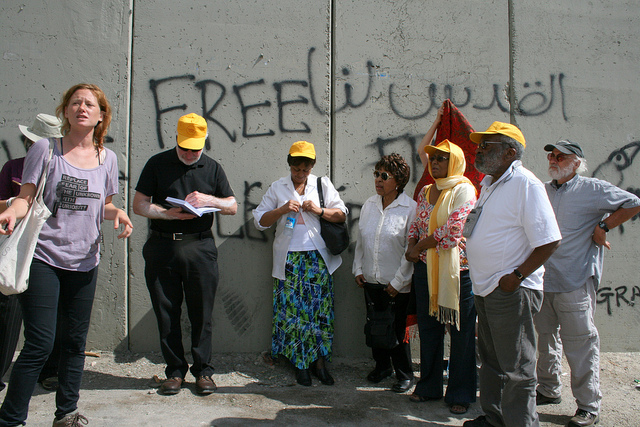
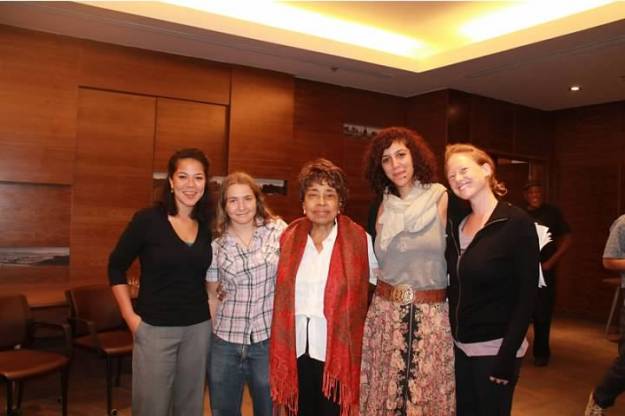
Delegates on a tour led by Ruth Edmonds of the Israeli Coalition Against Home Demolitions (photo: Allie Perry)

Received from my friend and colleague Rabbi Brian Walt:

“Our lives begin to end the day we become silent about the things that matter.”

Dr. Martin Luther King, Jr.

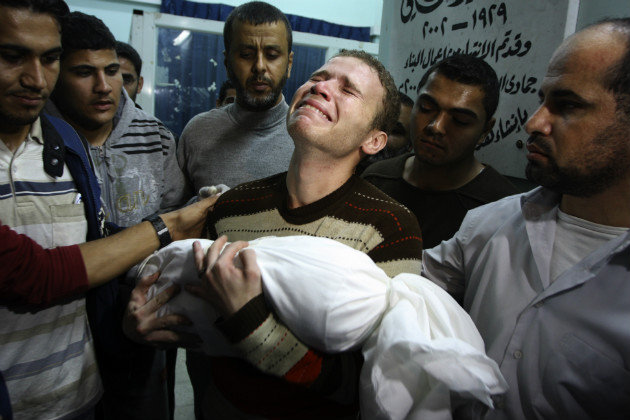
An immediate end to Israel’s assault on Gaza, “Operation Pillar of Defense,”matters. An immediate end to the violence—the onslaught of missiles, rockets, drones, killing, and targeted assassination—matters. An end to Israel’s ongoing blockade of Gaza matters.  An end to Israeli’s 45-year occupation of Palestine matters. A resolution of the issue of Palestinian refugees expelled from their homes in 1948, many of whom live in Gaza matters.  Equality, security, and human rights for everyone matters.

We write as individuals who recently traveled to the West Bank with the Dorothy Cotton Institute’s 2012 Civil and Human Rights Delegation, organized by Interfaith Peace-Builders.  We cannot and will not be silent.  We join our voices with people around the world who are calling for an immediate cease-fire. Specifically, we implore President Barack Obama to demand that Israel withdraw its forces from Gaza’s borders; make U.S. aid to Israel conditional upon Israel’s adherence with relevant U.S. and international law; work with Israeli and Palestinian leaders to bring an end to Israel’s occupation of the Palestinian territories and to secure a just peace that ensures everyone’s human rights.

In the words of Dr. Martin Luther King, Jr., “Returning violence for violence multiplies violence, adding deeper darkness to a night already devoid of stars.”  As Prime Minister Yitzhak Rabin declared in 1993, “Enough of blood and tears.”  Enough!

We deplore the firing of rockets on civilian areas in Israel.  We also deplore and are outraged by the asymmetry, the disproportionality, of Israel’s bombardment of Gaza, evidenced by the growing number of Palestinian civilian deaths and casualties.  This is not a conflict between equal powers, but between a prosperous occupying nation on one hand, armed and sanctioned by 3 billion dollars in annual U.S. military aid, and on the other, a population of 1.7 million besieged people, trapped within a strip of land only 6 miles by 26 miles, (147 square miles) in what amounts to an open-air prison.

United States military support to Israel is huge.  From 2000 to 2009, the US appropriated to Israel $24 billion in military aid, delivering more than 670 million weapons and related military equipment with this money.  During these same years, through its illegal military occupation of the Palestinian West Bank, East Jerusalem and Gaza Strip, Israel killed at least 2,969 Palestinians who took no part in hostilities.

During our trip to the West Bank, we witnessed for ourselves the injustice and violence of the Israeli occupation and the suffering inflicted on the Palestinians, in violation of international law and UN resolutions.

In the Palestinian village of Nabi Saleh, for just one example, we observed a weekly nonviolent protest.   The neighboring Israeli settlement of Halamish was illegally built on Nabi Saleh’s land.  This settlement has also seized control of the Nabi Saleh’s water spring, allowing villagers to access their own spring water for only 7-10 hours a week.  Demonstrators of all ages participated in the protest, including several who, in recognition of the civil rights veterans in our delegation, carried posters with quotations from Dr. Martin Luther King, Jr.  We watched in horror as heavily armed members of the Israel Defense Forces (IDF) responded to this peaceful assembly with violence, strafing the demonstrators with a barrage of tear gas canisters, rubber bullets, gas grenades, and even a round of live ammunition.

The IDF assault in response to these weekly nonviolent demonstrations can be deadly.  Rushdi Tamimi, a young adult Nabi Saleh villager, died this past week while he was protesting Israel’s attack on Gaza.  The IDF fired rubber bullets into Rushdi’s back and bullets into his gut, and slammed his head with a rifle butt.

Israel’s assault on Gaza is exponentially more violent than what we witnessed in the West Bank, but the context–the oppression of the Palestinian people—is the same.  Most of the inhabitants of Gaza are refugees or descendants of refugees expelled from their homes in Israel in 1948.   This dispossession of the Palestinians that they call the Nakba (The Catastrophe) continues on the West Bank where Israel has built extensive Jewish settlements on confiscated Palestinian land. We saw with our own eyes how this settlement expansion and the systemic discrimination has further dispossessed the Palestinian people and is creating a “silent transfer” of Palestinians who are either forced or decide to leave because of the oppression.   This injustice—Israel’s decades-long oppression of the Palestinian people—has to be addressed by honest and good-faith negotiations and a genuine agreement to share the land.  The alternative is a future of endless eruptions of aggression, senseless bloodshed, and more trauma for Palestinians and Israelis. This surely matters to all people of good will.

To President Obama, we say, use the immense power and authority United States citizens have once again entrusted to you, to exercise your courage and moral leadership to preserve lives and protect the dignity and self-determination, to which the Palestinian people and all people are entitled.   Israel relies upon the economic, military, and strategic cooperation and support of the United States.  You have the power to not only appeal to Israel to show restraint, but to require it.

Feeling ourselves deeply a part of “We the People,” sharing so much of your own tradition of organizing for justice and peace, we believe it is just, moral and in keeping with the best spirit of Dr. King to urge you to:

§  Call for an end to violence by all parties and an immediate cease-fire for the sake of all people in the region.

§  Use your power to demand that Israeli Prime Minister Benjamin Netanyahu and the IDF cease the bombardment of Gaza and withdraw their armed forces immediately.

§  Join with the international community in using all diplomatic, economic, and strategic means to end Israel’s illegal, brutal siege of Gaza.

§  Insist that the United States condition aid to Israel on compliance with U.S. law (specifically the U.S. Arms Export Control Act) and with international law.

§  Work with the leaders of Israel and Palestine to secure an end to Israel’s occupation and to negotiate a just peace.

As citizens of the United States, we are responsible for what our government does in our name, and so we will not be silent.  Justice, peace and truth matter.  The future of the children of Israel and Palestine matter.  We cannot be silent and neither can you.

Members of the The Dorothy Cotton Institute 2012 Civil and Human Rights Delegation:

(List in formation)

Continue reading

Outrage in Gaza Redux

Israel’s military assault on Gaza in 2008-09 represented an important turning point in my own relationship with Israel. I recall experiencing a new and previously unfamiliar feeling of anguish as Israel bombarded the people living in that tiny, besieged strip of land over and over, day after day after day. While I certainly felt a sense of tribal loyalty to the Israelis who withstood Qassam rocket fire from Gaza, I felt a newfound sense of concern and solidarity with Gazans who I believed were experiencing nothing short of oppression during this massive military onslaught.

And now it’s happening again. Only this time I don’t think the term “anguish” quite fits my mindset. Now it’s something much closer to rage.

It’s happening again. Once again 1.7 million people, mostly refugees, who have been living in what amounts to the world’s largest open air prison, are being subjected to a massive military assault at the hands of the world’s most militarized nation, using mostly US-made weapons. And our President is not only looking on – he is defending Israel’s onslaught by saying it has a right to “self-defense in light of the barrage of rocket attacks being launched from Gaza against Israeli civilians.”

Let’s be clear: this tragedy didn’t start with the Qassams.  It didn’t start with the election of Hamas. And it didn’t start with the “instability” that followed Israel’s withdrawal from Gaza.

No, this is just the latest chapter of a much longer saga that began in 1947-48, when scores of Palestinians were ethnically cleansed from their cities and villages in the coastal plain and lower Galilee and warehoused in a tiny strip of land on the edge of the Mediterranean. By all accounts, most were simply too overwhelmed to realize what was happening. The ones who tried to return to their homes were termed “infiltrators” and were killed on sight. Others resisted by staging raids in the newly declared state of Israel. Sometimes they succeeded, more often they did not. Either way, Israel decided early on that it would respond to each of these reprisals with a overwhelming military show of force.  And those reprisals and that show of force have essentially been ongoing until this very day.

I realize, of course, there is plenty of political subtext to this latest go-around.  I’ve read the timelines and have formed my own opinions on the latest “who started it?” debate. I’ve also read plenty of analyses by Israeli observers who believe that this was not a response to Qassam fire at all but was very much a “war of choice” waged by an Israeli administration looking to shore up political support in an election season.

I’ve also read a widely circulated article from Ha’aretz about Israel’s recent execution of Ahmed Jabari (the head of Hamas’ military wing). I learned that up until now, Jabari was “Israel’s subcontractor” for security in the Gaza Strip, that Israel has been literally funding Hamas through intermediaries in exchange for peace and quiet on their southern border, and that when Jabari failed to deliver of late, the decision came down to take him out. Another article, written by the Israeli who negotiated with Jabari for the release of Gilad Shalit, revealed that negotiations were still ongoing with Jabari when the Israeli military assassinated him with a drone strike.

Yes, the wonky side of me has been avidly reading all these analyses. And while I do believe they provide an important counterbalance to the mythic statements by Israel’s Foreign Ministry and the US State Department, the more I read the cynical political subtext for this war, the sicker I get. No, this isn’t about Qassams, but don’t be fooled into thinking it’s about elections either. It’s really just the most recent chapter in a much longer litany of injustice – the latest attempt by Israel bring the Palestinians to their knees through the sheer force of their formidable military might.

Of all the analyses I’ve yet read, one of the very few that truly seemed to grasp this truth came from Yousef Munayyer, of The Jerusalem Fund/Palestine Center:

The problem Gaza presents for Israel is that it won’t go away—though Israel would love it if it would. It is a constant reminder of the depopulation of Palestine in 1948, the folly of the 1967 occupation, and the many massacres which have happened since them. It also places the Israelis in an uncomfortable position because it presents a problem (in the form of projectiles) which cannot be solved by force…

Israel has tried assassinating Palestinian leaders for decades but the resistance persists. Israel launched a devastating and brutal war on Gaza from 2008 to 2009 killing 1,400 people, mostly civilians, but the resistance persists.

Why, then, would Israel choose to revert to a failed strategy that will undoubtedly only escalate the situation? Because it is far easier for politicians to lie to voters, vilify their adversaries, and tell them ‘we will hit them hard’ than to come clean and say instead, ‘we’ve failed and there is no military solution to this problem.’

Like last time, I know many in the Jewish community will say it is unseemly of me to criticize Israel this way while Israelis live in fear of Qassam fire out of Gaza. I know there are those who believe that by writing these words, I’m turning my back on my own people in their time of need. But I know in my heart that my outrage at Israel’s actions goes hand in hand with compassion for Israelis – particularly those who know that their leaders’ devotion to the sword is leading them into the abyss.

Additionally, as I wrote under tragically similar circumstances in 2009:

I believe Israel’s response to Hamas’ missile attacks have been disproportionate and outrageous. I believe their actions only further endanger the security of  Israelis while inflicting collective punishment and a severe humanitarian crisis upon Gazans. Indeed, just as I cannot understand what it must be like to be a citizen of Sderot, I cannot even begin to imagine what it must be like to be a Gazan citizen at the moment, living under constant air attack, with no running water or electricity and dwindling food, as hospitals fill up with wounded and corpses lie rotting in the streets because relief workers are unable to reach them.

When will we be ready to accept that this is not a “balanced” conflict or even a “war” by any reasonable definition – and that it never was?  When will we face the painful truth that this is not a story about one side versus the other but about one side oppressing the other?  Frankly, all the well-meaning liberal comments about “praying for peace on both sides” and leave me cold. Worse, I find them insidious because they simply serve to support the myth that this is a conflict between two equal parties. It is not. And peace will not come until we admit this – until we admit that there is an essential injustice at the heart of this tragedy and that try as it might, Israel will never be able to make it go away through the sheer force of its increasingly massive military might.

Beyond the rage, I’m heartened that this time around there is a growing community of conscience that is speaking out publicly and in no uncertain terms to protest Israel’s latest outrage in Gaza. I am so deeply grateful for my friends and colleagues at Jewish Voice for Peace, who is alone in the Jewish world in condemning this latest assault.  I urge you to read JVP’s courageous statement, which I know gives voice to increasing numbers of Jews and non-Jews, young and old, religious and secular, who are coming together through the courage of their conscience.

At this point in my posts I would typically write “click here” to lend your voice to some kind of collective statement.  I’m going resist that temptation and urge you instead to take to the streets.

I’ll see you there.

Guest Post By Rabbi Brian Walt: We are Building Up a New World

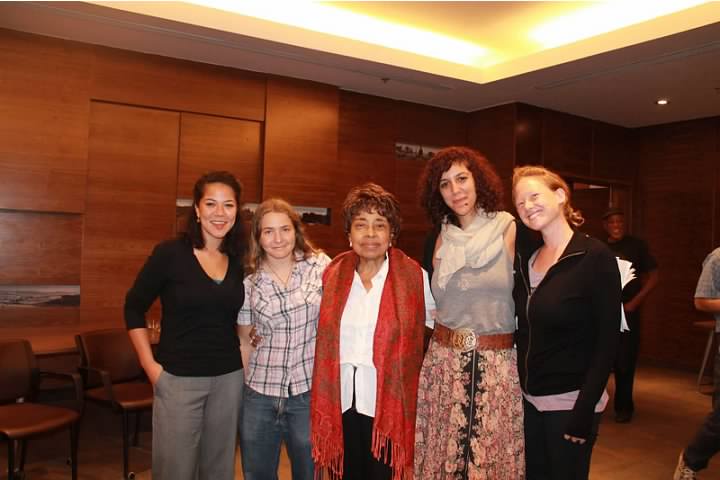
Dorothy Cotton (middle) with Israeli and Palestinian Activists (Photo: Rev. Osagyefo Sekou)

Cross-posted with Rabbi Brian’s Blog

We are building up a new world, we are building up a new world,
We are building up a new world, builders must be strong.
Courage brothers don’t be weary, courage sisters don’t be weary,
Courage people don’t be weary, though the road be long.
This is one of the many songs I sang as I led a remarkable delegation of US Civil Rights movement leaders, young human rights leaders, prominent Black academics and educators and several Jewish activists that traveled through the West Bank two weeks ago.

Our delegation was a project of the Dorothy Cotton Institute, an organization dedicated to human rights education and to building a global human rights community. Dorothy Cotton served as the Director of Education of the Southern Christian Leadership Conference (SCLC) and was the only woman on the executive staff.  She led the Citizenship Education Program that empowered the disenfranchised to exercise their rights as citizens.

The goals of this historic delegation were:

– to create and build an ongoing relationship between leaders of the US civil rights movement and the leaders of the growing Palestinian nonviolent resistance movement on the West Bank and their Israeli allies;

– to increase the visibility of this movement in the US and internationally;

– to learn from one another about nonviolence, effective solidarity and social transformation;

– and to educate Americans about the role the United States plays in supporting the status quo on the West Bank.

Our delegation spent two weeks on the West Bank.  We visited three Palestinian villages – Budrus, Bilin, Nabi Saleh – that have engaged for many years in a popular nonviolent struggle to reclaim land expropriated by the Israeli military.  We met several young Palestinians who are building the Coalition for Dignity, a grassroots, youth – led nonviolent movement.

And we met Israeli allies who stand in solidarity with the Palestinian nonviolent movement and who work in their own society to end militarism and human rights violations against Palestinians.  We learned from many Israeli and Palestinian nonviolent activists about their work, their vision and their dreams.

In short, our delegation saw and learned about realities that the overwhelming number of visitors to Israel never see or hear.

Singing was an essential part of the spiritual and political life of our trip.  Dorothy has a beautiful spirit, a powerful voice, and loves to sing.  Throughout the delegation, she always reminded us that singing was a critical tool for energizing the civil rights movement.  She told me,

We had songs for different occasions. We sang at mass meetings, and we sang at funerals … We sang, “I am going to do what the Spirit says do” and our singing inspired us to do just that.

And so our new civil rights delegation sang as we traveled through the West Bank.  Singing was just one powerful way in which our delegation made a connection between the Black-led struggle for civil rights in the US and the Palestinian struggle for justice, peace and security for all.

This, for instance, is the song we sang at the grave of a young man in Budrus who was killed in a nonviolent demonstration to protest the confiscation of his village’s land:

Come By here my Lord, come by here.
For our brother, my Lord, come by here.
For his courage my Lord, come by here.

Standing around the grave, delegates spontaneously composed the lyrics. It felt like we were praying, acknowledging the courage and the profound cost that the struggle for freedom demands.

We sang before we joined the weekly nonviolent demonstration in Nabi Saleh, another village on the West Bank fighting to reclaim their land.   The residents of the village had made special signs composed of quotations from Dr. Martin Luther King in honor of our visit.  “Injustice anywhere is a threat to justice everywhere” read one of the signs.

And we sang:

Ain’t going to let nobody turn me around, turn me around, turn me around.
Keep on walking, keep on talking, marching down to freedom land.

We sang to express our appreciation and to provide support after hearing activists tell us their stories – Palestinians and Israelis who told us of their amazing work and the toll it has taken on their lives, and sometimes even their spirits and souls.  One such occasion was after Israeli activist Gabi Laski told us of her work to defend children from villages like Nabi Saleh who are arrested at night.

We’re going to keep on marching forward, keep on marching forward, keep on marching forward, never turning back, never turning back.

We sang after standing next to the thirty foot high Separation Wall in Jerusalem dividing a Palestinian neighborhood in two.  And we sang on the bus as we went through a checkpoint on our way to the airport at the end of our trip, encouraged by our Palestinian guide to keep singing even when the soldier boarded our bus.  (Our bus was pulled aside for a security check because it was a Palestinian bus while Israeli buses and motorists were waved through the checkpoint).

We returned to the United States both inspired and disturbed by our experience.  We were inspired by the determination, vision and commitment of so many Palestinians and their Israeli allies, working tirelessly day after day, year after year, often at great personal and communal cost, for justice, freedom and equality for all.  Now that we are home, we look forward to sharing the stories and vision of these courageous civil rights activists with our friends and communities.

But our trip was not simply inspiring.  It was profoundly disturbing to witness the harsh realities of life on the West Bank that are so invisible to the discourse in America.  Every day we saw and heard about a systematic denial of human rights in countless ways: land confiscation, extensive restrictions on movement, humiliation at check points, home demolition, the arrest of children, the revocation of residency permits and many other violations.

The delegates were profoundly shocked. Several American civil rights veterans  commented that the discrimination, humiliation and injustice they witnessed was “frighteningly familiar.”

While we were on the West Bank the two presidential candidates tried to outdo one another in their public declarations of support for Israel in the final presidential debate.  They mentioned Israel 31 times with only one passing reference to Palestinians.  The contrast between American policy and what we witnessed is stark.  Now that we have returned, we are determined to share this disturbing reality with our communities; to challenge the ways in which our country funds, provides diplomatic cover, and enables these injustices.

I have visited the West Bank before but never for more than a day or two, and almost always with progressive Israeli groups.  On this visit, however, we spent virtually all out time in the West Bank – on the other side of the Separation Wall.  For me personally, it was a transformative experience.  It was a privilege to travel with such a special group of people and to see the profound impact of our delegation on the activists that we met.

Before we left on our journey, I was struck by a comment made by Dr. Vincent Harding, a close associate of Dr. Martin Luther King, a person with a long history of involvement in the struggle for freedom and a very close life-long connection to Jewish teachers, fellow travelers and co-workers.  Dr. Harding talked about “encouragement” as one of his primary goals for the trip.  I was struck by the word and the simple power of his intention.  He wanted to meet activists on the West Bank and to “encourage” them.

And that is exactly what happened. The people we met commented how encouraged they felt by meeting people who had spent their entire lives fighting for freedom in the US.  Dr. Harding and others would repeatedly ask all our presenters to tell us about themselves, their families and what motivated them to do what they were doing.

He and others always shared how much he appreciated their work and how important it was for all of us and for our collective future.  After hearing an inspiring talk by Fadi Quran, one of the young leaders of the Palestinian nonviolent movement, Dr. Harding said, “Fadi, I want to tell you how proud I am and how grateful I am for you, and want to encourage you to keep on going.”

It felt like we were building a new world.  On the very first day of our trip, Dorothy Cotton sang and danced with three women activists, Israeli and Palestinian, who had spoken to us. It was a joy to see the profound gift she was giving them and that they were giving her in return. Those who had spent their lives building a new world in America were creating a relationship with those who were building a new world in Israel/Palestine.

Towards the end of the trip we realized that we were just beginning to build a new world in another way by creating a new possibility for the relationship between Jews and Blacks in our own country.   Historically, Israeli policy has been a source of tension between the African American and Jewish communities.  While many African Americans on the delegation have deep and positive connections to Jews, it is often difficult for Blacks and Jews to have honest conversations about Israel.

There were eight Jews on this delegation.  On this trip we joined together as a group of Blacks, Jews, Christians and people with varied faith commitments, united in our commitment to nonviolence and our dedication to justice, freedom and equality in Israel/Palestine, in our own country, and around the world.  We are renewing an alliance between Blacks and Jews, an alliance rooted in our shared values.

We are building up a new world, we are building up a new world.
We are building up a new world, builders must be strong.
Courage brothers don’t be weary, courage sisters don’t be weary,
Courage people don’t be weary, though the road be long.

Rabbinical Support for the End of Unconditional Military Aid to Israel

Cross-posted with The Palestinian Talmud:

The undersigned members of the Jewish Voice for Peace Rabbinical Council stand with our American Christian colleagues in their recent call to “make U.S. military aid to Israel contingent upon its government’s compliance with applicable US laws and policies.”

We are as troubled as our Christian colleagues by the human rights violations Israel commits against Palestinian civilians, many of which involve the misuse of US – supplied weapons. It is altogether appropriate – and in fact essential – for Congress to ensure that Israel is not in violation of any US laws or policies that regulate the use of US supplied weapons.

The US Foreign Assistance Act and the US Arms Export Control Act specifically prohibit assistance to any country which engages in a consistent pattern of human rights violations and limit the use of US weapons to “internal security” or “legitimate self-defense.”  The Christian leaders’ letter points out, in fact, that the most recent 2011 State Department Country Report on Human Rights Practices covering Israel and the Occupied Territories detailed widespread Israeli human rights violations committed against Palestinian civilians, many of which involve the misuse of US – supplied weapons such as tear gas.

It is certainly not unreasonable to insist that foreign assistance be contingent on compliance with US laws and policies. Mideast analyst MJ Rosenberg has rightly pointed out that during this current economic downturn, Congress has been scrutinizing all domestic assistance programs -– including Social Security and food stamps –- to ensure that they are being carried out legally in compliance with stated US policy.  Why should US military aid to Israel be exempt from the same kind of scrutiny?

While some might feel that requiring assistance to be contingent with compliance would compromise Israel’s security, we believe the exactly the opposite is true. As Israel’s primary ally, the US alone is in a place to create the kind of leverage that might challenge Israel to turn away from policies that impede the cause of a just peace for Israelis and Palestinians –- and true security for all who live in the region.

As Jews we acknowledge that the signers of the letter, and the churches they represent, have ancient and continuing ties to the land of Israel just as we do, and that their concerns for the safety and dignity of Christians in Israel and in the occupied Palestinian territories is as compelling as our concern for the safety and dignity of Jews there.

We are troubled that several Jewish organizations have cynically attacked this faithful and sensitive call – and we are deeply dismayed that the Anti-Defamation League has gone so far as to pull out of a scheduled Jewish-Christian dialogue in protest.  We believe that actions such as these run directly counter to the spirit and mission of interfaith dialogue. True dialogue occurs not simply on the areas where both parties find agreement, but in precisely those places where there is disagreement and divergence of opinion. We call on all of our Jewish colleagues to remain at the table and engage our Christian colleagues on this painful issue that is of such deep concern to both our communities.

We express our full support for the spirit and content of this statement and likewise call upon US citizens to urge their representatives to end unconditional military aid to Israel.

Signed (list in formation):

Rabbi Brant Rosen
Rabbi Margaret Holub
Rabbi Alissa Wise
Rabbi Elizabeth Bolton
Rabbi Lynn Gottleib
Rabbi Brian Walt
Rabbi Julie Greenberg
Rabbi David Mivasair
Rabbi Joseph Berman
Cantor Michael Davis
Rabbi Shai Gluskin
Rabbi Tirzah Firestone
Jessica Rosenberg, Rabbinical Student
Ari Lev Fornari, Rabbinical Student