Category Archives: Politics

“This is Starting to Get Dangerous For Us…”

The Israeli government’s blindsiding of Joe Biden last week seems to have given rise to the crisis that won’t go away.  Or perhaps it’s more accurate to say it has uncovered fault lines between the US and Israel that have apparently been simmering now for some time.
Amid the myriad of press reports on the disastrous Biden visit, for me the most eye-opening were the Israeli press reports of Biden’s private excoriation of his hosts:

People who heard what Biden said were stunned. “This is starting to get dangerous for us,” Biden castigated his interlocutors. “What you’re doing here undermines the security of our troops who are fighting in Iraq, Afghanistan and Pakistan. That endangers us and it endangers regional peace.”

The vice president told his Israeli hosts that since many people in the Muslim world perceived a connection between Israel’s actions and US policy, any decision about construction that undermines Palestinian rights in East Jerusalem could have an impact on the personal safety of American troops fighting against Islamic terrorism. 

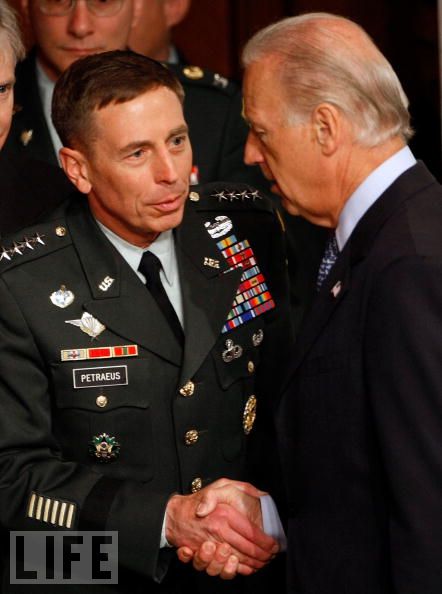
If that report wasn’t sobering enough, now there’s word that CENTCOM commander General David Petraeus feels the same way. Mark Perry, posting on Foreign Policy, has reported that Gen. Petraeus briefed Joint Chiefs of Staff Chairman Adm. Michael Mullen on the Israeli-Palestinian conflict back in January: 

The 33-slide, 45-minute PowerPoint briefing stunned Mullen. The briefers reported that there was a growing perception among Arab leaders that the U.S. was incapable of standing up to Israel, that CENTCOM’s mostly Arab constituency was losing faith in American promises, that Israeli intransigence on the Israeli-Palestinian conflict was jeopardizing U.S. standing in the region…

 The January Mullen briefing was unprecedented. No previous CENTCOM commander had ever expressed himself on what is essentially a political issue; which is why the briefers were careful to tell Mullen that their conclusions followed from a December 2009 tour of the region where, on Petraeus’s instructions, they spoke to senior Arab leaders. “Everywhere they went, the message was pretty humbling,” a Pentagon officer familiar with the briefing says. “America was not only viewed as weak, but its military posture in the region was eroding.” But Petraeus wasn’t finished: two days after the Mullen briefing, Petraeus sent a paper to the White House requesting that the West Bank and Gaza (which, with Israel, is a part of the European Command — or EUCOM), be made a part of his area of operations. Petraeus’s reason was straightforward: with U.S. troops deployed in Iraq and Afghanistan, the U.S. military had to be perceived by Arab leaders as engaged  in the region’s most troublesome conflict.

Wow. “Stunning” and “unprecedented” are the right words. When was the last time we heard the US military claim that Israeli policy was putting their troops in danger?

It’s much too early to tell where all this will lead, but I think its safe to say that the “special relationship” between the US and Israel is currently under serious reevaluation. It’s particularly mind-boggling to contemplate that Petraeus seems to share the same conclusion as the much-maligned Walt and Mersheimer: that Israel’s policies represent a strategic liability to US interests in the Mideast. Who would have thought?

Perry concludes:

There are important and powerful lobbies in America: the NRA, the American Medical Association, the lawyers — and the Israeli lobby. But no lobby is as important, or as powerful, as the U.S. military. While commentators and pundits might reflect that Joe Biden’s trip to Israel has forever shifted America’s relationship with its erstwhile ally in the region, the real break came in January, when David Petraeus sent a briefing team to the Pentagon with a stark warning: America’s relationship with Israel is important, but not as important as the lives of America’s soldiers. Maybe Israel gets the message now. 

I’m not particularly a fan of US military adventures in the Middle East – but if it takes the US military to convey the message that Israel has to turn from its disastrous settlement policies, I’m all for it.

Rep. Brian Baird is the Bravest, Sanest Politician in the United States

Can I just say that Washington Rep. Brian Baird is my personal hero? Watch this recent interview with RTAmerica which took place on the heels of his third trip to Gaza. Among other things, Baird calls for the US to break the blockade with Gaza, for US envoy George Mitchell to visit Gaza personally, and to consider withholding “certain kinds of aid” to Israel if it continues to settle the West Bank and East Jerusalem.  Toward the end of the interview, he comments: “ignoring the plight of these good people is at our peril.”

On the international front, my personal bravery award goes to Ireland’s Foreign Minister Micheal Martin, who was recently the first European Union foreign minister to visit Gaza in over a year.  He discussed his experiences yesterday in a powerful NY Times  op-ed:

The tragedy of Gaza is that it is fast in danger of becoming a tolerated humanitarian crisis, a situation that most right-thinking people recognize as utterly unacceptable in this day and age but which is proving extremely difficult to remedy or ameliorate due to the blockade and the wider ramifications of efforts to try and achieve political progress in the Middle East.

One can imagine how hard it is not to give in to despair and hopelessness in such an environment. However, what was most impressive and heartening during my visit was the resilience and incredible dignity of ordinary people.

An Israeli Voice of Sanity on Iran

Avner Cohen asks exactly the right questions in a Ha’aretz editorial:

What if our leaders and pundits had reacted to the Iranian nuclear program in a completely different way than they actually have? What if they had not viewed an Iranian bomb as an “existential threat” and instead treated it as something that, even if it became a reality, would be a major global political problem, but not a military threat – because Iran (like every other nuclear state) would never be able to use a nuclear bomb as an operational military weapon?

What if Israel had treated Iran’s nuclear project as an exhibitionist, even childish, attempt by a nation mired in a deep identity crisis to exploit the prestige and mystique of nuclear power to create a national ethos of technological progress at home, as well as a diplomatic miracle cure that would enable it to challenge the West and move to the center of the international stage?

And his answers are spot on. Click here to read.

What the US Should Do About Iran

Some of you may have noticed that I’ve been engaging in a bit of lively back and forth with one reader over my 2008 Yom Kippur sermon on Iran. I haven’t posted on Iran in some time, but that certainly doesn’t mean I’m not following developments there with great interest.

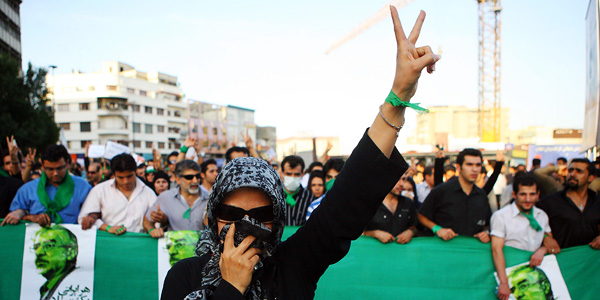
I do believe the Islamic regime’s increasingly brutal crackdown on human rights is a sign that it is taking the challenge of the Green Movement very, very seriously.  For our part, the the US administration appears somewhat paralyzed – issuing tepid statements, wary of throwing too much support to the Greens lest they get accused of meddling in Iranian politics yet again.  Meanwhile, the regime-change drumbeats of the right continue to grow ominously louder and louder.

Still, it would be mistaken and foolhardy to assume the only choice we have is between doing nothing and doing too much. In this regard, I commend to you this very insightful and helpful article by Dr. Trita Parsi and Alireza Nader of the National Iranian American Council.

Here’s my edited version:

(Between) the extremes of doing nothing and doing everything, there is a middle ground: providing the Iranian pro-democracy movement with breathing space, rather than engaging in risky and imprecise exercises that would directly involve America as an actor on the Iranian scene. The United States can achieve this through a few simple steps.

First, the United States should tread carefully when it comes to issuing military threats. Under the shadow of a foreign military threat, the uphill battle of the Iranian pro-democracy movement becomes even steeper, as the Iranian regime is quite adept at exploiting foreign threats to stifle criticism at home…

Second, the United States should avoid sanctions that put a burden on the Iranian people, rather than the Iranian government. Broad-based sanctions that hit the entire economy hurt common citizens far more than the powerful elites. Any new sanctions should demonstrate not only international discontent with the conduct of the Tehran government, but also an effort by the United States to keep from harming average Iranians…

Third, Washington should slow down the diplomatic process. Negotiation with Iran in and of itself is not the problem; engagement doesn’t legitimize the Iranian government, as only the people of Iran can do that. But in spite of President Mahmoud Ahmadinejad’s latest offer to accept the International Atomic Energy Agency nuclear deal, Iran remains in political turmoil. It is questionable that Tehran can make enduring decisions on issues of this magnitude under these circumstances…

Fourth, the international community, including the White House and U.S. State Department, should be vocal in excoriating Iran’s human rights abuses. Condemning abuses should not be confused with interfering in internal Iranian affairs…The Iranian government is, perhaps surprisingly, very sensitive in this area, due to its ambition to be perceived as a regional leader. This sensitivity should be utilized to make advances on the human rights front in Iran…

Finally, Washington should exercise patience and view Iran as a long-term factor in shaping U.S. national security interests across the Middle East. The green movement will not and cannot adjust its action plan to suit the U.S. political timetable. But if patience is granted – which includes avoiding a singular focus on the nuclear issue at the expense of all other considerations – Washington will access a far greater potential for change.

Thank You, Rep. Baird

Yet another American political voice calls to lift the Gaza blockade. From yesterday’s NY Times:

The United States should break Israel’s blockade of Gaza and deliver badly needed supplies by sea, a U.S. congressman told Gaza students.

Rep. Brian Baird, a Democrat from Washington state, also urged President Barack Obama’s Mideast envoy to visit the Hamas-ruled territory to get a firsthand look at the destruction caused by Israeli’s military offensive last year.

Rep. Baird’s statement on Gaza, from his website:

(Rocketing) from Gaza doesn’t necessarily mean that any response, regardless of scope, target or impact on civilians, is necessarily justified, moral or strategically prudent.  This kind of misleading duality itself reflects the thinking, on both sides, that can make peace so hard to achieve and violence so easy to justify.  The fact is, there were and are many alternative responses possible and it is a false dichotomy to suggest, as some have, that if one criticizes the actions taken by Israel in Gaza and the West Bank then one is necessarily ignoring the rocket attacks from Gaza or somehow siding with or enabling terrorists.

In my judgment what has happened in Gaza and what goes on in the West Bank every day endangers U.S. integrity and security and ultimately strengthens hard line extremists at the expense of moderates and to the detriment of long term Israeli security.   I also believe, having traveled and met with people throughout the region, that this adverse effect is not confined to Palestine but extends to varying degrees throughout the Islamic world and beyond.

I understand that people may disagree strongly with this perspective, but I am certainly not alone in expressing it.  Many people have contacted my office to convey support for what we have said about our visit and this includes many friends of Israel within our own country.

Click here to thank Rep. Baird for his courage.

Elie Wiesel Can’t Have it Both Ways

Elie Wiesel has long walked the tightrope between pious pronouncements of universal Jewish conscience and unabashed political advocacy. He’s been trying to have it both ways for years, but it seems to me that his balancing act is becoming more and more transparent.

Last week, as Wiesel unveiled an anti-Ahmadinejad ad with other Nobel Prize laureates, he blasted the Goldstone report, calling it “a crime against the Jewish people.”  Leaving aside the issue that he took this opportunity once again to speak on behalf of the entire Jewish people, I’m still somewhat staggered that Wiesel, of all people, would use such charged Holocaust rhetoric in such a patently political manner. (I think Richard Silverstein at Tikun Olam hit it right on the head when he asked, “What was the last event in world history you can recall being a ‘crime against the Jewish people?'”)

If this wasn’t enough, now I read on Max Blumenthal’s blog that Wiesel’s foundation received $500,000.00 for one speech he delivered at the church of fundamentalist Christian Zionist John Hagee (whom he referred to as “my dear pastor.”) Yes, this is the same John Hagee who publicly sermonized that Hitler was sent by God to create the Holocaust so that Jews would emigrate to Israel.  It’s simply astonishing to me that so many Jewish leaders are perfectly willing to cozy up to the likes of Hagee even after it has become so patently clear that his views are way off the rails. (That’s Wiesel, above, with Hagee, right, and Israeli minister Uzi Landau, left).

As far as I’m concerned, Justice Richard Goldstone is precisely the kind of courageous Jewish moral hero that Wiesel himself purports to be: someone committed to advocating for universal human rights even when doing so might mean holding our own community painfully to account.  As for Wiesel, I’m finding his words and actions increasingly craven. No one begrudges him his opinions – but it’s time he dropped the pretense that he’s somehow beyond the political fray.

More Join the Call to Lift the Blockade

When Brian Walt and I initiated the Jewish Fast for Gaza last year, advocating for a lifting of the Gaza blockade was not a particularly popular thing to do. I’m gratified to see that situation is beginning to change.

I’ve already reported on the Ha’aretz editorial; and now MJ Rosenberg, a respected Mideast analyst/columnist has recently made a forceful call to end the blockade as well.  In the political arena, 77 members of the British House of Commons have done the same through the introduction of an Early Day Motion. Here in the US, 54 members of Congress recently wrote a letter to President Obama that called for a lifting of the blockade, citing its dire strategic and humanitarian effects:

The unabated suffering of Gazan civilians highlights the urgency of reaching a resolution to the Israeli-Palestinian conflict, and we ask you to press for immediate relief for the citizens of Gaza as an urgent component of your Middle East peace efforts.

Several American Jewish organizations have publicly supported the letter and I was happy to learn that J Street actively lobbied members of Congress to sign on.  Take a look at all 54 signatories of the letter – if your Rep is not on the list, please consider contacting him/her to express your disappointment. (For my part, I’m very disappointed that my Rep, Jan Schakowsky – an active and vocal supporter of J St. – chose not to sign on).

Finally, if you agree with the sentiments expressed above, please sign on as a supporter of Ta’anit Tzedek – Jewish Fast for Gaza. Our next fast day is Thursday, February 18.

Rosenberg: BDS May Be Inevitable

MJ Rosenberg, a Mideast analyst I’ve respected for years, has just written a powerful blog post entitled, “Are Israeli-Palestinian Negotiations Finished?”  His words are particularly meaningful, I believe, coming from someone who is firmly ensconced in the mainstream liberal Zionist camp.

He opens with an all-too familiar concern: that Israel’s suicidal path of settlement expansion will soon make the possibility of a viable Palestinian state impossible (if it hasn’t already).

Then he takes this concern to its next logical conclusion, articulating what most two-staters are generally too frightened to say out loud:

What would happen is that the Palestinians would go to the United Nations, to the European Union, and even to the United States to seek ..consequences. And these would most likely come in the demand for sanctions. There is already a burgeoning BDS (Boycott, Divestment, Sanctions) movement that is seeking to bring down the occupation the way a similar movement brought down apartheid.

Is this what Israelis want? Do they really want those concerned about the occupation to be forced to turn to an option this extreme?

I know that the last thing I want is a successful international movement that would boycott and sanction Israel as if it was apartheid South Africa. But it’s probably inevitable unless Israelis come to their senses and begin the process of ending the occupation while the decision is still theirs to make.

In other words, sooner than later we’ll have to choose between a Jewish state and basic, fundamental human rights.  It’s not the first time we’ve heard sentiments such as this, but when they come from people like Rosenberg, it’s a sign that the lines on this issue are inexorably shifting.

The Sick Slandering of NIF

In my last post I addressed the sliming of J Street.  I’m so sorry to report on yet another slanderous campaign against a respectable Jewish organization.

The New Israel Fund, a institution that has long supported social justice efforts in Israel is now being viciously attacked by a right-wing ultra-nationalist group called Im Tirtzu (a shadow organization that apparently has connections to Christian Zionist leader Pastor John Hagee).

The most sickening aspect of their campaign is a full-page ad run in the Israeli press attacking NIF President Naomi Chazan. (See right: the anti-Semitic overtones of this image are truly astonishing, especially coming from a group that purports to support the State of Israel.)

This issue has been well covered in the Jewish blogosphere. For more info I recommend reports by Noam Sheizaf in Promised Land and Richard Silverstein in Tikun Olam. Click here to read a response by NIF CEO Daniel Sokatch – I also encourage you to click here to support the NIF.

(Yesterday, I received an email from a congregant that read “what the hell is going on in Israel?”  I’m asking the very same question…)

J Street’s Bumpy Philadelphia Road

Now that Brit Tzedek has merged with J Street, we’re witnessing the rapid growth of  “J Street Locals” proliferating throughout more than 20 regions across the country.  (I’m happy to be attending the launch of J Street Chicago at Emanuel Congregation this Thursday night and even happier to hear that a healthy turnout is expected).

I’m dismayed, tho, to learn that J Street Philadelphia‘s debut is receiving more than its share of ridiculous attacks from certain corners of the Philly Jewish community.  I’ve just read that even Penn Hillel has come under fire for renting out its facility to this “anti-Israel” group.

According to the Philadelphia Jewish Exponent:

A flap over Hillel of Greater Philadelphia’s decision to lease its space to J Street — for the official launch of its Philadelphia branch — is just one local manifestation of a debate that has roiled much of the national Jewish establishment since the advocacy organization was founded nearly two years ago…

Gary Erlbaum, who sits on the Jewish Community Relations Council’s Israel advocacy committee and is also a board member of the Jewish Publishing Group, has been outspoken in his opposition to J Street, and is upset about Hillel’s decision to host the group’s Feb. 4 event.

“What makes them pro-Israel? If the Palestinians had a lobby, it would be called J Street,” said Erlbaum. “The Hillel building is an inappropriate spot for a group that’s anti-Israel.”

Oh, for God’s sake. A group committed to supporting the two-state solution through a diplomatic means while safeguarding Israel security and its future as a Jewish and democratic state is somehow “anti-Israel?”

You know, sometimes when I’m feeling really, really optimistic, I dream about what it might feel like if the American Jewish community actually could tolerate the kind of vigorous and freewheeling debate that they enjoy in the actual Jewish state itself.  (Now wouldn’t that be “pro-Israel?”)