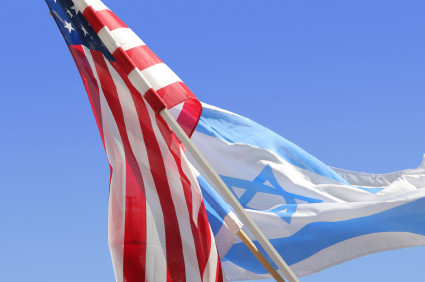
Having nothing better to do, I spent a fair amount of time last week trying to spearhead a Rabbinical Statement on Gaza. Sorry to report that after several days of back and forth we had to fold the entire project when it became clear that we wouldn’t find a wording that would satisfy a critical mass of rabbis. (To make matters even worse, an early version of the statement was precipitously posted on the net before we had consensus. I’m fairly sure it’s still floating around out there in cyberland in all its unauthorized glory…)
There were several motivations for the statement. First and foremost, it came from a desire to express a Rabbinical voice of opposition to Israel’s military action in Gaza, which we felt was strategically disastrous and morally outrageous. It was also important to us that Jewish community leaders publicly expressed sorrow not just for the loss of Israeli life but also for the massive devastation experienced by Gazans during the past three weeks:
We condemn the firing of missiles from Gaza that forced so many Israelis to live in fear and we mourn the loss of life that resulted from these attacks. However, we are devastated by Israel’s disproportionate use of force, killing more a myriad of people, including over 450 children. In the wake of such overwhelming civilian bloodshed, we can only ask, in the words of the Talmud, “How do we know that our blood is redder than the blood of our fellow?”
Additionally, since we felt we could not address the tragedy of the war while ignoring the larger political context of the conflict, our statement contained a strong message for the new American administration:
We urge our new President to turn back the policies of previous administrations – policies which have given Israel permission to take numerous measures that we believe are counter to the cause of peace, including the expropriation of Palestinian lands, destruction of Palestinians homes and businesses and the widespread building of settlements in occupied Palestinian territory.
The most controversial aspect of our statement was our call for the new administration to take an assertive diplomatic approach with Israel, and not to rule out the withholding of military aid “as necessary.” As anyone familiar with American Jewish community politics must surely know, withholding aid is the “third rail” for organized Jewry – i.e., the line that can never be crossed.
And it was this was the sentence more than any other that confounded of our core group of signers. We tried various different wordings: “if the administration deems it necessary,” “withholding of aid as a last resort,” “withholding aid for noncompliance” – but in the end, no wording seemed to suffice. Some felt that this was going to far and others refused to sign unless a strong statement about withholding aid was included.
I can certainly understand why this issue pushes such profound buttons for American Jews. It plays on our deepest fears and as well as our abiding sense of Jewish vulnerability. For many American Jews, the withdrawal of aid would be tantamount to abandonment by Israel’s most significant ally. But there are other Jews – and I believe their ranks are growing – who simply do not want to be party to Israel’s growing militarism and are not afraid to admit it.
For my part, I was less concerned about this particular issue, and perhaps that just reflects my own naivete. While I understand our community’s fears, I also believe that withholding aid is probably the strongest diplomatic “stick” America can wield with Israel – and in the end it may be the only one that will ever really get Israel’s attention. But whatever we might think about this issue, I just don’t agree that it must be ipso facto off the table for mere discussion in our community – and I deeply resent those in our community who reserve the right to excommunicate others who hold this opinion in good faith.
It’s all moot anyhow. No matter how we worded the statement, we couldn’t retain our core of signers. Some asked to have their names removed for various reasons. Many told me they would have loved to have signed, but couldn’t for organizational or professional reasons. After several days we called it quits.
I know there are some decent lessons in all of this, but mostly I’m just frustrated and very, very sad. I know for a fact that there are many Jews out there who were waiting for rabbis to make a statement of this kind, regardless of the final wording. I still believe that whatever the political realities, those of us who care about the shared fate of Israelis and Palestinians will have to find the courage of our convictions.
For me it really comes down to this: two of our most sacred Jewish values are Ahavat Yisrael (“Love of the People Israel”) and Ahavat Habriot (“Love for All People”). Should it really be that hard for us to promote both with equal passion?








 Shalom Rav