Category Archives: War

Atoning for Gaza: A Sermon for Yom Kippur 5779

img_3380

One year ago, on the morning after Yom Kippur, I traveled to Palestine in my capacity as a staff person for the American Friends Service Committee. Among other things, my trip included several days with our staff in Gaza.

AFSC has a particularly significant connection to Gaza. In 1949, at the onset of the Palestinian refugee crisis, the organization was asked by the UN to organize relief efforts for refugees in the Gaza Strip. The AFSC agreed, believing their service to the new refugees would be temporary. But when it became clear Israel had no desire or intention to let Palestinian refugees return to their homes, the organization’s General Secretary Clarence Pickett, told the UN that they could not in good conscience enable the situation, insisting that there must be a political solution to the crisis. Shortly after, the UN created UNRWA (The United Nations Relief Works Agency), the organization that has served the needs of Palestinian refugees ever since. AFSC has, however, retained its programmatic presence throughout Israel/Palestine to this very day.

As you might expect, I came away from this experience with a myriad of feelings and emotions, most of which continue to resonate powerfully for me even one year later. First and foremost, I’ve been transformed by the collegial and personal relationships I created with our staff and the Palestinian Gazans we met there. I remain moved by the efforts of so many people creating communities of dignity and purpose, doing their best to live their lives with something approaching normalcy while they are so utterly choked off from the world outside. While they cannot access the most basic necessities of life. While they are literally waiting for the next bomb to fall.

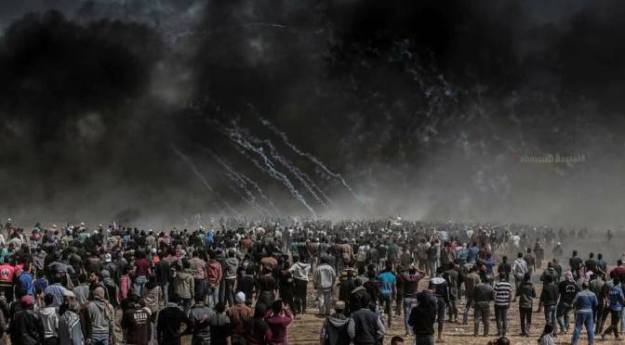
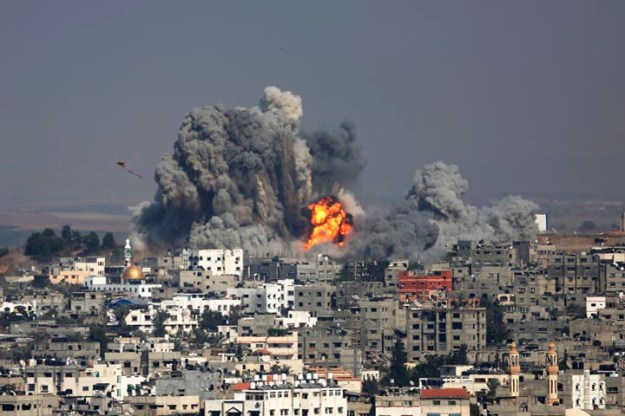
Since that time, of course, much has happened in Gaza. They’ve initiated the Great Return March, a popular protest action which has taken place weekly along their eastern border with Israel. Since the first day of the march last spring, the mostly nonviolent demonstrators have consistently been met by live fire from the Israeli military. To date, 170 Palestinians have been killed and tens of thousands wounded and maimed, most of them unarmed demonstrators, including children, medics and bystanders. Over the summer, Israel has also bombarded Gaza with its most sustained military assault since 2014, destroying numerous civilian targets, including the Said al-Mishal Cultural Center in Gaza City.

I’ve written a great deal about Gaza over the years, most of it in the form of commentary and political debate. As you know, I certainly have my own strong opinions – and I’ve engaged in my share of spitting matches on this issue over the years. And I will admit I’m tempted, given the events of this past year, to give an angry political sermon about Gaza. But I’m going to resist the temptation.

I do believe these debates are important as far as they go – but only up to a point. For one thing, it seems to me, these arguments too often end up fetishizing Gaza and Gazans, describing them either as murderous terrorists, helpless pawns of Hamas or poor, passive victims. Since most people only tend to think of Gaza when the bombs are falling and the bullets flying, this is generally about as far as its public image tends to go. Gaza becomes an objectified symbol of people’s fears, their political agendas and their own internalized prejudices.

So today, I’m going to try to do my best not to give that sermon. Instead, I’d like to offer you some thoughts and impressions based on my own experiences and on my growing personal relationship with Gazans. I’d also like share a little bit of Gaza’s culture and history with you. Information is virtually unknown to most of the world but is I believe, critical if we want to understand Gaza in a three dimensional, non-objectified way. And finally, apropos of this Yom Kippur, I’d like to explore what I believe is the moral and religious challenge Gaza presents to us Jews, as Americans and as people of conscience.

I’ll begin with a little geography. What we call the “Gaza strip” constitutes a 140 square mile piece of land on the southeastern Mediterranean coast. While we generally think of “Gaza” as this one little crowded land mass, is was historically actually part of a much larger Gazan territory that has been continuously inhabited for over 3,000 years. In ancient times it enjoyed extensive commerce and trade with the outside world – difficult to imagine given Gaza’s current state of economic and social isolation. But once upon a time, Gaza was a major port and an important stop along the Spice and Incense Route. As such, it was located at a significant cultural crossroad, connecting a wide variety of different civilizations over the centuries.

While this is literally ancient history now, it has left a cultural impact on Gaza that continues to this day. One example that was very obvious to me during my stay last year was the unique nature of Gazan cuisine. Anyone who knows Gaza knows that the food in this region is filled with distinctive flavors and spices that are dramatically different from other regional forms of Palestinian food. One common example is Gazan tahini, which is made from roasted sesame seeds, making it a dark shade of red. Gazan food is also typically made with chiles, eastern spices like cardamom, cloves and cinnamon and lots of dill.

For more on this subject, I strongly recommend reading “The Gaza Kitchen” by Laila El-Hadad and Maggie Schmitt – a cookbook that offers local recipes, placing them in the context of Gaza’s cultural history and politics. The authors point out that since the strong majority of Palestinians living in Gaza today are refugees from other parts of Palestine, other regional Palestinian foods have been introduced into their culinary mix. And the authors point out that many Gazan fast food joints serve Israeli-style food such as schnitzel, which was brought to the region by European Zionist immigrants.

As the authors write:

Now, with Gaza totally isolated, it is easy to forget that for decades thousands of Gazans went every day to work in Israel, that Israeli and Gazan entrepreneurs had partnerships, that both commerce and social relations existed, albeit on unequal footing. Adult Gazans remember this, and many speak admiringly of aspects of Israeli society or maintain contact with Israeli business partners, employers and friends. But for the enormous population of young people who were not old enough to work or travel before Israel sealed the borders in 2000, this is impossible. Because their lives are completely conditioned by Israeli political decisions, they have never laid eyes on a single Israeli person except the soldiers that have come in on tanks or bulldozers, wreaking destruction. And the generation of young Israelis to which those soldiers belong has likewise never met a single Gazan Palestinian in any other context. A terrible recipe for continued conflict.

When most people think of Gaza of course, they don’t think of trade routes or cuisine; if they associate Gaza with anything at all, it’s refugees and refugee camps. But it’s important to bear in mind that the creation of these camps is a very recent phenomenon in its history. As I mentioned earlier, Gaza was historically a much larger district in historic Palestine. Under Ottoman and the British mandate for instance, the Gaza District included what would later become the Israeli cities of Ashdod, Ashkelon, Sderot, Kiryat Gat and Kiryat Malachi, among others.

The so-called “Gaza strip” was created in 1949, when it became a repository for a flood of Palestinian refugees from cities and villages in the coastal plain and lower Galilee. Before the outset of war, the population of this small region numbered 60 to 80,000. By the end of the hostilities, at least 200,000 refugees were crowded into what we call today the Gaza Strip. The borders of the strip were drawn arbitrarily, determined by the position of Egyptian and Israeli forces when the ceasefire was announced. It ended up being smaller by at least a third than the entire area of the Gaza District during the mandate period.

At the time, most of the refugees fully expected to return home – some could even see their towns and villages through the fences. Those who crossed the border to gather their possessions or harvest their crops were considered “infiltrators” by Israel and shot on sight. Eventually, it became all too clear there would be no return. Over the years the tents turned into concrete buildings that grew ever higher in that narrow corridor. The numbers of that once sparse territory has grown to a population today of almost 2,000,000 people.

Given this context, it was natural that Gaza would become a center for the Palestinian resistance movement. We know from history that when a people are oppressed, they will inevitably resist their oppression. And yes, sometimes that resistance will be violent in nature. As early as the 1950s, groups of Palestinians known as “fedayeen” crossed over the border to stage violent attacks in the surrounding settlements.

One of these attacks offers an important insight into the course of Gaza’s history in ways that reverberate for us even today. In 1956, a group of fedayeen entered a field in Kibbutz Nahal Oz and killed a kibbutznik named Roi Rotenberg. The famed Israeli general Moshe Dayan spoke at his funeral – and during his eulogy he expressed himself with brutal and unexpected honesty:

Do not today besmirch the murderers with accusations. Who are we that we should bewail their mighty hatred of us? For eight years they sit in refugee camps in Gaza, and opposite their gaze we appropriate for ourselves as our own portion the land and the villages in which they and their fathers dwelled…

This we know: that in order that the hope to destroy us should die we have to be armed and ready, morning and night. We are a generation of settlement, and without a steel helmet and the barrel of a cannon we cannot plant a tree and build a house. Our children will not live if we do not build shelters, and without a barbed wire fence and a machine gun we cannot pave a road and channel water. The millions of Jews that were destroyed because they did not have a land look at us from the ashes of Israelite history and command us to take possession of and establish a land for our nation.

When I read Dayan’s comments today, I find them to be unbearably tragic – particularly when you consider how much time has elapsed since they were spoken. We have only to change the number of years in Dayan’s speech and the leave the rest intact: “For seventy years they’ve sat in refugee camps in Gaza, and opposite their gaze we appropriate for ourselves as our own portion the land and the villages in which they and their fathers dwelled.”

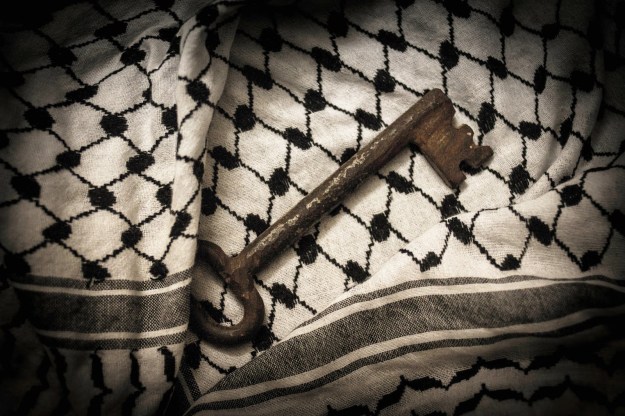
It’s clear that the descendants of the original Gazan refugees have lost none of their ancestors desire for return. Most of them know full well where their ancestral homes and fields are located, in some cases just a few miles from where currently live. As in other parts of Palestine, the memory of home and the desire for return are a palpable part of Gazan culture. I experienced this in a simple yet powerful way during my visit to Gaza last year. One afternoon, as we traveled north along the coast from Rafah to Gaza City, I noticed a series of colorful concrete benches along the beachfront. My colleague Ali translated the Arabic words on the backs of each bench, pointing out that each one bore the name of a Palestinian city or town where Gazans lived prior to 1948.

It’s not difficult to grasp the sacred significance of these simple seaside benches to the refugees of Gaza. Unlike most memorials, which commemorate what was lost and is never to be found, I’d wager that those who come to these beaches don’t believe their home cities and villages to be lost at all. On the contrary, I believe these benches testify that these places are still very real to them. And to their faith that they will one day return home.

In the end my trip to Gaza affected me in ways I could not predict at the time. Most importantly, for lack of a better term, I find I’m taking the issue much more personally. When Israel drops bombs on Gaza, I invariably get a sick, sinking feeling in the pit of my stomach, and immediately send emails to my colleagues and friends to check on their welfare. When a young Gazan is killed during the weekly Return March demonstrations, it’s not unusual for me to read a grief stricken testimony on social media by a friend, or friend of a friend. I increasingly hear their stories of their loved ones whose visas were denied or who cannot travel to access proper health care – and increasingly, I find myself taking their stories to heart.

Of course, I also take it personally when I hear so many in the Jewish community rationalizing this oppression away or worse – blaming Gazans for their own misery. When Israel was bombarding Gaza with bombs this past July, for instance, I recalled the fall of 2014 and how the American Jewish communal establishment characterized Israel’s war as a moral and religious imperative. In their view, the leadership in Gaza posed nothing short of an existential threat to Israel and the Jewish people – and in the wake of the Holocaust, ensuring Jewish survival is the most sacrosanct commandment of our time.

In early August of that year, Elie Wiesel wrote a public statement that was published as a paid ad in many prominent newspapers, including the New York Times. It was entitled “Jews rejected child sacrifice 3,500 years ago. Now it’s Hamas’ turn.” Wiesel’s words, I think, are a perfect representation of the ways the Jewish communal establishment framed the religious challenge of Gaza:

More than three thousand years ago, Abraham had two children. One son had been sent into the wilderness and was in danger of dying. God saved him with water from a spring. The other son was bound, his throat about to be cut by his own father. But God stayed the knife. Both sons – Ishmael and Isaac – received promises that they would father great nations.

With these narratives, monotheism and western civilization begin. And the Canaanite practices of child sacrifice to Moloch are forever left behind by the descendants of Abraham.

Except they are not.

In my own lifetime, I have seen Jewish children thrown into the fire. And now I have seen Muslim children used as human shields, in both cases, by worshippers of death cults indistinguishable from that of the Molochites.

What we are suffering through today is not a battle of Jew versus Arab or Israeli versus Palestinian. Rather, it is a battle between those who celebrate life and those who champion death. It is a battle of civilization versus barbarism.

I remember when I first read these words. I remember how deeply, how viscerally, I reacted to them – particularly while I had been reading day after day about Gazan children like the four Bakr boys, who were shot down not as “human shields” but while they were playing soccer on the beach one morning. I remember how desperately I wished there were other Jews or Jewish communities ready to provide an alternative religious understanding of what was going on in Gaza.

There was only one religious response to Wiesel I recall reading at the time. It came from scholar and theologian Marc Ellis, who addressed Wiesel’s statement head on:

The problem is the news that keeps coming from Israel. Israel’s bombing of residential areas, hospitals and UN schools and shelters is international news. In Gaza, even after Israel’s proclaimed “withdrawal,” the death toll mounts. Among the dead are children sacrificed for Israel’s obvious goal – to deny Palestinians statehood, their political and human rights, which include the right to resist occupation.

The question for Elie Wiesel and the Jewish establishment is not about Abraham’s binding of Isaac – a treasure trove for interpreters of all types – but how many Palestinian children in Gaza will be sacrificed on the altar of Israel’s national security.

If God stayed Abraham’s knife, who will stay Israel’s?

“If God stayed Abraham’s knife, who will stay Israel’s?” This, to me is as profound an articulation of the moral and religious challenge presented to us by Gaza as we are likely to find. And I simply cannot understand how Jewish communities can gather for Yom Kippur every year without even thinking to consider this question. This is after all, the season of our cheshbon nefesh – our moral accountability. On Yom Kippur we are asked to come together and dig deep as a community to search our collective soul and confess our collective sins. How many synagogues will include confessions for what Israel is doing to Palestinians in Gaza and elsewhere?

On Yom Kippur we chant over and over an annual liturgy that literally asks “who shall live and who shall die,” while the people of Gaza ask themselves that question every waking day. In a very real sense, Israel is playing God with the people of Gaza. Who shall live and who shall die? In the end, it is not God but Apache helicopters and sniper fire that will provide the answers to that question. Wouldn’t it be more appropriate to change the Une’taneh Tokef prayer to read, “Who will we kill and who will we spare?”

On Yom Kippur we gather to confess our sins and vow to do teshuvah – to actively repair what we have broken in the past year. But if we do believe that Israel is oppressing Gazans and Palestinians in our name, how can this day have any meaning for us at all? How can it be anything but an empty ritual? If we do believe this day still has religious relevance for us, what are we ready to do to make this teshuvah we speak of real?

My friend and colleague Jehad Abusalim was born in Gaza and is now earning his Phd from NYU. This past year he joined the Chicago staff of AFSC to work on our campaign “Gaza Unlocked.” I’d like to end with his words, because like so many of the Gazans I’ve come to know, he presents us with a question that highlights what I believe is the current religious challenge of Yom Kippur:

Our message is that we are human beings. Despite 70 years of exile, 50 years of occupation, and 11 years of a blockade, we still can carry signs in Arabic, Hebrew, and English that say, “We are not coming to fight — we are coming to return to our lands!” Gazans who saw wars and blood, who lost relatives to graves and prisons, who have four hours of electricity, who are besieged and tired — these Gazans still have faith that the international community cares. Will the rest of humanity hear them?

On Yom Kippur we plead to God, “Shema Koleynu” – “Hear our voice!” The people of Gaza – indeed all Palestinians – are calling out to us “Shema Koleynu!” Are we ready to their prayer? And if we are, what will we do to ensure our Yom Kippur prayers have not been made in vain?

G’mar Hatimah Tovah – may this be the year we write the people of Gaza into the Book of Life.
 

Gaza and the High Holidays

great-return-march

Yesterday I read a devastating blog post by Abdalrahim Alfarra, a Palestinian Gazan activist who wrote about his cousin Ali Firwana, who was recently was shot and paralyzed at the Great March of Return.

One passage in particular continues to haunt me:

At the protest, we found the usual: tear gas canisters falling thickly, leaving us barely able to breathe or talk; ambulances and paramedics fanning out everywhere; and the sound of live bullets whizzing past.

The sound of a bullet elicits contradictory feelings. All of us know that it will hit someone. But if we hear it, we are safe, just like when we hear shelling it means it has exploded but not on us.

It’s a powerful a description as we might find of what it must be like for unarmed demonstrators to experience an overwhelming military assault such as this. But it also made me think of something else.

We’ve just begun Elul – the month that precedes the Jewish New Year. Among other things, this the season in which we begin to contemplate the randomness and fragility of our world. We look ahead to a year to come and ask with uncertainty: “Who shall live and who shall die?” I can’t think of a more gut-wrenching expression of this question than the testimony of this young Palestinian man. And I can’t think of a more critical collective moral imperative for the Jewish people than the crimes Israel is committing against Palestinians in Gaza.

Alfarra concludes his post with these words:

Ali requires further surgery. He is still hoping to move his legs again. He is still hoping to defy the treacherous bullet fired by a heartless sniper, and a world that answers Israel’s crimes with shocking silence.

When Jewish congregation gather next month for the High Holidays, it is safe to say many will “answer Israel’s crimes with shocking silence.” Others will actually attempt to justify Israel’s criminal assaults on Palestinians in Gaza. I’m proud to be part of a congregation that will choose a different way:

For blockading 1.8 millon Gazans inside an open air prison; and for unleashing devastating firepower on a population trapped in a tiny strip of land.

For wedding sacred Jewish tradition to political nationalism and militarism; and for rationalizing away Israel’s oppression of the Palestinian people.

For all these, source of forgiveness, forgive us, pardon us, receive our atonement.

May our prayers inspire us to hasten the day in which all Gazans and Palestinians are free.

For Tisha B’Av: “Lamentation for a New Diaspora”

0d03e43322bb5421f1550fec070fe051-d5j05xy

photo credit: NateHallinan.com

The Jewish festival of Tisha B’Av begins this Saturday evening, July 21. In anticipation of the day, I’m reposting the new poetic take on Lamentations that I wrote last year.

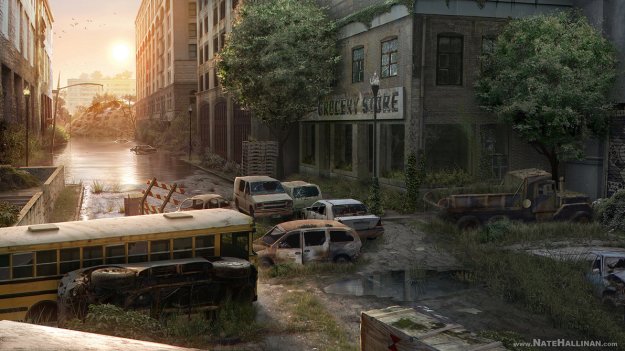
While this Biblical book is an expression of Jewish communal loss, my new version places these themes in a universal 21st century context, set in a not-too-distant future that I fervently hope shall never come to pass. In this reimagining, it is less an elegy for what was lost than a spiritual/poetic warning about a future cataclysm that is, in many ways, already underway.

May the grief of this Tisha B’Av give us all the strength to fight for the world that somehow still might be.

Click here for the pdf. Feel free to share.

A Jewish Prayer for Nakba Day

Nakba.jpg-keys

Le’el she’chafetz teshuvah,
to the One who desires return:

Receive with the fulness of your mercy
the hopes and prayers of those
who were uprooted, dispossessed
and expelled from their homes
during the devastation of the Nakba.

Sanctify for tov u’veracha,
for goodness and blessing,
the memory of those who were killed
in Lydda, in Haifa, in Beisan, in Deir Yassin
and so many other villages and cities
throughout Palestine.

Grant chesed ve’rachamim,
kindness and compassion,
upon the memory of the expelled
who died from hunger,
thirst and exhaustion
along the way.

Shelter beneath kanfei ha’shechinah,
the soft wings of your divine presence,
those who still live under military occupation,
who dwell in refugee camps,
those dispersed throughout the world
still dreaming of return.

Gather them mei’arbah kanfot ha’aretz
from the four corners of the earth
that their right to return to their homes
be honored at long last.

Let all who dwell in the land
live in dignity, equity and hope
so that they may bequeath to their children
a future of justice and peace.

Ve’nomar
and let us say,
Amen.

Le’el she’chafetz teshuvah,
to the One who desires repentance:

Inspire us to make a full accounting
of the wrongdoing that was
committed in our name.

Help us to face the terrible truth of the Nakba
and its ongoing injustice
that we may finally confess our offenses;
that we may finally move toward a future
of reparation and reconciliation.

Le’el malei rachamim,
to the One filled with compassion:
show us how to understand the pain
that compelled our people to inflict
such suffering upon another –
dispossessing families from their homes
in the vain hope of safety and security
for our own.

Osei hashalom,
Maker of peace,
guide us all toward a place
of healing and wholeness
that the land may be filled
with the sounds of joy and gladness
from the river to the sea
speedily in our day.

Ve’nomar
and let us say,
Amen.

Prayer for the Poor People’s Campaign

homeless-flag_7020

photo: Clayton Patterson

(Delivered at the Poor People’s Campaign Rally for Action, Grace Lutheran Church, Evanston, March 22, 2018.)

Friends, let us bless:

This is a blessing for the ones
who stand up police lines and say:
you may invade our communities,
you may profile and survielle us
you may shoot at our black and brown bodies,
but you will never break us.

This is a blessing for the ones
who lose their homes to predators,
who lose their pensions and healthcare,
while the wealthy grow wealthier
but will never accept that this
is simply the way things must be.

This is a blessing for the ones
who live under the terror
of our drones and our bombs,
whose blood fills the coffers
of our war economy,
whose only consolation is the truth
that while empires may rise,
they are destined to fall.

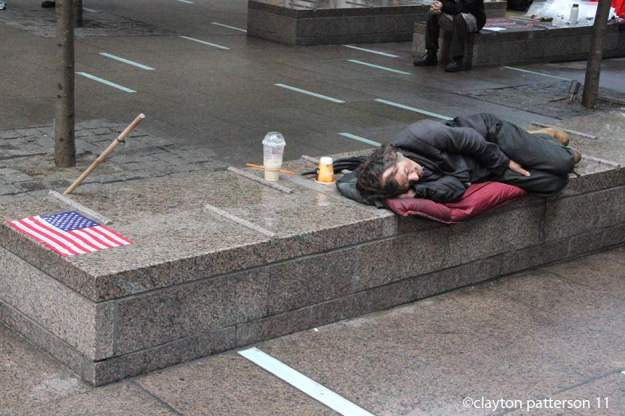
This is a blessing for the ones
who stand on street corners,
who live in tent encampments
next to luxury condos that soar to the sky
yet refuse to surrender their humanity
to the gears of an inhumane system.

This is a blessing for an earth
that grows more inhabitable by the day
yet is still inhabited by those who struggle
for a planet that will provide a sustainable home
for their children’s children.

This is a blessing for the immigrants
who fear every knock on the door
every cop that pulls them over,
every job application they are handed
yet never give up on the dream
of a better future for themselves
and their families.

So let the justice
that trickles down shallow creeks
roar through the valley and saturate
the dry parched earth,
let it flow relentlessly throughout the land
where life once grew and will grow again.

Let those who cry out in pain
feel strength growing within their broken souls
like green stems shooting through
cracked pavement.

Let us live to see new life spreading
through abandoned streets and
neighborhoods and cities and nations and
let the promise of transformation beckon still
that we might finally take the first
tentative step into this new day, yes
let it be so.

Amen.

Songs at the Sea

waters

Based on Exodus 15:1-18

As the waters parted before them
they sang their songs of praise:

Some sang to the one who
shattered Pharaoh’s army
with a mighty right hand,
some sang to the god of their ancestors
who remained faithful to them
and them alone.

Others sang to the one
who redeems the oppressed
so that the world may know of his might:
who is like you god of war,
consuming the enemy like straw
incinerated with one awesome
mighty blast from on high?

Some sang a hymn of praise
to the god of vengeance
who shamed the Egyptians
hurling them all like stones
into the heart of the churning sea;

while still others sang out with hope
that the peoples of the land
would now melt away
as god’s people went forth
to dispossess them.

As they marched on, their voices joined
into one feverish song;
a tuneless wordless howl
echoing on through the depths,
yet too laden with fear to rise
to the source of their liberation.

Quakers, Jews and Israel’s BDS Blacklist

RS11675_EvanJonesGaza1949 5812013620

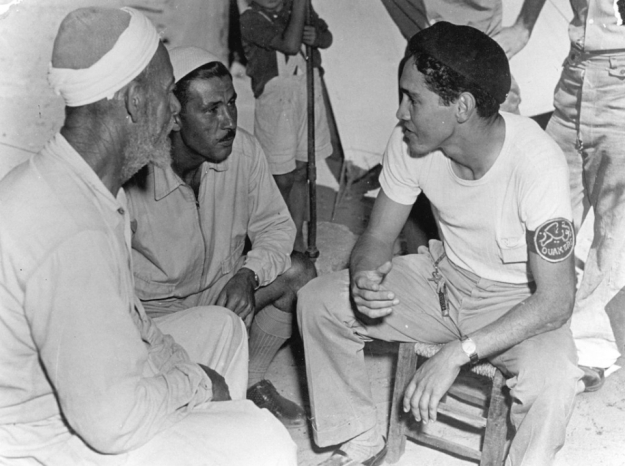
AFSC volunteer Evan Jones meeting with Palestinian refugees, 1949 (photo: AFSC)

Cross-posted with Acting in Faith.

Last Sunday, Israel revealed their list of 20 social justice groups from around the world it was henceforth banning from the country because of their support for the Boycott, Divestment and Sanctions (BDS) movement. For me, the list represented more than just another news item of the day. As staff person for one organization included on the list – the American Friends Service Committee (AFSC) – this news struck home personally as well as professionally

As a rabbi who works for AFSC, I’m proud of the important historical connections between Jewish community and this venerable Quaker organization. As the US Holocaust Memorial Museum itself has noted, AFSC was at the forefront of efforts to help and rescue Jewish refugees after 1938, “ assisting individuals and families in need… helping people flee Nazi Europe, communicate with loved ones, and adjust to life in the United States.”

The USHM has also acknowledged that “the AFSC helped thousands of people in the United States transfer small amounts of money to loved ones in French concentration camps (and helped) hundreds of children, including Jewish refugees and the children of Spanish Republicans, come to the United States under the care of the US Committee for the Care of European Children in 1941–42.”

AFSC became involved with a different group of refugees – the Palestinians – several years later. At the end of 1948, while military hostilities in Palestine were still raging, the UN asked the AFSC to help spearhead the relief effort in Gaza, which was rapidly filling up with Palestinian refugees. Historian Nancy Gallagher has noted refugee relief was not the ultimate goal of their work in Gaza – rather, they “had accepted the invitation to participate in the relief effort with the expectation of assisting in the repatriation and reconciliation process.” (from “Quakers in the Israeli-Palestinian Conflict: The Dilemmas of Humanitarian Activism,” p. 97)

In March 1949, AFSC Executive Secretary Clarence Pickett offered a six-point plan to solve the refugee problem, urging “a substantial repatriation of Arabs into the State of Israel.” (p. 103) However, when it became clear that there was no international will for a political solution to the Palestinian refugee problem, AFSC formally stated that it wished to withdraw from Gaza, stating that “prolonged direct relief…militates against a swift political settlement of the problem.” (p. 104)

I have long been dismayed at the hypocrisy of those who applaud the Quakers’ work on behalf of Jewish refugees, yet bitterly criticize them for applying the very same values and efforts on behalf of Palestinian refugees. In a recent article for Tablet, for instance, Asaf Romirowsky and Alexander Joffe, made the spurious accusation that AFSC “has gone from saving Jews to vilifying them,” claiming that AFSC’s experience in Gaza convinced them to “get out of the relief business altogether” in order to promote “progressive Israel-hatred.”

In light of such invective, it’s not surprising to learn that Romirowsky and Jaffe are both professionally connected to the Middle East Forum – a notoriously Islamophobic radical right organization led by Daniel Pipes that has been categorized as a hate group by the Southern Poverty Law Center. Beyond the nasty rhetoric however, it bears noting that AFSC has never been solely a relief organization. From its inception 100 years ago in the wake of WW I, it has consistently promoted reconciliation and repatriation alongside direct service to peacefully address conflicts around the world. AFSC’s work in Gaza was/is no exception.

Romirowsky and Jaffe further reveal their prejudiced agenda when they suggest that Palestinian refugees only wanted “to be maintained at someone else’s expense until Israel disappeared.” In fact, the AFSC’s refugee relief efforts in Gaza took place while Palestinians were actively being driven from their homes and were being housed in hastily constructed refugee camps. It is patently outrageous to suggest that they were motivated by anything other than their desire to return to their homes. Under such circumstances, it was not at all unreasonable for the AFSC to advocate for their return and repatriation.

In their article Romirowsky and Jaffe also parrot the Israeli government’s accusation that the BDS movement is “opposed to Israel’s existence.” What they refer to as “the BDS movement” is in fact a response to a call issued by a wide coalition of Palestinian unions, political parties, refugee networks, women’s organizations, professional associations, popular resistance committees and other Palestinian civil society bodies in 2005. The BDS call is a crie de cour from Palestinians to the world to use this time honored nonviolent strategy to pressure Israel to meet three essential demands:

  • To end the occupation and colonization of the West Bank and Gaza and dismantle the separation wall;
  • to recognize the fundamental rights of Arab-Palestinian citizens of Israel to full equality;
  • and to respect, protect and promote the rights of Palestinian refugees to return to their homes and properties as stipulated in UN Resolution 194.

Although BDS is an inherently nonviolent tactic, it is striking to note the lengths to which the government of Israel has devoted time, energy and resources in trying to defeat it over the past decade. It has spent literally hundreds of millions of dollars to this effort, enlisted a myriad of Israel advocacy organizations and has even created a new government ministry devoted exclusively to fighting BDS. And though demands of the BDS call are based in human rights and international law, it is routinely referred to as antisemitic “economic terrorism” that “delegitimizes the state of Israel.” The blacklist of organizations is thus only the latest in a long line of draconian, non-democratic responses to this rapidly growing non-violent resistance movement.

As such, AFSC’s support of BDS is fully in keeping with its 100-year-old mission. As their recent organizational statement put it:

All people, including Palestinians, have a right to live in safety and peace and have their human rights respected. For 51 years, Israel has denied Palestinians in the occupied territories their fundamental human rights, in defiance of international law. While Israeli Jews enjoy full civil and political rights, prosperity, and relative security, Palestinians under Israeli control enjoy few or none of those rights or privileges.

The Palestinian BDS call aims at changing this situation, asking the international community to use proven nonviolent social change tactics until equality, freedom from occupation, and recognition of refugees’ right to return are realized. AFSC’s Principles for a Just and Lasting Peace in Palestine and Israel affirm each of these rights. Thus, we have joined others around the world in responding to the Palestinian-led BDS call.  As Palestinians seek to realize their rights and end Israeli oppression, what are the alternatives left to them if we deny them such options?

Quakers pioneered the use of boycotts when they helped lead the “Free Produce Movement,” a boycott of goods produced using slave labor during the 1800s. AFSC has a long history of supporting economic activism, which we view as an appeal to conscience, aimed at raising awareness among those complicit in harmful practices, and as an effective tactic for removing structural support for oppression.

This past October I traveled with other AFSC staff people to East Jerusalem, the West Bank and Gaza, for meetings with our staff there. Yes, our efforts in Israel/Palestine still continue. While we do not yet know this latest action will impact our work, we are well aware that hundreds of thousands of Palestinians have been denied entry into the land of their ancestors for decades. The AFSC, like the other organizations on Israel’s odious list, know that peace can only come to this land when the essential injustice that occurred 70 years ago is justly addressed, and the human rights of all are recognized and respected.

Seaside Memory in Gaza

IMG_3399
Memorials take many forms – some are grand and iconic like the Vietnam Veterans Memorial in DC while others exude power through their very simplicity.

Here’s an example of the latter category:

During my trip Gaza last month, I noticed a series of colorful concrete benches placed along the beachfront as we traveled north along the coast from Rafah to Gaza City. As we drove by, I noticed that some benches were empty; on another, a sole person sat gazing out to sea and another was filled with what seemed like an entire family. My AFSC colleague Ali Albari noted the Arabic words on the backs of each bench, pointing out that each one bore the name of a Palestinian city or town that was forcibly depopulated by Zionist militias in 1948/49.

The majority of the almost 2,000,000 residents of Gaza are in fact, refugees – Palestinians who had originally lived in the central and northern regions of the country. After their dispossession they were herded into refugee camps in Gaza, fully expecting to return to their homes after the armistice. Now, almost seventy years later, they are still waiting.

It’s not difficult to grasp their sacred significance of these simple seaside benches to the refugees of Gaza. Clearly, they have not forgotten.

Unlike most memorials, which commemorate that which was lost and never to be found, I’d wager that those who come to these beaches don’t believe their homes to be lost to them at all. On the contrary, I these benches testify to their faith that they will one day return.

(Thanks to Ali Albari for translating.)

IMG_3368

Safad (Safed)

IMG_3380

Jenin

IMG_3389 (1)

Hifa’ (Haifa)

IMG_3396

Bir Saba’ (Be’er Sheva)


Overcoming Isolation in Gaza: A Report Back

IMG_3519 (1)

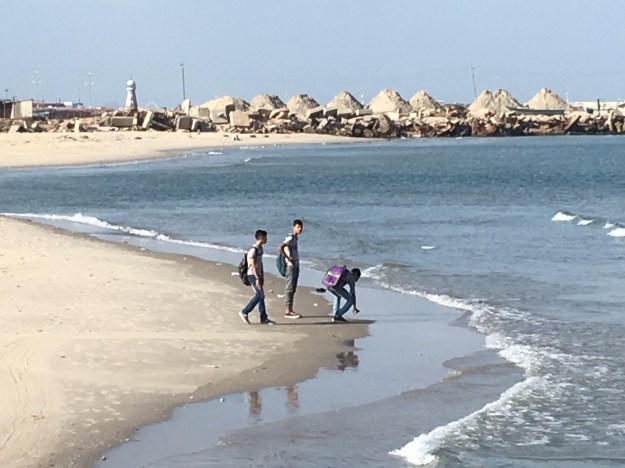
Gaza City, 10/8/17. The Bakr children were killed on this beach by Israeli military forces on 7/16/14.

I’ve been writing a great deal on this blog about Gaza for over ten years but until this past week, I haven’t had the opportunity to visit in person. I’m enormously grateful for the opportunity to experience Gaza as a real living, breathing community and I’m returning home all the more committed to the movement to free Gaza from Israel’s crushing blockade – now eleven years underway with no end in sight.

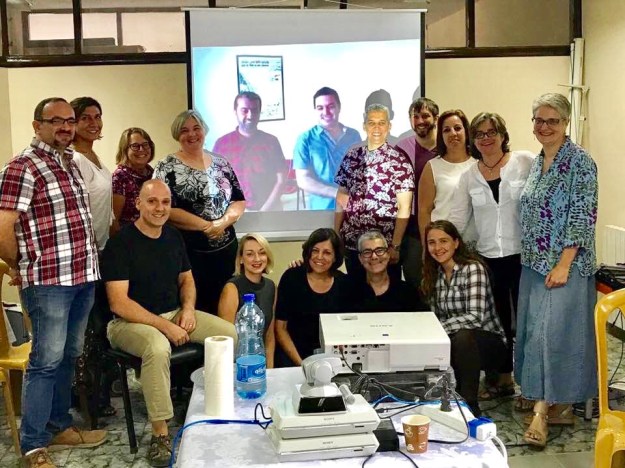
For the past ten days, I’ve been attending strategic planning meetings with staff colleagues of the American Friends Service Committee (AFSC) to sharpen our vision for our Israel/Palestine programs in the US, Israel, the West Bank and Gaza. We began with three days of meetings in Ramallah – with our Gazan staff members joining us via Skype. Following these meetings, six of us spent two days in Gaza, hosted by the two full-time members of the Gaza staff: Ali Abdel Bari and Firas Ramlawi.

FullSizeRender (3)

AFSC Israel/Palestine staff meeting in Ramallah (with Ali and Firas joining us from Gaza via Skype).

It’s extremely rare for Americans to receive permission from Israel to enter Gaza through the Erez Crossing. Permits are generally issued only for journalists and staff people of registered international NGOs. Though I was technically allowed to enter Gaza as an AFSC staff member, I wasn’t 100% sure it would really happen until the moment I was actually waved through the crossing by the solider at Passport Control in Erez.

Quakers have a long history in Israel/Palestine – dating back to before the founding of the state of Israel. The Ramallah Friends School for Girls was founded in 1889, and their School for Boys in 1901. The two schools subsequently merged into one; now well into the 21st century Ramallah Friends remains a important and venerable Palestinian educational institution. (The former head of the school Joyce Aljouny, was recently appointed AFSC’s General Secretary.)

AFSC has a particularly significant connection to Gaza. In 1949, immediately following Israel’s founding and the start of the Palestinian refugee crisis, the organization was asked by the UN to organize relief efforts for refugees in the Gaza Strip. Their efforts continued until the United Nations Relief Works Agency started its operations there a year later. Since that time, AFSC has retained its programmatic presence throughout the Israel and the Occupied Territories.

Up until relatively recently, AFSC’s Palestine youth program focused largely on Public Achievement, seeking to strengthen the civic ties of youth to their communities. Our current program, Palestinian Youth Together for Change (PYTC) is a more ambitious project, working to combat Palestinian geographical, social and cultural fragmentation in Israel, the West Bank and Gaza. It’s difficult to overestimate the devastating impact of this fragmentation – particularly on Palestinian youth who are growing up with increasing separation from one another. This isolation is most keenly felt of course, by the youth of Gaza who are literally imprisoned by Israel inside a small 140 square mile strip of land.

When we met the Gazan youth who participated in the PYTC program, they spoke powerfully about their experiences growing up with a strong sense of Palestinian identity while isolated from their peers in Israel and the West Bank. This particularly hit home for me when I heard one young woman speak of entering into Israel through the Erez Crossing for the first time to travel to the West Bank for meetings with her fellow participants. She was eighteen years old and had never seen an Israeli Jew in person in her life. Up until that time, she said, she had only seen them as “helicopters, planes and bombs.” Needless to say, this contrasted dramatically from the experience of her West Bank peers, who encountered Israeli soldiers as a very real, everyday presence in the streets and at checkpoints.

IMG_3411

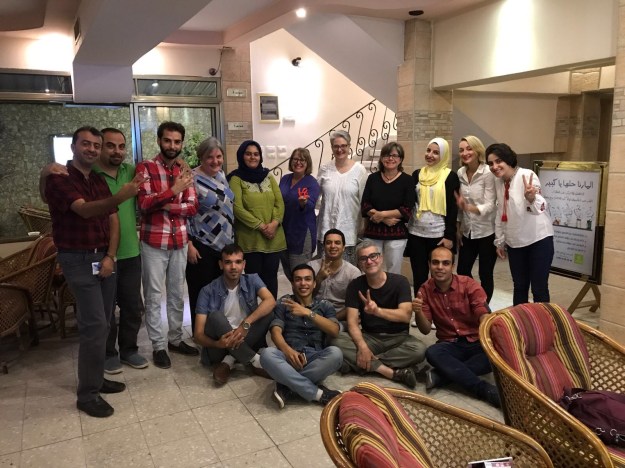
With current participants of AFSC’s Palestinian Youth Together for Change program.

It’s also important to bear in mind that this isolation is not a “humanitarian” issue that can be fully addressed by greater NGO and civil society investment. Rather it is the result of very real and very intentional policies promulgated by Israel to purposefully divide and weaken Palestinian society. By the same token, the PYTC program is not a merely a youth service project – it’s ultimate goal is to strengthen Palestinian identity in order to counter the brutal and unjust occupation of their people. In this regard this program is connected in important ways to AFSC programs in the US that promote “co-resistance:” initiatives that support the Palestinian civil society call for Boycott, Divestment and Sanctions, advocate for Palestinian children held by Israel in military detention and educate the public about the devastating costs of the Gaza blockade.

There’s so much more I could write about my experiences in Gaza. As I prepare now to head back to the States, I’m struggling to give voice the myriad of emotions that are flooding through me. At the moment, I’m thinking particularly of Ali and Firas, our Gaza staff members, who were not only gracious and wonderful hosts (although they were entirely that); but also talented and visionary organizers who teach us a great deal about how to do this work effectively in the most extreme of circumstances.

Even under the brutality of Israel’s blockade, we could not help but be struck by the beauty of this place and the dignity of its people and culture (which includes, I hasten to add, the deliciousness of its cuisine). As it happened, our visit occurred immediately after the beginning of reconciliation talks between Hamas and the Palestinian Authority, brokered by the Egyptian government. Most of the Gazans we spoke to expressed a guarded sense of hope that it might result in some easement of the blockade – particularly in regards to freedom of movement, drinkable water and electrical service. Of course this optimism occurs within a constant context of isolation and vulnerability. The next Israeli military assault is altogether possible at any moment – and every Gazan must contend with this horrible reality every moment of every day.

IMG_3573

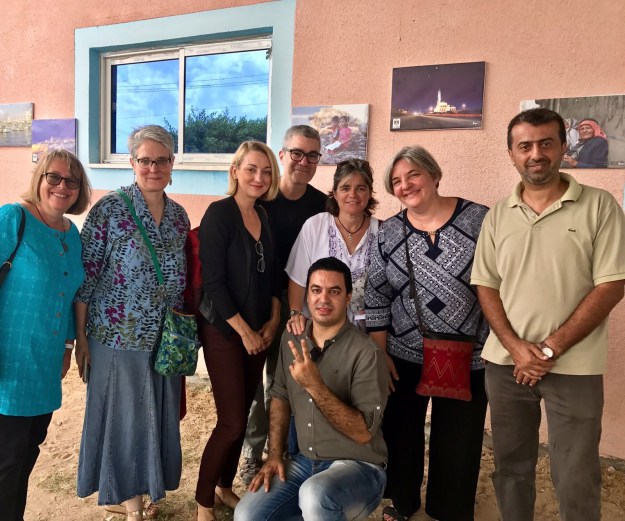
Left to right: AFSC staff Jennifer Bing, Lucy Duncan, Erin Polley, Brant Rosen, Mati Gomis-Perez, Aura Kanegis and Firas Ramlawi. Kneeling: Ali Abdel Bari

I’ve posted below some additional pictures of memorable moments from our visit. My staff colleagues will be writing more about these moments and I will be sure to share their posts here. For now, I’ll end on a note of gratitude: to AFSC for giving me the opportunity to participate in this sacred work; to our gracious hosts in East Jerusalem, Ramallah and Gaza; and to my US staff colleagues who are true travel companions in more ways than one.

I took the picture at the top of this post during our final hours in Gaza. As we debriefed on a beautiful morning over coffee at a seaside cafe in Gaza City, three young boys came down to the beach to hang out and have fun together. The loveliness of the moment was both very real and very illusory. There was no mistaking the beauty of the place and people with whom we were sharing this moment. At the same time, however, we were aware that we were in the affluent tourist part of town and that we were privileged enough to soon be leaving Gaza to travel without restriction. We were also well aware that not far from the place these boys were standing, Ismail Mohammed Bakr (9), Zakaria Ahed Bakr (10), Ahed Atef Bakr (10) and Mohamed Ramez Bakr (11) were murdered by Israeli naval fire while they played soccer on the beach on July 16, 2014.

There can be no illusions where Gaza is concerned. As I leave for home, I’m more convinced than ever that we are all complicit in this cruelty – and that we are the ones who must end it.

IMG_3554

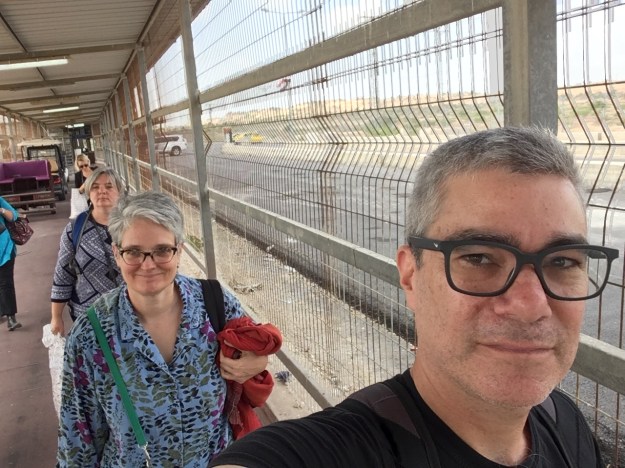
The almost mile-long corridor between the Erez Crossing in Israel and the entrance into Gaza.

IMG_3419

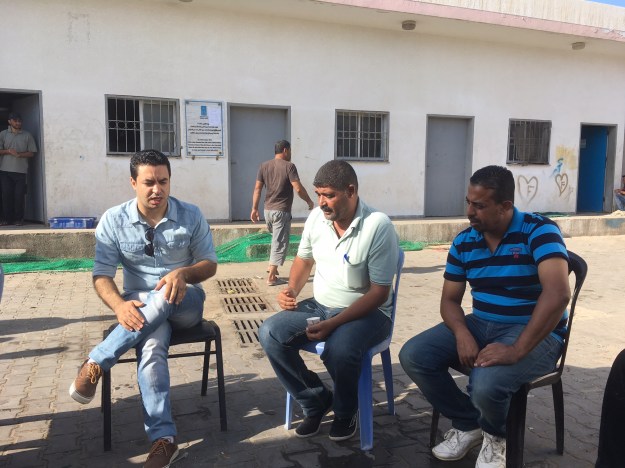
Our meeting with the Gazan Fishermen’s Union. Ali translates the presentations of Zakaria Bakr – chair of the union and uncle of the murdered Bakr boys (Center), and Amjad Shrafi, President of the union (Right). Below: video from our morning excursion with Gazan fishermen:

IMG_3363

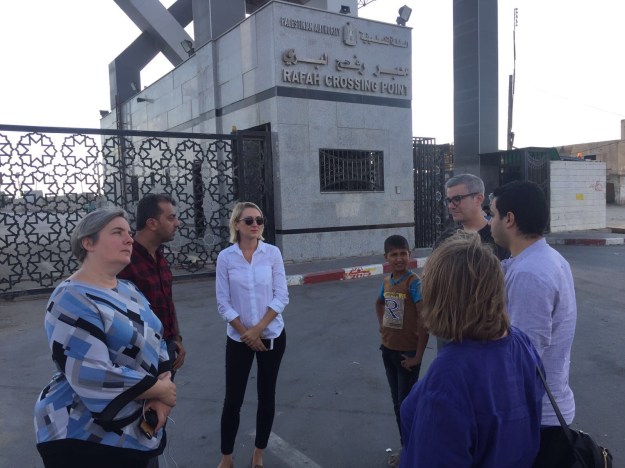
At the Rafah crossing, on Gaza’s southern border with Egypt.

Recommitting to Solidarity in the Face of White Supremacy: A Sermon for Rosh Hashanah 5778

2017_0921rosen

Members of Holy Blossom Temple, a Toronto synagogue, form a protective circle around the Imdadul mosque on February 3, 2017, following an Islamophobic shooting at a mosque in Quebec City.  (Photo: Bernard Weil / Toronto Star via Getty Images)

Crossposted with Truthout.

When Temple Beth Israel — a large Reform synagogue in downtown Charlottesville, Virginia — opened for Shabbat morning services on August 12, 2017, its congregants had ample reason to be terrified. Prior to the “Unite the Right” rally held in town by white supremacists and neo-Nazis that weekend, some neo-Nazi websites had posted calls to burn down their synagogue.The members of Beth Israel decided to go ahead with services, but they removed their Torah scrolls just to be safe.

When services began, they noticed three men dressed in fatigues and armed with semi-automatic rifles standing across the street from their synagogue. Throughout the morning, growing numbers of neo-Nazis gathered outside their building. Worshippers heard people shouting, “There’s the synagogue!” and chanting, “Sieg Heil!” At the end of services, they had to leave in groups through a side door.

Of course, this story did not occur in a vacuum. It was but a part of a larger outrage that unfolded in Charlottesville that day, and part of a still larger outrage has been unfolding in our country since November. I think it’s safe to say that many Americans have learned some very hard truths about their country since the elections last fall. Many — particularly white liberals — are asking out loud: Where did all of this come from? Didn’t we make so much progress during the Obama years? Can there really be that many people in this country who would vote for an out-and-out xenophobe who unabashedly encourages white supremacists as his political base? Is this really America?

Yes, this is America. White supremacy — something many assumed was relegated to an ignoble period of American history — is, and has always been, very real in this country. Now white supremacists and neo-Nazis are in the streets — and they are being emboldened and encouraged by the president of the United States.

While this new political landscape may feel surreal, I believe this is actually a clarifying moment. Aspects of our national life that have remained subterranean for far too long are now being brought out into the light. We’re being brought face to face with systems and forces that many of us assumed were long dead; that we either couldn’t see or chose not to see. Following the election of Trump many have commented that it feels like we are living through a bad dream. I would claim the opposite. I would say that many of us are finally waking up to real life — a reality that, particularly for the most marginalized among us, never went away.

It is certainly a profoundly clarifying moment for American Jews. With this resurgence of white supremacist anti-Semitism, it would have been reasonable to expect a deafening outcry from the American Jewish establishment. But that, in fact, has not been the case. When Trump appointed white nationalist Steve Bannon to a senior White House position, there was nary an outcry from mainstream Jewish organizations. The Zionist Organization of America actually invited Bannon to speak at its annual gala.

Israel’s response to this political moment is no less illuminating. During a huge spike in anti-Semitic vandalism and threats against Jewish institutions immediately after the elections, it wasn’t only Trump that had to be goaded into making a statement — the Israeli government itself remained shockingly silent. This same government that never misses an opportunity to condemn anti-Semitic acts by Muslim extremists seemed utterly unperturbed that over 100 Jewish institutions had received bomb threats or that Jewish cemeteries were desecrated across the country. (More than 500 headstones were knocked down at one Jewish cemetery alone in Philadelphia.) And when neo-Nazis with tiki torches rallied in Charlottesville proclaiming “Jews will not replace us,” it took Prime Minister Netanyahu three days to respond with a mild tweet. Israel’s Diaspora Minister Naftali Bennett, whom one would assume should be concerned with anti-Semitism anywhere in the Diaspora, had this to say:

We view ourselves as having a certain degree of responsibility for every Jew in the world, just for being Jewish, but ultimately it’s the responsibility of the sovereign nation to defend its citizens.

This is a clarifying moment if ever there was one. Support for Israel and its policies trumps everything — yes, including white supremacist Jew hatred. Just this week, Prime Minister Netanyahu said this about Trump’s speech at the UN:

I’ve been ambassador to the United Nations, and I’m a long-serving Israeli prime minister, so I’ve listened to countless speeches in this hall. But I can say this — none were bolder, none were more courageous and forthright than the one delivered by President Trump today.

Why would the Israeli Prime Minister call a president who panders to anti-Semitic white supremacists “brave” and “courageous?” Because Trump pledged his support to Israel. Because he called the Iran nuclear deal an “embarrassment.” Because he vowed American support to allies who are “working together throughout the Middle East to crush the loser terrorists.”

Historically speaking, this isn’t the first time that Zionists have cozied up to anti-Semites in order to gain their political support. Zionism has long depended on anti-Semites to validate its very existence. This Faustian bargain was struck as far back as the 19th century, when Zionist leader Theodor Herzl met with the Russian minister of the interior Vyacheslav von Plehve, an infamous anti-Semite who encouraged the Kishinev pogroms that very same year. Plehve pledged that as long as the Zionists encouraged emigration of Jews from Russia, the Russian authorities would not disturb them.

This Zionist strategy was also central to the diplomatic process that led to the 1917 Balfour Declaration, in which British Foreign Secretary Arthur Balfour announced his government’s support for “the establishment of a national home in Palestine for the Jewish people.” Although Balfour has long been lionized as a Zionist hero, he wasn’t particularly well known for his love for Jews or the Jewish people. When he was prime minister, his government passed the 1905 Aliens Act, severely restricting immigration at a time in which persecuted Jews were emigrating from Eastern Europe. At the time, Balfour spoke of the “undoubted evils which had fallen on the country from an alien immigration which was largely Jewish.” Balfour, like many Christians of his class, “did not believe that Jews could be assimilated into Gentile British society.”

When you think about it, it makes perfect sense that Israeli leaders are loath to condemn the rise of white supremacy. After all, they have a different enemy they want to sell to us. They want us to buy their Islamophobic narrative that “radical Muslim extremism” is the most serious threat to the world today. And you can be sure they view Palestinians as an integral part of this threat.

We cannot underestimate how important this narrative is to Israel’s foreign policy — indeed, to its own sense of validation in the international community. Netanyahu is so committed to this idea in fact, that two years ago he actually went as far as to blame Palestinians for starting the Holocaust itself. In a speech to the Zionist Congress, he claimed that in 1941, the Palestinian Grand Mufti convinced Hitler to launch a campaign of extermination against European Jewry at a time when Hitler only wanted to expel them. This ludicrous historical falsehood was so over the top that a German government spokesperson eventually released a statement that essentially said, “No, that’s not true. Actually, the Holocaust was our fault.”

Meanwhile, Netanyahu is pursuing an alliance with the anti-Semitic populist Prime Minister of Hungary, Viktor Orbán. When Netanyahu recently traveled to Hungary to meet with Orbán, leaders of the Hungarian Jewish community publicly criticized Netanyahu, accusing him of “betrayal.”

If there was ever any doubt about the profound threat that white supremacy poses to us all, we’d best be ready to grasp it now. White supremacy is not a thing of the past and it’s not merely the domain of extremists. It has also been a central guiding principle of Western foreign policy for almost a century. To those who claim that so-called Islamic extremism is the greatest threat to world peace today, we would do well to respond that the US military has invaded, occupied and/or bombed 14 Muslim-majority countries since 1980 alone — and this excludes coups against democratically elected governments, torture, and imprisonment of Muslims with no charges. Racism and Islamophobia inform our nation’s military interventions in ways that are obvious to most of the world, even if they aren’t to us. It is disingenuous to even begin to consider the issue of radical Islamic violence until we begin to reckon with the ways we wield our overwhelming military power abroad.

So, as we observe Rosh Hashanah, the Jewish New Year, where are we supposed to go from here? I would suggest that the answer, as ever, is solidarity.

Let’s return to the horrid events at Temple Beth Israel in Charlottesville. As it turned out, the local police didn’t show up to protect the synagogue that Shabbat — but many community members did. The synagogue’s president later noted that several non-Jews attended services as an act of solidarity — and that at least a dozen strangers stopped by that morning asking if congregants wanted them to stand with their congregation.

Another example: Last February, when Chicago’s Loop Synagogue was vandalized with broken windows and swastikas by someone who was later discovered to be a local white supremacist, the very first statement of solidarity came from the Chicago office of the Council on American Islamic Relations (CAIR). Their executive director, Ahmed Rehab, said:

Chicago’s Muslim community stands in full solidarity with our Jewish brothers and sisters as they deal with the trauma of this vile act of hate. No American should have to feel vulnerable and at risk simply due to their religious affiliation.

Here’s another example: last Friday, protests filled the streets of St. Louis after a white former city policeman, Jason Stockley, was found not guilty of the first-degree murder of Anthony Lamar Smith, a Black 24-year-old whom he shot to death on December 20, 2011. The St. Louis police eventually used tear gas and rubber bullets against the demonstrators. Some of the demonstrators retreated to Central Reform Congregation of St. Louis, which opened its doors to the protesters. The police actually followed them and surrounded the synagogue. During the standoff, a surge of anti-Semitic statements trended on Twitter under the hashtag #GasTheSynagogue. (Yes, this actually happened last week, though it was not widely covered by the mainstream media.)

Just one more example: last January, a 27-year year-old man entered a mosque in Quebec City and opened fire on a room filled with Muslim worshippers, killing six men and wounding another 16. The following week, Holy Blossom Temple, a Toronto synagogue organized an action in which multifaith groups formed protective circles around at least half a dozen mosques. It was inspired by the “Ring of Peace” created by about 1,000 Muslims around an Oslo synagogue in 2015, following a string of anti-Semitic attacks in Europe.

This must be our response to white supremacy: that a threat to any one of us is a threat to all. That we are stronger together. This is the movement we need to build.

However, even as we make this commitment to one another, we cannot assume that oppression impacts all of us equally. This point was made very powerfully in a recent blog post by Mimi Arbeit, a white Jewish educator/scientist/activist from Charlottesville, so I’ll quote her directly:

Jews should be fighting Nazis. And — at the same time — we White-presenting White-privileged Jews need to understand that we are fighting Nazis in the US within the very real context of centuries of anti-Black racism. I have been face to face with Nazis and yes I see the swastikas and I see the anti-semitic signs and I hear the taunts and I respect the fear of the synagogue in downtown Charlottesville — AND please believe me when I say that they are coming for Black people first. It is Black people who the Nazis are seeking out, Black neighborhoods that are being targeted, anti-Black terrorism that is being perpetrated. So. Jews need to be fighting Nazis in this moment. And. At the same time. If we are fighting Nazis expecting them to look like German anti-Semitic prototypes, we will be betraying ourselves and our comrades of color. We need to fight Nazis in the US within the context of US anti-Black racism. We need to be anti-fascist and anti-racist with every breath, with every step.

To this I would only add that when it comes to state violence, it is people of color — particularly Black Americans — who are primarily targeted. While white Jews understandably feel vulnerable at this particular moment, we still dwell under an “all encompassing shelter of white privilege.” We will never succeed in building a true movement of solidarity unless we reckon honestly with the “very real context of centuries of anti-Black racism.”

I’ve said a great deal about clarity here, but I don’t want to underestimate in any way the challenges that lay before us. I realize this kind of “clarity” can feel brutal — like a harsh light that reflexively causes us to close our eyes tightly. On the other hand, I know there are many who have had their eyes wide open to these issues for quite some time now. Either way, we can’t afford to look away much longer. We can’t allow ourselves the luxury to grieve over dreams lost — particularly the ones that were really more illusions than dreams in the first place.

On Rosh Hashanah, the gates are open wide. This is the time of year we are asked to look deep within, unflinchingly, so that we might discern the right way forward. We can no longer put off the work we know we must do, no matter how daunting or overwhelming it might feel. But at the same time, we can only greet the New Year together. We cannot do it alone. Our liturgy is incorrigibly first person, plural — today we vow to set our lives and our world right, and we make this vow alongside one another.

So here we are. We’ve just said goodbye to one horrid year. The gates are opening before us. Let’s take each other’s hands and walk through them together.

Shanah Tovah.