On the Killing of Children and the Price of Our Freedom

obama-newtown-speech

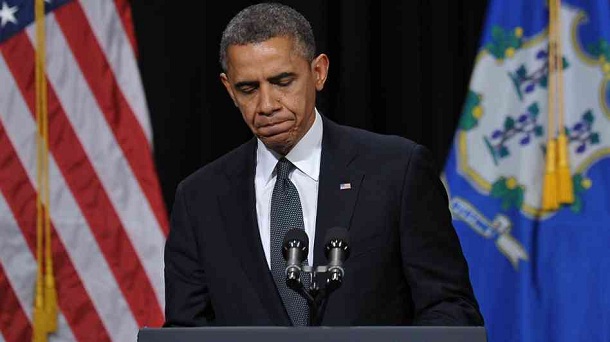
Last night Hallie and I watched President Obama’s eloquent and moving speech at the interfaith prayer vigil for those killed in the Sandy Hook Elementary School shootings. About halfway through, when Obama discussed our nation’s collective responsibility to our children, a certain cognitive dissonance popped into my head – a pesky, but familiar distraction that remained with me for the rest of the speech.

Obama concluded by reciting the first name of each of the 20 children killed. When it was over we both sat silently looking at the screen. “Don’t say it, just don’t say it” I thought to myself.

“What did you think?” she finally asked me.

“Very moving” I said, “but..”

“But what?”

“What the hell,” I thought to myself, “go ahead and say it…”

“I don’t know, it’s hard for me to listen to Obama talk about our responsibility to keep our children safe knowing that he personally approves the drone strikes that kill hundreds of innocent children in other countries.”

Hallie rolled her eyes at me. But before she could say “Oh my God, can’t you give it a rest just this once?” I said it myself: “I know, I know, I can’t help it..”

Over the weekend, I thought of a certain moment in the Michael Moore documentary “Bowling for Columbine.” Toward the outset of the movie, Moore pointed out that the Columbine shooting took place during the largest one day bombing by the US in the Kosovo war.  He showed news footage from that day which showed the bloody aftermath of the bombing that killed numerous civilians, including those in a local hospital and primary school. The news footage also included President Clinton telling reporters that the US military was trying to “minimize harm to innocent people.”

Then Moore flashes the words “One Hour Later” and there’s Clinton again: “We all know there has been a terrible shooting at a high school in Littleton, Colorado.” Moore’s point was clear: there is an important connection to be made between our killing of Serbian civilians and the killing of students in Columbine.

So too, I believe there is a similar connection between the killing of innocent children in Newtown to the killing of innocent children in Pakistan.  Both are the product of a uniquely American culture of violence, insecurity and fear – and both are the consequences of a national penchant for manufacturing, selling and profiting from ever more sophisticated weapons of death.

Might it be that our Constitutional right to bear arms reflects a national sense of entitlement to create and sell weapons and to use them wherever and whenever we see fit?  And if so, might we be ready to limit this right for the sake of our children both here and around the world?

In this regard, I think the most telling moment in Obama’s speech was when he asked the rhetorical question:

Are we prepared to say that such violence visited on our children year after year after year is somehow the price of our freedom?

Would that our President would ask himself that very question before he approves his next drone strike.

(Please read this recent report by the Bureau of Investigative Journalism that determines over 160 children have been killed in seven years by US drone strikes in Pakistan’s tribal areas.)

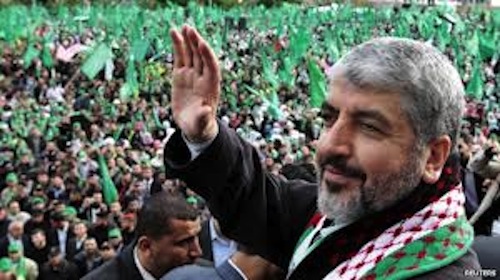
Khaled Meshaal’s Speech: Actions Speak Louder

Khaled-Meshaal

I’ve just finished reading Hussein Ibish’s excoriation of Hamas leader Khaled Meshaal’s victory speech in Gaza last week, in which he accuses Meshaal of “unhelpful escalating rhetoric” against Israel. Along the way, Ibish dishes out a fair amount of rhetorical hyperbole himself, calling Meshaal’s speech “one of the most cynical, damaging and dangerous speeches in the history of the Palestinian national movement” and “profoundly toxic from every perspective.”

It’s certainly true that Meshaal’s speech, which he delivered as he made his first-ever visit to Gaza on the occasion of the 25th anniversary of Hamas and the end of Israel’s latest military campaign, Operation Pillar of Defense, struck a note of resolute defiance.

Here’s a translated excerpt from an Al Jazeera report:

“Palestine is our land and nation from the [Mediterranean] sea to the [Jordan] river, from north to south, and we cannot cede an inch or any part of it,” he said. “We fight Zionists, not Jews. We fight whoever occupied our land, regardless of religion … Statehood will be the fruit of resistance, not negotiations,” Meshaal told cheering fans.

Hamas does not belong to the PLO, but Meshaal said a year ago that it and other factions were “on the path to joining” it.

While this is certainly strong – even incendiary – stuff, are we really to believe it was “one of the most cynical, damaging and dangerous speeches in the history of the Palestinian national movement?”

First of all, let’s take a closer look at the context in which this speech occurred. Shortly before Meshaal’s visit, Israel had leveled a devastating military assault against Hamas in Gaza. During two weeks of fighting, Hamas sent numerous missles into Israel – some of which landed close to major population centers in Tel Aviv and Jerusalem. The violence was eventually quelled through a US/Egypt brokered ceasefire. 

In other words, this is what it took to elicit the US’s active engagement with Israel and Palestine. Years of IDF crushing of Palestinian non-violent demonstrators have garnered nothing but silence. The PA’s attempt to gain recourse through the UN was met with active opposition from the Obama administration. It was only the armed resistance of Hamas in Gaza that managed to bring Hilary Clinton to the region and actively engage with the Israelis and Palestinians. In the end, what kind of message does that send to the Palestinian people?

So yes, Khaled Meshaal, told a cheering crowd that “statehood will be the fruit of resistance, not negotiations.” But should we really be so surprised? While negotiations have proved disastrous for the Palestinian people, armed resistance seems to be the only way they ever catch the attention of the international community.  Did Ibish really think Meshaal was going to get up on the podium and call for a resumption of the peace process?

Although those who consider Hamas to be an unrepentant “Islamist” terror organization would likely scoff, Meshaal and other Hamas leaders have in the past made noteworthy overtures that indicated a willingness to engage in a US-led peace process (albeit fundamentally different than the one embodied by the follies of Oslo.)  Most notably, following President Obama’s Cairo speech (which signaled at the time, a different American attitude toward the Muslim world), Meshaal responded with an important 2009 policy speech in which he welcomed a “change of tone” from Obama.  He went on to attribute this new American tone as the fruit of the “stubborn steadfastness of the people of the region, while resisting in Palestine, Lebanon, Iraq and Afghanistan” and stressed that it was not merely a change of tone but a change of policy that was needed to make progress in the region.

Meshaal added that Palestinians would judge the US not by its words but by its actions, which would have to “begin with reconstruction of Gaza and the lifting of the blockade, lifting the oppression and security pressure in the West Bank, and allowing Palestinian reconciliation to take its course without external pressures or interference.”

Whether or not one believes these overtures were genuine, we’ll never really know. Meshaal’s opening went utterly unregarded by the Obama administration, who refused to deal with Hamas and chose to maintain its support of Israel’s crippling siege of Gaza.

Given this history, are we really to believe, as Ibish would have it, that Meshaal’s recent speech is one of the most “cynical, damaging and dangerous speeches” Palestinian history?  Or is it merely a reflection of its time – a moment in which the Obama administration has thoroughly squandered its own stated desire to usher in a new era of engagement in the Middle East?

In the end, Meshaal’s speech was simply that – a political speech. And history (particularly Middle East history) has shown us time and again that parsing a politicians words are a notoriously bad way to predict what he/she will eventually agree to. In the words of the very insightful Israeli blogger Noam Sheizaf:

The bottom line is that none of this matters. It’s all a huge red herring. Nothing a leader says now determines the way he will act in the future. Public statements are important only to a limited extent and agreements depend on the continued willingness of both sides to uphold them. As long as both parties feel that they benefit from a certain status quo, or that their interests are better served than by any alternative, the deal they reach could hold. If one party is coerced into signing but doesn’t have its interests and desires addressed, all the nice declarations won’t matter. Twenty years after the historic peace deal that should have ended the Israeli-Palestinian conflict but didn’t, you’d think that people would get it.

The arguments about the meaning and importance of the Hamas charter are all but identical to the decade-long debate over the PLO charter. How much effort and time was put into forcing Arafat to change it, and how little did it matter when negotiations collapsed in Camp David and violence returned. The same goes for today: Given the right pressure, a certain Palestinian leadership could be made to promise Israel anything. Yet none of it would matter if you don’t address the fundamentals of the conflict: The occupation, the refugees, the holy sites, the settlements, the access to land and to water. The leaders would change their minds and if they don’t new leaders (“more extreme”) will come. Reality will prevail over rhetoric.

So let’s be honest. Meshaal didn’t mince his words –  but in the end it is actions that ultimately matter.  And in this regard, Meshaal’s words were considerably less damaging to the cause of the Palestinian national movement than the Netanyahu government’s announcement that it would build 3,000 more units in the E1 region, which would successfully cut the West Bank in half and cut it off completely from East Jerusalem, ending any reasonable hope for a viable two state solution. Sadly, the only response this deeply damaging action elicited from the Obama administration were words such as “counterproductive” and “we urge restraint.”

To my mind these kinds of words are considerably more dangerous to the cause of a just peace in Israel/Palestine.

Marching in Solidarity: A Guest Post by Hallie Rosen

Gaza March

Guest post by Hallie Rosen

Like almost every Jew, I too have a complicated relationship with Israel.

Israel has always been an important part of my Jewish identity. Brant and I met doing Israel activism on campus at UCLA and we spent almost two years in Israel before we were married. I’ve worked in the organized Jewish community for almost twenty years, first at the Anti-Defamation League and more recently at the Illinois Holocaust Museum.

And like Brant, my views on Israel/Palestine have evolved. While I admire Brant’s courage regarding the Israel/Palestine issue, I haven’t felt completely comfortable taking the same kinds of public stands that he does. I agree with many of Brant’s viewpoints, but I admit there have been times I have felt uncomfortable with his being so public with his views – my ingrained impulse against airing Israel’s “dirty laundry.”

While I have read his blog and his book, and we have had many conversations about his activism and the general political situation in Israel/Palestine, I have never personally taken such a public stand on the issue until November 19, when I marched with Brant at a Chicago rally protesting Israel’s military actions in Gaza.

It was not a major decision on my part. I was very upset by the news out of Gaza, so when Brant invited me to join him in the march/rally, I readily agreed.  Since I work near the rally site and it took place at the end of the day, it was a simple matter to walk over and join the group as people gathered at the Federal Plaza.

My first impression was surprise at how many young families were in attendance. I expected to see primarily college age students, but I was struck by the sight of many parents with school aged children and a fair amount of strollers.  Since Brant was wearing a kippah, people knew that he was Jewish and several people came up to him to thank him for attending the rally and showing his support.  They didn’t necessarily know who he was, but it clearly meant a lot for see a Jew walk with them.  For me, it underscored that this was an issue of conscience for all peoples – not just Palestinians.

I expected to see protest posters and I braced myself for anti-Israel and anti-Jewish sentiments.  From my ADL days, I knew that these kinds of protests can easily become an opportunity for fringe elements to chant anti-Semitic slogans.

But that didn’t happen.  All of the messages were strong, but on target. As the group of about 700 people walked peaceably through the Loop during rush hour, there was chanting  but also simple non-political conversations among the marches – about shopping, uncomfortable shoes, upcoming holidays, etc.  I only saw one incident of an onlooker, who provoked some of the crowd – the police quickly subdued him and we continued on our way. As a relative newcomer, I didn’t fully feel ready to join the chanting. Perhaps I’ve not fully come to grips with what it means to be a Jew in solidarity with Palestinians.

We gathered once again after the walk to listen to speakers. Everyone was on message, asking for sanctions from the US, end of violence and settlement building, requesting a just peace, etc. When Brant spoke, he received a strong enthusiastic reception from the crowd – particularly when he was introduced as a rabbi.

As the crowd dwindled, we walked to the train station and back home. Later that night, I watched the news coverage of the rally and was surprised, at how violent the images were.  The piece included edited snippets of protestors chanting and because there were kafiyyahs and head coverings, it seemed that the news media was only interested in showing us the familiar images of “angry Arabs.”

The news report failed to convey the racial and religious diversity of the crowd – and there were none of the mothers and young children with whom I had just spent a few hours marching.  Once again I became profoundly aware of the power of stereotypes – and to a greater extent, of racism and how the images that we see on a regular basis prejudice our views and shape our opinions.

I also became aware of how important it is to step outside of one’s own comfort zone and find common cause with those whom you’ve previously assumed to be your enemy. In the end, marching for justice was for me an affirmation of our common humanity.

Book Readings (and a Legislative Visit) in Baltimore/DC

helenasarahbrant

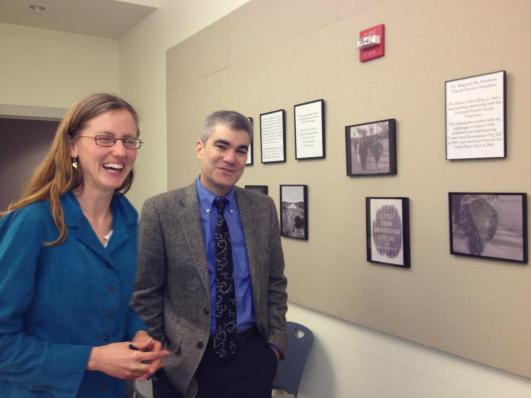
Helena Cobban (left), Sarah Grey and me at the FCNL office

Had a wonderful whirlwind visit in Baltimore/DC, highlights included book readings in Baltimore, DC and Georgetown and a visit with the National Friends Legislative Committee to Senator Dick Durbin’s office to encourage him not to support a Senate defense authorization bill that sought to punish Palestinians for seeking non-member observer status at the United Nations. Thankfully, the amendment never came up for a vote.

While in DC, I also had the pleasure of being interviewed by blogger/journalist Mitchell Plitnick for Inter Press Service News Agency. (The full version appears on Mitchell’s blog.)

A snippet:

To create political power, leveraging people power is the best method, and historically, this has been shown to be the case. The fact that Israel is reacting so harshly against it shows its potential. When Hillary Clinton says 3000 new settlements are “not helpful,” that doesn’t get Israel’s attention. But when (Jewish Voice for Peace), (Students for Justice in Palestine) and church groups move to get corporations and holding companies to divest from Israel, that’s front page news in Israel. That is a sign that this has a great impact, when used in a smart and concerted way.

One of the big pleasures of the trip was finally getting the chance to meet Just World Books publisher Helena Cobban and my editor, Sarah Grey, both of whom have thoroughly become my kindred spirits.

Some more pix from my trip:

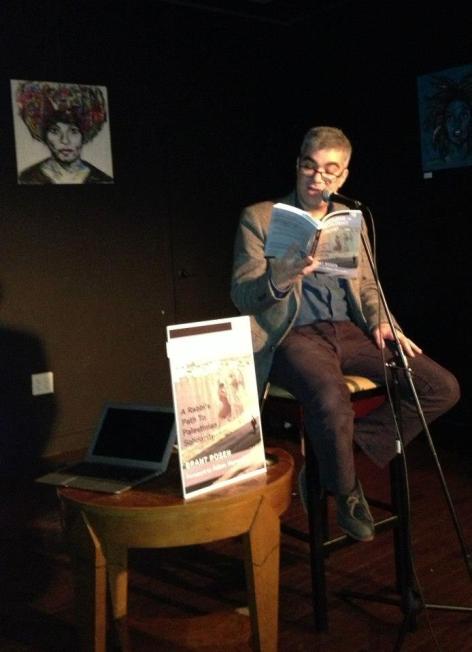
readingb&P

Book reading at Busboys and Poets, Washington DC (under the watchful gaze of Angela Davis)

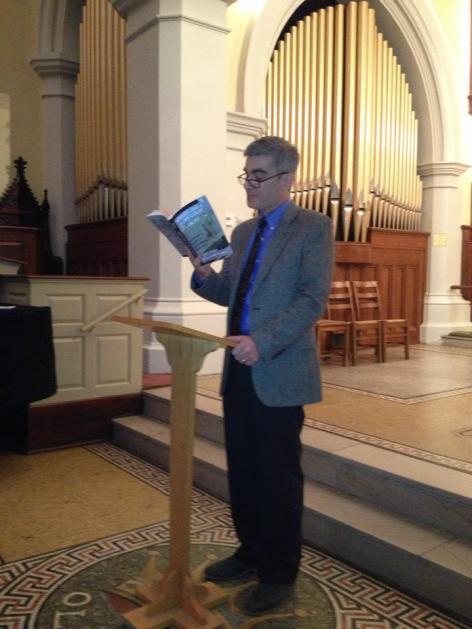
readinggeorgetown

Book Reading at St. John’s Episcopal, Georgetown

With Kate Gould, Legislative Associate for Middle East Policy at FCNL

Upcoming “Wrestling in the Daylight” Gigs in Baltimore and DC!

This Sunday and Monday (December 2 and 3) I’ll be making a quick trip through Baltimore/DC for some “Wrestling in the Daylight” book readings. I’m looking forward to my first “Wrestling” gigs outside of my native habitat of Chicago.

On Sunday I’ll be appearing at a program sponsored by Jewish Voice for Peace – Baltimore at Space 2640, 2640 St. Paul Street at 1:00 pm (click here for the Facebook event page). That evening I’ll be in DC at Busboys and Poets on 5th and K at 8:45 pm  for reading sponsored by the DC Metro chapter of JVP.

On Monday, I’ll visit the Friends Committee on National Legislation, 245 2nd St, NE Washington (Wilson Conference Room) at 12:30 pm. And finally, I’ll speak that evening I’ll speak at St. John’s Church in Georgetown, 3240 O St. NW for a program sponsored by the Washington Interfaith Alliance for Middle East Peace.

If you live in or near the area, please drop by. I look forward to seeing you there!

American Civil Rights Leaders: End the Violence and Secure a Just Peace

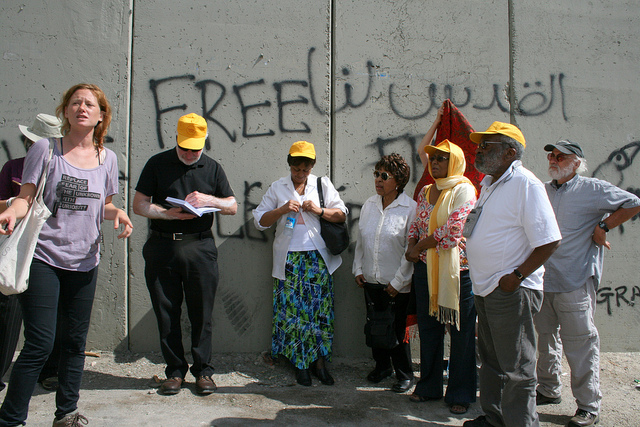
Delegates on a tour led by Ruth Edmonds of the Israeli Coalition Against Home Demolitions (photo: Allie Perry)

Received from my friend and colleague Rabbi Brian Walt:

“Our lives begin to end the day we become silent about the things that matter.”

Dr. Martin Luther King, Jr.

An immediate end to Israel’s assault on Gaza, “Operation Pillar of Defense,”matters. An immediate end to the violence—the onslaught of missiles, rockets, drones, killing, and targeted assassination—matters. An end to Israel’s ongoing blockade of Gaza matters.  An end to Israeli’s 45-year occupation of Palestine matters. A resolution of the issue of Palestinian refugees expelled from their homes in 1948, many of whom live in Gaza matters.  Equality, security, and human rights for everyone matters.

We write as individuals who recently traveled to the West Bank with the Dorothy Cotton Institute’s 2012 Civil and Human Rights Delegation, organized by Interfaith Peace-Builders.  We cannot and will not be silent.  We join our voices with people around the world who are calling for an immediate cease-fire. Specifically, we implore President Barack Obama to demand that Israel withdraw its forces from Gaza’s borders; make U.S. aid to Israel conditional upon Israel’s adherence with relevant U.S. and international law; work with Israeli and Palestinian leaders to bring an end to Israel’s occupation of the Palestinian territories and to secure a just peace that ensures everyone’s human rights.

In the words of Dr. Martin Luther King, Jr., “Returning violence for violence multiplies violence, adding deeper darkness to a night already devoid of stars.”  As Prime Minister Yitzhak Rabin declared in 1993, “Enough of blood and tears.”  Enough!

We deplore the firing of rockets on civilian areas in Israel.  We also deplore and are outraged by the asymmetry, the disproportionality, of Israel’s bombardment of Gaza, evidenced by the growing number of Palestinian civilian deaths and casualties.  This is not a conflict between equal powers, but between a prosperous occupying nation on one hand, armed and sanctioned by 3 billion dollars in annual U.S. military aid, and on the other, a population of 1.7 million besieged people, trapped within a strip of land only 6 miles by 26 miles, (147 square miles) in what amounts to an open-air prison.

United States military support to Israel is huge.  From 2000 to 2009, the US appropriated to Israel $24 billion in military aid, delivering more than 670 million weapons and related military equipment with this money.  During these same years, through its illegal military occupation of the Palestinian West Bank, East Jerusalem and Gaza Strip, Israel killed at least 2,969 Palestinians who took no part in hostilities.

During our trip to the West Bank, we witnessed for ourselves the injustice and violence of the Israeli occupation and the suffering inflicted on the Palestinians, in violation of international law and UN resolutions.

In the Palestinian village of Nabi Saleh, for just one example, we observed a weekly nonviolent protest.   The neighboring Israeli settlement of Halamish was illegally built on Nabi Saleh’s land.  This settlement has also seized control of the Nabi Saleh’s water spring, allowing villagers to access their own spring water for only 7-10 hours a week.  Demonstrators of all ages participated in the protest, including several who, in recognition of the civil rights veterans in our delegation, carried posters with quotations from Dr. Martin Luther King, Jr.  We watched in horror as heavily armed members of the Israel Defense Forces (IDF) responded to this peaceful assembly with violence, strafing the demonstrators with a barrage of tear gas canisters, rubber bullets, gas grenades, and even a round of live ammunition.

The IDF assault in response to these weekly nonviolent demonstrations can be deadly.  Rushdi Tamimi, a young adult Nabi Saleh villager, died this past week while he was protesting Israel’s attack on Gaza.  The IDF fired rubber bullets into Rushdi’s back and bullets into his gut, and slammed his head with a rifle butt.

Israel’s assault on Gaza is exponentially more violent than what we witnessed in the West Bank, but the context–the oppression of the Palestinian people—is the same.  Most of the inhabitants of Gaza are refugees or descendants of refugees expelled from their homes in Israel in 1948.   This dispossession of the Palestinians that they call the Nakba (The Catastrophe) continues on the West Bank where Israel has built extensive Jewish settlements on confiscated Palestinian land. We saw with our own eyes how this settlement expansion and the systemic discrimination has further dispossessed the Palestinian people and is creating a “silent transfer” of Palestinians who are either forced or decide to leave because of the oppression.   This injustice—Israel’s decades-long oppression of the Palestinian people—has to be addressed by honest and good-faith negotiations and a genuine agreement to share the land.  The alternative is a future of endless eruptions of aggression, senseless bloodshed, and more trauma for Palestinians and Israelis. This surely matters to all people of good will.

To President Obama, we say, use the immense power and authority United States citizens have once again entrusted to you, to exercise your courage and moral leadership to preserve lives and protect the dignity and self-determination, to which the Palestinian people and all people are entitled.   Israel relies upon the economic, military, and strategic cooperation and support of the United States.  You have the power to not only appeal to Israel to show restraint, but to require it.

Feeling ourselves deeply a part of “We the People,” sharing so much of your own tradition of organizing for justice and peace, we believe it is just, moral and in keeping with the best spirit of Dr. King to urge you to:

§  Call for an end to violence by all parties and an immediate cease-fire for the sake of all people in the region.

§  Use your power to demand that Israeli Prime Minister Benjamin Netanyahu and the IDF cease the bombardment of Gaza and withdraw their armed forces immediately.

§  Join with the international community in using all diplomatic, economic, and strategic means to end Israel’s illegal, brutal siege of Gaza.

§  Insist that the United States condition aid to Israel on compliance with U.S. law (specifically the U.S. Arms Export Control Act) and with international law.

§  Work with the leaders of Israel and Palestine to secure an end to Israel’s occupation and to negotiate a just peace.

As citizens of the United States, we are responsible for what our government does in our name, and so we will not be silent.  Justice, peace and truth matter.  The future of the children of Israel and Palestine matter.  We cannot be silent and neither can you.

Members of the The Dorothy Cotton Institute 2012 Civil and Human Rights Delegation:

(List in formation)

Continue reading

Outrage in Gaza Redux

Israel’s military assault on Gaza in 2008-09 represented an important turning point in my own relationship with Israel. I recall experiencing a new and previously unfamiliar feeling of anguish as Israel bombarded the people living in that tiny, besieged strip of land over and over, day after day after day. While I certainly felt a sense of tribal loyalty to the Israelis who withstood Qassam rocket fire from Gaza, I felt a newfound sense of concern and solidarity with Gazans who I believed were experiencing nothing short of oppression during this massive military onslaught.

And now it’s happening again. Only this time I don’t think the term “anguish” quite fits my mindset. Now it’s something much closer to rage.

It’s happening again. Once again 1.7 million people, mostly refugees, who have been living in what amounts to the world’s largest open air prison, are being subjected to a massive military assault at the hands of the world’s most militarized nation, using mostly US-made weapons. And our President is not only looking on – he is defending Israel’s onslaught by saying it has a right to “self-defense in light of the barrage of rocket attacks being launched from Gaza against Israeli civilians.”

Let’s be clear: this tragedy didn’t start with the Qassams.  It didn’t start with the election of Hamas. And it didn’t start with the “instability” that followed Israel’s withdrawal from Gaza.

No, this is just the latest chapter of a much longer saga that began in 1947-48, when scores of Palestinians were ethnically cleansed from their cities and villages in the coastal plain and lower Galilee and warehoused in a tiny strip of land on the edge of the Mediterranean. By all accounts, most were simply too overwhelmed to realize what was happening. The ones who tried to return to their homes were termed “infiltrators” and were killed on sight. Others resisted by staging raids in the newly declared state of Israel. Sometimes they succeeded, more often they did not. Either way, Israel decided early on that it would respond to each of these reprisals with a overwhelming military show of force.  And those reprisals and that show of force have essentially been ongoing until this very day.

I realize, of course, there is plenty of political subtext to this latest go-around.  I’ve read the timelines and have formed my own opinions on the latest “who started it?” debate. I’ve also read plenty of analyses by Israeli observers who believe that this was not a response to Qassam fire at all but was very much a “war of choice” waged by an Israeli administration looking to shore up political support in an election season.

I’ve also read a widely circulated article from Ha’aretz about Israel’s recent execution of Ahmed Jabari (the head of Hamas’ military wing). I learned that up until now, Jabari was “Israel’s subcontractor” for security in the Gaza Strip, that Israel has been literally funding Hamas through intermediaries in exchange for peace and quiet on their southern border, and that when Jabari failed to deliver of late, the decision came down to take him out. Another article, written by the Israeli who negotiated with Jabari for the release of Gilad Shalit, revealed that negotiations were still ongoing with Jabari when the Israeli military assassinated him with a drone strike.

Yes, the wonky side of me has been avidly reading all these analyses. And while I do believe they provide an important counterbalance to the mythic statements by Israel’s Foreign Ministry and the US State Department, the more I read the cynical political subtext for this war, the sicker I get. No, this isn’t about Qassams, but don’t be fooled into thinking it’s about elections either. It’s really just the most recent chapter in a much longer litany of injustice – the latest attempt by Israel bring the Palestinians to their knees through the sheer force of their formidable military might.

Of all the analyses I’ve yet read, one of the very few that truly seemed to grasp this truth came from Yousef Munayyer, of The Jerusalem Fund/Palestine Center:

The problem Gaza presents for Israel is that it won’t go away—though Israel would love it if it would. It is a constant reminder of the depopulation of Palestine in 1948, the folly of the 1967 occupation, and the many massacres which have happened since them. It also places the Israelis in an uncomfortable position because it presents a problem (in the form of projectiles) which cannot be solved by force…

Israel has tried assassinating Palestinian leaders for decades but the resistance persists. Israel launched a devastating and brutal war on Gaza from 2008 to 2009 killing 1,400 people, mostly civilians, but the resistance persists.

Why, then, would Israel choose to revert to a failed strategy that will undoubtedly only escalate the situation? Because it is far easier for politicians to lie to voters, vilify their adversaries, and tell them ‘we will hit them hard’ than to come clean and say instead, ‘we’ve failed and there is no military solution to this problem.’

Like last time, I know many in the Jewish community will say it is unseemly of me to criticize Israel this way while Israelis live in fear of Qassam fire out of Gaza. I know there are those who believe that by writing these words, I’m turning my back on my own people in their time of need. But I know in my heart that my outrage at Israel’s actions goes hand in hand with compassion for Israelis – particularly those who know that their leaders’ devotion to the sword is leading them into the abyss.

Additionally, as I wrote under tragically similar circumstances in 2009:

I believe Israel’s response to Hamas’ missile attacks have been disproportionate and outrageous. I believe their actions only further endanger the security of  Israelis while inflicting collective punishment and a severe humanitarian crisis upon Gazans. Indeed, just as I cannot understand what it must be like to be a citizen of Sderot, I cannot even begin to imagine what it must be like to be a Gazan citizen at the moment, living under constant air attack, with no running water or electricity and dwindling food, as hospitals fill up with wounded and corpses lie rotting in the streets because relief workers are unable to reach them.

When will we be ready to accept that this is not a “balanced” conflict or even a “war” by any reasonable definition – and that it never was?  When will we face the painful truth that this is not a story about one side versus the other but about one side oppressing the other?  Frankly, all the well-meaning liberal comments about “praying for peace on both sides” and leave me cold. Worse, I find them insidious because they simply serve to support the myth that this is a conflict between two equal parties. It is not. And peace will not come until we admit this – until we admit that there is an essential injustice at the heart of this tragedy and that try as it might, Israel will never be able to make it go away through the sheer force of its increasingly massive military might.

Beyond the rage, I’m heartened that this time around there is a growing community of conscience that is speaking out publicly and in no uncertain terms to protest Israel’s latest outrage in Gaza. I am so deeply grateful for my friends and colleagues at Jewish Voice for Peace, who is alone in the Jewish world in condemning this latest assault.  I urge you to read JVP’s courageous statement, which I know gives voice to increasing numbers of Jews and non-Jews, young and old, religious and secular, who are coming together through the courage of their conscience.

At this point in my posts I would typically write “click here” to lend your voice to some kind of collective statement.  I’m going resist that temptation and urge you instead to take to the streets.

I’ll see you there.

An Open Letter to the President

Please, please read this recent blog post by my friend Abby Okrent. I will have more to write about Israel’s most recent outrages in Gaza very soon.

Dear Mr. President,

My younger brother was an early believer in you. He worked for your Senate campaign. At the age of 25, he ran the GOTV campaign in North Carolina, delivering an improbable victory for you in a Southern state that helped give you your first term. This year, slightly less bright-eyed but nonetheless a believer, he was working on your campaign again when he died suddenly, a brilliant, energetic 29 year old, dead in his tracks. You know this. You called my parents. Your campaign, to my greatest appreciation and respect, brought grief counselors for his coworkers, dedicated a corner of the office and much of your fundraising efforts to him, and bussed his coworkers to join the hundreds of others at his funeral.

You may not know that after his sudden passing, many of his friends quit their jobs, moved, changed their lives to continue working on your campaign in his memory. One of these friends ran your GOTV effort in Ohio, delivering a close swing state that resulted in the race being called for you early. My mom and I joined these efforts in Ohio, door-knocking until right before the polls closed, pounding the pavement in Alex’s memory and in hopes of your next presidency. Despite my disappointment in some of your stances, I proudly kept my Ohio for Obama sticker on my jacket.

Until yesterday. Mr. President, when the bombs began raining on Gaza again and you reiterated Israel’s “right to defend itself”, I took that sticker off my jacket. Later, you called Prime Minister Netanyahu and asked him to “use restraint,” as though he were a glutton at a feast, rather than an elected official of a powerful military nation, using your own country’s weaponry to engage in a one-sided assault. Mr. President, you are the most powerful man in the world. You do not need to politely request anything of Mr. Netanyahu; you can stop him by ending U.S. military aid to Israel until Israel complies with international and U.S. law. Mr. Netanyahu and his right-wing allies in the U.S. actively campaigned against your re-election, assuming that Governor Romney would be better positioned to give them carte blanche to violate Palestinian human rights and start regional wars. It is not to them that you now need to prove your allegiance, but to we the people who knocked doors for you, who made phone calls for you, who died getting you this 4 years more of opportunity.

My brother was an early believer in you. He knew, but disliked, that you would have to sway to right-wing Israeli interests. We watched you walk away from your Palestinian colleagues in Chicago. It became a painful issue in our Jewish family as we tried to support my brother all the while wondering how far you would go in continuing the charade that the American people and our interests, and not American money and its interests, really drove your Middle East policy. Mr. President, AIPAC’s star is fading. Not in your final term, maybe, but soon, politicians who hitch their ambitions to this tainted money will fall. You saw this at the DNC when Mayor Villaraigosa failed to get his 2/3 vote for an AIPAC-sponsored resolution but proceeded to pretend the support was still there; it’s not. My brother was an early American Jewish voice for Palestinians, but he was not alone and there are more of us than ever. And there are also Arabs now in your coalition; you saw them at the DNC in their “Yalla Vote!” t-shirts. You have a rainbow of supporters who worked to re-elect you. We voted for you. We fund-raised for you. We do not want to watch you pretend like it is for us that you allow these massacres to continue with our money.

My brother would be disappointed to see your impotence in the face of continuing Israeli aggression shortly after such a sweeping re-election victory. I am still proud of him. I am still proud of all of the Americans that worked so hard to deliver you this re-election. But I am so hurt and ashamed to watch you use restraint when you are the only person with the power to stop this massacre. Mr. President, I am barely over 5 feet tall and I am not afraid of AIPAC; why are you?

Sincerely,

A bereaved sister

Why is the RAC Holding Social Justice Conventions at Boycotted Hotels?

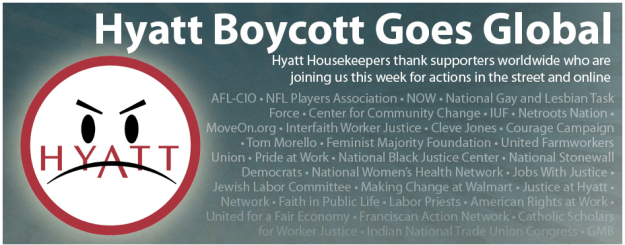
When it was announced that the Religious Action Center of Reform Judaism (RAC) had signed contracts with Hyatt Hotels for upcoming conventions – including their signature Consultation on Conscience and L’Taken Social Justice Seminars – many who stood in solidarity with Hyatt workers believed it was moment of truth for the Jewish community. Would the RAC, one of the most prominent and venerable social justice organizations in the American Jewish community, go ahead with their plans to hold high profile conventions in boycotted hotels?  Or would they grasp the critical importance of this moment and opt to hold their events elsewhere?

Some background:

When they learned of the contracts, concerned Jewish clergy as well as the Hyatt workers’ union, UNITE HERE, formally asked the RAC and the Union for Reform Judaism (URJ) to honor the recently announced global boycott of Hyatt. Last month, the URJ and RAC met with union leaders and Hyatt employees. They learned that Hyatt summarily fired nearly 100 housekeepers from three Boston-area hotels in August 2009, replacing longtime housekeepers with temps at far lower rates of pay.  They learned that Hyatt has been undermining the stability of jobs by increasingly subcontracting their workers. They learned Hyatt has been undermining the safety of jobs by increasing housekeeping workloads to dangerous levels. And they learned that Hyatt has been actively thwarting efforts by non-union hotel workers to exercise their fundamental right as workers to collectively bargain.

The RAC and the URJ also heard from high ranking officials at Hyatt. Not surprisingly, Hyatt challenged the union’s claims of unjust treatment of workers. While they admitted there may have been problems at some of their hotels in the past, they insisted that they had now been addressed.

After deliberating, the organizations publicized their final decision. In a released statement, the URJ/RAC opened with an affirmation of the Reform movement’s long-time support for unions and the labor movement, dating back to the days of “the historic Jewish garment trade unions.” (It was right about here that I started to get that familiar sinking feeling…)  After laying out an extended description of their deliberation process, they announced their decision: they had “decided not to seek to move the events in question from Hyatt hotels.”

In a subsequent article in the Jewish Daily Forward, (“When Principles and Interests Collide,” November 3, 2012) columnist (and senior adviser to the RAC) Leonard Fein offered what was essentially a condensed version of the original statement. While he recognized “the challenges faced by many hotel workers” and believed the Reform movement was “at the forefront of efforts to provide greater rights and protections for hotel workers,” Fein wrote that the request by UNITE HERE was still “hardly a no-brainer.”

The RAC/URJ statement gave three essential reasons for their decision:

1. They had done due diligence.  Prior to entering into the contracts, the URJ/RAC checked each specific hotel on INMEX (Information Meeting Exchange), a system established by UNITE HERE to help non-profits avoid entering into contracts with hotels involved in labor disputes. Because the contracts were signed long before the Hyatt global boycott was announced, none of the Hyatt hotels in question were listed as having any labor disputes at the time.

2. The situation was “complex.” Because boycotts affect “many stakeholders who have no involvement in the disputes,” the URJ/RAC only honors boycotts “in certain exceptional circumstances.”  In determining whether to honor a boycott, their process requires “detailed investigation, meetings with as many stakeholders as possible, hearing and considering arguments on all sides, and going through the often arduous process of trying to validate the claims made by the various parties.”  In the end, their support for boycotts is “the exception and not the rule.”

3. It would cost the Reform movement a great deal of money. The URJ/RAC has a fiduciary responsibility to the congregations and donors who have entrusted their funds to them. The cancellation of the contracts would cost $450,000 in penalties – funds that are critically needed given the enormous fiscal constraints on Reform congregations and the movement at large.  The loss of the money would also impede the RAC’s ongoing efforts to promote social justice, including decent working conditions in hotels. And even if they did break the contracts it would ultimately profit Hyatt hotels, as none of the $450,000 would go to the labor union or the workers.

The statement concluded:

We respect those who disagree with us. For those who do disagree, let us point out that no one has to stay at a Hyatt to participate in our conferences. We hope they will join us in education programs on the situation of workers to be held at the conferences, showing our support for hotel workers, including those at Hyatt.

For those of us who have long been fighting in the trenches with Hyatt workers for fair treatment and dignity it is particularly galling that the URJ/RAC claim to support “hotel workers, including those at Hyatt” even as they refuse to honor the workers’ boycott. For embattled workers, a boycott is the most important and effective tool for shifting the balance of power. It is plainly disingenuous for the URJ/RAC to refuse the Hyatt workers’ boycott call while claiming to support their cause.

Such a stance also misses the essential point of solidarity.  In the labor movement, as with all movements of liberation, solidarity means truly listening to the voices of those who are oppressed. It means allowing them – and not us – to be the architects of their liberation. It is patronizing in the extreme for the URJ/RAC to purport to support Hyatt hotel workers by saying, in essence, “we support your cause, but we’re going to support it our way – not your way.”

Let’s take a closer look at the rationales the URJ/RAC offered for refusing to rescind the Hyatt contracts:

1. The URJ/RAC claimed that it checked with the INMEX list and saw “there were no disputes with the Hyatt hotels in question.” In fact, INMEX does not include the union hotel guide and boycott list on its website because these lists are not useful for situations such as this – i.e., when organizations plan events far in the future. The UNITE HERE boycott list explicitly warns Group Customers that they should not solely rely on the list of currently boycotted hotels when planning events many months or years in advance.  In such cases, groups should “insist on protective contractual language”  that would address the eventuality of a future labor dispute or boycott.  For whatever reason, the URJ/RAC failed to do this. In any event, their claim that they checked the boycott list does not suffice as an valid excuse.

2.  While it is true that there are many “stakeholders” in a boycott, it is it is difficult to deny that vulnerable non-union workers who work for a barely livable wage, who are given increased and often dangerous workloads and who work with the constant risk of replacement by temps have the most at stake in this situation.  The “stakeholder playing field” cannot reasonably be considered level when you consider that workers are going up against an aggressively expanding multi-million dollar corporation. (Hyatt recently reported that its third quarter net profit earnings jumped 64% to $23 million compared to this time last year.)

On the subject of stakeholders, it bears noting that JB Pritzker, a principal owner of Hyatt Hotels Corporation, has long been a significant donor to the URJ and the RAC. Moreover, as late as 2010 he was listed as a member of the Commission on Social Action of Reform Judaism, serving at the Chair’s discretion. While there is no proof that Pritzker had any undue influence on the movement’s decision, this point is certainly germane to any discussion of significant “stakeholders.”

3. The URJ/RAC cites its fiduciary responsibility to its Reform movement constituents when considering the potential $450,000 in penalty fees for breaking its contracts with Hyatt. This overtly corporate rhetoric belies Reform Judaism’s status as a religious movement that considers social justice to be a central element of its mission. While it is certainly true that the Reform movement has a fiduciary responsibility to its members, it could also argued that the URJ/RAC has a stronger spiritual/ethical responsibility to its constituents to serve as a role model for its deeply cherished religious values of worker justice.

As the clergy report on the Hyatt, “Open the Gates of Justice,” states:

As religious leaders with a commitment to the moral bottom line, we consider it unacceptable when in good times employers keep their profits for themselves and in bad times they pass on their losses to their workers. We insist that the best business practice is the one that benefits workers, many of whom have served their hotels for over two decades. The best business practice benefits the guests, who want their rooms cleaned by trained and dedicated staff and who have sufficient time to do a thorough job cleaning each room. The best business practice benefits the community, which thrives on good jobs at good wages but which loses economic strength when the workforce is paid below a living wage.

In truth, many organizations that have honored the boycott have renegotiated their contracts with Hyatt to reduce or waive penalty fees. But even if they go forward with the contracts as they are, it is spurious to argue that the $450,000 in penalties would only benefit Hyatt and not the workers. After all, by contracting with the hotels, the URJ/RAC will ultimately pay Hyatt a significantly higher sum.  On the other hand, Hyatt workers would almost certainly exchange a $450,000 penalty put into the pockets of Hyatt for the invaluable and uplifting moral support they would gain from the public solidarity of the Reform movement.

I personally know many courageous Reform rabbis who have long stood in solidarity with Hyatt workers – and who are deeply offended that the Religious Action Center will be hosting social justice conventions at boycotted hotels. The URJ/RAC statement certainly does not stand for them and, I wager, for many lay members of the Reform movement who still cherish their denomination’s historic commitment to social justice.

My Reform colleagues understand that a real commitment to workers cannot end with the honoring of past struggles. It is simply not enough to invoke the International Ladies Garment Workers Union and offer bland statements about the historic role Jews played in building the American labor movement.

True solidarity means understanding that the struggle ever continues – and that there are flesh and blood “stakeholders” in our own day who call on us to support the sacred cause of worker justice.

Click here to re/affirm a pledge to support the Hyatt boycott.
Chicago Clergy to Dick Durbin: Don’t Deal Away Our Most Vulnerable!

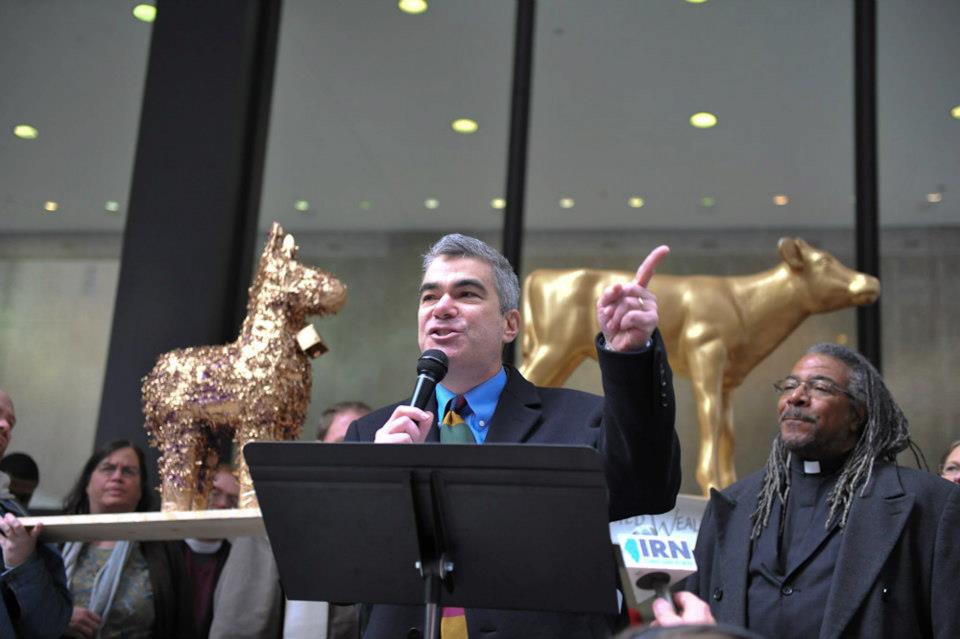
Had the honor this morning to participate in an interfaith ceremony at Chicago’s Daley Plaza that called on Illinois Senator Dick Durbin to resist devastating cuts to Federal programs in the upcoming “fiscal cliff” budget talks.  It was quite a dramatic and inspiring gathering, organized by IIRON, Make Wall Street Street Pay – Illinois and other local organizing initiatives. Over 40 members of the Chicago clergy community marched to Daley Plaza, where we encountered two Golden Calves symbolizing the idolatrous motivations behind Wall St. greed and wealth disparity. After hearing from several speakers, one of the calves (a piñata, as it turned out) was smashed open, gold coins scattering in every direction.

We didn’t focus on Dick Durbin simply because he happens to our senator.  As the Majority Whip for the Democratic Party, Durbin is one of the most important players in Washington, officially charged with leading the Democrats who control the Senate. And thus far, there is ample reason for concern that his leadership bodes ill for the more vulnerable members of our society.

Since Congress has kicked the budgetary can down the road, critical social programs in this country stand to lose $600 billion dollars on January 1 unless they choose to act. Durbin has already indicated that he favors a “grand bargain” with Republicans that may entail cuts to Social Security, Medicare and/or Medicaid. Just as ominously, Durbin has still not signed an open letter written by Congressmen Harry Reid and Bernie Sanders (and signed by 29 senators) calling on the members of Congress not to cut Social Security.

For our part, the interfaith community of Chicago has written a letter – to Senator Durbin:

Dear Senator Durbin:

Our message to you comes from Deuteronomy 30:15-19 & Joshua 24:15 as we ask you “to choose this day whom you will serve…!” We urge you to choose life and to reject “Simpson-Bowles” or any other “grand bargain” that cuts vital services to vulnerable Americans. We urge you to make absolutely to make absolutely no cuts to Social Security, Medicare or Medicaid.

Working Americans did not create this economic crisis or this false and manufactured “fiscal crisis”. Wall Street’s speculative bubble, made possible by Congressional deregulation crashed the global economy. As a result, the American people have suffered unemployment, underemployment, foreclosure, homelessness, and have lost their savings, retirements and wealth. Congress used working people’s taxes to bail out Wall Street banks instead of assisting underwater homeowners, creating jobs or rescuing state and local governments. The people have suffered enough. Doing further harm to working people is morally unconscionable.

It is immoral to make any further cuts to vital federal programs and services when wealthy individuals and big corporations are not paying their fair share to care for the broader community of whom they are part and on whom they rely. In this time of unparalleled income inequality and concentrated wealth, we will not accept any solution to the federal budget deficit other than raising revenue from those who have not done their share and can easily afford to do much more.

The kinds of cuts being discussed under Simpson-Bowles and other “deals” will literally result in sickness and death for many and will fall upon the poor and vulnerable in order to provide for the excess for the wealthy.  Senator Durbin, you now face a choice between serving the false gods of greed and excessive wealth or implementing policies that promote life and shared prosperity. It is important that as a key leader in the Senate you stand firmly on the side of those who stand to lose so much.  Therefore we bring to you four demands:

– Block any reductions in benefits for Social Security, Medicare, or Medicaid

– Block any extension of the Bush Tax Cuts for people with taxable income above $250,000 per year

– Block the “sequestration” cuts to domestic programs set to occur in January 2013

– Support progressive sources of taxes including a robust estate tax, taxing capital gains at a rate equal or higher to wages and pass a strong Financial Transaction Tax (aka the Robin Hood Tax)


To Chicago residents: A myriad of local organizing initiatives is holding a rally on Friday, November 9 in Pritzker Park (State and Van Buren) at 3:00 pm. Together we will tell our elected officials: “We Won’t Pay for Your Crisis!” and demand that the wealthy and big corporations must “Pay Their Fair Share”.