“Iran May Be Radical, But It’s Not Meshugeneh…”

Orly Halpern’s very wise piece in Foreign Policy:

For years now, official Israel has been scaring its people into believing Iran is near the ‘point of no return’ and the day it reaches it will be doomsday for Israel (of course, Israel’s estimated ‘point of no return’ dates continuously pass, prompting it to make new ones). But the Israeli establishment knows that there is no existential threat, that the Iranian regime is radical, but not suicidal; that if it is building weapons of mass destruction (WMD), it is in self-defense.

So why all the hype?  Why the deception?  The reasons are many, but they come down to money, politics, and security.

In other words:

Money: Israel’s military establishment is inflating Iran’s existential threat in order to obtain a bigger military budget.

Politics:  Israeli politicians are using Iran to divert attention away from “thorny domestic problems at home.”

Security: Israel claims that Iran might share its nuclear know-how with “non-state actors.”

On this last point, Halpern concludes:

If Israel really does fear this prospect it needs the help of its allies, either to pressure or persuade Iran. So when Vice President Biden comes to town it is best not to embarrass him with the announcement of settlement expansions and then insist on making more announcements that deepen the rift; when Turkish television broadcasts a television series depicting Israel in an ugly manner, best not to humiliate the Turkish ambassador on Israeli television; when the Secretary General of the UN visits, best to send someone to greet him at the airport, and not just the security guards; and when Israel wants to make a revenge assassination for the killing of Israeli soldiers, best to let it go, rather than use fake passports of your allies (or don’t get caught).

Israel’s recent behavior is not conducive to achieving its stated goals. It must reassess its priorities and decide whether a settlement in the West Bank, the humiliation of diplomats, and the killing of an arms smuggler are more important than its security.

At the end of the day, Israel needs help if it wants to remain the only kid on the block with a big stick.

Passover Supplements Galore!

The Passover 2010 seder supplements are arriving fast and furious. In my last post I shared my JVP supplement – here are a few more you can download and use to spice up your seder meal:

– The “Moral Voices” initiative of Penn Hillel has published “From Chains to Change” – a supplement that connects the lessons of Pesach to the contemporary scourge of human trafficking;

– Workingman’s Circle’s “10 Modern Plagues” demonstrates how our contemporary bounty is diminished by the suffering of others;

– J Street’s supplement asks “Four More Questions” about the prospects for the peace process in the coming year;

Tikkun Magazine’s supplement, thoughtful as ever, is so verbose that it could be its own haggadah…

The new supplement created by American Jewish World Service focuses on disaster relief:  “Dayenu: Supporting the Long Journey from Disaster to Recovery;”

– Jewish Funds for Justice highlights immigration reform with “For We Were Strangers;”

A print-out placemat from Mazon asks a 5th question: “Why On This Night are Millions of People Going Hungry?”

A zissen Pesach – all the best for a sweet and liberating Passover…

Father Cotton Blogs From Israel/Palestine

My dear friend and colleague Father Cotton Fite of St. Luke’s Episcopal Church in Evanston has been traveling in Israel/Palestine these past few weeks and has been blogging about his experiences. Anyone who knows Cotton knows his gentle, compassionate spirit and his rock solid commitment to fairness and justice. I’m sure you will agree that all of these qualities come through in abundance on his recent posts.

Before Cotton left, I hooked him up with Rabbi Brian Walt, my other dear friend and colleague who happens to be sojourning in I/P. Here’s Cotton’s report of their experiences in Jenin a few days ago:

On Sunday I traveled to Jenin with Rabbi Brian Walt, the co-founder Ta’anit Tzedek – Jewish Fast for Gaza, to visit the Palestinian Fair Trade Association and Canaan Fair Trade facility that produces the wonderful olive oils, Za’atar, olives and couscous now available in the US through Whole Foods. After a tour of the facility we visited one of the farmers who is a member of the cooperative. As we introduced ourselves our host said (through a translator) “I do not understand how a people who have suffered so much can turn around and inflict that same suffering on others.” Later, after coffee and apricot nectar had been served, Brian responded to our host. I’m sure I don’t have his exact words, but he told our host that he shares his sadness at the suffering of the Palestinian people and wants him to know there are other Jews who are deeply sorry for the suffering they experience. It was a privilege to be present at a moment of such honesty and compassion…

(Later) we were driven…to the Khalandia check point through which we would reenter Israel and catch a bus to Jerusalem. I had walked through this check point before so was accustomed to the routine. Brian, however, had not, and was stunned. At one point there is what can only be described as a cattle chute through which everyone must pass waiting to be admitted to the x ray machine and the soldier to whom permits and visas are presented. We passed without incident, but with a painful reminder of the humiliation Palestinians experience daily.

Brian and I talked the following day. We acknowledged the emotional impact the experience had on both of us and and our decision to give ourselves a day “off” to recover. Our Palestinian brothers and sisters never get a day off from an occupation that is now at 42 years and counting.

The RRA Endorses the Employee Free Choice Act!

I’ve spent the last three days in New Orleans, site of the Reconstructionist Rabbinical Association’s annual convention. Other than our day of service in NOLA’s Gentilly neighborhood, the big news from convention is our association’s passage of a resolution endorsing the Employee Free Choice Act. I’m proud to say it represents the strongest endorsement of the EFCA by any Jewish organization.

Click below for the text of the entire resolution:

Continue reading

Ta’anit Tzedek Conference Call this Thursday with Craig and Cindy Corrie, Sami Abdel Shafi

Ta’anit Tzedek – Jewish Fast for Gaza has begun a new initiative: “Resisting the Siege: Conversations With Gazans.” On each monthly fast day (the third Thursday of every month) we will convene a conference call featuring a Gazan Palestinian who will discuss his/her experience of life in Gaza, the effects of the siege, and how we can best support efforts to lift the blockade.

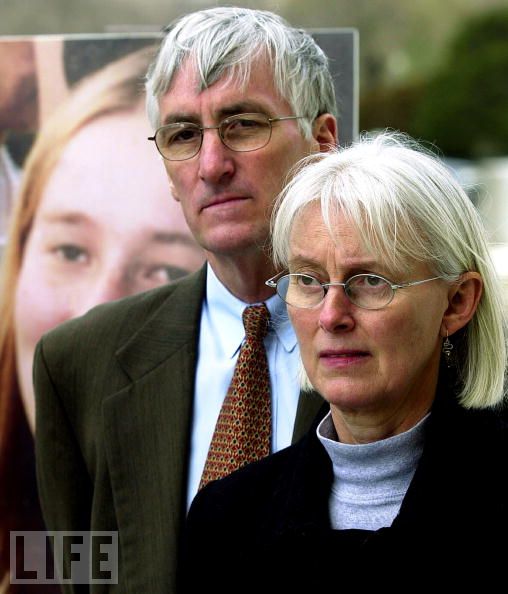
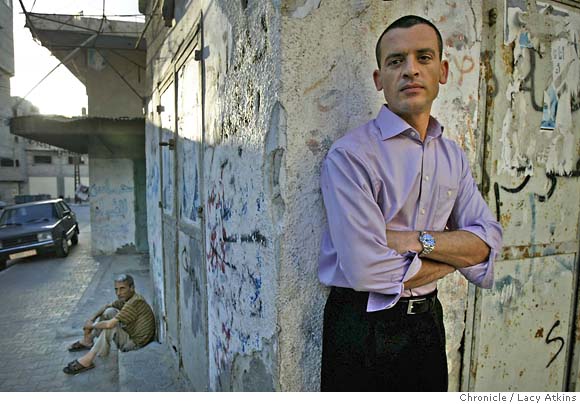
Our next conference call will take place this Thursday, March 18, at 1:00 pm EST and will feature Sami Abdel Shafi (above) an independent political analyst and writer who lives in Gaza. In addition, we will hear from Cindy and Craig Corrie whose daughter Rachel was killed by an Israeli bulldozer in 2003 as she tried to protect a Gazan Palestinian home from demolition.

In an article he wrote for The Guardian last December, Mr. Abdel Shafi wrote eloquently about the nature of the crisis facing Gaza:

Almost nothing has been more deceitful than casting Gaza as a humanitarian case. This is becoming exponentially more problematic a year after the war. Gaza urgently needs far more than merely those items judged by the Israeli military as adequate to satisfy Gaza’s humanitarian needs. This list of allowable items is tiny compared to people’s needs for a minimally respectable civil life.

Gaza is not treated humanely; the immediate concerns about the situation have clearly given way to long-term complacency, while failed politics has now become stagnant. The humanitarian classification conceals the urgent need to address this. Moreover, many in the international community have conveniently resorted to blaming Palestinians for their political divisions, as though they were unrelated to Israel’s policies – most notably Gaza’s closure after Israeli disengagement in 2005.

I also encourage you to read this piece, in which Abdel Shafi discusses the challenges facing the Palestianian Authority during this latest incarnation of the peace process.
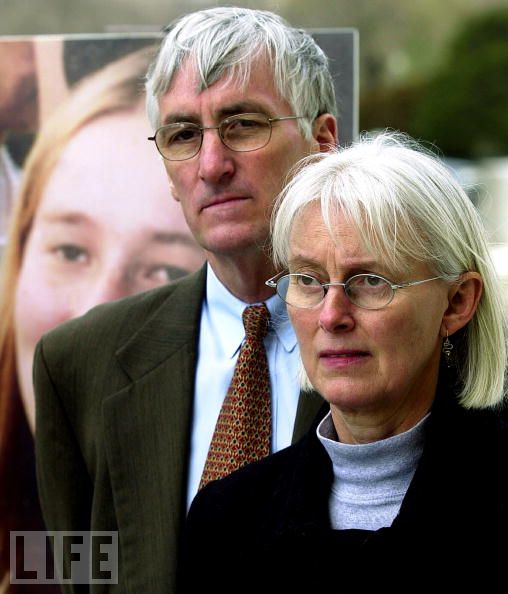
The Corries (left) will be joining our call from Haifa where they are currently participating in the hearing of a civil suit they have brought against the Government of Israel. Following Rachel’s death, the Israeli government promised the Bush administration a thorough, credible and transparent investigation of Rachel’s killing. Now seven years later, no such investigation has taken place.

On a recent interview with Democracy Now’s Amy Goodman, the Corries spoke at length about their seven year quest in search of justice and accountability for their daughter’s death:

This is a culmination, really, of seven years of our family searching for some sort of justice in the killing of Rachel. And we’ve tried to do that through diplomatic means, and we’ve asked for a US-led investigation into Rachel’s killing. We also understand that the Israelis, through Prime Minister Sharon, promised President Bush a thorough, credible and transparent investigation of Rachel’s killing. But, by our own government’s measure, that has not happened. So we’re left with simply a civil lawsuit.

So, we’re accusing the state of Israel of either intentionally killing Rachel or guilty of gross negligence in her killing seven years ago. And so, we’re seeking—the only thing you can seek in a civil case is damages. You know, so it’s really a very small part of the story that’s gone on in our lives. But it’s critical to have our time in court.

Our motivation for that was largely that it is an avenue which we understood we would be able to pursue and get information. So, through the discovery process, we were hoping to get a good deal of information. We have gotten some, but they’ve used sort of secrets of state to keep us, block us, from getting other evidence into court. But we’re going forward, and we’re very hopeful that we will get a fair trial.

Today is, in fact, the seventh anniversary of Rachel Corrie’s death. I strongly encourage you to check The Rachel Corrie Foundation for Peace and Justice website to learn how you can honor her memory. We might also heed the words of Craig Corrie (again, from the Democracy Now interview):

(One) other very specific thing that people could do, and I’m calling for people to do—the US government has come out against the blockade or the continued occupation and siege on Gaza. The children that were behind the wall that Rachel stood in front of are still under a state of siege. And I think that, very specifically, people around the world and certainly in this country could write, call or fax the White House and say, not only should we be working to have the Israelis lift that siege, but if they continue to be unwilling to do so, then the United States should come in there, work out a way that they could come in and—the Berlin airlift, it sent a message to the world about our ability to protect people around the world and our willingness to do so. If we did something similar by sea to the Gaza Strip, it would change the view of Americans around the world for maybe another fifty years. It is something that’s doable, and it’s something that the people out, your fans, could actually physically do and ask the White House to do that.

To participate in the conference call:

Dial-in Number: 1-517-417-5200 (caller pays any phone charges)

Participant Access Code: 860453

Questions for Conference Call: If you would like to suggest a question for Mr. Abdel Shafi or for Cindy or Craig Corrie, please email your question to rabbrianwalt@gmail.com or ravboaz@comcast.net no later than Wednesday night.


“This is Starting to Get Dangerous For Us…”

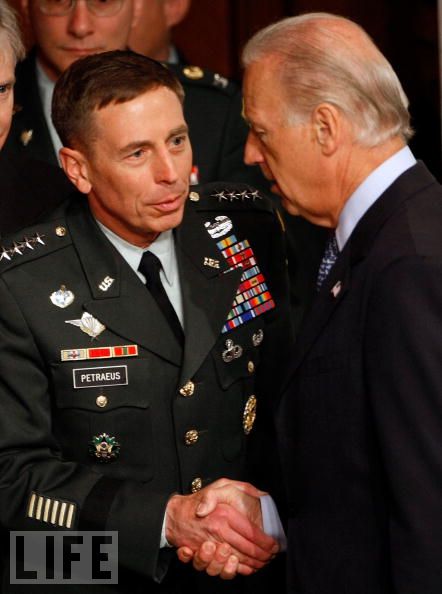
The Israeli government’s blindsiding of Joe Biden last week seems to have given rise to the crisis that won’t go away.  Or perhaps it’s more accurate to say it has uncovered fault lines between the US and Israel that have apparently been simmering now for some time.
Amid the myriad of press reports on the disastrous Biden visit, for me the most eye-opening were the Israeli press reports of Biden’s private excoriation of his hosts:

People who heard what Biden said were stunned. “This is starting to get dangerous for us,” Biden castigated his interlocutors. “What you’re doing here undermines the security of our troops who are fighting in Iraq, Afghanistan and Pakistan. That endangers us and it endangers regional peace.”

The vice president told his Israeli hosts that since many people in the Muslim world perceived a connection between Israel’s actions and US policy, any decision about construction that undermines Palestinian rights in East Jerusalem could have an impact on the personal safety of American troops fighting against Islamic terrorism. 

If that report wasn’t sobering enough, now there’s word that CENTCOM commander General David Petraeus feels the same way. Mark Perry, posting on Foreign Policy, has reported that Gen. Petraeus briefed Joint Chiefs of Staff Chairman Adm. Michael Mullen on the Israeli-Palestinian conflict back in January: 

The 33-slide, 45-minute PowerPoint briefing stunned Mullen. The briefers reported that there was a growing perception among Arab leaders that the U.S. was incapable of standing up to Israel, that CENTCOM’s mostly Arab constituency was losing faith in American promises, that Israeli intransigence on the Israeli-Palestinian conflict was jeopardizing U.S. standing in the region…

 The January Mullen briefing was unprecedented. No previous CENTCOM commander had ever expressed himself on what is essentially a political issue; which is why the briefers were careful to tell Mullen that their conclusions followed from a December 2009 tour of the region where, on Petraeus’s instructions, they spoke to senior Arab leaders. “Everywhere they went, the message was pretty humbling,” a Pentagon officer familiar with the briefing says. “America was not only viewed as weak, but its military posture in the region was eroding.” But Petraeus wasn’t finished: two days after the Mullen briefing, Petraeus sent a paper to the White House requesting that the West Bank and Gaza (which, with Israel, is a part of the European Command — or EUCOM), be made a part of his area of operations. Petraeus’s reason was straightforward: with U.S. troops deployed in Iraq and Afghanistan, the U.S. military had to be perceived by Arab leaders as engaged  in the region’s most troublesome conflict.

Wow. “Stunning” and “unprecedented” are the right words. When was the last time we heard the US military claim that Israeli policy was putting their troops in danger?

It’s much too early to tell where all this will lead, but I think its safe to say that the “special relationship” between the US and Israel is currently under serious reevaluation. It’s particularly mind-boggling to contemplate that Petraeus seems to share the same conclusion as the much-maligned Walt and Mersheimer: that Israel’s policies represent a strategic liability to US interests in the Mideast. Who would have thought?

Perry concludes:

There are important and powerful lobbies in America: the NRA, the American Medical Association, the lawyers — and the Israeli lobby. But no lobby is as important, or as powerful, as the U.S. military. While commentators and pundits might reflect that Joe Biden’s trip to Israel has forever shifted America’s relationship with its erstwhile ally in the region, the real break came in January, when David Petraeus sent a briefing team to the Pentagon with a stark warning: America’s relationship with Israel is important, but not as important as the lives of America’s soldiers. Maybe Israel gets the message now. 

I’m not particularly a fan of US military adventures in the Middle East – but if it takes the US military to convey the message that Israel has to turn from its disastrous settlement policies, I’m all for it.

Charles London to Daniel Gordis: Israel may be at war, but the Jewish People are not…

Here’s one I’ve been meaning to get to for a few weeks now: a great point/counterpoint between Rabbi Daniel Gordis and journalist Charles London (above).

Back in February, Gordis wrote a Jerusalem Post column in which he addressed Im Tirtzu’s nasty campaign against the New Israel Fund and its President, Naomi Chazan.  His conclusion: while Im Tirtzu may have gone a bit overboard in its rhetoric, folks need to understand that the Jewish people are at war with those who would “delegitimize Israel.”  And when you are fighting a war, you can ill-afford luxuries such as civil liberties:

Commitment to our democracy must not come at the cost of commitment to our survival. No country at war maintains the same freedoms of speech or action that countries not facing existential threat can permit themselves. Since the Jewish people is at war, it must think as a people at war must think.

London’s eloquent counter in the Huffington Post:

In my experience around the world, the Jewish people are not at war. There are Bosnian Jews building institutions in cooperation with their Muslim and Christian neighbors; there are Ugandan Jews who are at war with Malaria, HIV, and poverty, but not with some eternal anti-Jewish enemy. There are Iranian Jews struggling alongside Sunni, Shiite, Christian, and Baha’i for the very “liberties” their government denies all Iranians. There are Israeli Jews who are trying to build democratic institutions, multi-ethnic schools, and interfaith understanding, all of whom should take serious umbrage at his characterization of the Jews as a people at war.

Bravo: London’s response to Gordis’s Jewish siege mentality is spot on.

Yes, the Jewish people face challenges today, but we have faced daunting challenges throughout our history. And through them all, we have resolutely rejected the notion that physical might can ensure our survival. Mighty empires have come and gone, but the Jewish people have remained not by compromising our values (as Gordis counsels) but by affirming them.  By connecting our survival to a more transcendent truth.  By asserting that there is a Power far greater than physical power.

On this point, the young journalist eloquently reminds the rabbi:

I fear that arguments like Gordis’s war without end and war that values cannot endure undermines the spiritual genius of our culture. Jews have not survived for 2500 years because of nation-states, nor because they were not willing to risk life and limb for higher values. They have not survived merely to survive.

If this Jewish vision is your cup of tea, check out London’s recent book “Far from Zion: In Search of Global Jewish Community.”  (I far preferred it to Gordis’s “Saving Israel: How the Jewish People Can Win a War That May Never End.”)

Rohina Malik Unveils Our Common Humanity

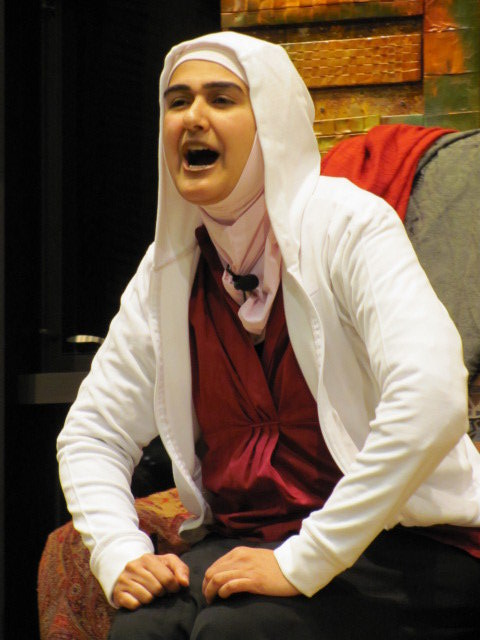
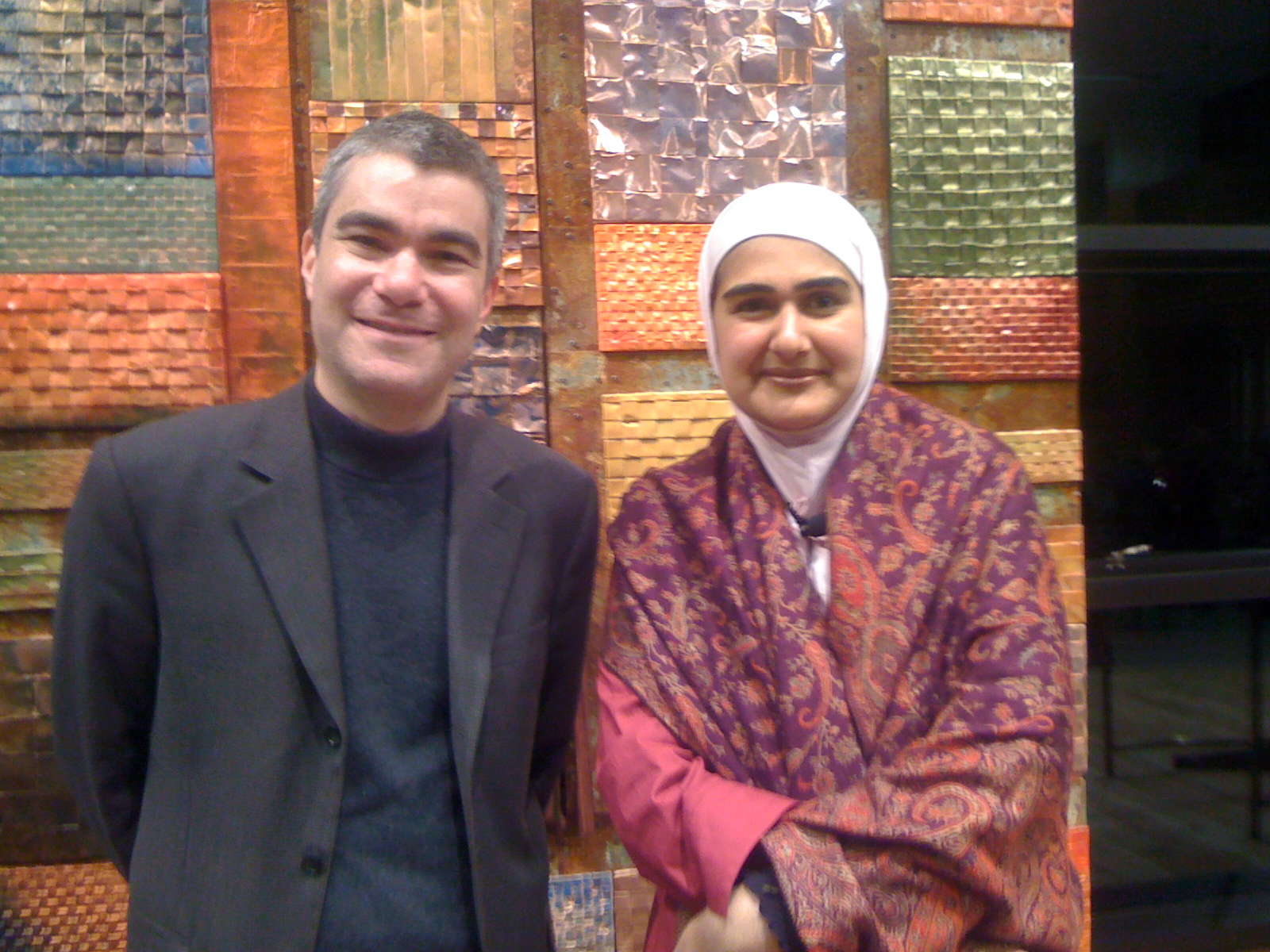
Last night JRC was honored to host a performance of the one-woman show “Unveiled,” by Rohina Malik. Breathtaking.

Rohina is a playwright, actress and solo artist of South Asian heritage who was born in London and emigrated to Chicago when she was 15.  She is an impressive and important contemporary artist – and her identity as an American Muslim woman clearly plays an important role in her art.

“Unveiled” is constructed around five monologues by five Muslim women. During the course of the play, each of them greets the audience in turn, “welcoming” us with tea.  Each woman tells the story of their lives, explains their Muslim culture and shares the experience of living as a Muslim woman in the post 9/11 world.

For her appearance at JRC last night, Rohina performed three monologues: “Maryam,” a Pakistani-American who has a dress making shop on Chicago’s Devon Avenue; “Shabana,” a young rapper of South Asian descent who was born and raised in London; and “Layla,” a Chicago restaurant owner from the Middle East who lost a brother to the fall of the twin towers.

It’s difficult to convey the cumulative effect these women had upon the audience. Rohina’s performances cut to the heart of painful and complicated political issues – but even more profound was the immediately empathy Rohina was able to conjure for us through these remarkable women. In a relatively short amount of time, she was able to bring us through an entire gamut of emotions – and in the end, the common humanity we shared with these women was palpable to everyone in the room.

Following the play we had an equally powerful post-performance discussion facilitated by the play’s director, Ann Filmer. Nearly 250 people were in attendance – including many members of the Chicagoland Muslim community – and it was truly a tribute to Rohina’s art that so many members of this large and diverse group were inspired to share deeply personal comments about their own lives and struggles.

If you live in the Chicago area, you should know that “Unveiled” will be starting a run at the Victory Gardens Theater on March 24. Highly, highly recommended.