Category Archives: Israel

Ta’anit Tzedek Conference Call this Thursday with Craig and Cindy Corrie, Sami Abdel Shafi

Ta’anit Tzedek – Jewish Fast for Gaza has begun a new initiative: “Resisting the Siege: Conversations With Gazans.” On each monthly fast day (the third Thursday of every month) we will convene a conference call featuring a Gazan Palestinian who will discuss his/her experience of life in Gaza, the effects of the siege, and how we can best support efforts to lift the blockade.

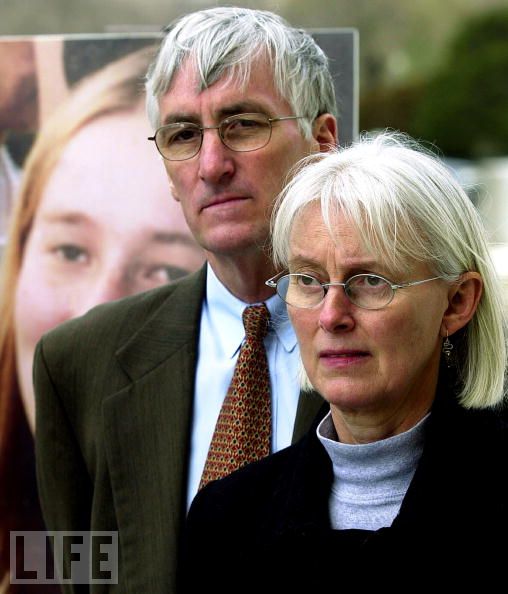
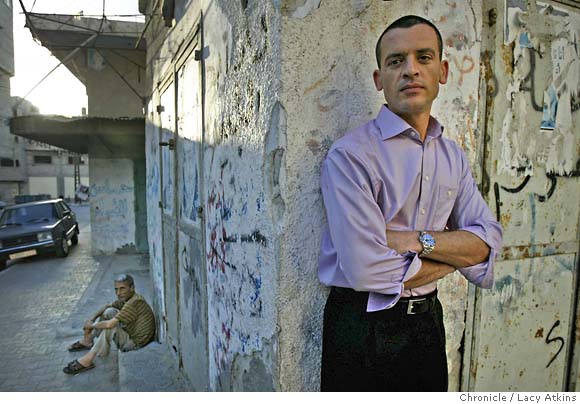
Our next conference call will take place this Thursday, March 18, at 1:00 pm EST and will feature Sami Abdel Shafi (above) an independent political analyst and writer who lives in Gaza. In addition, we will hear from Cindy and Craig Corrie whose daughter Rachel was killed by an Israeli bulldozer in 2003 as she tried to protect a Gazan Palestinian home from demolition.

In an article he wrote for The Guardian last December, Mr. Abdel Shafi wrote eloquently about the nature of the crisis facing Gaza:

Almost nothing has been more deceitful than casting Gaza as a humanitarian case. This is becoming exponentially more problematic a year after the war. Gaza urgently needs far more than merely those items judged by the Israeli military as adequate to satisfy Gaza’s humanitarian needs. This list of allowable items is tiny compared to people’s needs for a minimally respectable civil life.

Gaza is not treated humanely; the immediate concerns about the situation have clearly given way to long-term complacency, while failed politics has now become stagnant. The humanitarian classification conceals the urgent need to address this. Moreover, many in the international community have conveniently resorted to blaming Palestinians for their political divisions, as though they were unrelated to Israel’s policies – most notably Gaza’s closure after Israeli disengagement in 2005.

I also encourage you to read this piece, in which Abdel Shafi discusses the challenges facing the Palestianian Authority during this latest incarnation of the peace process.
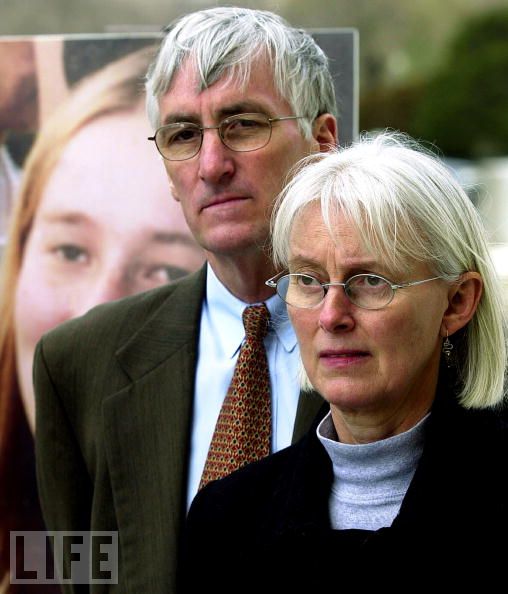
The Corries (left) will be joining our call from Haifa where they are currently participating in the hearing of a civil suit they have brought against the Government of Israel. Following Rachel’s death, the Israeli government promised the Bush administration a thorough, credible and transparent investigation of Rachel’s killing. Now seven years later, no such investigation has taken place.

On a recent interview with Democracy Now’s Amy Goodman, the Corries spoke at length about their seven year quest in search of justice and accountability for their daughter’s death:

This is a culmination, really, of seven years of our family searching for some sort of justice in the killing of Rachel. And we’ve tried to do that through diplomatic means, and we’ve asked for a US-led investigation into Rachel’s killing. We also understand that the Israelis, through Prime Minister Sharon, promised President Bush a thorough, credible and transparent investigation of Rachel’s killing. But, by our own government’s measure, that has not happened. So we’re left with simply a civil lawsuit.

So, we’re accusing the state of Israel of either intentionally killing Rachel or guilty of gross negligence in her killing seven years ago. And so, we’re seeking—the only thing you can seek in a civil case is damages. You know, so it’s really a very small part of the story that’s gone on in our lives. But it’s critical to have our time in court.

Our motivation for that was largely that it is an avenue which we understood we would be able to pursue and get information. So, through the discovery process, we were hoping to get a good deal of information. We have gotten some, but they’ve used sort of secrets of state to keep us, block us, from getting other evidence into court. But we’re going forward, and we’re very hopeful that we will get a fair trial.

Today is, in fact, the seventh anniversary of Rachel Corrie’s death. I strongly encourage you to check The Rachel Corrie Foundation for Peace and Justice website to learn how you can honor her memory. We might also heed the words of Craig Corrie (again, from the Democracy Now interview):

(One) other very specific thing that people could do, and I’m calling for people to do—the US government has come out against the blockade or the continued occupation and siege on Gaza. The children that were behind the wall that Rachel stood in front of are still under a state of siege. And I think that, very specifically, people around the world and certainly in this country could write, call or fax the White House and say, not only should we be working to have the Israelis lift that siege, but if they continue to be unwilling to do so, then the United States should come in there, work out a way that they could come in and—the Berlin airlift, it sent a message to the world about our ability to protect people around the world and our willingness to do so. If we did something similar by sea to the Gaza Strip, it would change the view of Americans around the world for maybe another fifty years. It is something that’s doable, and it’s something that the people out, your fans, could actually physically do and ask the White House to do that.

To participate in the conference call:

Dial-in Number: 1-517-417-5200 (caller pays any phone charges)

Participant Access Code: 860453

Questions for Conference Call: If you would like to suggest a question for Mr. Abdel Shafi or for Cindy or Craig Corrie, please email your question to rabbrianwalt@gmail.com or ravboaz@comcast.net no later than Wednesday night.
“This is Starting to Get Dangerous For Us…”

The Israeli government’s blindsiding of Joe Biden last week seems to have given rise to the crisis that won’t go away.  Or perhaps it’s more accurate to say it has uncovered fault lines between the US and Israel that have apparently been simmering now for some time.
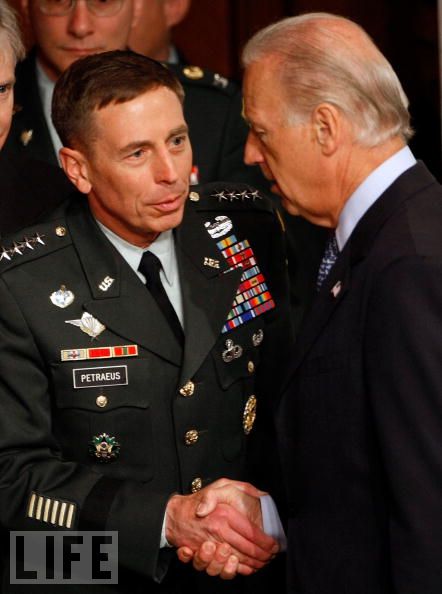
Amid the myriad of press reports on the disastrous Biden visit, for me the most eye-opening were the Israeli press reports of Biden’s private excoriation of his hosts:

People who heard what Biden said were stunned. “This is starting to get dangerous for us,” Biden castigated his interlocutors. “What you’re doing here undermines the security of our troops who are fighting in Iraq, Afghanistan and Pakistan. That endangers us and it endangers regional peace.”

The vice president told his Israeli hosts that since many people in the Muslim world perceived a connection between Israel’s actions and US policy, any decision about construction that undermines Palestinian rights in East Jerusalem could have an impact on the personal safety of American troops fighting against Islamic terrorism. 

If that report wasn’t sobering enough, now there’s word that CENTCOM commander General David Petraeus feels the same way. Mark Perry, posting on Foreign Policy, has reported that Gen. Petraeus briefed Joint Chiefs of Staff Chairman Adm. Michael Mullen on the Israeli-Palestinian conflict back in January: 

The 33-slide, 45-minute PowerPoint briefing stunned Mullen. The briefers reported that there was a growing perception among Arab leaders that the U.S. was incapable of standing up to Israel, that CENTCOM’s mostly Arab constituency was losing faith in American promises, that Israeli intransigence on the Israeli-Palestinian conflict was jeopardizing U.S. standing in the region…

 The January Mullen briefing was unprecedented. No previous CENTCOM commander had ever expressed himself on what is essentially a political issue; which is why the briefers were careful to tell Mullen that their conclusions followed from a December 2009 tour of the region where, on Petraeus’s instructions, they spoke to senior Arab leaders. “Everywhere they went, the message was pretty humbling,” a Pentagon officer familiar with the briefing says. “America was not only viewed as weak, but its military posture in the region was eroding.” But Petraeus wasn’t finished: two days after the Mullen briefing, Petraeus sent a paper to the White House requesting that the West Bank and Gaza (which, with Israel, is a part of the European Command — or EUCOM), be made a part of his area of operations. Petraeus’s reason was straightforward: with U.S. troops deployed in Iraq and Afghanistan, the U.S. military had to be perceived by Arab leaders as engaged  in the region’s most troublesome conflict.

Wow. “Stunning” and “unprecedented” are the right words. When was the last time we heard the US military claim that Israeli policy was putting their troops in danger?

It’s much too early to tell where all this will lead, but I think its safe to say that the “special relationship” between the US and Israel is currently under serious reevaluation. It’s particularly mind-boggling to contemplate that Petraeus seems to share the same conclusion as the much-maligned Walt and Mersheimer: that Israel’s policies represent a strategic liability to US interests in the Mideast. Who would have thought?

Perry concludes:

There are important and powerful lobbies in America: the NRA, the American Medical Association, the lawyers — and the Israeli lobby. But no lobby is as important, or as powerful, as the U.S. military. While commentators and pundits might reflect that Joe Biden’s trip to Israel has forever shifted America’s relationship with its erstwhile ally in the region, the real break came in January, when David Petraeus sent a briefing team to the Pentagon with a stark warning: America’s relationship with Israel is important, but not as important as the lives of America’s soldiers. Maybe Israel gets the message now. 

I’m not particularly a fan of US military adventures in the Middle East – but if it takes the US military to convey the message that Israel has to turn from its disastrous settlement policies, I’m all for it.

Charles London to Daniel Gordis: Israel may be at war, but the Jewish People are not…

Here’s one I’ve been meaning to get to for a few weeks now: a great point/counterpoint between Rabbi Daniel Gordis and journalist Charles London (above).

Back in February, Gordis wrote a Jerusalem Post column in which he addressed Im Tirtzu’s nasty campaign against the New Israel Fund and its President, Naomi Chazan.  His conclusion: while Im Tirtzu may have gone a bit overboard in its rhetoric, folks need to understand that the Jewish people are at war with those who would “delegitimize Israel.”  And when you are fighting a war, you can ill-afford luxuries such as civil liberties:

Commitment to our democracy must not come at the cost of commitment to our survival. No country at war maintains the same freedoms of speech or action that countries not facing existential threat can permit themselves. Since the Jewish people is at war, it must think as a people at war must think.

London’s eloquent counter in the Huffington Post:

In my experience around the world, the Jewish people are not at war. There are Bosnian Jews building institutions in cooperation with their Muslim and Christian neighbors; there are Ugandan Jews who are at war with Malaria, HIV, and poverty, but not with some eternal anti-Jewish enemy. There are Iranian Jews struggling alongside Sunni, Shiite, Christian, and Baha’i for the very “liberties” their government denies all Iranians. There are Israeli Jews who are trying to build democratic institutions, multi-ethnic schools, and interfaith understanding, all of whom should take serious umbrage at his characterization of the Jews as a people at war.

Bravo: London’s response to Gordis’s Jewish siege mentality is spot on.

Yes, the Jewish people face challenges today, but we have faced daunting challenges throughout our history. And through them all, we have resolutely rejected the notion that physical might can ensure our survival. Mighty empires have come and gone, but the Jewish people have remained not by compromising our values (as Gordis counsels) but by affirming them.  By connecting our survival to a more transcendent truth.  By asserting that there is a Power far greater than physical power.

On this point, the young journalist eloquently reminds the rabbi:

I fear that arguments like Gordis’s war without end and war that values cannot endure undermines the spiritual genius of our culture. Jews have not survived for 2500 years because of nation-states, nor because they were not willing to risk life and limb for higher values. They have not survived merely to survive.

If this Jewish vision is your cup of tea, check out London’s recent book “Far from Zion: In Search of Global Jewish Community.”  (I far preferred it to Gordis’s “Saving Israel: How the Jewish People Can Win a War That May Never End.”)

Thousands Rally in Sheikh Jarrah!

By all reports, the protests against Palestinian home evictions in Sheikh Jarrah, East Jerusalem have evolved into a political phenomenon that cannot be ignored. Last Saturday night, thousands of demonstrators came out in the largest joint Israeli-Palestinian protest on record.

For more: this Ynet article posted in Coteret, blogger Jerry Haber’s report on Magnes Zionist, and a piece from the Jerusalem Post.  My friend and colleague Father Cotton Fite is currently visiting Israel/Palestine; he attended the rally and has just posted impressions on his blog.  My good pal Rabbi Brian Walt also offers a thorough report.

An excerpt from Brian’s post:

I have attended several Israeli demonstrations but this was the first demonstration where there was a large presence of Palestinians, Palestinian flags, and speakers who addressed the crowd in Arabic.  The mixed crowd – Israeli Jews, mostly secular but some wearing kippot, Palestinian women in traditional dress, Palestinian and Israeli youth – felt wonderful, a rare experience of the reality in this country, two peoples living together on the land with two languages, two cultures and three or more religions.  It is very rare for the two peoples to share anything.   I think among the young people involved in this struggle it is truly an Israeli – Palestinian effort and their vision is one of a shared future.  One of the most prominent posters at these rallies reads: Jews and Arabs together, refuse to be enemies.  In Hebrew it rhymes: Yehudim v’Aravim, mesarvim lih’yot oyvim.

This image inspired something in me something resembling hope – something I haven’t felt re the Israel/Palestine conflict in a long, long time…

Rep. Brian Baird is the Bravest, Sanest Politician in the United States

Can I just say that Washington Rep. Brian Baird is my personal hero? Watch this recent interview with RTAmerica which took place on the heels of his third trip to Gaza. Among other things, Baird calls for the US to break the blockade with Gaza, for US envoy George Mitchell to visit Gaza personally, and to consider withholding “certain kinds of aid” to Israel if it continues to settle the West Bank and East Jerusalem.  Toward the end of the interview, he comments: “ignoring the plight of these good people is at our peril.”

On the international front, my personal bravery award goes to Ireland’s Foreign Minister Micheal Martin, who was recently the first European Union foreign minister to visit Gaza in over a year.  He discussed his experiences yesterday in a powerful NY Times  op-ed:

The tragedy of Gaza is that it is fast in danger of becoming a tolerated humanitarian crisis, a situation that most right-thinking people recognize as utterly unacceptable in this day and age but which is proving extremely difficult to remedy or ameliorate due to the blockade and the wider ramifications of efforts to try and achieve political progress in the Middle East.

One can imagine how hard it is not to give in to despair and hopelessness in such an environment. However, what was most impressive and heartening during my visit was the resilience and incredible dignity of ordinary people.

Mobilization for Justice in Sheikh Jarrah

The protest in Sheikh Jarrah, East Jerusalem seems to be reaching a fever pitch. Organizers have now called for a rally this Saturday night that they hope will attract thousands.

From a Ma’ariv article by Hagai El-Ad, Executive Director of the Association for Civil Rights in Israel:

This Saturday night (March 6, 2010) will witness one of the most important demonstrations in years, in the struggle for human rights and justice here…

The asymmetric legal situation in Israel, through the Absentee Property Law, makes it possible for Jews to return to property that was owned by Jews before 1948 — while Palestinian property return is completely impossible. This is both unjust and unwise. In Sheikh Jarrah, this has resulted in Palestinian refugees, originally housed in the neighborhood by the Jordanian government after 1948, becoming refugees a second time. Of course, unlike the settlers forcing the Palestinians out of their homes, the Palestinians cannot return to the homes they owned before 1948 — not in Jaffa, nor in West Jerusalem or anywhere else…

(What) is happening in Sheikh Jarrah is part of a larger process — the Hebronization of East Jerusalem … As if watching the replay of a movie whose ending we have already seen, here in front of our eyes the Hebron processes are taking place once again, this time in Jerusalem: the entry of settlers to the heart of a Palestinian neighborhood, the provocations and violence, the one-sided actions of the security forces – always serving the interests of the Jewish settlers over the rights of the Palestinian residents. And then, what follows: restrictions of movement, segregation, life becoming a nightmare, and all this in the name of “security considerations.” Shuhada Street in Hebron is already closed for Palestinians for years — a street that was part of the bustling heart of one of the largest Palestinian cities, and has become a ghost road in the service of extremist settlers, the human rights of local Palestinians thrown to the roadside.

A similar process to what has already happened in Hebron is now happening in Jerusalem. Sheikh Jarrah now has police checkpoints at the entrance to the neighborhood. During certain hours on Friday the entrance to the neighborhood is generally blocked, but is open to Jewish worshipers. In contrast, Jews wishing to enter Sheikh Jarrah to express solidarity with the Palestinian families are prevented from entering the neighborhood. Violence against Palestinians ends with arrests — of Palestinians. The mechanism of dispossession and the construction of security excuses are already at work. And all this is happening right here, in Jerusalem.

Rabbi Brian Walt has also written a powerful post about a recent protest in Sheikh Jarrah. This is what I wrote about the situation there last December:

International protesters refer to these actions as “ethnic cleansing.” If that seems like too incendiary a term, what do we prefer to call it? And more critically, what are we going to do about it?

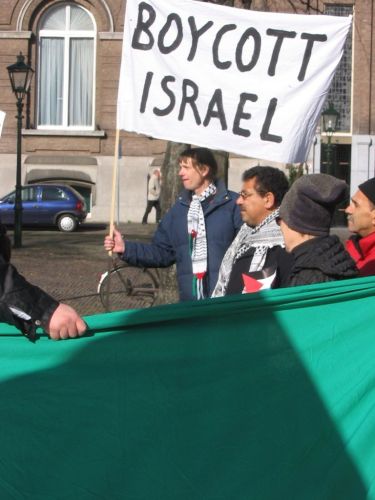
A BDS Wake Up Call?

A recent report from the Forward:

With anti-Israel boycott, divestment and sanctions efforts gaining visibility, the Jewish community’s main public-policy coordinating body is for the first time confronting the BDS movement as a specific and stated priority.

At its recent annual plenum, the Jewish Council for Public Affairs passed a resolution stating that BDS should now “be regarded with the utmost seriousness and urgency.”

“This is a very serious matter,” JCPA’s executive director, Rabbi Steve Gutow, told the Forward. “We need to wake up, whether we are on the right, left or center.”

The JCPA, an umbrella body representing Jewish community relations councils across the country and more than a dozen leading national Jewish groups, adopted the anti-BDS resolution at its plenum in Dallas on February 23. Gutow said that JCPA member groups are planning to create a permanent body that would respond to the activities of the BDS movement.

My two cents: creating a permanent body to combat the “negative branding” caused by BDS is a waste of Jewish communal resources.  I just don’t believe that the old counterattack tactics will work any more (if they ever did).  I’d suggest that if the Jewish community really wants to “wake up” to the challenge presented by BDS, then we need to honestly confront the fundamental reasons for its growth in the first place.

The BDS movement was founded in 2005 by a coalition of Palestinian groups who sought to fight for Israel’s human rights violations through nonviolent direct action. It arose out of their frustration over Israel’s continued refusal to comply with international law on any number of critical issues – and the oppressive manner in which it has occupied and ruled over Palestinians. I can’t help but think that by treating BDS simply as a PR threat to be fought, we’re utterly misunderstanding the essential of the point (and strength) of this movement.

By all accounts, this campaign is rapidly gaining support. It’s not a stretch to assume that the longer this oppressive status quo is allowed to continue, the longer Palestinians will resist – and the longer they will seek international support for their resistance.  One year ago, I predicted as much on this blog: BDS will grow as long as very real injustices remain unaddressed.

When will we wake up to this painful reality?

An Israeli Voice of Sanity on Iran

Avner Cohen asks exactly the right questions in a Ha’aretz editorial:

What if our leaders and pundits had reacted to the Iranian nuclear program in a completely different way than they actually have? What if they had not viewed an Iranian bomb as an “existential threat” and instead treated it as something that, even if it became a reality, would be a major global political problem, but not a military threat – because Iran (like every other nuclear state) would never be able to use a nuclear bomb as an operational military weapon?

What if Israel had treated Iran’s nuclear project as an exhibitionist, even childish, attempt by a nation mired in a deep identity crisis to exploit the prestige and mystique of nuclear power to create a national ethos of technological progress at home, as well as a diplomatic miracle cure that would enable it to challenge the West and move to the center of the international stage?

And his answers are spot on. Click here to read.

Tel Aviv: “One of Your Own Kind, Stick to Your Own Kind…”

In past posts I’ve raised questions about the implications inherent in the establishment of a Jewish state – and the problems that invariably seem to arise in relations with Israel’s non-Jewish citizens and residents.

How do we American Jews  react, for instance, when we read that Israel is concerned about a “demographic threat” to the Jewish state? (That is to say, what would we say if  our President raised questions about the “demographic threat” of a particular minority group to the “American character” of our country?)

And now:  what would we say if an American city funded a campaign to discourage girls from dating or marrying boys from another ethnic group?

From Coteret (an Israeli news/media aggregator):

Maariv reported reported on February 23 that the Tel Aviv municipality  launched  a “counselling program” to “help”  Jewish girls who date and/or marry Arab boys.

Grassroots and governmental campaigning against interfaith mingling is  nothing new in Israel…But this is the first time officially sanctioned racism, funded by taxpayers, has come to Tel Aviv, Israel’s liberal heartland.

I’m not asking these questions to “bash Israel.”  I’m genuinely concerned by certain realities that seem intrinsic to ethnocracies. If we truly do cherish values inherent to American civil democracy, how do we react to news such as this?   Do we simply put these values on the shelf out of our desire for a Jewish state?  Or can we understand these kinds of measures in a way that is consonant with our most essential civic beliefs (beliefs, by the way that have been quite kind to the American Jewish community)?

And if not, then how will we respond?